






Abstract
Background:
Research on intimate partner violence (IPV) in the military has tended to focus on military personnel as perpetrators and civilian partners/spouses as victims. However, studies have found high levels of IPV victimization among military personnel. This article systematically reviews studies of the prevalence of self-reported IPV victimization among military populations.
Methods:
Searches of four electronic databases (Embase, Medline, PsycINFO, and Web of Science) were supplemented by reference list screening. Meta-analyses of the available data were performed, where possible, using the random effects model.
Results:
This review included 28 studies with a combined sample of 69,808 military participants. Overall, similar or higher prevalence rates of physical IPV victimization were found among males compared to females and this was supported by a meta-analytic subgroup analysis: pooled prevalence of 21% (95% confidence interval [CI] = [17.4, 24.6]) among males and 13.6% among females (95% CI [9.5, 17.7]). Psychological IPV was the most prevalent type of abuse, in keeping with findings from the general population. There were no studies on sexual IPV victimization among male personnel. Evidence for the impact of military factors, such as deployment or rank, on IPV victimization was conflicting.
Discussion:
Prevalence rates varied widely, influenced by methodological variation among studies. The review highlighted the lack of research into male IPV victimization in the military and the relative absence of research into impact of IPV. It is recommended that future research disaggregates results by gender and considers the impact of IPV, in order that gender differences can be uncovered.
Keywords
Intimate partner violence (IPV) victimization is recognized as a global public health problem (World Health Organization [WHO], 2016) but remains an underrecognized health-related issue within military populations (Department of Health, 2017). The WHO defines IPV as “behaviour by an intimate partner or ex-partner that causes physical, sexual, or psychological harm, including physical aggression, sexual coercion, psychological abuse or controlling behaviours.” The severe repeated nature of IPV negatively impacts on physical and mental health, and IPV has the highest rate of repeated victimization of any violent crime (Dodd, Nicholas, Povey, & Walker, 2004; Howard, Trevillion, & Agnew-Davies, 2010; Walby, Towers, & Francis, 2015). Our recent review highlighted the burden of mental health need among military personnel who are the victims of IPV (Sparrow, Kwan, Howard, Fear, & MacManus, 2017). There is growing awareness within international Armed Forces communities of the need to identify and support those affected. Multiple studies have endeavored to estimate the prevalence of IPV victimization in military populations and among different military subgroups. These studies have varied greatly in terms of methodology, and the prevalence data have not been synthesized. A review of such research is needed in order to clarify the scale of the problem, the most prevalent type of IPV and subgroups most at risk. Such information will inform our understanding of the problem and the need for targeted support services.
There may be an increased risk of family dysfunction in military compared to civilian populations, as a result of the unique stresses associated with military life (Rentz et al., 2006). Specific aspects of military service have been shown to have negative consequences that can impact on relationships and may increase the risk of IPV (Clark & Messer, 2006). Frequent relocations and separations can disrupt family life, leading to general anxiety and tension between family members and relationship dissatisfaction (Blount, Curry, & Lubin, 1992; Drummet, Coleman, & Cable, 2003; Figley, 1993; Rentz et al., 2006). Operational deployments have been shown to increase the risk of mental health problems such as post-traumatic stress disorder and alcohol misuse (Fear et al., 2007; Hoge & Castro, 2006; Jacobson et al., 2008; Milliken, Auchterlonie, & Hoge, 2007), especially among those who are deployed in combat roles (Seal et al., 2009; Sundin, Fear, Iversen, Rona, & Wessely, 2010), and psychological ill-health has been shown to increase problems in the family home (Sayers et al, 2009). Studies have shown increased risk of perpetration of physical violence toward family members among those returned from operational combat (Kwan et al., 2017; Sullivan & Elbogen, 2014) but also increased risk of victimization (Jordan et al., 1992; MacManus et al., under review). Certain military subgroups may be more at risk of IPV victimization. Deployment has been shown to have more negative consequences for reservists than regular personnel in terms of mental health problems (Lane, Hourani, Bray, & Williams, 2012), difficulties adjusting to homecoming, and lower marital satisfaction (Browne et al., 2007). Certain military characteristics such as service branch, rank, engagement status, and having left service have been shown to be associated with a range of psychosocial outcomes such as relationship satisfaction (Hendrix, Jurich, & Schumm, 1995; Riggs, Byrne, Weathers, & Litz, 1998), mental health (Baker et al., 2009; Cameron et al., 2016; Hatch et al., 2013; Iversen et al., 2009; Sher, Braquehais, & Casas, 2012), and risk of aggressive behavior (Jordan et al., 1992; MacManus, Dean, Al Bakir, et al., 2012; MacManus, Dean, Jones, et al., 2013; MacManus, Rona, Dickson, et al., 2015) and may impact on risk of IPV victimization (Cantos, Neidig, & O’Leary, 1994; Foran, Slep, Heyman, & Res, 2011; Lutgendorf et al., 2009; Marshall, Panuzio, & Taft, 2005; Rosen, Parmley, Knudson, & Fancher, 2002a).
Research into IPV in the military has tended to focus on military personnel as perpetrators of IPV and civilian partners/spouses as victims (Jones, 2012; Rentz et al., 2006). This relative neglect of victimization research in the military may reflect the underrecognition of male victimization within the male-dominated military environment (Taylor, Keeling, & Mottershead, 2017). However, high levels of IPV victimization have been found in some studies of military personnel, both male and female, serving and ex-serving (Cerulli, Bossarte, & Dichter, 2014; Dichter, Cerulli, & Bossarte, 2011; Foran, Heyman, Slep, & Res, 2014; Skomorovsky, Hujaleh, & Wolejszo, 2015; Zamorski & Wiens-Kinkaid, 2013). Research in the general population in both the United States and the United Kingdom has shown no gender difference in past-year physical IPV victimization (CDCP, 2014). In order to uncover gender differences in IPV victimization in military populations, research on victimization must not be neglected and must be reviewed and the findings synthesized.
Research into IPV victimization spans a wide time period. Rates of reported IPV victimization may have changed over time, from before the U.S. invasion of Iraq/Afghanistan (2001) to after, influenced by a range of military risk factors such as changes in intensity of deployment exposures (Baiocchi, 2013; Kane, 2016), as well as shifts in attitudes toward and awareness of IPV (Home Office, 2014; Ministry of Defence, 2015b). An understanding of the prevalence of IPV victimization and how it might vary by gender and military characteristics, such as era of service, service branch, rank, experience of operational deployment, or serving status, is needed for risk assessment and for the development of services to meet the specific needs of military families. This study provides the first review of the prevalence of IPV victimization among military populations.
Aims and Objectives
The aim of this study was to systematically review extant studies that have investigated the prevalence of self-reported IPV victimization among military personnel (both serving and ex-serving). Furthermore, we aimed to examine the impact of gender and military characteristics, such as branch of service, engagement status (regular vs. reserve), serving status (active duty vs. veteran), rank, and experience of deployment or combat, on prevalence rates. We were also interested in whether era of service (defined as pre-2001 and post-2001) influenced the reporting of IPV victimization.
Method
A literature search for studies reporting the prevalence of self-reported IPV victimization among military populations was undertaken. Searches of the following electronic databases were carried out: Embase, Medline, PsycINFO, and Web of Science. This review followed PRISMA reporting guidelines and the protocol is registered with PROSPERO: registration CRD42016038800.
Studies were eligible for inclusion in the review if they (i) involved male and/or female serving or ex-serving military personnel, (ii) reported the prevalence of self-reported IPV victimization (or collected data from which a prevalence statistic could be calculated), (iii) measured IPV using a validated tool or adapted question(s), and (iv) presented the results of peer-reviewed research based on any quantitative study design capable of providing the data listed above. IPV was defined as “any incident of threatening behaviour, violence or abuse (psychological, physical, sexual, financial or emotional) between adults who are or have been intimate partners regardless of gender or sexuality” (Home Office, 2005, p.7). Quality appraisal of the included studies was conducted independently by two reviewers using a checklist adapted from validated tools (CASP UK, 2017; Downs & Black, 1998; Loney & Chambers, 2000; Saha, Chant, Welham, & McGrath, 2005; Wing, 1994). A third, more senior, reviewer was consulted in the instance of any scoring discrepancies. Studies that scored 50% or higher on criteria relating to selection bias were categorized as high quality. The 50% criterion was selected in order to identify studies with a lower risk of selection bias and on whose findings greater weight could be placed.
Qualitative and quantitative data (including prevalence data and information on study design, sample characteristics, and measurement tools used) were extracted from included studies separately for males and females, where possible.
Figure 1 describes the study selection process. Literature searches yielded 5,629 unique references; 5,580 were excluded following title and abstract screening and a further 21 were excluded following full-text screening. The remaining 28 papers were included in this review. All 28 papers were identified through searches of electronic databases. References identified through other sources (i.e., screening the reference lists of included studies) were all duplicates.
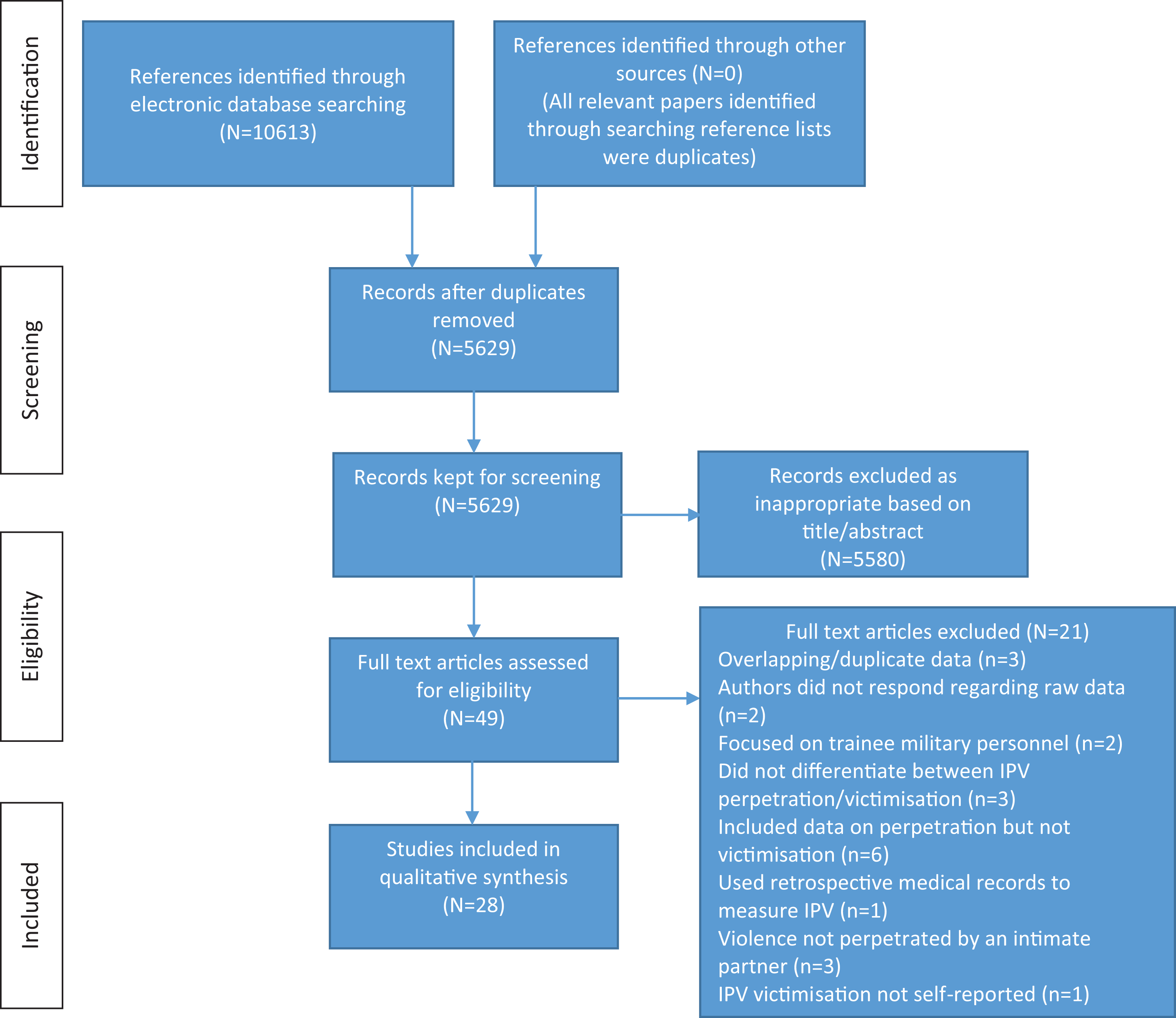
Flow of information through the phases of the systematic literature search.
Study characteristics, methods, and findings were collated and compared in order to determine the feasibility of completing a meta-analysis by exploring the homogeneity of the studies. Heterogeneity in definition and timing of measurement of IPV precluded a meta-analysis in most cases. Where a meta-analysis was appropriate, we estimated pooled prevalence with 95% confidence intervals (CIs) using a random-effects model that enabled us to assess heterogeneity between studies based on I2 statistics (categorized as low, moderate, or high on the basis of I2 values of 25%, 50%, and 75%, respectively). Studies that measured IPV over time periods other than the last 12 months were excluded from the meta-analysis. Studies were excluded from the meta-analysis if they measured IPV over time periods other than the last 12 months or contained data from overlapping samples. A number of studies were excluded as they were observed to be marked outliers which skewed the overall pooled prevalence and had significant methodological weaknesses which accounted for their findings: One study was excluded as it reported very high prevalence rates for all three types of IPV and was appraised to be at high risk of reporting bias as female participants reported on patterns of bidirectional violence between couples (Forgey & Badger, 2006); and a second study was excluded as it reported unusually high past-year physical IPV prevalence and had a sample size of less than 100 female subjects (Rosen et al., 2002a); two further studies were excluded due to having highly selected samples of pregnant active duty females and extremely low past-year physical IPV prevalence rates of 2.8% and 3%, respectively (Lutgendorf et al., 2009; Lutgendorf, Thagard, Rockswold, Busch, & Magann, 2012). We anticipated heterogeneity of effects. We aimed to conduct subgroup analyses by key variables hypothesized to influence prevalence estimates (i.e., gender, active duty vs. veteran status, and era of service). However, extensive heterogeneity among the limited number of studies precluded a subgroup analysis in most cases. We dichotomized era of service as pre-2001 and post-2001. The overall risk of bias rating for pooled prevalence estimates was calculated following the GRADE Working Group and Cochrane approaches (Dijkers, 2013). Risk of bias ratings of > −0.5 indicated a low risk of bias, −1 indicated a serious risk of bias, and −2 indicated a very serious risk of bias. These ratings corresponded with evidence that was of high, moderate, or low quality. Meta-analyses were conducted using the STATA 11 statistical package (StataCorp LP, College Station, TX).
Results
Key Features of Included Studies
This review included 28 studies with a combined sample of 69,808 military participants (see Tables 1 and 2 for study characteristics). Twenty-six studies reported findings from female participants and seven from males. All studies conducted in clinical settings used female-only samples (N = 7,513), mostly from Veterans Affairs (VA) clinics (N = 6,903). The most commonly used validated tool was the Conflict Tactics Scale (CTS). Seven of the studies were rated high quality, five of which focused on active duty service members (Belik, Stein, Asmundson, & Sareen, 2009; Foran et al., 2011; Heyman & Neidig, 1999; Skomorovsky et al., 2015; Zamorski & Wiens-Kinkaid, 2013) and two on veterans (Cerulli et al., 2014; Dichter et al., 2011). Of the five studies that could be included in the meta-analysis, two provided evidence of high quality (Foran et al., 2011; Heyman & Neidig, 1999) and one of moderate quality (Rosen, Parmley, Knudson, & Fancher, 2002b), while the others were rated as low quality (Iverson & Pogoda, 2015; Murdoch & Nichol, 1995).
Key Features of Included Studies.
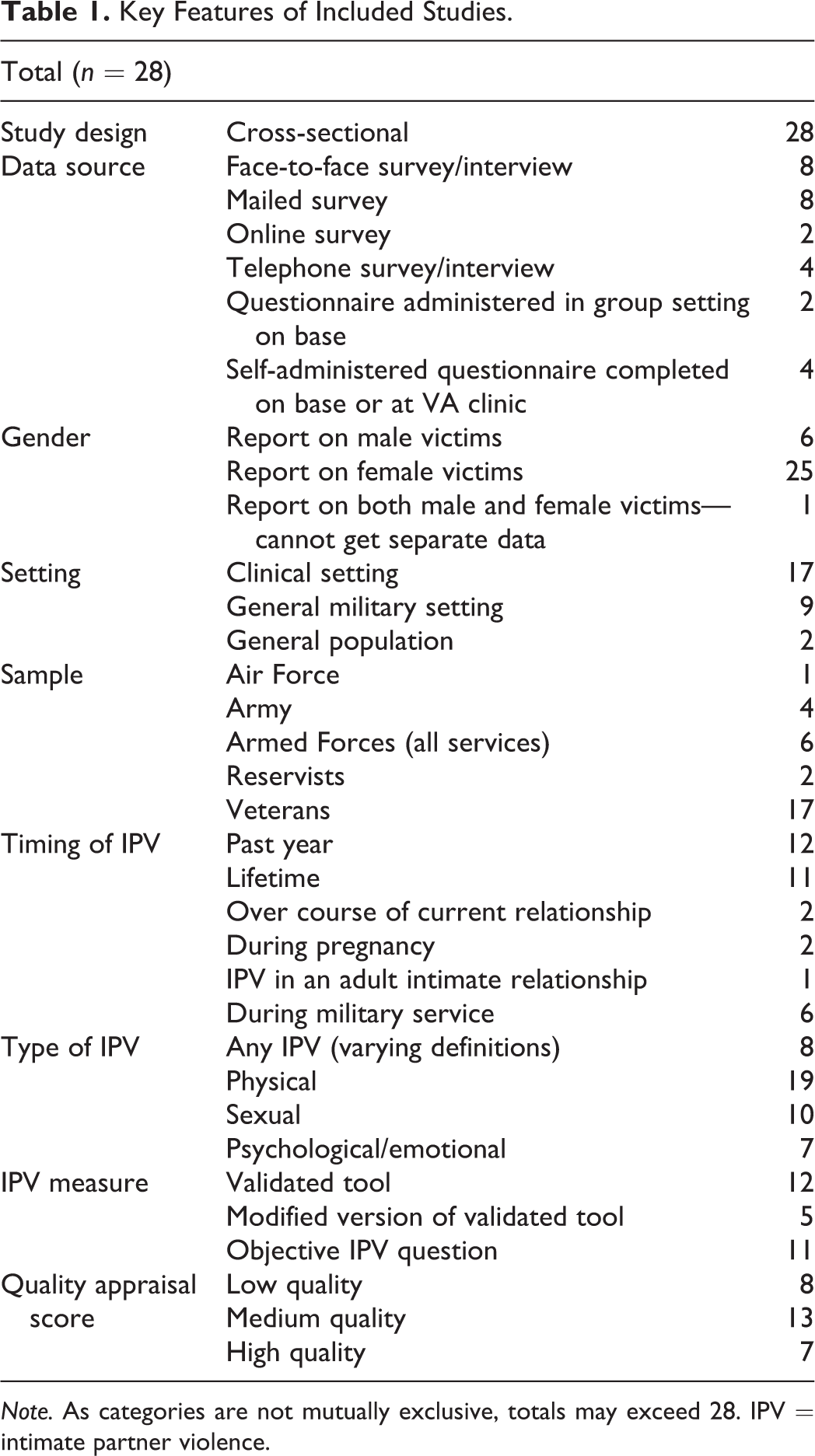
Note. As categories are not mutually exclusive, totals may exceed 28. IPV = intimate partner violence.
Study Characteristics.
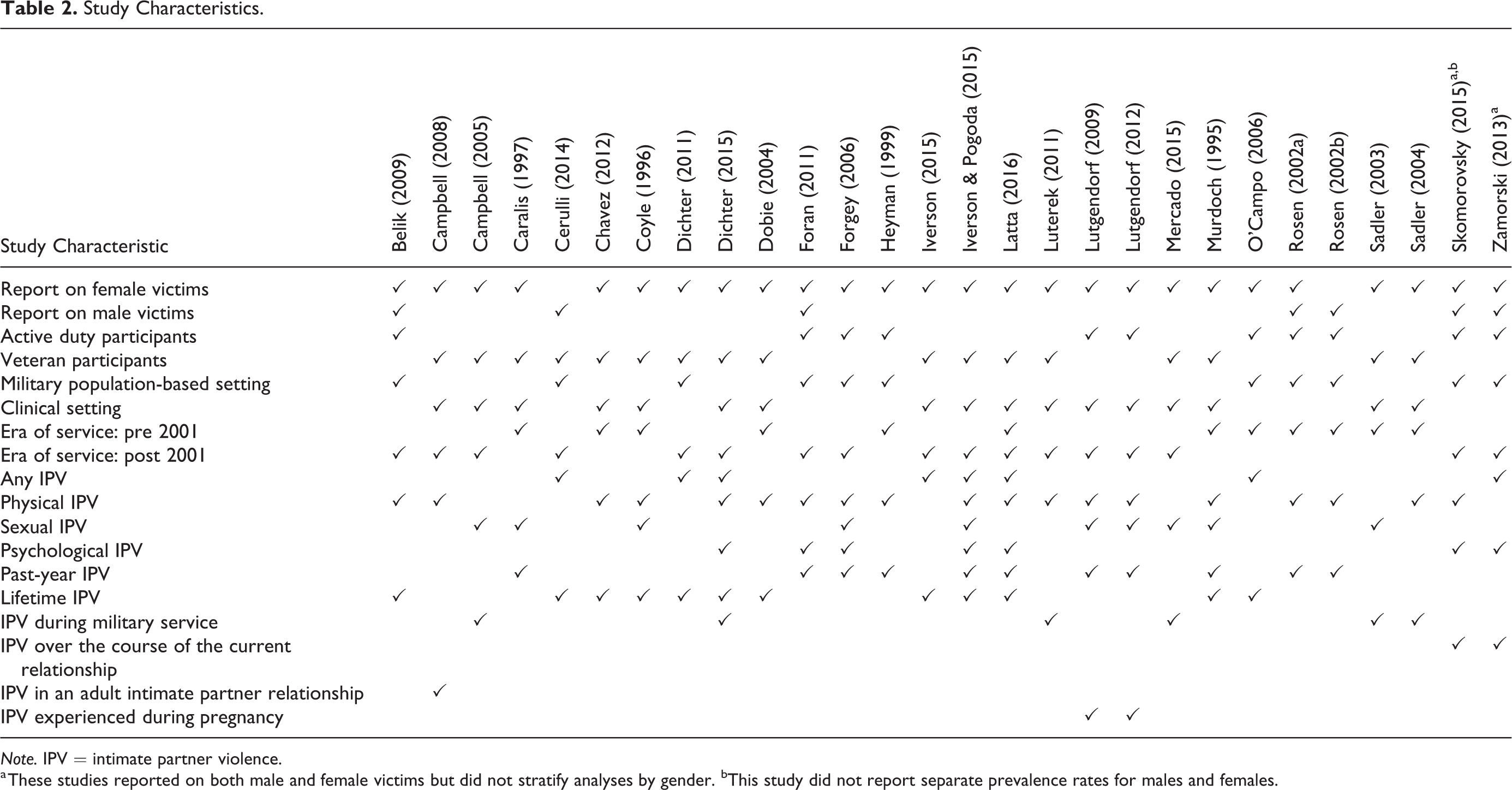
Note. IPV = intimate partner violence.
a These studies reported on both male and female victims but did not stratify analyses by gender. bThis study did not report separate prevalence rates for males and females.
Any IPV
Eight studies explored “any” self-reported IPV victimization among military samples, three of which were classed as high quality (see Table 3; Cerulli et al., 2014; Dichter et al., 2011; Zamorski & Wiens-Kinkaid, 2013). Definitions of “any” IPV varied between studies (e.g., “actual or threatened physical violence or unwanted sex” or “any psychological, physical, and/or sexual IPV”). All studies reported findings from female victims with one study reporting on male victims also.
Characteristics of Included Studies—Prevalence of IPV Victimization Among Military Populations.
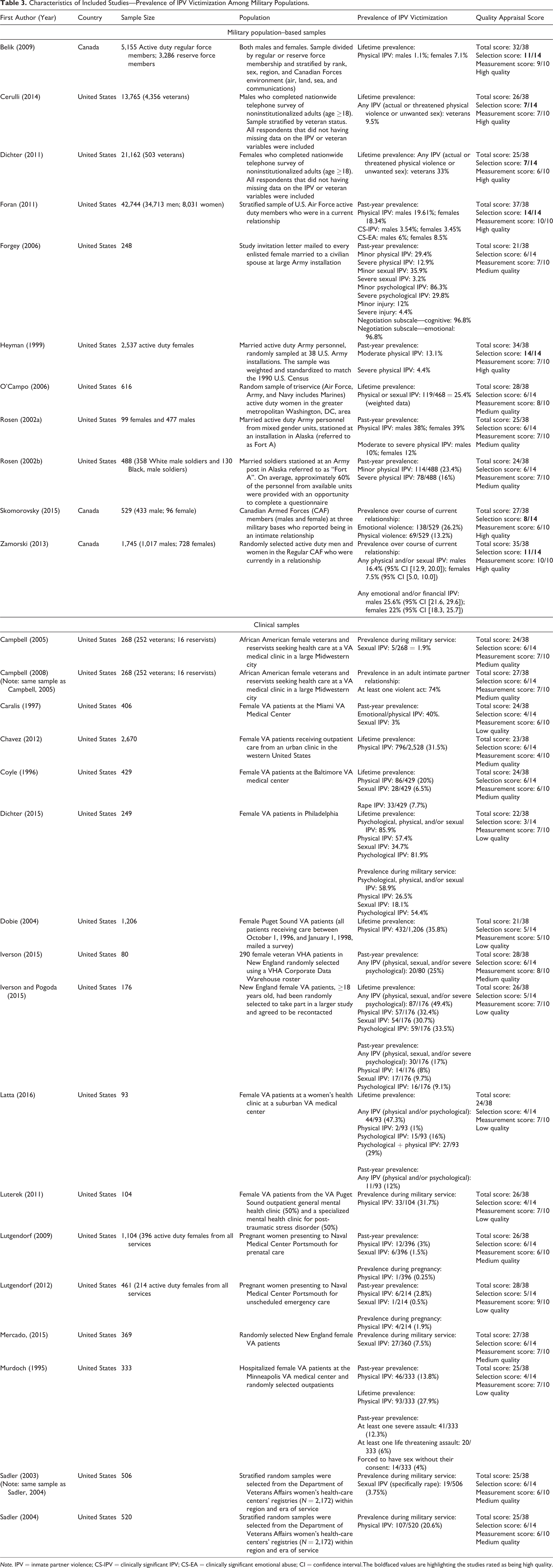
Note. IPV = inmate partner violence; CS-IPV = clinically significant IPV; CS-EA = clinically significant emotional abuse; CI = confidence interval.The boldfaced values are highlighting the studies rated as being high quality.
Female victims
Three studies measured past-year IPV (any type) and reported prevalence rates ranging from 12% to 25% (Iverson et al., 2015; Iverson & Pogoda, 2015; Latta, Elwy, Ngo, & Kelly, 2016) among sample of female veterans. Prevalence rates for lifetime IPV victimization (any type) ranged from 25.4% to 85.9% (Dichter et al., 2011; Dichter, Wagner, & True, 2015; Iverson & Pogoda, 2015; Latta et al., 2016; O’Campo et al., 2006; see also Table 3). A high-quality study found that 7.5% of female triservice Canadian personnel had experienced any physical and/or sexual IPV over the course of their current relationship (Zamorski & Wiens-Kinkaid, 2013). Finally, Dichter, Wagner, and True (2015) found that 58.9% of their sample had experienced any psychological, physical, and/or sexual IPV during military service.
Male victims
Two high-quality studies reported data on male IPV victims. Among active duty Canadian Armed Forces (CAF) personnel, the prevalence of any physical and/or sexual IPV experienced over the course of the current relationship was found to be 16.4% (compared to 7.4% among their female counterparts as reported above; Zamorski & Wiens-Kinkaid, 2013). Among male veterans sampled from the U.S. general population, 9.5% reported any lifetime IPV victimization (defined as actual or threatened physical violence or unwanted sex; Cerulli et al., 2014).
Physical IPV
Nineteen studies explored self-reported physical IPV victimization, with four of these studies rated as high quality (Belik et al., 2009; Foran et al., 2011; Heyman & Neidig, 1999; Skomorovsky et al., 2015). Four studies reported on male victims and 17 studies on females. One high-quality study collected data on males and females but unfortunately did not disaggregate findings by gender (Skomorovsky et al., 2015). This study found that 13.2% of their sample of active duty CAF members had experienced physical IPV over the course of the current relationship (Skomorovsky et al., 2015).
Female victims
Past-year prevalence rates for any physical IPV victimization among females ranged from 8% to 39% (Foran et al., 2011; Forgey & Badger, 2006; Heyman & Neidig, 1999; Iverson & Pogoda, 2015; Murdoch & Nichol, 1995; Rosen et al., 2002a). Past-year prevalence rates for moderate–severe physical IPV ranged from 4.4% to 12.9% (Forgey & Badger, 2006; Heyman & Neidig, 1999; Murdoch & Nichol, 1995; Rosen et al., 2002a). A high-quality study of active duty personnel reported past-year prevalence of clinically significant physical abuse (defined as acts that result in significant impact or high potential for impact) to be 3.45% (Foran et al., 2011). Two studies of pregnant active duty females found past-year physical IPV prevalence rates of around 3% (Lutgendorf et al., 2009, 2012).
Lifetime physical IPV prevalence rates ranged widely from 1% to 74% (Belik et al., 2009; Campbell, Greeson, Bybee, & Raja, 2008; Chavez, Williams, Lapham, & Bradley, 2012; Coyle, Wolan, & Van Horn, 1996; Dichter et al., 2015; Dobie et al., 2004; Iverson & Pogoda, 2015; Latta et al., 2016; Murdoch & Nichol, 1995). Three studies of physical IPV experienced by female veterans during military service found victimization rates ranging from 20.6% to 31.7% (Dichter et al., 2015; Luterek, Bittinger, & Simpson, 2011; Sadler, Booth, Mengeling, & Doebbeling, 2004).
Male victims
All four studies of physical IPV victimization among males involved active duty participants, with two being classed as high quality (Belik et al., 2009; Foran et al., 2011). Past-year prevalence rates for any physical IPV ranged from 19.61% to 38% (Foran et al., 2011; Rosen et al., 2002a, 2002b). Prevalence rates for moderate–severe past-year IPV ranged from 10% to 16% (Rosen et al., 2002a, 2002b). Past-year prevalence of clinically significant physical abuse was found to be 3.54% among male active duty personnel (Foran et al., 2011). Finally, a high-quality study found that just 1.1% of men reported being a victim of physical IPV in their lifetime (Belik et al., 2009). Of note, this study was unique among the studies in the review in that data were collected using face-to-face interviews on a military base. The lack of anonymity may have led participants to underreport.
Six studies that measured past-year physical IPV victimization among military personnel met criteria for a random-effects meta-analysis with subgroup analysis by gender (n = 35,201 males; 11,077 females; Figure 2). The pooled estimate of past-year prevalence of IPV victimization was 16.2% for males and females together (95% CI [13.6, 18.9]; this estimate had significant heterogeneity [I2 = 96.1%]), 21% (95% CI [17.4, 24.6]; I2 = 73.6%) for males, and 13.6% (95% CI [9.5, 17.7]; I2 = 95.3%) for females. The overall risk of bias rating for the pooled prevalence rates was −0.70, indicating a low to moderate risk of bias (see the Method section for further explanation).
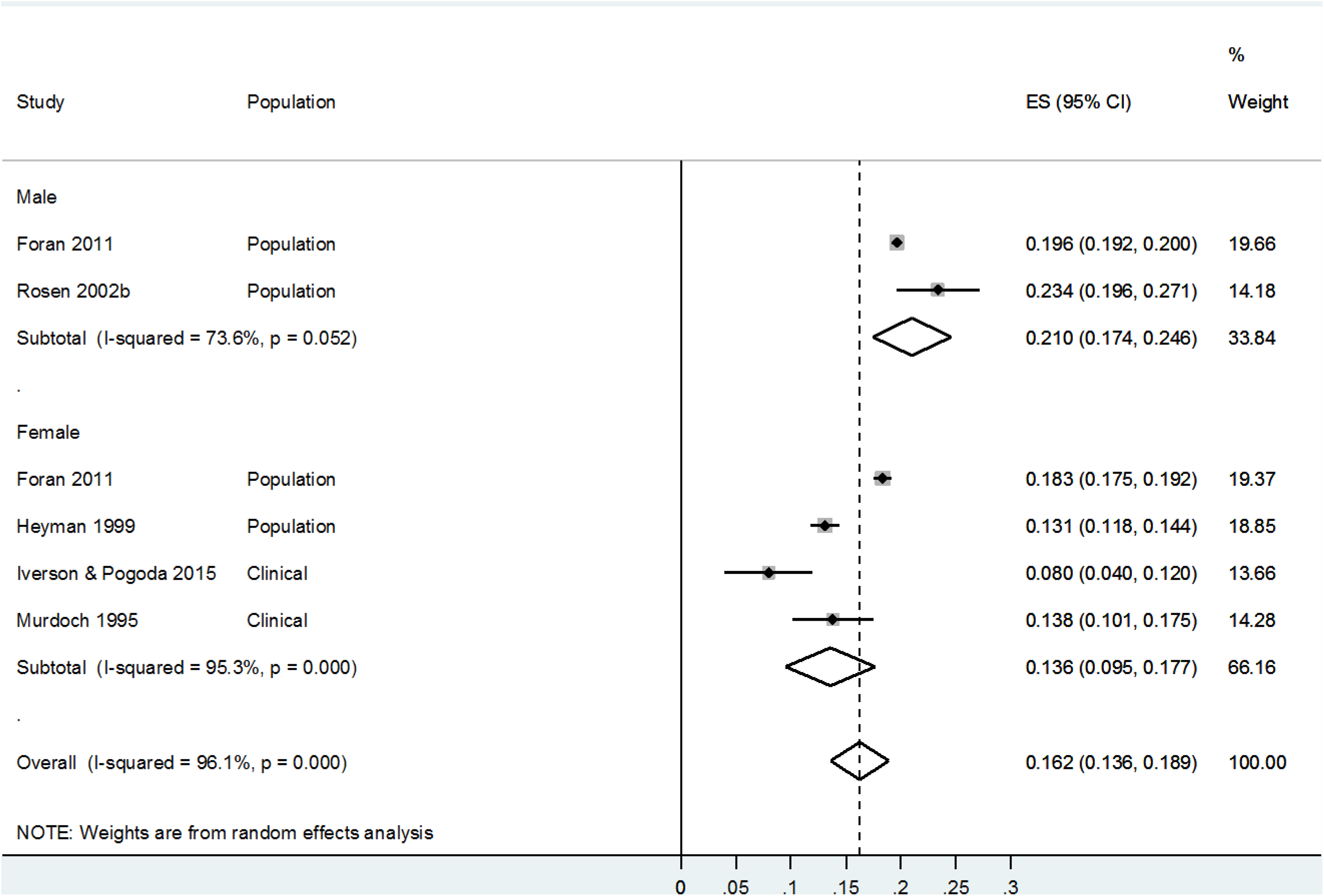
Past-year physical intimate partner violence by gender.
Sexual IPV
Ten studies explored the prevalence of self-reported sexual IPV among military populations. None of the studies were rated as high quality and none reported on male victims. Definitions of sexual IPV varied among studies, ranging from “unwanted sexual attention” to “rape,” but most commonly defined as “sexual coercion.”
Estimates of past-year prevalence rates of sexual IPV varied from 3% to 35.9% (Caralis & Musialowski, 1997; Forgey & Badger, 2006; Iverson & Pogoda, 2015; Murdoch & Nichol, 1995). Two studies of past-year sexual IPV among pregnant active duty females reported lower prevalence rates of 0.5% (Lutgendorf et al., 2012) and 1.5% (Lutgendorf et al., 2009). Studies of lifetime sexual IPV reported prevalence rates ranging from 6.5% to 34.7% (Coyle et al., 1996; Dichter et al., 2015; Iverson & Pogoda, 2015). Furthermore, Coyle, Wolan, and Van Horn (1996) found that 7.7% of VA patients had been victims of rape by a spouse/partner in their lifetime.
Four studies explored the prevalence of sexual IPV victimization during military service. Prevalence rates ranged from 1.9% (marital sexual IPV; Campbell & Raja, 2005) to 18.1% (sexual coercion; Dichter et al., 2015). One study found that 3.8% of their sample had been victims of rape by an intimate partner during military service (Sadler, Booth, Cook, & Doebbeling, 2003).
Psychological/Emotional/Financial IPV
Seven studies explored self-reported psychological, emotional, or financial IPV victimization among military populations, three of which were rated as high quality (Foran et al., 2011; Skomorovsky et al., 2015; Zamorski & Wiens-Kinkaid, 2013). Five studies reported data on female victims and two on males. One high-quality study analyzed emotional IPV among male and female CAF members, but prevalence rates were not reported separately. This study found that 26.2% of their sample had experienced emotional IPV over the course of the current relationship (Skomorovsky et al., 2015).
Female victims
Past-year psychological IPV prevalence rates ranged from 9.1% to 86.3% (Foran et al., 2011; Forgey & Badger, 2006; Iverson & Pogoda, 2015). A high-quality study of active duty personnel reported past-year prevalence of clinically significant emotional abuse (defined as at least one reported emotionally aggressive act that caused significant distress that interfered with the victim’s functioning) to be 8.5% (Foran et al., 2011; see also Table 3). Lifetime psychological IPV prevalence rates ranged widely from 16% to 81.9% (Dichter et al., 2015; Iverson & Pogoda, 2015; Latta et al., 2016). A high-quality study found that 22% of active duty females had experienced any emotional and/or financial IPV over the course of their current relationship (Zamorski & Wiens-Kinkaid, 2013). Finally, Dichter et al. (2015) found that 54.4% of their sample had experienced psychological IPV during military service.
Male victims
Two high-quality studies explored psychological IPV among active duty males; 6% of males had suffered clinically significant emotional abuse in the past year (Foran et al., 2011) and 25.6% had experienced any emotional and/or financial IPV over the course of the current relationship (Zamorski & Wiens-Kinkaid, 2013).
Active Duty Versus Veteran Status
Eleven studies reported the prevalence of self-reported IPV victimization among active duty personnel and 17 studies among veterans. Only one study of male veterans was included in the review. Estimates of prevalence of past-year physical, sexual, and psychological IPV varied more widely among female active duty personnel compared to female veterans, with some much higher estimates. Physical IPV prevalence among active duty females ranged from 2.8% to 39% and among veterans from 8% to 13.8%. Sexual IPV prevalence ranged from 0.5% to 35.9% among active duty females and 3% to 9.7% among veterans. Prevalence rates of psychological/emotional IPV ranged from 8.5% to 86.3% among active duty females, and among veterans, there was only one study of psychological IPV which reported a prevalence rate of 9.1%.
Military-Related Factors
Eleven of the 28 studies explored how self-reported IPV victimization varied by military characteristics of the participants (Table 4).
Prevalence of IPV According to Military Characteristic.
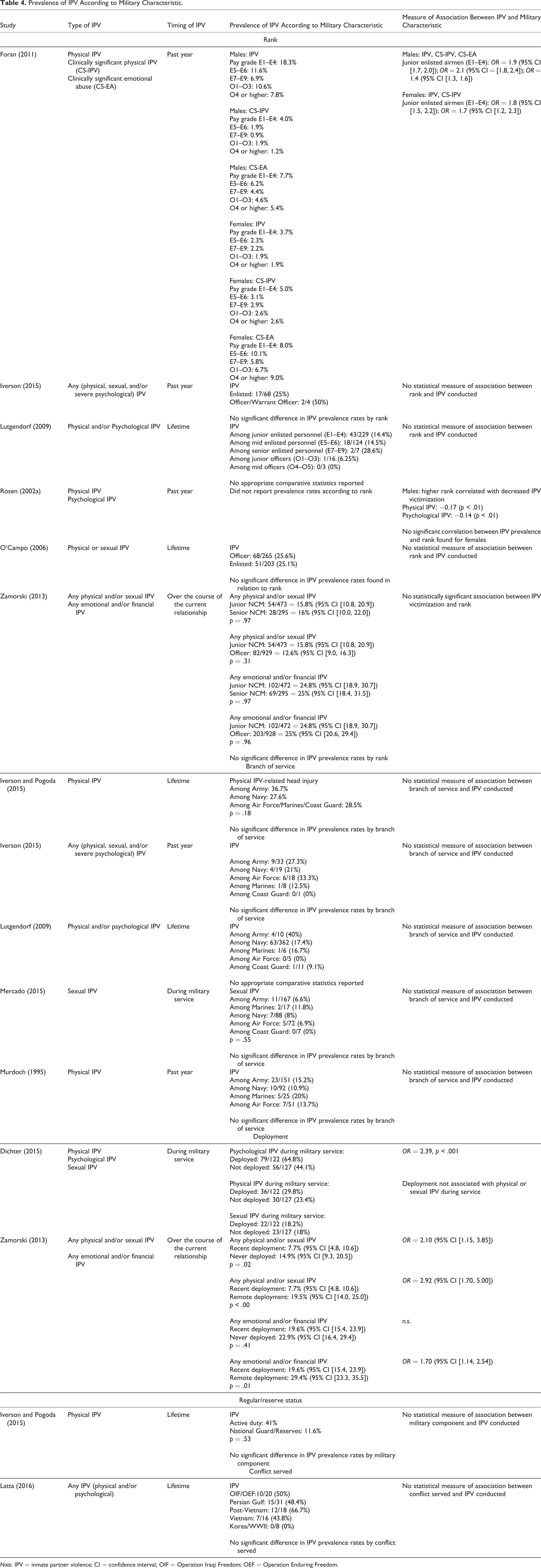
Note. IPV = inmate partner violence; CI = confidence interval; OIF = Operation Iraqi Freedom; OEF = Operation Enduring Freedom.
Rank
Three of the six studies which examined IPV and rank reported increased IPV prevalence among lower compared to higher military ranks (Foran et al., 2011; Lutgendorf et al., 2009; Rosen et al., 2002a). Of the studies which used comparative statistics, two found a statistically significant association between IPV and victimization and rank (Foran et al., 2011; Rosen et al., 2002a) and two did not (O’Campo et al., 2006; Zamorski & Wiens-Kinkaid, 2013).
Deployment
One study (N = 249) found that being deployed was significantly associated with increased psychological IPV victimization (but not physical or sexual IPV) during military service after controlling for demographic confounders (Dichter et al., 2015). A high-quality study of 1,745 CAF personnel found decreased IPV victimization over the course of the current relationship (both physical and/or sexual and emotional and/or financial) among service members with recent deployment (i.e., had been deployed within the previous 2 years) compared to those with remote deployment (Zamorski & Wiens-Kinkaid, 2013). Analyses were not stratified by gender. The same pattern was found when those with recent deployment were compared with personnel who had never been deployed. However, this did not reach statistical significance for emotional and/or financial IPV.
Branch of service and engagement status
Lutgendorf et al. (2009) studied 396 active duty females and found the highest IPV prevalence rate among those serving in the Army (40%) compared to serving in other branches (16.9%), though appropriate comparative statistics were not reported. However, four further studies found no significant difference in prevalence of IPV victimization among military personnel from different branches of service (Iverson et al., 2015; Iverson & Pogoda, 2015; Mercado, Foynes, Carpenter, & Iverson, 2015; Murdoch & Nichol, 1995).
One study of 176 female VA patients measured IPV among regulars and reserves and found no significant difference in prevalence rates (Iverson & Pogoda, 2015).
Era of Service and Conflict Served
Three studies explored past-year physical IPV among females who served in the pre-2001 era (Heyman & Neidig, 1999; Murdoch & Nichol, 1995; Rosen et al., 2002a) and three studies among those who served in the post-2001 era (Foran et al., 2011; Lutgendorf et al., 2009, 2012). Past-year physical IPV prevalence rates ranged from 13.1% to 39% among females who served in the pre-2001 era and from 8% to 29.4% for the post-2001 era. There were insufficient studies to examine physical IPV by era of service among males.
One study found no significant difference in prevalence of lifetime IPV victimization among female veterans who served in five different conflict periods: Operation Iraqi Freedom/Operation Enduring Freedom, Persian Gulf, Post Vietnam, Vietnam, and Korea/World War II (Latta et al., 2016).
Discussion
Summary of Main Findings
This review appraised 28 papers that investigated the prevalence of self-reported IPV victimization among military populations. The majority of studies examined IPV victimization among females rather than males. Prevalence rates varied widely depending on sample, method of measurement of IPV, and definitions of IPV, making it difficult to summarize and statistically pool the findings. What was clear was that the prevalence of self-reported IPV victimization among females was generally higher for psychological IPV, followed by physical and sexual IPV with some evidence supportive of a similar pattern among males. Studies tended to show a similar or higher prevalence of emotional and physical IPV among males compared to females, though findings from a small number of studies suggest that this may not be the case when IPV associated with impact or injury is measured.
Prevalence rates of sexual IPV varied widely between studies in the review depending on definition. However, in spite of wide variations, all extant studies of sexual IPV during military service found it to be highly prevalent. All studies were of females victims with no studies of sexual IPV victimization among male military personnel.
Evidence for the impact of military factors such as deployment, rank, and service on IPV victimization was conflicting. There was some evidence indicating increased IPV victimization among personnel in lower ranks, those serving in the Army compared to other branches of service and those who served in the pre-2001 era compared to the post-2001 era. However, this was not conclusive. Overall, the findings indicated increased IPV victimization among active duty personnel compared to veterans.
Type of IPV
Psychological/emotional abuse was found to be the most prevalent type of IPV. It is possible that this is due to the underreporting of physical/sexual IPV compared to psychological IPV. Previous research among the general population has found that perpetrators of IPV are more likely to disclose psychological than physical abuse (Williamson, Jones, Hester, & Feder, 2014). It is possible that a similar pattern is present among victims of IPV, though for perhaps different reasons. Barriers to the disclosure of IPV among mental health service users include fear of the consequences (including fear of further violence and of social services involvement/child protection issues) and feelings of shame (Rose et al., 2010). These barriers to disclosure may be greater with physical/sexual than psychological violence.
The findings support growing public concerns about the prevalence of sexual assault against female military personnel during service (Defense Department Advisory Committee on Women in the Services, 2013; Mankowski & Everett, 2016). However, the absence of studies on male sexual IPV victimization in this review reflects the common misconception that sexual assault is a “women’s issue” (Castro, Kintzle, Schuyler, Lucas, & Warner, 2015). The Armed Forces have implemented a number of measures to address the issue of sexual abuse. For example, in the United States, the Department of Defense (DoD) presents the annual Sexual Assault Prevention Innovation Award to commend personnel or units who have taken action to prevent sexual assault (DoD Sexual Assault Prevention and Response Office, 2016). Nevertheless, the U.S. military’s sexual assault prevention and response program lacks sufficient information about male victimization and consideration of the distinct barriers to reporting for males (U.S. Government Accountability Office, 2015).
Gender and IPV victimization in the military
Studies in this review report similar or higher prevalence rates of past-year emotional and physical IPV among males compared to females. The results of the meta-analysis of past-year physical IPV by gender must be interpreted with caution, as only two studies of males could be included. However, it is notable that studies of past-year physical IPV that reported data on both genders all found similar prevalence rates among males and females (Foran et al., 2011; Forgey & Badger, 2006; Rosen et al., 2002a). A review of nationally representative surveys of IPV found that surveys conducted in countries with markedly decreased gender equality (e.g., Uganda) tended to find higher rates of female victimization, whereas equal rates of self-reported IPV among genders were found in the United States (Esquivel-Santoveña & Dixon, 2012). The vast majority of studies included in our review were conducted in the United States.
Evidence has shown that males and females may be affected differently by social desirability bias (Sutton & Farrall, 2004), such that males may be less likely to report victimization than females. Such gender stereotypes are likely to be more pronounced within the “macho” military culture, where masculinity is highly valued and help-seeking is perceived as a sign of weakness (Wolf, Eliseo-Arras, Brenner, & Nochajski, 2017). Indeed, research has suggested that gender bias in the military impedes the reporting of abuse by male victims (Gray, 2015). In spite of the potential impact of social desirability bias on reporting by military males, this review found at least similar rates of IPV victimization in males and females.
It is of note that 24 studies reported data on female victims, compared to only 7 on males. In the United Kingdom, Joint Service Publication policies on the management of IPV have been developed based on the Ministry of Defence’s (2015a) commitment to support the cross government Violence Against Women and Girls agenda. Notably, the policy that provides practice direction in managing cases of IPV refers to the IPV victim as being female (Ministry of Defence, 2015c). This is suggestive of a lack of acknowledgment of victimization among male serving personnel, which is further supported by the lack of studies into male victimization in this review. The military culture, which favors male strength and is forbidding of male weakness, may have influenced the direction of research to focus on female IPV victims. However, it has been noted that to frame the problem of IPV as “violence against women” overlooks males who may be victims of violence in gender-saturated contexts, such as IPV (Archer, 2000). Walby et al. (2017) argue that if the focus in official crime statistics is biased toward women, then we cannot explore the gendered nature of violence, which requires comparisons between males and females. Considering that the review findings suggest that physical IPV victimization is just as prevalent if not more prevalent among male compared to female military personnel, it seems that increased awareness of male IPV victimization in the military is needed, both from a research and service development perspective.
Gender differences in IPV victimization, or lack thereof, in this review may be masked by a lack of consideration of the impact of violence on the victim. Walby et al. (2017) note the gendered lack of alignment between actions and impact/consequences and argue that the CTS (Straus & Gelles, 1999) is not an appropriate tool to measure IPV because actions alone cannot be relied upon to define a violent event. General population research has found that females tend to report greater physical harm from IPV than males (Breiding, 2014; Stöckl et al., 2013; Walby, Allen, & Simmons, 2004). Only two studies in this review considered the impact of IPV, and both found it to be equal or greater among females compared to males (Foran et al., 2011; Forgey & Badger, 2006). However, in one study, enlisted females were asked to report on both their own and their spouse’s IPV perpetration, and so there is likely to be significant reporting bias (Forgey & Badger, 2006).
Pattern of IPV among military populations versus general population
In the United States, the National Intimate Partner and Sexual Violence Survey (2011) found emotional and/or financial abuse to be the most common type of IPV experienced by both males and females (Breiding, 2014), a finding that has been mirrored here among military female victims. The U.S. general population survey found a similar prevalence of past-year physical IPV victimization among males (4.8%) and females (4%). Prevalence of severe past-year physical IPV was also similar among males (2.1%) and females (2.3%), though the impact was reported to be greater among females (13.4% of females reported being physically injured compared to 3.5% of males; CDCP, 2014). Past-year prevalence of any physical IPV victimization in studies of military personnel included in this review ranged from 19.61% to 38% for males and from 8% to 39% for females. Severe physical IPV prevalence rates ranged from 3.54% to 16% for males and from 3.45% to 12.9% for females. So, while the review findings show a similar lack of gender difference in physical IPV victimization, the prevalence rates in the military studies are universally higher than in the U.S. general population irrespective of sample population and methodology. However, such a crude comparison does not take account of possible sociodemographic differences in these populations that may contribute to differences in prevalence of IPV. Findings from robust research comparing the prevalence of IPV victimization among military personnel and the general population, taking account of possible confounders, have yet to be published.
Active duty personnel compared to veterans
Past-year physical, sexual, and psychological IPV victimization rates were generally higher in studies of female active duty personnel compared to female veterans. In the United States, the Family Advocacy Program raises awareness and educates personnel on the most effective responses to IPV (DoD, 2015). It is possible that increased awareness has led to increased reporting of IPV among active duty personnel in comparison to veterans. It is also possible that the military environment increases the risk of IPV, for example, due to an accepted culture of aggression (Adelman, 2003) and increased family stress (Johnson et al., 2007).
Military characteristics
This review draws attention to the paucity of studies exploring how IPV victimization rates may vary by military characteristics. Studies into the impact of deployment on risk of IPV victimization were limited methodologically, for example, use of cross-sectional data and no consideration of reduced time at risk of IPV if on deployment. Deployment is an important aspect of military service and has been shown to increase the risk of mental health problems, alcohol misuse, and aggressive behavior (Fear et al., 2010; MacManus, Dean, Jones, et al., 2013). Hence, further research into the possible impact of deployment on risk of IPV victimization is required.
The prevalence of past-year physical IPV victimization was found overall to be reduced but not markedly different among females who served in the pre-2001 era compared to the post-2001 era. This could be interpreted as a positive finding that reporting of IPV has not increased in spite of increased military operations for all Allied Forces since 2001. It may also suggest a lack of culture shift and a need for enhanced awareness raising to encourage more reporting of abuse.
Strengths and Limitations
To our knowledge, this is the first systematic review of the prevalence of self-reported IPV victimization among military populations. A strength of this review is that it appraised studies of all types of IPV (including varying definitions of “any” IPV). However, heterogeneity in definition and measurement of IPV limited comparison between studies and hence the conclusions that can be drawn from the review. Methods of data collection in the included studies ranged from anonymous surveys to face-to-face interviews on a military base, which is likely to influence rates of reporting.
Problems with IPV definitions and measurement was not only a significant limitation of studies in this review but is a criticism of the field of IPV research as a whole (Follingstad, 2007; Follingstad & Bush, 2014; Maiuro, 2001). For example, there is no consensus on whether threats of physical harm should be measured by physical abuse scales or psychological abuse tools (Hegarty, Bush, & Sheehan, 2005). Follingstad and Bush (2014) suggest that the current approach to measuring IPV hinders the improvement of the evidence base and stress the importance of developing a “gold standard” measurement.
It is important to acknowledge that self-report data are vulnerable to reporter bias. The reporting of IPV victimization can be influenced by social desirability and also the interpretation of what constitutes “abusive behavior” may vary widely among participants. However, although self-report measures have limitations, official sources of data are likely to underestimate the prevalence of IPV victimization, which may be skewed toward more severe IPV. Official crime records rely on police recorded crimes that have been shown to be limited in their capture of incidents of IPV through the use of face-to-face interviews, a methodology which has been shown to lead to underreporting of IPV (Office for National Statistics, 2018; rates of physical IPV victimization identified by the self-completion module in the Crime Survey for England and Wales are 5 times higher than those disclosed through the face-to-face interviews; O’Leary & Boultwood, 2018), bias toward incidents of violence that victims are willing to label as criminal and report, that is, more severe physical violence (O’Leary & Boultwood, 2018), and inconsistency in methods of collection of data regarding IPV incidents (Max, Rice, Finkelstein, Bardwell, & Leadbetter, 2004).
It should be noted that risk of bias calculations highlighted the low quality of some of the evidence included in the meta-analysis, as some studies had small, nonrepresentative samples. However, the overall risk of bias rating was low–moderate, and the majority of included studies were classed as medium to high quality; thus, we felt it was valid to combine these prevalence estimates.
An important limitation of this review is the lack of research on IPV victimization among male military personnel. It is notable that all studies conducted in clinical settings focused on female VA patients, and only one study included male veteran participants. This suggests a particular lack of acknowledgment or awareness among health researchers of male victims of domestic abuse.
Implications
Future research must endeavor to reduce the variation in definition and measurement of IPV in order that more meaningful comparisons between studies can be made. This review highlighted that IPV victimization among male service members is underresearched. It has been noted that if the focus in official crime statistics is biased toward women, then we cannot explore the gendered nature of violence (Walby et al., 2017). Research that examines the impact of IPV among male and female personnel would be valuable, in order that gender differences can be uncovered. Furthermore, research is needed into barriers to help-seeking which may be greater in military populations, for example, as a result of the macho culture (Iversen et al., 2010; Sharp et al., 2015). The burden of IPV identification in the military falls to health-care/welfare workers. Considering the heightened stigma associated with victimization among male military personnel, it is imperative that health-care/welfare staff are vigilant to and knowledgeable about male victimization, in order to respond sensitively and support male victims in reporting their experiences and seeking help.
Military culture may influence the type and severity of IPV and the associated risk factors, which may differ from the general population. This review emphasizes the need for more understanding of military-specific factors (such as deployment or military rank) that may influence IPV victimization, in order that specific higher risk groups can be identified, and interventions tailored to the needs of service members.
Footnotes
Declaration of Conflicting Interests
The author(s) declared no potential conflicts of interest with respect to the research, authorship, and/or publication of this article.
Funding
The author(s) received no financial support for the research, authorship, and/or publication of this article.