






Abstract
Teen dating violence victimization is associated with a host of adverse mental and physical health problems. A number of bystander-focused interventions have been developed to mitigate the occurrence of abuse but with varying effectiveness. There remains a need to understand more about bystander behaviors used by adolescents to ensure that existing intervention components match with bystanders’ attitudes and behaviors about intervening. The current study is a scoping review of existing literature on adolescents’ use of bystander behaviors to determine who, when, how, and why adolescents intervene. Seventeen articles met inclusion criteria, the majority of which used qualitative or observational survey designs. Adolescents who either feel a sense of responsibility and confidence to intervene or are directly involved with or know the individuals involved in the dating violence are more likely to intervene. Adolescents intervene when they are able to define an act as dating violence and tend to intervene when the victim is female and when they have a supportive relationship with at least one teacher in their school. The various ways how bystander intervention is engaged in ranges from verbally or physically confronting the abuser, distracting the abuser, seeking support from an adult, to passively accepting the abuse. Reasons why adolescents intervene include believing the abuse is wrong and that intervening will diffuse the situation and help the victim. A number of barriers to bystander intervention emerged from analysis including individual attitudes and school climate factors. Implications for strengthening bystander intervention programs are discussed.
In recent years, researchers and service providers have increasingly focused on how to increase bystander intervention in teen dating violence (TDV). A number of bystander-focused interventions have been developed to mitigate the occurrence of abuse and assault but with varying effectiveness (Storer, Casey, & Herenkohl, 2016). There remains a need to understand more about actual adolescent bystander behaviors in order to ensure that interventions are targeting the correct persons and directing intervention components in a manner that matches with attitudes and behaviors about intervening. The current study examines existing literature on bystander behaviors to uncover who, when, how, and why adolescent bystanders intervene in dating violence.
TDV
TDV or teen dating violence is defined as the physical, sexual, or psychological/emotional violence within a romantic or dating relationship, including stalking. Physical TDV is defined as the intentional or purposeful pushing, hitting, shoving, or kicking by a dating partner. Data from the national Youth Risk Behavior Survey reveal that 9.6% of high schools students who dated or went out with someone during the 12 months before the survey (11.7% of female students and 7.2% of male students) report being physically hurt on purpose by that person (Kann, 2016). Sexual violence has similar national prevalence rates. 10.6% of students (15.6% of female students and 5.4% of male students) had been forced to do sexual things (i.e., kissed, touched, or physically forced to have sexual intercourse) they did not want to do by someone they were dating or going out with one or more times (Kann, 2016). Emotional abuse is characterized as threatening a partner or harming his or her self-worth. This type of abuse can come in the form of name calling, making a partner feel guilty, purposeful embarrassment, or controlling behaviors such as keeping him or her away from friends and family. Although national prevalence of psychological or emotional abuse are not currently collected, studies estimate that emotional TDV prevalence ranges from 24% (Haynie et al., 2013) to 96% (Jouriles, Garrido, Rosenfield, & McDonald, 2009).
TDV victimization has been shown to be associated with a host of adverse mental and physical health problems including depression, substance use, suicidal ideation, risky sexual behavior, and drug use (Exner-Cortens, Eckenrode, & Rothman, 2013; Nahapetyan, Orpinas, Song, & Holland, 2014; Parker, Debnam, Pas, & Bradshaw, 2016; Shorey et al., 2015). These risky behaviors are not limited to adolescence; 5 years after experiencing TDV, young adults reported increased heavy episodic drinking, depressive symptomatology, antisocial behaviors, suicidal ideation, smoking, marijuana use, and adult intimate partner victimization (Exner-Cortens et al., 2013). Moreover, a recent report commissioned by the Centers for Disease Control found that approximately 7% of adult women and 4% of adult men who ever experienced rape, physical violence, or stalking by an intimate partner first experienced some form of partner violence by a partner before 18 years of age (Black et al., 2011).
Help-Seeking Behaviors
Given the potential and long-lasting effects of TDV, seeking assistance from others has many benefits to victims (Carlson, McNutt, Choi, & Rose, 2002; Goodman, Dutton, Vankos, & Weinfurt, 2005; Waldrop & Resick, 2004). Help seeking can provide emotional support in the form of concern and encouragement to leave the relationship (Carson et al., 2002; Weisz & Black, 2009). Information or advice from others can assist in problem-solving, conflict negotiation, and additional knowledge about healthy relationships (Weisz & Black, 2009). Finally, help seeking can result in additional resources, protection from the abuser, and potentially reduce the severity or frequency of the abuse (Weisz & Black, 2009).
However, the majority of adolescents experiencing dating violence do not seek help (Ashley & Foshee, 2005). Victims are often afraid the severity or frequency of abuse will be increased by their abusers, as a result of speaking out (Martin, Houston, Mmari, & Decker, 2012). Of those victims of TDV who do seek help, the majority seek informal or nonprofessional help, such as family or friends (Ahrens & Campbell, 2000; Ashley & Foshee, 2005; Banyard, Moynihan, Walsh, Cohn, & Ward, 2010; Martin et al., 2012). Ashley and Foshee (2005) reported that after experiencing dating violence, only 40% of adolescent victims sought help: 89% from a friend, 40% from a sibling or extended family, and 13–30% from a parent. Black and Weisz (2003) found that, within a sample of African American middle schoolers, more than 50% of youth reported that they would be willing to seek help from their parents, grandparents, and other adults in issues related to violence in their dating relationships.
Research also suggests that educating peer groups on how to respond to friends asking for help when experiencing TDV could be helpful (Ashley & Foshee, 2005). Indeed, Banyard, Moynihan, Walsh, Cohn, and Ward (2010) found that friends of sexual violence survivors felt they were able to be a good source of help and support for the friend. Furthermore, a recent study (Van Camp, Hébert, Guidi, Lavoie, & Blais, 2014) also found that many adolescents feel confident in their ability to deal with dating violence, reporting greater self-efficacy in helping someone else. Yet there remains little research regarding the role of friends and the disclosure process in physical and psychological TDV.
Bystander Theoretical Underpinnings
Latané and Darley’s (1969) situational model of bystander behavior (SMBB) is typically used to understand bystander behaviors as related to adult intimate partner violence. The SMBB posits that the decision to intervene in an emergency is based on sequential choices by the individual (Hoefnagels & Zwikker, 2001): (1) notice that something is happening, (2) interpret the event as an emergency, (3) decide that it is his or her personal responsibility to intervene, (4) decide how he or she wants to intervene, and (5) implement the planned intervention. This decision process may be especially relevant to understanding adolescent bystander behaviors. Key aspects of adolescents’ psychosocial development at this developmental stage include increasing autonomy and peer affiliation. The SMBB is consistent with adolescents desire to make independent choices and consider peer affiliation when deciding how they want to intervene. Indeed, Nickerson, Aloe, Livingston, and Feeley (2014), in a study of U.S. youth, found each decision point in the SMBB significantly predicted willingness to intervene in the context of bullying and sexual harassment. Recently, Casey, Lindhorst, and Storer (2017) proposed a new theoretical model that seeks to further elucidate adolescent use of bystander behaviors as related to TDV and bullying. This model incorporates the theory of planned behavior (TPB; Ajzen, 1991) with the SMBB to explain the broad range of adolescent attitudes and beliefs (i.e., cognitive factors) that may play a role in this decision process. While research suggests that SMBB is helpful for understanding the decision-making process, TPB could help differentiate interveners from noninterveners. The TPB, a social cognitive theory, posits that adolescents’ behaviors can be predicted by their intention to perform the behavior. However, adolescents’ intentions are influenced by their attitude toward the specific behavior, social norms regarding what important referrents (i.e., peers, family) would want them to do, and perceived behavioral control or self-efficacy to intervene. For example, adolescents, with their increasing levels of peer affiliation, may be more likely to be influenced by the perceived social norms regarding violence among their peers. If adolescents perceive that their peers would look positively upon intervening in a violence situation, they may be more likely to make that decision. Casey, Lindhorst, et al. (2017) found that adolescents’ qualitative description of their bystander decision-making process supports the integration of SMBB and TPB to form a “situational-cognitive model of bystander behavior.” While quantitative tests are needed to further validate this emerging model, it is clear that adolescent bystander behavior is complex and more research is needed to advance intervention programming.
Bystander Interventions for Preventing TDV
Bystander-based prevention programs have been introduced as an innovative strategy to prevent partner violence. These programs generally focus on arming adolescents or young adults with the necessary skills and self-efficacy to safely intervene when they witness dating violence and sexual violence. The programs do not assume that the bystanders know or are familiar with the abuser or victim but are built on the assumption that “when community members ignore or fail to respond to behaviors across this spectrum, they tacitly reinforce the behavior” (Storer, Casey, & Herrenkohl, 2016, p. 257). The goals of these programs are to increase the likelihood that specific instances of violence or abuse are disrupted and to foster a peer and community environment that discourages aggressive or violent behavior. This is particularly relevant to adolescents as there is evidence that approximately half of all dating violence happens in the presence of others (Molidor & Tolman, 1998). In fact, existing bystander-focused programs, such as Bringing in the Bystander, Coaching Boys Into Men and Green Dot, have shown that changing social norms can result in a reduction in sexual assault (Banyard, Moynihan, & Plante, 2007; Coker et al., 2015, 2016; Miller et al., 2013).
However, research also suggests that bystander decisions to intervene are contextual, contingent on individual characteristics and form of violence (Weitzman, Cowan, & Walsh, 2017). For example, Weitzman, Cowan, and Walsh (2017) found that, within an adult sample, bystanders were more likely to intervene in partner violence when compared to sexual assault. This study also found that the method of intervention bystanders chose was different for sexual assault and partner violence (Weitzman et al., 2017). Furthermore, a study among college students showed that men had the highest probability of directly intervening in sexual assault, whereas women had the highest probability of indirectly intervening in partner violence (Palmer, Nicksa, & McMahon, 2018). Results also showed that students who knew neither the victim nor the perpetrator tended to choose to delegate the intervention to someone else (Palmer et al., 2018). While emerging research suggests that bystander intervention is an effective strategy for preventing interpersonal violence (Banyard, Plante, & Moynihan, 2004; Coker et al., 2017; Palm Reed, Hines, Armstrong, & Cameron, 2015), more research is needed to evaluate the contextual factors (i.e., individual characteristics, form of violence, and type of intervention method) influencing the use of this strategy for adolescents (Casey & Ohler, 2012; Storer et al., 2016; Taylor, Stein, Mumford, & Woods, 2013).
Overview of Current Study
The number of bystander-based programs has grown substantially in the last decade, with a recent systematic review documenting 15 programs since 2007 (Storer et al., 2016). However, it is important to note only 2 of those 15 programs have been tested with an adolescent population. Storer and colleagues’ review showed that bystander programs show promise in increasing bystanders’ willingness to positively intervene in situations that could become violent, but note that results are mixed and there are limitations in our understanding actual bystander behaviors. In addition, the bystander studies evaluated in the review focused almost exclusively on sexual violence (i.e., 12 of 15 studies). Comparatively, little is known regarding the use of bystander interventions and bystander behavior specifically related to physical or psychological dating violence. Therefore, the current review focused on uncovering empirical research exploring adolescent bystander behaviors in response to physical and psychological dating violence. The following question guided this review of literature: Who, when, how, and why do adolescent bystanders intervene in physical and psychological teen dating violence?
Method
This scoping review was conducted in three stages: (a) development of criteria for inclusion and literature search, (b) extraction and coding of study characteristics and findings, and (c) data analysis and aggregation of findings.
Inclusion Criteria and Literature Search
To be included in the review articles needed to describe bystander behaviors of TDV, specifically related to physical and psychological (emotional) abuse. Empirical studies were selected for inclusion in the review if they fulfilled the following criteria: (a) published in English, (b) included in a peer-reviewed journal, and (c) included outcome data on adolescent bystander behavior related to TDV. Articles were excluded if they only included data related to persons college-aged or older (18 and above) or only examined sexual violence, sexual assault, and/or rape without mention of physical and/or emotional/psychological dating violence. Studies that examined physical and/or emotional/psychological dating violence along with forms of sexual violence were retained in the review.
The authors worked with a professional research librarian to create a list of search teams for the search. The search was conducted in the following databases: PsycINFO, PubMed, SocIndex (with Full text), and ERIC (ProQuest). The search terms as they were searched were (“bystander behavior” OR “bystander behavior” OR bystander) AND (“physical abuse” OR “dating violence” OR “sexual violence” OR “psychological abuse” OR “emotional abuse” OR “psychological aggression” OR “physical aggression” OR “physical violence” OR “psychological violence” OR “adolescent relationship abuse”) AND (adolescent OR adolescence OR teenager OR teen). There was no limit on the date of publication and the search was conducted on July 1, 2017. See Figure 1 for a depiction of the steps included in the scoping review. A total of 17 articles met the selection criteria and are included in this review.
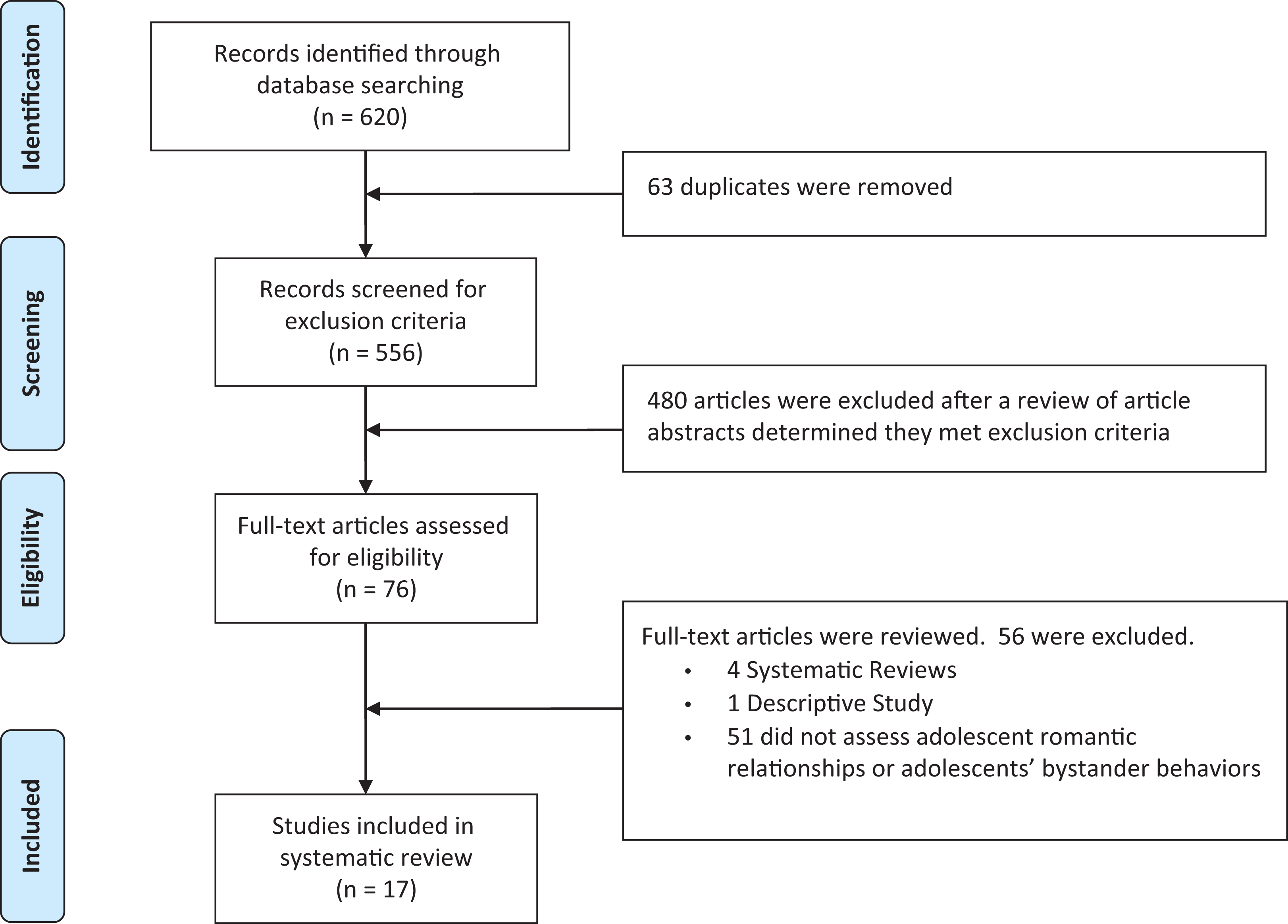
Flow chart of studies selected for scoping review adolescent bystander behaviors.
Data Extraction and Analysis
As the focus of this review was to better understand the behaviors of adolescent bystanders as related to physical and psychological TDV, data analysis and extraction concentrated on these data in the articles. Specifically, the second author extracted data from the articles on who intervenes, when do they intervene or decide to intervene, how do the bystanders intervene (i.e., what does the intervention behavior look like), and why bystanders do or do not intervene. In addition, data regarding the study design, participants, and measures used was extracted to better understand the range of included studies. Table 1 includes a summary of the data extracted for the review.
Studies Exploring Adolescent Bystander Behaviors in Adolescent Relationship Abuse.
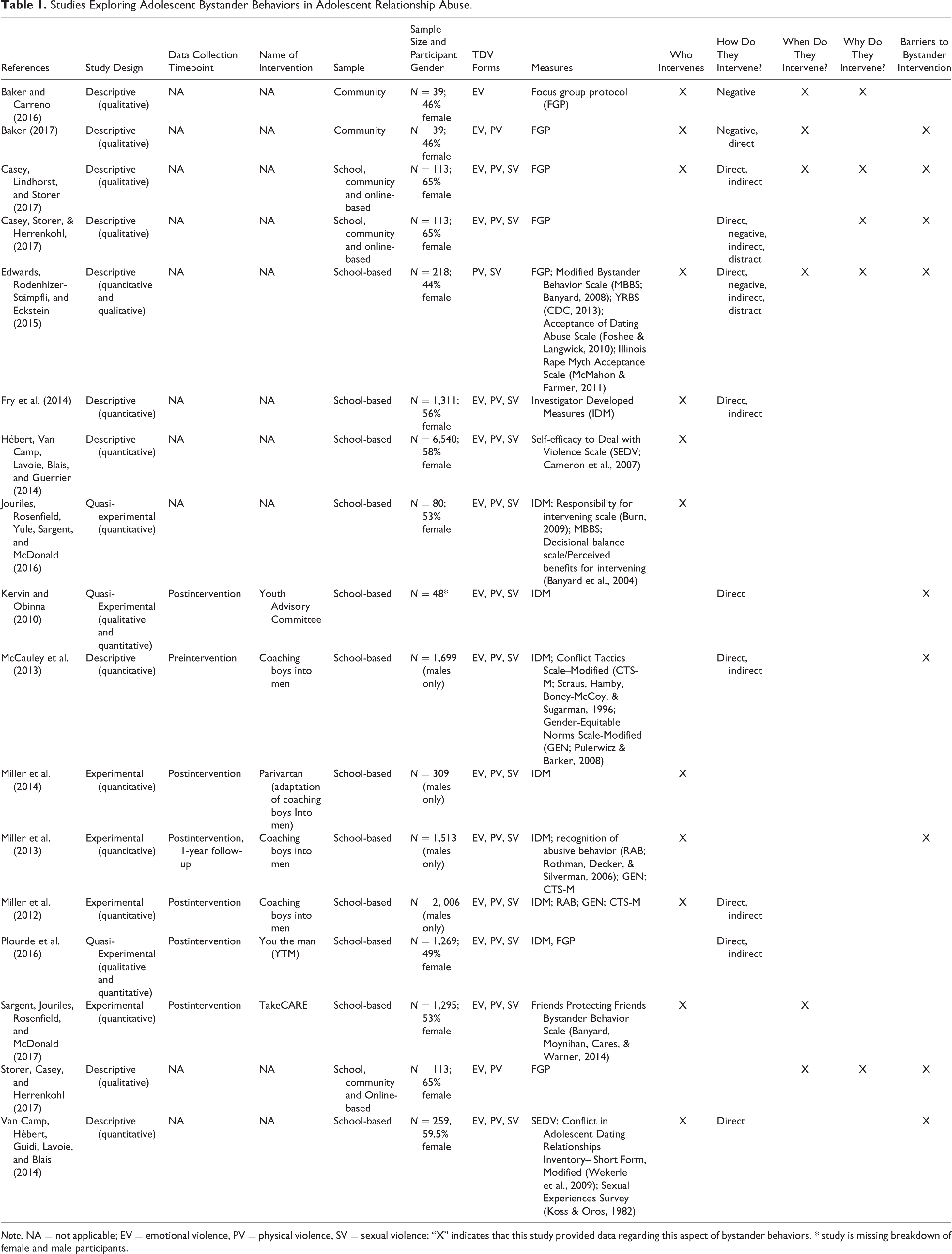
Note. NA = not applicable; EV = emotional violence, PV = physical violence, SV = sexual violence; “X” indicates that this study provided data regarding this aspect of bystander behaviors. * study is missing breakdown of female and male participants.
Results
A total of 17 articles are included in this review (see Table 1). The majority of the articles (n = 10) were descriptive and collected qualitative data (n = 8) to explore dating violence. Other study designs included were randomized control trials (n = 4) and quasi-experimental design (n = 3). Of the articles that contained postintervention data (n = 6), three examined the Coaching Boys Into Men (CBIM) intervention or an adaptation of CBIM. The majority of the studies included in the review were at least partially obtained from school-based samples (n = 15). Participants surveyed were all middle or high school aged, with the oldest age reported being 19 years old.
Who Intervenes
In examining results from the included empirical articles, we gathered information on who engages in bystander intervention. In general, adolescents who directly know the individuals involved in the dating violence are most likely to intervene (Casey, Lindhorst, & Storer, 2017). In particular, those youth who are friends with the involved individuals, especially the victim, are more likely to intervene (Edwards, Rodenhizer-Stämpfli, & Eckstein, 2015).
A number of attitudes and beliefs were associated with engaging in bystander intervention strategies. These include feeling a moral sense of responsibility to intervene (Casey, Lindhorst, et al., 2017), having a sense of self-efficacy and confidence around their ability to effectively intervene (Casey, Lindhorst, et al., 2017; Herbert et al., 2014; Jouriles, Rosenfield, Yule, Sargent, & McDonald, 2016), believing that intervening would help make the situation better and help the abuser reflect on their actions (Casey, Lindhorst, et al., 2017), and believing intervening would foster self-respect (Casey, Lindhorst, et al., 2017). Conversely, Hébert, Van Camp, Lavoie, Blais, and Guerrier (2014) showed that adolescents experiencing sexual abuse and dating violence in the past 12 months reported lower self-efficacy to help others when witnessing dating violence. Finally, feeling that situations of dating violence are not their business or that they should not be the ones to intervene makes adolescents less inclined to utilize bystander intervention (Casey, Lindhorst, et al., 2017).
Some studies found differences in bystander intervention based on youth demographic characteristics. Three studies showed that female youth are more likely to intervene and more optimistic about their intervention abilities (Edwards et al., 2015; Fry et al., 2014; Hébert, Van Camp, Lavoie, Blais, & Guerrier 2014; Van Camp et al., 2014). Moreover, Fry and colleagues (2013) and Sargent and colleagues (2017) found that Hispanic adolescents were more likely to use bystander intervention than non-Hispanic adolescents. They also found that adolescents born in the United States were more likely to talk to their friends about dating violence and give their friends advice related to dating violence than foreign-born adolescents (Fry et al., 2014).
Studies found that participation in bystander training programming impacted engagement in bystander behaviors. For instance, students exposed to the TakeCARE bystander program reported engagement in more “helpful” bystander behaviors at a 3-month follow-up (Sargent, Jouriles, Rosenfield, & McDonald, 2017). While athletes participating in Coaching Boys Into Men (CBIM) intervention reported initial increases in bystander intervention (Jaime et al., 2015; Miller et al., 2012, 2013), the 12-month follow-up study of CBIM found that the effects of the intervention on athletes’ utilization of and willingness to use bystander behavior were no longer significant (Miller et al., 2013). In addition,“Parivartan” an adaptation of CBIM for adolescent male athletes in India found that athletes who participated in the program reported significantly fewer “negative” bystander behaviors (e.g., laughing at or going along with peers’ abusive behaviors) at the 12-month follow-up (Miller et al., 2014). However, this study did not find significant differences between intervention and nonintervention athletes in terms of positive bystander behaviors or abuse perpetration (Miller et al., 2014).
When Do Adolescents Intervene
Our examination of results from the included empirical articles also included an exploration of time and spaces in which adolescents utilize or feel comfortable engaging in bystander intervention. The studies revealed that adolescents’ ability to determine whether an act constitutes abuse impacts when they intervene. Casey, Lindhorst, et al. (2017) found that adolescents use a number of factors to determine whether an act constitutes abuse, including the victim’s reaction to the behavior. Two studies showed that adolescents are more likely to intervene when the victim of the abuse is female and in situations of physical abuse, especially if it causes injury or significant distress to the victim (Casey, Lindhorst, et al., 2017; Edwards, Haynes, & Rodenhizer-Stämpfli, 2016). Another study found that adolescents are more likely to intervene in situations that do not include the presence of a perpetrator (Sargent et al., 2017). Adolescents are also more likely to intervene when they observe controlling behaviors in their peers’ romantic relationships (Edwards et al., 2015). For example, if they overhear a friend insulting their partner, or saying things like, “she deserved to be raped” (Edwards et al., 2015, p.223). Yet Sargent and colleagues (2017) found that adolescents most often intervene after situations of abuse have occurred, as opposed to interrupting abuse that is occurring in the moment or before it occurs.
A few studies discussed contextual issues that facilitate when adolescents’ intervene. For instance, Edwards, Rodenhizer-Stämpfli, and Eckstein (2015) found that adolescents are less likely to intervene when they observe abusive behaviors over social media as opposed to observing abuse in person. Additionally, Storer, Casey, and Herrenkohl (2017) showed that adolescents who report having social support in school (i.e., at least one supportive relationship with a teacher in school) were more likely to intervene.
How Do Adolescents Intervene/What Does It Look Like
We also examined the articles, for examples, of how adolescents engage in bystander intervention. From this analysis, we found five trends in the description of bystander behavior used by adolescents: (1) direct verbal confrontation, (2) direct physical confrontation, (3) distraction, (4) indirect intervention, and (5) passive or active acceptance.
Direct verbal confrontation was discussed in 11 of the reviewed studies. Direct verbal confrontation describes behaviors in which adolescents directly address the abuse with the perpetrator and/or victim using a verbal response. It can look like adolescents verbally interrupting the abuse as it is occurring and saying things such as “Stop” or “Knock it off” (Casey, Lindhorst, et al., 2017; Casey, Storer, & Herrenkohl, 2017; Edwards et al., 2015) or correcting problematic language and reacting negatively to sexist jokes (Jaime et al., 2015; Kervin & Obinna, 2010). Direct verbal confrontation also includes adolescents having conversations with a member of the couple, especially the victim (Edwards et al., 2015; Fry et al., 2014; Miller et al., 2012). In such conversations, adolescents described providing emotional support (Baker, 2017; Casey, Storer, et al., 2017; Plourde et al., 2016) and advice to the victim (Baker, 2017; Casey, Storer, et al., 2017; Fry et al., 2014; Plourde et al., 2016; Van Camp et al., 2014). Advice included such things as encouraging the victim to disclose the abuse to a trusted adult (Fry et al., 2014; Van Camp et al., 2014) or hotline (Fry et al., 2014) and encouraging the victim to leave their abusive partner (Casey, Storer, et al., 2017; Fry et al., 2014; Plourde et al., 2016). In two of the reviewed studies, adolescents also discussed having conversations with the perpetrator (Casey, Storer, et al., 2017; Fry et al., 2014). In the Casey, Storer, and Herrenkohl study (2017), adolescents discussed having a private conversation with the perpetrator to express disapproval for the abusive behavior and attempt to educate the abuser.
Direct physical confrontation was discussed in three of the reviewed studies (Casey, Storer, et al., 2017; Edwards et al., 2015; Weisz & Black, 2009). We use the description of physical confrontation to describe the physical nature of adolescent bystanders, most often male adolescents’, attempts to interrupt abuse, which is distinct from verbal confrontation. Such physical confrontations include stepping in between the couple (Casey, Storer, et al., 2017), using physical aggression (Edwards et al., 2015), and fighting the perpetrator (Casey, Storer, et al., 2017; Weisz & Black, 2009).
Distraction, as an intervening method, was also often physical in nature but describes adolescents’ attempts to interrupt the behavior and have parties focus on something else. Distraction was discussed by three of the reviewed articles (Casey, Lindhorst, et al., 2017; Casey, Storer, et al., 2017; Edwards et al., 2015). Distraction included efforts to interrupt abusive behavior as it occurred by creating a distraction, ignoring the perpetrator, and removing the victim from the moment (Casey, Lindhorst, et al., 2017; Casey, Storer, et al., 2017). More specifically, in one study, male adolescents described their efforts to use distraction by asking the victim to dance or starting a conversation with the victim (Edwards et al., 2015).
Indirect methods of intervention, which were discussed in six of the reviewed articles, included adolescents’ attempts to enlist support for addressing the abuse. All of the articles that discussed indirect methods described ways adolescents enlisted the support of an adult (i.e., parents, school staff; Casey, Lindhorst, et al., 2017; Casey, Storer, et al., 2017; Edwards et al., 2015; Fry et al., 2014; Miller et al., 2013; Plourde et al., 2016). Indirect methods also included accompanying a friend to speak with an adult or get support services (Casey, Storer, et al., 2017; Fry et al., 2014) and calling a support or crisis hotline (Fry et al., 2014; Plourde et al., 2016).
Finally, passive or active acceptance of the abuse describes bystander behaviors that do not seek to support the victim or stop the abuse. The nature of these actions has the potential to communicate acceptance of the abusive behavior. Passive or active acceptance of the abuse was discussed in two of the reviewed articles. Casey, Storer, et al. (2017) found that these include not doing anything when observing abuse, withdrawing from the victim, and attempting to diagnose the victim in order to figure out what would make them accepting of such abusive treatment. Furthermore, Edwards and colleagues (2015) found that adolescents sometimes ignore the abuse as a way to avoid “drama.”
Why Do Adolescents Intervene
Few studies provided reasons why adolescents do or do not intervene in dating violence (Baker & Carreno, 2016; Casey, Lindhorst, et al., 2017; Casey, Storer, et al., 2017; Edwards et al., 2015). Casey, Lindhorst, et al. (2017) found that adolescents intervene because they see the abuse as serious. In this study (Casey, Lindhorst, et al., 2017), the seriousness of the abuse was determined by adolescents’ examination of the victim’s distress, whether or not the abuse is part of a repeated pattern (i.e., more likely to intervene), and whether it is mutual (i.e., less likely to intervene). Consistent with a sense of personal responsibility described in “who” intervenes, intervention occurs because adolescents feel that relationship abuse is wrong and should be stopped. Simply stated; adolescents must believe that intervening is the right thing to do (Casey, Lindhorst, et al., 2017). Furthermore, there is a need to believe that intervening as a bystander can help diffuse the situation and will help improve things for the victim. In contrast, some adolescents may decide to intervene for negative reasons. Two studies showed that some adolescents may intervene because they desire to fuel the “drama” within the relationship, which often occurs through social media (Baker & Carreno, 2016; Edwards et al., 2015).
Barriers to Bystander Intervention
In reviewing the studies included in this review, a number of barriers that inhibit adolescents’ use of bystander intervention emerged. First, as adolescents become more uncertain about whether a couple’s acts constitute abuse they are less able to determine how to safely intervene (Casey, Lindhorst, et al., 2017). Three studies described attitudes that impede intervening including: (1) sensing that intervention would somehow make the situation more risky for the victim, (2) feeling intervening would risk their own physical safety, (3) believing intervention will not permanently make a difference, and (4) considering abuse to be a private matter and that if they intervene they will be considered intrusive (Casey, Lindhorst, et al., 2017; Edwards et al., 2015; Storer, Casey, & Herrenkohl, 2017). Adolescents who are of a lower social status (e.g., younger, less popular) than the abuser or abused often feel that intervention will not be successful (Casey, Lindhorst, et al., 2017) and fear social repercussions for their actions (Edwards et al., 2015). Moreover, adolescents are less likely to intervene in situations more likely to be characterized as harassment (e.g., sexist jokes, catcalls; Edwards et al., 2015).
Just as factors in schools can facilitate adolescents’ use of bystander intervention, school climate factors can also inhibit intervention. Such factors include (1) feeling teachers and administrators are more equipped to intervene, and (2) perceiving that schools do not take adolescent dating abuse seriously and lack awareness of the issue (Storer et al., 2017). Additionally, school cultures that reinforce “slut-shaming” and other sexist attitudes can diminish the likelihood that students will intervene (Storer et al., 2017). Finally, students are often hesitant to report abuse to teachers and other school officials for a number of reasons including (1) concerns that they will be considered a “snitch,” (2) lack of comfort discussing sensitive topics with teachers they are not close to, and (3) perceptions that teachers are not concerned about dating and sexual aggression among students (Edwards et al., 2015).
Discussion
To date, little research has explored how adolescents intervene in situations of physical and psychological dating violence. This scoping review sought to describe who, when, how, and why adolescents intervene in the context of TDV. The review provides evidence that adolescents can and do use bystander behaviors when faced with situations of TDV. This review also shows that contextual factors influence whether or not adolescents feel capable of using such behaviors, and researchers have described a number of barriers that prevent adolescents from feeling they can effectively intervene.
Adolescents intervene when it is a close friend who is involved in the violent relationship and when they feel confident about their ability to contribute to a positive outcome both for the victim and for themselves. This finding is consistent with social cognitive model of adolescent bystander behavior in that adolescents’ self-efficacy or confidence to intervene plays a role in their decision-making process. Results suggest more research is needed to identify how often and what factors might positively impact adolescents’ confidence in intervening with peers who they do not share a close relationship with. It is clear that an adolescent’s sense of the utility of bystander intervention when observing dating violence must override any sense that the violence is none of their business (Casey, Lindhorst, et al., 2017). Some sexual assault prevention programming has been successful at encouraging bystander intervention through social norm campaigns (Gidycz, Orchowski, & Berkowitz, 2011).
In line with the SMBB which suggests that defining the situation as an emergency is important to the decision-making process, the current study found that adolescents must be able to define an act as abusive if they are to actually intervene. Adolescents define acts as abusive by observing such factors as the gender of the victim and the types of abusive behaviors. In fact, adolescents’ uncertainty about whether acts can be considered abusive impacts their likelihood of intervening (Casey, Lindhorst, et al., 2017). Continuing to educate adolescents about the different forms of dating violence and how they may manifest themselves in their friends’ relationships may increase their likelihood of intervening. It is important to provide modern examples of dating violence that speak to the real lives of adolescents to translate the definitions of abuse (Sears, Byers, Whelan, & Saint-Pierre, 2006).
This review explored how bystander intervention is carried out when adolescents observe physical and psychological dating violence. Direct verbal confrontation was most often used to intervene. While adolescents utilize such confrontation in a number of ways, more research is need to determine whether it is the most effective intervention strategy for physical and psychological TDV. Some studies found that when adolescents confronted their friends in abusive relationships, telling them they should break up with their abusive partner because they deserved to be treated better, their friends pulled away from the friendship (Baker, 2017). It is possible that there is a strategically effective manner in which adolescents can utilize verbal confrontation; however, adolescents may need additional training and support for how to engage in these conversations with their friends (Kim, Weinstein, & Selman, 2017). Furthermore, adolescents’ ability to discern the proper time to utilize such interventions is potentially limited. Encouraging friends to leave an abusive relationship may be best completed using specific motivational language over the course of several conversations (Cunningham et al., 2013). TDV prevention programming should seek to provide adolescents with the skills necessary to effectively and sensitively respond to observed abuse.
The reviewed articles discussed a number of barriers to adolescent bystander intervention. A number of these barriers described the ways school culture and climate can be a major barrier to disclosures about abuse. This review highlights the important role teachers, school support staff, and school administrators can play in creating and fostering school climates that deem TDV a serious matter that is not tolerated and that students are expected to aid in the prevention of such abuse. This finding further lends credibility to the social cognitive model of adolescent bystander behavior which theorizes that social norms about intervening could be vital to increasing positive bystander behaviors. Such school and social climates would also encourage adolescent disclosure of abuse by fostering positive connections between students and teachers and administrators. Indeed, Storer et al. (2017) found that adolescents were more willing to intervene in dating violence when they perceived the school personnel had expertise to respond effectively, the school environment was intolerant of abuse, and when students had trusted the relationships with teachers. Existing school-based interventions will be more effective if they are able to cultivate a whole school response to abuse and violence (Storer et al., 2017; Taylor et al., 2013). For example, efforts to strengthen student connectedness to the school, staff, and other students may increase their likelihood of reporting dating abuse (Debnam, Johnson, & Bradshaw, 2014).
Consistent with the recent review of bystander intervention programs (Storer et al., 2016) and the social cognitive model of adolescent bystander behavior, study findings show there is a need for bystander-based interventions to consider the context in which adolescents operate in. Engaging in bystander behaviors is contingent on a myriad of situational and cognitive factors, which then may be affected by the social norms of that environment. For example, even if adolescents endorse a sense of personal responsibility to intervene in witnessed dating violence, they still may be less likely to engage in an indirect intervention if they don’t perceive support from trusted adults in their community. Thus, attention to setting-level policies and norms is important component of bystander programming.
In addition, the current study extends the review of bystander programs by considering specific traits of bystanders. Examining these traits across studies, in aggregate, makes it easier to see the gaps in our current knowledge and contributes to our understanding of the necessary components of bystander interventions. Specifically, few studies provided information of when and why adolescents intervene. Future research that considers these factors may see a greater impact on bystander behavior. For instance, coaches in the CBIM intervention discussed the fact that many youth need time to grapple with the idea of intervening against their peers. CBIM found that athletes are often hesitant to intervene with their teammates and feared retaliation (Jaime et al., 2015). The push toward bystander intervention programming like CBIM as a means to prevent dating violence by promoting awareness of and intervention in situations of TDV continues to increase (Banyard, Edwards, & Seibold, 2016; Kaukinen et al., 2018). However, such programming requires an understanding of how and when adolescents utilize bystander behaviors. This review can be used to inform efforts to enhance researchers’ and service providers’ understanding of adolescent bystander intervention. For instance, adolescents noted concern for their own physical safety as a barrier to bystander intervention. Service providers may consider alternative ways (e.g., anonymous or confidential help lines) for adolescents to report their concerns about dating abuse that protects the reporter.
Limitations of our review should be noted. Given that the search uncovered only 17 studies meeting the review criteria, many findings are based on a small number (i.e., 2–3) of peer-reviewed articles. In addition, the review includes only those articles written in English and published studies. However, the review did benefit from using a professional research librarian consultation in the search of online databases. Data for this review were extracted from data available in the published article. Thus, additional data that might be available through other sources were not obtained, and no input was sought from the individual authors. This review focuses on results from studies that explicitly included physical and psychological dating violence. As a result, the findings do not readily generalize to programs targeting only sexual harassment, assault, or abuse. Moreover, this review did not include articles that described intervening behaviors by adults or parents. There is an emerging literature base regarding the role of parents in response to dating abuse that is also important for future bystander intervention development (Black & Preble, 2016). This review intentionally included studies that provided both qualitative and quantitative data as well as data collected pre- and postintervention. Thus, the heterogeneity of outcomes and assessment methods precluded performing a formal meta-analysis and bystander data may have been influenced by the study intervention. It is also important note that there was adequate diversity across study participants. While the majority of data were collected from school-based samples, participants were diverse in race and ethnicity (i.e., five samples were majority Black, five samples were majority White, and two samples were majority Hispanic or Latino). In addition, three of the studies (Herbert et al., 2014; Miller et al., 2014; Van Camp et al., 2014) were conducted with adolescents outside of the United States.
As demonstrated in our findings who engages in bystander intervention and how they engage in these behaviors varies widely. Through this review, we demonstrated that there are many factors to consider in increasing adolescents willingness and ability to intervene on a peer’s behalf. Findings from the study can be used to strengthen our bystander programming and prevention efforts particularly as related to physical and psychological abuse. Future research must also examine the effectiveness of this approach in reducing the overall occurrence of dating violence.
Critical Findings
Consistent with bystander intervention literature, the findings of this review reveal that adolescents do utilize bystander behaviors in response to TDV, especially when they feel confident that their intervention will be effective and positively contribute to a friend’s well-being. Additionally, adolescents’ ability to intervene is impacted by their capacity to define an act as abusive. Adolescents’ efficacy in defining acts as abuse remains unclear, but many adolescents use factors like gender and the type of abusive behavior to determine whether they should intervene. When observing TDV, adolescents use bystander intervention in a number of ways including: direct verbal confrontation, direct physical confrontation, distraction, and indirect intervention (e.g., soliciting the help of an adult). However, not all adolescents effectively intervene when faced with TDV and some studies show that adolescents exhibit passive or active acceptance when observing TDV. This review revealed a number of barriers adolescents face against using bystander intervention. Adolescents’ own attitudes toward bystander intervention can get in the way. Feeling that the intervention would be too risky, both socially and physically, and that abuse is a private matter between the couple stops adolescents from utilizing bystander behaviors. Further, the culture and climate of an adolescent’s school can inhibit bystander intervention, especially in schools that do not communicate that TDV is a serious matter that will be effectively dealt with by school officials. While little is known about why adolescents intervene as bystanders, the findings of this review show that adolescents intervene when they perceive abusive behaviors to be serious, which may be based on victim’s level of distress and the pattern of abuse. Adolescents who intervene to stop violence do so because they believe that dating violence is not okay and that intervening will diffuse the situation and help the victim.
Recommendations and Implications for Practice, Policy, and Research
This scoping review highlights the need for relevant examples to teach adolescents ways to identify different forms of dating violence with consideration of how the forms manifest in adolescent relationships. This study revealed the strong influence context plays in supporting or inhibiting bystander behaviors. Because adolescents spend much of their time in school, school officials may need to create and foster school climates that communicate that TDV is not okay, students are encouraged to disclose abuse when they observe it, and further cultivate school-wide response to abuse. Adolescents are sensitive to adult responses to abuse and schools must exhibit that they can effectively respond to TDV. Bystander intervention programming may benefit from more information about how and when adolescents actually use bystander behaviors. Such programs can strive to provide adolescents with intervention strategies that both effectively and sensitively respond to TDV. Further, when training adolescents to respond, program operators may dedicate time to allowing adolescents to consider and discuss any barriers they perceive in intervening with their peers. This scoping review highlights the need for additional research to understand what factors impact adolescents’ confidence and understanding of when it is appropriate and useful to use bystander behaviors. Moreover, research should strive to understand what bystander intervention strategies are most effective for physical and psychological TDV and when is the proper time to utilize such interventions. Finally, continued research is needed to determine how effective bystander intervention programming is in reducing the occurrence of TDV.
Footnotes
Acknowledgments
The authors would like to thank Chloe Grinage for her early help in conducting this review.
Declaration of Conflicting Interests
The author(s) declared no potential conflicts of interest with respect to the research, authorship, and/or publication of this article.
Funding
The author(s) disclosed receipt of the following financial support for the research, authorship, and/or publication of this article: The research reported here was supported by the Institute of Education Sciences, U.S. Department of Education, through Grant #R305B140026 to the Rectors and Visitors of the University of Virginia.