







Abstract
Intimate partner violence (IPV) survivors are much more likely to experience housing insecurity or homelessness than those who have not experienced IPV. However, little comprehensive research has evaluated the effectiveness of interventions used to address IPV survivors’ housing insecurity. To address this knowledge gap, our team conducted a systematic review guided by three questions: (a) What are current interventions for addressing IPV survivors’ housing needs? (b) What are the methodological strengths and limitations of the research evaluating those interventions? (c) How effective are the identified interventions? We identified potentially relevant peer-reviewed and gray literature using variations of predetermined search terms and four search methods. Twelve articles met inclusion criteria. Accordingly, this study showed that there is an overall dearth of research concerning interventions that address IPV survivors’ housing insecurity and needs. Shelter is the most commonly assessed and available housing intervention for IPV survivors, but only limited empirical evaluation is available of shelter effectiveness. In addition, findings indicate both traditional shelter services and innovative interventions (e.g., rapid rehousing, flexible funding) would benefit from rigorous evaluation including examining survivor and situation characteristics contributing to housing strategy effectiveness.
Intimate partner violence (IPV) is an urgent public health crisis, with approximately 37% of women and 31% of men in the United States experiencing sexual or physical violence and/or stalking by an intimate partner during their lifetime (Smith et al., 2017). Other common forms of IPV include psychological abuse and economic abuse (Smith et al., 2017). Of particular concern, across 16 states in 2010, reports of homicide victims showed that 7% of male homicide victims and 46% of female homicide victims were killed by an intimate partner (Parks, Johnson, McDaniel, & Gladden, 2014). The time during which survivors are actively leaving their abusive partners is often an especially dangerous period, so ensuring safe transitions for survivors is critical (Campbell, Glass, Sharps, Laughon, & Bloom, 2007). A contributing factor to IPV homicide might be the lack of housing services for survivors, which often forces survivors to return to their abuser or to turn to options that offer little, if any, safety (Menard, 2001; Stevenson & Wolfers, 2006). Research also finds that the need for safe housing is one of the most urgent concerns among IPV survivors who are planning to leave an abusive relationship (Centers for Disease Control and Prevention, 2011). Despite the fact that many IPV survivors may need housing, especially during times of transition, little comprehensive guidance summarizing the state of the research in this area exists. Thus, to better understand the state of the evidence on housing interventions for IPV survivors, this study systematically reviews and synthesizes the existing literature evaluating IPV housing interventions.
IPV and Housing
IPV survivors are much more likely to experience housing insecurity or homelessness than those who have not experienced IPV (Dichter, Wagner, Borrero, Broyles, & Montgomery, 2017; Pavao, Alvarez, Baumrind, Induni, & Kimerling, 2007). Housing insecurity has been defined as having difficulty maintaining a residential dwelling due to ongoing issues such as difficulty paying mortgages or rent, evictions, frequent relocations, or living in overcrowded spaces with family or friends (Joint Center for Housing Studies, 2013; Pavao et al., 2007). Housing insecurity is distinct from homelessness because an individual experiencing housing insecurity might have a current place to live while experiencing multiple problems related to a lack of permanent or adequate housing (Rollins et al., 2012). One study found that women who experienced IPV in the last year were 4 times more likely to report housing insecurity than women who had not experienced IPV (Pavao et al., 2007). A study that followed mothers experiencing IPV over a 2-year period found that 36% had experienced housing insecurity and 11% reported homelessness during that time period (Gilroy, McFarlane, Maddoux, & Sullivan, 2016).
Contributing Factors
Research has pointed to several reasons why survivors of IPV commonly experience housing insecurity and homelessness. Foremost, IPV survivors often struggle with their economic well-being (Hahn & Postmus, 2014; Sanders, 2015). Survivors might have such struggles because their partners provided economically or employed economic abuse tactics, resulting in inconsistent work experience and/or constraints to their job training and educational opportunities (Sanders, 2015). In turn, obtaining stable, living-wage employment can be a challenge. Job instability has been found to play a mediating role on the relationship between IPV and housing instability and homelessness, lasting for several years after the cessation of IPV (A. E. Adams, Tolman, Bybee, Sullivan, & Kennedy, 2012; Zink & Sill, 2004).
Violent partners may keep survivors away from economic resources and/or interfere with their educations, careers, and work as part of a larger pattern of abuse. Economic abuse is a type of IPV commonly used by perpetrators and has been defined as any attempt to control or sabotage financial resources of an intimate partner as a way to ensure financial dependency (Postmus, Plummer, McMahon, Murshid, & Kim, 2012). Economic abuse tactics commonly used by perpetrators include stealing survivors’ money, sabotaging their employment or housing contracts, and destroying their credit (A. E. Adams et al., 2012; Hahn & Postmus, 2014). Consequently, survivors may not have the financial resources to establish their own independent housing (Galano, Hunter, Howell, Miller, & Graham-Bermann, 2013) and may be unable to secure housing contracts because they appear unreliable due to multiple moves or perpetrators’ efforts to sabotage references or get them evicted (Baker, Billhardt, Warren, Rollins, & Glass, 2010; Martin & Stern, 2005). Survivors may also experience unemployment or job instability as a result of the physical and mental health trauma they have endured (e.g., injuries, mental health issues, substance misuse, and disconnection from social networks; A. E. Adams et al., 2012; Bonomi, Anderson, Rivara, & Thompson, 2009).
In addition to economic abuse and the consequences of IPV for individual survivors, the economic and social conditions of the local communities in which survivors live may play a role on their need for housing. For example, when communities lack affordable housing options and living-wage employment opportunities, survivors may be faced with choosing between staying with the abuser and facing homelessness (Little, 2015).
Housing, Safety, and Well-Being
Survivors’ housing insecurity and homelessness can have detrimental consequences on their well-being. Survivors often stay with perpetrators because they do not have other options for a place to live (Anderson et al., 2003). When survivors decide to leave or end a violent relationship, their housing circumstances become critically important because separation from the abusive partner can trigger severe violence including intimate partner homicide (Campbell et al., 2007). Thus, survivors who face housing insecurity and homelessness may be especially vulnerable to retaliation from the former partner. Accordingly, housing plays a critical role in ensuring the safety of survivors and their children.
In addition to the negative impact of housing insecurity on survivor safety, homelessness and housing insecurity can put survivors and their children at elevated risk of mental health problems including post-traumatic stress disorder (PTSD), depression, and anxiety (Baker et al., 2010; Gilroy et al., 2016; Rollins et al., 2012). Survivors and their children who are able to access housing after the abuse report marked improvements in their mental health and sense of safety and stability (Bomsta & Sullivan, 2018). For all these reasons, it is critical that survivors have appropriate and effective housing interventions available in their communities.
Housing Interventions
IPV survivors who have little financial or social support often rely on IPV housing services for shelter, safety, and healing (Galano et al., 2013; Grossman & Lundy, 2011). Typical housing interventions may include crisis or emergency shelter services, transitional supportive housing (TSH), and permanent supportive housing. The U.S. Department of Housing and Urban Development (HUD, 2018) defines crisis or emergency shelter services as temporary or transitional shelter for the homeless in general or for specific populations. Notably, crisis or emergency shelters vary tremendously in the type of housing they offer (e.g., communal living space, individual bedrooms, independent living; shelter can range from secure facilities with hidden locations to housing survivors in local motels) and in the approaches shelter staff use to meet survivors’ housing-related and other needs (Sullivan, 2010). Despite such variation, this study uses the term shelter broadly to mean any crisis housing that is focused on providing safety and a temporary home to IPV survivors and their children. Other forms of housing beyond shelter include TSH and permanent supportive housing. TSH refers to housing with a time limit up to 2 years that aims to facilitate movement of homeless individuals to permanent housing (HUD, 2018). Permanent supportive housing refers to affordable housing in which survivors and their families can remain long term (HUD, 2018).
Approaches such as flexible funding, Housing First, and rapid-rehousing models are relatively new interventions to address IPV survivors’ housing needs. With flexible funding, service providers use dedicated program funds to provide survivors with a limited amount of financial resources to prevent homelessness or the loss of housing by paying overdue rent, paying for car repairs so survivors can travel to their employment, or paying utility deposits (Sullivan, Bomsta, & Hacskaylo, 2016). The Housing First model has also been adapted for IPV survivors. A Housing First approach involves helping survivors obtain stable housing as a first step toward providing support for other issues related to IPV (Padgett, Henwood, & Tsemberis, 2016; Sullivan & Olsen, 2016). Informed by the Housing First model, rapid rehousing aims to help survivors quickly exit emergency shelters or homelessness and secure permanent housing. Rapid-rehousing models often prioritize survivors’ housing security by also providing supportive “wraparound” services to help address survivors’ needs in comprehensive ways (Culhane & Metraux, 2008; Levitt et al., 2013). Ideally, rapid rehousing entails a tailored package of services including housing identification, rent and move-in assistance, and case management and ongoing support.
Emergency Shelter
Typically, emergency shelter services are time limited, with the average length of stay ranging between 30 and 60 days (National Network to End Domestic Violence [NNEDV], 2016). The limit on length of stay can pose a problem for IPV survivors because it can often take 10 months or longer to secure stable housing (NNEDV, 2016). To help survivors with the transition from emergency shelters to stable housing, some shelters offer supportive housing options such as transitional housing, short-term rental assistance, and permanent supportive housing (NNEDV, 2016). When supportive housing options are offered after emergency shelter, these options can serve as a bridge between crisis or emergency shelter and permanent housing (NNEDV, 2016).
On a single day in 2016, the NNEDV collected census data on 92% of all domestic violence services provided across the nation. These data revealed that in one 24-hr period, 25,912 survivors and their children received emergency shelter services and another 15,283 survivors and their children received transitional housing services (NNEDV, 2016). Although nearly 42,000 survivors received housing services on this 1 day, the data also showed an additional 12,000 requests for domestic violence services had to be denied because of a lack of resources. Of these denied service requests, 23% were for transitional housing services and 43% were for emergency shelter (NNEDV, 2016). Given such findings, an urgent need clearly exists for housing services that meet the unique needs of IPV survivors.
Current Study
To the best of our knowledge, no prior research has systematically examined housing interventions for IPV survivors. Thus, to address this important knowledge gap and to understand the current evidence regarding programs and practices addressing the housing needs of IPV survivors, we conducted a systematic and comprehensive review of the available research focused on housing-related IPV programs and services, hereafter collectively referred to as interventions. Such a review is timely given the widespread use of various housing interventions, such as emergency shelters, as well as the emergence of newer housing interventions, such as rapid rehousing. Our review was guided by the following questions: (a) What are current interventions discussed in the empirical literature for addressing housing needs of IPV survivors? (b) What are the methodological strengths and limitations of the research evaluating these housing interventions? and (c) How effective are the identified interventions at addressing the needs of IPV survivors?
Method
This review was developed using preferred reporting items for systematic review and meta-analysis protocols (PRISMA)-P for systematic reviews (Moher et al., 2015). Figure 1 contains a PRISMA flow diagram depicting the various steps in this study’s review process. The main goal of the review was to investigate the state of the evidence regarding interventions currently used to address IPV survivors’ housing needs. Our research team used four methods to identify relevant empirical articles: (a) database searches of peer-reviewed literature, (b) Internet searches for gray literature, (c) hand searches of relevant journals, and (d) reference harvesting. We first conducted a systematic search of eight electronic databases: PsycINFO, PubMed, Social Work Abstracts, Social Services Abstracts, Web of Science, Applied Social Sciences Index and Abstracts, Campbell Collaboration, and Cochrane Library. These searches used variations of the following key words (which we determined in consultation with a social science librarian): intimate partner violence OR IPV OR DV OR domestic violence OR partner abuse OR dating violence OR partner violence OR inter* violence OR spous* abuse OR intimate partner abuse OR battered women AND housing OR shelter OR hotel OR residen* OR flexible fund* AND evaluat* OR research OR test* OR investigat*. This search yielded 2,964 articles.
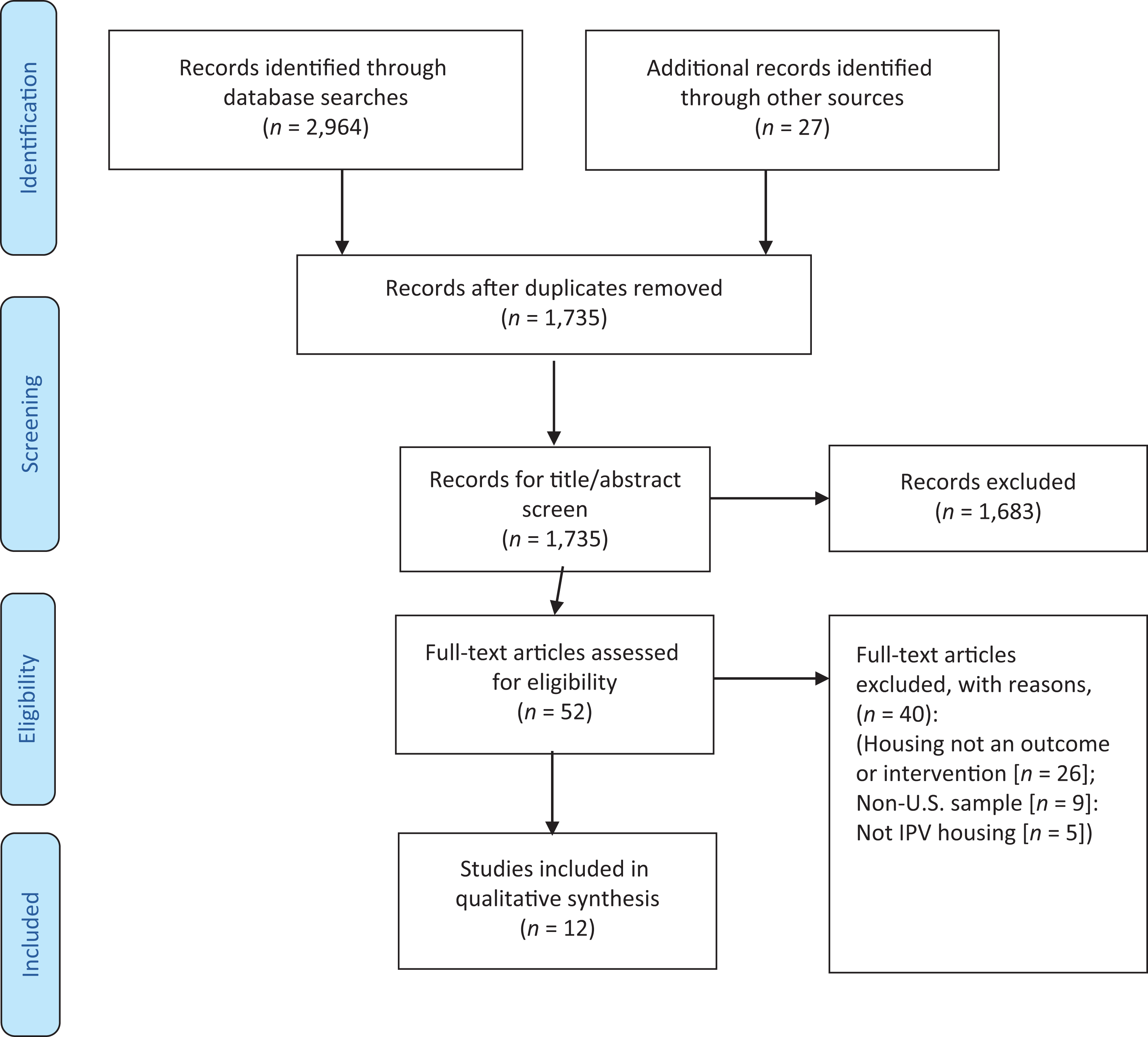
Preferred reporting items for systematic review and meta-analysis flow diagram.
Articles were included in our review based on predetermined criteria assessed by two members of our research team. Articles had to (a) be empirical in their focus and analyze quantitative or qualitative data, regardless of methodology; (b) report on research that took place in the United States given the country’s unique social service context; and (c) examine housing services for IPV survivors and their children as either an intervention or outcome (i.e., proximal or distal). Needs assessments and nonempirical articles (e.g., discussions of theory and “think pieces”) were excluded, as were studies of IPV-related services that did not specifically evaluate housing interventions or outcomes. We did not exclude articles based on publication date.
Because research on IPV services is not always published in peer-reviewed journals, we also searched for IPV housing-related evaluations using both a Google Search and a review of national IPV organizations’ websites (i.e., NNEDV, VAWnet.org, and the National Resource Center on Domestic Violence). This approach yielded an additional 18 documents for review. In addition, we hand searched four journals that frequently publish articles relevant to IPV housing: Journal of Family Violence; Journal of Interpersonal Violence; Trauma, Violence, and Abuse; and Violence Against Women. This method identified three additional articles for review. Last, we systematically reviewed the references of all articles that met our study’s inclusion criteria to identify any relevant cited articles that had not been identified in our searches. This method yielded an additional six articles. Overall, these three search methods (Internet search, hand search, and reference harvesting) identified 27 articles for review.
As depicted in Figure 1, the four complementary search methods yielded 2,991 articles. After removing duplicates, we were left with 1,735 potentially relevant articles. Two members of the research team independently reviewed the titles and abstracts of these articles to determine eligibility for inclusion. Based on the title and abstract review, the two reviewers agreed to advance 52 articles for full-text review, which included some articles on which the reviewers disagreed regarding eligibility. The same two reviewers then reviewed the full text of the 52 articles and determined that 12 articles met all criteria for inclusion. Articles were excluded for three main reasons: (a) housing was not an outcome or intervention examined by the study (n = 26), (b) the study did not take place in the United States (n = 9), or (c) the study did not focus on evaluating housing services in the context of IPV (n = 5).
For the next step in the review process, three members of the research team used an abstraction spreadsheet developed and piloted by the entire team to systematically extract data from the 12 studies included in this review. The spreadsheet captured areas relevant to the research questions guiding this review, including study design, theories and models, study objectives and research questions, measures, data collection procedures, analysis design, intervention names and descriptions, outcomes, findings related to housing interventions and outcomes, implications, strengths, and limitations. To ensure consistency across the article reviews and abstractions, the three team members worked together to extract data for two articles before beginning independent extraction. In addition, over the course of the extraction process, an additional five articles were double extracted as a means of checking for continued consistency. All instances of double extraction produced consistent findings.
Results
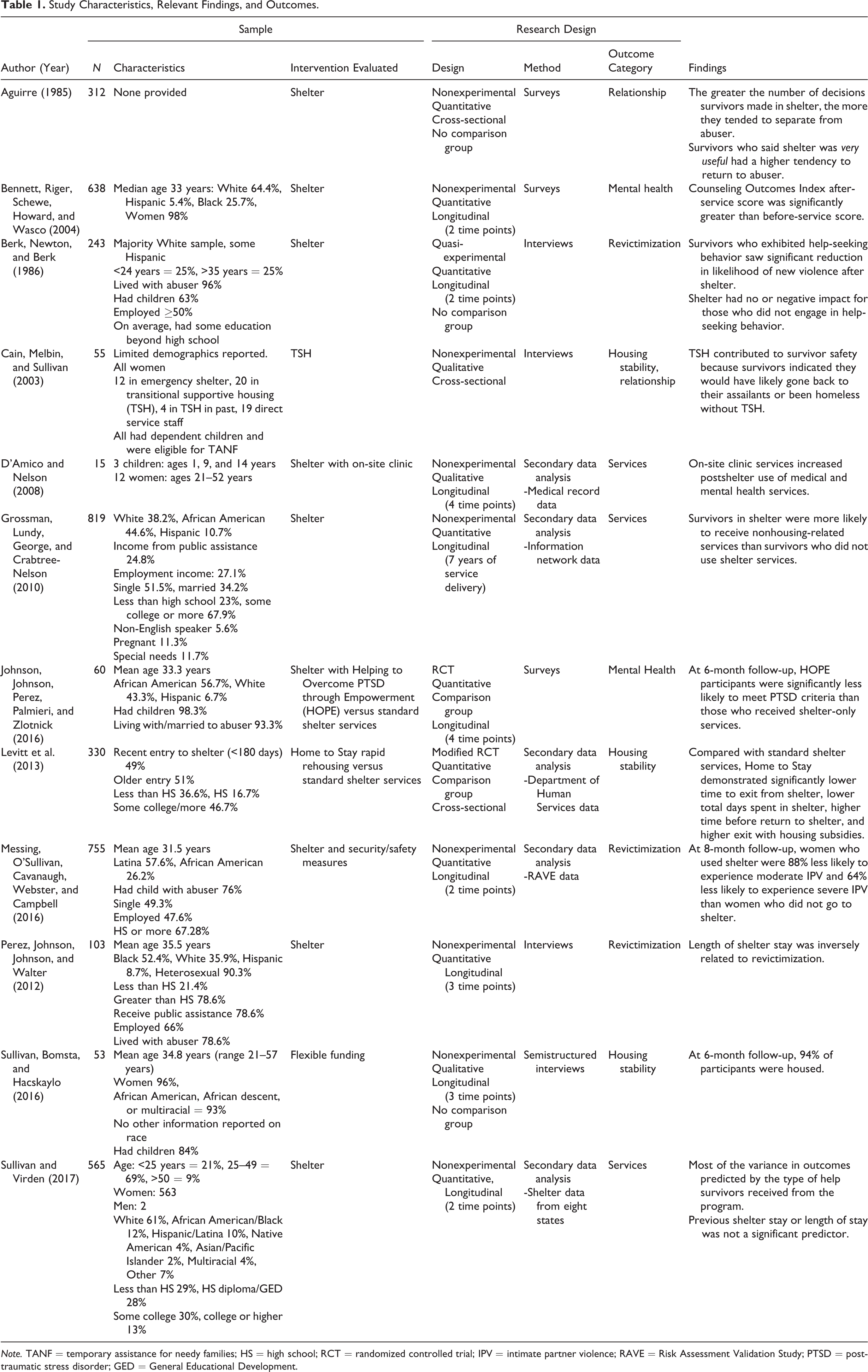
The 12 reviewed articles were heterogeneous in their methods, samples, and findings. Table 1 provides key information for each of the reviewed studies on the types of housing interventions evaluated, study characteristics (e.g., sample size, sample characteristics, research design), and relevant findings.
Study Characteristics, Relevant Findings, and Outcomes.
Note. TANF = temporary assistance for needy families; HS = high school; RCT = randomized controlled trial; IPV = intimate partner violence; RAVE = Risk Assessment Validation Study; PTSD = post-traumatic stress disorder; GED = General Educational Development.
Interventions for Addressing Survivors’ Housing Needs
The 12 articles examined various interventions for addressing the housing needs of IPV survivors, including shelter, shelter with additional on-site services, home security measures, transitional housing, rapid rehousing, and flexible funding. Shelter was the most commonly examined service for addressing survivor’s housing needs and examined in half of the 12 studies (Aguirre, 1985; Bennett, Riger, Schewe, Howard, & Wasco, 2004; Berk, Newton, & Berk, 1986; Grossman, Lundy, George, & Crabtree-Nelson, 2010; Perez, Johnson, Johnson, & Walter, 2012; Sullivan & Virden, 2017). Shelter with additional in-shelter services was the main intervention evaluated in two other studies: Of these, one study evaluated shelter with an additional mental health intervention (Johnson, Johnson, Perez, Palmieri, & Zlotnick, 2016) and the other study examined shelter with an on-site clinic (D’Amico & Nelson, 2008). An additional study examined multiple protective interventions used by survivors, including housing-related interventions of shelter and home security measures (Messing, O’Sullivan, Cavanaugh, Webster, & Campbell, 2016). TSH (Cain, Melbin, & Sullivan, 2003), rapid rehousing (Levitt et al., 2013), and flexible funding (Sullivan et al., 2016) were each appraised by one study.
Study Characteristics
Sample sizes and characteristics
The sample sizes of the reviewed studies ranged from 15 to 819 participants, with an average sample of 329 participants. Most of the studies (n = 8) had samples of more than 100 participants. The manuscripts reviewed revealed varying amounts of information on sample characteristics, with one study providing no information on sample characteristics (Aguirre, 1985). The 11 remaining studies provided some information on sample characteristics, including that at least 95% of the participants in each of these 11 studies were women. In addition, seven studies included information on participants’ age, most often providing a mean or median between 30 and 40 years (Bennett et al., 2004; Berk et al., 1986; D’Amico & Nelson, 2008; Johnson et al., 2016; Perez et al., 2012; Sullivan et al., 2016; Sullivan & Virden, 2017).
Eight studies provided information on participant race/ethnicity, with three studies reporting a predominantly White sample (Bennett et al., 2004; Berk et al., 1986; Sullivan & Virden, 2017), three indicating a predominantly African American or Black sample (Grossman et al., 2010; Johnson et al., 2016; Sullivan et al., 2016), and two studies indicating a predominantly Hispanic sample (Messing et al., 2016; Perez et al., 2012). Only one study described sexual orientation of participants and indicated the majority of the sample was heterosexual (90.3%; Perez et al., 2012). Five studies reported the percentage of participants who had children (Berk et al., 1986; Cain et al., 2003; D’Amico & Nelson, 2008; Johnson et al., 2016; Messing et al., 2016). Among these studies, most participants had children, and all participants (N = 55) in the Cain, Melbin, and Sullivan’s (2003) study had children. Four studies described participant marital status, which varied across studies and included participants who were single, married to, or cohabiting with their abuser, and those who were remarried (Grossman et al., 2010; Johnson et al., 2016; Messing et al., 2016; Perez et al., 2012). Six studies included information on the level of education participants had attained, which varied significantly but often exceeded high school completion (Berk et al., 1986; Grossman et al., 2010; Levitt et al., 2013; Messing et al., 2016; Perez et al., 2012; Sullivan & Virden, 2017).
Four studies included information regarding the socioeconomic status of participants. Berk and colleagues (1986) indicated that over 50% of their sample was employed, while Messing and colleagues (2016) indicated 47.6% of their sample was employed. Cain and colleagues’ study (2003) recruited only participants with dependent children who are eligible for temporary assistance for needy families (TANF). Grossman and colleagues (2010) mentioned that 24.8% of their sample received their income from public assistance. Full sample characteristics are provided in Table 1.
Participant recruitment
Six of the studies recruited participants directly from shelters or transitional housing (Aguirre, 1985; Cain et al., 2003; D’Amico & Nelson, 2008; Grossman et al., 2010; Johnson et al., 2016; Perez et al., 2012). Three studies were secondary analyses of existing state or multistate data consisting of service-seeking survivors of IPV (Bennett et al., 2004; Messing et al., 2016; Sullivan & Virden, 2017). One study identified participants through either their interactions with a shelter or with a prosecutor (Berk et al., 1986). Two of the studies recruited participants who were seeking non-IPV-specific housing services including flexible funding or housing through the Department of Homeless Services (Levitt et al., 2013; Sullivan et al., 2016). Because most of these studies involved service-receiving or service-seeking survivors, information about their IPV experiences was rarely reported beyond an assertion that they were seeking help after experiencing IPV. Johnson and colleagues (2016) reported that, in the past month, 46.7% of their treatment and 50% of their control groups had experienced psychological abuse, 36.7% in both treatment and control had experienced physical abuse, and no treatment participants and 7% of control participants had experienced sexual abuse. Messing and colleagues (2016) indicated that 64% of their sample had experienced threats, 57% had experienced stalking, 84% had experienced moderate physical IPV (e.g., hitting, punching, kicking), and 61% had experienced severe physical IPV (e.g., choking, life-threatening injuries).
Research design
The reviewed evaluations used a wide variety of research designs. Nine of the studies were nonexperimental, and three used experimental or quasi-experimental designs. Specifically, one used a quasi-experimental design (Berk et al., 1986) group, one used a modified randomized control trial (RCT) design (Levitt et al., 2013), and one used a RCT design (Johnson et al., 2016). Both the modified RCT and the RCT studies included comparison groups whereas the quasi-experimental study did not use a comparison group.
Nine studies used quantitative methods, and three were qualitative. None of the studies used a mixed-methods approach. Eight studies analyzed primary data collected through interviews (n = 5) or surveys (n = 3). The three qualitative studies collected data through interviews. Four studies used cross-sectional data, and nine studies were longitudinal, with data collection conducted at a range between 2 and 7 time points. See Table 1 for further details of the study designs.
Outcomes of interest
The studies measured myriad outcomes of housing interventions. The most salient outcomes explored by the studies can be divided into five main categories: (a) revictimization (n = 3), (b) housing stability (n = 3), (c) services (n = 3), (d) relationship (n = 2), and (e) mental health (n = 2). Specific outcomes related to revictimization included number of instances of abuse, experiences of abuse, and abuse severity. Housing stability outcomes encompassed current housing status and days in shelter. Outcomes related to services included the likelihood the survivor would seek additional services and perception of the helpfulness of services. Relationship-related outcomes comprised current relationship status, times participant returned to the abusive relationship, and whether the survivor had left the abusive relationship. Last, mental health outcomes under study in the reviewed articles included symptoms of PTSD and scores obtained using the Counseling Outcomes Index (Bennett et al., 2004).
Key Findings
Revictimization
Three studies examined the relationship between shelter services and a survivor’s likelihood of experiencing revictimization. Berk and colleagues (1986) examined the impact of shelter on revictimization but specified that some survivors demonstrated help-seeking behavior (i.e., outreach to formal or informal support systems), whereas others did not. The survivors who exhibited help-seeking behavior reported a considerable reduction in victimization after shelter, whereas survivors who did not exhibit help-seeking behavior experienced increased or preshelter levels of victimization after leaving shelter. Messing and colleagues (2016) conducted a secondary analysis of data from the Risk Assessment Validation Study to investigate the impact of various interventions, including shelter, on the severity of IPV as reported by survivors at follow-up. These researchers found at about 8-month postintervention that, as compared with IPV survivors who did not go to a shelter, women who had used shelter services were 88% less likely to report having experienced moderate IPV and 64% less likely to report having experienced severe IPV after leaving the shelter at about 8-month postintervention. Messing and colleagues’ (2016) findings were consistent with those of Perez and colleagues (2012), who examined the impact of the length of shelter stay on revictimization and found the longer a survivor stayed in shelter, the less likely it was that the survivor experienced revictimization at 3 or 6 months postshelter follow-up.
Housing stability
Only three of the housing intervention studies specifically examined housing-related outcomes. Sullivan and colleagues (2016) investigated the use of flexible funding in helping survivors gain housing stability. At the 6-month follow-up after disbursement of funds, Sullivan et al. found that 94% of participants were housed. Levitt and colleagues (2013) found that as compared with survivors using standard shelter services, survivor participants in the Home to Stay rapid-rehousing program demonstrated significantly lower time to exit from shelter, longer time before return to shelter, a greater likelihood of exiting shelter with housing subsidies, and lower total days spent in shelter. In Cain et al.’s (2003) interviews with survivors, those who had lived in TSH indicated that if this housing program had not been available, then they would have been homeless.
Services
Three studies examined how housing interventions affected use of and satisfaction with additional services (e.g., medical care, legal support such as obtaining orders of protection, and job skills training). D’Amico and Nelson’s (2008) secondary data analysis of medical records found that when survivors had access to clinic services provide on-site in the shelter, they were more likely to use medical and mental health services after they left shelter. In a secondary data analysis of service use among survivors in Illinois, Grossman and colleagues (2010) discovered that survivors in shelter were more likely to receive nonhousing services than survivors who had not used shelter services. Sullivan and Virden (2017) examined data from shelters in eight states and found that the types of support survivors received (i.e., safety, information, self-care and connections, community resources, and services for children) predicted several service-related outcomes (i.e., perception of shelter helpfulness, sense of power, and hopefulness). At Time 1, survivors specified which kinds of help they needed from a list of 37 options within five categories. Survivors who had received this help by time of shelter exit (Time 2) were more likely to perceive the shelter as helpful, indicate a sense of personal power, and endorse feeling hopeful about the future. All three of these studies suggest the potential for a robust link between shelter services for survivors and other services that may help ensure survivors’ safety and well-being. However, Sullivan and Virden (2017) reported that length of shelter stay (i.e., how long a participant resided in shelter) was not a significant predictor of service outcomes (e.g., overall helpfulness of shelter, survivor hopefulness, and survivor sense of power), indicating that interventions that aim to connect survivors with information and supportive community services might not necessarily need to take place in shelter and/or occur over a long duration to be helpful.
Relationship
Two of the studies investigated how housing interventions affected survivors’ relationships including their relationship status after the intervention and whether the survivors left their abusive partners. Aguirre (1985) examined survivors’ decision-making during shelter stays and their satisfaction with shelter services. The more decisions (e.g., obtaining a restraining order, filing criminal charges, or beginning divorce proceedings) a survivor made while in shelter, the more likely the survivor was to separate from the abusive partner. However, survivors who reported that they found shelter services very useful had a higher tendency to eventually return to their abusive partners. While Aguirre (1985) mentions that this finding indicates that shelters do not focus on family separation but on survivor self-determined decision-making, our review team found no apparent interpretation of this finding included in the article. Cain and colleagues (2013) found TSH likely increased survivor safety by providing a safe housing alternative for survivors who indicated that, without the program, they would have returned to their abusive partner.
Mental health
Two studies measured the effects of housing interventions on mental health outcomes of IPV survivors. Bennett and colleagues (2004) found that survivors’ postshelter Counseling Outcomes Index scores were significantly higher than their scores before receiving shelter-based counseling. The Counseling Outcomes Index is a reliable scale developed by Bennett and colleagues (2004) to assess eight areas of well-being targeted in IPV counseling: support, self-efficacy, coping, goal setting, information, nonjudgment, safety planning, personal is political, and respect. Johnson and colleagues (2016) examined the impact of shelter combined with a group program called Helping to Overcome PTSD through Empowerment (HOPE). At the 6-month postintervention follow-up, HOPE participants were significantly less likely to meet the diagnostic criteria for PTSD than those who received shelter-only services (i.e., usual services).
Discussion
Our goal in conducting this review was to assess and evaluate the current state of the evidence regarding interventions for addressing survivors’ housing needs. Specifically, we sought to determine (a) the interventions from published literature that are currently available to address IPV survivors’ housing needs, (b) the strengths and limitations of these interventions, and (c) the effectiveness of these interventions in meeting the housing needs of survivors. Given the critical role that housing plays in the safety and recovery of survivors coupled with the limited availability of these housing options, it is important to understand the evidence regarding interventions used to address the housing-related needs of IPV survivors.
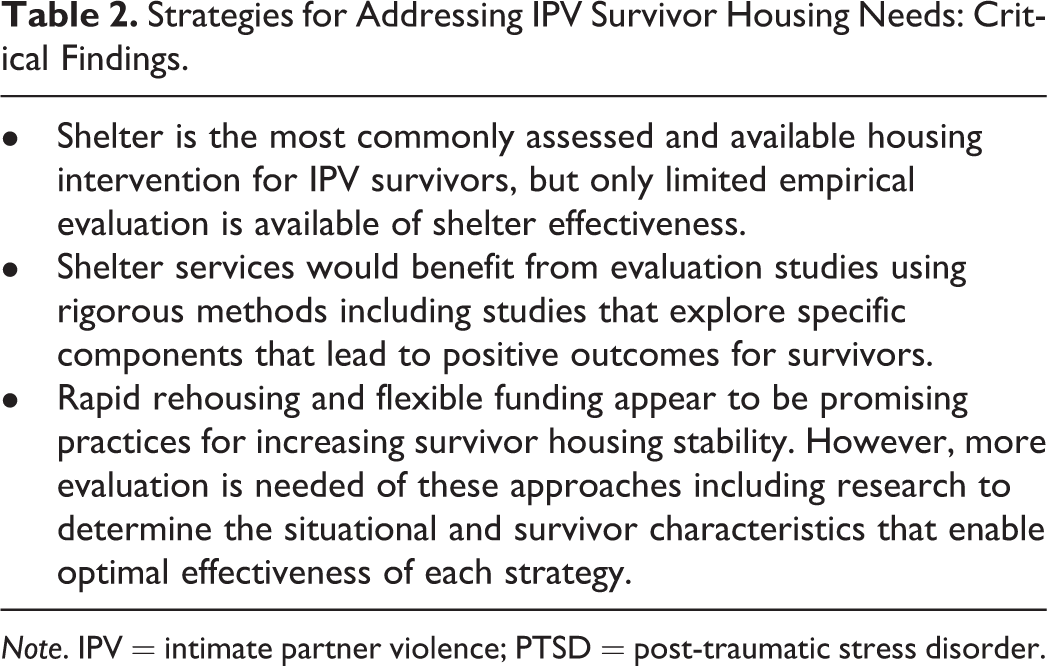
We identified 12 articles that met our inclusion criteria. Although only a small number of articles met our inclusion criteria, given the immense public health consequences of IPV and the widespread use of housing interventions to address IPV, this review addressed a critical need to provide a timely inventory of the current evaluation literature. Notably, the reviewed studies had heterogeneous intervention approaches, samples, outcomes, and study methods. Critical findings are summarized in Table 2.
Strategies for Addressing IPV Survivor Housing Needs: Critical Findings.
Note. IPV = intimate partner violence; PTSD = post-traumatic stress disorder.
Current Interventions
Remarkably, we located only 12 articles that evaluated housing interventions for IPV survivors. This review also determined considerable heterogeneity across the 12 in terms of intervention approaches. Most of the studies investigated traditional IPV shelter services, with a couple assessing traditional shelter services that offered additional on-site resources such as clinic services. We found only single studies that examined nonshelter housing interventions such as TSH, security measures, and flexible funding. The overall findings from these studies suggest that rapid rehousing and flexible funding appear to be promising practices for increasing housing stability of IPV survivors. However, these interventions and studies need to be replicated and findings further evaluated. Moreover, future research is now needed to determine the situational and survivor characteristics that promote optimal effectiveness of each housing strategy.
Strengths and Limitations of Methods to Evaluate Housing Interventions
This review also determined considerable heterogeneity across the 12 studies in terms of study foci, designs, and outcomes. Assessing the overall strengths and limitations of the rigor among housing interventions studies is challenging given such diversity. Thus, it is premature to make firm statements concerning, on the whole, the robustness of housing intervention research for IPV survivors.
In addition, as mentioned in several of the reviewed studies, IPV interventions, including housing interventions, often center on the self-determination of IPV survivors. Thus, the success or failure of a housing strategy would need to be assessed based on each survivor’s self-determined goals and ideas of safety. This emphasis on self-determination is critical to taking a trauma-informed approach in developing and delivering housing interventions. Nonetheless, a focus on survivors’ self-determination may mean that research designs in this area require varied study methods and outcomes to account for diversity among survivors’ circumstances, needs, and service preferences (Sullivan, 2018).
Effectiveness of Current Housing Interventions
As noted above, the study designs and the outcomes used in the reviewed studies were heterogeneous, making it difficult to synthesize study findings and/or determine overall housing strategy effectiveness. Even though shelter is the most commonly assessed and available housing intervention for IPV survivors, this review showed limited empirical evaluation is available concerning the effectiveness of shelter as a housing strategy. Given that only three studies used experimental or quasi-experimental designs (Berk et al., 1986; Johnson et al., 2016; Levitt et al., 2013), the robustness of the findings from most of the studies are uncertain. Moreover, the fact that several studies evaluated the impact of various housing interventions on mental health, revictimization, service utilization, and relationship-related outcomes is a reminder of the multidimensional nature of services that many current housing interventions, especially traditional shelter services, are tasked with providing. Therefore, shelter services would benefit from additional evaluation using rigorous methods, including studies investigating how specific program components may be associated with positive outcomes for survivors.
Implications
In developing the implications for policy and practice, we sought to closely tie our recommendations to the study’s findings. Accordingly, we caution readers that given the small number of studies and their heterogeneity, these implications for practice and policy should be considered formative and preliminary. Table 2 also provide a summary of the findings of this systematic review and the implications.
Implications for practice
Although small, the existing body of evidence suggests that an IPV survivor’s use of shelter services (i.e., staying in a safe IPV-focused shelter) can reduce revictimization and PTSD, improve housing stability, and enhance access to services. Studies in this review found that survivors who engage in help-seeking behavior and autonomous decision-making during their shelter stay experienced less revictimization and were more likely to separate from their abusers. Accordingly, survivors might benefit when service providers foster survivors’ self-determination and self-efficacy over their own service goals and needs. Nonetheless, future research should investigate what elements of shelter programs contribute to these outcomes and how specific survivor characteristics might influence this process.
Further, helping survivors to achieve housing and economic independence involves more than merely providing shelter. Such independence also includes helping survivors to obtain affordable housing, employment, and transportation. Survivors also need options to address housing insecurity beyond emergency shelter. Enhancing survivors’ choices and options as they seek greater housing security may be key to empowering survivors after experiencing IPV (Goodman, Smyth, & Banyard, 2010; Goodman et al., 2016). Albeit limited, research concerning interventions that aim to improve economic empowerment, economic self-sufficiency, and economic self-efficacy among IPV survivors using a financial literacy curriculum (e.g., mortgages, savings accounts, bonds, stocks and mutual funds, compound interest, credit and debt, and retirement planning) have had promising results (Postmus, Plummer, McMahon, & Zurlo, 2013; Sanders, 2014; Sanders & Schnabel, 2006). Other housing-based services may be salient to IPV survivors’ empowerment given the evidence showing that medical and mental health services provided to survivors while in shelter can lead to greater engagement with medical and mental health services once they leave shelter (D’Amico & Nelson, 2008).
Implications for policy
To foster housing security for IPV survivors, policy makers should support innovative initiatives for organizations that serve survivors. For example, innovative use of resources, through flexible funding programs, could enable organizations to provide services that can help survivors achieve and maintain housing stability. Flexible funding programs could help survivors meet concrete needs such as furniture or rent deposits, making achieving independence more feasible initially, and ultimately being more supportive of long-term survivor housing stability and fiscal autonomy. We also recommend that policy makers support other innovative initiatives for IPV survivors, such as rapid rehousing.
Given the importance of federal, state, and community policies for affordable housing, job opportunities, and living-wage employment, we call on researchers to work with policy makers to investigate how housing and economic policies might influence the housing and well-being of IPV survivors and their children. In other words, individual-level intervention approaches do not address larger economic, housing, and structural issues. For survivors living in communities in which they do not have access to affordable housing and living-wage employment opportunities, we speculate that policy intervention may be even more critical than individual-level ones for helping survivors with securing housing. In particular, policies tied to issues of IPV (e.g., the Violence Against Women Act) may be important avenues for creating such benefits. Nonetheless, with little available evidence about such policy impacts, we underscore our call for research on these important issues.
Implications for research
The studies discussed in this review provide insight into a variety of different interventions and housing-related or other outcomes. Still, very few studies have focused specifically on housing-related outcomes, as indicated by the inclusion of only 12 articles for this review, only 3 of which focused on housing outcomes. The overall dearth of intervention studies focused on survivor housing is striking given the prevalence of IPV, the critical need for safe, secure housing among IPV survivors, and the considerable number of IPV programs that include housing as a program component. Consequently, we call for increased efforts toward rigorous evaluation of housing interventions to determine which approaches are most effective in meeting the complex housing needs of IPV survivors and their families.
Specifically, research is needed on promising but underevaluated practices that promote housing stability outside of shelter such as flexible funding and rapid rehousing. Additional and rigorous research is needed (e.g., stronger design features, advanced statistical methods) to examine the impact of housing interventions. For instance, longitudinal research is needed to evaluate long-term effects of housing interventions using methods such as growth curve modeling that can illuminate between-person differences in within-person change. We also underscore our recommendation for policy research here.
For future studies, we encourage IPV researchers to use experimental or quasi-experimental designs along with robust statistical methods to enable rigorous evaluation of the housing program effects. Articles that report effect sizes from housing interventions studies would be particularly valuable. Valid and reliable instruments are also needed to measure the effectiveness of housing interventions and should include outcomes related to housing permanency, revictimization, interpersonal connections, financial stability, and mental health symptoms of survivors and their children. For example, Hoge, Stylianou, Hetling, and Postmus’s (2017) Scale of Economic Self-Efficacy could be integrated into housing strategy provision and follow-up to gauge the impact of these interventions on survivor economic empowerment. Data concerning the type and severity of abuse that survivors experience would also help provide insight as to which types of housing interventions may benefit survivors with varying experiences of abuse.
Because shelter is such a common housing strategy, increased evaluation research is needed to provide guidance on what key ingredients (e.g., location, services, protocols, screening processes, personnel) constitute effective and quality shelter services. Researchers should also present the real-world impacts of their studies, so that key community stakeholders and practitioners can have a roadmap to operationalize study implications. Given the high cost of providing shelter services, financial and feasibility studies of these services are needed. Further research on the synergy between multiple housing interventions (e.g., flexible funding, emergency housing, and security measures) can help communities develop comprehensive approaches to addressing survivor housing needs.
The current research also provides limited information on the relevance of housing interventions for IPV survivors from diverse backgrounds. Notably, 4 of the 12 studies we reviewed did not include information on participant race or ethnicity, and only 4 studies provided information on participant socioeconomic status. Although anyone can experience IPV victimization, research shows that groups of people who have been disadvantaged and excluded from economic and social opportunities, such as American Indians, immigrants, people with disabilities, lesbian, gay, bisexual, and transgender people (LGBT), people of color, and those with fewer socioeconomic resources, as a few examples, have even higher rates of IPV victimization (Black et al., 2011; Breiding & Armour, 2015; Halpern, Spriggs, Martin, & Kupper, 2009; Walters, Chen, & Breiding, 2013). Research also shows that members of disadvantaged groups, for example, survivors of color, experience additional discriminations in their attempts to secure housing after leaving an abusive relationship and that those living in poverty may find it especially challenging to secure and sustain housing (Baker et al., 2010; Phinney, Danziger, Pollack, & Seefeldt, 2007; Wilson & Laughon, 2015). For all these reasons, we call for research examining the dynamic intersections of disability, ethnicity and race, immigration, LGBT, poverty, housing instability, and IPV, especially given at least one recent study found that race and ethnicity did not predict housing instability (E. N. Adams et al., 2018). Future research centering the effectiveness of housing interventions for disadvantaged groups and actively engaging diverse survivors in research will provide better information for enhancing and tailoring such services. Examining and comparing housing interventions for IPV survivors globally could also provide novel and replicable models.
Strengths and Limitations of This Review
This review has several limitations that should be taken into consideration. Although IPV is a pervasive public health problem for which housing interventions, particularly shelter, are often provided as a potential solution, only 12 articles met our inclusion criteria for this review. The dearth of evaluation literature suggests shelters are using many housing interventions that have not been formally researched or for which research findings were not publicly disseminated. Consequently, our review is representative of only those aspects of shelter that are specifically housing related and subsequently disseminated. To continue to provide updated information on the effectiveness of housing interventions and to maximize the likelihood of locating hard-to-find articles, future researchers could replicate the methods in this study, including searches of research databases and websites for gray literature, key words used, and hand searches.
Moreover, all studies included in this review were conducted in the United States and published in English. We focused our review on U.S.-based studies given the unique complexities of the U.S. housing and social service delivery systems. It is likely that additional studies exist that were conducted outside the United States that would provide insight into housing-related outcomes for IPV survivors. Although such an investigation was beyond the scope of this study, we call for future research to investigate housing programs for IPV survivors and their children globally. In addition, relevant studies might have been published since July 2017 that were not included in this review.
We also acknowledge that there is much to learn from the broader housing intervention literature. However, an investigation of the housing literature was not the aim of the current study because we specifically sought to focus on IPV services for survivors. Thus, we excluded studies that did not specifically look at housing interventions used with IPV survivors. Future reviews could take a more general approach and synthesize the results from studies for all housing intervention literature.
Despite these limitations, this review also has several strengths. First, this review closely adhered to PRISMA guidelines and used rigorous methods to identify studies. We obtained feedback on search strings from a social sciences librarian prior to conducting our searches. In addition, two reviewers participated in the title, abstract, and full-text review to determine eligibility of studies. We used multiple sources to identify relevant articles, including reference harvesting, Google Searches, and searches on national IPV organization websites. Several reviewers independently abstracted data and met regularly to resolve any discrepancies in abstractions. In addition to the use of rigorous methods, this review offers a unique contribution to the IPV literature. To our knowledge, no review to date has examined housing-related outcomes of IPV housing interventions, which is a critical issue relevant to the safety and recovery of survivors. Thus, this review provides a valuable contribution to the field of IPV research by synthesizing the current state of the literature on housing-related outcomes for IPV survivors, by ascertaining promising practices and by identifying opportunities for future research.
Conclusion
Although most research on IPV survivor housing needs has focused on emergency shelter, more research is needed to determine how to best address both survivors’ short- and longer term housing needs. We call for future research on shelter. Given the high costs of emergency shelter service delivery, we also call for research on housing interventions broadly, including novel practices for IPV survivors and their children, as well as policy initiatives. Likewise, IPV survivors need a variety of services, and therefore, it is vital to ensure that housing alternatives do not eliminate the crisis, life-saving services often provided through emergency shelter. Increased research on a diversity of housing interventions will enable communities to develop and implement a range of practices, policies, and programs that best meet their community and survivors’ needs.
Implications for Practice
Shelter might reduce victimization and PTSD, improve housing stability, and enhance access to services, but it is unclear how shelter services achieve these outcomes or which specific survivor shelter services might be most beneficial to survivor outcomes. Comprehensive services are needed to address survivors’ individualized, self-determined goals. Economic independence encompasses more than shelter services and includes affordable housing, employment, and transportation.
Implications for Policy
To develop innovative strategies that foster survivor housing security, policy makers should support rapid-rehousing initiatives and flexible funding programs for organizations that serve survivors. Given the importance of federal, state, and community policies for affordable housing, job opportunities, and living-wage employment, we call on researchers to work with policy makers to investigate how housing and economic policies might influence the housing and well-being of IPV survivors and their children.
Implications for Research
More research is needed on promising but underevaluated practices that promote housing stability outside of shelter such as flexible funding and rapid rehousing. More research is needed on long-term effects of housing interventions. Studies that evaluate specific shelter components and effects of housing strategies on diverse populations of survivors are needed to better understand how individual characteristics influence the effectiveness of housing programs. Studies that incorporate comparison groups of IPV survivors who do not receive housing interventions are needed to better evaluate program effects of IPV housing interventions. When possible, future research should report effect sizes and other indicators of potential “real-world” impact to help practice and policy decision-making.
Footnotes
Acknowledgments
The authors wish to acknowledge Jennifer O’Brien, Austyn Holleman, and Addie Humphrey for their contributions to this research and Diane Wyant for her comments on a draft of this article.
Declaration of Conflicting Interests
The author(s) declared no potential conflicts of interest with respect to the research, authorship, and/or publication of this article.
Funding
The author(s) declared the following potential conflicts of interest with respect to the research, authorship, and/or publication of this article: This project is generously supported by a gift from Mrs. Marilyn Jacobs Preyer and Mr. Rich Preyer.
