







Abstract
While parenting factors are commonly included as early risk markers for sexual aggression, data specific to paternal impacts on sexual offending are scattered. This review provides a thorough and systematic account of what is known regarding the fathers of sexual offenders. Thirty-four studies were categorized according to four distinct research questions, each addressing theoretical mechanisms by which fathers may influence the violent sexual behavior of their sons. The results suggest that the strongest impacts occur when sons are witness to their fathers engaging in acts of sexual abuse or domestic violence, in accordance with social learning theory. Father–son attachment or relationship quality also appears to have a measurable impact on the son’s engagement in sexual violence. However, paternal demographics and characteristics were generally ineffective at predicting sons’ sexual offenses. Finally, the differences between fathers of adult and juvenile sexual offenders are explored. Implications of those findings for research and applied interventions are included as they may be informative for prevention programming.
Keywords
The 21st century has seen a dramatic shift in the composition of family systems (U.S. Census Bureau, 2018). One manifestation of this change is that the fathering role has become more varied, with increasing numbers of stepfathers, adoptive fathers, foster fathers, and custodial grandfathers entering family systems (U.S. Census Bureau, 2018). Additionally, men increasingly take on a primary parenting role. In fact, in the last 25 years, the number of families with stay-at-home male caregivers and working female caregivers has doubled (Livingston, 2014). Current estimates suggest that as many as one-in-five fathers now manage the daily activities of their children (Livingston, 2014). Despite men’s increasing roles as primary caregivers, they are generally excluded from conversations regarding the impact of parenting practices on child development (Boller et al., 2006; Furstenberg & Harris, 1993; Yeung et al., 2000). Yet the few studies that have examined the unique roles of fathers found positive outcomes for children with active and involved male caregivers (Lundahl et al., 2008; Zanoini et al., 2013). That is to say, fathers matter too.
The influence of parents and caregivers on the criminal behavior of their children is hardly a new topic. Meta-analyses on the causes and correlates of juvenile delinquency have found that parenting factors may predict youth engagement in criminality (Hoeve et al., 2009, 2012; Loeber & Stouthamer-Loeber, 1986). Importantly, this body of research has found that fathers may have an even greater impact on their children’s delinquency than do mothers (Hoeve et al., 2009), with a few potential explanations underlying this finding. First, numerous studies have examined the intergenerational transmission of criminal offending, which has predominantly been conceptualized as passed on from father to son (Besemer & Farrington, 2012). Fathers may model antisocial behavior for their sons who then proceed to enact such behaviors themselves (Dishion et al., 2004). Secondly, delinquency may also be the result of strained father–son attachments, as youth with hostile relationships to their fathers are likely to become oppositional (Hayslett-McCall & Bernard, 2002). Finally, certain paternal characteristics (i.e., absent fathers, fathers who abuse drugs) heighten the risk of insufficient parental monitoring of their children’s behavior, leaving the youth free to associate with delinquent peers (Basile et al., 2018; Demuth & Brown, 2004).
Although these pathways have been explored for youth delinquency in general, the role of the father remains a critically understudied factor in the development of juvenile sexual offenders. However, it is becoming increasingly important to distinguish between youth who commit sexual and nonsexual crimes as research has revealed there may be heightened family risk for young sexual offenders. A limited body of literature suggests that sexually offending youth are supervised less well by their caregivers than are nonoffending youth (Stewart et al., 2019). Additionally, family functioning for sexual offenders has been found to lack cohesion and to have elevated rates of both domestic violence and child maltreatment (Seto & Lalumière, 2010; Worley et al., 2012). Furthermore, disrupted caregiving factors, such as experiencing an out-of-home placement or domestic trauma, have been shown to be independently predictive of sexual offending status over general delinquency (Felizzi, 2015; Grady et al., 2018). However, the bulk of this literature is not focused on fathers. Rather, these works emphasize mother-specific factors or include the experiences of both mothers and fathers combined. Given the importance of fathers noted in juvenile delinquency studies, this article seeks to review the current literature on the impact of paternal factors in the development of sexually problematic behaviors among males.
An additional consideration in this literature is the potential distinction between types of sexual offending. Although juvenile sexual offenders make up as many as 20% of all arrests for sex crimes committed in the United States (Center for Sex Offender Management, 2008; Department of Justice [DoJ], 2014), adult and juvenile sexual offenders are often considered as separate populations (Lussier et al., 2015). Those who argue that juvenile and adult sexual offenders are fundamentally different populations note the profound developmental differences between the two groups in terms of emotion regulation, behavioral control, and ability to anticipate future consequences of their actions (DoJ, 2014). There are others, however, who argue that there is some overlap between adults and juveniles who commit acts of sexual aggression. For instance, while most juvenile sexual offenders do not become adult sexual offenders, many adult sexual offenders began their sexually coercive behavior in their youth (Lussier et al., 2015; Prentky & Knight, 1993). Furthermore, overlapping risk factors have been identified in both populations including sexual victimization history and chaotic family-of-origin environments (Jespersen et al., 2009; Seto & Lalumière, 2010). However, a thorough account of the potential ways in which fathers may have influenced adult and juvenile offenders has yet to be explored.
Theoretical Grounding
Much of the work regarding family factors of juvenile sexual offenders has roots in two core theories. First, Bandura’s (1978) social learning theory contends that children repeat the behavioral patterns that they observe in the people closest to them. Research has found that either witnessing or experiencing sexual violence increases the risk of perpetrating a sexual assault (Burton et al., 2002; Seto & Lalumière, 2010). Social learning perspectives have also been consistently integrated into theories of how young boys learn masculinity norms (O’Neil, 1982, 2015; Pleck, 1981, 1995). Sexual assault can be considered consistent with the male gender role norms that entail devaluing women and femininity, along with overestimating dominance and aggression (Reidy et al., 2009). This theory may be particularly applicable to the father–son relationship insofar as, for many young men, their fathers are a primary source of male gender norms (Marsiglio & Cohan, 2000). Therefore, one of the primary purposes of this review is to explore the role of social learning theory, as transmitted from father to son, in the development of sexual offending.
Second, the foundational method of understanding the impact of parent–child relationships on juvenile delinquency has been attachment theory (Bowlby, 1944, 1969). It maintains that a child’s history with their primary guardian provides a “working model” for all subsequent interpersonal relationships. Overwhelmingly, examinations of the home lives of juvenile offenders suggest these youth have weak attachments to their guardians, which is thought to significantly increase their risk of delinquency (Hoeve et al., 2012). The most prominent writings linking poor parental attachment to sexual aggression argue that youth with poor attachments experience loneliness and frustration which may be expressed as sexual violence, especially if the youth has also been the victim of sexual abuse (Marshall, 1989, 1993; Marshall & Marshall, 2010; Yoder et al., 2019). Young sexual offenders have been shown to be lonelier, have greater intimacy problems, fewer peer social skills, and more disturbed parental attachment than other offenders or noncriminal youth (Pallini et al., 2014; Seidman et al., 1994; Smallbone & Dadds, 1998). However, the specific impact of father–son attachments for sexual offenders is still poorly understood. Clarity on this issues is a second goal of the current study.
Current Study
Given the potential impact on sexual aggression made by fathers, it is important to review the available evidence to better understand the role that fathers play in their sons’ sexual offenses. The present study aims to conduct a systematic literature review of all available studies regarding adults and juveniles who have committed sexual crimes that have incorporated aspects of paternal caregiving. This review is guided by four research questions:
These questions have been derived based on prior theory and directly relate to social learning theory (Research Question 1), attachment theory (Research Question 2), and the caregiver disruption literature (Research Question 3). Additionally, as there is considerable controversy in the literature regarding the potential distinctiveness of youth who commit sexual crimes (Lussier et al., 2015; Seto & Lalumière, 2010), this review will investigate areas of commonality or difference between the fathers of adult and juvenile sexual offenders. Therefore, a fourth research question is posited:
Method
Inclusion and Exclusion Criteria
To answer these research questions, we conducted an exhaustive literature search of all available research on juveniles and adults who commit sexual crimes and their male caregivers. The following criteria were utilized to ensure that the papers included in this review fell within the scope of the research questions and goals.
Fathers
As this review focuses on the unique contribution of fathers to sexual offending behaviors, articles were only included if they involved analyses or conclusions that were specific to male caregivers. In addition to biological fathers, results that included stepfathers or other live-in male caregivers for children (e.g., mother’s boyfriend, adoptive fathers) were included. Papers that concerned general parenting practices or that did not separately analyze mothers and fathers were excluded.
Offenders
Due to the cultural and legal ambiguities surrounding what constitutes a sexual offense, a broad definition of sexual offenders was employed. While most studies used populations of men who had been convicted of a sexual offense, articles were also included if the participants admitted to engaging in abusive sexual acts but had never been arrested or convicted. However, literature regarding the impact of fathers on noncoercive sexual behavior (e.g., early sexual debut, teen pregnancy, masturbation) was excluded.
Time period
Literature published before the year 2000 was not considered. This cutoff was determined in conjunction with U.S. Census data demonstrating the changing parenting practices in America (U.S. Census Bureau, 2018). Those who study family system trends have concluded that the new millennium brought with it a shift in viewing fathers as legitimate caregivers for children (Milkie & Denny, 2014). It is assumed that papers published after 2000 would reflect this public perception of male caregiving.
Study methodological criteria
Articles were included in this review if they met the standards of empirical research. Peer-reviewed journal articles were included as were some forms of “gray literature.” Specifically, official reports commissioned by a government agencies were included, as were peer-reviewed, international articles that were reprinted in English. No articles were ultimately excluded on the basis of poor methodology.
Search Strategy
Articles were collected primarily through the psychology research database PsychINFO. Secondary searches were performed using Google Scholar and by reviewing the reference lists of each relevant article. Refer to Figure 1 for a diagram of the electronic search strategy. In order to identify articles, “sexual offen*” was used as the primary search term. In addition, the following supplementary key words were used in combination with the “sexual offen*” key word to narrow down the literature: “father,” “paternal,” “parent,” and “family.” Thus, in total, four searches were conducted in both PsychINFO and Google Scholar.
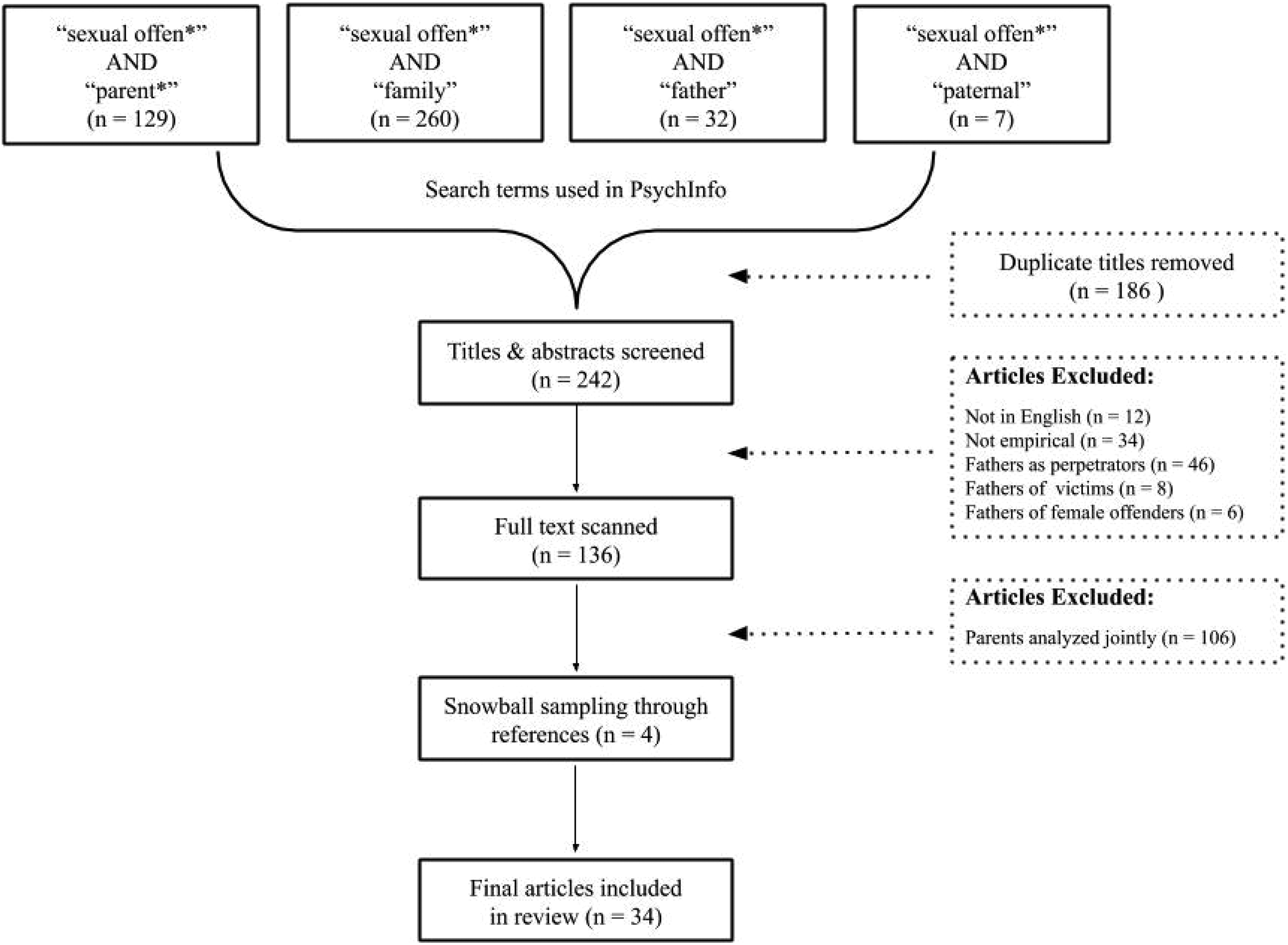
Model of electronic search strategy.
In order to capture the full extent of the literature, the “sexual offen*,” “parent,” and “family” key words were searched for using the “all but full text” command. This required some variant of the key word to be present in the title, the abstract, or the listed search terms of the article. However, for the more specific supplemental key words (“father” and “paternal”), the criteria were widened to the “anywhere” condition. Thus, studies that mention fathers of sexual offenders only in the body of the paper would still be captured in this review.
Coding Strategy
All papers generated through the search procedures were scanned to determine their relevance to the aims of this review. Papers that appeared to include some measure of paternal impacts for sexually aggressive behavior were then read thoroughly by the first author. All findings that related to the male caregivers of sexually aggressive men were extracted. Similar findings were then grouped together by their ability to address any of the four research questions. Findings that pertained to multiple research questions were included in all relevant areas.
Systematic Literature Review
Search Results
Included in this literature review are 34 studies that report on fathers of sexual offenders. For the remainder of this review, articles are organized based on their relevance to the research questions that guided the search. A brief summary of the articles and their positions within these groups can be found in Tables 1–3. As fathers of sexual offenders were not the sole focus for many of the evaluations, the reported findings for each article have been truncated to include only material directly pertaining to this review’s research questions.
Description and Results of Studies Related to the Transmission of Sexual Offending From Father to Son.
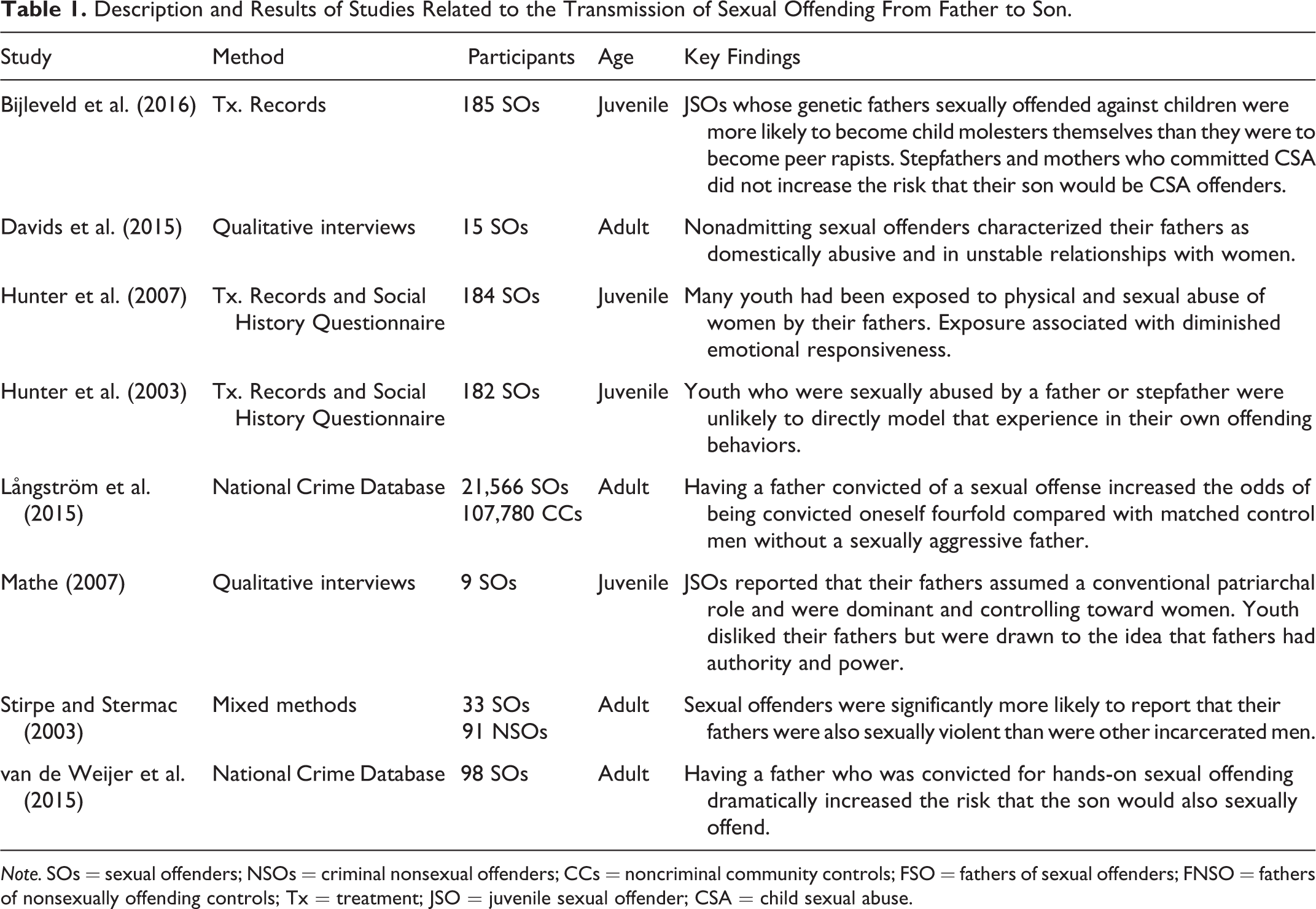
Note. SOs = sexual offenders; NSOs = criminal nonsexual offenders; CCs = noncriminal community controls; FSO = fathers of sexual offenders; FNSO = fathers of nonsexually offending controls; Tx = treatment; JSO = juvenile sexual offender; CSA = child sexual abuse.
Description and Results of Included Studies Related to Paternal Attachment or Relationship Quality.
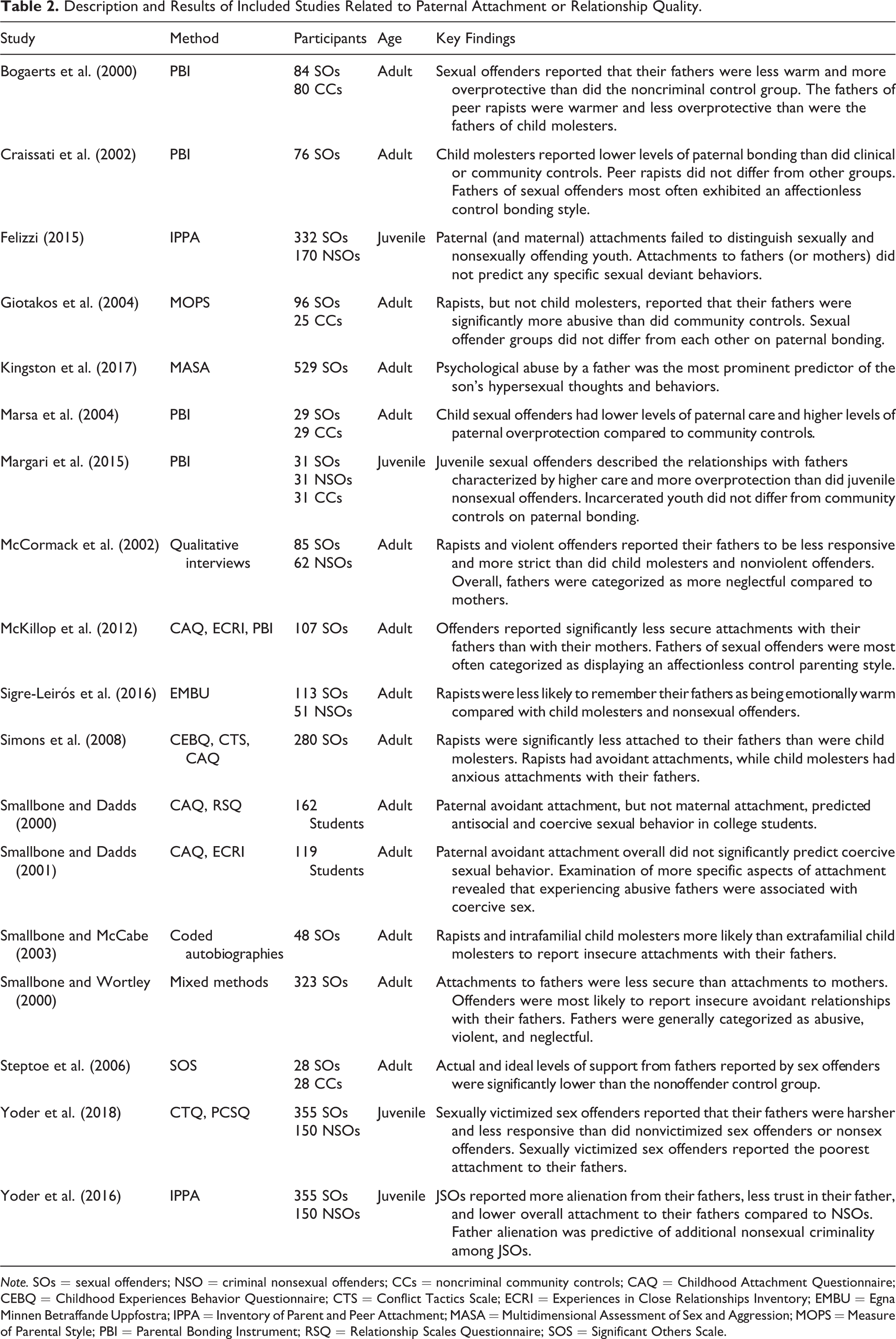
Note. SOs = sexual offenders; NSO = criminal nonsexual offenders; CCs = noncriminal community controls; CAQ = Childhood Attachment Questionnaire; CEBQ = Childhood Experiences Behavior Questionnaire; CTS = Conflict Tactics Scale; ECRI = Experiences in Close Relationships Inventory; EMBU = Egna Minnen Betraffande Uppfostra; IPPA = Inventory of Parent and Peer Attachment; MASA = Multidimensional Assessment of Sex and Aggression; MOPS = Measure of Parental Style; PBI = Parental Bonding Instrument; RSQ = Relationship Scales Questionnaire; SOS = Significant Others Scale.
Description and Results of Included Studies Related to Paternal Social and Emotional Characteristics.
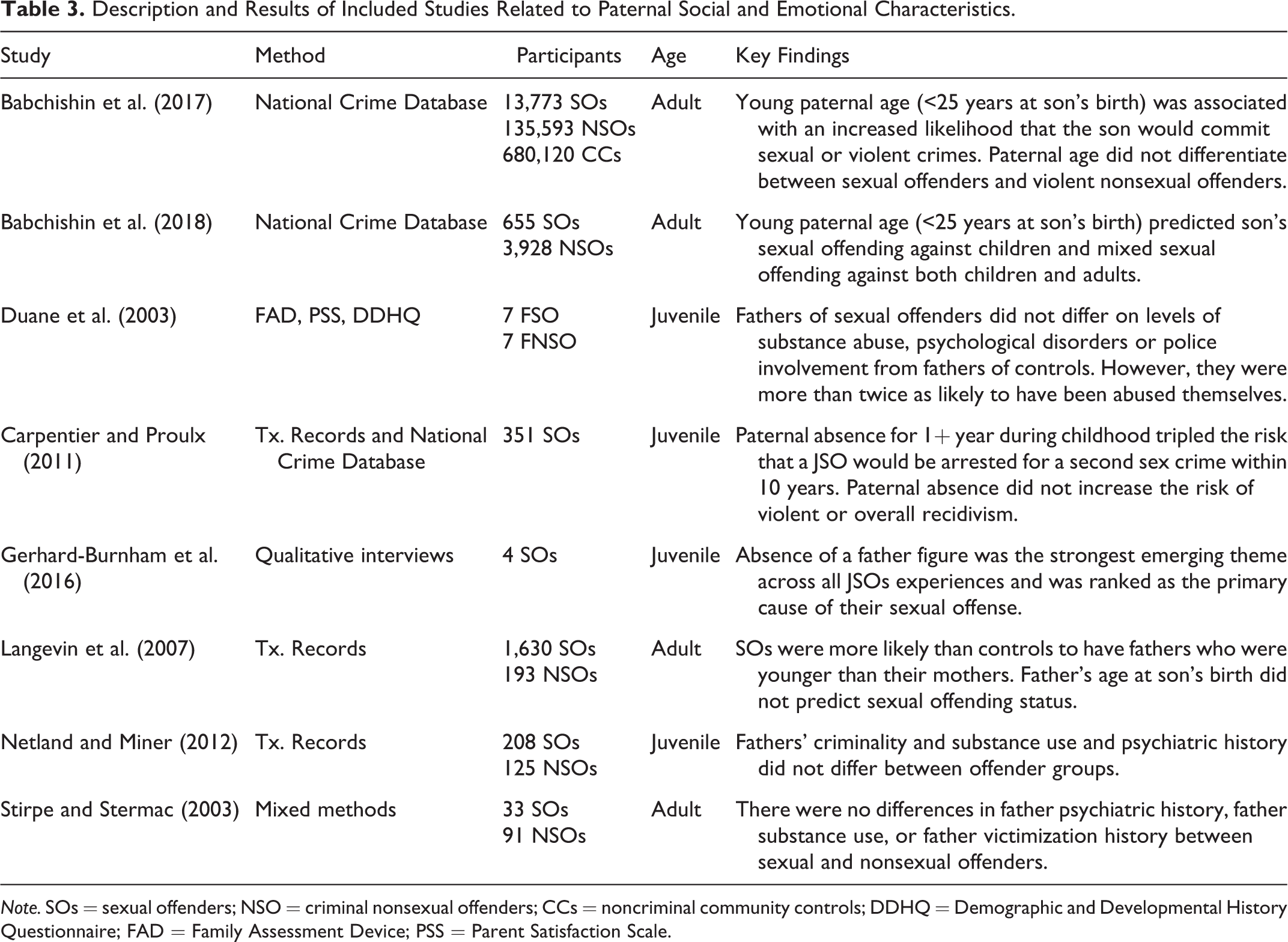
Note. SOs = sexual offenders; NSO = criminal nonsexual offenders; CCs = noncriminal community controls; DDHQ = Demographic and Developmental History Questionnaire; FAD = Family Assessment Device; PSS = Parent Satisfaction Scale.
Intergenerational Transmission of Offending
The first research question asked how a father’s history of perpetuating sexual violence may impact his son’s sexual offending behavior (see Table 1). Eight articles included hypotheses related to the intergenerational transmission of offending, which suggested that aggressive sexual behavior may be learned through witnessing fathers commit sexual violence, by internalizing the masculinity norms displayed by fathers, and though genetic heritability.
Sexually violent fathers
Overall, these articles provide a strong argument for the contribution of social learning to the consideration of how fathers influence the development of sexual offenders. Multiple studies found that sexual offenders are likely to cluster within families (Bijleveld et al., 2016; Långström et al., 2015; Van de Weijer et al., 2015). Two such examinations found that children whose fathers had committed a sexual offense were between 3.7 and 6.95 times more likely to offend themselves (Långström et al., 2015; Van de Weijer et al., 2015). Many offenders, both youth and adult, had directly observed their fathers enacting some form of violence against women (Hunter et al., 2007; Stirpe & Stermac, 2003). In one study, 54% of young sexual offenders reported witnessing an older male relative beat a woman, while 19% reported witnessing a father figure rape a woman (Hunter et al., 2007).
In qualitative interviews, offenders describe this experience as formative (Davids et al., 2015; Mathe, 2007). They learned from observation that their paternal role models were comfortable mistreating women and that these displays of violence empowered their fathers. When reflecting on these learned norms, sexual offenders directly pinpoint witnessing their fathers commit gendered violence as the experience that distorted their perceptions of masculinity (Davids et al., 2015; Mathe, 2007). Entering their late teen or early adult years with a construct of masculinity that supports the degradation of women gave these men the freedom to commit their sexual offenses.
Abused-abuser pathway
This literature also does a laudable job of testing and rejecting various competing hypotheses that attempt to otherwise explain the clustering of sexual offenses in families. Most common is the proposed abuser-abused pathway, whereby experiencing sexual violence as a child makes one more likely to perpetrate sexual violence against others. None of the included studies found support for the abuser-abused pathway in the context of father–son incest (Hunter et al., 2003; Van de Weijer et al., 2015). While both youth and adult offenders in the samples were more likely than controls to have experienced some form of sexual abuse, they overwhelmingly denied that the perpetrators were their fathers (Hunter et al., 2003; Van de Weijer et al., 2015). The abuser-abused pathway, therefore, fails to explain why having a sexually violent father dramatically increases the risk of committing a sexual offense oneself.
Genetics
Three studies investigated whether the clustering of sexual offending in families might be due to genetic heritability (Bijleveld et al., 2016; Hunter et al., 2003; Långström et al., 2015). Two articles found that father–son genetics accounted for a significant portion the variability in the prediction of the son’s sexual offending over and above the presence of sexually violent stepfathers (Bijleveld et al., 2016; Långström et al., 2015). However, these same authors reported that they were better able to predict sexual offenses when the father and son lived in the same household and, furthermore, when the father offended against children when his son was over the age of 5. These qualifications ultimately provide yet another strong argument for the social learning hypothesis since the son’s age and location at the time of his father’s offending should have no relevance on genetically transmitted behavior.
Finally, a study comparing characteristics of adolescents who sexually offended against prepubescent or pubescent girls, failed to differentiate the influence of genetic and social fathers (Hunter et al., 2003). Experiencing sexual abuse by either a genetic or social father did not predict the type of victim (i.e., prepubescent vs. pubescent) chosen by the juvenile offender. Therefore, the results regarding genetics are mixed. More research is needed in order to confidently side with either hereditary or social learning positions or both the hereditary and social learning positions on the transmission of sexual offending.
Father and Son Attachment
While social learning considers behavioral transmission to occur via internalizing the actions of others, attachment theory argues that the relationships built with primary caregivers serve as a model for all future interpersonal interactions (Bowlby, 1969). This review’s second research question asks whether the quality of the relationship between father and son impacts sexual offending behavior (see Table 2). Nineteen articles employing an attachment theory framework were compiled to address this question.
Paternal attachments of sexual offenders
The bulk of this literature found that sexual offenders often have insecure attachments to their fathers and that poor paternal attachments have some predictive validity for the development of sexual aggression (Kingston et al., 2017; Smallbone & Dadds, 2000). Consistently, sexual offenders reported that they viewed their fathers as harsh, emotionally distant, and unduly strict (Bogaerts et al., 2000; Marsa et al., 2004; McKillop et al., 2012; Sitney & Kaufman, 2019; Smallbone & Wortley, 2000; Steptoe et al., 2006; Yoder et al., 2016, 2018). This affectless and controlling parenting style often fostered poor father–son relationships, with estimates suggesting that between 63% and 78% of sexual offenders have an insecure attachment to their fathers (Kingston et al., 2017; McKillop et al., 2012). Furthermore, studies that sought to explore early attachment correlates for abusive sexual behavior found that paternal relationships may be especially important (Kingston et al., 2017; Smallbone & Dadds, 2000). In fact, these studies demonstrated that experiencing emotional abuse and neglect by one’s father were the primary predictors for engagement in coercive sexual behaviors or hypersexuality, providing more explanatory power than maternal attachment variables.
However, there is also some research that brings into question the importance of paternal attachment on sexual offending behavior. While Smallbone and Dadds (2000) found a decided impact of paternal attachment on engagement in coercive sex, their follow-up study produced insignificant effects using the same variables with a second sample (Smallbone & Dadds, 2001). Explaining this shift in findings, the authors noted that the strength of the effect of paternal attachment remained consistent with the initial study. In contrast, maternal attachment was a much stronger predictor within the replication sample. Nevertheless, both studies (Smallbone & Dadds, 2000, 2001) found that having a loving or caring father negatively correlated with coercive sexual behavior (rs = −.23 to −.32), while having an abusive or violent father positively correlated with son’s sexual aggression (rs = .19–.25).
Paternal attachments of sexual offenders versus community controls
One avenue that explores the potential unique impact of paternal relationships for sexual offenders is through comparisons of this population and other groups. Four of the five studies which compared sexual offenders to community controls found that sexual offenders tend to consider their fathers to be less warm and more overbearing (Bogaerts et al., 2000; Marsa et al., 2004; Sitney & Kaufman, 2019; Steptoe et al., 2006). Perhaps more interestingly, there is initial evidence that sexual offenders seem to prefer this strained relationship. When asked to imagine their ideal relationships with their fathers, sexual offenders in Steptoe et al.’s (2006) study reported that they were uninterested in their fathers becoming more involved or attentive to their lives. However, this pattern of findings was not universal. The final study found no differences in paternal (or maternal) attachment between a group of juvenile sexual offenders and community control youth (Margari et al., 2015).
Paternal attachments of sexual offenders versus incarcerated controls
Additional literature sought to distinguish men who commit sex crimes from other types of offenders. Three studies that examined attachments between sexual and nonsexual offenders concluded that sexual offenders experience particularly harsh relationships with their fathers compared to other incarcerated youth (Sitney & Kaufman, 2019; Yoder et al., 2016, 2018). While the trend from this literature suggests that sexual offenders have more disturbed paternal relationships than do men incarcerated for nonsexual offenses, some alternative patterns of paternal attachments have also been reported. For instance, Sitney and Kaufman (2019) found no differences when paternal relationships of sexual offenders and youth incarcerated for violent crimes were compared. Second, Felizzi (2015) found that paternal attachments failed to distinguish sexually offending youth from nonsexually offending youth. Further, attachments to fathers did not predict any specific sexual deviant behaviors. A final study reported that sexual offenders in their sample had significantly more secure attachment relationships to their fathers than did nonsexual offenders (Margari et al., 2015). It is therefore unclear whether attachment quality is an accurate predictor of sexual offending over and above general offending.
Paternal attachments of peer rapists versus pedophiles
Finally, seven studies investigated the ability of paternal attachment to predict types of sexual offenders (Bogaerts et al., 2000; Craissati et al., 2002; Giotakos et al., 2004; McCormack et al., 2002; Sigre-Leirós et al., 2016; Simons et al., 2008; Smallbone & McCabe, 2003). Of those seven, five found that rapists reported poorer relationships with their fathers than did men who molested children (Giotakos et al., 2004; McCormack et al., 2002; Sigre-Leirós et al., 2016; Simons et al., 2008; Smallbone & McCabe, 2003). The remaining two studies again produced results that conflict with the general trends (Bogaerts et al., 2000; Craissati et al., 2002). In contrast to the previous studies, these works report that child molesters rated their fathers as significantly less warm and significantly more controlling than did peer rapists or nonoffending controls. Thus, the literature regarding attachment comparisons between types of sexual offenders offers mixed findings.
Paternal Characteristics
A third segment of the literature argues that a typology of fathers of sexual offenders may be based on a simple examination of paternal characteristics and demographics (see Table 3). Eight of the identified articles primarily focused on the impact of various paternal characteristics on the development of sexual offending. These characteristics include paternal absence, paternal age, and paternal histories of victimization, mental illness, substance abuse, or arrests.
Paternal absence
Three studies investigated the potential for paternal absence to distinguish sexual offenders from nonoffenders. This literature suggests that growing up without a father may have a special impact on sexual aggressiveness. For instance, Carpentier and Proulx (2011) found that spending one or more years of childhood without a father tripled the risk that sexual offenders in one study would be arrested for a second sex crime. Furthermore, through qualitative research, participants reported the absence of a father figure as a crucial event in creating the circumstances that allowed the offenses to occur (Davids et al., 2015; Gerhard-Burnham et al., 2016). Youth reported that the abandonment or death of their fathers caused them to enter a state of emotional dysregulation. When that dysregulation was not properly managed, it contributed significantly to their sexual offense.
Paternal age
Three studies investigated whether the father’s age at the son’s birth was associated with the son’s future sexual offending behavior as an adult. These studies found that fathers of sexual offenders were more likely to be unusually young or unusually old compared to the rest of the population (Babchishin et al., 2017, 2018; Langevin et al., 2007). However, the risk of having a sexually aggressive son was only slightly increased for young and old fathers. Across two studies, Babchishin et al. (2017, 2018) reported young paternal age was a significant predictor of the son’s sexual offending behavior. Furthermore, subgroup analyses determined that young paternal age predicted both child molestation and peer rape. However, young paternal age was also equally predictive of violent, nonsexual offending. Finally, Langevin et al. (2007) found that the fathers of sexual offenders tended to be slightly older than average at the time of their first child’s birth. However, paternal age did not significantly differentiate sexual offenders from controls in their full model.
Paternal victimization history
Mixed support was found for paternal victimization history. Of the two studies that examined the proportion of fathers who had experienced child maltreatment themselves, one found that fathers of sexual offenders were more likely to have been victimized than fathers of controls (Duane et al., 2003), while the other did not (Stirpe & Stermac, 2003). Duane et al. (2003) found that 41% of fathers of juvenile sexual offenders had experienced some form of maltreatment in their own childhoods. These rates were significantly higher than those of the fathers in the control groups. In contrast, Stirpe and Stermac (2003) found no differences in paternal victimization history within their sample of adult sexual offenders (6.5%) violent offenders (4.5%) and nonviolent offenders (12%).
Paternal mental health, substance abuse, and criminal history
Across three studies, fathers of sexual offenders were found to be no more likely than fathers of other incarcerated youth to have histories of mental illness, substance abuse, or arrests (Duane et al., 2003; Netland & Miner, 2012; Stirpe & Stermac, 2003). Notably, even though the groups did not differ, these factors operated at very high rates across both sexually offending and nonsexually offending participants. For instance, Netland and Miner (2012) found that 57% of the total sample had fathers with substance abuse problems, 42% had fathers with arrest histories, and 17% had fathers with mental health concerns.
Relevance for Juvenile Sexual Offenders
The literature covered in this review is too limited to have fully analyzed adult and juvenile offenders separately. However, a comparison of the impact of fathers on adult and juvenile offenders remains appropriate.
Intergenerational transmission of offending
Of the eight articles that contained intergenerational transmission hypotheses, four included juvenile participants in their samples (Bijleveld et al., 2016; Hunter et al., 2003, 2007; Mathe, 2007). Notably, few differences emerged between the findings of adult versus juvenile offenders with regard to the clustering of sexual offenders within families. Studies with both populations found that having a sexually violent father significantly impacted offending behaviors, although the odds ratio (OR) was stronger for adults (OR = 6.95; Van de Weijer et al., 2015) than for youth (OR = 3.7; Långström et al., 2015; Bijleveld et al., 2016). Furthermore, both adult and juvenile offenders reported, through qualitative interviews, that the act of witnessing their father engage in gendered sexual violence informed their own decision to commit a sexual crime (Davids et al., 2015; Mathe, 2007). The similarities between adult and juvenile offenders in this area may be unsurprising, for the core of social learning theory argues that what one internalizes in early childhood, before self-identity is fully formed, provides the blueprint for how to engage socially throughout the rest of their life (Bandura et al., 1961).
Father and son attachment
The literature regarding the attachment relationships between sexual offenders and their fathers is dominated by samples of adult offenders. Merely 5 of the 19 studies in this area included juvenile participants. Within this literature, sexual offenders consistently report that they are less securely attached to their fathers than do nonoffending populations (Bogaerts et al., 2000; Marsa et al., 2004; Steptoe et al., 2006). In contrast, there is considerable ambiguity surrounding the ability of paternal attachments to distinguish between juvenile sexual offenders and youth who commit other types of crimes. Two studies (from the same research team) did find that young sexual offenders had significantly poorer attachments to their fathers than did nonsexual offenders and that poor paternal attachments were predictive of sexual recidivism among previously offending youth (Yoder et al., 2016, 2018). However, these findings are disputed by an equal weight of evidence that paternal attachments are weak for all incarcerated youth, regardless of their index offense (Felizzi, 2015; Margari et al., 2015). Finally, Sitney and Kaufman (2019) found that juvenile sexual offenders had significantly more strained parental relationships than did nonviolent offenders but did not differ from violent juvenile offenders on this dimension. A lack of differences in attachment between incarcerated groups is not novel. This is perhaps best discussed in Seto and Lalumière’s (2010) seminal meta-analysis on explanations for juvenile sexual offending, which finds that attachment to parents generally did not distinguish male juvenile sexual offenders from nonsexual offenders. Overall, these conflicting studies raise doubts that the quality of paternal attachment has been sufficiently studied in regard to its impact on juvenile sexual offenders.
Paternal characteristics
The literature surrounding paternal characteristics is predominated by studies utilizing juvenile participants. Of the eight articles that make up this section, four exclusively examined juveniles. An additional two studies combined both juvenile and adult offenders. Therefore, the conclusions presented within the integrative review almost uniformly reflect the characteristics of fathers whose sons offended at a young age. The two studies that exclusively examined adult offenders did not find any strongly divergent results that would suggest that these two populations should be considered separately with regard to paternal characteristics (Langevin et al., 2007; Stirpe & Stermac, 2003).
Discussion
Synthesis
This systematic literature review has sought to examine the impact of fathers on the development of their sons’ sexual offending behavior. Considering these findings in a more holistic manner allows for a broader understanding of significant pathways. The evidence in this review provides the strongest support for the argument that sexually aggressive fathers have a significant risk of contributing to their child’s sexually aggressive behaviors. This is not because fathers are offending directly upon their children, but because witnessing the power and control that is achieved by men through sexual dominance over women creates a lasting impression upon these youth and a roadmap for future emotional and sexual interactions. Strict adherence to the norms of masculinity prescribe that men value social dominance and therefore assert their superiority over women (O’Neil, 2015). Here, one may interpret the experiences of boys interacting with their sexually violent fathers as an indoctrination as to what it means to be masculine, to hold power, and to gain the respect of other men.
Furthermore, the findings from the attachment literature suggest that fathers of sexual offenders tend to be emotionally abusive and overly punitive. This parenting style of affectionless control strains the father–son relationship, leaving sexual offenders with insecure attachment bonds. This may be especially true for men who go on to commit peer rape as opposed to child molesters. The experiences of rejection by their fathers resulted in developing dysfunctional modes of engaging in sexual contact to achieve intimacy. Sex, for these men, is experienced without regard for the emotional well-being of their partners (Smallbone & Dadds, 2000). However, while it appears that sexual offenders often have more insecure attachments to their fathers than do other comparable groups, much of this evidence was mixed. For every pattern of results found in this section, a counterexample was provided by at least one study. Additional evidence, particularly with young sexual offenders, is needed to clarify these trends.
In contrast to the findings from the previous two research questions, the findings from the paternal characteristics literature suggest that fathers of sexual offenders are not demographically different from fathers of other men incarcerated for nonsexual crimes. Examinations of paternal mental health, criminal, and substance use histories fail to discriminate between these groups, suggesting that sexual and nonsexual offenders have fathers with similar socioemotional characteristics. Additional evidence on paternal victimization history, paternal absence, and paternal age at son’s birth is so mixed that it, further complicates the ability of policy makers and practitioners create an accurate typology of sexual offenders’ fathers.
The significance of social learning and attachment theories for explaining sexual offending garner additional support from the extant literature regarding the transmission of sexuality norms from father to son. Fathers’ norms surrounding masculinity and sexism have been shown to have significant impacts on their sons’ own sexist attitudes (Klann et al., 2018). Further, fathers’ verbal and nonverbal communications surrounding sex have been shown to predict their son’s age of sexual debut, contraceptive use, and their number of sexual partners (Guilamo-Ramos et al., 2012). These findings are also consistent with the juvenile delinquency literature which indicates that witnessing a father commit a violent or illegal act significantly increases the risk that their son will also engage in criminal behavior (Besemer & Farrington, 2012). Taken together, these three separate but overlapping literatures provide strong support for the importance of including fathers in any future research examining how and why young men develop dysfunctional beliefs and behaviors regarding their sexuality.
Two sexual violence prevention strategies may be suggested by the findings of this review. First, the previously presented results advocate for the inclusion of fathers in family-focused prevention efforts with youth at risk of sexually offending (Zanoini et al., 2013). The results of this review suggest that programs designed to encourage fathers to model appropriate relationships with women and to build strong relationships with their sons early on in their lives may significantly deter sexual offending. Second, studies included in this review found that youth whose fathers were present in their lives were less likely to commit a second sexual crime than were young sexual offenders with absent fathers (Carpentier & Prolux, 2011). Therefore, special efforts to engage fathers in active parenting and relationship-building activities with their sons are to be encouraged. On the other hand, this review does not support the use of paternal characteristics to guide intervention efforts for sexual offending. Although fathers of sexual offenders were often engaged in drug and alcohol use, criminal pursuits, and had mental health concerns, these factors did not differentiate sexual offenders from other young men. This review would discourage interventionists from attempting to use the existing literature to create a typology of juvenile sex offenders’ fathers as a mechanism for evaluating risk.
Strengths
As a whole, the literature reviewed here reflects a number of methodological and conceptual strengths. First and foremost, almost all of the studies constructed their hypotheses based on rigorous theoretical grounds. This is due, in part, to the extensive research efforts that have been undertaken on juvenile delinquency and child development. Measures of social learning, attachment, and masculinity have been tested and validated countless times using samples of incarcerated and community adolescents. As a result, this review was uniformly able to draw clear connections between theory and application, as findings were extended from other literatures to enhance the understanding of sexual offenders.
Second, the variety of methodologies used in the articles reviewed allows for a well-rounded assessment of fathers. While social psychology’s general reliance on quantitative methodologies is reflected in this literature. Seven of the 34 included articles employed a qualitative or mixed methodology. Utilizing both quantitative and qualitative methodologies promotes triangulation, or the process of using multiple forms of measurement to “view” and confirm the same concept from different angles (Braverman, 2013). The qualitative interviews, coded autobiographies, and phenomenological case studies employed by the authors included in the review add considerable value to the overall findings. These studies promote the voices of those who truly know the context and nuances of father impacts on sexual aggression. Some unusual quantitative methodologies must also be highlighted for their unique contributions to this review. For instance, two studies were able to access records for hundreds of thousands of sexual offenders and controls in order to determine the differential impacts of genetic and environmental risk factors (Babchishin et al., 2017; Långström et al., 2015). Rarely is social science able to use population statistics, and the efforts required to do so are certainly notable.
Limitations
The underrepresentation of fathers in parenting research is one of several limitations of this review. The fathers of sexual offenders were the sole focus in only one of the included studies (Mathe, 2007). As such, the results highlighted here reflect only a portion of the findings reported in each article. By extracting only the information relevant to fathers, these findings have been stripped of their larger contexts. Moreover, only one study directly questioned the fathers themselves to gather information on their interactions with their sons (Duane et al., 2003). Consequently, fathers’ perceptions of how their own behaviors influenced their son’s sexual deviancy are almost entirely missing from this analysis.
The second area of limitations concerns the sons rather than the fathers. With the exception of two studies by the same authors (Smallbone & Dadds, 2000, 2001), all of the articles recruited samples of sexual offenders from correctional institutions. This presents two limitations. First, incarcerated sexual offenders, by default, have been separated for long periods of time from their parents or caregivers. This may unduly influence their recollections and their perceptions of their relationships with their parents. Alternatively, some juvenile sexual offenders may not have been incarcerated at all due to a strong relationship with their primary caregivers. The more affluent fathers with strong emotional ties to their sons may hire better defense lawyers, while sympathetic judges may have diverted young offenders to outpatient services if they felt that their families were supportive and engaged in treatment. These possibilities prevent extending the findings of this review to apply generally.
Finally, none of the studies included in this systematic review included research questions that pertained to the cultural considerations of fatherhood or masculinity. Although the roles and influence of fathers varies across cultural, racial, and ethnic groups, no conclusions could be drawn in this review regarding the differential impact fathers from various cultures.
Future Research Directions
This review has not exhausted the potential research questions that may be asked surrounding the impacts of fathers on their sons’ for sexual offending behaviors. Indeed, since most of the findings of this review are drawn from partially mixed evidence, additional studies that explicitly examine the impacts of social learning theory, attachment theory, or paternal characteristics for sexual offenders are warranted. Further, this review has uncovered specific gaps in the literature that need to be addressed. First, only one study directly interviewed fathers as part of their participant pool. In consequence, findings from these studies represent only the offending sons’ perceptions of their fathers. Both qualitative and quantitative research that directly assesses fathers would strengthen our understanding of this phenomenon.
Second, both the literature on paternal attachments and the literature on genetic heritability of offenses produced decidedly mixed results. This may have been due to inconsistent definitions of what it means to be a “father.” Research that separates genetic from social fathers is extremely limited and is in dire need of additional examination. Further, cultural considerations of fatherhood may provide greater insights into the mechanisms that underlie the impact of father–son attachments and modeling on sexual behaviors.
Finally, as this review suggests that both paternal modeling and paternal relationships may have some unique impacts on sexually aggressive behaviors, models, which integrate both social learning and attachment hypotheses are needed. This review has presented the research findings on the roles of social learning, attachment, and paternal characteristics on juvenile sexual offending independently. In reality, these paternal dynamics do not exist in their own silos independent of one another. Integrated models may be able to provide better explanations of how juveniles’ experiences of witnessing their fathers committing gendered violence affects the quality of the father–son relationship. This may also shed light on how the quality of the paternal relationship may determine the ways in which sons choose to emulate the actions of their fathers. Without such models, our understanding of paternal impacts will remain incomplete.
Conclusion
This review has sought to highlight the impact that fathers may have on their sons’ sexually coercive behaviors. Through an examination of 34 articles, it has become apparent that the systematic exclusion of fathers in the sexual perpetration literature must be rectified. Fathers influence their sons’ decisions to commit sexual offenses through modeling sexually aggressive behaviors themselves. Additionally, the father–son relationship is either a risk or a protective factor for offending. Therefore, the inclusion of fathers in primary, secondary, and tertiary prevention efforts for sexually offending is particularly needed.
Implications for Practice, Policy, and Research
Practice
These results advocate for the inclusion of fathers in family-focused prevention efforts with youth at risk of sexually offending. Specifically, they suggest that programs designed to encourage fathers to model appropriate relationships with women and to build strong relationships with their sons early on in their lives may significantly deter sexual offending. Policy
This review does not support the use of paternal characteristics to guide policy efforts for sexual offending. Although fathers of sexual offenders were often engaged in drug and alcohol use, criminal pursuits, and had mental health concerns, these factors did not differentiate sexual offenders from other young men. Therefore, even though interventions which promote paternal sobriety or prosocial behaviors may have their own benefits, they are unlikely to be a significant mechanism in mollifying their sons’ coercive sexual behaviors. Furthermore, this review would discourage interventionists from attempting to use the existing literature to create a typology of juvenile sex offenders’ fathers as a mechanism for evaluating risk. Research
First, only one study directly interviewed fathers as part of their participant pool. In consequence, findings from these studies represent only the offending sons’ perceptions of their fathers. Second, both the literature on paternal attachments and the literature on genetic heritability of offenses produced decidedly mixed results. This may have been due to inconsistent definitions of what it means to be a “father.” Research that separates genetic from social fathers is extremely limited and is in dire need of additional examination. Finally, as this review suggests that both paternal modeling and paternal relationships may have some unique impacts on sexually aggressive behaviors, models, which integrate both social learning and attachment hypotheses are needed.
Supplemental Material
Supplemental Material, Highlights_Table_(1) - A Chip Off the Old Block: The Impact of Fathers on Sexual Offending Behavior
Supplemental Material, Highlights_Table_(1) for A Chip Off the Old Block: The Impact of Fathers on Sexual Offending Behavior by Miranda H. Sitney and Keith L. Kaufman in Trauma, Violence, & Abuse
Footnotes
Declaration of Conflicting Interests
The author(s) declared no potential conflicts of interest with respect to the research, authorship, and/or publication of this article.
Funding
The author(s) received no financial support for the research, authorship, and/or publication of this article.

Supplemental Material
The supplemental material for this article is available online.
References
Supplementary Material
Please find the following supplemental material available below.
For Open Access articles published under a Creative Commons License, all supplemental material carries the same license as the article it is associated with.
For non-Open Access articles published, all supplemental material carries a non-exclusive license, and permission requests for re-use of supplemental material or any part of supplemental material shall be sent directly to the copyright owner as specified in the copyright notice associated with the article.
