







Abstract
Millions of children are exposed to family violence around the world; however, the effects on adolescent academic achievement are poorly understood. Using a systematic search and review methodology, we synthesized studies that quantitatively examined the effects of exposure to family violence on academic achievement among adolescents. We searched for peer-reviewed, English-language articles in nine online databases. Thirteen studies that examined adolescents were included, where family violence exposure was the independent variable and academic achievement was the dependent variable. Of those, nine studies identified significant, direct, and negative effects of family violence exposure on adolescent academic achievement, and a further two identified significant, indirect, and negative effects. We found reasonable evidence showing that adolescents’ academic achievement is negatively affected by exposure to family violence. Our review findings indicate the importance of implementing prevention strategies to reduce children’s exposure to family violence, and intervention for those who have been exposed to it. Future research should further examine the moderating and mediating mechanisms by which family violence exposure affects academic achievement.
Family violence is a health and welfare issue that affects children around the world (United Nations International Children’s Emergency Fund [UNICEF], 2006). Children exposed to a parent or caregiver being subjected to violence are at risk of emotional and behavioral problems; many reviews have found negative effects of family violence exposure on children’s emotional and behavioral outcomes (including Evans et al., 2008; Kitzmann et al., 2003; Wolfe et al., 2003). However, none provided an in-depth review of the scholarly literature regarding adolescents’ academic achievement. Children exposed to family violence are at risk of poor academic performance (Fry et al., 2018), which can influence their future opportunities. To gain a better understanding of how family violence exposure affects academic achievement among adolescents and inform future research and practices, our objective was to conduct a comprehensive review of this literature.
Worldwide, an estimated 30% of ever-partnered women experience violence perpetrated by an intimate partner (World Health Organization [WHO], 2013). What makes this statistic more concerning is that many children are exposed to these incidents. Indeed, it is estimated that 275 million children around the world are exposed to some form of family violence annually (UNICEF, 2006). Carlson’s (2000) review estimated that 10% of children in the United States are exposed to family violence each year and one in three are exposed in their lifetime. Habib et al. (2014) estimated that one third of Australian children are exposed to family violence severe enough to undermine their mental health. Taken together, these conservative estimates indicate that a high number of children are exposed to harmful levels of family violence.
The term family violence refers to abusive behaviors between family members, such as intimate partners, and parents and children (Tolan et al., 2006). For this review, we used the term to refer to abusive behaviors that occur between parents or caregivers. Our use of family violence, therefore, encompasses similar terms including domestic violence and abuse, interparental conflict and violence, intimate partner violence and abuse, and marital violence and abuse. In addition, we used the term exposure to refer to the multifarious nature in which children can be exposed to family violence, which can range from being aware (i.e., seeing, hearing, or hearing about the violence, or seeing, hearing about, or experiencing the effects of the violence) to being involved (i.e., participating or intervening in the violence, or being victimized during a violent incident; Holden, 2003). In summary, we consider the term family violence exposure appropriately captures the broad mechanisms that lead children to be affected by violence within families.
It has long been recognized that children who are exposed to family violence, especially interparental violence, are at risk of developing a range of child behavior problems (Evans et al., 2008; Kitzmann et al., 2003; Wolfe et al., 2003) and that these problems can increase over time (Vu et al., 2016). Specifically, the meta-analyses that examined the effects of childhood exposure to family violence found that it was negatively associated with trauma symptoms, and internalizing and externalizing behaviors (Evans et al., 2008; Kitzmann et al., 2003; Vu et al., 2016; Wolfe et al., 2003). Moreover, Vu et al.’s (2016) investigations of the temporal effects of child exposure to family violence revealed that it was more strongly associated with internalizing and externalizing problems over time. However, these meta-analytic findings are limited in scope as they only focused on outcomes pertaining to children’s emotional and behavioral development and have ignored the critical issue of academic outcomes for school-aged children.
One recent narrative review of the effects of family violence exposure for children and youth reported on academic outcomes (Artz et al., 2018). Artz et al. (2018) summarized studies that found childhood exposure to family violence was associated with poorer reading ability (Coohey et al., 2011) and speech and language difficulties (Graham-Bermann et al., 2010; Ybarra et al., 2007). It was also reported to be associated with greater school absences, suspensions, and expulsions (Kernic et al., 2002; Margolin et al., 2010). Artz et al.’s review did not assess the methodological quality of the studies and largely focused on children under 10 years of age. It thus omitted research that specifically investigated adolescents’ academic achievement.
While academic outcomes related to school misconduct are important indicators of the emotional and behavioral effects of family violence, we focused on academic achievement exclusively for the current review as it better indicates the effects on adolescents’ cognitive functioning. Academic achievement is defined as a person’s level of knowledge, attitudes, or skills developed in school, which is usually indicated by scores on standardized tests or grades assigned by teachers (Good, 1973). Unlike other outcomes that are associated with children’s exposure to family violence, academic achievement is routinely monitored throughout a child’s schooling years and can determine their educational and employment opportunities following compulsory education (Masten & Coatsworth, 1998). Academic achievement during adolescence is particularly important as it is a point of reference for admission into tertiary education and employment. Although it can be difficult to obtain reports from children, adolescence (ages 10–19; WHO, 2014) is a period during which developmental readiness increases to describe and report family violence exposure to others including school peers and staff. Thus, adolescence is a critical age in which the relationship between family violence exposure and academic achievement must be investigated to understand the effects.
A meta-analytic review of studies that examined the effects of violence experienced in childhood on children’s academic outcomes did include children in adolescence (Fry et al., 2018). Fry et al. (2018) found that various forms of violence (including parental violence, child abuse, and bullying) had a negative effect on children’s academic outcomes. Specifically, compared to those who have not experienced violence, children who witnessed parental violence are more likely to score lower on standardized tests and not graduate from school (Fry et al., 2018). Although this review provides important findings regarding the effects of family violence exposure on academic outcomes of children, relative to other forms of violence, it lacks detail and provides a generalized view of the literature.
It is important to conduct a systematic and comprehensive review of the scholarly literature regarding the effects of exposure to family violence on academic achievement among adolescents, as there are divergent findings. For example, a longitudinal study of African American adolescents in the United States found that exposure to family violence significantly predicted adolescents’ academic achievement over 2 years, even after controlling for demographic variables (King & Mrug, 2016). However, other research from the United States and Australia could not confirm the negative relationship between family violence exposure and adolescent academic achievement (Mathias et al., 1995; Voisin et al., 2011).
The inconsistent results in the adolescent literature regarding the association between exposure to family violence and academic achievement may be attributed to several factors related to methodology. Such differences include (a) measures of family violence exposure (i.e., child reports vs. parent reports), (b) operationalizations of exposure (e.g., seeing violence vs. hearing about it), (c) operationalizations of family violence (e.g., emotional or physical), (d) measures of academic achievement (e.g., grade point average [GPA] vs. standardized test scores), and (e) mediators and moderators considered (or a lack thereof).
There is no prominent theory in the literature that explains how family violence exposure affects children’s academic functioning, though the resilience perspective provides a useful theoretical framework for understanding the importance of mediating and moderating effects. This theoretical framework posits the existence of risk factors that increase the likelihood of negative outcomes, and protective factors that buffer the effects of risk factors and thereby increase the potential for resilience (Luthar et al., 2000). Resilience refers to the experience of adaptive outcomes despite exposure to risk factors (Luthar et al., 2000). Indeed, family violence exposure is a risk factor that has been associated with many negative emotional and behavioral outcomes for children and adolescents (Artz et al., 2018; Vu et al., 2016), which may become risk factors for other negative outcomes, including poor academic achievement. However, some children may have protective factors that enable them to adapt and perform well academically despite being exposed to family violence. Thus, it is important to investigate factors that may influence the effects of family violence exposure on academic achievement.
Age, gender, and other forms of violence are among the factors that have been suggested to moderate the effects of childhood exposure to family violence (Carlson, 2000; Huang & Mossige, 2012; Peek-Asa et al., 2007). Similarly, social support and coping have been suggested to mediate the effects of childhood exposure to family violence on academic achievement (Buckley et al., 2007; Byrne & Taylor, 2007; Carlson, 2000). To accurately estimate the effects of family violence exposure and determine the mechanisms through which it can affect academic achievement, it is important to identify which mediators and moderators have been investigated and within which samples and contexts.
The primary aim of our review was to use a systematic search and review methodology to synthesize quantitative studies that investigated the effects of exposure to family violence on academic achievement among adolescents. The secondary aims were to (a) identify commonly used measures of family violence exposure and academic achievement, (b) identify mediators and moderators considered, (c) describe theoretical frameworks used to inform investigations of the association, and (d) critically assess the methodological quality of studies. Considering the pervasiveness of family violence, and the importance of academic achievement for educational and economic advancement, this review will have important implications for research, policy, and practice. For example, the findings of this review can inform intervention programs that are designed to ameliorate the effects of exposure to family violence among adolescents.
Method
Eligibility Criteria
This review included studies in peer-reviewed, English-language publications that reported a numerical estimation of correlation or effect between family violence exposure and academic achievement among adolescents (aged 10–19 years; WHO, 2014). We excluded studies that: (i) examined participants under the age of 10 or over the age of 19 and had the mean age of participants exceed the age of adolescence (i.e., participants), (ii) examined another type of violence and did not measure or analyze family violence separately (i.e., exposure), (iii) did not examine academic achievement as an outcome (i.e., outcome), or (iv) used a research design that was not quantitative or review methodology (i.e., study type).
Sources and Study Selection
Studies were sourced from nine online databases and the reference lists of relevant journal articles. The search strategy specified in the Appendix was conducted on July 18, 2018, and yielded studies spanning almost three decades from March 1987 to November 2016. The databases were Academic Search Complete, CINAHL Complete, Education Database, Education Source, Embase, Education Resources Information Center (ERIC), Informit’s Education and Health subsets, PsycINFO, and MEDLINE Complete. Records obtained from the databases were first screened at the title and abstract level for eligibility by one independent reviewer (M. Supol) and then at the full-text level. Those deemed as potentially eligible were also independently assessed by a second reviewer (M. Ghayour-Minaie). One reviewer (M. Supol) then hand searched the reference list of relevant articles for additional articles for full-text assessment and independently assessed them.
Data Extraction
One reviewer (M. Supol) independently extracted the following from included studies: (a) study characteristics, including citation, year(s) and country of data collection, research design, and sample characteristics––N used in data analysis, proportion of females, and age range in years; (b) characteristics of measures used (i.e., measure of exposure to family violence, type of exposure and type of family violence measured, and measure of academic achievement); (c) theoretical framework(s) used, if any; and (d) results regarding the association between exposure to family violence and academic achievement. In addition, three reviewers (L. Satyen, M. Ghayour-Minaie, and J. Toumbourou) separately reviewed and confirmed the extracted data from a sample of studies.
Assessment of Methodological Quality
The methodological quality of each study was assessed using the National Institutes of Health’s (NIH, 2014) Quality Assessment Tool for Observational Cohort and Cross-Sectional Studies. This tool was designed to be used to assess the internal validity of a study based on 14 criteria concerning reporting, research design, sampling, measurement, and data analysis (NIH, 2014). It was used to rate the relative quality of each study as poor, fair, or good. As this tool was not designed with cutoffs for each rating (NIH, 2014) and each criterion carried a different weighting due to its relevance to the topic, we based our ratings on whether the key criteria were met. Generally, the greater the number of criteria met, the higher the quality rating. Each study was assessed by two independent reviewers (M. Supol and L. Satyen). There was 85% interrater reliability and all discrepancies were resolved through consensus.
Results
The study selection is shown in Figure 1, in accordance with the Preferred Reporting Items for Systematic Reviews and Meta-Analyses (PRISMA) statement (Moher et al., 2009). The database searches yielded 14,475 records. After removing duplicates, the title and abstract of the remaining 7,802 records were screened using the eligibility criteria. The full texts of 94 records were then assessed, resulting in 11 studies meeting the criteria. We then screened the reference list of included articles, which identified a further 34 articles for full-text eligibility assessment. Two more studies met the criteria, yielding 13 studies in total.
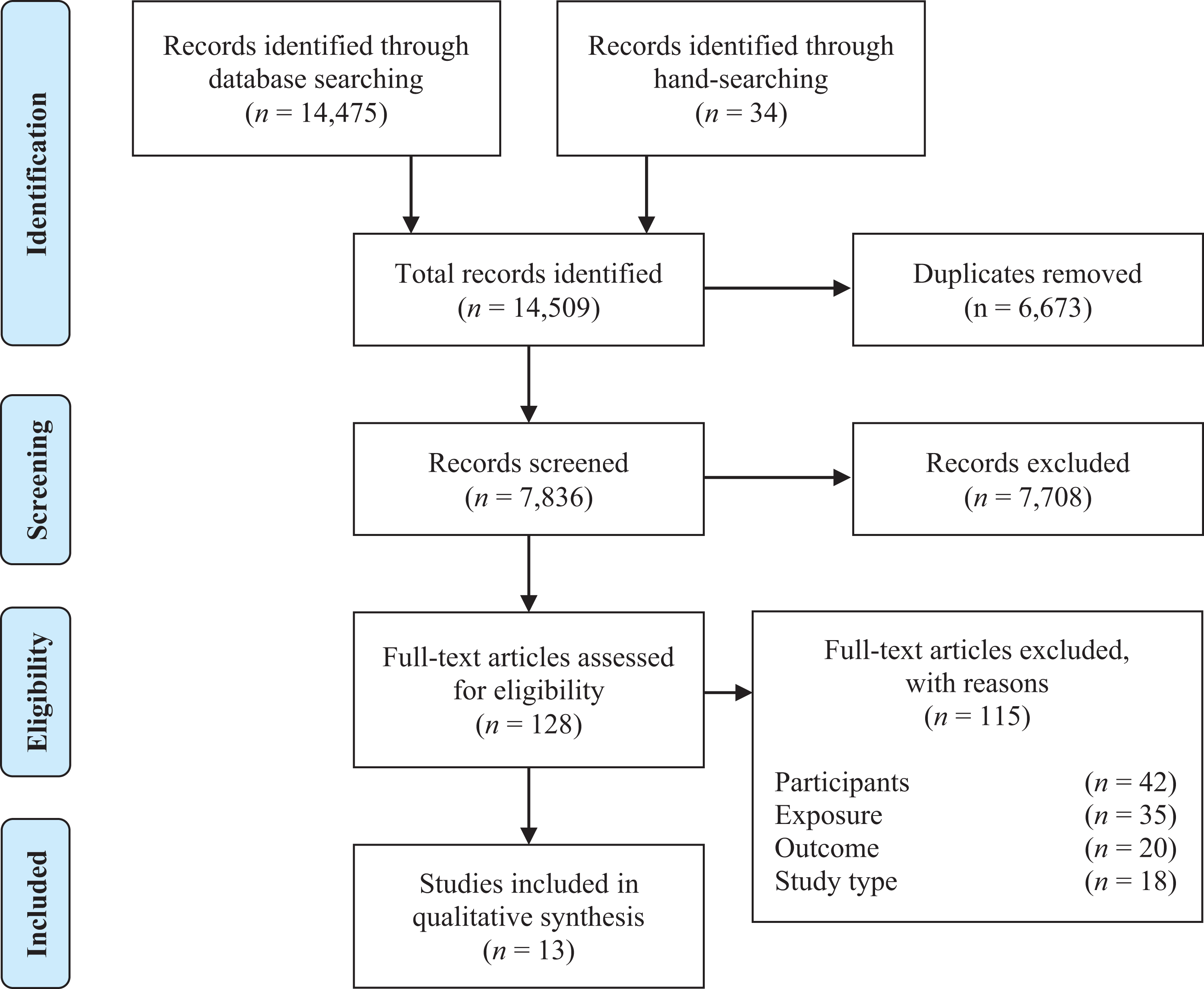
PRISMA flow diagram of the study selection.
Study Characteristics
Publication of the reviewed studies spanned more than three decades, with the earliest published in March 1987 (Long et al., 1987) and the latest in April 2018 (King & Mrug, 2016). Eight of the studies (62%) were published within the last 10 years, while two (15%) were published within the last 5 years. An examination of each study’s data collection process revealed that data from 54% of the studies (i.e., 100% of those that reported the period of data collection) were collected between 3 and 13 years before the year of publication. This highlights a shortage of current data needed to reflect the contemporary educational landscape.
The research design of the studies was either cross-sectional (41%) or longitudinal (59%). All studies collected primary data except for one study that conducted secondary analyses on data from the Norwegian Youth Survey on Violence and Abuse (Huang & Mossige, 2012). The studies represent experiences from six countries including Australia (7.6%), Hong Kong (7.6%), Norway (7.6%), Sri Lanka (7.6%), the United Kingdom (UK; 7.6%), and the United States (62%). All studies included male and female participants, most of whom identified as Caucasian; three of the studies exclusively included participants who identified as African American (King & Mrug, 2016; Voisin et al., 2011) or as Chinese American (Hou et al., 2016). This stresses the lack of research that covers other ethnic minority groups in other parts of the world and a need for more studies with cultural diversity in their samples. All studies included participants within the adolescent age range, except for two that also included children as young as 6 years (Mathias et al., 1995; Peek-Asa et al., 2007). While the sample sizes of the studies range from 40 to 6,979 participants, the studies included a total of 12,405 participants. The characteristics of each study are summarized in Table 1.
Methodological Characteristics of Included Studies.
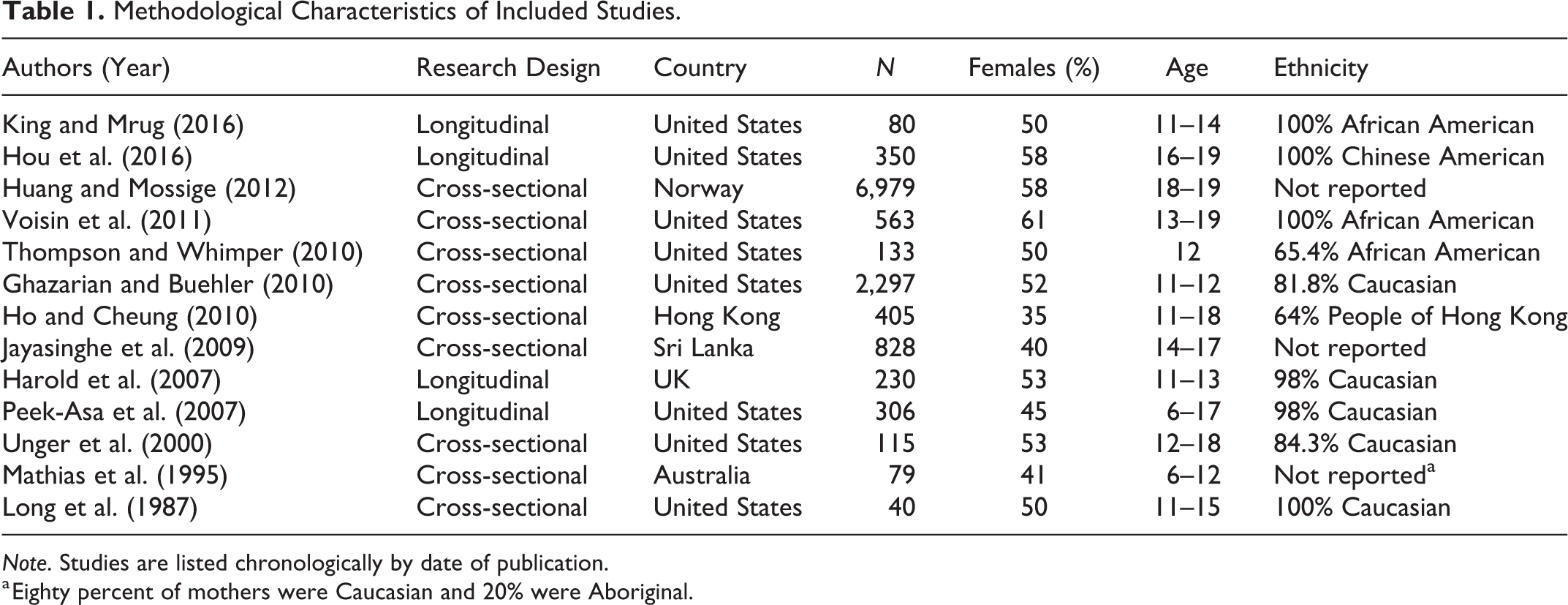
Note. Studies are listed chronologically by date of publication.
a Eighty percent of mothers were Caucasian and 20% were Aboriginal.
Methodological Quality of Studies
The studies ranged in methodological quality. Two studies (Long et al., 1987) were assessed to be of poor quality. Six other studies (Ghazarian & Buehler, 2010; Huang & Mossige, 2012; Mathias et al., 1995; Peek-Asa et al., 2007; Thompson & Whimper, 2010; Voisin et al., 2011) were assessed to be of fair quality. Five other studies (Harold et al., 2007; Ho & Cheung, 2010; Hou et al., 2016; Jayasinghe et al., 2009; King & Mrug, 2016) were assessed to be of good quality. The main strengths across these 13 studies included clearly stating the research question or objective, specifying and defining the population of interest, methodically recruiting participants, using valid measures of the exposure, investigating different levels of the exposure in relation to the outcome, and accounting for confounding variables. The main weaknesses were using poor measures of the outcome, measuring the exposure at the same time as the outcome, and having insufficient time frames to find an effect. The evidence is reasonable in strength, with mostly fair and good quality studies (46.2% and 38.5%, respectively). The quality assessments of each study are detailed in Table 2.
Characteristics of Measures Used in Included Studies.
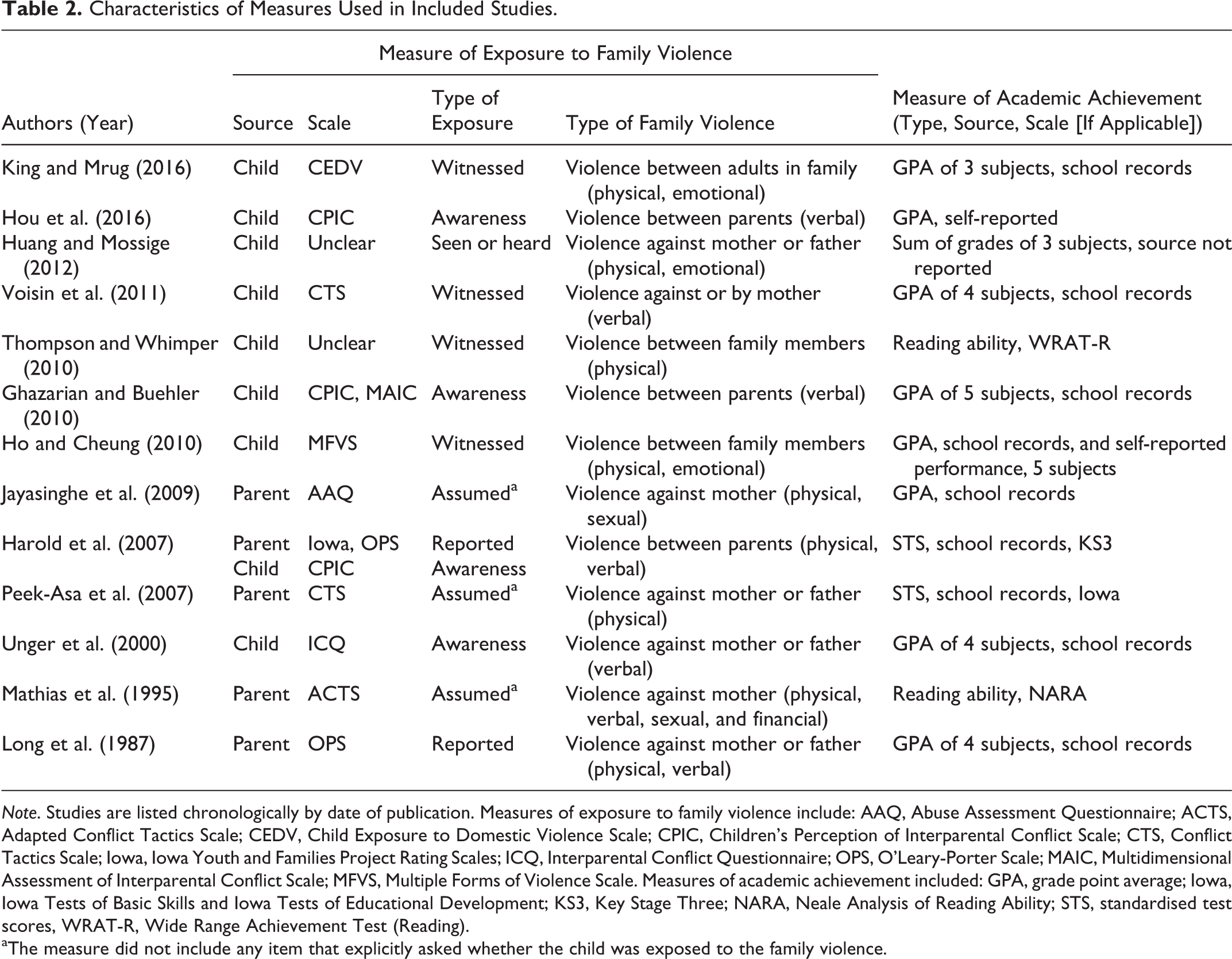
Note. Studies are listed chronologically by date of publication. Measures of exposure to family violence include: AAQ, Abuse Assessment Questionnaire; ACTS, Adapted Conflict Tactics Scale; CEDV, Child Exposure to Domestic Violence Scale; CPIC, Children’s Perception of Interparental Conflict Scale; CTS, Conflict Tactics Scale; Iowa, Iowa Youth and Families Project Rating Scales; ICQ, Interparental Conflict Questionnaire; OPS, O’Leary-Porter Scale; MAIC, Multidimensional Assessment of Interparental Conflict Scale; MFVS, Multiple Forms of Violence Scale. Measures of academic achievement included: GPA, grade point average; Iowa, Iowa Tests of Basic Skills and Iowa Tests of Educational Development; KS3, Key Stage Three; NARA, Neale Analysis of Reading Ability; STS, standardised test scores, WRAT-R, Wide Range Achievement Test (Reading).
aThe measure did not include any item that explicitly asked whether the child was exposed to the family violence.
Measures of Exposure to Family Violence
The measures used in the studies are detailed in the ensuing sections and summarized in Table 3. Exposure to family violence was measured using either child reports (61.5%), parent reports (30.7%), or both (0.8%; Harold et al., 2007). Of the nine studies that used child reports of exposure to family violence, three (Ghazarian & Buehler, 2010; Harold et al., 2007; Hou et al., 2016) used select items from the Children’s Perception of Interparental Conflict Scale (Grych et al., 1992); however, Ghazarian and Buehler (2010) also used an author-developed item and select items from the Multidimensional Assessment of Interparental Conflict Scale (Tschann et al., 1999). One study (King & Mrug, 2016) used the Child Exposure to Domestic Violence Scale (Edleson et al., 2008), another study (Voisin et al., 2011) used select items from the Conflict Tactics Scale (Straus, 1979), and another study (Ho & Cheung, 2010) used the Multiple Forms of Violence Scale (Ho & Cheung, 2008). Lastly, one study (Unger et al., 2000) used items developed based on the Interparental Conflict Questionnaire (Forehand & McCombs, 1989). The remaining two (Huang & Mossige, 2012; Thompson & Whimper, 2010) used unvalidated, author-developed measures of family violence exposure. Furthermore, of the five studies that used parental reports of family violence, two (Harold et al., 2007; Long et al., 1987) used the O’Leary-Porter Scale (Porter & O’leary, 1980); however, Harold et al. (2007) also used select items from the Iowa Youth and Families Project Ratings Scales (Harold & Conger, 1997). One study (Peek-Asa et al., 2007) used the Conflict Tactics Scale (Straus, 1979), one study (Mathias et al., 1995) used the Adapted Conflict Tactics Scale (Mertin, 1992), and one (Jayasinghe et al., 2009) used the Abuse Assessment Questionnaire (Moonesinghe, 2002).
Quality Assessment of Included Studies.
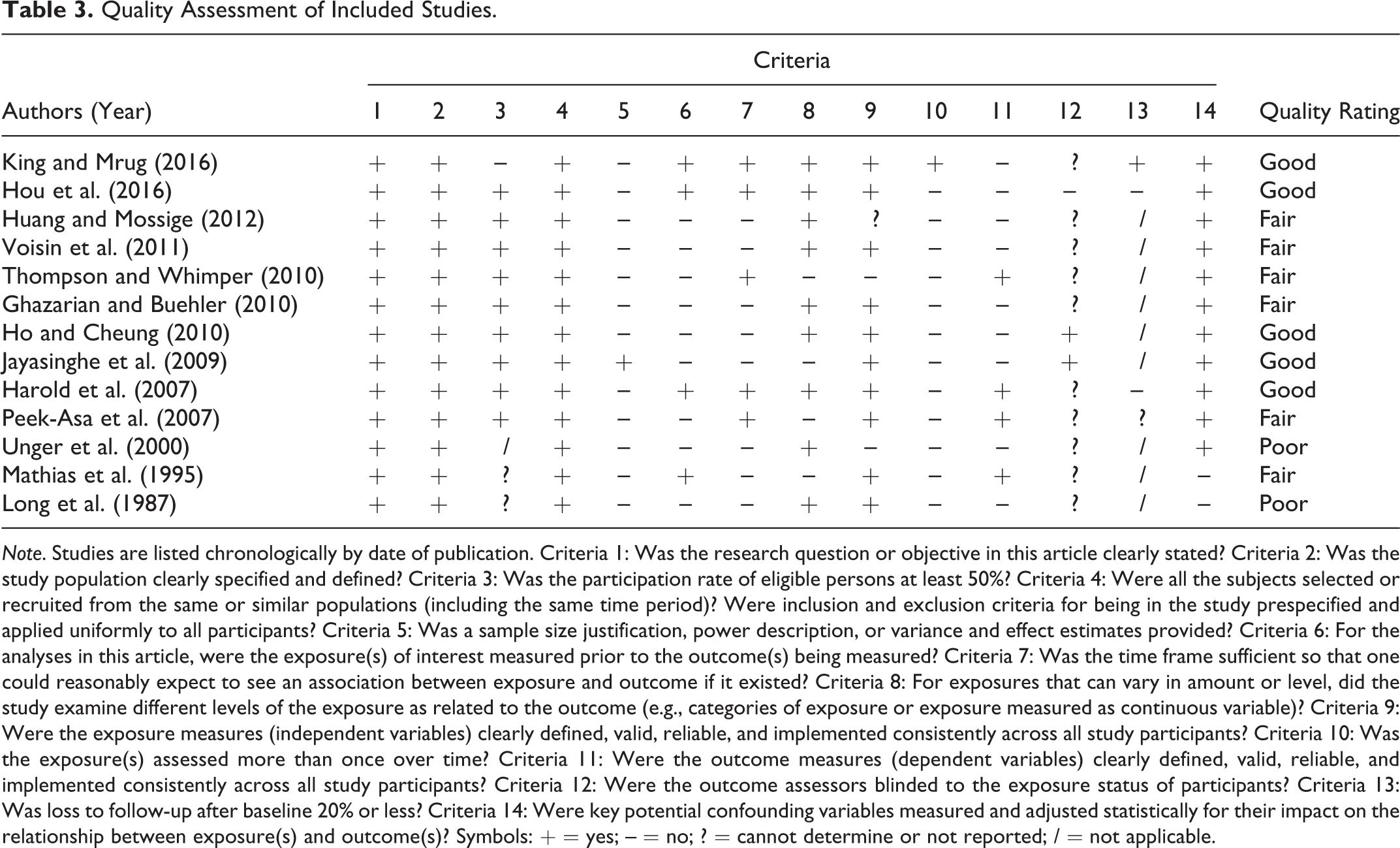
Note. Studies are listed chronologically by date of publication. Criteria 1: Was the research question or objective in this article clearly stated? Criteria 2: Was the study population clearly specified and defined? Criteria 3: Was the participation rate of eligible persons at least 50%? Criteria 4: Were all the subjects selected or recruited from the same or similar populations (including the same time period)? Were inclusion and exclusion criteria for being in the study prespecified and applied uniformly to all participants? Criteria 5: Was a sample size justification, power description, or variance and effect estimates provided? Criteria 6: For the analyses in this article, were the exposure(s) of interest measured prior to the outcome(s) being measured? Criteria 7: Was the time frame sufficient so that one could reasonably expect to see an association between exposure and outcome if it existed? Criteria 8: For exposures that can vary in amount or level, did the study examine different levels of the exposure as related to the outcome (e.g., categories of exposure or exposure measured as continuous variable)? Criteria 9: Were the exposure measures (independent variables) clearly defined, valid, reliable, and implemented consistently across all study participants? Criteria 10: Was the exposure(s) assessed more than once over time? Criteria 11: Were the outcome measures (dependent variables) clearly defined, valid, reliable, and implemented consistently across all study participants? Criteria 12: Were the outcome assessors blinded to the exposure status of participants? Criteria 13: Was loss to follow-up after baseline 20% or less? Criteria 14: Were key potential confounding variables measured and adjusted statistically for their impact on the relationship between exposure(s) and outcome(s)? Symbols: + = yes; – = no; ? = cannot determine or not reported; / = not applicable.
The operationalizations of exposure and family violence varied across the studies. First, regarding types of exposure, four studies asked adolescents whether they had witnessed a form of violence against their mother (Voisin et al., 2011), or against or by any family member (Ho & Cheung, 2010; King & Mrug, 2016; Thompson & Whimper, 2010), or had seen or heard a form of violence against their mother or their father (Huang & Mossige, 2012). Four studies did not specify the type of exposure (e.g., witnessing) but actually measured adolescents’ awareness of violence between parents (Ghazarian & Buehler, 2010; Harold et al., 2007; Hou et al., 2016; Unger et al., 2000). Conversely, three studies assumed the exposure through reports of intimate partner violence from just the mother (Jayasinghe et al., 2009; Mathias et al., 1995), or both parents (Peek-Asa et al., 2007), and two studies asked the parent whether the incidents occurred in the presence of their child (Harold et al., 2007; Long et al., 1987). Second, in regard to types of family violence, four studies measured only verbal violence (Ghazarian & Buehler, 2010; Hou et al., 2016; Unger et al., 2000; Voisin et al., 2011), while two studies measured only physical violence (Peek-Asa et al., 2007; Thompson & Whimper, 2010). Three studies measured physical and emotional violence (Ho & Cheung, 2010; Huang & Mossige, 2012; Long et al., 1987), whereas two measured physical and verbal violence (Harold et al., 2007; Long et al., 1987). One study measured physical, verbal, sexual, and financial violence (Mathias et al., 1995). Three studies restricted the recall period of exposure to family violence to only 12 months prior (Huang & Mossige, 2012; King & Mrug, 2016; Peek-Asa et al., 2007).
Measures of Academic Achievement
Academic achievement was measured using either school grades (69.2%), standardized test scores (15.4%), or reading scores (15.4%). Of the nine studies that used school grades, six (Ghazarian & Buehler, 2010; Ho & Cheung, 2010; King & Mrug, 2016; Long et al., 1987; Unger et al., 2000; Voisin et al., 2011) used the GPA of three, four, or five core subjects, obtained from school records; however, Ho and Cheung (2010) also used self-ratings of grades for each core subject. One study (Jayasinghe et al., 2009) averaged the grades on core subject tests, one study (Hou et al., 2016) used child-reported GPA, and another study (Huang & Mossige, 2012) summed the grades of three core subjects. Two studies used standardized test scores: one used the Iowa Tests of Basic Skills (for children aged 12 years and younger) and the Iowa Tests of Educational Development (for children aged 13 years and older; Peek-Asa et al., 2007); and one used the British Key Stage 3 tests (Harold et al., 2007). Lastly, two studies used reading scores: one (Mathias et al., 1995) used the revised Neale Analysis of Reading Ability (Neale, 1988), and one (Thompson & Whimper, 2010) used the Reading subscale from the Wide Range Achievement Test (Wilkinson, 1993).
Theoretical Frameworks
Six studies (46.2%) specified the theoretical framework(s) informing their investigation of family violence exposure and academic achievement. Two studies focused on the family: Hou et al. (2016) were informed by Conger et al.’s (1992) family stress model, whereas Unger et al. (2000) were guided by family systems and ecological frameworks. Specifically, Hou et al. aimed to extend the family stress model by evaluating its application to stressors and populations that were not the ones upon which it was developed. Hou et al. found that the model can be applied to acculturative stressors in a Chinese American sample successfully. Acculturative stressors were positively associated with parent-child violence, which, when combined with interparental verbal violence, was then positively associated with parent-child alienation, which was also positively associated with academic achievement (Hou et al., 2016). On the other hand, Unger et al. argued that subsystems within a family (e.g., parental dyad) interrelate with systems beyond a family (e.g., school) and that stress within the parental subsystem may affect the family system and the school system. This is supported by the study’s finding of the negative association between exposure to family violence and academic achievement (Unger et al., 2000).
In contrast, two studies focused on the individual: Ghazarian and Buehler (2010) were informed by a risk and resilience framework (Luthar et al., 2000), while Harold et al. (2007) were guided by a cognitive-contextual framework (Grych & Fincham, 1990). Also implying a social-ecological framework, Ghazarian and Buehler’s study was grounded in the idea that multiple social development risk and protective factors may influence the impact of exposure to family violence. The findings showed a significant, positive association between exposure to interparental verbal violence and academic achievement that was mediated by adolescents’ self-blame, which was moderated by maternal parenting behaviors (Ghazarian & Buehler, 2010). Likewise, Harold et al. investigated self-blame, but using a cognitive-contextual framework. This framework suggests that the impact of family violence is dependent on parenting quality, the nature of the violence, and how adolescents appraise it. Harold et al. found a significant, indirect pathway between interparental verbal violence and academic achievement through adolescents’ self-blame but not through negative parenting, which supports the framework.
Lastly, two studies focused on the individual and the environment: Huang and Mossige (2012) were guided by theories of social stratification, social psychology, and social capital, and findings from previous research, whereas Voisin et al. (2011) were informed by an ecological framework (Bronfenbrenner, 1997). Particularly, Huang and Mossige argued that factors related to adolescents’ home background, personal characteristics, and victimization all influence their social capital (i.e., support), which may affect their academic achievement directly or indirectly through psychological health. The findings from their study supported their model. Similarly, Voisin et al. investigated whether psychological problems mediated the effect of community and family violence exposure on academic achievement. However, no significant association was found between family violence exposure and academic achievement (Voisin et al., 2011).
Association Between Exposure to Family Violence and Academic Achievement
The critical findings of the 13 studies are summarized in Table 4. Nine of the studies (61.5%) found a significant, direct, and negative association between family violence exposure and adolescent academic achievement (Ghazarian & Buehler, 2010; Ho & Cheung, 2010; Huang & Mossige, 2012; Jayasinghe et al., 2009; King & Mrug, 2016; Long et al., 1987; Peek-Asa et al., 2007; Thompson & Whimper, 2010; Unger et al., 2000). More than half of these studies were published within the previous decade, and only two (King & Mrug, 2016; Peek-Asa et al., 2007) used a longitudinal research design. The studies varied in measurement and operationalizations of family violence exposure and academic achievement, and methodological quality. Of the nine studies, three (33.3%; Ho & Cheung, 2010; Jayasinghe et al., 2009; King & Mrug, 2016) were rated as being of good quality, four (44.4%; Ghazarian & Buehler, 2010; Peek-Asa et al., 2007; Thompson & Whimper, 2010) were rated as fair quality, and two (22.2%; Long et al., 1987; Unger et al., 2000) were rated as poor. The association between family violence exposure and academic achievement varied between these studies, from a β weight of −0.11 to an odds ratio of 6.8, 95% confidence interval (CI) [1.9, 4.2]. Overall, there is reasonable evidence to support the negative effect of family violence exposure on adolescent academic achievement.
Critical Findings and Quality Rating of Included Studies.
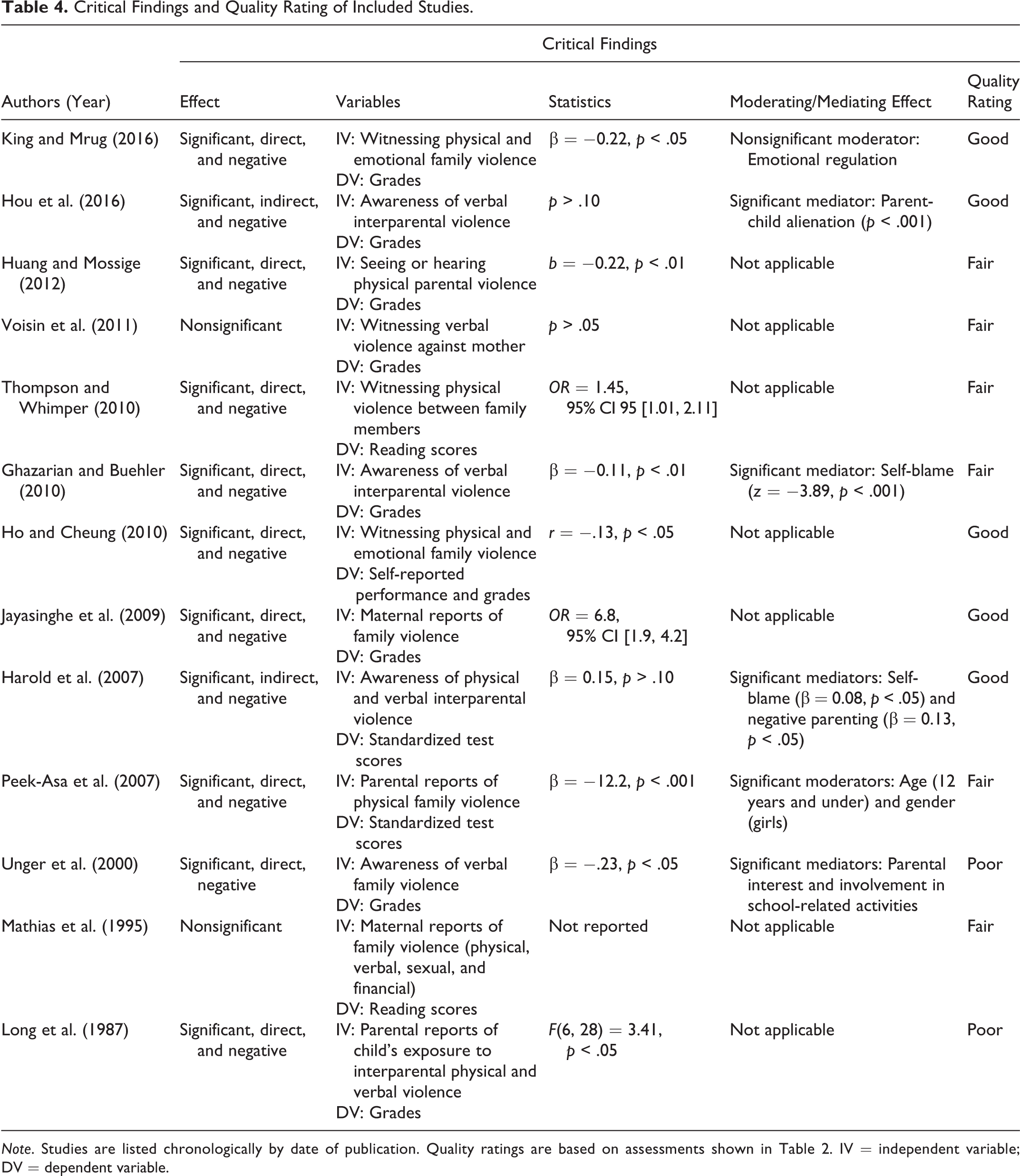
Note. Studies are listed chronologically by date of publication. Quality ratings are based on assessments shown in Table 2. IV = independent variable; DV = dependent variable.
Conversely, four studies (38.5%) did not find a significant, direct association between family violence exposure and academic achievement (Harold et al., 2007; Hou et al., 2016; Huang & Mossige, 2012; Mathias et al., 1995; Voisin et al., 2011). Two of the studies found no significant association between adolescents witnessing verbal violence toward mothers and grades (Voisin et al., 2011) nor maternal family violence and adolescents’ reading achievement (Mathias et al., 1995). However, two of the studies did find a significant, indirect pathway between family violence exposure and adolescent academic achievement via adolescents’ self-blame (Harold et al., 2007) and parent-adolescent alienation (Hou et al., 2016). Half of the studies were rated as being of good quality (Harold et al., 2007; Hou et al., 2016), and half were rated as fair (Mathias et al., 1995; Voisin et al., 2011). The studies varied in research design and measurement and operationalizations of family violence exposure and academic achievement. Altogether, there is reasonable evidence to support the effects of family violence exposure on adolescent academic achievement being mediated or moderated by risk factors.
Mediating effects
Altogether, 5 of the 13 studies (38.5%) examined the mediating effect of adolescents’ psychological problems (Voisin et al., 2011), their self-blame (Ghazarian & Buehler, 2010; Harold et al., 2007), and social factors (Elliott, 2016; Harold et al., 2007; Hou et al., 2016; Unger et al., 2000). Since Voisin et al. (2011) did not find a significant association in their investigation of whether psychological problems mediated the effect of family violence exposure on academic achievement among African American adolescents, they did not analyze any mediation effects. However, the mediating effect of adolescents’ self-blame indeed was found to be significant in studies by Ghazarian and Buehler in the United States and Harold et al. in the UK. Their findings indicate that adolescents blaming themselves for the violence between their parents is a mechanism through which exposure affects academic achievement.
In terms of mediators, four studies (Harold et al., 2007; Hou et al., 2016; Huang & Mossige, 2012; Unger et al., 2000) examined those related to the family and found significant effects. Three of these found family violence exposure had a negative, mediating effect on academic achievement, by reducing factors related to parenting. Harold et al. (2007, see figure 2a) found mediating effects through reduced parenting quality, and Hou et al. (2016) found support for the mediating effect of parent-child alienation in Chinese American adolescents. The findings showed family violence exposure was positively associated with adolescents’ sense alienation toward parents, which was negatively associated with academic achievement. Unger et al. (2000) investigated family support, which comprised of family cohesion and parental interest and involvement in school-related activities, and found the latter had a mediating effect. In sum, the findings suggest that family violence exposure may have a mediating effect on adolescents’ academic achievement through parent-related risk factors.
Moderating effects
In total, four of the studies (30.8%) examined the moderating effects of age (Peek-Asa et al., 2007), gender (Peek-Asa et al., 2007; Voisin et al., 2011), emotional regulation (King & Mrug, 2016), and family sociodemographics (Huang & Mossige, 2012). Of these, two (King & Mrug, 2016; Peek-Asa et al., 2007) found a significant, direct, and negative association between family violence exposure and academic achievement. Although King and Mrug (2016) did not find emotional regulation was a significant moderator in an African American sample, Peek-Asa et al. (2009) found age and gender moderated the effects of family violence exposure in a Caucasian sample. Specifically, for younger children aged 12 years or under and for girls, those whose parents reported physical violence scored significantly lower on standardized tests than those whose parents did not. This finding shows that being a girl and younger may be risk factors that exacerbate the negative effect of family violence exposure on academic achievement.
Finally, one study (Huang & Mossige, 2012) suggests that the effects of family violence exposure on academic achievement were moderated by family sociodemographic characteristics. Huang and Mossige (2012; see Table 3) compared two regression models: one controlled for peer and family abuse (Model 1), and another additionally controlled for family demographic and socioeconomic characteristics (Model 2). Witnessing interparental abuse was a significant predictor of academic achievement in Model 1 (p < .01) but was no longer significant in Model 2 ( > .05). Although not formally tested, the findings suggest that family demographic and socioeconomic characteristics moderated the effect of exposure to physical and emotional family violence on academic achievement. This finding further suggests that there are risk factors related to the family environment that may influence the relationship between family violence exposure and adolescent academic achievement.
Types of exposure and family violence
One study (Mathias et al., 1995) investigated different types of family violence exposure, while three studies (30.8%; Ho & Cheung, 2010; Huang & Mossige, 2012; Thompson & Whimper, 2010) investigated the effects of exposure to family violence in comparison to child abuse. Mathias et al. (1995) compared the effects of witnessing family violence with being involved in family violence and found neither one had a significant effect on academic achievement. Involvement, however, did increase behavioral problems and aggression (Mathias et al., 1995). Of the studies that measured child abuse, one (Huang & Mossige, 2012) measured emotional, physical, and sexual abuse, and two (Ho & Cheung, 2010; Thompson & Whimper, 2010) measured child victimization. Although Ho and Cheung (2010) found that exposure to family violence had no significant effect on academic achievement, they found that child abuse and victimization had a significant, negative effect on academic achievement. Huang and Mossige (2012) and Thompson and Whimper (2010), conversely, found family violence exposure had a significant, negative effect on adolescent academic achievement, even after controlling for child victimization.
Discussion
In overview, our systematic search identified 13 studies that met the inclusion criteria for the present review. The majority of the studies (nine; 69.2%) identified significant, direct, and negative effects of family violence exposure on adolescent academic achievement, and a further two (15.4%) identified significant, indirect, and negative effects. Taken together, the studies provide reasonable evidence that family violence exposure is a contributor to lower academic achievement among adolescents, indicating the importance of implementing prevention strategies to reduce children’s exposure to family violence, and interventions for those who have been exposed to it. The findings from the studies will be discussed in light of methodological characteristics and quality, along with the implications.
A large portion of evidence emerging from three countries suggests that family violence exposure negatively affects adolescent academic achievement. There is good evidence that shows adolescents who have been exposed to family violence can experience up to a 7-fold decrease in academic achievement (Jayasinghe et al., 2009). These findings suggest that an adolescent’s academic outcomes can be negatively affected by their exposure to family violence. Such adolescents thus need special consideration and assistance in improving their academic outcomes. More importantly, prevention and intervention efforts to reduce the occurrence of family violence are required. The findings broaden the scope of previous reviews that focused on the negative effects of family violence exposure on children’s emotional and behavioral outcomes (Vu et al., 2016). They also are consistent with Fry et al.’s (2018) review finding that children who witnessed family violence are more likely to score lower on standardized tests. From a resilience perspective (Luthar et al., 2000), these findings support the characterization of family violence exposure as a risk factor that increases the likelihood of negative academic outcomes. Thus, the findings of the current review fit within and extend on the broader literature.
Cognitive and parental factors may explain the negative relationship between family violence exposure and adolescent academic achievement. There is a mix of fair and good evidence from the United States and the UK that suggests adolescents’ blaming themselves for family violence may explain how their exposure negatively affects their academic achievement (Ghazarian & Buehler, 2010; Harold et al., 2007). There is also evidence that suggests parental factors carry the negative effects of family violence exposure on academic achievement, including low parental interest and involvement in school-related activities (Unger et al., 2000), parent-child alienation (Hou et al., 2016), and negative parenting (Harold et al., 2007). The quality of this body of evidence is varied; however, the findings indicate the need to consider parental factors in future research of family violence exposure and academic achievement.
The effects of family violence exposure may be moderated by sociodemographic factors. There is fair evidence from the United States that suggests the negative effect of exposure to family violence may be moderated by age and gender (Peek-Asa et al., 2007). The findings show that the academic achievement of younger children and girls in particular were more likely to be negatively affected by family violence exposure. This suggests that early intervention is required for children who are at risk of being affected by family violence. However, the evidence is limited as children’s exposure to family violence was assumed through parental reports and it was not clear if those children were indeed exposed to the violence and to what extent. Likewise, there is fair but limited evidence from Norway that shows that the effects of family violence exposure depends on parental education, employment status, and income (Huang & Mossige, 2012). This finding indicates the importance of empowering families to improve their living standards to enable them to become aware of the effects that their conflictual behavior has on their children’s well-being, and not engage in such behavior. Other studies controlling for sociodemographic factors did not find this effect. Therefore, further robust research is needed to determine which factors influence the extent to which family violence exposure negatively affects adolescent academic achievement.
The evidence from Australia (Mathias et al., 1995) and the United States (Voisin et al., 2011) suggest that there is no significant association between family violence exposure and academic achievement were of fair methodological quality and were limited in scope. Voisin et al. (2011) only measured witnessing maternal verbal violence and hence did not capture other types of family violence (e.g., physical), while Mathias et al. (1995) only measured reading achievement and thus did not capture achievement in other academic domains. Voisin et al. found no direct association between family violence exposure and academic achievement and, as a result, did not explore any indirect pathways. Moreover, Mathias et al. included children and adolescents in their sample and did not consider the moderating effect of age. So, the lack of significant results from these studies may be attributed to flaws in the research design.
Only six studies explicitly incorporated a theoretical framework into their investigations. Findings from half of these studies supported social theories: a significant association between family violence exposure and adolescent academic achievement was found based on a family stress model (Hou et al., 2016), a family systems model (Unger et al., 2000), and an adapted framework (Huang & Mossige, 2012). Adolescents’ self-blame was successfully identified as a significant mediator in two studies that utilized a risk and resilience perspective (Ghazarian & Buehler, 2010) and a cognitive-contextual framework (Harold et al., 2007). One study found no direct association based on an ecological perspective (Voisin et al., 2011). Due to the limited, diverse theoretical frameworks incorporated in the reviewed studies, we cannot infer which one holds greater explanatory utility in investigating the relationship between family violence exposure and adolescent academic achievement. What is clear is the importance of drawing upon theoretical frameworks that encapsulate various types of influences (e.g., internal and external) to ensure salient mediating and moderating factors are measured and analyzed.
Limitations of the Studies
We consider the nature and strength of this body of evidence to be tentative for a few reasons. First, the studies did not comprehensively measure family violence exposure; they primarily focused on adolescents’ awareness of physical and emotional family violence. Second, the findings from the studies cannot be generalized widely. The available evidence was largely based on a Western sample, with more than half of the studies conducted in the United States. Third, our inferences regarding the mechanisms that explain how exposure to family violence can affect adolescents’ academic achievement are challenged by the inconsistencies in which mediators and moderators have been investigated. While there is some evidence to suggest that age, gender, parental support, and adolescent appraisals of the family violence affect the relationship between family violence exposure and academic achievement, there is some evidence to contradict this. Finally, we cannot determine whether the effects of exposure to family violence outweigh those of child abuse because not all studies have accounted for this. Hence, there are notable limitations in the existing and available pool of evidence.
A pressing point of discussion is the measurement and the conceptualization of exposure to family violence and academic achievement in the reviewed studies. First, there was great emphasis on children seeing and being aware of physical and verbal interparental violence in the reviewed studies. Previous reviews exploring the effects of family violence on emotional and behavioral outcomes suggests that the effects of family violence exposure can vary depending on the type of exposure and type of family violence (Kitzmann et al., 2003; Vu et al., 2016). However, only one study investigated witnessing versus being involved in family violence and found that neither affected reading ability. No study investigated differential effects of seeing, hearing, and having an awareness of family violence on academic achievement, nor the effect of different types of exposure to family violence (e.g., physical vs. verbal violence). Second, there was a common emphasis on school grades in measuring academic achievement. Although grades do reflect achievement in school, divergence in education systems across the world and therefore differences in measurements and standards of academic performance limit our ability to compare findings in the literature. Together, the inconsistent results regarding the association between family violence exposure and adolescent academic achievement may be partly attributed to the variation in outcome measures.
Strengths and Limitations of This Review
The strengths of this review include our use of systematic search techniques to identify studies for inclusion and comprehensive quality assessment of the included studies. These features enabled us to critically comment on the nature and strength of the available evidence. We also examined the quality and consistency of measures used in the studies, as well as mediator and moderator variables considered. The findings from the review indicate the importance of addressing children’s exposure to family violence.
Since this review did not involve a search of the unpublished literature, a potential limitation of this review is publication bias. Another limitation was that, as the included studies all used observational research designs and there were no experimental studies evaluating interventions, we could not make any causal inferences. Our review may also be considered to be limited by not conducting any meta-analyses to provide pooled quantitative estimates. We considered the heterogeneity of research designs did not warrant this pooling. Specifically, the variation in what behaviors constitute family violence, the measures used to assess family violence exposure and academic achievement, and the source of information about children’s exposure to family violence (i.e., the child and/or the parent) did not facilitate the meta-analysis of the data.
Implications
There are overall and specific implications of the findings from the present review. Overall, the findings inform us of the importance of addressing the issue of children’s exposure to family violence. Apart from the several deleterious effects of family violence, this review highlights the adverse impact on children’s academic achievement. Prevention programs that address violence against women should also focus on reducing the impact of the violence on children. Appropriate intervention programs need to be implemented to assist children who are affected so that the impact on their academic achievement is diminished. The specific implications for policy and practice and research are discussed in the ensuing sections and summarized.
Policy and practice
Given indicators of a school’s performance and ultimately its funding have become increasingly tied to students’ performance, the responsibility of improving children’s academic achievement relies heavily on the education system. Findings from our review emphasize to policy makers and educators that there are risk factors that are external to the school environment, such as exposure to family violence, that can negatively affect students’ academic functioning and achievement. It particularly is important that practitioners, including school counselors, understand the risks factors that can lead students to have poor academic functioning. School counselors should implement practices that enhance students’ coping and support, which may involve intervention from government services to address the violence within that student’s family. The findings call for family-school interventions that are designed to ameliorate the effects of adverse life experiences, such as family violence, on students’ academic success and well-being (Sheridan & Wheeler, 2017). Such interventions should aim to prevent and reduce family violence, strengthen parent-child relationships, and also improve children’s appraisals of and reactions to family violence. The findings support the view that the prevention of family violence should be an important priority in improving the academic achievement of adolescents.
Research
The findings from our review underscore the need to standardize measures of family violence exposure and academic achievement. Specifically, studies that investigate childhood exposure to family violence should obtain reports of the exposure from the child and not assume their exposure from parental reports of violence nor rely on parental reports of children’s exposure. They should also use a comprehensive measure of family violence exposure that accounts for different types of violence (e.g., physical vs. emotional violence) and exposure (e.g., seeing vs. hearing about the violence). Importantly, these measures should be validated locally to ensure that it is culturally sensitive and appropriate. Further, the studies investigating children’s academic achievement should use national measures in addition to local measures to ensure that the findings can be generalized to the countrywide population. Limitations of the available evidence also emphasize the need to improve research methodology by, for example, implementing family interventions to reduce family violence (Toumbourou & Gregg, 2002) and then evaluating the effects of exposure on academic achievement against a control group. Additionally, longer time frames between measuring the exposure and the outcome, inclusion of culturally and linguistically diverse samples, examining cross-cultural comparisons, and incorporation of theoretical frameworks will assist in establishing reliable findings. The current findings provide insights for further investigation of mechanisms that explain the association between family violence exposure and academic achievement, and the extent to which this association is causal. Future studies should investigate indirect and mediational pathways related to adolescent self-blame and parenting behaviors.
Conclusions
This is the first systematic review to synthesize the literature regarding the association between family violence exposure and adolescent academic achievement. Of the reviewed studies, nine identified significant, direct, and negative effects, and two other studies identified significant, indirect, and negative effects. The evidence supports the view that adolescents exposed to family violence are more likely to experience lower academic achievement. This highlights the significance of prevention programs to address the issue of violence against women and children and also the need for intervention programs to specifically assist children who have been exposed to family violence to perform well academically. Future research should consider the multifarious nature of family violence exposure and the mechanisms by which it affects children’s academic achievement, especially among culturally and linguistically diverse communities. Theoretical frameworks that account for potential mediating and moderating effects should also be further investigated. Generally, persistent efforts are required to combat family violence and children’s exposure to it. It is only with continued efforts that children could be enabled to thrive in all areas of life, including their academic development.
Implications for Practice, Policy, and Research
Practice
Prevention programs should address violence against women and children. Intervention programs should target children who have been exposed to family violence at the community and school levels to diminish the impact on their academic performance. Practitioners should address students' cognitive appraisals of and reactions to family violence, and the parent-child relationship to enable students to perform well academically. School counselors should involve government services to address family violence to enhance student academic well-being.
Policy
Policy makers should understand that family violence exposure is a risk factor for secondary school students and prioritize the prevention of family violence. Policy makers should fund the development and evaluation of family-school interventions that aim to ameliorate the effects of family violence on students’ academic success and well-being.
Research
Measures of family violence exposure should account for different types of violence and exposure, be self-reported, and be validated locally for cultural relevance. Local and national or international measures of academic achievement should be used. Longer time frames, ethnically diverse samples, cross-cultural comparisons, and theoretical frameworks that inform potential mediators and moderators should be used.
Footnotes
Appendix
Declaration of Conflicting Interests
The author(s) declared no potential conflicts of interest with respect to the research, authorship, and/or publication of this article.
Funding
The author(s) disclosed receipt of the following financial support for the research, authorship, and/or publication of this article: Meu Supol is supported by the Australian Government Research Training Program Scholarship.
