







Abstract
Resilience is critical among survivors of trafficking as they are mostly vulnerable populations who face multiple adversities before, during, and after trafficking. However, resilience in survivors of trafficking is understudied. This scoping review aims to clarify the current state of knowledge, focusing on definitions of resilience, how resilience has been studied, and factors associated with resilience among survivors. Five databases were searched using key words related to trafficking and resilience. Studies were included if they were published in English between 2000 and 2019 and focused on resilience with the study design including at least one of these four features: (a) use of standardized measures of resilience, (b) qualitative descriptions of resilience, (c) participants were survivors or professionals serving survivors, and (d) data sources such as case files or program manuals directly pertained to survivors. Eighteen studies were identified. Findings indicated that resilience was primarily described as emergent from interactions between the survivor and the environment. Resilience in trafficking appeared largely similar to resilience in other kinds of victimization. Nonetheless, trafficking survivors also may display resilience in alternative ways such as refusing treatment. Positive interpersonal relationships were the most commonly mentioned resilience factor. In addition, current research lacks studies featuring longitudinal designs, interventions, participatory methods, types of trafficking other than sexual trafficking, and demographic characteristics such as age, gender, and national origin. Future research needs to establish definitions and measures of resilience that are culturally and contextually relevant to survivors and build knowledge necessary for designing and evaluating resilience-enhancing interventions.
Keywords
The Need for Resilience Research in Survivors of Human Trafficking
The Protocol to Prevent, Suppress and Punish Trafficking in Persons defines human trafficking as “the recruitment, transportation, transfer, harbouring or receipt of persons” for the purpose of exploitation (United Nations Office on Drugs & Crime [UNODC], 2016, p. 14). Means of trafficking defined in the protocol include “threat or use of force or other forms of coercion, of abduction, or fraud, of deception, of the abuse of power, or of a position of vulnerability or of the giving and receiving of payments of benefits” (p. 14). Types of trafficking covered in this definition include but are not limited to sex trafficking, labor trafficking, organ trafficking, and slavery. The Protocol is now the most widely accepted and influential definition of human trafficking, informing human trafficking legislation in over 160 countries (Sweileh, 2018).
The prevalence of human trafficking is difficult to establish. Existing estimates, while controversial (Choo et al., 2010; Fedina, 2015), do suggest a human rights tragedy of epic proportions. For instance, the latest Trafficking in Persons Report (U.S. Department of State, 2020), published by the U.S. Department of State, reports 24.9 million individuals being trafficked globally; the International Labor Organization (ILO, 2017) places the figure at 40.3 million. Counts based on identified cases establish that at least tens of thousands of individuals are at risk of, are being trafficked, or have been trafficked globally. In 2018, the U.S. National Human Trafficking Hotline (n.d.) of the anti-human trafficking agency Polaris received reports of 10,949 cases. The International Organization for Migration maintains a global database of over 108,613 individual cases, with approximately 5,000 new cases added each year (Counter Trafficking Data Collaborative, 2020).These numbers, particularly in light of the likely underreporting of human trafficking (Hopper, 2004; UNODC, 2016), represent a human rights and social justice crisis in urgent need of critical and effective social, political, and scholarly responses.
The word resilience originates from the Latin verb resilire, “to leap back” (Fletcher & Sarkar, 2015, p. 28) and has been most simply defined as the ability to “bounce back” from hardships (Masten, 2014). Scholarly definitions of resilience are generally grounded in the two core concepts of positive adaptation and adversity. For instance, Masten et al., (1990) defined it as “the process of, capacity for, or outcome of successful adaptation despite challenging or threatening circumstances” (p. 426). As survivors typically emerge from trafficked situations into the same adversity-filled environment that initiated their entry into trafficking, with the added burden of their trafficking experience, resilience is undeniably critical to trafficking survivors and must be addressed as part of an effective and holistic response to human trafficking.
Scholars have built a substantial corpus of studies on the harms of trafficking and interventions for recovery and the prevention of re-trafficking, but few studies have given attention to the resilience or determination of individuals or communities to overcome the effects of trafficking and vulnerabilities to further trafficking (Dell et al., 2019; Okech, et al., 2018). While recovery is also undeniably critical to trafficking survivors, recovery and resilience are distinct and need to be studied as distinct constructs. Broadly, recovery refers to a person regaining after loss a normative or desirable standard of wellness or gaining these standards in the context of a previous absence of such wellness (Jacobson & Greenley, 2001). Recovery involves individuals intentionally achieving an improved quality of life. Resilience also encompasses the notion of attainment or reattainment of wellness but further includes the critical notions of (a) sustaining wellness under adverse conditions and (b) gaining the ability to resist negative outcomes from future adversity (Luthar & Zelazo, 2003).
Strengths-based approaches to direct practice with trafficked individuals have gained ground over the past decade (Gerassi & Nichols, 2018), but little trafficking research has focused on the traits, qualities, experiences, responses to situations, or cultural resources that would confer resilience (or other positive outcomes) on trafficked individuals. Studies have also frequently overlooked or problematized survivor strengths. For instance, youths’ self-care skills, self-reliance, and streetwiseness are usually only described by researchers as a barrier to health care (Ijadi-Maghsoodi at al., 2018). Essentially, both resilience studies (e.g., Fisher et al., 2019) and trafficking studies (e.g., Okech et al., 2018) have gained great momentum over the past 20 years, but the two streams of research have rarely crossed.
Risk Factors of Human Trafficking
The risk factors and harms of trafficking implicate human trafficking as a human rights and social justice issue. Micro-level or family-related risk factors for victimization include absence of a primary caretaker during childhood, family members involved in the sex industry, child abuse, and domestic violence (Gerassi & Howard, 2017; Gurung, 2014; Jani & Anstadt, 2013; Oselin, 2014). Substance misuse has also been identified as a powerful individual risk factor (Heilemann & Santhiveeran, 2011). Individuals at exceptional risk are those affected by structural risk factors such as the illiterate; undocumented, impoverished members of low-status racial, ethnic, or gender minorities; or who are cut off from family networks by war, civil unrest, and migration (Banks & Kyckelhahn, 2011; Blackburn et al., 2010; Heil, 2016). Women and children are particularly vulnerable to the structural risk factors. Homeless minors, especially if they identify as lesbian, gay, bisexual, transgender, or queer (LGBTQ), are also at high risk of being trafficked (Dank et al., 2015). While the nature, magnitude, and combinations of risk factors differ from country to country and between different populations within a particular country, the antecedents of trafficking strongly imply that human trafficking emerges from and perpetuates systemic trauma: gender-based, class-based, and race-based oppression.
The Adversities Faced by Survivors of Human Trafficking
Trafficking involves physical and/or psychological violence, often combined with neglect of the trafficked individual’s basic needs for nutrition, safety, and medical care. Negative physical and mental health outcomes are unsurprisingly common (Kiss et al., 2015; Oram et al., 2012). The negative physical and mental health outcomes of trafficking are often perceived by others as “proof” that the trafficked individual is inferior or irreparably damaged (Juabsamai & Taylor, 2018). These negative outcomes often compound the challenges for survivors trying to leave trafficking situations or create new opportunities for themselves after trafficking, especially if they are also dealing with substance misuse, lack of social support, and lack of financially viable skills (Cordisco, 2018; Shannon et al., 2011).
In many circumstances, physical and psychological violence follow survivors beyond their trafficking situations. Adverse social outcomes resulting from the stigma of having been trafficked include social rejection or physical assault by family and community; prejudice from law enforcement and health providers; and being refused employment or opportunities to rent (Dalla & Kreimer, 2017; Wilson, 2019). This problem is remarkably pervasive across different local-cultural situations. Trafficked individuals who report stigma come from a variety of race, ethnicities, and gender orientations, and diverse countries (Dhungel, 2017; Guida et al., 2016; Ijadi-Maghsoodi et al., 2018; Juabsamai & Taylor, 2018). Survivors who identify as LGBTQ often face additional stigma (Gerassi & Nichols, 2018).
Study Significance
It is critical to address the lack of resilience research in human trafficking survivors. Ignorance of survivor resilience may contribute to inaccurate conclusions about trafficking situations with significant negative ramifications and enhanced vulnerability. For example, it can lead to the creation of policies and interventions that disrupt survivors’ access to culturally available resources—resources that are unrecognized by policy makers and interventionists. At the very least, the misrecognition of survivor resilience may lead to policies and interventions that fail to enhance or fully leverage strengths and resources already available to survivors.
As a start to addressing this research gap, the authors of this article conducted a scoping review of research on resilience in trafficking survivors. Scoping reviews are performed when the purpose of the review is to identify and analyze research gaps, clarify key concepts and definitions in the literature, identify key characteristics or factors related to an issue, and to examine how research is conducted on a certain topic (Munn et al., 2018). The purpose of this scoping review is to examine the current state of knowledge regarding resilience in trafficking survivors and clarify the research gaps in resilience studies in trafficking. The review focused on definitions of resilience, how resilience was measured and studied, and factors associated with resilience among trafficked populations.
Method
Five social science, humanities, and interdisciplinary databases were searched to obtain peer-reviewed articles and dissertations published between 2000 (after the Palermo Protocol was ratified) and 2019 in English from a wide variety of fields: SocIndex, PyschInfo, Women’s Studies International, Gender Studies, and Social Work abstracts. The following combinations of search terms were used: “resilience OR resiliency OR resilient OR strengths OR coping OR hardiness OR adaptation” AND “trafficking OR human trafficking OR sex trafficking OR labor trafficking OR slavery OR debt bondage.”
The two authors identified a total of 314 records. Three records were removed through duplicate removal. The authors independently reviewed the titles and abstracts. After discussion and consensus, 38 records were left. Full-text screening was performed on these records using the following inclusion criteria for peer-reviewed studies and dissertations: The main focus of the study was resilience in survivors of at least one form of human trafficking, such as sex trafficking or labor trafficking, with at least one of the following four features: (a) the use of standardized measures of resilience; (b) qualitative descriptions of participants’ resilience; (c) participants were survivors of human trafficking or individuals directly involved in service provision, caregiving, or policies pertaining to human trafficking; (d) data sources such as agency reports, case files, and treatment manuals directly pertained to individuals who had experienced human trafficking. Published in English between the period of 2000 and 2019.
Figure 1 shows a summary of the study selection process. Full-text screening yielded 10 peer-reviewed journal articles and eight doctoral dissertations. These 18 studies were mutually exclusive. From these articles and dissertations, basic data were extracted and tabulated. Each study was examined for its conceptualization of resilience, how it studied resilience, and factors associated with resilience. These components were analyzed thematically. As described below, a quality assessment (Sirriyeh et al., 2012) was performed for each study.
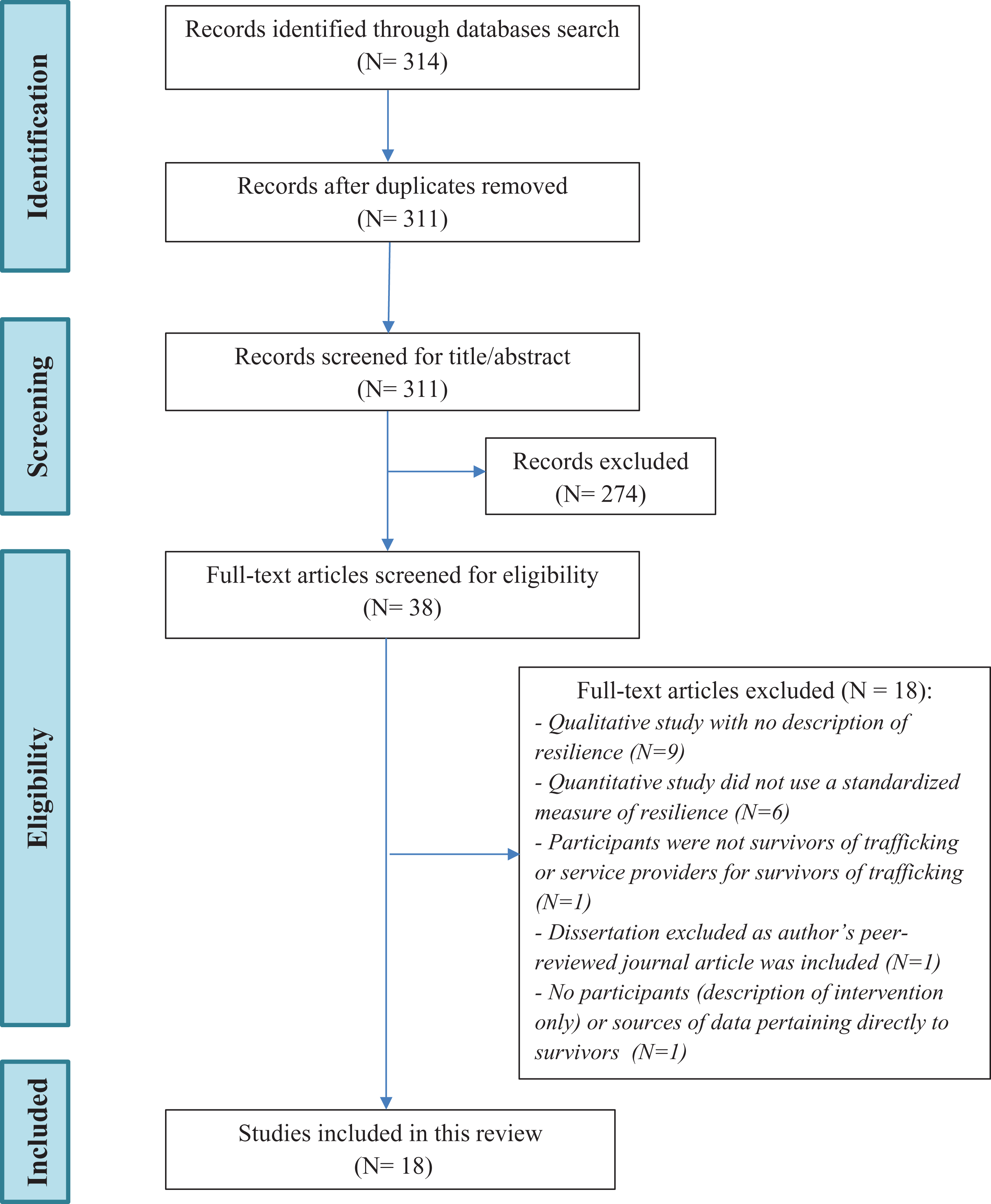
Summary of study selection process.
Quality of Studies
As reviewed studies included qualitative, quantitative, and mixed method designs, the 16-item quality assessment tool (Sirriyeh et al., 2012) was used for the quality assessment. Quality characteristics include theoretical framework, sample, data collection, data analyses, and discussion of strengths and limitations. Scores per item were 0, 1, 2, and 3, with higher scores indicating better quality. The highest possible score for a study is 42 points. Sirriyeh and colleagues did not give cutoff scores for what would be considered a “low-quality,” “moderate quality,” or “high-quality” study. The range of scores for the articles and dissertations reviewed in this study ranged from 13 to 32 points. Three articles scored above 28, and the majority of the articles (67%) had a total score higher than 21. Table 1 summarizes the results of the quality assessment.
Articles Quality Assessment Summary.
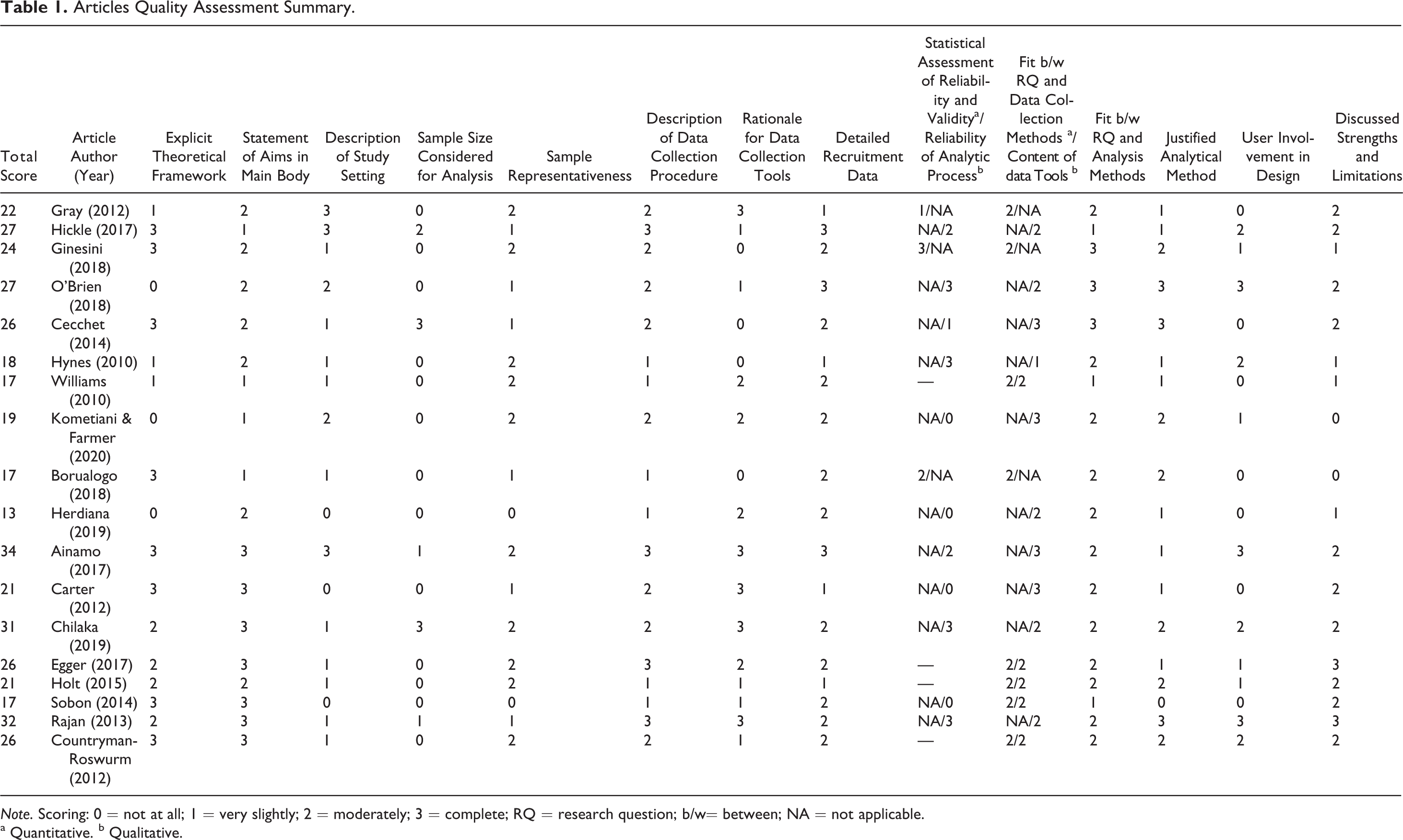
Note. Scoring: 0 = not at all; 1 = very slightly; 2 = moderately; 3 = complete; RQ = research question; b/w= between; NA = not applicable.
a Quantitative. b Qualitative.
Results
Location of Survivors at Time of Study
Studies featured survivors located in several different countries. Most of the studies were conducted with survivors in the United States (n = 9). These studies discussed domestic survivors. One study was conducted in the UK (Hynes, 2010), two in Indonesia (Borualogo, 2018; Herdiana et al., 2019), and one each in Cambodia (Gray et al., 2012), India (Rajan, 2013), Kenya (Ainomo, 2017), and Italy (Ginesini, 2018). With the exception of Ginesini’s (2018) study of survivors who had been trafficked into Italy from other countries, all studies reviewed featured survivors who were in their country of origin.
Age and Gender of Survivors
Eight studies had survivor participants over 18 years of age (N = 8; Ainomo, 2017; Cecchet & Thoburn, 2014; Chilaka, 2019; Ginesini, 2018; Herdiana et al., 2019; Hickle, 2017; Komentiani & Farmer, 2020; O’Brien, 2018). Two studies had survivors under 18 years as participants (Holt, 2015; Williams, 2010), and five had participants under and above 18 years old (Borualogo, 2018; Countryman-Roswurm, 2012; Egger, 2017; Gray et al., 2012; Rajan, 2013). Two studies involved interviewing experts and service providers or using collated case studies (Carter, 2012; Hynes, 2010).
Participants of the reviewed studies were overwhelmingly female. Only two studies had participants who were male or identified as a gender minority (Ainomo, 2017; Williams, 2010). O’Brien (2018) did not report the gender of participants to reduce chance of participants being identified.
Type of Trafficking
The search strategy for obtaining the studies was designed to be inclusive of all currently studied types of trafficking. However, all studies included featured only sex trafficking; none of the resilience studies featured labor trafficking, debt bondage, slavery, organ trafficking, or other forms of trafficking. This reflects the neglect of the other types of trafficking in trafficking studies that has been noted in the literature (e.g., Gozdziak & Collett, 2005).
Study Research Design
Eleven studies were applied qualitative research designs (Ainomo, 2017; Carter, 2012; Cecchet & Thoburn, 2014; Chilaka, 2019; Herdiana et al., 2019; Hickle, 2017; Hynes, 2010; Komentiani & Farmer, 2020; O’Brien, 2018; Rajan, 2013; Williams, 2010), two were quantitative (Ginesini, 2018; Gray et al., 2012), and four employed mixed methods (Borualogo, 2018; Countryman-Roswurm, 2012; Egger, 2017; Holt, 2015). All studies were cross-sectional, examining participants’ resilience at the point-in-time of the study. One study did not involve participants as the primary source of data: Sobon (2014) conducted a review of treatment manuals published by major international organizations designed to guide intervention in different countries.
Definitions of Resilience
Resilience was largely described as a trait, a process of interactions between risk and protective factors, and a process of interactions between individuals and resources in the sociocultural context. Only one study (O’Brien, 2018) contained a definition of resilience as an outcome. In these studies, it was also usually noted that resilience is dynamic and varies according to type and degree of adversity, internal and external resources, circumstances, and the life stage of an individual.
All but one study cited multiple definitions of resilience, mostly informed by seminal works by authors such as Ungar (2008), Masten (2014), Rutter (2006), Luthar et al. (2000), and Bonanno and Burton (2013). The single notable exception to the studies containing multiple definitions was Rajan (2013). This study avoided the use of clinical or scholarly definitions of resilience altogether, preferring a phenomenological method where descriptions of resilience emerged directly from survivors’ narratives of their lives, revealing how resilience might manifest differently from scholarly expectations in the midst of the adversity of trafficking in ways specific to the survivor whose story is being told.
While most of the studies cited more than one definition of resilience, the view of resilience as emerging from the survivor’s responses to risk and protective factors in her physical and social ecology tended to be prominent (e.g., Borualogo, 2018; Cecchet & Thoburn, 2014; Ginesini, 2018; Gray et al., 2012; Herdiana et al., 2019). For instance, while Hickle (2017) discussed resilience as both a trait, characteristic, or skill and as the result of “a combination of personal, social, and physical resources that emerge as a person interacts with his or her environment” (de Terte et al., 2009, as cited in Hickle, 2017), her findings primarily described resilience in trafficked women as being the result of their investing in resources that become available to them through exiting their trafficking situations. Hickle’s findings highlight how survivors are able to develop resilience while still struggling with adverse circumstances. Her study suggest that Ungar’s (2013) socioecological view of resilience—where resilience occurs when individuals are able to navigate their way to helpful resources and the individual’s social ecology must have the capacity to provide resources in culturally meaningful ways—may be useful for understanding resilience in trafficking survivors.
How Resilience Was Measured and Studied
The majority of the articles used resilience theories or definitions of resilience as the primary theoretical underpinnings or explanatory framework for designing the study and interpreting the data. Three studies integrated additional theories (Carter, 2012; Cecchet & Thoburn, 2014; Countryman-Roswurm, 2012). Carter (2012) used salutogenic theory (Antonovsky, 1987) to better understand protective factors; Cecchet and Thoburn (2014) framed their study using an ecological system theory that was a synthesis of socioeconomic theory and feminist theory; and Countryman-Roswurm (2012) used feminist theory and trauma theory as a guide for identifying key variables and explaining the relationships between them. Several studies included other constructs in their theoretical framework, such as vulnerability (Ainomo, 2017) and hope, depression, and anxiety (Egger, 2017).
Five of the reviewed quantitative or mixed methods studies used standardized measures of resilience: the Resilience Scale short version (Ginesini, 2018); Resilience Scales for Children and Adolescents, Khmer translation (Gray et al., 2012); the Conner-Davidson Resilience Scale (Egger, 2017; Holt, 2015); and the Children and Youth Resilience Measure (CYRM-28), Indonesian translation (Borualogo, 2018). With the exception of Borualogo’s (2018) study, other constructs (e.g., depression, anxiety, social support) were also measured in order to explore their relationships with resilience. Borualogo’s (2018), Egger’s (2017), and Holt’s (2015) studies also utilized semi-structured interviews. A sixth study (Countryman-Roswurm, 2012) involved the development of the Domestic Minor Sex Trafficking Risk and Resiliency Assessment, a tool for identifying young people at risk of and/or being trafficked and designing individualized strengths-based prevention and intervention strategies, which the study author tested with 258 youth.
Eleven qualitative studies used semi-structured interviews to explore survivors’ resilience, and one study (Carter, 2012) explored health and social service providers’ perspectives of survivors’ resiliency post-trafficking. In the qualitative studies, resilience was studied in a variety of ways. Examples include Cecchet and Thoburn (2014) analyzed interviews within an ecological model to explore how participants’ micro, meso, and macro systems impacted their resilience; Chilaka’s (2019) study was designed to identify restorative factors that helped participants to recover and reintegrate into their families and communities; Hickle (2017) interviewed survivors on their experiences of successfully exiting the sex industry and identified themes that revealed how participants developed resilience; O’Brien (2018) interviewed survivors about the impact of interpersonal relationships on their resilience over sex trafficking; Rajan’s (2013) study explored survivors’ paths of resilience involved in positively transforming their sense of self; Williams (2010) interviewed 61 youth survivors regarding harm, resilience, and survival-focused coping.
It is notable that the studies did not attempt to account for demographic variables with the exception of Cecchet and Thoburn (2014), Gray et al. (2012), and Rajan (2013). Cecchet and Thoburn (2014) discussed how gender and race offer a comprehensive picture of the factors that affect victimization and resilience in women who had been in the sex industry. Rajan (2013) described her participants’ resilience to painful familial relationships as being further disrupted by the gendered shame of having been trafficked. Gray et al. (2012) explored the relationship between resilience and psychological function in sex-trafficked Cambodian youth and emphasized the need for culturally and contextually relevant definitions of resilience. This review revealed the lack of cultural knowledge being adequately integrated into resilience studies in trafficking survivors.
Factors Associated With Resilience
A summary of the factors associated with resilience are presented in Table 2.
Factors Associated With Resilience.
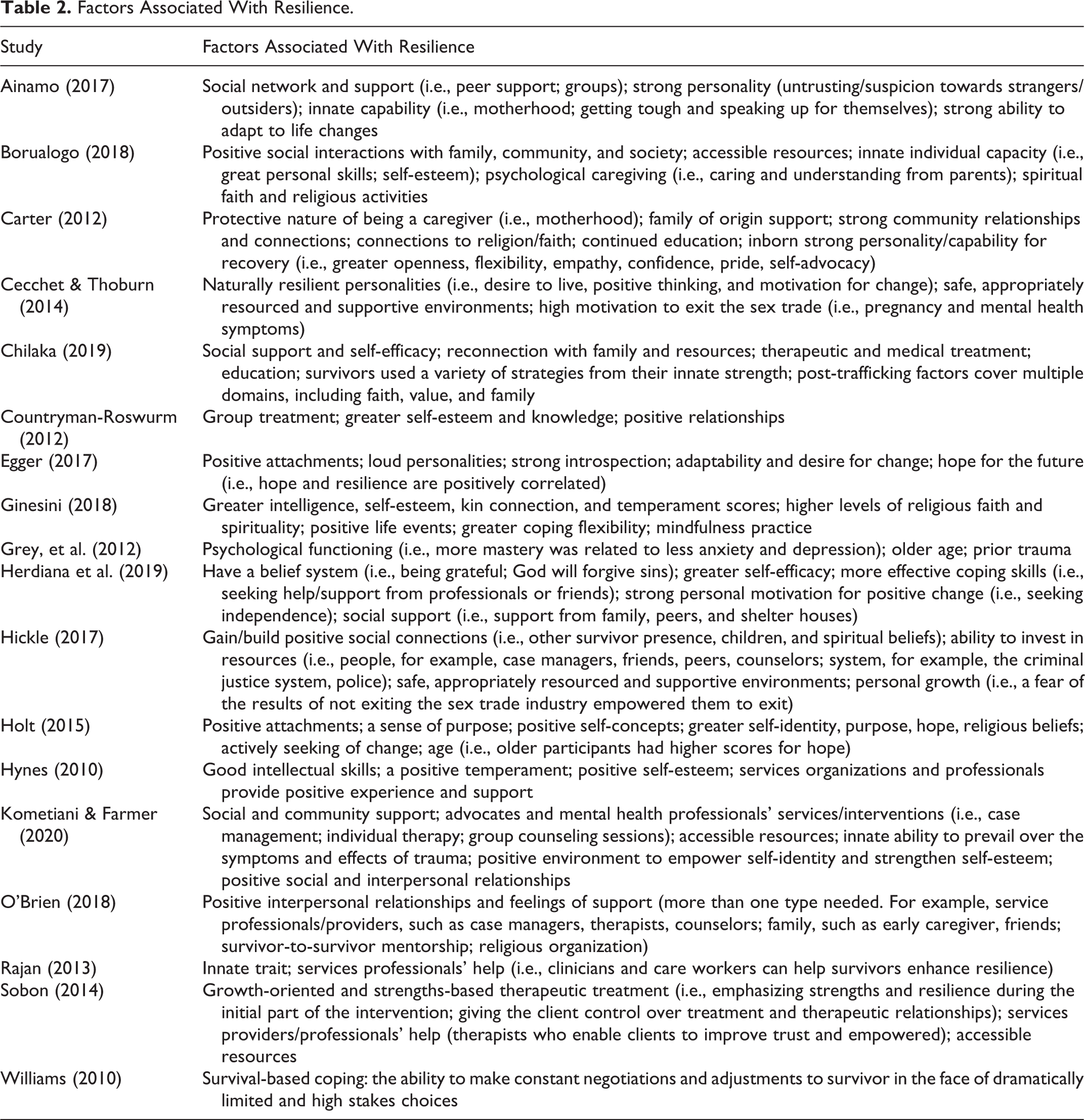
Prominent personal traits conferring resilience included adaptability, innate resilience, intelligence, and positive temperament. A positive sense of self and ability to regulate emotions was also noted in several of the studies reviewed (e.g., Egger, 2017; Holt, 2015). Purposeful, goal-oriented, and meaning-making processes such as the desire for change, creating opportunities within constraints, faith, and spirituality were stated in several studies (e.g., Chilaka, 2019; Egger, 2017; Holt, 2015), as well as receiving health and social services (e.g., Countryman-Roswurm, 2012; Komentiani & Farmer, 2020). The most frequently mentioned resilience factor was positive interpersonal relationships. A variety of such relationships were discussed in the studies, including familial ties (e.g., Ginesini, 2018), community-level ties, (e.g., Hickle, 2017), relationships with the clinical or health professionals (e.g., Rajan, 2013; Sobon, 2014), and mentorships or knowing other survivors of the same adversity (e.g., O’Brien, 2018). In two of the qualitative studies (Hickle, 2017; Rajan, 2013), participants shared that police officers and criminal justice personnel had contributed to their exit processes and growing resilience in positive ways.
The resilience factors described in these studies generally affirm prior research on factors associated with resilience and do not differentiate trafficking from other types of adversity. Examples from the quantitative designs include Ginesini (2018) who found that protective factors predict resilience, echoing a large body of research on the relationship between protective factors and resilience. Gray et al. (2012)'s exploration of resilience in Cambodia youth found that trafficked participants who had received treatment demonstrated more resilience and lower pathology than the nontrafficked participants, consistent with prior research demonstrating that earlier trauma can increase resilience for subsequent stressors and that resilience is not a static trait but can be increased through appropriate interventions (Fava & Tombe, 2009; Linley, 2005).
Similarly, the inductive approaches in the qualitative studies affirmed current literature on resilience traits, risk, and protective factors as well as the processes of developing resilience, grounded in survivors’ own accounts. Examples from the qualitative designs include O’Brien (2018) who found that survivors themselves perceive interpersonal relationships as key to promoting risk, providing protection and fostering resiliency over domestic minor sex trafficking, and Hickle (2017) who documented survivors’ descriptions of how they invested in resources available in the midst of adversity to increase their resilience.
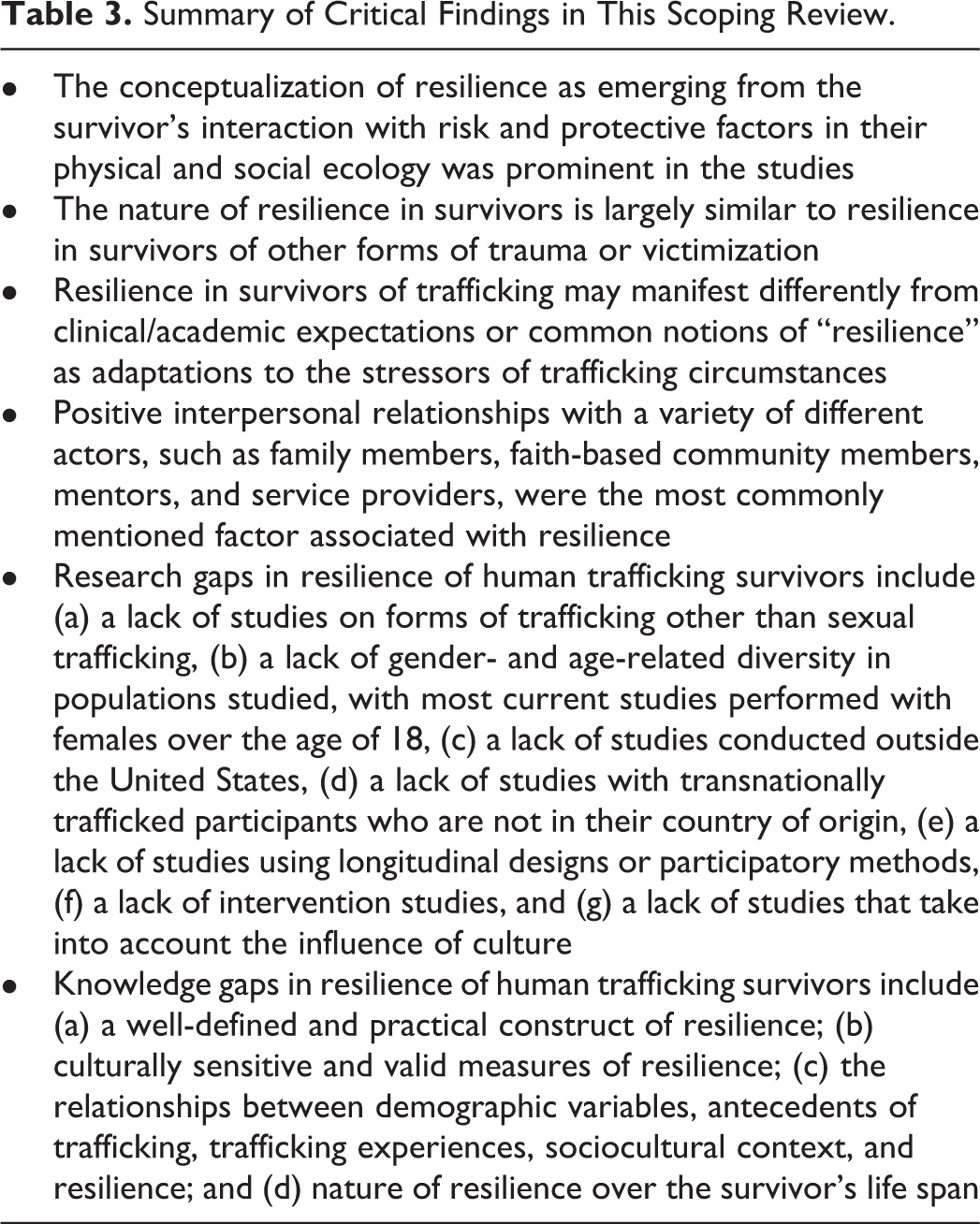
Overall, it was generally unclear how the findings of the included studies were specific (or not) to survivors of trafficking. Exceptions to the lack of specificity included Rajan (2013) and Williams (2010) who both discussed how resilience might manifest differently in trafficking survivors, including in ways that might be misunderstood by clinical professionals. Cecchet and Thoburn (2014) also noted that factors of resilience could look fundamentally different for people traumatized from sex trafficking than from other sexual traumas because of the chronic nature of experiences such as normalization of sexual exploitation in the family system, torture, rape, assault, and forced abortion. For instance, the domestic youth sex trafficking survivors interviewed cited pregnancy and severe mental health symptoms as being the very factors that gave them the impetus to exit trafficking and persevere through the challenges faced. Table 3 summarizes the findings of this scoping review.
Summary of Critical Findings in This Scoping Review.
Discussion
This scoping review explores resilience studies featuring survivors of human trafficking. The study focused on reviewing the definitions of resilience, how resilience has been studied, and factors associated with resilience in order to clarify the current state of knowledge and research gaps in resilience studies in human trafficking.
Resilience in Trafficking Survivors
The findings indicated that trafficking survivors, like survivors of other forms of trauma or victimization, are capable of developing resilience during or after their adverse experiences. The findings also suggest that resilience in trafficking survivors is similar to resilience in other populations who have experienced victimization in terms of protective factors. Factors noted in this review such as health care, positive interpersonal relationships, and faith have also been reported in studies featuring survivors of other types of sexual, emotional, social, or physical victimization such as childhood sexual abuse and intimate partner violence (Chaddher & Ahmad, n.d.; Sanjeevi et al., 2018). Despite the repeated instances of torture, rape, forced abortion, dangerous labor, psychological, or physical captivity—the egregious, multiperpetrator exploitation found in many situations of trafficking—the factors of resilience may not be fundamentally different for people who have experienced trafficking, suggesting a universality to the factors that support good outcomes after interpersonal trauma.
Nonetheless, it is critical to note that the similarity of resilience factors in this study with those of prior studies in different populations may also be an artifact resulting from the use of scales that take resilience as a universal concept operationalized uniformly across populations and age groups (Cosco et al., 2017). While these scales can index the absence or presence of previously known resilience factors, they are unable to identify what is new, unusual, or different from previously known resilience factors, thus obscuring such differences, if any, between trafficking survivors and survivors of other types of victimization. Similarly, the qualitative analyses mostly relied on a priori definitions of resilience to identify and describe participants’ resilience. The specificity of this lens combined with how most of the researchers only conducted one round of interviews with a small number of participants may have not been sufficient to uncover unique aspects of resilience in trafficking survivors.
Additionally, the researchers’ use of scales may have obscured clinically relevant or politically salient information, especially in light of the included studies not taking particular notice of the cultural context. Regarding the use of scales in international contexts in the reviewed studies, beyond issues with translation, statistical validation or the norming of a scale with a relevant or local population, the cross-cultural use of resilience scales assumes that the original conceptualizations of resilience are cross-culturally reproducible and locally relevant. Resilience researchers, particularly ethnographically oriented ones, have discussed the improbability of such assumptions and the need for culturally and contextually nuanced understandings of resilience (Kirmayer et al., 2011; Ungar, 2008). Standardized scales that are not culturally rooted may miss the “localized personal and collective concepts that are vital to defining resilience from one group to another” (Mendenhall & Kim, 2019, p. 319). However, few resilience scales have been developed outside the Western context; the researchers may have been working with what was available.
Another critical point to note regarding the resilience scales is that their development involved a definition of validity that relies on the ability of a measure to capture its target construct as established through statistical analyses of item content and score performance (Pangallo et al., 2015; Ungar & Liebenberg, 2011). Echoing measurement scholars such as Bowen (2008), Cronbach (1988), and Messick (1988), we contend this view of validation is inadequate, particularly for a polysemous construct or concept like resilience that researchers are still struggling to define or operationalize. A more adequate approach would include respondent-related validation: assessing whether respondents interpreted items and response options as intended and whether response options fit with respondents’ perceptions and experiences (Bowen, 2008). Practice-related validation (Cronbach, 1988; Messick, 1988) is also important. Practice-related validation refers to whether scores from a measure are used appropriately for the setting or context in which it is used. Practice-related validation is especially important in situations where the scores may influence distribution of resources, such as funding for programs that support a particular type of resilient outcome or cluster of resilience factors. Both forms of validation should be incorporated into social justice-oriented and survivor-centered resilience research.
While the quantitative and qualitative approaches in the reviewed studies generally did not distinguish resilience in trafficking with regard to protective factors, several of the qualitative studies did describe manifestations of resilience that were specific adaptations to survivors’ situations and were easily misunderstood, overlooked, medicalized, or criminalized by service providers or law enforcement (Cecchet & Thoburn, 2014; Rajan, 2013; Williams, 2010). Resilience can be complex and varied in how individuals display it in different circumstances; misrecognition of a survivor’s resilience by service providers, law enforcement, community leaders or other members of the survivor’s socioecology may cause further marginalization of the survivor. These alternative or unusual manifestations of resilience illuminate the need for robust definitions of resilience that are sensitive to a survivor’s specific context to inform practice and intervention.
Toward a Practical Definition of Resilience in Survivors
The studies, with their range of definitions where resilience is a trait, a process, a characteristic of the environment, or an outcome, demonstrated the lack of consensus on how resilience is conceptualized and measured, as noted in other reviews of resilience (e.g., Yoon et al., 2019). Perhaps a practical response to the struggle to define “resilience” would be to apply a more broad-based view of the human strengths, capacities and processes involved in a positive trajectory after trauma or in the midst of trauma, set in the individual’s cultural and historical context. This socioecological view evokes the scholarship of resilience researchers such as Ungar and Liebenberg (2011), with an added focus on the challenges specific to an individual’s history of trafficking.
From the viewpoint of a survivor’s lived experiences of risk and resilience and the capacity of the survivor’s material and sociocultural environment to support resilient outcomes, it might not matter as much for researchers to define resilience as the ability to “bounce back” or to “thrive despite adversity” and so on, as it is to define resilience in terms of survivors being able to overcome both acute and persistent adversity in order to achieve their desired lives. In particular, the reviewed qualitative studies which revealed expressions of resilience that departed from clinical notions of resilience illustrate the need for a more contextualized definition of resilience. Alternative expressions of resilience highlight the value of understanding and measuring survivors’ resilience in terms of the individual’s ability to defeat trauma and navigate challenges in order to achieve desired outcomes rather than as researcher-imposed characterizations of positive adaptation, lack of negative adaptation, or successful outcomes. Such a definition would allow the two core concepts of resilience—positive adaptation or successful outcomes, and adversity—to be defined by the individual rather than researchers (Ungar, 2008).
Furthermore, a goal-oriented view of resilience focused on the individual’s desired outcomes would permit a practical synthesis of current conceptualizations of resilience as a trait, the result of protective factors, a motivating force, or a process where resilience is developed, according to the individual’s situation, desires, or needs. That is, progression in defining the construct and its quantitative and qualitative exploration should be strengths based and foreground the survivor’s power, agency, and purpose. For instance, if a female survivor displays resilience as a trait (e.g., refuses to internalize shame and stigma but nurtures her self-esteem) and attributes her resilience to an elder sister who had encouraged her to believe in herself (a protective factor) and claims that the financial literacy program is increasing her positive outlook on life and giving her a steady plan for buying her own home (a process where resilience is developed), then all three factors constitute this particular survivor’s resilience.
Assessment of the survivor’s resilience would require identifying the different components of resilience and the interactions between them. The definition would naturally be rather complex and multifaceted, and future measures of resilience would need to account for at least a portion of this complexity. The challenge, of course, in this endeavor, will be to keep the definition from being overly broad while still validating resilience as a distinct construct with discrete and identifiable characteristics. Addressing this challenge will necessarily include further research that is culturally and contextually sensitive to the experiences of marginalized and stressed populations (Mertens, 2007).
Outstanding Gaps in Resilience Literature on Human Trafficking Survivors
All the studies reviewed only featured sex trafficking, with participating survivors mostly being female and over the age of 18. More than half of the studies featured survivors in the United States, and all but one study had participating survivors in their country of origin. In short, the results of this scoping review show a remarkable lack of diversity in terms of type of trafficking studied, age and gender of participants, and location of participants, despite a literature search strategy designed to retrieve multiple forms of trafficking and survivors, as well as study types. To advance the knowledge of resilience in survivors of human trafficking, it will be critical that resilience also be studied in (a) survivors of other types of trafficking, (b) survivors who have experienced more than one type of trafficking, (c) male and nongender conforming survivors, (d) in survivors under the age of 18, (e) survivors in countries other than the United States, and (f) transnationally trafficked survivors who are still outside their country of origin.
The results of this scoping review suggest that trafficking survivors are generally resilient and that survivors may manifest this resilience in normative or alternative ways. However, none of the 18 studies discussed survivors who were not resilient, whether according to clinical definitions or survivors’ own definitions. This lack creates a partial understanding of survivor resilience and addressing this gap may have critical implications for theory, practice, and policy. For instance, understanding why survivors in a particular local situation struggle to develop resilience may be helpful for designing more effective resilience-enhancing programs.
The lack of attention to sociocultural context is another noteworthy and alarming gap in the study of resilience in survivors, as cultural norms (including gender and ethnic norms) provide the contexts for specific characteristics of resilience to be revealed (Gray et al., 2012; Ungar, 2008), and protective and risk factors are embedded in an individual’s social ecology (Eggerman & Panter-Brick, 2010). Such information is highly relevant not only to theoretical understandings of resilience but also to the more practical matters of intervention and policy making. Demographic characteristics may help to predict which interventions will be successful in specific groups and what policies would most strengthen the local socioecological system in ways that promote survivor resilience. Given that prominent resilience researchers such as Michael Ungar have been championing the need for culturally salient resilience research for many years now (e.g., 2008), it was rather surprising that most of the studies did not acknowledge gender, ethnicity, or culture in their studies.
Alongside the lack of culturally salient resilience research, there was also a lack of studies incorporating a participatory approach. None of the studies described including survivors in a meaningful role in the research process such as the selection of research questions, research design, data collection, interpretation of data, and the dissemination and application of knowledge produced. The absence of survivors’ own voices and experiences reveals a severe lack of contextual knowledge informing current resilience studies.
In addition, there was a lack of longitudinal studies, that is, all the studies were cross-sectional in design, exploring survivors’ resilience at the point in time of the study. None of the studies gave insights into how resilience levels pretrafficking might impact a survivor who was being trafficked or how resilience or its lack might impact survivors during trafficking situations versus immediate post-trafficking or over time. Furthermore, there was little discussion in the reviewed studies of the actual impact of trafficking on resilience. The lack of such studies creates significant gaps in the understanding of how specific life events, including trafficking itself, developmental stages, and environmental circumstances, may affect resilience. Gaps also remain in the understanding of the cumulative effects of risk and resilience over the survivor’s lifetime. Intervention or evaluation studies involving resilience-enhancing interventions for survivors were also absent, indicating that current survivor resilience research provides researchers and interventionists with little population-specific guidance for designing resilience-enhancing individual or community-level interventions, or for integrating resilience-enhancing interventions with interventions that target other issues.
The current lack of resilience studies in trafficking is a human rights and social justice issue that must be urgently addressed. By focusing on identifying, assessing, and repairing negative outcomes, that is, the damaged victim, without a concomitant consciousness of survivor strengths and resilience, survivors are pigeonholed as victims. Compounding the issue, some intervention efforts socialize survivors into victimization as the master narratives of their lives (Guha, 2018; Jones et al., 2018). This disempowers survivors and minimizes their agency—a subtle and polite replication of the violent conditions of trafficking. Ironically, interventionists are also disempowered; ignorance of survivor resilience leaves researchers, policy makers, and service providers without a framework for incorporating survivors’ internal and ecological resources when attempting to measure, understand, and intervene in the complex issue of trafficking.
Implications for Research
This scoping review revealed that there is little current resilience research that is specific to survivors. It will be vital to conduct research that would enable the design of resilience-enhancing interventions to address well-documented areas of risk or vulnerability for survivors, such as continued entrapment in a trafficking situation, re-trafficking, and continued trajectories of poor mental or physical health and poor social connections post-trafficking (Dell et al, 2019; Hodge, 2014; Johnson, 2012; Sanchez et al., 2019). However, the base of knowledge needed for conducting such translational research is still extremely scant.
It is still unclear which features of resilience in survivors are universal and which are unique to a survivor’s particular circumstances. It is largely unknown how type of trafficking, length of being trafficked, pathways into trafficking and means of exit, as well as age, gender, ethnicity, natal family experiences, education, culture, and so on, affects survivors’ resilience. It is also largely unknown how resilience changes over the survivor’s life course, such as during experiences of being trafficking compared to immediate post-trafficking or over a further length of time, and what may influence the survivor’s resilience the most at different life stages or transitions. It is unclear why some survivors may not develop resilience, whether according to clinical definitions or their own definitions. The fundamental question of how resilience would be most aptly conceptualized for survivors in various circumstances still needs to be explored. For instance, would a definition of resilience as a personality trait be more helpful to a survivor who cannot return to his or her community of origin but would a socioecological definition of resilience be more helpful to a survivor who has significant family support? Future research should be aimed at building such a body of knowledge as rigorously as possible, preferably through meaningful participatory approaches.
Translational research will also require sound methods of assessing survivor resilience, particularly across the survivor’s life course and local cultural contexts. Current resilience scales primarily identify putative resilience factors that create behaviors and attitudes associated with resilience, with a notable absence of demographic and contextual predictors of resilience (Pangallo et al., 2015). These scales are also hindered by a preponderance of items that assess for individual traits, characteristic and skills, and the inability to produce information that could account for within-person variations in resilience or the cumulative effects of risk and resilience factors (Bonanno et al., 2007). Development of new scales or modifications to prior scales to address these shortcomings should be undertaken.
Considering prior victimization and current vulnerabilities experienced by survivors, it will be critical to conduct translational research grounded in empowerment theory principles. These principles explicate issues that directly relate to survivors’ level of resilience, that is, how individuals or communities gain power and control over their lives and access to resources (Robbins et al., 2012). Theories grounded in empowerment theory principles include feminist theory, social work empowerment, and strengths-based theory. For instance, a study on providing female survivors of sex trafficking with resilience to post-trafficking challenges through sustainable employment opportunities could attempt to describe how age, gender roles, and stigma limit survivors’ ability to fully benefit from these opportunities, identify in collaboration with survivors safe and empowering ways for the limitations to be challenged or navigated by survivors, and assess the effectiveness of these ways within its cultural or specific context.
Implications for Practice
The findings illuminate that resilience in trafficking survivors is similar to resilience in other victimized populations, and resilience can manifest in unexpected ways as the result of adaptations to a survivor’s circumstances. This information can help practitioners to be more sensitive to how a survivor may experience or display resilience, anticipate and address decreased levels of resilience, and prioritize ways of enhancing resilience through a dual focus on individual competencies and resources in the survivor’s socioecology.
The most prominent direction for practice emerging from the findings involves positive interpersonal relationships. The findings showed that a variety of positive interpersonal relations was implicated in survivor resilience, with survivors usually naming more than one type of positive attachment, suggesting that it would be important for interventionists to provide programs that bolster survivors’ access to multiple types of positive relationships. This could include group and individual therapy, mentorship programs with survivor leaders, and programs to improve domestic/family and community relationships.
The other finding extremely pertinent to practitioners is the very scarcity of knowledge. Given the sheer paucity of resilience research in human trafficking survivors, it will be critical for practitioners to collaborate with researchers to cocreate sites of knowledge that could inform practice. Practitioners, with their on-the-ground contact with survivors’ issues and policy ramifications, could also work with researchers to identify urgent areas of research to help researchers to prioritize research goals and the allocation of research funds.
Implications for Policy
Resilience implicates those who control the resources that facilitate psychological well-being in the proximal processes associated with positive development in contexts of adversity (e.g., making education accessible; promoting a sense of belonging in one’s community instead of stigma; opportunities that affirm self-worth). (Ungar, 2013, p. 255)
Current human trafficking policies generally do not explicitly target “resilience” in individuals or at-risk populations but do address many factors implicated in survivors’ resilience. For instance, in the United States, federal human trafficking policies provide funding and resources for prevention efforts; trauma-informed, culturally competent victim services; research to support evidence-based victim services; improved victim identification; outreach and awareness efforts; promotion of collaborations and partnerships; reduction of systematic barriers to service access for victims and prosecution of offenders and restitution (President’s Interagency Task Force to Monitor and Combat Trafficking in Persons, 2018).
Strengths and Limitations
The inclusive search strategy used in this scoping review was capable of retrieving studies that featured a diversity of trafficking types, survivors from different regions and gender orientations, data sources, and research designs. This enabled the authors to obtain a comprehensive overview of the current state of knowledge in resilience studies in trafficking survivors. For instance, the corpus of studies included for review revealed that research on resilience in different forms of trafficking other than sex trafficking is severely lacking. However, this study is not without limitations. Only articles and dissertations published in English were reviewed; therefore, this scoping review has both publication and language bias. It is therefore highly likely that relevant studies were omitted from this review.
Conclusion
Resilience is paramount to survivors of human trafficking who typically face a wide range of challenges in multiple domains. Being able to cope with, handle, or even thrive in the midst of stress and adversity increases the likelihood of psychological well-being and life satisfaction. Resilience in survivors cannot be understood apart from acknowledging survivors’ strengths; survivor resilience defeats the trauma-dominant narrative of survivor incapacity, lack of agency, and victimhood. Promoting survivors’ resilience empowers policy makers and interventionists to collaborate with and enhance survivors’ innate power, agency, and available resources. It is therefore critical that resilience continues to be studied.
The findings of this scoping review provide direction for future study. The lack of precision and broadness of scope in defining resilience needs to be addressed through further exploration of its conceptualization and theoretical understandings. Further research is needed to explore the nature of resilience in diverse populations of trafficking survivors. It is critical for such research to involve collaboration between survivors from diverse populations, resilience scholars, trafficking scholars, and scholars from other disciplines. Most importantly, the research should also be guided by a culturally aware social justice and human rights-oriented paradigm.
Footnotes
Declaration of Conflicting Interests
The author(s) declared no potential conflicts of interest with respect to the research, authorship, and/or publication of this article.
Funding
The author(s) received no financial support for the research, authorship, and/or publication of this article.
