







Abstract
Sexual and gender minority (SGM) individuals are at increased risk for experiencing sexual violence. Bystander intervention training programs are a first-line prevention recommendation for reducing sexual and dating violence on college campuses. Little is known regarding the extent to which SGM individuals are represented in the content of bystander intervention programs or are included in studies examining the effectiveness of bystander intervention programs. The present critical review aimed to fill this gap in knowledge. Twenty-eight empirical peer-reviewed evaluations of bystander intervention programs aimed at reducing dating violence or sexual assault on college campuses were examined. Three studies (10.7%) described including content representing SGM individuals in the program. Personal communication with study authors indicated that—although not mentioned in the publication—many programs describe rates of violence among SGM students. When describing the study sample, six studies (21.4%) indicated that transgender, nonbinary, or students classified as “other” were included in the research. Approximately two thirds of studies (67.9%) did not describe participants’ sexual orientation. No studies reported outcomes specifically among SGM individuals, and two (7.1%) mentioned a lack of SGM inclusion as a study limitation. Work is needed to better represent SGM individuals in the content of bystander intervention programs and ensure adequate representation of SGM individuals in studies examining the effectiveness of bystander intervention programs.
Rates of sexual violence are high on college campuses (Cantor et al., 2020; Krebs et al., 2016), especially among students who identify as sexual and gender minorities (Cantor et al., 2020; Krebs et al., 2016). The Sexual and Gender Minority Research Office of the National Institutes of Health (2020) defines sexual and gender minorities (SGMs) as individuals who identify as lesbian, gay, two-spirit, bisexual, transgender, and intersex, as well as individuals whose gender identity, gender expression, sexual orientation, or reproductive development diverges from societal, cultural, physiological, or traditional norms. Recent research suggests that rates of sexual violence among SGM college students are equal to or greater than rates among heterosexual and cisgender individuals (Cantor et al., 2020). More specifically, Coulter et al. (2017) documented the highest rates of sexual violence among college students who self-identified as transgender (20.9%), followed by individuals who identified as bisexual (15.7%), unsure (12.6%), gay or lesbian (9.8%), and heterosexual (6.4%). Edwards et al. (2015) also found differences in past-six-month incidence rates of sexual violence between sexual minority (24.3%) and heterosexual college students (11.0%), with sexual minority women and men victimized at greater rates (26.4% and 15.5%, respectively) than heterosexual women and men (13.7% and 6.5%, respectively). The high rates of sexual violence among SGM college students underscore the importance of understanding how SGM students are represented in sexual assault prevention initiatives on college campuses.
Bystander intervention training programs are one of the several approaches to campus sexual and dating violence prevention (Orchowski et al., 2020). Bystander intervention programs aim to engage all members of a campus community to take action when they witness risk for harm (for reviews, see Bennett et al., 2014; Burn, 2009; McMahon & Banyard, 2012). Bystander intervention programs for sexual assault prevention are often based on the Latané and Darley (1968) Bystander Model of Intervention. According to Latané and Darley’s (1968) model, helping behavior occurs when individuals notice a problem, label it as problematic, take responsibility for helping, and have the requisite skills to intervene. Toward this goal, bystander intervention training programs aim to increase individuals’ knowledge about sexual and dating violence, decrease belief and acceptance of rape myths, and increase individuals’ ability to intervene in risky situations (Banyard et al., 2007; Burn, 2009; Jouriles et al., 2018; Palm Reed et al., 2015). Whereas some programs such as Green Dot (Coker et al., 2016; Coker et al., 2011) and Bringing in the Bystander (Banyard et al., 2009; Moynihan et al., 2011) engage all members of the campus community, some programs designed to engage boys and men as allies in sexual violence prevention include bystander intervention as a component of their prevention program curriculum (Gidycz et al., 2011; Katz et al., 2011; Orchowski et al., 2018; Salazar et al., 2014).
As documented in a recent review by Mujal et al. (2019), the research literature examining bystander intervention programs for sexual and dating violence prevention is quickly expanding. In fact, Jouriles and colleagues’ (2018) systematic review and meta-analysis of campus bystander intervention programs included 24 rigorous program evaluations. The growing number of studies examining the effectiveness of bystander intervention programs is perhaps not surprising given that the 2014 White House Task Force to Protect Students from Sexual Assault named bystander intervention as a frontline prevention approach. The positive results of bystander intervention programs were also highlighted in the second task force report (White House Task Force, 2017). Further, in 2019, the provision of bystander intervention programming was also a required component in grants to reduce domestic violence, dating violence, sexual assault, and stalking on campuses provided by the U.S. Department of Justice Office on Violence Against Women. As Coulter and Rankin (2020) discuss, in order to be successful in reducing college sexual assault among all students, it is vital that prevention efforts address the disparities in rates of sexual victimization among SGM students.
Problematically, no sexual assault prevention programs exist that are specific to SGM college student experiences (DeGue et al., 2014). Support services for survivors of violence also often fail to address the needs of SGM individuals (Jordan et al., 2020; Potter et al., 2012). The lack of attention to the needs of SGM students in sexual assault prevention aligns with the historical focus of research on men’s perpetration of violence against women (Cannon, 2015; Potter et al., 2012). However, as noted by Coulter et al. (2017), “if sexual assault prevention solely focuses on cisgender heterosexual violence (e.g., cisgender man-on-woman violence), it may invalidate LGBT people’s assault experiences and be ineffective for LGBT populations” (p. 8). As described by McCauley et al. (2019), sexual violence prevention efforts “often incorporate ‘power-evasive, identity-neutral’ content into our prevention programs, a strategy that emerged from efforts to highlight that people of all genders experience sexual violence and for the purposes of reducing men’s resistance in prevention efforts” (p. 15). Yet, as McCauley et al. (2019) note, such an approach fails to address how gendered homophobia is associated with perpetration of sexual violence (see Aosved & Long, 2006; Espelage et al., 2018).
Examining the way in which bystander intervention programs address the needs of SGM students is especially important in light of research suggesting that identity status and group membership influence helping behavior in emergencies (Levine & Manning, 2013; Levine et al., 2005). Individuals are less likely to help others when there is not a shared identity (Levine et al., 2005), which may help to explain why individuals who identify as SGMs are less likely to receive help from bystanders who do not identify as SGMs (Wernick et al., 2013). Stereotypes regarding who experiences sexual violence may also reduce the likelihood that individuals intervene to help SGM students who are at risk for harm. According to Ford et al. (1998), men are less likely to label a scenario as rape when the victim is a lesbian woman, and women are less likely to label a scenario as rape when the victim is a gay man. Allyship may also influence helping behavior. For example, Dessel et al. (2017) found that students identifying as heterosexual are more likely to intervene to address risk for violence involving SGM individuals when they had SGM friends and positive attitudes toward people belonging to SGM communities. Conversely, negative attitudes toward SGM individuals may also influence helping behavior. For example, Wakelin and Long (2003) found that individuals who identify as SGM are assigned more personal responsibility for experiences of sexual victimization. These findings highlight the importance of including content within bystander intervention programs which attends to how identity influences helping behavior to address risk for sexual victimization among SGM students.
To date, there is limited information about whether bystander intervention programs are effective for SGM students. For example, Coker et al. (2020) examined the efficacy of a bystander program among high school students and found that sexual minorities reported less change in rates of violence, suggesting that the program was less efficacious for the SGM students as compared to the non-SGM students. Further, Palm Reed et al. (2015) found that participants identifying as sexual minorities showed a significant decrease in their self-reported bystander efficacy after attending a bystander intervention program which portrayed men and lesbian, gay, bisexual, trans (LGBT) individuals as both victims and perpetrators of sexual violence.
In addition to calls for more inclusive programming efforts for SGM students, there is also increasing recognition of the importance of assessing and reporting on the gender identity as well as the sex assigned at birth of participants in study samples (American Psychological Association [APA], 2020). The APA (2012) defines sex (i.e., female, male, intersex) as one’s biological status as indicated by sex chromosomes, internal reproductive organs, external genitalia, and/or gonads; whereas gender is defined as the behaviors, attitudes, and feelings associated with a person’s biological sex and is based on a given culture’s expectations. Gender identity is defined as an inherent and deeply felt sense of one’s own gender, which may or may not adhere to societal norms or align with biological sex assignment (APA, 2015). However, as discussed in the Seventh edition of the APA Publication Manual, the terminology that researchers use to refer to sex and gender within a study sample are often conflated (APA, 2020). Furthermore, the assessment of gender identity in research may fail to recognize gender diversity. For example, in an investigation of transgender inclusion on college campuses, Patchett and Foster (2015) found that over 70% of campuses used the dichotomous classification of “male” and “female” to assess gender, and 13% provided an option to select “other.” Mohr (2010) describes how “othering” of gender minority students reinforces, harmful, stereotypical beliefs that position gender minority students as subordinate to their cisgender peers, likely adding to the stigmatization that many SGM individuals already face (Bedera & Nordmeyer, 2020; Johnson & Grove, 2017). As researchers in sexual assault prevention strive to increase the inclusivity of prevention efforts, it is important to understand the way in which researchers are assessing sex assigned at birth and gender identity among participants and document how researchers are using terminology pertaining to sex and gender in research reports.
Purpose of the Current Study
While previous work suggests that experiences of SGM individuals are included in the programmatic material of some bystander intervention trainings used on college campuses (see Potter et al., 2012), it is unclear the extent to which SGM inclusion has been described in the published literature and to which outcomes for SGM individuals have been examined and reported. This study sought to critically review and describe the inclusion of SGM populations in the existing published, peer-reviewed literature evaluating bystander intervention training programs designed to reduce sexual and dating violence on college campuses. Journal publications (vs. dissertations, unpublished studies) were selected for review in order to evaluate and describe the inclusivity of the published literature regarding bystander intervention program evaluations that have undergone the peer-review process. The present analysis sought to examine (1) the extent to which publications reported bystander intervention program content that includes sexual and dating violence experiences of SGMs; (2) describe the inclusion of SGM individuals as study participants; (3) whether the published bystander intervention evaluations reported findings and outcomes related to individuals who identify as SGM participants; and (4) whether the published bystander intervention evaluations called for the inclusion of SGM participants within their limitations and future directions sections.
Method
Search Criteria
To obtain a comprehensive set of research studies evaluating bystander intervention programs among college students, we first revisited the published articles in Jouriles and colleagues’ (2018) systematic review of bystander intervention programs for sexual and dating violence among college students. The Jouriles et al. (2018) systematic review and meta-analysis evaluated the outcomes and efficacy of 24 bystander intervention studies published through August 2017. We followed the search and screening procedures used in the Jouriles et al. (2018) systematic review to identify articles published from September 1, 2017, until March 16, 2020. This process allowed for more recent studies to be included in the current review. Jouriles and colleagues’ (2018) search for articles was conducted via PsycINFO, PsycARTICLES, MedLine, ERIC, Academic Search Complete, Education Source, and PubMed. Of note, the current review did not search Education Source, as the database was not available to the authors. In accordance with Jouriles et al. (2018), search terms included “bystander intervention” OR “bystander intervention program” OR “bystander training” OR “bystander program” OR “bystander education” OR “peer prevention” OR “witness” AND “sexual assault” OR “assault” OR “victimization” OR “revictimization” OR “sexual coercion” OR “rape” OR “sexual violence” OR “date rape” OR “relationship violence” OR “interpartner violence” OR “dating violence” OR “perpetration” AND “college” OR “university” OR “undergraduate” OR “student” OR “young adult” OR “campus.” All journal articles generated using these search criteria were compiled into a database. Articles were selected for inclusion in the present review if they were (a) published in English language; (b) an empirical, peer-reviewed manuscript; (c) population of focus was undergraduate students; (d) purpose of the study was to evaluate a bystander program to reduce dating violence, sexual assault, or both; (e) included a control group that did not receive a bystander program or components of such a program; (f) utilized a measure of attitudes, beliefs, or bystander behaviors as an outcome; and (g) collected measures at post-treatment or follow-up. Study abstracts were screened by two bachelor’s-level independent reviewers to assess inclusionary criteria. Raters reached consensus on 91.8% of articles in the initial search. Discrepancies in coding were reviewed by a third independent reviewer and final inclusionary determinations were made.
Search Results
First, from the articles included in the Jouriles et al. (2018) review, those studies that were published in peer-reviewed journals were retained for the current critical review (n = 21). Three studies were excluded from the current critical review: two dissertations and one unpublished study. Next, the database search strategy yielded 503 articles. After removing duplicates, the search resulted in 230 articles. After the initial abstract review, 145 were excluded. Following the procedures outlined above, the remaining 85 articles were reviewed and seven were determined as meeting inclusionary criteria. A total of 28 articles were subsequently examined, and relevant information pertaining to study goals was extracted. The full search strategy is summarized in Figure 1.
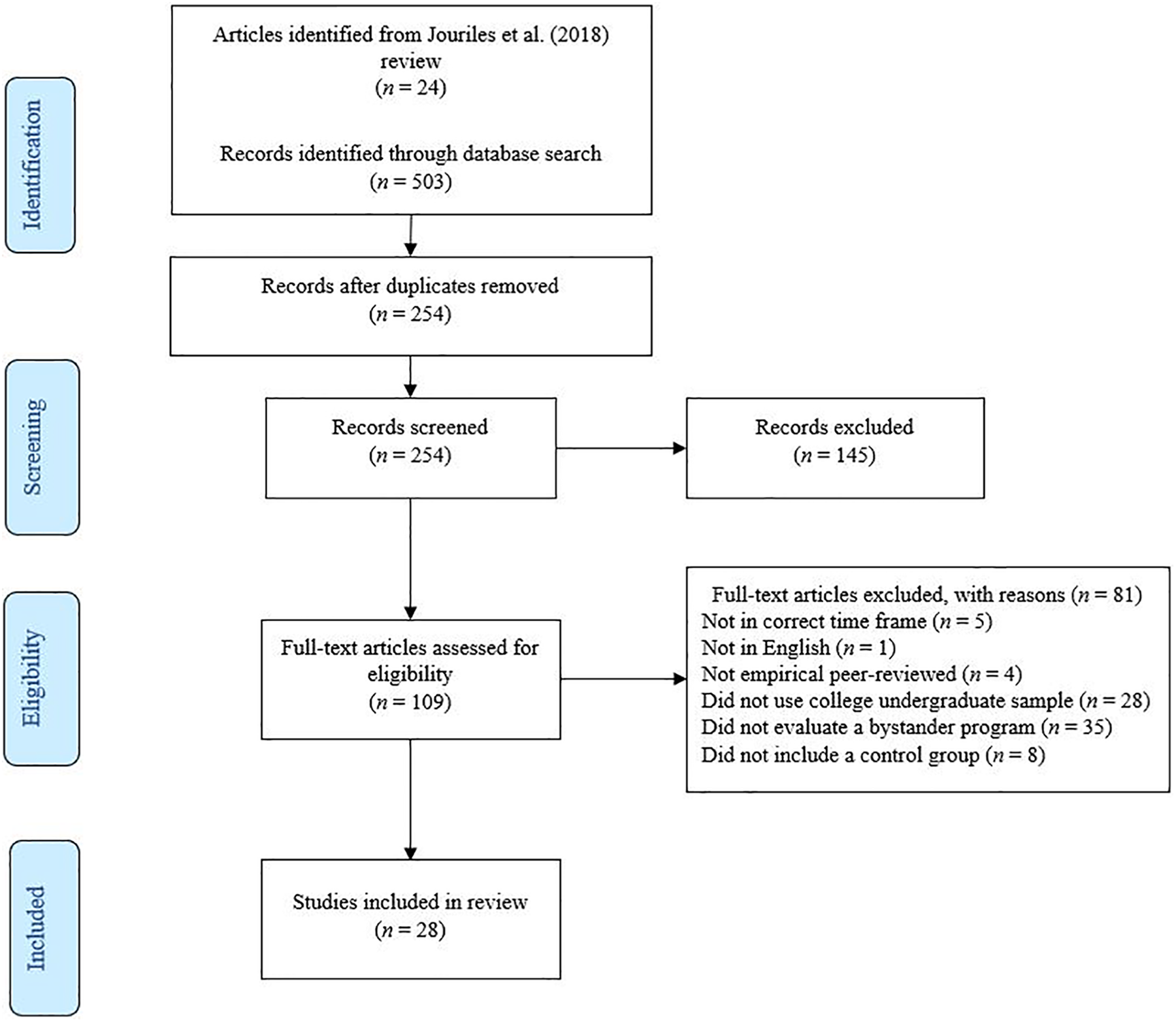
Flow Diagram for Review Procedures.
Data Extraction and Synthesis
Full-length articles were reviewed and coded by two master’s-level independent raters for each of the inclusion domains of interest; raters reached consensus on most occasions (86.1%). The two raters then met and discussed coding discrepancies until consensus was reached. Domains of interest were identified a priori and included: program characteristics (i.e., program being evaluated, inclusions of SGMs in program content), participant characteristics (i.e., participant sex, gender, sexual orientation), and article sections in the published manuscripts (i.e., results, limitations, and future directions sections). In addition to examining the description of the content in the publication, the authors of each manuscript were contacted to provide further detail on how the curriculum addressed the needs of SGM participants.
Coding of Program Characteristics
Program characteristics as described in the study publication were coded based on the title, abstract, present study, methods, and procedure sections of the article. The name of the bystander program being evaluated was gleaned from each study (e.g., Green Dot). Whether the program content addressed SGMs was classified as follows: (a) SGM inclusion in the program content was not described in the study, (b) SGMs were described as being represented in program materials (e.g., stories, videos, pictures, examples), and (c) program content did not describe including SGMs but described example(s) of nonfemale/nonwomen being victimized (e.g., men being victims of sexual violence regardless of perpetrators’ sex/gender). The description of program characteristics provided from the author(s) of the study were described separately (see Table 1) in order to examine the extent to which content relating to SGM participants is described within publications.
Program Characteristics.
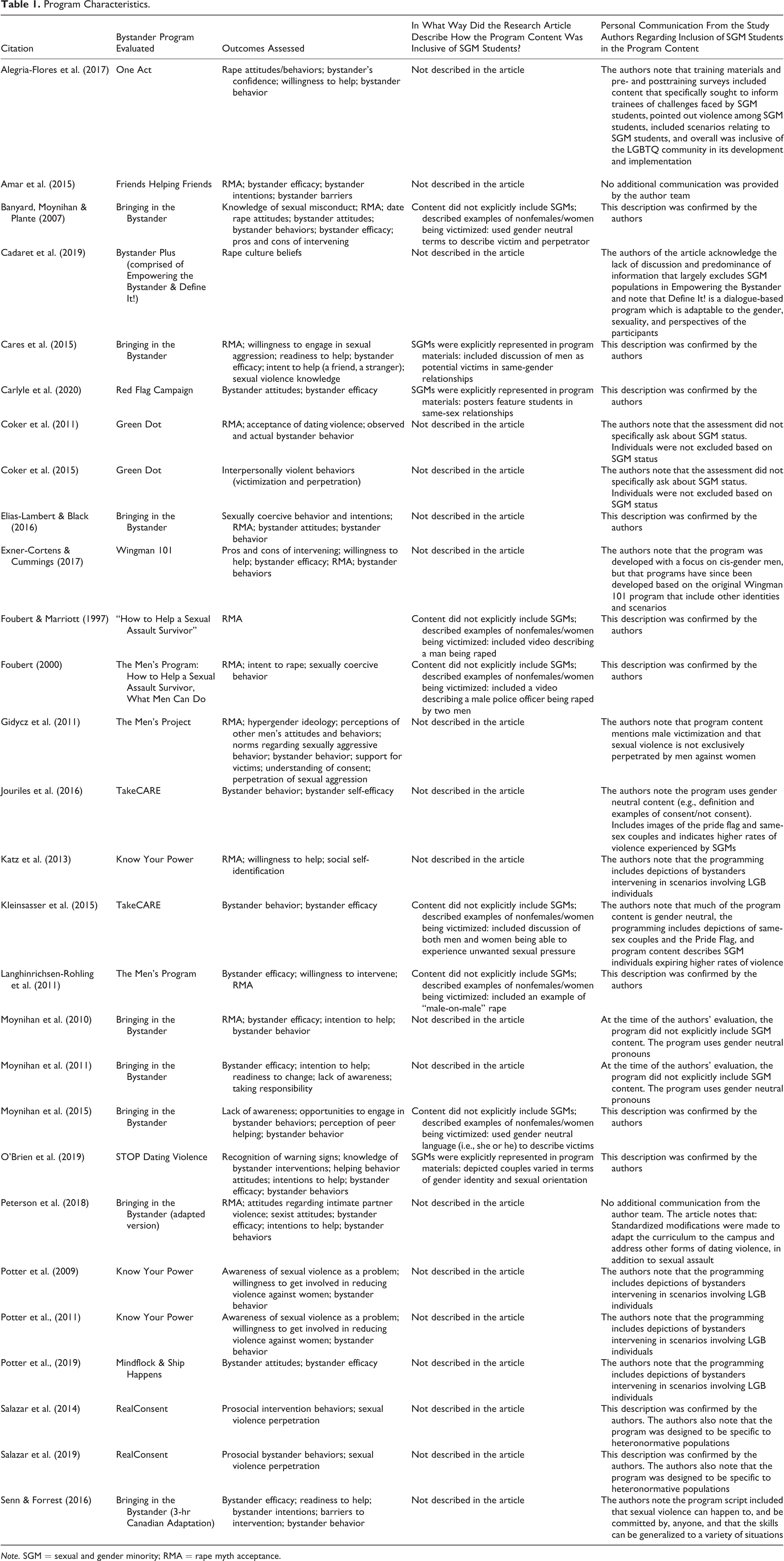
Note. SGM = sexual and gender minority; RMA = rape myth acceptance.
Coding of Participant Characteristics
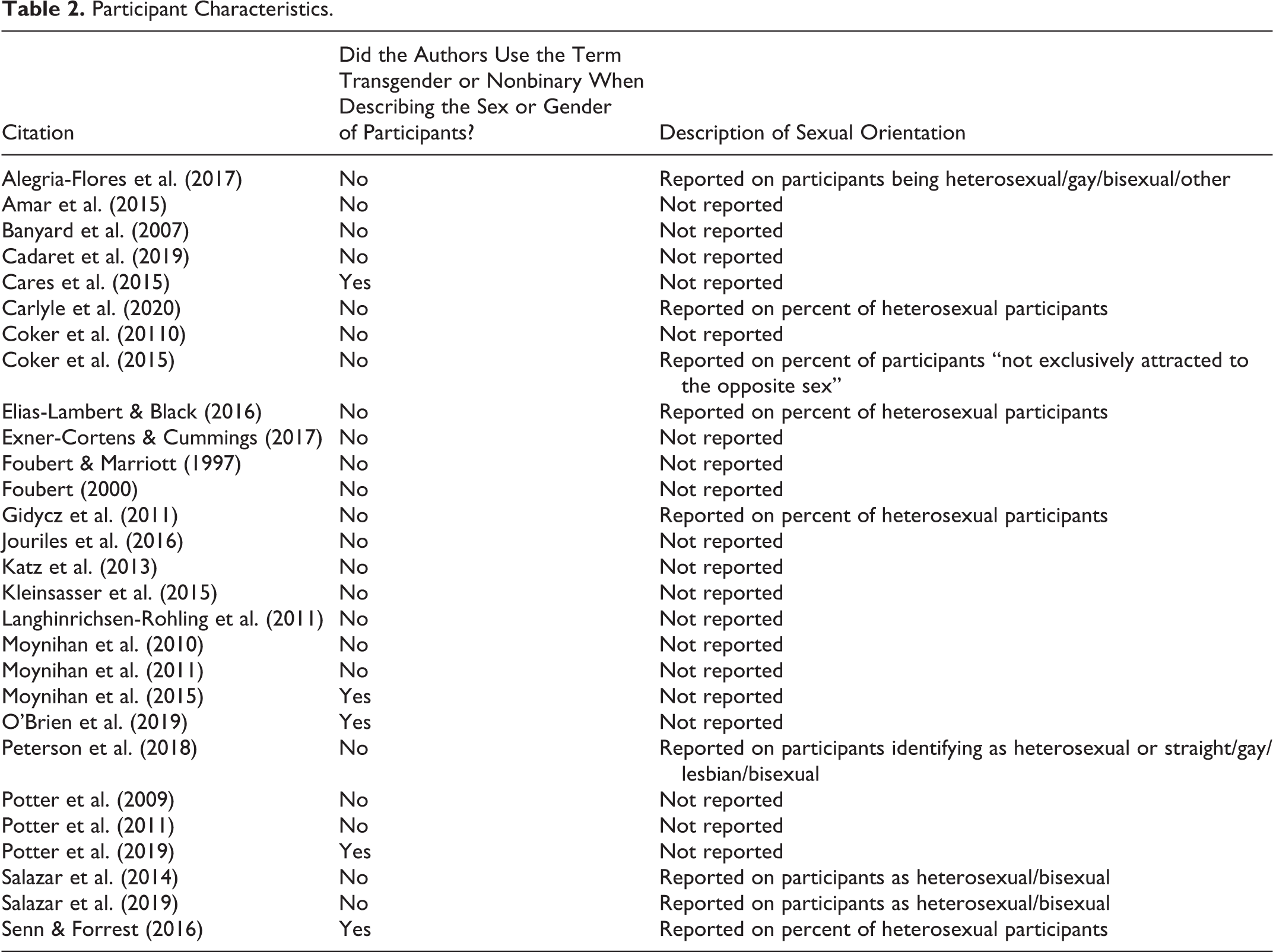
Each study was examined to examine assessment of sex assigned at birth, including the representation of intersex participants. Assessment and reporting of gender identity outside of a gender binary was coded to reflect whether the authors used the terms transgender or nonbinary when describing the sex or gender of participants. Sexual orientation was coded to reflect whether the authors described collecting participant sexual orientation information. Coding response options were (a) sexual orientation was not reported, (b) reported the percent of heterosexual participants, and (c) reported the frequency of students identified as sexual minorities (e.g., lesbian, gay, bisexual).
Coding of the Representation of SGM Students in the Study Results, Limitations, and Future Directions
The results section of each study was coded to reflect whether the authors presented findings regarding SGM individuals in the results section. Coding response options were (a) no explicit results regarding study outcomes among SGMs were reported (i.e., unclear whether results applied to SGM participants in the samples because SGM participants were not explicitly mentioned), (b) results described findings specifically among SGM participants, and (c) results described the findings among heterosexual and/or cisgender participants. Limitations was coded to reflect whether the authors mentioned a lack of SGM inclusion in the limitations section. Coding response options were (a) lack of SGM inclusion was not reported as a limitation, (b) mentions a lack of SGM inclusion as a limitation, and (c) mentions a general lack of diversity as a limitation. Future directions were coded to reflect whether the authors mentioned the inclusion of SGMs in the future directions section. Coding response options were (a) future inclusion of SGMs was not reported, (b) calls for SGM inclusion in future directions regarding program content and/or research, and (c) calls for more general diversity in future directions regarding program content and/or research.
Results
Information regarding program characteristics, participant characteristics, and article sections was compiled into tables. Table 1 describes the program content and participant characteristics. Table 2 describes the participant characteristics. Table 3 describes how the study represented SGM students in study analyses as well as the study limitations and future directions.
Participant Characteristics.
Representation of SGM Students in Study Analyses and Acknowledgment in the Study Discussion.
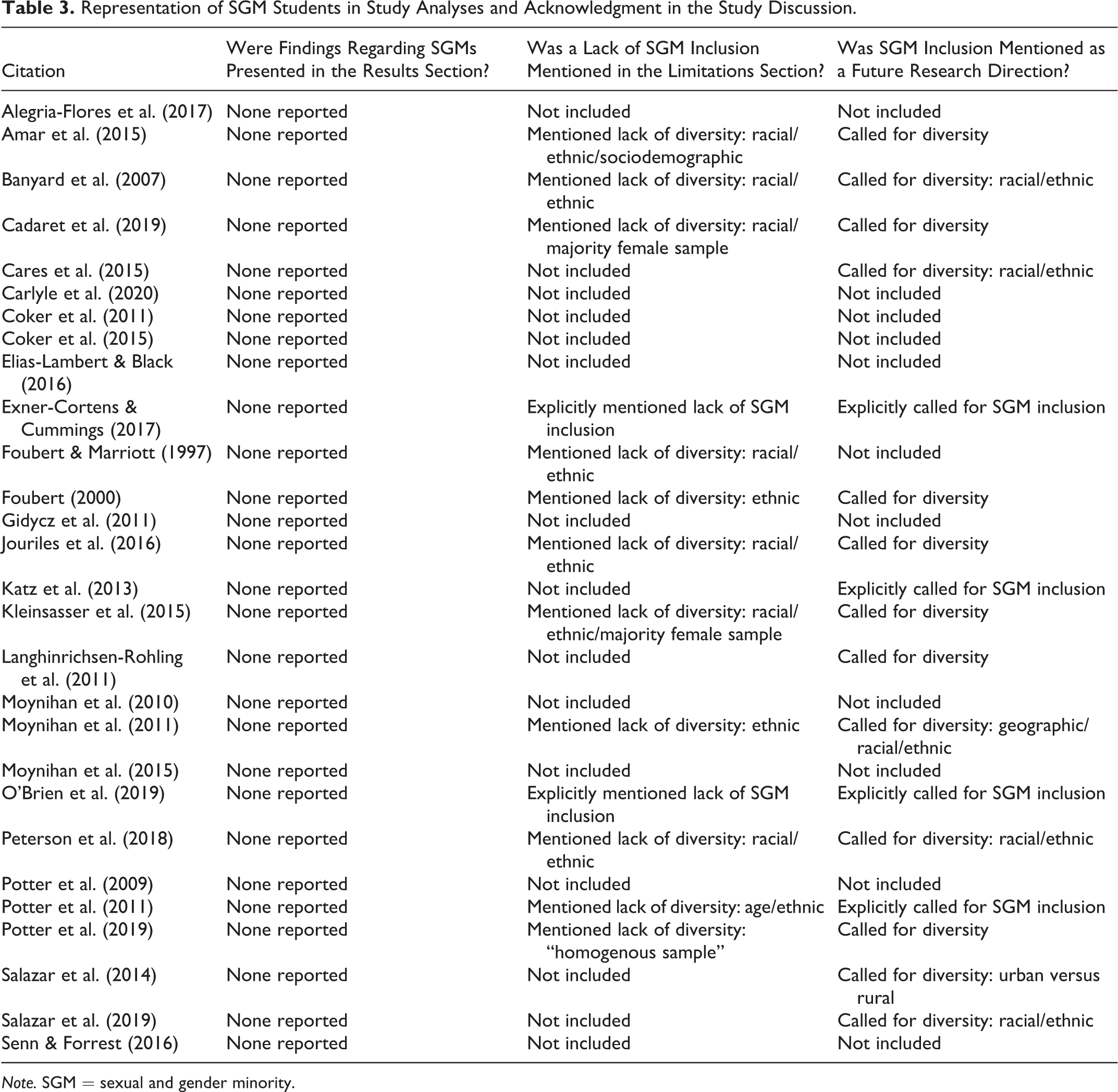
Note. SGM = sexual and gender minority.
Content of the Programs
Of the 28 articles, three articles (10.7%) described including content representing individuals who identify as SGMs: (a) men as victims of sexual violence in same-gender relationships, (b) examples of same-sex relationships, and (c) depicted couples varying by gender identity and sexual orientation. The majority of program examined (67.9%) did not describe content representing individuals who identify as SGMs. The remaining six studies (21.4%) included descriptions of nonfemale/nonwomen being sexually victimized. Of note, three of the six articles stated that the description of male-on-male victimization was used specifically to engender empathy for women sexual violence victims, and the other half mentioned that men can experience unwanted sexual pressure or used gender neutral terms regarding the victim and perpetrator. Regarding the delivery of the program, it was notable that one study reported that transgender participants could choose which group they felt most comfortable attending (i.e., because the groups were single sex). While not reported in the published manuscripts, several authors indicated through personal communication that content relevant to SGM individuals was included in the program under evaluation (see Table 1).
Participant Characteristics
There was limited information on how studies assessed participants’ assignment of sex at birth. No articles reported the term intersex, and it is not known whether intersex was an option for participants to report. Most studies did not report on the sexual orientation of participants (67.9%). Two studies reported the percentage of participants who identified as gay, one study reported the frequency of participants who identified as lesbian, four studies reported participants identified as bisexual, and one reported the frequency of participants who described themselves as “not exclusively attracted to the opposite sex.” Two studies reported that individuals who identified as “homosexual” were excluded from study participation. Regarding assessment of gender identity outside of a gender binary (man/woman), six studies (21.4%) used the terms transgender or nonbinary to describe participant gender. Specifically, four reported including transgender participants, one reported including nonbinary participants, and one reported the percent of participants described as “other” in relation to gender identity. It was also noted that most studies did not assess both sex and gender. Further, studies tended to use terminology referring to participant sex and gender interchangeably, including using the terms male/female and man/woman interchangeably throughout the study when the study did not report on assessing both sex and gender.
Results, Limitations, and Future Direction Sections of Articles
None of the 28 articles include in the present review reported explicit outcomes regarding SGM students. Further, none of the articles reviewed differentiated outcomes by SGM participants compared to heterosexual and/or cisgender participants. Additionally, in two articles (7.1%) the authors reported that transgender participants were excluded from analyses due to sample size limitations. However, one article did report that transgender participants were included in analyses presented elsewhere although did not include a citation to allow readers to easily access those results. Finally, one article noted that heterosexual participants were more likely to have completed follow-up surveys.
Regarding the limitation sections, 15 articles (53.6%) did not mention a lack of SGM inclusion as a limitation of their study. Further, 11 articles (39.3%) mentioned a lack of diversity broadly (e.g., lack of racial/ethnic diversity, homogenous samples) as a limitation of their study. However, two articles (7.1%) mentioned a lack of SGM inclusion as a limitation of their study. Further, 13 articles (46.4%) called for more diversity (e.g., racial/ethnic, geographic) in program content and future research, while 11 articles (39.3%) did not include mention of diversity and inclusion in their future directions. Four articles (14.3%) called for inclusion of SGM representation in future research. Specially, one called for greater sexual and gender diversity in samples, one called for measurement of sexual orientation, one called for men being depicted as at risk for sexual violence, and one called for poster campaigns to include depictions of sexual violence in the lesbian, gay, bisexual, trans, and queer/questioning (LGBTQ) community.
Discussion
The current review examined the scope of reported inclusion of individuals identifying as SGMs within program characteristics, participant characteristics, and reporting in article results, limitations, and future directions sections. Examining and describing the extent to which SGMs are represented in the peer-reviewed published evaluations of bystander intervention training programs for sexual and dating violence may provide critical insights into what we know and do not know about how such approaches are inclusive of the experiences of individuals who identify as SGMs. Findings highlight the lack of reported inclusion of individuals who identify as SGM within the current bystander intervention programming evaluation literature. Lack of inclusion is of concern as it leads to a knowledge gap in how current bystander intervention programs meet the needs of students who identify as SGMs.
First, examination of the research articles indicated that there was a lack of SGMs as being included within the program content of bystander interventions programs. Personal communication with the authors of studies included in the review indicated some inclusion of content relating to SGM participants within the program (i.e., indication of prevalence rates among SGM students, recognition that anyone can be a victim or perpetrator, discussion of homophobia). It was notable that three studies portraying victimization among men did so with the intent to evoke empathy for, or draw connections to, females’ experiences of sexual violence (i.e., Foubert, 2000; Foubert & Marriott, 1997; Langhinrichsen-Rohling et al., 2011), rather than to be inclusive of individuals identifying as SGMs.
As discussed by Coulter et al. (2017), the lack of inclusion of content depicting the experiences of SGM individuals may perpetuate the myth that men (in general), transgender, and gender-diverse individuals, among others, cannot be victims. Although there is no data to examine whether bystander intervention programs are equally effective for SGM participants, the lack of content pertinent to the experiences of SGM youth may lead programs to be less salient for SGM participants. For example, as noted by Potter et al. (2011), social self-identification in relation to bystander intervention posits that individuals exposed to program content will receive increased benefit when they identify with the people depicted in the program content. It is further important to ensure that content is inclusive of the experiences of SGM individuals given that individuals who do not identify as sexual minorities are less like to provide bystander intervention when witnessing harassment of individuals who identify as sexual minorities (Wernick et al., 2013).
Regarding participant characteristics, one third of articles reported information regarding participants’ sexual orientation. Four of the reviewed articles reported including transgender individuals as participants in the study. Generally, it was also unclear whether participants were asked to report on their sex assigned at birth, gender identity, or both. The way in which gender identity was assessed in the study was also often unclear. For example, articles often did not describe the specific options provided to participants in order to describe their gender identity (i.e., man, woman, gender nonbinary, transgender). Including dichotomous or binary options for reporting on gender identity precludes accurate reporting of gender minority students in research (Fraser, 2018). Moving forward, it is important to provide an inclusive list of options to reflect participant sex and gender identity, or as Fraser (2018) suggests, providing options for write-in self-identification of sex and gender. Purposive oversampling from SGM communities may also be needed to facilitate subgroup analyses in some research studies (Etikan et al., 2016; Vaughan, 2017). It was especially surprising given the low rates of SGM inclusion in study samples, that studies rarely cited a lack of diversity and inclusion of SGM participants as a limitation or an area for future research in the discussion section of the manuscript.
Given that a relatively lower percentage of individuals identify as SGMs in the broader population, it is perhaps unsurprising that there are low rates of SGM students in study samples. While some studies clarified that no transgender students were included, it was unclear in other studies whether there were no transgender students included or if transgender students were not accurately identified by the demographic questions utilized in the research. It was also noted that in two studies, data from transgender participants were excluded from analyses. Whereas this decision may be statistically justified, work is needed to ensure sufficient representation of SGM students in research in order explore the question of whether bystander intervention programs are equally effective for SGM participants.
Limitations
The present research should be considered in the context of several limitations. First, the study was restricted to analysis of bystander intervention programs. As documented by DeGue et al. (2014), numerous other forms of sexual assault prevention exist. Future studies should follow-up on this research to examine SGM inclusion in other types of sexual assault prevention programs. Second, the present study did not employ a systematic review of the literature following PRISMA guidelines or Cochrane review criteria to rate the quality of the research reviewed. Third, except in the assessment of program content, we relied on the information reported in the published studies. Thus, it is possible that individuals who identify as SGMs were included in – but not described in – some studies included in this review. In other words, it may be that that such information is not being reported in publications although it is collected on survey assessments. Nevertheless, it is important that information related to sexual and gender identity be included in published literature to allow readers to critically evaluate the study findings. Therefore, the present study should be considered as highlighting the gap in the published literature regarding inclusion of participants identifying as SGMs in bystander intervention programs for dating and sexual violence on college campuses.
Conclusions
The present study highlights a gap in the sexual and dating violence bystander intervention literature as it applies to the inclusion of individuals identifying as SGMs. As the current findings highlight, there is work to be done with respect to the reporting of assigned sex, gender identity, and sexual orientation in bystander intervention program evaluation research. Moving forward, it is imperative that future research be mindful and purposeful in the recruitment of SGM participants, the use of inclusive and appropriate terminology and survey assessments, and the analysis and reporting of results that include relevant findings for diverse SGM subgroups. As sexual and dating violence continues to be major concerns on college campuses, it is imperative that researchers evaluate whether the outcomes of bystander intervention programs and trainings vary among SGM students, in order to better understand program efficacy and potential beneficial, or harmful, outcomes.
Critical Findings
The inclusion of sexual and gender minorities is frequently not described in studies examining the efficacy of bystander intervention for sexual violence.
Most studies of bystander intervention training programs for college students do not describe whether or not the curriculum includes content pertinent to sexual and gender minority students. Personal communication from authors reveals that some programs do include information relevant to SGM students within the curriculum.
It is currently unclear whether bystander intervention programs for sexual violence are efficacious for individuals who identify as sexual or gender minorities, or whether programs are adequately targeting the risk for sexual violence among individuals who identify as sexual or gender minorities.
Implications for Research, Practice and Policy
Researchers should continue to increase inclusivity of SGM individuals in study samples, as well as when describing participant demographics and reporting study results.
Researchers and practitioners should ensure the appropriate use of terminology when describing sexual orientation, gender identity, and sex assigned at birth.
Research is needed to examine whether bystander interventions are effective for students as a function of sexual orientation and gender identity.
Footnotes
Acknowledgments
The authors wish to thank Allison Tobar-Santamaria and Emma Grace Pecha for their assistance in coding articles for this review.
Declaration of Conflicting Interests
The author(s) declared no potential conflicts of interest with respect to the research, authorship, and/or publication of this article.
Funding
The author(s) received no financial support for the research, authorship, and/or publication of this article.
