







Abstract
Although the association between childhood sexual abuse (CSA) and various aspects of sexual difficulties is well established, little is known about the association between CSA and adult sexual fantasies. The current rapid review searched for studies that reported on CSA and sexual fantasies through PubMed, PsycInfo, and Violence & Abuse Abstracts databases. Included in the review were empirical studies involving a population of adults who experienced CSA before the age of 18 and which reported on survivors’ sexual fantasies. The impact of CSA on adult sexual fantasies was found across three main dimensions: prevalence of sexual fantasies, content, and appraisal of the fantasies. Overall, 13 studies that addressed the sexual fantasies of survivors of CSA were identified. This review found an association between CSA and adult sexual fantasies, indicating that survivors of CSA are more likely to report: unrestricted sexual fantasies, more atypical sexual fantasies, more sexual fantasies that involve force, and more fantasies that include elements of sadomasochism, submissiveness, and dominance. Survivors of CSA also begin having sexual fantasies at a significantly earlier age and report their sexual fantasies as being significantly more intrusive than do nonabused subjects. When treating CSA survivors, therapists should acknowledge that a history of CSA can impact the survivors’ sexual fantasies. Further studies with adult survivors of CSA are needed to determine how these sexual fantasies develop subsequent to the abuse, how they are perceived by survivors, and what their effect is on survivors’ and their partners’ sexual health, function, and satisfaction.
Sexual fantasies are considered to be an inseparable aspect of human sexual life. Sexual fantasies are generally defined as any mental imagery that is sexually arousing or erotic to the individual and are considered to play a role in sexual activation and sexual desire and are related to sexual and personal satisfaction (Lehmiller, 2018; Leitenberg & Henning, 1995). Sexual fantasies fulfill a broad range of functions including eliciting sexual arousal, boosting one’s self-esteem, expressing emotions, substituting for real sexual behavior, gaining sexual release, increasing sexual satisfaction, enriching the repertoire of sexual behavior, and engaging in sexual experiences that may be unavailable in reality (Byrne, 1977; Palii, 2018). Sexual fantasies can either enhance or inhibit sexual responsivity to any form of physical stimulation and, in the absence of any physical stimulation, sexual fantasy alone can be arousing (Leitenberg & Henning, 1995; Palii, 2018). Although sexual fantasies can guide sexual behavior, they differ from sexual interests, as the content of fantasies does not necessarily correspond with one’s behaviors (Anzani & Prunas, 2020).
The content of sexual fantasies varies. Sexual fantasies are commonly classified into four main categories that were provided by Wilson (G. D. Wilson, 1988, 2010; G. D. Wilson & Lang, 1981): intimate sexual fantasies (e.g., “having intercourse with a beloved partner”); exploratory sexual fantasies (e.g., “participating in an orgy”); force and bondage, dominance, and submission/sadomasochism (BDSM) sexual fantasies (e.g., “whipping or spanking someone”); and impersonal sexual fantasies (e.g., “watching others have sex”). Meston et al. (1999) added promiscuous sexual fantasies (e.g., “having more than one sexual partner at the same time”), voyeuristic sexual fantasies (e.g., “secretly watching others engage in sex), exhibitionist sexual fantasies (e.g., “engaging in sex while some person or persons are watching you”), and romantic sexual fantasies (e.g., “making love outdoors in a romantic setting”). Palii (2018) lists the most common sexual fantasies, which include: BDSM, rape-themed fantasies, romantic fantasies, group sex fantasies (orgies), voyeurism, fantasizing about observing other people having sex, and fantasies related to a specific partner (e.g., individuals of a specific sex, a different partner, a former partner, an acquaintance, a celebrity). Dyer and Olver (2016) identified six main categories of sexual fantasies: (1) female partner-focused, referring to sexual activities with female sexual partners; (2) anonymous, referring to sexual activity with an unknown person or acquaintance; (3) eroticized dominance, featuring primarily BDSM-related sexual activities; (4) male partner focused, referring to sexual activities with male partners; (5) paraphilia, referring to deviant sexual fantasy content; and (6) noncoital sexual activities, referring to nonpenetrative sexual activities.
It has been largely accepted that sexual fantasies are common experiences for most people (Knafo & Jaffe, 1984; Leitenberg & Henning, 1995), yet the way in which sexual fantasies develop is still up for debate. Whereas some theoreticians and researchers view sexual fantasies as a reflection of one’s underlying desires (Ellis & Symons, 1990; Leitenberg & Henning, 1995), especially those desires that are socially unacceptable (Freud, 1962), others claim that sexual fantasies are actually based on themes that the individual would not wish to experience in real life (Bivona & Critelli, 2009; Bivona et al., 2012).
Other researchers argue that sexual fantasies are a product of an individual’s subconsciousness and result from one’s life experiences, both earlier ones and ones that are acquired across one’s lifetime (Byrne, 1977; Kelly, 2018; Kernberg, 1998). In other words, sexual fantasies mirror past or present experiences (Briere et al., 1994). A previous study supporting this argument indicated that there was a link between the care that children receive as infants and the sexual fantasies they have as adults (Birnbaum et al., 2011). According to this study, receiving adequate attention and responsiveness from the caregiver and feeling safe during infancy were linked to carrying less “anxious” fantasies about romance, support, intimacy, and approval (Birnbaum et al., 2011). Kernberg (1998) also believed that the content of sexual fantasies was created in early childhood—during the psychosexual development stages. Correspondingly, specific themed fantasies (e.g., masochism, sadism, voyeurism, or exhibitionism) may provide crucial information about the relationship experience of a child with significant adults at the earlier development stages.
According to Crowder (1995), sexual fantasies reflect early experiences and can be altered by four subsequent experiences: (a) explicitly neglecting to monitor and reinforce healthy sexual behaviors (play), (b) abusively punishing or humiliating children for engaging in sexual rehearsal play, (c) prematurely inducting children into sexual rehearsal play that is not synchronous with their developmental age, and (d) coercing children into age-discrepant sexual rehearsal play and inflicting bodily injury. Given that childhood sexual abuse (CSA) interrupts the natural and healthy sexual rehearsal play of a child, it can be assumed to affect sexual fantasies in adulthood according to Crowder (1995).
CSA is defined as the involvement of a child in sexual activity that he or she does not fully comprehend, is unable to give informed consent to, or for which the child is not developmentally prepared and cannot give consent or that violates the laws or social taboos of society. Child sexual abuse is evidenced by this activity between a child and an adult or another child who by age or development is in a relationship of responsibility, trust, or power, the activity being intended to gratify or satisfy the needs of the other person. This type of abuse may include but is not limited to the inducement or coercion of a child to engage in any unlawful sexual activity; the exploitative use of a child in prostitution or other unlawful sexual practices; and the exploitative use of children in pornographic performance and materials. (World Health Organization, 1999)
Children who experience CSA are exposed to early abusive relationships in which they are used for the sexual purposes of others. From a developmental perspective, CSA results in the failure to complete developmental tasks in the sexual domain (Tharinger, 1990). As such, being unable to follow a normal course of psychosexual development may determine a child’s entire sexual development (Roller et al., 2009). According to Finkelhor and Browne (1985), children who experience CSA may be traumatically sexualized, meaning that different aspects of the child’s sexuality are traumatized. Symptoms may include children’s experience of heightened awareness of sexual issues, inappropriate repertoires of sexual behaviors, confusion and misconceptions about their sexual self-concepts, confusion about sexual norms and standards, misunderstandings about sex and affection, negative connotations about sex, unusual associations with sexual activities, preoccupation with sexual behavior, repetitive sexual behavior in play, repeated masturbation, sexual aggressiveness, aversion to sex, flashbacks to the molestation experience, sexual dysfunction, phobic reactions to intimacy, and, as adults, inappropriately sexualizing their own children in ways that lead to sexual abuse.
Children who experience CSA are also likely to suffer from various sexual difficulties in their adult life. Numerous studies have reported a link between CSA and sexual distortions during adulthood including sexual dysfunction and distress (Leonard & Follette, 2002; Pulverman et al., 2018), sexual aversion and avoidance (Labadie et al., 2018), risky sexual behaviors (Abajobir et al., 2017), sexual compulsivity (Slavin et al., 2020), and various other negative mental and emotional aspects related to sexuality, such as negative sexual self-concepts and schemas (Rellini & Meston, 2011), sexual anxiety (Bigras et al., 2015), and sexual shame (Kilimnik & Meston, 2020). Although research suggests that CSA has a substantial impact on various aspects of sexuality, little is known about how CSA impacts adult sexual fantasies. A history of CSA has the potential to negatively affect the sexuality of adult survivors, but survivors also have the opportunity to explore their adult sexuality and to lay claim to their sexuality by asserting their right to determine the effect the abuse had on their sexuality (Roller et al., 2009).
According to a recent systematic review (Bigras et al., 2020) on the association between CSA and sexual wellbeing in adulthood, sexual fantasies following CSA can be positive or negative. However, Bigras et al. (2020) suggested that inconsistent findings in the literature regarding sexual fantasies and imply that the long-term effects of CSA on sex-related cognitions are difficult to capture and are likely to be influenced by a plethora of other factors in the survivor’s developmental trajectory.
To conclude, as CSA occurs at a time when children are going through various early stages of sexual development, there is a high likelihood that the abuse will affect the sexuality of survivors in the short and long terms. Although the association between CSA and various aspects of sexual difficulties has been previously established, little is known about the association between CSA and adult sexual fantasies. Sexual fantasies are an important and integral part of one’s sexuality and fulfill quite a broad range of sexual functions. As sexual fantasies are assumed to reflect early experiences during childhood, it is possible they may be shaped by a history of CSA. Thus, the current review sought to broadly investigate the impact of CSA on adult sexual fantasies. The research question was open-ended and sought to investigate the types of evidence available on the topic and to explore the various findings and knowledge gaps in the literature. The impact of CSA on sexual fantasies can include but is not limited to the content of sexual fantasies, the frequency of the specific themed fantasies, the frequency of fantasizing, feelings associated with sexual fantasies among survivors of CSA, and fantasy enactment.
Method
Types of Studies
The authors searched for empirical research that focused on adults with a history of CSA who reported on their sexual fantasies. The authors included quantitative, qualitative, and mixed-methodology studies (randomized controlled trials, phenomenological studies, surveys, and cohort studies) that were conducted in both clinical and community settings. Studies that did not differentiate between CSA and sexual assault during adulthood were excluded. Studies that focused only on pedophilic sexual fantasies, and sexual offenders, were also excluded based on research indicating fantasy in nonoffenders has been shown to be a separate domain of experience that serves to arouse sexually but does not guide behavior (Howitt, 2004; Jones & Wilson, 2009).
Participants
The target population consisted of adult survivors (over the age of 18) of CSA. CSA was broadly defined as any nonconsensual sexual experience involving an adult or another child who by age or development is in a relationship of responsibility, trust, or power (World Health Organiztion, 1999). The authors included studies that combined reports from individuals with and without a history of CSA but focused on those related to CSA survivors. They excluded articles that did not differentiate between participants with and without a history of CSA.
Search Strategy
Using a combination of key words and relevant subject terms, the authors searched in the PubMed, EBSCO PsycInfo, and EBSCO Violence & Abuse Abstracts databases. Gray literature databases and search engines were omitted, though some sources of gray literature were identified in the database search. The full search strategies for each database can be found in the Online Appendix. Additional hand-selected citations identified through Google Scholar were included for title and abstract review, and no language or publication date limiters were applied to the search. A total of 737 records were saved in the Zotero citation management tool. After removing duplicates, the remaining 627 records underwent title and abstract screening by the primary author. Of those, 586 records did not meet the inclusion criteria, leaving 41 records for full-text screening. The PRISMA flow diagram (Figure 1) illustrates the number of citations selected for inclusion and lists the reasons for exclusion after full-text screening. The remaining 13 records were included for synthesis.
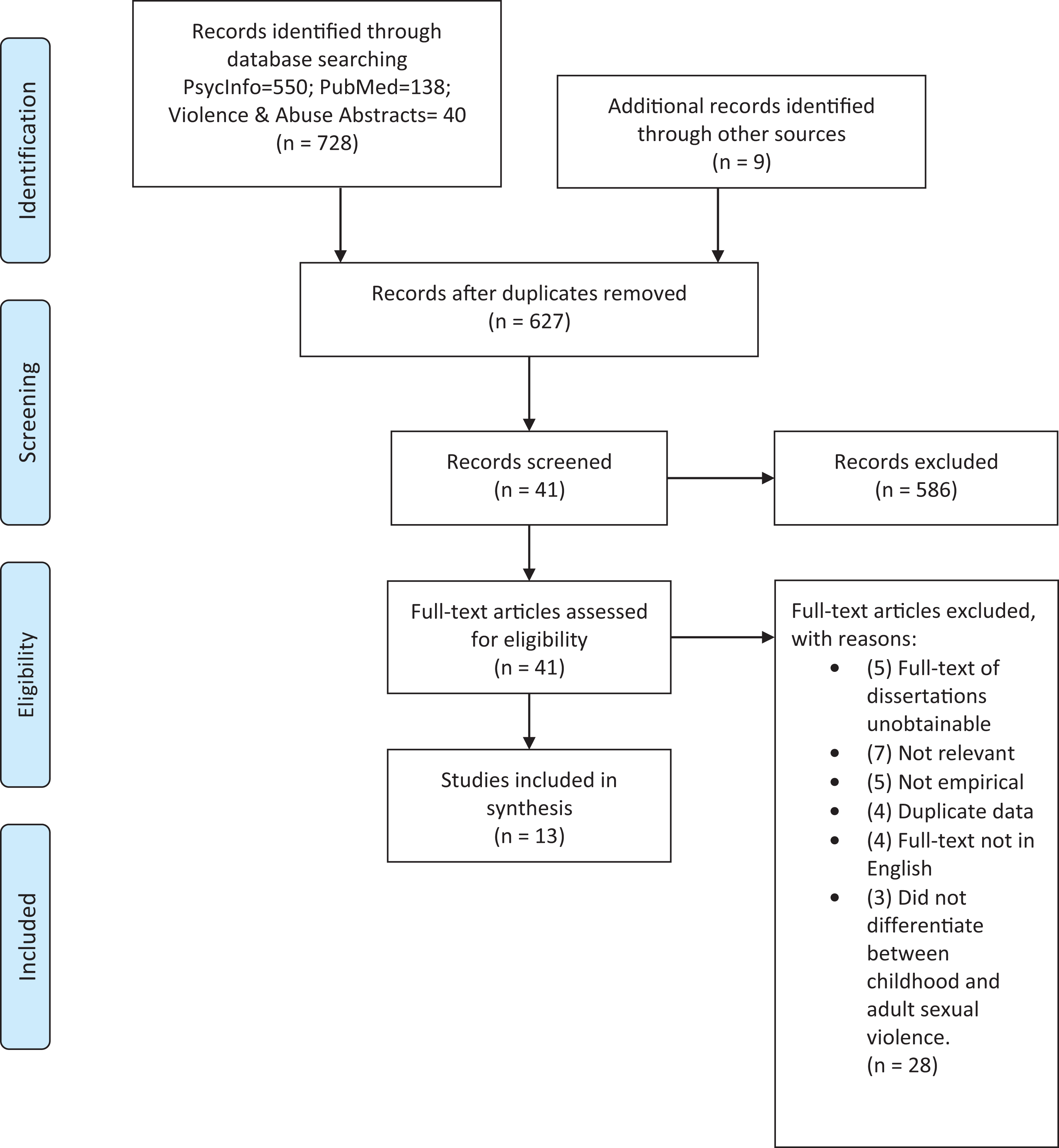
The PRISMA flow diagram.
Results
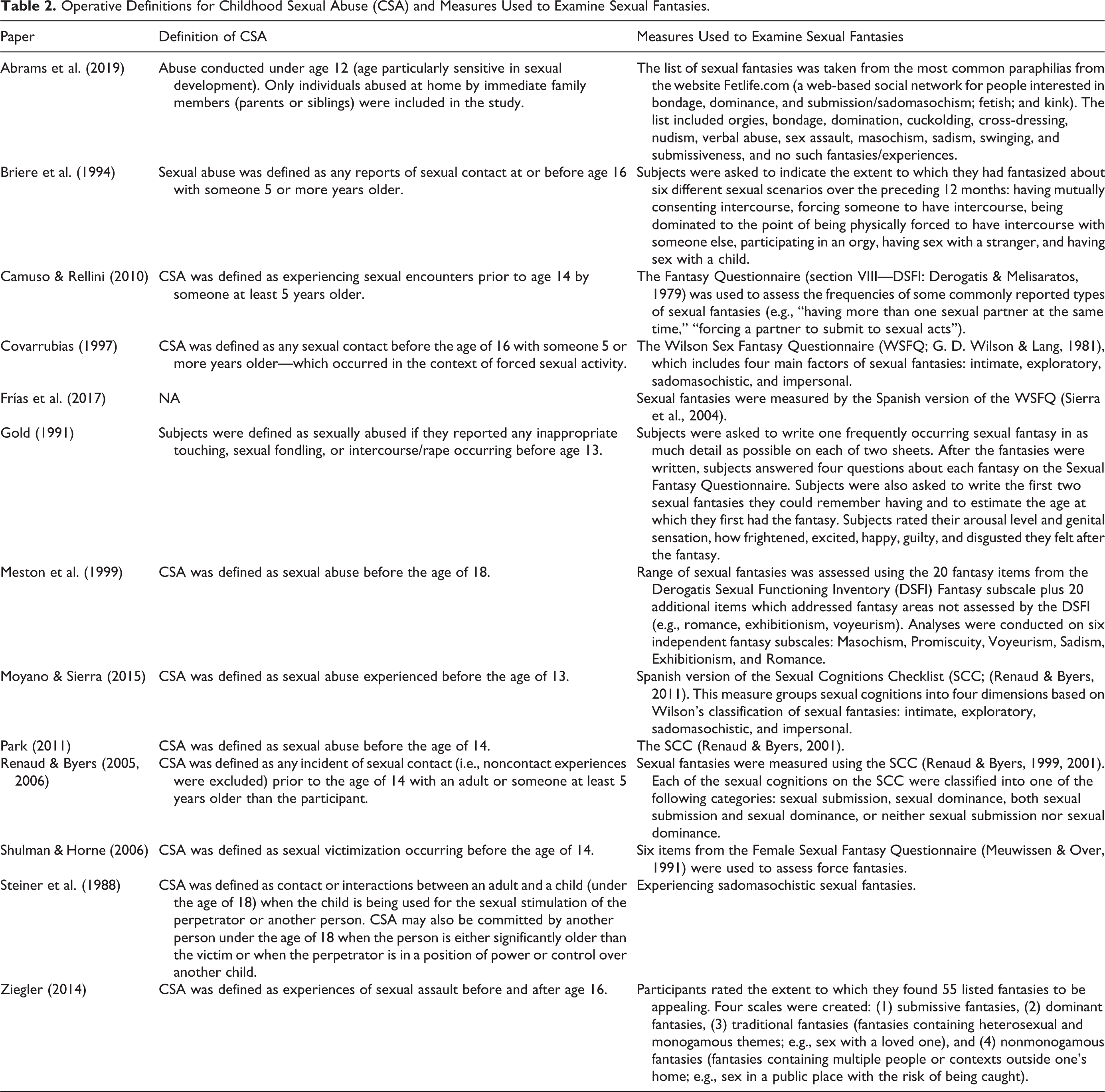
The present review investigated the impact of CSA on adult sexual fantasies. The impact of CSA on adult sexual fantasies was found across three main dimensions: the prevalence of sexual fantasies, their content, and the appraisal of the fantasies. Overall, 13 studies that addressed the sexual fantasies of survivors of CSA were identified. These studies varied in their methodology, as can be seen in Tables 1 to 3, but were all quantitative studies. Table 1 reports a summary of the studies included in the review, the methodology, sample size, setting of the study, country, and the age of participants, Table 2 presents the operative definitions for CSA and measures used to examine sexual fantasies, and Table 3 presents the critical findings.
Summary of Studies Included in the Review.
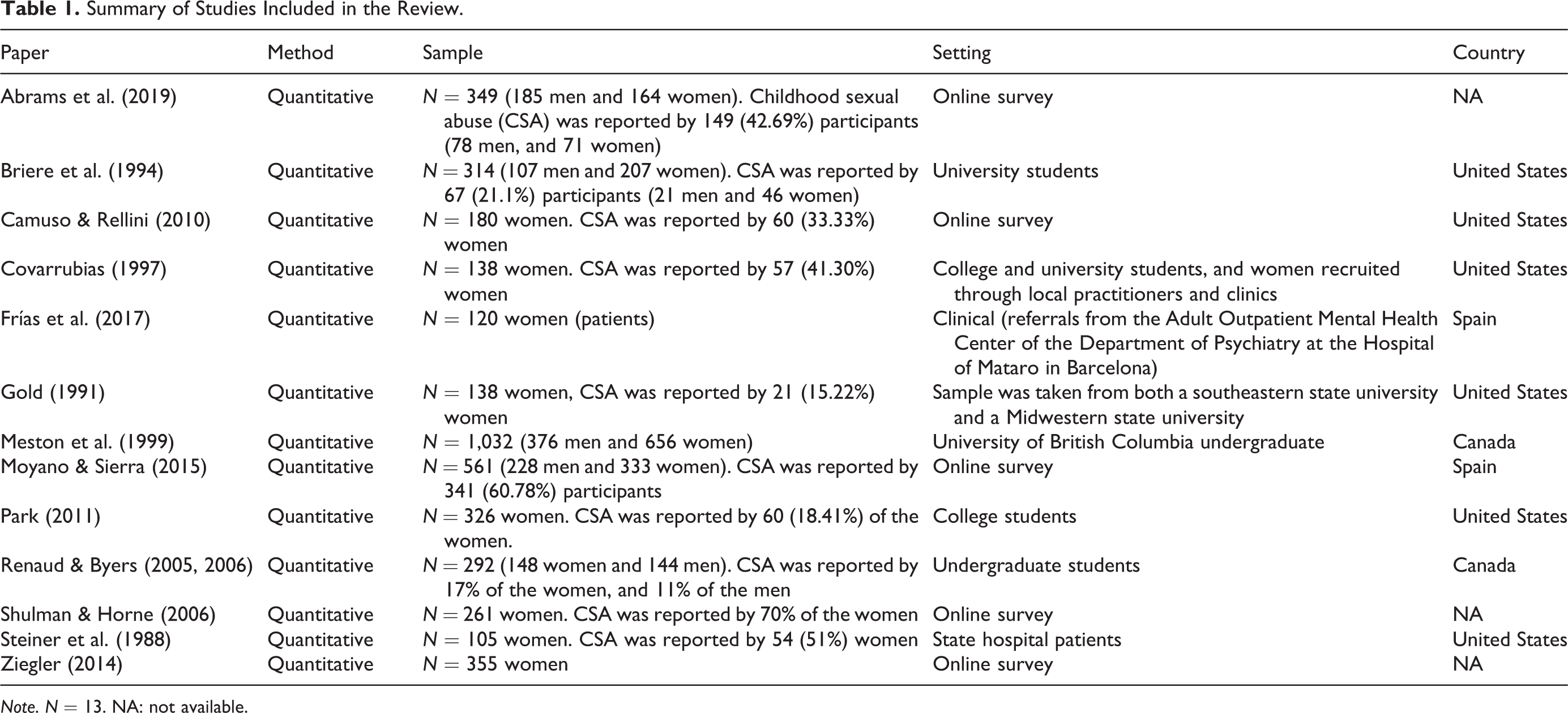
Note. N = 13. NA: not available.
Operative Definitions for Childhood Sexual Abuse (CSA) and Measures Used to Examine Sexual Fantasies.
Critical Findings on Sexual Fantasies Among Childhood Sexual Abuse (CSA) Survivors.
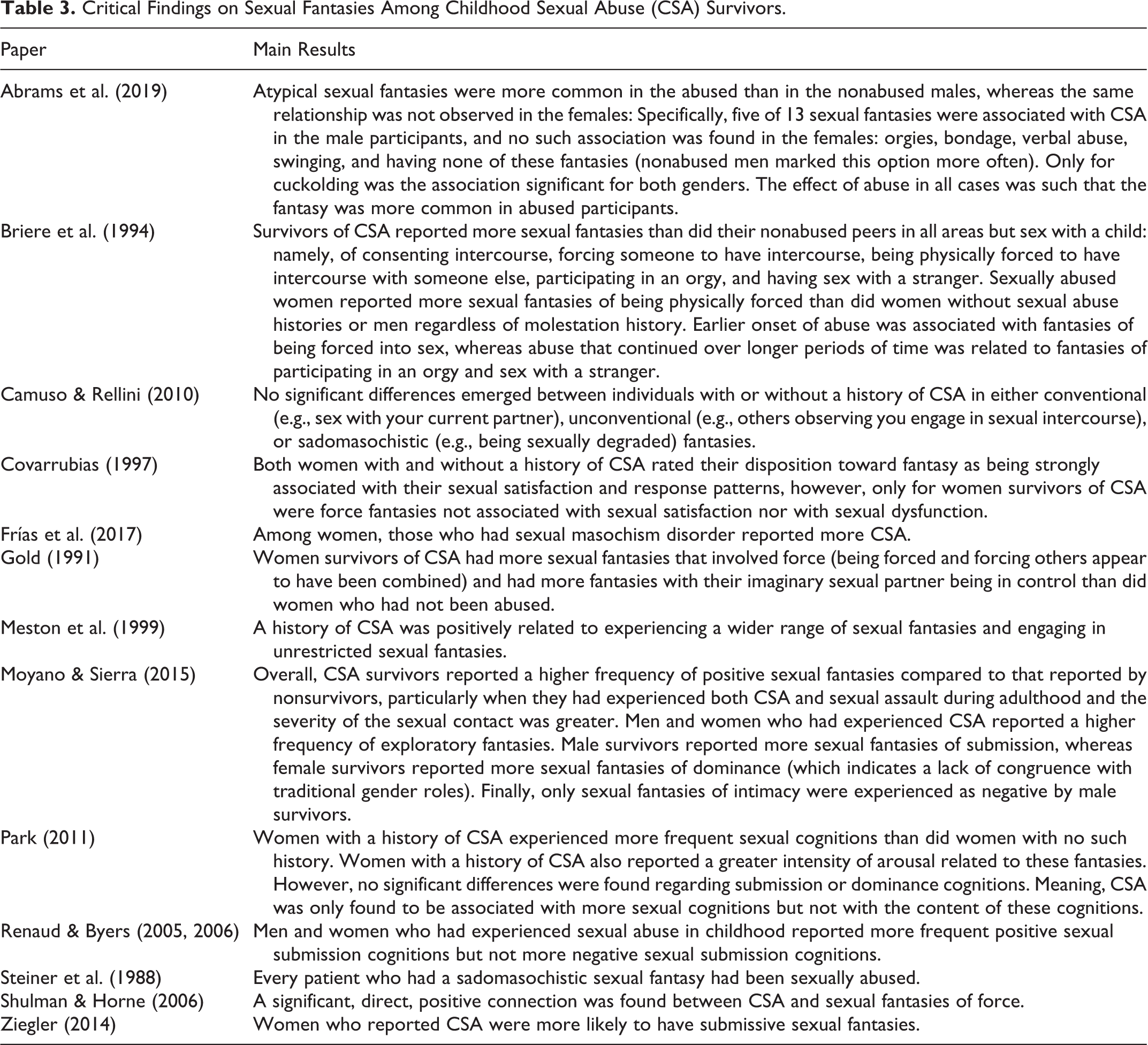
The majority of studies reviewed (n = 11) in the current study indicated that a history of CSA impacted sexual fantasies in adulthood (Abrams et al., 2019; Briere et al., 1994; Covarrubias, 1997; Frías et al., 2017; Gold, 1991; Meston et al., 1999; Moyano & Sierra, 2015; Renaud & Byers, 2005, 2006; Shulman & Horne, 2006; Steiner et al., 1988; Ziegler, 2014). One study conducted among 60 women with a history of CSA and 120 women with no such history reported that a history of CSA had no effect on adult sexual fantasies (Camuso & Rellini, 2010), and one other study (Park, 2011) reported mixed findings, indicating that CSA was only associated with more sexual cognitions but not with the content of these cognitions. Abrams et al. (2019) was the only study to report that CSA was significantly correlated with having no fantasies.
Overall, the studies that found an association between CSA and adult sexual fantasies indicated that survivors of CSA were more likely to report unrestricted sexual fantasies (Meston et al., 1999); higher frequency of exploratory fantasies (Moyano & Sierra, 2015); more atypical sexual fantasies such as orgies, bondage, verbal abuse, swinging, cuckolding, and having sex with a stranger (Abrams et al., 2019; Briere et al., 1994); more sexual fantasies that involved force, such as forcing someone to have intercourse or being physically forced to have intercourse with someone else (Briere et al., 1994; Gold, 1991; Shulman & Horne, 2006); and more fantasies that included elements of BDSM (Frías et al., 2017; Steiner et al., 1988), submissiveness (Moyano & Sierra, 2015; Renaud & Byers, 2005, 2006; Ziegler, 2014), and dominance (Moyano & Sierra, 2015).
Gold (1991) reported that CSA survivors not only experienced more sexual fantasies but that they began having sexual fantasies at a significantly earlier age and reported their sexual fantasies as being significantly more intrusive than did nonabused subjects. This study’s findings correspond with a previous study by Milosevich (1991). In addition, Renaud and Byers (2006) found that sexual fantasies featuring BDSM were often accompanied by negative feelings (such as shame, guilt, and embarrassment) among CSA survivors. Finally, Westerlund (1992) found that more than half of women who were incest survivors reported that sexual fantasies that involved humiliation, force, or pain produced a great deal of guilt or shame.
As for the frequency of sexual fantasies, the studies showed inconclusive results. Whereas some studies indicated that CSA survivors had more frequent sexual fantasies related to specific content (Abrams et al., 2019; Meston et al., 1999), other studies indicated that there was no difference between CSA survivors and nonsurvivors in the frequency of sexual fantasies (Camuso & Rellini, 2010). Gold (1991) found that only one of the four fantasies (being controlled) was more frequent among CSA survivors. By contrast, Moyano and Sierra (2015) found that CSA survivors had in fact a higher frequency of positive sexual cognitions compared to nonvictims.
The question of whether the content of survivors’ sexual fantasies causes them distress or other negative emotions requires further investigation. Due to the methodology used in many of the studies, it was sometimes hard to ascertain whether survivors of CSA who reported having specific sexual fantasies enjoyed theses fantasies or, alternatively, experienced them with a greater frequency but not in a positive manner. One study in the current review (Covarrubias, 1997) indicated that both women who had a history of CSA and women who had no such history had sexual fantasies that involved force. However, only for women survivors of CSA were force fantasies not associated with sexual satisfaction. This finding highlights the importance of how sexual fantasies are experienced by the fantasizer. Sexual fantasies that originate from negative emotions or distress can inhibit survivors’ sexual functioning. However, Covarrubias (1997) suggested that force fantasies that are perceived as enjoyable for survivors may also cause survivors to feel confused or guilty, as if indicating that they enjoyed the experience of the abuse and sexual surrender. These conflicted feelings over force fantasies among CSA survivors inhibit survivors’ sexual function and decrease their sexual satisfaction (Covarrubias, 1997).
The experience of the abuse can also shape how survivors feel about different types of sexual fantasies. For example, although sexual desirability can play a main role in sexual fantasies (Bivona et al., 2012; Leitenberg & Henning, 1995; Renaud & Byers, 2005, 2006), survivors of CSA may fear sexual fantasies that affirm their sexual desirability as they may already feel stigmatized or guilty over their sexuality, and wish to downplay various aspects of their sexuality and attractiveness. Specific sexual fantasies—depending on the different characteristics of both the abuse and the perpetrator—can be especially triggering for some survivors.
Discussion
It has been suggested that sexual fantasies mirror past experiences and are rehearsals for future sexual acts. It is likely that sexual fantasies among CSA survivors reflect the sexualizing effect of the abuse. In fact, it is precisely because the content of sexual fantasies is created in early childhood (Kernberg, 1998), during the stages of psychosexual development, that CSA is believed to have such a significant effect on adult sexual fantasies. This finding may also explain why sexual victimization during adulthood had neither pervasive nor enduring effects on sexual fantasies (Pihlgren et al., 1993).
It has been suggested that BDSM with sexual stimulation is associated with a past of CSA (Briere et al., 1994). Renaud and Byers (2006) found that adults with a history of CSA reported more positive fantasies of sexual submissiveness; however, CSA was unrelated to reports of negative sexual fantasies of sexual submissiveness. The authors suggested that perhaps this finding was the result of some sort of conditioned arousal to one’s own sexual submission rather than a necessarily painful or negative internalization/reenactment of previous abuse. This relationship was reversed for individuals who had experienced sexual abuse as adults; namely, individuals with a history of sexual abuse in adulthood were more likely to report negative cognitions of sexual submission, suggesting that these cognitions are more akin to unpleasant memories and flashbacks. Cumulatively, these findings suggest that CSA may have nuanced effects on one’s sexual development throughout the life course. Although the research on BDSM sexual fantasies among survivors is limited and inconclusive, it is important to note that studies have consistently found that the vast majority of people who practice BDSM do not report a history of CSA (Powls & Davies, 2012).
According to Lehmiller (2018), the BDSM-themed sexual fantasies that are experienced by CSA survivors are not about survivors’ attempts to relive the past; rather, they serve as a mechanism to cope with past abuse. In terms of force fantasies, Lehmiller explained that these types of sexual fantasies may be a way for some survivors of CSA to take control of a previous experience over which they had no control. As the fantasizers, survivors may gain a feeling of empowerment. Sexual fantasies that involve BDSM elements offer survivors a distraction from self-awareness and negative aspects stemming from the abuse (e.g., anxiety, low self-esteem). Lehmiller (2018) also reported that CSA survivors were more likely to engage in both emotional and emotionless sex fantasies. Although this finding might seem contradictory at first, engaging in both emotional and emotionless sex fantasies may reflect survivors’ different coping styles. Whereas some survivors may use sexual fantasies to validate their self-worth, others may use emotionless sex fantasies as a defense mechanism: engaging in sex without the vulnerable aspects that often accompany the sexual act. However, why some survivors use sexual fantasies as a defense mechanism whereas others use sexual fantasies as a route to increase self-worth remains unclear; this aspect is likely to be associated with various person-specific factors (e.g., personality, beliefs/schemas, social support/context). Finally, although Maltz and Boss (1997) agreed that CSA survivors often produce compensatory sexual fantasies with the purpose of detouring the traumatic experience and intensifying sexual excitement, they emphasized the fact that avoiding the trauma or gaining control over the traumatic memories is not always the outcome. Many times, the sexual fantasies do not help a person in avoiding the trauma and, in fact, can lead to the opposite effect of being repeatedly immersed in the trauma.
Survivors of CSA often grapple with the question of how the abuse affected their sexuality, and their narratives reflect a rich variety of ways in which one might move from CSA to laying claim to one’s sexuality (Roller et al., 2009). Having sexual fantasies can also be a source of resilience and recovery for CSA survivors if survivors embrace their sexual selves and fantasies (Hitter et al., 2017). Moyano and Sierra (2015) found that individuals who had experienced sexual abuse appraised their sexual fantasies more positively than did individuals with no history of abuse. For example, men who had experienced CSA reported a higher frequency of positive cognitions of sexual submission, and women who had experienced CSA reported more positive cognitions of sexual dominance. These findings are in contrast with traditional gender roles and sexual selection in which men tend to have more fantasies related to dominance, and women have more fantasies related to submission, suggesting that not only might the abuse play a significant role in shaping the survivor’s sexual fantasies but also that these fantasies are wanted and experienced as positive. It can cautiously be suggested that these fantasies replay or repair past experience and as such might have the potential to facilitate growth and healing for the survivor.
This study had a few limitations. First, reports regarding the effects of CSA on survivor’s sexual fantasies are often based on case studies and descriptive clinical reports (e.g., Faries, 1997; J. E. Wilson & Wilson, 2008) and are limited by small sample sizes and lack of ethnic diversity. The majority of studies (more than half) were conducted in the United States and Canada and only surveyed women. Also, some studies did not address the religion of participants, nor their sexual or gender identity. Studies that did survey these aspects indicated having a majority of heterosexual participants (e.g., Meston et al., 1999) or a sample of only heterosexual participants (e.g., Moyano & Sierra, 2015; Renaud & Byers, 2005, 2006). As the content of sexual fantasies, as well as the appraisal of these fantasies, can often be influenced by stereotypical gender roles and culture (Tortora et al., 2020), it is extremely important to investigate the relation between CSA and adult sexual fantasies among a diverse sample.
Based on the self-report nature of the studies reviewed, we cannot fully determine the impact of CSA on survivors’ sexual fantasies. It is also difficult to interpret the reviewed findings in the absence of more comparisons between the sexual fantasies of CSA survivors versus nonsurvivors. Research on CSA is complicated by inconsistencies in the operationalization and definition of this experience (e.g., age cutoff, range of experiences). As such, the studies in the present review also vary significantly, making it difficult to answer our research question. In addition, many relevant and important factors must be taken into account in order to precisely identify the impact of CSA on sexual fantasies, such as the act conducted, the age of the child, the gender of the perpetrator, the duration of the abuse, and the level of fear experienced by the child. Sexual fantasies also exist across a wide spectrum and can include endless images and impressions. Thus, it may be impossible to capture every sexual fantasy in a survivor’s repertoire. That said, the wide range of measures for sexual fantasies and the multiple approaches to studying the different areas of sexual fantasies might also have made answering our research question more difficult. Finally, it is important to emphasize that in the majority of the studies, survivors did not report that their sexual fantasies aligned with their victimization experiences; rather, an association was made by the researchers. In other words, the survivors themselves did not say that their sexual fantasies were developed as a result of their traumatic history. Further research should inquire as to whether survivors think their sexual fantasies mirror the content of their abusive experiences. The research on survivors’ sexual fantasies is scarce, and the majority of research on this topic has been conducted using quantitative approaches. Quantitative measures offer only a limited number of fantasies to be assessed. In a qualitative study, survivors can voice and discuss their sexual fantasies rather than rank their level of agreement or disagreement with different statements about their sexual fantasies. Asking survivors about their sexual fantasies offers an opportunity to gain insights on the topic of sexual fantasies from the viewpoint of survivors, understand how survivors view the connection between the sexual fantasies and the abuse, and would enable survivors to create their own narratives in this matter.
Although the current review supports the association between CSA and sexual fantasies, the majority of the studies did not address the primary and most critical question regarding this association: Are the sexual fantasies experienced by CSA survivors wanted or unwanted? Undesirable fantasies can relate to both the emergence of fantasies (not wanting to fantasize) and their content (not wanting the fantasy). Further research is required to understand how different sexual fantasies are perceived by survivors: Are the fantasies distressing for survivors, and what are the emotions related to the different fantasies? It may also be helpful to examine whether sexual fantasies accompanied by distress and negative emotions have a mediating role in survivors’ sexual difficulties.
In addition, the current review suggests that the mechanism explaining the relationship between CSA and sexual fantasies is still unclear. Future research could address how CSA impacts survivors’ sexual fantasies, the use of sexual fantasies by survivors, and the possible effects of different sexual fantasies. For example, do sexual fantasies reflect past abuse or current sexual needs? Are sexual fantasies used by survivors as a coping strategy to increase sexual function or do they inhibit sexual function? Are sexual fantasies experienced by CSA survivors as intrusive or do they embrace these fantasies? Are sexual fantasies accompanied by feelings of guilt and shame? Do they trigger images of past abuse? Are they experienced with levels of dissociation? Also, it is important to further understand how specific sexual fantasies are facilitated within a dyadic context. Do survivors of CSA share their sexual fantasies with their partners? Do partners of CSA survivors often take on the roles given to them or do they feel reluctant to do so? Do partners of CSA survivors fear to feed into specific sexual fantasies of them as perpetrators? Other areas needing investigation include therapists’ openness to discussing sexual fantasies with patients who report CSA and sex therapists’ openness to discussing previous sexual victimization.
Conclusion
The current review confirms the impact of CSA on adult sexual fantasies across three main dimensions: the prevalence of sexual fantasies, their content, and the appraisal of the fantasies. In terms of prevalence, studies indicate that CSA survivors experience more sexual fantasies and begin having sexual fantasies at a significantly earlier age than do nonsurvivors. In terms of the content, studies indicate that survivors of CSA are more likely to report unrestricted, exploratory, and atypical sexual fantasies as well as more sexual fantasies that involve force and elements of BDSM. Although the present review sheds some light on adult sexual fantasies of CSA survivors, there is still remarkably little data on this subject. Further studies with adult survivors of CSA are needed in order to determine how these sexual fantasies develop in the aftermath of the abuse, how they are perceived by survivors, and what their effect is on survivors’ and their partners’ sexual health, function, and satisfaction.
Implications for Practice, Policy, and Research
Research focusing on the impact of CSA on survivor’s sexual fantasies is limited.
Scarcity of studies in this area may reflect the taboo or a broader tendency to understudy sexual-related topics among CSA.
It is important to measure sexual fantasies from both a qualitative and quantitative approach. The sexual fantasies of CSA survivors were not examined from a qualitative perspective.
Improving the state of knowledge on sexual fantasies after CSA is important to facilitate ways to conduct examinations and to develop prevention programs and therapeutic approaches.
Analyzing the different types of sexual fantasies can enhance understanding of the most distressing and prevalent fantasies experienced by survivors of CSA.
When treating CSA survivors, therapists should acknowledge that a history of CSA can impact the extent and content of survivor’s sexual fantasies. Thus, exploring, normalizing, and possibly gaining control over sexual fantasies should be one of the goals of treatment.
As survivors of CSA frequently arrive in treatment with an adversarial attitude toward their own fantasies, the therapist has an important role in legitimizing and validating the survivor’s sexual fantasies.
To facilitate the healing process, it is the therapist’s responsibility to allow survivors a transitional safe space in which to fantasize, explore, and express the deepest and most private fantasies.
As sexual fantasies reflect early experiences, they may provide crucial information about the survivor’s relationships with significant adults at earlier developmental stages.
Therapists and future research may also want to examine how the sexual fantasies are experienced by the survivors (e.g., acceptable, enjoyable, distressing). If the sexual fantasies trigger any traumatic memories of the past abuse (e.g., person or situation) or evoke negative emotions (e.g., embarrassment, shame, guilt), they should be addressed in therapy.
Sexual fantasies can be used in therapy as part of the survivor’s journey of healing, as a form of reconstruction of or compensation for past experiences. If appropriately guided, the survivor can use these fantasies as a safe and secure way to return to familiar places and reconstruct the experience, or alternatively, engage in compensating fantasies of power and control. Replaying different fantasies via the use of one’s imagination may minimize some of the challenges in sexual relationships and can reduce feelings of embarrassment, surprise, and shame.
Supplemental Material
Supplemental Material, sj-pdf-1-tva-10.1177_15248380211030487 - The Sexual Fantasies of Childhood Sexual Abuse Survivors: A Rapid Review
Supplemental Material, sj-pdf-1-tva-10.1177_15248380211030487 for The Sexual Fantasies of Childhood Sexual Abuse Survivors: A Rapid Review by Ateret Gewirtz-Meydan and Eugenia Opuda in Trauma, Violence, & Abuse
Footnotes
Declaration of Conflicting Interests
The author(s) declared no potential conflicts of interest with respect to the research, authorship, and/or publication of this article.
Funding
The author(s) received no financial support for the research, authorship, and/or publication of this article.

Supplemental Material
The supplemental material for this article is available online.
References
Supplementary Material
Please find the following supplemental material available below.
For Open Access articles published under a Creative Commons License, all supplemental material carries the same license as the article it is associated with.
For non-Open Access articles published, all supplemental material carries a non-exclusive license, and permission requests for re-use of supplemental material or any part of supplemental material shall be sent directly to the copyright owner as specified in the copyright notice associated with the article.
