







Abstract
Background:
This systematic review aims to estimate the extent to which childhood maltreatment influences self-compassion in later life.
Method:
Four English databases (Web of Science, PsycINFO, PubMed, and PsycARTICLES) and three Chinese databases (China National Knowledge Infrastructure, Wanfang, and Weipu) were systematically searched. We extracted data related to the associations between child maltreatment and self-compassion and pooled them using random effect models.
Findings:
A total of 20 eligible studies were included involving 6,877 participants in the analyses. Overall child maltreatment was negatively related to self-compassion (r = −.28, p < .001); emotional abuse and neglect were negatively related to self-compassion (r = −.28, p < .01; r = −.31, p < .01, respectively) at a moderate level; and physical abuse, sexual abuse, and physical neglect were negatively related to self-compassion (r = −.12, p < .01; r = −.10, p < .01; and r = −.22, p < .001, respectively) at a small level.
Conclusion:
The results indicate that overall and subtypes of maltreatment are associated with decreased self-compassion, and child intervention programs focused on self-compassion should be designed to protect the well-being of individuals with a history of childhood maltreatment.
Childhood maltreatment has been recognized as a global public health concern and is a major challenge faced by child welfare systems across the world. Child maltreatment is a common form of violence against children perpetrated by a parent or caregiver, which usually includes both abuse (physical, emotional, and sexual abuse) and neglect (physical and emotional neglect; Bernstein et al., 2003). It is estimated that approximately 60% of children worldwide aged 2–14 experience regular physical punishment, and 70% of them suffer from psychological aggression by caregivers (United Nations, 2014). In developed countries, a meta-analysis revealed the prevalence of the various types of maltreatment: 22.6% for physical abuse, 36.3% for emotional abuse, 12.7% for sexual abuse, 16.3% for physical neglect, and 18.5% for emotional neglect, respectively (Stoltenborgh et al., 2015). Child maltreatment has resulted in heavy economic and health burdens to countries of all types: high income, middle income, and low income (Fang et al., 2015; Gilbert et al., 2009). Thus, there is an urgent need to develop effective and evidence-based programs to prevent and intervene in child maltreatment across countries.
Child abuse and neglect can have an adverse impact on children’s health and well-being over the course of their life (Jardim et al., 2018; Minh et al., 2013). For instance, the morbidity, disability, and mortality in later life caused by child abuse and neglect have been well-documented (Shonkoff et al., 2009). Additionally, studies have found that child maltreatment is a strong predictor of a low quality of life (Weber et al., 2016), and a risk factor for depression, substance abuse, and suicide attempts in adulthood (Klumparendt et al., 2019; Mandelli et al., 2015, for a systematic review). The impairment of childhood maltreatment on well-being during childhood and adulthood has been established in both general populations and clinical samples (Cohen et al., 2017; Huh et al., 2017), and its influence has been investigated in different countries and cultures (Fang et al., 2015; Wu et al., 2018).
The pathways from childhood maltreatment to poor mental health (e.g., depression and post-traumatic stress disorder) and behavioral problems (e.g., substance use and nonsuicidal self-injury) have been disproportionately studied from the perspective of psychopathological process, including negative cognition and emotion (Gibb et al., 2007; Shenk et al., 2010). Specifically, previous studies have shown that children with a history of maltreatment tend to develop maladaptive schemas and negative attribution styles, which further predicted adulthood depression or other mental health problems (Hankin, 2005; Wright et al., 2009). However, recently, positive processes in the linkage between childhood maltreatment and mental health problems have emerged. Self-compassion, in particular, is considered an important protective factor of well-being, after children experience caregivers’ abuse and neglect (Gilbert, 2005). It may be one mechanism that underlies resilience, following exposure to maltreatment during childhood, and promotes effective emotion regulation (Scoglio et al., 2018).
Self-compassion is an important self-regulatory strategy to cope with personal pain, failure, inadequacies, or difficulties by acknowledging uncomfortable feelings (Neff, 2003). It is conceptualized by three opposite components: (a) the tendency to be kind, caring, and understanding toward oneself in the context of pain or failure (e.g., “When I am going through a very hard time, I give myself the caring and tenderness I need”), instead of being harshly self-critical and blaming oneself; (b) the ability to recognize that mistakes, failure, or hardships are a part of the common human experience (e.g., “When I’m down and out, I remind myself that there are lots of other people in the world feeling like I am”) in contrast to feelings of isolation; and (c) the ability to keep a stance of equanimity toward difficult experiences and painful thoughts and feelings (e.g., “When something painful happens, I try to take a balanced view of the situation”) rather than over-identifying with such difficulties (Van Dam et al., 2011). Individuals who are compassionate toward themselves can mitigate the harmful effects of self-critical thinking during depressive moods, giving them alternatives to suicidal behavior (Luoma & Villatte, 2012; Neff & McGehee, 2010; Raes, 2011).
Theory and empirical literature provide some insights into how exposure to childhood maltreatment can affect a survivor’s ability to be self-compassionate in the future. Specifically, according to attachment theory, the seeds of self-compassion are planted in the early child–caregiver relationship (Gilbert & Procter, 2006; Ross et al., 2019). Secure child–parent attachments foster emotional security, calmness, and a sense of well-being within children, and these experiences gradually inform the ways in which children see and treat themselves (Bowlby, 1988; Raque-Bogdan et al., 2011). In other words, children are more likely to learn how to treat themselves by observing and modeling their parents’ behavior (Neff & McGehee, 2010). If caregivers are supportive and nurturing, children may learn to treat themselves in a similar manner. Conversely, abused or neglected children are deprived of feelings of safety and reassurance by caregivers, which increase their sensitivity to threat and inhibit the development of self-compassion (Gilbert, 2014; Gilbert & Procter, 2006). Therefore, it is not surprising that children with a history of maltreatment report low levels of self-compassion during adulthood as revealed in previous studies (Miron et al., 2014; Miron et al., 2016; Neff & McGehee, 2010; Tanaka et al., 2011; Vettese et al., 2011).
Identifying the association between various types of child maltreatment and self-compassion is important for social service professionals to understand the harmful impact of maltreatment and to develop appropriate preventive and intervention strategies. To the best of our knowledge, there is no published meta-analysis on the effects of child maltreatment on self-compassion, although accumulative evidence has recently emerged in this area. Thus, we aim to conduct a systematic review and meta-analysis to reveal this association. The purpose of this study is to synthesize previous findings on different types of maltreatment in childhood and subsequent self-compassion. Without a comprehensive understanding of the influence of specific maltreatment subtypes on self-compassion of previously maltreated children, it would be difficult to invest fully in efforts to target and improve self-compassion in this population.
Method
The literature search was performed according to the guidelines of the Preferred Reporting Items for Systematic Reviews and Meta-Analyses.
Search Strategy
A comprehensive literature search was conducted using four English databases (Web of Science, PsycINFO, PubMed, and PsycARTICLES) and three Chinese databases (China National Knowledge Infrastructure, Wanfang, and Weipu) from their inceptions to May 31, 2021. The following search terms and search algorithms were used in both English and Chinese data sets: (child* maltreatment OR child* abuse OR child* neglect OR child* trauma OR child* mistreatment OR child* violence OR child* physical abuse OR child* sexual abuse OR child* emotional abuse OR child* physical neglect OR child* emotional neglect) AND (self-compassion). Two researchers independently reviewed the titles and abstracts, deleted the duplicates, and read the full text to select eligible studies.
Inclusion and Exclusion Criteria
This meta-analysis included studies that met the following criteria: (1) original quantitative research; (2) some or all samples experienced child maltreatment, such as physical abuse, emotional abuse, sexual abuse, emotional neglect, or physical neglect; (3) child maltreatment and self-compassion assessed using reliable and valid measurement tools; and (4) the association between child maltreatment and self-compassion was presented using any form of data (e.g., correlation coefficient, regression coefficient, or t test value).
A study was excluded if it (1) was not quantitative research, (2) was not in English or Chinese, (3) used an overlapping sample, (4) did not focus on child maltreatment, (5) did not use a Self-Compassion Scale (SCS), or (6) did not present enough information about the relationship between child maltreatment and self-compassion.
Data Extraction
From all eligible articles, we extracted the following data using a standardized form: (1) authors and publication year of the study; (2) sample characteristics including sample size, study region, response rate or usable return rate, age (mean and standard deviations), and percentage of female participants; (3) method characteristics including study design (cross-sectional or longitudinal), sampling methods (probability sampling or not), report category (parents or children), measurement tool of child maltreatment (e, g, Childhood Trauma Questionnaire [CTQ]; Adverse Childhood Experience [ACE] Questionnaire; Child Abuse Trauma [CAT] Scale), and measurement of self-compassion (SCS or Self-Compassion Scale–Short Form [SCS-SF]); (4) data characteristics of the two core variables, including the score of the scales (mean and standard deviations) and the effect sizes (correlation coefficients, regression coefficients, or t-test values) of the relationship between child maltreatment and self-compassion.
Quality Assessment
The quality of each eligible article was assessed on the basis of a checklist of a five-item (Chen et al., 2019): (1) The research question was clearly stated; (2) the study reported its sampling procedure; (3) the response rate of the study was higher than 60%; (4) the study defined child maltreatment and self-compassion; and (5) the associations between child maltreatment and self-compassion were presented objectively. Scores of each item ranged from 0 to 1, depending on whether the criterion was met. The total quality score ranged from 0 to 5 based on the mean scores of two researchers who evaluated each item independently. If the score was higher than three points, the quality of the article was considered high.
Statistical Analysis
Calculation of effect sizes
To calculate the effect size for each study, Fisher’s-Zr was calculated from bivariate correlation coefficients (Lipsey & Wilson, 2001), defined as follow:
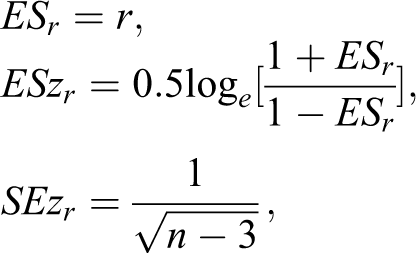
where ris the correlation coefficient and
Heterogeneity
Heterogeneity examines whether the effect size is heterogeneous to determine whether the meta-analysis should be based on a fixed effect model or a random effect model. Q and I 2 statistic were calculated for each pooled estimate to determine the heterogeneity. The Q statistic is a test based on overall variation, assuming that the effect size is a χ2 distribution; if p < .05, it indicates that the study is heterogeneous. The I 2 statistic is the proportion of the observed variance that reflects variance in true effect sizes. I 2 values <25%, <50%, and ≥75% represent low, moderate, and high levels of heterogeneity, respectively (Higgins et al., 2003).
Publication bias
Publication bias is a nonrandom omission, which means that the studies included in the meta-analysis cannot systematically and comprehensively represent the totality of research in the field (Wolfgang, 2007). Its direct and most serious impact is that it will be overestimated, causing the meta-analysis to reach wrong conclusions. Publication bias has been estimated using several methods such as classic fail-safe N, funnel plot, and the trill and fill method. The classic fail-safe N calculates the number of potential unpublished studies with insignificant findings that would be needed to reduce the pooled effect size in the meta-analysis below the level of significance (Cui & Liu, 2020). In accordance with the established principles, selective publication bias exists when the fail-safe N is less than five times the number of published studies plus 10 (Rosenthal, 1979). A funnel plot is also a common method to identify publication bias in meta-analysis, which is expected to be symmetrical. A funnel plot is asymmetric if larger studies with nonsignificant results or with an effect size in the nonhypothesized direction are published (Sterne & Egger, 2001). The trim and fill method impute the missing effect sizes to fill in asymmetrical areas of the funnel plot and then recalculate the overall effect size to test publication bias (Duval & Tweedie, 2000). If the combined effect size estimate does not change much compared with the previous outcome, it indicates that the influence of publication bias is not large and the result is relatively credible (Steichen, 2001).
Sensitivity analysis
The influence analyses were conducted to examine the impacts of any one study on the total effect size, which aimed to test the robustness of the study findings (Steichen, 2001). Specifically, all analyses were rerun after deleting each study, one by one. If the point estimates of the combined effect sizes fell outside the 95% CI of the total effect size, or the combined effect sizes were significantly different from the total effect size, it meant that the findings were not robust.
STATA Version 15.0 was used to perform the meta-analysis, and the significance level was set at 0.05 (two-tailed).
Results
Study Selection
A total of 1,461 articles identified through the literature search were imported into Endnote X9, and 106 duplicates were automatically removed. The titles and abstracts of 1,355 articles were screened and 1,301 articles were excluded. The remaining 54 articles were assessed based on the full text, and 34 articles were excluded based on the inclusion and exclusion criteria. Finally, 20 eligible articles were included in this meta-analysis. The PRISMA flow diagram is presented in Figure 1.
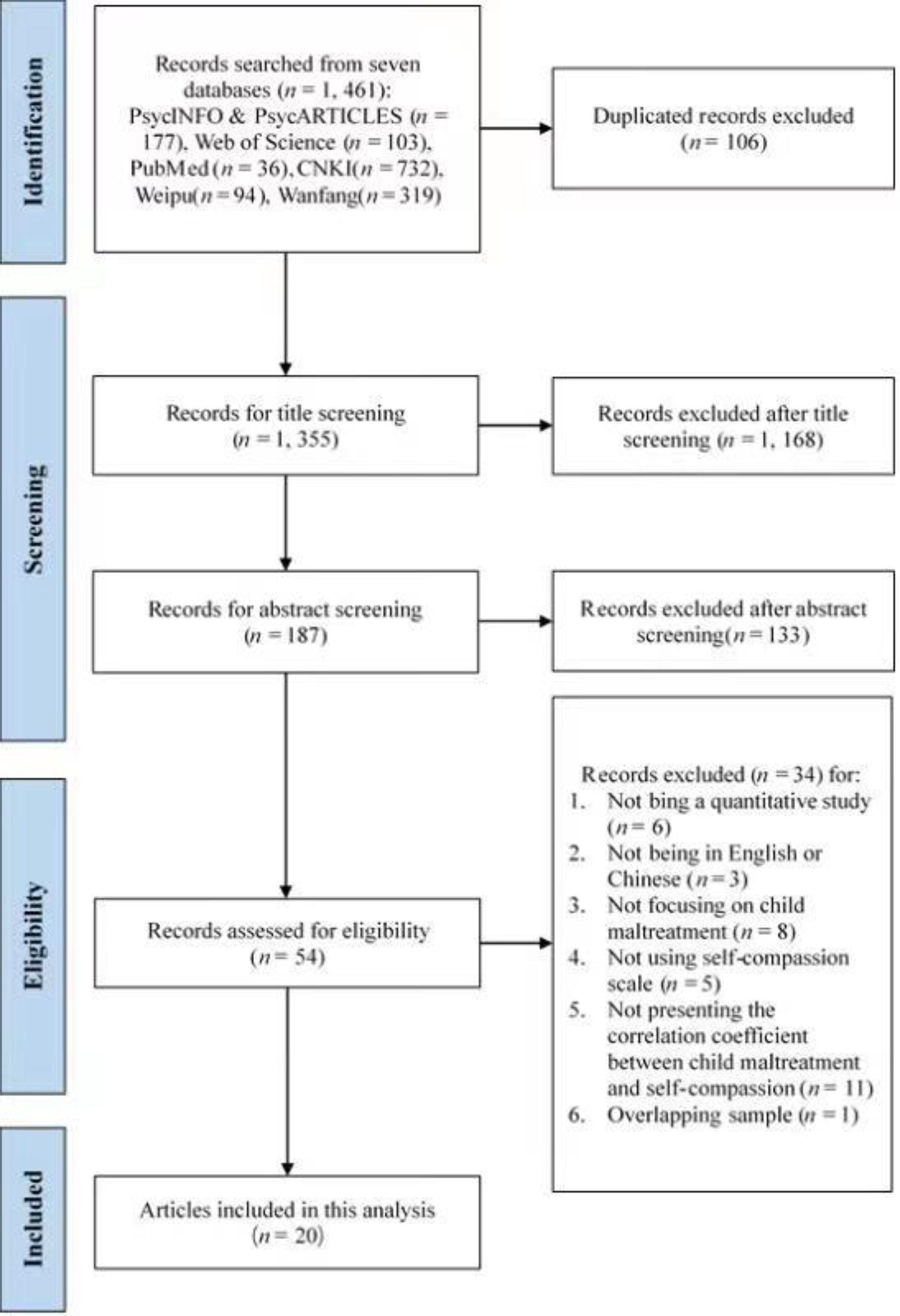
PRISMA flow diagram. Note. CNKI = China National Knowledge Infrastructure; Wanfang = Wanfang Data Knowledge Service Platform; Weipu =VIP Chinese Journal Service Platform.
Study Characteristics
Study characteristics of the 20 studies are summarized in Table 1. These studies were conducted among 6,877 participants with an average mean age of 19.04 years; 67.42% were females, and the participants were from seven countries on three continents (Asia: k = 7; Europe: k = 2; Americas: k =11). Among the 20 studies, 18 were journal articles, and two were articles; 18 were written in English, and two in Chinese.
Summary of Study Characteristics.
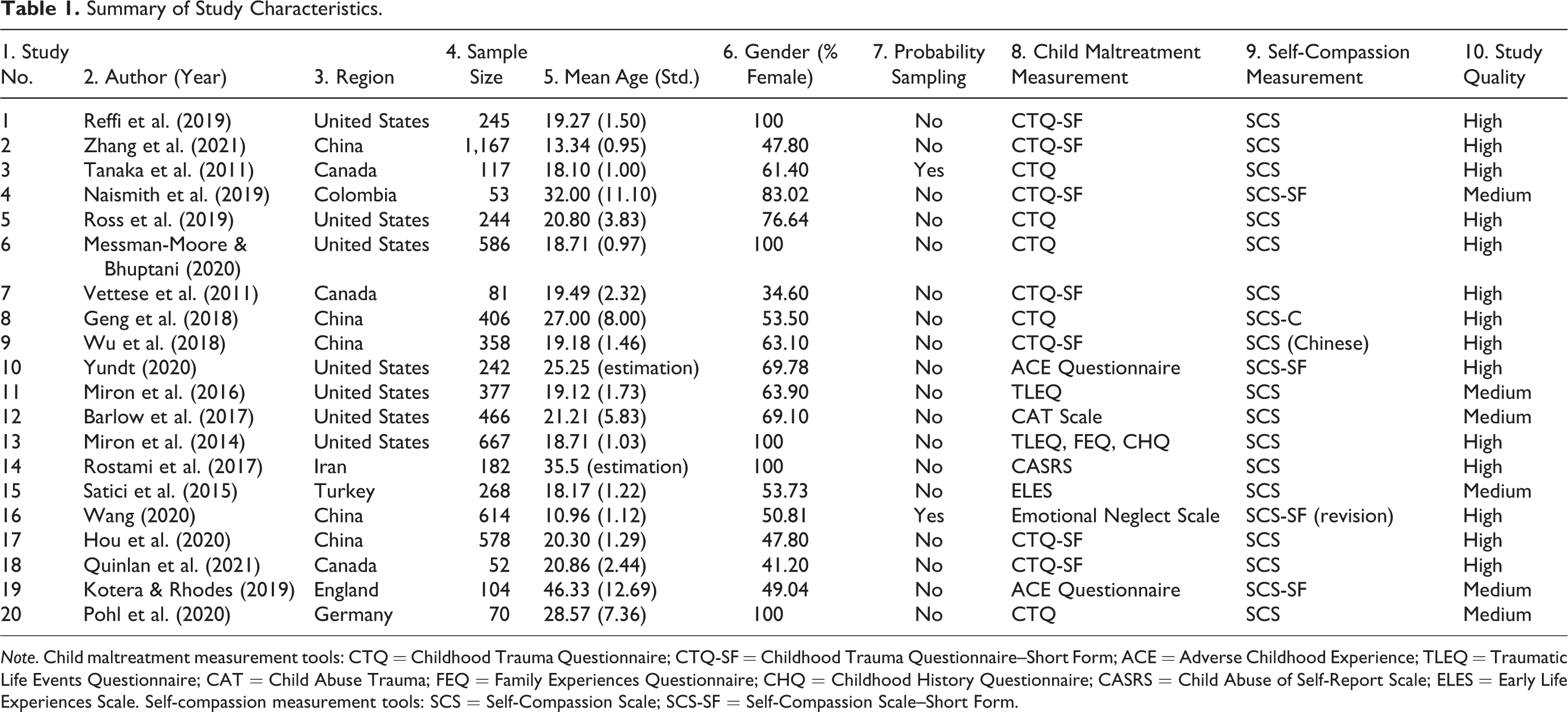
Note. Child maltreatment measurement tools: CTQ = Childhood Trauma Questionnaire; CTQ-SF = Childhood Trauma Questionnaire–Short Form; ACE = Adverse Childhood Experience; TLEQ = Traumatic Life Events Questionnaire; CAT = Child Abuse Trauma; FEQ = Family Experiences Questionnaire; CHQ = Childhood History Questionnaire; CASRS = Child Abuse of Self-Report Scale; ELES = Early Life Experiences Scale. Self-compassion measurement tools: SCS = Self-Compassion Scale; SCS-SF = Self-Compassion Scale–Short Form.
The minimum sample size was 70 and the maximum was 1,167. The sample sizes of 10 studies ranged from 200 to 600, those of seven were less than 200, and those of three were more than 600. For participant type, two studies were about children, while 18 studies were about adolescents and adults. Among the latter, eight involved university students, and six were for specific groups, such as high-risk adolescents, adolescents receiving child protection services, patients with a personality disorder or schizophrenia, or substance users. In terms of gender, the participants of five studies were only female, while those of the other 15 studies were both male and female.
All studies were cross-sectional, but only two studies adopted probability sampling. Additionally, two studies set up control groups. Regarding the measurement tools, 12 studies used the CTQ or Childhood Trauma Questionnaire–Short Form (CTQ-SF) to measure child maltreatment. The remaining eight studies used other tools, such as the ACE Questionnaire, CAT Scale, (Child Abuse Self-Report Scale [CASRS]), Traumatic Life Events Questionnaire (TLEQ), and Early Life Experiences Scale (ELES). All studies measured self-compassion using the SCS or SCS-SF.
They also showed the relationship between child maltreatment and self-compassion by correlation coefficient or t test value. The 20 studies included in the analysis presented the associations between overall child maltreatment and self-compassion (k = 11), physical abuse and self-compassion (k = 8), emotional abuse and self-compassion (k = 9), sexual abuse and self-compassion (k = 9), emotional neglect and self-compassion (k = 8), and physical neglect and self-compassion (k = 7). Two studies analyzed the relationships between general child maltreatment and six dimensions of self-compassion (k = 1), and five types of child maltreatment and six dimensions of self-compassion (k = 1), respectively. With regard to quality, 14 studies were classified as high quality and the other six as medium.
All studies used child maltreatment as the independent variable, while self-compassion was treated as a dependent (k = 6), mediating or moderating variable (k = 14).
The Effects of Child Maltreatment on Self-Compassion
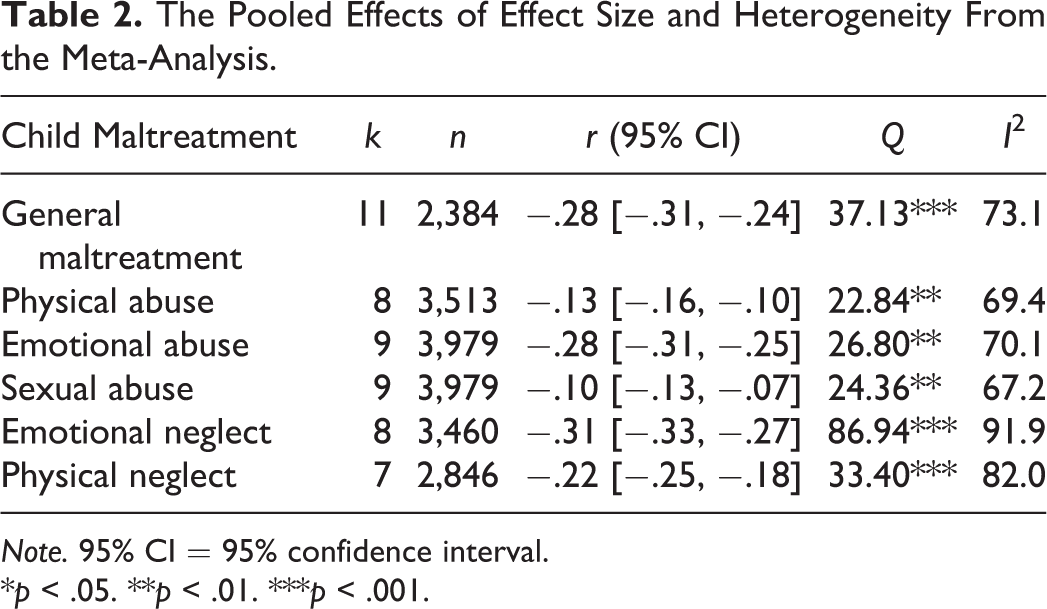
The results presented in Table 2 show that the Q statistics of relationships between different types of child maltreatment and self-compassion were statistically significant (p < .05), and I 2 statistics also exceeded 50% (two of six exceeded 75%), implying that heterogeneity of the meta-analysis. Thus, we chose the random effect model for the statistical analysis.
The Pooled Effects of Effect Size and Heterogeneity From the Meta-Analysis.
Note. 95% CI = 95% confidence interval.
*p < .05. **p < .01. ***p < .001.
In general, there were significant negative correlations between the different types of child maltreatment and self-compassion (see Table 2). In other words, the experience of maltreatment in childhood significantly suggested a lower level of self-compassion in later life. According to the consensus standard, r values of .1, .25, and .4 represent a low, moderate, and high level of correlations, respectively (Wilson & Lipsey, 2001). Further analyses show that among all the studies, the effect size of the relationship between emotional abuse, emotional neglect, and self-compassion was larger than for the other subtypes of maltreatment. Overall maltreatment, emotional abuse, and emotional neglect were moderately correlated to self-compassion.
Specifically, the analysis yielded the following results: (1) Among all the studies that examined the relationships between overall maltreatment and self-compassion, all but one study reported negative correlations, and the pooled estimate was r = −.28 (95% CI [−0.32, −0.24]; see Figure 2A). (2) All studies that focused on physical abuse and self-compassion reported negative relationships, and the pooled estimate was r = −.13 (95% CI [−0.16, −0.10]; see Figure 2B). (3) All studies that examined the relationship between emotional abuse and self-compassion reported negative correlations, and the pooled estimate was r = −.28 (95% CI [−0.31, −0.25]; see Figure 2C). (4) The majority of studies on sexual abuse and self-compassion reported that abused children had lower self-compassion, except for one study reporting no correlation), the pooled estimate was r = −.10 (95% CI [−0.34, −0.28]; see Figure 2D). (5) All studies reported negative correlations between emotional neglect and self-compassion, and the pooled estimate was r = −.31 (95% CI [−0.34, −0.28]; see Figure 2E). (6) Among all studies, the associations of physical neglect and self-compassion were negative, and the pooled estimate was r = −.22 (95% CI [−0.26, −0.19]; see Figure 2F).
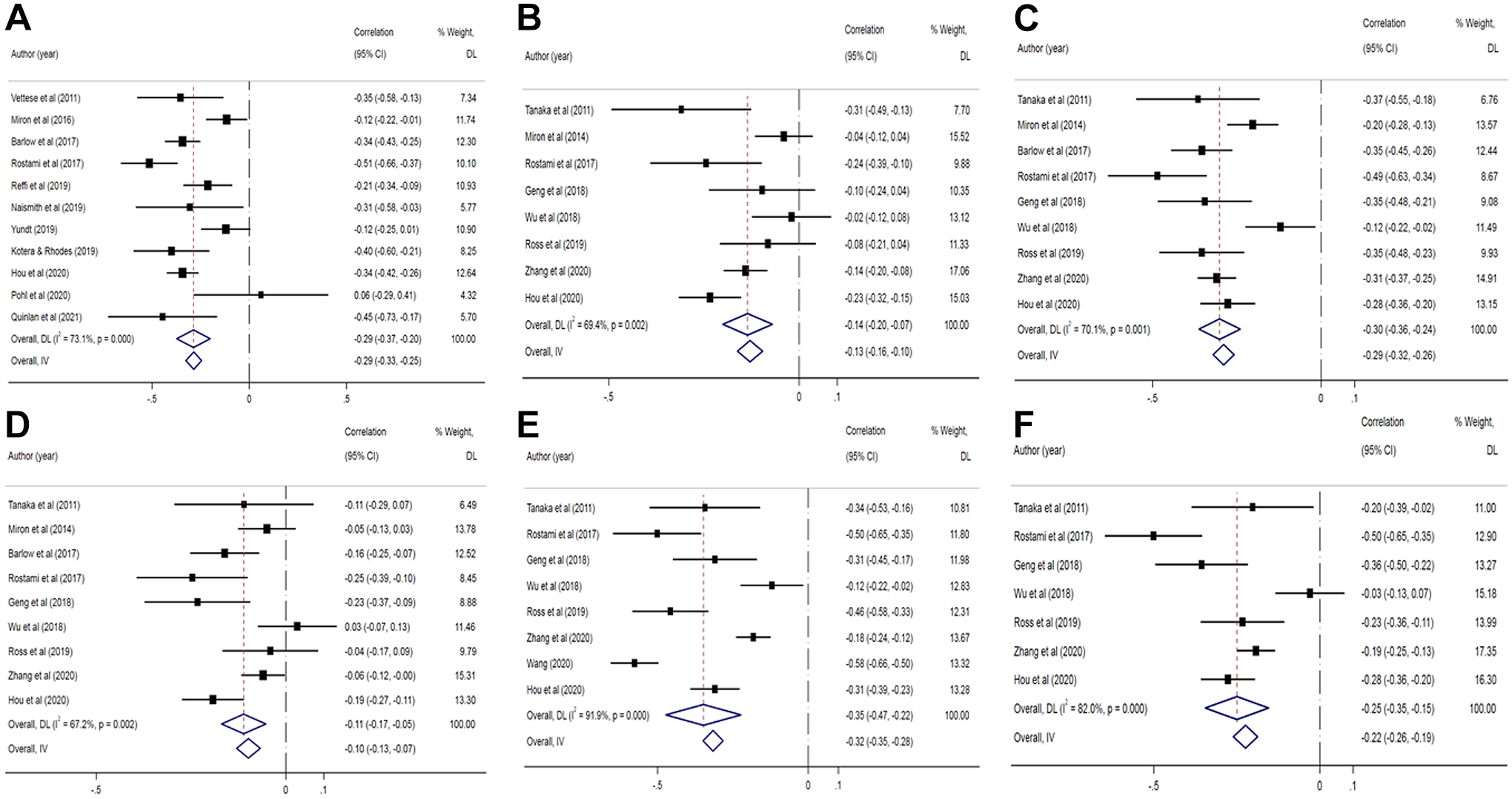
Forest plots of the associations between child maltreatment and self-compassion. Note. The square shape and bar line represent the estimate of effect size and 95% confidence interval for each study. The diamond shapes represent the pooled estimates of the effect sizes for different maltreatments. DL represent the total effect sizes of the outcome of the random effect models, IV represent the total effect sizes of the outcome of the fixed effect models. (A) Studies of general child maltreatment and self-compassion, (B) studies of physical abuse and self-compassion, (C) studies of emotional abuse and self-compassion, (D) studies of sexual abuse and self-compassion, (E) studies of emotional neglect and self-compassion, and (F) studies of physical neglect and self-compassion.
Heterogeneity
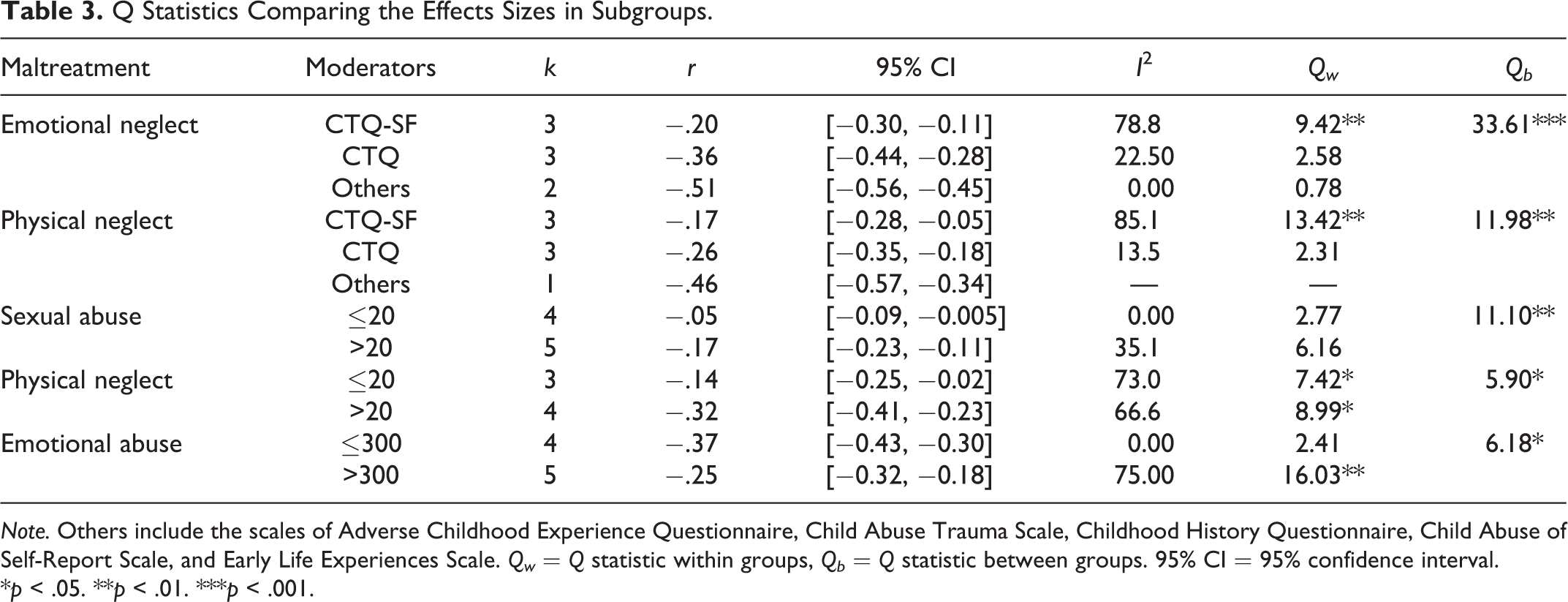
There was heterogeneity among the studies, by the I 2 > 75% (p < .01, see Table 2), which could be attributed to variation. Child maltreatment measurement, age of the respondents, and sample size were identified as potential moderators that might have contributed to the heterogeneity (see Table 3). However, separate analyses of other moderators did not show significant results.
Q Statistics Comparing the Effects Sizes in Subgroups.
Note. Others include the scales of Adverse Childhood Experience Questionnaire, Child Abuse Trauma Scale, Childhood History Questionnaire, Child Abuse of Self-Report Scale, and Early Life Experiences Scale. Qw = Q statistic within groups, Qb = Q statistic between groups. 95% CI = 95% confidence interval.
*p < .05. **p < .01. ***p < .001.
Among the 20 studies, different scales were used to measure child maltreatment, such as the CTQ-SF, CTQ, and ACE Questionnaire. Further analyses revealed that the measurement tools significantly moderated the relationships between emotional neglect and self-compassion (Qb = 33.61, p < .001), physical neglect and self-compassion (Qb = 11.98, p < .01). The association between emotional neglect and self-compassion was stronger by the CTQ (r = −.36, 95% CI [−0.44, −0.28]) than by the CTQ-SF (r = −.20, 95% CI [−0.30, −0.11]). Likewise, the relationship between physical neglect and self-compassion was stronger by the CTQ (r = −.26, 95% CI [−0.35, −0.18]) than by the CTQ-SF (r = −.17, 95% CI [−0.28, −0.05]).
Additionally, respondents’ age was an important moderator. Among the 20 studies, age moderated the relationships between sexual abuse and self-compassion (Qb = 11.10, p < .01) and between physical neglect and self-compassion (Qb = 5.90, p < .05). The association between sexual abuse and self-compassion was stronger among the older group (r = −.17, 95% CI [−0.23, −0.11]) than the younger group (r = −.05, 95% CI [−0.09, −0.005]). Similarly, the relationship between physical neglect and self-compassion was stronger among the older group (r = −.32, 95% CI [−0.41, −0.23]) than the younger group (r = −.14, 95% CI [−0.25, −0.02]).
Sample size (average sample size, n = 343.85) was found to be a moderating variable (Qb = 6.18, p < .05), with the studies focusing on the relationship between emotional abuse and self-compassion showing stronger effect among smaller samples (n > 300; r = −.37, 95% CI [−0.43, −0.30]) than larger samples (n ≤ 300; r = −.25, 95% CI [−0.32, −0.18]).
Publication Bias
Different analysis methods were adopted to test publication bias, all of which showed that no evidence of publication bias (see Figure 3 and Table 4). First, the funnel plots were generally symmetrical (see Figure 3). Second, the fail-safe N numbers were very large to reduce the mean effect size below the level of significance for the relationship between overall maltreatment and self-compassion (N = 676), physical abuse and self-compassion (N = 160), emotional abuse and self-compassion (N = 1,081), sexual abuse and self-compassion (N = 132), emotional neglect and self-compassion (N = 1,064), and physical neglect and self-compassion (N = 371). Third, to overcome the shortcomings of the funnel plot method, we used the Begg rank correlation method and Egger liner regression test. All results showed no significance, indicating that there was no publication bias in the meta-analysis. Finally, the trim and fill method did not identify any missing studies for these relationships.
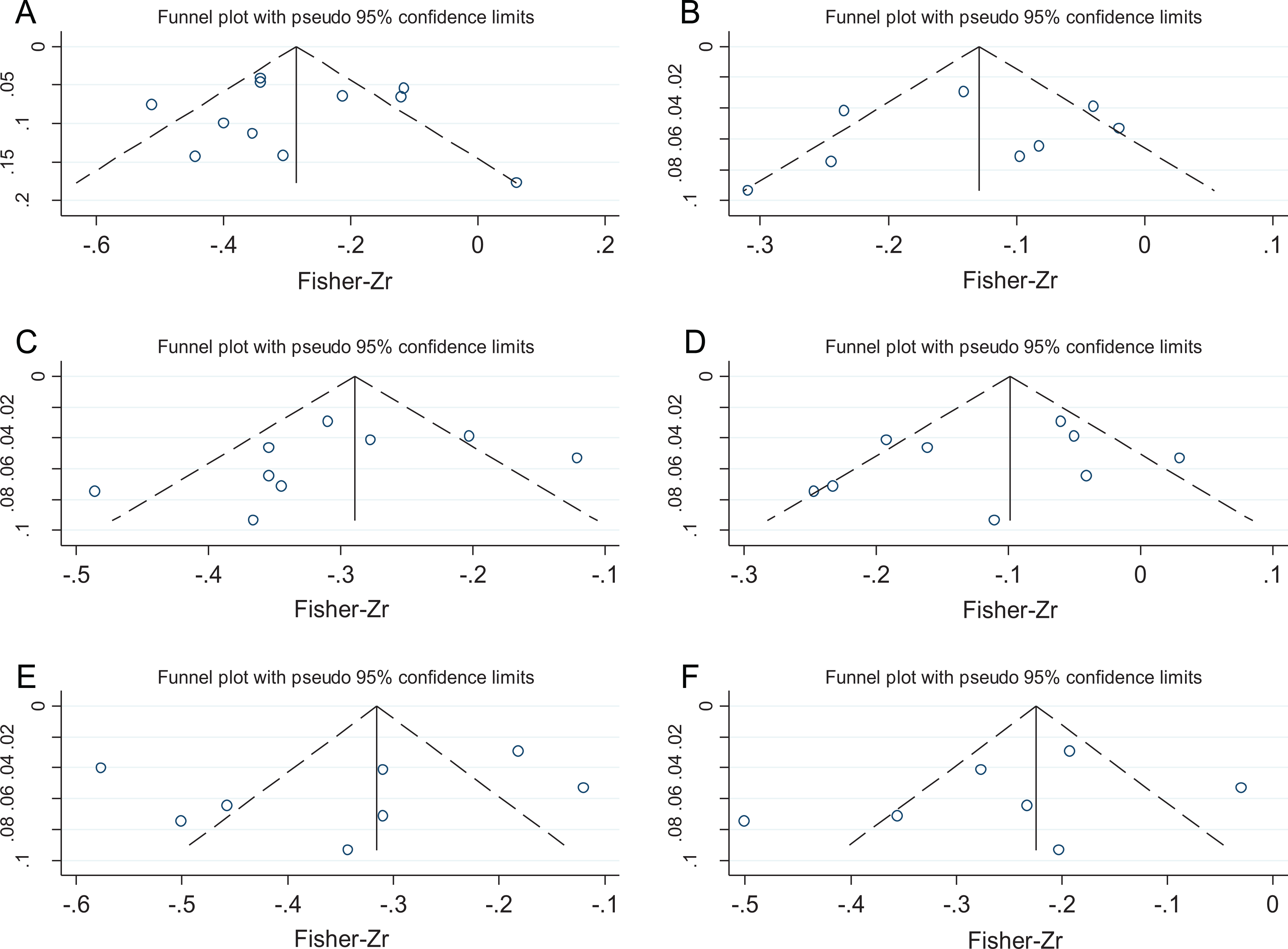
Funnel plots of the included studies. Note. The hollow circles represent each study included in meta-analysis, and the dashed lines represent the symmetrical boundary. (A) Studies of general child maltreatment and self-compassion, (B) studies of physical abuse and self-compassion, (C) studies of emotional abuse and self-compassion, (D) studies of sexual abuse and self-compassion, (E) studies of emotional neglect and self-compassion, and (F) studies of physical neglect and self-compassion.
Tests of Publication Bias.
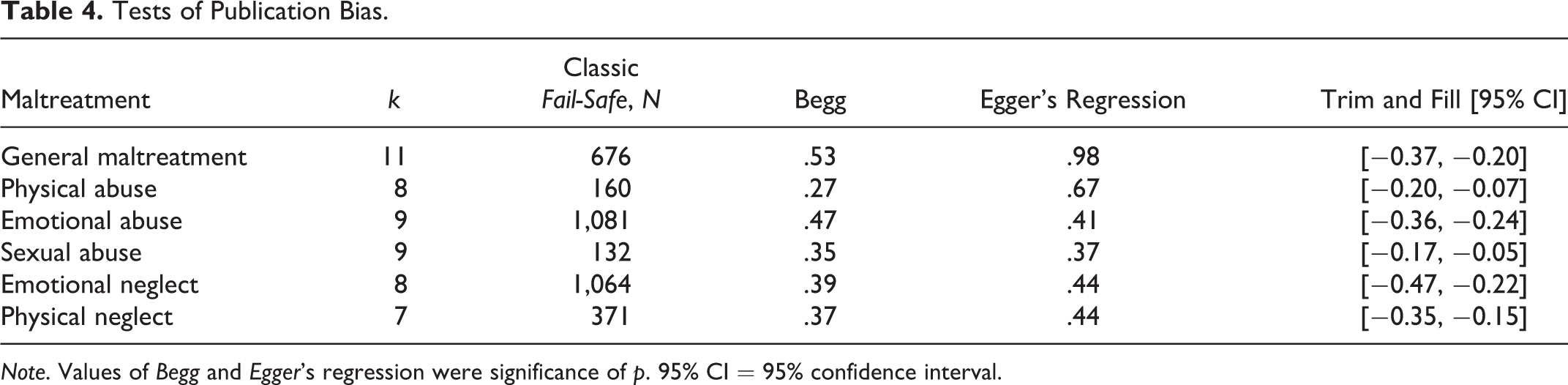
Note. Values of Begg and Egger’s regression were significance of p. 95% CI = 95% confidence interval.
Sensitivity Analysis
When one study was eliminated at each time, the effect sizes of the relationships of the included studies were reestimated. The results showed that although the effect sizes changed to different degrees after recombination, the 95% CI did not overlap with 0, and the overall results remained unchanged (see Figure 4).
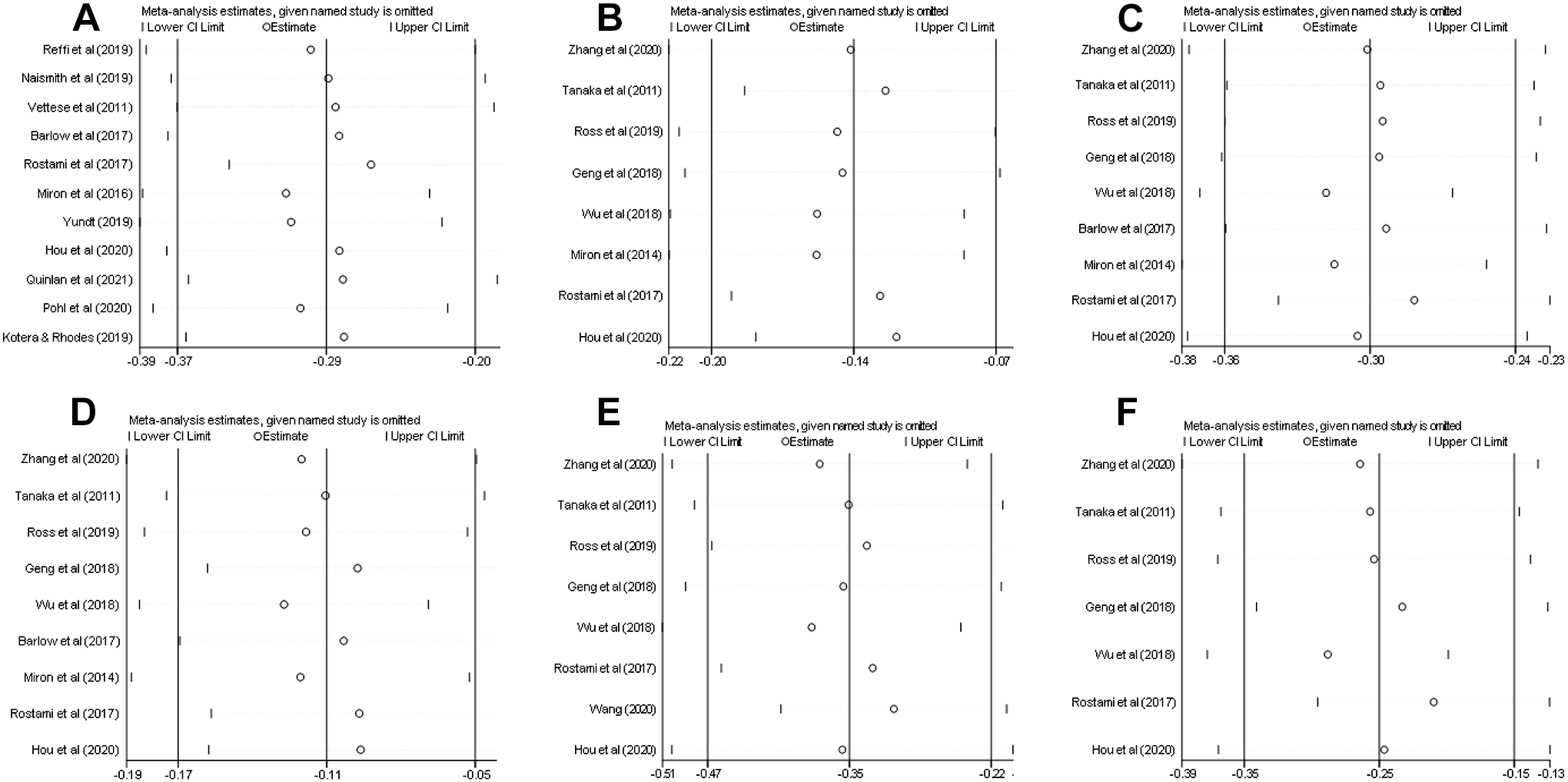
Influence analysis of the included studies. Note. The long vertical lines represent the estimate of effect size and 95% confidence interval for each meta-analysis. The hollow circles represent the reestimated effect size after deleting one study. The short vertical lines represent the 95% confidence interval for the reestimated effect size. (A) Studies of general child maltreatment and self-compassion, (B) studies of physical abuse and self-compassion, (C) studies of emotional abuse and self-compassion, (D) studies of sexual abuse and self-compassion, (E) studies of emotional neglect and self-compassion, (F) and studies of physical neglect and self-compassion.
Discussion
To the best of our knowledge, this is the first meta-analytic review of the effects of childhood maltreatment on self-compassion based on a comprehensive synthesis of 20 studies involving 6,877 participants published in English and Chinese. The present systematic review and meta-analysis estimated the extent to which abuse and neglect experienced by individuals during childhood affect their self-compassion in later life. Furthermore, heterogeneity analyses were performed to identify possible moderators influencing the association between child maltreatment and self-compassion.
The findings of this meta-analysis showed that not only overall child maltreatment but also subtypes of child abuse and neglect were associated with lower levels of self-compassion, thereby supporting attachment theory, which argues that self-compassion is shaped by early attachment experience with caregivers (Gilbert, 2005, 2009, 2010). In other words, abused and neglected children tend to treat themselves in ways they were treated by their family members and might not respond to themselves in a kind or gentle manner in the face of adversity (Benjamin, 2003; Neff, 2003). There is substantial evidence that childhood maltreatment as early adverse experience, endangers children’s self-concept and their ability to practice self-compassion (Cohen et al., 2017; Tanaka et al., 2011). Therefore, abused and neglected children find it considerably challenging to be kind to themselves and to perceive their negative experiences from a broader perspective, which may bring long-term harm to children with a history of maltreatment. That is because that available meta-analyses have demonstrated that poor self-compassion is associated with psychological distress (Marsh et al., 2018) and even psychopathology (MacBeth & Gumley, 2012).
Our findings also demonstrate that the estimated effect sizes of different types of child abuse and neglect on self-compassion range from small to moderate level. Specifically, emotional abuse and neglect were moderately associated with reduced self-compassion, and physical abuse and neglect as well as sexual abuse were related to self-compassion at a small level. These findings are consistent with those of prior studies, that self-compassion is more sensitive to emotional maltreatment than to other types of abuse (Coates & Messman-Morre, 2014; Huh et al., 2017; Wu et al., 2018). Psychological maltreatment, including emotional abuse and neglect, may emotionally scar children, damage their formation of self-worth, and further lead to negative constructions of the self (Van Harmelen et al., 2010). Therefore, constant criticism, contempt, rejection, and neglect may cultivate children’s self-denial rather than self-kindness and humanity. This result implies that self-compassion intervention programs, such as the “Making Friends with Yourself” (Bluth & Eisenlohr-Moul, 2017), should be culturally adapted and implemented as early as possible to cope with these negative childhood experiences, thereby reducing mental health problems and behavioral problems in later life.
Wide heterogeneity existed across the studies included in the review. Measurement inconsistency was one factor influencing the association between child maltreatment and self-compassion. Specifically, both emotional and physical neglect were more likely to influence self-compassion using the CTQ than its short version. As the CTQ captures rich information about the experience of neglect, it is reasonable to observe a stronger association between childhood neglect and self-compassion using the full questionnaire than its short-form version. Additionally, older children are more likely to report a negative influence of physical neglect and sexual abuse than younger children, which is consistent with previous findings, that the influence of childhood neglect may be hidden (Stoltenborgh et al., 2015), and more cultural stigma around sexual abuse could be introjected by older children (Kenny & McEachern, 2000).
The moderating effect of sample size in the association between emotional abuse and self-compassion is noteworthy; it may be caused by statistical bias due to nonprobability sampling. Considering the comparison of a sample estimator from a nonprobability sample and that from a probability sample, as the size increases, the variance and bias of survey estimators of probability sampling decrease, while the variance and bias of nonprobability sampling increase (Kalton, 1983). Therefore, when the meta-analysis includes numerous nonprobability samples and there are larger differences in sample sizes, the heterogeneity between and within subgroups will be stronger.
Limitations
This study has several limitations that should be acknowledged in. First, interest in self-compassion preventing mental health problems is relatively recent. Therefore, the number of published studies focusing on childhood maltreatment and self-compassion is not very large, which may limit our further analyses of cultural differences in the association between childhood maltreatment and self-compassion, as self-compassion may be influenced by cultural values (Montero-Marin et al., 2018). Second, the participants in the 20 studies included in the analysis were diverse in age, gender and location, and heterogeneity could not be well controlled in the subgroup analysis. Third, a majority of studies were designed on the basis of cross-sectional approach, using nonprobability sampling and different measures of childhood maltreatment. Although most studies focused on adults, self-reported bias might have threatened the validity of the effects of childhood maltreatment on self-compassion.
Conclusion
This study is the first attempt to synthesize the effects of childhood maltreatment on self-compassion. It provides important insights into the negative impact of early-life abuse and neglect experiences, especially psychological maltreatment, on self-kindness, common humanity, and mindfulness, highlighting the possible linkage between child maltreatment and self-compassion. It is urgent to design programs related to self-compassion to reduce mental health and behavioral problems in individuals who suffered from maltreatment during childhood.
Critical Findings of this Review
Childhood maltreatment is negatively associated with self-compassion at a small to moderate level.
Emotional abuse and neglect exert more influence on self-compassion than do other types of maltreatment.
The effects of child maltreatment on self-compassion vary depending on questionnaire design, age of the respondents, and sample size.
Implications for Practice, Policy, and Research
There is an urgent need to build an effective child protection system and child-friendly social ecosystem for the prevention and intervention of child maltreatment.
Self-compassion programs should be designed and implemented for individuals with childhood maltreatment experience as early as possible.
Probability sampling in a cross-sectional survey of large samples should be adopted to avoid bias of survey estimators.
The effects of different types of childhood maltreatment on self-compassion should be examined cross-culturally in further analyses.
Longitudinal studies to explore the causal relationship between childhood maltreatment and self-compassion should be designed in future studies.
Footnotes
Acknowledgment
We would like to thank Miss Shiqin Liu, Yuqing Liu, Qiuxia Liu, and Chenxi Lu for their assistance in data collection.
Declaration of Conflicting Interests
The author(s) declared no potential conflicts of interest with respect to the research, authorship, and/or publication of this article.
Funding
The author(s) declare receipt of the following financial support for the research, authorship, and/or publication of this article: The research has been supported by National Social Sciences Fund of China (20ASH018).
