







Abstract
Although child sexual abuse (CSA) is acknowledged as a worldwide social phenomenon, less is known about CSA within Arab societies. The current systematic literature review was designed to highlight the empirical knowledge on CSA in Arab societies. Guided by PRISMA principles, key databases were searched, with no time limit, for studies meeting the inclusion criteria. Fifty-seven studies were identified. The majority focused on the prevalence of CSA in various Arab societies around the world, with a wide range of rates reported. It is important to stress two main barriers addressed by the included studies. The first relates to the issue of taboo and the forbidden discussion of sexual content. The second is ethical, in which the researchers expressed their fear of creating emotional distress for their participants. A small group of studies examined parents’ perceptions of CSA and the need for parents’ involvement in the protection of their children. Another small group of studies focused on professionals’ perceptions and experiences in contending with CSA, as well as their distress, conflict, and urgent need for support and guidance. The conclusions from the systematic literature review emphasized the enormous challenge of conducting studies on CSA in Arab societies and the urgent need to advance this research while also including children and adult survivors, whose perceptions and experiences are currently understudied. Moreover, the discussion stresses the need to adopt an intersectionality paradigm in future studies to advance the improvement of CSA policy and practice.
Introduction
Child sexual abuse (CSA) has been investigated intensively over the recent decades in Western countries. It is often addressed by researchers as a social, psychological, and health problem occurring across all societies to children of various ethnic, cultural, economic, and religious backgrounds. A recent meta-analysis addressed the prevalence of CSA, highlighting that CSA affects millions of children worldwide (Stoltenborgh et al., 2011). The robust body of research sheds light on the far-reaching consequences of CSA for survivors (Amado et al., 2015), their families (e.g., parents and siblings; Tavkar & Hansen, 2011) and society as a whole (e.g., criminal behavior; Roe-Sepowitz, 2008).
Despite the vast interest in CSA, few studies have referred to the social and cultural factors and their implications in exploring and dealing with CSA. Only recently has this recognition begun to emerge due to the growing interest of researchers in how culture affects and shapes the experience of and coping with CSA (Korbin, 2002). Korbin and other researchers have highlighted the need to understand the values of each culture to improve our understanding of CSA. They note that by understanding specific cultural features of a group, we could overcome various barriers in tackling CSA, such as CSA disclosure (Fontes & Plummer, 2010; Korbin, 2002). Korbin (2002) also stressed the need to create prevention and intervention programs informed by cultural competence and use an inductive rather than deductive approach.
Despite the international recognition of CSA and the need to deal with it from a context-driven perspective, there is a dearth of studies on this phenomenon in Arab societies. This is the result of several challenges, including researching a taboo issue and accessing children who have been abused. According to Abu-Baker (2013), discourse about CSA in multiple arenas, including public and professional discourse, has been silenced by social and cultural factors. However, discussions have recently begun to take place due to internet accessibility in Arab communities, enabling further access to information about CSA.
To properly understand the phenomena, we must examine Arab culture and its characteristics and features. Arab culture is often characterized by collectivism in which the wellbeing of the group takes precedence over the individual. Relationships in the Arab family are hierarchical, based on age, and patriarchal, causing a relationship of submission and obedience on the part of the children towards their parents (Abu-Baker, 2013; Haboush & Alyan, 2013). Arab culture also emphasizes respecting the nuclear and extended family by upholding its reputation, among others. One way of preserving family reputation refers to females remaining virgins and not having intimate relations before marriage. Losing her virginity brings shame to the nuclear and extended family. As a result, children learn to avoid discussing sex-related issues (Haj-Yahia, 1995, 2000; Shalhoub-Kevorkain, 2005). Such features may diminish recognizing, addressing and dealing with CSA.
The Current Study
The current systematic literature review was designed to explore CSA in Arab communities based on an analysis of the existing peer-reviewed manuscripts in the literature. Preferred Reporting Items guided this review (PRISMA) and a thematic analysis was conducted on all 57 identified studies. Key questions guiding the analysis were (1) Which methodologies did the researchers use to explore CSA in Arab societies? (2) What perspectives were explored? and (3) What are the characteristics and features of Arab society that are crucial to the research and understanding of CSA?
Method
The studies for this review were identified by searching the PsycNET, PubMed, and ScienceDirect databases and were filtered in accordance with the PRISMA guidelines (Moher et al., 2009). In each scientific database, the search was done three times. During the first search, the following keywords were used: (1) CSA, (2) Arab, (3) child sexual violence, (4) child sexual maltreatment. In the second search, we used the previous words, replacing the word “Arab” with “Arabic.” Then the authors identified that there were studies that did not use the words: “Arab” and “Arabic” but were done in Arab countries. Therefore, the authors did a third search in each database including the names of 22 Arab countries and CSA.
The search included entire manuscripts and was not limited to the abstract due to several assumptions. It may be that the articles did not include the words “Arab” or “Arabic” in the abstract but included Arab research participants. For example, in the methods section it could be noted that participants spoke Arabic. There could also be Arab minorities who participated in studies in Western countries. We assumed that there could be a specific reference to Arab minorities and therefore did not rule it out. In addition, we searched for synonyms for abuse, such as child sexual maltreatment and child sexual violence, for reasons of sensitivity to the Arabic language. However, no studies were identified other than those found in the previous search.
This review was prepared in accordance with the PRISMA statement (Moher et al., 2009). Figure 1 illustrates the stages that were followed to create a systematic review of the literature. PRISMA flowchart of the paper selection process.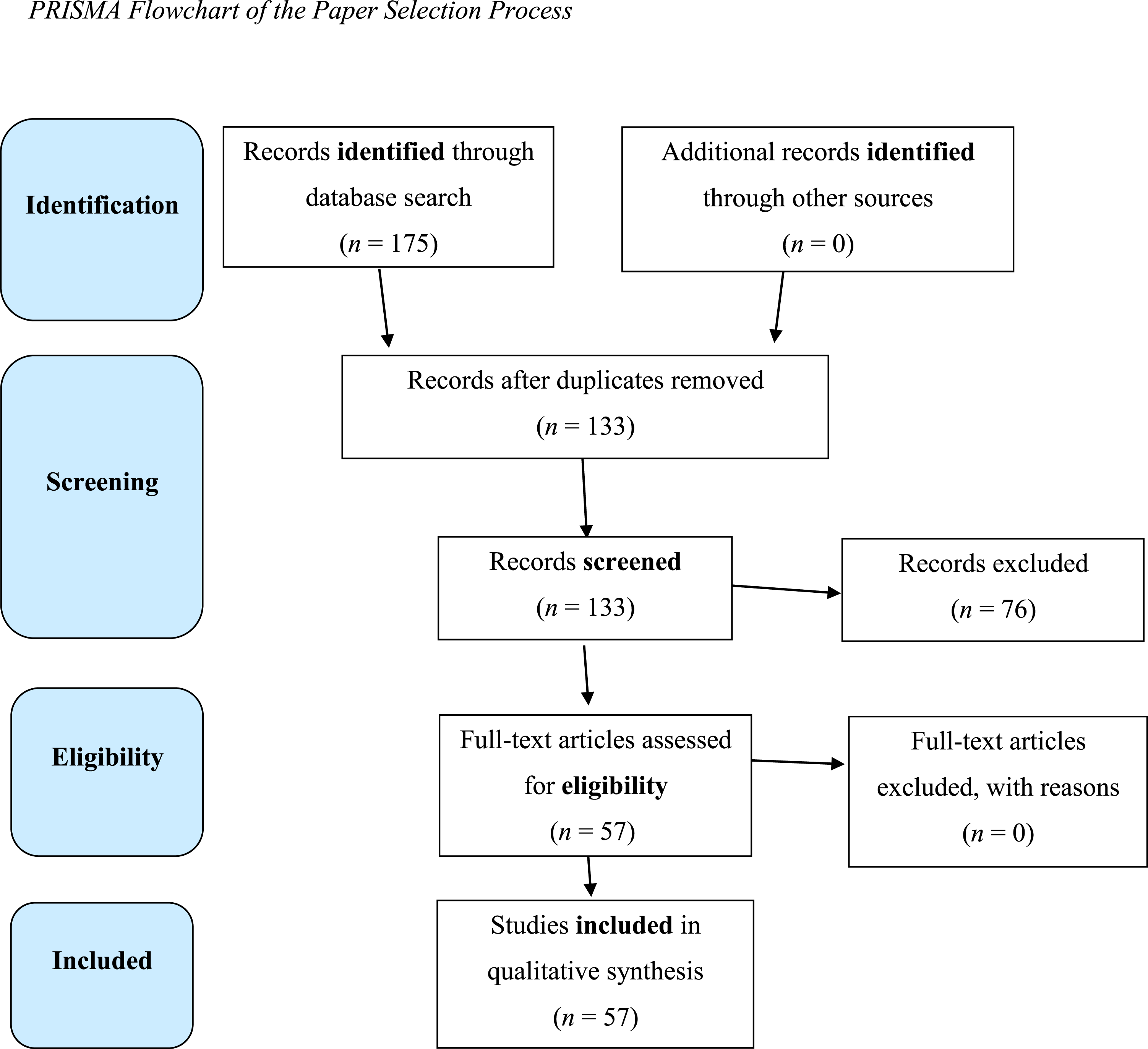
Inclusion Criteria
For articles to be considered eligible, they had to meet the following inclusion criteria: (1) address CSA in the context of Arab societies and communities, (2) published in peer-reviewed journals, (3) empirical studies based on quantitative, qualitative, or mixed methods, and (4) written in the English language only. Due to the dearth of research on CSA in Arab communities, there was no limitation on the time frame (years) during which such research could have been conducted.
Exclusion Criteria
The exclusion criteria included: (1) books and case studies, (2) publications that discussed professional opinions, (3) articles in languages other than English, and (4) articles that included Arab communities but did not directly discuss CSA.
The total number of articles that emerged from the search was 175. Forty-two were removed because they were duplicates. Thus, 133 articles remained. Of the 133 articles, 76 were removed based on the exclusion criteria. For example, one article mentioned “Arabic” as a characteristic of the offender, however, the study focused on Filipino children and youth. In six articles, the Arab participants constituted a minor percentage of multiple minorities in Western countries and no specific reference was made to them. Of the remaining articles, 15 were review studies, two were based on case studies in clinical settings, and seven focused on violence against women without reference to CSA. Four articles mentioned CSA as a type of violence without any specific reference to it. Three articles were written in other languages (two in Arabic and one in French). Fifteen articles were conducted among non-Arab populations in countries such as Iran. Five articles explored mental health without reference to CSA. In 17 articles, the main focus was not related to CSA. In addition, one article was an opinion piece. Thus, 57 articles met the inclusion criteria and were closely reviewed by the two authors.
The Qualitative Analysis of the Studies
The authors thoroughly read the identified studies and performed a thematic analysis, including identifying and categorizing major topics and themes and summarizing the findings (Dixon-Woods et al., 2005). The studies were reviewed and discussed until a consensus was reached among the authors. During the analysis, new themes emerged and others were removed or changed while reviewing and analyzing the studies. Throughout the analysis, the authors referred back to the studies for additional information and clarification.
Descriptive Overview
Of the 57 studies, 46 employed a quantitative methodology, eight employed a qualitative methodology and three employed mixed methods. Twenty-five were prospective and 32 were retrospective. As for the kind of maltreatment studied, 29 focused on CSA. The remaining 28 included sex studies that addressed CSA along with other kinds of abuse, such as physical and psychological abuse, and 22 studies included CSA as one component of an umbrella term, such as child maltreatment or child abuse.
With respect to the sample characteristics, 45 of the 57 studies included females and males, nine focused on females only, and three focused on males only. The age range of the participants was between 5 to 60 years old. The sample sizes ranged between 10 to 16,939 participants.
Among the 57 studies, four were conducted in Jordan, 12 in Saudi Arabia, one in Morocco, three in Lebanon, five in Egypt, one in Qatar, four in Palestine, 17 in Israel, two in Bahrain, one in Tunis, three in Kuwait, and one in Oman. One comparative study was conducted in Qatar and Palestine. Additionally, one study was conducted among women living in America—the participants’ countries of origin were Lebanon (n = 4), Iraq (n = 3), Morocco (n = 1), and Saudi Arabia (n = 1)—and one study was conducted among people from Morocco who lived in the Netherlands.
Main Findings
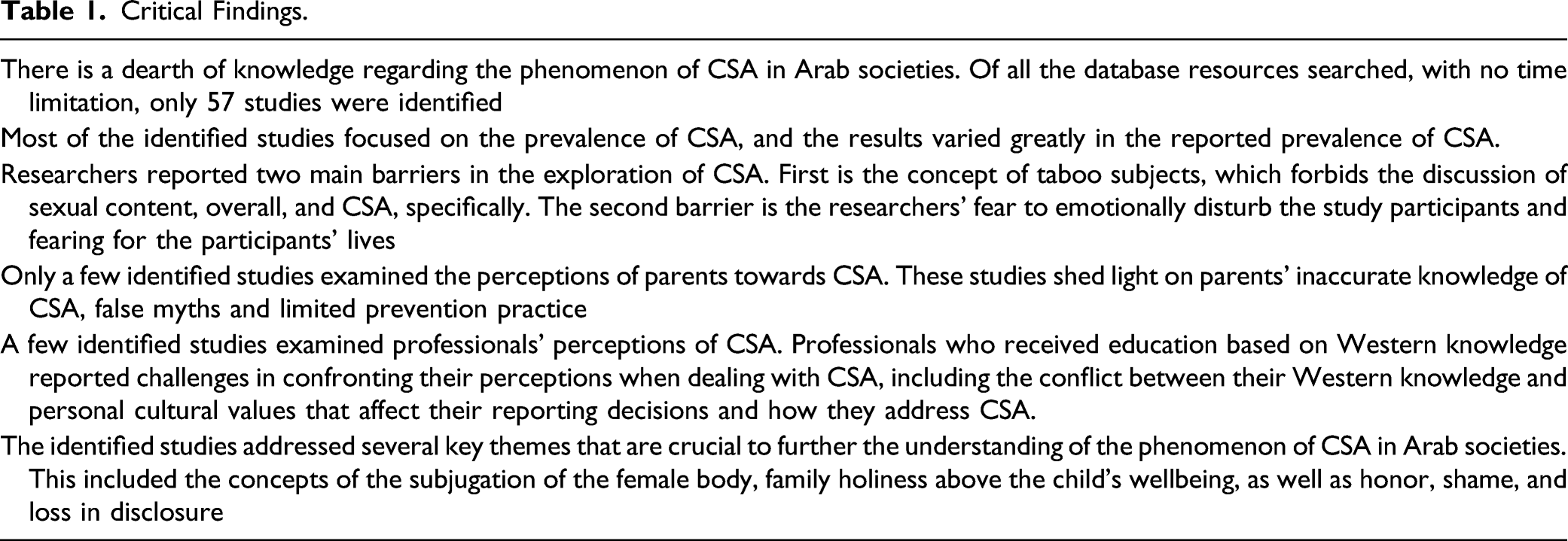
Critical Findings.
Methodology Used to Explore CSA in Arab Societies
Study Objectives, CSA Terminology, Methodology, and Findings.

Positioning CSA
Through the analysis, we identified variability regarding the positioning of CSA. Among the 57 reviewed studies, 29 focused solely on CSA. For instance, Haj-Yahia and Tamish (2001) examined the rates of CSA and its psychological consequences among Palestinian university students. Abu-Baker (2013) addressed parents' reactions to sexual abuse cases in their families. In Shalhoub-Kevorkian’s (1999, 2005) studies, the researcher investigated the socio-political contexts and their important role in CSA disclosure.
Of the remaining studies, six addressed CSA alongside physical, psychological and/or emotional abuse and 22 included CSA as one form of child maltreatment, childhood trauma, child abuse or another umbrella term (e.g., Almuneef et al., 2014; Fekih-Romdhane et al., 2019; Sulimani-Aidan & Benbenishty, 2013). Furthermore, of the 57 reviewed studies, 39 provided a specific definition of CSA and 18 studies did not define CSA.
Defining CSA
Of the studies (n = 22) that used umbrella terms, 10 did not specifically define CSA, rather it was only included as a component in the umbrella term (e.g., Fekih-Romdhane et al., 2019; Sulimani-Aidan & Benbenishty, 2013). In the 29 studies that did define CSA, most used Western definitions of CSA. For example, as Al-Rasheed noted (2017), Kuwait does not have an official CSA definition. Therefore, researchers rely on the World Health Organization’s (WHO) definition, which states, “CSA is the involvement of a child in sexual activity that he or she does not fully comprehend, is unable to give informed consent to, or for which the child is not developmentally prepared or else that violates the laws or social taboos of society” (WHO, 1999, p. 15). Other studies used other Western definitions of CSA, such as the American Psychological Association’s definition (e.g., Alshekaili et al., 2020) and Johnson’s definition (e.g., Usta & Farver, 2010). Differently than other studies, authors of a study based in Morocco defined sexual abuse as “the participation of a child or a teenager in sexual activities enforced by violence or seduction or that transgressing the social taboo” (Alami & Kadri, 2004, p. 238). In this study, severe sexual abuse was defined as abuse with penetration or attempted penetration.
The inconsistency of CSA definitions could explain the variance in the operational definition of CSA among the studies. Some studies defined CSA as including only physical contact (e.g., Almuneef et al., 2014; Jumaian, 2001), whereas others included contact and non-contact sexual abuse (e.g., Usta & Farver, 2010). Hence, having multiple definitions may have caused a disparity in CSA rates, as CSA rates were not the same across studies. For instance, in Elbedour et al.’s (2006) study, the participants were asked to state if they had experienced different types of sexual abuse between the ages of 12–18, including contact and non-contact offenses. Of the study participants, 53.3% shared that they had experienced at least one type of sexual abuse. It is worth noting that in Elbedour et al.’s (2006) study, the most frequent sexual offenses were related to sexual invitations or requests (16%), followed by another individual exposing his/her sexual organs to the participants (14%), and another individual fondling the participant (13%). Only 4% of participants reported sex with and without penetration, being forced to show their sexual organs and/or being forced to fondle another individual (Elbedour et al., 2006). In other studies that explored only contact offenses and/or defined contact and non-contact offenses in various forms, CSA rates were lower than in Elbedour et al.’s (2006) study. In Jumaian’s (2001) study, which investigated physical contact offenses among male college students, 27% reported that they experienced a contact form of CSA. In Alami and Kadri’s (2004) study, 9.2% of the 728 female participants shared that they experienced contact and non-contact sexual abuse.
Data collection and analysis
The identified manuscripts varied in their data collection strategy. Most (n = 46) used quantitative methods, a few (n = 8) used qualitative methods, three employed mixed methods, and a significant number (n = 32) were retrospective.
The majority of the quantitative studies used widely accepted international tools. A large number of the studies translated the original English tool to Arabic and then back-translated it into English (e.g., Usta & Farver, 2010). Others took a step further and adapted the tool to the relevant culture in addition to the back-translation. They then tested the modified tools in a pilot study to ensure the questionnaire’s cultural and social adaptability (e.g., Eldeeb et al., 2016; Haj-Yahia & Tamish, 2001). Most tools in the quantitative studies exploring CSA in Arab societies used a dichotomous scale (e.g., Al-Rasheed, 2017; Fekih-Romdhane et al., 2019).
There were two main strategies for data collection. The first was to collect data by reviewing medical files or other official records (e.g., Abd El Rahman et al., 2017; Al-Mahroos et al., 2005; AlMadani et al., 2012). Most of these records were of severe CSA cases referred to health care centers.
The second strategy was self-report surveys, which are often used in quantitative research to explore the prevalence of CSA. Studies sampled high school and college students (e.g., Al-Eissa et al., 2020; Haj-Yahia & Tamish, 2001) and clinical or hospitalized patients (e.g., AlRammah et al., 2018). The different samples influenced the results of CSA prevalence. In particular, clinical or hospitalized patients reported higher CSA rates than college students. Most studies were conducted with adults who were asked if they had been sexually abused in their childhood. (e.g., Haj-Yahia & Tamish, 2001). A few studies were conducted among children (e.g., Usta & Farver, 2010). Notably, most of the CSA studies conducted within Arab societies collected data and reached participants through the healthcare systems (e.g., Al-Mahroos et al., 2005; Alshekaili et al., 2020).
Methodological challenges
The studies’ methodologies were motivated, shaped and influenced by social and cultural considerations. Some researchers mentioned that they accounted for social and cultural features during the formation of the studies, including determining data collection procedures. In a comparative study that explored the determinants of child disciplinary practices among Qatari and Palestinian participants, Palestinian researchers omitted questions related to sexual abuse, unlike Qatari researchers who included these questions (Eldeeb et al., 2016). The Palestinian researchers stated that their choice was based on contextual considerations, although they did not elaborate further.
In a Moroccan study, the researchers asked participants about sexual abuse and prefaced their questions by acknowledging the sexual abuse experienced by adults and children that had recently been in the media (Alami & Kadri, 2004). The conversations began by asking about pornographic content, followed by physical aspects of sexual violence. Next, the researchers referred to “constraint” in sexual relations, thereby avoiding explicit language. Then the event of abuse was explored. Despite this sensitive preamble, when the researchers began talking about sexual abuse, 33% of the participants refused to continue. The researchers explained this dropout as related to the taboo nature of sexual issues in Arab communities or the possibility that these women had been sexually abused in their childhood.
In this regard, Shalhoub-Kevorkian (2005) noted that there is a need for CSA studies to adopt methodologies that consider the context and sensitivity of the subject matter, so that the children and their families feel comfortable participating. In her research, she aimed to further understand the experiences of Palestinian Israeli girls who had experienced sexual abuse. Therefore, a proactive methodology was used that implemented the expertise of professionals and focus groups. After the focus group met a few times, questionnaires were handed out to each of the participants, to give them the opportunity to disclose their abuse in a contextually sensitive environment and share how they thought to deal with the abuse. In another study by Shalhoub-Kevorkian (1999), she clarified that, due to the societal sensitivity regarding sexual abuse in Palestinian society, only those the author had a personal relationship with were interviewed directly. For the remaining cases, information about the abuse was obtained through interviews with professionals who worked with them and also by reviewing the documentation. Another study further revealed the demand for a sensitive methodology when addressing CSA in Arab societies. Namely, in a qualitative study of Jordanian pre-service special education teachers, the participants avoided speaking about CSA (Al-Zboon & Ahmad, 2016). The authors noted that the participants were embarrassed, either directly or indirectly, when asked to speak about CSA. Four respondents did not answer the question about CSA types. Another four students preferred to take written questions outside the meeting room and later came back with written answers.
Other researchers shared ethical concerns. In Al-Eissa and colleagues’ study (2015) in Saudi Arabia, they had concerns that the questions could upset the participants due to the sensitive topic. Therefore, participants were informed of their right to not answer questions or to end their participation at any point. Furthermore, the researchers were not mandated in Saudi Arabia to report abuse disclosures and decided to encourage the participants who disclosed to speak to someone they trusted about their abuse experiences (Al-Eissa et al., 2015). It is important to note that the authors of the current review assert that all researchers should have information to provide participants on the available services for survivors of sexual abuse when conducting research on this topic and this should be part of the ethical considerations for studies on abuse. In a Jordanian descriptive study, a semi-structured interview with open-ended questions was employed to explore the characteristics of working children and the association between risk factors and child labor (Gharaibeh & Hoeman, 2003). Researchers were careful when asking the children about sexual abuse and began by asking children if they had heard stories of sexual abuse. After the child shared the "not me" story, the researchers asked the child if he encountered sexual abuse.
Regarding gender in exploring CSA in Arab societies, a study conducted in Jordan stated that females were excluded due to ethical and social difficulties, therefore, only 100 male students were included (Jumaian, 2001). However, most of the studies included male and female participants. There was also evidence of “gender matching” between interviewers and interviewees. In Alami and Kadri’s (2004) study that explored CSA among Moroccan women, five trained female psychologists assisted women in filling out the questionnaires. In Elbedour et al.’s (2006) study, the researchers clarified that to maintain privacy while exploring a sensitive issue, a female Bedouin graduate student was recruited to collect the data among female adolescents in a Bedouin-Arab community in Israel. We argue that this practice is crucial when conducting research on abuse.
The Attitudes of Parents and Professionals in Arab Communities Toward CSA
Regarding the attitudes of parents and professionals in Arab communities toward CSA, 12 studies focused on parents’ and professionals’ attitudes and knowledge of CSA, as well as prevention and intervention practices. Among these 12 studies, four were conducted among parents and eight were conducted among professionals.
Parents’ knowledge of CSA and prevention practices
Four studies aimed to understand parents’ CSA knowledge, perceptions of perpetrators, signs of CSA and the prevention practices they taught their children. Regarding parents’ knowledge, it appeared that the Arab parents in the studies held misconceptions and limited knowledge of CSA. In a Saudi Arabian study, approximately 40% of the 400 parents did not believe that, in most abuse cases, the perpetrator is a known and familiar person (AlRammah et al., 2018). Additionally, 50% believed that boys are safe from CSA and most believed that females would not sexually harm a child. In a Jordanian study, only 37.7% (n = 184) of the mothers knew of laws that protect children from sexual abuse and less than half (47.7%, n = 233) were aware that there are social organizations to help sexually abused children (Alzoubi et al., 2018). Furthermore, most of the mothers believed that only men commit sexual acts against children (n = 335, 68.6%); 24.4% disagreed and 20.7% were unsure that perpetrators are often known to them and their children. Similar to Alzoubi and colleagues' (2018) study findings, in a study in Kuwait, perpetrators of sexual abuse were assumed to be strangers (over 75%; Al-Rasheed, 2017). Hence, most parents shared that they mainly discussed the "stranger-danger" with their children by focusing on warnings about bribes, cars and gifts.
In relation to parents’ knowledge of signs of CSA, in a study conducted in Saudi Arabia, the majority identified signs of CSA as suddenly displaying withdrawn behavior (n = 356, 89.6%), followed by an unusual fear of being left alone with a given person (74%; AlRammah et al., 2018). An abnormal interest in sex and/or genitals was less recognized by parents (50.4%). In a Jordanian study, most of the mothers were not aware that an abnormal interest in sex or genitals and inappropriate sexual behavior using toys or other objects could be signs of abuse (Alzoubi et al., 2018). Furthermore, most thought there were no signs of abuse other than visible medical signs.
Arab parents in these studies tended not to speak with their children about sexual issues and sexual abuse. Rather, they gave them instructions to protect themselves from abuse (AlRammah et al., 2019). In another study, only 37.8% of parents spoke with their children about CSA (Al-Rasheed, 2017). Reasons given in the questionnaire for parents not talking to their children about CSA included, "it had not occurred to me" and "my child is too young." The least common reasons were “my child is safe from CSA” and “discussing this topic with my child is against my religious beliefs.” Moreover, survivors of CSA shared that their parents prevented them from participating in sex education courses in their schools because they thought it would encourage sex among their children (Timraz et al., 2019).
Yet, among parents who spoke about CSA prevention, most of the suggested practices put the responsibility on the child regarding how he or she must respond to sexual abuse. Among items that were included in the questionnaires, parents emphasized that “children must recognize good touch and bad touch” (Alzoubi et al., 2018), and “if anyone asked to see or touch their private parts, they should definitely say no and leave the location immediately” (AlRammah et al., 2019). Parents also asked their children not to accept gifts from strangers or to go anywhere without their permission (89.2%), to wear appropriate clothing (82.5%) and to maintain their body privacy (93.2%; AlRammah et al., 2019).
In Al-Rasheed’s (2017) study, 84.4% of parents shared that they warned their children that “someone might lure you with gifts and candy to respond to their requests,” and 82.6% warned that “someone might trick you into their car.” However, only 33% discussed with their children that “someone might make you touch their body inappropriately.” Most warned that a stranger was a possible perpetrator of sexual abuse (over 75%). Only a few children were warned that relatives (30.6%), a sibling (5.8%), or a parent (2.5%) could be perpetrators. As for prevention practices, most parents taught their children to scream for help when they were confronted with an improper act (93.4%), to say no when they felt uncomfortable (90.1%), to tell parents about such encounters (90.9%), to escape (79.3%), and to fight back (61.2%).
Parents’ suggestions of prevention practices or interventions on the macro level were scant. In a study conducted in Jordan, Alzoubi et al. (2018) suggested prevention practices at schools should be educational and intervention based. Mothers stated that community prevention practices should include open discussion, distribution of brochures about CSA to enhance community awareness, and more severe penalties for perpetrators. In another study, suggestions for prevention included campaigns (92.2%) and sex education (86.7%; AlRammah et al., 2019). Regarding parents’ actions in dealing with incidents of CSA, 83.7% of parents stated that they preferred to report the incident to police and 66.8% emphasized the need for severe punishment of the perpetrators (AlRammah et al., 2019).
Abu-Baker (2013) examined parents' reactions to CSA in their families, revealing functional and non-functional families. Functional families included two groups. The first supported the child, while the second disregarded the survivor’s complaints by avoiding talking about the abuse. Non-functional families blamed the child for "causing trouble." Blaming the child for the sexual abuse was also seen in other studies. In a Jordanian study, only 34% of mothers believed that children tell the truth when disclosing sexual abuse (Alzoubi et al., 2018). In another study, 41.8% (n = 167) of the parents agreed with the sentence "the child who was sexually abused is not to be blamed," while 14.5% (n = 58) disagreed and 43.8% (n = 175) were unsure. (AlRammah et al., 2018). Such blaming may impact the child’s wellbeing and cause serious consequences, including maintaining the abuse and suppressing the attempts to disclose it.
Professionals’ actions and attitudes of CSA
Overall, eight studies explored professionals’ attitudes and actions in dealing with CSA. Of these, three examined pre-service education. Three other studies focused on professionals’ understanding of CSA as well as identifying signs of abuse. Six studies examined how professionals handle CSA, including reporting the abuse.
Pre-service education
Studies revealed that professionals felt their training was inadequate and more courses directly addressing CSA were necessary. In a Jordanian study, pre-service special education teachers noted that even lecturers avoided talking about CSA and when they did, they spoke about it indirectly (Al-Zboon & Ahmad, 2016). Similarly, inadequate education was mentioned by nurses in Saudi Arabia (Salami & Alhalal, 2020). They stated that they did not receive pre-service (71.4%) nor in-service (64.5%) education about child abuse. In a study in Israel, educators shared that their schools were not prepared to deal with CSA cases (Tener & Sigad, 2019).
Narrow understanding of CSA
The inappropriate and inadequate training programs affected practitioners’ understanding of CSA. One study revealed that most respondents gave limited definitions of CSA (Al-Zboon & Ahmad, 2016). Similarly, in Haj-Yahia and Shor’s (1995) study of awareness of signs of maltreated children, students of social sciences (social work, sociology, psychology) were more aware of items that included explicit signs of danger rather than implicit physical or behavioral signs. Misconceptions regarding signs of child maltreatment were also found among social workers. In Haj-Yahaia’s (2000) study, Arab social workers in Israel tended to assess abuse based on visible signs rather than 'moderate' or no signs, hence, they were more aware of physical and visible injuries than emotional signs.
Dealing with CSA
The majority of participants were concerned about the possible negative consequences of reporting suspected CSA for the children and their families, which might have affected their reporting decisions. In Salami and Alhalal’s (2020) study, 64.2% of the nurses stated that cultural context was a barrier to reporting abuse. In another study, 51% of participants shared that social perceptions of sexually abused children played an important role in their decision to report abuse (Al-Saif et al., 2018). Moreover, the professionals' overall attitudes indicated that they preferred not to report suspected CSA (Al-Saif et al., 2018). In Salami and Alhalal’s (2020) study, 56.8% of nurses reported that they did not feel they had the capacity to help abused children. They also shared their tendency to report severe cases of child abuse.
In Shalhoub-Kvorkian’s (2005) study, the professional helpers shared that they felt conflicted between not wanting to involve the formal system for reasons including cultural and political factors, and their fear of being punished or losing their jobs if they did not report. The helpers also noted that the formal interventions available to them are not appropriate and do not fit Palestinian society’s values. Of further concern, they felt that by making a formal report the abused child could be killed. The conflict between cultural and professional values and ethics among practitioners was further revealed in another study (Sigad & Tener, 2020). The teachers in this study felt obligated to protect the honor, status and reputation of all those involved, including themselves, while at the same time wanting to protect their students. Another study revealed teachers’ experience of loneliness in encounters with child survivors of sexual abuse, parents, and authority figures, and the effect on them personally (Tener & Sigad, 2019). It was found that the educators either felt unable to trust others and, therefore, addressed the disclosure themselves; felt they did not have the ability or knowledge and, hence, depended on the relevant professionals to handle the intervention; or put the responsibility on others. In contrast, in a study of Arab Israeli social workers, the participants shared that they accepted their role, as expected from them, to report child maltreatment (Haj-Yahia, 2000).
CSA and Social and Cultural Features of Arab Society
As mentioned earlier, researchers noted the social and cultural features of Arab societies that challenged their decision-making processes across the studies. This included considerations of population sampling, contacting and approaching participants, and question formulation in a sensitive manner. Furthermore, researchers noted a meaningful difference between Western and Arab cultures and, for that reason, most of them modified Western research tools to be more culturally appropriate. Alongside methodological challenges, researchers mentioned cultural and social features of Arab societies that are crucial to understanding the context of CSA and the findings that emerged from their studies.
Subjugation of the female body
In two studies conducted in Egypt, researchers explored assaults against girls and their connection to traditional and cultural features. One study recorded the prevalence of female circumcision/genital mutilation (Zayed & Ali, 2012). Female circumcision is the “partial or total removal of the female external genitalia or other injury to the female genital organs for cultural or other non-therapeutic reasons” (WHO, 1997, p. 3). Zayed and Ali (2012) found that more than half of the participants (63.9%) were circumcision survivors and that they reported emotional trauma, hemorrhage, and dysuria as a result of the circumcision. The rationale behind the practice was often based on traditional beliefs, including the girls’ chastity, marriage prospects, menstruation, hygiene, appearance, fertility and better sexual performance.
The second study examined families’ perspectives regarding the practice of tourism marriage—paid short-term sexual relationships of tourists with their underage daughters (Soliman et al., 2018). The researchers began the study with the question of whether tourism marriage is a form of CSA. In Egypt, this practice is often based on misinformed interpretations of Islamic teachings leading families to believe that marrying off their daughters in this way is religiously acceptable and protects them from sins such as sex before marriage and also protects their families’ honor and reputation. Over time the families reported behavioral changes in their daughters, such as irritability and increased sexual interest; however, they believed their daughters would adjust. Parents also played a part in persuading their daughters that they were doing what is best for the family. These practices can also be related to gender-based violence (GBV). Ben Khelil et al. (2019) stated that GBV can be explained by several factors, such as responses to unmet gender role expectations and the misuse of religion to validate violence against girls and women. This point emphasizes that, in such contexts, Arab women and girls are vulnerable to GBV, which impacts their behaviors and responses to their families’ demands and may explain their involvement in such harmful practices.
In a further study, participants shared dichotic beliefs which reflected the patriarchal perspective that a female body should either be protected or punished and killed (Shalhoub-Kovarkia, 2005). This often led to the survivors' need to marry, as it appeared to be the only option to cope with the abuse.
Family cohesion above child wellbeing
Children are often taught to obey their parents based on Arab cultural characteristics such as patriarchy and the superiority of family cohesion at the expense of the individual’s needs and wellbeing. These cultural characteristics shape parents’ responses to CSA. In Abu-Baker’s (2013) study, the most influential factor in a family’s reaction to CSA was how close the perpetrator was to the family. For example, in functional families, where there was concern for the survivor’s wellbeing, it was found that if the perpetrator was a relative or family acquaintance, the priority was to preserve the relationship with the perpetrator’s family despite the impact on the survivor (Abu-Baker, 2013). Hence, when the offender was a family member, the child’s distress was mediated by the closeness to the perpetrator. In this regard, Haj-Yahia and Tamish (2001) found that CSA survivors abused by a family member showed higher psychological distress compared to survivors abused by a stranger. This psychological distress included somatization, hostility, anxiety, phobic anxiety, depression, paranoid ideation and obsessive-compulsiveness. These findings suggest that family cohesiveness was valued above a child’s wellbeing.
Avoiding talking about CSA
Avoiding discussions of CSA between parents and their children was present in several studies, not only in prevention efforts but also in parents’ responses to their child’s CSA. In a study in Lebanon, it was found that of the 54% of children who disclosed CSA to their parents, the parents’ reactions included listening carefully, saying it was unimportant, telling them not to talk about it, punishing them, or no reaction (Usta & Farver, 2010).
Arab cultural values were found to influence the ways of coping with CSA among Arab American female CSA survivors, particularly in relation to receiving mental health care and disclosing the abuse (Timraz et al., 2019). The participants clarified that sex and sexual abuse are secretive topics that are avoided. Furthermore, the participants shared that their decision to disclose the abuse was influenced by cultural barriers, including social, familial and spousal expectations, such as being a virgin before marriage. Other barriers included shame, fear of being blamed or not believed, fear of damaging the family’s reputation and maintaining family ties, especially when the perpetrator was a family member.
Honor and shame
Another characteristic central to Arab societies is honor. The female body and virginity are extremely connected to family honor and reputation, whereby losing virginity before marriage leads to losing family honor. Therefore, concerns among CSA survivors of preserving their family’s honor alongside their shame often lead to hiding the abuse. Moreover, a girl’s honor and socially unacceptable and inappropriate sexual behaviors are tied to her entire family’s honor (Haj-Yahia & Tamish, 2001). Such cultural characteristics may lead to irreversible implications, particularly when the family loses its honor and reputation. For example, practices such as "honor killing" may occur to restore honor or marrying the abused girl to an older man or the perpetrator. The fear of being killed as a result of ruining their family’s reputation was shared by Palestinian girls, which led to them to not disclose the abuse in the formal system (Shalhoub-Kovarkian, 2005).
Tener and Sigad’s (2019) study, which explored the experiences of teachers who dealt with incidents of CSA in their institutions, showed that characteristics such as honor shaped their experiences and coping strategies. The valued honor and the fear of violence and other consequences shaped the teachers' actions and were mentioned as barriers for dealing with CSA.
Loss in disclosure
Loss in disclosure was obvious in the narratives of the survivors. For instance, in Shalhoub-Kovarkian’s (2005) study, although the survivors of CSA wanted help, they would not accept any interventions from anyone, including their families or the formal system. They believed that an intervention or receiving formal support could cause them to lose their family, support system, and respect of their community, adversely affecting their lives and futures. A number of the participants also reported speaking to a hotline worker about disclosing the abuse to their family members. However, due to their love and loyalty to their family, fear of losing their support, and the need to protect others from pain, they decided not to disclose.
Discussion
The current systematic literature review examined peer-reviewed research, with no time limitation, on the phenomenon of CSA in Arab societies. The first striking finding that needs to be addressed is that, after a thorough search of all databases, only 57 studies met the literature review’s inclusion criteria. In comparison to the accumulating studies on CSA in Western societies, it is evident that the existing literature on CSA in Arab societies is underdeveloped.
Among the 57 identified studies, most of them spotlighted the prevalence of CSA. The results clearly indicated a wide range of prevalence rates due to methodological differences, including various CSA definitions. Furthermore, the researchers reported several barriers that require further discussion. First is the concept of sex as taboo, which many researchers identified as a barrier to the exploration of CSA. Although sexual abuse of children is globally taboo and often leads to the stigmatization of survivors across all cultures, the disclosure of sexual abuse has crucial consequences for Arab children and their families, such as honor killing (Shalhoub-Kovarkian, 2005) and imposing a serious danger on girls’ lives (Haj-Yahia & Tamish, 2001). Mayeda and Vijaykumar (2016) have suggested that honor killing is a form of GBV. However, this needs to be further explored in future efforts by researchers in relation to child protection issues. As Arab societies conceive the discussion of sexual content, overall, and CSA, specifically, as forbidden, the researchers of the included studies shared their various attempts to overcome this barrier. Some elaborated on how they reframed research questions and items to avoid the explicit use of problematic sexual terms (e.g., Alami & Kadri, 2004), while others shared their strategy to create a safe environment for their participants to make it easier and safer to discuss these concepts (e.g., Shalhoub-Kevorkian, 2005). Other researchers shared that when no cultural adaptations were implemented in their methodology, it often resulted in low response rates (e.g., Al-Zboon & Ahmad, 2016). This challenge illustrates how crucial it is to culturally adapt research tools when examining a phenomenon, as well as how difficult and demanding it is for researchers.
Furthermore, the methodological and ethical challenges pointed out by the researchers also illustrate the importance of ethical issues in conducting research. For instance, researchers of some of the studies did not clearly inform the participants about the content of the interview. Therefore, they explained that the dropout rate was related to the taboo nature of sexual issues in Arab communities or to the possibility that these women had been sexually abused in their childhood (e.g., Alami & Kadri, 2004). However, participants should always be fully informed about the content of the interview prior to agreeing to participate in the study. To mitigate the risk of re-traumatization and ensure that participants are well-informed of the interview content, we suggest adopting a trauma-informed approach to conducting interviews and handling disclosures. This approach includes different steps that should be taken by researchers, such as conducting key informant interviews on the topic of sexual abuse, training researchers on how to handle disclosures, reviewing studies and research conducted by non-governmental or governmental agencies on sexual abuse, and partnering with organizations and institutions that have experience working with children who have experienced abuse to receive referrals from community groups that are open and willing to discuss sexual abuse. Moreover, it is important for researchers who explore CSA in Arab communities to have knowledge of social workers trained in GBV or child protection to ensure survivors of CSA have access to support.
Additionally, the acknowledgment of the researchers’ fear of emotionally disturbing their study participants demonstrates the ethical importance of the researchers being from the same culture they are studying as a cultural outsider may not be aware of the risks for their participants. Yet, most of the existing knowledge is based on Western theories and research, which shape the definitions and professional interventions of abuse. This can lead to cultural clashes due to the use of Western theories and interventions in non-Western societies (Y. Nadan, D. Roer-Strier, et al., 2018). Previous studies have discussed the encounters between different values in the context of welfare and law and also in the mismatch of values, which can produce multiple risks for children and families. For instance, in Y. Nadan, N. Gemara, et al.’s (2018) study, inconsistencies were found regarding the perception of risk for CSA between religious ultra-Orthodox Jewish parents and secular professionals. Namely, parents felt that professional involvement would pose a spiritual risk to their children, which they considered a significant risk. The current study’s findings emphasize the implication of a cultural mismatch between researchers and the participating children and families and the recommendation that studies should be conducted by an insider researcher. In addition to the importance of having an insider researcher carry out studies on sexual abuse, we stress the need to conduct studies with high standards of ethical considerations to prevent re-traumatization among participants and to offer them appropriate referrals and support when required.
Before delving into the parents’ perceptions, it is imperative to highlight the lack of studies with children and adult CSA survivors. This dearth of exploration might be due to the previously discussed challenges of the topic being taboo, fear of emotionally disturbing children and survivors of CSA, and fear for the survivors’ lives due to CSA disclosure. In addition, children are often perceived as unable to express and represent themselves and, most often, their rights and voices are defined by adults (Cherney & Shing, 2008). Recent innovative research approaches (Helwig et al., 2014; Kosher & Ben-Arieh, 2017) have focused on the need to involve children in research that deals with questions about their lives, emphasizing their unique voices and subjective perspectives as a significant and essential source of information. This paradigm was born out of the principle of participation, which reflects the right of children to take part in decision-making that impacts their lives, and is now gaining resonance in scientific research (Shier, 2001; Woodman et al., 2018). However, even studies involving adult survivors are missing and this highlights the urgent need to further develop the conceptual framework regarding CSA in Arab societies.
The few studies on the perceptions of parents shed light on the gap between what is empirically known about CSA and what parents know or believe to be true. It is important to discuss these results in the larger international context by comparing them to other studies of parents’ perceptions from various cultures. For instance, in a study conducted in Australia, parents emphasized good and open communication with their children as important to managing the risk of CSA (Babatsikos & Miles, 2015). Parents explained that good communication with their children established trust, built a loving and supportive relationship and helped them monitor situations that might be problematic. They emphasized their responsibility to detect and monitor social situations and be aware of interpersonal relationships that might make their children uncomfortable. The parents in Babatsikos and Miles’ (2015) study highlighted their responsibility to supervise and protect their children from abuse rather than moving the responsibility of CSA prevention to the child, as mentioned in some of the reviewed studies in Arab communities (e.g., Al-Rasheed, 2017). However, the reviewed studies' findings are in line with a previous study in Israel that indicated how parents’ and public knowledge on CSA is frequently shaped by the media, which often focuses on communicating the stranger danger profile of CSA (Katz et al., 2019).
Only a few of the reviewed studies examined parents’ CSA knowledge and prevention practices. Although parents have a crucial role in guiding and educating their children about risk situations, only four studies explored parents’ CSA knowledge and prevention practices. These studies shed light on the false myths that parents hold, such as “stranger danger” and not believing that a relative could harm their child. Believing CSA myths was negatively correlated with believing survivors (Cromer & Freyd, 2007), alongside the emphasis on family cohesion in Arab societies, which takes precedence over the wellbeing of the individual, especially when the perpetrator is a family member. These myths lead to not believing the child, denial, misunderstandings and a lack of awareness and appropriate strategies to prevent CSA and help survivors (Cromer & Goldsmith, 2010), thereby potentially preventing disclosure.
Moreover, these studies shed light on parents’ practices that focused on moving the responsibility of CSA prevention to the child. In the reviewed studies, parents expected their children "to say no" to the sexual abuse, "to fight" the perpetrator and "to run away" (e.g., Al-Rasheed, 2017). In this regard, Arab parents were unlikely to discuss sex-related issues with their children, with several parents in one study preventing their children from watching programs with sexual content or participating in sex education (Alzoubi et al., 2018). At the same time, some parents in another study suggested sex education for their children as a way to prevent abuse (AlRammah et al., 2019). As a result, the children are likely to lack factual knowledge about CSA, possibly leading to an increased vulnerability. The few studies that explored parents’ CSA knowledge and practices recommended further studies to acquire a deeper understanding and develop appropriate intervention programs for parents.
The eight studies that examined professionals’ perspectives pointed to the conflict between Western knowledge and cultural values. Professionals described the clash they confronted between their social and cultural values and their duty to report CSA that, on some occasions, led them to avoid reporting the abuse. They stated that the current formal intervention programs do not fit their cultural and social characteristics and may lead to unwanted and dangerous consequences for the children, their families and themselves. The professionals also reported a sense of loneliness, which was not only due to working with the children who were abused but also with the larger system (e.g., Tener & Sigad, 2019). Moreover, professionals stated that training programs lack courses that directly discuss CSA and that this inadequate preparation affected their understanding and ability to address CSA. These results emphasize the urgent need to provide appropriate and ongoing training and education for professionals. Training programs must also be tailored to the specific features of each profession and for the professionals' specific roles and needs.
Overall, the researchers in the identified studies highlighted various social and cultural features of Arab society that should be taken into account when addressing CSA. They also addressed several key subthemes to further understand the phenomenon of CSA in Arab societies. First is the subjugation of the female body. Haj-Yahia and Tamish (2001) elaborated on the patriarchal perspective, which emphasized men’s domination over women and the inferiority of women in multiple realms. In addition, the patriarchal perspective views the female body as a temptation. Such a perspective may blame girls and women who have been abused for the abuse (Shalhoub-Kovarkian, 2005). This often manifests in control in physically and emotionally harmful ways, such as genital mutilation (e.g., Zayed & Ali, 2012) and tourism marriage (e.g., Soliman et al., 2018), causing psychological consequences and avoidance among girls to report abuse to formal and informal systems. It is important to mention that, although these practices were noted in these studies, findings should not be generalized to all Arab societies as there are numerous within-group differences.
The second subtheme is family honor above a child’s wellbeing. Traditional structures devalue children, with little regard for their feelings and desires (Abu-Baker, 2007; Abu-Baker & Dwairy, 2003; Ben-Ari & Pines, 2002; Dwairy, 2006; Haj-Yahia, 1995). Hence, the parent-child relationship is characterized by domination and submission (Haj-Yahia, 1995; Khamis, 2000). Children are usually considered responsible for understanding the needs of adults (Abu-Baker, 2007), prioritizing the good of the family (Budman et al., 1992) and fully adopting the values and practices of the family (Dwairy, 2006). Thus, during difficult times, Arab children tend to seek solutions from those in their families (Abu-Baker & Dwairy, 2003; Graham et al., 2010).
However, in recent decades there has been evidence of a change in the perception of a child’s centrality, creating dilemmas and conflicts with regard to childrearing and education (Haj Yahia-Abu Ahmad, 2006). At the same time, a child who is noncompliant with traditional norms and cultural and social family values often faces social rejection and punishment (Abu-Baker & Dwairy, 2003; Al-Krenawi & Graham, 2000; Haj-Yahia, 1995). The withdrawal of family support, or even the threat, is a source of stress and can damage a child’s self-esteem and increase anxiety (Barakat, 1985).
The third subtheme concentrates on the social perception of CSA as taboo, in which shame and maintaining honor are central concepts in any decision to disclose abuse. In Arab societies, family respect and honor are associated with female behaviors. Inappropriate sexual behavior among females may bring shame and dishonor to their families, relatives and extended family (Haj-Yahia & Tamish, 2001). Moreover, sexual abuse among girls diminishes their chances of getting married. Therefore, families tend to keep the sexual abuse a secret and avoid disclosure. The consequences of inappropriate and socially unacceptable sexual behaviors of girls and women may cause serious consequences for their families, such as losing support from the society or social exclusion. Therefore, Arab families may try to control the behaviors of the female family members and hide the abuse.
Alongside these specific cultural characteristics, consideration must be given to the historical socio-political context, that is, the ethnocultural composition of various Arab societies globally. For example, in Israel, the Arab society is a minority within the ongoing Palestinian-Israeli conflict. These circumstances create mutual distrust, often reflected in suspicion of formal governmental organizations (Ben-Ari & Pines, 2002). It is also important to note that, while minorities in most countries are mainly comprised of immigrants, Arab citizens of Israel are native, becoming a minority only after the establishment of the State of Israel in 1948 (Ghanem, 2002). Moreover, although Arabs in Israel comprise more than one-fifth of the population (Central Bureau of Statistics, 2020), they have poorer social conditions and less social capital than their Jewish counterparts (Abu-Saad, 2004; Daoud et al., 2017; National Insurance Institute, 2015). This context is crucial for understanding CSA. In another study that explored coping strategies with CSA among Arab American women, the participants stated that despite living in the United States for many years, the Arab cultural values influenced their families' reactions to CSA disclosure. Such reactions included blaming them, trying to keep the abuse a secret and avoiding therapy due to the associated stigma, despite being an acceptable practice in the United States. In addition, some participants shared that their families prohibited them from participating in sex education classes at school (Timraz et al., 2019). The studies including Arab minorities demonstrated the complexity of being a child living in a society that holds values that clash with their own and their families’ values. Therefore, the socio-cultural and political conditions are vital in understanding the phenomenon of CSA in its unique multifaced context.
According to the intersectionality approach, culture cannot, in itself, explain CSA. It is related to larger societal factors, such as socioeconomic status, ethnicity, and location (Nadan et al., 2015). Hence, the cultural, political, geographical, and organizational characteristics of Arab societies can create risks for children that are intensified by CSA. For example, the lower socioeconomic status of Israeli Arabs compared to Israeli Jews (Sulimani-Aidan & Benbenishty, 2013) has an enormous impact on the quality of social services that the Arab communities receive, such as fewer social workers employed in Arab localities (Ben-Arieh & Haj-Yahia, 2006). Ben-Arieh (2010) pointed to the strong relation between the availability and quality of child protection services and the likelihood of these services being requested, which is reflected in disclosure rates among CSA survivors (Ben-Arieh & Haj-Yahia, 2006). Indeed, research has found a relationship between the deficiency in child protection services in Israeli Arab societies and lower disclosure rates compared to Israeli Jewish children (Attar-Schwartz et al., 2011; Ben-Arieh, 2010).
Limitations and Future Research Directions
The current literature review is useful in providing an initial understanding of the existing research on the phenomenon of CSA in Arab societies. Still, the lack of research limits the ability for a deeper understanding. Furthermore, most studies in the field included the perspectives of others and not those of adult or child survivors, therefore, the children’s voices are lacking. It is essential that future studies take these perspectives into account. In addition, we suggest future studies also examine reports on CSA in Arab communities.
Implications for Practice and Policy
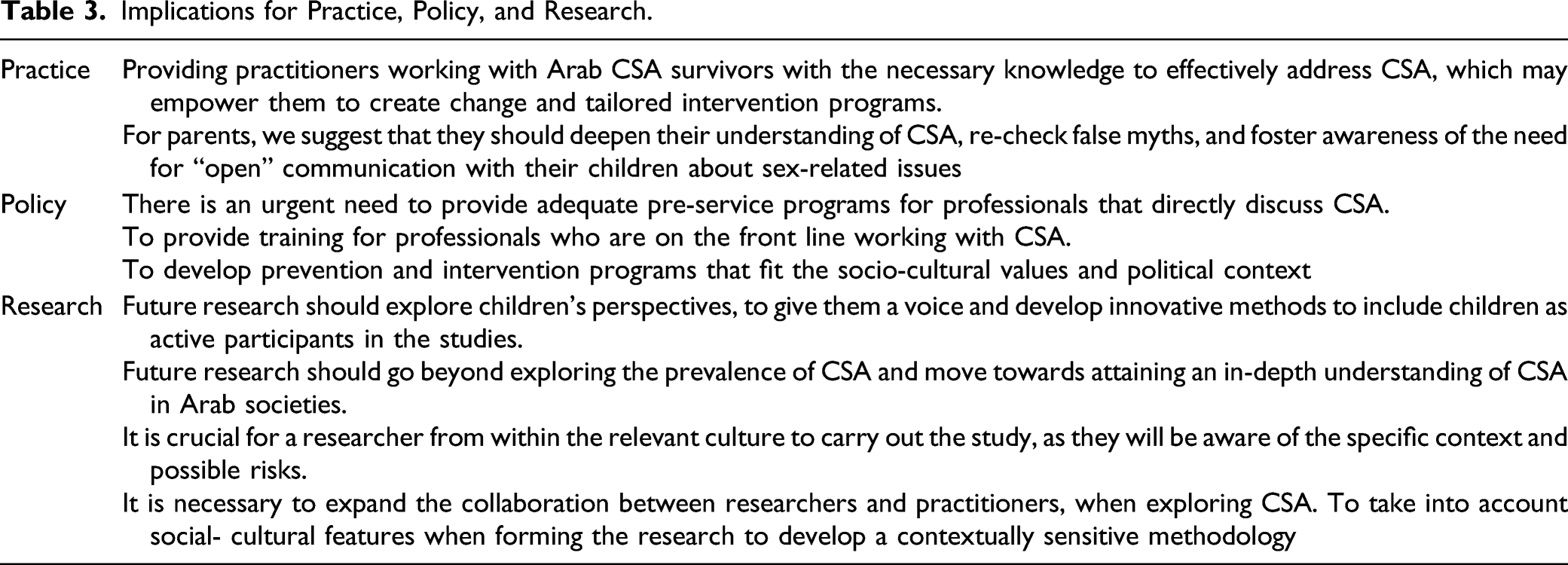
The current review has the potential to contribute to the work professionals do with CSA survivors and their families by better adhering to the existing knowledge and its challenges. The current review provides a general view of Arab culture and highlights the imperative need to address each individual while considering their unique characteristics and contexts, such as the political context, that are crucial in addressing and dealing with CSA.
For families, the reviewed findings highlight the false myths that parents often hold and their limited knowledge of signs of CSA and ways to deal with it. The results of the current review invite parents to re-examine false myths, deepen their knowledge of CSA, and recognize multiple signs of abuse to enable earlier interventions. The present findings encourage awareness among parents regarding the need for open communication with their children about sex-related issues and sexual abuse.
Implications for Practice, Policy, and Research.
Conclusions
Findings from the current study provide insights into CSA in Arab communities. The current systematic literature review emphasizes the lack of research on CSA in Arab communities, points to the barriers for parents and professionals in dealing with CSA and sheds light on the barriers and dilemmas among researchers in conducting research on CSA among Arab participants. Therefore, the current systematic literature review highlights the need for more tailored and ethical procedures in conducting studies among Arab communities.
Footnotes
Declaration of Conflicting Interests
The author(s) declared no potential conflicts of interest with respect to the research, authorship, and/or publication of this article.
Funding
The author(s) received no financial support for the research, authorship, and/or publication of this article.
