







Abstract
While the impact of trauma on delinquency and offending has been studied in great depth, less is known about the cumulative effects of adverse childhood experiences and how these experiences impact recidivism or reoffending outcomes of youth who already have justice system involvement. The main aim of this paper is to report on the results of a systematic review and meta-analysis on the relationship between Adverse Childhood Experiences and juvenile recidivism. Of particular interest, the paper examines to what extent, if any, ACEs can be used to predict youth reoffending outcomes, as well as investigates the nature of this relationship. The study utilizes quantitative metanalytical techniques to estimate the overall impact of Adverse Childhood Experiences on youth reoffending. Sixteen studies were selected after a comprehensive search of electronic databases covering the fields of social science, criminology, psychology, or related fields. Key findings demonstrate that Adverse Childhood Experiences increase the risk of youth recidivism, with effects varying amongst sample sizes. Narrative synthesis also shows key gender, racial, and ethnic differences as well as potential mechanisms in the cumulative trauma-reoffending relationship. These findings can further guide research and policy in the areas of trauma, juvenile justice, and crime prevention.
Researchers and policymakers alike have emphasized the critical need to differentiate between “‘what makes a juvenile offend’ from ‘what makes a juvenile reoffend’” (Wolff & Baglivio, 2017). To date, there is no national recidivism rate for juvenile offenders. Each state’s juvenile justice system differs in definition, measurement, and reporting of recidivism rates (Sickmund & Puzzanchera, 2014). Studies have reported that official recidivism rates can range from 33% (Snyder & Sickmund, 2006) to 85% (Trulson et al., 2005). A 2014 report from the Council of State Governments (CSG) Justice Center compiled data from 39 states that track recidivism and found that juveniles were more likely than adults to reoffend across all states (Council of State Governments Justice Center, 2014). The report found that the highest reported recidivism rate for all offenders was 75% within three years and 85% within five years.
Identifying risk and protective factors for those who do and do not reoffend is paramount in trying to prevent further juvenile justice contact or adult criminal justice involvement (Cottle et al., 2001; Fox et al., 2015; Piquero et al., 2015). Examining these factors and their influence on reoffending outcomes has been a significant component of criminological research over the last several decades (Dahlberg & Potter, 2001; Farrington, 2003). Currently, more research is needed to understand the continuation and trajectories of reoffending beyond initial law enforcement contact (Ryan et al., 2013).
One of the most frequently examined risk factors for youth violence and offending is childhood maltreatment, including physical abuse, sexual abuse, emotional abuse, and neglect (Braga et al., 2017; Cottle et al., 2001; Fitton et al., 2018; Maas et al., 2008). There have been several large-scale prospective studies (Thornberry et al., 2010; Widom, 1989; Widom & Maxfield, 2001) as well as literature reviews and meta-analyses (Maas et al., 2008; Fitton et al., 2018; Braga et al., 2017) supporting this link. Childhood trauma and adversity can impact neurological and childhood development (McCrory et al., 2011) and has been linked with a range of negative physical, health, and social outcomes (Currie & Spatz Widom, 2010; Lansford et al., 2002). While the impact of trauma on delinquency and offending has been studied in great depth, less is known about the cumulative effects of adverse childhood experiences and how these experiences impact recidivism or reoffending outcomes of youth who already have justice system involvement.
Adverse childhood experiences (or ACEs) are potentially traumatic events that occur in childhood, from birth to age 17 years (Centers for Disease Control and Prevention, 2021). Ten experiences comprise ACEs, including emotional, physical, or sexual abuse; emotional or physical neglect; witnessed household violence; household substance abuse or mental health issues; parental separation or divorce; and incarceration of a household member (Felitti et al., 1998). ACEs have a significant impact on child development (Flaherty et al., 2013; Kilpatrick et al., 2003; Norman et al., 2012) and are particularly prevalent among juvenile offenders (Baglivio et al., 2014; Logan-Greene et al., 2016). More recently, studies have begun to investigate the link between ACEs and juvenile reoffending (Baglivio et al., 2015; Kowalski, 2019; Wolff et al., 2017; Wolff & Baglivio, 2017). However, the literature on ACEs and juvenile recidivism has not yet been synthesized, and the impact of ACEs on reoffending may depend on several factors, including how ACEs are operationalized, how recidivism is defined, the sample of juvenile offenders in question, and the mediating/moderating factors considered.
The main aim of this paper is to report on the results of a systematic review and meta-analysis on the relationship between ACEs and juvenile recidivism. Of particular interest, the paper aims to explicate to what extent, if any, ACEs can be used to predict youth reoffending outcomes, as well as investigate the nature of this relationship. This includes the impact of these cumulative adverse experiences on reoffending, how specifically they impact reoffending outcomes, for whom they matter the most, and what factors play a role in shaping the ACEs-reoffending association. Also central to this paper is exploring how knowledge on the ACEs-recidivism relationship can inform interventions to prevent youth from further justice system involvement (Fox et al., 2015; Kowalski, 2019).
Prior Literature
Cumulative Adverse Childhood Experiences
The study of Adverse Childhood Experiences began when the Centers for Disease Control and Prevention, in collaboration with the San Diego Department of Preventive Medicine, undertook two waves of data collection between 1995 and 1997 to examine adverse childhood experiences (ACEs) amongst 17,421 well-educated, middle-class patients. The survey, the Adverse Childhood Experiences Questionnaire, asked participants about 10 specific abuse, neglect, and household dysfunction experiences prior to their 18th birthday, with the aim of determining rates of childhood trauma and their effects on adult health. These original questions included: emotional abuse, physical abuse, sexual abuse, emotional neglect, physical neglect, violent treatment toward mother, household substance abuse, household mental illness, parental separation or divorce, and having a household member who is/has been incarcerated (Centers for Disease Control and Prevention, 2015). The ACEs score was developed based on the number of exposures, with each exposure operationalized as dichotomous, regardless of the frequency or severity of the exposure. As a result, the score ranged from 0 (no exposures) to 10 (exposed to all 10 indicators).
The ACEs score was first utilized in a seminal study by Felitti et al. (1998). The researchers analyzed data from 9508 adult patients of a primary care clinic in San Diego, who provided health information and retrospectively reported on their exposure to psychological, physical, and sexual abuse, along with family substance abuse, family mental health, domestic violence, and family criminal behavior. More than half of respondents reported at least one ACE exposure, and one in four reported more than two. The study also found a strong dose–response relationship between the breadth of exposure to abuse or household dysfunction and multiple risk factors for several leading causes of adult mortality (e.g., smoking, obesity, physical inability, depression, alcoholism, suicidality, and drug abuse). For instance, participants who had four or more ACE exposures, compared to those who experienced none, had a 4- to 12-fold increase in health risks for alcoholism, drug abuse, depression, and suicide attempts.
Following Felitti et al. (1998), two noteworthy findings have emerged from ACE studies. First, studies point to evidence of a “graded” or “dose-responsive” relationship between the number of ACE exposures and various negative health and behavioral outcomes, where the number of reported ACEs increases incrementally the likelihood of experiencing these adverse outcomes (Dong et al., 2004; Edwards et al., 2003). Second, types of ACEs are highly interrelated; meaning individuals reporting at least one ACE are likely to report other types of ACEs (Baglivio & Epps, 2016; Duke et al., 2010; Felitti et al., 1998). These findings highlight the importance of examining ACEs as a composite measure (Dong et al., 2004; Finkelhor et al., 2007). It also explains that ACE exposure is not an isolated, random event (Baglivio & Epps, 2016). In other words, “analyses have revealed that ACE indicators are common, highly interrelated, and exert a powerful cumulative effect on human development” (Baglivio et al., 2018) (pg. 446).
Adverse Childhood Experiences, Offending, and Reoffending
There has been an established link between ACEs and negative life and health consequences (e.g., see Hughes et al., 2017). In line with this, studies have linked higher cumulative ACE scores to an increased likelihood of involvement in violence (Bellis et al., 2014). Duke et al. (2010) analyzed the impact of ACEs on adolescent interpersonal and self-directed violence for over 130,000 students in 6th, 9th, and 12th grades. The researchers found that each additional ACE was associated with a 35–144% increase in the risk of interpersonal violence (i.e., delinquency, burglary, physical fighting, dating violence, and weapon carrying) and self-directed violence (i.e., self-mutilating behaviors, suicidal ideation, and suicide attempts). More recent studies have also found that youth with greater exposure to ACEs are more likely to be involved in the juvenile justice system and, once involved in the system, also tend to experience poorer outcomes over the life course than those without such exposure (Baglivio et al., 2015; Fox et al., 2015; Zettler et al., 2018).
A few studies have examined the relationship between ACEs and offending patterns. These studies find that juvenile offenders who experienced a higher number of ACEs were more likely to have early onset of offending (Baglivio et al., 2015), more incidents of misconduct while incarcerated (Trulson et al., 2016), and more likely to engage in serious, violent, and chronic offending (Fox et al., 2015; Perez et al., 2018). Drawing upon (Moffitt, 1993) taxonomy, which focuses on trajectories of offending, Baglivio et al. (2015) analyzed the relationship between ACEs and various offending trajectory groups. They found that increased ACE exposure increased the likelihood of membership in the early-onset, chronic offending trajectory, described by (Moffitt, 1993) as life-course persistent offenders. Craig et al. (2017) used the Cambridge Study in Delinquent Development to investigate the prevalence and impact of ACEs on offending through age 56 and found a significant link between ACEs and an increased likelihood of offending throughout the life-course.
While several studies have examined the link between ACEs, violence, and offending, fewer studies have examined the link between ACEs and reoffending for justice-involved youth. These studies emphasize how reoffending outcomes differ from understanding initial justice system involvement, as justice-involved youth have a different set of risks and needs compared to the general population. In general, juvenile justice system involvement can be iatrogenic in itself, as the stigma of official offending may hinder rehabilitative efforts (Gatti et al., 2009). Importantly, youth involved in the juvenile justice system have higher rates of mental health disorders (Shufelt & Cocozza, 2006), a higher likelihood of involvement in child welfare systems (Wiebush et al., 2001), and higher rates of Post-traumatic Stress Disorder (PTSD) (Ford et al., 2008) than youth in the general population. In a sample of youth from a large urban juvenile detention center, 90% of youth reported a history of at least one potentially psychological traumatic experience (Abram et al., 2004), more than triple the 25% estimate in an epidemiological study of a representative sample of youth in the community (Costello et al., 2002). In a multi-site study, Shufelt & Cocozza (2006) found that 65–80% of youth involved in the juvenile justice system had at least one diagnosable mental health disorder.
Adverse childhood experiences have also been found to be prevalent among justice-involved youth (Baglivio et al., 2014; Cannon et al., 2016; Evans-Chase, 2014; Grevstad, 2010). The Washington State Family Policy Council used risk assessment items to create measures of ACE prevalence and found that juvenile offenders had approximately three times more ACEs than the original ACE study participants (Grevstad, 2010). (Baglivio et al., 2014) derived ACE scores among a sample of over 64,000 juvenile offenders using items from a risk and needs assessment tool. In the sample, offenders were 13 times less likely to report zero ACEs and four times more likely to report four or more ACEs compared to the original ACE study participants. Studies suggest that youth at the deeper end of the system, for example, those in residential placement, have an even higher number of ACEs (Baglivio, Jackowski, et al., 2014; Cannon et al., 2016). For youth who are in secure settings or receiving ongoing services and monitoring (e.g., probation), understanding the prevalence of ACEs may help break the cycle of system involvement, target cumulative exposure to trauma, and de-escalate post-traumatic biopsychosocial dysregulation (Ford et al., 2008; Ford, 2017). This is in line with the risk-needs-responsivity (RNR) model that highlights a focus on offenders most likely to reoffend, targets the factors associated with reoffending, and uses evidence-based treatments to reduce subsequent reoffending (Andrews & Bonta, 2010).
A 2021 review by Folk et al. (2021) examined the relationship between ACEs and several deleterious outcomes for justice-involved youth, including recidivism. Further, a review by Graf et al. (2021) found positive and consistent evidence for a graded relationship between ACEs and justice system involvement in the United States. Considering these findings, the authors recommended future quantitative synthesis of the association between ACEs and more specific forms of justice system involvement. A recent systematic review and meta-analysis by Jacobs et al. (2020), which examined broader ecological factors on youth reoffending, best conceptualized the importance of understanding reoffending outcomes as well as initial involvement. The authors explain how the application of research on initial involvement in crime and delinquency to reoffending outcomes faces several potential limitations. Of particular relevance to the current study, the researchers note that research on delinquency may differentiate delinquent behavior across general populations but not within a sub-population of previously adjudicated youth. Similar to the heterogeneous effects of ecological factors, ACEs may similarly have differential effects on reoffending among those who possess fewer or weaker individual risk factors in comparison to those who have more or stronger risk factors. Studies that examine the cumulative effects of ACEs on delinquency or offending using general population or low-income samples do not account for the risk factors associated with prior system involvement, treatment effects (e.g., community-based supervision, service referral), or the unique characteristics of justice-involved youth. This draws further attention to the need to distinguish between how ACEs impact offending within the general population and how ACEs impact reoffending within justice-involved youth.
Further complicating the nature of this relationship is the lack of uniform conceptualization and operationalization of recidivism. For example, states or studies may vary in defining recidivism as re-arrest or readjudication (Narvey et al., 2020) and differ in the amount of follow-up time measuring these outcomes, ranging significantly from 6 months (Muir, 2020) to 3 years (Kowalski, 2019). Other studies have examined reoffending using self-report measures rather than official measures (Craig et al., 2017), which may yield different findings. This makes it difficult for policymakers and researchers to compare across studies and emphasizes the need to synthesize the research to understand the true impact of ACEs on recidivism in a way that can account for and thoroughly examine these differences.
Method
This section reports on the methods of the systematic review and meta-analytic strategy. The systematic review was conducted in accordance with the guidelines of the Campbell Collaboration (Collaboration, 2014).
Information Sources and Search Strategies
The study used multiple search strategies to identify potentially eligible studies for the present review. First, the following electronic databases were comprehensively searched for relevant publications between the dates of December 2019 and June 2020: Google Scholar; Criminal Justice Periodical Index; National Criminal Justice Reference Service (NCJRS) Abstracts; Social Science Citation Index (through Web of Science); Center for Research Libraries: Dissertation Search; Catalogue of U.S. Government Publications; PsychINFO; PubMed; and International Bibliography of the Social Sciences (IBSS). These databases were selected due to their wide-ranging coverage of social and behavioral science, criminology, and criminal justice literature. These databases have also been utilized in systematic reviews carried out under the Campbell Collaboration. Search terms were restricted to titles, abstracts, and keywords and differed based on the search platform requirements. The following main search terms were used: “adverse childhood experiences” AND “juvenile recidivism,” “youth recidivism,” “youth reoffending,” or “juvenile reoffending.” In some cases, “childhood adversity” or “cumulative trauma” and “comorbid trauma” were used in conjunction with “adverse childhood experiences.”
The second strategy involved searches of the following websites of U.S. governmental organizations with a specific or general focus on juvenile crime and juvenile justice: National Institute of Justice; Office of Juvenile Justice and Delinquency Prevention (https://ojjdp.ojp.gov/); and Congressional Research Service (http://www.loc.gov/crsinfo/). These websites contain publications and governmental reports on juvenile justice and system contact for youth. Further, literature reviews and references of all potential studies were examined, and forward citation searches on Google Scholar were performed. Lastly, several leading experts and practitioners in the field were contacted to identify eligible studies that may not have been found through the other search strategies.
Criteria for Inclusion of Studies
Several criteria were used when selecting studies for inclusion in the review. First, the outcome variable of interest was recidivism or reoffending. In line with prior reviews (e.g., Jacobs et al., 2020), recidivism was defined as a self-reported or administratively recorded violation, delinquent, and/or criminal act following prior adjudication or arrest. With this definition, the initial adjudication/arrest occurred prior to the age of 18; however, the re-offense may have occurred in adulthood. Second, the impact of ACEs as the predictor variable was analyzed. This included studies that focused on the ACEs literature (Centers for Disease Control and Prevention, 2015; Dong et al., 2004; Felitti et al., 1998), whereby categories of experienced adversities are used as a measure of a cumulative adversity score. Studies may include in their composite measure additional adverse childhood experiences not measured in the original ACEs study (Finkelhor et al., 2013). However, a study was excluded if it did not specifically measure ACEs as a single cumulative indicator; for example, studies that examined the impact of childhood sexual abuse, physical abuse, or emotional abuse separately.
Third, the study sample included delinquent youth, defined as those who were adjudicated or arrested at or before the age of 18 (Jacobs et al., 2020; Spruit et al., 2016). The term “adjudicated” is analogous to the term used in adult court, “convicted,” indicating that the court concluded the juvenile committed the delinquent act. Fourth, studies were included if they utilized prospective longitudinal or experimental designs to test the relationship between ACEs and juvenile reoffending. Specifically, studies were included if the measure of ACEs preceded the outcome of juvenile reoffending to establish causality. Studies were included if they employed multivariate statistical analytical techniques and were methodologically rigorous, meaning requisite data (effect size, confidence intervals [CIs], and significance levels) were reported to allow for the use of meta-analytic techniques. Finally, published reports were included; this also included “grey literature” publications such as published dissertations, which is recommended to help strengthen the validity of the review, avoid publication bias, and increase comprehensiveness (Paez, 2017). There were no limitations on language or geographic origin.
Screening of Studies
Study titles/abstracts were screened as well as full texts of potentially eligible studies. Studies that successfully met the criteria for inclusion at both levels of screening were included for coding and data extraction. Coding followed a detailed protocol, including the extraction of study and sample characteristics, follow-up, operationalization, conceptualization of predictors and outcomes, controls, statistical analyses, and results. Similar to Jacobs et al. (2020), the present review also extracts information from studies that test for mediation, moderation, and racial/ethnic and gender differences in order to examine the nuanced nature of the relationship between ACEs and reoffending. References, reviews, and data extraction were managed using the systematic review software DistillerSR.
Meta-Analysis
Meta-analytic techniques were used to determine the overall strength and statistical significance of ACEs on juvenile reoffending. Studies typically employed logistic regression or analytic techniques with dichotomous outcomes. Therefore, the main measure of effect size was the odds ratio, interpreted as the change in the likelihood of recidivating associated with a one-unit change in the independent variable (number of ACEs). Studies were excluded from the meta-analysis if they did not have a dichotomous outcome or if the requisite data could not be found or provided by the authors. As a result, a total of 14 studies were included in the meta-analysis.
To account for studies with multiple main effect sizes or those that only included subgroup effect sizes, multi-level meta-analytic techniques were used. Traditional univariate meta-analytic approaches emphasize the importance of having no dependency between effect sizes in the data set that is to be analyzed (Rosenthal, 1984), as this can lead to “overinflated” information and overconfidence in the results of the meta-analysis (Van den Noortgate et al., 2013). While averaging or limiting effect sizes is a common method for dealing with dependency in meta-analyses (Lipsey & Wilson, 2001), three-level meta-analytic approaches are a practical way to ensure statistical power is not lost, as well as increase the number of research questions that can be asked through meta-analytic techniques (Assink & Wibbelink, 2016; Cheung, 2015). Further, three-level meta-analytic models consider three different variance components distributed over three levels of the model: sampling variance of the extracted effect sizes at level 1; variance between effect sizes extracted from the same study at level 2; and variance between studies at level 3. This review examined 26 effect sizes nested within 14 studies in a 3-level random effects multi-level model. Findings are presented in forest plots that include the distribution of effect sizes clustered by study with robust standard errors.
Tests of heterogeneity were performed to examine the distribution of effect sizes. Heterogeneous distributions suggest inconsistencies across the studies, for instance, due to systematic differences in study design and sample characteristics. Study heterogeneity was initially evaluated with Cochran’s Q. However, due to the nested structure of the data how variance is attributed to the different levels in the model is more informative. I2 values were examined for within-cluster heterogeneity, between-cluster heterogeneity, and the total amount of heterogeneity not attributable to sample error (Harrer et al., 2021; Higgins et al., 2002). One-sided log-likelihood-ratio tests were used to determine the significance of the between and within-study heterogeneity (Assink & Wibbelink, 2016).
Sensitivity analyses proceeded in two steps. First, through detection of extreme outliers, whereby confidence intervals did not overlap with the confidence interval of the pooled effect (Harrer et al., 2021). Next, influence analysis involved examining the DFBETAS value and Cook’s Distance (Viechtbauer & Cheung, 2010). All analyses were conducted using the dmetar and metafor packages in R (Assink & Wibbelink, 2016; Harrer et al., 2021).
Results
This section reports on the results of the systematic review and meta-analysis. First, support for the ACEs-reoffending relationship and the nature of this effect was assessed using quantitative data synthesis (i.e., meta-analysis). Next, results from moderation and mediation analyses were narratively synthesized to delve into potential differences in effects by sup-groups and the mechanisms through which ACEs may impact reoffending outcomes.
Included Studies
Figure 1 provides a flowchart that details the process of identifying, collecting, and screening eligible studies. Search strategies produced a total of 341 studies (after duplicates were excluded). Following title and abstract screening, this was narrowed down to 82 studies, which were subsequently assessed through full-text screening. Here, a total of 66 studies were excluded. Reasons for exclusion include incorrect target population (n = 19), no measure of ACEs as an independent variable (n = 29), no measure of recidivism (n = 12), relationship between ACEs and reoffending was not measured longitudinally or using multivariate methods (n = 5), and duplicate study (n = 1). A total of 16 studies met the inclusion criteria. Flowchart for selection of studies.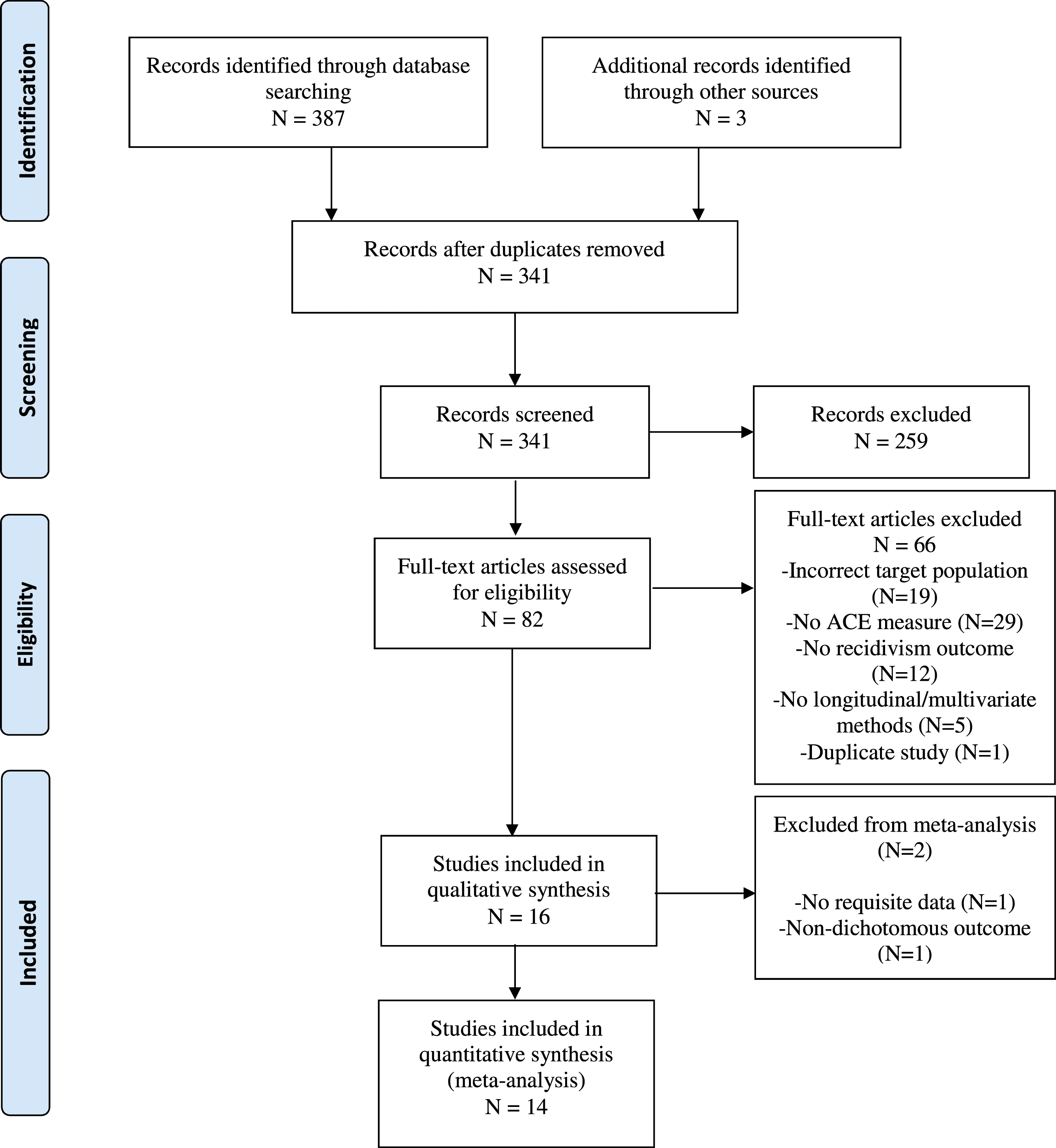
Summary of Study Characteristics
Characteristics of included studies.
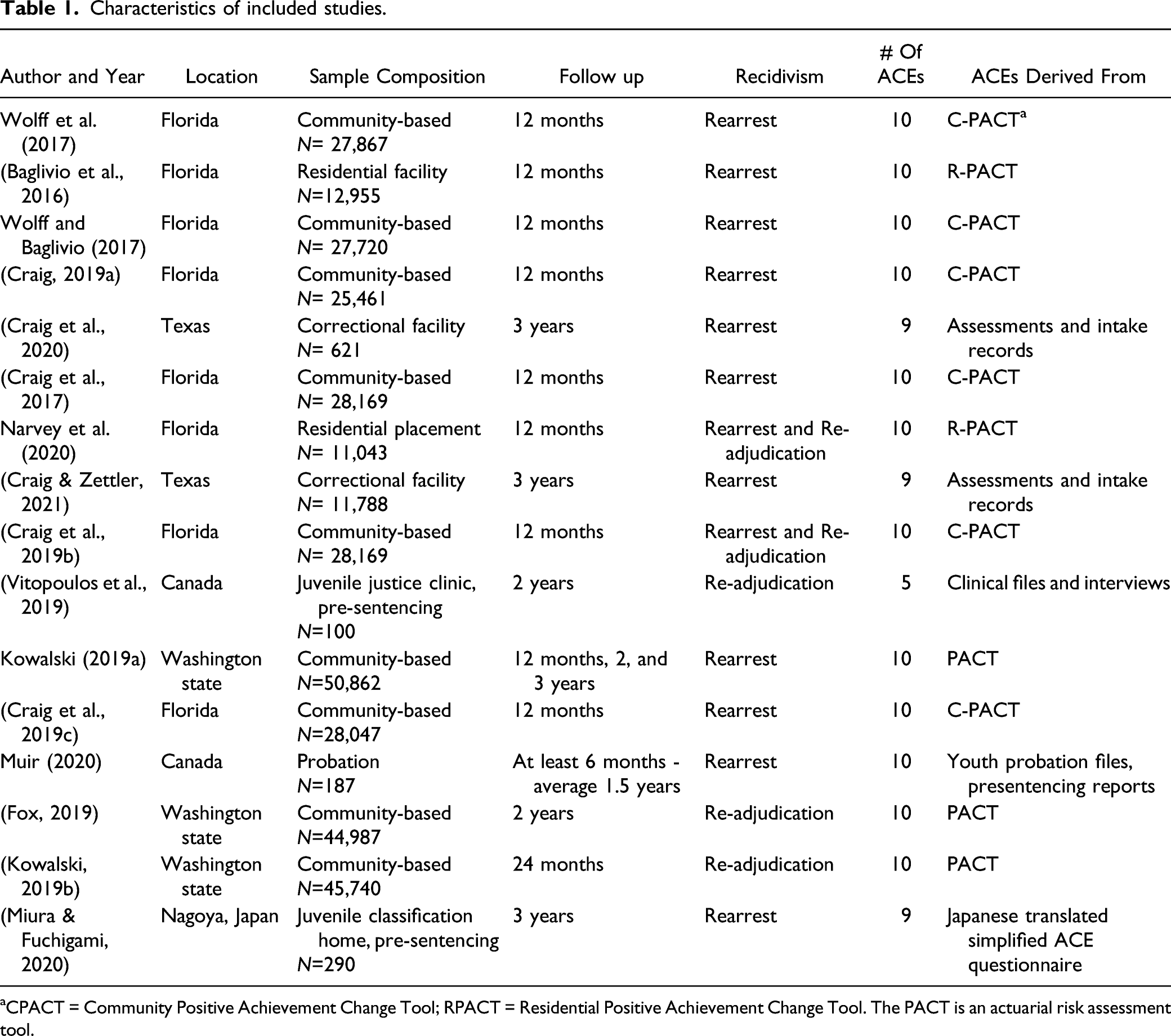
aCPACT = Community Positive Achievement Change Tool; RPACT = Residential Positive Achievement Change Tool. The PACT is an actuarial risk assessment tool.
Generally, studies were well-designed for the assessment of recidivism, longitudinally testing the degree to which ACEs predicted reoffending among youth, above potential confounders. The outcome measure of recidivism was conceptualized as a re-arrest1 or re-adjudication following a release, completion of community-based placement, or charge. Observation periods ranged from 12 months to 36 months, while Muir (2020) followed participants for at least 6 months but an average of 1.5 years. Studies also differed in terms of sample composition and size. Ten studies included youth who were in community-based placement or on probation, four studies involved youth in correctional or residential facilities, and two studies sampled youth in pre-sentencing clinics or assessment centers. Sample sizes varied greatly, ranging from 100 to upwards of 50,000 youths.
The majority of studies derived the ACE scores used in the analysis from risk assessment tools (n = 13). Other studies used a form of the ACE questionnaire (n = 1) or youth probation files, reports, and interviews (n = 2). Of those studies that used risk assessment tools, 11 used items from the Positive Achievement Change Tool (PACT), a validated fourth-generation actuarial risk/needs assessment tool that classifies youth according to risk to reoffend and rank-orders criminogenic needs (Baglivio, Jackowski, et al., 2014). The Residential Positive Achievement Change Tool was used to create ACE measures for populations in residential facilities, while the Community Positive Achievement Change Tool was administered to youth in community-based placement. Twelve of the studies operationalized ACEs using the original 10 ACEs. Three studies included 9 ACEs, which deviated from the original. Vitropolis (2019) included both an ACEs measure as well as a child adversity measure. The ACE measure included five items: physical abuse, emotional abuse, sexual abuse, family violence, and neglect.
Do Adverse Childhood Experiences Predict Reoffending?
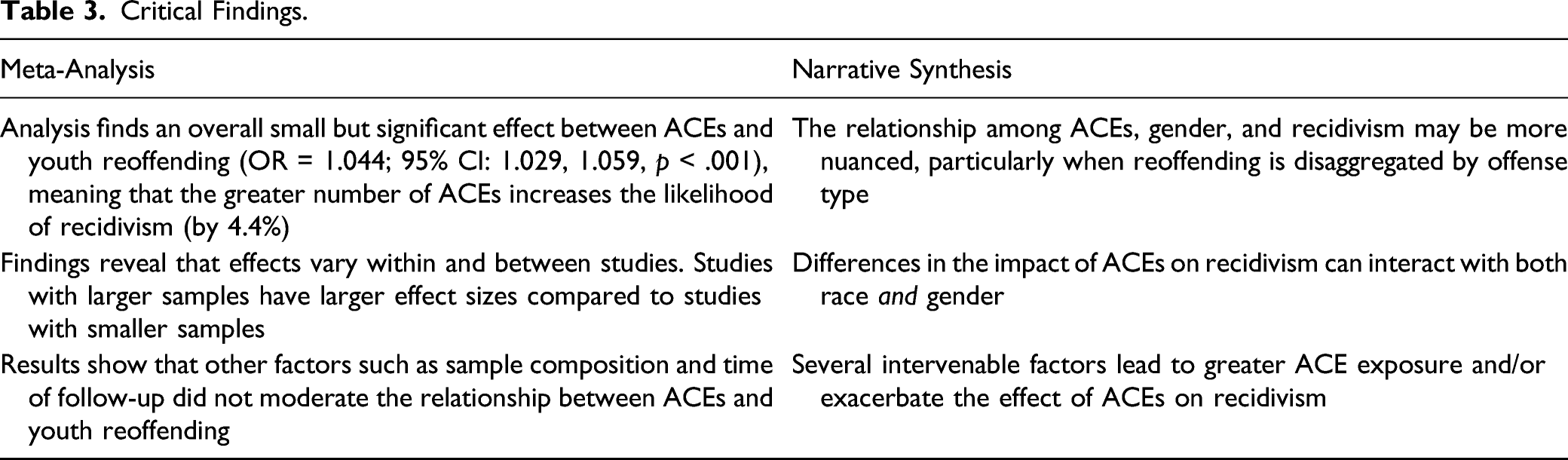
Researchers most often analyze the relationship between ACEs and reoffending with logistic regression, and 14 of the 16 studies reported at least one statistically significant and positive association between ACEs and reoffending. Two studies did not find any significant direct effects of ACEs on reoffending, and two studies reported an inverse relationship between ACEs and reoffending in sub-group analyses. Results from the meta-analysis further reveal a significant and positive effect between ACEs and juvenile recidivism. Figure 2 presents a forest-plot graph that summarizes the results of the 26 effect sizes nested within 14 studies that addressed the impact of ACEs on recidivism. Overall, a higher number of ACEs is associated with a 1.044 or 4.4% increase in the odds of recidivism (OR = 1.044; 95% CI: 1.029, 1.059, p < .001). Forest plot of the distribution of effect sizes (26 effect sizes, 14 studies) Note: Standard errors are robust to clustering by study. Forest plot places limits on confidence intervals for ease of plot interpretation.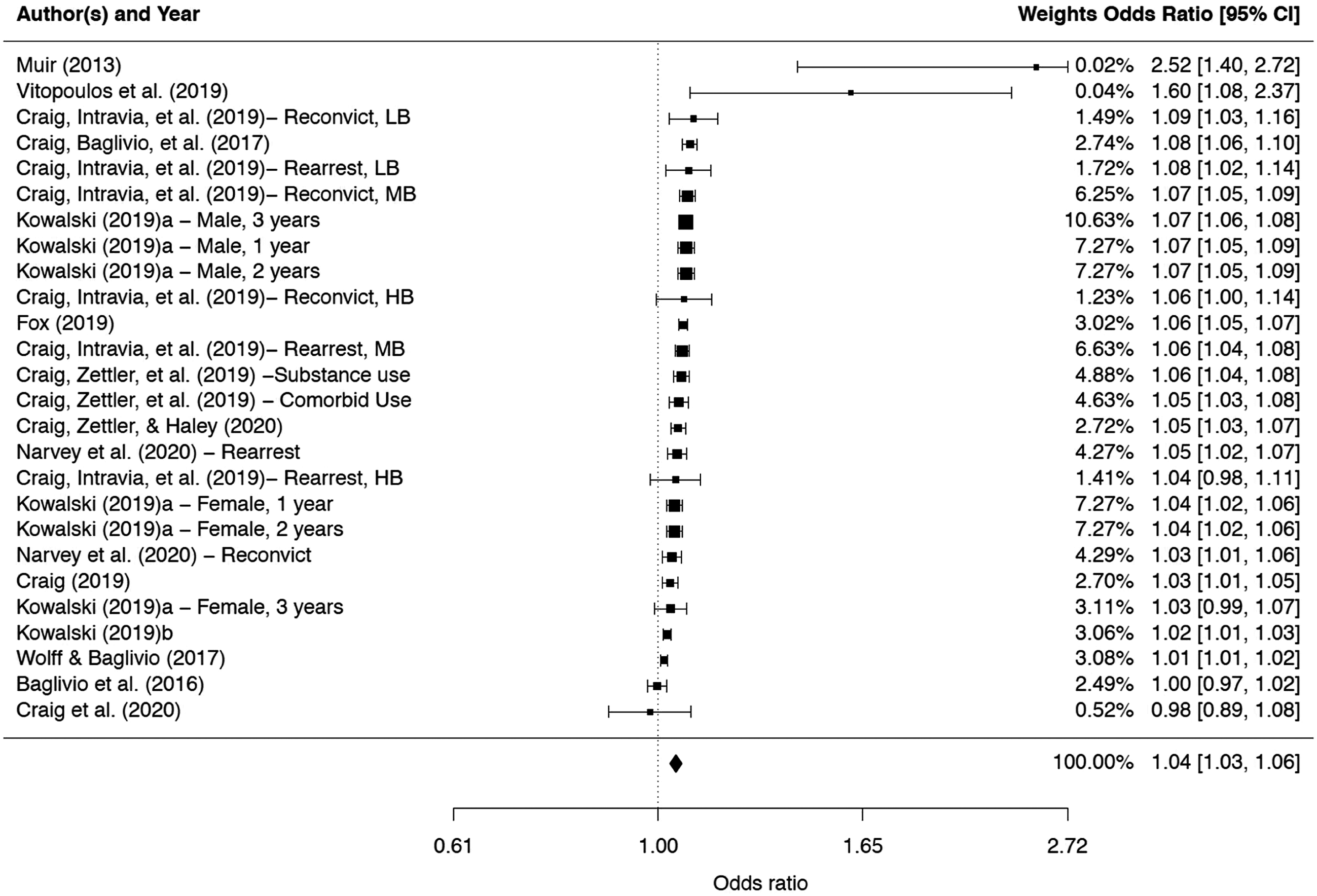
Results found significant evidence that the distribution of the effect sizes that looked at the impact of ACEs on juvenile recidivism was highly heterogeneous (Q = 169.7604; df = 13; p < .0001). Further analyses revealed that approximately 14.8% of the heterogeneity is attributed to differences between effect sizes, and 70.0% is attributable to differences between studies (total I2 = 84.79%). Results from log-likelihood-ratio tests reveal significant within-study and between-study heterogeneity. Further, heterogeneity was regarded as substantial, as less than 75% of the total amount of variance is attributed to sampling variance, suggesting the utility of moderator analysis (Hunter & Schmidt, 1990).
Results from Moderator Analysis (26 Effect Sizes nested within 14 Studies).
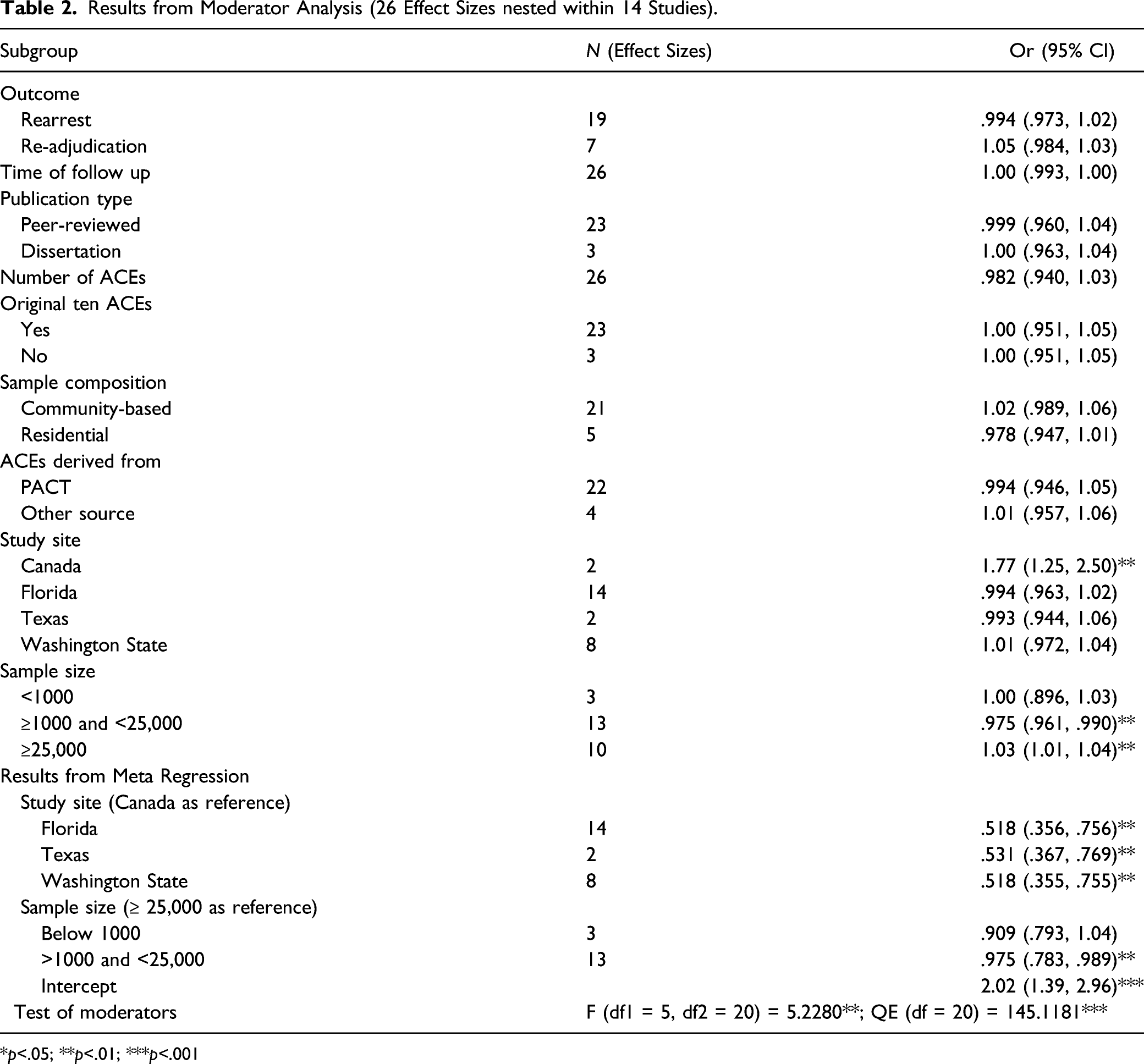
*p<.05; **p<.01; ***p<.001
How and for Whom do Adverse Childhood Experiences Matter for Youth Reoffending?
To understand the processes through which ACEs may increase or decrease recidivism, we turn to results from studies that included some assessment of group variation, moderation, or mediation.
From the three studies that examined both race and gender on the impact of ACEs on reoffending, one study found that the direct impact of ACEs was not evidenced for any subgroup of youth (Baglivio et al., 2016). Notably, (Craig & Zettler, 2021) found that ACEs failed to predict violent recidivism amongst Hispanic females, and Wolff et al. (2017) found that ACE scores did not increase time to recidivism for Hispanic youth. (Craig & Zettler, 2021) also found more detailed racial and ethnic differences when examining race and gender and their impact on various types of reoffending.
Six studies tested interactions or group differences between ACEs and dynamic factors (i.e., intervenable features of individuals and their environments; (Bonta & Andrews, 2016). Studies specifically examined resilience, intervention programming, social bonds, empathy, substance use, and mental health symptomology. Fox (2019) found resilience reduces the impact of ACEs on offending behavior. Narvey et al. (2020) found large improvements in empathy reduce the effect of ACEs on re-arrest and re-adjudication. (Kowalski, 2019) found ACEs were associated with increased recidivism for youth with internalizing symptoms and violent reoffending with youth with internalizing and externalizing symptoms. Further, Alcohol and Other Drug (AOD) treatment was more effective in reducing the effect of ACEs on recidivism for males. Results from (Craig et al., 2019) showed that ACEs increased the odds of recidivism among subsamples with low or moderate substance use buffering scores, but not among those who scored high in the substance use buffering scale. (Craig et al., 2017) did not find evidence of moderation among ACEs and social bonds, and Kowalski (2019) did not find a significant effect between intervention programming and ACEs.
The three studies that disaggregated mediation analyses by race, gender, or both, found variation by race or gender in the processes influencing the ACE-reoffending relationship. (Craig et al., 2019) found substance use to partially mediate the ACE-offending relationship among males, and the co-occurrence of mental health problems and drug use served as mediators for both males and females. Further, drug and alcohol use partially mediated the effects of ACEs on recidivism among White and Black youth, but not Hispanic youth. Mental health problems partially mediated the relationship only among Black youth, and comorbid mental health and drug use partially mediated the ACE-recidivism relationship, but only among White youth. (Kowalski, 2019) found that AOD treatment mediated the relationship between ACEs and recidivism for the total sample, but only among males once broken down by gender. (Baglivio et al., 2016), with respect to the indirect effect of ACEs through child welfare involvement, found a significant effect for the full sample, males, White youth, and Hispanic youth, but not Black youth.
Discussion
A growing number of studies have recognized the importance of understanding how cumulative adverse childhood experiences impact recidivism outcomes for justice-involved youth. This comes as research continues to find that the effects of polyvictimization or exposure to multiple types of family violence can have particularly strong impacts on children by impacting neurological, social, and developmental processes (Finkelhor et al., 2011; Herrenkohl et al., 2000; Moylan et al., 2010). This cumulative effect can further contribute to maladjustment and the cycle of violence (Ford & Delker, 2018). Taken together, the results of this systematic review and meta-analysis lend support to this developing area of research, showing that a greater number of ACEs significantly contributes to youth reoffending. In line with other scholars, the results emphasize that ACEs are essential in the understanding of youth recidivism (Kowalski, 2019) and treatment of ACEs can be a key factor in preventing the continuation of criminal behavior (Fox et al., 2015). This is also in line with decades of ACEs literature more generally, which connects ACEs with various health consequences, including heart disease, alcoholism, depression, drug use, and premature death (Centers for Disease Control and Prevention, 2015).
The meta-analysis also revealed that effects vary within and between studies. For example, studies with larger samples have larger effect sizes compared to studies with smaller samples. This helped to synthesize studies that differentially conceptualized both ACEs and recidivism and provide clarity on what that means for study findings. Specifically, results show that factors such as sample composition and time of follow-up did not moderate the relationship between ACEs and youth reoffending. Further, ACEs play a significant role in both re-arrest and readjudication. A narrative synthesis of several studies highlighted several factors that may give a more nuanced understanding of the ACE-recidivism relationship. For instance, ACEs exert an influence across race and gender; yet, studies find racial, ethnic, and gender differences once these categories and types of recidivism are broken down into more refined categories. These differences are further nuanced when examining variation in the effect of ACEs by factors including resilience, empathy, mental health, and alcohol and drug treatment. The review also draws attention to potential mechanisms of the ACE-reoffending relationship, including welfare involvement, negative emotionality, current drug use, current mental health problems and their co-occurrence, and drug treatment (see Table 3).
Before discussion of the key findings’ implications for policy and research, the study notes several limitations. First, the number of studies that examined the relationship between ACEs (or a form of cumulative trauma) and youth reoffending is modest. This draws attention to a rather small but growing area of literature. Further, two of the included studies did not provide the requisite data to be included in the meta-analysis. While this narrowed down the sample to 14 included studies, it is important to note that multi-level meta-analytic techniques allowed for the inclusion of multiple effect sizes per study. This is a useful approach for meta-analytic studies, as it provides a large sample size for statistical power, allows effect sizes to vary between levels, and allows for more detailed moderator analysis to help explain within-study or between-study heterogeneity (Assink & Wibbelink, 2016). Second, the included studies come from a small number of locations and author teams. While this can present some challenges with respect to generalizability, moderator analysis accounting for study site and location examined this impact on the effects of ACEs on recidivism. Future meta-analytic updates in this area should continue to account for study location even as studies continue to develop, particularly as most of the recidivism studies thus far have come from four main locations. Third, while the current detailed the results of gender and racial differences in these studies, this was not assessed quantitatively using meta-analytic techniques. In line with other similar meta-analyses (Jacobs et al., 2020) and best practices (Lipsey & Wilson, 2001), this study examined only main effect sizes included in the studies. However, it is possible for future researchers to further evaluate these differences by performing a three-level meta-analysis that includes all effect sizes in each study. This would allow for more a statistical approach in examining gender and racial differences in the ACE-reoffending relationship.
Directions for Policy and Research
The overall significant association between ACEs and reoffending has important implications for juvenile justice policy. First, the significant impact of ACEs on reoffending reaffirms the importance of screening for ACEs in juvenile justice settings and for consideration of evidence-based interventions. As highlighted in the scoping review by Folk et al. (2021) of ACEs and various outcomes for justice-involved youth, screening should be prioritized at any and all points of contact with the justice system.
In addition to screenings for potentially traumatic events, trauma-informed training for personnel and practitioners is an important aspect, as it can make practitioners more sensitive and understanding to youth who have experienced ACEs that come in contact with the justice system (Lacey & Minnis, 2020). Adding a more detailed understanding of the mechanisms that impact ACEs can be incorporated into trauma-informed training and further advise the various criminal justice actors who come into contact with the youth (e.g., probation officer, program personnel) as well as inform the community interventions themselves on how contextual factors might impact treatment response. In line with this, the findings show that several intervenable factors lead to greater ACE exposure and/or exacerbate the effect of ACEs. These may be considered when tailoring community-based placements at the individual level (e.g., MST, CBT), at the school level (e.g., social skills training), and the community level (e.g., peer mentoring programs). As discussed in Andrews and Bonta’s Risk Needs Responsivity Model, programs would be most effective when addressing youth at the highest risk as early as possible.
It is also important to contextualize these findings, especially concerning gender and racial differences. This review shows that ACEs may differentially impact youth from different races/ethnicities. The differential impact of ACEs on Black, White, and Hispanic youth is also evidenced in research by (DeLisi et al., 2017) in youth offending patterns. Potentially complicating this relationship is that all of the reoffending measures in the review come from official sources. Official measures of criminal behavior and their relationship with ACEs can be confounded by differences in police, attorney, and judicial practices. Given unequal ACE distributions by race, sex, and sexual orientation (Nurius et al., 2016) and strong gradients by socioeconomic status (Halfon et al., 2017), future research would benefit from the use of self-report measures. Further, from a clinical perspective, these results emphasize the need for psychological and recidivism reduction interventions to account for the differential needs of minority youth and families (Folk et al., 2021). This also calls for practitioners, policymakers, and researchers alike to consider intersectional trauma-informed frameworks and interventions (De La Rue & Ortega, 2019); the studies in this review found that differences in the impact of ACEs on recidivism can interact with both race and gender.
Critical Findings.
Summary of Research, Policy, and Practice Implications.
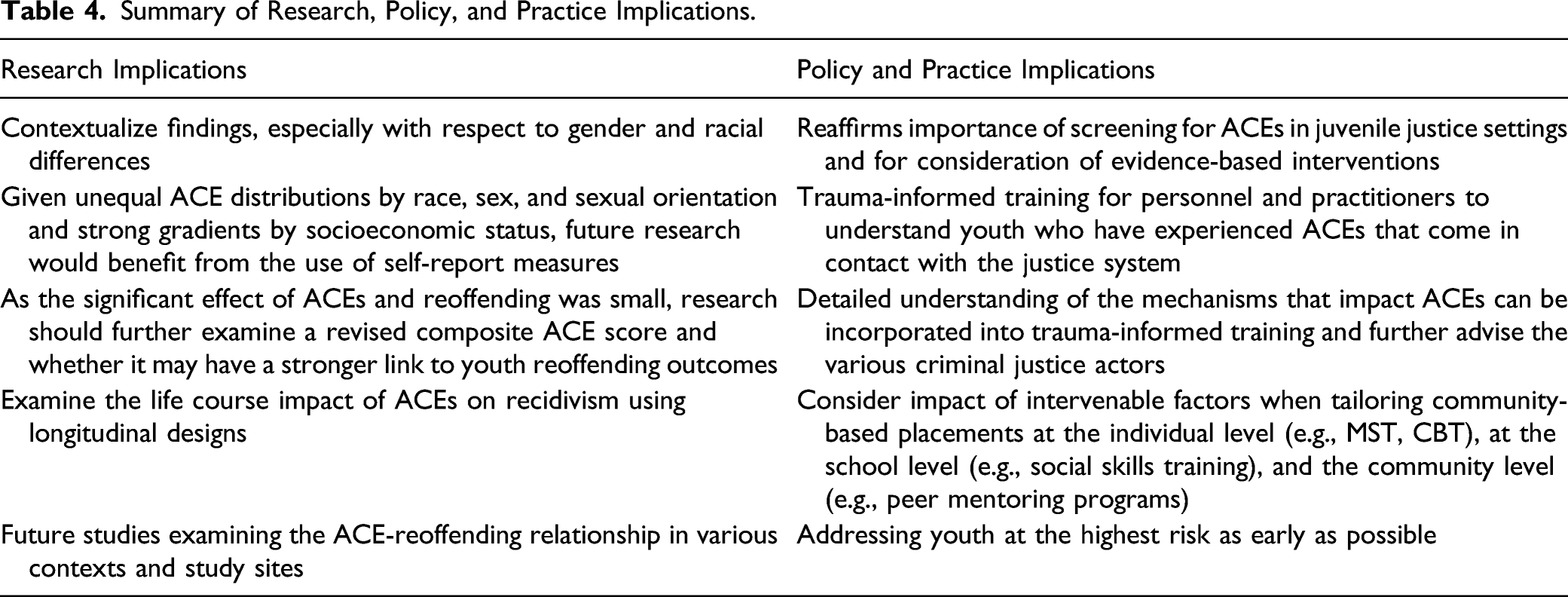
Second, the literature on ACEs draws from a life course perspective, including long-term effects on health (Felitti et al., 1998; Hughes et al., 2017). As proposed by Graf et al. (2021), a promising avenue for research includes analyzing the effects of ACEs on recidivism in adulthood and later in life. All the studies included in the meta-analysis had follow-up periods that ranged from 6 months to 3 years. While studies have examined the relationship between ACEs and chronic and persistent offending (Baglivio, Jackowski, et al., 2014; Fox et al., 2015; Perez et al., 2018), as well as offending at different stages of the life course (Craig et al., 2017), studies have not yet examined the life course impact of ACEs on recidivism using longitudinal designs. This information can be an important tool for policymakers and providers in understanding the long-term impacts of intervening on these exposures in childhood (Graf et al., 2021) (Table 4).
Conclusion
The current systematic review and meta-analysis demonstrates the extent to which ACEs impact youth reoffending outcomes. Building on the work of Graf et al. (2021), who examined ACEs and justice system contact, this review helps shed light on the processes that occur after initial arrest or adjudication for justice-involved youth. The analysis finds an overall small but significant effect between ACEs and youth reoffending, meaning that the greater number of ACEs increases the likelihood of recidivism (by 4.4%). These results held for both re-arrest and re-adjudication. This emphasizes the detrimental effects of ACEs, which have been found for other outcomes, including incarceration, poor health, and early mortality (Felitti et al., 1998; Graf et al., 2021; Hughes et al., 2017a; Kalmakis & Chandler, 2015). The review further helps contextualize ACE screenings to understand for whom and in what contexts ACEs matter for youth reoffending.
Footnotes
Declaration of Conflicting Interests
The author(s) declared no potential conflicts of interest with respect to the research, authorship, and/or publication of this article.
Funding
The author(s) received no financial support for the research, authorship, and/or publication of this article.
