







Abstract
Pornography use is one of the factors that has been proposed to be associated with violence. We aimed to explore the literature of the last 20 years, with the objective of understanding the possible association between pornography use and violence. Two electronic databases (PsycINFO/PsycARTICLES and PubMed/Medline) were used. We included members of the general population, of any sex, age, and sexual orientation, who were direct users of pornography or have a partner who uses pornography. Only studies with pornography use and violence assessments, and that specifically evaluated the association between both factors, were included. In all, 59 studies met the inclusion criteria. An association between pornography use and nonsexual violence seems to exist, although the causality of this association remains unclear. Heterogeneity of results exists regarding the association between pornography use and intimate partner sexual assault and coercion: some studies have failed to demonstrate this association, while others have observed it partially or significantly. Contradictory results have also been observed when examining the association between pornography use, rape myths, and other beliefs/attitudes. The main limitation is the heterogeneity in the conceptualization of both constructs (pornography and violence). Multiple theoretical models, methodologies, and categorizations have been used in the studies, complicating the comparability of the findings. The association between different types of violence and pornography use requires further in-depth research to better understand the specific link between both constructs.
CRD42021259874.
Introduction
Violence and sexual violence have become a major public health issues worldwide (Krahé, 2018). The internet and the technological revolution have enabled the development of new types of violence (Henry et al., 2020). On the other hand, the easy access to electronic devices has allowed the consumption of pornography to become a common practice among both young people and adults (Farré et al., 2020; Rothman et al., 2021). Some authors state that pornography represents different forms of violence against women and sexual violence (Miller & McBain, 2022; Vera-Gray et al., 2021) and that pornography use may be related to different types of violence (Tarzia & Tyler, 2021; Willis et al., 2022). However, the evaluation of these associations first requires the establishment of a conceptual and theoretical framework, included below.
Violence Conceptualization
The World Health Organization defines violence as “the intentional use of physical force or power, threatened or actual, against oneself, another person, or against a group or community, that either results in or has a high likelihood of resulting in injury, death, psychological harm, maldevelopment or deprivation” (World Health Assembly, 49, 1996). However, multiple theoretical classifications have been made of the different types of violence. For example, it has been proposed that the violence may be physical, sexual, or psychological, or in the form of deprivation/neglect, and that these types of violence may occur at a self-directed, interpersonal (family/partner, community), or collective (social, political, economic) level (Krug et al., 2002).
Considering the heterogeneity of theoretical models of violence, this systematic review is partially focused on the taxonomy of intimate partner sexual violence proposed by Bagwell-Gray et al. (2015). This theoretical model suggests that the different types of intimate partner sexual violence may be categorized into four quadrants. These quadrants would be defined by two central axes regarding two core characteristics: (1) the level of invasiveness, according to “how invasive the type of sexually abusive act is, ranging from vaginal, oral, or anal penetration at the high end of invasive acts to unwanted touching at the low end of noninvasive acts” and (2) the level of forcefulness, “the degree of physical force used, ranging from physical violence at the high end of physical force to nonphysical manipulation at the low end of physical force.” The four quadrants have been categorized as (a) intimate partner sexual coercion (high invasiveness and low force), understood as “the use of nonphysical, controlling, degrading, and manipulative tactics to obtain, or attempt to obtain, unwanted oral, vaginal, or anal intercourse, including forced penetration and sex with objects”; (b) intimate partner sexual assault (high invasiveness and high force), understood as “the use of physical violence or the threat of physical violence to obtain, or attempt to obtain, unwanted oral, vaginal, or anal intercourse, including forced penetration and sex with objects”; (c) intimate partner sexual abuse (low invasiveness and low force), defined as “the use of manipulative, psychologically abusive tactics to keep an intimate partner in submissive positions of power; strategies include sexual degradation, noncontact unwanted sexual experiences, and reproductive and sexual control”; and (d) intimate partner forced sexual activity (low invasiveness and high force), understood as “unwanted sexual experiences involving touch but not sexual penetration, such as being kissed in a sexual way, or having sexual body parts fondled or grabbed” (Figure 1).
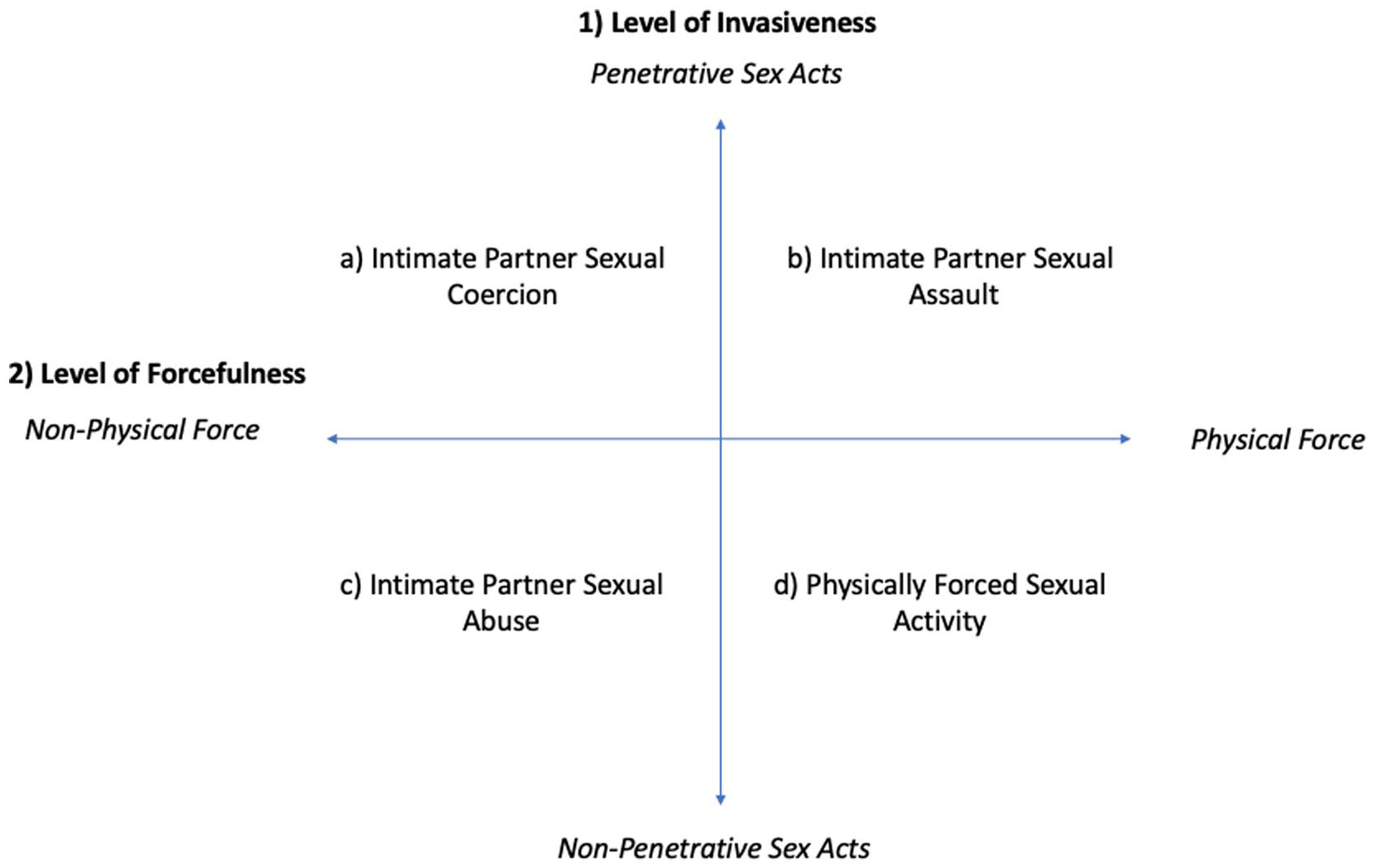
Typology of intimate partner sexual violence.
Pornography conceptualization
The conceptualization of the term “pornography” has not been without controversy. Multiple definitions of pornography have been proposed, although a recent Delphi Panel study has noted that the definition “sexually explicit materials intended to arouse” seems to hold some consensus among experts (McKee et al., 2020).
The emergence of the internet has promoted the use of free sexually explicit content (Cooper, 1998). It may have increased competition among producers, who would seek to generate more extreme sexually explicit content to encompass the maximum possible range of sexual desires of consumers (Carrotte et al., 2020). In order to corroborate this, Carrotte et al. (2020) systematically analyzed 23 studies that conducted a content analysis of video pornography. The authors found that “minor forms of aggression” (e.g., spanking), as well as unequal heterosexual sexual relations (in which there is often male domination of women), were relatively common, while the presence of extreme violence was rare.
Association between violence and pornography use
Different theoretical frameworks, such as cultivation theory (Gerbner et al., 1994), have advised that individuals’ perceptions of reality can be influenced and/or altered by the media. In the specific case of pornography, it has been suggested that it may promote imitation behaviors, as well as observational learning and desensitization (Anderson et al., 2003; Rodenhizer & Edwards, 2019).
In this vein, pornography use is one of the factors that has been proposed to be associated with violence (Tarzia & Tyler, 2021). For decades, some authors have argued that sexually explicit content generates and reinforces sexist stereotypes, as well as the perception that violence, specifically against women, is permissible (Collins, 1993; Itzin, 1992; Russell, 1993; Willis et al., 2022). The belief that pornography objectifies and dehumanizes through scenes of abuse and violence underlies the conceptualization of pornography as a facilitator of violence (Willis et al., 2022).
The association between pornography and violence was tested during the 1980s by several laboratory studies that exposed adult men to sexually violent content (Fisher et al., 2013). It was observed that violent pornography use increased the acceptance of violence toward women, as well as fantasies about rape and the belief that women enjoy being raped (Donnerstein & Berkowitz, 1981; Malamuth, 1981, 1985; Malamuth & Check, 1981). However, the limited generalizability of these findings to contexts outside the laboratory, as well as inconsistent results and the difficulty of replicating them, generated controversy about the existence of a causal association between pornography use and violence (Ferguson & Hartley, 2009; Fisher et al., 2013).
In addition to laboratory studies, research with sex offenders and victims of violence was conducted to determine this association. However, this was also surrounded by great controversy, since it was extremely complex to determine whether the tendency toward sexual aggression was prior or subsequent to pornography use, and the retrospective design of these studies was subject to biases (Fukui & Westmore, 1994). Despite having found partial results that may confirm this association, other studies with statistical power indicate the opposite, and there is a general criticism of the methodology used in these articles and a lack of sufficient empirical evidence for this association (DeKeseredy, 2016; Ferguson & Hartley, 2022).
In addition to the interest in resolving these controversies regarding the association between pornography use and violence, there has been a need to explore this association in the context of the changes brought about by the advent of the internet (DeKeseredy, 2016). More specifically, the access to the pornographic contents through the internet and the frequency of use of these sexually explicit materials have changed substantially in recent decades (Farré et al., 2020; Grubbs & Kraus, 2021). Therefore, it is essential to systematize existing studies to date to deepen the association between pornography and violence to facilitate a possible future consensus. In the context of this research interest in understanding the possible effects of pornography on violence, this investigation is presented. The present systematic review aimed to thoroughly explore the literature of the last 20 years, with the objective of understanding the possible association between pornography use and violence.
Methods
Protocol and Registration
This systematic review followed the Preferred Reporting Items for Systematic Reviews and Meta-Analyses guidelines (Moher et al., 2009). It was registered in the international prospective register of systematic reviews of the National Institute for Health Research (PROSPERO; registration number: CRD42021259874; registration date: 9 July 2021; registration website: https://www.crd.york.ac.uk/prospero/display_record.php?ID=CRD42021259874).
Eligibility Criteria
Study characteristics
We included the following: (A) Population: (1) human beings, (2) general population, (3) any sexual orientation, (4) any sex, (5) any age (adults and adolescents), (6) being a direct user of pornography or having a partner who uses pornography; (B) Assessment: (1) articles that include standardized pornography use assessment (e.g., items or self-reported psychometric instruments), (2) articles that include violence assessment (e.g., items or self-reported psychometric instruments); and (C) Articles specifically evaluating the association between pornography use and any manifestation of violence.
Exclusion criteria included the following: (A) Population: (1) clinical samples or specific populations, such as offenders, regular prostitution users, and abused women; (2) nonpornography users or not having a partner who uses pornography; (3) child pornography users; (B) Assessment: (1) articles that do not include standardized measures of pornography use, (2) articles that do not include standardized measures of violence, (3) studies that use the term “erotic content,” rather than pornography; and (C) Articles that do not specifically evaluate the association between pornography use and any violence. Those articles focused on analyzing “rough sex” in the context of a couple were discarded, since they did not specify whether there was consent from both partners.
Report characteristics
We included the following: (1) in-press peer-reviewed articles, (2) written in English, (3) published between 1 January 2000 and 31 December 2020, (4) cross-sectional/longitudinal design, and (5) having a quantitative methodology.
We excluded the following: (1) gray literature, books, chapters, conference papers/abstracts, or non-peer-reviewed articles; (2) non-English language publications; (3) anything published outside of the established time range; (4) case reports or case series, meta-analyses, and systematic reviews; and (5) qualitative studies. In addition, articles without an abstract, and publications that were not full articles, were excluded.
Information Sources and Search Strategy
Two electronic databases were used: PsycINFO/PsycARTICLES and PubMed/Medline. The search strategy was as follows: “(porn OR pornography OR cyberporn OR “sexually explicit”) AND (assault OR aggression OR abuse OR violence OR victimization OR rape OR perpetration OR “sexual risk behaviors” OR coercion).” The search included articles published between 1 January 2000 and 31 December 2020. References of the articles finally included in the present systematic review were also manually checked for possible additional studies to include.
Study Selection
A two-step process was used to assess the results of the search. In the first stage, two reviewers (AVM and GMB) individually screened all the potential studies, taking into account titles and abstracts, prior to the retrieval of the full text. In the next stage, those studies identified for full review were screened by the same reviewers according to the eligibility criteria of the present systematic review. Differences of opinion between the reviewers were resolved through consensus. The entire process was performed using Covidence software (Innovation, 2021).
Data Collection Process and Data Items
We extracted data including author(s) and year, country, study design, aims, type of population, sample size, participants characteristics, pornography assessment, violence assessment, assessed individuals (offenders and/or victims), type of violence, violence (taxonomy), and results.
Results
Study Selection
A total of 1,524 records were retrieved from the literature search in both databases. After removing 242 duplicates, 1,163 of the 1,282 remaining articles were excluded regarding title and abstract. In this first screening, we found a wide range of scientific literature that included clinical or criminal population and many articles that referred to legal aspects of child pornography, being topics that were outside the scope of our research. The remaining 119 studies were screened at a full-text level. Of the 119 articles screened, 59 were finally included in the present systematic review. The remainder of the articles were excluded for reasons including meta-analytic design, offender populations or clinical samples, the use of the term “erotic” instead of “pornographic” or “sexually explicit,” not assessing violence, or not having an abstract (Figure 2).
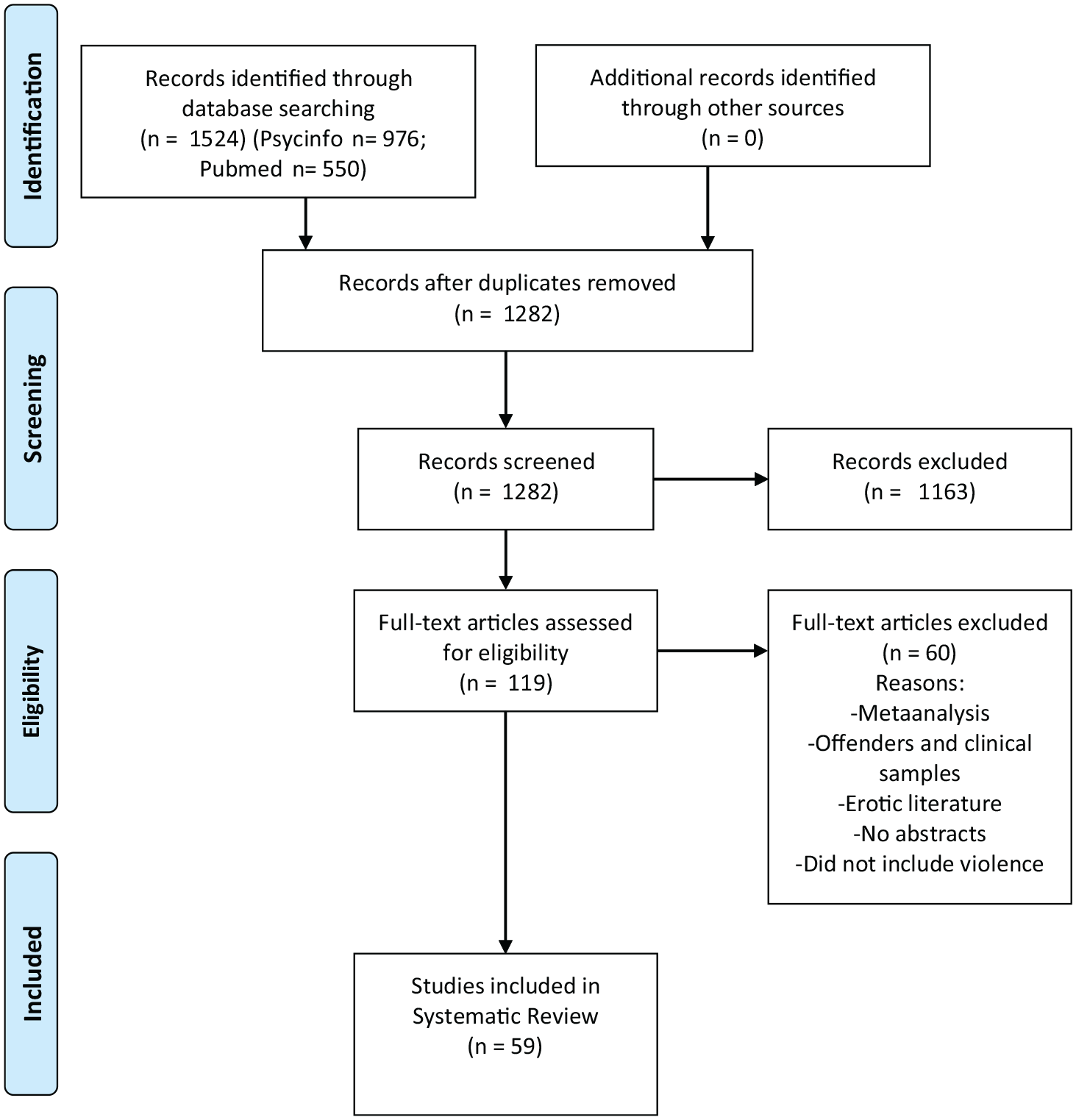
PRISMA flow diagram.
Study Characteristics
Overview of studies and samples
Forty-four of the studies included in the systematic review had a cross-sectional design and 15 had a longitudinal design. Sample sizes ranged from 42 to 4,363. Of the studies, 6 included only females, 25 studies included only males, and 28 studies included both males and females. Most of the studies were conducted in the United States, followed by Europe (Italy, Croatia, England, Poland, Belgium, Norway, and Sweden) and Asia (Taiwan, China, and Korea). Only one study was conducted in Africa (Ethiopia).
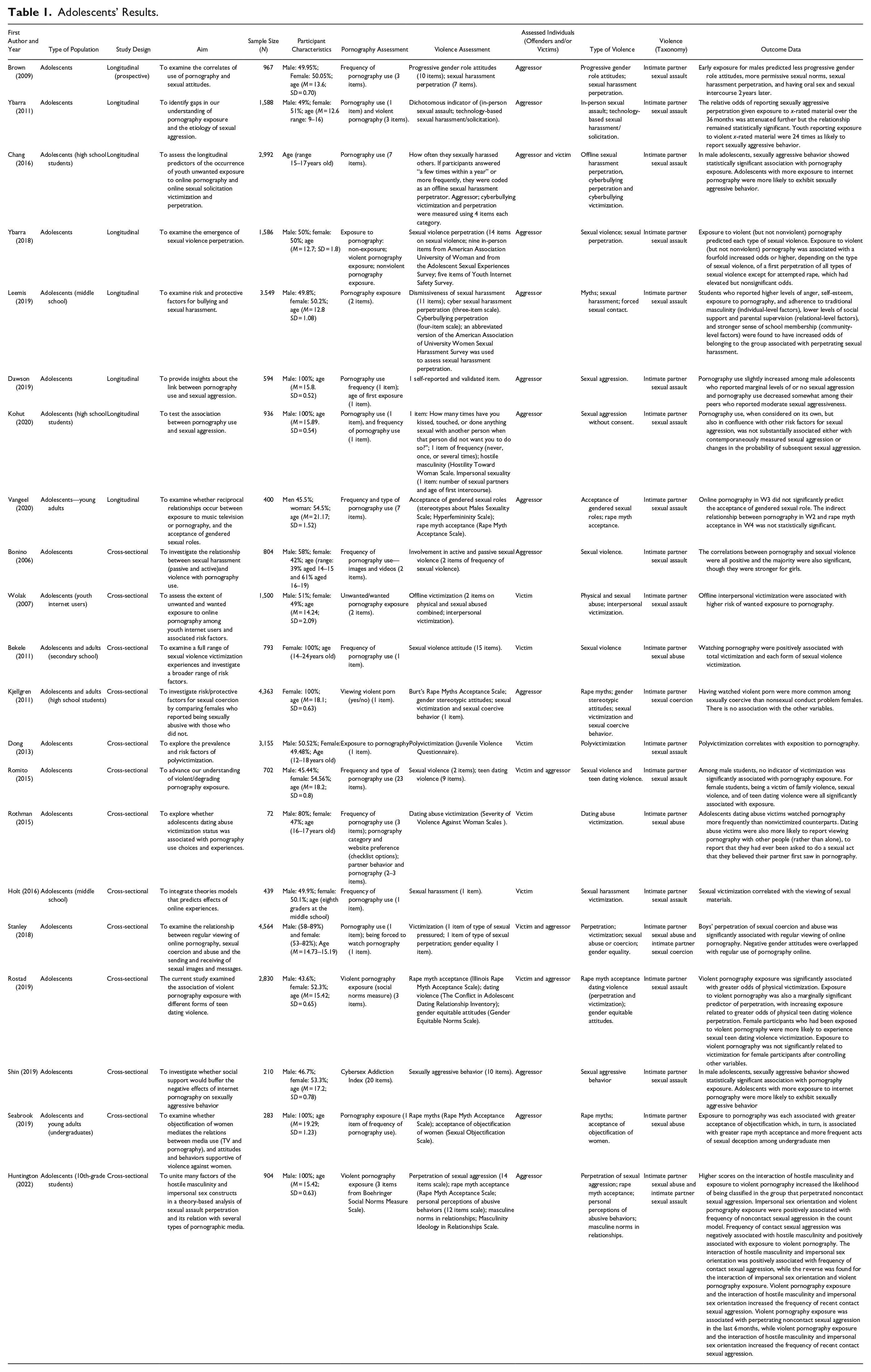
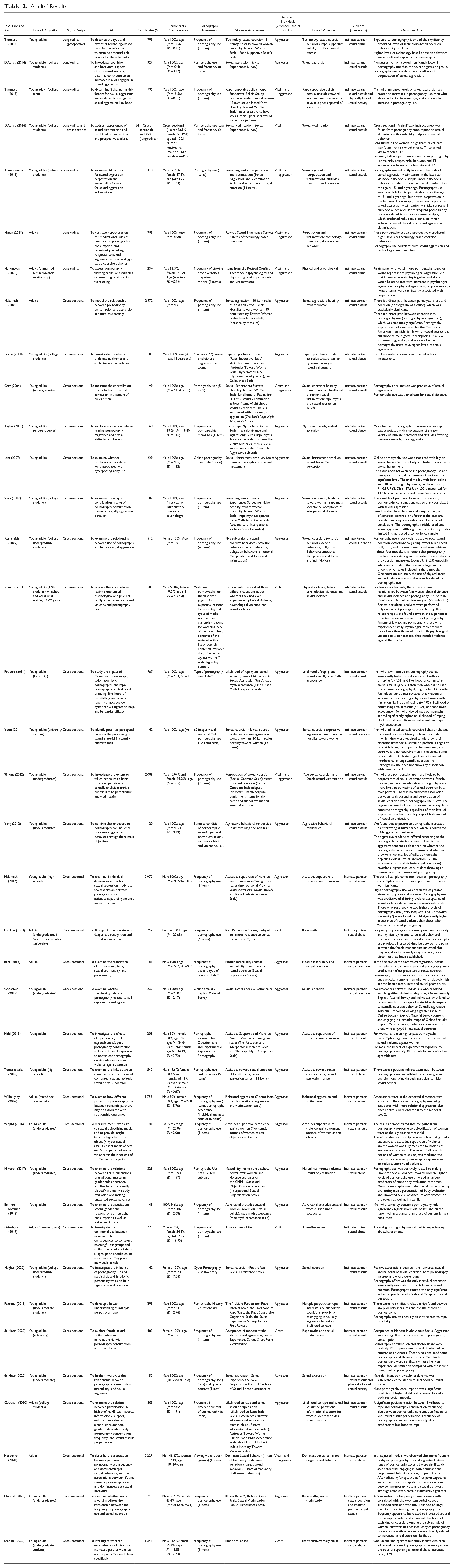
Considering age, there was a high heterogeneity in the studies in terms of the classification of adolescents, young adults, and adults. For example, while some include high school students as young adults, others classify them as adolescents. Considering the classification carried out by the authors of the different studies, 17 studies included adolescents, 29 involved young adults, 9 included adults, and 4 comprised mixed samples. The findings have been classified into two different tables. Table 1 includes a description of studies conducted in adolescents, while Table 2 focuses on studies with an adult population.
Adolescents’ Results.
Adults’ Results.
Conceptualization and assessment of pornography use
The conceptualization of the term “pornography” was different in the included articles. Of all articles that were finally selected, only 16 included a definition/short explanation of the term “pornography” for their participants. The rest of the studies did not provide participants with any prior explanation to contextualize aspects related to pornography consumption. The main definitions included were as follows: (1) “any material which openly depicts sexual activity; material which shows naked bodies but not sexual intercourse or other sexual activity does not belong to pornography as here defined” (Dawson et al., 2019; Kohut et al., 2020); (2) “material that showed actual intercourse and other sexual acts, graphic but simulated acts, and hard-core sexual acts (e.g., bondage, S&M) contained in magazines, books, movies, and Internet Websites” (Franklin, 2013); (3) “content appearing in any mediated venue that depicted female nudity and/or graphic sexual acts involving women such as intercourse or oral sex” (Wright & Tokunaga, 2016); (4) “X-rated was defined as having content that was sexually explicit and intended to increase sexual arousal” (Simons et al., 2012); (5) “images of sexual intercourse or other sexual acts (e.g., oral sex, masturbation)” (D’Abreu & Krahé, 2014; D’Abreu & Krahé, 2016); (6) “pictures of naked people or of people having sex” (Chang et al., 2016; Wolak et al., 2007); (7) “sex photos, presentations of sexual intercourse, presentations of other sexual acts, for example, oral sex, masturbation, and films in which the man and the woman engaged in sexual activities that they both wanted” (Tomaszewska & Krahé, 2016; Tomaszewska & Krahé, 2018); (8) “sexually explicit images, videos, sound clips, or erotic fiction” (Baer et al., 2015); (9) “media consisting of graphic sex acts (including penetration) being shown or described in videos, movies, magazines, books, or online” (Foubert et al., 2011); (10) “sexually explicit media that primarily is intended to arouse the viewer sexually” (Shin & Lee, 2019); (11) “pictures/videos with clearly exposed genitals, pictures/videos in which people are having sex” (Vangeel et al., 2020); and (12) “sexually explicit texts or images, in various media, namely, ‘men’s magazines,’ pornographic books or magazines, videos, movies, Internet sites, or cell phones” (Romito & Beltramini, 2015).
Table 3 includes pornography measures in relation to access, content, and format of pornography consumption.
Pornography Measures.
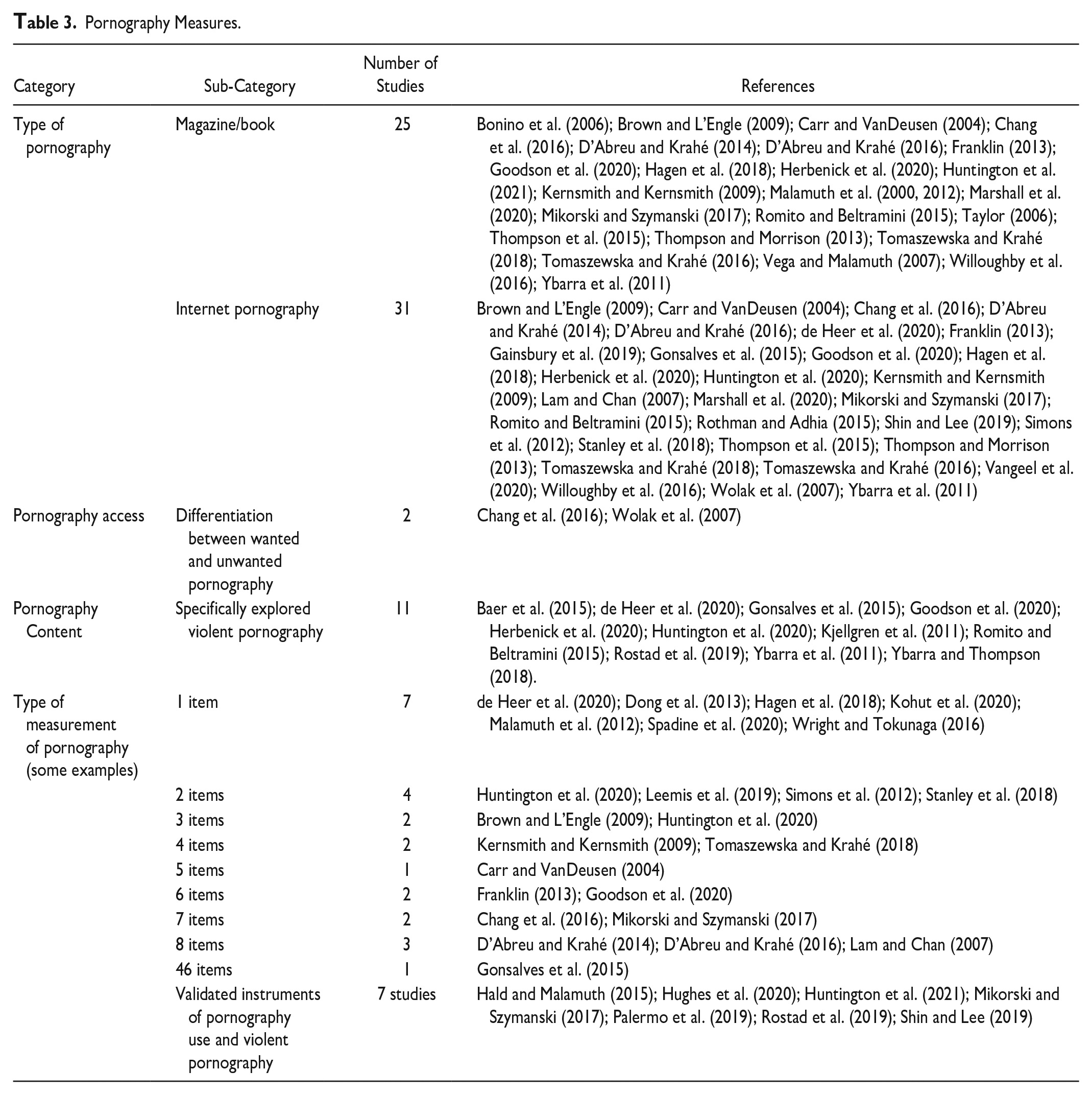
Other pornography-related factors assessed were age of first exposure, reasons for watching pornography, sharing pornography of self or others, pornography acceptance, and types of media watched. Another of the most frequently assessed variables was the frequency of pornography use: in the last month (Spadine et al., 2020), 6 months (Bonino et al., 2006; Dawson et al., 2019; Franklin, 2013; Goodson et al., 2020; Kohut et al., 2020, and 12 months (Brown & L’Engle, 2009; Chang et al., 2016; Foubert et al., 2011; Hagen et al., 2018; Hald & Malamuth, 2015; Herbenick et al., 2020; Kernsmith & Kernsmith, 2009; Rothman & Adhia, 2015; Simons et al., 2012; Willoughby et al., 2016; Wolak et al., 2007; Wright & Tokunaga, 2016).
Most of the studies measured all these factors by means of a few items: for example, 1 item (de Heer et al., 2020; Dong et al., 2013; Hagen et al., 2018; Kohut et al., 2020; Malamuth et al., 2012; Spadine et al., 2020; Wright & Tokunaga, 2016), 2 items (Huntington et al., 2021; Leemis et al., 2019; Simons et al., 2012; Stanley et al., 2018), 3 items (Brown & L’Engle, 2009; Huntington et al., 2022), 4 items (Kernsmith & Kernsmith, 2009; Tomaszewska & Krahé, 2018), 5 items (Carr & VanDeusen, 2004), 6 items (Franklin, 2013; Goodson et al., 2020), 7 items (Chang et al., 2016; Mikorski & Szymanski, 2017), or 8 items (D’Abreu & Krahé, 2014; D’Abreu & Krahé, 2016; Lam & Chan, 2007), with one outlier assessing 46 items (Gonsalves et al., 2015). Seven studies used validated instruments to assess the use of pornography or violent pornography (Hald & Malamuth, 2015; Hughes et al., 2020; Huntington et al., 2022; Mikorski & Szymanski, 2017; Palermo et al., 2019; Rostad et al., 2019; Shin & Lee, 2019).
Conceptualization and assessment of violence
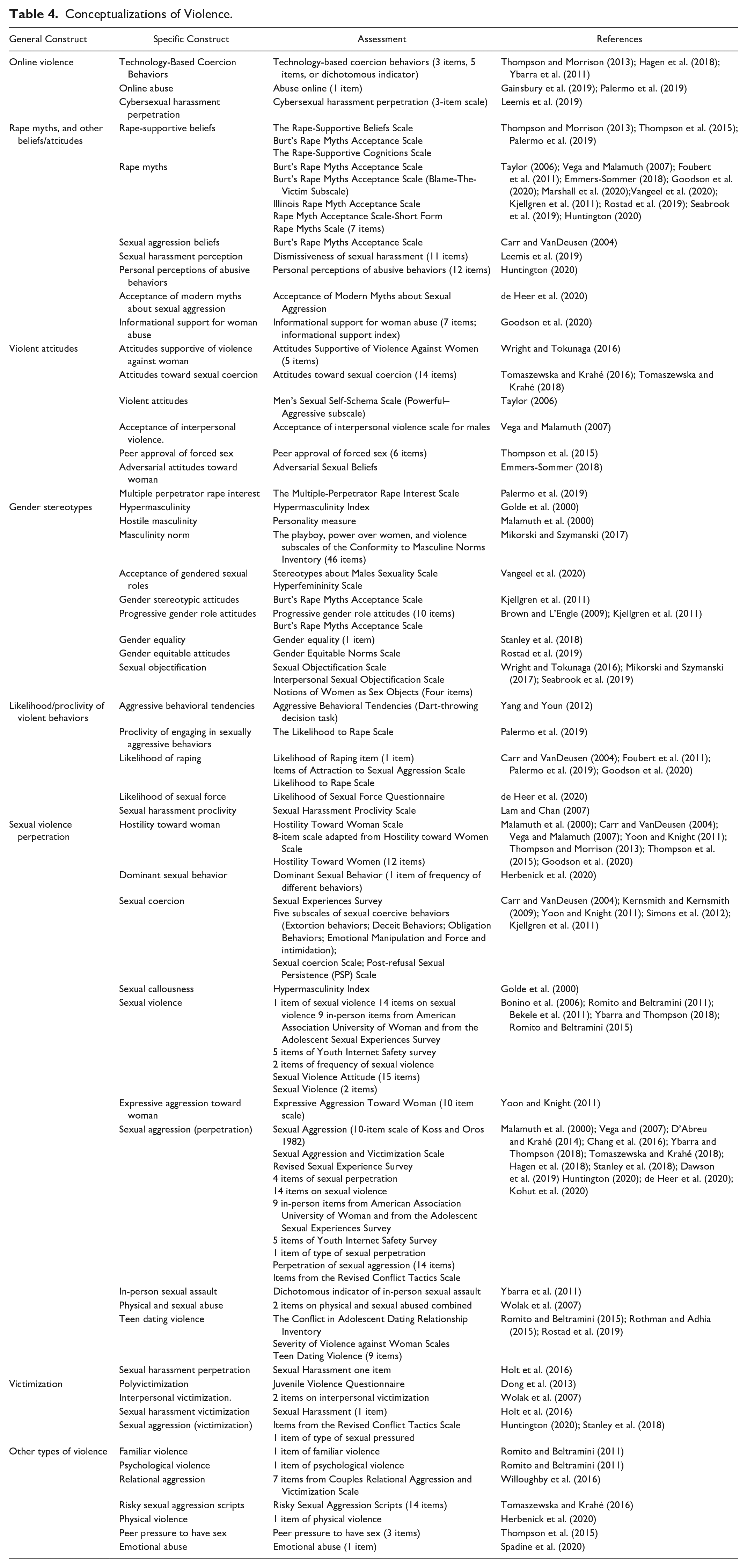
Both the conceptualization and the assessment of violence used by the different studies have used multiple labels and methodologies, which are classified in Table 4.
Conceptualizations of Violence.
Discussion
The findings of the different studies are classified in the present systematic review according to partial consideration of the taxonomy of intimate partner sexual violence proposed by Bagwell-Gray et al. (2015).
Association Between Pornography Use and Nonsexual Violence
Reading pornographic magazines does not seem to be associated with the presence of aggressive attitudes toward women (Taylor, 2006). However, multiple studies have observed an association between pornography use and nonsexual violence. For example, Huntington et al. (2021) observed that couples’ joint viewing of pornography was associated with physical aggression victimization. This could be because couples who view pornography may be normalizing violence, and even carrying it out in nonsexual contexts, and also due to the effect that pornography can have on reducing intimacy and loss of emotional connection (Ashton et al., 2018). From a psychological perspective, DeKeseredy (2016) suggested that antisocial personality traits may motivate individuals to view pornography and harm the people they love or socially interact with (DeKeseredy, 2016).
An association between pornography use and harassment (Gainsbury et al., 2019), and between pornography use and polyvictimization/emotional abuse victimization has also been described (Dong et al., 2013; Spadine et al., 2020), although the possible existence of causality is unknown. One of the explanations provided by the authors for this finding is the fact that having experienced emotional abuse may produce a lower desire to engage in sexual relations, which could lead to a greater use of sexually explicit content (Spadine et al., 2020). Pornography use may, therefore, be a maladaptive coping strategy to cope with the negative emotions of victimization (Dong et al., 2013).
In this vein, Yang and Youn (2012) observed that exposure to sexually explicit content had an influence on aggressive behavior in a laboratory setting. More specifically, violent pornography was associated with greater aggressive behavior compared to nonviolent pornography, and this aggressive behavior resembled that derived from viewing sadomasochistic sexual content.
Association Between Pornography Use and Intimate Partner Sexual Assault and Coercion
Due to the heterogeneity in the conceptualization of sexual violence, the present systematic review has taken into account the taxonomy of intimate partner sexual violence suggested by Bagwell-Gray et al. (2015), which proposes considering as intimate sexual assault the following: “intimate partner sexual violence, forced sex, rape, sexual assault, sexual coercion, sexual aggression, sexual victimization, and being made to penetrate someone else.” Therefore, all studies that have evaluated any of the above factors have been included in this section.
Heterogeneity of results exists regarding the association between pornography use and intimate partner sexual assault and coercion. On the one hand, some articles failed to demonstrate this link. For example, a longitudinal study was unable to demonstrate a causal association between pornography use and sexual aggression (Kohut et al., 2020).
On the other hand, other studies partially support the association between pornography use and sexual aggression (Malamuth et al., 2000; Vega & Malamuth, 2007). More specifically, pornography use may have little predictive value in those men with a reduced risk of engaging in sexual aggression, whereas it would increase the risk of sexual aggression in those men with general and specific risk characteristics (Malamuth et al., 2000; Vega & Malamuth, 2007).
Finally, other studies support the existence of a significant association between these factors. For example, some studies argue that pornography use is associated with (and even predictive of) sexual aggression, teen dating violence, and experiences of sexual victimization (Carr & VanDeusen, 2004; D’Abreu & Krahé, 2016; Rostad et al., 2019; Shin & Lee, 2019). In this vein, other studies have specifically highlighted the link between violent/sadomasochistic pornography, the frequency of sexual aggression (Huntington et al., 2022; Ybarra et al., 2011), and the likelihood of raping (Foubert et al., 2011). Therefore, the association between pornography use and sexually aggressive behaviors seems to be driven by the violent content of the pornographic material (Ybarra et al., 2011). These associations may be due to male peer support theory (understood as the attachments to male peers and the resources they provide that perpetuate and legitime various type of violence against women) (DeKeseredy & Schwartz, 2013). Following this reasoning, pornography may serve to legitimize violence through peer and sexual violent knowledge transmitted among men.
Regarding sexual coercion, it has been reported that women who use pornography more frequently are more likely to be sexually coercive (Hughes et al., 2020; Kernsmith & Kernsmith, 2009). In fact, pornography use appears to be associated with the female perpetration of all forms of coercion except intimidation and physical force (Kernsmith & Kernsmith, 2009). In the specific case of men, it has also been described that those who report regular consumption of pornography are more likely to report perpetration of sexually coercive behaviors and abuse (Simons et al., 2012; Stanley et al., 2018). It has been suggested that this may be due to the perception of women as sex objects promoted by pornography (Simons et al., 2012). Other authors have stressed that the association between pornography use and sexually coercive acts is modest (Baer et al., 2015). Regarding technology-based sexual coercion, it has been linked with exposure to pornography, as well as with earlier reports of higher levels of rape-supportive beliefs, peer approval of forced sex, and a high number of sexual partners (Thompson & Morrison, 2013).
Other authors have described an association between unwanted exposure to pornography and sexual harassment perpetration (Chang et al., 2016). For instance, Lam and Chan (2007) reported a link between online pornography use and sexual harassment proclivity (Lam & Chan, 2007). In addition, qualitative research has also observed increased levels of aggression and loss of temper following pornography use in male college students (Razzaq & Rafiq, 2019).
From the victim’s perspective, pornography use appears to be associated with having experienced sexual violence in the case of women (Romito & Beltramini, 2011; Simons et al., 2012). One of the possible explanations suggested by the authors for this finding is that women resort to sexually explicit content to understand or even normalize the sexual violence they were previously victims of. Similarly, Tomaszewska and Krahé (2018) have described an indirect association between pornography use and sexual aggression victimization (Tomaszewska & Krahé, 2018). That is, a higher frequency of use of sexually explicit content appears to be related to more risky sexual scripts and behaviors that, in turn, increase the likelihood of sexual aggression victimization.
In analyzing the role of peers, it has been suggested that sexually coercive females are more likely to have friends who like to watch violent pornography (Kjellgren et al., 2011).
Results revealed the salient role of pornography consumption frequency as a significant predictor of likelihood of rape in adults (Goodson et al., 2020), where men who watched mainstream pornography scored significantly higher on self-reported likelihood of raping (Foubert et al., 2011). In adolescents, pornography consumption is associated with the attempt to rape, but with nonsignificant odds (Ybarra & Thompson, 2018).
Finally, regarding teen dating violence, Rostad et al. (2019) suggested that exposure to violent pornography may be a significant correlate of all types of teen dating violence perpetration and victimization, especially for boys. More specifically, they observed that those girls exposed to violent pornography were more than 1.5 times as likely to perpetrate physical and threatening teen dating violence, while boys exposed to violent pornography were three times as likely to perpetrate sexual teen dating violence. For girls, exposure to violent pornography was marginally associated with sexual teen dating violence victimization, whereas boys exposed to this type of pornography were twice as likely to experience teen dating victimization, both sexual and physical, compared to boys not exposed to this type of pornography.
Association Between Pornography Use, Rape Myth, and Other Beliefs/Attitudes
The rape myth has been described as “the belief in stereotypical rape myths that endorse rape” (e.g., “a woman who goes to the home or apartment on their first date implies that she is willing to have sex”) (Taylor, 2006), and has been widely explored in terms of its association with pornography use. Some studies have reported that pornography use is associated with greater acceptance of objectification of women, which, in turn, is associated with greater acceptance of rape myths (Seabrook et al., 2019). Moreover, differences have been described between men and women, according to motivations, for consuming pornography in terms of rape myth acceptance. It has been suggested that women who use pornography for masturbation are less accepting of rape myths than men. Furthermore, both men and women who use pornography for masturbation appear to be less accepting of rape myths than those who use pornography for other purposes (Emmers-Sommer, 2018). However, other authors did not find, in the case of adolescence and emerging adulthood, that the use of online pornography was a predictor of rape myth acceptance, or of gendered sexual roles (Vangeel et al., 2020).
In addition to the acceptance of the rape myth, some studies have evaluated aspects such as attitudes supporting violence against women or attitudes toward sexual coercion, also finding contradictory results. On the one hand, some authors have suggested that, for both young men and women, past pornography use significantly predicts attitudes supporting violence against women (Hald & Malamuth, 2015). In addition, in the case of men, it has been described that this association between pornography use and attitudes supporting violence against women is mediated by the perception of women as sex objects (Wright & Tokunaga, 2016). That is, men who consume pornography more frequently are more likely to perceive women as objects, and men with this perception are more likely to report attitudes supporting violence against women. It could be hypothesized that certain “hyper-erotic” subcultures such as pornography produce exaggerated sexual aspirations (DeKeseredy & Schwartz, 2013), and this may favor these gender hierarchies where women are perceived as objects and men are required to be dominant. In fact, some women’s perceptions of the effects of pornography focus on sexual objectification (Ashton et al., 2018).
Tomaszewska and Krahé (2016) did not find a direct association between pornography use and attitudes toward sexual coercion in high school students. However, the authors observed that pornography use was indirectly associated with attitudes condoning sexual coercion through its link with risky sexual scripts.
Both pornography use and rape-supportive attitudes can be understood as predictors of the use of verbal coercion tactics in the case of men (Marshall et al., 2020).
Other authors have failed to find a significant association between pornography use and rape proclivity in young adults (Palermo et al., 2019). Taylor (2006) did not find an association between reading pornographic magazines and the presence of more aggressive sexual self-schema. Moreover, the acceptance of modern myths about sexual aggression was not significantly correlated with pornography consumption (de Heer et al., 2020).
Limitations and Future Studies
The main limitations of the studies included in the review were the following: (1) several articles did not provide participants with a specific definition of pornography, which can lead to bias; (2) the assessment of pornography use was carried out in multiple studies only through isolated unvalidated dichotomic items that have not taken into account either the modality (e.g., online, magazines) or the category (e.g., violent pornographic contents) of pornographic materials and, therefore, it is imprecise and questionable; (3) assessments were self-reported, with the consequent desirability bias that this entails, especially taking into account that two constructs that may be considered as socially undesirable behaviors by certain participants were evaluated (pornography use and violence); (4) both pornography use and violence are multifactorial constructs and most studies did not consider possible associated factors; (5) a cross-sectional design did not allow for establishing a causal relationship between pornography use and violence; (6) many studies included small sample sizes, so the results are neither representative nor generalizable; (7) since most of the included studies were conducted in the United States with Caucasian participants, there is a notable cultural bias and caution is needed when generalizing the findings to individuals from other cultures; and (8) the lack of a comprehensive and consensus-based theoretical framework on pornography and violence hinders the comparison of findings from different studies.
More longitudinal studies with larger sample sizes and more representative international samples are needed to enable the generalization of the results. It is also essential that future research attempts to unify the various theoretical frameworks that currently exist on pornography use and types of violence. Furthermore, considering that there is currently a vast amount of sexually explicit material, future studies should explore in depth the specific contents and whether there are differences between them in their association with violence.
In addition to the limitations of the different studies, the limitations of the present systematic review should be highlighted. The central limitations were as follows: (a) specific populations were not considered, such as women who had sought help for abuse or offenders who were in prison, and therefore the association between pornography use and violence in these populations should be explored in depth; (b) violence was categorized following the theoretical model proposed by Bagwell-Gray et al., (2015) although there are multiple theoretical models and there is still no absolute consensus on which of them is the most accurate and comprehensive; and (c) publications that were not in English and qualitative studies were discarded so that possible relevant contributions in other languages and designs were omitted.
To summarize, we believe that for future studies addressing the association between pornography use and violence it would be of interest to (1) use a clear definition of pornography based on international consensus (McKee et al., 2020); (2) differentiate between pornography use and Problematic Pornography Use using scales that are already standardized such as the Problematic Pornography Consumption Scale (Bőthe et al., 2018); (3) establish a clear conceptualization of the concepts of violence and use a validated scale that measures the construct; (4) use standardized scales instead of self-made items; (5) design longitudinal studies; and (6) delve into more specific populations such as clinical populations, studies only with women, non-heterosexual persons, and sexual aggressors.
Conclusions
There have been various studies conducted in recent years regarding the association between pornography use and violence, but the results should be interpreted with caution. Several longitudinal and cross-sectional studies have suggested an association between pornography and violence, although the heterogeneity of methodologies and conceptualizations used greatly hinders the comparison of results. Therefore, the association between different types of violence and pornography use requires further in-depth research to unify pornography use and violence conceptualizations and categorizations. This could help us to better understand the specific link between the two constructs and to promote prevention and intervention plans addressing these factors.
Implications
This review offers a unified view of the conceptualization of pornography and violence, with the aim of establishing standardized protocols for measures to be used in studies in this field, with more robust properties.
The use of pornography and the increase in sexual violence is a topic of debate at an international level, and this review helps to clarify the association between these two variables.
The findings of this review can serve as a starting point for the establishment of prevention and intervention programs regarding the possible link between pornography and different types of violence.
Critical Findings
Association Between Pornography Use and Nonsexual Violence
Pornography use appears to be related to nonphysical violence.
The use of pornography in couples can normalize violence even in nonsexual contexts.
The use of pornographic magazines does not seem to be related to aggressive attitudes toward women.
The use of violent pornography (specifically sadomasochistic content) is associated with an increased tendency to aggressive behavior.
Association Between Pornography Use and Intimate Partner Sexual Assault and Coercion
A great heterogeneity is observed in the existing results associating pornography use and intimate partner sexual assault and coercion.
Cross-sectional studies showed that pornography use is associated with (and even predictive of) sexual aggression, teen dating violence, and experiences of sexual victimization.
Regarding sexual coercion, it has been reported that women who use pornography more frequently are more likely to be sexually coercive.
Longitudinal studies do not demonstrate a causal relationship between pornography use and sexual aggression.
Exposure to pornography has been linked to sexual coercion, as well as higher levels of rape-supportive beliefs, peer approval of forced sex, and a high number of sexual partners.
Men who watched mainstream pornography scored significantly higher on self-reported likelihood of raping.
Association Between Pornography Use, Rape Myth, and Other Beliefs/Attitudes
Pornography use may interfere with cognitive schemas about gender roles and perceived sexual hierarchies.
Pornography use is associated with greater acceptance of objectification of women.
Other studies did not find, in the case of adolescence and emerging adulthood, that the use of online pornography was a predictor of rape myth acceptance, or of gendered sexual roles.
Pornography use and rape-supportive attitudes can be understood as predictors of the use of verbal coercion tactics in the case of men.
Limitations and Future Studies
The research to date has methodological shortcomings that need to be addressed in future research.
Both pornography use and violence are multifactorial constructs, and most studies did not consider possible associated factors.
There are mediating factors such as male hostility, insensitivity, and/or alcohol use that will be interesting to consider in the association between pornography use and violence.
Footnotes
Declaration of Conflicting Interests
The author(s) declared no potential conflicts of interest with respect to the research, authorship, and/or publication of this article.
Funding
The author(s) disclosed receipt of the following financial support for the research, authorship, and/or publication of this article: This study was supported by the CITEI B22-001 project (Universidad Internacional de La Rioja).
