






Abstract
Over the past decade, scholars have explored whether the stigma associated with sexual violence (SV) represents a risk factor for psychopathology and related comorbidities following SV. We conducted a scoping review to summarize and evaluate the state of this burgeoning literature. We included studies from Pubmed, APA PsychInfo, Embase, CINAHL Plus, Social Science Premium, and Web of Science that quantified stigma related to SV. Studies were screened and abstracted in accordance with the PRISMA-SCR guidelines for scoping reviews. Our final sample contained 62 studies. We address two key questions about SV stigma. First, is SV a stigmatized status? Articles (n = 14) provided evidence for SV stigma among potential stigmatizers (e.g., individuals who may perpetuate stigma) across a range of methods (e.g., vignettes) and outcomes (e.g., desire for social distance). Additional work (n = 20) corroborates perceptions of SV stigma among targets (i.e., SV survivors). Second, what are the psychosocial consequences of SV stigma? We reviewed studies (n = 28) demonstrating that SV stigma is correlated with a range of adverse psychosocial outcomes—including anxiety, depression, posttraumatic stress disorder, problematic drinking, and somatic symptoms—among individuals experiencing multiple types of SV (e.g., childhood sexual abuse and sexual assault). Thus, emerging evidence suggests that SV stigma may be a critical determinant of risk and recovery following SV exposure. However, a number of limitations were observed, including that SV stigma has not been consistently measured and that the literature has not fully incorporated stigma constructs, such as concealment and structural stigma. We offer several recommendations to advance this line of work.
Introduction
Exposure to sexual violence (SV), defined as any act or attempt to obtain a sexual act by violence or coercion or when a person is unable to consent (Rutherford et al., 2007), is robustly associated with a host of adverse mental, physical, and behavioral health outcomes, including anxiety, depression, posttraumatic stress disorder (PTSD), substance use disorders, obsessive-compulsive disorder, chronic pain, and sleep disorders (for reviews, see Dillon et al., 2013; Dworkin et al., 2019). Given these substantial burdens, researchers have sought to identify the etiology of psychopathology and associated comorbidities following exposure to SV. The field has made substantial progress in the identification of risk factors, yet this research has focused almost exclusively on factors at the individual and interpersonal levels of analysis—such as prior assault history, assault type, assailant type, peritraumatic dissociation, and event centrality (Dworkin et al., 2017). Despite the substantial insights provided by this research, scholars of SV have called for greater empirical and conceptual attention to contextual risk factors—that is, correlates and determinants that exist above the individual and interpersonal levels of analysis (Dworkin & Weaver, 2021).
Stigma—defined as the co-occurrence of labeling, stereotyping, separation, status loss, and discrimination that occurs between groups in a context in which unequal power is exercised (Link & Phelan, 2001)—can be attached to demographic features of a person’s identity (e.g., race, gender, and sexuality) as well as to conditions that are experienced or acquired throughout the lifespan (e.g., SV, obesity, and HIV/AIDS). Exposure to stigma presents a substantial risk to the physical and mental health of members of stigmatized groups and is a driver of population health inequalities (Hatzenbuehler et al., 2013). In thisarticle, we conducted a systematic review of the literature to determine whether stigma also represents one potential contextual determinant of health for those who experience SV. Throughout the article, we refer to the stigma attached to SV as SV stigma. We use the term SV stigma in the same way that researchers in other stigma literatures (e.g., mental illness stigma) do—namely, as a label that denotes both enacted (e.g., how stigma is perpetuated by potential stigmatizers) and felt (e.g., how stigma is experienced by members of stigmatized groups) stigma.
Examples of SV Stigma Across Levels of Stigma
Stigma is conceptualized as a multi-level construct, ranging from individual to structural levels. Individual-level stigma refers to the cognitive, affective, and behavioral responses to stigma among the stigmatized (Hatzenbuehler & Pachankis, 2016). Within the context of SV stigma, individual-level stigma responses could include hiding one’s experience(s) of SV or worrying how others may respond if this experience was disclosed, known as identity concealment and disclosure concerns, respectively. Relatedly, survivors may not be entirely “out” about their history of SV, meaning that they may have disclosed to some people in some contexts but not others, a concept referred to as outness. Finally, survivors of SV may experience internalized stigma, which refers to the incorporation of negative attitudes toward members of stigmatized groups into the self-concept and belief that these attitudes are true. For survivors of SV, this may look like the internalization of victim-blaming attitudes, which lead the survivor to place the blame for their assault on themselves, instead of on the perpetrator (Quinn et al., 2014).
At the interpersonal level, stigma refers to interactions between the stigmatized and non-stigmatized, such as discriminatory treatment (Hatzenbuehler & Pachankis, 2016). Within the context of SV, some non-stigmatized individuals desire social distance from SV survivors, whom they perceive to be “dirty,” “tainted” or—particularly in the case of survivors of childhood sexual abuse (CSA)—dangerous to children (Kandemir et al., 2012; Schomerus et al., 2021). Other times, non-stigmatized individuals may perpetuate stereotypes about SV survivors, such as the idea that survivors of SV often exaggerate the severity of their traumas. Another common way that survivors of SV experience interpersonal-level stigma is in the context of disclosure. Stigmatizing responses to disclosure, such as implying that the survivor fabricated the assault or asserting that the sexual activity was actually consensual, occur frequently and have been associated with depression among survivors (Dworkin et al., 2019, Overstreet et al., 2019). Additionally, survivors may be subject to labeling by members of their community, such as being considered sexually “spoiled,” which can lead to status loss for survivors, particularly female survivors in communities that prioritize virginity (Böhm, 2017).
Finally, structural stigma refers to “the societal-level conditions, cultural norms, and institutional policies and practices that constrain the opportunities, resources, and wellbeing of the stigmatized” (Hatzenbuehler & Link, 2014, p. 2). Examples of structural forms of stigma for SV survivors include abortion bans that do not make exceptions for rape/incest and legal definitions of consent that do not adopt a standard of affirmative consent.
Prior Research on SV Stigma
Two foundational reviews of SV stigma and related constructs have been conducted to date. One is a review of the so-called “social reactions” literature (Dworkin et al., 2019), which investigates the ways in which social reactions to the disclosure of SV victimization impact health outcomes among survivors. In their review and meta-analysis of 51 studies employing the Social Reactions Questionnaire (SRQ; Ullman, 2000), Dworkin et al. (2019) found that negative social reactions to interpersonal trauma disclosures—such as attempts to control, distract, or treat survivors differently—were associated with more severe symptoms of psychopathology. In contrast, positive reactions to disclosure, such as emotional support, did not appear to be protective, highlighting the importance of negative social reactions to disclosure as a determinant of psychosocial outcomes among individuals exposed to SV (Dworkin et al., 2019).
A second review paper by Kennedy and Prock (2018) also draws heavily from the social reactions literature but does not require studies to employ the SRQ for inclusion. The authors found that across three types of violence—CSA, sexual assault (SA), and intimate partner SV (IPSV)—survivors report experiences of self-blame, shame, and anticipated stigma, each of which are barriers to disclosure and help-seeking (Kennedy & Prock, 2018). The review by Kennedy and Prock (2018) offers multiple important contributions, including: (a) the first multi-field (CSA, SA, and IPSV) examination of stigma attached to SV; (b) critical evaluation of the strengths and limitations of available studies; and (c) discussion of some ways in which experiences with stigma differed based on other minoritized identities (e.g., race, ethnicity, or socioeconomic status).
Current Study
We conducted a systematic review that builds upon and extends these two prior lines of work. Our review addressed two key questions about stigma as it specifically relates to SV. First, is SV victimization a stigmatized status? To answer this question, we reviewed articles from survey and experimental (i.e., vignettes) designs examining stigma toward survivors of SV held by potential stigmatizers (e.g., the general public, medical providers), as well as articles that examine perceptions of stigma among the stigmatized (i.e., SV survivors). Having found evidence for the existence of SV stigma across a range of methods, samples, and outcomes, we then asked a second question: What are the psychosocial consequences of stigma among survivors of several types of SV experiences (e.g., SA, rape)?
By answering each of these questions, we advance the important foundations provided in the reviews by Dworkin et al. (2019) and Kennedy and Prock (2018). Specifically, we offer a systematic summary and critical evaluation of the SV stigma literature that not only includes articles evaluating stigmatizing attitudes toward survivors of SV but also articles evaluating felt stigma (i.e., the stigma experienced by members of stigmatized groups) and the psychosocial consequences of felt stigma among survivors of SV. Additionally, we approached this review through a stigma-oriented lens, which enabled us to provide further conceptual development of the construct of SV stigma that builds on the two prior reviews (Dworkin et al., 2019; Kennedy & Prock, 2018) by integrating a wider range of key constructs from the stigma literature (e.g., internalized stigma, discrimination, and structural stigma).
Method
Our protocol was drafted using the Preferred Reporting Items for Systematic Reviews and Meta-Analysis extension for Scoping Reviews checklist (PRISMA-ScR; Tricco et al., 2018), which was revised by the research team in collaboration with J.C., a librarian at the Harvard Countway Medical School Library. The final protocol was pre-registered with the Open Science Framework on July 21, 2021 and can be found at https://osf.io/ayqej/.
Eligibility Criteria
Research eligible for inclusion was required to meet the following criteria: (a) peer-reviewed literature that focused on one or multiple forms of SV, including SA, rape, domestic violence/IPV, CSA, human trafficking, or any other form of coerced or non-consensual sexual activity; and (b) studies that used objective and/or subjective measures to quantify stigma related to SV. Quantitative, qualitative, and mixed-methods studies were included to evaluate the full scope of stigma measurement available within the literature. Studies that were not published in English were translated into English using DeepL, a neural machine translation service. The research was excluded from this review if it met any of the following criteria: (a) evaluated stigma related to the perpetration of SV (given our focus on victimization); (b) primarily or exclusively evaluated stigma related to another stigmatized identity, such as sexuality or race (given our focus on SV stigma); (c) evaluated SV as a weapon of war (given the very different context of SV that occurs within war settings; Cohen, 2016); and (d) provided a review of the literature or a theoretical framework (given our focus on empirical measurement).
Information Sources
The following databases were searched for articles published before October 5, 2022: Pubmed, APA PsychInfo, Embase, CINAHL Plus, Social Science Premium, and Web of Science. These databases cover all biomedical literature including social science, psychology, behavioral health, and the broad Web of Science Core Collection, which has ten indexes containing information gathered from thousands of scholarly journals, books, book series, and conferences on topical areas such as social work, social issues, cultural and family studies, legal medicine, public administration, and ethics. Moreover, the ProQUEST Social Science Premium Collection contains a Criminology Collection covering articles from 1975 to the present day. Search strategies were drafted by an experienced librarian and coauthor of this manuscript J.C. and further refined through discussion with the research team. Articles were organized using Endnote, and duplicates were removed by members of the research team. Final search results were exported into Covidence.
Selection of Sources of Evidence
To increase the consistency among reviewers, a calibration exercise was performed whereby the three reviewers evaluated five sample articles for inclusion/exclusion, extracted data from included articles, discussed the results, resolved conflicts, and amended the protocol and data extraction template before starting screening for this review.
Following this calibration exercise, reviewers proceeded with a three-step review. First, articles were reviewed for title and abstract screening for inclusion/exclusion. Second, articles that met inclusion criteria were given a full text review for inclusion/exclusion. Rationale for exclusion during full-text review was recorded (Figure 1). Then the final sample of articles was reviewed, and data were extracted by two independent reviewers. The results presented in this manuscript reflect the consensus of both reviewers.
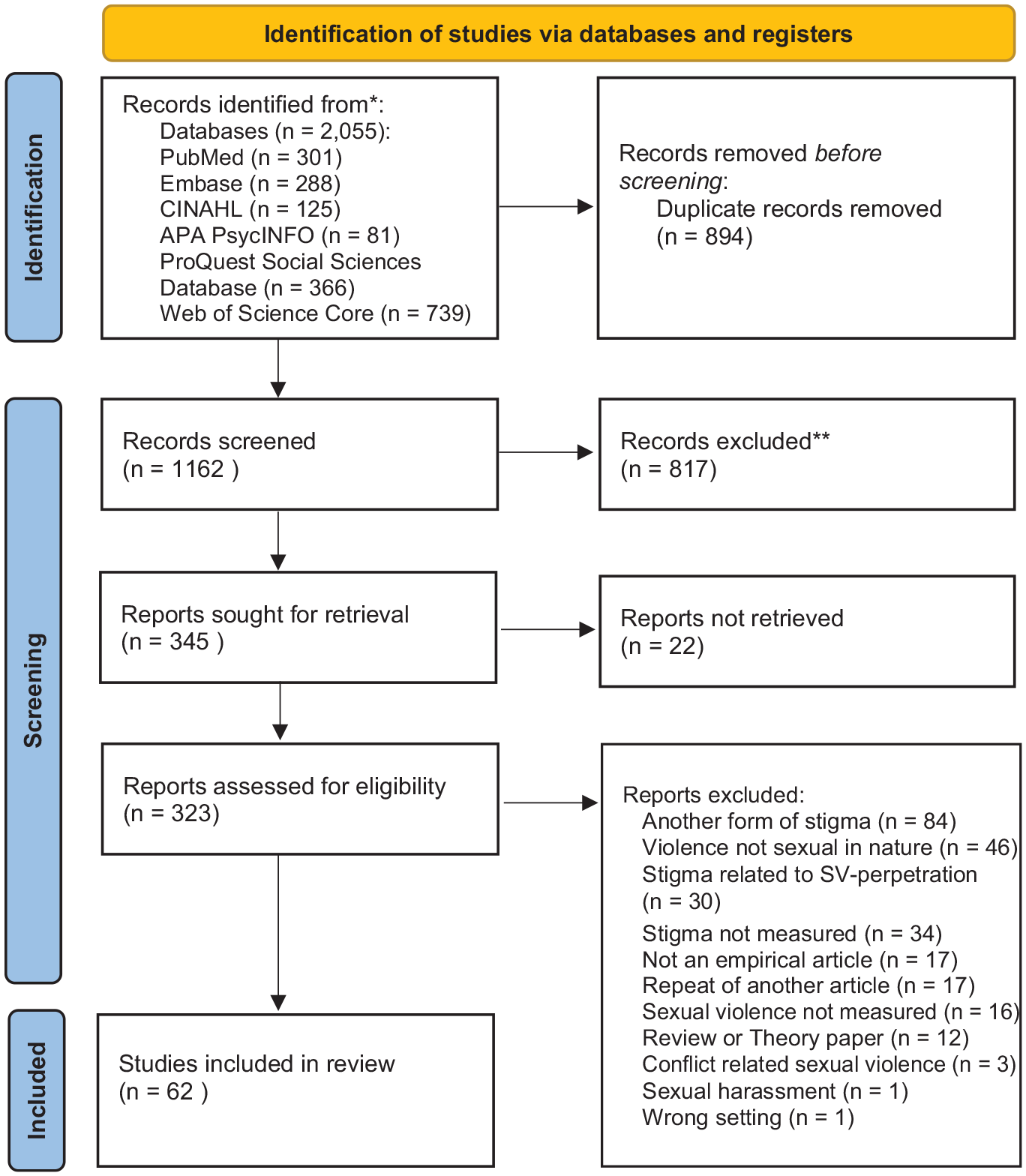
PRISMA flow diagram.
Search
Our search terms were expansive with regard to SV, with the understanding that there are many forms of SV and a range of terms used in the SV literature refer to those experiences (e.g., rape, SA, IPV, stranger rape, acquaintance rape, sex offense, gender-based violence, and online sexual abuse). At the same time, our terms were more specific with regard to stigma ((“social stigma”[Majr] OR stigma*[ti] OR “social stigma”[ti] OR self-stigma[ti] OR (social[ti] AND stigma*[ti]), as our goal was to evaluate articles that specifically quantified or described SV stigma, as opposed to broader constructs, such as social reactions, which are related to, yet distinct from, SV stigma. An example of our search strategy can be found in Supplemental material Appendix A.
Our terms differed from those used in a prior review of the consequences of SV stigma by Kennedy & Prock (2018) in two respects. First, their review included the terms “self-blame” and “shame.” Because shame and self-blame are common responses to trauma, and therefore may not necessarily reflect stigmatization, we did not include them in our search. Nevertheless, our search did capture articles that assessed shame and self-blame associated with SV stigma as long as our stigma-related terms were included in the abstract or title (e.g., Deitz et al., 2015; Dodd et al., 2021; Gibson & Leitenberg, 2001; Jewkes et al., 2021; Miller et al., 2011). Second, Kennedy and Prock (2018) included “social reactions” as a search term, which some studies used to refer to the disclosure of SV. Similar to shame and self-blame, we did not include this term in our search because some social reactions may not reflect stigmatization (e.g., social support); however, our search terms did capture social reactions that are specific to SV stigma processes (e.g., discrimination, status loss; Link & Phelan, 2001).
Limitations of Search Criteria
One notable limitation of our review results from our search criteria, which are intentionally narrow to target articles that are quantifying and/or describing SV stigma specifically, and not more general constructs that may not always reflect stigmatization (e.g., social reactions, shame, and/or self-blame). This approach has a few notable strengths, namely ensuring that we are capturing the scope of the current literature related to SV stigma, thereby increasing construct validity. Related literatures (including social reactions) often assume the presence of SV stigma without explicitly measuring it (e.g., identifying negative reactions to SV disclosure without identifying whether reactions were negative specifically because of stigmatization or quantifying shame or self-blame after a traumatic event without determining whether the shame/self-blame is a response to stigma). In so doing, these studies run the risk of failing to identify stigma as a key underlying mechanism driving poor health outcomes among survivors of SV. At the same time, we recognize that there are possible limitations to our specific focus on stigma, including the potential to miss contributions of complementary, but distinct, literatures, a topic we return to in the Discussion section. A second limitation is that we did not include gray literature, given our focus on peer-reviewed empirical investigations, which may have caused us to miss relevant studies.
Data Items
We abstracted data on article characteristics (e.g., country of origin, study method, and sample size), type of SV assessed (e.g., SA, rape), details of stigma measurement approaches, psychosocial outcomes, and demographic features of the study sample.
Stigma Levels
In addition to these items listed above, we also abstracted data on the level of stigma quantified (individual, interpersonal, and structural). Specifically, individual-level measurement allows researchers to quantify the amount of SV stigma that a survivor of SV is perceiving, which has implications for their health (Pachankis et al., 2018). A key benefit of individual-level stigma measurement is that it centers and empowers the experiences of survivors; however, overreliance on such measurement approaches could reinforce the false idea that stigma is an experience that exists exclusively in the mind of individuals who experience it rather than a social process (Meyer, 2003). SV stigma at the interpersonal level can be measured through the quantification of experiences of discrimination (e.g., differential treatment because a survivor of SV is deemed “tainted” by the experience), separation (i.e., social distancing), status loss (i.e., at school, work, or in the community), or labeling. Finally, SV stigma can be operationalized at the structural level, through either objective or subjective measurement approaches. Structural SV stigma can be measured objectively by identifying laws, policies, and institutional practices that constrain the resources and well-being of survivors of SV (Hatzenbuehler & Pachankis, 2016). These laws and policies can be collated up to an area level (e.g., state or county) and used to identify high (vs. low) structural SV stigma settings. Researchers can use this information to test whether survivors living in higher structural SV stigma settings have worse health outcomes than those living in lower SV stigma settings. Alternatively, researchers can measure the impact of structural stigma longitudinally, by capturing health outcomes among survivors before and after a policy change, such as banning access to abortion services after rape/incest in certain states. Structural SV stigma can also be measured subjectively in the form of perceived structural stigma, which is the extent to which members of a stigmatized group appraise laws and policies, institutional practices, and cultural norms as stigmatizing (Lattanner et al., 2021).
Synthesis of Results
We grouped studies by SV type (SA/rape, IPV, CSA, and other) and stigma level (individual, interpersonal, and structural), and we summarized the study design (including measurement and research approach), sample characteristics, and key findings.
We also synthesized results based on our two research questions. Related to our first question (“Is SV stigmatized?”), there are two avenues for evaluating whether a status is stigmatized. The first is by evaluating the attitudes, stereotypes, and behaviors of potential stigmatizers (i.e., individuals who are enacting stigma, usually because they do not hold the devalued status, although stigma can also be enacted by ingroup members). We placed studies that surveyed potential stigmatizers about their negative attitudes/stereotypes toward survivors of SV into this category. These studies shed light on the stigmatizing labels and stereotypes that lead to separation, status loss, and discrimination for survivors of SV, core components of the stigma process (Link & Phelan, 2001). The second way to determine whether status is stigmatized is by evaluating the stigma-related experiences and perceptions of targets (i.e., individuals who hold the stigmatized status; here, survivors of SV). Studies that surveyed survivors of SV about their experiences of SV stigma were placed in this category. Studies used to answer our second question (“What are the psychosocial consequences of SV stigma?”) are those that surveyed survivors of SV about their experiences of SV stigma and connected exposure to SV stigma to one or more psychosocial outcomes.
Results
Selection of Sources of Evidence
Our search yielded 2,055 citations. A total of 894 duplicate records were removed, leaving 1,162 articles whose titles and abstracts were screened for inclusion/exclusion criteria. After title and abstract screening, 817 studies were excluded and 345 moved on to full-text review. Each study was read in its entirety and assessed for eligibility. At the full-text review stage, an additional 282 studies were excluded, leaving a sample of 62 studies that were included in our final review. See Figure 1 for further details.
Year of Publication
The number of studies investigating SV and stigma has increased exponentially, with 87% of studies (n = 55) published after 2010 and 43 (n = 27) published within 5 years of data collection.
Country of Origin
The country of origin for included studies was notably diverse, with articles from 18 different countries. Most studies were published in the United States (n = 34), Canada (n = 5), Kenya (n = 4), and the Democratic Republic of Congo (n = 4). A complete list of countries can be found in Supplemental material Appendix B.
Is SV Victimization Stigmatized?
Studies Using Samples of Stigmatizers
In our sample, 14 articles captured measures of stigmatizing attitudes held by potential stigmatizers. These studies sampled from the general population (n = 3) as well as specific groups, including college students (n = 7), mental health providers (n = 2), medical students (n = 1), and victim service providers (n = 1). Two studies sampled from multiple groups (e.g., college students and medical students). One study of structural SV stigma sampled from newspaper headlines describing news stories about survivors of IPV (Leung, 2019). Most studies that surveyed participants sampled both male and female participants (n = 12). One study only recruited male participants (Gruenfeld et al., 2017). Just two studies reported that they also included transgender and non-binary participants (Delker et al., 2020; Schomerus et al., 2021).
The majority of these studies were quantitative (n = 10) and used survey (n = 9) or experimental (n = 2) designs. Four studies were qualitative. Most of the quantitative articles presented participants with either vignettes (i.e., description of an incident of SV; e.g., Erickson et al., 2017) or hypothetical scenarios (i.e., “What would you think if your child wanted to marry a survivor of sexual abuse?”; e.g., Kandemir et al., 2012) designed to capture potentially stigmatizing attitudes toward survivors of SV. Most of these studies (n = 11) focused on attitudes/behavioral intentions toward a single type of SV rather than differences in attitudes across SV types. Two studies referred to SV generally, without identifying a specific type of SV.
All 10 quantitative studies found evidence of stigma toward survivors of multiple types of SV (i.e., rape, SA, IPV, CSA, and image-based sexual abuse) across a range of stigma-related outcomes, including desire for social distance (Kandemir et al., 2012; Schomerus et al., 2021; Weidner & Griffitt, 1983), victim blaming attitudes (Arnocky & Vaillancourt, 2014; Erickson et al., 2017), perceived dangerousness (Kandemir et al., 2012), negative attitudes toward survivors after disclosure (i.e., less “likable”; Delker et al., 2020; Hall, 2012), as well as general indices of comfort/discomfort around survivors (Tomlin, 1991). Negative stereotypes observed in these articles ranged from the association of SV victimization with negative qualities such as being a liar, being weak, or being unattractive (Arnocky & Vaillancourt, 2014) to perceptions of “spoiled innocence” (Böhm, 2017) and reduced likability (Delker et al., 2020).
One investigation by Delker et al. (2020), which recruited four samples of U.S. adults (N = 1,872), asked participants to evaluate vignettes containing trauma narratives of survivors of six different types of traumatic events (natural disaster, car accident, life-threatening illness, traumatic loss, CSA, and SA) and rate how difficult those stories were to tell, and how likable they found the storyteller to be. Across samples, researchers found that, even when the vignettes were manipulated to give the trauma narrative a redemptive ending, SV trauma stories were perceived as more difficult to tell, and their narrators were seen as less likable, as compared to other traumatic events (Delker et al., 2020). This investigation suggests that stigma is attached to SV specifically, as opposed to trauma more broadly.
Further, a quantitative investigation by Nikolova et al. (2021) found that survivors of IPV who were still living with their abusers were less likely to receive waivers for financial support through the Family Violence Option than those who were no longer living with abusers, even after accounting for type and severity of IPV, despite the reality that many survivors are unable to leave abusers due to lack of financial resources.
Additionally, three qualitative investigations interviewed healthcare providers about their perceptions of stigma experienced by survivors of SV both within and outside of the healthcare system; providers reported that SV stigma acts as a key barrier to both disclosure and help-seeking among survivors of CSA, particularly men (Böhm, 2017; Emezue & Udmuangpia, 2022; Gruenfeld et al., 2017). One qualitative investigation performed a discourse analysis on media representations of IPV in Hong Kong newspapers, identifying themes of labeling, victim-blaming, and stereotyping toward those who have experienced IPV (Leung, 2019).
Studies Using Samples of SV Survivors
In our sample, 20 articles measured the experiences and perceptions of SV stigma among survivors. Of these studies, 8 sampled both male and female participants, 1 study sampled only male participants, and 11 sampled only female participants. No studies reported that they recruited participants with transgender and/or non-binary identities.
Most of these studies were qualitative (n = 11), six were quantitative, and three employed mixed-method designs. Most studies captured perceptions or experiences of SV stigma at the individual or interpersonal level (or both); only one study captured structural SV stigma. All 20 articles that surveyed survivors of SV about their experiences and perceptions of SV stigma found evidence of SV stigma.
Individual Level
Studies identified by our search captured several forms of SV stigma at the individual level, including internalized stigma (i.e., the degree to which survivors have internalized stigmatizing attitudes about people who have experienced SV; Crowe et al., 2021; Eckstein, 2016); anticipated stigma (e.g., expecting to be discriminated against due to an experience of SV; Crowe et al., 2021; Manrai et al., 2021; Murray et al, 2018b); and disclosure concerns (e.g., worrying about a negative response to the disclosure of an experience of SV; Shaked et al., 2021).
Interpersonal Level
Studies in our sample found evidence of stigma-related processes at the interpersonal level, including discrimination (Crowe & Murray, 2015; Jewkes et al., 2021); negative responses to disclosure (Thurston et al., 2016); status loss (Crowe & Murray, 2015); and labeling (Crowe & Murray, 2015). Many studies specified from whom SV survivors experienced interpersonal stigma. Results were notably diverse, with survivors reporting experiences of SV stigma from recipients of disclosures (Manrai et al., 2021), people in their personal lives such as friends and family (Buchbinder & Karayanni, 2015; Murray et al., 2016; Thurston et al, 2016), as well as romantic partners (particularly in the case of IPV; Bernett et al., 2016; Crowe et al., 2021; Murray et al., 2018c). SV survivors also reported experiencing stigma from formal supports such as law enforcement, the legal system, medical providers, mental health providers, religious institutions, and victim services providers (Crowe & Murray, 2015).
Structural Level
One investigation by Barnett et al. (2016) measured perceived structural stigma by conducting focus groups of women survivors of IPV in Kenya and inquiring about certain laws, policies, and community attitudes systematically disadvantage survivors of IPV. They found that survivors encountered stigma culturally, in the form of victim-blaming attitudes, as well as structurally, in the form of legal systems that would ignore or undermine survivors’ reports of spousal rape and violence (Barnett et al., 2016). Three additional studies provided evidence of structural SV stigma and are discussed in the next section because they explicitly linked these measures to psychosocial outcomes.
What Are the Consequences of SV Stigma?
Having found evidence for the existence of SV stigma in the preceding section, we next asked a second question: What are the psychosocial consequences of stigma among survivors of several types of SV experiences (e.g., SA, rape)? Within our sample, 28 articles evaluated SV stigma as experienced by survivors of SV and connected experiences of SV stigma to psychosocial outcomes.
Sample Characteristics
All studies recruited samples of survivors of SV, including survivors of CSA (n = 13), IPV (n = 7), rape (n = 8), sexual assualt (n = 7), and SV broadly (n = 3). Six articles evaluated multiple forms of SV within the same study. Most studies in our sample recruited exclusively female survivors (n = 18). Eleven studies recruited both male and female participants, two of which also recruited non-binary and transgender participants. Among the 11 studies that recruited both male and female participants, males made up an average of 38.8% (SD = 11.41) of survivors in the sample. Of the two studies that reported on the percentage of non-cisgender participants (Mostajabian et al, 2019; Schröder et al., 2021), transgender, and non-binary participants made up less than 3% of each sample.
Measures
A range of measurement approaches were used to operationalize SV stigma among those exposed to SV. A handful of studies modified scales from other stigma literatures to assess SV stigma. For example, Jewkes et al. (2021) modified the South African AIDS Stigma Scale, Overstreet et al. (2017, 2019) and Quinn et al. (2014) modified Link’s Devaluation-Discrimination Scale for Mental Illness, and Eckstein (2016) modified the 22-item Berger HIV Stigma Scale. The remaining studies largely relied on researcher-generated scales designed for use in a specific investigation, which were typically comprised of multiple subscales (commonly self-blame, shame, internalized stigma, anticipated stigma, disclosure, and discrimination). Other studies used existing scales to quantify stigma-related constructs, such as abuse-related self-blame (Feiring et al., 2007, 2009, 2013), felt stigma (Wachter et al., 2018), social reactions (Hakimi et al., 2018), and help-seeking concerns (Andresen & Blais, 2019; Mlyakado & Li, 2021).
Individual and Interpersonal Level
In terms of stigma level, the majority of articles measured SV stigma at the individual and/or the interpersonal levels (n = 25). At the individual level, internalized stigma was associated with depression symptoms (Overstreet et al., 2017), psychological distress (Quinn et al., 2014), reduced help-seeking (Mlyakado et al., 2021), poor psychological adjustment (Coffey et al., 1996), and disrupted identity development (Lanctota et al., 2021). Further, internalized stigma fully mediated the relationship between victim blame and PTSD symptoms (Schröder et al., 2021). Anticipated stigma was associated with increased psychological distress (Andresen & Blais, 2019; Miller et al., 2011; Mostajabian et al., 2019; Quinn et al., 2014) as well as sexual revictimization (Miller et al., 2011) and poor psychological adjustment (Coffey et al., 1996). In longitudinal work, stigma-related shame and self-blame were prospectively associated with subsequent delinquent behaviors (Feiring et al., 2007), internalizing symptoms (Feiring et al., 2009), dating aggression (Feiring et al, 2013), and more severe symptoms of PTSD (Simon et al., 2017).
The literature captured two individual-level constructs related to disclosure: disclosure concerns—or the degree to which a survivor is worried about a negative response to their potential disclosure (e.g., Eckstein, 2016; Gibson & Leitenberg, 2001; Miller et al., 2011; Quinn et al., 2014)—as well as the actual behavioral act of disclosure (i.e., whether or not someone has told one other person in their network about their experience of SV; Andresen & Blais, 2019; Deitz et al., 2015; Hakimi et al., 2018; Maticka-Tyndale et al., 2020). Disclosure concerns were associated with reduced behavioral disclosure, increased psychological distress, and sexual revictimization (Miller et al., 2011; Quinn et al., 2014). Internalized stigma and anticipated stigma were associated with reduced behavioral disclosure (Andresen & Blais, 2019; Overstreet et al., 2017). Two investigations identified potential moderators of the relationship between internalized stigma and behavioral disclosure, including event centrality (Overstreet et al., 2017) and challenges to stigma (e.g., positive outreach by a bystander; Maticka-Tyndale et al., 2020).
At the interpersonal level, discrimination (e.g., differential treatment because a survivor of SV is deemed “tainted” by the experience) was associated with symptoms of anxiety, depression, and PTSD (Murray et al., 2021; Overstreet et al., 2019; Wachter et al., 2018). Overstreet et al. (2019) found that when survivors of SV were met with stigmatizing reactions to their disclosure characterized by discrimination, separation (i.e., social distance), and/or labeling, they experienced more severe symptoms of depression and were more likely to employ avoidant methods of coping.
Interpersonal forms of SV stigma have also been examined in relation to help-seeking, defined as seeking formal or informal support to cope with the consequences of SV exposure. Help-seeking is distinct from disclosure, which refers to telling another person about an experience of SV, without necessarily seeking help (Muuo et al., 2020). Evidence that interpersonal-level SV stigma is a barrier to help-seeking is mixed, with some studies finding a positive association (Muuo et al., 2020) and others not (Mlyakado & Li, 2021). However, the stigma around receiving help following SV (i.e., the degree to which a person views seeking help to cope with an experience of SV as a sign of personal weakness or inadequacy) moderated the relationship between adolescents’ attitudes toward help-seeking and their actual intention to seek help (Mlyakado & Li, 2021).
Finally, one investigation by Murray et al. (2018c) evaluated SV stigma at the interpersonal level (i.e., felt stigma) as a moderator of treatment efficacy among a sample of survivors of SV in the Democratic Republic of Congo who underwent treatment with Cognitive Processing Therapy (CPT). Participants who received CPT experienced moderate decreases in felt stigma over the course of treatment, although this effect did not remain at the 6-month follow-up (Murray et al., 2018c). Investigators did not observe a moderating effect of SV stigma on treatment effectiveness as determined by mental health symptoms or functional impairment.
Structural Level
Only three studies measured stigma at the structural level and connected structural SV stigma to some form of psychosocial outcome. Among these studies, two used subjective self-report measures to quantify perceived structural SV stigma (Deitz et al., 2015; Maticka-Tyndale et al., 2020), and two used objective measures in the form of aggregated community attitudes (Dworkin et al., 2017) or institutional practices (Nikolova et al., 2021). Perceived structural SV stigma was associated with reductions in both formal and informal disclosure (Maticka-Tyndale et al., 2020). Deitz et al. (2015) additionally found that perceived structural SV stigma was associated with PTSD symptoms; however, this finding did not hold after controlling for self-blame and social reactions to disclosure. One explanation for these findings may be that self-blame and social reactions mediate the relationship between perceived structural SV stigma and PTSD symptoms, but authors did not test mediation.
In terms of objective measures, only one study directly linked objective structural-level measures of SV stigma to health outcomes among survivors. This study was conducted by Dworkin et al. (2017), who administered a rape myth acceptance (RMA) measure to 3,080 students across 25 high schools. Students who experienced SA were at greater risk for depressed mood when there was high RMA among students in their grade cohort, suggesting that exposure to a high SV stigma environment can hinder recovery following the experience of SV.
Discussion
Our systematic review of two interrelated sets of questions revealed that SV is a stigmatized form of trauma and that SV stigma is a risk factor for a range of adverse psychosocial outcomes across individuals exposed to multiple types of SV (e.g., CSA, SA, and IPV; Table 1). In light of these findings, we believe that establishing the unifying construct of SV stigma—defined as labeling, stereotyping, separation, status loss, and discrimination of individuals who have experienced one or multiple types of SV—will help facilitate consolidation around stigma concepts and processes that affect survivors of SV. In the sections below, we describe the key findings of our review, organized around our two initial questions, and highlight key areas for future research to advance this rapidly growing literature.
Key Findings.

Note. SV = sexual violence.
Is SV Victimization Stigmatized?
Our review explored this first question via two sets of studies: one on attitudes and stereotypes of potential stigmatizers toward individuals who experienced SV, and one on the experiences and perceptions of SV stigma among SV survivors.
Of the articles surveying potential stigmatizers, all 14 studies observed negative attitudes and stereotypes that led to adverse outcomes directed at survivors, such as the desire for social distance (Kandemir et al., 2012; Weidner & Griffitt, 1983), victim blaming (Arnocky & Vaillancourt, 2014; Erickson et al., 2017), and perceived dangerousness (Kandemir et al., 2012). These findings were observed across diverse samples—including members of the general public (in the United States and Spain), medical providers, and college students—and across different types of SV (e.g., rape, SA, IPV, and CSA; Arnocky & Vaillancourt, 2014; Delker et al., 2020; Erickson et al., 2017; Kandemir et al., 2012). These findings build on the prior review article by Kennedy and Prock (2018), which relied solely on survivors’ experiences of stigma as evidence for the presence of stigmatization. Our review substantively adds to this literature by explicitly capturing articles that quantify or describe the attitudes and stereotypes of majority group members (i.e., those who have not experienced SV) toward survivors of SV, providing additional evidence for the existence of SV stigma.
Further, the 20 articles in our review evaluating SV stigma from the perspective of survivors shed light on the experiences of these attitudes and stereotypes from survivors’ point of view. These articles make clear that survivors of SV are aware of and consciously perceive SV stigma, and that many internalize these negative stereotypes (e.g., Crowe & Murray, 2015; Murray et al., 2018b).
We identified a number of limitations and future directions related to these two sets of studies. This body of work would be strengthened by a more rigorous characterization of the attitudes, stereotypes, and behaviors associated with SV stigma. For example, what are the predictors of negative stereotypes and stigma-related behaviors toward individuals who have experienced SV? Are certain groups (e.g., men) predisposed to harboring more stigmatizing attitudes toward survivors? Relatedly, are certain groups, such as those who hold multiple stigmatized identities (e.g., queer women, Black and Brown women, and/or non-binary people), subjected to more SV stigma than their majority group counterparts (e.g., white, heterosexual women)? Further, with the exception of a study by Delker et al. (2020), investigations quantifying the attitudes of potential stigmatizers did not account for whether stigmatizers had a personal history of sexual trauma in their analyses. Members of stigmatized groups can and do hold negative attitudes toward their own in-group; for example, many women endorse sexist attitudes, albeit at rates lower than men (Barreto & Doyle, 2023). Thus, it is important for future work to understand whether and how negative attitudes and stereotypes toward survivors of SV may differ based on whether the stigmatizer is themselves a survivor.
Another important avenue for future inquiry relates to the measurement of SV stigma among potential stigmatizers. Most of the investigations measuring negative attitudes toward survivors of SV among potential stigmatizers employed vignette designs to capture SV stigma. Vignette designs have long been used in psychological research, including for the measurement of perceptions and attitudes, and demonstrate both internal and external validity (for a review, see Evans et al., 2015). Further, vignette designs have provided foundational insights into other stigma fields, such as the stigma of mental illness (Link et al., 2004). However, vignettes rely on self-reported outcome measures of behavioral intentions and attitudes. Consequently, the field would benefit from additional measurement approaches, including actual behavioral measures and implicit attitudes associated with SV stigma. By measuring SV stigma via behaviors and implicit attitudes, future work would overcome methodological limitations, such as same-source and social desirability biases.
What Are the Consequences of SV Stigma?
Evidence of the negative consequences of SV stigma was highly consistent across studies in our review, despite heterogeneous measurement tools. Critically, all of the articles that explored the connection between SV stigma, psychopathology, and poor psychosocial outcomes (e.g., psychological distress, delinquent behaviors) did so with populations of participants comprised entirely of survivors of SV. Consequently, the observed exacerbations of anxiety, depression, PTSD, and problem drinking due to SV stigma represented increases in psychopathology over and above what is already associated with SV victimization. Further, evidence of negative consequences was consistent regardless of what form of SV (e.g., CSA, SA, and IPV) was being measured in the investigation, which indicates that exposure to SV stigma presents a health risk for survivors of SV regardless of the type of SV to which they have been exposed.
Strengths of the Current Review
Like Kennedy and Prock (2018), we find that exposure to SV stigma is associated with a range of adverse psychosocial and health outcomes. However, our review expands on their previous review in two key ways. First, whereas Kennedy and Prock (2018) only included articles focusing on the perspectives of cisgender women, our search included cisgender male, transgender, and non-binary survivors of SV, which is a critical contribution in light of nationally representative data indicating that men and women report similar rates of non-consensual sex across a 12-month period (Stemple & Meyer, 2014) and that transgender people are at substantially greater risk for IPV and SA than cisgender people (Peitzmeier et al., 2020; Ybarra et al., 2022). Second, although Kennedy and Prock (2018) drew on some constructs from the stigma literature (i.e., anticipated stigma, internalized stigma, and negative social reactions), they did not include other relevant and well-established stigma constructs, including disclosure concerns (Chaudoir & Quinn, 2010) and structural stigma (e.g., Hatzenbuehler & Pachankis, 2016), some of which emerged after their search ended. In contrast, our review thoroughly integrates established stigma constructs into the SV literature across stigma levels, which represent a crucial step forward in our understanding of the consequences of SV.
Our findings also augment the review paper by Dworkin et al. (2019), who reviewed the social reactions literature. Across multiple studies in our review, greater SV stigma burden was negatively correlated with disclosure (Andresen et al., 2019; Deitz et al., 2015; Hakimi et al., 2018; Maticka-Tyndale et al., 2020). This finding is consistent with the broader disclosure literature, as summarized by Dworkin et al. (2019), which has theorized that stigma is a key factor in survivors’ decisions not to disclose an experience of SV. However, studies of social reactions typically do not measure stigma-related processes directly, instead inferring the existence of stigmatization either based on negative responses to SV disclosure or on the lack of disclosure itself (Jonzon & Lindbald, 2004; Orchowski et al., 2013; Peter-Hagene & Ullman, 2013). Consequently, the social reactions literature does not empirically test and therefore is not able to explain, why survivors of SV may not choose to disclose their experience to others, and/or why they are frequently exposed to negative social reactions when disclosing their experiences of trauma. Of particular relevance to the latter point, an investigation published after the review by Dworkin et al. (2019) found that it is stigmatizing reactions specifically, and not negative reactions more generally, that drive adverse psychosocial outcomes following IPV exposure (Overstreet et al., 2019). Our review required the inclusion of specific stigma constructs, which enabled us to explicitly test whether SV stigma per se is a critical upstream factor that influences individuals’ decisions to disclose or conceal.
Findings from our review suggest that reluctance to disclose may result from survivors’ accurate evaluation of their social context as being highly stigmatizing and therefore unlikely to produce a supportive response to their disclosure. Indeed, research has shown that gay men are more likely to conceal their sexual minority identity in contexts characterized by higher structural homophobia (Lattanner et al., 2021). Studies in our sample also found that survivors may not disclose because they are high in internalized stigma (Andresen & Blais, 2019; Gibson & Leitenberg, 2001; Quinn et al., 2014). Alternatively, survivors may choose not to disclose because they have previously experienced a negative response to disclosure (e.g., discrimination or rejection), an example of enacted stigma at the interpersonal level (Ahrens, 2006), and may therefore anticipate additional SV stigma experiences in the future. Thus, for many survivors, the decision not to disclose may be multidimensional, influenced by SV stigma at the individual, interpersonal, and structural levels. Yet none of the studies in our review that examined disclosure as an outcome included measures of SV stigma at all three levels simultaneously; thus, this hypothesis requires empirical testing in future research.
There is one disclosure-related concept from the broader stigma literature that was largely missing from the SV stigma literature, despite its potential relevance to psychosocial outcomes: identity concealment, which is conceptualized as the ongoing cognitive, affective, and behavioral efforts associated with hiding one’s identity or status from part or all of their social circle (Pachankis, 2007). Though in certain circumstances concealing a stigmatized identity can be beneficial because it enables individuals to avoid some of the prejudice and discrimination faced by visibly stigmatized people, concealment is also associated with receiving less social support and experiencing greater social isolation, as well as with negative affect and lower-self-esteem (for a review, see Pachankis, 2007). There are many reasons why a person may conceal that they are a survivor of SV, including concerns about negative responses to disclosure (e.g., rejection) or because they have internalized negative attitudes about themselves and thus do not feel deserving of the support of others.
The studies in our review have done an admirable job of measuring two aspects that are related to concealment: disclosure concerns (e.g., Eckstein, 2016; Gibson & Leitenberg, 2001; Miller et al., 2011; Quinn et al., 2014) and disclosure behaviors (e.g., Andresen & Blais, 2019; Deitz et al., 2015; Hakimi et al., 2018; Maticka-Tyndale et al., 2020). However, by focusing on disclosure exclusively, rather than on the cognitive (e.g., vigilance for cues that one’s SV experience might be suspected), affective (e.g., demoralization), and behavioral (e.g., impression management) dimensions of concealing one’s experience of SV (Pachankis, 2007), the stigma of SV literature is restricted in its understanding of the ongoing behaviors, emotions, and cognitions associated with actively concealing an experience of SV. For example, a survivor of CSA who does not disclose their experience until they move out of their childhood home could spend years or decades concealing their experience. During that time, the survivor may be constantly on guard for cues that a friend or family member could find out about the abuse. They might change the subject if the topic of abuse arises, go out of their way to manage their reputation so as not to appear sexual or “tainted,” or avoid close relationships for fear of having to disclose their history of CSA. These possibilities should be explored in future work, drawing on examples from other stigmatized groups (e.g., sexual minorities; Pachankis & Hatzenbuehler, 2013).
Our review additionally suggests that SV stigma may represent one under-examined mechanism that explains why exposure to SV is associated with more severe health outcomes than other types of trauma (Kessler et al., 2017). For example, exposure to SV stigma may hinder or eliminate survivors’ access to social support—a critical determinant of post-trauma recovery (Charuvastra & Cloitre, 2008)—by motivating survivors to conceal their experience(s) of SV, placing them at risk for interpersonal discrimination from formal and informal sources of support, and exposing them to hostile and victim-blaming cultural narratives around SV. In the absence of these experiences of SV stigma, survivors of other types of trauma may be better situated to receive validation, interpersonal support, and healthcare intervention. However, none of the studies in our sample drew upon survivors of both sexual and non-sexual traumas in order to explore this hypothesis. Thus, future research is needed to better understand how SV stigma shapes adverse outcomes among those exposed to SV.
Limitations and Future Directions for the SV Stigma Literature
Although we find consistent evidence that individual, interpersonal, and structural forms of SV stigma are associated with a range of adverse outcomes, existing studies are subject to several important limitations. First, few studies were longitudinal, which makes it difficult to rule out reverse causality in studies examining associations between SV stigma and psychopathology, as psychological distress may cause greater perceptions of SV stigma (Meyer, 2003). Second, most of the studies in our investigation employed non-probability designs. Future work should aim to incorporate more inclusive sampling methods, such as population-based samples, which can increase external validity by reducing selection biases (Mellen & Hatzenbuehler, 2023). Third, although half (49%) of the studies in our sample recruited both male and female participants, very few (n = 4; 6%) included transgender and non-binary participants, despite the increased prevalence of SV among transgender and non-binary populations (Peitzmeier et al., 2020; Ybarra et al., 2022). Future work should specifically aim to characterize the experience of SV stigma among gender-diverse samples. Similarly, the current SV stigma literature does not explore whether the experience of SV stigma may differ based on other stigmatized statuses survivors may hold, such as by race, ethnicity, sexual orientation, and/or disability status. As such, we recommend that future work apply an intersectional lens to better understand the experience and health consequences of SV stigma.
In order to enhance future research on the psychosocial consequences of SV stigma, we also highlight a number of key limitations and future directions related to SV stigma measurement. All of the studies that captured SV stigma at the interpersonal level in our review relied on self-report measures. This means that reports of discrimination must be mediated by conscious perception that one has been discriminated against due to their status as a survivor of SV. There are two key disadvantages of this approach. The first is that members of stigmatized groups can be discriminated against without their knowledge, and therefore not all instances of discrimination will be consciously perceived (Meyer, 2003). The second is that an overreliance on reports of discrimination can imply that the problem is survivors’ perceptions of discrimination, and not the discrimination itself (Meyer, 2003). Overemphasis on perception may be especially problematic when it comes to SV stigma due to the pervasiveness of victim-blaming attitudes and the frequency with which survivors hold other stigmatized identities (Chen et al., 2020; Gravelin et al., 2018; Stockman et al., 2015).
Further, a drawback relevant to both individual- and interpersonal-level measurement approaches is the possibility of confounding that can occur when both SV stigma and health outcomes are measured using self-report. In such cases, it is possible that a person’s health symptoms may modulate their reporting of stigma burden, making it difficult to determine causality (Meyer, 2003). Consequently, researchers should expand the use of objective measures of interpersonal SV stigma that do not rely on self-report, as has been done with other stigmatized groups (e.g., sexual minorities; Meyer et al., 2008).
Additionally, the vast majority of studies in our sample quantified SV stigma at the individual and/or interpersonal level. Only two investigations measured structural SV stigma using objective measures (e.g., laws, policies, and institutional practices; Dworkin et al., 2017; Nikolova et al., 2021) and an additional three studies used subjective measurement approaches to quantify survivors’ appraisals of structural SV stigma (Bernett et al., 2016, Deitz et al., 2015; Eckstein, 2016). To date, no studies have combined both measurement approaches in a single investigation. Previous work in the sexual minority stigma literature has identified a moderate degree of correlation between perceptions of structural stigma and objective measures of structural homophobia at the city, county, and state level, measured via composite indices of laws and social attitudes (Lattanner et al., 2021). Further, for gay men, perceived structural stigma mediates the relationship between objectively measured structural stigma and concealment motivation (Lattanner et al., 2021). Together, these results suggest that members of stigmatized groups are aware of and accurately appraise structural stigma within their social context. Within the SV stigma literature, further work combining objective and subjective measures of structural SV stigma is needed to understand the degree to which survivors perceive structural SV stigma and whether perceived structural stigma serves as a mediator between objectively measured structural SV stigma and adverse outcomes.
Another way to advance the measurement of structural SV stigma would be to draw on the conceptualization and operationalization of a construct in related literatures, known as institutional betrayal, which describes “institutional action and inaction that exacerbate the impact of traumatic experiences” (Smith & Freyd, 2014; p. 577). Stemming from and expanding the betrayal trauma literature, which had hitherto focused primarily on interpersonal traumatic betrayals and their associated adverse psychosocial consequences (Freyd, 1996; Freyd, DePrince, & Zurbriggen, 2001; Freyd & Birrell, 2013), the construct of institutional betrayal includes the ways in which structural failures—such as failure to prevent abuse, normalization of abusive contexts, barriers to reporting harmful conduct, institutional coverups, and punishments for victims and whistleblowers—exacerbate trauma symptoms (Smith & Freyd, 2013, 2014). Though not specific to sexual trauma, institutional betrayal has been identified as a particularly pervasive and psychologically distressing experience among survivors of SV (Andresen et al., 2019; Monteith et al., 2022; PettyJohn et al., 2023; Sall & Littleton, 2022; Smith & Freyd, 2013, Smith et al., 2016). These findings underscore the urgency of developing measures that can capture stigma at the structural level, particularly those that incorporate objective structural factors such as laws, policies, and institutional practices.
Conclusions
The SV stigma literature is a small but rapidly growing field. In this review, 87% of the articles were published after 2010 and 43% published within 5 years of the end of our data collection (October, 2022). The recent exponential growth in this area of work underscores the field’s growing acknowledgment of the potential relevance of stigma to the understanding of adverse outcomes following SV, as well as the need for consolidation around consistent stigma definitions and measurement approaches to facilitate efficiency and cohesiveness in future investigations. Our review revealed that while the field has started to integrate the broader stigma literature into the study of SV, key constructs are missing (e.g., identity concealment) or under-represented (e.g., structural stigma), and there is limited cross-talk among researchers investigating different types of SV, despite consistency in stigma dimensions and themes. To help address these shortcomings, we argue for continued use and further development of the overarching construct of SV stigma.
SV stigma researchers face a number of unique challenges as they continue to develop this field of study. Unlike other stigmatized statuses, which concern a socially devalued feature of a personal identity (e.g., race, ethnicity, and gender) or condition (e.g., body weight, and HIV status), SV is a stigmatized form of trauma. This means that an additional challenge for the SV stigma literature is parsing the role of stigma from the role of trauma itself on psychosocial outcomes following victimization, something the broader stigma literature has successfully addressed in research on other stigmatized conditions (e.g., health- and disability-related stigma; Hatzenbuehler et al., 2013). Moreover, there are many types of SV, and it is unclear how the details of the event itself may or may not impact the stigma experienced by SV survivors. At the same time, this area of inquiry presents a tremendous opportunity to better understand the role of the social context in post-assault outcomes (Table 2). By quantifying the role of SV stigma within survivors’ interpersonal and social environments, the field may improve our understanding of the health burden that SV places on survivors, reveal new insights into why SV is such a pervasive pluripotent risk factor for adverse physical and mental health outcomes, and uncover novel targets for effective treatments that reduce the negative psychosocial outcomes associated with SV exposure.
Implications.

Note. SV = sexual violence.
Supplemental Material
sj-docx-1-tva-10.1177_15248380241279860 – Supplemental material for The Psychosocial Consequences of Sexual Violence Stigma: A Scoping Review
Supplemental material, sj-docx-1-tva-10.1177_15248380241279860 for The Psychosocial Consequences of Sexual Violence Stigma: A Scoping Review by Emily J. Mellen, Do Yeon Kim, Emma R. Edenbaum and Jacqueline Cellini in Trauma, Violence, & Abuse
Supplemental Material
sj-docx-2-tva-10.1177_15248380241279860 – Supplemental material for The Psychosocial Consequences of Sexual Violence Stigma: A Scoping Review
Supplemental material, sj-docx-2-tva-10.1177_15248380241279860 for The Psychosocial Consequences of Sexual Violence Stigma: A Scoping Review by Emily J. Mellen, Do Yeon Kim, Emma R. Edenbaum and Jacqueline Cellini in Trauma, Violence, & Abuse
Supplemental Material
sj-docx-3-tva-10.1177_15248380241279860 – Supplemental material for The Psychosocial Consequences of Sexual Violence Stigma: A Scoping Review
Supplemental material, sj-docx-3-tva-10.1177_15248380241279860 for The Psychosocial Consequences of Sexual Violence Stigma: A Scoping Review by Emily J. Mellen, Do Yeon Kim, Emma R. Edenbaum and Jacqueline Cellini in Trauma, Violence, & Abuse
Footnotes
Acknowledgements
The authors wish to acknowledge Mark Hatzenbuehler PhD for his helpful comments and edits on earlier drafts of this article.
Declaration of Conflicting Interests
The author(s) declared no potential conflicts of interest with respect to the research, authorship, and/or publication of this article.
Funding
The author(s) received no financial support for the research, authorship, and/or publication of this article.

Supplemental material
Supplemental material for this article is available online.
Author Biographies
References
Supplementary Material
Please find the following supplemental material available below.
For Open Access articles published under a Creative Commons License, all supplemental material carries the same license as the article it is associated with.
For non-Open Access articles published, all supplemental material carries a non-exclusive license, and permission requests for re-use of supplemental material or any part of supplemental material shall be sent directly to the copyright owner as specified in the copyright notice associated with the article.
