







Abstract
With limited existing synthesis on victimization among Latina sexual and gender minorities (SGMs), this scoping review analyzes the prevalence and impacts of victimization on Latina SGMs in the US, an under-studied topic. A comprehensive literature search and review was conducted between late February and late May 2024. Articles were included if they (a) had disaggregated Latina SGM samples in the US, (b) studied victimization, (c) were empirical, and (d) were written in English or Spanish. This review contains 26 articles grouped into three main topics: the prevalence of victimization among Latina SGMs, intra- and inter-racial comparisons of Latina SGMs’ victimization, and the contributing factors and consequences of victimization among Latina SGMs. The majority of studies relied on community samples for prevalence estimates, yielding a wide range. Latina SGMs consistently reported a higher prevalence of victimization than heterosexual individuals, regardless of racial/ethnic identities, but did not always report a higher prevalence compared to SGMs in other racial groups. Mental health issues were common consequences of victimization, with a small number of articles revealing post-victimization resilience. Future research should rely on validated measures of victimization, utilize longitudinal study designs with victimization in early childhood, and collect information regarding Latina SGMs’ other social identities to better understand the long-term impacts of victimization on Latina SGMs through an intersectional lens. There is a need for more research, policy, and practice regarding culturally responsive programs for Latina SGMs with victimization experiences.
Introduction
Victims of violence or those who suffer harms from intentional use of force or power, may have been exposed to a wide range of criminal and non-criminal acts such as physical assault, sexual assault, child abuse, and/or emotional abuse, including discrimination (Krug et al., 2002). Victimization is a pervasive worldwide social problem; for instance, in the US, one in four women and one in nine men experience intimate partner violence (IPV), abuse or aggression that occurs in a romantic relationship, in their lifetime (Centers for Disease Control and Prevention [CDC], 2024a). The Latine population is vulnerable to victimization, especially those who are women (Latinas). 1
An established body of literature has shown that Latinas with sexual and gender minority identities (SGMs, such as lesbian, bisexual, and transgender) may have a greater chance of being victimized due to their racial/ethnic, gender, and sexual minority identities (e.g., Flores et al., 2023; Mueller et al., 2015; Nemoto et al., 2011). Victimization increases the risk of mental health symptoms and suicidal ideation among Latina SGMs (Bazargan & Galvan, 2012; Meza Lazaro & Bacio, 2023). While there is some research on the prevalence and impacts of victimization on Latina SGMs, we lack a comprehensive review and synthesis of the evidence across myriad victimization types. Such a synthesis is crucial to understanding what the extant research shows about the victimization experiences of Latinas with SGM identities, an understudied group.
The intersectionality framework (Brown & Hargrove, 2013; Crenshaw, 1991) suggests that individuals’ lived experiences are shaped by the intersection of their social identities and systemic oppression. Individuals with multiple minority social identities are likely to experience multiple forms of oppression. The interactions of these factors further reproduce inequality at the micro, meso, and macro levels (Bowleg, 2012). Latina SGMs may face at least three forms of oppression specifically against their sex identity (i.e., sexism), racial/ethnic identity (i.e., racism; ethnocentrism), and gender identity (i.e., homophobia and/or transphobia). These three forms of oppression, and maybe more, interact to shape the positionality and lived experiences of Latina SGMs in the US, including their victimization experiences. Minority stress theory (Meyer, 1995, 2003) illustrates that individuals with marginalized identities, such as Latina SGMs, can be exposed to additional stressors, such as discrimination, and thus experience more adverse outcomes. Guided by these two theoretical frameworks, we conducted a scoping review of the existing evidence regarding victimization in Latina SGMs in the US. In the present study, we concentrate on a range of forms of interpersonal violence against Latina SGMs, including but not limited to child abuse and neglect, teen dating violence (TDV), which involves IPV occurring among teens and young people (CDC, 2025), and criminal victimization (including rape/sexual assault, robbery, and aggravated and simple assault), as well as discrimination.
Victimization Against Latinas
A range of national empirical studies have examined various forms of victimization among Latines. Evidence suggests that certain forms of victimization are more prevalent among Latines than other racial and ethnic populations, but the findings have not been consistent. According to the National Crime Victimization Survey (NCVS), from 2017 to 2021, the rate of violent crime victimization against Latines (18.4 per 1,000) was not significantly different than that for White individuals, but the violent crime rate excluding simple assault (i.e., rape/sexual assault, robbery, and aggravated assault) was significantly higher for Latines (7.8 per 1,000) than for White individuals (6.4 per 1,000), drawing attention to more severe victimization types (Thompson & Tapp, 2024). The Youth Risk Behavior Surveillance System (YRBS) found that a larger percentage of Hispanic high school students experienced threats or injury with a weapon at school, did not go to school because of safety concerns, and/or experienced sexual violence than their White, Black, and Asian counterparts in 2023; however, more White students experienced bullying, both at school and online, than Hispanic students in the same year (CDC, 2024b). Similarly, Irwin et al.’s (2023) report on school crime and safety suggested that Hispanic students reported a lower rate of bullying victimization (18.0%) at school than their White (24.6%) and Black (22.2%) counterparts in 2019. The National Intimate Partner and Sexual Violence Survey (NISVS) found that the lifetime rates of IPV, sexual violence, and stalking were lower for Latinas than for non-Hispanic White and non-Hispanic Black women between 2016 and 2017 (Basile et al., 2022; Leemis et al., 2022; Smith et al., 2022). These results overall indicate that more severe forms of violence are directed at Latines (e.g., with weapons, resulting in injury), while the research on women shows some lower rates compared to White and Black. These findings could be due to sampling, definitions of violence, lowered recognition of violence, underreporting due to fear, higher proportions of immigrants, and/or protective factors among Latina women (Gonzalez et al., 2020). Nonetheless, it is important to emphasize the substantial proportion of Latinas who are victimized and how experiences of culture, gender, and sexual identity shape these experiences among Latinas.
In general, women and girls are more likely to experience many forms of victimization than men and boys (Basile et al., 2022; Leemis et al., 2022; Thompson & Tapp, 2024), although men do experience victimization and may be less likely to disclose such experiences. A specific body of evidence shows the heightened prevalence of IPV, sexual violence, and stalking against Latina women and girls compared to Latino men and boys (Basile et al., 2022; Leemis et al., 2022; Smith et al., 2022). When examining sexual violence victimization specifically, Montenegro et al.’s (2023) systematic review reported an average prevalence rate of 14.8% among Latina girls and women, compared to 9.0% among Latino boys and men. Of course, victimization is not more prevalent in Latinas than in Latinos all the time, but there is a trend that Latinas endure a higher prevalence of many forms of victimization, even though not necessarily all, than Latinos. It is further important to call attention to the role that stigma and the roles of masculinity play when Latinos are victimized (Scott-Storey et al., 2023). Given Latinas’ vulnerabilities facing victimization, it is vital to understand the extent of evidence on this matter.
Victimization Against SGMs
The growing body of literature on victimization against SGM populations often demonstrates its prevalence (Ayhan et al., 2020; Chen et al., 2023; Johns et al., 2020; Truman & Morgan, 2022). For instance, the NISVS shows that lesbian and bisexual women experience a significant burden of sexual violence, stalking, and IPV in the US, and Hispanic bisexual women report the highest prevalence rates of contact sexual violence, rape, stalking, and IPV compared to heterosexual and bisexual women in other racial/ethnic groups (Chen et al., 2023). Similarly, using pooled data from the 2015, 2017, and 2019 cycles of the National Youth Risk Behavior Survey, which tracked students’ health-related behaviors and experiences, Johns et al. (2020) reported a significantly higher rate of violence victimization among LGB students than heterosexual ones.
In addition to violence victimization, SGMs also tend to experience discrimination in daily events, such as seeking healthcare (Ayhan et al., 2020; Grant et al., 2010), applying for jobs (Casey et al., 2019), and housing (Glick et al., 2019). Specifically, when seeking healthcare, SGMs have been found to tend to experience various forms of discrimination that are particularly related to their SGM identities, such as stigma, denial or refusal of care, and harassment in medical settings (Ayhan et al., 2020; Grant et al., 2010). Casey et al. (2019) reported that LGBTQ adults with racial/ethnic identities had higher odds of experiencing discrimination when applying for jobs in the US. Transgender and gender non-conforming individuals also believed that their experiences with housing insecurity were partnered with being trans (Glick et al., 2019).
Consequences of Victimization in Latinas and SGMs
A number of studies document the consequences of victimization in both Latinas and SGMs. Many researchers note the negative impact of victimization on Latinas’ health, safety, and well-being (e.g., Cerezo, 2016; Edelson et al., 2007; Reina et al., 2014; Reyes et al., 2023 Storch et al., 2003). These experiences can contribute to physical health issues such as excess weight gain during pregnancy (Reid et al., 2016); pain, and sleeping difficulties (Kelly, 2010); and mental health issues such as substance abuse (Verissimo et al., 2014), depressive symptoms (Jones & Briones, 2022), and psychological distress (Cerezo, 2016; Halim et al., 2017). In particular, a scoping review found that mental health issues were significantly more likely among Hispanic women with an IPV history than those without one (Reyes et al., 2023). Also, a national study of Latinas found high rates of poly- and re-victimization, with 63.1% of women experiencing more than one victimization incident, increasing their risk of mental health issues (Cuevas et al., 2010).
Similarly, SGMs also experience a wide range of negative outcomes after victimization (see e.g., Becerra et al., 2021; Edwards et al., 2015; Messinger et al., 2021). One study of transgender adults found that violence victimization was positively associated with suicidal thoughts and attempts and serious psychological distress (Becerra et al., 2021). Likewise, discrimination has been positively associated with SGMs’ suicide attempts, anxious mood, and depressive symptoms (Livingston et al., 2020; Wyman Battalen et al., 2021). Moreover, early exposure to interpersonal violence can predict both IPV perpetration and victimization among SGMs, creating a cycle of violence (Messinger et al., 2021). Edwards et al.’ (2015) critical review also indicates child abuse, among others, as a risk factor of IPV victimization among SGM individuals.
The Present Study
According to both the theory of intersectionality (Brown & Hargrove, 2013; Crenshaw, 1991) and the minority stress theory (Meyer, 1995, 2003), Latina SGMs are at a heightened risk of experiencing victimization and its consequences. While there is some research on victimization against Latina SGMs, a comprehensive synthesis of the evidence is lacking. To fill this knowledge gap, we conducted this scoping review on the extant literature about victimization in Latina SGMs in the US. A scoping review is helpful to map the available evidence, identify knowledge gaps, synthesize the volume of literature, and provide an overview (Munn et al., 2018). This scoping review sought to identify and synthesize empirical research on the victimization of Latinas who are sexual and/or gender minorities with a focus on the range and types of available evidence. Victimization here included any form of interpersonal violence, including discrimination. We anticipated identifying research on the rates and types of violence, risk factors, and related consequences, but given the scoping nature of this review, we retained all studies on the population that addressed victimization.
Methods
The present study followed Arksey and O’Malley’s (2005) methodological framework for scoping reviews and adopted the Preferred Reporting Items for Systematic Reviews and Meta-Analyses extension for Scoping Reviews (PRISMA-ScR) guidelines (Tricco et al., 2018).
Search Strategies and Study Identification
A comprehensive literature search and review was conducted between late February and late May 2024 among nine electronic bibliographic databases for articles published at any time up to February 2024: Criminal Justice Abstracts, Family and Society Studies Worldwide, LGBTQ+ Source, MedLine, PsycInfo, PubMed, Social Science Premium Collection, SCOPUS, and Web of Science. Our search strategy draft was reviewed by a social science librarian at the first author’s institution to enhance methodological rigor, especially about maximizing search terms to ensure comprehensive findings. For this review, three categories of search terms were included: victimization (e.g., “victim*” OR “abuse” OR “violence”), ethnicity (e.g., “latin*” OR “Hispanic” OR “Mexican”), and SGM (e.g, “LGB*” OR “GLB*” OR “queer” OR “trans*” OR “gender-fluid”). (For full search query, please see Supplement A). The search process identified 40,778 records, which were transferred into Python, a high-level, general-purpose programming language, for deduplication. A total of 17,274 duplicate records were identified and removed, including 17,213 automatically marked duplicates and 61 manually marked duplicates. Next, initial records that included the exact search terms in the title, abstract, and/or keywords were identified through programming, and 897 records were included for screening. To reduce publication bias, an additional manual search of gray literature, including Google Scholar and research reports by governmental and non-governmental organizations, was conducted, which yielded four additional studies. As a result, 901 records remained for screening.
Screening and Eligibility Criteria
Covidence (2025), a systematic review software, was utilized for screening and full-text review for eligibility. Articles were included if they (a) included keywords in the abstract, title, or keywords; (b) included disaggregated Latina SGM samples in the US; (c) studied interpersonal violence and/or discrimination; (d) were quantitative or qualitative empirical articles; and (e) were written in English or Spanish. Screening was completed by three reviewers, with each record assessed by two reviewers independently. Discrepancies were resolved by the third reviewer, who served as the tie-breaker. At the screening stage, interrater reliability was assessed using Cohen’s Kappa for each pair of reviewers, indicating moderate to substantial agreement (κ = 0.42, 0.58, 0.70). After the screening, 202 articles were included in the full-text review. All full texts were reviewed by two independent reviewers, and the reason for exclusion was specified if exclusion was determined. During the screening and full-text review processes, when conflicts occurred, the independent reviewers met to resolve discrepancies. As a result of this process, 103 records were excluded because (a) they did not include disaggregated Latina SGM samples in the US (n = 81), (b) their main findings were not related to victimization (n = 16), (c) they were not empirical (n = 4), and (d) the full text was not available (n = 2). After the full text review, 99 articles were eligible. We then further excluded articles that were not about Latina SGMs (n = 72). The PRISMA flow chart outlining the review process is presented in Figure 1. Data extraction was systematically conducted by two independent reviewers using a pre-piloted form, capturing the essential information of each study, such as theory, sample characteristics, research methods, analysis, and pertinent findings. The two reviewers discussed any discrepancies to reach consensus during extraction. All extracted data were managed in a Google Sheet.
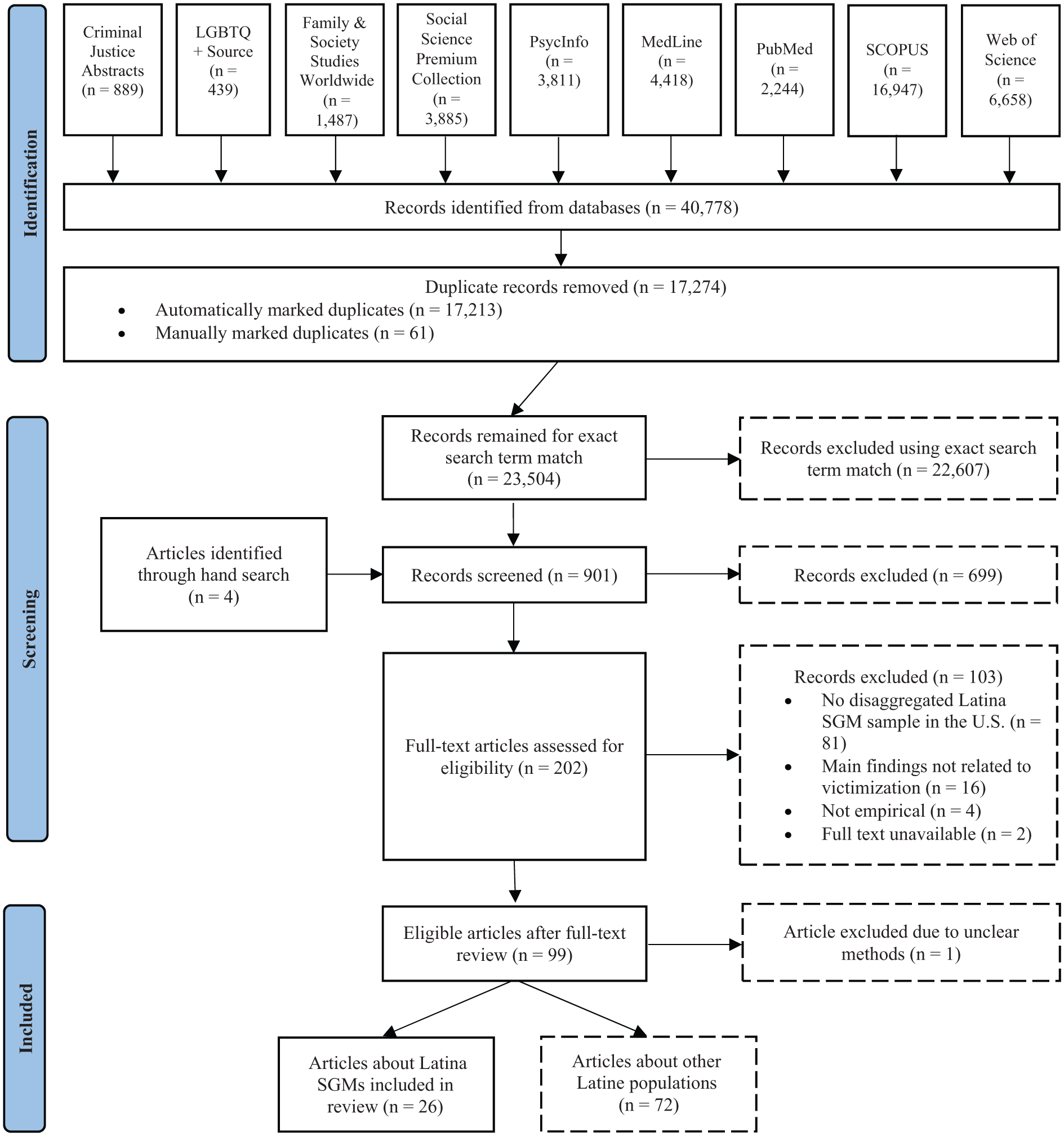
PRISMA flow chart of study selection process for inclusion in scoping review.
Results
A total of 26 articles studying violence victimization against Latina SGMs were included in this review. The samples in these articles yielded a wide age range, from age 12 to 82. The summary of study characteristics is presented in Table 1. All articles were published after 2003, with 80% (n = 21) published in the past decade. Twelve articles (46.2%) were atheoretical. Among articles that explicitly included theoretical frameworks, 64.3% (n = 9) were guided by the intersectional framework, 35.7% utilized the minority stress model (n = 5), and 7.1% used the intersectional minority stress resilience framework (n = 1). About 65% (n = 17) of the articles employed a quantitative methodology, one-third (n = 8) used a qualitative design, and 4% (n = 1) used a mixed-method design. Sexual violence was the most measured form of victimization, examined in 11 articles (42.3%), followed by physical violence (n = 9, 34.6%), IPV (n = 6, 23.1%), and verbal assault/insult (n = 5, 19.2%). Pertinent findings (see Supplemental B) fell into three themes—the prevalence of victimization among Latina SGMs, intra- and inter-racial comparisons on Latina SGMs’ rates of victimization, and contributing factors and consequences of victimization among Latina SGMs.
Summary of Study Characteristics (N = 26).
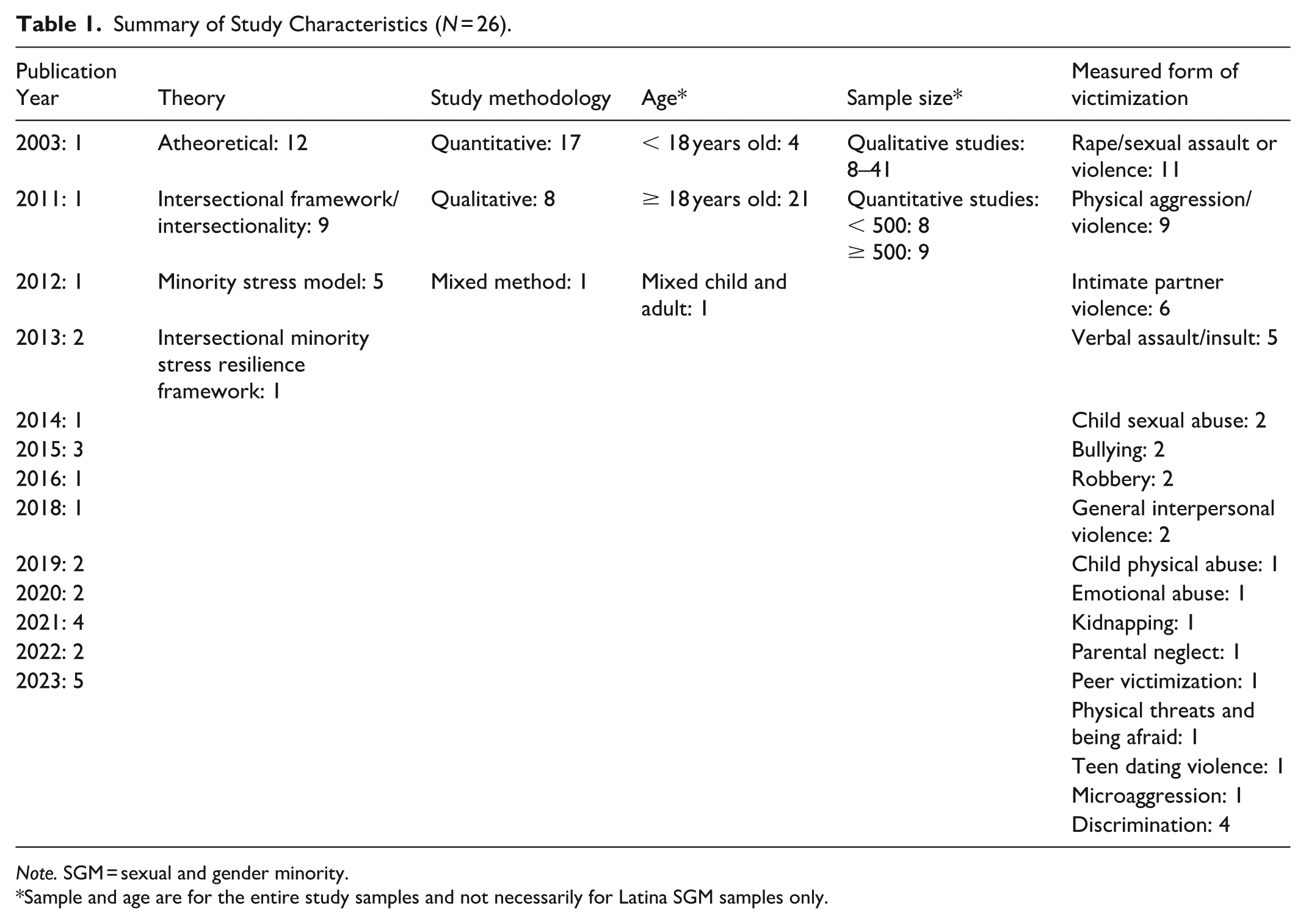
Note. SGM = sexual and gender minority.
Sample and age are for the entire study samples and not necessarily for Latina SGM samples only.
The Prevalence of Victimization Among Latina SGMs
Table 2 presents the prevalence rates of various forms of victimization among Latina SGMs. Two articles (Fix et al., 2022; Flores et al., 2023) utilized nationally representative samples and reported the prevalence rates of three forms of victimization among Latina SGMs. Specifically, Fix et al. (2022) reported the prevalence rates of physical and sexual TDV among Latina SGM youth using YRBS data from 2013 to 2017. Sexual TDV (21%) was slightly more prevalent than physical TDV (19%). Analyzing data from the NCVS, Flores et al. (2023) found that the rate of total crime victimization among Latina SGMs was 11.2% between 2017 and 2019. They also found that the rate of total violent victimization against bisexual Latinas (17.6%) was higher than the rate for Latina SGMs in general (11.2%).
Prevalence Rates of Different Forms of Victimization by Populations.
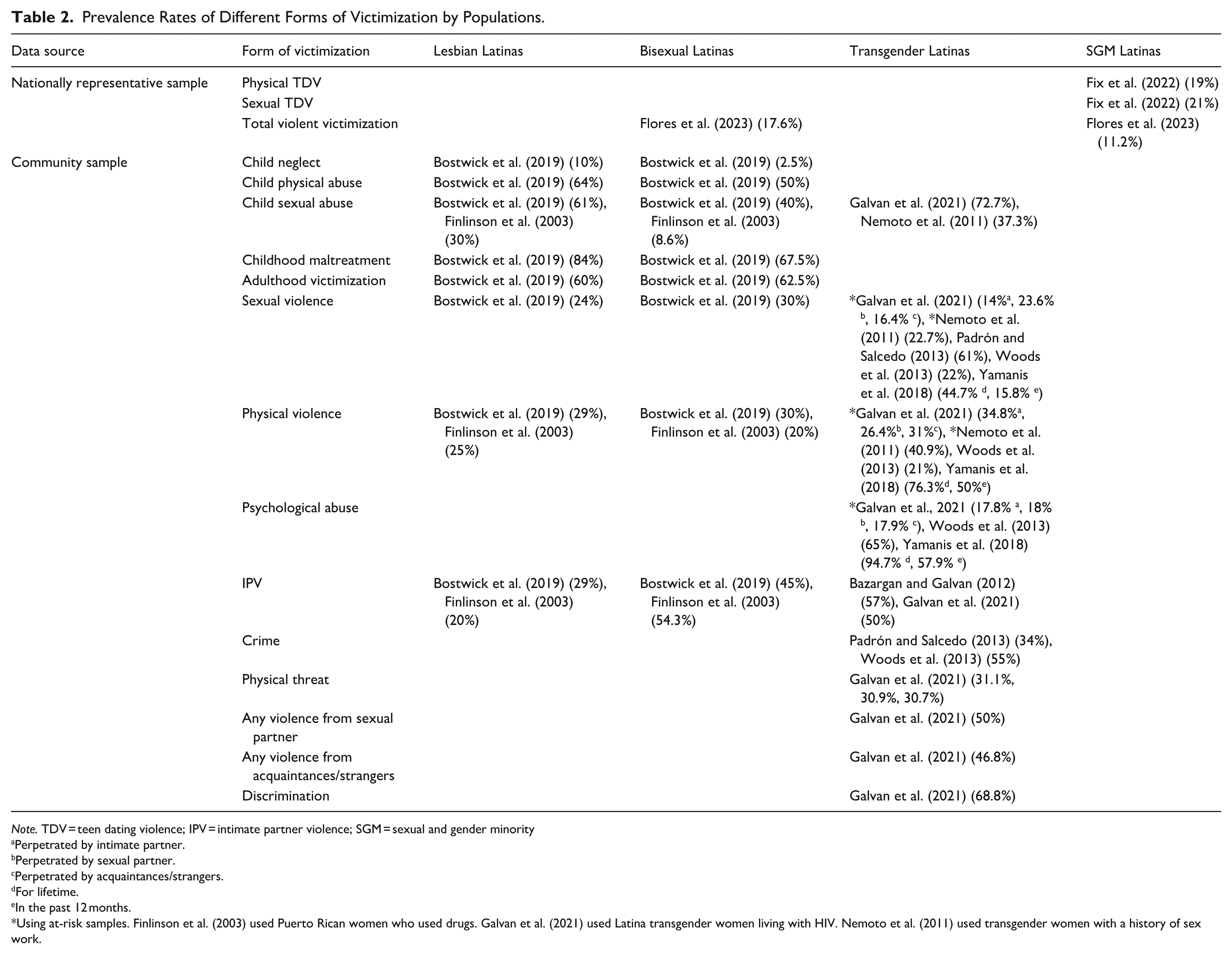
Note. TDV = teen dating violence; IPV = intimate partner violence; SGM = sexual and gender minority
Perpetrated by intimate partner.
Perpetrated by sexual partner.
Perpetrated by acquaintances/strangers.
For lifetime.
In the past 12 months.
Using at-risk samples. Finlinson et al. (2003) used Puerto Rican women who used drugs. Galvan et al. (2021) used Latina transgender women living with HIV. Nemoto et al. (2011) used transgender women with a history of sex work.
Eleven forms of victimization among Latina SGMs were assessed using community samples (Bazargan & Galvan, 2012; Bostwick et al., 2019; Finlinson et al., 2003; Galvan et al., 2021; Nemoto et al., 2011; Padrón & Salcedo, 2013; Woods et al., 2013; Yamanis et al., 2018). Two articles (Bostwick et al., 2019; Finlinson et al., 2003) investigated seven forms of victimization among lesbian and bisexual Latinas. Bostwick et al. (2019) reported the prevalence rates of three subtypes of child maltreatment (neglect, physical abuse, and sexual abuse) as well as all childhood maltreatment for both lesbian and bisexual Latinas. They found that lesbian Latinas had a prevalence rate of 10% for child neglect, 64% for child physical abuse, 61% for child sexual abuse, and 84% for all childhood victimization. For bisexual Latinas, the rates were 2.5% for child neglect, 50% for child physical abuse, 40% for child sexual abuse, and 67.5% for childhood victimization. In these findings, lesbian Latinas reported higher rates of childhood victimization than bisexual Latinas. However, Finlinson et al. (2003) found a lower prevalence rate of child sexual abuse (30%) among lesbian Latinas than Bostwick et al. (2019) (61%). Child maltreatment, physical abuse, and sexual abuse were consistently more prevalent than neglect in both lesbian and bisexual Latinas in Bostwick et al. (2019). Three forms of victimization were assessed in adulthood by Bostwick et al. (2019) and Finlinson et al. (2003), including physical violence, sexual violence, and IPV. Adulthood victimization was more prevalent in bisexual Latinas than in lesbian Latinas in both articles.
Six articles examined eight forms of victimization in transgender Latinas (Bazargan & Galvan, 2012; Galvan et al., 2021; Nemoto et al., 2011; Padrón & Salcedo, 2013; Woods et al., 2013; Yamanis et al., 2018). Two articles examined the prevalence of child sexual abuse in transgender Latinas (Galvan et al., 2021; Nemoto et al., 2011). Importantly, both surveyed at-risk samples. Galvan et al. (2021) surveyed Latina transgender women living with HIV; 72.7% reported experiencing child sexual abuse. Nemoto et al. (2011) surveyed transgender women with a history of sex work, and 37.3% reported experiencing child sexual abuse. Galvan et al. (2021) focused on the prevalence of sexual violence, physical violence, and psychological abuse by different types of perpetrators, including intimate partners, sexual partners, and acquaintances/strangers. They found that the prevalence of any form of violence perpetrated by intimate partners (50%) and sexual partners (50%) was equivalent in transgender Latinas, and slightly higher than that perpetrated by acquaintances/strangers (46.8%). Transgender Latinas experienced most physical violence from intimate partners (35%) and most sexual violence from sexual partners (23.6%). The prevalence of psychological abuse was close among these three types of perpetrators (17.8% from intimate partners, 18% from sexual partners, and 17.9% from acquaintances/strangers) (Galvan et al., 2021).
Sexual violence against transgender Latinas was assessed in another four articles (Nemoto et al., 2011; Padrón & Salcedo, 2013; Woods et al., 2013; Yamanis et al., 2018); together, they reported a range of 22% to 61% of lifetime sexual violence victimization. Three of these articles (Nemoto et al., 2011; Woods et al., 2013; Yamanis et al., 2018) also found a range of 21% to 76.3% of lifetime physical violence victimization. It is noteworthy that physical violence was more prevalent than sexual violence in transgender Latinas in Nemoto et al. (2011) and Yamanis et al. (2018), but sexual violence was as prevalent as or even slightly more prevalent than physical violence in Woods et al. (2013).
Woods et al. (2013) and Yamanis et al. (2018) found higher prevalence rates of psychological/verbal abuse against transgender Latinas (65% from Woods et al., 2013, and 95% from Yamanis et al., 2018) than both sexual (22% from Woods et al., 2013, and 45% from Yamanis et al., 2018) and physical violence (21% from Woods et al., 2013, and 75% from Yamanis et al., 2018). Padrón and Salcedo (2013) found that at least one in three transgender Latinas experienced crime victimization, including verbal assault, robbery, and other violent crimes; another study found a crime victimization rate among transgender Latinas of 55% (Woods et al., 2013). According to Galvan et al.’s (2021) study, two out of three transgender Latinas living with HIV reported experiencing discrimination in the past six months.
The qualitative articles included in our analysis also indicated that Latina SGMs are frequent targets of interpersonal violence and discrimination across the lifespan. Specifically, Latina SGMs were verbally, physically, and sexually assaulted by partners (Palazzolo et al., 2016), family members (Cerezo et al., 2014; Palazzolo et al., 2016), community members (Abreu et al., 2021), strangers (Cerezo et al., 2014), and law enforcement personnel (Cerezo et al., 2014). Additionally, some researchers found that Latina SGMs experienced discrimination in their daily lives and at workplaces due to their sexual and gender identities (Gutierrez, 2020; Rhodes et al., 2015).
Intra- and Inter-Racial Comparisons on Latina SGMs’ Rates of Victimization
Latina SGMs’ rate of victimization was compared both intra-racially (Finlinson et al., 2003; Flores et al., 2023; García-Crescioni et al., 2023; Jackman et al., 2020; Pollitt & Mallory, 2021) and inter-racially (Balsam et al., 2015; Bostwick et al., 2019; Flores et al., 2023; Mueller et al., 2015; Nemoto et al., 2011; Pollitt & Mallory, 2021; Wesson et al., 2021). All five studies (Finlinson et al., 2003; Flores et al., 2023; García-Crescioni et al., 2023; Jackman et al., 2020; Pollitt & Mallory, 2021) that compared Latinas by SGM status found higher rates among Latina SGMs compared to heterosexual Latinas at least for some forms of violence. When compared to heterosexual Latinas, Latina SGMs usually reported higher rates of bullying and peer victimization (Jackman et al., 2020), physical IPV (Finlinson et al., 2003; Pollitt & Mallory, 2021), sexual violence (García-Crescioni et al., 2023; Pollitt & Mallory, 2021), child sexual abuse (Finlinson et al., 2003), and general violent victimization (Flores et al., 2023). One study found that compared with heterosexual Latinas, bisexual Latinas did not have rates of sexual IPV (Pollitt & Mallory, 2021). Furthermore, Finlinson et al. (2003) found that bisexual and lesbian Puerto Rican women did not significantly experience more child physical abuse or physical IPV than heterosexual Puerto Rican women. García-Crescioni et al. (2023) reported that bisexual Latinas were more likely to experience sexual violence than lesbian Latinas.
Seven articles (Balsam et al., 2015; Bostwick et al., 2019; Flores et al., 2023; Mueller et al., 2015; Nemoto et al., 2011; Pollitt & Mallory, 2021; Wesson et al., 2021) explored the inter-racial differences of victimization experiences. When compared with White SGM women, Latina SGMs did not always report a higher rate of victimization. Specifically, some articles (Bostwick et al., 2019; Mueller et al., 2015; Pollitt & Mallory, 2021) found that Latina SGMs were more likely to experience victimization than White SGM women. Wesson et al. (2021) also found that transgender Latinas were more likely to attribute their discrimination victimization to their intersectional identities than White transgender women, who were more likely to attribute their experiences of discrimination to their gender identity. However, one article (Nemoto et al., 2011) indicated that transgender White women were more likely to report physical assault and rape/sexual assault than transgender Latinas. Another two articles reported non-significant differences between Latina and White SGM women regarding the rates of violence victimization, sexual assault in childhood and adulthood, and perceived discrimination (Balsam et al., 2015; Flores et al., 2023).
Findings comparing the experiences of African American women and Latina SGMs also conflicted. Specifically, two articles (Flores et al., 2023; Pollitt & Mallory, 2021) found that Latina SGMs were more likely to experience victimization, specifically physical and sexual IPV and violent victimization, than Black heterosexual and SGM women. Nemoto et al. (2011) found that transgender African American women reported physical assaults and sexual violence victimization more frequently than transgender Latinas. Yamanis et al. (2018) compared the rate of victimization between documented and undocumented transgender Latinas and found that undocumented transgender Latinas experienced more physical, sexual, and psychological violence than their documented counterparts, though the differences were not significant. Lastly, compared to transgender Asian women, transgender Latinas reported more transphobia and transphobia-based physical assaults (Nemoto et al., 2011).
Contributing Factors and Consequences of Victimization Among Latina SGMs
Some risk and protective factors associated with Latina SGMs’ victimization experiences were identified. Previous history of victimization was found to be associated with a higher risk of future victimization, including a history of child sexual abuse and discrimination experiences in the past 6 months (Galvan et al., 2021). Qualitative findings also revealed that individuals’ minority identities, including SGM identities and undocumented status, could lead to victimization and staying in an abusive relationship (Cerezo et al., 2014; Palazzolo et al., 2016). In terms of protective factors, Galvan et al. (2021) found that social support from cisgender individuals was associated with a lower probability of IPV victimization, victimization by sexual partners, and victimization from acquaintances or strangers.
The consequences of victimization for Latina SGMs were investigated in five articles (Bazargan & Galvan, 2012; Bostwick et al., 2019; Meza Lazaro & Bacio, 2023; Mueller et al., 2015; Smith et al., 2023). In general, these articles consistently highlight that victimization leads to negative consequences among Latina SGM populations, including depression (Bazargan & Galvan, 2012), binge drinking/illicit drug use (Meza Lazaro & Bacio, 2023), and lifetime suicidal ideation (Meza Lazaro & Bacio, 2023; Mueller et al., 2015). One study (Smith et al., 2023) specifically focused on microaggression, a form of discrimination, against bisexual women and found that the experience of microaggression was associated with negative affect and somatic complaints in bisexual Latinas. These associations were stronger among bisexual Latinas than among White bisexual women. Moreover, the association between racial microaggression with negative affect and somatic complaints was stronger for bisexual Latinas than for Black bisexual women (Smith et al., 2023).
Qualitative studies analyzed several topics related to Latina SGMs’ victimization, including their migration to the United States, reporting their victimization to the police, and resilience. In particular, some Latina SGMs disclosed that their migration to the US was a consequence of the extreme violence in their home countries (Cerezo et al., 2014; Lee et al., 2023; Palazzolo et al., 2016). Reporting to the police is one possible response to victimization. However, in some studies, more than half of the Latina SGMs who attempted to report a crime were treated poorly by law enforcement personnel (Rhodes et al., 2015; Woods et al., 2013). Three articles mentioned resilience after victimization (Abreu et al., 2022; Rhodes et al., 2015; Schmitz et al., 2019). Latina SGMs mentioned their increasing wisdom, resilience, and sense of self after experiencing childhood sexual abuse and discrimination (Rhodes et al., 2015; Schmitz et al., 2019). When navigating the healthcare system, transgender Latinas showed strength to claim their identity and their right to be in different spaces (Abreu et al., 2022).
Discussion
This scoping review analyzed 26 empirical articles that investigated victimization against Latina SGMs in the US. Research in this field has been growing; 80% of the articles were published in the past decade. Surprisingly, close to half of the articles did not explicitly identify their theoretical frameworks. Among articles that were theory-driven, intersectionality was the most utilized framework; researchers utilizing intersectionality consistently acknowledged the importance of social identities in shaping Latina SGMs’ experiences of victimization. Three main themes emerged in this review: the prevalence of victimization among Latina SGMs, intra- and inter-racial comparisons on Latina SGMs’ victimization, and contributing factors and consequences of victimization among Latina SGMs. Close to half of the articles reported at least one form of victimization in one or multiple Latina SGM groups. Victimization in both childhood and adulthood was analyzed; however, more forms of victimization were examined in adulthood than in childhood.
Two articles reported the prevalence rates of three forms of victimization against Latina SGMs in nationally representative samples. One (Fix et al., 2022) used a national youth sample and specifically focused on physical and sexual TDV; the other (Flores et al., 2023) used a national crime survey sample and examined violent victimization. Thus, the full scope of victimization against Latina SGMs assessed by nationally representative samples is small. These findings also fail to fully examine the prevalence of victimization by Latinas’ sexual and gender status. Given these salient knowledge gaps, more national data about multiple forms of victimization among Latina adult SGMs and by their sexual and gender status are warranted. Community samples were widely used in eight articles to estimate the prevalence rate of victimization in Latina SGMs, with six focusing on transgender Latinas and two concentrating on lesbian and bisexual Latinas. As a result, community-sample-based findings yielded a wide range of victimization prevalence rates. Among the forms of victimization investigated, sexual violence, physical violence, and psychological abuse were the most commonly assessed across articles. Only one article investigated the experiences of discrimination among Latina SGMs; it is imperative to conduct a more comprehensive investigation on Latina SGMs’ discrimination experiences in the US. Furthermore, the majority of the articles used community adult samples, with only 15.4% specifically concentrated on Latina SGM adolescents. Victimization in early life has been consistently shown to negatively impact later well-being (Ai et al., 2024; Alvarez et al., 2019; Mitchell et al., 2020). Thus, studying victimization in Latina SGM children can provide critical insight into their later outcomes.
Mainly guided by the theory of intersectionality, eight articles compared the victimization experiences between Latina SGMs and other populations. Specifically, when conducting intra-ethnic comparisons, most studies consistently reported a higher rate of victimization for Latina SGMs compared to heterosexual Latinas in terms of bullying, peer victimization, IPV, sexual violence, child sexual abuse, and violent victimization. One article (García-Crescioni et al., 2023) found that bisexual Latinas were more likely to have experienced child sexual abuse than lesbian Latinas. However, some evidence (Finlinson et al., 2003; Pollitt & Mallory, 2021) suggests non-significant intra-ethnic differences.
A limited set of studies applied the minority stress theory to guide their research questions and understanding of the results. These studies emphasized the ramifications of various forms of discrimination, ranging from proximal to distal, on the well-being of Latina SGMs. For example, concealment in the family was considered a proximal stressor (Gutierrez, 2020), but stress also arose from religiosity (Gutierrez, 2020), employment and housing status, (Meza Lazaro & Bacio, 2023), and documentation status (Yamanis et al., 2018). It was also common to blend minority stress theory with intersectionality; for example, one article applied the intersectional minority stress resilience framework (Yamanis et al., 2018) and the intersectional minority stress model (Gutierrez, 2020). Further, this set of studies examined mental health outcomes and coping/resilience among SGM Latinas as opposed to examining victimization as the outcome.
Extant research into interracial differences has yielded conflicting findings. Some studies indicate that Latina SGMs have a higher risk of victimization than heterosexual and/or SGM populations in other racial groups (Bostwick et al., 2019; Flores et al., 2023; Mueller et al., 2015; Pollitt & Mallory, 2021; Wesson et al., 2021), while others suggest a comparable risk among different racial groups (Balsam et al., 2015; Flores et al., 2023; Pollitt & Mallory, 2021). Nemoto et al. (2011) found that SGMs in other racial groups were more likely to experience victimization than Latina SGMs. The existing research mainly compares Latina SGMs with their White and Black counterparts; other racial groups are not commonly studied. The present study also notices that the reviewed articles mainly compare Latina SGMs with other populations based on either their racial/ethnic or SGM identities. However, individuals’ positionality in society is shaped by other identities beyond these, such as immigration status, occupation, and level of education (Settles & Buchanan, 2014). To develop a fuller understanding of their lived experiences of victimization through a lens of intersectionality, more nuanced investigation based on Latina SGMs’ other identifications is warranted.
Only two articles examined potential risk factors for Latina gender minorities’ victimization (Galvan et al., 2021; Woods et al., 2013). Not surprisingly, previous victimization (i.e., discrimination and childhood sexual abuse) was associated with a higher risk of future victimization (Galvan et al., 2021). Only one protective factor was identified: social support from cisgender individuals was associated with a lower probability of interpersonal violence victimization (Galvan et al., 2021). Some qualitative studies examined Latina SGMs’ resilience after victimization, noting such outcomes as increasing wisdom and sense of self (Rhodes et al., 2015; Schmitz et al., 2019). Thus, protective factors and resilience among Latina SGMs are understudied and deserve further examination. According to the Resilience Portfolio Model (Grych et al., 2015), there are both internal and external strengths in the survivors of victimization against the negative outcomes of victimization and promote thriving after victimization (Grych et al., 2015; Hamby et al., 2018). The negative mental health consequences of victimization among Latina SGMs include substance use (Meza Lazaro & Bacio, 2023), suicidal ideation (Meza Lazaro & Bacio, 2023; Mueller et al., 2015), depression (Bazargan & Galvan, 2012), negative affect (Smith et al., 2023), and somatic symptoms (Smith et al., 2023). More research is needed to assess the consequences of victimization in other domains, such as physical health.
Limitations and Future Directions
As a scoping review, one of the main limitations is that we synthesized the existing literature but did not provide a quality appraisal of the evidence. Even so, several quality-related drawbacks were still observed. First, most of the reviewed articles used community samples, and the majority of the sample sizes were smaller than 500 participants. Community samples have their own merits of capturing the experiences of underrepresented Latinas, such as those who did not go to college or were undocumented. Yet, even though with these strengths, community samples with small sample sizes still constrain the generalizability of the findings to Latinas across the US from different regions and backgrounds, considering the population is broadly heterogeneous. Second, the existing evidence is mainly based on cross-sectional data, which limits the examination of temporality and causality. Third, only seven out of 26 articles utilized validated measures of victimization.
In addition to the quality-related limitations, the present review also revealed several limitations related to conceptualization. First, the majority of the articles focused on violence victimization, hence, Latina SGMs’ experiences of discrimination, including its prevalence, risk/protective factors, and consequences, are overlooked. Second, only four articles (15.4%) contained full or partial adolescent samples. In other words, in an already under-researched topic, victimization in Latina adolescents with SGM identities is even more under-studied. Third, though a number of forms of victimization have been investigated in the existing literature, very little evidence exists regarding Latina SGMs’ experiences of multiple forms of victimization (poly-victimization). A substantial body of literature has noted poly-victimization in the general population and at-risk populations (Cudmore et al., 2017; Turner et al., 2010). Among the reviewed articles, only one (Balsam et al., 2015) studied Latina SGMs’ cumulative traumatic life experiences, but did not reveal significant findings. Fourth, while a number of articles were guided by the theory of intersectionality, all of them concentrated on the intersection between individuals’ racial/ethnic and SGM identities. However, intersectionality can include many additional factors, such as immigration status, level of education, and public policy. Furthermore, none of the articles refined or advanced this framework.
With these limitations, researchers should address the following issues in their future work. First, future work should utilize larger sample sizes. Considering the “hard-to-reach” nature of the target population, a nationally representative sample may be unrealistic. But increasing the number of participants can provide more accurate estimates. Second, a longitudinal study design will be a powerful tool to understand the long-term impacts of victimization in early childhood to Latina SGMs’ later outcomes. Researchers should further explore victimization in Latina SGM children and adolescents; however, they must account for the complexity of Latina SGM youth’s evolving intersecting identities, including sexual, gender, ethnicity, and race, which can shape how SGM children and adolescents experience adversity and seek support (Watson et al., 2020).
Third, given the scarce studies on discrimination against Latina SGMs, various forms of discrimination should be measured, and culturally responsive and validated measures need to be utilized to yield more reliable findings (Ravi et al., 2023). Fourth, more investigation on Latina SGMs’ poly-victimization and its consequences is needed. Fifth, future research should also consider other factors (such as victimization in other marginalized populations) when conceptualizing Latina SGMs’ intersectional identities and victimization. This nuanced investigation may reveal insightful information, especially for extremely under-represented populations (Gonzalez et al., 2020). Additionally, it may help advance and refine the theory of intersectionality. For instance, such a theory can be used to understand victimization in other marginalized populations, such as non-Hispanic Black SGMs. Then it is important to investigate what makes victimization differ between Latina SGMs and other marginalized populations. Likewise, an expansion of research guided by minority stress theory could examine victimization, in addition to mental health, as a ramification of social stressors associated with multiply minoritized statuses. Lastly, it is warranted to design and examine the effectiveness of intervention programs that target Latina SGM survivors of victimization. Based on the findings in the present study, no known intervention programs have been designed/tested to specifically address victimization in Latina SGMs. There is an urgent demand to develop prevention and intervention strategies to protect Latina SGMs from victimization. With their complex and distinct backgrounds, culturally responsive perspectives will be vital to better understand their challenges and needs (Rai et al., 2023).
Conclusion
To the authors’ best knowledge, this study is one of only a few that reviews and synthesizes the existing literature regarding victimization against Latina SGMs. By reviewing 26 empirical studies, we examined the prevalence of victimization among Latina SGMs, Latina SGMs’ victimization experiences in comparison with other groups, and the contributing factors and consequences of victimization among Latina SGMs. In general, Latina SGMs are likely to experience victimization due to their minority identities. Although their risk of victimization is usually higher than that of heterosexual individuals, the evidence does not always indicate a higher risk of victimization compared to SGMs in other racial/ethnic groups. The existing studies identified several risk factors, potential protective factors, and consequences of victimization; however, further investigation is still needed. To establish a more comprehensive body of evidence on this topic, future research should rely on nuanced measures of victimization, especially discrimination, a longitudinal study design that examines victimization in early childhood, and information regarding Latina SGMs’ other social identities. Given their vulnerabilities, research, policy, and practice should put more effort into developing culturally responsive programs for Latina SGMs with victimization experiences.
Summaries of Critical Findings
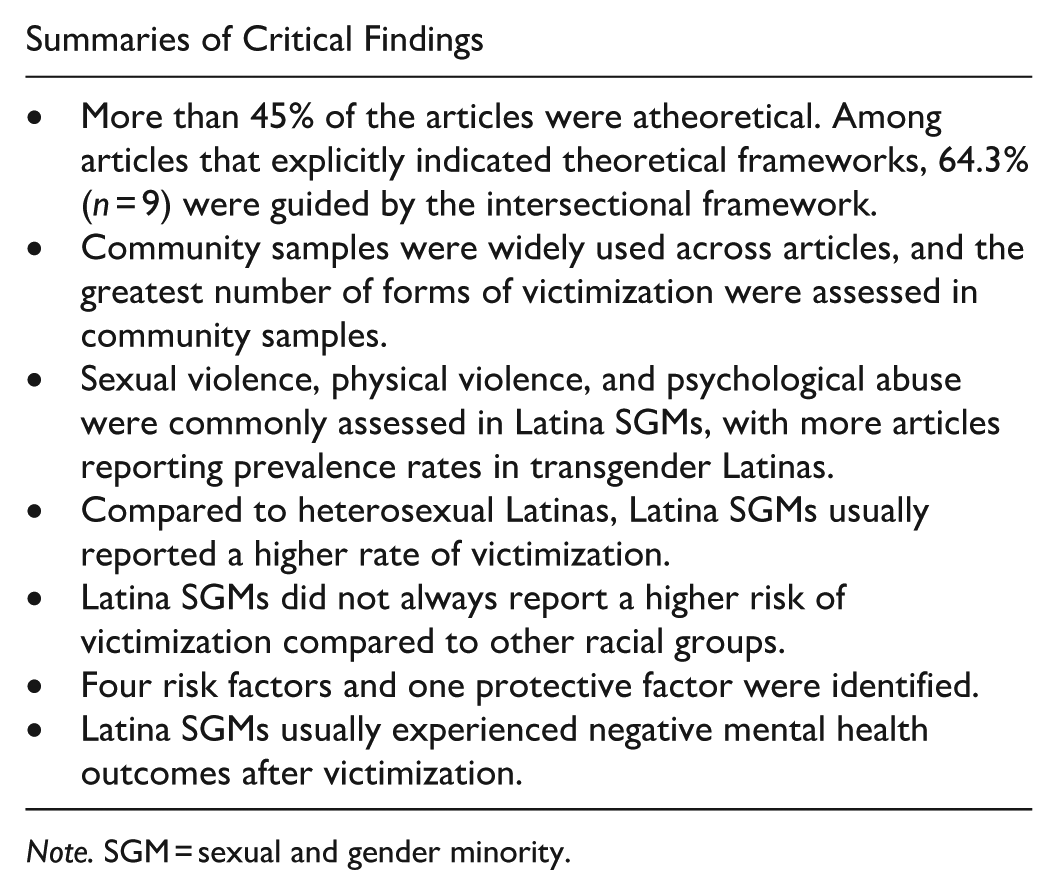
Note. SGM = sexual and gender minority.
Implications of the Review for Research, Practice, and Policy
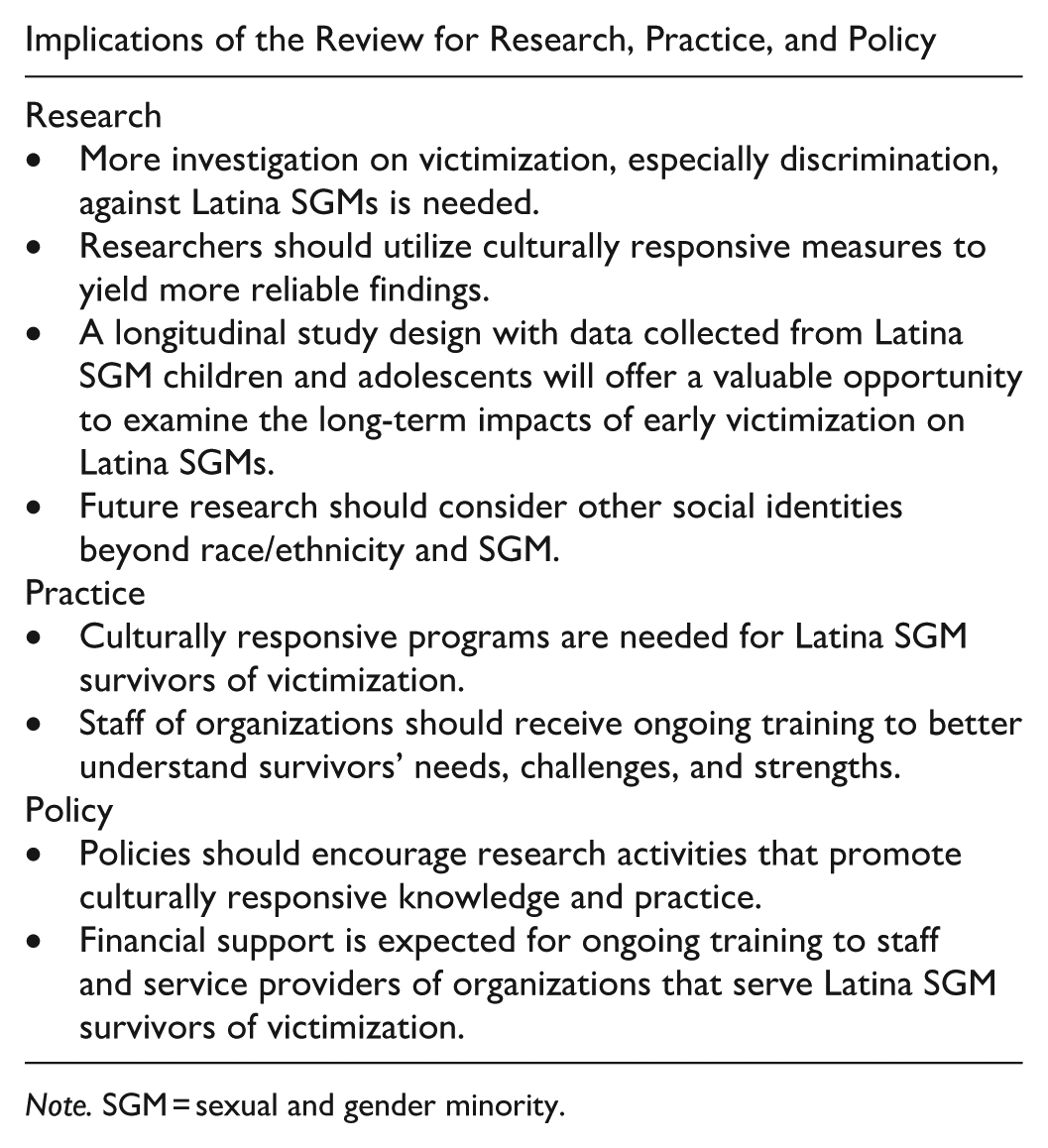
Note. SGM = sexual and gender minority.
Supplemental Material
sj-docx-1-tva-10.1177_15248380251412519 – Supplemental material for Victimization Against Latinas with Sexual and Gender Minority Identities: A Scoping Review
Supplemental material, sj-docx-1-tva-10.1177_15248380251412519 for Victimization Against Latinas with Sexual and Gender Minority Identities: A Scoping Review by Yafan Chen, Chiara Sabina and Maria A. Guevara Carpio in Trauma, Violence, & Abuse
Footnotes
Acknowledgements
The authors would like to extend their thanks to Charlie Gray, Research Assistant, for his contributions to the literature search and review process.

Funding
The authors disclosed receipt of the following financial support for the research, authorship, and/or publication of this article: This project was supported by Award No. 15PNIJ-22-GG-01617-REVA, awarded by the National Institute of Justice, Office of Justice Programs, U.S. Department of Justice.
Declaration of Conflicting Interests
The authors declared no potential conflicts of interest with respect to the research, authorship, and/or publication of this article.
Supplemental Material
Supplemental material for this article is available online.
Notes
Author Biographies
References
Supplementary Material
Please find the following supplemental material available below.
For Open Access articles published under a Creative Commons License, all supplemental material carries the same license as the article it is associated with.
For non-Open Access articles published, all supplemental material carries a non-exclusive license, and permission requests for re-use of supplemental material or any part of supplemental material shall be sent directly to the copyright owner as specified in the copyright notice associated with the article.
