







Abstract
This systematic review offers the first comprehensive synthesis of factors associated with intimate partner violence (IPV) among sexual minority women (SMW), encompassing victimization, perpetration, and bidirectional violence. Following PRISMA guidelines, five databases (PubMed, Scopus, Web of Science, EMBASE, and PsycNet) were systematically searched for studies published between 2010 and 2025. Of 3,993 records identified, 20 studies involving 8,483 SMW met the inclusion criteria, all demonstrating acceptable methodological quality. A multi-level framework guided the analysis, identifying individual (sociodemographic, psychological, behavioral, and trauma-related), minority stress (internalized homophobia, discrimination, identity management), relationship (relationship dynamics, partner characteristics), and sociocultural (cultural and normative) factors. Minority stress emerged as the central risk domain influencing all IPV directions, linking both internalized and external stigma to heightened vulnerability. Bisexual women consistently reported higher IPV rates than lesbian women, and bidirectional violence was frequent, challenging traditional victim–perpetrator paradigms. Protective factors were markedly limited, with only socioeconomic status, education, and relationship satisfaction showing consistent effects. These findings underscore that IPV among SMW operates through unique identity-based and contextual mechanisms inadequately captured by existing heterosexual models. Future research should adopt intersectional, resilience-oriented, and culturally responsive frameworks to inform tailored prevention and intervention strategies. The study protocol was registered with PROSPERO (CRD42024628444).
Keywords
Introduction
Intimate partner violence (IPV) is a critical public health concern, affecting millions of individuals across diverse populations and regions. The World Health Organization defines IPV as behavior within intimate relationships that causes physical, sexual, or psychological harm (World Health Organization, 2024). Global surveillance data estimate that approximately one in three women worldwide have experienced physical or sexual IPV, with longitudinal studies reporting lifetime exposure rates between 23% and 38% (Tenkorang et al., 2021). IPV is associated with a wide range of adverse outcomes, including physical trauma, mental health disorders, sexually transmitted diseases, and other pathophysiological complications (Costa et al., 2015; Yakubovich et al., 2018).
Sexual minority women (SMW)—including lesbians, bisexuals, and other women who partner with women—experience disproportionately high rates of IPV (Jaffray, 2021; Chen et al., 2020). For instance, the 2016–2017 National Intimate Partner and Sexual Violence Survey reported lifetime IPV prevalence of 69% among bisexual women and 56% among lesbian women, compared to 46% among heterosexual women (Chen et al., 2023). A meta-analysis further indicated that 43% of lesbian women reported psychological IPV, 18% physical violence, and 14% sexual violence (Badenes-Ribera et al., 2019). While these prevalence studies underscore the magnitude of the issue, they offer limited insight into the mechanisms driving these disparities, the protective factors that mitigate risk, or how minority sexual identity shapes IPV dynamics.
Current research on IPV among SMW is constrained by several limitations. First, most studies adopt a one-sided perspective that emphasizes victimization while neglecting perpetration and the complexities of bidirectional violence (Yakubovich et al., 2018). Yet evidence shows that individuals may be both victims and perpetrators within the same relationship, and mutual aggression is common in same-gender relationships, with over half involving bidirectional violence (Andreia et al., 2024; Porsch et al., 2023). Second, research has disproportionately focused on risk factors while overlooking protective factors that may prevent IPV or foster resilience (Allsworth, 2018). Third, studies often conflate lesbian and bisexual women, potentially obscuring important differences in risk and protective profiles (Baker et al., 2013; Messinger, 2011). Moreover, IPV measurement tools developed for heterosexual populations frequently fail to capture abuse tactics specific to SMW, such as threats of “outing” or exploitation of minority status (Hong et al., 2025; Lewis et al., 2016). Around 15% of sexual and gender minority individuals report experiencing IPV that explicitly involves anti-minority stigma (Whitton et al., 2019), defined as prejudice and discriminatory treatment directed at individuals based on their sexual or gender minority status (Herek, 2007; Meyer, 2015). Anti-minority stigma operates at multiple levels, encompassing both structural stigma embedded in laws and institutions and individual-level stigmatization manifested through interpersonal discrimination (Pachankis & Bränström, 2018). Although recent studies have begun to explore barriers to help-seeking—such as fear of discrimination, concerns about disclosing sexual orientation, and limited access to LGBTQ-affirming resources (Turner & Hammersjö, 2024; Whitton et al., 2024)—much remains unknown, particularly regarding the interplay between risk and resilience.
Addressing these gaps requires engaging with theoretical frameworks that not only identify shared vulnerabilities among women but also illuminate the distinct risks and protections shaped by minority sexual identity. The Social Ecological Model (Bronfenbrenner, 1979) provides a multi-level lens, showing how violence arises from interactions across individual, relational, community, and societal contexts (Tarzia, 2021; Wheeler et al., 2021). Applied to SMW, this model draws attention to how heteronormative structures, institutional discrimination, and the scarcity of LGBTQ-affirming resources intersect with personal histories and relationship dynamics to generate specific risk constellations and, in some cases, protective pathways (Edwards et al., 2015; Swann et al., 2022). Yet, while this ecological view situates IPV in a broader social matrix, it does not fully capture the chronic psychosocial burdens associated with minority identity.
The Minority Stress Theory (Meyer, 2003) complements this gap by foregrounding the external (e.g., stigma, discrimination, victimization) and internal (e.g., internalized homophobia, concealment, rejection sensitivity) stressors that uniquely burden SMW. These stressors not only exacerbate vulnerability to victimization but may also contribute to perpetration and complicate help-seeking, underscoring that IPV among SMW cannot be disentangled from the broader social marginalization they face (Frost, 2011; Pachankis et al., 2021). At the same time, Intersectionality Theory (Crenshaw, 1991) pushes both models further, reminding us that risk and resilience cannot be understood solely through the lens of sexuality. The simultaneous operation of gender, sexual orientation, race, class, and age creates heterogeneous IPV experiences, demanding analyses that account for both cumulative disadvantage and intersecting protective factors (Bowleg, 2012; Swann et al., 2022).
Building on these frameworks, this systematic review moves beyond prevalence estimates to synthesize empirical evidence on the factors associated with IPV victimization, perpetration, and bidirectional violence among SMW. Its contributions are threefold. Methodologically, it adopts a bidirectional analytical approach that captures the fluidity between victimization and perpetration, a reality often overlooked in prior reviews. Theoretically, it integrates insights from ecological, minority stress, and intersectional perspectives, using them in dialogue rather than isolation to construct a more comprehensive conceptual model. Empirically, it maps the existing evidence base to clarify consistent findings, highlight contradictions, and identify neglected areas, thereby laying the groundwork for prevention and intervention strategies that are both culturally responsive and attuned to the lived realities of SMW.
Accordingly, this review aims to (a) synthesize empirical evidence on factors associated with IPV victimization and perpetration among SMW; (b) categorize findings by ecological level (individual, relationship, community, societal) and factor type (risk vs. protective); (c) examine distinctions between lesbian and bisexual women where data permit; and (d) identify critical research gaps and methodological limitations to guide future scholarship and intervention development.
Methods
This systematic review followed the Preferred Reporting Items for Systematic Reviews and Meta-Analyses (PRISMA) guidelines to ensure methodological rigor and transparency (Page et al., 2021). The selection process is illustrated in Figure 1.
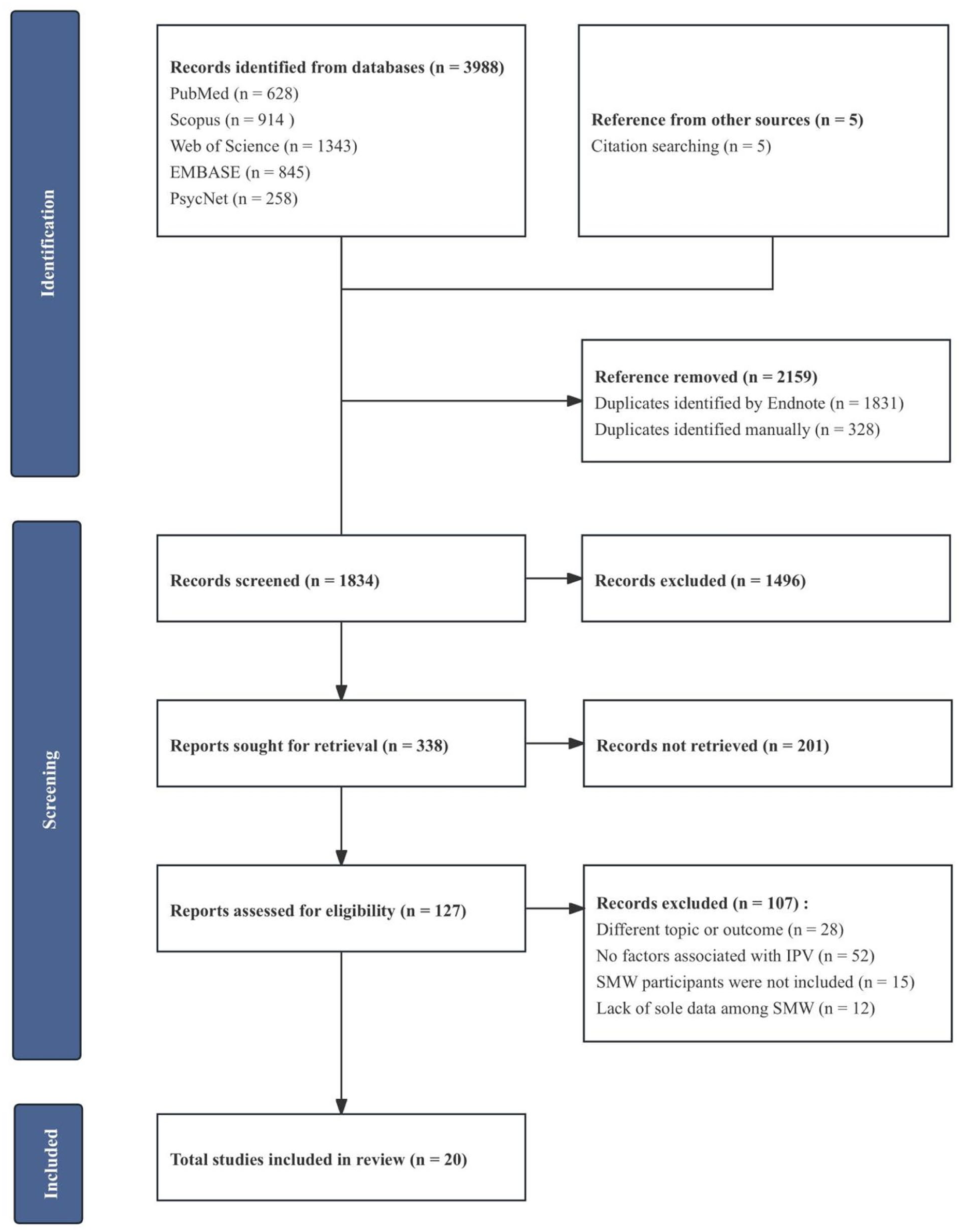
PRISMA flow diagram illustrating the selection process of primary studies.
Eligibility Criteria
Inclusion Criteria
Studies were eligible if they met all of the following requirements: (a) empirically examined factors associated with IPV (victimization, perpetration, or bidirectional) using quantitative methods; (b) included samples composed exclusively of SMW or provided disaggregated analyses specific to SMW; (c) reported effect sizes or provided sufficient statistical information to enable their calculation; (d) were published in English or Chinese. These criteria ensured that included studies contributed meaningfully to understanding quantifiable associations between risk/protective factors and IPV among SMW.
The focus on quantitative studies was driven by our objective to identify statistically measurable associations between risk/protective factors and IPV outcomes, which requires comparable quantitative metrics across studies. A complementary qualitative synthesis would be valuable for understanding the lived experiences and meaning-making processes underlying IPV among SMW, and we encourage future reviews to address this important gap.
The search was limited to studies published between 2010 and 2025 to capture contemporary research reflecting current methodological standards (Dyar et al., 2021; Stephenson & Finneran, 2013) and the growing scholarly attention to IPV among sexual minorities following increased societal recognition of LGBTQ+ relationships (Breiding et al., 2013; Edwards et al., 2015; Trombetta & Rollè, 2023).
Search Strategy
The search strategy combined three primary concept clusters with Boolean operators to capture the intersection of IPV, SMW, and associated factors. The IPV cluster included terms such as “intimate partner violence,” IPV, “spouse violence,” “domestic violence,” “dating violence,” “partner abuse,” “sexual abuse,” “marital violence,” assault, conflict, batter*, victim*, abus*, and trauma. The SMW cluster encompassed lesbian, “women who have sex with women,” “bisexual women,” WSW, “sexual minority women,” “queer women,” and “gay women.” The factor cluster included terms such as factor, impact, effect, and associat*. Electronic searches were conducted in PubMed, Scopus, Web of Science, EMBASE, and PsycNet for studies published between 2010 and 2025. Additional records were identified through citation tracking of included studies and relevant reviews.
Study Selection Procedure
As shown in Figure 1, the study selection process followed a systematic two-phase approach. A total of 3,993 records were identified, of which 2,159 duplicates were removed using a combination of automated tools and manual verification. Two reviewers independently screened the remaining 1,834 records against the eligibility criteria, with disagreements resolved through discussion and, when necessary, consultation with a third reviewer. Following this stage, of the 338 records retained for full-text review, 201 (59.5%) could not be retrieved. This proportion was primarily attributable to the emerging nature of this research field, which results in substantial conference presentations indexed in databases (e.g., PsycNet) without accompanying full papers, institutional access limitations for specialized journals, and restricted access to dissertations and gray literature. We maintained detailed documentation of all the retrieval attempts and systematically reviewed available abstracts, which revealed that most non-retrieved records focused on prevalence estimates rather than associated factors, suggesting they would likely not have met our inclusion criteria.
During full-text assessment, 127 articles met the initial eligibility requirements, but only 20 studies ultimately satisfied all inclusion criteria and were retained for the final analysis. The most common reasons for exclusion were focus on a different topic or outcome (n = 28), absence of analyses examining factors associated with IPV (n = 52), lack of inclusion of SMW participants (n = 15), and absence of disaggregated data specific to SMW (n = 12). Inter-rater agreement remained high throughout, and all the discrepancies were resolved through consensus.
Quality Assessment
Methodological quality was assessed with a 15-item instrument adapted from established IPV research tools (Murray & Mobley, 2009). Each criterion was scored dichotomously, with 1 indicating presence and 0 absence, yielding a total score between 0 and 15. Studies were then classified into three categories: acceptable (≥11 points, at least 70% of the total score), adequate (6–10 points, 40–69%), and unacceptable (≤5 points, <40%). Only studies rated as acceptable or adequate were included, thereby ensuring the reliability and validity of the synthesized evidence. Quality assessment was conducted independently by two reviewers, and disagreements were resolved through discussion and, when necessary, consultation with a methodological expert.
Data Extraction and Analysis
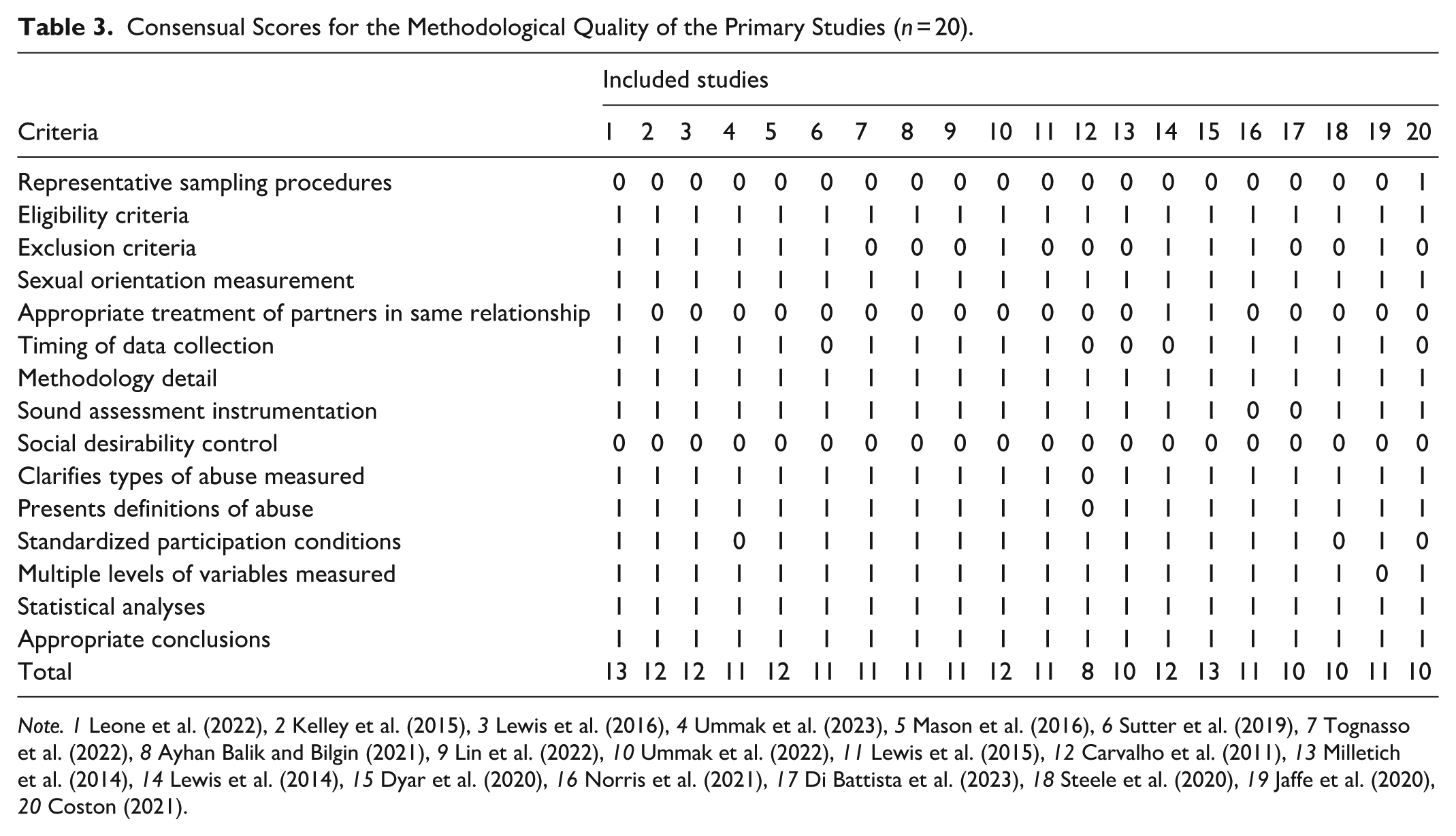
Data extraction was conducted systematically using a standardized form developed for this review. Two independent reviewers extracted data from all eligible studies, and any discrepancies were resolved through discussion and consensus. Extracted information included (a) study characteristics, including author, publication year, country, study design, recruitment source, and sample size; (b) participant demographics, including age, race/ethnicity, education level, and sexual orientation breakdown; (c) IPV characteristics, including directions of violence (victimization, perpetration, or bidirectional), type of violence (psychological, physical, sexual, or identity-specific), and measurement instruments employed; (d) identified risk and protective factors, classified across individual, relational, minority stress, and sociocultural domains. These extracted data are summarized in Tables 1 and 2.
Characteristics of Included Studies (n = 20).
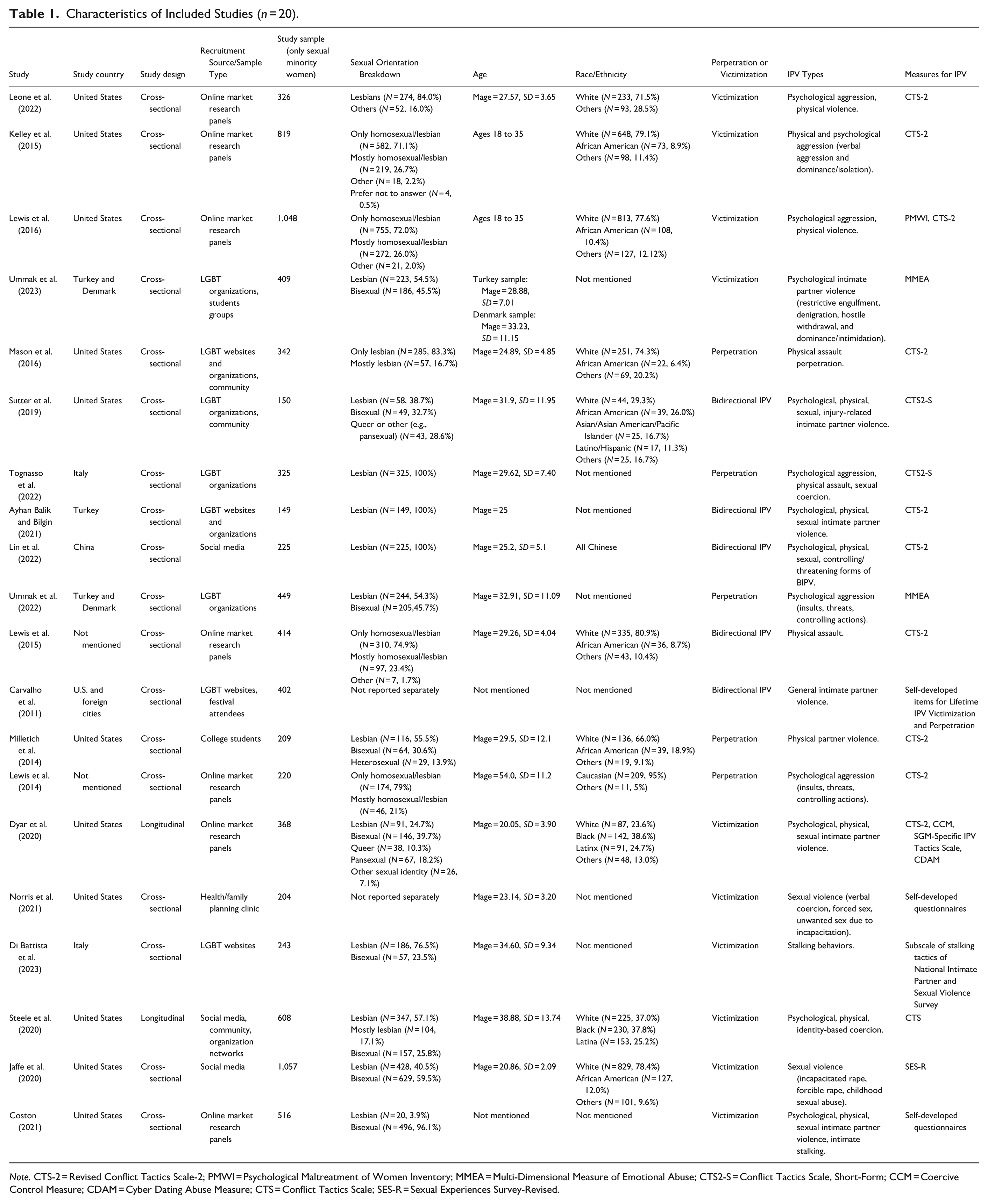
Note. CTS-2 = Revised Conflict Tactics Scale-2; PMWI = Psychological Maltreatment of Women Inventory; MMEA = Multi-Dimensional Measure of Emotional Abuse; CTS2-S = Conflict Tactics Scale, Short-Form; CCM = Coercive Control Measure; CDAM = Cyber Dating Abuse Measure; CTS = Conflict Tactics Scale; SES-R = Sexual Experiences Survey-Revised.
Factors Classification.
Given the heterogeneity of study designs, outcome measures, and analytic approaches across the included studies, a meta-analysis was not feasible. Instead, a narrative synthesis approach was employed to organize and interpret the findings.
Results
Quality Assessment Outcomes
Before presenting the substantive findings, the methodological quality of included studies has been reported to provide context for interpreting results. The methodological quality assessment indicated that all 20 included studies met either acceptable or adequate quality standards. Scores ranged from 8 to 13 out of a possible 15, with a mean score of 11.15 (SD = 1.35). The highest-scoring studies (Dyar et al., 2020; Leone et al., 2022) achieved 13 points, whereas the lowest-scoring study (Carvalho et al., 2011) received 8 points. Common methodological strengths included clearly defined eligibility criteria (100% of studies), appropriate measurement of sexual orientation (100%), and the use of robust statistical analyses (100%). However, several limitations were evident. Most studies lacked representative sampling procedures (95%), failed to include social desirability controls (100%), and did not adequately account for dyadic data when both partners from the same relationship were involved (85%). No studies were excluded solely on the basis of quality assessment scores (Table 3).
Consensual Scores for the Methodological Quality of the Primary Studies (n = 20).
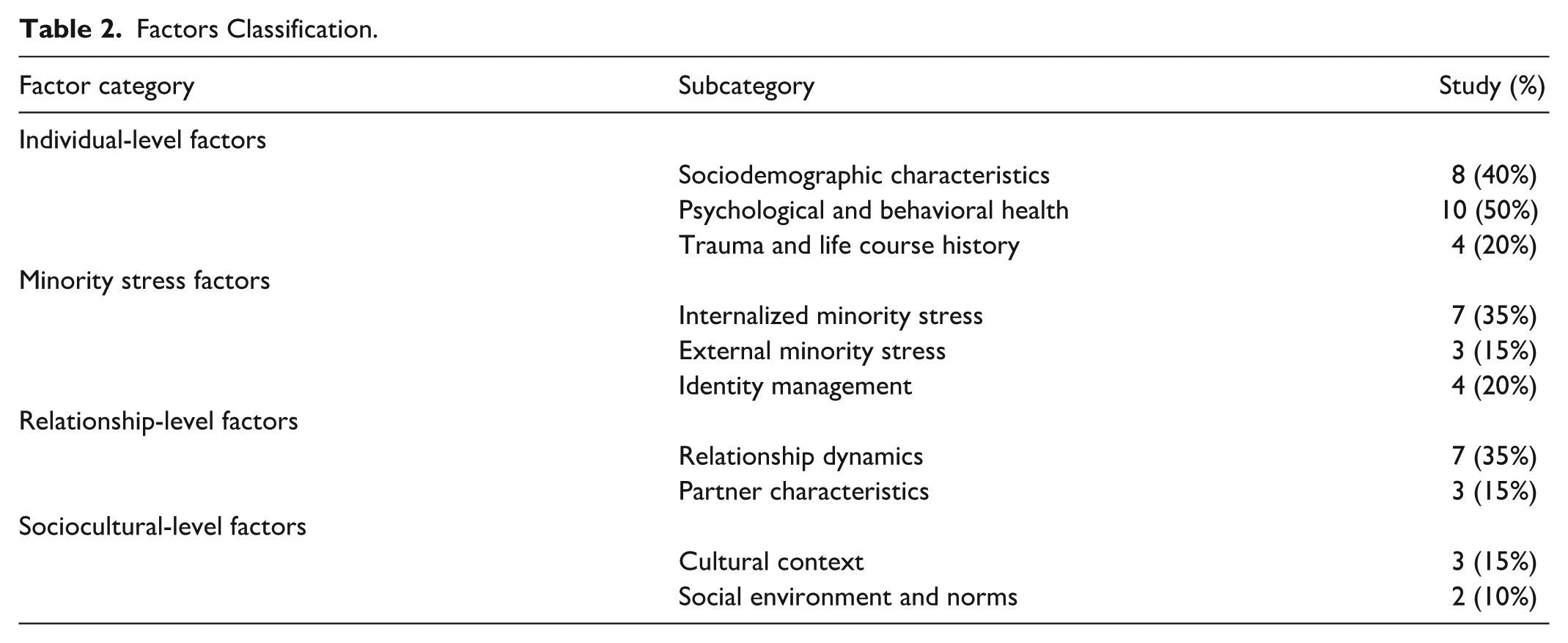
Note. 1 Leone et al. (2022), 2 Kelley et al. (2015), 3 Lewis et al. (2016), 4 Ummak et al. (2023), 5 Mason et al. (2016), 6 Sutter et al. (2019), 7 Tognasso et al. (2022), 8 Ayhan Balik and Bilgin (2021), 9 Lin et al. (2022), 10 Ummak et al. (2022), 11 Lewis et al. (2015), 12 Carvalho et al. (2011), 13 Milletich et al. (2014), 14 Lewis et al. (2014), 15 Dyar et al. (2020), 16 Norris et al. (2021), 17 Di Battista et al. (2023), 18 Steele et al. (2020), 19 Jaffe et al. (2020), 20 Coston (2021).
Study Characteristics
Study Settings and Design
The 20 studies included in this review were published between 2011 and 2024, with a marked increase after 2015 (n = 15, 75%), reflecting growing scholarly attention to IPV among SMW. Most studies originated from the United States (n = 12, 60%), with the remainder conducted in Turkey (n = 2, 10%), Italy (n = 2, 10%), and Denmark (n = 2, 10%). Cross-sectional designs predominated (n = 18, 90%), while only two studies employed longitudinal approaches (Dyar et al., 2020; Steele et al., 2020). Recruitment strategies varied considerably as LGBTQ+ websites and organization networks were most common (n = 8, 40%), followed by online market research panels (n = 7, 35%). Other approaches included convenience sampling through formal social media (n = 3, 15%) and community (n = 3, 15%), college students (n = 2, 10%), clinic attendees (n = 1, 5%), and pride festival participants (n = 1, 5%), with 5 studies (25%) employing hybrid recruitment methods.
Sample Characteristics
Sample sizes varied considerably, ranging from 149 participants (Ayhan Balik & Bilgin, 2021) to 1,057 (Jaffe et al., 2020), with a combined sample of 8,483 SMW across all studies. Participants’ ages spanned from 18 to 54 years, with reported mean ages ranging from 20.05 years (Dyar et al., 2020) to 54.0 years (Lewis et al., 2014). Studies that reported racial or ethnic composition typically drew predominantly White samples, which varied from 23.6% (Dyar et al., 2020) to 80.9% (Lewis et al., 2014), followed most frequently by African American participants. Additionally, among the included studies, 13 (65%) reported separate counts for lesbian and bisexual participants, while 7 (35%) combined sexual minority women into broader categories without distinguishing between subgroups, either combining all sexual minority women into a single category or using broader classifications such as “only homosexual/lesbian” versus “mostly homosexual/lesbian” (Kelley et al., 2015; Lewis et al., 2014; Steele et al., 2020).
Types of IPV
Directionality of Violence
Considerable variation was observed in how studies examined IPV directionality. Half of the studies (n = 10, 50%) focused exclusively on victimization, 5 (25%) examined perpetration only, and 5 (25%) adopted a bidirectional approach, assessing both victimization and perpetration within the same samples. The latter approach is particularly significant, as these studies consistently revealed reciprocal dynamics in which individuals experienced both victimization and perpetration within the same relationship.
Forms of Violence
Psychological aggression was the most frequently investigated form of IPV (n = 17, 85%), encompassing verbal aggression, insults, threats, dominance or isolation tactics, and controlling behaviors such as monitoring and restricting partners’ activities. Physical violence was assessed in 15 studies (75%), and sexual violence in 8 (40%). Several studies also identified identity-specific forms of abuse unique to sexual minority relationships, including threats of “outing” or forced disclosure of sexual orientation (Steele et al., 2020), manipulation related to minority status, and social isolation from LGBTQ+ communities (Dyar et al., 2020; Whitton et al., 2019).
The complexity of IPV manifestations was evident in studies that assessed multiple forms of abuse simultaneously. Most studies that measured physical violence also included psychological aggression, underscoring the co-occurrence of abuse types. Additionally, emerging forms of IPV relevant to contemporary contexts were reported, such as cyber dating abuse (Dyar et al., 2020) and stalking behaviors (Di Battista et al., 2023; Coston, 2021), which affected SMW through both traditional and technology-facilitated means.
Notably, coercive control and controlling behaviors were explicitly examined in several studies. Lin et al. (2022) identified threatening and controlling behavior as a distinct IPV dimension, encompassing tactics such as restricting physical freedom, financial control, and digital monitoring, with 27.6% of Chinese lesbian women reporting victimization. The Multi-Dimensional Measure of Emotional Abuse, used in three studies (Milletich et al., 2014; Ummak et al., 2022, 2023), captured restrictive engulfment as a specific form of psychological abuse characterized by monitoring, controlling, and limiting partners’ activities and social contacts. Additionally, Dyar et al. (2020) employed a dedicated Coercive Control Scale to assess controlling behaviors such as monitoring time and demanding accountability for whereabouts. These findings indicate that coercive control represents a meaningful and prevalent component of IPV among SMW, though it was more commonly integrated within broader psychological aggression measures rather than examined as an independent construct.
IPV Measurement Tools
The Revised Conflict Tactics Scale (CTS-2) and its variants were the most frequently employed measures, appearing in 13 studies (65%). Of these, 10 studies used the full CTS-2, two used the short version (CTS2-S), and one employed the original Conflict Tactics Scale (CT-S). The widespread adoption of the CTS-2 reflects its strong psychometric properties and its capacity to capture multiple forms of IPV. Several studies supplemented the CTS-2 with additional tools to assess identity-specific forms of abuse.
The Psychological Maltreatment of Women Inventory (PMWI) was used in three studies (15%), often in combination with the CTS2 to provide a more comprehensive assessment of psychological aggression (Kelley et al., 2015; Leone et al., 2022; Lewis et al., 2016). Similarly, the Multi-Dimensional Measure of Emotional Abuse (MMEA) was employed in three studies (15%) to evaluate dimensions of psychological IPV, including restrictive engulfment, denigration, hostile withdrawal, and dominance/intimidation (Milletich et al., 2014; Ummak et al., 2022, 2023).
To capture identity-based abuse, Dyar et al. (2020) applied the SGM-Specific IPV Tactics Scale alongside conventional instruments, while Steele et al. (2020) incorporated items targeting coercive tactics such as threats of outing. Four studies (20%) developed study-specific questionnaires tailored to their research aims and populations (Norris et al., 2021; Carvalho et al., 2011; Coston, 2021; Jaffe et al., 2020). In addition, Di Battista et al. (2023) utilized the stalking subscale of the National Intimate Partner and Sexual Violence Survey to examine stalking behaviors specifically.
Multi-level Classification of IPV Risk and Protective Factors
As summarized in Table 2, risk and protective factors for IPV were organized into four categories: individual-level factors, minority stress factors, relationship-level factors, and sociocultural-level factors. The first three correspond to established dimensions of the Social Ecological Model, which has been widely applied in IPV research (Meyer et al., 2024; Tarzia, 2021). In this review, minority stress factors were elevated to a distinct category, reflecting their theoretical significance and their unique role in shaping IPV dynamics among SMW.
Individual-Level Factors
Of the 20 studies included in this review, 17 (85%) examined individual-level risk and protective factors. These factors were grouped into three subcategories: sociodemographic characteristics, psychological and behavioral health, and trauma and life course history.
Sociodemographic Characteristics
Demographic factors showed distinct associations with IPV directionality. Age emerged as a significant predictor only for bidirectional IPV, with younger lesbian women in China more likely to both experience and perpetrate multiple forms of violence (Lin et al., 2022). Sexual orientation also shaped risk patterns: bisexual women consistently reported higher rates of both victimization and perpetration compared with lesbian women (Coston, 2021; Ummak et al., 2022, 2023). Sexual behavior was another key factor, as women with partners of both genders were more likely to be victimized than women with same-gender partners (Dyar et al., 2020; Jaffe et al., 2020). Race further intersected with sexual orientation, with White SMW experiencing disproportionately high rates of sexual violence (Norris et al., 2021). Socioeconomic status (SES) provided some protection, as women with higher SES were less likely to experience severe IPV and identity-specific abuse such as threats of outing (Steele et al., 2020).
Psychological and Behavioral Health
Emotional dysregulation was a central risk factor across IPV directions. Depression, negative affect, anger, and brooding consistently predicted both victimization and perpetration (Lewis et al., 2014, 2015, 2016). These difficulties often operated through maladaptive coping mechanisms, such as rumination, which undermined relationship satisfaction and created indirect pathways to perpetration (Lewis et al., 2014). Attachment insecurity further amplified risk, as anxious and avoidant attachment styles increased perpetration through internalized homonegativity (Tognasso et al., 2022). Substance use functioned both as a risk factor and a coping strategy. Personal alcohol use predicted psychological and physical aggression perpetration, while partner drinking specifically heightened the risk of psychological aggression (Norris et al., 2021; Jaffe et al., 2020; Kelley et al., 2015; Leone et al., 2022; Mason et al., 2016). Heavy episodic drinking was especially harmful for women with multiple male partners (Jaffe et al., 2020). Pro-IPV attitudes (e.g., beliefs that violence is an acceptable means of resolving conflict, tolerance of partner aggression, minimization of abusive behaviors, or endorsement of relationship violence under certain circumstances) (Li et al., 2020) also normalized violence, particularly in bidirectional contexts (Lin et al., 2022). Moreover, drinking-to-cope motives linked emotional distress to perpetration through alcohol-related problems (Lewis et al., 2015).
Trauma and Life Course History
Adverse childhood experiences strongly shaped IPV patterns in adulthood. Childhood abuse predicted both victimization and perpetration (Di Battista et al., 2023; Milletich et al., 2014), while witnessing interparental violence increased the likelihood of later perpetration (Milletich et al., 2014). Childhood sexual abuse was particularly associated with sexual violence victimization (Jaffe et al., 2020). Prior relationship violence also contributed to cyclical patterns, with earlier victimization elevating subsequent perpetration risk (Milletich et al., 2014). More broadly, life stressors (e.g., death of a spouse, adjustments at work, changes in financial circumstances, changes in living conditions) fostered perpetration through heightened negative affect and maladaptive coping pathways (Mason et al., 2016).
Minority Stress Factors
Fifteen studies (75%) examined minority stress as a distinct category of IPV risk, highlighting the influence of both internalized and external stressors, as well as identity management processes unique to SMW.
Internalized Minority Stress
Internalized homophobia emerged as the most frequently investigated factor, showing consistent associations with all forms of IPV. Higher levels of internalized homophobia were linked to increased risk of both victimization (Ayhan Balik & Bilgin, 2021; Ummak et al., 2023) and perpetration (Lewis et al., 2014; Milletich et al., 2014; Tognasso et al., 2022; Ummak et al., 2022), particularly psychological violence. This association often operated indirectly through attachment patterns, with internalized homonegativity mediating the relationship between insecure attachment and psychological IPV perpetration (Tognasso et al., 2022). Stigma consciousness—referring to expectations of prejudice and discrimination—also predicted both victimization and perpetration, contributing to bidirectional patterns of IPV (Carvalho et al., 2011).
External Minority Stress
Experiences of discrimination in workplaces, schools, and community environments were associated with increased IPV risk across all directions of violence (Ayhan Balik & Bilgin, 2021; Lewis et al., 2016; Sutter et al., 2019). More severe heterosexist experiences corresponded to greater likelihood of bidirectional IPV, suggesting that systemic discrimination may perpetuate mutually aggressive relationship dynamics (Sutter et al., 2019).
Identity Management
Identity disclosure and concealment processes also influenced IPV risk. Higher levels of outness were associated with greater IPV risk in cultural and social contexts characterized by elevated levels of societal heterosexism (Ayhan Balik & Bilgin, 2021; Carvalho et al., 2011), while threats of outing represented a unique form of identity-based abuse (Steele et al., 2020). Moreover, social constraints surrounding discussions of sexual identity predicted IPV perpetration indirectly through rumination and relationship dissatisfaction (Lewis et al., 2014).
Relationship-Level Factors
Nine studies (45%) examined relationship-level factors, revealing distinct patterns across IPV directions in both relationship dynamics and partner characteristics.
Relationship Dynamics
High levels of relationship satisfaction and adjustment consistently served as protective factors across all forms of IPV (Kelley et al., 2015; Lewis et al., 2014, 2016; Milletich et al., 2014), whereas excessive relational fusion predicted perpetration (Milletich et al., 2014). Jealousy exhibited direction-specific associations: intrusive behaviors such as possessiveness and separation anxiety predicted perpetration (Mason et al., 2016; Milletich et al., 2014), while perceived partner jealousy heightened the likelihood of victimization, particularly among behaviorally bisexual women (Dyar et al., 2020). Cohabitation was also linked to increased risk of bidirectional IPV, with cohabiting couples showing higher rates of mutual aggression than non-cohabiting partners (Lin et al., 2022).
Partner Characteristics
Partner-related factors played a significant role in shaping victimization patterns. Women with male partners faced greater risks across all forms of IPV compared to those with exclusively female partners (Coston, 2021). Partner alcohol use, as well as discrepancies in drinking behaviors between partners, further elevated victimization risk (Kelley et al., 2015; Leone et al., 2022). Power differentials within relationships—particularly financial or social status imbalances—were also associated with increased victimization. Interestingly, higher relative social power was found to heighten bisexual women’s vulnerability to IPV (Coston, 2021).
Sociocultural-Level Factors
Five studies (25%) examined broader contextual influences on IPV among SMW, revealing important patterns related to cultural context and social environment.
Cultural Context
Legal protections emerged as a significant determinant of IPV patterns. In countries with limited or absent legal safeguards for sexual minorities, women reported higher rates of both victimization and perpetration (Ummak et al., 2022; Ummak et al., 2023). Cultural orientation also played a critical role. Collectivist cultural norms were associated with greater risk of bidirectional IPV, likely due to values emphasizing family harmony and discouraging help-seeking behavior (Lin et al., 2022).
Social Environment and Norms
Traditional gender role expectations produced complex and sometimes counterintuitive findings. Self-perceived femininity or masculinity did not predict IPV victimization, challenging gendered models of IPV developed primarily in heterosexual contexts (Steele et al., 2020). However, specific behavioral norms—such as hookup behaviors—were linked to an elevated risk of sexual violence victimization (Jaffe et al., 2020).
Multiple Factor Interaction Patterns
The interplay among multiple influencing factors provides important insight into the complex etiology of IPV among SMW. Alcohol use, internalized homophobia, and discrimination consistently emerged as universal risk factors across victimization, perpetration, and bidirectional violence. Certain factors exhibited direction-specific associations: childhood sexual abuse and partner-related characteristics primarily predicted victimization, whereas attachment insecurity and rumination were more closely linked to perpetration. Bidirectional IPV often arose from the intersection of individual vulnerabilities (e.g., substance use and minority stress) and relationship-level dynamics (e.g., cohabitation and power differentials), indicating that mutual aggression develops through multilayered systemic interactions.
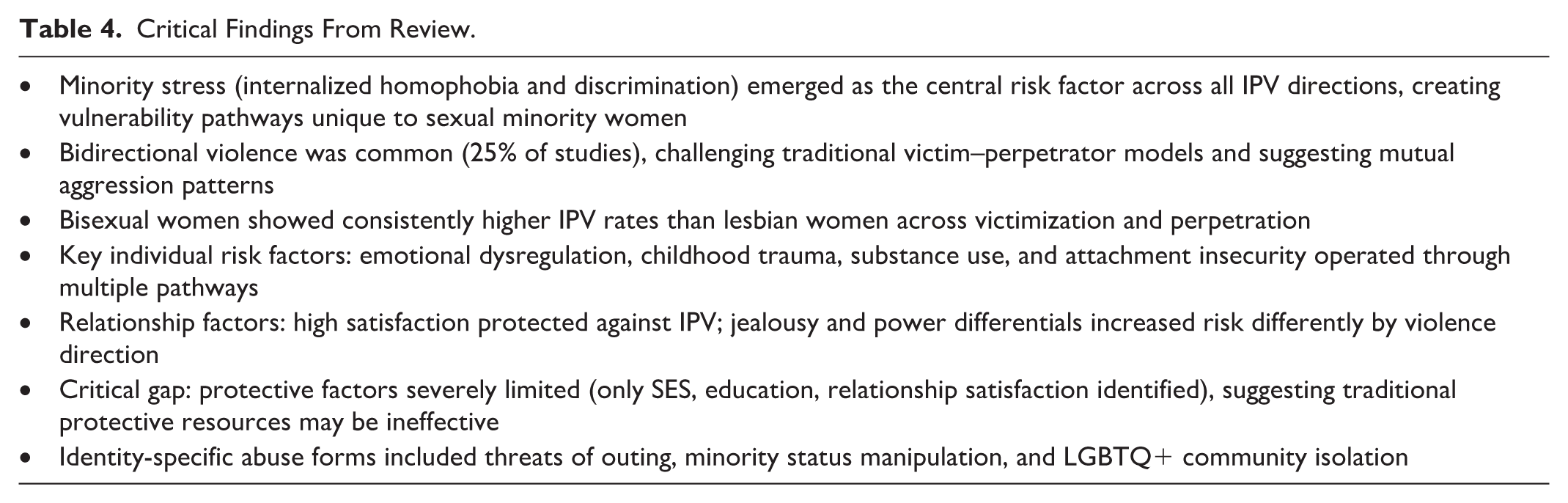
Despite these insights, significant gaps remain in the identification of protective factors. Across the reviewed studies, only socioeconomic status, education, and relationship satisfaction were consistently identified as protective influences. This paucity of research on resilience underscores an urgent need for future studies to move beyond risk-oriented frameworks and systematically explore protective mechanisms that foster well-being and prevent IPV among SMW. A summary of the critical findings is presented in Table 4.
Critical Findings From Review.
Discussion
This systematic review provides the first comprehensive synthesis of factors associated with all three directions of IPV—victimization, perpetration, and bidirectional violence—among SMW. The findings reveal several theoretically and practically significant patterns that challenge dominant IPV frameworks and underscore the need for minority-specific conceptual models and intervention strategies.
The prominence of minority stress factors marks a fundamental departure from traditional IPV risk models, which were largely developed within heterosexual populations (Spencer & Stith, 2020; Yakubovich et al., 2018). While conventional IPV research has emphasized individual psychopathology and dyadic conflict (Badenes-Ribera et al., 2016; Campbell & Mace, 2022), the evidence synthesized here suggests that structural forces—particularly homonegativity, discrimination, and internalized stigma—constitute critical sources of vulnerability that are inadequately captured by existing theories (Lewis et al., 2016; Sutter et al., 2019). The consistent association between internalized homophobia and both victimization and perpetration highlights a dual mechanism through which identity-based oppression shapes IPV: by heightening susceptibility to harm while simultaneously fostering maladaptive relational behaviors (Calton et al., 2016). This dual pathway challenges the dichotomy of “victim” and “perpetrator,” suggesting instead a cyclical and reciprocal process in which internalized oppression and interpersonal dynamics reinforce one another. Interventions that treat minority stress as a peripheral rather than central concern risk overlooking a key mechanism that sustains violence in sexual minority relationships (Rosenfeld et al., 2025).
The high prevalence of bidirectional violence among SMW further contests foundational assumptions in IPV scholarship. Traditional intervention frameworks rest on unidirectional power hierarchies—most often conceptualized as male-perpetrated violence against women (Allayna et al., 2023; Soonok et al., 2024). In contrast, the evidence reviewed here indicates that mutual aggression is relatively common in same-gender female relationships, suggesting that situational couple violence may be more prevalent than intimate terrorism in this population (Andreia et al., 2024; Porsch et al., 2023). Such findings echo Kelly and Johnson’s (2008) typology of “common couple violence,” characterized by escalation during conflict rather than systematic coercive control. Shared experiences of minority stress—such as discrimination, identity concealment, and social marginalization—may exacerbate relational strain and emotional reactivity, creating conditions under which both partners contribute to cycles of mutual aggression. These patterns highlight the need for therapeutic approaches that move beyond traditional victim–perpetrator dichotomies to recognize shared stress environments and co-occurring vulnerabilities.
The findings also illuminate the role of coercive control within IPV among SMW, an area that warrants specific attention. While controlling behaviors were documented across multiple studies, they were predominantly assessed as components of psychological aggression rather than as a distinct IPV type. Unlike in heterosexual contexts where coercive control has been theorized as rooted in patriarchal power structures, sexual minorities experience unique forms of coercive control, including identity-based tactics such as threats of outing, control over gender expression or hormones, and isolation from LGBTQ+ communities (Hilton et al., 2024). Threats of outing, documented by Steele et al. (2020) and Dyar et al. (2020), leverage societal stigma and the potential consequences of unwanted disclosure to maintain power within relationships. The higher rates of controlling behaviors observed in contexts with limited legal protections for sexual minorities (Ummak et al., 2022) suggest that structural heterosexism may amplify both the prevalence and impact of coercive control. Future research should disentangle coercive control from broader psychological aggression measures to better understand its distinct manifestations, predictors, and consequences among SMW.
The pronounced differences between bisexual and lesbian women reveal further conceptual blind spots in current IPV research. Although both groups face external stigma and internalized stressors, bisexual women consistently experience higher rates of both victimization and perpetration (Coston, 2021; Ummak et al., 2023). Existing minority stress frameworks alone cannot fully account for this disparity. Bisexual women often encounter “double discrimination”—marginalization from both heterosexual and lesbian communities (Emilie et al., 2019; Vonlanthen & Roy-Charland, 2025)—and face additional relational complexities when engaging across gender boundaries (Velasco et al., 2024). These findings underscore the limitations of treating SMW as a homogeneous category and call for intersectional approaches that recognize within-group heterogeneity and the distinct socio-relational contexts of bisexual women.
Equally important is the paucity of identified protective factors, which constitutes both an empirical and theoretical gap (Allsworth, 2018). Although the broader IPV literature identifies protective influences such as social support, economic stability, and community belonging (An et al., 2024; Wells et al., 2024), these resources appear to function differently—or less effectively—for SMW. For those facing exclusion or stigma, conventional protective systems (e.g., family support, religious institutions) may not only be inaccessible but may serve as additional sources of harm (Turner & Hammersjö, 2024; Whitton et al., 2024). This highlights the necessity of developing resilience frameworks grounded in minority experiences, emphasizing protective mechanisms such as LGBTQ+ community affiliation, positive identity formation, and collective resistance to oppression.
Beyond its empirical findings, this review makes an important methodological contribution to IPV research. By integrating multi-theoretical perspectives—including the Social Ecological Model, Minority Stress Theory, and Intersectionality—it demonstrates the value of a multi-dimensional analytical approach for uncovering the dynamic interplay among individual vulnerabilities, relationship processes, and structural conditions. This integration moves the field toward a more holistic understanding of IPV as a socially embedded phenomenon rather than an isolated behavioral issue. Such an approach may serve as a model for future research on other marginalized populations, including gender-diverse or racial minority groups, whose experiences also defy conventional frameworks.
Implications
The findings have significant clinical and policy implications (see Table 5). Clinically, existing IPV assessment tools and intervention programs require substantial adaptation to reflect minority-specific vulnerabilities and abuse dynamics. Screening instruments should incorporate identity-specific items, such as threats of outing, social isolation from LGBTQ+ networks, and coercive behaviors related to sexual identity (Hong et al., 2025; Lewis et al., 2016). Practitioners should receive specialized training to recognize how internalized homophobia and external discrimination manifest in relationship dynamics and emotional regulation (Chunrye et al., 2022). Given the prevalence of bidirectional violence, therapeutic approaches must balance accountability with empathy, addressing mutual aggression while acknowledging shared trauma and minority stress.
Implications of the Review for Practice, Policy, and Research.
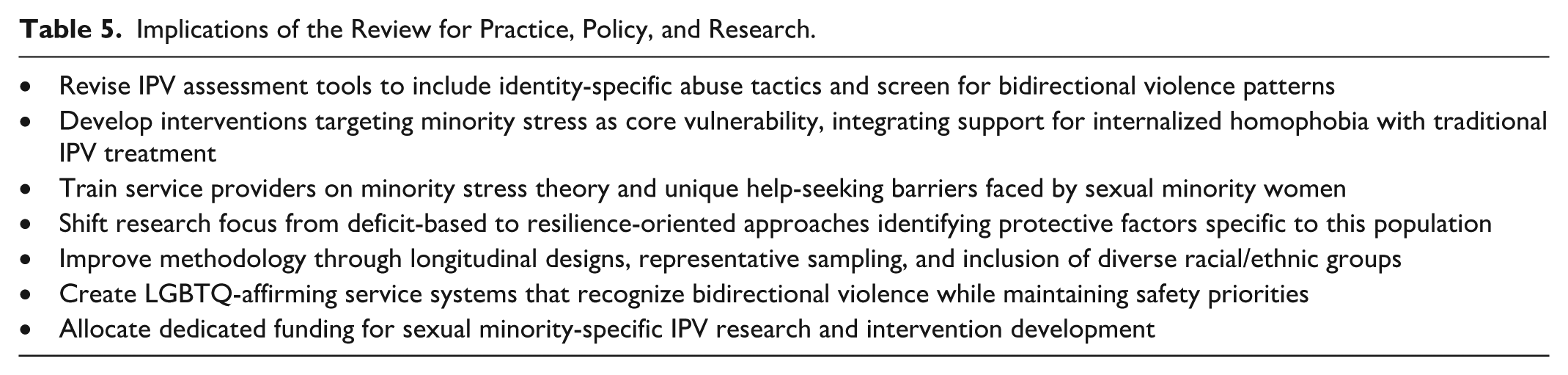
At the policy and system levels, these findings underscore the urgency of structural reform. Legal and social service systems must develop inclusive protocols that acknowledge the prevalence of bidirectional violence and the specific forms of identity-based abuse experienced by SMW (Whitton et al., 2019). Professional training for law enforcement, judicial actors, and service providers should incorporate minority stress theory to better contextualize IPV dynamics among sexual minorities. Policy frameworks should also prioritize funding for community-based interventions and culturally responsive prevention programs rather than relying on models designed for heterosexual populations.
Limitations
Several limitations should be considered when interpreting these findings. First, a substantial proportion of records identified for full-text review (201 of 338, 59.5%) could not be retrieved, primarily due to indexed conference abstracts without accompanying full papers, institutional access barriers, and restricted dissertations and gray literature. While we cannot rule out that some non-retrieved records might have met inclusion criteria, several factors suggest minimal impact on our conclusions: systematic review of available abstracts indicated most focused on prevalence rather than associated factors, forward and backward citation tracking did not identify additional eligible publications, and the consistency of patterns across 20 included studies from diverse contexts suggests our findings capture major themes in the literature. Future updates should prioritize enhanced access strategies to minimize this limitation.
Second, methodologically, most studies relied on convenience sampling and cross-sectional designs, limiting the generalizability and causal inference of results. The lack of representative sampling, social desirability controls, and dyadic analyses further constrains the robustness of conclusions. Moreover, the limited racial, ethnic, and geographic diversity of samples—predominantly drawn from Western contexts—raises questions about the cross-cultural applicability of existing evidence. Future research should prioritize longitudinal and intersectional designs, incorporate more diverse samples, and employ advanced analytic techniques to examine the interactive effects of structural stigma, relational processes, and identity development over time.
Conclusion
This review demonstrates that IPV among SMW operates through mechanisms fundamentally different from those identified in general populations. Minority stress emerges as a central organizing principle that shapes both individual vulnerability and relationship dynamics in ways not captured by traditional IPV theories. The bidirectional nature of violence and the differential patterns between bisexual and lesbian women challenge existing intervention models and highlight the need for minority-specific approaches. Most critically, the absence of protective factors in current research represents a significant gap that limits both theoretical understanding and practical intervention development. Future research must move beyond approaches only focused on deficit to identify the unique strengths and resources that promote resilience among SMW facing violence.
Footnotes
Acknowledgements
The authors appreciate the support from the Zhejiang Provincial Cultural Innovation Research Center.

Ethical Considerations
As a systematic review of published literature, this study did not require ethical approval or informed consent.
Funding
The authors received no financial support for the research, authorship, and/or publication of this article.
Declaration of Conflicting Interests
The authors declared no potential conflicts of interest with respect to the research, authorship, and/or publication of this article.
Data Availability Statement
All the data analyzed in this systematic review are derived from published studies and are included within the article and/or supplementary materials.