







Abstract
Although the issue of children running away from child welfare system (CWS) occurs in various contexts and has detrimental consequences, to our knowledge, it has received limited attention in academic research and practical interventions. This scoping review examines risk factors and motivations for running away among children in the CWS, drawing on 33 studies published between 1991 and 2025. The findings reveal that key demographic risk factors associated with running away from CWS were identified as older age and urban residence. The effects of gender and race/ethnicity remain inconsistent across studies. Child-related risk factors were identified as histories of abuse and criminal behavior, while findings regarding the role of children’s health in running away from CWS were mixed. Family-related factors were identified as parental incarceration and single-parent households. CWS-specific factors such as length of stay, unmet needs, placement instability, and poor system management were also associated with increased risk. Motivations for running away reflected both pull and push factors. Pull factors included reconnecting with family, maintaining social relationships, and substance use, whereas push factors involved seeking freedom from restrictive environments and escaping bullying within CWS. The review highlights the urgent need for needs-tailored and trauma-informed approaches within the CWS to reduce risks and address the complex needs of vulnerable children. It also calls for more research on runaway behaviors, targeted policies for diverse racial and gender groups, and improved practices to address bullying and unmet needs through diversified services.
Introduction
Child maltreatment encompasses all forms of physical, emotional abuse, and neglect. Globally, more than half of all children have experienced some form of violence during their lifetime (Hillis et al., 2016). A significant number of children and families encounter the child welfare system (CWS; Toros et al., 2018). For example, in the United States, data from all 50 states, the District of Columbia, and Puerto Rico indicated a total of 546,159 children were identified as victims of abuse and neglect, among whom 105,153 received foster care services (U.S. Department of Health & Human Services, 2025). The CWS serves as a mechanism for preventing, identifying, and responding to child maltreatment (Brittle, 2007). It is responsible for identifying and responding to reported cases of child maltreatment involving caregivers, and for facilitating the provision of services to support affected children and families (Berger & Slack, 2020). However, research suggests that some children experience challenges within the system, such as placement instability, inadequate support, or negative peer interactions (Leathers, 2006; Ramsay-Irving, 2015). These difficulties can undermine children’s sense of security and belonging, leading to emotional distress and dissatisfaction with care. As a result, some children may choose to run away as a means of coping with these negative experiences or seeking greater autonomy and connection outside the system (Hyde, 2002).
Although definitions of running away vary across states, particularly with respect to the duration of absence and what constitutes an unauthorized absence (e.g., Chor et al., 2022; Crosland et al., 2018; Byers et al., 2024), most consistently define running away as leaving an out-of-home care (OHC) placement without permission (e.g., Branscum & Richards, 2022; Bowden et al., 2018). In line with previous definitions, the present study defines running away as leaving an OHC setting without authorization (Bowden et al., 2018). A study reported that 9.3% of children and youth in foster care had experienced at least one runaway incident during a 30-month observation period (Akin, 2011). Nevertheless, these statistics have likely underestimated the true number of running away children, as they exclude those who ran away at some point during the year but returned to care before being officially counted (Wulczyn, 2020). This implies that the problem of children running away from CWS is potentially more serious.
Research has highlighted that running away behavior often leads to increased delinquency and a higher risk of being trafficked in the short term (Crosland & Dunlap, 2015). In the long term, running away is associated with a higher likelihood of behavioral problems and mental health issues, including poor school performance, painful family conflict, involvement with the criminal justice system, and depression (Crosland & Dunlap, 2015; Woods et al., 2013). Although some studies have examined children running away from the CWS, there is still no comprehensive understanding of the factors contributing to running away behavior. Given the adverse correlates of running away behavior among foster children, a comprehensive summary is necessary to understand the factors associated with running away.
The CWS and Running Away Behavior
CWS serves as a solution for children and youth whose parents are unable to provide adequate care (Mallon & Hess, 2014). It aims to protect children from abuse and neglect and to promote their safety, permanency, and well-being (U.S. Department of Health & Human Services, 2025). CWS includes OHC and in-home care. OHC is designed to remove children from home environments deemed harmful or unsafe (Maclean et al., 2016) and can be primarily classified into kinship care, foster care, residential care, and other forms of placement (Sariaslan et al., 2022). Kinship care involves placement with relatives or close family friends rather than non-relative foster homes, and such arrangements have been associated with positive outcomes in identity formation, placement stability, and behavioral and mental health (O’Brien, 2012). Foster care places children with non-relative parent figures in private families. In contrast, residential care, often referred to as group homes or institutional care, involves professional caregivers who are responsible for the children's well-being (Li et al., 2019). Conversely, in-home care refers to services provided to children and families while the child remains in their home, including Family Preservation Services and Reunification Services (Frame et al., 2000).
The CWS facilitates access to a range of services, including parenting skills training, mental health support, substance use treatment, and other related interventions for parents and/or children, either in the family’s home or through community agencies. These services aim to support family reunification and ensure children’s safety, well-being, and permanency (Berger & Slack, 2020). While some children reunify with their families of origin within a relatively short period, others remain in the CWS until they age out of care (Berger & Slack, 2020). Numerous studies have highlighted the role of CWS in preventing the recurrence of child maltreatment (Casanueva et al., 2015; Covington, 2013). For example, one study tracking 760 cases reported that families who entered the CWS experienced improved outcomes (Antle et al., 2009). However, many studies have highlighted issues within the CWS and questioned its effectiveness in addressing the needs of youth (Ramsay-Irving, 2015; Leathers, 2006). Some studies have examined the outcomes of children running away from the CWS (Biehal & Wade, 1999; Pullmann et al., 2020). For instance, research indicates that running away from child welfare services significantly increases the likelihood of subsequent involvement in the juvenile and/or adult justice system (Sarri et al., 2016). Compared to other issues, children running away from the CWS remain an understudied topic, despite its significant and detrimental impact on many children and families (Crosland & Dunlap, 2015).
CWS varies substantially across countries and regions, as their structures, purposes, and target populations differ globally (Berrick et al., 2017). From a global perspective, CWS can be categorized into four types (Connolly & Katz, 2019). The first type, Individual-Formal Orientation, is characterized by highly developed regulatory frameworks and a strong reliance on professionalized systems and solutions, as seen in the United States, the United Kingdom, and Australia. The second type, Individual-Informal Orientation, emphasizes family support rather than statutory intervention, as exemplified by Sweden, Finland, and Japan. The third type, Community-Formal Orientation, focuses on collective solutions through broader family and community-oriented processes, such as in New Zealand. Finally, the Community-Informal Orientation approach favors informal, community-based actions and engagement, as observed in Nepal and Bhutan (Connolly & Katz, 2019).
The Current Study
Existing studies have explored the multiple domains of running away from CWS (e.g., Sarri et al., 2016), such as the factors or motivations associated with running away behavior (e.g., Biehal & Wade, 2020). However, no scoping review has comprehensively summarized these domains and the characteristics of children who run away from CWS. The purpose of this study is to address this gap by (a) systematically summarizing the risk factors associated with running away; (b) exploring the motivations to children who run away from CWS.
Method
Search Strategy
This scoping review searched PsycINFO, PubMed, Web of Science, Social Science and Social Work Abstracts, and ERIC for studies published between 1991 and 2025. The following search terms were used: (a) “child welfare” OR “child protection services” OR “child care system” OR “foster care” OR “kinship care” OR “out-of-home care”; and (b) “running away” OR “runaway” OR “absconding” OR “absent without leave.” After finalizing the list of included studies, a manual search of gray literature was conducted to identify any additional relevant studies that may have been missed.
Eligibility Criteria
This scoping review included studies that they met the following criteria: included studies that met the following criteria: (a) studies examining children who entered CWS, excluding those in residential care independently of CWS; (b) studies reporting on children who ran away from CWS; (c) studies identifying factors associated with running away behavior or the motivation of running away reported by children; (d) articles written in English; (e) articles published in peer-reviewed journals between 1991 and March 2025.
Study Selection
All records were imported into Covidence 2.0. Two reviewers with doctoral-level expertise independently conducted the title and abstract screening in the first round, followed by a full-text screening in the second round. Any conflicts were resolved through collaborative discussion. A total of 289 studies were initially retrieved from the five databases. After removing 109 duplicates, 180 studies remained for title and abstract screening. Of these, 117 articles were deemed irrelevant to the present study. Following full-text screening of 63 articles, 26 studies were deemed eligible. The description of exclusion criteria can be found in Table S4. We identified seven studies through hand-searching the reference lists in the final sample. Finally, a total of 33 studies were included in this scoping review. Figure 1 presents the Preferred Reporting Items for Systematic Reviews and Meta-Analysis diagram that summarizes the article screening process.
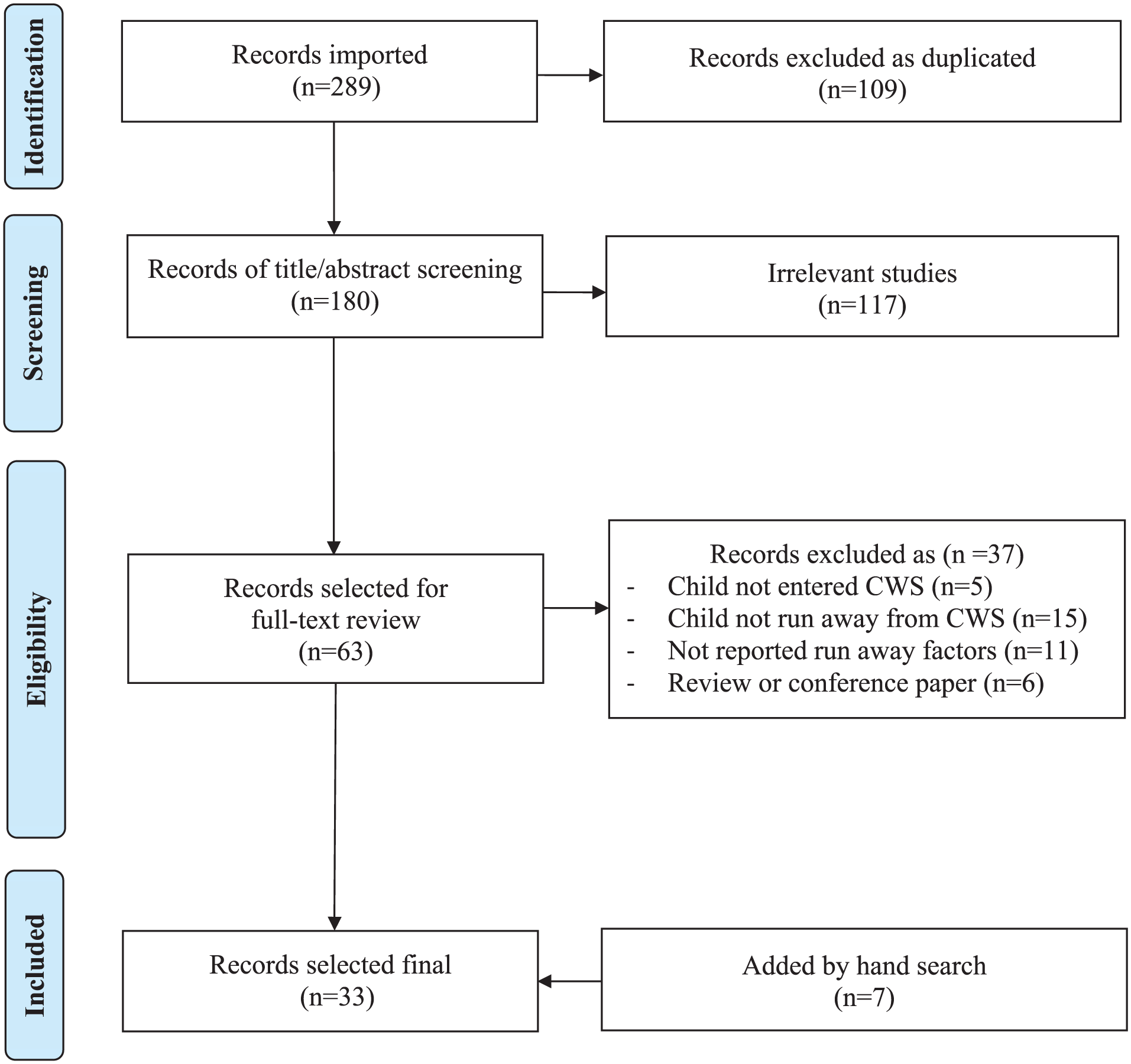
Preferred reporting items for systematic reviews and meta-analyses flow diagram.
Data Extraction
Data extraction was conducted by two independent coders using a standardized form, which was developed by the research team. The extracted information included: (a) sample characteristics: sample size, ethnicity, gender, age, and socioeconomic status; (b) study details: study methodology, country, CWS setting (e.g., foster care, residential care), and definition of running away; (c) factors and motivations associated with running away from CWS. Notably, in this scoping review, only motivations reported directly by children were summarized under the theme “motivation” to maintain the focus on child-centered perspectives. All conflicts were solved by discussion between the two coders.
Data Analysis
A narrative synthesis approach was employed to analyze the extracted data, following Popay et al. (2006). Extracted information was first organized into a data charting table summarizing study characteristics and main findings. The authors independently conducted preliminary syntheses to identify factors and motivations of running away from CWS. They then reviewed each other’s analyses to assess the quality of the synthesized findings, ensuring the summary was both accurate and transparent.
Result
Characteristics of the Included Studies
This scoping review included 33 studies. The majority (66.6%; n = 22) employed quantitative methods, while six studies used qualitative methods (e.g., Crosland et al., 2018; Eritsyan & Kolpakova, 2017). Additionally, five studies utilized mixed methods (e.g., Biehal & Wade, 2020; Bowden et al., 2018). Most studies (n = 28) were conducted in developed countries, including the United States (n = 19), the United Kingdom (n = 2), Canada (n = 2), New Zealand (n = 1), Russia (n = 1), Finland (n = 1), Spain (n = 1), and Israel (n = 1). However, five studies did not report the country in which they were conducted (e.g., King et al., 2017; Nesmith, 2006). In terms of the type of CWS studied, all studies focused on OHC, 33.3% studies focused exclusively on foster care (n = 11), while 36.3% (n = 12) studies examined only residential care (e.g., Sunseri, 2003; Zimmerman et al., 1997), five studies investigated both foster and residential care (e.g., English & English, 1999; Hershberger et al., 2018), four studies reported foster care, residential care, and kinship care (Courtney & Wong, 1996; Courtney & Zinn, 2009; Dworsky et al., 2018; Chor et al., 2022), only one study did not specify the type of CWS examined (Khan & Ungar, 2025).
In terms of the definition of running away, 15 studies explicitly provided a definition. Among them, nine studies defined running away as exiting care (e.g., Bowden et al., 2018; Courtney & Zinn, 2009); three studies defined it as an unauthorized absence from placements or caregivers (Biehal & Wade, 2020; Crosland et al., 2018; Milette-Winfree et al., 2017); and three studies defined it based on government guidelines (Chor et al., 2022; Kim et al., 2015; Lin, 2012). Another three studies operationalized running away by duration or frequency, such as being away for more than 24 hr or more than seven instances (Zimmerman et al., 1997; Hershberger et al., 2018; Byers et al., 2024). Eighteen studies did not report their definition of running away (Khan & Ungar, 2025).
Nearly all studies focused on children, adolescents, or young people as the primary study population (n = 32). Only one study collected data from experts, such as representatives from social protection institutions, orphanages, and boarding schools, to obtain professional perspectives on children’s running away (Eritsyan & Kolpakova, 2017). Regarding gender representation, most studies included both male and female participants (n = 26). Two studies focused exclusively on males (Baker et al., 2005; Zimmerman et al., 1997), while one study examined only female participants (Hershberger et al., 2018). Four studies did not report gender (e.g., Hoikkala & Kemppainen, 2015; Karam & Robert, 2013). The majority (69.6%; n = 23) focused on individuals over the age of 12, while 24.2% (n = 8) did not classify participants by age group. In terms of ethnic representation, 66.6% (n = 22) of studies included participants from diverse ethnic backgrounds, such as Hispanic, White, Asian, or African American, while 33.4% (n = 11) of studies did not report the ethnicity of participants (e.g., Karam & Robert, 2013). The characteristics of the included studies are presented in the Supplemental Material (Table S1).
Factors Associated with Running Away
Demographic Characteristics
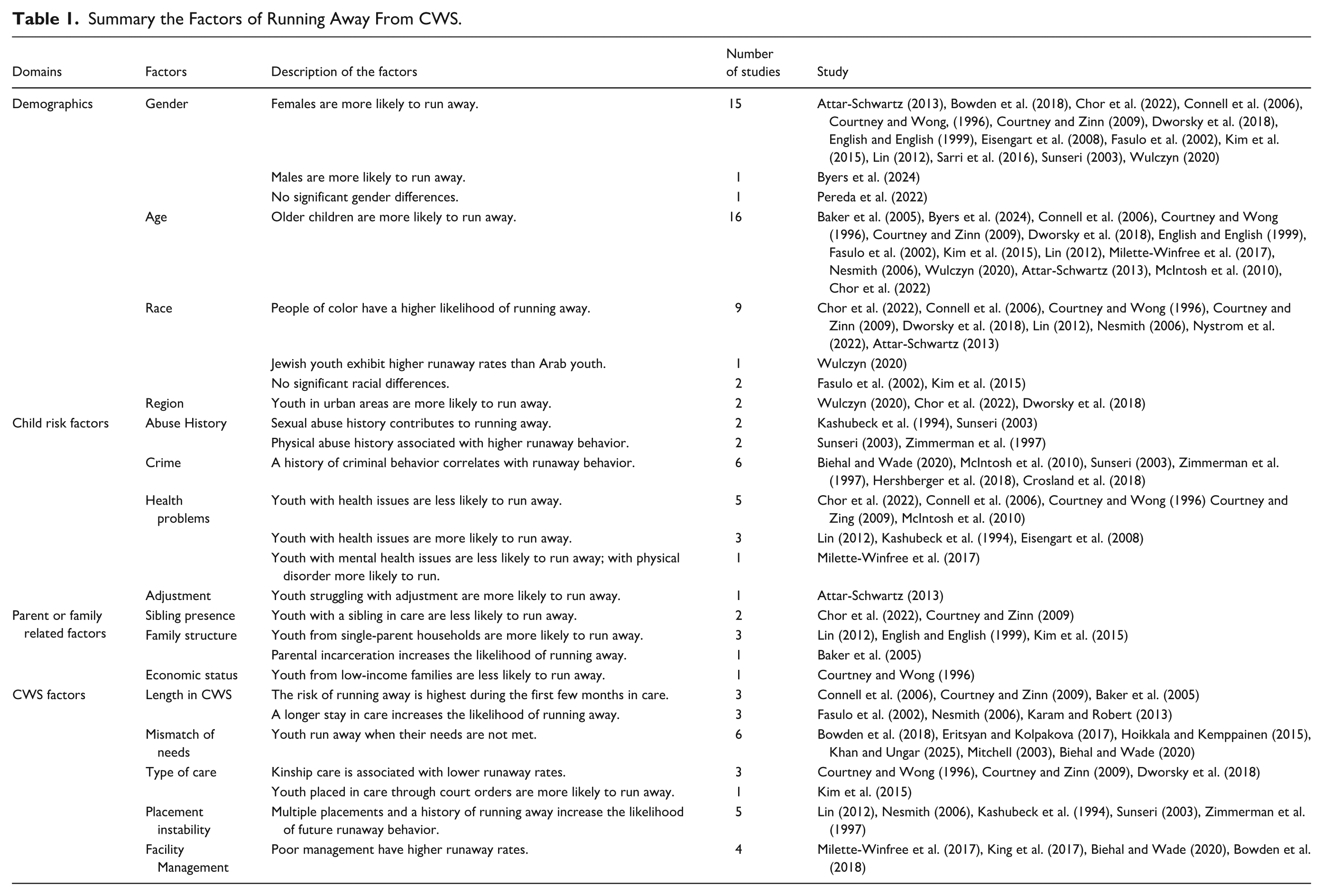
Many studies (n = 22) examined demographic factors such as gender, age, and ethnicity to explain the likelihood of running away from the CWS. Of these, 77.2% (n = 17) identified gender as a relevant factor. Fifteen studies reported that females were more likely to run away (e.g., Bowden et al., 2018; Chor et al., 2022), whereas only one study found that males were more likely to engage in a running away episode (Byers et al., 2024). Additionally, one study reported no significant gender differences in running away experiences (Pereda et al., 2022). Furthermore, 48.4% (n = 16) of studies identified age as a contributing factor, with all of them concluding that older children were more likely to run away (e.g., Baker et al., 2005; Byers et al., 2024). Regarding race and ethnicity, twelve studies explored their relationship with running away behavior. The majority of studies (n = 9) found that people of color were more likely to run away (e.g., Chor et al., 2022; Connell et al., 2006). Additionally, one study compared Jewish and Arab populations and reported that Jewish individuals exhibited higher levels of running away behavior (Wulczyn, 2020). However, two studies found no significant association between race or ethnicity and running away behavior (Fasulo et al., 2002; Kim et al., 2015). Finally, 3 studies found that rates of running away were higher among young people from large urban areas compared to those from rural counties (Wulczyn, 2020; Chor et al., 2022; Dworsky et al., 2018).
Child-related Risk Factors
Sixteen studies (48.4%) reported child-related risk factors. Of these, four studies identified a history of abuse as a risk factor, including sexual abuse (Sunseri, 2003; Kashubeck et al., 1994) and physical abuse (Sunseri, 2003; Zimmerman et al., 1997). Additionally, six studies reported a history of criminal behavior was found to be a predictor of running away (e.g., Zimmerman et al., 1997; Hershberger et al., 2018). Nine studies examined the role of health problems. Most of them (n = 6) reported that children with health issues, such as disabilities or mental health disorders, were less likely to run away (e.g., Chor et al., 2022; Connell et al., 2006). However, three studies found that children who ran away had higher rates of diagnosed disabilities (Lin, 2012; Kashubeck et al., 1994; Eisengart et al., 2008), and one study reported that youth with mental health issues were less likely to run away, whereas those with physical disorders were more likely to run away (Milette-Winfree et al., 2017). Finally, one study found that adjustment difficulties were associated with higher rates of running away (Attar-Schwartz, 2013).
Parent or Family Related Factors
Seven studies (21.1%) reported parent- or family-related factors. Two studies found that the presence of a sibling in kinship care reduced the likelihood of running away (Chor et al., 2022; Courtney & Zinn, 2009). Additionally, four studies reported that family structure influences running away behavior. For instance, children from single-parent families or those who had experienced parental divorce were more likely to run away (Lin, 2012; English & English, 1999; Kim et al., 2015). Furthermore, parental incarceration was also associated with an increased likelihood of children running away (Baker et al., 2005). In contrast, one study found that children from economically disadvantaged families were less likely to run away (Courtney & Wong, 1996).
CWS Related Factors
Twenty-one studies (63.6%) reported CWS-related factors influencing running away behavior. Six studies found that the length of stay in the CWS increased the likelihood of running away. Among these studies, three reported that children were most likely to run away shortly after entering foster care (Connell et al., 2006; Courtney & Zinn, 2009; Baker et al., 2005), while another three found that the risk of running away increased as the duration of time in care extended (Fasulo et al., 2002; Nesmith, 2006; Karam & Robert, 2013). Additionally, six studies reported that children ran away because the CWS failed to meet their needs (e.g., Eritsyan & Kolpakova, 2017; Mitchell, 2003), including a lack of medical care (English & English, 1999; Khan & Ungar, 2025; Hoikkala & Kemppainen, 2015), insufficient support or assistance (Mitchell, 2003; Biehal & Wade, 2020), and inadequate access to information (Bowden et al., 2018). Four studies examined the association between the type of care placement and running away behavior. Of these, three studies found that placement in kinship care significantly reduced the risk of running away (Courtney & Wong, 1996; Courtney & Zinn, 2009; Dworsky et al., 2018). Conversely, one study reported that children removed from their homes by court order were more likely to run away than those placed in OHC voluntarily (Kim et al., 2015). Five studies found that placement instability and a history of running away increased the likelihood of future running away behavior (e.g., Lin, 2012; Nesmith, 2006). Four studies reported that poor management of the CWS, including insufficient supervision and security measures, facilitated youth running away (e.g., Milette-Winfree et al., 2017; King et al., 2017). Risk factors are presented in Table 1.
Summary the Factors of Running Away From CWS.
Motivation Associate with Running Away
Seventeen studies (51.5%) examined children’s motivations for running away from the CWS. Overall, motivations reflected both pull factors that drew youth toward the outside world and push factors related to negative experiences within CWS placements.
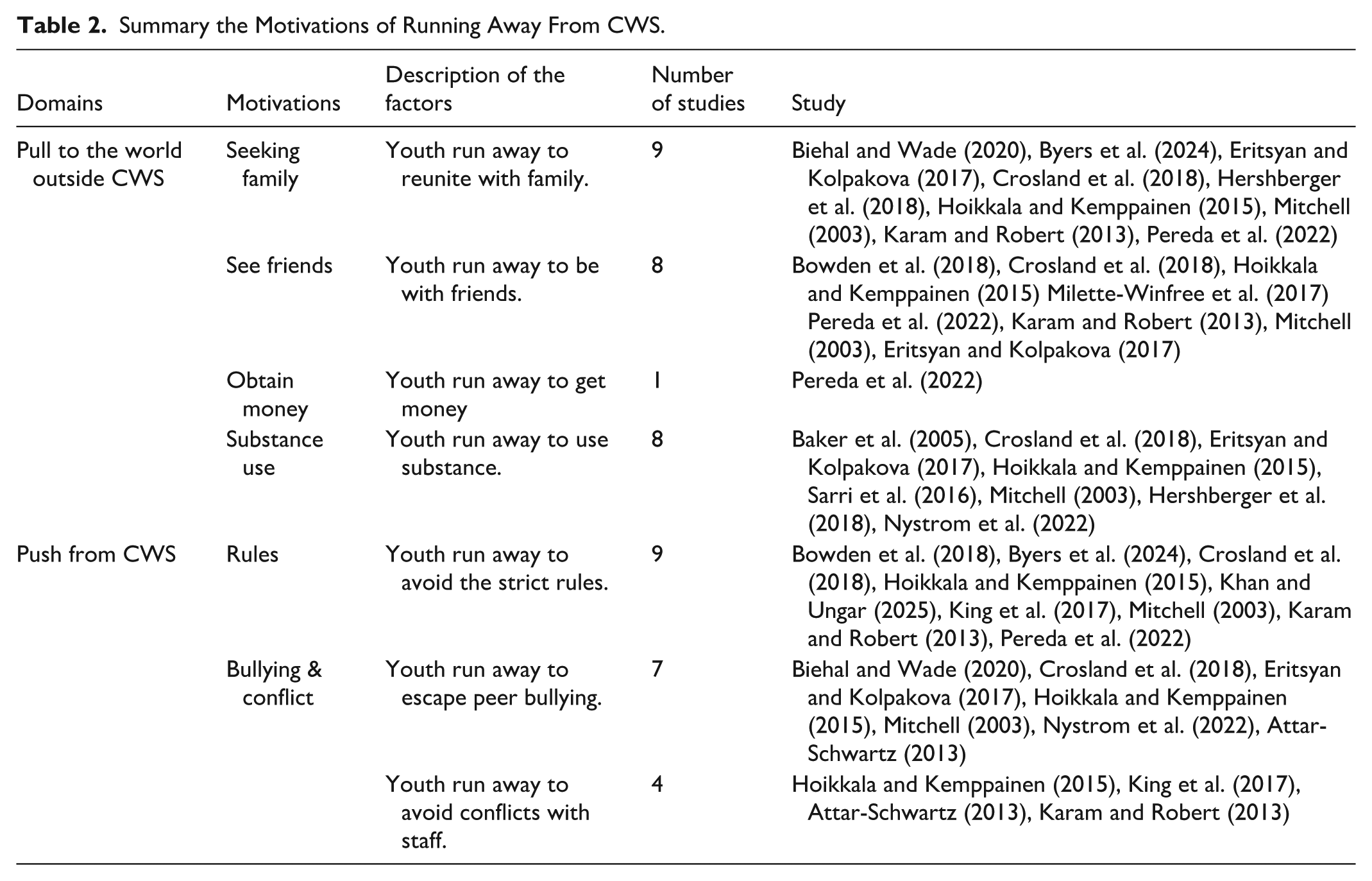
In terms of pull factors outside CWS, nine studies (27.2%) reported that youth ran away to reconnect with their families (e.g., Karam & Robert, 2013; Pereda et al., 2022). Eight studies (24.2%) indicated that children ran away to maintain social relationships, such as visiting friends (e.g., Mitchell, 2003; Eritsyan & Kolpakova, 2017). One study found that children ran away to obtain money (Pereda et al., 2022). Eight studies (24.2%) identified substance use (e.g., alcohol and drugs) as a motivation for running away, noting that some youth sought greater freedom or opportunities to use substances than were permitted in foster or residential care (e.g., Hershberger et al., 2018; Nystrom et al., 2022). This motivation reflects elements of both pull and push dynamics.
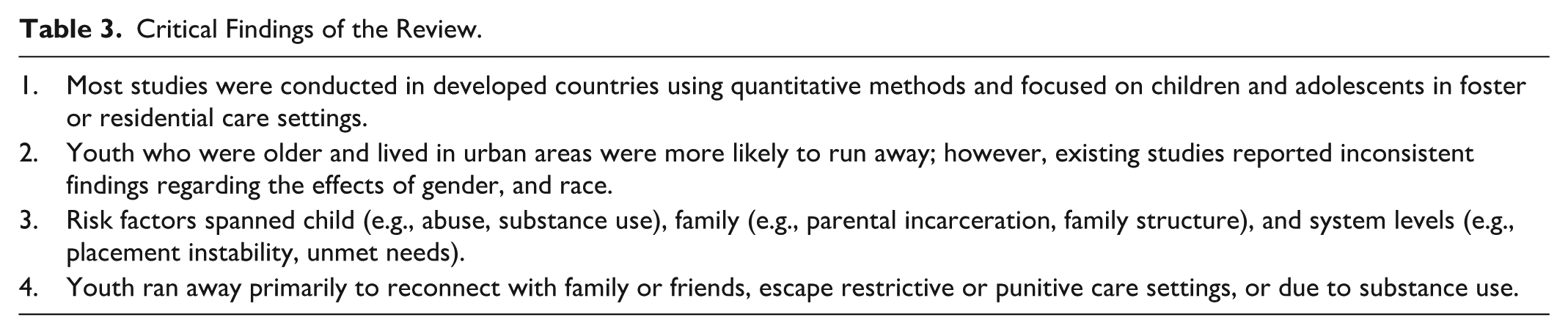
Regarding push factors from CWS, thirteen studies (39.3%) identified CWS-related motivations that pushed youth away from placements. Nine studies (27.2%) highlighted restrictive management practices within placements (e.g., residential settings), including strict rules (e.g., no-smoking policies) or punitive measures that prompted children to run away in search of greater autonomy (e.g., Bowden et al., 2018; Khan & Ungar, 2025; Karam & Robert, 2013). Seven studies (21.2%) reported that youth ran away to escape bullying from peers (e.g., Nystrom et al., 2022; Attar-Schwartz, 2013) or to avoid conflicts with staff members or foster parents (e.g., Hoikkala & Kemppainen, 2015; King et al., 2017; Attar-Schwartz, 2013; Karam & Robert, 2013). Child motivations are presented in Table 2, and the findings of the review are presented in Table 3.
Summary the Motivations of Running Away From CWS.
Critical Findings of the Review.
Discussion
The aims of this study were to examine the characteristics of children who run away from the CWS and to explore the motivations underlying running away behavior, in order to deepen our understanding of who and why children choose to run away from CWS. This study makes several contributions to the existing literature. First, it consistently found that older children, those who live in urban areas, those with adverse childhood experiences, and those with unmet needs are at elevated risk of running away from CWS. Second, the findings highlight bullying and interpersonal conflicts within CWS settings as key factors contributing to running away behavior. Third, this review identified several conflicting findings in the current body of research, thereby illuminating important directions for future investigation. Fourth, research on children running away from the CWS remains limited, indicating a need for further exploration in this area. These insights underscore the complexity of running away behavior and the need for multifaceted, evidence-based interventions within the CWS.
The results of this scoping review underscore the necessity of tailored services within the CWS. The findings align with prior research demonstrating that the past adverse experiences, including sexual abuse, physical abuse, and a history of criminal behavior, contribute to an increased risk of running away from CWS (Crosland et al., 2018; Gypen et al., 2017). Despite their placement within CWS, many children do not receive adequate support, particularly in the realm of mental health care, which has been identified as a significant factor influencing their decision to leave (e.g., Bowden et al., 2018; Engler et al., 2022). This review suggests that many children in CWS have unique needs shaped by factors such as age, region, and other characteristics. However, many existing services follow a standardized, “one-size-fits-all” approach, and resource limitations further exacerbate the challenge of addressing diverse needs effectively (Rijbroek et al., 2019; Bates, 2015). Research indicates that tailored interventions have been shown to significantly enhance implementation outcomes for parents of color in child and family service programs (Corso et al., 2010; Damashek et al., 2012; Pelton, 2015). In this context, tailoring services should focus on addressing children’s heterogeneous risk profiles and unmet needs (e.g., trauma history, mental health concerns, age, and service context), rather than assuming uniform pathways to running away. Such need-responsive approaches may be more effective than standardized service models.
Consistent with prior research that has documented instances of maltreatment within the CWS (e.g., DePanfilis & Girvin, 2005; Mazzone et al., 2018), this scoping review found that bullying is a significant factor contributing to children’s decisions to run away from care. Several studies have highlighted that children in CWS are vulnerable to peer bullying and interpersonal conflicts with staff members (e.g., Attar-Schwartz, 2013; Biehal & Wade, 2020). Although the primary aim of the CWS is to provide a safe and stable environment for children, the findings of this review reinforce concerns that violence and interpersonal aggression, such as peer bullying, physical violence, and emotional abuse (e.g., Eritsyan & Kolpakova, 2017), can occur within these settings, resulting in secondary trauma and a failure to ensure adequate protection. Existing evidence further indicates that both perpetrators and victims of bullying within CWS exhibit elevated levels of behavioral and psychological difficulties (Mazzone et al., 2018). Moreover, Mazzone et al. (2018) suggest that, in contrast to children in traditional school settings, those in institutional or foster care often lack access to environments where they feel genuinely protected from bullying. These findings underscore the critical need for CWS to implement targeted strategies aimed at fostering emotionally and physically safe care environments.
The findings of this scoping review highlight the importance of considering children’s needs when designing services and interventions. Previous research has emphasized the value of incorporating children's voices in research and practice (Parry & Weatherhead, 2014). Similarly, our results underscore the diverse motivations behind children’s decisions to run away from CWS, including the desire to see friends (e.g., Mitchell, 2003), obtain money (Nystrom et al., 2022), or escape bullying (Attar-Schwartz, 2013), some of which may differ from the motivations perceived by frontline social workers or service providers within the CWS (Koziel et al., 2023). Therefore, it is crucial that intervention strategies are informed by an understanding of children’s perspectives and individual needs, rather than assuming uniform motivations or preferences.
This scoping review identified several conflicting findings related to gender, health status, and timing of running away incidents. Some studies reported that males are more likely to run away (e.g., Byers et al., 2024), while others found no significant gender differences (Pereda et al., 2022). Regarding health, some studies indicated that youth with health issues are less likely to run away (e.g., Chor et al., 2022), whereas five other studies reported the opposite (e.g., Lin, 2012). Connell et al. (2006) found that the risk of running away is highest during the first few months in care, a conclusion that contradicts the findings of three other studies. These inconsistencies may be partly attributable to differences in sample characteristics. For example, Byers et al. (2024) examined a sample of more than 1,000 participants, whereas Pereda et al. (2022) included only 67 participants and did not report racial characteristics. In addition, variations in the type of health conditions examined may contribute to divergent findings, as different health issues appear to be associated with different risks of running away. For instance, Milette-Winfree et al. (2017) reported that youth with mental health problems were more likely to run away, whereas those with physical disorders were less likely to do so.
Although 33 studies have examined the differences between males and females in running away, no attention has been paid to sexual minority children running away from CWS. Future research should place greater emphasis on this underexplored population. In addition, definitions of “running away” vary across studies (McIntosh et al., 2010). For example, Hershberger et al. (2018) defined running away as failing to return for at least 24 hr, whereas Milette-Winfree et al. (2017) considered it as an absence of 1 hr or more. It is possible that variations in the duration of absence are associated with differing underlying motivations or contributing factors (Kim et al., 2015). Taken together, these differences in definitions and underlying motivations underscore the significant risks that running away from CWS poses to children’s development and well-being, as well as to their families (Crosland & Dunlap, 2015; Woods et al., 2013). Therefore, future studies should aim to establish greater conceptual consistency, and further explore the differences between short-term and long-term running away behaviors.
Limitations
This scoping review has several limitations. First, it includes only studies published in English peer-reviewed journals, potentially excluding relevant research published in non-peer-reviewed sources. Some scholars may disseminate their findings through conference proceedings, book chapters, or other non-peer-reviewed formats. Given our focus on rigor and study quality, we did not include these sources, which may have limited the scope of our review. This study may overlook factors influencing children’s decisions to run away from the CWS in non-English-speaking regions. Second, nearly all the included studies were conducted in developed countries, with a particular focus on the CWS in the United States. As a result, the findings of this scoping review may have limited generalizability to developing countries. Furthermore, even among developed countries, the aims, processes, and policies of CWS can vary considerably. This study did not account for these cross-national differences in CWS structures. Future research could address this limitation by focusing on a specific country to more thoroughly examine running away behavior within its unique CWS context. Finally, this scoping review identified a subset of studies that examined specific factors such as gender, age, and race. Future research could build on these findings by conducting a meta-analysis to quantitatively assess whether particular demographic characteristics (e.g., gender and age) are associated with the risk of running away.
Implications
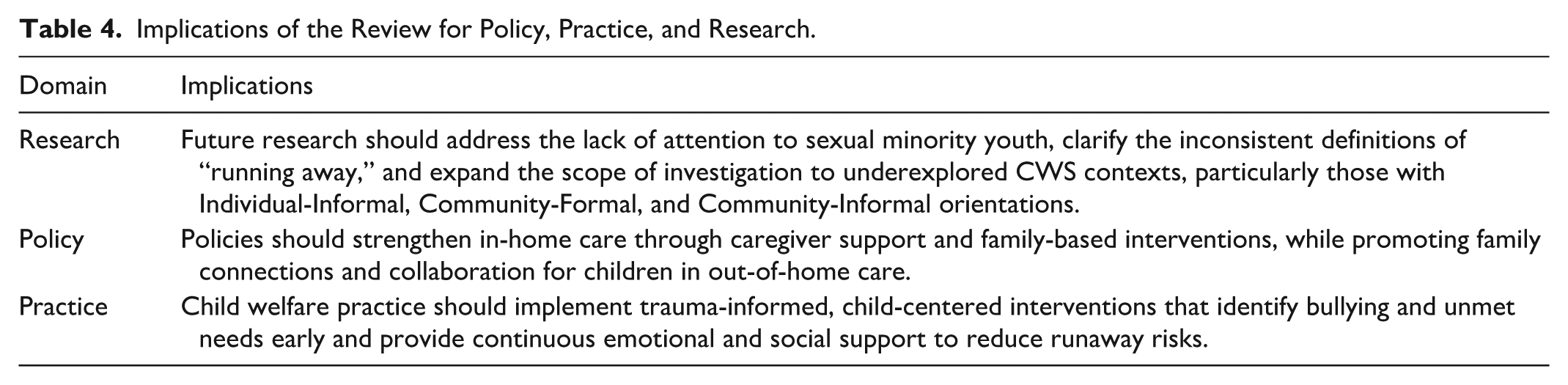
The findings of this study have several implications for research, policy and practice (see Table 4). In terms of research, existing studies lack sufficient attention to gender minority youth, and future research should address this gap. In addition, some existing studies do not provide a clear definition of running away, leading to inconsistencies in the identification of factors associated with leaving CWS placements. Future research should clarify the definition of running away to develop more coherent and convincing explanations. Moreover, given the cross-national variations in CWS and the limited research conducted in developing countries, future studies should focus more on these contexts, particularly those characterized by Individual-Informal Orientation, Community-Formal Orientation, and Community-Informal Orientation systems (Connolly & Katz, 2019). From a policy perspective, most studies on child runaways have emphasized their attempts to reunite with parents and highlighted that the presence of siblings reduces the risk of running away. Policy implications suggest that greater attention should be directed toward strengthening in-home care by allocating additional resources and services to caregivers to prevent and address child maltreatment within the family context. For children placed in OHC, it is equally important to recognize their need for maintaining family connections and to foster collaboration with biological families while ensuring the provision of appropriate alternative care arrangements. From a practice perspective, this scoping review identified bullying and unmet needs within the CWS as critical risk factors for running away. Practice interventions should prioritize early detection of peer victimization and psychosocial distress within care settings, alongside the establishment of trauma-informed, child-centered services that provide ongoing emotional support, strengthen trust between caregivers and children, and reduce the likelihood of repeated runaway episodes. The summary of the implications is presented in Table 4
Implications of the Review for Policy, Practice, and Research.
Supplemental Material
sj-docx-1-tva-10.1177_15248380261429515 – Supplemental material for Who They Are and Why They Run: A Scoping Review to Understand Running Away in Child Welfare System
Supplemental material, sj-docx-1-tva-10.1177_15248380261429515 for Who They Are and Why They Run: A Scoping Review to Understand Running Away in Child Welfare System by Yiran Zhang and Jinyu Chen in Trauma, Violence, & Abuse
Supplemental Material
sj-docx-2-tva-10.1177_15248380261429515 – Supplemental material for Who They Are and Why They Run: A Scoping Review to Understand Running Away in Child Welfare System
Supplemental material, sj-docx-2-tva-10.1177_15248380261429515 for Who They Are and Why They Run: A Scoping Review to Understand Running Away in Child Welfare System by Yiran Zhang and Jinyu Chen in Trauma, Violence, & Abuse
Supplemental Material
sj-docx-3-tva-10.1177_15248380261429515 – Supplemental material for Who They Are and Why They Run: A Scoping Review to Understand Running Away in Child Welfare System
Supplemental material, sj-docx-3-tva-10.1177_15248380261429515 for Who They Are and Why They Run: A Scoping Review to Understand Running Away in Child Welfare System by Yiran Zhang and Jinyu Chen in Trauma, Violence, & Abuse
Footnotes
Author Contribution
Y.Z.: Conceptualization, article screening, data extraction, data analysis, writing the original drafts, review and edits; J.C.: Article screening, data extraction, data analysis, writing the original drafts, review and edits.
Declaration of Conflicting Interests
The authors declared no potential conflicts of interest with respect to the research, authorship, and/or publication of this article.
Funding
The authors disclosed receipt of the following financial support for the research, authorship, and/or publication of this article: This research was conducted without any external funding.

Supplemental Material
Supplemental material for this article is available online.
Author Biographies
References
Supplementary Material
Please find the following supplemental material available below.
For Open Access articles published under a Creative Commons License, all supplemental material carries the same license as the article it is associated with.
For non-Open Access articles published, all supplemental material carries a non-exclusive license, and permission requests for re-use of supplemental material or any part of supplemental material shall be sent directly to the copyright owner as specified in the copyright notice associated with the article.
