







Abstract
Online hate speech (OHS) refers to discriminatory or offensive content shared via digital platforms that targets social groups. Synthesizing evidence on OHS directed at sexual and gender minorities (SGMs) is crucial, given the disproportionate online discrimination experienced by SGM people and its implications for well-being and social norms. This PRISMA-based systematic review synthesized quantitative studies in which the target of OHS content was SGM people, regardless of whether participants were SGM or non-SGM. We addressed four questions: (a) OHS definitions and operationalizations; (b) prevalence and risk factors of OHS; (c) psychological, behavioral, and social outcomes of exposure; and (d) behavioral responses to OHS exposure. Searches of 5 databases identified 13 studies. Definitions varied but generally captured identity-based targeting and hostile content in public or semi-public digital spaces. Prevalence varied by sampling frame: SGM-only studies reported high exposure (often > 85%), whereas general-population studies reported lower prevalence but higher exposure among SGM respondents. Risk factors were identity visibility/engagement, online behaviors, and lower digital media literacy; perpetration evidence was scarce. Exposure was associated with poorer SGM well-being (e.g., depression/anxiety, substance use, concealment, identity threat) and, experimentally, with lower perceived social cohesion and mixed effects on social attitudes. Witnesses generally condemned anti-SGM OHS; tolerance was higher among users with more negative pre-existing attitudes. Perceiving OHS as uncivil or harmful predicted stronger intervention intentions, while counter-speech effects were modest, reducing identity threat mainly under milder OHS. Findings highlight the need for harmonized measures, longitudinal/intersectional designs, and interventions pairing platform moderation with bystander-focused prevention efforts.
Keywords
Introduction
Over the past two decades, the spread of digital technologies and the rise of social media platforms have brought several new forms of online violence to the forefront as major concerns in the virtual public sphere. This phenomenon is broadly categorized as cyberaggression, an umbrella term encompassing Online Hate Speech (OHS), harassment, stalking, and cyberbullying. These hostile behaviors significantly impact the well-being and social behavior of both targeted individuals and society at large (Bilewicz & Soral, 2020; Cervone et al., 2021). Platforms such as Instagram, TikTok, X (formerly Twitter), and YouTube, alongside interactive spaces such as online forums and website comment sections, have become arenas for both exchange and confrontation, where hostile and offensive communication can proliferate at an alarming rate and with high visibility. The potential for real-time interaction with a vast audience has created fertile ground for the dissemination of hateful content. This is further facilitated by anonymity, which allows perpetrators to act without immediate social and legal consequences (Citron, 2014; Cohen-Almagor, 2015), and by perceived social distance, which diminishes awareness of the repercussions of one’s actions (Brown, 2018). As a result, cyber violence and hate have transcended national borders, becoming a global concern affecting communities worldwide.
A prominent form of cyberaggression is OHS (Bedrosova et al., 2022; Hawdon et al., 2017; Tennakoon et al., 2021). While hate speech was initially a legal term for offline contexts, it has evolved to encompass social, cultural, political, and economic spheres across online platforms, with diverse interpretations (Brown, 2017). This broad application makes it challenging to establish consensus on the essential elements of hate speech, complicating efforts to develop a precise construct for empirical research. However, existing research generally agrees that hate speech involves expressing hatred or degrading attitudes toward a specific group (Hawdon et al., 2017). In essence, hate speech devalues people based on their membership in social groups defined by characteristics such as ethnicity, religion, nationality, gender, and sexual orientation (Hawdon et al., 2017; Keipi et al., 2017; Paasch-Colberg et al., 2021). This focus on group hostility distinguishes OHS from cyberbullying, which typically involves repeated aggression directed at a specific individual over time (Bedrosova et al., 2022; Fulantelli et al., 2022; Tokunaga, 2010). Exposure to OHS is particularly harmful because it targets social identity and group affiliations, potentially undermining self-esteem and self-worth (Van Houtven et al., 2024). By reinforcing group distinctions while devaluing targeted groups, OHS exposure can erode the self-esteem of individuals within these groups (Boeckmann & Liew, 2002) and lead to severe psychological distress, including anxiety, depression, and sleep disturbances (Delgado & Stefancic, 2019). Targets often experience increased feelings of personal responsibility for the attacks and a diminished sense of safety in their offline lives (Dreißigacker et al., 2024; Saha et al., 2019).
The impact of OHS is particularly relevant for sexual and gender minorities (SGMs), who are among the groups most frequently targeted (Hawdon et al., 2017). Minority Stress Theory (Meyer, 2003) offers a useful framework for understanding why OHS may be especially harmful for SGM people. The theory posits that stigma related to minoritized identities produces additional stress exposure that is socially generated, chronic, and additive to general life stressors. Overall, these minority stressors constitute an excess, stigma-related stress load that contributes to greater risk for negative health outcomes among SGM people compared to non-SGM people (Thoma et al., 2019; Roberts et al., 2021; Wilson & Cariola, 2020). At the same time, individual and contextual resources such as coping strategies, social support, and community connectedness can buffer the impact of minority stress. Minority Stress Theory further distinguishes between distal and proximal stressors. Distal stressors are external and objective, arising from social conditions such as discrimination, rejection, and prejudice. Proximal stressors are internal and subjective, reflecting how people perceive and navigate stigma, for example, through internalized negative beliefs about one’s identity, expectations of rejection, and efforts to conceal one’s identity.
Although these stressors have typically been examined in offline contexts of prejudice and discrimination, they have become increasingly prevalent in online environments (McConnell et al., 2017). In fact, the proliferation of social media has coincided with a rise in OHS targeting SGM communities, including homophobic and transphobic comments (Keighley, 2022). This trend aligns with the developmental collision hypothesis (Bishop et al., 2024), which suggests that increased public awareness of SGM issues over the past several decades has contributed to adolescents forming minoritized sexual identities at younger ages. While these shifting developmental contexts can be beneficial, facilitating earlier self-identification and disclosure among SGM youth, they are also associated with increased exposure to SGM-related victimization, which, in turn, correlates with higher levels of depressive symptoms (Bishop et al., 2024). Thus, OHS may operate as a distal stressor through overt hostility and digital microaggressions, while also intensifying proximal stressors. Emerging evidence suggests that exposure to OHS is associated with perceived insecurity (Dreißigacker et al., 2024) and with viewing online spaces as unsafe for SGM users (Keighley, 2022). This is particularly important because online spaces often serve as contexts where SGM youth explore, affirm, and express their identities. In this context, OHS can disrupt this process, leading to feelings of exclusion, fear, and diminished self-worth (Patchin & Hinduja, 2010). Overall, in line with Minority Stress mechanisms, SGM youth may be disproportionately vulnerable to the psychological harm of OHS compared to non-SGM youth (Keighley, 2022; McInroy et al., 2024).
Existing reviews on OHS have offered broad syntheses of the phenomenon, generally treating it as homogeneous and only rarely focusing on SGM people. Consequently, they tend to overlook both the specific ways in which OHS targets SGM people and the possibility that such hostility may be qualitatively distinct from other forms of OHS. At the same time, definitions and measurement strategies for OHS targeting SGM people remain highly heterogeneous, limiting comparability across studies and highlighting the need for greater conceptual clarity and SGM-sensitive frameworks. Given the prevalence and significant social impact of OHS, there is a critical need for research to systematically consolidate existing findings on OHS targeting SGM people.
This systematic review aims to address this need by synthesizing quantitative studies that examine OHS targeting SGM people. By consolidating current evidence on prevalence, psychological and social consequences, associated factors, and responses, the review contributes to the advancement of scholarly understanding and informs the development of evidence-based policies and interventions to mitigate the impact of online hate on SGM people. Importantly, the studies included are not restricted to SGM participants. They also include non-SGM participants, given the central role of bystanders (i.e., those who witness hateful behaviors online), whose reactions can influence the diffusion and normalization of hateful content and are themselves associated with measurable psychological and social outcomes.
Research Questions
The research literature on OHS targeting SGM people has been synthesized to answer the following research questions (RQs):
Method
Search Method (Design and Strategy)
This systematic review followed the Preferred Reporting Items for Systematic Reviews and Meta-Analyses (PRISMA) guidelines (Page et al., 2021) to ensure transparency and reproducibility. We conducted a literature search across PsycINFO, Web of Science, Scopus, LGBTQ+ Source, and ERIC to ensure comprehensive interdisciplinary coverage (psychology, education, and social sciences, including scholarship focused on SGM issues). Search covered records from database inception to May 2024 and were updated in October 2024. We restricted the search to peer-reviewed journal articles written in English. We aimed to identify empirical quantitative research articles assessing OHS targeting SGM populations. We included studies in which the content target of OHS was SGM people, regardless of whether participants of the studies were SGM or non-SGM (e.g., bystanders/general population). To capture relevant literature, we used specific keywords with Boolean operators, ensuring a full exploration of the selected databases. To maintain conceptual separation from cyberbullying and related individual-level aggression, we did not include cyberbullying-specific keywords in the search string and excluded studies that primarily operationalized the phenomenon as cyberbullying during screening. Below is an exemplified representation of the search strategy executed in the five databases: cyberhat* OR “cyber hat*” OR Cyber-hat* OR “online hat*” OR “online discrimin*” OR “hat* online” OR “digit* hat*” OR “social media hat*” OR “online offen*” OR “online harass*” OR “online victim*” OR (“hat* Speech” AND online) [TOPIC CLUSTER]; AND “sexual and gender minorit*” OR “sexual and gender divers*” OR lgb* OR Sogie OR “sexual orientation” OR “sexual minorit*” OR “sexual diversit*” OR “same-sex relationship” OR Lesbian* OR Gay* OR Bisex* OR Queer OR Homophob* OR Biphob* OR Transphob* OR “gender identit*” OR “gender divers*” OR “gender minorit*” OR Transgender OR Transexual OR “gender varian*” OR gender-variant OR gender-diverse
Our search strategy involved a systematic cross-referencing of terms from these two distinct clusters. Specifically, we combined every term from the “target” cluster with every term from the “topic” cluster in order to maximize the retrieval of relevant studies. Inclusion and exclusion criteria to apply throughout the screening process were decided a priori.
Eligibility and Exclusion Criteria
Five eligibility criteria were pre-specified, and studies were included only if they met all of the following: (a) publication in a peer-reviewed scientific journal; (b) English-language reporting; (c) examination of OHS or closely related constructs, defined as the online dissemination of discriminatory or offensive content targeting social groups (rather than individuals); (d) OHS specifically directed toward SGMs; and (e) a quantitative design (or mixed methods with extractable quantitative outcomes) involving human participants. We restricted our review to articles employing quantitative or empirical research designs to maximize methodological consistency and cross-study comparability, as peer-reviewed journal articles are more likely to provide the minimum reporting detail needed for reliable synthesis (e.g., sampling and recruitment procedures, measures and operational definitions, analytic strategy, and outcome reporting). This was especially important given our review objectives, which required direct comparisons of how OHS toward SGM is defined and conceptualized, how studies are designed, and how key constructs are operationalized across the literature. This allowed for a more coherent synthesis of findings and a more focused examination of the processes under investigation. Systematic reviews, meta-analyses, and theoretical articles were excluded, as well as certain publication types that did not meet our standards, such as conference papers, PhD dissertations, books, book chapters, and unpublished manuscripts. Additionally, studies that focused on offline forms of hate speech or cyberbullying were also disregarded, as these did not align with the primary objective of this review.
The search returned 1,178 articles. After removing duplicates, 341 articles were screened based on title and abstract (Figure 1). Two independent reviewers (i.e., M.M. and N.D.B.) conducted the screening process. Any discrepancies in selection were resolved through discussion and, when necessary, consultation with a third reviewer (i.e., S.C.). Full-text screening was performed for all potentially eligible studies based on the abstract review. Articles that did not meet the inclusion criteria after full-text assessment were excluded, and the reasons for exclusion were documented. This screening process resulted in 13 articles to be included in this review. The entire screening process was carried out with the support of the online software Rayyan (Ouzzani et al., 2016). To assess the consistency of the screening process, we calculated inter-rater reliability using Cohen’s Kappa (κ). This measure helped evaluate the level of agreement between the two reviewers beyond chance. A κ value of .89 was obtained, indicating an excellent level of agreement between the reviewers (McHugh, 2012).
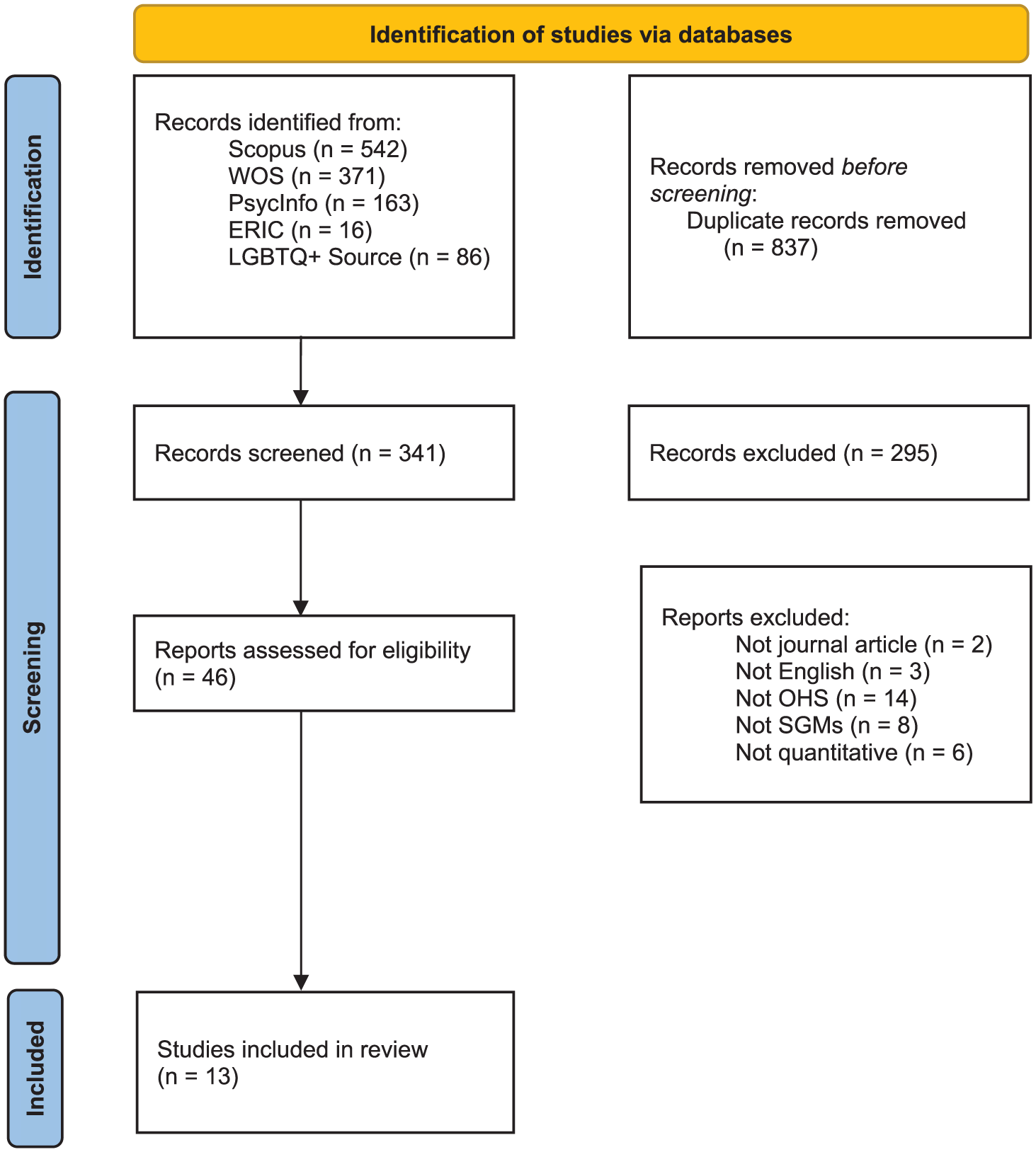
PRISMA flow diagram of the study selection process.
Quality Assessment
The inter-rater reliability analysis was conducted following the methodology outlined in Kmet et al. (2004), using the scores assigned by two independent reviewers to evaluate the quality of studies across 14 items (details are provided in Supplemental Material 2). The percentage agreement was calculated as the proportion of identical scores across all items, while Cohen’s Kappa was used to assess the level of agreement. The total agreement percentage between the two reviewers was 87.36%, indicating a high level of consistency. Cohen’s Kappa coefficients further confirmed substantial agreement (κ = .76).
Results
RQ1: Sample Characteristics, Study Designs, and Operationalizations of OHS Targeting SGM Groups
Sample Characteristics
Regarding the first RQ (RQ1) (i.e., identifying the key characteristics of studies on OHS targeting SGM groups and understanding how OHS has been defined and operationalized), findings show that research on OHS targeting SGM groups is still in its early stages, with studies being published only recently between 2019 and 2024. The 13 studies in this systematic review primarily collected data from Europe and North America. Some focused on single countries, such as Italy (Ieracitano et al., 2024; Mancini & Imperato, 2020), Austria (Schäfer et al., 2024), Germany (Obermaier & Schmuck, 2022; Obermaier et al., 2023), Cyprus (Baider & Anaxagorou, 2022), the USA (Costello et al., 2019; Fisher et al., 2024), and Spain (Martínez-Bacaicoa et al., 2023). Four studies used cross-national samples: Two within Europe, one across Germany, Austria, and Switzerland (Schäfer et al., 2022), and another including Belgium, the Netherlands, Ireland, and the UK (Van Houtven et al., 2024). The other two studies included participants from both Europe and beyond: Keighley (2022) drew from France, Italy, Germany, the UK, the USA, Canada, and Hong Kong, while McInroy et al. (2024) included participants from the UK, the USA, and Canada.
Across the 13 included studies, sample sizes ranged from N = 48 to N = 2,316, with most studies recruiting several hundred participants. Samples were primarily community-based adolescents and young adults (approximately 13–36 years), complemented by several adult cohorts extending to 67–69 years and one experimental study with a higher mean age (≈ 47 years). Importantly, none of the studies involved clinical populations. In terms of age groups, five studies focused exclusively on adults (Baider & Anaxagorou, 2022; Ieracitano et al., 2024; Mancini & Imperato, 2020; Martínez-Bacaicoa et al., 2023; Van Houtven et al., 2024), whereas four targeted adolescents and young adults (Costello et al., 2019; Keighley, 2022; McInroy et al., 2024; Obermaier & Schmuck, 2022). Only one study specifically examined minors (Fisher et al., 2024).
Regarding sexual orientation and gender identity, four studies recruited SGM-only samples (Fisher et al., 2024; Keighley, 2022; McInroy et al., 2024; Van Houtven et al., 2024), while the remaining studies relied on heterogeneous/general-population samples, typically female-majority or approximately gender-balanced. Notably, one experiment examining OHS targeting transgender people excluded 16 transgender participants because ethical considerations precluded exposing individuals to hate speech directed at a group to which they belong (Schäfer et al., 2024). One study also focused on a specific SGM subgroup (lesbian, gay, and bisexual participants; Van Houtven et al., 2024). All the relevant study characteristics are reported in Table 1.
Information Extracted From the Included Studies.
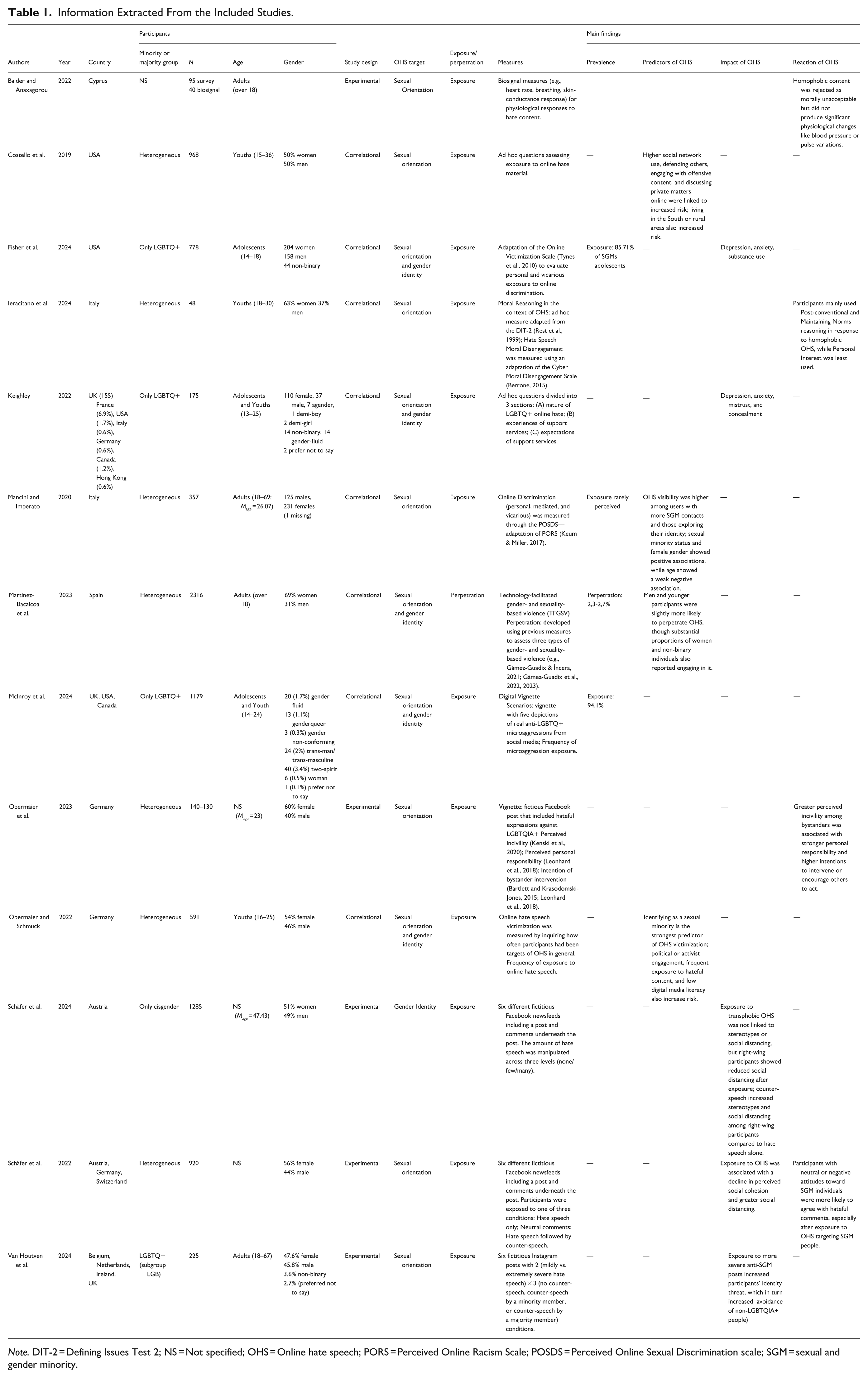
Note. DIT-2 = Defining Issues Test 2; NS = Not specified; OHS = Online hate speech; PORS = Perceived Online Racism Scale; POSDS = Perceived Online Sexual Discrimination scale; SGM = sexual and gender minority.
Study Designs
The studies included in this systematic review employed a range of methodological approaches, reflecting the complexity of researching OHS. Most used cross-sectional correlational designs, relying primarily on online surveys to collect quantitative data (e.g., Ieracitano et al., 2024; Mancini & Imperato, 2020; McInroy et al., 2024; Obermaier & Schmuck, 2022). In these studies, OHS exposure was typically measured using Likert-type frequency items assessing how often participants had witnessed hate speech online (e.g., Baider & Anaxagorou, 2022; Costello et al., 2019; Fisher et al., 2024; Mancini & Imperato, 2020); in one case, Fisher et al. (2024) adapted the Online Victimization Scale (Tynes et al., 2010) to assess recent discrimination on social media, including vicarious experiences involving LGBTQ+ people. Several cross-sectional studies also incorporated open-ended questions (e.g., Fisher et al., 2024; Martínez-Bacaicoa et al., 2023) or paired self-report measures with interviews (e.g., Keighley, 2022). Recruitment strategies varied and included social media advertising (Fisher et al., 2024; Keighley, 2022; McInroy et al., 2024), school-based recruitment (Ieracitano et al., 2024; Martínez-Bacaicoa et al., 2023), snowball sampling (Keighley, 2022; Mancini & Imperato, 2020), and recruitment via a specialized panel company (Obermaier & Schmuck, 2022). Only one study operationalized perpetration (Martínez-Bacaicoa et al., 2023), using open-ended responses to distinguish passive (e.g., sharing degrading content) from active (e.g., posting degrading content) perpetration related to sexual or gender identity over the past year.
Other studies used experimental designs to examine responses to anti-SGM OHS by manipulating (a) the type/severity/amount of hate content, (b) the target of hateful messages, and (c) counter-speech (presence and counter-speaker identity). Experiments typically relied on standardized simulated social media stimuli (e.g., memes, tweets, Facebook posts/newsfeeds). Baider and Anaxagorou (2022) combined questionnaires and interviews with meme/tweet manipulations and uniquely added physiological measures (blood pressure, heart rate). Obermaier et al. (2023) exposed SGM participants to a fictitious Facebook post plus a discriminatory comment and assessed perceived incivility, personal responsibility, and bystander intervention intentions. Schäfer et al. (2024) used simulated Facebook news feeds about transgender people, varying the comments (neutral vs. hate vs. hate + counter-speech), while Schäfer et al. (2022) recruited a heterogeneous sample (heterosexual/cisgender and SGM participants) and manipulated both hate volume and target group. Van Houtven et al. (2024) examined sexual minority (SM) participants’ responses to homophobic OHS by manipulating hate severity and counter-speech presence/source (minority vs. majority speaker).
Defining and Operationalizing OHS Targeting SGMs
Except for Keighley’s (2022) study, which underscores the risks of narrowly defining OHS and neglecting its broader and more subjective dimensions, the remaining literature employs a variety of definitions. Further details are provided in Supplementary Material 1, which summarizes how OHS is conceptualized across the 13 studies reviewed.
Despite variations in terminology, recurring themes include abuse, harm, violence, hostility, hatred, stigmatization, harassment, intimidation, insult, and discrimination, often conveyed through degrading or dehumanizing discourse (Costello et al., 2019; McInroy et al., 2024; Obermaier & Schmuck, 2022; Obermaier et al., 2023; Schäfer et al., 2024; Van Houtven et al., 2024). A key feature distinguishing OHS from other forms of online aggression (e.g., cyberbullying or cyberstalking) is its focus on identity-based targeting (e.g., Costello et al., 2019; Ieracitano et al., 2024; Keighley, 2022; McInroy et al., 2024). However, only two studies (Baider & Anaxagorou, 2022; Mancini & Imperato, 2020) did not explicitly refer to identity-based targeting in their definitions.
Some studies add further nuance. Intentionality is highlighted in three studies (Ieracitano et al., 2024; Martínez-Bacaicoa et al., 2023; Van Houtven et al., 2024), while McInroy et al. (2024) uniquely acknowledge that OHS may also be unintentional. Others emphasize the potential harm OHS can inflict on marginalized groups as an important aspect of the operationalization (e.g., Keighley, 2022; Schäfer et al., 2022, 2024). Finally, only a few definitions address the broader social implications: Obermaier and Schmuck (2022) stress how OHS violates public norms of democratic discourse, and Schäfer et al. (2024) underline its threat not only to individuals but to society as a whole.
In addition to definitions, the reviewed studies varied widely in examining whether OHS targeting SGMs was based on sexual orientation, gender identity, or gender expression. Five studies explored OHS directed at people based on both their gender identity and sexual orientation (Fisher et al., 2024; Keighley, 2022; Martínez-Bacaicoa et al., 2023; McInroy et al., 2024; Obermaier & Schmuck, 2022). However, most studies focused solely on OHS related to sexual orientation (Baider & Anaxagorou, 2022; Costello et al., 2019; Ieracitano et al., 2024; Mancini & Imperato, 2020; Obermaier et al., 2023; Schäfer et al., 2022; Van Houtven et al., 2024). Only one study specifically investigated transphobic OHS (Schäfer et al., 2024).
RQ2: Prevalence and Risk Factors of OHS Targeting SGM Groups
Prevalence
Prevalence estimates for the second RQ (RQ2) were examined exclusively in correlational studies. Among those, only a small subset provided relevant data on the prevalence, focusing on exposure (Fisher et al., 2024; Mancini & Imperato, 2020; McInroy et al., 2024) and perpetration (Martínez-Bacaicoa et al., 2023). Ieracitano et al. (2024) reported aggregate prevalence for OHS exposure without SGM-specific breakdown, and Keighley (2022) provided no prevalence data.
Regarding OHS exposure, Fisher et al. (2024) found that 85.7% of SGM adolescents (Mage = 16.05) faced identity-based OHS on social media. McInroy et al. (2024) reported digital microaggressions among SGM young adults (18–24), with 94.1% exposed, 75.7% facing OHS at least monthly, and 50.5% weekly. Mancini and Imperato (2020), studying a broader age range (18–69, Mage = 26.07), observed that non-heterosexual participants (5.3% of the sample) were significantly more likely to be exposed to OHS than people self-identifying as exclusively or predominantly heterosexual (93.5% of the sample). Finally, Martínez-Bacaicoa et al. (2023) examined OHS perpetration among SM and transgender participants, with 2.7% and 2.3%, respectively, reporting perpetration.
Risk Factors of OHS
Three studies (Costello et al., 2019; Mancini & Imperato, 2020; Obermaier & Schmuck, 2022) identified a range of intersecting individual, behavioral, and contextual factors associated with OHS exposure. SM identity emerged as a key predictor in two studies. Obermaier and Schmuck (2022), in a study involving a heterogeneous group of adolescent and young adult Internet users, found that identifying as a SM was the strongest predictor of being exposed to OHS. Similarly, Mancini and Imperato (2020) reported a positive association between SM identity and OHS exposure, also noting that exposure was more likely among people who had more SGM contacts online and were actively exploring their own sexual identity.
Several behavioral factors were associated with OHS exposure. Obermaier and Schmuck (2022) identified political or activist engagement, frequent exposure to hateful content, and low digital media literacy as risk factors. These elements jointly increase visibility and vulnerability in online spaces. Costello et al. (2019) found that in a heterogeneous group of adolescent and young adult Internet users living in the USA, behaviors such as intensive social network use, defending others online, engaging with offensive content, and discussing private matters online were also positively associated with OHS exposure.
Regarding contextual factors, Costello et al. (2019) showed that people living in Southern USA or in rural areas were significantly more likely to be targeted. In contrast, demographic variables such as age, gender, education, migration background, and religion (Obermaier & Schmuck, 2022), as well as time spent online, ethnicity, and levels of social connectedness (Costello et al., 2019), were not consistently associated with SGM-specific OHS. However, Mancini and Imperato (2020) found that gender (female) showed a weak positive association with OHS exposure, while age was weakly and negatively correlated.
Regarding OHS perpetration, Martínez-Bacaicoa et al. (2023) reported higher prevalence rates among men (4.3%) and non-binary participants (7.9%, even though non-binary participants represented 1% of the sample) compared to women (1.9%), with the highest prevalence observed among participants aged 35 to 44 (4.9%). Similar gender- and age-based disparities were identified for OHS targeting transgender people, with higher rates among men (3.9%) and non-binary participants (8.3%) than among women (1.5%), and a peak prevalence among participants aged 35 to 44 (4.5%).
RQ3: The Impact of OHS Targeting SGM Groups on Well-Being, Health Behaviors, and Social Attitudes
To address the third RQ (RQ3) on the impact of OHS, studies were grouped into two categories: The first, examining effects on psychological well-being and minority stress, involved exclusively SGM participants; the second, investigating its influence on social attitudes, included one study with a heterogeneous sample (Schäfer et al., 2022), one with only cisgender participants (Schäfer et al., 2024), and one with SGM participants (Van Houtven et al., 2024).
Psychological Well-Being and Health Behaviors
Two correlational studies and one experimental study analyzed the psychological consequences of OHS on SGMs targets. The two correlational studies reported negative effects on mental health, such as depression and anxiety (Fisher et al., 2024; Keighley, 2022), substance use (Fisher et al., 2024), loss of trust, emotional harm (Keighley, 2022), and identity concealment (Keighley, 2022). Interestingly, Fisher et al. (2024) found that the association between exposure to OHS on social media and risk for depression, anxiety, and substance use was moderated by users’ perceptions of social media: Among users experiencing high levels of discrimination, those who described social media as a space of belonging and support for the SGM community reported worse mental health outcomes than those who perceived it as unwelcoming.
In their experimental study, Van Houtven et al. (2024) found that exposure to severe OHS (via simulated Instagram posts) significantly increased perceived identity threat, defined as feelings of degradation, discrimination, or threat due to hostile messages, while counter-speech, defined as online responses to challenge, refute, or counteract OHS, had no mitigating effect.
Social Attitudes
Three experimental studies investigated the impact of OHS on social attitudes. In a heterogeneous sample including both SGM and non-SGM participants, Schäfer et al. (2022) found that exposure to experimentally manipulated OHS comments targeting sexual minorities reduced perceived social cohesion, defined as the sense of individuals and groups being integrated into a larger collective. In another experimental study with only cisgender participants, Schäfer et al. (2024) found that exposure to transphobic OHS was not significantly associated with explicit and implicit stereotypes, or socially distancing attitudes (i.e., people’s lack of willingness to accept transgender people as part of society and everyday life). However, political orientation moderated the effect: Among right-wing participants, exposure to hate speech was paradoxically associated with reduced social distancing. The study also explored the role of counter-speech as a moderator of the relationship between stereotypes (both implicit and explicit) and social distancing. They found that after the experimental exposure to counter-speech to defend transgender people, right-wing participants expressed stronger stereotypes and greater social distancing than those exposed to hate speech alone.
The experimental study by Van Houtven et al. (2024) involving SGM participants found that exposure to severe OHS (i.e., OHS that is explicitly hostile in tone including offensive language or threats to targeted group) was associated with higher identity threat and, in turn, with SGM participants’ intention to avoid cisgender and heterosexual people. This was in contrast to mild OHS (i.e., OHS including indirect or nuanced expressions that convey stereotypes and disparaging remarks). The study also examined the effects of counter-speech on the perception that one’s social group is portrayed in a harmful, threatening, or demeaning manner. Regardless of the source of counter-speech (minority vs. majority group members) or the severity of the OHS, counter-speech exposure did not significantly affect the perceptions of negative group representation. However, counter-speech did influence perceived identity threat in mild OHS scenarios. In those cases, counter-speech from a majority group member significantly reduced identity threat, an effect not observed with severe OHS.
RQ4: Bystanders’ Reactions and Responses to OHS Targeting SGM Groups
The fourth RQ (RQ4) addressed how people react when exposed to OHS targeting SGMs. The following studies, based on general population samples and not exclusively SGM participants, examined responses in terms of acceptance or rejection of hate content, reaction time, moral reasoning, intentions to intervene, and the perceived effectiveness of counter-speech.
Baider and Anaxagorou (2022) conducted a mixed-methods experimental study combining questionnaires, interviews, and biosignal tracking to examine responses to various forms of hate speech (homophobic, sexist, and racist). Homophobic content was widely rejected and recognized as morally unacceptable by most participants; however, when biosignal measures (pulse and blood pressure) were used as an objective way to capture emotional and stress responses beyond self-reports, they did not show significant physiological changes, such as variations in pulse or blood pressure, revealing a possible discrepancy between explicit moral condemnation and embodied responses. Schäfer et al. (2022) found that pre-existing attitudes toward SGMs shaped participants’ responses: Those with neutral or negative attitudes were more likely to agree with hateful comments, particularly when exposed to OHS targeting SGM people. Ieracitano et al. (2024) examined how people judge homophobic OHS by asking participants to evaluate a realistic scenario in which a celebrity was targeted with homophobic hate content. Using questions adapted from a standard moral-judgment tool (Defining Issues Test [DIT-2]; Rest et al., 1999), the study distinguished three straightforward ways people can make such judgments: principles-based reasoning (deciding based on broad values like fairness, equality, and human rights), rules-and-order reasoning (deciding based on rules, authority, and what is acceptable for maintaining social order), and self-focused reasoning (deciding based on personal consequences and self-interest). Because these reasoning styles were measured in response to one specific vignette, they were treated as context-dependent ways of thinking in that moment, not stable traits. Overall, participants rarely used principles-based reasoning; instead, their evaluations were driven mainly by rules-and-order concerns, indicating that judgments of homophobic OHS were shaped more by norms and rule compliance than by abstract ethical principles. Within this pattern, men relied more on self-focused reasoning, whereas women relied more on rules-and-order reasoning. Finally, the authors identified moral disengagement, the mental strategies people use to justify or downplay harm, as a key mechanism linking personal values to these judgments.
Finally, Obermaier et al. (2023) examined how perceived incivility of OHS influences bystander responses (i.e., people exposed to OHS targeting SGM). Results indicated that greater perceived incivility of OHS among bystanders was positively associated with personal responsibility and intentions to intervene or encourage others to act. However, homophobic hate speech was perceived as less uncivil than misogynistic or ethnic hate speech.
Discussion
This systematic review examines OHS targeting SGMs, a social group facing high risks of discrimination, violence, harassment, and social exclusion (Katz-Wise & Hyde, 2012; Powell et al., 2020). A total of 13 quantitative studies published since 2019 was analyzed, indicating that research on this topic remains in its early stages.
Overall, the findings of this review can be grouped into four main thematic areas: (RQ1) studies describing the main characteristics of the examined research and the way OHS is defined and operationalized; (RQ2) studies addressing the prevalence and the factors that predict exposure to, or the active production of, hateful content (i.e., perpetrators); (RQ3) studies examining the effects of OHS exposure on psychological well-being, health behaviors, and social attitudes among both SGMs and non-SGM users; and (RQ4) studies exploring how SMG and non-SGM people respond to OHS against SGMs.
RQ1: Study Characteristics and Operationalizations of OHS Targeting SGM Groups
Across the included studies, a particularly relevant characteristic was the distinction concerning the sexual and gender identity of the participants. The four studies that focused on SGM participants mainly examined the psychological and social consequences of OHS exposure. In contrast, the nine studies drawing on general population samples, without focusing specifically on SGM participants, were primarily interested in how exposed people perceive OHS and whether they choose to intervene in such situations.
In the broader hate speech and cyberhate literature, there is no universally accepted definition of OHS (Kansok-Dusche et al., 2023; MacAvaney et al., 2019). Within the 13 studies included in this review, this definitional pluralism was reflected in the use of terms ranging from “online hate speech” to “digital microaggressions,” “vicarious discrimination,” and online “targeted gender- and sexuality-based violence.” These works were included because, despite variations in wording, their operational definitions substantially overlap with the conceptual boundaries of OHS. For the purposes of this review, we therefore adopt “OHS” as an umbrella term encompassing these perspectives, generally referring to the online dissemination of derogatory expressions, via posts, comments, videos, or stories, targeting individuals or groups on the basis of characteristics such as ethnicity, gender, sexual orientation, religion, disability, and appearance.
Across the included studies, three operational components appeared most consistently. First, the mode of expression included public or semi-public digital spaces and formats such as comments, posts, stories, memes, and videos (Costello et al., 2019; Schäfer et al., 2022; Van Houtven et al., 2024). Second, the content involved degrading, hostile, or discriminatory material that may incite, propagate, or normalize hostility or discrimination (Costello et al., 2019; McInroy et al., 2024; Obermaier & Schmuck, 2022; Schäfer et al., 2024). Third, the targeting criterion included sexual orientation, gender identity, and/or gender expression (Fisher et al., 2024; Ieracitano et al., 2024; McInroy et al., 2024). Based on the literature synthesized in this systematic review, OHS targeting SGM could be operationalized as “The online dissemination in public or semi-public digital spaces of degrading, hostile, or discriminatory content that incites, propagates, or normalizes hostility or discrimination against individuals or groups based on their sexual orientation, gender identity, or gender expression. This form of expression is primarily content-driven; it is expressed through text, images, videos, or other digital formats.”
It is important to note that, although often used interchangeably in the broader literature on digital aggression, OHS and bias-based online harassment or victimization represent conceptually distinct, though overlapping, forms of identity-based aggression in digital environments. Bias-based online harassment differs because it entails targeted and hostile actions, such as threats, doxing, cyberstalking, and coordinated attacks, explicitly motivated by prejudice toward the victim’s identity (Bedrosova et al., 2024; Powell et al., 2020). It is defined not only by the presence of hate-based content, but by the intentional infliction of harm, the individualization of the target, and the power dynamics involved in repeated victimization when it becomes cyberbullying (Fulantelli et al., 2022). Taken together, online harassment constitutes a behavioral pattern that extends beyond speech to include a wider spectrum of digital violence. Distinguishing OHS from broader forms of online harassment, while also clarifying their areas of overlap, is crucial for advancing both research and intervention. Establishing a shared definition of OHS is particularly important in light of the distinct perpetrator intents, victim experiences, legal implications, and psychological outcomes associated with this form of online violence (Brown, 2017; Fulantelli et al., 2022; Kansok-Dusche et al., 2023; Kwan et al., 2020).
RQ2: Prevalence and Risk Factors of OHS Targeting SGM Groups
In the included correlational studies, only a subset reported data relevant to prevalence (Fisher et al., 2024; Mancini & Imperato, 2020; Martínez-Bacaicoa et al., 2023; McInroy et al., 2024). However, findings consistently show large differences between general and SGM-focused samples. Research conducted exclusively with SGM participants (Fisher et al., 2024; McInroy et al., 2024) reports extremely high exposure rates to OHS (often above 85%), while studies based on general population samples show lower overall prevalence, though SGM respondents within these samples remain significantly more exposed than heterosexual participants. Studies by Costello et al. (2019) and Obermaier and Schmuck (2022) identified risk factors associated with OHS exposure. Their findings suggest that OHS often targets SGM people who are highly visible, such as those who are openly SGM or actively engaged in advocacy, and those who hold multiple marginalized identities. Notably, OHS is often triggered also by acts of resistance or expressions of solidarity toward victims of hate, potentially creating a hostile feedback loop in which both marginalized victims and their allies are punished. Furthermore, the prevalence of OHS appears to be shaped by the quality of platform moderation and the broader sociopolitical climate, suggesting that digital hate is not only an interpersonal issue but one deeply rooted in systemic structures and cultural contexts (Hatzenbuehler et al., 2010). Mancini and Imperato (2020) offered an interesting insight into OHS exposure by suggesting that this experience may depend on the personal tendency to notice it. For example, they found that people exploring their sexual identity and those with SGM friends are more likely to notice OHS. This implies that exposure is not only about frequency but also about awareness shaped by personal and social factors.
Only one correlational study specifically examined OHS perpetration (Martínez-Bacaicoa et al., 2023), suggesting, consistent with prior research on anti-SGM cybervictimization, that men were slightly more likely to engage in such behavior (Blaya & Audrin, 2019; Hilte et al., 2023). However, a substantial proportion of women and non-binary participants also reported perpetrating OHS. These findings suggest that the correlates of OHS perpetration may differ from those typically associated with bias-based online victimization. However, as an additional major result, the profiles of perpetrators remain a relatively underexplored area in the literature on OHS targeting SGM individuals.
RQ3: The Impact of OHS Targeting SGM Groups on Well-Being, Health Behaviors, and Social Attitudes
Across studies included in this review, exposure to OHS was consistently associated with poorer psychological and social adjustment among SGM participants. The direction of these associations is in line with broader evidence linking identity-based harassment and discrimination among SGM groups, both offline and online, to psychological distress (Bishop et al., 2023; Fish et al., 2023; Mulvey et al., 2018; Russell et al., 2012). Yet, this review helps specify how anti-SGM OHS may operate as a minority stress exposure in digital contexts and which proximal processes appear most salient. Specifically, OHS exposure has been associated with minority stressors such as the concealment of one’s SGM identity (Keighley, 2022) and experiences of degradation, discrimination, and threat (Van Houtven et al., 2024). These can be conceptualized as proximal minority stressors, central mechanisms which, according to the Minority Stress model (Meyer, 2003), affect the well-being of SGM people. Indeed, OHS exposure has also been associated with a range of negative mental health outcomes, including depression, anxiety, substance use (Fisher et al., 2024; Keighley, 2022), emotional harm, and exhaustion (Keighley, 2022). These associations have been found both in correlational studies assessing OHS exposure in real-world situations based on participants’ personal experiences (Fisher et al., 2024; Keighley, 2022) and in experimental studies examining the psychological impact of exposure to simulated online anti-SGM posts (e.g., Van Houtven et al., 2024). These findings are consistent with the broader literature documenting that exposure to online violence is associated with greater mental distress among SGM population (Berger et al., 2022; Carson et al., 2024; Marciano & Antebi-Gruszka, 2020; Tao & Fisher, 2023).
In addition to psychological effects, OHS exposure has also been associated with negative behavioral outcomes in the SGMs population. For example, one correlational study showed that OHS exposure was associated with withdrawal from both online and offline spaces, leading to high risk for social isolation and disruption of interpersonal relationships (Keighley, 2022). This finding was also confirmed by an experimental study showing that exposure to anti-SGM posts increased participants’ reluctance to engage with members of majority groups (Van Houtven et al., 2024).
The impact of OHS exposure on non-SGM people has been less thoroughly investigated. However, findings by Schäfer et al. (2024) suggest that these effects did not hold when participants were exposed specifically to transphobic OHS. Taken together, this line of evidence remains limited and requires further empirical validation to clarify the conditions under which OHS influences social attitudes among non-SGM populations.
Given the variety of study designs, it is useful to consider what each approach contributes and what it cannot resolve. Observational studies offer ecological validity and capture how OHS co-occurs with broader minority stress in everyday contexts; however, they are vulnerable to confounding and selection processes (e.g., concurrent offline discrimination, differential platform engagement, pre-existing distress), limiting causal inference. Experimental studies strengthen internal validity by manipulating exposure and standardizing stimuli, allowing clearer inference about short-term, proximal responses to OHS content (e.g., perceived identity threat). Simulated exposures may not fully reflect the cumulative, interactive, and algorithmically mediated nature of OHS encounters in naturalistic online environments. Taken together, evidence across designs supports a link between OHS exposure and poorer well-being, while underscoring the need for longitudinal and mixed-methods research to clarify directionality and longer-term effects.
RQ4: Bystanders’ Reactions and Responses to OHS Targeting SGM Groups
A final line of research in this systematic review investigated how people react when exposed to OHS. In general, OHS targeting SGMs was recognized by most participants as morally unacceptable (Baider & Anaxagorou, 2022; Obermaier et al., 2023). However, findings on how this form of hate speech compares to others remain inconsistent. Some evidence suggests that anti-SGM OHS is more accepted than sexist or ethnic hate speech (Obermaier et al., 2023), while other research indicates it is less accepted than sexist and anti-immigrant OHS but condemned to a similar extent as racist OHS (Baider & Anaxagorou, 2022). This variation may depend on personal attitudes toward SGM people. Schäfer et al. (2022) in their experimental study showed that neutral or negative attitudes toward SGMs were more likely to agree with hateful comments against SGM people. The acceptability of OHS is closely tied to moral reasoning, as individuals must assess what should be considered morally condemnable. This was the focus of Ieracitano et al. (2024), who conducted a study examining the types of moral reasoning people use when evaluating the acceptability of homophobic OHS. Their findings indicate that acceptability or non-acceptability often reflects either adherence to prevailing social or cultural norms (i.e., maintaining norms reasoning) or a commitment to individually held interpretations of universal principles of human rights, justice, and equality (i.e., post-conventional reasoning). Notably, the study also found that, among men, the acceptability of OHS may be associated with personal interest reasoning, suggesting that the decision to perpetrate OHS may also depend on negative or positive consequences of the action.
The acceptability of OHS targeting SGMs may play a crucial role in understanding the largely understudied issue of bystander intervention (i.e., exposed people) in such contexts. To date, only one study (Obermaier et al., 2023) has shown that, among bystanders, high levels of perceived incivility of OHS toward SGMs were positively associated with greater personal responsibility and stronger intentions to intervene or encourage others to act to stop the behavior. These findings align with Latané and Darley’s (1970) model of bystander intervention, which states that two key prerequisites for helping behavior are noticing the event and interpreting it as an emergency or unjust situation that requires action. Future research should explore how individual and contextual factors influence each step of bystander intervention in response to OHS against SGMs (i.e., noticing the event, interpreting it as harmful, assuming responsibility, knowing how to help, and deciding to act).
Limitations
This systematic review presents certain limitations that should be acknowledged. First, the inclusion criterion requiring studies to be published in English led to the exclusion of research conducted in other languages, thereby limiting the comprehensiveness of the review and potentially overlooking relevant findings from non-English-speaking contexts. Second, the decision to include only quantitative studies systematically excludes research adopting qualitative methodologies. Future systematic reviews could address this gap by incorporating qualitative literature, thereby complementing the insights derived from quantitative studies with a more nuanced understanding of the subjective, emotional, and social dimensions of OHS. Third, all included studies were conducted in Europe and North America, suggesting a potential geographic bias in existing literature. As a result, current conceptualizations and operationalizations of OHS may be shaped by a Western-centric perspective, potentially overlooking important regional and cultural variations in how OHS is expressed and experienced by SGM individuals in other global contexts. Fourth, most of the reviewed studies on OHS have treated the SGM targets as a monolithic group or have focused broadly on sexual minorities, often without distinguishing between the specific identities within this umbrella category. As a result, OHS targeting different SGM subgroups, such as bisexual, pansexual, transgender, non-binary, and genderqueer people, remains largely unexamined. This homogenization risks obscuring the unique forms of OHS that may target specific identities and the different psychological, social, and contextual impacts they may entail. Fifth, the studies use diverse methodologies ranging from quantitative to mixed methods. This diversity may enrich the understanding of OHS, but it also reflects a fragmentation of knowledge on this topic. This fragmentation is also reflected by the terminological heterogeneity. Definitions vary widely, from “online hate speech” to “digital microaggressions,” and “targeted gender and sexuality-based violence.” There is an important need to establish conceptual consensus on OHS targeting SGM to improve methodological rigor in this line of research. Sixth, the review highlights that research on the perpetration of OHS toward SGMs remains relatively limited. Further studies could usefully address this dimension by offering empirical insights into the motivations associated with SGMs’ OHS perpetration, its impacts, and other factors related to the offenders. Finally, OHS experiences among SGM people facing multiple, overlapping forms of marginalization (e.g., SGM status in combination with race/ethnicity) remain underexamined. Future research should explicitly incorporate intersectional designs and measures to better capture heterogeneity in exposure and consequences and to inform more targeted prevention and support.
Implications
Despite limitations, this review offers important directions for future research. First, OHS targeting SGMs should be studied within broader models of online anti-SGM harassment to identify both shared and unique drivers of different forms of cyber violence, advancing conceptual clarity and methodological rigor. Second, research must account for the diversity of sexual and gender identities. For example, while transphobic OHS showed no direct link to attitudes toward transgender people unless moderated by politics (Schäfer et al., 2024), homophobic OHS was tied to reduced social cohesion (Schäfer et al., 2022). Such differences highlight the need to disaggregate SGM groups, especially given the prominence of trans rights debates and distinct forms of aggression like misgendering. Third, longitudinal studies are needed to examine the long-term mental health and social impacts of OHS on both SGM and non-SGM populations. Finally, more research is needed with youth, since developmental stages may shape both the processes and impacts of OHS. Early adolescence, in particular, is a key period of identity formation, where online hostility may produce differentiated and long-lasting effects.
The review also underscores practice and policy implications. Because OHS is consistently associated with poorer adjustment among SGM people, stronger, context-aware moderation policies combining artificial intelligence and human oversight are necessary (Arcila-Calderón et al., 2021; Burnap & Williams, 2016). Collaboration with SGM mental health experts could refine reporting systems, while schools, workplaces, and communities should adopt training and awareness programs to counter the normalization of OHS. Policymakers should develop bystander intervention policies that acknowledge potential risks. In fact, this review showed that intervening can sometimes harm bystanders or escalate OHS. Such policies must empower safe, effective responses, supported by evidence-based digital training on when and how to act, whether reporting hate speech, supporting targets, or posting counter-speech. Platforms can further encourage intervention through accessible reporting tools, automated prompts, and visibility for positive counter-speech, with policymakers incentivizing or mandating these features via accountability regulations. Public awareness campaigns can help normalize intervention, emphasize shared responsibility, and foster a more supportive online culture. Finally, OHS should be recognized as a form of minority stress in health care. Screening for online hate in mental health assessments, developing clinical guidelines, and funding SGM-specific services would help limit its impact.
Conclusion
Given the rapid intensification of OHS in recent years and the increasing number of adolescents exposed to harmful online content on a daily basis (Wachs et al., 2022), there is an urgent need for further research to deepen our understanding of the complexities of OHS. Such research is essential to informing effective strategies for prevention, support, and advocacy, particularly for SGM people, who are especially vulnerable to being targeted.
This review examines the main predictors associated with OHS targeting SGM people and underscores its impact at both individual and societal levels. At the personal level, exposure to OHS is associated with high risk for anxiety, depression, and perceived identity threat. On a broader societal level, it reduces social cohesion and increases social distancing, thereby reinforcing the marginalization of SGM communities. Reactions to OHS often arise when incivility is perceived and a sense of moral responsibility is triggered. While counter-speech can play a role in challenging OHS, its effectiveness in reshaping negative representations of SGM groups appears limited. By synthesizing existing literature with empirical data, this review aims to provide a systematic overview of key findings and methodological approaches developed to date. Furthermore, leveraging these insights is critical not only for identifying the specific characteristics of OHS but also for informing the development of effective policy strategies to limit this growing phenomenon.
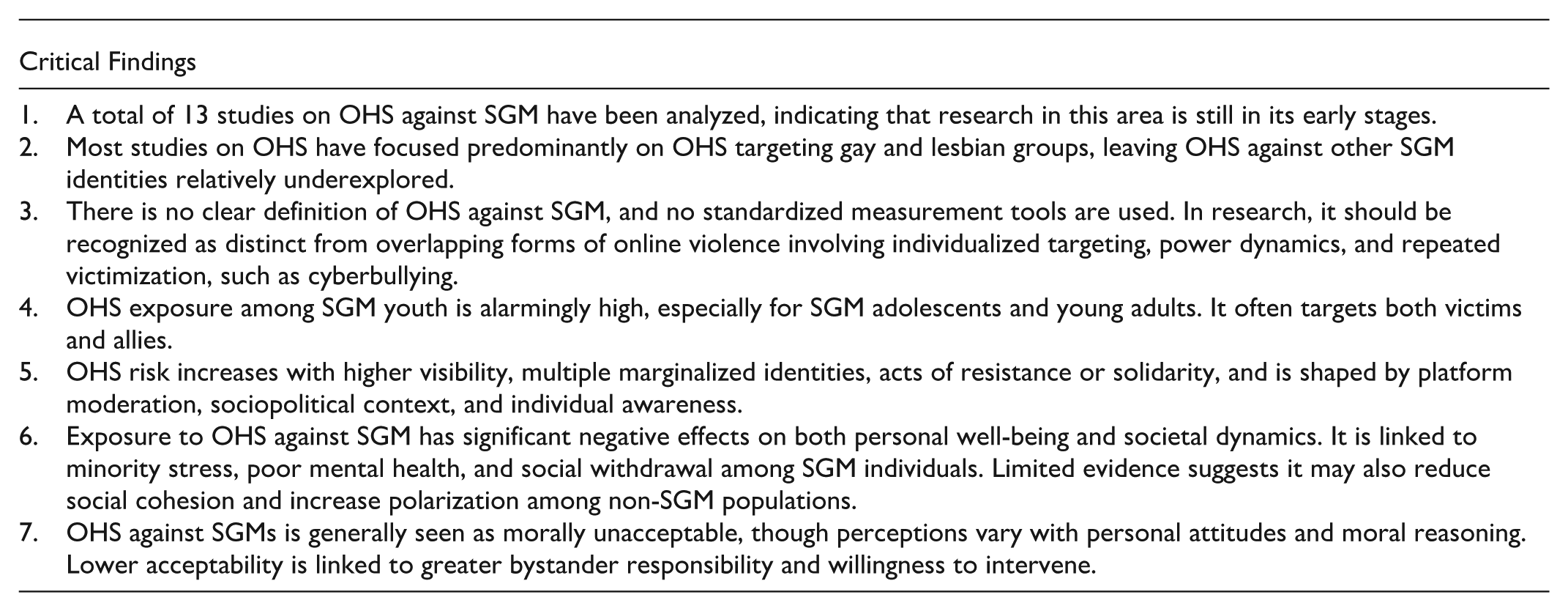
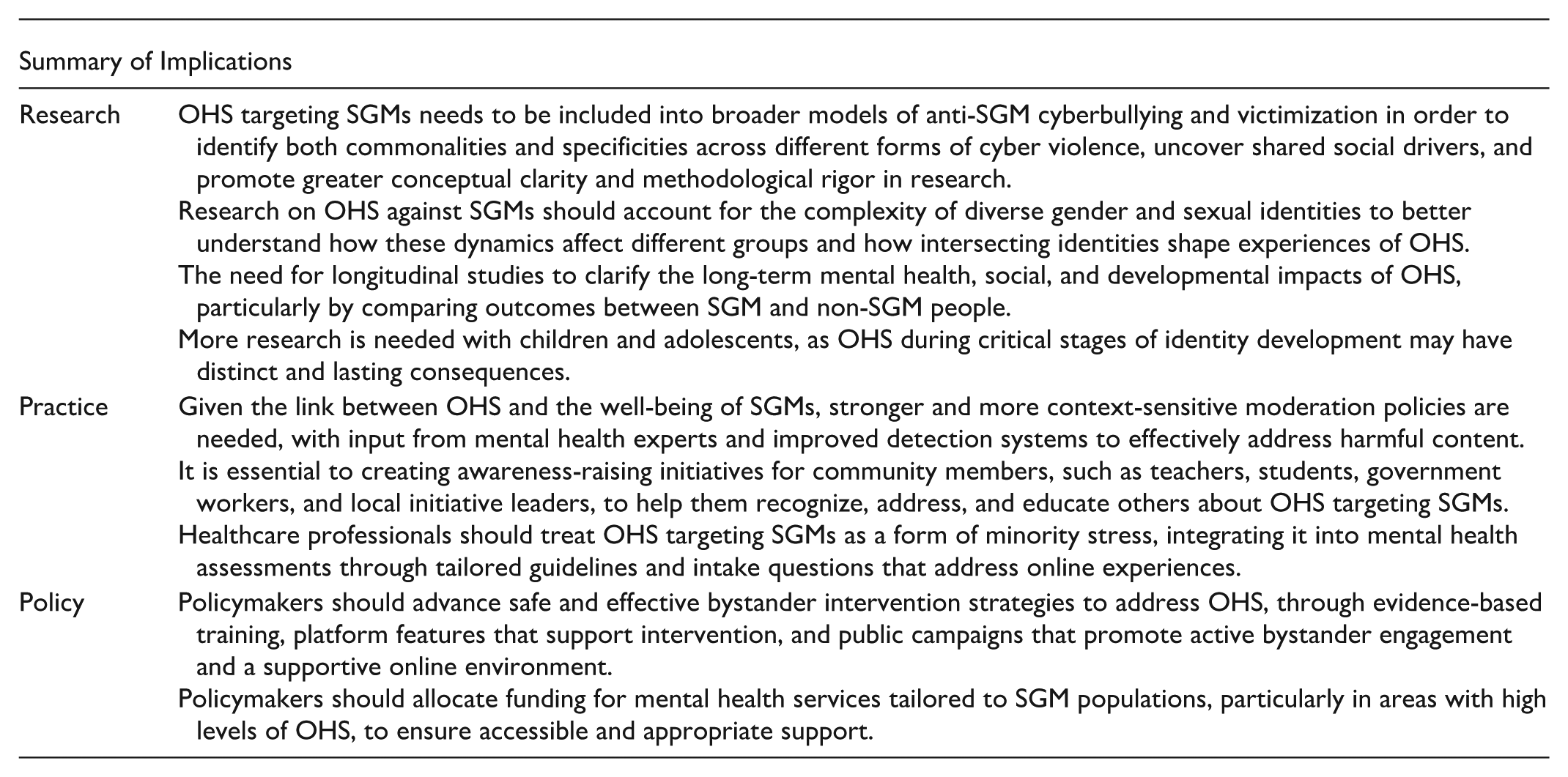
Supplemental Material
sj-docx-1-tva-10.1177_15248380261429520 – Supplemental material for Understanding Online Hate Toward Sexual and Gender Minorities: A Systematic Review
Supplemental material, sj-docx-1-tva-10.1177_15248380261429520 for Understanding Online Hate Toward Sexual and Gender Minorities: A Systematic Review by Michela Mariotto, Sara Costa, Noemi Di Brango, Giuseppe Corbelli, Serena Verbena, Benedetta Emanuela Palladino, Antonio Zuffianò and Salvatore Ioverno in Trauma, Violence, & Abuse
Supplemental Material
sj-docx-2-tva-10.1177_15248380261429520 – Supplemental material for Understanding Online Hate Toward Sexual and Gender Minorities: A Systematic Review
Supplemental material, sj-docx-2-tva-10.1177_15248380261429520 for Understanding Online Hate Toward Sexual and Gender Minorities: A Systematic Review by Michela Mariotto, Sara Costa, Noemi Di Brango, Giuseppe Corbelli, Serena Verbena, Benedetta Emanuela Palladino, Antonio Zuffianò and Salvatore Ioverno in Trauma, Violence, & Abuse
Footnotes
ORCID iDs

Ethical Considerations
This study is a systematic review of previously published literature. No new data were collected from human participants, and no identifiable personal data were used. Therefore, ethics approval was not required.
Consent to participate
Not applicable. No human participants were directly involved in this study.
Funding
The authors disclosed receipt of the following financial support for the research, authorship, and/or publication of this article: This systematic review was funded by PRIN 2022 PNRR P2022BKBCA “Let’s Speak Up! Understanding the Impact of Online-Hate Speech on Adolescents’ daily life (SU! Project)” Funded by European Union—Next Generation EU, Mission 4 Componente 1, CUP: B53D23029810001.
Declaration of Conflicting Interests
The authors declared no potential conflicts of interest with respect to the research, authorship, and/or publication of this article.
Data Availability Statement
This study is a systematic review. All the data were obtained from publicly available literature as cited in the manuscript. No new datasets were created or analyzed.
Supplemental Material
Supplemental material for this article is available online.
Author Biographies
Her current doctoral research explores the concept of meaning in life in adolescents and young adults, aiming to investigate the psychological and social factors contributing to the development of a sense of personal meaning during these key life stages.
References
Supplementary Material
Please find the following supplemental material available below.
For Open Access articles published under a Creative Commons License, all supplemental material carries the same license as the article it is associated with.
For non-Open Access articles published, all supplemental material carries a non-exclusive license, and permission requests for re-use of supplemental material or any part of supplemental material shall be sent directly to the copyright owner as specified in the copyright notice associated with the article.
