






Abstract
Across the Indo-Pacific, men are using violence against women at alarming rates, however current interventions in the region are failing to significantly reduce this violence. This scoping review aimed to identify how male perpetrators of domestic and family violence (DFV) were engaged in approaches to intervene with their use of violence across the Indo-Pacific region. The review also set out to examine the diversity in intervention frameworks to gain an understanding of the varied forms of engagement with men. This review used the Arksey and O’Malley method of scoping to search 9 interdisciplinary databases to reveal 24,632 articles. To be included, studies needed to discuss a DFV intervention that took place in the Indo-Pacific region and be targeted at adult male participants. Fifty studies discussing 42 different interventions were included in the review. Of the 42 interventions, almost half were based in Australia, the majority used methods beyond a standard men’s behavior change program for intervention, almost half used a whole of community response, and very few considered factors like indigeneity, culture, disability, or gender and sexual diversity. These findings point to policy, practice, and research implications such as better support for diverse approaches to interventions, greater consideration of diversity in men engaging in interventions, and further research on applying a whole of community approach in countries like Australia.
Introduction
Gender-Based Violence and Domestic and Family Violence in Indo-Pacific Region
Gender-based violence (GBV) is a global problem, impacting not only individuals, but also communities, cultures, and nations. GBV can be understood as violence that is impacted by or associated with gender either through the victim/survivor who experiences the violence, the perpetrator of the violence, or the context that the violence occurs within (Russo & Pirlott, 2006). This gendered lens highlights that overwhelmingly, men are perpetrators of violence, and this violence occurs mostly within a highly patriarchal context (Flood, 2010; Fulu et al., 2013; Javed & Chattu, 2020; McCarthy et al., 2018; Saunders et al., 2022). While men are generally also victim/survivors of this male violence, violence against women continues to be perpetrated at unacceptable rates, and women are significantly overrepresented as victim/survivors of domestic and family violence 1 (DFV) (Australian Institute of Health and Welfare [AIHW], 2024; Fulu et al., 2013; World Health Organization [WHO], 2025). In light of this, the current review focuses on male-perpetrated violence against women through DFV.
The Indo-Pacific region (including Australia and New Zealand), similarly to the rest of the world, sees high rates of violence against women. In a study conducted by United Nations Population Fund (2024), it was found that within 32 Asian Pacific countries, between 11% and 68% of women have experienced psychological, physical, and/or sexual intimate partner violence within their lifetime. UN agencies surveyed over 10,000 men from six countries within the Indo-Pacific, finding that nearly half had perpetrated physical or sexual violence against a female partner (Fulu et al., 2013). This prevalence of violence against women demonstrates the significance of this problem in the Indo-Pacific region. Despite this, there is a lack of focus, both in research and in policy, on the violence spread across the region.
Literature that discusses violence against women and DFV trends toward a Western perspective, though prevalence of intimate partner violence is consistently higher in the Asia-Pacific than in high-income countries of the Global North, including Europe and North America (Sardinha et al., 2022; WHO, 2025). Responses to violence against women, therefore, often are informed by a similarly Global North perspective, failing to consider the context of a varied and diverse region like the Indo-Pacific (Copus Campbell et al., 2025; Lokot et al., 2024; Satyen et al., 2022). In order to genuinely address and respond to the violence in this region, further research must be done to unpack approaches to engaging male perpetrators of DFV in the Indo-Pacific region in interventions.
Men’s Behavior Change Programs
The occurrence of DFV often persists in a way that is normalized, leaving the experiences of victimization and trauma largely unrecognized, even by victims and perpetrators (AIHW, 2024; Stark & Hester, 2018). This lack of recognition results in unmet safety and well-being needs for many women and children, as justice and service systems often fail to address their concerns adequately (Badenes-Sastre et al., 2025). While there is a general ethical consensus to prioritize women and children impacted by violence, criminal and civil justice responses to perpetrators of violence have been limited (Cordier et al., 2021). In this context, policymakers are left with the dilemma of how best to create both attitudinal and behavioral change among the men who use GBV without adversely impacting the service and safety needs of victim/survivors. All of this points to the need to address the primary causes of GBV through a focus on the primary perpetrators—men.
Over the past five decades, interventions for men who perpetrate violence against their female partners have evolved, commonly known as men’s behavioral change programs (MBCPs). These programs were pioneered by the Duluth Model, which established a psychoeducational framework rooted in feminist and socio-cultural theory (Babcock et al., 2024). While some subsequent iterations of MBCPs shifted toward cognitive-behavioral approaches that treat violence primarily as an anger management issue (often with minimal consideration of gender dynamics; O’Connor et al., 2021), recent years have seen a return to, and advancement of, epistemological orientations influenced by intersectionality and robust accountability frameworks (Palm & LeRoux, 2021). Despite a limited evidence base from rigorous evaluations over the past three decades, the group format of MBCPs remains prevalent in high-income countries, while low- and middle-income countries have far fewer perpetrator programs (Day et al., 2019; Helps et al., 2025).
The limited development in perpetrator interventions is largely due to a lack of options in approaches, with most programs focusing on men who use violence within existing MBCP frameworks (O’Connor et al., 2021). There is a need for context and culturally specific perpetrator programs tailored to low- and middle-income countries. Effective interventions have the potential to enhance safety and well-being for victim/survivors and reduce the economic and social costs associated with violence against women (Sheppard et al., 2024). This is why identification of emerging and diverse practice can help with the development of new intervention options for perpetrators.
Despite its widespread adoption in Australia and abroad, the efficacy of traditional interventions has garnered substantial debate and criticism. Several analyses and meta-analyses spanning the past 20 years have reported small or negligible effects on recidivism in Duluth-informed interventions, particularly when compared to non-treatment control groups in rigorous experimental designs (Arias et al., 2013; Babcock et al., 2024; Eckhardt et al., 2013; Mackay et al., 2015). For instance, Eckhardt et al. (2013) found that traditional intervention programs, regardless of whether they emphasized a feminist or cognitive-behavioral therapy lens, were equally as likely to show no improvement in the reduction of violence as they were to show any improvement, when compared with no-treatment controls (p. 220). In a more recent analysis, Babcock et al. (2024) found the effect sizes for traditional interventions compared to no treatment are smaller than in past studies.
Critics of the Duluth model provide various explanations regarding the limitations of traditional interventions, including a lack of intersectionality and cultural context (Ashbourne & Baobaid, 2019; Mackay et al., 2015), a lack of acknowledgment of men’s trauma (Patmisari & McLaren, 2022), and a reductive feminist framework (Babcock et al., 2024). These ongoing discussions highlight the need for more sophisticated and nuanced approaches to perpetrator interventions that consider the multifaceted nature of DFV, and the diverse needs of individuals involved. Modern approaches are increasingly advocating for interventions that are tailored to perpetrators’ individual needs, including trauma and adverse childhood experiences, substance misuse, mental health, housing, employment, history of incarceration, and cultural context (Babcock et al., 2024; Mackay et al., 2015).
Diversity in Interventions for GBV
Traditional interventions for perpetrators of domestic violence have largely followed standardized models, typically involving court-mandated behavior change programs or psychoeducational group therapy (Helps et al., 2025). While these programs have demonstrated some success, they have also faced criticism for limited flexibility, inadequate cultural responsiveness, and inconsistent long-term outcomes. For example, a review exploring intervention programs in Australian Indigenous communities found that multi-dimensional or holistic approaches had improved effectiveness compared to standard Western interventions (Gallant et al., 2017). There is a critical need for holistic perpetrator intervention models that integrate multi-service support, early education, and community accountability. Furthermore, these approaches must be tailored to diverse regional and cultural contexts to enhance intervention outcomes.
There have been increasing calls for “innovation” within the violence intervention sector, although this term has no consistent definition. Innovation is a term widely used across a number of industries and often refers to a practice, product, or idea that goes beyond what has already been done or is otherwise “new” (Kochetkov, 2023; West & Farr, 1990). For the purposes of this research, innovation must go beyond simply being new or different to progress the processes of DFV interventions. Furthermore, this research does not equate innovation with efficacy in the long-term reduction of violence; however, a diversity in culture, context, and community must be reflected in a diversity of approaches to intervention. There are alternative and diverse models to MBCPs that begin to address gaps in practice; however, many of these frameworks have yet to be formally validated as effective responses to violence.
Integrated service models and coordinated community responses represent a critical shift from standalone perpetrator programs to multi-domain coordination. Central to these models is building processes to manage risk to victim/survivors safety as well as provide a basis for information sharing across key services (Johnson & Stylianou, 2022). These models seek to address the broader constellation of issues often present in perpetrators’ lives, such as mental health challenges, substance use, housing instability, and legal or immigration concerns (AIHW, 2023). Integrated and coordinated approaches emerging in Australia are increasingly embedded in family violence strategies, recognizing that sustainable behavior change often depends on stabilizing the wider environment of the individual (Department of Social Services, 2025). In the Indo-Pacific, while integrated service models are less common, pilot programs—particularly those supported by non-governmental organizations—are beginning to test similar frameworks, especially where there is overlap with public health and development sectors.
Educational models, particularly those focused on early intervention, have gained traction as a means of promoting attitudinal and behavioral change before violence escalates. Unlike prevention models that target general populations, early intervention programs are directed at individuals showing early signs of controlling or aggressive behavior (Villardon-Gallego et al., 2023). These programs may include school-based modules or workplace initiatives, and increasingly, “edutainment” is being used to engage participants through culturally relevant media (Walden & Wall, 2014).
Community-based models emphasize the role of the broader social environment in supporting perpetrator accountability and transformation. Rather than isolating individuals, these approaches seek to engage family members, elders, and peers as part of a relational support network. In Australia, Indigenous-led programs have incorporated cultural healing and kinship systems to foster responsibility within community frameworks (Allice et al., 2022). Similarly, in Pacific Island nations, village leaders and faith-based organizations often play a pivotal role in restorative practices (Jowitt & Newton, 2010). These models aim to reduce stigma and social exclusion, acknowledging that community reintegration is critical for lasting change.
While many existing perpetrator intervention programs can be adapted for culturally and linguistically diverse (CALD) communities, the nature of DFV and GBV is not often fully addressed or understood in these programs. The influence of Western theories on family and women have largely informed and infiltrated existing theories of male-perpetrated violence (Crichton-Hill, 2001). The emerging landscape of perpetrator intervention reflects a broader recognition that one-size-fits-all models are insufficient, particularly in different cultural contexts. The incorporation of integrated services, contextual adaptation, education-based engagement, and community involvement is a promising avenue for exploring interventions for perpetrators of DFV.
Although the topic of MBCPs is widely discussed in the academic literature, there are few reviews of literature (Gallant et al., 2017; Mackay et al., 2015) that explore the landscape of interventions for perpetrators in Australia and the Indo-Pacific, and none examine the diversity in approaches to intervention. Gallant et al.’s (2017) scoping review focused on Aboriginal men’s family violence programs, finding that holistic approaches to Aboriginal men’s use of violence must be better understood and evaluated. Mackay et al.’s (2015) review of the literature examined the different program approaches for both DFV and sexual violence in Australia, however did not identify specific interventions and while did include some discussion on international approaches in the United States and the United Kingdom, did not consider other countries in the Indo-Pacific region. A preliminary search of MEDLINE, the Cochrane Database of Systematic Reviews, Campbell Systematic Reviews, and JBI Evidence Synthesis was conducted and no current or underway systematic reviews or scoping reviews on the topic were identified. In light of the current conversations around perpetrator responses and efficacy of interventions in reducing violence, we determined that a scoping review would be critical in addressing the gap in knowledge and lay a foundation for innovative practice to be further understood and resourced. The objective of this scoping review, therefore, is to provide an all-encompassing view on innovative interventions for male DFV perpetrators in Australia and the Indo-Pacific.
Methods
A scoping review was deemed to be most appropriate, over a systematic review, due to the exploratory nature of the research, and the dearth of knowledge on interventions in the Indo-Pacific (Munn et al., 2018). The scoping review was conducted under the approach of Arksey and O’Malley’s (2005) five-stage framework. This approach was chosen because of the rigor and validity of the method and because it allows for reflexivity when conducting the searches for the review. The five stages of the Arksey and O’Malley approach are as follows: (a) identifying the research question, (b) identifying relevant studies, (c) selecting the relevant studies, (d) charting the data, and (e) collating, summarizing, and reporting the results.
Developing the Research Questions
This scoping review aimed to explore the intervention programs for male perpetrators of violence against women in the Indo-Pacific, with a particular objective to identify the prevalence and characteristics of diverse practice.
The following research questions were established:
What intervention programs have been developed for male perpetrators of DFV in the Indo-Pacific?
How do interventions for men who perpetrate DFV vary across the Indo-Pacific?
What are the features of non-MBCP practice in interventions for men who perpetrate DFV?
Establishing Eligibility Criteria for Article Inclusion
In undertaking the scoping review, a criteria of eligibility (see Table 1) was created to ensure relevant studies were identified consistently between each database and were appropriately addressing the research question. The criteria followed a modified Population, Intervention, Comparison, Outcome (PICO) framework where population, intervention, and outcomes were defined, but the comparison criterion was excluded as it was irrelevant to the aims of this scoping review. To capture the relevant literature, included articles needed to discuss interventions that targeted perpetrators of DFV who identified as male, adult, and were in a country within the Indo-Pacific region. 2 The intervention needed to include male participants who were receiving some form of intervention for DFV; however, programs that also included female participants, male bystanders, and/or also targeted other behaviors (such as alcohol and other drugs treatment or mental illness) were included, as long as male participants were a focus of the intervention. Due to the narrow scope of the research question, there were no publication age limitations imposed on the literature search in order to capture as many interventions as possible. The inclusion of conceptual literature meant that eligible studies were not required to evaluate or deploy an intervention, allowing for a broad range of outcomes. Additionally, any research design was allowed under the inclusion criteria. Sources were included regardless of language (provided a reputable translation was available) and age.
PICO Criteria of Eligibility.
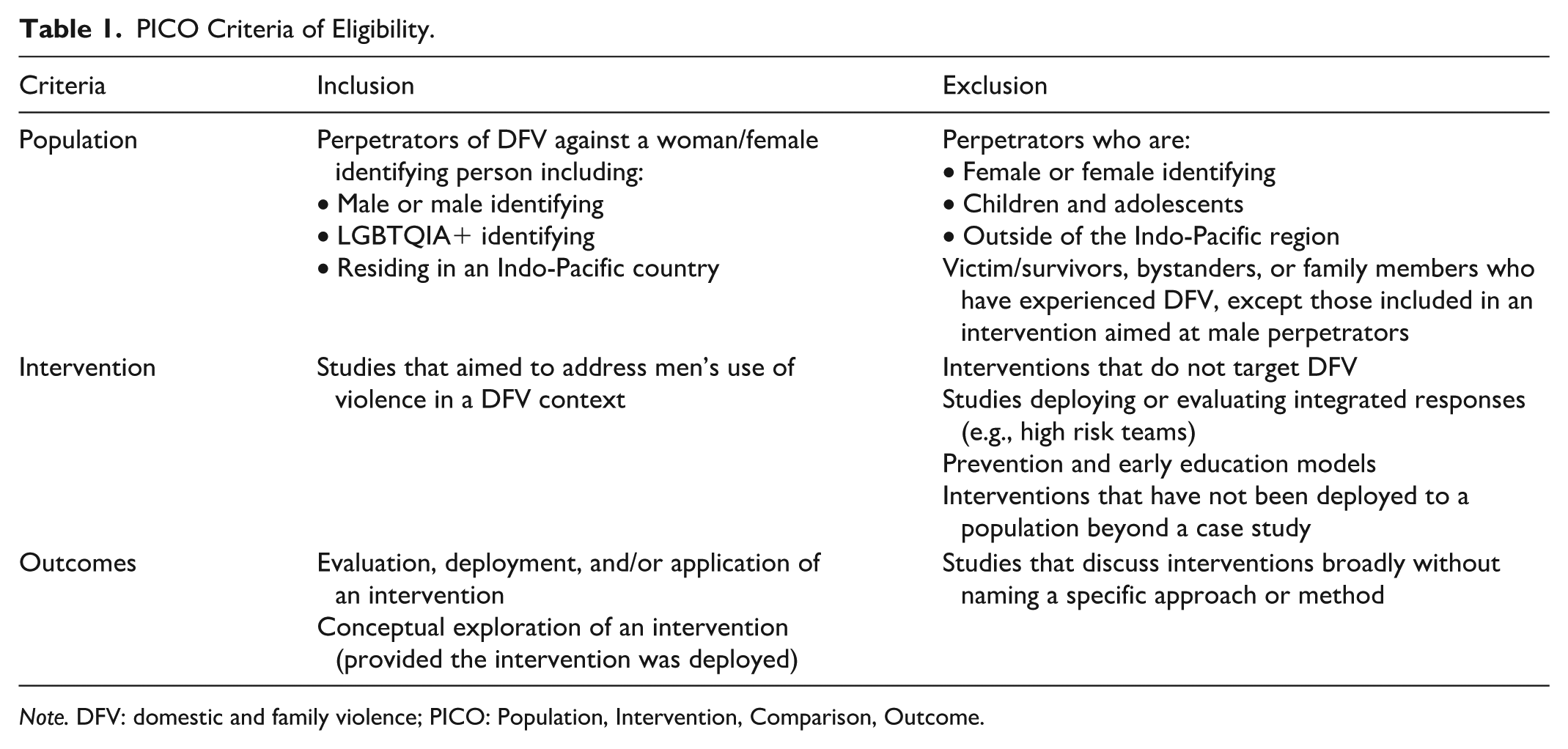
Note. DFV: domestic and family violence; PICO: Population, Intervention, Comparison, Outcome.
Search Strategy
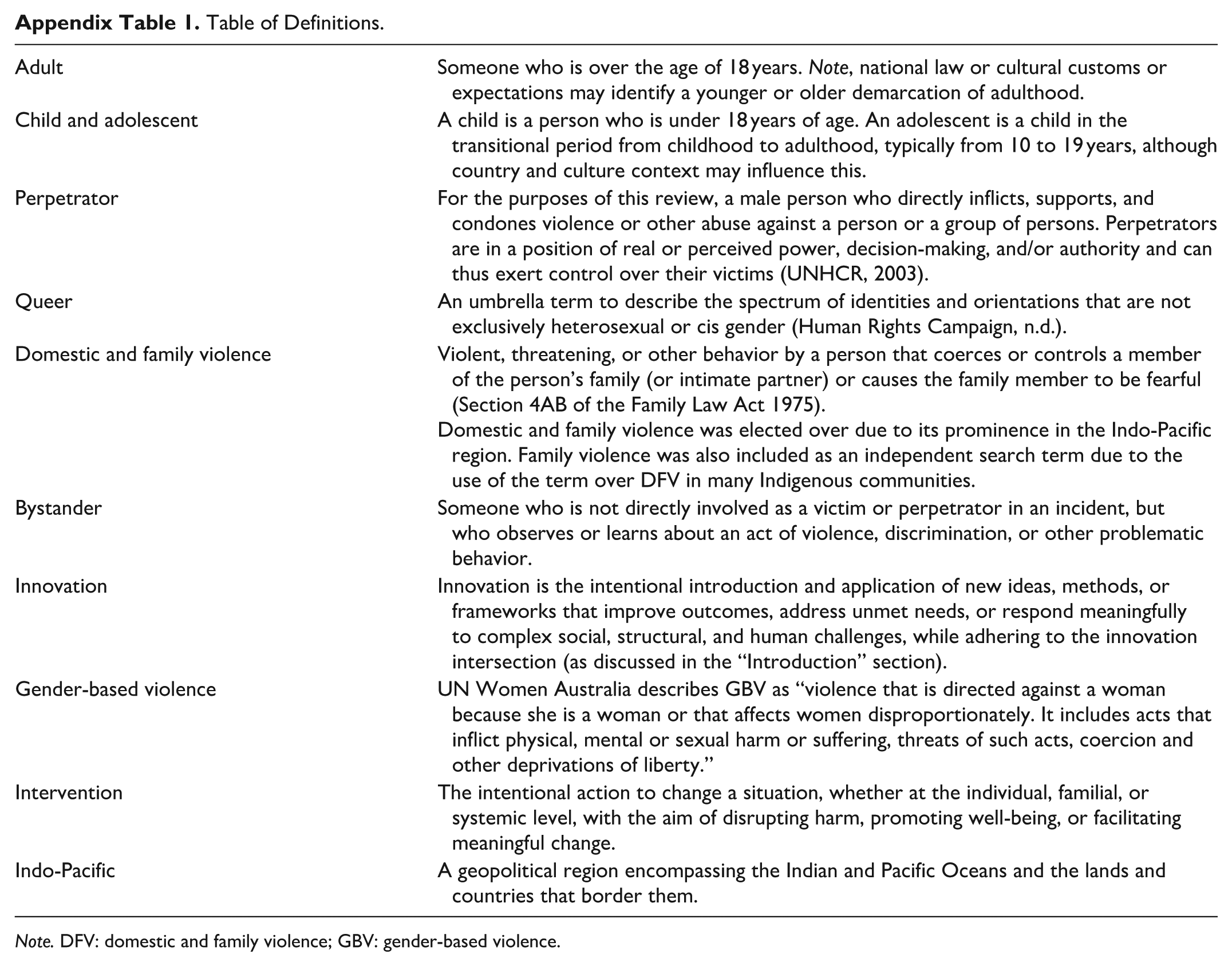
The search strategy used in this scoping review sought to identify literature from a wide range of interdisciplinary sources in recognition of the multifaceted context of perpetrator interventions. As the focus was on interventions, it was determined that using “intervention,” along with similar words like “program” and “approach” would be appropriate in identifying the broad range of interventions. The term “domestic and family violence” was chosen over “intimate partner violence,” as the focus of this review was more broadly interested in violence against women within the DFV context (see Appendix 1 for additional detail on definitions). This logic was also used when choosing the search terms “offender” and “perpetrator,” as these are the most commonly used terms in the Indo-pacific and Global South regions, over terms such as batterer or aggressor, which are more common in a United States context. The established search string (presented in Table 2) was entered into a total of nine databases, with the search string slightly altered where needed to optimize the search based on the specific database requirements. The databases included CINAHL Complete (EBSCO); Criminal Justice Database (ProQuest); Embase (Elsevier); ERIC (ProQuest); PubMed; PsycINFO (Ovid); Social Services Abstracts (ProQuest); Taylor and Francis; and Web of Science. The search was always targeted at the title, keyword, and abstract when possible, to ensure consistency. The databases selected are also presented in Table 2.
Search Terms and Databases.
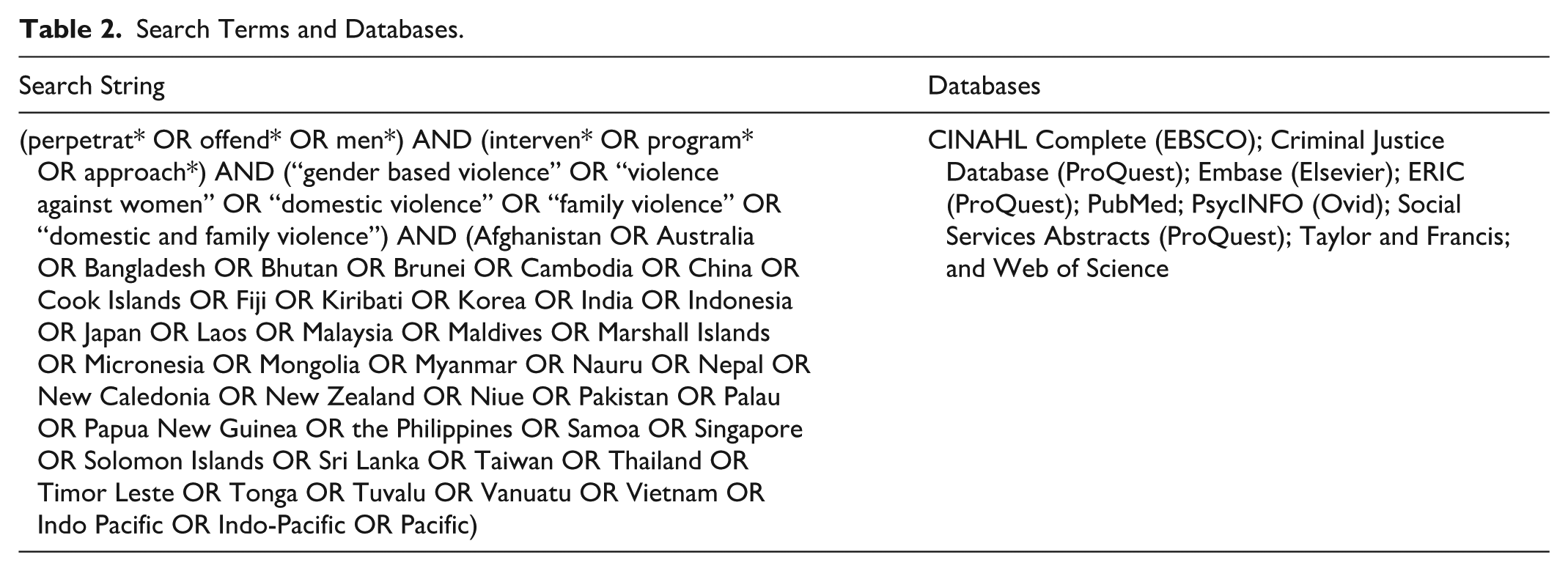
Study Selection
Using the search strategy detailed above, a total of 24,632 articles were identified and imported into Endnote Version 21 (Clarivate Analytics, Philadelphia, PA, United States) for record keeping and collation. These sources were then exported into Covidence for screening. Using automatic detection software, Covidence removed 4,523 duplicates on initial importation, with an additional 8 duplicates identified and removed manually during the title and abstract screening phase. This resulted in 20,101 articles screened at the title and abstract level by the research team, of which 19,597 studies were found to be irrelevant. All members of the research team received standardized training and criteria to follow. At the full-text screening phase, 504 articles were screened for eligibility. Of these, 454 studies did not meet the inclusion criteria, most commonly due to the absence of a clearly described intervention, followed by the intervention not taking place in an Indo-Pacific country. There was an initial disagreement rate of 15%; however, discrepancies in the exclusion decisions were discussed within the research team until a consensus was reached. This left 50 remaining studies that were found to be within the scope of the review. A review workshop was conducted, where each included article was reviewed by at least two members of the research team. Any disagreements were discussed with all members of the team until a consensus was reached. The PRISMA flowchart showing the study selection process is presented in Figure 1.
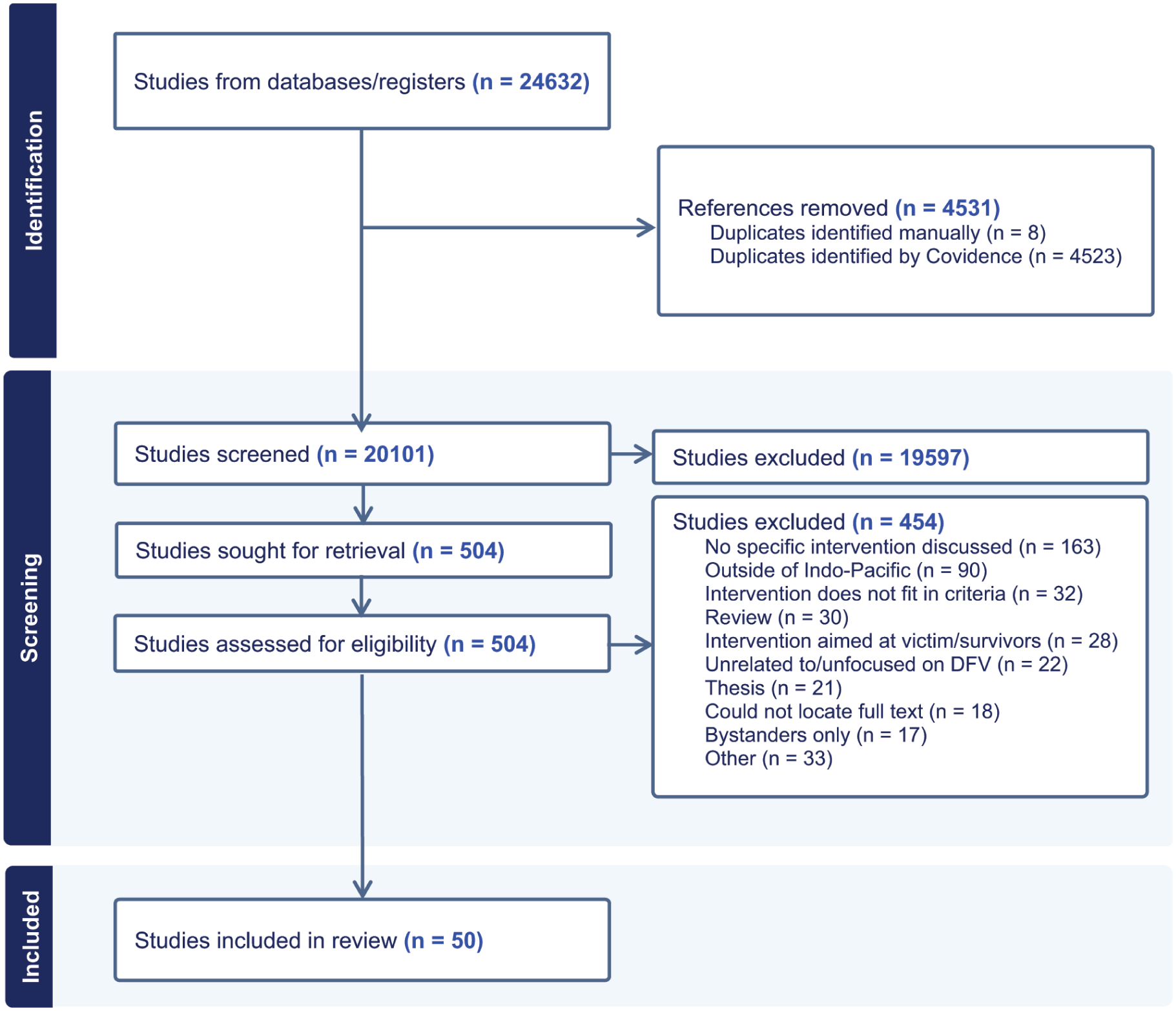
PRISMA flow diagram.
Data Extraction
A data extraction tool was developed by the lead author using the Covidence Extraction Template. The following data points were extracted from each article; lead author name, year of publication; title of publication; country of study; aim of study; name of intervention; elements of intervention; population description; and if bystanders were included as part of the population. The data extracted from the articles was agreed upon by the research team and then exported into an Excel spreadsheet.
Results
Characteristics of Included Studies
Of the 50 included studies, 42 unique interventions were discussed (Table 3). Among these interventions, 6 were mentioned in several studies. Change Starts at Home, an intervention based in Nepal, and Taking Responsibility, an Australian MBCP, were both the subject of four articles each. Furthermore, the Domestic Abuse Program, GlobalConsent, HERrespect, and MenCare+ were the subject of two articles each. Some articles discussed multiple interventions and how they worked together. Facing Up, Stopping the Violence, and Taking Responsibility were discussed in one study as a suite of interventions that complemented each other, avoiding the siloed structure of other approaches. There were seven interventions that were not named by the articles they were featured in. For these interventions, we have provided names based on a key feature of the intervention, for example “Community Gender Equality Intervention.” Table 4 provides the 42 included interventions, the key features of those interventions, and the citation to the article/s that discussed each intervention.
Table of Critical Findings.
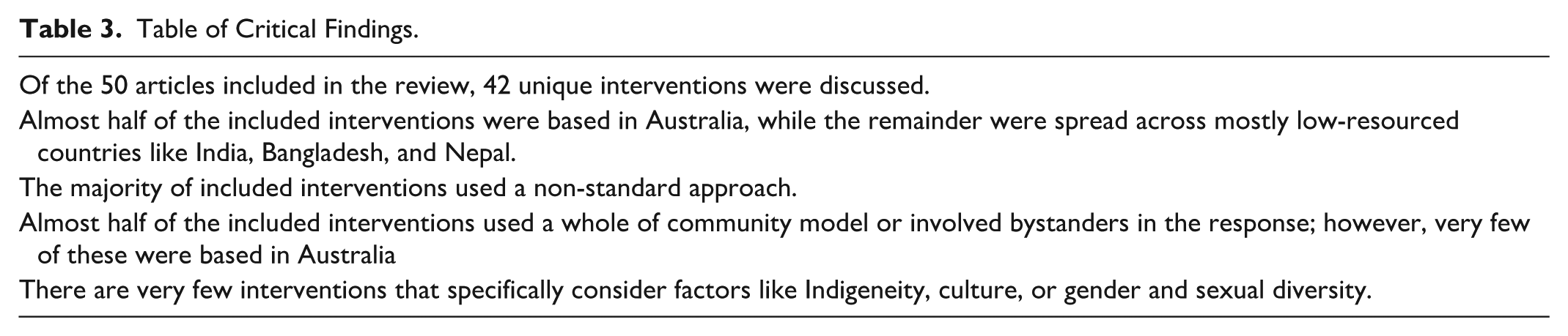
Table of Included Interventions.
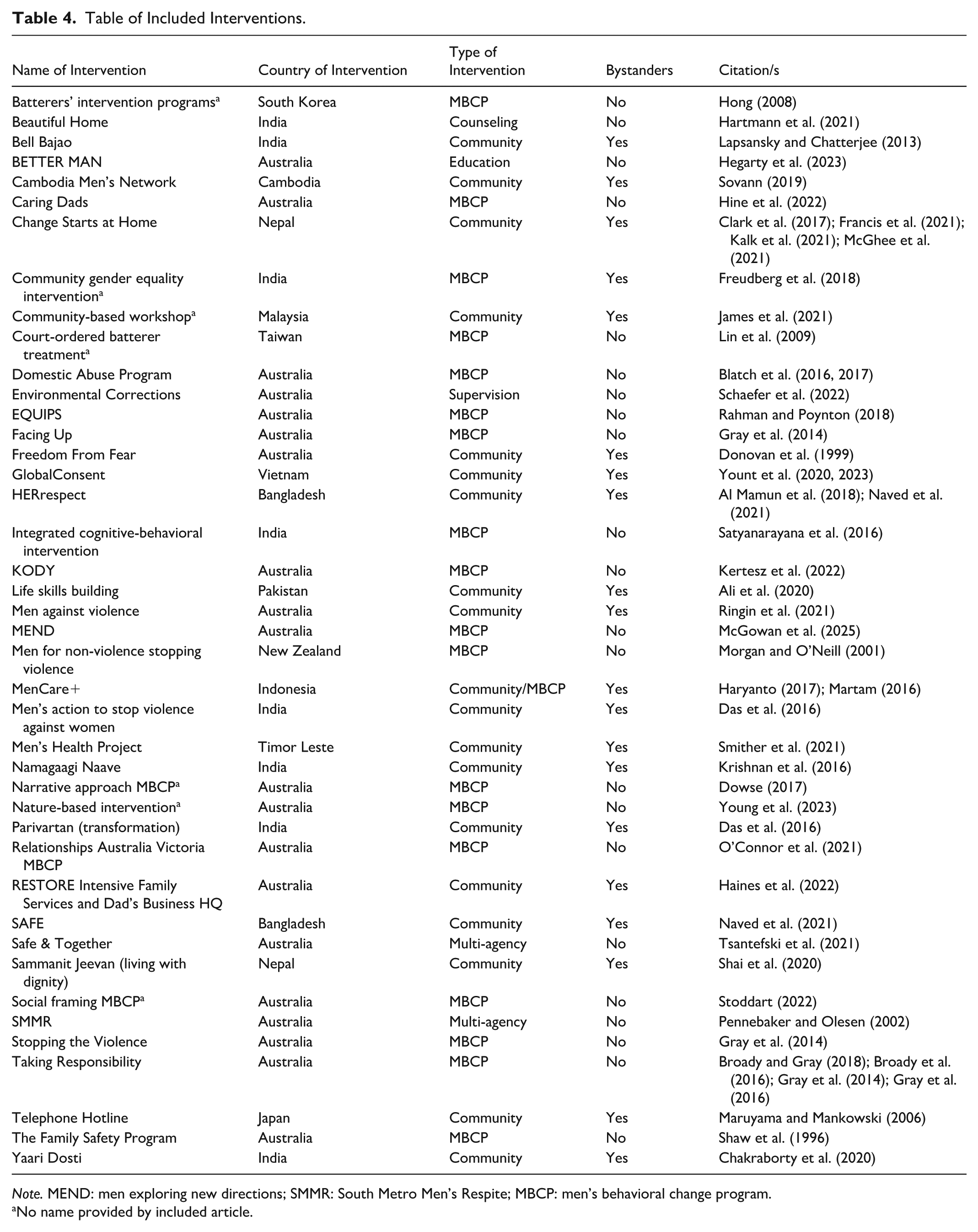
Note. MEND: men exploring new directions; SMMR: South Metro Men’s Respite; MBCP: men’s behavioral change program.
No name provided by included article.
Of the 42 countries included in the scoping search, 14 were represented by articles that met the criteria. Almost half (48%) of the interventions discussed in the included studies were deployed in Australia. India accounted for the next highest number of interventions with eight included interventions, followed by Bangladesh and Nepal (two interventions each), while the remaining countries (Cambodia, Indonesia, Japan, Korea, Malaysia, New Zealand, Pakistan, Taiwan, Timor Leste, and Vietnam) had one each.
Intervention Types
Most interventions had multiple components to their approach; however, interventions were generally based in either a whole of community approach (43%) or an MBCP (43%).
Whole of Community
All 18 of the community-based interventions involved engaging bystanders in the intervention, often through education that was tailored for perpetrators but benefited those who did not use violence as well. Over a third of these interventions (39%) utilized an “edutainment” or educational entertainment model that worked to engage community members in the intervention, through produced visual and audio media, games and quizzes, roleplays, and skits and street performances. Others used advertising and social media campaigns to target those using or at risk of using violence while raising awareness with their broader community.
One such intervention in Australia, “Men Against Violence,” engaged men in sporting environments, recognizing the potential harmful masculinities normalized in sporting culture (Ringin et al., 2021). The intervention provided bystander training to Australian Rules Football League teams, engaged male attendees of a basketball game through speeches that encouraged community-based male-led interventions, and provided education and awareness raising with an Aboriginal football academy at a local high school. Another intervention that focused on sporting communities is Parivartan (the English translation meaning transformation), which targeted young male cricket athletes, and their male coaches and mentors in India (Das et al., 2016). A 3-day workshop was held to train the cricket coaches and mentors, who then led the intervention with the younger cricket players. Through the training of these coaches to be empowered to educate and respond to violence, the intervention responded to violence used by both the coaches and the athletes.
Another whole of community intervention is the Cambodian Men’s Network (Sovann, 2019) which works as an intervention to reduce violence against women through engaging men in advocacy and awareness raising in their community. The intervention brought men together to be involved in advocacy work and produced a bulletin that discussed solutions to patriarchal systemic violence. The intervention also encouraged informal dialog sessions between men and provided development of knowledge around harmful masculinities and gender stereotypes.
Men’s Behavior Change Programs
Another 18 interventions were identified as MBCPs. These programs were identified through analysis of key components of the intervention and how they aligned with the features of a traditional MBCP (as defined in the literature review). Some of these interventions were standard MBCPs, such as EQUIPS, an Australian intervention. Ten had an additional component to the approach, such as tailored responses to AOD use, consideration of mental health, or adaptations for rural locations. Others considered particular contexts like fathering and family dynamics, or incorporated activities like gardening or advocacy to supplement the program.
One MBCP deployed in India, an Integrated Cognitive-Behavioral Intervention, focuses on alcohol dependence and its link to perpetration of intimate partner violence (Satyanarayana et al., 2016). While the components of the program are not dissimilar to that of a MBCP, the focus on substance use and the tailored approach results in a novel approach to intervention. The Australian MBCP, Men Exploring New Directions, adapted a traditional MBCP to tailor the response and method for men who were living rurally and could not access in person services (McGowan et al., 2025). The intervention ran as a typical, voluntary 20-week program however had a differential approach to capturing men virtually that otherwise may have not been able to engage in an intervention.
Another included MBCP, Narrative Approach MBCP, ran as a standard behavior change program, however used an Aboriginal-led feminist lens to discuss the impact of shame on men’s use of violence (Dowse, 2017). The article is written from a practitioner’s perspective of running this program with men, drawing on examples from men who engaged with the service. Importantly, this intervention is singular in its identification of Aboriginal ways of responding and understanding violence. The author and leader of the intervention highlights the Aboriginal practice of deep listening to provide greater insight into men’s use of violence and their experiences of shame. The cultural awareness and knowledge embedded into the practice are novel when compared to MBCPs using standard practice.
Multi-Agency and Other Forms of Interventions
One intervention, MenCare+, sat across both the whole of community and MBCP types of interventions (Haryanto, 2017; Martam, 2016). This intervention, delivered in Indonesia, uses a multi-prong approach to provide counseling and behavior change through men’s groups, community education and awareness raising, as well as provide training to healthcare services to improve responses to domestic violence.
Of the remaining interventions, two, both delivered in Australia, were identified as being “multi-agency” type interventions that address not only the needs of the person using violence but also those of the victim/survivor and affected children. These interventions further respond to contributing factors of violence through the engagement of multiple services. One intervention used a couples counseling model to respond to men using violence and one used a supervision model for parolees who had perpetrated domestic violence to provide cognitive skills training and risk avoidance.
BETTER MAN, an Australian intervention, provides an online self-directed educational program for men using violence (Hegarty et al., 2023). The website, exclusively for men using violence, leads men through self-paced modules that strengthen their capabilities to recognize and address their use of violence. Uncommon to this review, this intervention is highlighted for being inclusive of men who have used violence against a male, female, or non-binary partner. Only one other intervention included in the review, GlobalConsent, explicitly noted suitability for queer men.
Diverse Methods
The majority of interventions included in the review were considered diverse (74%), meaning they went beyond a standard MBCP in their approach, method, or scope. This is not to suggest that some MBCPs do not utilize novel approaches (as discussed in earlier sections) but often maintain a core adherence to MBCP methods. This provides a baseline of what can be considered a mainstream intervention method. Diversity is discussed in this section to unpack and explore how interventions included in this review engaged men outside of a standard Duluth Model, both in MBCPs and beyond. Of the 11 that did not go beyond a mainstream western approach, over half were based in Australia, with the remaining five based in New Zealand, India, South Korea, Pakistan, and Taiwan.
Diversity in interventions presented in a number of ways, including through targeted programs, use of technology, use of social media, use of entertainment, or through engaging bystanders in whole of community intervention. Some of these interventions utilized technology (26%); however, very few highlighted this use of technology as an innovative or differential approach. Community approaches were rarely discussed as novel, often due to the context of the culture or country that the intervention was deployed in; however, when compared to a standard MBCP, these interventions were considered as moving beyond a traditional approach to men using violence.
An example of a diverse method of intervention are workplace-based interventions including HERrespect and Namagaagi Naave. HERrespect, based in Bangladesh, considers the workplace setting, particularly garment factories in the intervention design (Al Mamun et al., 2018; Naved et al., 2021). The intervention provided education to factory workers of all genders and developed awareness campaigns for the factories to intervene with intimate partner violence and more general GBV occurring in and out of the workplace. While the most recent study included that discusses HERrespect notes the challenges of implementing the intervention (Naved et al., 2021), it is still of value to examine the differential approach. In India, Namagaagi Naave similarly focused on factory workers to improve attitudes toward women and intervene with intimate partner violence (Krishnan et al., 2016). The intervention deployed awareness campaigns in the workplace, held educational plays, and provided one-to-one support to intervene with poor attitudes and use of violence toward women.
Bystander and Community Engagement
Bystanders were included in 20 of the included 42 interventions (48%). Six of these interventions took place in India, three took place in Australia, two took place in Bangladesh, and two took place in Nepal. The remainder were spread individually across Cambodia, Indonesia, Japan, Malaysia, Pakistan, Timor Leste, and Vietnam. Australian-based interventions accounted for the majority of interventions without bystanders, with 17 of the 22 being Australian.
An example of bystander engagement in an intervention can be seen in GlobalConsent (Yount et al., 2020, 2023). This Vietnamese-based intervention, adapted from the U.S. bystander program RealConsent, focuses on sexual violence and targeted university aged men in Vietnam to improve their awareness of consent, intervening with violence, and their attitudes toward women. The program uses a serial drama that demonstrates positive and harmful masculinities and violence in dating relationships, as well as a number of educational modules that discuss bystander intervention, myths around sexual violence, and harmful gender stereotypes. While this intervention had a focus on bystanders, the approach was also designed to intervene with those men who were actively using violence as well.
Discussion
This review is the first to develop a thorough examination of the different ways male perpetrators of DFV are intervened with throughout the Indo-Pacific. Exploring literature from 42 countries in the Indo-Pacific, the current article has identified 42 unique interventions for men who use violence in a DFV context and examined the diversity of approaches across the region. Of these 42 countries, only 14 were represented in the review and almost half of the interventions included were deployed in an Australian context. This points to a clear deficit in research on interventions outside of a high-resourced, Western approach. Other key findings center on the impact of culture on interventions, the efficacy of diverse approaches, and the lack of intersectionality in interventions across the Indo-Pacific.
Cultural Impacts of Diverse Approaches
Methods of intervention differed greatly based on the cultural context of the country the intervention was based. Australia and New Zealand are identified as having a greater western, global north influence when compared to the rest of the Indo-Pacific region included in the current review. Among the interventions reviewed in Australia and New Zealand, 70% had non-standard elements in Australia, whereas the sole included intervention in New Zealand was a standard MBCP. In the remaining 12 countries that were within the included articles, 77% of interventions were based in diverse methods. The Indo-Pacific region outside of Australia did not only have higher levels of differential approaches, but it also held interventions that drew almost always on a community response, including through or with bystanders. Australian interventions that were not standard MBCPs mostly relied on the tailoring of interventions for certain groups of men, with very few including bystanders or larger community responses. These forms of intervention appear to be directly linked to the cultural context of the country where the intervention was deployed. Many Asian and Pacific cultures are described as “collectivist” in nature, with community being a key part of how individuals will respond to violence, shocks, and other situations that threaten the safety of their fellow community members (Hechanova & Waelde, 2017; Hofstede, 2001). This is in contrast with the non-Indigenous Australian cultural structure that does not function through community in the same way as other countries in the Indo-Pacific (Mazerolle et al., 2009). This is reflective of the review of literature conducted by Mackay et al. (2015), who noted that Australia lacks approaches that consider the diversity of men who are being engaged in interventions.
Development and Implementation of Non-Standard Interventions
The earliest included article was published in 1996 (Shaw et al., 1996), almost 30 years prior to the authorship of the current review. This is significant, as although many experts in the sector have called for new and innovative approaches to address DFV, this has already been occurring to a certain degree for several decades across the region, without a sustained or substantial reduction in GBV. It should be noted that this review captured a third of the 42 countries included in the Indo-Pacific region, meaning that many countries, including some of those with the highest rates of DFV (see WHO, 2025), were not represented in the included articles. There is a lack of peer-reviewed literature that discusses interventions in these countries, as much of the existing knowledge is published through policy documents and other gray literature. When considering this gap in the literature, the cultural context should also be considered, as the concept of academic publishing in peer-reviewed journals is part of a highly colonial, westernized system (Noda, 2020).
We suggest two possible explanations for the stagnated reduction of GBV in the countries that are represented in the review, either interventions that do not follow the MBCP approach have not been adequately funded or extensively run to fully realize any long-term impacts, or alternative forms of intervention to date have not been suitable for improving outcomes of interventions for men using violence.
Many of the interventions included in the scoping review that had highly innovative elements were no longer being adequately funded or even run at the time of authorship of this current review. Several programs were presented in included articles as “pilot programs” or “trials,” resourced with short-term funding. Consequently, the interventions and any alternative approaches involved are unable to integrate into standard practice. This highlights the challenge of developing sustainable evidence-based programs in response to calls for innovation. When funding is limited to short-term pilots that show potential but not conclusive evidence of effectiveness, this often results in innovation and non-standard practice occurring at the margins rather than developing fundamentally different interventions.
Diversity in intervention approach was present in almost a third of included interventions but presented on a spectrum. Some diversity was fairly simple, for example adding an additional component to an otherwise traditional MBCP, while other alternate approaches resulted in interventions that spanned across multiple levels of response and involved a whole of community approach. The range of diversity in the included interventions does not necessarily correlate to the efficacy of the programs but instead provides a picture of the different forms of intervention that are occurring across the region.
Lack of Inclusion of Culturally and Socially Marginalized Populations
The studies identified in this review demonstrated a lack of attention to the needs and experiences of culturally and socially marginalized groups, such as people from CALD backgrounds, Indigenous people, people with disabilities, or those identifying as LGBTQIA+. Only two studies (Dowse, 2017; James et al., 2021) directly addressed responding to diverse backgrounds. Dowse (2017) used an Aboriginal feminist lens to discuss narrative group work with men using violence in Australia and included an Aboriginal methodology of deep listening in her work. James et al. (2021) addressed the specific needs of displaced populations in responding to GBV by evaluating a community-based intervention undertaken with Syrian and Rohingya refugees in Lebanon and Malaysia, respectively. This aligns closely with Gallant et al. (2017) review of the literature that highlighted that holistic programs centered in community warrant further discussion in the Australian context, and that there is a dearth of research that evaluates programs for Aboriginal men.
Gender and sexual diversity were referenced peripherally in two studies from Australia and Vietnam (Hegarty et al., 2023; Yount et al., 2023) in their participant sample inclusion criteria; however, they did not shape the core design, delivery, or evaluation of the interventions. Meanwhile, no study discussed the explicit inclusion of people with disabilities. These results mirror the findings from other researchers noting the lack of data on GBV perpetrator interventions among diverse groups (AIHW, 2024; Ashbourne & Baobaid, 2019; Patmisari & McLaren, 2022).
The lack of engagement with marginalized groups in the research raises important questions about the accessibility and appropriateness of existing interventions for meeting diverse and specific needs. Research across different groups has shown that marginalized groups often experience structural barriers, such as discrimination, lack of cultural safety, or inaccessible service delivery models that hinder their ability to seek or benefit from support services (Calton et al., 2016; Langton et al., 2020; Wohler & Dantas, 2017). In the Australian context, which accounts for almost 50% of the articles in this review, research has repeatedly identified critical gaps in availability and evaluations of programs aimed specifically toward First Nations men and from migrant backgrounds (Mackay et al., 2015; Patmisari & McLaren, 2022; Flood & Pease, 2005). In the context of perpetrator interventions, this may lead to both under-engagement and higher attrition among those who do attempt to access support. For LGBTQIA+ individuals, for example, heteronormative program assumptions may fail to address the dynamics of abuse in queer relationships. For Indigenous or CALD populations, a lack of cultural grounding can render interventions irrelevant or even retraumatizing (Allice et al., 2022).
Applying a colonial lens to many of the interventions included in this review, theoretical frameworks, intervention strategies, and evaluation metrics were largely imported from Western contexts, with little adaptation to local epistemologies or community-driven approaches. Evidence indicates that “one-size-fits-all” models may be less effective, or actively exclusionary, when applied to individuals from minority backgrounds (Ashbourne & Baobaid, 2019; Satyen et al., 2022). Therefore, we suggest a need for interventions to take a more intersectional perspective in addressing GBV in the Indo-Pacific, including not only more inclusive research, but also the design of interventions that are grounded in cultural safety, accessibility, and locally relevant forms of accountability (Flood & Pease, 2005).
Implications
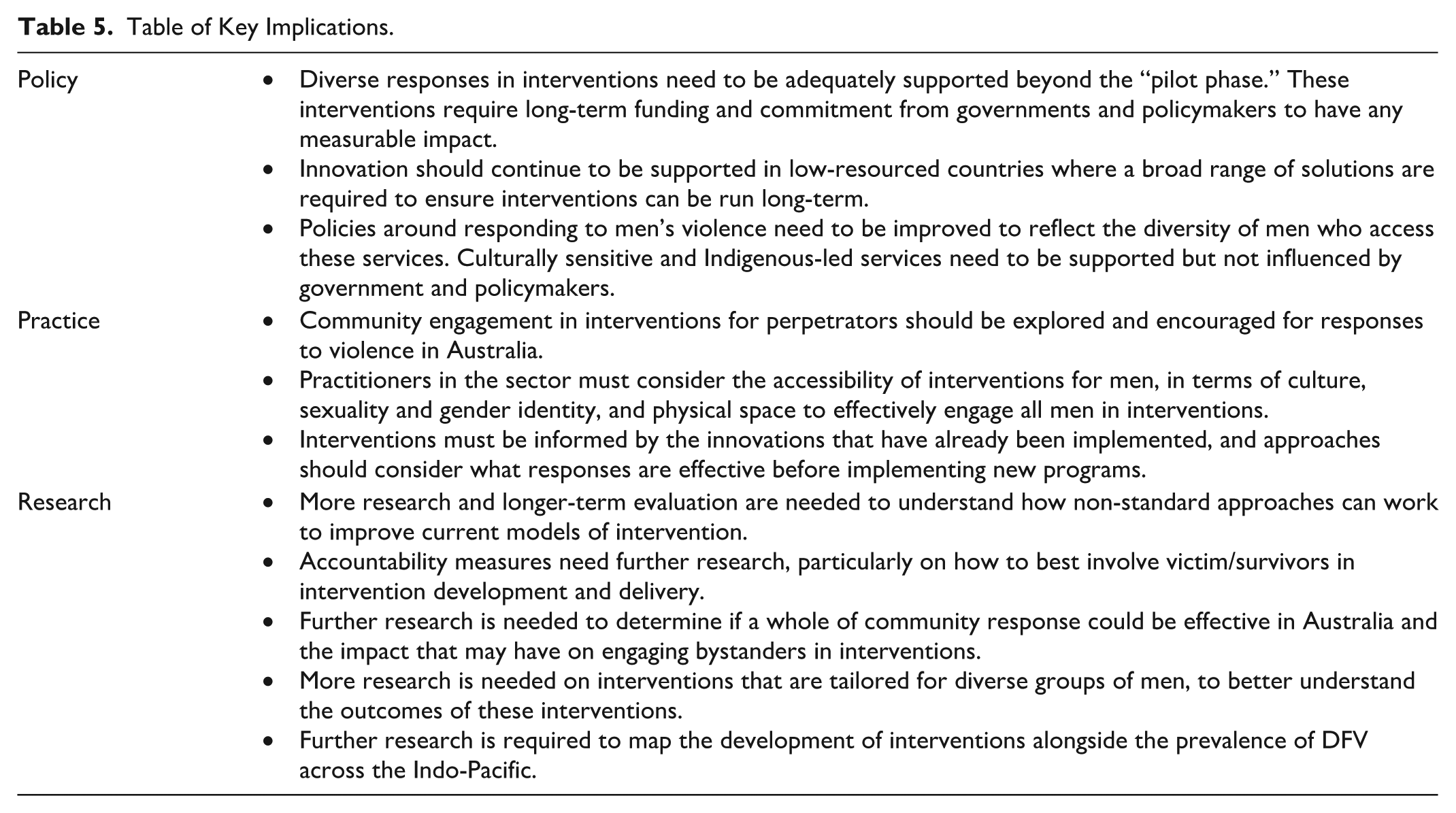
The findings of this scoping review point to important implications for policy, practice, and research. Diverse practices exist across the region but are underutilized in policy and research and are therefore unable to be evaluated as being more or less effective than the standard approach. This highlights that more work is needed in legislative, research, evaluation, and policy development to enable diverse practice to be part of mainstream responses to violence to increase the understanding and validation of responses beyond MBCPs. Implications are listed in Table 5.
Table of Key Implications.
Limitations
This scoping review was not without limitations. First, the scope for eligibility was limited to peer-reviewed literature, which is likely to have missed interventions not represented in formal academic publications. Additionally, the search parameters may have limited inclusion of emerging interventions, particularly those arising from rural or underserved contexts where comprehensive evaluation and dissemination are less supported. While the inclusion of conceptual literature and studies not requiring deployment of the intervention broadens the findings to both theoretical and practical insights, there may be a bias toward frameworks rather than demonstrated outcomes. Although non-English studies with reputable translations were eligible, interventions without adequate translations or those published in non-standard formats may have been inadvertently excluded, particularly those from linguistically diverse Indo-Pacific regions. Finally, this review focused on DFV interventions only, meaning interventions addressing broader violence against women was excluded. Future research may benefit from exploring programs that respond to GBV outside of a family relationship, as well as systemic and structural violence. Addressing these limitations in future studies will advance the understanding of the diversity of intervention programs across the Indo-Pacific regions.
Conclusion
GBV and DFV remain stubborn yet preventable problems. Unsurprisingly there have been consistent calls for innovation, especially in DFV; however, there is a distinct knowledge gap in both identifying and understanding the diversity in perpetrator interventions globally and regionally. This research has identified 50 studies that discuss 42 unique interventions that aim to respond to men’s use of DFV. Results show promising efforts in the Indo-Pacific to develop a variety of initiatives in perpetration intervention, albeit often contained to isolated pilots or as an add on to existing praxis. While this review does not provide discussion on the efficacy of these programs, the findings highlight a gap in long-term investment or sustained resourcing that would allow for evaluation or validation. This study is the first of its type, focusing on the Indo-Pacific and synthesizes knowledge across the region to add to our understanding of forms of intervention.
Community-based responses offer the most diverse responses to DFV perpetration. These initiatives engage with specific and general community groups often with the explicit aim to engage men and boys to change their own attitudes and behaviors but also to be bystanders and advocates for gender equity and non-violence themselves. This type of intervention is most evident in low- and middle-resourced countries. Often these programs occur in the context of non-government and civil society organizations with time-limited resources that lack state mandates or scale.
Programs in highly resourced locations such as Australia tended to add new elements to dominant orthodoxies such as MBCPs perhaps indicating that it was more challenging to start new programs that sit outside of established paradigms. Aversion to risk might also be a moderating aspect of the level of diversity pursued. This creates complexities and questions not only relating to resourcing but also how to break safely from established praxis of accountability.
Differing approaches to intervention can bring about hope when facing an entrenched and complex problem. GBV and DFV are intersectional and require multiple strategies and points of intervention and prevention. Clearly a one-size-fits-all approach is unlikely to be effective across a whole community or region. At present, reduction in prevalence rates of DFV is not showing substantiative change, and in some cases, rates are rising. Therefore, funding a range of intervention methods across the Indo-Pacific is desperately required to establish what works and speed progress to elimination. Key learnings from this research provide guidance to how interventions can be developed, harnessed, and innovated across policy, practice, and research. Building diversity in intervention requires sustained commitment from governments and international development funders in partnership with communities, practitioners, and researchers to move beyond current paradigms that have not expedited positive change in DFV.
Footnotes
Appendix
Table of Definitions.
| Adult | Someone who is over the age of 18 years. Note, national law or cultural customs or expectations may identify a younger or older demarcation of adulthood. |
| Child and adolescent | A child is a person who is under 18 years of age. An adolescent is a child in the transitional period from childhood to adulthood, typically from 10 to 19 years, although country and culture context may influence this. |
| Perpetrator | For the purposes of this review, a male person who directly inflicts, supports, and condones violence or other abuse against a person or a group of persons. Perpetrators are in a position of real or perceived power, decision-making, and/or authority and can thus exert control over their victims (UNHCR, 2003). |
| Queer | An umbrella term to describe the spectrum of identities and orientations that are not exclusively heterosexual or cis gender (Human Rights Campaign, n.d.). |
| Domestic and family violence | Violent, threatening, or other behavior by a person that coerces or controls a member of the person’s family (or intimate partner) or causes the family member to be fearful (Section 4AB of the Family Law Act 1975). Domestic and family violence was elected over due to its prominence in the Indo-Pacific region. Family violence was also included as an independent search term due to the use of the term over DFV in many Indigenous communities. |
| Bystander | Someone who is not directly involved as a victim or perpetrator in an incident, but who observes or learns about an act of violence, discrimination, or other problematic behavior. |
| Innovation | Innovation is the intentional introduction and application of new ideas, methods, or frameworks that improve outcomes, address unmet needs, or respond meaningfully to complex social, structural, and human challenges, while adhering to the innovation intersection (as discussed in the “Introduction” section). |
| Gender-based violence | UN Women Australia describes GBV as “violence that is directed against a woman because she is a woman or that affects women disproportionately. It includes acts that inflict physical, mental or sexual harm or suffering, threats of such acts, coercion and other deprivations of liberty.” |
| Intervention | The intentional action to change a situation, whether at the individual, familial, or systemic level, with the aim of disrupting harm, promoting well-being, or facilitating meaningful change. |
| Indo-Pacific | A geopolitical region encompassing the Indian and Pacific Oceans and the lands and countries that border them. |
Note. DFV: domestic and family violence; GBV: gender-based violence.
Acknowledgements
The authors would like to acknowledge Dr Queenie Pearl Tomaro and Taravat Bamdad for their assistance in the screening of articles for the scoping review.

Ethical Considerations
No ethical approval is required for this study.
Informed Consent Statement
There are no human participants in this article, and informed consent is not required.
Funding
The authors disclosed receipt of the following financial support for the research, authorship, and/or publication of this article: This research was conducted by the Australian Research Council Centre of Excellence for the Elimination of Violence Against Women (Project number CE230100004) and funded by the Australian Government.
Declaration of Conflicting Interests
The authors declared no potential conflicts of interest with respect to the research, authorship, and/or publication of this article.
Data Availability Statement
The datasets generated during and/or analyzed during the current study are available from the corresponding author on reasonable request.