







Abstract
This systematic review explores how trauma is conceptualized and measured in the context of community violence, with an emphasis on the limitations of dominant frameworks and the need for more critical, structural approaches. These approaches situate trauma within conditions of structural violence that shape chronic community violence and uniquely impact the lives of community members. While traditional trauma frameworks often focus on individual pathology, this review examined prevailing trauma models, specifically those centered around post-traumatic stress disorder (PTSD), and highlighted the need for alternative PTSD and community violence measures that better capture chronic and systematic harm. A systematic search across multiple databases synthesized findings from peer-reviewed studies, resulting in 47 studies meeting criteria for review. Through analytic synthesis, studies were categorized into three groups: 1) Unique structural studies, which integrated both structural violence and structural trauma; 2) Semi-unique structural studies, which incorporated either structural violence or structural trauma, but not both; and 3) Classic PTSD framework studies, which conceptualize trauma as a reaction to discrete events without engaging structural explanations. Results indicated a reliance on individualized PTSD frameworks, often neglecting the broader sociopolitical and historical contexts in which trauma occurs. This review critically assesses this imbalance and highlights the value of structural analyses that account for disinvestment, poverty, and structural violence. The findings suggest that future research should begin utilizing structural analyses to more accurately capture the lived realities of trauma. Such approaches are essential for developing more responsive, equitable interventions and inform policy that addresses the root causes of community violence.
Introduction
Community violence has long been a significant concern in urban communities shaped by structural harm (Krivo et al., 2009). For example, as of 2023, firearm homicide is the leading cause of death among young people aged 15 to 24 in the United States, and exposure to community violence is disproportionately higher among Black and Latine young people compared with their white peers (Centers for Disease Control and Prevention, 2023). The prevalence and persistence of violence in many urban communities are closely linked to structural conditions such as racial segregation, concentrated poverty, and chronic disinvestment (Reed et al., 2025).
Young people, particularly those aged 14 to 24 from historically marginalized Black and Brown communities, experience profound physical, emotional, and psychological consequences as a result of this exposure (Hurd et al., 2013; Irsheid et al., 2023; McMahon et al., 2013; Reed et al., 2025). Yet, much of the academic and clinical focus on trauma has centered on diagnoses such as post-traumatic stress disorder (PTSD; Kerig et al., 2016; Quimby et al., 2018; Sun et al., 2020; Turner et al., 2019), which does not fully capture the ongoing, systemic nature of trauma experienced by young people in these contexts. PTSD typically describes a response to a single, discrete event, occurring after the incident itself (Gold et al., 2017). In contrast, for communities impacted by persistent violence and inequity, trauma is not an isolated event but a continuous condition produced and reinforced by structural factors (Gaylord-Harden et al., 2020; Ivey et al., 2025; Saxbe et al., 2018; Sossenheimer et al., 2018). This form of chronic, ongoing, or structural harm requires an approach to understanding and measurement that accounts for its environmental and systemic roots to fully capture its impact on young people.
In this review, we use the term structural trauma to describe trauma that is produced and sustained through systemic inequities and conditions of chronic harm. Drawing on Ruíz’s (2024) conceptualization, we understand trauma as unevenly distributed across populations and embedded within systems of racism, economic inequity, and institutional disinvestment. Structural trauma reflects the lived psychological and embodied consequences of structural violence. From this perspective, trauma is not only an individual psychological response but an ongoing condition embedded in structural realities that shape risk and vulnerability across time and generations.
Understanding Community Violence Through the Lens of Structural Violence
Community violence is not just a series of isolated incidents but rather a manifestation of deeper, systemic issues. Community violence can be understood as one of the many consequences of structural violence, a term defined by Galtung (1969) to describe the ways in which social, political, and economic systems produce harm through inequality, discrimination, and exclusion. Structural violence operates through the systematic deprivation of individuals’ basic needs and rights, including access to education, healthcare, housing, safety, and employment. It also interacts with intersectional forms of marginalization related to race, gender, socioeconomic status, and other identities (Crenshaw, 1997; Farmer, 2004).
The trauma young people experience in contexts marked by community violence is therefore not solely a reaction to discrete incidents of harm but is shaped by the broader structural conditions that characterize their everyday lives (Gaylord-Harden et al., 2020; Sossenheimer et al., 2018). Drawing on cumulative stress perspectives, including allostatic load and cumulative risk frameworks, trauma emerges not only from direct experiences of violence but also from the repeated and overlapping strain associated with chronic exposure to stressors in structurally disadvantaged environments (Evans et al., 2013; McEwen & Stellar, 1993). The transformative racial equity framework extends this perspective by explicitly situating these cumulative stress processes within systems of structural violence, emphasizing that trauma is produced through racially patterned environments that constrain opportunity and systematically undermine well-being through inequitable policies and institutional disinvestment (The Transdisciplinary Resistance Collective for Research and Policy et al., 2020).
When young people grow up in environments where structural violence is pervasive, they often contend with unaffordable housing, inadequate educational resources, food insecurity, and limited access to healthcare, conditions produced by systemic policies such as redlining, inequitable school funding, and long-standing disinvestment in housing and healthcare (Farmer, 2004; Irsheid, 2022; Owens, 2019; Rothstein, 2017). These conditions must be considered when assessing the psychological impact of community violence on young people. They create environments where violence and trauma become interwoven into daily life, perpetuating cycles of harm across generations (Sharkey, 2018). Thus, it is crucial to conceptualize community violence not as a set of isolated incidents or individual failures, but as part of a broader systemic pattern rooted in structural inequities and the denial of access to basic needs and resources. Framing community violence through this lens allows for a more comprehensive understanding of its origins and offers a framework for assessing mental health and structural trauma. It also supports the development of long-term prevention and intervention strategies that promote healing and community well-being.
Trauma in Response to Structural Violence Exposure
Extensive research has shown that exposure to community violence has profound negative effects on mental health (Gaylord-Harden et al., 2020; Irsheid et al., 2023) and can elicit traumatic responses (Affrunti et al., 2018). Symptoms such as hyperarousal and hypervigilance are especially common among individuals who repeatedly witness or experience violence in their communities (Phan et al., 2020). Traditional clinical approaches have relied primarily on PTSD measures to assess trauma among people exposed to community violence. PTSD is defined as a mental health condition triggered by an extremely stressful event and is most associated with veterans returning from war (Chambliss et al., 2024). However, for individuals living amid persistent structural violence, PTSD alone does not adequately capture their traumatic responses. Rather than a single discrete event, these individuals experience ongoing, repeated episodes of violent exposures. As a result, their responses often reflect continuous threat rather than post-threat reactions, and over time they may develop coping strategies that normalize or integrate harm into daily life (Sloan-Power et al., 2013).
Scholars have noted that PTSD also fails to account for present and future threat, arguing that concepts such as continuous traumatic stress (CTS) are better suited for these contexts (Eagle & Kaminer, 2013). CTS attempts to characterize the stress associated with prolonged and ongoing danger, such as community violence, emphasizing the importance of anticipatory anxiety, and an adaptive response to persistent threat that requires continual regulation and management (Eagle & Kaminer, 2013). Evidence examining community violence as a chronic stressor further supports this distinction. Studies show that young people exposed to ongoing violence experience heightened psychological distress and often engage less in treatment when interventions rely solely on PTSD-based models (Chodzen et al., 2025). Scholars recommend that interventions for young people facing chronic structural stressors should incorporate strategies that directly address the social and structural conditions driving violence to more effectively treat this distinct form of trauma (Chodzen et al., 2025).
Overall, the first step in treating this distinct form of trauma is the ability to accurately assess and measure trauma exposure, as this is essential for understanding the nature and severity of an individual’s symptoms. Previous research has attempted to utilize multiple forms of PTSD trauma measurements to accurately assess trauma in response to community violence. However, without an adequate measurement framework, clinicians cannot make appropriate diagnoses, and intervention strategies are unlikely to effectively address the harm young people are experiencing.
Current Study
To address these gaps, this systematic review examines how scholars frame and measure trauma in the context of persistent community violence among young people aged 12 to 29. Specifically, we assess how researchers conceptualize youth exposure to violence and whether they situate these experiences within broader systemic or structural conditions. We evaluate the extent to which studies link the high rates of violence in marginalized neighborhoods to systemic inequities, such as access to resources, concentrated poverty, and racialized disinvestment that shape the conditions under which violence occurs. When working with populations impacted by structural violence, it is essential to center systemic perspectives in both the framing and execution of research. Such an approach influences how research questions are posed, how data are collected and analyzed, and how findings are interpreted, ensuring that responsibility for harm is not placed on individuals but understood within structural contexts. This framing recognizes that systemic inequities including poverty, chronic exposure to violence, and limited access to essential resources produce ongoing trauma in ways that traditional individual-level measures, such as PTSD diagnoses, may fail to capture.
Central to this review is the concept of structural trauma, which views trauma not as a singular reaction to discrete incidents but as an ongoing experience embedded in the structural realities of daily life in communities impacted by violence. From this perspective, traditional PTSD-based measures may be limited in their ability to capture the full scope of chronic and cumulative trauma produced by structural violence in the form of community violence. By foregrounding structural trauma and moving beyond narrowly defined PTSD frameworks, this review seeks to evaluate whether current research accurately reflects the lived experiences of young people exposed to persistent violence.
Methods
Prior to data extraction, all coders completed a structured training process to ensure consistency in screening and coding procedures. This training included a review of the study’s inclusion and exclusion criteria, detailed instruction on the use of the coding sheets, and pilot coding of a subset of articles. As part of this process, coders engaged in discussions to establish a shared conceptual understanding of key constructs, including structural violence and structural trauma, to ensure consistent interpretation across studies. Coders met to compare pilot results, discuss discrepancies, and refine coding guidelines. This process continued until a high level of agreement was achieved before proceeding to full data extraction.
This systematic review adhered to the Preferred Reporting Items for Systematic Reviews and Meta-Analyses (PRISMA) guidelines (Page et al., 2021). We searched through PsycINFO, Medline, HaPI, Web of Science, and CINAHL for peer-reviewed articles published up to August 2025. Three members conducted searches across the designated databases using predefined trauma-related keywords. These terms included adverse childhood experiences, trauma, PTSD, complex trauma, developmental trauma, and traumatic stress. We also included contextual and demographic search terms such as community violence, structural violence, urban, inner city, adolescents, and young adults.
The initial search yielded 1,403 articles; 157 duplicates were automatically removed, leaving 1,246 unique articles. Titles and abstracts were independently screened, resulting in the exclusion of 1,004 articles that did not meet the criterion of young people in urban settings. The full texts of the remaining 242 articles were reviewed. Of these, 165 were excluded because they did not explicitly describe community violence exposure or did not meet the inclusion criteria, which required: (a) use of a trauma measure or scale; (b) an age range of 12 to 29 years; and (c) and samples drawn from urban contexts; the demographic composition of included studies predominantly reflected Black or Latine young people. A total of 77 articles met all the eligibility requirements. See Figure 1 for the article selection flow diagram.
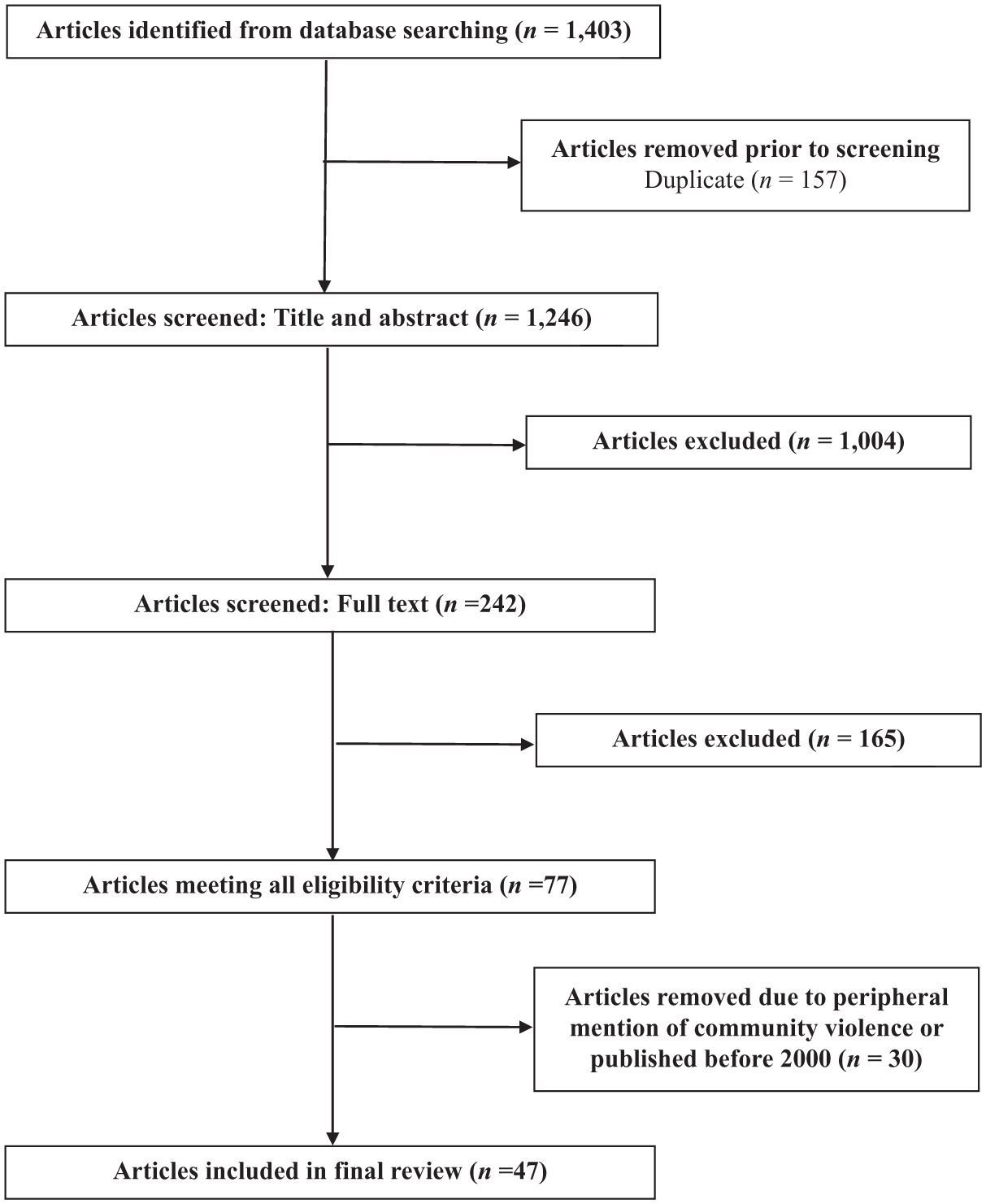
Systematic review flow figure.
With the 77 articles remaining, we began an in-depth analysis by retrieving detailed information from each article. Each team member was responsible for completing three coding sheets. The first coding sheet captured the primary descriptors of each article, including study design, study location, and participant demographics. The second coding sheet focused on the trauma measure and included questions regarding the type of exposure reported, the scale administrator, the study setting, and the format of the scale. The third coding sheet examined the trauma measure or scale in greater detail, gathering information on its sensibility and dimensions, the percentage of the sample diagnosed with PTSD or exhibiting trauma symptoms, and the scoring procedures described in the article. After all team members completed their respective coding sheets, we met to collectively review each article, compare findings, ensure consistency across coders, and address any concerns or discrepancies that emerged during the process. Overall, coders demonstrated a high level of agreement, and the few discrepancies that emerged were resolved through discussion and consensus. Following this detailed review, an additional 30 articles were excluded. These articles were removed because (a) community violence was not a central focus of the study despite being mentioned, or (b) the articles were published prior to the predetermined cutoff year of 2000. These reasons for exclusion are reflected in the PRISMA flow diagram (Figure 1). Following this final review, a total of 47 articles remained eligible for inclusion.
Throughout our data collection process, we specifically searched for studies that examined trauma as an outcome of exposure to community violence. We were particularly interested in how researchers conceptualized both trauma and violence within their literature reviews and methodological approaches. To be included, community violence needed to be the primary exposure of interest; however, studies that examined additional exposures were eligible if community violence remained to be the primary focus. This determination was made by reviewing each article’s literature review and assessing the centrality of community violence within the study’s framework. With respect to the outcome variable, we required that trauma be the primary outcome measured. We permitted variation in how trauma was operationalized, as understanding the most common measurement approaches in the context of chronic community violence was a key aim of the review. To synthesize information from the three coding sheets, we compiled all extracted data into four Excel tables. These tables enabled systematic comparison and contrast across studies, facilitating a more comprehensive analysis of the literature.
Results
The search yielded 1,246 articles published between 2000 and 2025, of which 47 met the predefined inclusion criteria (see Figure 1, PRISMA flow diagram). The included studies were organized into three categories (unique, semi-unique, and classic), based on how they conceptualized community violence and assessed trauma. Of the 47 articles, 14 articles met the criteria of either “Unique” or “Semi-Unique”; 2 studies met the “Unique” category, 5 met the “Semi-Unique Structural Violence” category, and 7 met the “Semi-Unique Structural Trauma” category. The most administered measures reported were the UCLA PTSD Reaction Index-Adolescent Version (Steinberg et al., 2013) and Trauma Symptom Inventory (Briere et al., 1995).
Unique articles framed community violence as a manifestation of structural violence rather than a routine feature of marginalized or under-resourced communities. These studies identified the structural conditions that produced persistent violence or daily stressors and emphasized how these forces continuously shaped participants’ lives. They also assessed trauma using approaches that extended beyond traditional PTSD frameworks. In doing so, these studies align most closely with structural trauma and structural violence perspectives, recognizing that traditional PTSD measures are not well-suited to capture trauma responses shaped by ongoing, structurally produced exposures to harm.
Semi-Unique articles incorporated only one structural dimension, such as framing community violence from a structural violence framework or framing trauma from a structural or continuous trauma perspective. For instance, some described community violence as rooted in structural disadvantage yet relied primarily on standard PTSD measures to assess trauma. Others acknowledged trauma as continuous and used trauma assessments that extend beyond PTSD but did not connect community violence to broader systemic inequities. Classic articles did not apply structural violence nor structural trauma frameworks. These studies conceptualized both community violence and trauma through traditional individual-level lenses and did not extend their analyses to structural explanations.
Articles Categorized as Unique
Two articles met the criteria for “Unique” (see Table 1). Thompson et al. (2020) examined how nonviolent life stressors and exposure to violence relate to trauma-related distress and behaviors among adolescents in low-income, predominantly African American urban communities. Grounded in a public health approach, the study examined nonviolent life stressors such as financial strain, transportation barriers, food insecurity, and resource scarcity, given that these conditions reflect systemic inequities in housing, education, and economic opportunity. The authors’ operationalization of stressors measured alongside violence exposure draws on validated instruments and qualitative work capturing the lived experiences of marginalized young people, strengthening ecological and cultural validity. The authors use the Checklist of Children’s Distress Symptoms (Richters & Martinez, 1990), a trauma measure that was specifically created to assess the impact of community violence exposure on adolescents. Although it is not specifically a measure of structural trauma, their application of the measurement is more consistent with theories of complex or developmental trauma, which offers a developmentally attuned and nuanced understanding of adolescents’ responses to chronic adversity. Moving beyond a narrow PTSD framework that focuses on a single traumatic event, the study instead assessed a range of trauma-related distress symptoms such as avoidance, hyperarousal, and re-experiencing, which can emerge and evolve over time.
Overview of Unique Articles Included in Systematic Review.
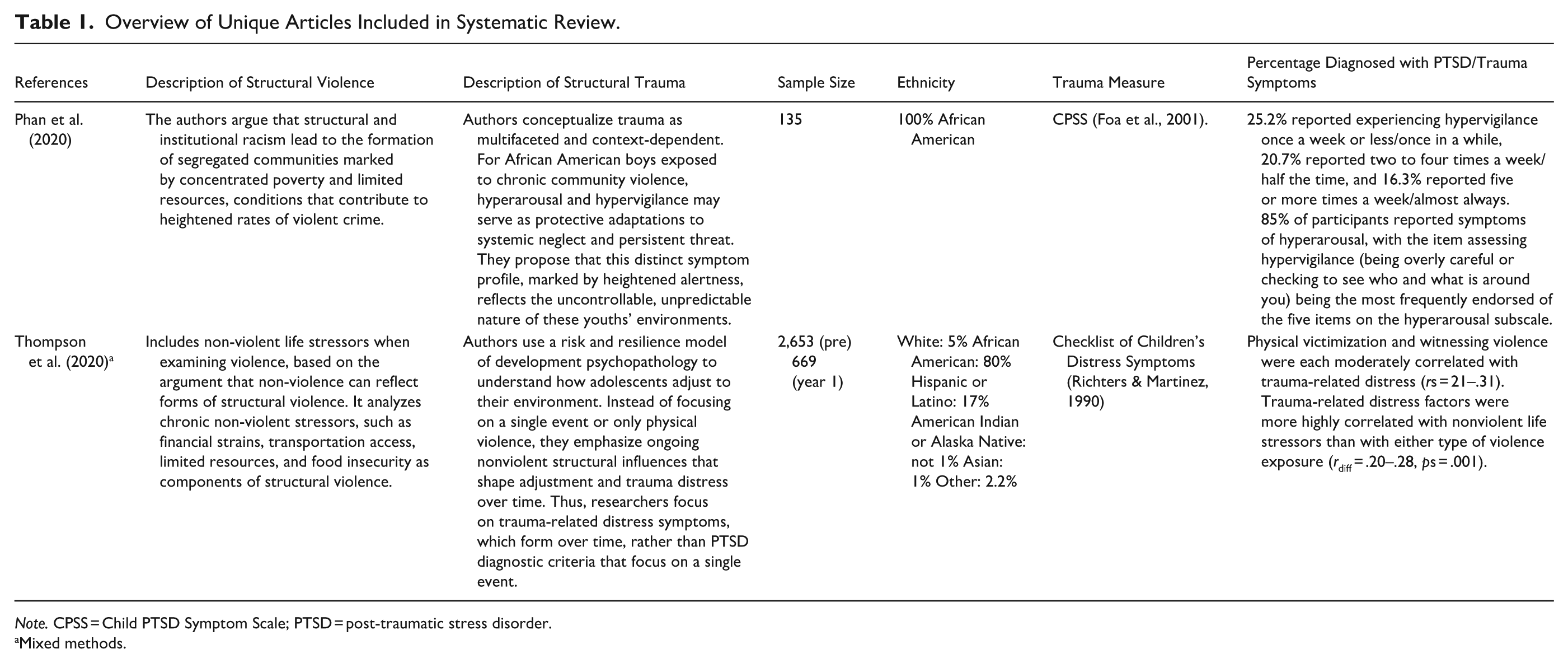
Note. CPSS = Child PTSD Symptom Scale; PTSD = post-traumatic stress disorder.
Mixed methods.
Their findings indicate that nonviolent stressors alone predict trauma symptoms and externalizing behaviors, underscoring that trauma among marginalized young people emerges not only from acute victimization but also from persistent, structurally rooted stressors. Although the authors do not explicitly use the term structural violence, their analytical focus aligns closely with it, illustrating how systemic neglect, racialized disinvestment, and resource deprivation shape outcomes. By linking chronic environmental stress to trauma symptomatology, the study expands conventional trauma frameworks and highlights the influence of social and economic conditions on adolescent well-being.
The second “Unique” article, Phan et al. (2020), frames African American male adolescents’ exposure to community violence within broader structural and institutional racism that has produced segregated, under-resourced neighborhoods marked by poverty and elevated exposure to violent crime. Within this context, the authors examined hyperarousal and hypervigilance used in the Child PTSD Symptom Scale (Foa et al., 2001) as responses to ongoing, structurally produced danger rather than as reactions to isolated traumatic events. The study focused specifically on these symptom dimensions rather than the full PTSD diagnostic profile. The authors argued that these responses may function as protective adaptations in environments characterized by persistent threat and systemic neglect, shifting their interpretation from pathology to survival-oriented adjustment. The way that the authors chose to use the Child PTSD Symptom Scale demonstrates their recognition of the unique trauma response profile among those who are exposed to community violence embedded within their upbringing. The authors’ findings showed that heightened hypervigilance predicted lower future exposure to violence, suggesting that behaviors often labeled maladaptive may serve protective purposes in the context of chronic adversity. This challenges traditional deficit-based trauma models by demonstrating that these responses can represent adaptive strategies shaped by ongoing structural harm.
Articles Categorized as Semi-Unique
Criteria for Semi-Unique Structural Violence
All articles in this category met the criteria for “Semi-Unique Structural Violence” (see Table 2) because they framed community violence through a structural lens while continuing to conceptualize trauma as an individual psychological experience. These studies interpreted violence as a product of systemic inequities, including neighborhood disadvantage, socioeconomic conditions, and lack of access to resources; thus, they positioned exposure to violence as a structurally produced and persistent feature of the young people’s environments. Although these studies emphasized the structural conditions that produce and perpetuate community violence, they did not apply a structural lens to trauma, which was framed as an individual psychological outcome rather than as a response shaped by systemic conditions. Across the articles, violence is depicted as structurally produced, while trauma continues to be understood at the individual level.
Overview of Semi-Unique Articles Included in Systematic Review.
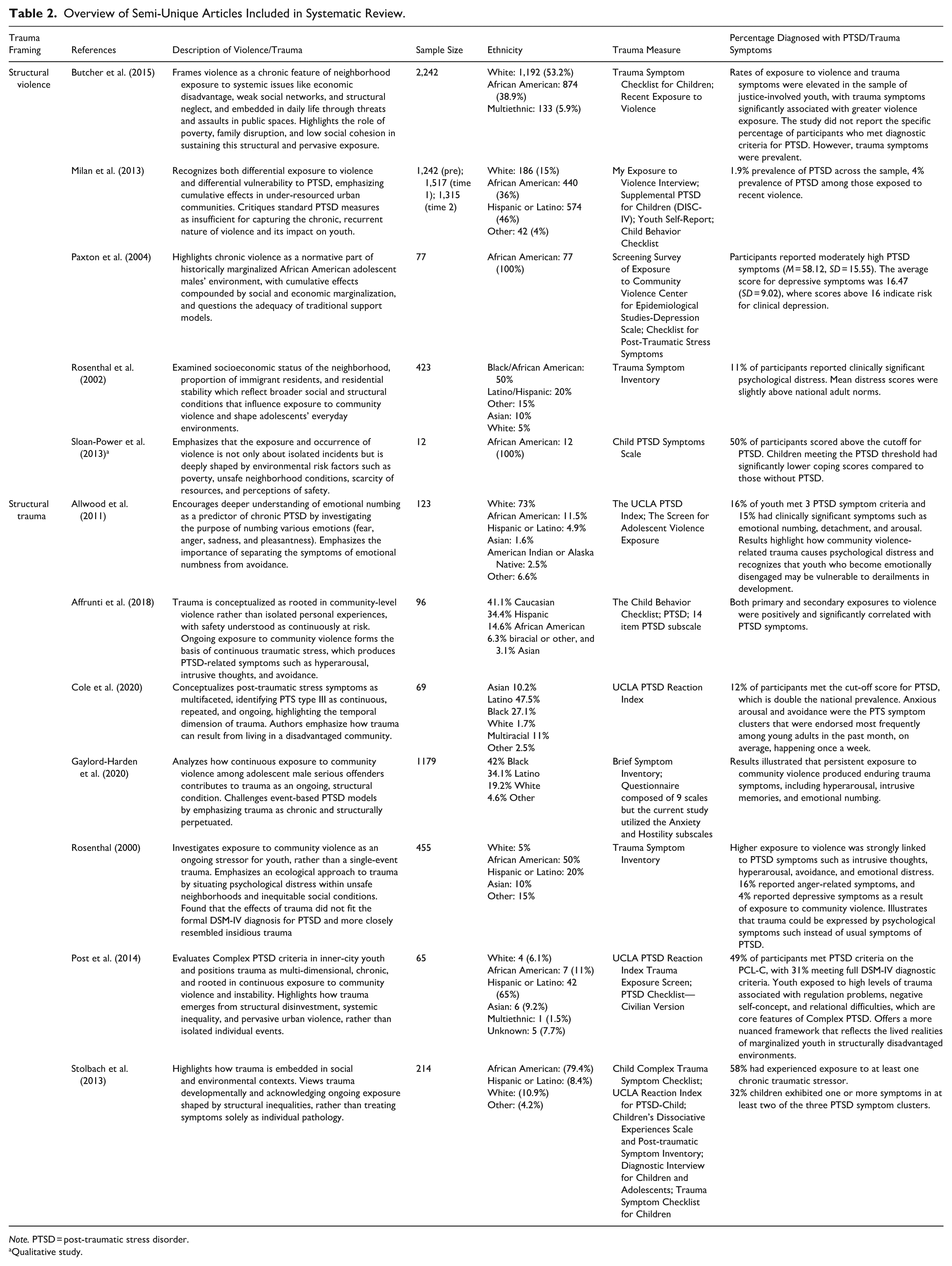
Note. PTSD = post-traumatic stress disorder.
Qualitative study.
Five articles met these criteria (see Table 2). Rosenthal and Wilson (2002) situated adolescents’ exposure to community violence within broader social and structural conditions, using indicators such as neighborhood-level socioeconomic status, immigrant residents’ concentration, and residential stability to show how structural arrangements shape the environments in which young people live. Community violence is therefore framed as a product of structural patterns that influence access to resources, mobility, and opportunity. Although the study identified neighborhood-level structural determinants of violence, trauma was conceptualized primarily as an individual experience of psychological distress. The structural context that shapes exposure is not extended to explain the development or persistence of trauma symptoms.
Similarly, Sloan-Power et al. (2013) contextualized children’s experiences of community violence within urban environments characterized by social problems and extremely limited resources. By documenting how young people routinely encounter violence across home, school, neighborhood, and transit contexts, the authors showed that exposure to violence is not an isolated event, but a condition of daily life produced by broader social arrangements. The demographic information such as low household income, single-parent households, and constrained material resources, further underscored that these children live in settings shaped by systemic inequities. The study’s framing aligns with a structural violence perspective, where community violence is presented as a predictable outcome of unequal social and economic conditions that place certain groups of children at heightened and ongoing risk.
The remaining studies reinforce this structural perspective in distinct but complementary ways. Butcher et al. (2015) framed violence as an outgrowth of neighborhood disorganization, highlighting how economic disadvantages, weak social networks, and structural neglect create conditions in which violence is pervasive and routinely encountered. Milan et al. (2013) likewise emphasized differential exposure to violence produced by living in under-resourced urban communities, noting that cumulative violence emerges from long-standing structural constraints rather than individual or family-level factors. Paxton et al. (2004) described chronic violence as a normative part of the environment for historically marginalized African American adolescent males, linking ongoing exposure to broader patterns of social and economic marginalization that limit opportunities and heighten risk of harm. Together, these studies depicted community violence as a structurally generated condition shaped by systemic disadvantage, neighborhood-level deprivation, and the enduring effects of institutional neglect.
Criteria for Semi-Unique Structural Trauma
All articles in this category met the criteria for “Semi-Unique Structural Trauma” because the structural or chronic lens was applied to trauma and not to community violence. These studies conceptualized trauma as continuous, recurrent, or embedded within environmental conditions, while community violence was treated primarily as an exposure variable rather than as a product of systemic forces or social arrangements. Although trauma was understood as unfolding within chronic danger, the violence shaping these conditions was not linked to structural inequities such as economic marginalization or institutional disinvestment. Accordingly, structural emphasis appears in how trauma was articulated, with traumatic responses seen as emerging from continuous exposure to harmful or oppressive conditions that shape emotional and psychological functioning over time. Rather than treating trauma as an isolated psychological reaction, these studies showed how symptoms develop, intensify, and at times operate in protective or self-preserving ways within broader environmental circumstances, underscoring how violence exposure produces trauma that is continuous and context dependent. Seven articles met these criteria (see Table 2).
Cole et al. (2020) underscored that traumatic experiences in response to community violence are chronic and ongoing rather than tied to isolated incidents. Their introduction of post-traumatic stress (PTS) type III illustrated how trauma can be continuous, repeated, and unfolding over time, capturing the reality of youth who navigate persistent danger in their everyday environments. A major contribution of the study was its recognition that trauma symptom clusters such as avoidance, hyperarousal, and re-experiencing vary independently rather than reflecting a single latent PTS factor. This finding shows that trauma does not always manifest as a unified psychological response; instead, symptom clusters may follow distinct developmental courses and relate differently to environmental harm. This nuance challenges simplified trauma models and underscores the need for more differentiated and context-sensitive approaches to assessment and intervention. Post et al. (2014) also contributed to this perspective by examining complex post-traumatic stress symptoms among inner-city youth and conceptualizing trauma exposure as multidimensional. Their distinction between domestic and community violence highlighted the environmental dimensions of young people’s experiences and demonstrates that different forms of exposure shape PTSD symptom patterns in distinct ways, underscoring that trauma cannot be reduced to a single event or source.
Extending this perspective, the other five studies further illustrated a structural trauma framework by showing how trauma develops through sustained exposure to environmental threat and accumulates over time within young people’s everyday contexts. Allwood et al. (2011) framed emotional numbing, detachment, and arousal as long-term processes shaped by repeated exposure to violence, interpreting these responses as adaptations to persistent threat rather than as reactions to isolated incidents. Affrunti et al. (2018) similarly portrayed trauma as continuous and rooted in community-level insecurity, emphasizing that hyperarousal, intrusive thoughts, and avoidance arise in environments where danger is ongoing and safety is uncertain. Rosenthal (2000) described trauma as insidious and cumulative, emerging from unsafe neighborhood conditions that give rise to anger, anxiety, depression, and dissociation over time. Stolbach et al. (2013) extended this developmental perspective by situating children’s trauma within their broader social and environmental contexts, arguing that chronic exposure contributes to developmental and complex trauma that cannot be captured by single-incident frameworks. Gaylord-Harden et al. (2020) likewise showed that persistent exposure to violence produces enduring trauma-related symptoms among adolescent male serious offenders. This demonstrated that patterns of anxiety, hyperarousal, hostility, and emotional numbing remain elevated across time and ultimately reflect the continual presence of threat in their environments.
Although many of these studies frequently relied on established PTSD instruments, they use these tools in ways that challenge traditional diagnostic models and avoid pathologizing trauma. Rather than treating symptoms as indicators of individual dysfunction, they interpret hyperarousal, avoidance, dissociation, and emotional numbing as processes shaped by the ongoing conditions in which young people live. PTSD scales were not used to diagnose event-based disorders but to measure the cumulative and sustained impact of repeated exposure, chronic instability, and ambient danger. By reframing symptoms as environmentally and structurally shaped, these studies illustrated how trauma becomes a continuous and context-dependent process, reflecting the chronic nature of threat rather than a singular pathological response. In this way, the Semi-Unique Structural Trauma articles extended the meaning of trauma beyond individual pathology and demonstrated how persistent environmental threat shapes development, functioning, and emotional experience.
A summary of the critical findings for the Unique and Semi-Unique categories is presented in Table 3.
Summary of Critical Findings.
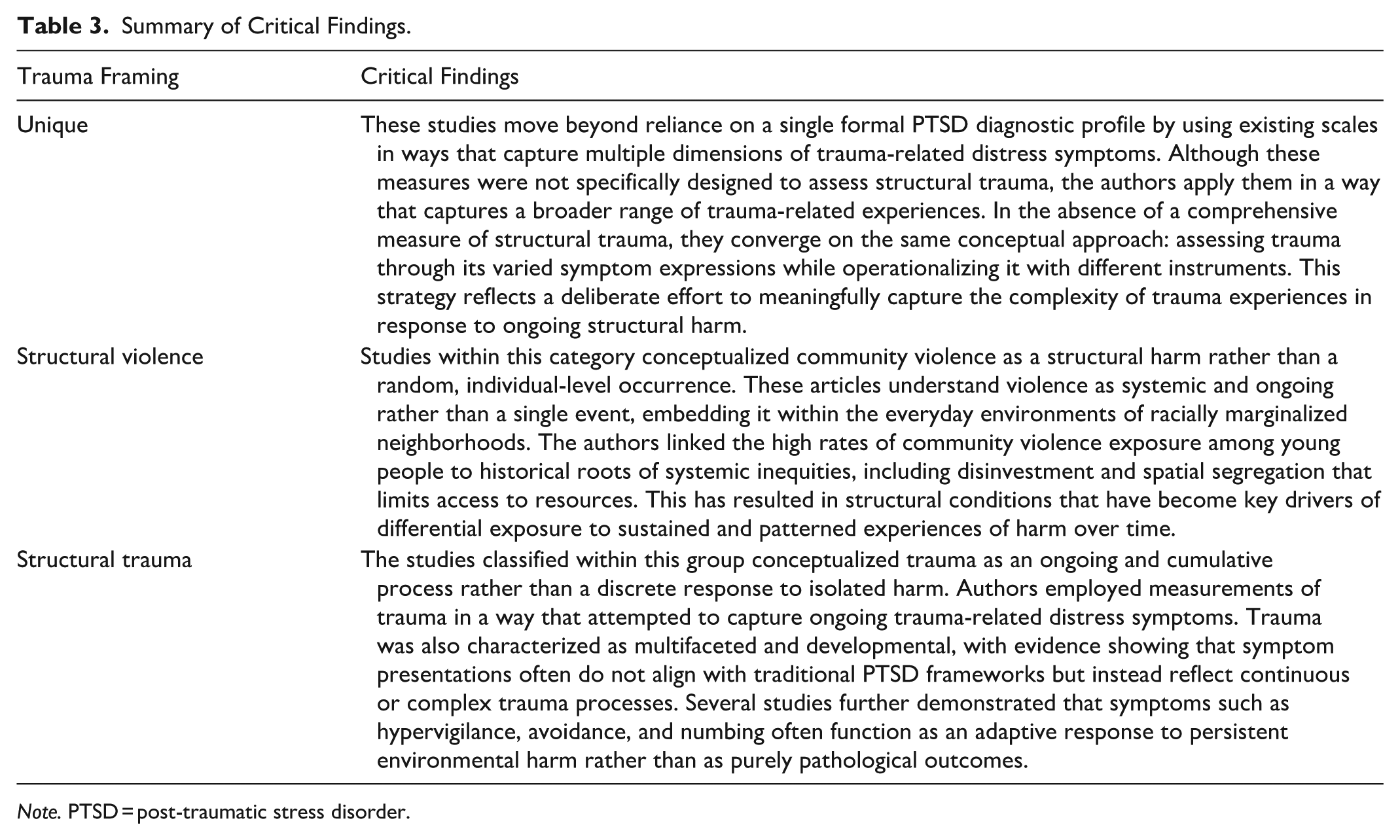
Note. PTSD = post-traumatic stress disorder.
Articles Categorized as Classic
“Classic” articles examined both community violence and trauma but did not apply structural trauma or structural violence frameworks. A total of 37 articles met the criteria for “Classic” (see Supplemental Table 1). These studies relied on traditional conceptualizations of community violence as an exposure and assessed trauma using standard symptom checklists or PTSD-related measures. While demographic differences in exposure or psychological reactions were sometimes included, these differences were not connected to broader systemic forces, neighborhood-level inequities, or structural determinants of risk. Instead, both violence and trauma were treated primarily as individual-level phenomena, and the analyses focused on psychological responses to discrete events rather than on chronic or structurally patterned conditions.
Studies in this category typically assessed psychological reactions to community violence exposure using a brief symptom subscale that captured reactions such as anxious feelings, nightmares, fear, and social withdrawal. Participants usually reported how frequently these reactions occurred following exposure to violence in the home, community, or school. Mental health outcomes were conceptualized through conventional categories such as post-traumatic stress, depression, and anxiety, each measured using established clinical instruments. Although these studies sometimes examined whether exposure to violence varied across gender, socioeconomic status, or racial and ethnic background, such patterns were not linked to structural or systemic explanations. Community violence was treated as an event-based exposure rather than a feature of structurally shaped environments, and trauma was framed as an individual psychological outcome. As a result, studies of this kind fit the criteria for “Classic.”
Discussion
The findings from this review indicate that research on community violence and the resulting trauma experienced by young people continues to rely primarily on individual-level frameworks that overlook structural conditions shaping exposure to harm. Although many of the studies examined were conducted in communities marked by racialized segregation, poverty, and chronic, systemic forms of violence, their conceptualization and measurement of trauma often remained tied to event-based models such as PTSD. This gap highlights a fundamental misalignment between the frameworks typically used to assess trauma and the structural realities of communities where violence is chronic rather than episodic. Consistent with longstanding critiques (Chodzen et al., 2025; DePierro et al., 2022; Elhai et al., 2012), the findings underscore the limitations of diagnostic approaches that treat trauma as an individualized reaction to discrete incidents when the exposure itself is embedded within ongoing systems of inequity.
Across all the articles categorized as “Classic,” the authors used measures that focused on both violence and post-traumatic stress exposure at the individual level with limited attention to cumulative and contextual dimensions of adversity. Reviews of the articles’ trauma measurements further highlight limitations in existing instruments’ ability to comprehensively assess trauma exposure or account for the developmental and relational context of adversity. Structural inequities position marginalized communities for differential exposure to violence and its repercussions (Armstead et al., 2021), yet these conditions remain largely unaccounted for in the instruments used to assess trauma across the “Classic” articles. These studies rely on individual-level frameworks that do not capture structural harm and the ongoing trauma shaped by these conditions.
A smaller but important subset of studies challenged these traditional conceptualizations by situating either community violence or trauma within broader structural conditions. Studies that framed violence as a product of systemic inequity offered a more contextually grounded understanding of why some young people face persistent exposure to harm. For example, Butcher et al. (2015), Paxton et al. (2004), and Rosenthal and Wilson (2002) demonstrate that young people do not encounter violence randomly; rather, their exposure is patterned by neighborhood-level inequities rooted in historical, political, economic processes. This interpretation echoes Eagle and Kaminer’s (2013) broader argument that young people in marginalized communities are routinely exposed to violence not because of individual vulnerability but because systemic inequities determine where danger becomes concentrated. These structural explanations are consistent with research documenting how segregation, spatial disinvestment, and the unequal distribution of resources shape community-level risk environments (Irsheid et al., 2022; Walker et al., 2024). By illuminating these underlying systems, such studies help reorient trauma research away from individual pathology and toward the sociopolitical contexts that determine young people’s differential exposure to violence.
Other studies advanced the field by repositioning trauma itself as a continuous and developmental process rather than a post-event condition. These studies challenge the assumption that harm is temporally bounded and instead show how symptoms such as hypervigilance, emotional numbing, avoidance, and distrust accumulate across time in response to persistent environmental threat (Allwood et al., 2011; Stolbach et al., 2013). Their findings reinforce a growing body of scholarship that understands trauma in structurally marginalized communities as emerging from chronic danger rather than isolated incidents. Research demonstrates that hypervigilance and heightened arousal may function as adaptive survival strategies (Gaylord-Harden et al., 2020; Phan et al., 2020) aligning with ecological and evolutionary models such as the adaptive calibration model (Del Giudice et al., 2011), which emphasizes that stress responses often reflect environmental calibration rather than dysfunction.
The developmental patterns documented across the reviewed studies also resonate with extant literature demonstrating how structural violence shapes youth development. Chodzen et al. (2025), for example, argue that structural violence undermines young people’s ability to meet basic developmental needs, including safety, stability, and belonging, thereby shaping emotional regulation, relational capacity, and overall well-being. This interpretation aligns with the findings of this review, which show that trauma in communities facing chronic threat is experienced as an evolving process shaped by environmental instability and structural inequity. Sloan-Power et al. (2013) further illustrate this developmental and ecological understanding by demonstrating how young people create “coping zones” to navigate environments where threat is constant. Behaviors that traditional diagnostic models conceptualize as pathological, such as hypervigilance, avoidance, or emotional withdrawal, emerge in their study as strategic responses that help young people manage ongoing danger. Post et al. (2014) similarly identify complex and cumulative trauma patterns that arise from persistent environmental threats rather than isolated events. Collectively, these studies highlight the need for trauma research to move beyond post-even frameworks and to more fully account for both structurally produced harm and the adaptive strategies young people employ to survive it.
This broader research parallels the findings of this review, underscoring the limitations of post-event trauma models and the importance of incorporating structural, contextual, and developmental perspectives. The varied behavioral and emotional outcomes documented across the studies reflect processes unfolding over time and within systems rather than within individuals alone. These insights further contextualize why PTSD, while widely used, remains insufficient as a standalone diagnostic measure in communities facing chronic threat. Event-based frameworks risk obscuring the structural determinants of harm and may inadvertently pathologize strategies that are adaptive responses to dangerous environments. Models that recognize trauma as a response to structured systems of risk, rather than isolated incidents, offer more theoretically coherent and ecologically valid approaches for intervening and supporting young people growing up in contexts of chronic systemic inequity and violence.
In addition, studies examined in this review reinforce that trauma experienced by young people in structurally marginalized communities is best understood as a developmental process shaped by chronic exposure. Across multiple studies, trauma responses emerged as patterns that unfold over time, influencing social functioning, emotional regulation, identity development, and relational capacity (Allwood et al., 2011; Post et al., 2014; Stolbach et al., 2013). Work examining community violence exposure among young people similarly demonstrates cumulative effects on mental and physical well-being and persistent disruptions to functioning that extend beyond any single incident of harm (DePierro et al., 2022; Walker et al., 2024). These developmental findings align closely with broader literature on complex trauma, which likewise critiques the limitations of PTSD-based assessments in capturing multidimensional responses to persistent threat (Elhai et al., 2012).
Collectively, the studies reviewed here demonstrate that trauma in communities shaped by structural disadvantage is not a post-event condition but one that develops within ongoing social, economic, environmental, and political arrangements. This conclusion parallels the emerging scholarship on structural trauma, which has argued that trauma cannot be separated from the systems that produce continuous and sustained harm (Ruíz, 2024). Research approaches that recognize trauma as structurally rooted provide a more accurate representation of the lived realities of young people in under-resourced communities and offer a foundation for responses to the ongoing conditions that sustain harm.
Limitations
Although this review offers important insights into the various ways community violence and trauma have been conceptualized in the literature, including the extent to which structural perspectives are incorporated, there are some important limitations that should be noted. While the authors used a systematic definition of structural violence informed by Galtung’s (1969) conceptualization, the studies examined did not consistently operationalize or define the construct. This lack of uniformity necessitated a certain degree of interpretive judgment in categorizing studies and assessing the extent to which their approaches aligned with the conceptual framework established. Additionally, variability in study designs, measures, and sample characteristics limited direct comparison. These limitations reflect gaps in research, including the absence of standardized approaches to assessing structural trauma/violence and the inconsistent integration of structural constructs into quantitative designs more broadly. A further limitation is the lack of qualitative research in the studies reviewed. Only two articles categorized as unique or semi-unique incorporated qualitative methods that explored youths’ perspectives (e.g., Sloan-Power et al., 2013; Thompson et al., 2020). This gap narrows the understanding of how young people interpret and make sense of their experiences of structural violence and trauma, underscoring the need for future work that prioritizes participant voice.
Implications and Recommendations
The findings in this review reinforce the need to reconceptualize trauma not as a discrete, individualized pathology, but as a condition produced and sustained by ongoing structural inequities. In communities where violence is not an anomaly but a feature of daily life, trauma must be recognized as both a psychological and a social phenomenon (Cole et al., 2020). Researchers must move beyond event-based measures and adopt critical approaches that account for the cumulative, environmental, and systemic nature of harm. This includes developing trauma measures that reflect the realities of chronic exposure and structural deprivation, as well as embracing critical quantitative methods capable of capturing these complexities (Gillborn et al., 2018). These findings underscore the need for the development of a standardized structural trauma assessment that can be used across studies, rather than requiring researchers to rely on existing individual-level measures and retroactively adapt them to capture structurally produced harm. Additionally, future longitudinal studies exploring the intergenerational impacts of structural trauma will be essential for challenging narrow, event-based models and advancing a more justice-oriented understanding of trauma.
In addition to calling for the development of structural trauma measures, findings from this review highlight several approaches for operationalizing both the systemic conditions that shape exposure to harm and the resulting trauma symptomatology. Studies categorized as “Unique” and “Semi-Unique” demonstrate the importance of incorporating structural indicators of violence exposure, including neighborhood-level measures such as concentrated poverty, residential instability, resource deprivation, and limited access to education, housing, and healthcare support. These approaches move beyond treating violence as an isolated exposure and instead situate it within broader systems of inequity. Several studies also assess how cumulative and overlapping forms of navigating structural conditions, such as financial strain, food insecurity, and transportation barriers, alongside exposure to community violence, constitute interconnected manifestations of structural violence that collectively shape trauma symptom expression.
In parallel, findings from this review support a reframing of trauma symptoms as contextually grounded and adaptive within environments characterized by chronic exposure to violence. Rather than interpreting symptoms such as anxiety, hypervigilance, emotional numbing, avoidance, or depressive affect solely as indicators of individual pathology, a structural trauma framework situates these responses within ongoing conditions of threat, instability, and deprivation. From this perspective, these symptoms reflect patterned and contextually appropriate responses to persistent exposure to structurally produced harm. Taken together, these findings suggest a preliminary framework for a structural trauma assessment that integrates (a) structural indicators of violence exposure, (b) cumulative and context-specific stressors, and (c) multidimensional assessments of trauma symptoms as contextually grounded responses to ongoing harm.
Moreover, effective clinical practice with young people in communities impacted by violence requires acknowledging that their experiences are not singular events but arise within ongoing structures of oppression and marginalization. Within a structural trauma framework, these symptoms can be understood as contextually grounded responses to ongoing exposure to harm, rather than solely as indicators of individual dysfunction. Understanding trauma as a response to structural forces, rather than a solely individual phenomenon, supports a more comprehensive assessment of their lived realities. Recognizing the impact of structural violence on a young person’s mental health and well-being also makes visible how chronic stress, anxiety, and trauma symptoms develop in contexts of persistent inequity. Rather than relying solely on a PTSD diagnosis, centering structural trauma and adopting more holistic treatment approaches provides a framework that better reflects the sociopolitical conditions shaping young people’s lives and helps clinicians develop more appropriate and effective treatment plans, reducing the risk of misdiagnosis (Irsheid et al., 2024). For example, using a structural vulnerability lens allows clinicians to operationalize how social determinants, such as housing, economic stability, and access to resources shape mental health outcomes, positioning trauma as a consequence of systemic exposure rather than individual pathologization (Irsheid et al., 2024).
Training clinicians from a structural perspective is essential when working with young people and families impacted by structural violence, helping them undo the internalization of external harm that, over time, crystallizes into mental health challenges. Addressing immediate psychological needs in tandem with the structural barriers that perpetuate trauma creates space for more sustainable healing and well-being. In practice, holistic and trauma-informed psychosocial intervention integrates clinical support with intentional structural intervention, meaning not only addressing symptoms but actively working to transform the material and social conditions that produce mental health distress and trauma. Such approaches embed advocacy and resource navigation into care while confronting the systemic inequities that shape access to housing, employment, education. Together, these practices move care toward a model that treats trauma while also reshaping the context in which it occurs.
Lastly, policy responses must reflect the same structural orientation called for in future research and clinical practice. Efforts to prevent and mitigate trauma will remain constrained if policy continues to target individual behaviors while leaving systems of inequity unaddressed. Emerging federal initiatives signal growing recognition that structural conditions shape health outcomes, including trauma. For example, the Centers for Medicare and Medicaid now requires hospitals to screen for social determinants of health, such as food insecurity and housing instability, to inform holistic assessments of patients (Centers for Medicare & Medicaid Services, 2022). Similarly, the Substance Abuse and Mental Health Services Administration’s trauma-informed care framework emphasizes the importance of attending to the broader social and cultural contexts in which trauma occurs (Substance Abuse and Mental Health Services Administration, 2014). Addressing upstream social determinants such as housing stability, economic opportunity, and educational equity offers a more sustainable path to reducing trauma at the population level (Armstead et al., 2021). Investments in community-driven resources and restorative practices can disrupt the structural conditions that perpetuate violence and ongoing harm. These policy-level interventions extend the focus of healing beyond clinical settings and into the everyday environments young people live and develop.
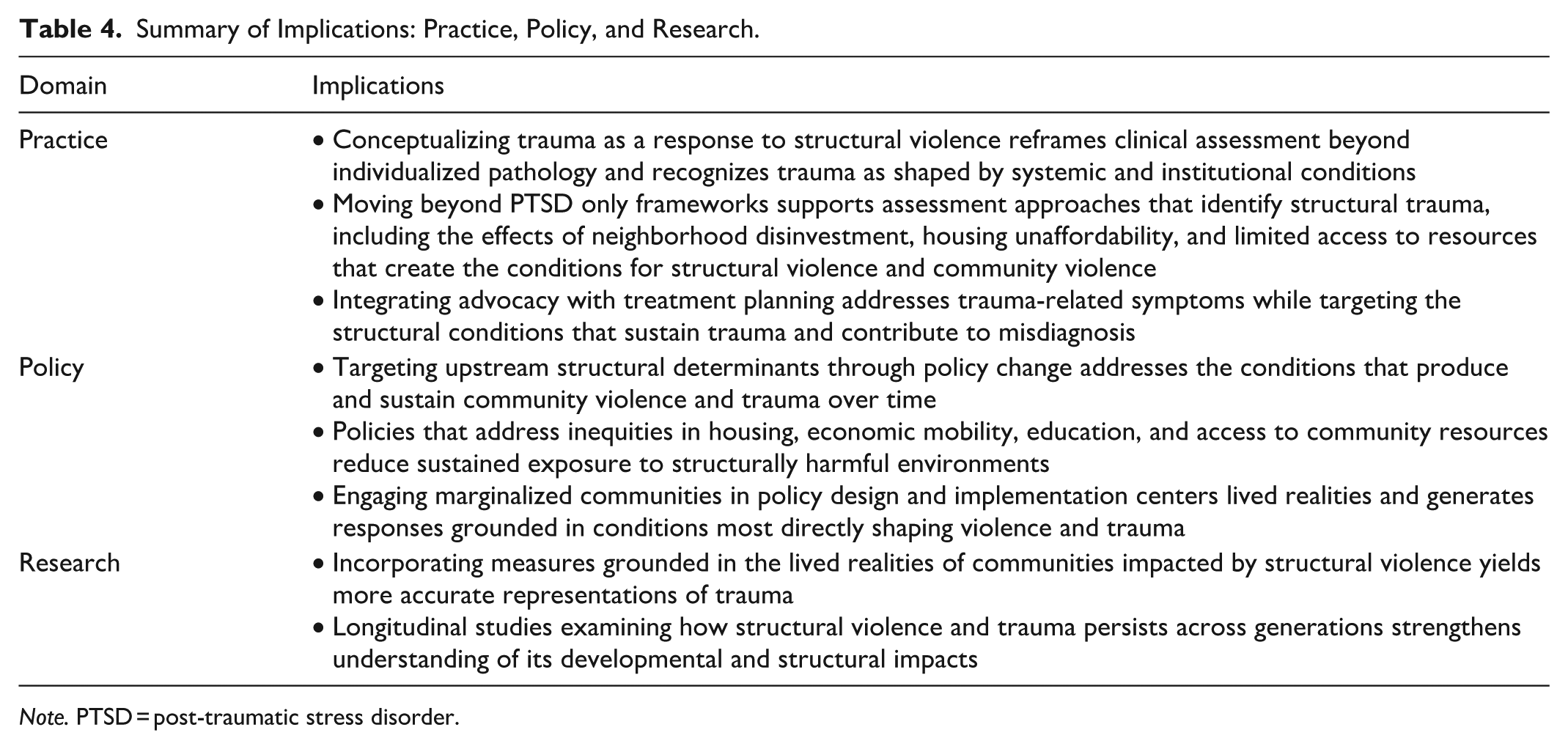
A summary of implications for research, practice, and policy is presented in Table 4.
Summary of Implications: Practice, Policy, and Research.
Note. PTSD = post-traumatic stress disorder.
Conclusion
This review examined how researchers frame community violence and trauma among young people aged 12 to 29, noting that while some scholarship acknowledges the structural origins of violence, much of the literature continues to rely on individual-level frameworks. We highlighted the limitations of using PTSD as the primary lens for understanding these experiences and argued for trauma frameworks that more fully account for the systemic conditions shaping young people’s lives. Our recommendations call for researchers to adopt critical methods capable of capturing the ongoing and structurally produced nature of harm, and to develop assessments that more accurately reflect the lived realities of young people navigating these conditions. Future research must continue expanding trauma scholarship beyond clinical symptomatology and center the structural determinants of health and well-being. Advancing this shift will enable interventions and support systems that address not only the impacts of trauma but also its structural roots, ultimately fostering more comprehensive and equitable pathways to care for young people affected by structurally produced violence.
Supplemental Material
sj-docx-1-tva-10.1177_15248380261451832 – Supplemental material for Framing Community Violence and Trauma in the Context of Structural Violence: A Systematic Review of Studies on Young People Aged 12 to 29
Supplemental material, sj-docx-1-tva-10.1177_15248380261451832 for Framing Community Violence and Trauma in the Context of Structural Violence: A Systematic Review of Studies on Young People Aged 12 to 29 by Sireen B. Irsheid, Taylor A. Reed, Brittany Lynch, Mariah Maldonado and Michael A. Lindsey in Trauma, Violence, & Abuse
Footnotes

Funding
The authors received no financial support for the research, authorship, and/or publication of this article.
Declaration of Conflicting Interests
The authors declared no potential conflicts of interest with respect to the research, authorship, and/or publication of this article.
Supplemental Material
Supplemental material for this article is available online.
Author Biographies
References
Supplementary Material
Please find the following supplemental material available below.
For Open Access articles published under a Creative Commons License, all supplemental material carries the same license as the article it is associated with.
For non-Open Access articles published, all supplemental material carries a non-exclusive license, and permission requests for re-use of supplemental material or any part of supplemental material shall be sent directly to the copyright owner as specified in the copyright notice associated with the article.
