






Abstract
There is a pressing need for more knowledge about the experiences of children bereaved by domestic homicide and how society responds to their needs. This scoping review explores what is currently known about these children’s experiences and examines the broader social and professional responses that influence their recovery, including societal attitudes, professional interventions, and decision-making processes that shape their everyday lives. We identified 40 relevant publications via a systematic search of 4 databases and additional methods. We searched for all articles that tackled the consequences of intimate partner homicide for children, including societal responses, professional interventions, and decision-making processes. The scoping review revealed several areas that have been the focus of children bereaved by domestic violence: intrapersonal themes such as behavioral and mental health consequences; complex feelings of identity, and a series of societal responses and challenges were also discussed; challenges in placement and care; stigma and social reactions; and support and institutional barriers. This review underscores the complex interplay between children’s exposure to parental intimate partner homicide, the caregiving relationships that follow, societal attitudes, and the role of professional systems. Despite important advances, substantial gaps remain in full understanding how these factors interact to shape bereaved children’s coping and long-term outcomes. Addressing these gaps is crucial for developing evidence-based policies and interventions that better support children through their grief and beyond.
Keywords
Background
Intimate partner homicides (IPH) represent an unsettling form of violence with far-reaching consequences for the children in the families. These children face profound and complex challenges, often losing both parents at the same time: The victim is deceased, while the offending parent may be detained, on the run, or has committed suicide, leaving the child acutely without parental guardianship (Alisic et al., 2015). This puts children in a situation where they face major disruption and loss, and where difficult decisions must be made for them – with both short-term and long-term consequences.
These children often go through major changes. One of the immediate concerns following parental IPH is the child’s living arrangement. In a study conducted in the United States, 87% of children had to move from their family home as a result of the homicide (Lewandowski et al., 2004). Moving homes may be necessary, resulting in children being uprooted from their familiar surroundings, including schools, siblings, and other significant networks (Akbas & Karataş, 2022; Aparici et al., 2020). Relatives may become involved in disputes regarding custody, which can be exacerbated by their own grief and traumatic stress. Such emotions may affect their capacity to provide adequate caregiving (Kurdi et al., 2024). These disruptions add to the trauma, creating a cascade of changes in the child's life that can have lasting psychological and emotional effects.
Making decisions about the future of children affected by domestic homicide is complex, and professionals in fields such as child welfare, mental health care, and legal guardianship may only encounter these cases infrequently throughout their careers (Alisic et al., 2015). A study conducted among professionals working with children in the United Kingdom found that most respondents reported lacking adequate resources, especially about time and access to specialized services (Gomersall et al., 2024) Nevertheless, the decisions they make, ranging from communicating with the child about the homicide to determining mental healthcare plans, assigning guardianship, and managing the child’s contact with the perpetrating parent in prison, are profound and far-reaching. Given the rarity and complexity of such cases, professionals require a robust evidence base to guide their actions and ensure that the best interests of the child are protected. There is an urgent need for an evidence base to support professionals and families.
Over the past 10 years or so, there has been a rise in awareness about the child’s perspective in domestic homicide cases, and a growing body of literature has explored different aspects of these children’s lives. A notable contribution to the field is the systematic review by Alisic et al. (2015), which focused specifically on children’s mental health and well-being following parental IPH. Unlike other reviews that primarily addressed prevalence or adult outcomes, this review of 17 eligible articles highlighted the psychological impact on children and proposed a conceptual model outlining key risk factors for adverse outcomes (Alisic et al., 2015). This framework has been highly valuable for understanding the wide range of children’s needs in the aftermath of domestic homicide. However, since that time, important new research has expanded the field (Alisic, Groot, Snetselaar, Stroeken, & van de Putte, 2017; Chavez et al., 2024; Eastwood et al., 2025; Kurdi et al., 2024; Soydas et al., 2023). In addition, there is now a growing interest in gaining a broader picture that includes not only children’s needs but also how society responds, how professionals intervene, and how decisions are made on behalf of children. Given that the existing systematic review is now a decade old and focused on a more specific part of this complex topic, there is a clear need to update and broaden the knowledge base through this scoping review.
Our goal is to map the existing literature on children affected by parental IPH, focusing on children’s lived experiences, caregiver perspectives, and the decision-making of professionals. By synthesizing current knowledge, this review aims to identify gaps in the literature and offer recommendations for future research. The goal is to provide a foundation for evidence-based guidelines that can inform the work of professionals who are entrusted with the care of these vulnerable children, ultimately improving their outcomes and well-being.
Objectives
This article sets out to review the existing knowledge base on parental IPH and its impact on children – both in terms of their bereavement experiences and how society responds to them. Building on Alisic et al.’s (2015) foundational review, which focused on children’s mental health and well-being, we expand the scope to include the societal and institutional dimensions of their experiences. Specifically, this scoping review aims to:
Synthesize evidence on children’s bereavement experiences following parental intimate partner homicide.
Map how societal responses, professional interventions, and decision-making processes shape children’s lives in the aftermath of such loss.
Identify key research gaps and future directions for understanding and supporting children bereaved by domestic homicide.
Method
Search Strategy and Eligibility Criteria
We present methods and findings with the Preferred Reporting Items for Systematic reviews and Meta-Analyses extension for Scoping Reviews (PRISMA ScR). We searched for all articles that tackled the consequences of DOMESTIC HOMICIDE for children, including societal responses, professional interventions, and decision-making processes. The search had a few limitations, as the research field is small. The following inclusion criteria were used: Journal articles with (a) empirical data collection, which (b) investigates mental health or social outcomes, or (c) professional interventions, in (d) a context of parental IPH, with (e) study participants or clients younger than 18 at the time of the homicide. The searches had no limitations on the date of publication.
To navigate the research field, we searched for related terminology to IPH and combined it with words related to “children” and “adolescents.” The following databases were searched: PsycINFO, Sociological Abstracts, and Ovid. One additional search was made in Google Scholar. Twenty-eight articles were identified through reference lists or by chance, and 23 were found through targeted searches of known research communities and research networks. All searches were made between November 2024 and February 2025. The 17 articles from Alisic et al. (2015) were included. A database of 217 articles in total was created for review.
Terminology
The search process revealed a broad and varied use of terminology to describe when homicide occurs within a family setting. A common term “femicide,” targets gender-based killing of women, often by intimate partners, and draws attention to structural gender inequality. While “Intimate Partner Homicide” (IPH) is a gender-neutral term for homicide between partners, “Intimate Partner Femicide” specifies female victims. Another term found is “Parental Intimate Partner Homicide” specifically referring to one parent killing the other, which tends to be used in child-focused research. “Domestic Homicide” and “Fatal Intimate Partner Violence” are broader terms that include any fatal violence within a domestic or intimate relationship. “Uxoricide” and “Mariticide” are older legal terms for killing one’s wife or husband, respectively, and are less common in current research. Terminology choice reflects theoretical and disciplinary focus and should be used with attention to context and meaning. In this scoping review, we intentionally employ the terms domestic homicide, intimate partner homicide (IPH), and parental intimate partner homicide interchangeably and contextually. This reflects the conceptual and practical complexity of such cases, particularly when considering the experiences of children. These terms are variably used across jurisdictions, disciplines, and empirical studies, and each highlight slightly different relational and situational aspects of the homicide.
Screening, Data Charting, and Synthesis
After performing six searches in different databases, we identified a total of 217 articles. The selection process is depicted in Figure 1. We excluded dissertations, reports, books, commentaries, and other formats other than empirical peer-reviewed articles (n = 22), articles we were unable to access (n = 16) and duplicates (n = 76), leaving the total at 103 articles to assess for relevance. A second round of exclusion was made by considerations of relevance based on the title and article abstract, leaving the total at 79. A third round of exclusions was made by evaluating whether the article met the inclusion criteria, as some articles are of relevance topically, but do not necessarily address the consequences post-homicide (n = 39). The final inclusion was made in collaboration with all authors, in which all articles were read in full. We included 40 articles in total, summarized in Table 1. We extracted study characteristics, findings, and limitations. Finally, we discussed relevance and compared findings, categorically organized studies, and identified common themes and research gaps.
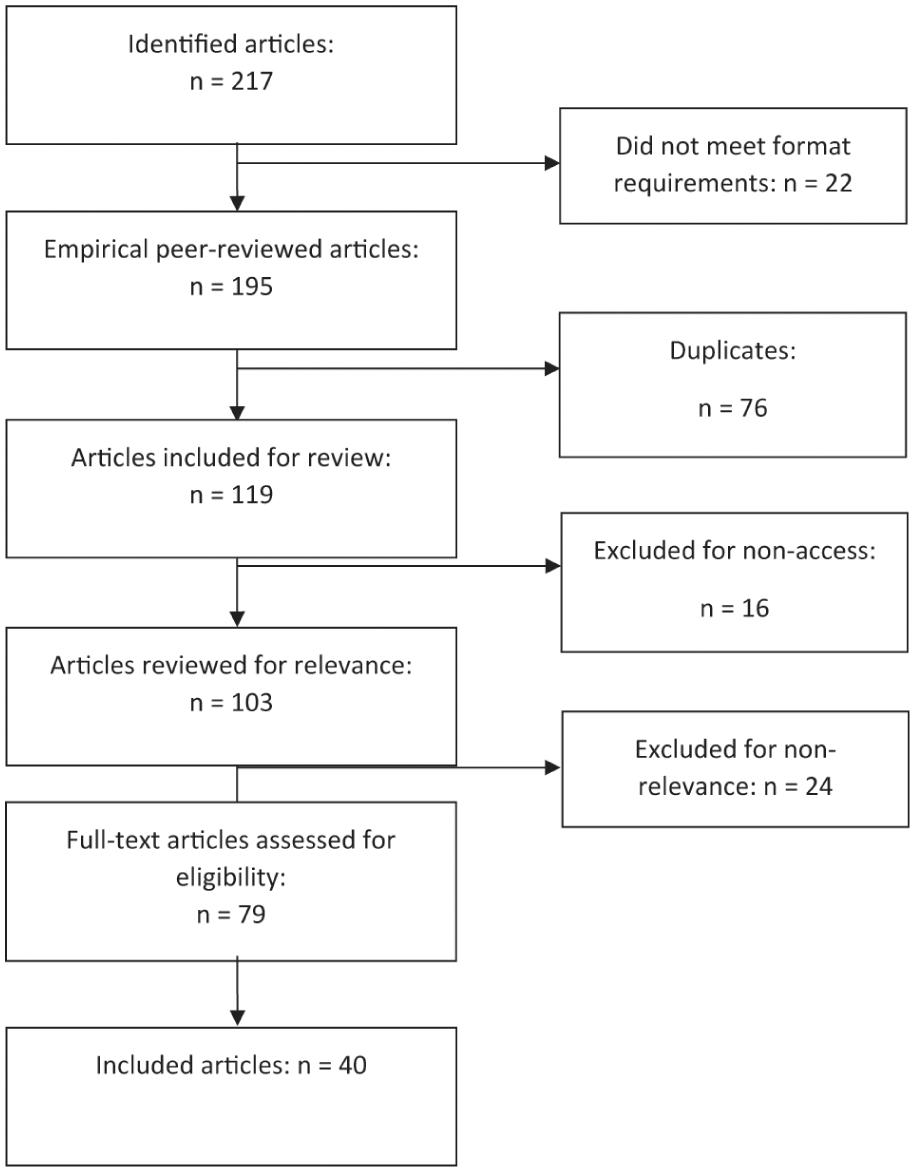
Flow chart.
Overview of Reviewed Articles.
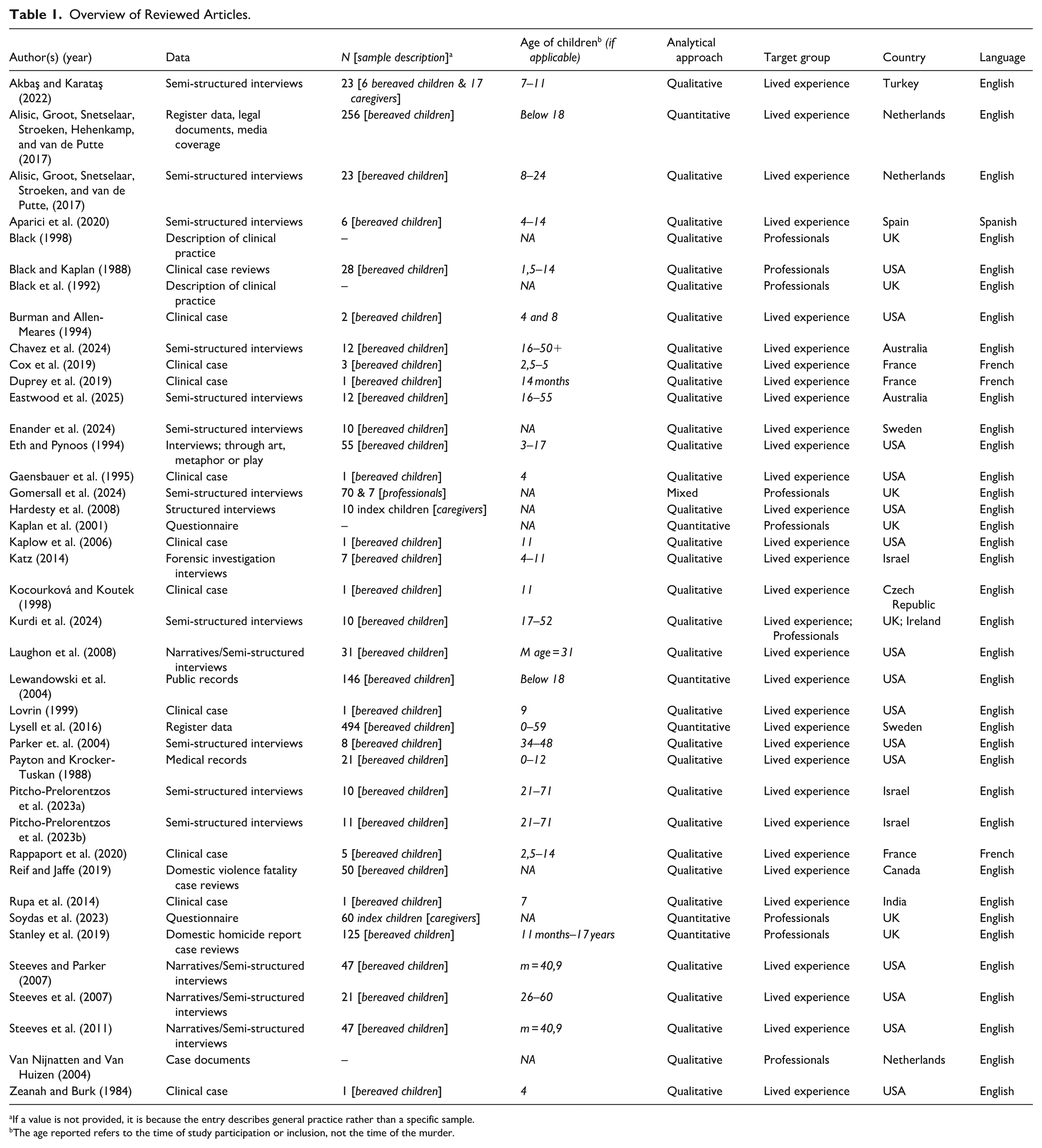
If a value is not provided, it is because the entry describes general practice rather than a specific sample.
The age reported refers to the time of study participation or inclusion, not the time of the murder.
Results
Characteristics of Included Studies
We identified a total of 40 articles that shed light on different aspects and responses to this particular group of bereaved children. The articles are predominantly of qualitative design, with six being quantitative and one using a mixed design. Eighteen articles included samples of interview respondents who were children or represented children affected by domestic homicide, while 14 articles had clinical samples or descriptions of clinical practice. Eight articles used case documents, register data, or legal documents as data. The majority of the interview studies used convenience samples and interviewed people who were older than 18 years when the homicide occurred several years ago. An exception is Katz’s (2014) study, which used investigative interviews that occurred within 24 hr of the incident. Most of the interview studies are with bereaved children, but three articles either include family members/caregivers or have them answer on behalf of the children – such as Hardesty et al. (2008) – where respondents answer on behalf of 10 index children. The age ranges of those interviewed ranged from 3 years old to 60 years old. The clinical case studies described children from 14 months to 14 years old. Overall, the articles included both female and male participants, but Pitcho-Prelorentzos et al. (2023a, 2023b) and Steeves et al. (2011) presented gendered perspectives. The articles were from 13 different countries, predominantly English-speaking or European countries.
An overview of the included studies is presented in Table 1:
Findings
The reviewed articles covered a broad range of themes related to children’s immediate and longer-term experiences following IPH in a family context. While many of the included articles focused on the children’s emotional reactions, lived experiences, and identity processes, the review also identified a growing field of research exploring challenges and opportunities related to placement and care arrangements, societal and institutional responses, and the types of support – or lack thereof – available to children and their caregivers. Importantly, across several studies, the interplay between how society responds to these children and how the children come to see and understand themselves became particularly evident, highlighting the need to consider these dynamics in both research and practice.
Mapping the Exposure and Lived Experience of Bereaved Children
Understanding the consequences of domestic homicide requires consideration of the experiences of children prior to and during the incident. While most studies reviewed described children who witnessed 1 the homicide or were in immediate proximity to it, children may also be exposed to the crime scene after the homicide, or when escorted out of the house. Some children seek help or call emergency services when being present at the crime scene or being the first third party there (Stanley et al., 2019). Other children may not be present or can be very young at the time (Alisic, Groot, Snetselaar, Stroeken, & van de Putte, 2017; Black et al., 1992). For the latter experiences, the events will later be explained to them. A widespread misunderstanding has been that very young children do not remember incidents they are exposed to, but several examples in the reviewed articles highlight how young children show signs of recollections but may display delayed reactions to them (Gaensbauer et al., 1995; Kaplow et al., 2006; Soydas et al., 2023). The context of violence may not be uncommon for some of these children, as a majority of these cases tend to happen in families who have experienced prior domestic violence (Lewandowski et al., 2004). Katz (2014) described a child who struggled to differentiate the homicide incident from other instances of domestic violence because the immediate context of the homicide was similar to prior violent experiences (Katz, 2014). This suggests that, for some children, such extreme events not only create profound trauma but also signify the end of an abusive regime, presenting a complex interplay of harm and potential for recovery. This theme remains insufficiently explored in the research field.
Behavioral and Mental Health Consequences
Children included in the reviewed studies presented a broad range of psychological symptoms and behavioral changes. Aligned with findings in the coinciding articles included in Alisic et al. (2015), the total sample of articles further highlighted grief, fear, 2 and memory responses in young children and adolescents. Children who witness the murder or the crime scene show differences in emotional responses and memory functioning, such as flashback memory (Akbaş & Karataş, 2022; Eth & Pynoos, 1994; Kaplan et al., 2001; Kaplow et al., 2006) and intrusive memories and thoughts (Alisic, Groot, Snetselaar, Stroeken, Hehenkamp, & van de Putte, 2017; Enander et al., 2024; Eth & Pynoos, 1994; Steeves & Parker, 2007). Even those who were not present at the crime scene may develop vivid perceptions or imagine reconstructions of what they believe happened (Lovrin, 1999).
Several articles also pointed to children being sensitive to change or adjustments (Duprey et al., 2019; Kurdi et al., 2024), with some articles describing externalizing behavioral changes from childhood to adolescence, sometimes through increased aggression, violent and physical outrage (Alisic, Groot, Snetselaar, Stroeken, Hehenkamp, & van de Putte, 2017; Chavez et al., 2024; Gaensbauer et al., 1995; Hardesty et al., 2008; Kurdi et al., 2024; Lysell et al., 2016; Parker et al., 2004; Rupa et al., 2014; Stanley et al., 2019; Steeves et al., 2007). Other work highlighted challenges related to impulsivity or increased efforts to seek attention or connection, and in some cases involvement in risky or unlawful behaviors (Gaensbauer et al., 1995; Hardesty et al., 2008; Rupa et al., 2014). Several studies drawing from qualitative and quantitative data also describe internalizing behavior such as self-harm (Gaensbauer et al., 1995; Lysell et al., 2016), substance abuse (Kurdi et al., 2024), and risky or harmful sexual behavior (Gomersall et al., 2024). Some articles also described reactions of numbness or dissociation (Chavez et al., 2024; Enander et al., 2024; Steeves & Parker, 2007). A common response was depressive symptoms and a risk of developing post-traumatic stress disorder (Alisic, Groot, Snetselaar, Stroeken, Hehenkamp, & van de Putte, 2017; Aparici et al., 2020; Black, 1998; Black et al., 1992; Enander et al., 2024; Gaensbauer et al., 1995; Hardesty et al., 2008; Kaplan et al., 2001; Kaplow et al., 2006; Steeves & Parker, 2007; Steeves et al., 2007, 2011; Zeanah & Burk, 1984). Suicidal behavior has also been described across several studies (Akbaş & Karataş, 2022; Alisic, Groot, Snetselaar, Stroeken, Hehenkamp, & van de Putte, 2017; Lysell et al., 2016; Parker et al., 2004; Steeves & Parker, 2007).
Many articles, particularly those using clinical data and interviews, emphasized how young children may display developmental regression, such as in language, toileting, bed-wetting, eating behavior, and weight loss (Eth & Pynoos, 1994; Gomersall et al., 2024; Hardesty et al., 2008; Kaplan et al., 2001; Kaplow et al., 2006; Lovrin, 1999; Zeanah & Burk, 1984). However, a few articles described children who showed signs of behaving older than they were, a pseudo-adult behavior (Kocourková & Koutek, 1998), hyper-maturity (Cox et al., 2019), or a form of parentification (Akbaş & Karataş, 2022; Aparici et al., 2020; Cox et al., 2019), the latter occurring when they were older siblings taking care of younger siblings.
Complex Feelings About Identity
This scoping review highlights that the impacts of domestic homicide on bereaved children extend far beyond clinical outcomes alone. A common theme explored in the included qualitative interview studies is how the homicide affects children and their perception of own identity, particularly upon entering adolescence and adulthood. Some adults, when reflecting on how the homicide affected them, emphasized the difficulties in being told one-sided narratives of their parents regarding shared genes and sharing similar traits with them (Black & Kaplan, 1988; Chavez et al., 2024; Enander et al., 2024; Pitcho-Prelorentzos et al., 2023a; Steeves et al., 2007). Participants expressed a fear of becoming similar to their parents or having similar features, either by becoming violent like the perpetrating parent or through sharing the same destiny as the deceased parent (Parker et al., 2004; Pitcho-Prelorentzos et al., 2023a). The articles depicted complex feelings of love and hate at the same time (Cox et al., 2019; Eastwood et al., 2025) and expressed grief over the loss of both parents (Hardesty et al., 2008). Complex feelings of guilt were described in participants wanting contact with perpetrating parent (Kocourková & Koutek, 1998; Laughon et al., 2008; Van Nijnatten & Van Huizen, 2004), and for participants who no longer wanted contact with the perpetrator and their side of the family (Chavez et al., 2024), or for participants who struggled with family loyalty (Hardesty et al., 2008; Parker et al., 2004). Some articles portrayed participants seeking revenge or having revenge fantasies (Eth & Pynoos, 1994; Steeves & Parker, 2007). Although some articles highlighted how participants did experience or perpetrated violence in their own relationships, most of them, upon being interviewed, had changed this pattern, for example, through therapy, a prison sentence, or through other institutional settings (Pitcho-Prelorentzos et al., 2023b; Steeves et al., 2011). While some felt burdened by questions of identity, others were not, including the homicide in their understanding of self (Alisic, Groot, Snetselaar, Stroeken, Hehenkamp, & van de Putte, 2017), some even rebelling against it by viewing themselves in opposition (Pitcho-Prelorentzos et al., 2023a). A common description of heightened grief was in relation to triggering social life events where parents usually play an important part, such as graduations, weddings, and during pregnancy (Alisic, Groot, Snetselaar, Stroeken, Hehenkamp, & van de Putte, 2017; Eastwood et al., 2025; Gomersall et al., 2024; Steeves et al., 2011).
Challenges in Placement and Care
Various studies have examined the child’s placement and care situation post homicide, emphasizing its importance for their future development. The reviewed articles most frequently described placements with relatives or within the children’s existing network in the aftermath of domestic homicide. Most commonly, such relatives tended to be from the maternal side of the family (Lewandowski et al., 2004). The effects of placement outside family or network homes, such as foster care and neutral homes, are less explored. While high-income countries and more individual-oriented societies may offer a wider range of placement options due to greater institutional capacity and resources, other countries may rely more heavily on family and community-based placements, shaped by cultural norms, institutional frameworks, and limitations in available support systems (Akbaş & Karataş, 2022). A common caregiver challenge was rooted in financial stress in taking on another child (Akbaş & Karataş, 2022; Hardesty et al., 2008; Kurdi et al., 2024; Stanley et al., 2019).
Van Nijnatten and Van Huizen (2004) described that in families where the perpetrating parent exerted a controlling or abusive influence 3 over the children both before and after the homicide, social workers often preferred placing children in neutral homes. They argued that such placements best served the child’s need for safety and stability, particularly when managing contact with an abusive parent (Van Nijnatten & Van Huizen, 2004). Kaplan et al. (2001) found that children who had regular contact with the perpetrating parent were more often placed in neutral homes, while those placed with maternal relatives typically had no contact with the perpetrator. A few studies described how children experienced placement and contact with perpetrating parent upon release from prison (Alisic, Groot, Snetselaar, Stroeken, Hehenkamp, & van de Putte, 2017; Steeves & Parker, 2007), and how parental rights were enacted from prison (Kurdi et al., 2024). Although data is limited, Kaplan et al. (2001) indicated that the well-being of children placed with paternal family had worse outcomes than other placements in terms of emotional, behavioral, and social identity problems (Kaplan et al., 2001).
Challenges in stable living arrangements and care-taking abilities 4 were common issues across a number of studies (Alisic, Groot, Snetselaar, Stroeken, Hehenkamp, & van de Putte, 2017; Enander et al., 2024; Payton & Krocker-Tuskan, 1988). Children were reported to experience difficulties adjusting to new family structures (Eastwood et al., 2025), often due to conflicting views among siblings and other family members about maintaining contact or assigning blame (Black & Kaplan, 1998; Eth & Pynoos, 1994; Steeves & Parker, 2007). One continuous issue was changing narratives from maternal and paternal sides of the family (Black et al., 1992; Duprey et al., 2019; Eastwood et al., 2025; Kocourková & Koutek, 1998), causing multiple sources of conflict. The potential for family conflict was discussed extensively in at least 10 articles, making it a highly relevant issue in the existing literature (Black et al., 1992; Duprey et al., 2019; Eastwood et al., 2025; Enander et al., 2024; Kocourková & Koutek, 1998; Kurdi et al., 2024; Stanley et al., 2019; Steeves et al., 2011; Van Nijnatten & Van Huizen, 2004).
Some studies also focused on adverse experiences in new homes. A few children had encountered more violent, or even sexually abusive behavior in their new homes (Laughon et al., 2008; Steeves & Parker, 2007; Steeves et al., 2011). Some described feeling unsafe (Alisic, Groot, Snetselaar, Stroeken, Hehenkamp, & van de Putte, 2017), threats of abduction (Stanley et al., 2019), and others experienced continued abuse from prison from the perpetrating parent (Hardesty et al., 2008). 5
Stigma and Social Reactions
The qualitative interview studies pursued an in-depth understanding of the social consequences the children experienced in the aftermath of domestic homicide. Such consequences were closely tied to emotions and self-image, most often described through their grief, anger, or numbness, expressing feelings of non-normalcy (Eastwood et al., 2025), being “different” (Alisic, Groot, Snetselaar, Stroeken, Hehenkamp, & van de Putte, 2017), being “lost” (Steeves et al., 2011) or even feeling “damaged” (Chavez et al., 2024). Some experienced feeling labelled (Akbaş & Karataş, 2022) as a “child of a murderer” (Eastwood et al., 2025), while some were expressing both discomfort and comfort in living in a community where everybody knew what had happened (Steeves & Parker, 2007). Some children may also experience stress caused by the media attention (Akbaş & Karataş, 2022), and a critical experience was when the narrative presented in the media was deemed untrue by the bereaved child (Chavez et al., 2024).
Some participants were struggling to adjust to peers; experiencing bullying (Eastwood et al., 2025; Kaplan et al., 2001; Kurdi et al., 2024; Steeves et al., 2007), trust issues (Kurdi et al., 2024), reluctance in entering new relationships (Kaplan et al., 2001; Kurdi et al., 2024; Steeves & Parker, 2007; Steeves et al., 2011), and a general discomfort in telling their life story to new acquaintances (Chavez et al., 2024; Steeves et al., 2007). Others felt silenced or a taboo in bringing it up (Aparici et al., 2020; Black et al., 1992; Chavez et al., 2024; Pitcho-Prelorentzos et al., 2023b).
Support and Institutional Barriers
A selection of articles featured examples of good practice and calls for improvement in the support of bereaved children. The articles described the benefits of quick responses and activation of services but highlight the challenges in accessing trauma sensitive approaches and services specifically for children (Alisic, Groot, Snetselaar, Stroeken, Hehenkamp, & van de Putte, 2017; Aparici et al., 2020; Chavez et al., 2024). Bereaved children may receive formal support from various sources, such as school services, social care, and victim care services, and psychological or psychiatric treatment (Akbaş & Karataş, 2022; Aparici et al., 2020; Stanley et al., 2019), or informal support from community spaces (Akbaş & Karataş, 2022; Burman & Allen-Meares, 1994; Hardesty et al., 2008; Steeves et al., 2011).
While there are challenges that are rooted in how follow-ups and economic support are activated judicially through court mandates and fulfilment of rights, and not by actual needs (Reif & Jaffe, 2019), other challenges are rooted in necessary services not being activated at all. Sometimes such services are unavailable or non-existent (Alisic, Groot, Snetselaar, Stroeken, Hehenkamp, & van de Putte, 2017), and other times the bereaved are left to find available services themselves 6 (Enander et al., 2024). Sometimes referrals to services are made to professionals without adequate training and/or confidence to work with such a group and extensive trauma (Aparici et al., 2020). Access to integrated services, as such provided by Barnahus, is described as beneficial (Gomersall et al., 2024).
A general dissatisfaction with access to support can be seen throughout the literature (Akbaş & Karataş, 2022; Stanley et al., 2019; Steeves et al., 2011; Van Nijnatten & Van Huizen, 2004). Some decided to seek help for the first time once they were adults (Steeves & Parker, 2007). One article depicted pulsed interventions – short-term therapeutic sessions delivered repeatedly over an extended period (Gomersall et al., 2024). No article describes a universal approach to how children’s needs are met at different times following a domestic homicide. An exception can be found in Rappaport et al. (2020), in which a guide is presented, although it is unclear whether such a policy has been implemented broadly. 7
Sometimes service involvement is described as overwhelming, suggesting that there are too many professionals involved in the children’s lives (Alisic, Groot, Snetselaar, Stroeken, Hehenkamp, & van de Putte, 2017) or there can be a surplus of information (Enander et al., 2024). Services responsible for securing children’s rights can also experience conflicts with caregivers, and they can provoke mistrust among other service providers, causing hindrance in cooperation (Aparici et al., 2020; Zeanah & Burk, 1984). Some children may also experience loss of cultural connection and traditions, as culturally sensitive foster homes will not always be available (Kurdi et al., 2024). The articles also highlight how children are sometimes excluded in the decision-making or evaluation processes (Kurdi et al., 2024; Stanley et al., 2019; Van Nijnatten & Van Huizen, 2004). A lack of information and record-keeping may also be a common issue (Stanley et al., 2019).
Recognizing children bereaved by IPH as crime victims who may need long-term support is a vital step toward addressing their unique needs. A number of the included studies were clinical case studies or descriptions of therapeutic practice, describing specific treatment methods that aims to provide healing for the bereaved children. These included play therapy (Alisic, Groot, Snetselaar, Stroeken, Hehenkamp, & van de Putte, 2017; Burman & Allen-Meares, 1994; Cox et al., 2019; Duprey et al., 2019; Lovrin, 1999; Rupa et al., 2014) and trauma-focused cognitive behavior therapy (TF-CBT; Chavez et al., 2024; Eastwood et al., 2025; Soydas et al., 2023). Family therapy or sibling co-therapy was also used (Black et al., 1992; Burman & Allen-Meares, 1994; Cox et al., 2019; Rupa et al., 2014).
Creating safe spaces within clinical settings, homes, schools, and the wider community, where children can make sense of and share their stories on their own terms, is central. Several articles underline a need to learn that other children have similar trauma and a desire among adolescents and children to connect with people with similar experiences 8 (Burman & Allen-Meares, 1994; Chavez et al., 2024; Eastwood et al., 2025; Gomersall et al., 2024; Steeves et al., 2007). Results indicate that sharing stories can lead to healing, empowerment, and the development of a more positive identity and self-image.
Discussion
This scoping review of 40 articles underscores the interplay between children’s exposure to adversity, the dynamics of caregiving relationships, societal responses, and the role of professional interventions. While there is a growing and promising body of literature exploring the experiences and outcomes for children bereaved by domestic homicide, the evidence is still limited in geographic and cultural scope. The review highlights both the progress made and the substantial gaps that persist in understanding how these elements collectively shape children’s coping, recovery, and long-term trajectories. The critical findings found in this review are summarized in Table 2:
Critical Findings.
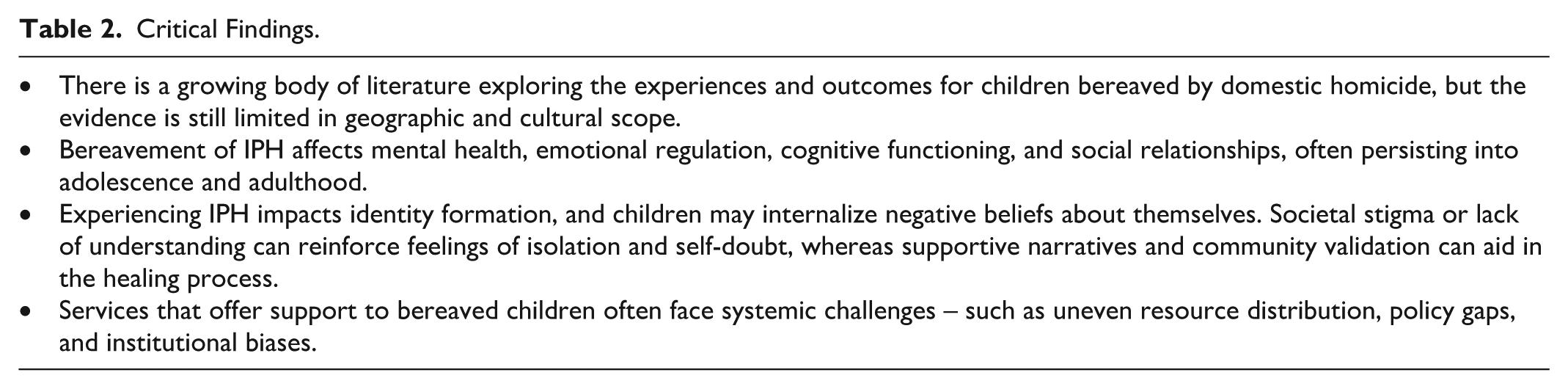
The majority of the included studies underscore the many-sided nature of bereavement, highlighting its lasting effects on children’s development. Many of the psychological and developmental aspects are discussed in depth in a systematic review by Alisic et al. (2015). These effects manifest across different domains, such as emotional regulation, cognitive functioning, and social relationships, often persisting into adolescence and adulthood. The current review both supports these findings and expands the scope. Importantly, for many children, the homicide may represent the culmination of a prolonged pattern of abuse and adversity experienced over time. This context can make it difficult to disentangle emotional, behavioral, and social consequences attributable specifically to the homicide from those associated with earlier abuse. Nevertheless, the homicide itself constitutes a profound and disruptive event, often marking a major break in the child’s family and social world. From a service-provision perspective, the precise attribution of children’s difficulties to prior abuse versus the homicide may be less critical than recognizing the cumulative impact of these experiences and ensuring timely, comprehensive support following the homicide. A recurring theme among the studies is the significant impact of trauma on identity formation. Children who have been bereaved by domestic homicide may come to hold negative beliefs about themselves, such as feelings of worthlessness or self-blame, which can affect the development of a stable and positive self-concept. This disruption in identity formation can lead to challenges in establishing a coherent sense of self and may contribute to long-term mental health challenges. Furthermore, the included research discusses how the society’s narratives and a child’s own experiences come together to shape how the child sees themselves. Children often make sense of their trauma based on the messages they receive from society and their culture. These influences can either make them feel worse about themselves or help them cope better. For instance, stigma or lack of understanding surrounding their situation can reinforce feelings of isolation and self-doubt, whereas supportive narratives and community validation can aid in the healing process.
In summary, the literature emphasizes that being bereaved by domestic homicide is a formative experience that in complex ways influences a child’s identity and mental health trajectory. To handle these complicated situations well, we need an approach that looks at each person’s experience in the context of their wider society and culture.
Challenges in Care and Placement: Contextual Considerations
Across different regions, family placement decisions after domestic homicides often reflect cultural values. In collectivist and extended-family traditions, children are typically placed with kin to maintain family cohesion and cultural continuity. In contrast, Western, and often more individual-oriented societies, might rely more on formal foster care or legal guardianship systems, sometimes leading to multiple care transitions that disrupt a child’s sense of stability and identity. Cultural disconnection was another concern, as foster placements did not always reflect children’s traditions.
Kinship care, which is in many cultures seen as the default option – as children are often placed with relatives on the mother’s side (Lewandowski et al., 2004), often brings its own challenges. Neutral placements, such as non-family foster homes, are sometimes preferred by social workers when the father was dominant (Van Nijnatten & Van Huizen, 2004), aiming to safeguard the child and stabilize contact with the perpetrator. Some of the reviewed research shows that children who are placed in neutral homes tend to be more regularly in touch with the perpetrator, whereas those placed with maternal relatives typically avoid this contact. However, placing children with paternal family may correlate with poorer outcomes compared to other placements (Kaplan et al., 2001).
Stability is another major concern, raised in several of the reviewed studies (Alisic, Groot, Snetselaar, Stroeken, Hehenkamp, & van de Putte, 2017; Enander et al., 2024). Relatives may struggle financially or lack sufficient caregiving ability, leading to frequent moves or inconsistent routines. Children often have to adjust to new family situations, which can include relatives who disagree about how much contact the child should have with their biological parents, struggling with the question of guilt, or where their loyalty lies. These disagreements can come from changing stories and memories on both sides of the family, leading to ongoing conflict. In some cases, the new placements can put children at risk – such as facing neglect, financial problems, threats of being taken away, or even continued abuse, sometimes from a parent still in prison (Hardesty et al., 2008).
Altogether, different cultural contexts determine who cares for children, how societies react, and how professionals work. While kin-based care often supports continuity and identity, it’s not universally sufficient – especially where systemic inequalities exist. Recognizing this cultural complexity helps design better practices to support children affected by domestic homicide.
Societal Responses and Systemic Issues
Although the number of children affected by IPH is low at the population level, the reviewed studies indicate that their needs are often complex and extensive. This has important implications for service organization, as effective support requires specialized competence and coordination despite low case volumes. Flexible and collaborative service models may therefore be necessary to meet these children’s needs.
The findings across the reviewed literature highlight both promising practices and persistent gaps in the support provided to children bereaved by fatal family violence. Quick responses and early activation of services were consistently described as beneficial (Chavez et al., 2024), although access to trauma‑sensitive approaches developed specifically for children remains limited. Formal supports such as schools, social care, victim services, and psychological treatment are available in some contexts, while informal supports through community spaces also play a role. However, the reviewed evidence shows that these supports are often unevenly distributed and often dependent on judicial processes rather than the child’s actual needs (Reif & Jaffe, 2019). Funding is often inconsistent, meaning some areas have fewer therapists, longer waiting lists, or no specialist programs at all (Alisic, Groot, Snetselaar, Stroeken, Hehenkamp, & van de Putte, 2017; Aparici et al., 2020; Stanley et al., 2019). This mismatch between need and provision reflects deeper systemic challenges. Several studies reported that services were unavailable or non‑existent, leaving families to navigate complex systems on their own. Even when referrals were made, professionals often lacked adequate training or confidence to work with children exposed to extensive trauma. Moreover, policies may not clearly assign who should advocate for the child, what support is needed, both short-term and long-term, or how services should work together. For example, authorities often do not consult children about their preferences, and reviews meant to improve practice (such as Domestic Homicide Reviews in the United Kingdom or Domestic Violence Fatality Reviews in Canada) rarely include children’s perspectives or track their follow-through (Stanley et al., 2019). The findings highlight the importance of including children’s perspectives in decision-making and evaluation processes following IPH. Actively involving children may improve the relevance of interventions and should be considered a key element of societal responses in this context.
The Use of Multi-Disciplinary Approaches and Importance of Cohesive Collaboration
Several of the reviewed studies emphasize the importance of multidisciplinary approaches that combine psychological, social, and educational support to meet the complex needs of children bereaved by domestic homicide. For example, models like the Barnahus (“Children’s House”) bring together legal, health, social services, and mental health professionals in a single, child-friendly setting, offering cohesive intervention (Gomersall et al., 2024). Research shows that when these services collaborate closely sharing information and conducting joint assessments the child is spared repetitive storytelling, enhancing both the quality and continuity of care (Gomersall et al., 2024).
Importantly, having clear agreements and regular meetings helps everyone involved know their roles, refer children to the right services on time, and make decisions together. This teamwork ensures that children receive consistent support, especially during important times like legal investigations, trials, or changing schools and homes.
Key Insights From This Review
This scoping review highlights the important work that has already been done in this field, but also the need for research involving larger and more diverse target groups, advocating for studies that span borders and cultures, and emphasizing the inclusion of broader age ranges and minority groups. It is both ethically and practically challenging to recruit and interview children in vulnerable life situations, which creates a barrier to conducting studies on the topic. As a result, there are few studies available, most are recruited by convenience, and the voices of the children themselves and their opinions are limited. There is also a lack of research into the societal effects and long-term consequences of homicide and bereavement. Existing research tends to raise perspectives on prevention and early intervention tactics, but there is a further need for more research on collaborative and community-based strategies in providing support for bereaved children and caregivers over time.
An evaluation of systemic barriers is necessary for each social context. An example could be the issue of financial stress on caregivers that is described in several articles in the sample (Akbaş & Karataş, 2022; Kurdi et al., 2024; Stanley et al., 2019), which may materialize differently across countries with effective social welfare systems and access to relevant economic support programs. In addition, studies should examine how well services collaborate with justice systems and community agencies and assess the benefits and risks of practices–such as mediation or contact with the perpetrating parent. Comparative, cross-country studies could help develop predictive models of risk and protective factors and ultimately inform evidence-based guidelines on issues such as caregiver support, living arrangements, and treatment approaches.
Ideally, more research should be conducted using population-based samples to reduce the biases and limitations associated with convenience and clinical samples. At the same time, we recognize the inherent challenges of such research – particularly when studying small but significantly impacted subgroups. These challenges include the very low prevalence of affected children in the general population and the difficulty of including relevant, specific questions that apply only to a small proportion of respondents. While these methodological constraints are important to consider, they in no way diminish the urgency or importance of improving our understanding of these children’s experiences. Gender is an important aspect of this topic but should not be limited to traditional victim-perpetrator narratives. Gender should also be explored further regarding child reactions and specific needs in the aftermath of domestic homicide. Family-centred approaches, targeting not only the children but also their caregivers and broader support networks, may lead to more lasting and effective help. It is crucial to determine which children are most vulnerable to long-term harm by identifying key risk and protective factors, as well as caregiving solutions and support arrangements that seem to function more effectively than others.
This field of research needs to increase international and longitudinal studies on bereavement from domestic homicide. A further identification of risk and protective factors can create useful grounds for both academic knowledge and practice. How children cope and how such events affect them long term is knowledge that can be utilized in all countries, despite cultural and practical barriers.
Limitations, Implications, and Diversity Assessment
This scoping review has a few limitations. The included studies varied in methodological approaches, sample characteristics, and research aims, which hinders comparability and limits the synthesis of findings. The identified studies are also predominantly from Western countries, which may restrict the cultural relevance of the findings. Furthermore, despite employing a broad search strategy with few limitations, there remains a risk of omitting relevant studies. The heterogeneity of the evidence base and the potential for selection bias should therefore be considered when interpreting the results.
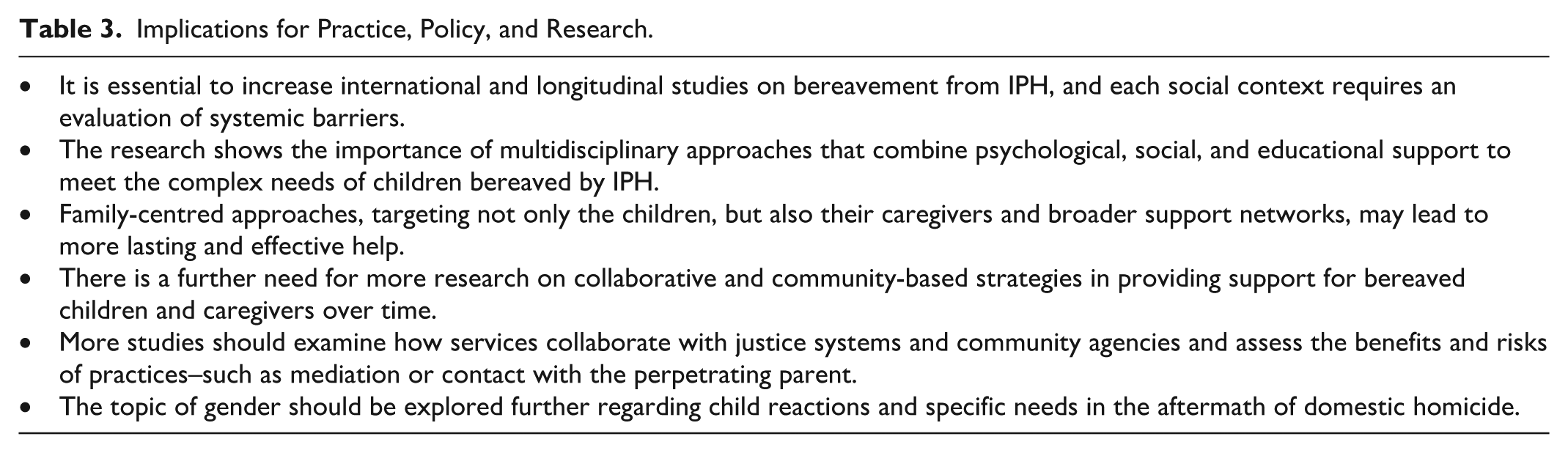
Many studies did not provide detailed information on participants’ race, ethnicity, socioeconomic background, disability status, religion, or geographic location. Gender and age of child participants were more consistently reported, with some evidence suggesting that developmental stage influences both the psychological consequences of bereavement and the type of professional interventions provided. Professional responses and decision-making practices may differ substantially in settings where extended family, community leaders, or religious institutions play a more central role in caregiving. Similarly, the needs of children from minoritized racial, ethnic, or cultural backgrounds may be shaped by structural inequalities and systemic barriers that were not captured in existing studies. Future research should explicitly attend to diversity by including participants from varied cultural, socioeconomic, and geographic contexts, systematically reporting demographic characteristics, and analyzing how intersecting identities shape children’s experiences, coping strategies, and access to support. Further attention to diversity will not only improve the relevance and applicability of research findings but also inform more equitable policy and practice for bereaved children globally. A summary of implications for practice, policy, and research can be found in Table 3.
Implications for Practice, Policy, and Research.
Conclusion
In conclusion, this review highlights the profound and lasting impact of domestic homicide on children, emphasizing the importance of individualized, culturally sensitive, and trauma-informed support systems. While existing research has shed light on the complex challenges faced by bereaved children, significant gaps remain in understanding the long-term effects, especially across diverse cultural contexts. The need for systemic improvements is evident, including equitable resource distribution and the elimination of institutional biases that hinder effective support. Furthermore, integrating multidisciplinary approaches and ensuring children's voices are central to decision-making processes can foster resilience and promote healthier developmental trajectories. Addressing these areas is crucial for providing bereaved children with the care and stability they need to heal and thrive.
Footnotes

Ethical Considerations
Ethical approval was not deemed necessary.
Funding
The authors disclosed receipt of the following financial support for the research, authorship, and/or publication of this article: The work with this scoping review was funded by the Norwegian Centre for Violence and Traumatic Stress Studies and the Norwegian Royal Ministry of Justice and Public Security.
Declaration of Conflicting Interests
The authors declared no potential conflicts of interest with respect to the research, authorship, and/or publication of this article.