






Abstract
Sexual consent in adolescents and young people is a complex issue that requires in-depth analysis from various perspectives. In Spain, current legislation, represented by Organic Law 8/2021 and Organic Law 10/2022, has sought to protect minors from sexual violence, but the use of the term “consent” in this specific context poses significant challenges from a psychological perspective. This study conducts a systematic review to address what psychological and developmental factors shape minors’ capacity to provide sexual consent, and how these findings align with or challenge Spanish legislative assumptions. From an initial 839 studies, 23 met the inclusion criteria to analyse the psychological, developmental, and emotional factors that influence the capacity of adolescents to consent—with a specific focus on the legal threshold of 16 years—in order to identify possible weaknesses in current legislation that contradict current knowledge on the psychological development of minors. The results of this review highlight the need for a critical review of the legislation and for a more nuanced approach that recognises the difference between the capacity to consent of an adult and that of a developing individual, based on scientific evidence and not only on legal criteria. It is hoped that the results of this review will contribute to improving the protection of minors from sexual violence and clarify the ambiguity when speaking in terms of consent between minors.
Introduction
Sexual consent manifests itself as a complex and multifaceted concept, situated at the convergence of psychology, law, and sociology, so that its understanding transcends mere legality, entering into the domains of human development and social ethics. From a psychological perspective, according to Anyadike-Danes et al. (2024) although sexual consent has historically been understood as a person’s willingness or readiness to engage in sexual activity, this definition has been refined. First, it implies a free decision, meaning that there must be no coercion, pressure, or threats for consent to be given (Linander et al., 2021). Secondly, this decision must be informed, which implies that the person has full and clear knowledge of the nature, risks, and consequences of the act to which he or she is consenting. This means that the person fully understands what will be done, how it will be done, and what the possible implications are, both positive and negative, of their decision (Strengers et al., 2021). Finally, among other issues, it must be conscious, not only in terms of sobriety, for example (Anyadike-Danes et al., 2024; Burton et al., 2021), but also in terms of mental awareness or capacity (Anyadike-Danes et al., 2024; Strengers et al., 2021); so this decision must be rooted in a deep understanding of the nature and consequences of the sexual act, as well as the ability to express the willingness to engage in that sexual act clearly and autonomously.
However, when examining the capacity to consent from a developmental perspective, it is necessary to clarify the terminological framework commonly found in the scientific literature. While international treaties often use the term “children” or “minor” to refer to all individuals under 18 (United Nations, 1989), the scientific literature distinguishes between “adolescents” (typically 12–17 years old) and “young people” (up to 21 years old; Grumeza, 2021; Moreno & Thompson, 2020). In the case of these groups, it is essential to acknowledging their emerging agency and developing competence as they navigate interpersonal boundaries (Cooper et al., 2021; Kågesten & van Reeuwijk, 2021). While adolescents are active participants in their sexual lives, their ability to give fully informed and autonomous consent is intrinsically linked to cognitive, emotional, and social developmental factors, which poses substantial challenges in safeguarding their rights and well-being (Kisaakye et al., 2023; Koenig et al., 2020). The inherent immaturity of adolescence (Bertolín-Guillén, 2021) can cloud an individual’s ability to weigh long-term risks (Conceição et al., 2022), succumb to peer pressure (Borraccino et al., 2020; Lunde & Joleby, 2023), or discern manipulative situations (Costa et al., 2020); therefore, protecting consent in children requires a holistic approach that recognises both their evolving autonomy and the inherent vulnerability of this stage of life.
Research across psychology and developmental sciences has consistently shown that sexual consent is not a static construct but one that evolves with cognitive, emotional, and social maturity (Dixon-Mueller, 2008; Niu et al., 2021; Sisk & Gee, 2022). Adolescents under 16 are especially vulnerable to peer pressure (Borraccino et al., 2020), difficulties in emotional regulation (Anil & Bhat, 2020), and manipulative dynamics (Costa et al., 2020). Neuroscientific evidence also indicates that decision-making capacities related to risk assessment are still developing during adolescence (Best & Ban, 2021; Icenogle & Cauffman, 2021). Taken together, these findings highlight the need to critically examine how legal frameworks conceptualise consent in minors, ensuring that definitions align with scientific knowledge on adolescent development.
The “problem of consent” in adolescence is rooted in a fundamental neurobiological mismatch. Evidence indicates that while the socio-emotional system, which is highly sensitive to rewards and peer influence, matures early, the cognitive control system responsible for executive functions and long-term risk assessment continues to develop well into the early 20s (Icenogle et al., 2019; Steinberg, 2008). This gap is particularly critical between the ages of 14 and 17, as the adolescent brain is biologically primed for impulsivity and heightened sensitivity to social approval (Casey et al., 2008). Consequently, the age of 16 represents a precarious threshold; although an individual may demonstrate cognitive competence in neutral “cold” contexts, this capacity often collapses in “hot” emotional or sexual situations where the prefrontal cortex cannot yet effectively override the limbic system’s search for immediate validation (Albert et al., 2013; Figner et al., 2009).
When examining the contexts of adolescent sexual activity, the literature moves along a complex continuum. On one end, a “positive sex framework” suggests that adolescence is a stage for exploring autonomy, agency, and pleasure (Lamb, 2010; Tolman, 2002). However, from a protective and psychological perspective, this framework often fails to account for the inherent power imbalances and the potential for “negotiated vulnerability” (Setty, 2025). For many minors, sexual experiences that appear consensual may still be traumatic or abusive if they occur in contexts of emotional manipulation or social coercion that the adolescent is not yet equipped to navigate (Abel et al., 2025). Thus, the distinction between a beneficial experience and an abusive one is not merely the absence of physical force, but the presence of a genuine, empowered capacity to discern and resist external pressures—a capacity that is frequently compromised during the maturation process (Muehlenhard et al., 2016).
This is where, with the last two legal reforms in Spain that have a direct effect on the protection of minors, the ambiguities surrounding the sexual consent of minors under the age of 16—the age of sexual consent in Spain—begin. Organic Law 8/2021, of June 4, on the comprehensive protection of children and adolescents against violence—LOPIVI, hereafter—played a crucial role at the national level, establishing a comprehensive framework for the protection of the rights of children and adolescents, including measures to prevent and address sexual abuse (Ravetllat Ballesté & Cabedo Mallol, 2023; Sánchez Barroso, 2022). This law maintained the term consent when referring to relations between minors under the age of 16, despite the fact that Preamble II states that Article 183 quater is amended “to limit the effect of extinction of criminal responsibility by the free consent of the minor under the age of sixteen”:
The free consent of the minor under the age of sixteen, except in the cases of Article 183.2 of the Penal Code, shall exclude criminal liability for the offences foreseen in this chapter when the perpetrator is a person close to the minor in age and degree of physical and psychological development or maturity. (Final Provisions, Sixth Final Provision, Article 183 quater, p. 75)
This modification, far from resolving potential issues about sexual relations between minors, seems to legitimise them in one way or another. However, early adolescence, especially in children under 16, is a period of intense changes in cognitive, emotional, and psychological development (Nayak et al., 2022). In addition, the adolescent brain is still maturing (Best & Ban, 2021), which may affect the ability to make rational decisions and assess risks (Icenogle & Cauffman, 2021; Loureiro, 2020). Emotional development influences the ability to regulate intense emotions (Sisk & Gee, 2022) that may arise in sexual contexts, as well as the ability to establish healthy interpersonal relationships, that is, the psychological development of individuals in these formative stages involves a high degree of suggestibility and impulsivity (Loureiro, 2020), so their ability to make fully informed decisions is highly questionable and this inherent lack of experience may affect the ability to recognise coercive situations.
Continuing on the national scene, in 2022 the Organic Law 10/2022, of September 6, on the comprehensive guarantee of sexual freedom—LOGILS, from now on—was approved. This legal text places special emphasis on the need for consent in sexual relations, so much so that it is socially known as the “Law of Only yes means yes.” This led to the elimination of the crime of abuse in our Penal Code, so that all possible abuses became crimes of sexual aggression, including, of course, those crimes perpetrated against the sexual freedom of children. It might seem that this legal text would further safeguard children’s rights, but it continued to use the term consent when talking about relations between children under 16:
Except in cases in which one of the circumstances provided for in the second paragraph of Article 178 applies, the free consent of the minor under the age of sixteen shall exclude criminal liability for the offences provided for in this chapter when the perpetrator is a person close to the minor in age and degree of physical and psychological development or maturity. (Final Provisions, Fourth Final Provision, Article 183 bis)
With this law, not only was the problem in terms of consent maintained, but a new one was added: the change in the nomenclature of sexual acts performed against minors. This is problematic for two basic reasons: (1) sexual aggression is already considered a type of child sexual abuse—CSA, henceforth—in the scientific literature, which refers to situations of sexual abuse that include aggressive acts—whether intrafamilial or extrafamiliar—(Pereda et al., 2012; Rúa Fontarigo et al., 2018); and (2) one of the major problems in research on CSA lies in the lack of consensus on definition and terminology (Lange et al., 2020), although there is agreement that all sexual activities with minors are considered CSA because they cannot give informed consent (Okagua & Hart, 2020; Tyagi & Karande, 2021). While LOGILS reinforces the need for explicit consent, it poses additional challenges in assessing cases involving minors, especially those who may be influenced or manipulated. Thus, LOGILS and LOPIVI, while representing significant progress in terms of the importance of consent and child protection, respectively, require careful implementation and ongoing evaluation to ensure their effectiveness in protecting children.
In summary, the capacity for sexual consent in minors is a complex global issue that requires in-depth analysis beyond legal definitions. While Spanish legislation, through LOPIVI and LOGILS, has sought to protect minors from sexual violence, the use of the term “consent” in this specific context poses significant challenges from a psychological perspective. This highlights a broader need for a critical review of legal standards and a more nuanced approach that recognises the difference between the capacity to consent of an adult and that of a developing minor, based on global scientific evidence. However, despite the wealth of individual studies on adolescent development, there is a lack of integrated evidence that specifically addresses the legal construct of consent through a rigorous, multi-dimensional lens. A systematic review is therefore essential to consolidating these disparate findings into a comprehensive framework that can definitively test the psychological validity of current legal assumptions.
In this sense, this systematic review aims to analyse in depth the psychological, developmental, and emotional factors that influence the capacity to consent of minors, in order to identify how scientific knowledge about psychological development aligns with or contradicts current legislative assumptions. Although this review is prompted by the Spanish legal age threshold of 16, it is considered important to include the perspectives of young adults due to the need for a retrospective perspective and the fact that the neurobiological and psychological maturation associated with consent is a process that extends beyond the legal age of 16. It is hoped that the results of this review will contribute to improving the drafting of future legislation regulating the protection of minors against sexual violence. Accordingly, this review is guided by the following research question: What psychological and developmental factors shape the capacity of minors to provide sexual consent, and how do these findings from the international literature align with—or challenge—the assumptions underlying current legislative frameworks, specifically the Spanish legislation?
Methodology
To explore how psychological factors influence children’s ability to give consent, a systematic review was undertaken. In order to ensure the robustness and transparency of our search process, the guidelines of the PRISMA Statement have been followed (Page et al., 2021). This methodological choice allowed researchers to design a structured and reproducible framework, where specific criteria for study selection were defined, thus ensuring the relevance of sources. Quality assessments were also carried out to minimise possible biases and strengthen the validity of the results. The protocol for this review was pre-registered in PROSPERO, with registration number: CRD420251000637 (available at https://www.crd.york.ac.uk/PROSPERO/view/CRD420251000637).
Procedure
A search of Scopus©, Web of Science© (WoS), Medline©, PubMed©, and PsycINFO© (the latter three via EBSCO) was conducted on February 5, 2025. The strategy sought studies on psychological factors related to consent in minors involved in sexual activities. So the search equation was generated on the basis of four dimensions, unified by the Boolean operator AND: (1) consent (“consent” OR “sexual consent” OR “capacity to consent”); (2) age (“minors” OR “child*” OR “adolescen *” OR “youth” OR “teen*”); (3) context (“sex* relationships” OR “sex* activity” OR “sex* intercourse” OR “sex* behaviour”); and (4) branch of knowledge (“psychology” OR “maturity” OR “cognitive development” OR “decision-making”). Due to the limitations of the search engines, the equation was slightly modified to fit their conditions. For example, in PubMed, some terms with the asterisk (*) were expanded to include variations of words with more than three letters (sex* = sexu*).
Study selection had four phases: (1) initial search; (2) application of inclusion (a, c, e) and exclusion (b, d, f) criteria in databases; (3) review of titles and abstracts for application of inclusion (g, i, m) and exclusion (h, j, l) criteria; and (4) full reading for application of remaining inclusion/exclusion criteria (Table 1).
Inclusion and Exclusion Criteria for Studies.
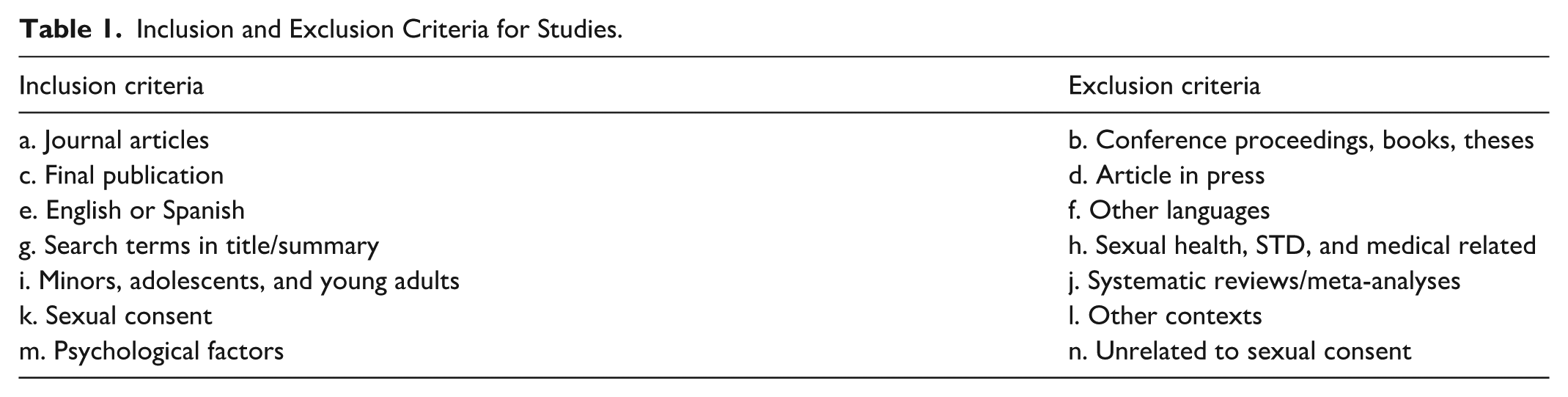
Grey literature (e.g. theses, technical reports, or conference proceedings) were excluded to ensure the quality and reproducibility of the results. Similarly, studies with an exclusively medical or public health focus or in non-psychological contexts were excluded, given that the objective of the review was to specifically analyse the cognitive, emotional, and social factors linked to sexual consent in minors.
Selection of Studies
The initial search yielded 839 records, of which 417 were duplicates. The titles and abstracts of the remaining 584 studies were screened according to pre-defined inclusion and exclusion criteria, which were applied systematically, ensuring relevance to our analysis of psychological factors in the consent of minors. The selection for final reading, after application of these criteria, resulted in 108 papers, and 20 of the references from them were included. The selection process is visualised in the PRISMA flowchart (Figure 1), following the guidelines of Page et al. (2021). Two researchers independently reviewed the titles, abstracts, and subsequently the full texts, using the Rayyan© platform to manage references, detect duplicates, and facilitate blind screening in the first phase. Discrepancies during the study selection phase primarily arose regarding the conceptualisation of “consent” in studies involving adolescents near the legal age threshold. While some records focused on the subjective experience of sexual initiation, others addressed consent strictly as a legal requirement or the absence of coercion. These conceptual overlaps required a second round of evaluation to ensure that all included studies provided specific data on the psychological or developmental factors influencing the capacity to consent, rather than merely reporting sexual activity rates. All such cases were resolved through deliberation between the two researchers until consensus was achieved on the final eligibility of each article.
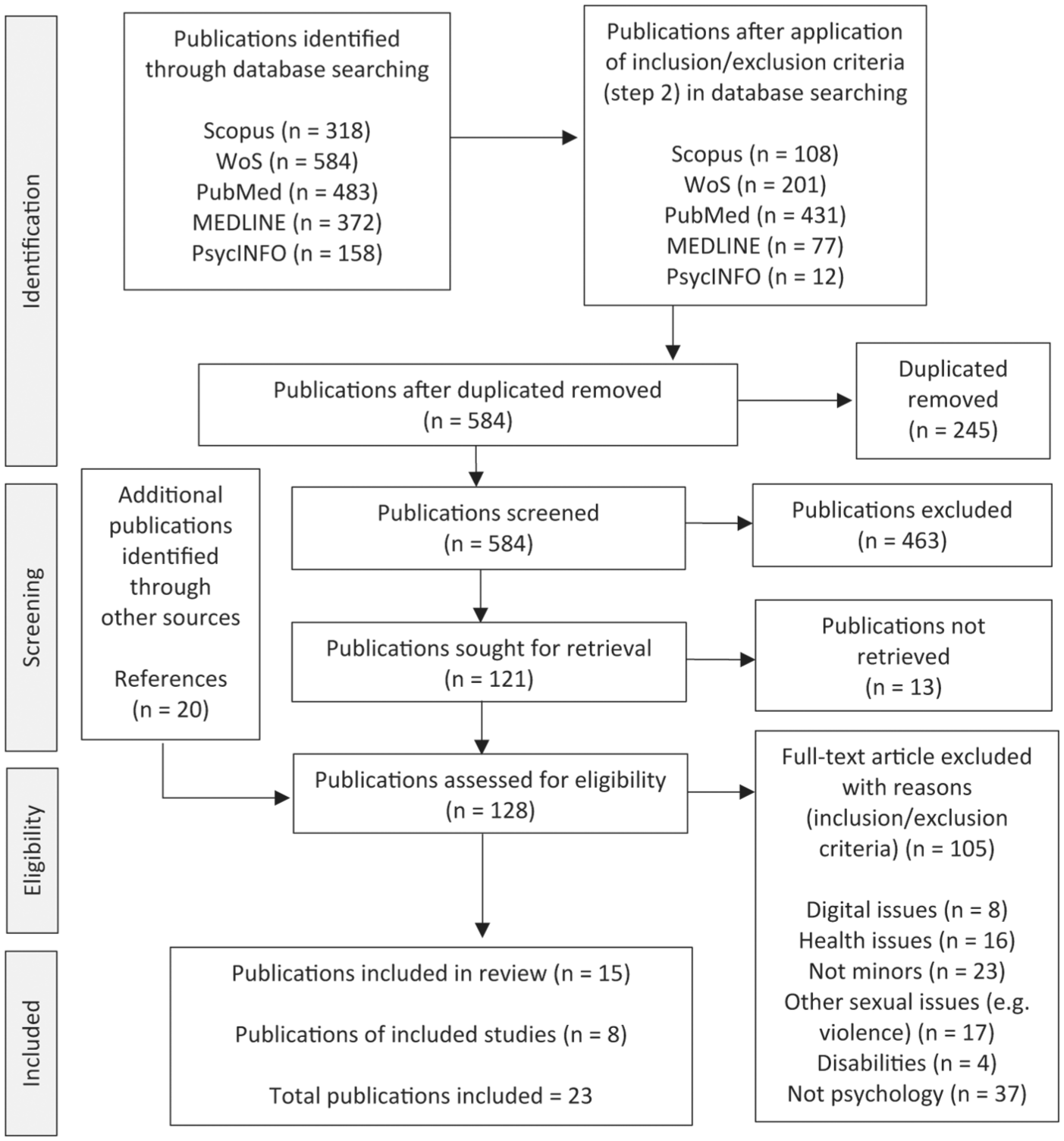
PRISMA flowchart of the literature review.
The critical quality assessment of the incorporated studies was carried out through the application of specialised tools, selected according to the design of each research study. For the qualitative (8) and mixed (3) studies, the CASP tool (Critical Appraisal Skills Programme, 2024) was used. Two of the cross-sectional studies were assessed with the Newcastle-Ottawa scale—as the tool that best suited the studies—adapted according to the modifications proposed by Blanchard et al. (2024), and another study was assessed with an adaptation given its nested sample, combining the cross-sectional and scenario studies instrument. The remaining cross-sectional observational studies (5) and one longitudinal study were analysed with the STROBE tool, following the guidelines of von Elm et al. (2007). Finally, those studies with designs not covered by the standard tools were evaluated using ad hoc instruments designed to assess the conceptual clarity, argumentative strength, and originality of the studies, particularly in the case of theoretical articles (3). All included studies demonstrated high methodological quality with a low risk of internal bias, as confirmed by the standardised appraisal tools (CASP, STROBE, etc.).
Data Recording and Analysis
Given the complexity of sexual consent as a psychological construct, a qualitative synthesis approach was prioritised (Popay et al., 2006). This choice is justified by the need to understand the underlying “why” and “how” of adolescent decision-making. The analysis followed a Conventional Content Analysis (Hsieh & Shannon, 2005), where findings were not merely summarised but thematically integrated (Thomas & Harden, 2008). This method allows for the identification of overarching patterns in cognitive and emotional factors that a simple comparison of rates would overlook, ensuring a rigorous interpretation of the evidence through an inductive and deductive coding process (Saldaña, 2021). For the analysis, mixed coding approach—deductive and inductive—(Hsieh & Shannon, 2005; Miles & Huberman, 1994; Saldaña, 2021) was employed. First, two researchers independently read the full texts, initially coding the “Results” and “Discussion” sections. The deductive phase was based on theoretical categories previously established from the literature on consent and developmental psychology (e.g. cognitive maturation, emotional regulation, power dynamics, and gender). Subsequently, in the inductive phase, new categories emerging from the content of the studies were incorporated, such as “use of non-verbal cues in consent negotiation” or “confusion surrounding legal exceptions due to age proximity.”
After a first round of pilot coding, the codes were discussed and refined until clear conceptual consensus was reached. Discrepancies between researchers were resolved through discussion until agreement was reached. The reliability of the selection and coding process was assessed by calculating the inter-rater agreement between the two independent researchers. A Cohen’s Kappa coefficient of κ = .78 (95% IC [0.62, 0.94]; p < .001) was obtained, indicating a substantial level of agreement that ensures the robustness of the study selection. Finally, the codes were grouped into higher-level thematic categories, from which four analytical axes emerged: (1) Progressive Development of Understanding Consent; (2) Power Dynamics and Vulnerability Factors; (3) Gender Specific Considerations; and (4) Integration of Legal and Developmental Perspectives. From these categories, overarching themes were defined that represented the various dimensions of sexual consent in children under 16, ensuring internal consistency (Saldaña, 2021). All researchers participated in the refinement phase of the themes. This procedure ensured internal consistency and transparency in the construction of the results.
Results
The understanding of sexual consent in minors is analysed, exploring the factors that influence its perception and application (Dixon-Mueller, 2008; Niu et al., 2021). As seen in the studies reviewed (Table 2), this understanding evolves in adolescence, influenced by cognitive and emotional factors, and its relationship to legal frameworks, including minimum age and closeness exceptions, is examined (Costa et al., 2020; Javidi et al., 2025; Ott et al., 2012; Rosenthal, 1997; Smette et al., 2009). In addition, power and vulnerability dynamics, such as age and gender differences, that affect sexual decisions are addressed (Gunasekara et al., 2023; Jones et al., 2024; Miller et al., 2010; Nelson & Oliver, 1998; Setty, 2020; Thorburn, 2016). Furthermore, gender differences in the perception of consent and the influence of social norms are analysed (Javidi et al., 2020). Finally, the importance of integrating legal and developmental perspectives into educational policies and programmes to respond to adolescent needs is highlighted (Dixon-Mueller, 2008; Padilla-Walker et al., 2020; Sieving et al., 2002; Tosto et al., 2014).
Description of the Studies Included in the Systematic Review.
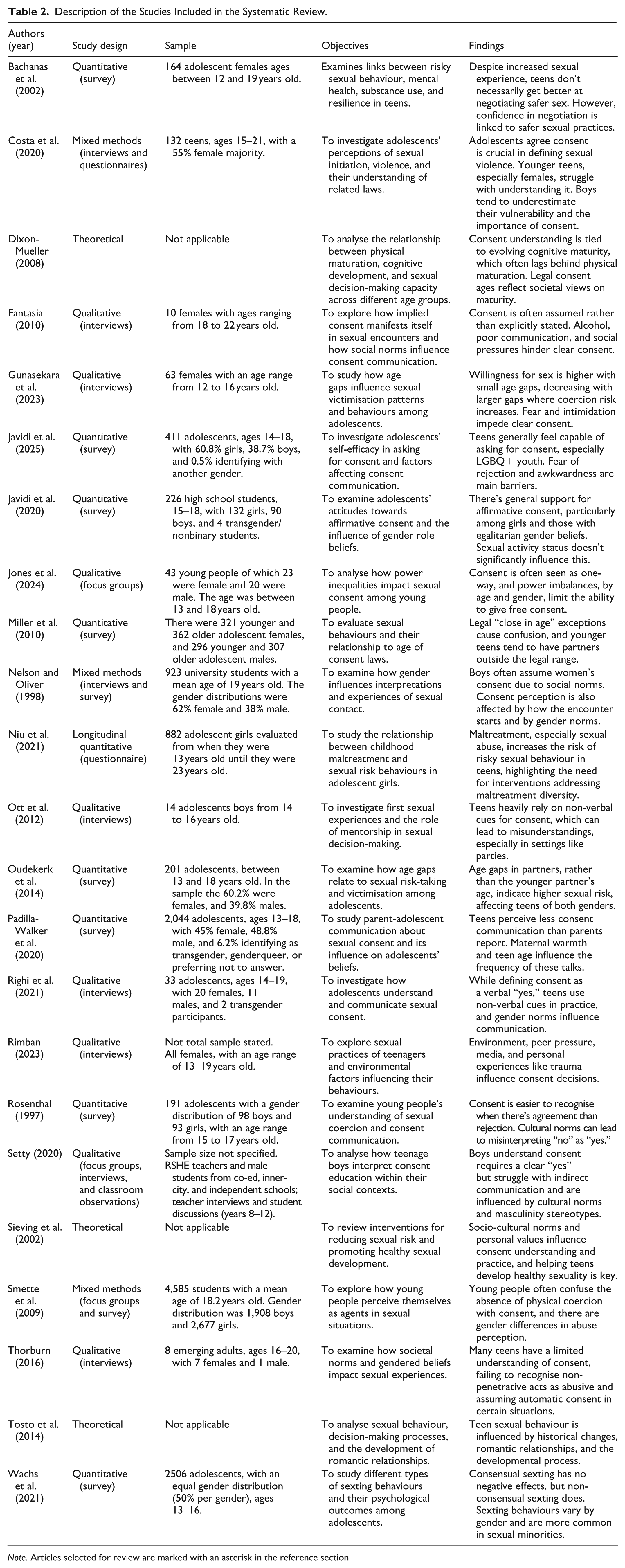
Note. Articles selected for review are marked with an asterisk in the reference section.
The following will examine the various factors that shape children’s understanding of sexual consent, from their personal development to their interaction with the legal and social environment.
Developmental Progression in Understanding Sexual Consent
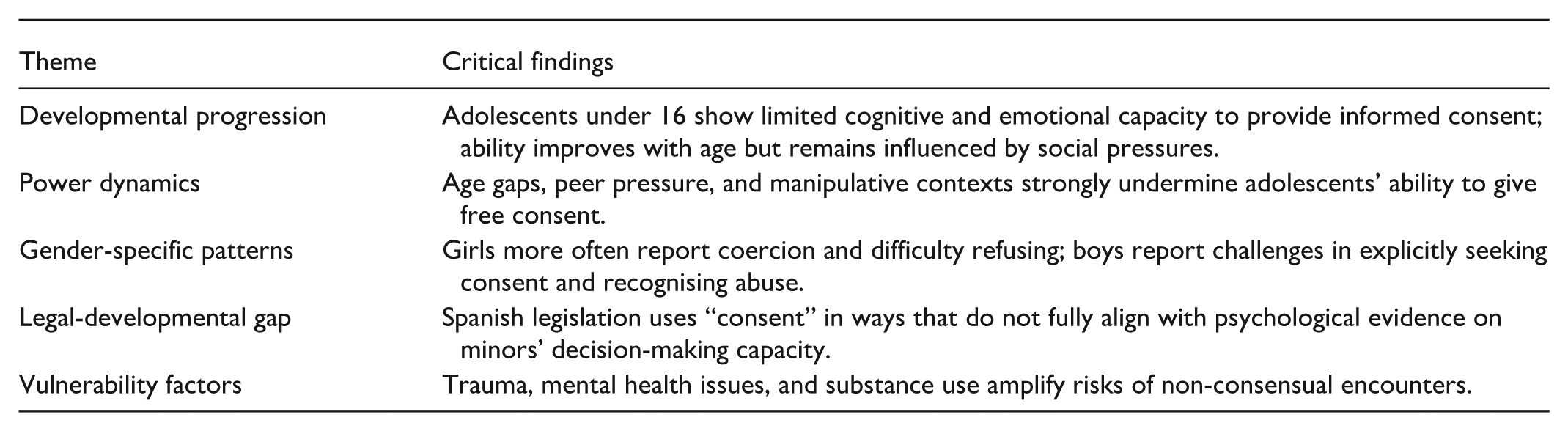
Understanding sexual consent in adolescence is a developmental process (Table 3) marked by significant cognitive and emotional changes (Dixon-Mueller, 2008; Niu et al., 2021). Initially, adolescents show limited capacity for informed decision-making in sexual contexts, due to developing information processing and vulnerability to peer pressure and emotional manipulation, especially in relationships with power imbalances (Bachanas et al., 2002; Costa et al., 2020; Gunasekara et al., 2023; Jones et al., 2024; Miller et al., 2010; Ott et al., 2012; Oudekerk et al., 2014).
Summary of the Evolutionary Stages According to Consent.
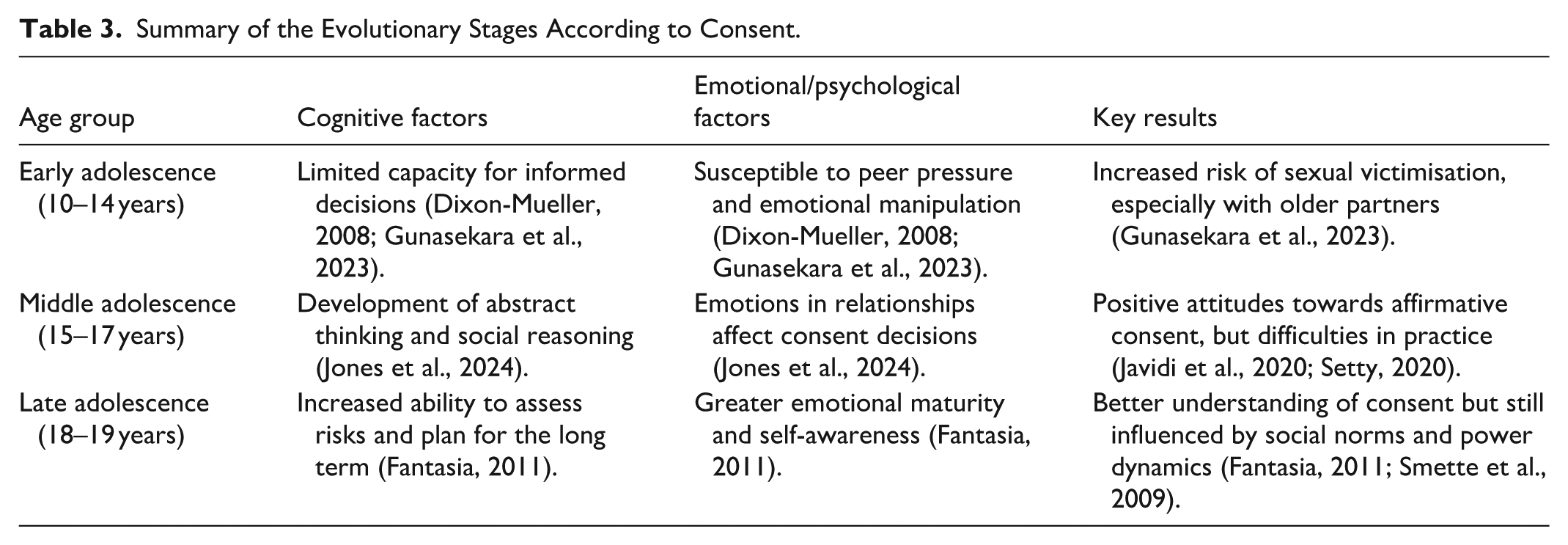
As they progress through adolescence, abstract thinking and social reasoning improve, showing more positive attitudes towards affirmative consent, although practical application remains a challenge (Javidi et al., 2020, 2025; Rosenthal, 1997; Smette et al., 2009). Emotional investment in relationships significantly influences their decisions, and although they develop a greater ability to consider consequences, contextual factors and social pressures can compromise their judgement (Nelson & Oliver, 1998; Padilla-Walker et al., 2020; Righi et al., 2021; Thorburn, 2016).
In late adolescence, capacity for risk assessment and long-term planning increases, allowing for a better understanding of sexual consent (Fantasia, 2011; Rimban, 2023; Setty, 2020). However, socio-cultural influences persist as profound determinants of sexual behaviour, often overriding individual cognitive development. Research indicates that adolescents operate within “sexual scripts” where gender roles dictate an active-male/passive-female dynamic, leading to consent being assumed rather than explicitly communicated (Fantasia, 2011; Setty, 2020). Furthermore, the “hook-up” culture, frequently associated with alcohol consumption, creates environments where context is misinterpreted as implicit consent, and cognitive judgement is significantly blurred (Fantasia, 2011). This is exacerbated by a lack of assertive communication skills, where silence is misconstrued as agreement (Fantasia, 2011). Finally, the influence of peer pressure and previous childhood trauma cannot be overlooked; for many, early sexual activity is not driven by physical desire but by an internal need for emotional validation, which severely compromises the capacity to provide autonomous and empowered consent (Rimban, 2023). Emotional maturity and self-awareness improve, facilitating understanding of power dynamics, but social norms still influence decisions (Sieving et al., 2002; Tosto et al., 2014).
Therefore, educational and preventive approaches tailored to each stage are required, considering cognitive, emotional, and social factors (Dixon-Mueller, 2008; Niu et al., 2021; Rosenthal, 1997). A holistic approach that recognises developmental progression and contextual factors is crucial to promote healthy relationships and informed choices (Miller et al., 2010; Setty, 2020).
Power Dynamics and Vulnerability Factors in Adolescent Sexual Consent
Research on adolescent sexual consent has identified multiple factors that influence power dynamics and vulnerability, interacting in complex ways and affecting adolescents’ ability to manage consent situations (Dixon-Mueller, 2008; Oudekerk et al., 2014). Age differences emerge as a crucial factor, with relationships maintained by people who differ significantly in age being associated with lower willingness to engage in sexual activity and increased instances of coercion, presenting more pronounced power imbalances that increase the risk of victimisation (Bachanas et al., 2002; Costa et al., 2020; Gunasekara et al., 2023; Jones et al., 2024; Miller et al., 2010; Ott et al., 2012).
Gender dynamics also play a key role, with studies revealing that male adolescents tend to perceive sexual encounters with females as consensual due to social norms, while female adolescents frequently report experiences of victimisation in encounters with males (Javidi et al., 2020; Nelson & Oliver, 1998; Setty, 2020; Smette et al., 2009; Thorburn, 2016). Social factors, including popularity, attractiveness, and prior sexual experience, significantly influence the balance of power in adolescent relationships, and peer pressure and social dynamics can create situations of subtle coercion, complicating the consent process (Padilla-Walker et al., 2020; Righi et al., 2021; Rosenthal, 1997).
In addition, specific factors that increase vulnerability have been identified, such as previous traumatic experiences that significantly impact sexual decision-making, substance use, and particularly alcohol, which influences both communication and understanding of consent, and mental health problems that can complicate consent dynamics (Fantasia, 2011; Javidi et al., 2025; Niu et al., 2021; Rimban, 2023; Sieving et al., 2002; Tosto et al., 2014). These vulnerability factors often appear alongside other power dynamics, creating particularly complex situations (Dixon-Mueller, 2008).
Understanding these power dynamics and vulnerability factors underscores the need for nuanced approaches to consent education and preventive interventions that address not only individual decision-making, but also broader social and cultural influences (Miller et al., 2010; Oudekerk et al., 2014; Setty, 2020). Interventions must consider both individual and contextual factors, including the development of skills to recognise and respond to unequal power dynamics, as well as strategies to manage social pressures and situations of vulnerability (Costa et al., 2020; Jones et al., 2024; Nelson & Oliver, 1998; Smette et al., 2009). The complexity of these dynamics highlights the importance of a holistic approach that considers multiple factors of vulnerability and power in the development of prevention and intervention programmes (Gunasekara et al., 2023; Rosenthal, 1997).
Gender-Specific Considerations in Understanding Sexual Consent
Research on adolescent sexual consent highlights gender-specific patterns and challenges, underscoring the need for differentiated approaches (Nelson & Oliver, 1998; Setty, 2020). Female adolescents, for example, face greater vulnerability to sexual coercion and non-consensual encounters, influenced by social pressures and gender expectations that make it difficult to refuse sex (Costa et al., 2020; Gunasekara et al., 2023; Jones et al., 2024; Miller et al., 2010; Oudekerk et al., 2014; Righi et al., 2021; Smette et al., 2009; Thorburn, 2016). The tendency to associate the acceptance of payments or relationships in which the idea of “implicit,” therefore, automatic consent appears, and which reduces the possibilities of communication about what is or is not expected from that sexual relationship, is aggravating this vulnerability (Fantasia, 2011).
On the other hand, adolescent boys show different patterns, with lower self-efficacy in explicitly seeking consent and challenges influenced by masculinity expectations, such as ideas of power and the need for dominance, and cultural norms (Dixon-Mueller, 2008; Javidi et al., 2020; Niu et al., 2021; Ott et al., 2012; Padilla-Walker et al., 2020; Rosenthal, 1997; Setty, 2020). In addition, significant differences are observed in the perception of abusive situations, with males being less likely to recognise them, although both genders value clear communication (Bachanas et al., 2002; Javidi et al., 2025; Miller et al., 2010; Nelson & Oliver, 1998; Rimban, 2023; Sieving et al., 2002; Tosto et al., 2014). These differences are rooted in social and cultural norms that shape sexual interpretations and experiences (Jones et al., 2024).
Consequently, consent education must be tailored to address these specific challenges, considering cultural factors and gender expectations (Costa et al., 2020; Dixon-Mueller, 2008; Gunasekara et al., 2023; Nelson & Oliver, 1998; Padilla-Walker et al., 2020; Setty, 2020; Smette et al., 2009; Thorburn, 2016). A comprehensive approach that recognises and addresses these differences is fundamental to effective interventions that promote healthy and respectful relationships (Javidi et al., 2020; Miller et al., 2010; Niu et al., 2021; Rosenthal, 1997).
Legal Frameworks and the Integration of Developmental Perspectives
The interplay between legal frameworks and adolescent sexual development presents complex challenges (Costa et al., 2020; Dixon-Mueller, 2008), where age of consent laws, designed for the protection of minors, often do not align with developmental realities and their everyday social experiences (Bachanas et al., 2002; Costa et al., 2020; Dixon-Mueller, 2008; Javidi et al., 2025; Miller et al., 2010; Oudekerk et al., 2014; Thorburn, 2016). This discrepancy creates significant tensions in the practical application of such laws, highlighting the need for a more nuanced approach that considers both physiological maturation and cognitive capacity, as age of consent laws do not always align with individual developmental trajectories, creating a gap between normative and adolescent reality (Javidi et al., 2025; Miller et al., 2010; Niu et al., 2021; Thorburn, 2016).
In this context, age-proximity exceptions attempt to balance protection and recognition of normative sexual development during adolescence. However, as previously noted, these exceptions can lead to confusion among young people about the legal boundaries of consent, especially in real-life situations (Gunasekara et al., 2023; Jones et al., 2024; Ott et al., 2012; Smette et al., 2009). Furthermore, there is a marked discrepancy between the legal definition of consent and the practical understanding of adolescents, who tend to equate the absence of physical coercion with the presence of consent, a simplification that fails to reflect the legal complexity and developmental considerations raised by research (Costa et al., 2020; Javidi et al., 2020; Nelson & Oliver, 1998).
These difficulties in translating legal definitions into adolescent experiences are further complicated by variations in emotional and cognitive maturity (Fantasia, 2011; Nelson & Oliver, 1998; Padilla-Walker et al., 2020; Rimban, 2023). Factors beyond legal age, such as emotional maturity, social status, and individual evolving capacities, impact the capacity to consent, underscoring the vital importance of contextual elements (Bachanas et al., 2002; Ott et al., 2012; Righi et al., 2021; Rosenthal, 1997; Setty, 2020; Tosto et al., 2014). Consequently, an integrative approach that combines developmental science with legal frameworks is essential to developing effective policies and appropriate institutional frameworks (Dixon-Mueller, 2008; Jones et al., 2024; Miller et al., 2010; Niu et al., 2021; Rimban, 2023; Rosenthal, 1997; Setty, 2020; Thorburn, 2016).
In this situation, educational institutions emerge as crucial actors. Their role is fundamental in translating complex legal concepts into frameworks of understanding accessible to adolescents, through comprehensive sexuality education programmes that address both legal and psychosocial aspects (Padilla-Walker et al., 2020; Righi et al., 2021; Setty, 2020; Sieving et al., 2002). These programmes should foster communication skills, self-efficacy, and the development of cognitive, emotional, and social skills required to foster healthy sexual decisions (Dixon-Mueller, 2008; Miller et al., 2010; Ott et al., 2012; Righi et al., 2021; Rosenthal, 1997; Setty, 2020; Smette et al., 2009). Therefore, effective integration of legal and developmental perspectives requires a multifaceted approach that recognises the dynamic nature of adolescent development, enabling the development of protective and appropriate institutional frameworks (Jones et al., 2024; Niu et al., 2021; Rosenthal, 1997; Thorburn, 2016).
In conclusion, continued research is needed to refine approaches and create legal frameworks that protect young people and support their safe sexual development within appropriate parameters, ensuring that educational policies and programmes fulfil a dual function: protecting adolescents while promoting their healthy development (Fantasia, 2011; Rosenthal, 1997; Tosto et al., 2014).
Discussion
The findings of this systematic review reinforce the complexity of sexual consent in children under 16, highlighting the intersection among psychological development, social influence, and the legal framework. In particular, the review highlights that minors’ capacity to give informed consent is conditioned by their level of cognitive, emotional, and social maturity (Dixon-Mueller, 2008; Niu et al., 2021), which calls into question the applicability of a purely legal criterion based on the “age of consent” variable established by Spanish law.
From a psychological perspective, the studies reviewed show that cognitive development in adolescence is progressive and that informed decision-making in sexual contexts is influenced by the immaturity of the adolescent brain (Best & Ban, 2021; Icenogle & Cauffman, 2021; Loureiro, 2020). This is consistent with previous research that has shown that adolescents under 16 tend to have difficulties in risk assessment (Heller & Skymba, 2022) and emotional self-regulation (Anil & Bhat, 2020), essential factors in understanding sexual consent (Sisk & Gee, 2022). In addition, gender differences in the interpretation of consent and the influence of social norms reinforce the need for differentiated approaches to sexuality education and public policy (Javidi et al., 2020; Setty, 2020).
In the legal sphere, the results of this research are in line with the problems identified in Spanish legislation, where the LOPIVI and LOGILS maintain the figure of consent in relationships between minors under 16 years of age, despite the fact that numerous psychological and developmental studies indicate that adolescents of this age may be more susceptible to coercion and social pressure (Borraccino et al., 2020; Costa et al., 2020; Lunde & Joleby, 2023). This legal ambiguity not only generates inconsistencies in the protection of minors but also hinders the effective implementation of regulations aimed at preventing child sexual abuse (Ravetllat Ballesté & Cabedo Mallol, 2023; Sánchez Barroso, 2022).
Furthermore, the review has identified that the “proximity of age and maturity” exception in both laws can be interpreted ambiguously given the lack of understanding of the concept of consent (Setty, 2020), which could lead to situations of vulnerability for minors. Research reviewed indicates that while adolescents may experience sexual desire and curiosity (Hegde et al., 2022), their ability to make fully informed decisions is still developing and may be compromised in situations of pressure, manipulation, or power inequality (Gunasekara et al., 2023; Jones et al., 2024; Miller et al., 2010).
Another relevant finding is the influence of social and cultural factors on the understanding of consent. In particular, peer pressure (Racionero-Plaza et al., 2021), gender stereotypes (Setty, 2020), and sex education received (Thiessen et al., 2021) have been found to play a key role in how adolescents interpret and express consent (Padilla-Walker et al., 2020; Righi et al., 2021; Rosenthal, 1997). These findings reinforce the need for educational programmes that not only address the legal dimension of consent, but also its psychological and social understanding (Sieving et al., 2002; Tosto et al., 2014).
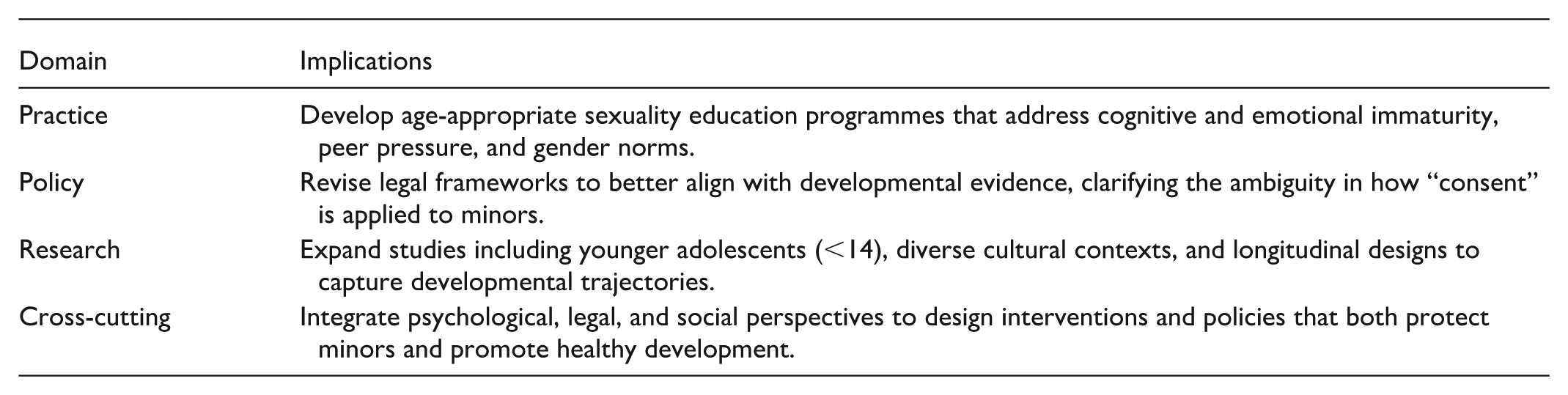
In terms of practical implications, these findings underscore the urgency of legislative and policy reforms that consider the psychological evidence on the development of consent in minors. It is critical that laws reflect not only chronological criteria or maturity, but also the decision-making capacity of adolescents (Fantasia, 2011; Nelson & Oliver, 1998). The synthesis of this evidence reveals a critical friction between developmental reality and the current Spanish legislative framework (LOPIVI and LOGILS). By maintaining the legal figure of “consent” for relations involving adolescents under 16, the law risks legitimising a psychological impossibility. The findings demonstrate that in this age group, consent is rarely a fully autonomous choice; rather, it is a “negotiated vulnerability” shaped by immature risk assessment, neurobiological development, and pervasive socio-cultural pressures. Consequently, the legal assumption of “free consent” in early adolescence ignores the fact that a minor’s agreement is often a byproduct of gendered scripts, peer compliance, or a search for emotional validation rather than a genuine exercise of sexual freedom.
To effectively align legislation with developmental reality, a shift from a formalistic “age of consent” towards a protective framework grounded in developmental science is required (Icenogle et al., 2019; Steinberg & Icenogle, 2019). This would necessitate a terminological reform where the term “consent” is replaced by concepts such as “negotiated vulnerability” or “participation” for individuals under the age of 16, acknowledging that a minor’s agreement is often a byproduct of immature risk assessment and neurobiological development rather than a genuine exercise of sexual freedom (Blakemore et al., 2012; Icenogle et al., 2019). Furthermore, the “proximity of age and maturity” exception should not rely on a mere chronological calculation but should instead require a mandatory psychosocial assessment to evaluate the specific power dynamics, emotional regulation, and the capacity to discern manipulative situations present in the interaction (Ramaswamy et al., 2021; Steinberg & Icenogle, 2019). This legislative shift should also move the burden of responsibility from the minor to the more mature peer or adult involved, focusing the law’s evaluation on the other party’s responsibility in navigating an inherent power imbalance rather than questioning the minor’s capacity to resist (Abel et al., 2025). Finally, legal standards must account for the neurobiological mismatch between early-maturing socio-emotional systems and the later-developing cognitive control systems, recognising that a minor’s capacity often collapses in “hot” emotional or sexual contexts where the prefrontal cortex cannot yet effectively override the search for immediate validation (Ramaswamy et al., 2021; Steinberg & Icenogle, 2019).
In addition, it is recommended that comprehensive sexuality education and prevention strategies be implemented (Thiessen et al., 2021), not as a means of placing the burden of protection on the minor, but as a systemic effort to empower adolescents. Rather than framing this as a requirement for the individual to “recognise” manipulation, interventions must address the socio-cultural barriers and gendered power imbalances that make such recognition difficult. Strengthening decision-making skills (Javidi et al., 2025; Miller et al., 2010) must be coupled with the transformation of social environments, ensuring that the responsibility for safety is shared among peers, educators, and legal frameworks. This shift ensures that prevention does not carry victim-blaming undertones but instead focuses on dismantling the cultural norms that validate coercion and limit a minor’s genuine capacity for informed and safe choices. In light of these findings, a key limitation of the reviewed literature concerns diversity. Most of the included studies were conducted in Western contexts, primarily in Europe and North America, which limits the generalisability of the results to adolescents in other cultural settings where norms, laws, and sex education may differ substantially.
One of the main strengths of this review lies in its comprehensive approach, considering both the psychological evidence and the legal implications of consent in minors. However, it is important to recognise certain limitations. Although gender differences were consistently examined, showing that girls and boys face different challenges when negotiating consent, few studies included non-binary or transgender adolescents, leaving significant gaps in our understanding of diverse gender identities. Furthermore, most samples were drawn from school populations, with limited representation of marginalised groups such as adolescents with disabilities, migrants, and those from low socioeconomic backgrounds. Future research should explicitly address these gaps, ensuring greater cultural, gender, and social diversity to strengthen the evidence base and inform more inclusive practices and policies.
Besides, one of the exclusion criteria establishes that grey literature articles should not be taken into account, which, while ensuring methodological quality, may introduce publication bias. Besides, the review has focused exclusively on adolescents and young adults, without addressing in any depth the situation of children under the age of 10, whose capacity to consent is even more limited and presents particular challenges (Okagua & Hart, 2020; Tyagi & Karande, 2021). Furthermore, while social and cultural factors have been considered, future studies could further explore how variables such as family and educational context influence children’s understanding of consent (MacDougall et al., 2020). The inclusion of these elements would allow for the development of more effective strategies for the protection of children’s rights and the prevention of sexual abuse. Finally, the need for further research on the interaction among adolescent development, consent, and legislation is recognised in order to ensure regulatory and educational frameworks that effectively protect children’s rights. To this end, an interdisciplinary approach is recommended that integrates psychological, legal, and social perspectives, ensuring that legislation is aligned with the reality of adolescent development and the protection of adolescent well-being (Rosenthal, 1997; Thorburn, 2016).
This systematic review was guided by the question of how psychological and developmental factors shape the capacity for sexual consent in developing individuals and how these align with current Spanish legislation. The findings lead to a clear conclusion: there is a significant discrepancy between the legal construct of “free consent” and the developmental reality of adolescents. The evidence synthesised here indicates that consent at these ages is not a static or purely autonomous act, but a negotiated vulnerability mediated by a high sensitivity to peer pressure, and, among others, a documented difficulty in discerning subtle manipulative dynamics. Consequently, by utilising the term “consent” for relations involving minors under 16, current laws (LOPIVI and LOGILS) may be overlooking the psychological impossibility of fully autonomous decision-making in this stage of life. In summary, the research questions have been answered by identifying that immaturity and socio-cultural “sexual scripts” fundamentally compromise the capacity to consent. Future legislative reforms should prioritise a protective framework grounded in developmental science rather than formalistic legal definitions of voluntariness.
Psychological Factors in Sexual Consent: A Systematic Review with a Developmental Perspective and its Legal Applications
Summary of Critical Findings
Implications of the Review
Discussion of Diversity in Reviewed Research
A key limitation of the reviewed literature concerns diversity. Most of the included studies were conducted in Western contexts, primarily in Europe and North America, which limits the generalizability of findings to adolescents in other cultural settings where norms, laws, and sexual education may differ substantially. Gender differences were often examined, with consistent evidence that girls and boys face distinct challenges in negotiating consent, but few studies included non-binary or transgender adolescents, leaving important gaps in understanding diverse gender identities. Additionally, most samples were drawn from school populations, with limited representation of marginalised groups such as adolescents with disabilities, migrants, and those from low socioeconomic backgrounds. Future research should explicitly address these gaps, ensuring greater cultural, gender, and social diversity to strengthen the evidence base and to inform more inclusive practice and policy.
Footnotes

Ethical Considerations
This study was approved by the Ethics Committee for Research and Animal Experimentation of the University of Alcalá (Reference: CEIM/2021/3/056).
Author Contributions
All the authors contributed to the study conception, design, and data collection. Material preparation and analysis were performed by Vanesa Pastor-Cerezo. The first draft of the manuscript was written by Vanesa Pastor-Cerezo, and all the authors commented on previous versions of the manuscript. Alejandro Iborra Cuéllar provided substantive revisions. All the authors read and approved the final manuscript.
Funding
The authors disclosed receipt of the following financial support for the research, authorship, and/or publication of this article: This work was supported by the Ministry of Science, Innovation and Universities (Spain) under Grant FPU22/00105.
Declaration of Conflicting Interests
The authors declared no potential conflicts of interest with respect to the research, authorship, and/or publication of this article.
Data Availability Statement
The datasets generated and/or analysed during the current study have not been uploaded, as this was not considered necessary due to the data reported in the article being deemed sufficient to ensure the study’s replicability. The full dataset is available from the corresponding author upon reasonable request.