






Abstract
American Indian and Alaska Native (AI/AN) peoples in the United States and Indian Country and Alaska Native Villages are disproportionately impacted by extractive industries such as mining, forestry, and drilling. While extractive industries may bring economic benefits to communities, they can also contribute to increased crime and violence. This scoping review identifies and examines the current research on extractive industries and violence against Indigenous persons in the United States with particular attention to data sources and research methods. A search equation applied across seven databases yielded 2,156 records; five records were included after full-text review. The review was conducted following the Preferred Reporting Items for Systematic Reviews and Meta-Analysis Protocols extension for scoping reviews. Findings reveal that current evidence is limited to one type of extractive industry (oil), and primarily to one region in the United States (central north), and lacks strong causal designs. The current research, albeit limited, suggests a relationship between extractive industries in an area and increased violence against AI/AN people; however, more comprehensive and methodologically robust research is needed to better understand how extractive industries contribute to violence against AI/AN people, across diverse regions and contexts in the United States.
Keywords
Introduction
American Indian and Alaska Native (AI/AN) reservations (i.e., “Indian country” and “Alaska Native Villages” 1 ) have often been targets for extractive industries such as mining, forestry, fracking, and oil drilling due to their rich natural resources. Extractive industries may benefit communities by, for instance, opening new employment opportunities, increasing local wages, and bringing a proliferation of new residents (i.e., laborers) (e.g., Allcott & Keniston, 2014; Black et al., 2005; Weber, 2012). However, they can also change the social fabric of a community through increases in transient workers, illicit drugs, and even crime and violence (see meta-analysis by Stretesky & Grimmer, 2020).
As of August 2025, the U.S. government recognizes 574 tribes. As federally recognized tribes, they have the right to form their own governments, enact laws, and adjudicate legal cases within their jurisdiction, as well as exercise a broad range of powers and responsibilities to serve their community. Their inherent sovereignty allows them to govern their internal affairs, including the establishment of their own justice systems. The structure of these tribal governments and justice systems varies. As sovereign nations, the U.S. federal government recognizes tribes as self-governing. However, this sovereignty is subject to the plenary power of the U.S. Congress. For example, U.S. federal law limits tribal governments’ powers to make and enforce laws and prosecute offenders—and particularly non-Native offenders—on tribal lands (see Deer, 2015). Together, AI/AN people and tribal communities may be particularly vulnerable to crime and victimization, which may occur in the wake of extractive industries. At present, however, the research on extractive industries and crime and violence against AI/AN people in the United States is severely limited—in fact, we are unaware of any systematic investigations on this topic. Thus, the present scoping review first examines the data and methods used to gather information on this relationship and then presents the findings from this body of work. It concludes by summarizing the gaps in the research literature and proposes research recommendations for further exploration.
Extractive Industries and Crime
Prior research shows that extractive industries are associated with increases in crime rates in communities compared to the rates prior to the onset of extractive industries or crime rates in similar communities without extractive industries (see systematic review by Stretesky & Grimmer, 2020). Outside of the United States, there has been much more attention to this issue: extractive industries have been associated with sex trafficking in South American countries (U.S. Department of State, 2017), extortion and money laundering, child labor, and labor trafficking in Congo (Zabyelina, 2023), violent crime in the United Kingdom (Stretesky et al., 2018), organized crime and drug trafficking in countries in Latin America (e.g., United Nations Office on Drugs and Crime, 2025), and various forms of transnational and corporate crimes (Maksimentsev & Maksimentsev, 2020), to name a few. Research is much more limited on the topic within the United States, however, and regarding the relationship between extractive industries and crimes against Native Americans specifically, empirical studies on the topic are nearly nonexistent.
The general empirical literature has focused much on the oil and gas industries; Stretesky and Grimmer (2020) reviewed 25 quantitative studies on the relationship between shale gas production and crime rates. Reviewed studies found significant relationships (i.e., p < .05) between shale gas production and rates of total crime (in 4 of 8 studies), violent crime (in 9 of 17 studies), property crime (in 7 of 15 studies), social disorganization crimes (i.e., classified as drug offenses, disorderly conduct, simple assault, drunkenness; in 4 of 6 studies), and violence against women crimes (i.e., rape, domestic abuse, dating violence, stalking, sexual assault; in 7 of 10 studies). However, forestry, gold and other mineral mining, and water and fishing industries have also been of interest. It is suggested that deforestation, for example, can house illegal activities where deforestation takes place and is also associated with activities in illegal markets (Carpio-Dominguez, 2024), while other forms of extractive industries can disrupt local and global financial markets.
The mechanisms underpinning the relationship between the extractive industry are varied, with causality sometimes unclear. For instance, James and Smith (2017) note there is a lack of consensus regarding whether extractive industry “booms attract or produce criminal activity” (p. 126). For example, research has posited that increases in crime rates could be caused by the attraction of large numbers of laborers from groups who are disproportionately likely to commit crimes, such as young men, or more specifically, men who are restricted in the labor market, such as sex offenders (O’Connor, 2014, 2017). Others have argued that changes in crime rates are produced by increases in income inequality and social disorganization (e.g., increases in transient residents/breakdown in community ties) associated with extractive industries or the failure to increase law enforcement resources commensurate with population increases (Stretesky et al., 2018). Similarly, the influx of both people and income creates opportunities for more crimes to occur—bringing both potential perpetrators and victims into an area, alongside increases in cash flow, can create more demand for substance use, alcohol, and other forms of crime (e.g., gambling, theft, disorderly conduct, and so forth, e.g., Carpio-Dominguez, 2024). However, few studies have attempted to test these relationships outside of correlational or associational analyses. One study from James and Smith (2017) examining crime rates among U.S. counties with and without shale gas or tight oil production from 2000 to 2013 found a positive relationship between production and rates of aggravated and simple assault, larceny, grand theft auto, burglary, and forcible rape. However, they found no evidence that counties with oil production experienced disproportionate increases in the percentage of the population who were male or decreases in the number of law enforcement officers per capita. They did, however, find some evidence of a correlation between oil production and the percentage of a county’s population who were registered as a sex offender in some oil-producing counties and a disproportionate rise in income inequality among oil-producing counties compared to control counties. Still, this research relies on correlational relationships and is unable to link perpetrator characteristics (e.g., resident or nonresident) to crimes.
Crime and Violence Against AI/AN People and Responses in Indian Country and Alaska Native Villages
Prior research indicates that AI/AN persons experience crime victimization at higher rates than non-Native people in general (Catalano, 2007; Rosay, 2016), and AI/AN women report experiencing violence in their lifetime, including poly-victimization and severe violence (e.g., violence resulting in injuries, including a weapon) (Bachman et al., 2008; Rosay, 2016) at higher rates than women of other racial/ethnic groups. Thus, Native Americans experience high rates of victimization and serious violence; these issues may become even more potent when considering the impact of extractive industries in these communities.
Tribal governments have limited legal avenues to apprehend, prosecute, and punish people when they perpetrate crimes in Indian country (for a discussion, see Slaff, 2023). To begin, the Major Crimes Act of 1885 (8 U.S.C. § 1153) restricted tribes’ jurisdiction of select crimes (i.e., murder, manslaughter, kidnapping, maiming, sexual abuse, incest, felony assault, felony child abuse and neglect, arson, burglary, larceny, and robbery) committed in Indian country to the federal government regardless of whether the victim is AI/AN. In addition, Public Law 280 (1953) transferred jurisdiction of crimes committed on Indian lands in six states: Alaska, California, Minnesota, Nebraska, Oregon, and Wisconsin, from the federal government to those states. Furthermore, since the Supreme Court’s 2022 decision in Oklahoma v. Castro-Huerta, 597 U.S. 629, state governments (not tribes) now have concurrent jurisdiction with the federal government to prosecute crimes committed by non-Natives against Natives in Indian country. The Indian Civil Rights Act (ICRA, 1968) also placed limitations on tribal jurisdiction regarding sentencing convicted offenders. Under ICRA and its 1986 amendment, a tribal court’s sentencing authority is limited to 1 year in jail or fines up to $5,000, or both. Indigenous legal scholar Deer (2015) argues that these federal laws make violence against Native persons less likely to be punished or prosecuted, and thus, easier to perpetrate and less likely to be reported.
More recently, the federal government has made attempts to address violence in Indian country and Alaska Native Villages through new federal legislation. The Tribal Law and Order Act (2010) (TLOA) enhanced tribes’ sentencing authority over AI/AN offenders and extended access to national criminal justice databases to tribal law enforcement. In addition, the 2013 reauthorization of the Violence Against Women Act (VAWA) established Special Domestic Violence Criminal Jurisdiction (“SDVCJ”) to tribes for domestic violence, dating violence, and violations of protection orders by both Native and non-Native offenders. The recent reauthorization of VAWA (2022; Public Law No. 117-103) expanded the SDVCJ program to include additional crimes and was thus renamed the Special Tribal Criminal Jurisdiction (STCJ) program. The STCJ program expands covered crimes (i.e., assault of tribal justice personnel, domestic and dating violence, child violence, obstruction of justice, sexual violence, sex trafficking, stalking, and violations of protective orders), as well as jurisdiction over all defendants (both Indian and non-Indian) committed in Indian country and Alaska Native Villages. However, the STCJ does not address crimes perpetrated by non-Native acquaintances or strangers against Native victims in Indian country and Alaska Native Villages (see discussion in Gilbert et al., 2021), which may be particularly relevant to the relationship between crime in Indian country and Alaska Native Villages and extractive industries, as extractive industries often result in an influx of new workers to an area. Furthermore, as of July 2025, the Department of Justice was aware of only 38 federally recognized tribes that had implemented STCJ (See Supplemental File A).
Land Regulation and Extractive Industries in Indian Country and Alaska Native Villages
The U.S. federal government has had a regulatory relationship with tribal lands and land resources since treaty-making began in the late 1700s. In these treaties, tribes ceded the rights, title, and interests in their lands to the United States while retaining or reserving certain rights. The Supreme Court has upheld these treaties, and the rights granted to tribes, such as rights to water (e.g., United States v. Winans, 198 U.S. 371, [1905; see also, Winters v. United States, 207 U.S. 564 [1908]) or minerals (United States v. Shoshone Tribe of Indians, 304 U.S. 111 [1938]).
Beginning in 1850, a series of treaties, statutes, and executive orders mandated that tribes move onto reservation lands (i.e., land reserved for the tribe) (U.S. Department of the Interior Indian Affairs, n.d.). For some tribes, reservations were distant from their homeland, while for others, they comprised a small area of their original territory (U.S. Department of the Interior, Indian Affairs, n.d.). Furthermore, the General Allotment Act of 1887 divided reservation land into individual allotments for each member of a tribe, while the remaining reservation land was designated as “surplus” by the federal government and opened to non-Native homesteaders (U.S. Department of the Interior Indian Affairs, n.d.). As a result, tribal-owned land was dramatically reduced from 138 million acres in 1887 to 48 million acres in 1934 (U.S. Department of the Interior Natural Resources and Revenue Data, n.d.). Furthermore, as tribal recipients of land allotments have lost their land to unpaid taxes, sold their land, or whose decedents now own fractions of original allotments (i.e., fractionation), many reservations now exist as a “checkerboard of land ownership” with both Native and non-Native landowners as well as parcels of land with many co-owners (U.S. Department of the Interior Natural Resources and Revenue Data, n.d.) complicates jurisdictional challenges (e.g., split authority, regulatory gaps) and accountability (e.g., limited control over contiguous land areas, making governance and prosecution difficult).
In Alaska specifically, the Alaska Native Claims Settlement Act (ANCSA) of 1971 extinguished aboriginal land title and created 12 for-profit Alaska Native regional corporations and more than 200 private Alaska Native village corporations—all owned by enrolled Alaska Native shareholders (ANCSA Regional Association, n.d.; U.S. Department of the Interior Natural Resources Bureau of Land Management, n.d.). Through ANCSA, more than 44 million acres of land were transferred by the federal government to more than 74,000 Alaska Native regional and village corporation shareholders (ANCSA Regional Association, n.d.). Over time, many Alaska Native corporations have engaged in land transfers with each other as well as with state and federal agencies, resulting in a mix of legal rights to surface (i.e., above the ground) and subsurface (i.e., below the ground) resources across Alaska Native regional and village corporations as well as non-Native government agencies (ANCSA Regional Association, n.d.).
A series of federal laws allows the use of tribal lands for extractive industries for mining, forestry, or other purposes, with input by the tribe(s) affected. To demonstrate, the Indian Mineral Leasing Act of 1938 (IMLA) allows tribes to lease their lands out for extraction, with tribal consent. However, they are limited in the negotiation terms they can set (e.g., rates, lease cancellation), and the U.S. Secretary of the Interior must approve the terms. In addition, the Indian Mineral Development Act of 1982 (IMDA) allows tribes and tribal individuals to negotiate their own “mineral development agreements” (MDAs) with extraction companies, but like the IMLA, it requires approval by the U.S. Secretary of the Interior.
Furthermore, tribes’ sacred religious sites (and sacred objects) are protected by the American Indian Religious Freedom Act (AIRFA) of 1978 and may limit extractive industries’ access to certain locations. Similarly, the National Historic Preservation Act (NHPA) of 1966 established a partnership between the federal government and state, tribal, and local governments for preservation activities and created the Advisory Council on Historic Preservation (ACHP) to address historic preservation issues. This is relevant to tribal lands because it seeks to preserve lands of historic relevance—many of which are found on or near reservations. Section 106 of the NHPA requires that federal agencies must consider the potential impact of the extraction on historical and protected places, and consult with the affected communities (in this case, tribes) about the project (these projects are then reviewed by the ACHP). However, the NHPA only encourages preservation; it does not mandate it. Thus, while the U.S. federal government serves as a trusted caretaker of Native lands, there are some caveats to this protection: while tribes should have ownership or access to sacred lands and objects, and those areas should be preserved and protected, the protections to tribal land and resources are dependent upon justifications, consultations, and approvals from multiple entities, both tribal and nontribal.
Taken together, natural resources often found on or near tribal reservations, combined with the regulatory gaps and split authority in legal protections of these lands, increase the likelihood of extractive industries in Indian country and Alaska Native Villages. Even when AI/AN people and tribes potentially benefit from economic and development opportunities, extractive industries may also have negative impacts, such as increases in crime and violence in tribal communities that are exacerbated because of jurisdictional complexities. If a crime occurs in Indian country or an Alaska Native Village, the jurisdictional authority for apprehending and punishing the perpetrator is dependent on the crime that was committed, whether the offender and/or the victim are Native, and whether the crime was committed exclusively in Indian country or an Alaska Native Village (see Castillo, 2015; Mikkanen, 2020). To the extent that these industries import potential perpetrators of crime (whether Native or non-Native, tribal member or not), tribes’ abilities to protect their members from crime remain limited.
Current Study
In the current scoping review, we examine the existing research on the relationship between extractive industries and crime and violence experienced by AI/AN people. A scoping review is a “systematic approach to map evidence on a topic and identify main concepts, theories, sources, and knowledge gaps” (Tricco et al., 2018, p. 467). Scoping reviews can be useful in an emerging field to determine the “scope” of a body of literature on a topical area and to report the types of evidence available and the ways such evidence has been collected (Munn et al., 2018). In particular, we investigated the following research questions:
What data and methods are used to investigate the relationship between extractive industries and crime and violence experienced by Indigenous peoples in the United States?
What is known about the relationship between extractive industries and crime and violence experienced by Indigenous peoples in the United States?
Ultimately, we hope to inform researchers, policymakers, and practitioners about the current state of knowledge and methods of knowledge gathering so that they can make informed decisions about future efforts regarding research, policy/legislation, and practices pertaining to extractive industries and tribal communities.
Methods
Stages of Scoping Review
Below, we describe details on each of the four stages included in the current scoping review: (a) establishing eligibility criteria; (b) identifying relevant studies; (c) screening relevant studies; and (d) charting and organizing data. Our protocol was preregistered on Open Science Framework at https://doi.org/10.17605/OSF.IO/GF6SX.
Eligibility Criteria
Studies were considered eligible for inclusion if they (a) reported findings from an empirical study (i.e., not literature reviews, theoretical articles, commentaries, or conceptual papers); (b) were written in English; and (c) examined extractive industries and crime and violence experienced by Indigenous peoples in the United States. No studies were excluded based on the year of study. Unpublished theses, dissertations, and reports were also included.
Identification of Relevant Studies
MeSH and other terms combined with Boolean Operators (OR and AND) were used to create the following search equation: (“homicide” OR “murder” OR “death investigations” OR “intimate partner violence” OR “domestic violence” OR “sexual violence” OR “missing and murdered” OR “gender violence” OR “family violence” OR crime OR violence OR trafficking OR rape OR assault OR “sex crimes”) AND (“resource booms” OR “man camps” OR fracking OR boomtown* OR “oil development” OR “energy development” OR “extract* industries” OR “natural resource*” OR mining OR “shale development” OR “unconventional oil and gas” OR “oil and gas Industry”) AND (American Indians or Alaska Natives OR Native American OR Indigenous). The search equation was developed by first examining search terms from a previous, related systematic review from the National Criminal Justice Reference Service (NCJRS) Library and then revised for this project with the assistance of a reference librarian at the University of Nebraska Omaha. A draft protocol was submitted to a scientist at the National Institute of Justice for feedback, and their feedback was integrated into this finalized protocol.
The search equation was run for title, abstract, and keywords in four electronic databases: PubMed, PsycINFO, SCOPUS, and Web of Science, and in abstract and summary text in ProQuest Dissertations and Theses and ProQuest Social Science Premium Collection (which includes NCJRS Abstracts). We also search Google Scholar using a combination of “Native and violence and extractive industry” and “Indigenous and violence and extractive industry.” The first 100 records sorted by relevance were reviewed from Google Scholar. In addition, we attempted to contact scholars from the Native American Research Centers for Health (NARCH), the 12 Tribal Epidemiology Centers, the Alaska Native Tribal Health Consortium, the Society of Indian Psychologists, and the Native Research Network (NRN) to assist with the identification of unpublished reports; we were ultimately successful in identifying email addresses for the NARCH, nine of the Tribal Epidemiology Centers, the Alaska Native Tribal Health Consortium, and the Society of Indian Psychologists. We received responses from the Society of Indian Psychologists and one of the Tribal Epidemiology Centers. We also reviewed the reference lists of included studies for additional records.
Selection of Studies
All articles were reviewed, and after removing duplicates, the authors independently screened articles based on the title and abstract (Stage 1 Review). Disagreements in screening were resolved using a third screener, a doctoral-level research assistant. Studies “screened in” at Stage One were read in full by one of the authors and the doctoral-level researcher (Stage 2 Review). Again, disagreements were resolved using a third screener (i.e., the other author). Inclusion/exclusion was tracked at each stage using the Preferred Reporting Items for Systematic reviews and Meta-Analyses (PRISMA) flow chart (see Figure 1). Rayyan software was used to manage and organize the review process.
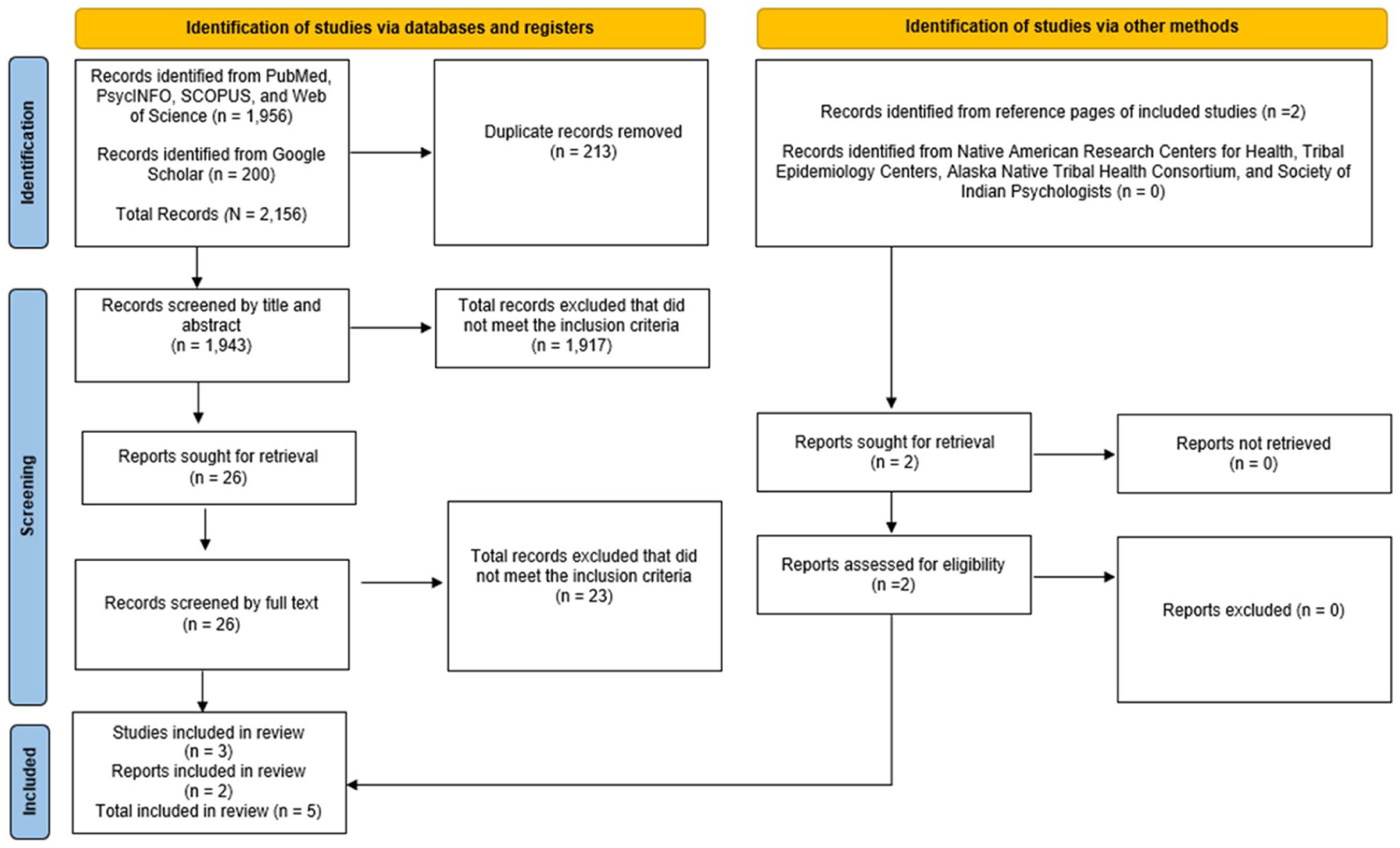
PRISMA 2020 flow diagram for scoping review on extractive industries and crime and victimization experienced by indigenous populations.
Stage 1: Title and Abstract Review
Using the above search terms, 2,156 articles were identified. After removing 213 duplicates manually and using the duplicate detection function in Rayyan (with the recommended threshold of 96% similarity), 1,943 articles were included in the Stage 1 review (title and abstract review). In the Stage 1 review, 1,917 articles were excluded because they did not meet the inclusion criteria, leaving 26 articles for the Stage 2 review (i.e., full-text review).
Stage 2: Full-Text Review
In Stage 2, the 26 remaining articles were read in full; 4 articles were removed because they were not empirical studies; 19 articles were removed because they did not meet the topical inclusion criteria (i.e., they were not focused on extractive industries and crime and violence among AI/AN persons). The remaining three articles were included in this scoping review. In addition, the reference pages for these three articles were reviewed for additional records that met the inclusion criteria; two additional records, both National Institute of Justice-funded studies, were reviewed and included in the scoping review.
Data Charting
Two reviewers (i.e., a trained doctoral student and one of the authors) conducted extraction on all five included studies, with a third reviewer (i.e., the other author) ensuring consensus was reached. The data were charted using a structured data extraction spreadsheet in Microsoft Excel to systematically capture the following information: (a) author(s), (b) year, (c) study location, (d) sample characteristics (e.g., tribal affiliation/s, gender, age), (e) extractive industry/ies of focus, (f) crime type/s, (g) sources/type of data used, (h) methods used, (i) main findings, and (g) limitations.
Results
Five records were included in this scoping review: two peer-reviewed journal articles from International and Environmental Studies (i.e., Chase & Johnson, 2024), and Forensic Science (Joseph, 2021), respectively; a master’s thesis from International Environmental and Development Studies (Rogers, 2017), and two final reports from National Institute of Justice-funded studies (i.e., Jayasundara et al., 2016; Martin et al., 2019). Publication dates ranged from 2016 to 2024. Three of the articles focused on the “Bakken region” (i.e., land that contains the Bakken oil shale formation), but each article defined the area slightly differently. Chase and Johnson (2024) identified the Bakken region as “~200,000 square miles in North Dakota and Montana, USA, and Saskatchewan and Manitoba, Canada,” while Martin et al. (2019) defined it as “counties in Montana and North Dakota that contain the Bakken shale formation,” and Jayasundara et al. (2016) specified “12 Montana and 21 North Dakota counties.” The remaining two articles focused on the Standing Rock Sioux Reservation (i.e., where the Dakota Access Pipeline is located; Rogers 2017), and U.S. states, cities, and counties where murdered or unidentified remains/missing Indigenous women/girls were identified (Joseph, 2021).
The first research question asked about the data and methods used to investigate the relationship between extractive industries and crime and violence experienced by Indigenous peoples in the United States. To begin, none of the included studies provided robust information about the characteristics of their samples. For example, Jayasundara et al. (2016) categorized their interview and focus group participants (e.g., “general human service providers,” “healthcare providers,” “victims”) and reported the number of focus group and interview participants in each category, respectively, and the number of tribal members in each category, but no other information was provided. Chase and Johnson (2024) reported that their interviewees comprised, “tribal members of the Northern Great Plains who were spiritual and political leaders, residents, oil industry workers, and employees or retirees from different tribal government departments, stay-at home parents, members who grew up on the reservation but had recently relocated, tribal beneficiaries of oil royalties, and members of other native tribes that were in the Bakken region for employment” (p. 34); however, they did not report the number of participants in each group or any other information. Rogers (2017) reported that of their six interviewees, two were Indigenous and four were non-Native, three were in their 20s, one in their 30s, and two in their 40s, and that four were males (the gender of the remaining two participants was not reported). Joseph (2021) did not provide any information on the characteristics of their sample of unidentified remains and missing persons other than the inclusion criteria (i.e., that they were Indigenous and female), and they reported these inclusion criteria, as well as age, for their sample of unidentified remains. Finally, neither Jayasundara et al. (2016) nor Martin et al. (2019) provided sample characteristics for any of the secondary data they utilized (e.g., from UCR, NIBRS, state-level data); however, Jayasundra and colleagues conducted all analyses at the region level.
Regarding types of extractive industries examined, three of the studies focused on shale oil production, one on hydraulic fracking, and one on the oil industry (i.e., the Dakota Access Pipeline; Rogers, 2017). All studies addressed violent crime victimization with three papers focused specifically on violence against Indigenous women (i.e., Chase & Johnson, 2024; Jayasundara et al., 2016; Joseph, 2021): one paper focused on violent crimes included in NIBRS (i.e., homicide/non-negligent manslaughter, rape/sexual assault, unlawful sexual a contact, robbery, aggravated assault, simple assault, other violent offenses), and one paper focused on “direct, cultural, and structural violence” where direct violence comprised “killing, harming the body, or restricting movements or the mental functions of a person” (Rogers, 2017, p. 4) (see Table 1). It should also be noted that while Joseph (2021) included data on murdered Indigenous women in their study, the bulk of their analyses focused on missing persons reports and unidentified remains, as going missing is not a crime and does not necessarily mean that violence or victimization has occurred (see Chakraborty, 2019; Richards et al., 2021).
Descriptive Information for the Articles Included in the Review.
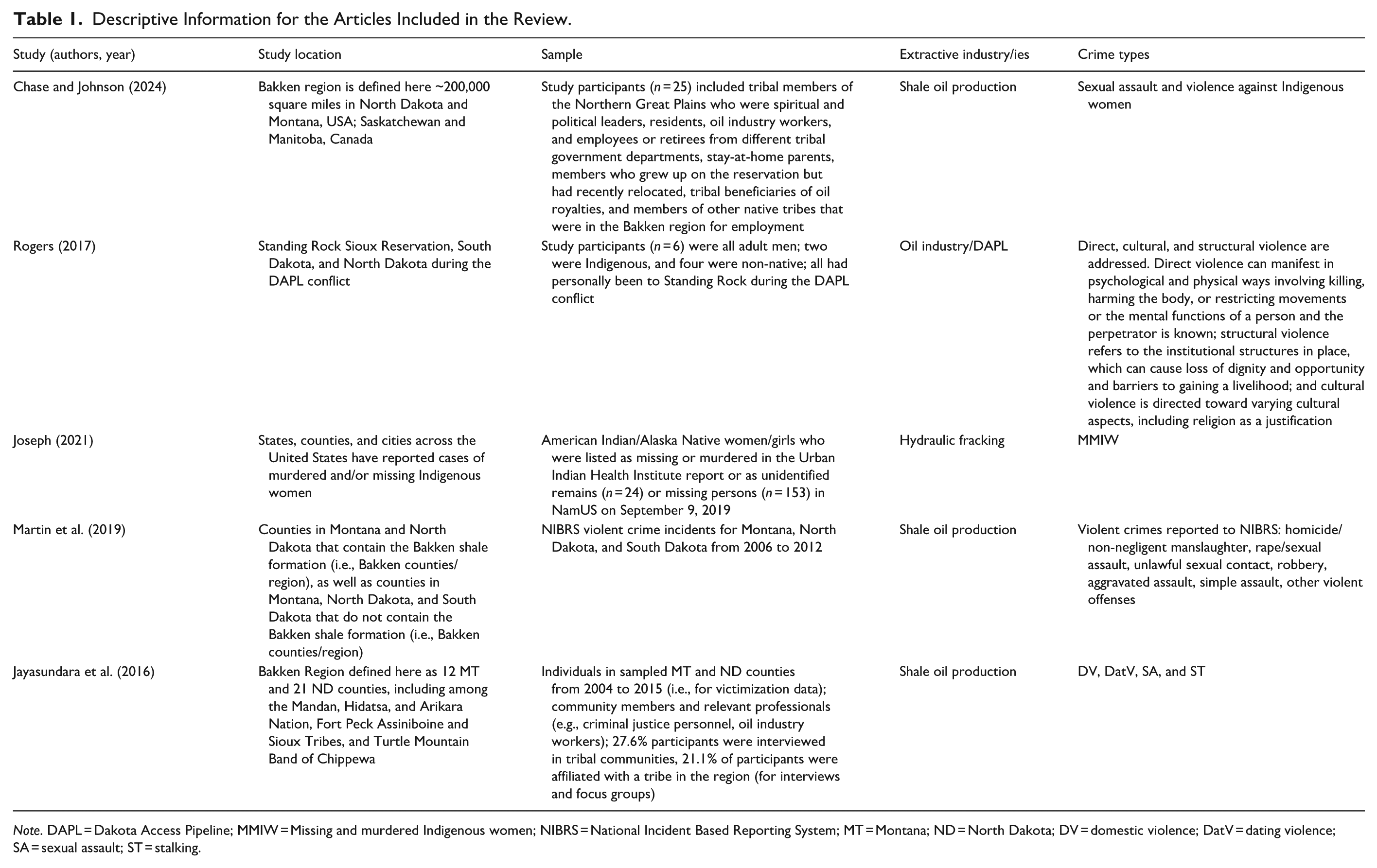
Note. DAPL = Dakota Access Pipeline; MMIW = Missing and murdered Indigenous women; NIBRS = National Incident Based Reporting System; MT = Montana; ND = North Dakota; DV = domestic violence; DatV = dating violence; SA = sexual assault; ST = stalking.
Two of the studies utilized only qualitative data (Chase & Johnson, 2024; Rogers, 2017), two studies utilized only quantitative data (Joseph, 2021; Martin et al., 2019), and one study used both qualitative and quantitative data (Jayasundara et al., 2016). Qualitative data stemmed from interviews with tribal and non-tribal community members and individuals associated with the oil industry (n = 25) (Chase & Johnson, 2024) and individuals who had been to the Standing Rock Sioux Reservation during the Dakota Access Pipeline conflict (n = 6) (Rogers, 2017), as well as interviews (n = 119) and focus groups (n = 66) with community members and professionals from the oil industry (i.e., victim, health, human services, and the criminal justice system) (Jayasundara et al., 2016). Two studies specifically noted that the qualitative data (i.e., interview transcripts) were analyzed using grounded theory (Chase & Johnson, 2024; Rogers, 2017). The third study reported using NVivo software to analyze the qualitative data by “reading and ‘coding’ the interviews by identifying reoccurring themes and noting sources of variation between different contributors” (Jayasundara et al., 2016, p. 5).
The quantitative data were sourced from multiple secondary datasets, including the National Missing and Unidentified Persons System (NamUs), National Incident Based Reporting System (NIBRS), Uniform Crime Report (UCR), and a previous report on missing and murdered Indigenous women/girls in 71 U.S. Cities (Urban Indian Health Institute, 2018), as well as individual state- and community-based agency data sources. Methods to analyze quantitative data included descriptive statistics (i.e., frequencies, proportions, and percentages) and bivariate analyses, including t-tests and chi-square tests. Two studies employed quasi-experimental designs that compared counties’ pre-extractive industry and post-extractive industry and employed a treatment group (i.e., counties with extractive industries) and a control group (i.e., adjacent counties without extractive industries) (i.e., Jayasundara et al., 2016; Martin et al., 2019).
Our second research question sought to understand what is known regarding the relationship between extractive industries and crime and violence experienced by AI/AN people in the United States (see Table 2). As noted above, three of the studies included here focus on the Bakken region. The first study compared UCR and NIBRS data from 2002 to 2014 to examine whether there were statistically significant differences in the average number of victimizations reported prior to the oil boom (2004–2007) compared to after the oil boom (2009–2014) for 33 counties in the Bakken region, including the Mandan, Hidatsa, and Arikara Nation, Fort Peck Assiniboine and Sioux Tribes, and Turtle Mountain Band of Chippewa (Jayasundara et al., 2016). Findings showed significant increases in the number of NIBRS-reported domestic violence (DV) and dating violence incidents, and the number of reports for a combined overall DV, dating violence, sexual assault, and stalking incident composite measure from the pre-oil boom period to the post-oil boom period. Furthermore, the authors found no significant differences in the number of NIBRS-reported sexual assault, stalking, or intimidation incidents pre- versus post-oil boom. When the authors compared data for departments within the Bakken region (n = 20) and outside the Bakken region (n = 90), they found that the annual rates of NIBRS-reported DV, dating violence, and the overall composite measure in the Bakken region increased from 2005 to 2014, while in the non-Bakken region, annual rates of NIBRS-reported dating violence increased while annual rates of DV and the overall composite measure decreased. Finally, Jayasundara and colleagues examined the number of sexual assault victims served by the programs in the North Dakota Council on Abused Women’s Services and found a “modest increase” in average annual numbers of victims served in the Bakken region from 2002–2007 compared to 2009–2014, but not for the non-Bakken region. No analyses were conducted comparing tribal and non-tribal areas or American Indian/Alaska Native victims compared to victims who were not American Indian/Alaska Native.
Data, Methods, Key Findings, and Limitations for the Records Included in the Review.
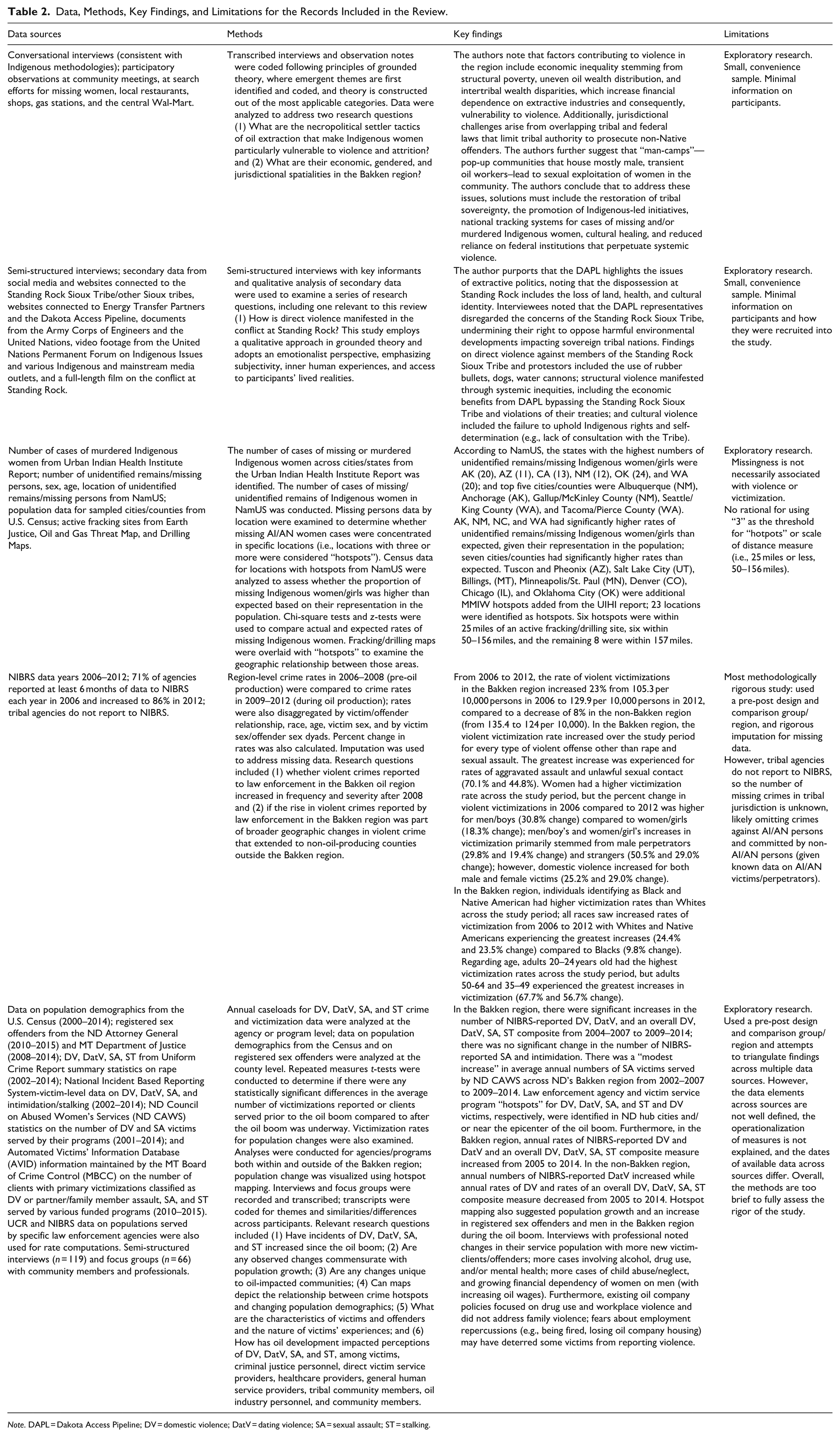
Note. DAPL = Dakota Access Pipeline; DV = domestic violence; DatV = dating violence; SA = sexual assault; ST = stalking.
Building on Jayasundara et al. (2016), Martin et al. (2019) used NIBRS data to compare crime rates in 2006 to 2008 (pre-oil production) with rates in 2009 to 2012 (during oil production) for the Bakken and non-Bakken region; rates were also disaggregated by victim/offender relationship, race, age, victim sex, and by victim sex/offender sex dyads. Findings showed that the overall rate of violent victimization in the Bakken region increased 23% from 2006 to 2012 compared to a decrease of 8% in the non-Bakken region. Furthermore, in the Bakken region, the violent victimization rate increased over the study period for every type of violent offense other than rape and sexual assault; the greatest increases were for rates of aggravated assault and unlawful sexual contact. In the Bakken region, individuals identifying as Black and Native American had higher victimization rates than Whites across the entire study period; all races saw increased rates of victimization from 2006 to 2012, with Whites and Native Americans experiencing the greatest increases (24.4% and 23.5% change, respectively) compared to Blacks (9.8% change). No other analyses were performed by race, so it is not possible to compare the context of victimization: victim/offender relationship, victim age, victim sex, and victim sex/offender sex dyads for American Indian/Alaska Native victims or examine potential differences for American Indian/Alaska Native victims compared to victims who were not American Indian/Alaska Native.
Most recently, Chase and Johnson’s (2024) article relies on news reports to assert that violence against Indigenous women has increased in the Bakken region because of the oil boom and uses information gleaned from 25 interviews to examine the underlying causes of this increase. They suggest that extractive industries contribute to violence against American Indian/Alaska Native people through increased economic inequality. Specifically, they note that uneven oil wealth distribution and intertribal wealth disparities increases AI/AN peoples’ and tribes’ financial dependence on extractive industries and thus, their vulnerability to violence. The authors further suggest that “man-camps” lead to sexual exploitation of women in the community and that the limitations of tribal authority to prosecute violence against Indigenous women by non-Native perpetrators leave the region in “conditions where culprits, likely connected to the oil industry, can function with impunity” (Chase & Johnson, 2024, p. 37). However, this article does not directly test any of these arguments.
Furthermore, Joseph (2021) attempted to examine the relationship between the “missing and murdered Indigenous women (MMIW) crisis. . .hotspots and fracking locations in the US” (p. 2). The study used the number of homicides of Indigenous women and missing Indigenous women in 71 U.S. cities from a report by the Urban Indian Health Institute, as well as missing persons reports and cases of unidentified remains in NamUS, as measures of MMIW. Across these data sources, 23 locations were identified as MMIW “hotspots” (i.e., locations with three or more MMIW cases). The author notes that six hotspots were within 25 miles of an active fracking/drilling site, six were within 50 to 156 miles, and the remaining 8 were within 157 miles.
Finally, Rogers (2017) used interviews with six individuals who had personally been to the Standing Rock Sioux Reservation during the Dakota Access Pipeline (DAPL) conflict and a range of secondary data sources to examine “direct, cultural, and structural violence” (p. 36) against Indigenous persons perpetrated during the conflict. The author purports that the DAPL conflict highlights issues of extractive politics, noting that the dispossession at Standing Rock includes the loss of land, health, and cultural identity. Interviewees reported direct violence against members of the Standing Rock Sioux Tribe and protestors, including the use of rubber bullets, dogs, and water cannons. Structural violence manifested through systemic inequities, including the economic benefits from DAPL bypassing the Standing Rock Sioux Tribe and violations of their treaties. Finally, cultural violence included the failure to uphold Indigenous rights and self-determination (e.g., lack of consultation with the tribe).
Discussion and Recommendations for Future Research
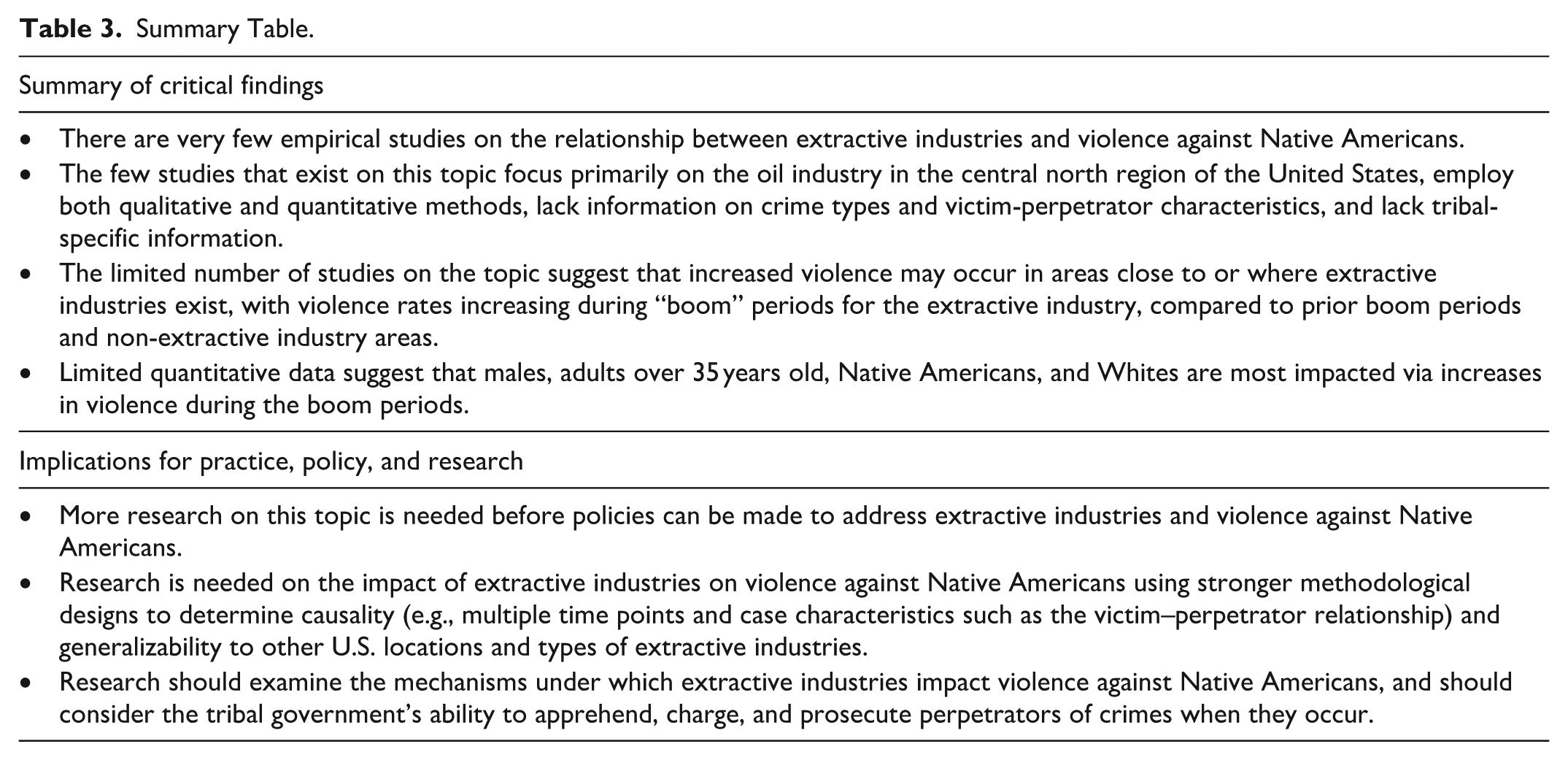
The purpose of this scoping review was to identify the data and methods used to examine the relationship between extractive industries and violence and victimization against AI/AN people in the United States and understand what is known about this relationship. After reviewing more than 1,900 records across multiple databases, only five records met our inclusion criteria, and three of these were focused on the Bakken region (i.e., in North Dakota and South Dakota). The differences across methods, samples, locations, time periods, and outcomes examined across these studies make it difficult to identify patterns in findings. However, taken together, the studies suggest that increased violence may occur in areas close to or where extractive industries exist, with violence rates increasing during “boom” periods for the extractive industry, compared to prior boom periods and non-extractive industry areas. Quantitative data, though limited, suggest that males, adults over 35, Native Americans, and Whites are most impacted via increases in violence during the boom periods (Martin et al., 2019). Given the dearth of studies, however, it remains unclear whether these findings apply to Native Americans in different regions of the United States (e.g., outside of the Dakotas and Montana, for instance), whether they extend to extractive industries beyond the oil industry (e.g., forestry, fishing), and whether this relationship is a causal one.
In fact, only one study directly addressed our research aim regarding the relationship between extractive industries and crime and violence experienced by AI/AN peoples in the United States: Martin et al.’s (2019) Bureau of Justice Statistics-funded study on the Bakken region. Martin and colleagues use detailed criminal incident data on violent crimes (i.e., from NIBRS) and a rigorous quasi-experimental design to examine crime rates by race during pre-extractive industry versus post-extractive industry timeframes for the Bakken region (i.e., a treatment group) and adjacent non-Bakken region (i.e., control group). Findings showed (a) increases in violent crime rates for the Bakken region after extractive industries and similar increases did not take place in a non-Bakken control region, and (b) greater increases in crime rates were experienced among American Indian/Alaska Native persons compared to Black/African American persons. However, they also found that (c) White persons experienced the highest increases in crime rates in the Bakken region. Furthermore, while Martin and colleagues provide crime rates by race, multivariate analyses investigating violent crime type, location, victim–offender relationship, victim and offender age, whether there was an arrest, and other covariates available in NIBRS by race were not provided. Such detailed analyses would be helpful to understand the context of crimes against Indigenous and non-Indigenous people before and after extractive industries.
Five, much less one, studies on this topic are not enough to adequately address the issue, and we provide some recommendations for future research to consider. First, replication and expansion in the research are needed. We recommend replication of Martin’s research using multinomial regression modeling to compare the context of different types of violent crime for Indigenous and non-Indigenous persons before and after extractive industries, both for the Bakken and non-Bakken region. Additional information on the victim–offender relationship is also needed to assess causality better: for instance, are the extractive industry workers in the area the perpetrators of crimes; are they non-Native or “outsiders”; are other factors “brought into” the area due to the extractive industry (e.g., increased cash or disposable income) the underlying mechanism for increased crime rather than the workers themselves? These are important questions to answer to better understand the causal mechanisms underpinning the extractive industry–violence against Native Americans relationship and could help to address the types of crimes that are most impacted by extractive industries, as well as ascertain a better understanding of the unique impact on Native Americans in the area.
Future research should consider expanding upon the locations and time periods examined regarding extractive industries and Native American communities. Researchers might consider looking at a third, post-extractive industry period to examine whether any trends hold beyond the “boom years” (i.e., as early population growth should spur hiring in the public safety and social service sectors, resulting in community stabilization). This would address additional questions about causality and the lasting impacts of extractive industries—do violence rates go down after the extractive industry withdraws from the area, and if so, how long after withdrawal does it take for them to return to pre-boom levels?
In addition, Martin and colleagues rightfully acknowledge a meaningful limitation of their study: the omission of data from tribal agencies from the NIBRS. In other words, Martin et al.’s data does not account for crime that occurred in tribal law enforcement agencies’ jurisdictions, potentially undercounting the incidents of crime victimization against Indigenous persons. As such, future studies would be strengthened by obtaining crime incident report data from tribal law enforcement departments in the sampled regions. This is particularly relevant given the growing number of tribal law enforcement agencies reporting to NIBRS. Tribal-specific data are needed to ascertain the violence experienced by tribal members in the tribal jurisdiction; without this information, studies relying on non-tribal information may underestimate the problem.
Beyond the Bakken region, Martin and colleagues’ methodology—and extensions using multivariate analyses and/or including data from tribal law enforcement agencies—could also be replicated in other areas of the United States to examine the impact of additional extractive industries and violence and victimization against Indigenous persons. The hotspot research conducted by Joseph (2021) suggests that regional crime levels may be impacted by extractive industries over 100 miles away, and most of the studies in this review focused only on the oil industry in the central north area of the United States. It is currently unclear whether other extractive industries, such as fishing or forestry, have similar impacts on violence rates; furthermore, we do not know whether these relationships exist in other areas of the country, for instance, among southwestern tribes in Arizona, Colorado, and New Mexico, central tribes such as those in Oklahoma, along the east coast, or in Alaska. As location might drive the type of extractive industry to come into an area (e.g., fishing in Alaska), research should be conducted in various locations of the United States, alongside the tribal communities most impacted.
Because not all violence is reported to police, future research using other sources of data beyond criminal incident data is also needed. For example, following exploratory research from Jayasundara et al. (2016), researchers could examine the request for service data for victim advocacy agencies within a service center experiencing an extractive industry before and during/after the industry development; comparing these findings to a control group data from a similar service center in an area without the extractive industry during these same time periods would further strengthen the research. Other forms of existing data that could be leveraged to examine changes in violent victimization include emergency hotline calls for service data or emergency room records. Similarly, the outcomes that are examined across studies are an important consideration. For instance, going missing, while disproportionate among Native Americans (Chakraborty, 2019; Richards et al., 2021), is not necessarily a crime and should be considered a separate outcome in addition to crime rates.
An additional line of inquiry in need of further attention includes the mechanisms by which extractive industries may impact crime and violence against Indigenous persons. For example, interview data in Rogers (2017) and Chase and Johnson (2024) suggest that the “man camps”—temporary housing set up specifically for pipeline workers (Condes, 2021)—that often accompany extractive industries are associated with violence against AI/AN women; however, this contention should be directly tested using victimization surveys and/or data from police incident reports. Anecdotal evidence suggests that man camps are drivers of gender-based violence crimes, such as sexual assault and domestic violence (Finn et al., 2016; Scientific and Environmental Health Network, 2022), yet the quantitative data examined by Martin et al. (2019) suggest that crimes increased primarily against males (not females) and people above 35 years old during the industry boom years. How do we reconcile these seemingly different storylines—for whom is the greatest risk of violence (males or females; youth or adults) and why?—these are the questions future research needs to address.
Finally, although limited, the empirical data published have shown that extractive industry development and activities impact Native American communities as tribal lands are rich in sought-after minerals, raw materials, and fuels. Questions remain as to whether tribal citizens/communities experience more crime and violence related to extractive industries than other groups or communities in the same catchment area. The impacts of extractive industries are complex, and future studies need to account for the many nuances that involve tribes and their geographic and jurisdictional issues (Table 3).
Summary Table.
Conclusions
Native American people are at-risk of experiencing victimization from others at a higher rate than most other racial groups, their communities are often located near mineral-rich lands, and their tribal governments may be limited by federal regulations and laws that restrict their ability to prevent, apprehend, or prosecute offenders operating within their community or against their tribal members. Thus, the potential for extractive industries to operate in or around tribal communities is high, and conditions are ripe for the associated negative impacts of these industries and their imported workforce. At the same time, the research on this topic is very limited, leaving open empirical questions regarding the relationship between extractive industries and violence and victimization against AI/AN people in the United States. The evidence is limited to one type of extractive industry (oil) in primarily one region in the United States (central north) and lacks strong causal designs. While the evidence thus far suggests a potential relationship between extractive industries in an area and increased violence against AI/AN and White adults (Martin et al., 2019), much more is unknown than known on this topic.
Footnotes

Ethical Considerations
There are no human participants in this article, and informed consent is not required.
Funding
The authors disclosed receipt of the following financial support for the research, authorship, and/or publication of this article: Portions of the research presented in this study were funded by the U.S. Department of Justice, Office of Justice Programs, National Institute of Justice (GSA Contract ID GS-00F-218CA). The opinions, findings, and conclusions are those of the authors and do not necessarily reflect the official position or policies of the U.S. Department of Justice.
Declaration of Conflicting Interests
The authors declared no potential conflicts of interest with respect to the research, authorship, and/or publication of this article.