






Abstract
Individuals with intellectual and developmental disabilities (IDD) face elevated risks of gender-based violence, yet their unique experiences reporting to police, service providers, and informal support systems remain underrepresented in trauma and justice research. Following PRISMA guidelines, this systematic review aims to map the existing literature on the pathways of reporting and help-seeking behavior of victims with IDD and their subsequent experiences in engaging with the criminal justice system. We identified empirical work through systematic searches of relevant online databases, hand searches, reference searches, and efforts to obtain grey literature. We retained 29 articles for analysis after meeting inclusion criteria, and these articles emphasized widespread barriers to disclosure and justice, including systemic inaccessibility (e.g., relying on verbal interviews and use of jargon), lack of trained personnel, and victims’ limited autonomy. Findings highlight the need for multi-level reforms that center the rights, autonomy, and lived experiences of individuals with IDD while expanding access to formal and informal reporting systems. Future research should prioritize the effectiveness of current accommodations in reporting, the feasibility of recommended accommodations, and pathways to disclosure. These efforts should include the disability community at all stages of the research to better ensure that research questions, methods, and findings reflect lived experiences, address real barriers, and support the development of accessible reporting and response systems.
Introduction
Gender-based violence (GBV), including sexual violence, domestic violence, intimate partner violence, and stalking (Office on Violence Against Women, 2024), is a major public health concern with approximately one in three women experiencing physical or sexual violence in their lifetime. Although women experience GBV at disproportionately high rates, these forms of violence are defined by their basis in sex, gender, sexual orientation, gender identity, or gender expression and affect individuals across gender groups. These experiences are often at the hands of an intimate partner (Basile et al., 2011; World Health Organization, 2021). The consequences of GBV are far-reaching, including heightened risk for chronic physical health problems, post-traumatic stress disorder, depression, substance abuse, and suicidality (Devries et al., 2013; Dillon et al., 2013). Although GBV is pervasive globally, it is not experienced equally across all populations. Some individuals are disproportionately at risk of victimization due to structural, social, and individual-level factors.
One such population at particularly high risk for GBV is individuals with disabilities. Research consistently shows that people with disabilities are significantly more likely to experience violence compared to those without disabilities, and this risk is especially pronounced for individuals with intellectual and developmental disabilities (IDD 1 ; Breiding & Armour, 2015; Hughes et al., 2012). Although IDD cover a wide range of diagnoses, including autism spectrum disorder, fetal alcohol spectrum disorder, Fragile X syndrome, and others, overall, such conditions “include both intellectual and adaptive functioning deficits in conceptual, social, and practical domains” (First, 2024, p. 37). Individuals with IDD are not only at an increased risk of victimization, but they are also more likely to experience multiple incidents, greater physical harm, and longer-lasting and more severe psychological effects (Harrell, 2021; Hayes & Powers, 2022; Petersilia, 2001). Like GBV in general, perpetrators of violence against individuals with IDD are often known to the victim. In addition, individuals with IDD are often reliant on caregivers, including family members and intimate partners (Vadysinghe et al., 2017), and that can exacerbate the risks and consequences of victimization. These elevated risks are driven by many intersecting vulnerabilities, including social isolation, communication barriers, and systemic marginalization (Badakhshiyan et al., 2024; Badcock & Sakellariou, 2022; Kennedy & Prock, 2018). These risk factors not only increase exposure to violence and the consequences of victimization but also hinder the ability to recognize, disclose, or report abuse among individuals with IDD (Plummer & Findley, 2012).
Help-Seeking Following GBV Victimization
Following victimization, victims of GBV may engage in a range of help-seeking behaviors. Some seek formal help by reporting to law enforcement or victim services, such as advocacy organizations, medical providers, and mental health professionals. Others may rely on informal sources like friends, family, or caregivers for help, but these pathways are not mutually exclusive. Disclosure to one source often serves as a conduit to others, and understanding these patterns can offer insight into victims’ decision-making processes and the barriers they face in reporting and receiving services to address the adverse consequences of victimization (Liang et al., 2005). A coordinated effort between formal and informal sources of help can aid in accessing care and justice (Plummer & Findley, 2012). However, such cooperation may not always occur. Informal supports may act as gatekeepers to formal systems, either out of distrust of the police or avoiding familial shame, especially when the offender is a family member (Meer & Combrinck, 2017). At the same time, formal service providers may emphasize the need for victims to rely on their social support networks for ongoing care and stability (Malihi et al., 2021). Understanding how these overlapping pathways influence reporting patterns helps identify potential gaps in services and support for victims of GBV.
The increased risk of victimization and exacerbated consequences of victimization suggest that victims with IDD are particularly in need of support and services after victimization. However, individuals with IDD are significantly less likely to report their victimization or seek help compared to individuals without disabilities and those with other types of disabilities (Petersilia, 2001; R. A. Powers & Hayes, 2024). Many victims with IDD fear they will not be believed, particularly when there are communication challenges present or when their accounts are questioned or minimized due to stigma around cognitive functioning (McGilloway et al., 2020). Prior negative experiences with law enforcement, such as being dismissed, misunderstood, or retraumatized, further discourage formal disclosure (Bartlett & Mears, 2011; Lea et al., 2003). Structural barriers may exacerbate the problem, including inaccessible reporting systems, lack of trained professionals, and the absence of targeted outreach or advocacy services tailored to the needs of individuals with IDD (Cook & Hole, 2021). As a result, incidents of violence may go unreported, and victims with IDD may not receive post-victimization services (Spaan & Kaal, 2019; Willott et al., 2020).
When individuals with IDD do engage with the criminal justice system, many express negative experiences with the process. Crime victims with IDD commonly describe being dismissed or disbelieved by these institutions (Baladerian et al., 2013; McGilloway et al., 2020). Police officers may question the credibility of victims with IDD due to differences in communication, atypical behavioral responses, inconsistent accounts or timelines, or assumptions about cognitive competence (Finlay & Lyons, 2002; Petersilia, 2001). In some instances, officers are unaware of how to identify or accommodate victims with IDD, leading to inappropriate questioning or misclassification of victimization reports (Åker & Johnson, 2020; McGilloway et al., 2020; Watson et al., 2017).
These challenges extend to the courtroom. While some courts have embraced communication accommodations to aid in victim testimonies, especially in the wake of COVID-19, (e.g., Pereira & Aldridge, 2023), prosecutors often make charging decisions based on perceptions of whether victims with IDD are legally competent to testify, and disability-related communication or memory difficulties may be interpreted as weaknesses in credibility rather than as factors warranting accommodation (C. Edwards et al., 2012; Petersilia, 2001). Testimony may be discounted entirely if victims struggle to recall precise timelines or use nontraditional language to describe traumatic events (Morrison et al., 2021). The lack of formal support mechanisms like support personnel, the use of plain language, and courtroom accommodations, further disadvantages victims with IDD who are often left without the tools necessary to meaningfully participate in legal proceedings (McGilloway et al., 2020). Moreover, legal professionals report a lack of training working with the disability community, contributing to a justice system that is frequently unprepared to meet victims’ needs (Flynn, 2016).
Systematic reviews in this area document the increased risk of GBV among people with IDD (Arrondo et al., 2023; Buitelaar et al., 2020; Hughes et al., 2012), often comparing prevalence across disability status or type (Badakhshiyan et al., 2024; Hughes et al., 2012). Collectively, these reviews demonstrate that people with intellectual disabilities face heightened vulnerability to physical, sexual, and emotional violence compared to the general population. For example, Hughes et al. (2012) found elevated risks of both sexual and intimate partner violence among individuals with intellectual and mental health disabilities, while Badakhshiyan et al. (2024) synthesized over a decade of international data showing that women and men with IDD experience overlapping forms of abuse, including disability-specific victimization and financial exploitation. Similarly, Buitelaar et al. (2020) and Arrondo et al. (2023) reinforced that risk extends beyond victimization to include intersections with mental health, relationship dynamics, and systemic barriers to protection. However, across these reviews, the focus remains primarily on prevalence and risk factors, not on what happens after violence occurs. Few studies have examined post-victimization experiences, such as help-seeking, disclosure, or engagement with the justice system, leaving a major gap in understanding how individuals with IDD navigate formal and informal reporting pathways. Systematic reviews have documented help-seeking for victims of GBV among the general population (McCart et al., 2010; Xie & Baumer, 2019; Youstin & Siddique, 2019), risk of GBV among individuals with IDD (Arrondo et al., 2023; Badakhshiyan et al., 2024; Hughes et al., 2012), and qualitative research on help-seeking for victims of sexual assault with IDD (McGilloway et al., 2020). Yet no work reviews help-seeking among victims of GBV with IDD, despite consistent work in this area.
To address this gap, a systematic review offers a structured and rigorous approach for identifying, assessing, and synthesizing empirical evidence on criminal justice engagement among individuals with IDD (Munn et al., 2018). Our goal was to integrate findings across studies to clarify the current state of knowledge, highlight consistent patterns and divergences in the evidence, and provide a foundation for recommendations in research, policy, and practice. In doing so, this systematic review aims to address the following research questions:
(1) What are the barriers to reporting victimization and seeking help for victims with IDD?
(2) What are the pathways of reporting and help-seeking among victims with IDD?
(3) What are the experiences of victims with IDD in engaging with the criminal justice system and victim services after reporting?
(4) What recommendations have been identified by victims with IDD, their support persons, and criminal justice practitioners to improve the experience of reporting help-seeking for victims with IDD?
Method
All authors have prior experience conducting research and community-based collaborations with victims with IDD and their advocates. We approached the framework and analysis with an awareness of potential outside perspectives and engaged in reflexive discussions throughout data collection and coding. In the search stage, we explicitly defined inclusion criteria, identified and selected studies using transparent, replicable procedures, and documented rationale for exclusions. In the coding phase, we held collaborative meetings to create the coding schema, pilot tested the code, and refined as necessary (Whiting et al., 2016). We conducted this review according to the Preferred Reporting Items for Systematic Review and Meta-Analysis (PRISMA) statement (Liberati et al., 2009; Page et al., 2021). Figure 1 depicts the PRISMA flowchart for this study.
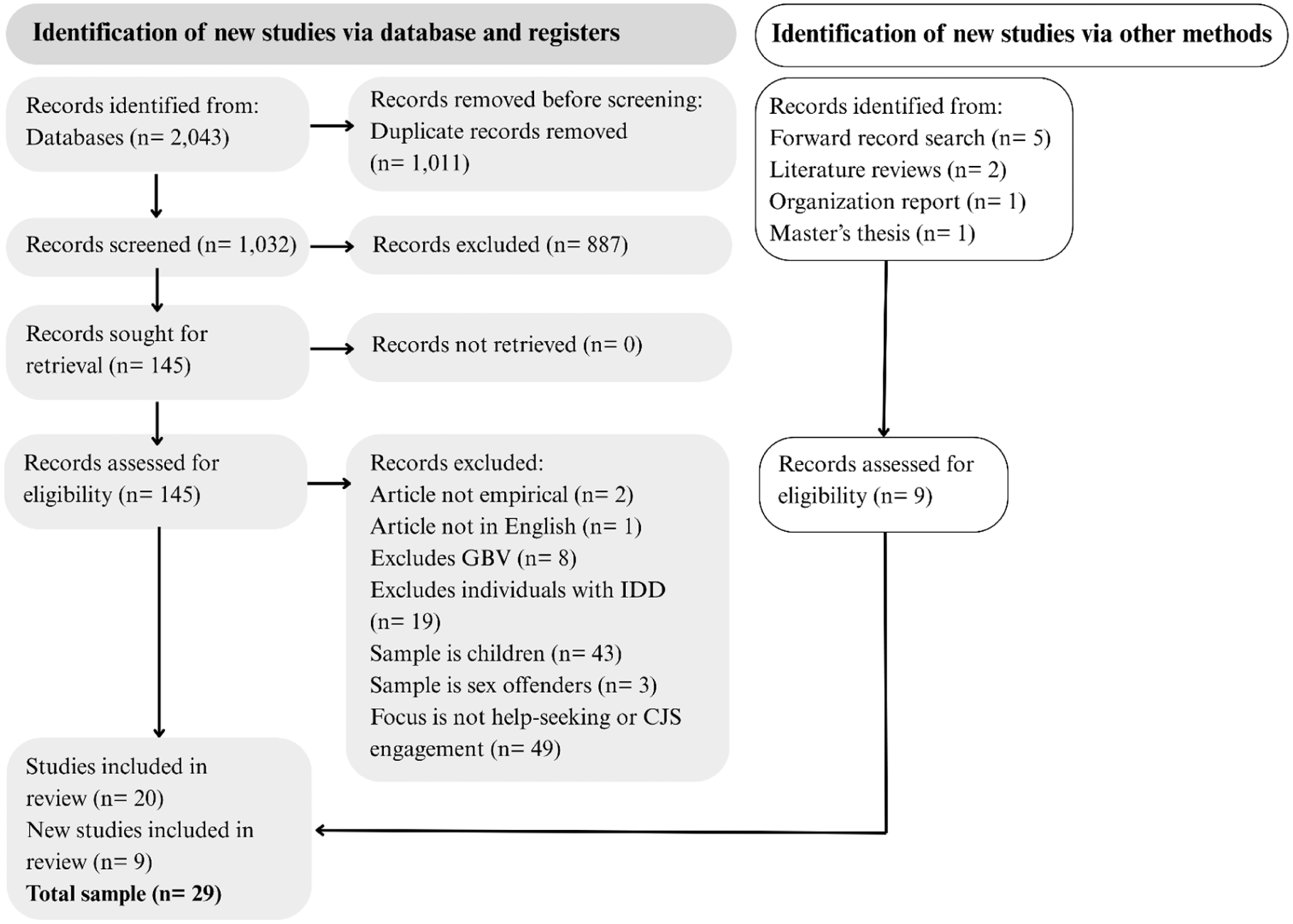
PRISMA summary of systematic review process.
Inclusion Criteria
For the purposes of this review, we included studies if the following criteria were met: (a) the study was empirical, including both quantitative and qualitative methodologies; (b) the study was written in English; (c) the study pertained to victims with IDD’s help-seeking behavior and/or engagement with the criminal justice system, inclusive of police reporting; (d) the sample included victims with IDD, caregivers of individuals with IDD, or practitioners; and (e) the victimization focused on GBV, including intimate partner violence (IPV), domestic violence (DV), sexual violence, and/or stalking. Although not every instance of IPV, domestic violence, sexual violence, or stalking is explicitly motivated by sex, gender, sexual orientation, or gender identity at the individual level, these forms of violence are widely operationalized as GBV because they occur within broader social systems structured by gender inequality, disproportionately affect individuals based on gender, and reflect patterns of power and control that are shaped by gendered norms and hierarchies (Goldberg & Meyer, 2013; Heise, 1998; Kearns et al., 2020; Messinger, 2017).
We excluded studies if they met at least one of the following exclusion criteria: (a) the article was not written in English; (b) the study was not empirical (e.g., book reviews, literature reviews); (c) the study and/or sample was focused on offenders and offending; (d) the sample included victims with only physical disabilities; (e) the sample included victims with physical and intellectual disabilities under a single measure and did not provide comparisons across disability types; and (f) the study focused solely on children and child abuse.
Search Strategy
We used several methods to identify studies, including database searches, hand searches, and forward record searches. Furthermore, this study includes grey literature, or literature that is not published in peer-reviewed articles. This is important to address bias in peer-reviewed studies, which can limit the comprehensiveness of the evidence base and lead to biased conclusions (Paez, 2017).
With regard to database searches, the search for relevant literature occurred between February and March 2024 using three databases: PsychNET, PsychINFO, and PubMed. Search terms included “intellectual/learning/cognitive/communication/developmental disabl* OR Autis* OR neurodiver* OR Down syndrome OR fetal alcohol spectrum disorder OR attention deficit hyperactivity disorder OR augmentative and alternative communication OR cognitive impairment OR developmental delay OR intellectual impairment AND violence against women OR intimate partner violence OR domestic violence OR dating violence OR sexual violence OR sexual victimization OR stalking.” The search year began in 1990 to align with the passage of the Americans with Disabilities Act (ADA), a landmark civil rights law that significantly reshaped global legal, policy, and research frameworks.
After exporting identified articles from these databases, we imported them into Covidence—a review software commonly used in social science research (Akçakaya, 2023; Goulden et al., 2023; Logan et al., 2024) and recommended by the Cochrane Collaboration for conducting systematic reviews (Cochrane, n.d.). We used this software to identify and remove duplicates before reviewing abstracts and full texts for inclusion. During this process, two reviewers from a team of three reviewed and coded all studies. We resolved all conflicts, including reasons for exclusion, via consensus. Inter-rater reliability during title and abstract screening was adequate, with a Cohen’s kappa of 0.69 and 84.7% agreement. Once completed, we reviewed the reference lists of all included articles for any additional relevant studies. Likewise, we conducted forward record searches on all included articles. Next, we conducted a search for grey literature to ensure a wide range of empirical literature was identified, including non-published research and reports from government or service agencies. This search entailed using key search terms in agency reports, conference presentations, ProQuest documents, and strategic internet searches. Finally, we cross-referenced included articles with published reviews in this area.
Using this process, we imported 2,043 articles from database searches and removed 1,011 duplicates. We then reviewed the titles and abstracts of 1,032 articles, leaving 145 for full-text review. Of these, we included 20 articles, added 5 more from forward record searches, and incorporated 2 from literature reviews. A grey literature search also identified one unpublished organizational report and one master’s thesis. In total, the systematic review includes 29 articles.
Coding Strategy
We developed an a priori coding frame based on prior reviews and our research questions. Codes captured core domains (e.g., type of disability, type of victimization, sources of help) and extended to identified gaps on post-victimization experiences, including police and advocate responses and victims’ desired changes to reporting processes. There were two phases of the coding process. First, we used a data extraction template in Covidence to code the following dimensions: (a) publication details; (b) sample characteristics; (c) IDD type; (d) violence type; and (e) basic study methodology. After coding the basic information for the included studies, the second phase of coding included extracting more detailed information on the methodology and results. For example, with regard to the methods, we coded more detailed information on the measurement of GBV. In addition, individuals with IDD are often left out of research due to legal and institutional barriers related to informed consent. These barriers are compounded by the fact that consent procedures and research instruments are rarely designed with plain language or accessibility in mind, posing challenges to full participation (Mulhall et al., 2018; L. E. Powers, 2017). Therefore, we extracted information regarding whether individuals with IDD were involved throughout the study methodology (e.g., community-based participation research) and whether the study outlined accommodations provided to participants with IDD during data collection. Finally, we extracted and coded the findings of the studies, including reporting patterns and behaviors, barriers to reporting and reasons for reporting, experiences of victims after reporting, and recommendations provided by participants for criminal justice reform. Two reviewers coded all included studies, and conflicts were resolved by reviewer consensus. Our coding template is available upon request.
Results
Description of the Studies
The 29 studies included in the current review spanned from 2001 to 2024. The majority of studies were conducted in Australia (n = 7), though two of the studies from Australia featured the same sample, followed by the United States (n = 5) and the United Kingdom broadly (n = 5), England (n = 4), the Netherlands (n = 2), Austria (n = 1), Canada (n = 1), Ireland (n = 1), New Zealand (n = 1), South Africa (n = 1), and Sweden (n = 1). Table 1 shows the study information and methodologies for the included studies.
Characteristics, Methods, and Purpose of Included Articles.
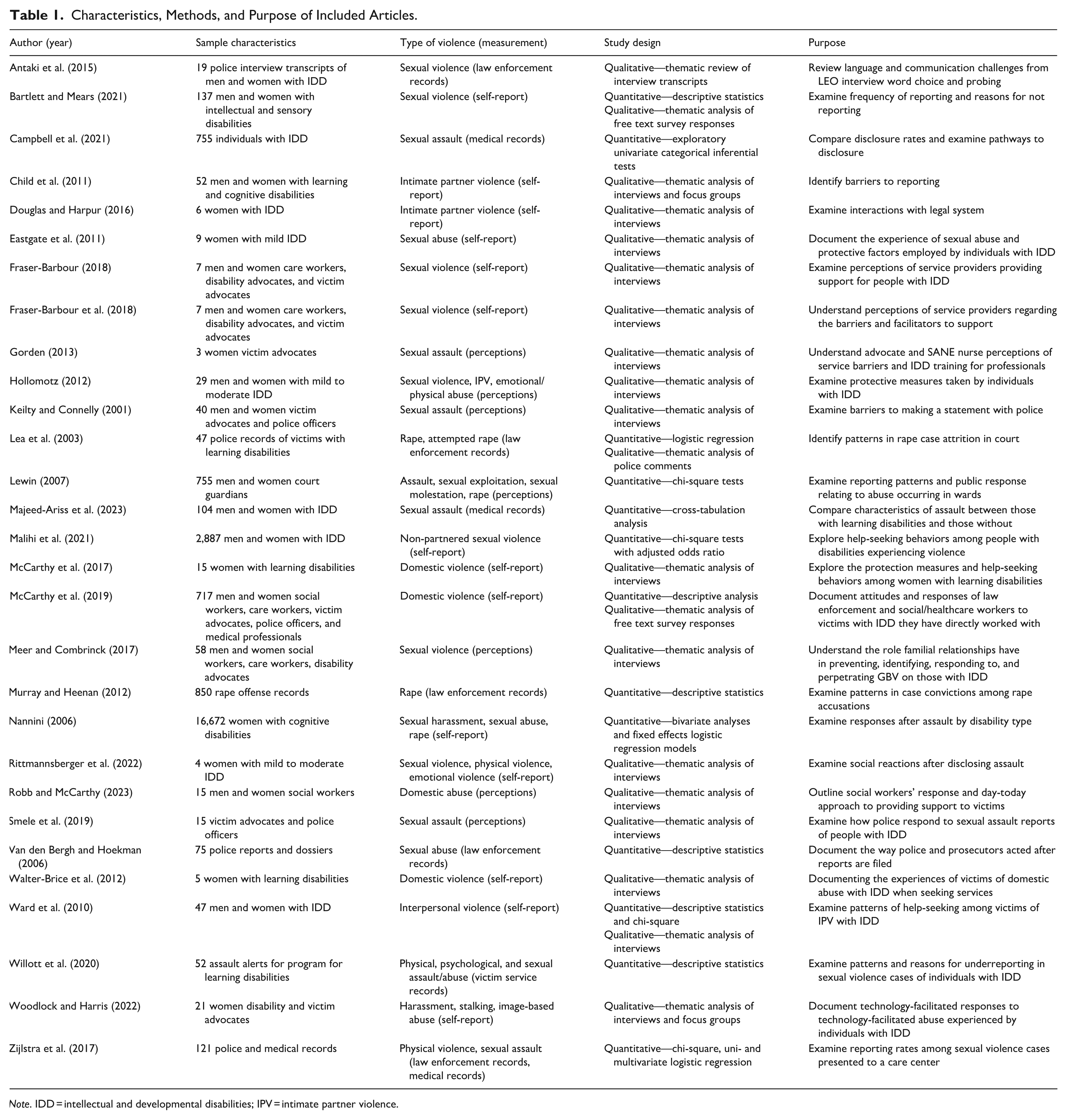
Note. IDD = intellectual and developmental disabilities; IPV = intimate partner violence.
Of the included studies, 16 were qualitative, using interviews or focus groups except for one that analyzed police interview records with victims with IDD (Antaki et al., 2015), 10 were quantitative and cross-sectional, and three employed mixed methods (Bartlett & Mears, 2011; McCarthy et al., 2019; Ward et al., 2010). Sample sizes for qualitative studies ranged from 3 to 52 participants and from 47 to over 16,000 for quantitative studies. Samples included individuals with IDD, practitioners or service providers, and official records, with most studies focusing on individuals with IDD (n = 14) recruited through community, convenience, or clinical/service settings. Nine studies examined practitioners such as police, social workers, victim and disability advocates, and care workers, while one included both groups to explore technology-facilitated GBV (Woodlock & Harris, 2022). Five studies analyzed police or victim service records to examine help-seeking, case attrition, or engagement with the justice system. Most studies focused on sexual assault (n = 16), three on IPV (Douglas & Harpur, 2016; Walter-Brice et al., 2012; Ward et al., 2010), one an unspecified form of GBV (Meer & Combrinck, 2017), and the remainder on multiple forms of GBV. When domestic or IPV was examined, victimization encompassed physical, emotional, and sometimes financial abuse, with self-reports being the predominant method of identifying victimization (n = 10).
There was also a wide range of how studies conceptualized IDD. None of the studies focused on specific forms of IDD (e.g., autism). Rather, all studies took broad approaches to IDD. Some of the studies noted that their sample was restricted to individuals with mild (Eastgate et al., 2011) or mild to moderate disabilities (Hollomotz, 2012; Rittmannsberger et al., 2022). Two studies disaggregated the umbrella term of IDD into different types: Child et al. (2011) separated cognitive disabilities (which could include traumatic brain injuries) and learning disabilities, and Bartlett and Mears (2011) distinguished between intellectual and sensory disabilities.
Several studies noted aspects of the methodology that were adapted for individuals with IDD or accommodations that were provided to participants who had IDD. Most common of these were providing participants recruitment information and informed consent in plain language (Child et al., 2011; Eastgate et al., 2011; Rittmannsberger et al., 2022; Walter-Brice et al., 2012). Eastgate et al. (2011) also noted that they built in a purposeful lag between presenting the information about the study and conducting the interview for the participant to be able to reflect on their participation. Likewise, a few studies noted that they created their interview schedule in collaboration with agencies that served individuals with IDD or self-advocates (Bartlett & Mears, 2011; Hollomotz, 2012; Woodlock & Harris, 2022). Woodlock and Harris (2024) also included visual aids throughout the interview process to aid in the comprehension of technology-facilitated GBV. Similarly, Child et al. (2011) noted that they provided communication-related accommodations (e.g., read aloud, ASL) for participants. Individuals with IDD can sometimes benefit from the presence of a support person who can help them in making decisions and advocate for themselves. Three studies noted that support persons were present during some or all of the interviews/focus groups (Douglas & Harpur, 2016; Malihi et al., 2021; Walter-Brice et al., 2012). Although not termed as such in their study, McCarthy et al. (2017) included elements of community-based participatory research, involving individuals with IDD in defining the research questions and the dissemination of results.
Diversity Reported in Included Studies
Studies were drawn from 11 nations and included adults across a broad age range (18 to 68+), offering some geographic and developmental variability. However, most studies lacked detailed demographic reporting. Of the 25 studies that included participants (relative to social artifacts), 15 included both men and women, one study explicitly included transgender individuals, and only one provided data on sexual orientation, which were predominantly heterosexual participants. Race and ethnicity were reported in just 10 studies, the majority of which described predominantly White participants, limiting insight into how race may intersect with disability and vulnerability to GBV. These limitations in diversity reporting reduce the ability to generalize findings to more marginalized or intersectional populations and may obscure unique patterns of risk or barriers to support. To improve the relevance and cultural applicability of GBV research in this field, future studies should systematically incorporate data on race, gender identity, and sexual orientation. Such efforts are necessary to better understand the ways in which overlapping identities influence experiences of violence and access to protection and justice across diverse settings.
Synthesis of Themes
Barriers to Help-Seeking
Most studies identified significant barriers to formal reporting of GBV among individuals with IDD. Victims with intellectual and sensory disabilities (Bartlett & Mears, 2011; Eastgate et al., 2011) and learning and cognitive disabilities (Child et al., 2011) often refrained from reporting due to fear of not being believed, fear of retaliation, or fear of being blamed for the abuse. In some cases, police stated that victims did not always realize they were assaulted (Smele et al., 2019), and victim advocates reported that persons with IDD often did not know who to report to (Woodlock & Harris, 2022) or distrusted law enforcement altogether (Smele et al., 2019). In some cases of victims with learning disabilities, those who submitted a report subsequently rescinded their statements, with law enforcement believing that the retraction was coerced by the perpetrator (Lea et al., 2003). Law enforcement officers themselves were also cited as a point of underreporting, sometimes choosing not to pursue cases to avoid causing further trauma or due to disbelief in the allegations (Keilty & Connelly, 2001). One article reviewed the expected number of formal alerts to the actual number of formal alerts of victimization within a community healthcare program for those with learning disabilities and found severe underreporting (Willott et al., 2020).
Family members were also a barrier to formal reporting, particularly for victims with general IDD. Formal service providers suggested that victims chose not to report victimization to police to protect the family name, minimize trauma, or avoid social stigma, particularly in rural communities where reporting infrastructure is limited (Meer & Combrinck, 2017). Organizations, including service providers and healthcare professionals, were also reluctant to report in some cases. Reasons included reputational concerns, fear of funding loss (Fraser-Barbour, 2018), and a lack of coordination with and support from police (Smele et al., 2019). In cases where healthcare providers did not formally report on behalf of victims with learning disabilities, it was often because the victim did not explicitly request it (McCarthy et al., 2017), highlighting an inconsistent idea of reporting responsibility and personal autonomy, which stands in tension with mandatory reporting guidelines.
Despite the above barriers, several studies described cases in which victims with IDD did engage in some form of reporting or help-seeking. Most participants reported their experiences to someone, whether formally or informally (Malihi et al., 2021; Walter-Brice et al., 2012; Ward et al., 2010; Zijlstra et al., 2017). Reports were most often made to police (Lewin, 2007; Walter-Brice et al., 2012; Zijlstra et al., 2017), and one study found that individuals with cognitive disabilities were more likely to report victimization to police compared to people with other types of disabilities (Nannini, 2006). However, one article suggested that victims with IDD were more likely to disclose to friends or family rather than police (Malihi et al., 2021).
A few articles discussed time to report after victimization occurred, and it varied. According to victims and law enforcement records, some victims disclosed within a day while others delayed for months or even years (Bartlett & Mears, 2011; Lea et al., 2003). Delays in reporting may contribute to limited police response and can impact access to services. For example, individuals with IDD were slower to engage with Sexual Assault Referral Centre (SARC) nurses than those without IDD (Majeed-Ariss et al., 2023). In addition to varying timeframes contextualizing reporting behaviors, victims did not always directly and independently connect with law enforcement. That is, pathways to formal reporting sometimes involved intermediaries.
Reporting Pathways
Qualitative accounts of informal disclosure and formal reporting pathways suggested victims with IDD disclosed their experiences to more than one person and often through a trusted person before ultimately beginning a formal reporting process with social services, the police, and the courts (Rittmannsberger et al., 2022). Informal supports sometimes acted as intermediaries, with family members or friends disclosing abuse on behalf of the victim (Malihi et al., 2021). Advocates and organizational staff sometimes played a key role in facilitating formal reports to law enforcement (Fraser-Barbour, 2018). Some centers contacted police on behalf of the victim, although not all disclosures were officially filed (Zijlstra et al., 2017). Once formal systems were involved, service access became a crucial next step. Police occasionally recommended follow-up with SARC services (Majeed-Ariss et al., 2023) or referred victims to crisis centers (Bartlett & Mears, 2011). Both formal and informal channels led to referrals to specialized forensic nursing care for individuals with IDD more than other disability types (Campbell et al., 2021), and nurses and victim advocates referred victims to mental health services (Gorden, 2013). In cases of housing and residential facilities, instances of GBV were often reported to social services for formal state review (Hollomotz, 2018; Lewin, 2007). Comparing referral patterns, disability professionals and advocates were more likely to refer the victim to additional services than police were (McCarthy et al., 2019). These positive experiences suggest that once victims with IDD enter formal systems, often with the help of trusted intermediaries, they are generally able to access the services they need, aligning with prior research (Gillespie et al., 2025)
Experiences With the Criminal Justice System
Despite these positive experiences with law enforcement and victim services, multiple studies of victims with mild to moderate IDD and learning disabilities, practitioners and advocates, and law enforcement, outline that disclosure of GBV instances was met with dismissal or inaction (Eastgate et al., 2011; Lea et al., 2003; Lewin, 2007; Zijlstra et al., 2017). Although some police were able to discern the presence of a disability and changed their interview approach to avoid jargon (McCarthy et al., 2019), lines of questioning from other officers insinuated disbelief of the victim’s allegations (Antaki et al., 2015). After reporting to law enforcement, many cases were shelved, dropped, closed, or otherwise not processed through the legal system because of perceived lack of evidence (Van Den Bergh & Hoekman, 2006; Zijlstra et al., 2017), not believing the allegation (Lewin, 2007), or believing the court process would be too traumatic for the victim (Keilty & Connelly, 2001). In some cases, however, police (Douglas & Harpur, 2016) and social workers (Robb & McCarthy, 2023) sought to issue protection orders on behalf of victims, which reflects the goal of pursuing all cases of domestic violence “based on the perceived nature and severity of the case” (McCarthy et al., 2019, p. 77).
Still, some cases did progress through the legal system. In these cases, one article reported that cases involving IDD victims were more likely to result in prosecution than those involving victims without disabilities (Murray & Heenan, 2012). However, victims who went to court often faced the refusal to involve support persons and were denied accommodations (Smele et al., 2019). Outcomes following reporting to social services or similar bodies highlight additional challenges. Some victims were told to ignore the perpetrator or leave the residential facilities where the abuse occurs (Hollomotz, 2012). Some victims did not know where to look for services, while others reported not receiving services once agencies were identified (Willott et al., 2020; Woodlock & Harris, 2022). However, those who did receive services generally reported positive experiences (McCarthy et al., 2019).
Recommendations for Improving the Help-Seeking Process
Many studies included in this review explicitly outline recommendations from the disability community. First and foremost, participants emphasized the importance of respecting autonomy and independence of victims who experience GBV regardless of IDD type. Victims themselves voiced a clear desire for agency in how they respond to victimization. For example, those with intellectual and sensory disabilities expressed the need for confidential reporting options and clearer education on where and how to report abuse (Bartlett & Mears, 2011). Some advocated for accommodations for victims with learning disabilities that allow for meaningful choice, like being asked directly what supports they need during police investigations (Child et al., 2011; Fraser-Barbour, 2018), while others expressed the need for more options to engage with police awareness efforts, like a voluntary registration system for those with cognitive disabilities that could alert law enforcement to high-risk individuals or households (Child et al., 2011).
Part of respecting autonomy also means empowering people with IDD to recognize and report GBV themselves. Participants with IDD themselves called for greater public education to identify abuse and to improve the reporting process (Child et al., 2011) and service response (Hollomotz, 2012). Participants advocated for creating more structured support mechanisms for families and friends who often serve as informal caregivers or first responders (Malihi et al., 2021) and expanded funding for Sexual Assault Nurse Examiner (SANE) programs, which play a vital role in victim-centered responses (Campbell et al., 2021). Researchers supported this idea with calls for zero-tolerance violence protocols and mandatory reporting requirements in group homes and institutional settings (Hollomotz, 2012), as well as routine, proactive inquiry by healthcare providers into experiences of violence (Eastgate et al., 2011). Still, these recommendations are contrary to victims’ desire for increased autonomy and agency—an important gap for future research. Improving service accessibility is an essential part of supporting victim agency, with practitioners recommending system-level reforms to reduce barriers across disability and victim service infrastructures (Fraser-Barbour et al., 2018).
A common theme across the suggestions was to highlight the role specialized personnel can have in the reporting process. During the reporting process, for example, legal professionals suggested assigning police officers with specialized training and strong interviewing skills to IDD-related sexual assault cases, to ensure that victims receive appropriate, trauma-informed responses (Smele et al., 2019). A similar recommendation from an individual with a cognitive disability aimed at improving the reporting process included hiring disability liaisons to support communication and navigation of systems (Child et al., 2011). There are also opportunities after law enforcement engagement; a specific suggestion from an individual with IDD was to hire court personnel (particularly judges) who have lived experience with domestic violence to enhance understanding and empathy within the legal system (Walter-Brice et al., 2012).
Specialized personnel, however, must not remain isolated within their role. A majority of the included articles highlighted the need for coordination across legal, healthcare, and social service systems to effectively respond to GBV victimization. Disability victim advocates and researchers emphasized the importance of cross-agency collaboration to streamline reporting, improve service access, and ensure victims are not lost in fragmented systems (Fraser-Barbour et al., 2018; Gorden, 2013; Malihi et al., 2021; Murray & Heenan, 2012; Woodlock & Harris, 2022; Zijlstra et al., 2017). However, researchers also noted that some boundaries between systems remain important. For instance, maintaining some separation between healthcare and legal functions to protect victim autonomy and confidentiality (Campbell et al., 2021).
Discussion
This systematic review examined the existing evidence on reporting pathways and help-seeking behaviors among GBV victims with IDD, as well as their experiences interacting with the criminal justice system. Although the search strategy included articles published as early as 1990, the earliest study meeting inclusion criteria was published in 2001. This decade-long gap likely reflects the limited scholarly attention to help-seeking behaviors among victims with IDD, as well as a broader lack of academic focus on violence against individuals with disabilities more generally. Early research in this area tended to prioritize prevalence, and risk factors, and prevention rather than examining pathways to disclosure, reporting, or engagement with formal support systems (Hughes et al., 2012; Mikton et al., 2014). In keeping with these themes, the 29 studies retained for analysis highlighted substantial barriers to disclosure and justice, including structural inaccessibility (e.g., reliance on verbal communication and technical language), insufficiently trained personnel, and constraints on victims’ autonomy. We discuss these findings in more detail and their policy implications below.
Policy and Program Recommendations
Among the sample, 10 articles discussed pathways to disclosure, including informal to formal sources (Malihi et al., 2021; McCarthy et al., 2019; Rittmannsberger et al. 2022; Zijlstra et al., 2017), formal sources to victim services (Bartlett & Mears, 2011; Hollomotz, 2012; Lewin, 2007; Majeed-Ariss et al., 2023), and both formal and informal sources to healthcare services (Campbell et al., 2021; Gorden, 2013). However, service gaps and the absence of filing formal reports remain (e.g., Gillespie et al., 2025). Therefore, improving reporting pathways and support systems for individuals with IDD who experience GBV is critical to closing long-standing protection and justice gaps. Without targeted reforms, victims with IDD will continue to face structural barriers that discourage disclosure and limit access to services, leaving them at elevated risk of revictimization (Baladerian et al., 2013; Petersilia, 2001; Plummer & Findley, 2012). Table 2 outlines policy and program recommendations in plain language.
Plain Language Summary of Findings and Recommendations for Policies, Programs, and Future Research.
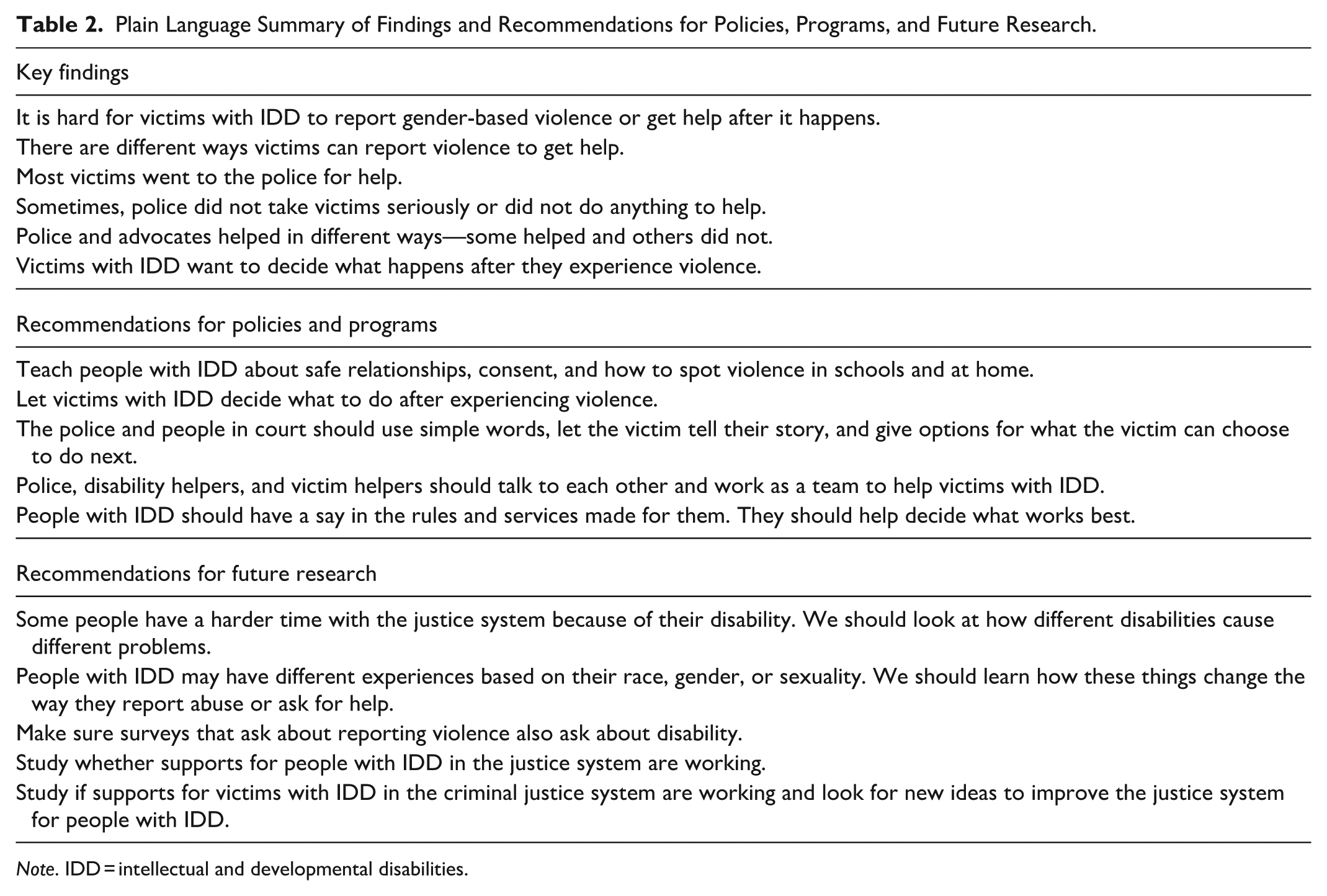
Note. IDD = intellectual and developmental disabilities.
One study explicitly identified sex education as a key prevention strategy, emphasizing the importance of teaching individuals with IDD to recognize what constitutes a crime and to distinguish between appropriate and inappropriate sexual contact (Smele et al., 2019). Building such awareness can empower individuals to recognize and report harmful behavior. Prevention efforts should begin early and include comprehensive, accessible sex and relationship education tailored to people with IDD (Baladerian et al., 2013; McGilloway et al., 2020). This content, focused on consent, boundaries, and recognizing abuse, should be integrated into schools, residential settings, and individualized education plans (IEP; Burrow et al., 2021). It’s important to note that the call for this type of education comes from disability advocates, not by individuals with IDD themselves. This discrepancy may not reflect a lack of interest or need within the IDD community, but rather a lack of awareness that such education exists or is an option. As the vocabulary and foundational knowledge needed to identify, name, and request these supports is often limited or inaccessible, people with IDD may be unable to articulate a demand for something they are not aware of. This underscores the importance of accessible communication and early, proactive education efforts that build both awareness and agency. By doing so, these efforts may reduce long-term risk of victimization by increasing confidence, independence, and social capital (Walter et al., 2024).
Similarly, two studies identified confusion about where and to whom they should report crime (Willott et al., 2020; Woodlock & Harris, 2022), while five others described barriers arising when reporting decisions are mediated by others, such as family members (Meer & Combrinck, 2017), service organizations and advocacy centers (Fraser-Barbour, 2018), or law enforcement personnel (Keilty & Connelly, 2001; Willott et al., 2020). Together, these findings highlight the absence of clear, direct, and accessible reporting pathways. To improve reporting, clear and accessible internal reporting protocols should be paired with staff training on how to recognize and respond to victimization disclosure. Guardianship and capacity laws should be reviewed to avoid excluding victims with IDD from decisions about their own cases (Burrow et al., 2021; C. Edwards et al., 2012). Additionally, victims with IDD should also receive accessible legal education on their rights and options (C. Edwards et al., 2012; Spaan & Kaal, 2019), addressing reports of confusion and inconsistencies in reporting relating to victim autonomy within a healthcare setting (McCarthy et al., 2017).
Three articles discussed accommodations, or lack thereof, within criminal justice settings that may result in dropped cases and questions of victim credibility (Antaki et al., 2015; McCarthy et al., 2019; Smele et al., 2019). To improve these processes, alternative communication methods must be adapted to reduce acquiescence, such as using plain language, open-ended questions, and balanced scales (Åker & Johnson, 2020; Finlay & Lyons, 2002; Morrison et al., 2021). Courtroom accommodations, including the use of support persons, sensory-friendly settings, and breaks, can reduce retraumatization and enhance participation (Morrison et al., 2021; Petersilia, 2001). However, in some legal systems, individuals who serve as witnesses, such as family members or caregivers, are prohibited from acting as support persons. This inability to serve a dual role presents a barrier to victims with IDD as their primary support persons may be best positioned to provide emotional and communicative support during proceedings.
Finally, five articles called for improved and sustained collaboration between law enforcement, victim services, and healthcare settings to provide holistic, streamlined care (Fraser-Barbour, 2018; Gorden, 2013; Malihi et al., 2021; Woodlock & Harris, 2022; Zijlstra et al., 2017). Coordinated partnerships between law enforcement, disability service providers, victim advocates, and researchers in conjunction with the disability community can streamline access to services, reduce the burden on victims, and promote consistent, informed care (Baladerian et al., 2013; McGilloway et al., 2020; Spaan & Kaal, 2019). These partnerships should include shared protocols, joint trainings, and continued input from people with lived experience to ensure reforms remain grounded and effective. While plain language benefits everyone by making information more accessible and clearer, the creation, implementation, and evaluation of trainings, programs, policies, and research must actively involve the disability community. When victims, advocates, and service users with IDD contribute directly, victimization prevention and responses are not only more inclusive but are also more effective, comprehensive, and responsive.
Future Research
There is an often-used quote in disability research and among service providers, “if you have met one person with autism, you have met one person with autism.” This quote is attributed to Dr. Stephen Shore, a professor of special education who also has autism. This quote underscores the heterogeneity in experiences of individuals with autism, and the sentiment can be applied more broadly to IDD. All of the studies included in this systematic review took a broad approach to understanding IDD, however, there may be unique barriers to reporting and different experiences engaging with the criminal justice system that are associated with different diagnoses. For example, individuals who have a difficult time with emotional dysregulation may be interpreted as being aggressive or non-compliant and that can impact how police and service providers respond to them as victims (Wallace, 2021). Another example is the invisibility of many IDDs compared to individuals with Down syndrome, which is often marked by physical features. Future research should aim to examine how specific aspects of IDD pose challenges for engaging in the justice process.
Likewise, individuals are more than their disabilities. Disability interacts with other forms of marginalization to contextualize experiences of help-seeking and police reporting. Research has documented the disproportionate risk of victimization for individuals who have a disability and are a sexual and/or gender minorities and research has found that there are unique barriers to disclosure for LGBTQ+ victims that relate to their marginalized status (K. M. Edwards et al., 2023). Individuals with IDD who are also racial minorities report less access to health care services (Scott & Havercamp, 2014). Likewise, a systematic review by Smith et al. (2022) noted substantial challenges that LBTQ+ adults with IDD face when trying to obtain appropriate disability services. Research is fairly conclusive that intersectionality matters when considering risk of victimization, help-seeking, and access to justice and services. Scholars should extend this research to understand the experiences of victims with IDD who are also racial, sexual, and/or gender minorities in reporting victimization and engaging with the criminal justice system.
Many of the studies included in this systematic review were qualitative studies featuring relatively small samples and limited geographic areas. These studies have been instrumental in establishing the knowledge base regarding barriers to help-seeking and engagement in the criminal justice system for victims with IDD. However, they are limited in their ability to capture the extent of underreporting among individuals with IDD, particularly when compared to individuals without IDD, and they often lack the capacity to examine subgroup differences, highlighting the need for more intersectional approaches in this area of research. Large-scale quantitative surveys are needed to advance research on barriers to help-seeking. While research has examined reporting differences for violent victimization in general for individuals with cognitive disabilities (R. A. Powers & Hayes, 2024), disability-specific reasons for not reporting are not included in these nationally-representative surveys such as the National Crime Victimization Survey. While victims with IDD express many of the same concerns about reporting as found in prior research (Bartlett & Mears, 2011; McGilloway et al., 2020; Meer & Combrinck, 2017), this systematic review has demonstrated that there are several barriers to reporting that are associated with aspects of the victim’s disability. Considering that one in four individuals has a disability (Centers for Disease Control and Prevention, 2020), future research should integrate disability related information into large-scale survey efforts.
Appropriate accommodations may address disability-specific barriers to reporting for individuals with IDD. Wood et al. (2019) outline recommended accommodations for defendants with IDD, including adjustments to forensic assessments, interviewing individuals in a way that is accessible and non-coercive (e.g., plain language, avoid yes/no questions), and accommodations in the trial process (e.g., frequent breaks, inclusion of a support person). Wood et al. (2019) argue that providing these accommodations facilitates full participation in the justice process and ensures that defendants with IDD are not excluded and disadvantaged in the criminal justice system. Similar recommendations for accommodations have been outlined for victims, with calls to screen for IDD, adjust interview and trial procedures, and allow for support persons and advocates to be a part of the process (Shelton, 2022). Appropriate accommodations are equally crucial for victims participating in the criminal justice process, especially because they have no right to counsel or advocacy on their behalf.
Some of these accommodations are already in practice, although they are often informally provided and not institutionalized. For example, some police change their interviewing techniques when working with individuals with IDD (McCarthy et al., 2019), though it is likely that they are not reflected in formal policy (Oschwald et al., 2011). Likewise, victims with IDD may not understand what accommodations are available to them (Child et al., 2011; Fraser-Barbour, 2018). Future research should examine the extent to which accommodations are available, victims with disabilities understand what accommodations are available, and whether those accommodations are appropriate and effective to facilitate reporting and help-seeking.
The participants in the studies of this systematic review and the authors of those articles also provide a number of recommendations to improve the justice process for victims with IDD. Building on this synthesis, future research should examine the feasibility of those recommendations and whether they would appropriately address the barriers to help-seeking. Some recommendations, such as informing individuals what accommodations are available (Child et al., 2011; Fraser-Barbour, 2018), are easily implemented. A number of recommendations pertained to hiring specialized personnel, such as a disability liaison or courtroom actors with lived experience (Child et al., 2011; Walter-Brice et al., 2012), or the expansion of agencies and services that victims with IDD may interact with, such as Adult Protective Services or SANE programs (Campbell et al., 2021; Hollomotz, 2012). Beyond resource availability as a barrier to feasibility, research has not demonstrated whether allocation of resources to these areas would improve service provision for victims with IDD.
Participants and researchers of these studies often recommended primary prevention through public awareness education about disability (Child et al., 2011), and sexual health and violence prevention education for individuals with IDD (Lewin, 2007; McCarthy et al., 2017; Ward et al., 2010). While sexual health education for individuals with IDD is promising, there are additional barriers to implementation beyond resource availability, such as parents and practitioners’ reluctance to discuss sexuality with individuals with IDD. The strength of this approach is that it seeks to support decision-making instead of supplanting it, in line with autonomy interventions for individuals with IDD (Carey et al., 2023). Other studies note that recommendations such as strengthening mandatory reporting laws or expanding mandatory training requirements may unintentionally disempower victims and discourage disclosure of abuse (Coulter & Chez, 1997; Sullivan & Hagen, 2005). Future research on feasibility should consider not only the logistical constraints of implementing programs and policies, but any unanticipated adverse consequences that undermine the goal of providing appropriate services and support for victims with IDD. Importantly, this body of literature continues to expand, and as research in this area develops, emerging findings may refine or challenge the conclusions drawn in the current study. Consequently, the interpretations offered here should be understood within the context of a growing and evolving scholarly literature, particularly as future work incorporates broader samples and greater attention to the diversity of disability experiences.
Limitations and Conclusion
This review provides a comprehensive synthesis of the current evidence on help-seeking and reporting pathways among victims of GBV with IDD. However, several limitations should be acknowledged. First, the available empirical literature remains limited in both volume and methodological diversity. Most studies were cross-sectional or qualitative, which restricts the ability to generalize findings across disability types, geographic contexts, and service systems. Second, the reviewed studies often relied on secondary reports from practitioners or on police and service records, meaning that the perspectives of people with IDD themselves were sometimes indirect or filtered through third-party interpretations. Finally, although efforts were made to capture grey literature, we may have missed some unpublished or non-English studies, and publication bias may favor studies highlighting systemic problems over those documenting effective practices.
Despite these limitations, the review underscores an urgent and consistent theme: victims of GBV with IDD face disproportionate barriers to disclosure, reporting, and justice engagement. Structural inaccessibility, inadequate training among responders, and policies that compromise autonomy collectively constrain victims’ justice and agency. To address these gaps, reforms must operate at multiple levels (i.e., policy, organizational, and interpersonal), while including people with IDD in the design and evaluation of these programs and interventions.
Footnotes
Author Note
These findings have not been disseminated in any format, including publications, conference presentations, or public dissemination (e.g., listservs). The views of this submission are the authors and are not official positions of affiliated institutions. Corresponding author’s institution affiliation is now Department of Criminal Justice & Criminology, University of Missouri-Kansas City.

Funding
The authors disclosed receipt of the following financial support for the research, authorship, and/or publication of this article: This project is funded by the Office of Violence Against Women (O-OVW-2023-171728). The opinions, findings, conclusions, and recommendations expressed in this publication are those of the authors and not necessarily the views of the Department of Justice or the Office of Violence Against Women.
Declaration of Conflicting Interests
The authors declared no potential conflicts of interest with respect to the research, authorship, and/or publication of this article.
Data Availability Statement
There are no human participants in this article, and informed consent is not required.