






Abstract
Problematic technology use (PTU) has increasingly been recognized as a pressing global public health concern. Parental psychological control, a developmentally inappropriate form of intrusive parenting, has been identified as an important familial risk factor for PTU. However, although a growing body of empirical research has examined this association, the findings have been inconsistent, and no systematic quantitative synthesis has yet been conducted. Accordingly, the present study aimed to provide a systematic review and meta-analysis of the association between parental psychological control and PTU. Following PRISMA guidelines, a three-level meta-analytic approach was employed to synthesize existing findings and examine potential moderators. The final simple comprised 69 studies, yielding 204 effect sizes based on 85,129 participants. The results revealed a significant positive association between parental psychological control and PTU (r = .296, p < .001). Moderator analyses further indicated that the strength of this association varied by publication year, age, educational stage, maternal educational attainment, and dimensions of parental psychological control. The present findings support a robust positive association between parental psychological control and PTU. By clarifying both the overall effect size and key moderators, this study advances theoretical understanding and informs the development of evidence-based interventions to reduce maladaptive digital behaviors.
Introduction
Over the past decades, technological innovation has rapidly and profoundly transformed daily life, becoming central to interpersonal communication as well as entertainment and self-expression (Ibabe et al., 2024). By 2025, global Internet usage had reached approximately 5.56 billion individuals, accounting for about 67.9% of the world’s population (Petrosyan, 2025a). As digital technologies become increasingly embedded in social interaction and communication, they not only reshape daily life but also generate challenges related to excessive and compulsive use (Elhai et al., 2016; Kuss & Griffiths, 2017). Such patterns may ultimately culminate in problematic technology use (PTU), defined as excessive or dysregulated engagement with digital technologies that disrupts daily functioning and contributes to emotional and behavioral difficulties (Gugliandolo et al., 2020; Massaro et al., 2023). As such, PTU has emerged as a growing concern with significant global implications (Aktan & Gökçearslan, 2022). A growing body of empirical research has demonstrated that PTU is linked to a wide range of adverse outcomes, including heightened anxiety and depression (Correa et al., 2010; Elhai et al., 2016; Lin et al., 2016), psychiatric disorders (Massaro et al., 2023; Wegmann et al., 2015), academic underachievement (King et al., 2024; Sahu et al., 2019), and disruptions in interpersonal relationships (Tutar & Mutlu, 2024). These adverse consequences underscore the importance of identifying the key antecedents of PTU.
Familial influences have been widely recognized as key determinants of PTU (Efrati et al., 2024; Madrid-Valero et al., 2023), with maladaptive parenting styles playing a particularly salient role (Lian et al., 2016; Q. X. Liu et al., 2017). Among these, parental psychological control has received increasing attention as a potentially important risk factor. It refers to a manipulative and intrusive parenting practice that constrains children’s thoughts and emotions and violates their psychological boundaries (Bebes et al., 2015). By frustrating children’s basic psychological needs for autonomy, competence, and relatedness (Barber & Harmon, 2002), parental psychological control may impair self-regulation and increase vulnerability to maladaptive coping, as proposed by self-determination theory (Ryan & Deci, 2000). In line with cognitive-behavioral models, youth experiencing such distress may increasingly rely on online activities to regulate negative emotions, which may in turn reinforce problematic use over time (Davis, 2001). Consistent with this reasoning, a growing number of studies have linked parental psychological control to PTU (Chen et al., 2025; Wang, 2025).
However, despite this theoretical rationale, the empirical evidence remains inconclusive, with some studies reporting a significant positive association (Akdeniz et al., 2024; Xiao et al., 2024) and others finding no significant relationship (Zhu et al., 2023). Such inconsistencies may arise from differences in sample characteristics, methodological features, and cultural contexts, thereby limiting the reliability and generalizability of existing findings. A systematic review and meta-analysis is therefore needed to determine the overall magnitude of this association and to identify the potential moderators that may shape it. By synthesizing the existing evidence, the present study seeks to advance theoretical integration and offers implications for family-based prevention and intervention efforts.
Conceptualization and Measurement of Parental Psychological Control and PTU
Parental psychological control is typically conceptualized either by source or by dimension. One approach distinguishes between maternal and paternal psychological control or treats it as a unified construct (Shek et al., 2018, 2019; Zhu et al., 2023). The other approach differentiates among three dimensions: guilt induction, love withdrawal, and authority assertion (L. Liu et al., 2024). Correspondingly, several validated instruments have been developed to assess parental psychological control, including the 18-item Parental Psychological Control Scale (PCS-18, Q. Wang et al., 2007), the 10-item Parental Psychological Control Scale (PCS-10, Shek, 2005), the Psychological Control Scale-Youth Self Report (PCS-YSR, Barber, 1996), and the Parent-Child Subsystem Quality Scale (PCSQS, Shek & Law, 2014). Among these measures, the PCS-18 assesses three specific dimensions of psychological control, the PCS-10 and the PCSQS provide separate assessments of maternal and paternal psychological control, and the PCS-YSR captures parental psychological control as a global construct.
Rather than representing a single homogeneous behavior, PTU is widely conceptualized as an umbrella construct (Gugliandolo et al., 2020; Massaro et al., 2023). Accumulating evidence suggests that PTU may manifest across multiple domains, including Internet use, smartphone use, online gaming, and social media use, which are often examined as related yet distinguishable forms of maladaptive technology involvement (Gugliandolo et al., 2020; D. Wang et al., 2022; Zhang et al., 2022). Although these forms of engagement share features of dysregulated use commonly discussed within behavioral addiction frameworks (Griffiths, 1996, 2005), they may differ in their motivational underpinnings and structural affordances. Consistent with the I-PACE model (Brand et al., 2019), different forms of PTU may be shaped by partially distinct cognitive-affective mechanisms. Accordingly, to comprehensively examine the association between parental psychological control and PTU while accounting for its multidimensional nature, the present study conceptualized PTU as a higher-order construct and also examined Internet use, smartphone use, online gaming, and social media use as distinguishable domains. A range of validated instruments has been developed to assess different domains of PTU. For problematic Internet use, commonly used measures include the Internet Addiction Test (IAT; Young, 1998) and the Internet Addiction Questionnaire (IA-10; Shek et al., 2008). For problematic smartphone use, commonly employed measures are the Smartphone Addiction Scale (SAS, S. Su et al., 2014) and the Mobile Phone Addiction Index Scale (MPAI, L. Leung, 2008). For problematic online gaming, common tools include the Problematic Online Game Use Questionnaire (POGQ, Yu et al., 2015) and the Internet Gaming Disorder Scale (IGDS, Petry et al., 2014). For problematic social media use, instruments include the Bergen Social Media Addiction Scale (BSMAS; Andreassen et al., 2012) and the Problematic Mobile Social Media Usage Assessment Questionnaire for Adolescents (PMAQA, Jiang, 2018).
Associations Between Parental Psychological Control and PTU
Parental psychological control and PTU may be linked through motivational and developmental processes operating within the family context. According to self-determination theory, parental psychological control frustrates basic psychological needs for autonomy and relatedness, which may prompt youth to seek alternative sources of need fulfillment through digital media (Hong et al., 2019; Ryan & Deci, 2000). Consistent with the compensatory Internet use theory (Kardefelt-Winther, 2014), technology use may function as a coping strategy for managing the stress and negative emotions elicited by psychologically controlling parenting. In this context, digital environments may become particularly appealing because they offer opportunities to regain a sense of autonomy, connection, or emotional relief. Empirical studies have also shown that need frustration and emotion dysregulation are associated with higher levels of PTU (Yang et al., 2022; Zhou & Cheng, 2025). Over time, when such coping is perceived as effective, technology use may gradually become habitual, excessive, and maladaptive. A substantial body of research has reported a positive correlation between parental psychological control and PTU (Lee et al., 2016; She et al., 2022).
Nevertheless, the findings have been mixed. Some studies have suggested that parental psychological control may be associated with PTU indirectly through psychological mechanisms such as loneliness and socially learned helplessness (X. Li et al., 2013; L. Liu et al., 2024; Tingwei et al., 2025), whereas another study reported a nonsignificant association between the two variables (Zhu et al., 2023). Longitudinal findings have also been mixed. Although parental psychological control appears to predict subsequent PTU, evidence for the reverse pathway remains inconsistent. S. Li et al. (2025) found that PTU predicted later increases in love withdrawal and authority assertion, but not guilt induction, whereas Deng et al. (2022) reported no significant effect of PTU on later parental psychological control.
Overall, the empirical evidence regarding the association between parental psychological control and PTU remains inconclusive. Existing studies have yielded inconsistent findings concerning both the overall magnitude of this association and its temporal direction. These inconsistencies highlight the need for a systematic review and meta-analysis to provide a more comprehensive and statistically robust estimation of the association between parental psychological control and PTU, while examining potential moderators that may account for the observed heterogeneity.
Potential Moderators Between Parental Psychological Control and PTU
Publication Year
Global Internet penetration and digital device ownership have increased substantially over time, reflecting the growing integration of digital media into daily life (Petrosyan, 2025b). According to the accessibility hypothesis, the risk of problematic use increases as access to potentially addictive technologies becomes more widespread (Mann, 2005). As digital technologies have become increasingly available and embedded in daily routines, opportunities for engagement have expanded, potentially increasing vulnerability to problematic use. In this context, parental psychological control may become more strongly linked to PTU, as greater access to digital technologies may intensify both children’s exposure and parents’ concerns about regulating online behavior (Modecki et al., 2022). Thus, publication year may capture broader technological and sociocultural changes that shape the strength of the association between parental psychological control and PTU.
Age
As children and adolescents mature, their increasing need for autonomy may intensify conflict under psychologically controlling parenting. Such conflicts may be reinforced by cumulative and reciprocal interaction patterns within the family system, amplifying the influence of parental control in later developmental stages (Pinquart, 2017). In this context, PTU may function as a coping strategy, allowing young people to avoid parental constraints or seek autonomy in the digital domain. Although some studies suggest that older youth are more vulnerable to problematic Internet use (Koronczai et al., 2011), others indicate that problematic use may decline in higher grades as academic demands increase (Shek et al., 2019). Thus, age may serve as a potential moderator of the association between parental psychological control and PTU.
Educational Stage
Educational stage reflects an important developmental context marked by differences in family interaction patterns, institutional environments, and opportunities for technology use. As young people progress through the educational system, parental monitoring, academic expectations, and daily routines change substantially (Smetana et al., 2006). Earlier stages are typically characterized by closer parental supervision and more structured school environments, whereas later stages involve greater independence and more flexible time use (Eccles & Roeser, 2011). These shifts may shape how parental psychological control is experienced and how strongly it is associated with PTU. At the same time, as students progress through educational stages, their access to digital devices and online platforms tends to increase, creating more opportunities for intensive technology engagement. (Odgers & Jensen, 2020). These developmental and contextual differences suggest that educational stages may moderate the association between parental psychological control and PTU.
Biological Sex
Evidence regarding biological sex differences in both parental psychological control and PTU remains inconsistent. Some studies suggest that parental psychological control is more strongly associated with externalizing behaviors among girls (Lansford et al., 2014), whereas others report no significant biological sex differences (Shek et al., 2019). Likewise, males tend to report higher levels of problematic Internet use and online gaming (Salehi et al., 2022; Shi et al., 2017), whereas females may be more vulnerable to problematic social media use (Marino et al., 2023). However, other evidence suggests there are no significant biological sex differences in PTU overall (Remondi et al., 2020). Taken together, these mixed findings suggest that biological sex may moderate the association between parental psychological control and PTU.
Culture
Cross-cultural research suggests that the effects of parental psychological control may vary across cultural contexts. In Western societies that emphasize autonomy and individualism, psychological control is consistently associated with maladjustment (Pettit et al., 2001). In collectivist societies such as China, however, such practices may be more likely to be interpreted as expressions of parental involvement, care, and protection rather than intrusion (X. Li et al., 2013), and parents tend to report higher levels of psychological control (Ng et al., 2014). These culturally normative meanings may attenuate its harmful effects, or even render it beneficial in certain developmental contexts (Greenfield et al., 2003). Meanwhile, PTU appears to be more prevalent and severe in Asian than in Western samples (Balhara et al., 2019; W. Su et al., 2019). Thus, culture may moderate the association between parental psychological control and PTU.
Maternal Educational Attainment
Higher parental education levels are positively associated with differences in children’s digital literacy and the ways parents mediate their children’s technology use (Lou et al., 2024). Parents with higher educational attainment often hold stronger academic expectations for their children and invest more in their educational development (Davis-Kean, 2005), which may increase the likelihood of intensive regulation over children’s behavior and daily activities, including their technology use. In addition, mothers are typically more involved in children’s everyday routines and academic supervision, making maternal characteristics particularly proximal to children’s developmental experiences (J. T. Y. Leung & Shek, 2012). These differences suggest that maternal educational attainment may moderate the association between parental psychological control and PTU.
Dimensions of Parental Psychological Control
Parental psychological control comprises multiple dimensions, including guilt induction, love withdrawal, and authority assertion (L. Liu et al., 2024). Although these dimensions share the common feature of psychological intrusion, they differ in how parents regulate children’s thoughts, feelings, and behaviors (Zhang et al., 2022). Such differences may influence children’s emotional responses and coping strategies in distinct ways. Accordingly, the association between parental psychological control and PTU may vary across dimensions.
Current Study
The preceding review highlights substantial inconsistency in the literature on parental psychological control and PTU. Findings vary across developmental, cultural, and methodological contexts, leaving the overall magnitude and generalizability of this association unclear. Existing meta-analyses have provided only partial insight by focusing on specific PTU domains or subsuming psychological control within broader parenting constructs, thereby obscuring its distinct relevance (Lukavská et al., 2022; Niu et al., 2023). Methodological limitations also warrant attention. Many primary studies report multiple effect sizes from the same sample, resulting in statistical dependency that traditional meta-analytic approaches may not adequately account for.
To address these issues, the present study conducted a three-level meta-analysis to provide a more rigorous estimate of the overall association between parental psychological control and PTU, while also examining potential moderators that may explain heterogeneity across studies. In this way, the present study aims to contribute to theory development and inform prevention efforts targeting maladaptive technology engagement.
Methods
This systematic review and meta-analysis followed the Preferred Reporting Items for Systematic Reviews and Meta-Analyses (PRISMA) guidelines (Page et al., 2021), as PRISMA provides a widely recognized framework for conducting and reporting systematic reviews in a transparent and reproducible manner. To enhance transparency and reduce the risk of redundant efforts, the study protocol was preregistered in the International Prospective Register of Systematic Reviews (PROSPERO; registration number: CRD42024615238; https://www.crd.york.ac.uk/PROSPERO/view/CRD42024615238). In line with open science practices, all datasets generated and analyzed during the current work have been made publicly accessible via the Open Science Framework (OSF; https://osf.io/s4w6b/).
Data Sources and Study Selection
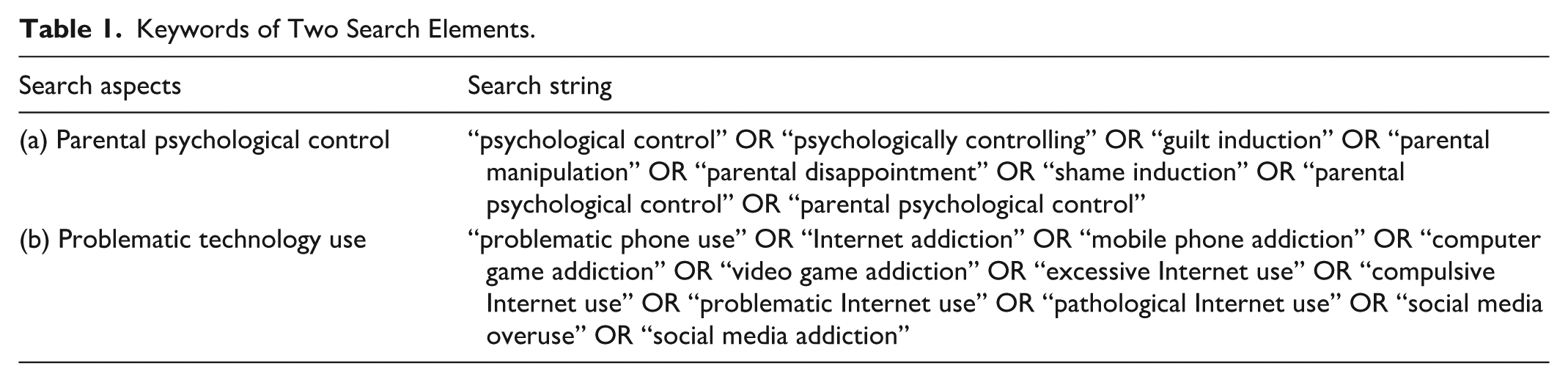
A systematic literature search was conducted from November 2024 to September 2025 in accordance with the PRISMA guidelines (Page et al., 2021). To ensure comprehensive coverage, the systematic literature search was conducted without date restrictions. The studies ultimately included in the review were published between 2012 and 2025. The search included multiple electronic databases, including PsycINFO, Web of Science, Embase, PubMed, EBSCO, SpringerLink, China National Knowledge Infrastructure (CNKI), Wanfang Data, Chaoxing, and VIP Database. Google Scholar was used to conduct an extensive search to avoid potential omissions of relevant literature. To ensure consistency and transparency, Google Scholar was searched using the same search terms, screening procedures, and eligibility criteria as those applied in the other databases. Using the search string (see Table 1), advanced searches were conducted within the title, abstract, and keywords fields of each database to obtain the primary studies. The search string comprised two elements: (a) parental psychological control and (b) PTU.
Keywords of Two Search Elements.
Primary studies were included in the present meta-analysis if they met the following inclusion criteria: (a) investigated the association between parental psychological control and PTU; (b) reported a correlation coefficient (r) or provided other statistical parameter (e.g., t, F, χ2) that can be converted to r; (c) were published as journal articles, master’s theses, or doctoral dissertations; (d) reported the sample size; (e) recruited healthy participants; (f) in cases of duplicate publication, the version containing the most comprehensive information was retained. Studies were excluded if they: (a) were review articles, meta-analyses, or conference papers; (b) did not provide sufficient statistical information to calculate an effect size; (c) involved clinical samples, such as individuals diagnosed with mental disorders according to DSM-5 criteria (American Psychiatric Association, 2013). This approach was adopted because the present study focused on problematic technology engagement in general populations rather than clinically diagnosed addictive disorders.
Study selection proceeded in multiple stages. The initial database search identified a total of 1,101 records. After removing 235 duplicate records and 50 ineligible publication types (i.e., review articles, meta-analyses, and conference papers), 816 records remained for title screening. Of these, 694 were excluded as clearly irrelevant. The abstracts of the remaining 122 records were then screened against the inclusion criteria, resulting in the exclusion of 39 additional studies. Full texts were retrieved for the remaining 83 articles and assessed for eligibility. During full-text screening, 14 articles were excluded because they did not report a correlation coefficient (n = 8), did not include a measure of parental psychological control (n = 5), or did not include a measure of PTU (n = 1). A flowchart of the selection procedure is illustrated in Figure 1.
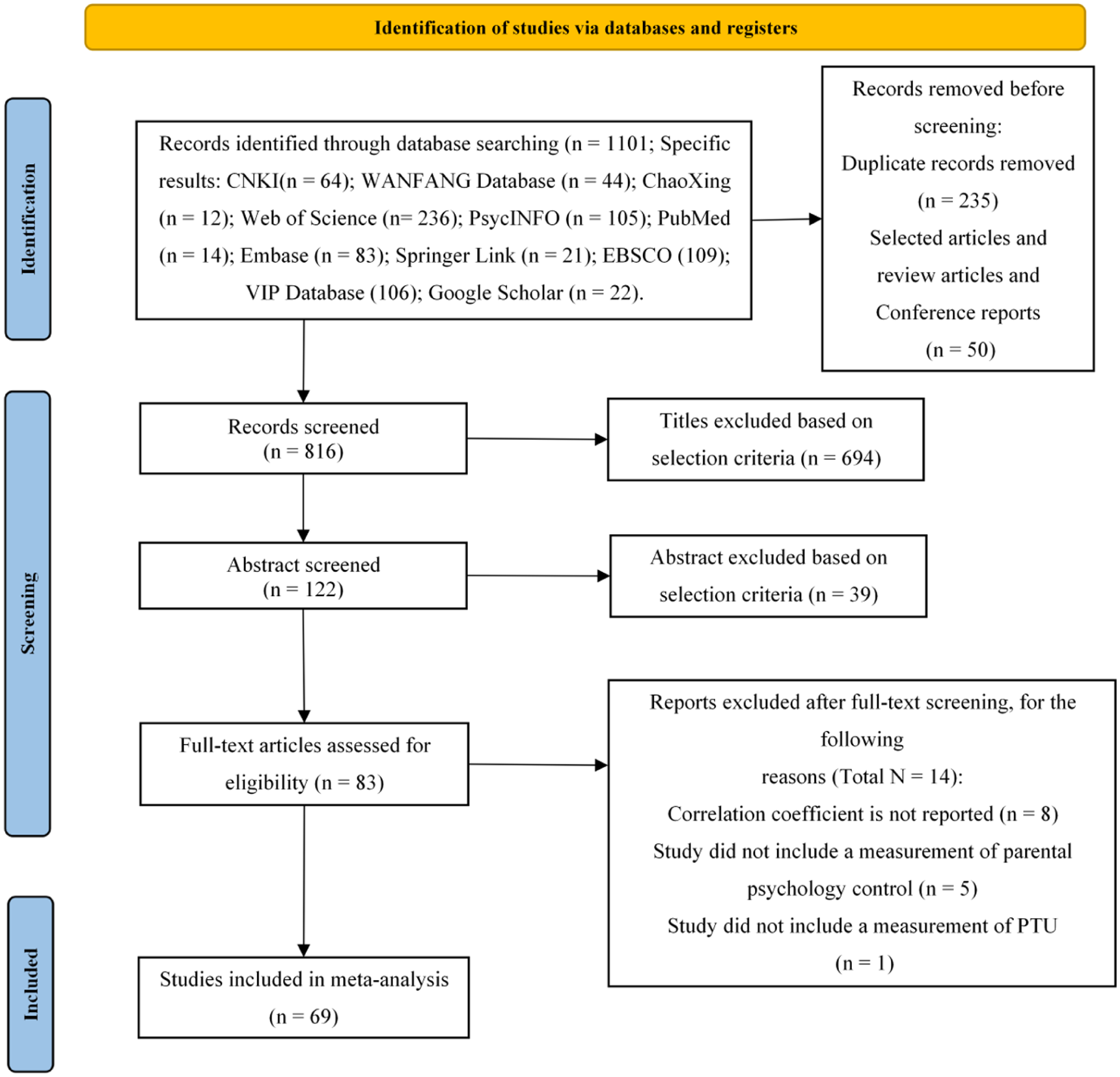
Flowchart of the search procedure.
A total of 69 studies met the inclusion criteria and were included in the present meta-analysis (see Table 2). The quality of each included study was assessed, and the corresponding quality scores for the 69 included articles are presented in Table 2 (for details of the assessment method, please see Supplemental Material 2).
Study Characteristics.
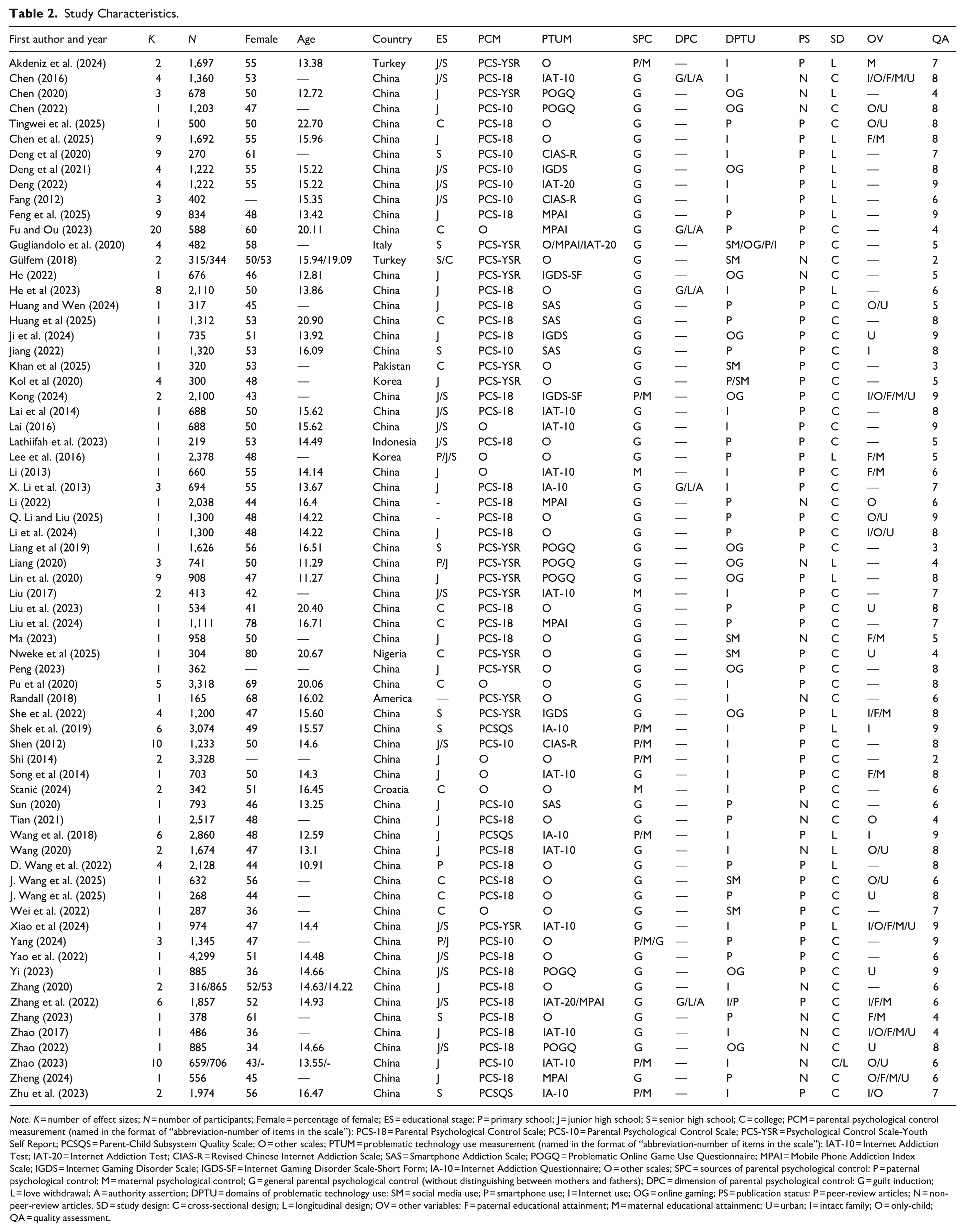
Note. K = number of effect sizes; N = number of participants; Female = percentage of female; ES = educational stage: P = primary school; J = junior high school; S = senior high school; C = college; PCM = parental psychological control measurement (named in the format of “abbreviation-number of items in the scale”): PCS-18 = Parental Psychological Control Scale; PCS-10 = Parental Psychological Control Scale; PCS-YSR = Psychological Control Scale-Youth Self Report; PCSQS = Parent-Child Subsystem Quality Scale; O = other scales; PTUM = problematic technology use measurement (named in the format of “abbreviation-number of items in the scale”): IAT-10 = Internet Addiction Test; IAT-20 = Internet Addiction Test; CIAS-R = Revised Chinese Internet Addiction Scale; SAS = Smartphone Addiction Scale; POGQ = Problematic Online Game Use Questionnaire; MPAI = Mobile Phone Addiction Index Scale; IGDS = Internet Gaming Disorder Scale; IGDS-SF = Internet Gaming Disorder Scale-Short Form; IA-10 = Internet Addiction Questionnaire; O = other scales; SPC = sources of parental psychological control: P = paternal psychological control; M = maternal psychological control; G = general parental psychological control (without distinguishing between mothers and fathers); DPC = dimension of parental psychological control: G = guilt induction; L = love withdrawal; A = authority assertion; DPTU = domains of problematic technology use: SM = social media use; P = smartphone use; I = Internet use; OG = online gaming; PS = publication status: P = peer-review articles; N = non-peer-review articles. SD = study design: C = cross-sectional design; L = longitudinal design; OV = other variables: F = paternal educational attainment; M = maternal educational attainment; U = urban; I = intact family; O = only-child; QA = quality assessment.
Coding Variables
Eligible studies were coded by two authors (J.Z. and Z.P.) independently following the guidelines of Lipsey and Wilson (2001). The intercoder reliability was calculated by intraclass correlation (ICC) for the continuous variables and kappa coefficients (k) for categorical variables.
Data Analysis
The effect size used in the present meta-analysis was the correlation coefficient (r) between parental psychological control and PTU. Before the analysis, correlation coefficients were converted to Fisher’s Z scores using Comprehensive Meta-analysis (CMA) software, aiming to obtain variance-stabilized correlation coefficients (Card, 2012). To facilitate interpretation, Fisher’s Z scores were retransformed into Pearson’s correlation coefficients in the reports on the overall association and the intercepts of the moderator analyses (Barańczuk, 2019).
Traditional meta-analytic approaches typically assume independence of effect sizes, with each study contributing only one effect size to the analysis. However, this assumption is violated when multiple effect sizes are reported within the same study (Cheung, 2014). To address this dependency, the present study adopted a three-level random-effects model, which partitions variance into three components: (a) sampling variance of observed effect sizes (Level 1), (b) between-effect-size variance within studies (Level 2), and (c) between-study variance (Level 3). This approach incorporates all available effect sizes while modeling their interdependence, thereby maximizing data utilization and increasing statistical power (Assink & Wibbelink, 2016). Analyses were conducted in R (version 4.1.3) using the metafor package. Log-likelihood ratio tests were used to examine the significance of Level 2 and Level 3 variances. Significant variance at either level indicated heterogeneity in effect size, warranting subsequent moderator analyses (Assink & Wibbelink, 2016). Moderator effects were tested using subgroup analyses for categorical variables and random-effects meta-regressions for continuous variables (Borenstein, 2009). Publication bias was assessed using funnel plots and the Egger MLMA test. Symmetrical funnel plots and a non-significant Egger test (p > .05) were interpreted as indicating low risk of publication bias.
Results
Study Characteristics
This systematic review and meta-analysis included 204 effect sizes extracted from 69 studies (see Table 2). The number of effect sizes per study ranged from 1 to 20. Sample sizes across studies varied from 165 to 4,299 participants, yielding a total pooled sample of 85,129 individuals, 51.95% of whom were females. Participants’ ages ranged from 9 to 33 years, with a mean age of 15.47 years. The included studies were conducted across multiple countries, with most originating from China and the remainder from other countries in Asia, Europe, Africa, and North America (see Table 2 for details). The included studies were published between 2012 and 2025, and their distribution across publication years is presented in Figure 2.
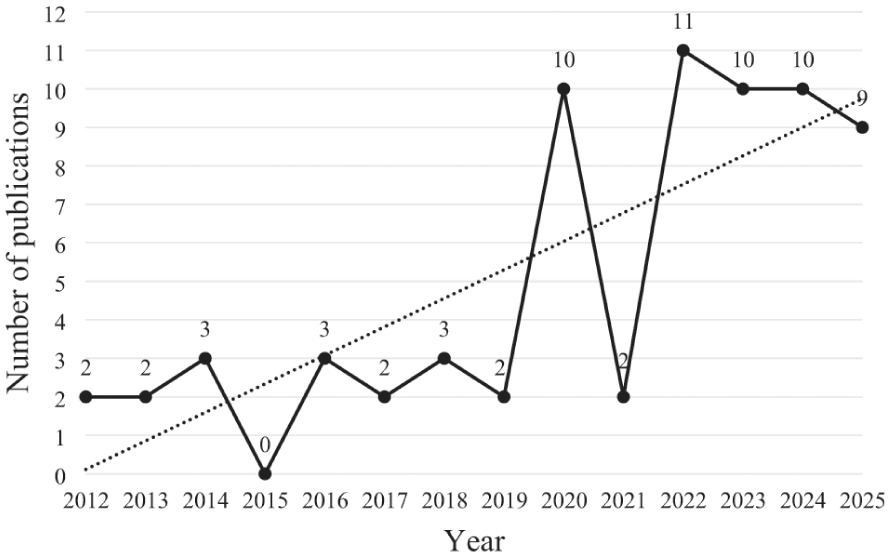
Distribution of included studies published by year.
Publication Bias
The funnel plot demonstrates a symmetrical distribution of effect sizes (see Figure 3), suggesting a low risk of publication bias. Additionally, Egger-MLMA regression result also showed that there was no significant publication bias (t = 1.65, p = .199).
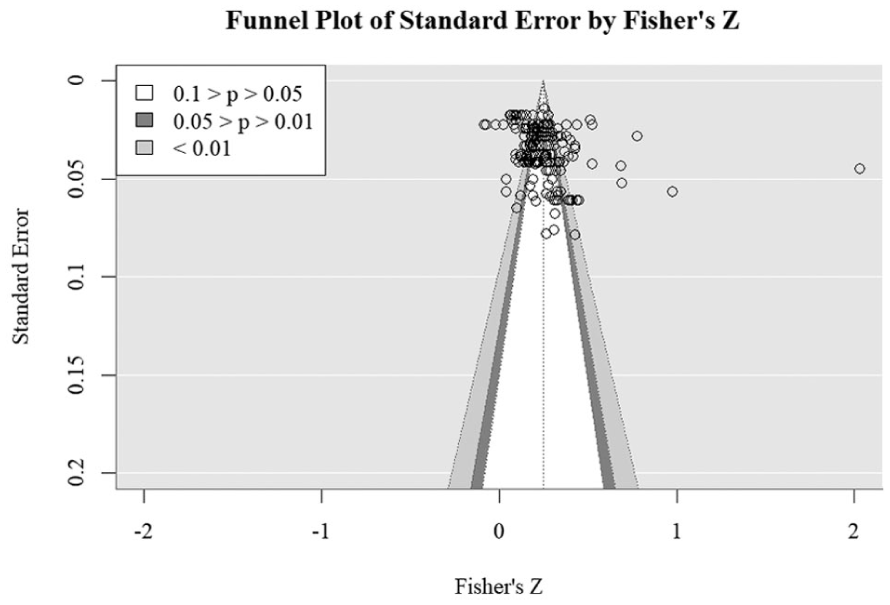
Funnel plot effect sizes of parental psychological control and problematic technology use.
Overall Effect Sizes
A significant positive correlation was observed between parental psychological control and PTU (r = .296, p < .001). Of the total effect size variance, 1.20% was ascribed to the random sampling error (Level 1), 4.57% was ascribed to within-study variance (Level 2), and 94.23% was ascribed to between-study variance (Level 3). The log-likelihood ratio test revealed significant heterogeneity (p < .001) at both the within- and between-study variances, thereby warranting further moderator analyses to identify potential factors influencing the relationship between parental psychological control and PTU.
In addition, to further clarify the temporal direction of this association, a supplementary longitudinal meta-analysis was conducted based on nine studies that provided the correlations required for cross-lagged modeling. The results showed bidirectional prospective associations between parental psychological control and PTU, with parental psychological control exerting a stronger predictive effect on subsequent PTU than the reverse pathway. Full details of this analysis are provided in Supplemental Material 3.
Moderator Analyses
Five significant moderators were identified: publication year, age, educational stage, maternal educational attainment, and dimensions of parental psychological control. Specifically, publication year significantly moderated the association between parental psychological control and PTU [F (1, 202) = 6.493, p = .012], indicating a strengthening positive correlation over time. Age also emerged as a significant moderator [F (1, 137) = 18.650, p < .001], with the positive correlation increasing with age. Educational stage significantly moderated the relationship [F (3, 197) = 4.683, p = .003], with a stronger positive correlation observed among college students (r = .360) than among primary school students (r = .276). Maternal educational attainment was another significant moderator [F (1, 33) = 4.596, p = .040], with the positive correlation strengthened as maternal educational attainment increased. Finally, dimensions of parental psychological control significantly moderated the relationship [F (2, 30) = 6.414, p = .005], with love withdrawal showing a stronger correlation with PTU (r = .249) than guilt induction (r = .188). The results of moderator analyses are presented in Table 3.
Results of Categorical and Continuous Moderators for the Association Between Parental Psychological Control and Problematic Technology Use.
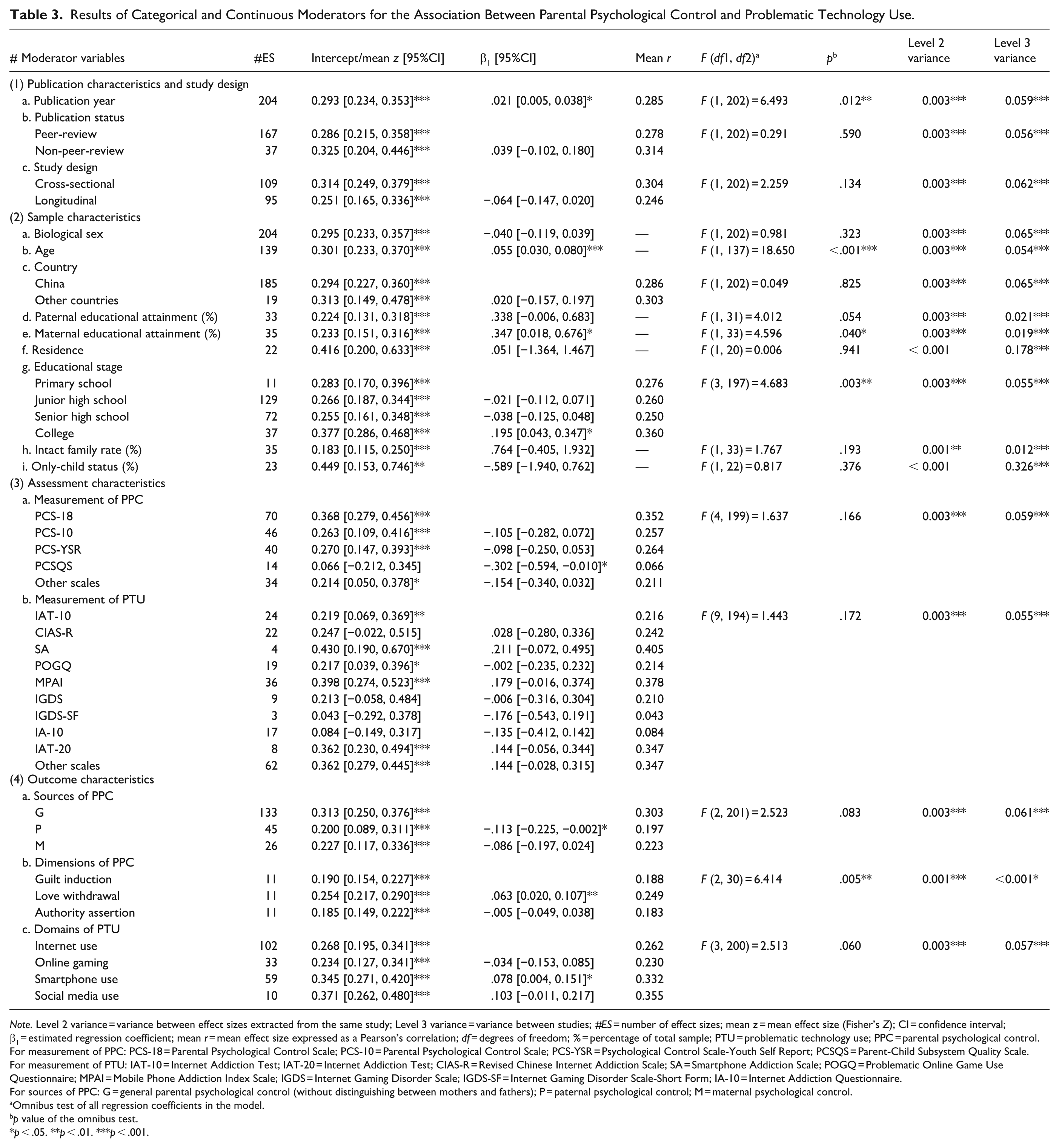
Note. Level 2 variance = variance between effect sizes extracted from the same study; Level 3 variance = variance between studies; #ES = number of effect sizes; mean z = mean effect size (Fisher’s Z); CI = confidence interval; β1 = estimated regression coefficient; mean r = mean effect size expressed as a Pearson’s correlation; df = degrees of freedom; % = percentage of total sample; PTU = problematic technology use; PPC = parental psychological control.
For measurement of PPC: PCS-18 = Parental Psychological Control Scale; PCS-10 = Parental Psychological Control Scale; PCS-YSR = Psychological Control Scale-Youth Self Report; PCSQS = Parent-Child Subsystem Quality Scale.
For measurement of PTU: IAT-10 = Internet Addiction Test; IAT-20 = Internet Addiction Test; CIAS-R = Revised Chinese Internet Addiction Scale; SA = Smartphone Addiction Scale; POGQ = Problematic Online Game Use Questionnaire; MPAI = Mobile Phone Addiction Index Scale; IGDS = Internet Gaming Disorder Scale; IGDS-SF = Internet Gaming Disorder Scale-Short Form; IA-10 = Internet Addiction Questionnaire.
For sources of PPC: G = general parental psychological control (without distinguishing between mothers and fathers); P = paternal psychological control; M = maternal psychological control.
Omnibus test of all regression coefficients in the model.
p value of the omnibus test.
p < .05. **p < .01. ***p < .001.
Discussion
The present systematic review and meta-analysis synthesized 204 effect sizes from 69 independent studies and found a significant positive association between parental psychological control and PTU. In addition, five significant moderators, publication year, age, educational stage, maternal educational attainment, and dimensions of parental psychological control, were identified, highlighting the conditions under which this association varies. Collectively, these findings offer a more nuanced understanding of the association between parental psychological control and PTU.
Overall Association Between Parental Psychological Control and PTU
The present meta-analysis demonstrated a significant positive association between parental psychological control and PTU. Furthermore, the magnitude of the overall effect observed in this meta-analysis is theoretically and practically meaningful. Correlations around 0.30 are typically regarded as medium-to-large and potentially consequential in both short- and long-term developmental processes (Funder & Ozer, 2019; Gignac & Szodorai, 2016). In this context, the present overall effect size (r = .296) indicates a robust and reliable association between parental psychological control and PTU, supporting its substantive relevance in the study of adolescent risk behaviors. Moreover, the consistency of this association across diverse samples suggests that parental psychological control may represent a reliable family-level risk factor for PTU rather than a context-specific phenomenon.
To further clarify the temporal dynamics of this association, the supplementary longitudinal meta-analysis provided evidence of bidirectional prospective effects between parental psychological control and PTU, with parental psychological control showing a stronger predictive effect on subsequent PTU than the reverse pathway. This pattern points to a reciprocal process in which parental psychological control may increase reliance on digital environments, potentially as a way of coping with autonomy frustration and emotional distress, while excessive or dysregulated technology use may in turn elicit greater parental concern and subsequent controlling responses. Nevertheless, these longitudinal findings should be interpreted cautiously, as the cross-lagged analysis was based on a relatively small number of studies and does not permit firm conclusions about causal direction.
Explaining Heterogeneity With Moderators
Publication Year
This meta-analysis identified a significant moderating effect of publication year, indicating that the positive association between parental psychological control and PTU has strengthened over time. The eligible studies spanned from 2012 to 2025, a period marked by rapid advances in digital communication technologies and a substantial increase in global Internet penetration, which reached approximately 67.9% by February 2025 (Petrosyan, 2025b). This expansion reflects the growing ubiquity of digital media in daily life, suggesting that the association between parental psychological control and PTU may be shaped by broader historical changes in the digital environment. From the perspective of compensatory Internet use theory, greater accessibility and integration of digital technologies may intensify adolescents’ reliance on online environments as a coping mechanism in response to heightened parental psychological control (Kardefelt-Winther, 2014). As digital engagement becomes more embedded in academic, social, and recreational contexts, the likelihood that controlling parenting practices contribute to PTU increases accordingly. Thus, publication year may function not simply as a temporal variable but also as a proxy for evolving technological and sociocultural contexts that amplify this association.
Age
Age significantly moderated this association, with the strength of the positive association increasing with age. However, this pattern should be interpreted primarily as reflecting developmental variation within adolescence rather than across the broader lifespan, given that the included samples were heavily concentrated in adolescent student populations. From the perspective of self-determination theory, autonomy becomes increasingly salient in adolescence (Ryan & Deci, 2000), and psychologically controlling parenting may therefore be experienced as especially frustrating during this period. As adolescents mature, their striving for independence and self-regulation intensifies (Steinberg & Silverberg, 1986), which may make them more likely to turn to digital media as a means of self-expression, relatedness, or emotional regulation under conditions of parental psychological control (Soenens & Vansteenkiste, 2010). In addition, older adolescents often have greater access to personal digital devices and fewer external restrictions on technology use, which may facilitate more habitual or emotionally driven engagement and thereby increase vulnerability to PTU (Hernandez et al., 2024; Q. Li & Liu, 2025). Noteworthy, given the limited representation of adult samples, caution is needed in extending this developmental interpretation to adulthood.
Educational Stage
A significant moderating effect of educational stage was also identified, with the association being stronger among college students than among students at other stages. This finding is consistent with the age-related moderation effect, suggesting that developmental context plays a key role in shaping susceptibility to PTU. Educational stage reflects not only chronological age but also distinct social environments and developmental tasks associated with each phase. For college students, the transition to emerging adulthood is characterized by heightened autonomy needs, reduced parental supervision, and virtually unrestricted access to digital devices (Hernandez et al., 2024; Q. Li & Liu, 2025). Under such conditions, continued parental psychological control contradicts developmental expectations of independence, intensifying emotional distress and encouraging compensatory engagement with digital media (Kardefelt-Winther, 2014; Ryan & Deci, 2000). In contrast, primary and secondary school students are typically situated within highly structured, exam-oriented educational systems that impose stricter schedules and greater external regulation, leaving comparatively less time and opportunity for excessive technology use (Shek et al., 2019). Thus, the increased autonomy, broader device accessibility, and reduced environmental constraints characteristic of the college stage amplify the pathway from psychological control to PTU.
Maternal Educational Attainment
A notable finding was that maternal educational attainment significantly moderated the association, with the positive correlation becoming stronger as maternal education increased. Prior research suggests that higher maternal education is frequently accompanied by elevated achievement expectations and greater parental investment in children’s development (Davis-Kean, 2005; Prickett & Augustine, 2016). When these expectations are communicated through psychologically controlling strategies, children may experience intensified pressure and diminished autonomy, thereby increasing their likelihood of using digital media as a means of coping or escape. Consequently, maternal education may not function solely as a protective factor but may also amplify controlling parenting when combined with strong achievement-oriented values that are prevalent in more educated families. Moreover, because mothers often assume primary caregiving responsibilities and are more directly involved in children’s daily routines and academic supervision, their educational background may exert a more proximal influence on psychological control than that of fathers. Consistent with this notion, a prior study has shown that maternal psychological control more strongly predicts adolescents’ well-being than paternal control (J. T. Y. Leung & Shek, 2012). Overall, these findings suggest that higher maternal education may intensify the positive association between psychological control and PTU by reinforcing autonomy-restrictive parenting practices.
Dimensions of Parental Psychological Control
A significant moderating effect of the dimensions of parental psychological control was observed, with the positive association being stronger for love withdrawal than for guilt induction. This finding underscores the importance of differentiating among dimensions of psychological control rather than treating it as a unitary construct. Love withdrawal may be particularly harmful because it conveys conditional affection and implicitly links parental love to compliance. Such practices directly undermine adolescents’ basic psychological needs for relatedness and autonomy (Ryan & Deci, 2000). Within the framework of attachment theory, love withdrawal disrupts secure attachment bonds and heightens fear of rejection (Bowlby, 1988), increasing emotional insecurity. As a result, adolescents may turn to digital media as a compensatory strategy to regulate negative emotions or fulfill unmet relational needs (Assor et al., 2004; Kardefelt-Winther, 2014). By contrast, guilt induction, though intrusive, typically promotes compliance by appealing to internalized responsibility and self-blame (Nelson et al., 2013; Zhang et al., 2022). While it may elicit emotional distress, it does not threaten relational security to the same extent as love withdrawal. Consequently, guilt induction exerts a comparatively weaker influence on PTU. Overall, these findings suggest that love withdrawal, by simultaneously threatening autonomy and emotional security, exerts the strongest impact on compensatory technology use, whereas guilt induction has more indirect and moderate effects.
Notably, the present meta-analysis revealed a marginally significant moderating effect of the PTU domain on this association, with a stronger positive association observed for problematic smartphone use than for problematic Internet use. This pattern suggests that parental psychological control may show domain-specific associations with PTU. One possible explanation lies in the distinctive characteristics of smartphones, as their portability and constant accessibility make them more deeply embedded in daily routines and social interactions (Elhai et al., 2017). From the perspective of compensatory Internet use theory, smartphones may therefore provide a particularly immediate and convenient medium for coping with negative emotions or escaping stress associated with parental psychological control (Kardefelt-Winther, 2014). Relatedly, problematic smartphone use has been linked more closely to instant gratification (Wilmer & Chein, 2016), and some evidence suggests that authority assertion is more strongly associated with problematic smartphone use than with problematic Internet use (X. Li et al., 2013; Zhang et al., 2022). However, this pattern should not be interpreted as evidence that problematic online gaming or problematic social media use are less consequential. Rather, the unequal distribution of studies across domains, especially the limited evidence on online gaming and social media use, may have reduced the statistical power to detect clearer differences. More broadly, these findings suggest that parental psychological control may relate differently to specific domains of PTU, although the current evidence remains insufficient to draw robust conclusions across all domains. Thus, the observed moderating effect should be interpreted cautiously, particularly given its marginal significance.
Limitations and Implications
Several limitations should be acknowledged when interpreting the present findings. First, this meta-analysis relied primarily on correlation coefficients, which reflect correlations rather than causal relationships. It is therefore not possible to determine the directionality of effects between parental psychological control and PTU. Notably, as a means of coping or compensation, PTU may further erode family communication and emotional connectedness, potentially eliciting greater parental control in response (S. Li et al., 2025). This reciprocal process suggests the possibility of a vicious cycle in which psychologically controlling parenting and PTU mutually reinforce one another over time. Future research should employ longitudinal or cross-lagged panel designs to clarify causal pathways and determine whether the relationship between parental psychological control and PTU is dynamically reciprocal.
Second, although the included studies covered a relatively broad age range (9–33 years), the sample distribution was heavily skewed toward adolescents (M = 15.47 years), with most participants drawn from student populations. Accordingly, the moderating effect of age should be interpreted primarily as reflecting developmental variation within adolescence rather than the broader lifespan. Moreover, the limited representation of adult samples restricts our ability to determine whether the association between parental psychological control and PTU operates similarly in adulthood, when individuals typically experience greater autonomy and reduced parental influence. Future research should incorporate more diverse adult samples to clarify whether and how this association varies across broader developmental stages.
Third, the geographic distribution of the included studies was uneven, with a substantial proportion conducted in China and other Asian countries, despite our search strategy being designed to capture studies from diverse cultural settings. This pattern likely reflects the current concentration of empirical research on parental psychological control and PTU in these regions. Nevertheless, such an imbalance may limit the generalizability of the findings to Western and other underrepresented cultural contexts. Given that norms surrounding parental psychological control vary across cultures (Barber et al., 2005), and that PTU prevalence shows regional variation rather than a uniform cross-national pattern (Pan et al., 2020), cultural context may shape the strength and meaning of this association.
Despite these limitations, this meta-analysis also has several important contributions. First, this study revealed a robust overall correlation of r = .296, representing a medium-to-large effect size. This finding underscores that psychologically controlling parenting is not only theoretically meaningful but also has substantial developmental implications, exerting potentially lasting influence on adolescents’ technology use patterns (Funder & Ozer, 2019).
Second, the significant moderating effects of age and educational stage provide important developmental insights into this association. Age reflects a gradual increase in autonomy needs and self-regulatory capacities, whereas educational stage captures broader structural transitions, such as the shift from highly supervised schooling environments to more autonomous college settings. Together, these findings suggest that heightened autonomy striving amplifies sensitivity to psychologically controlling parenting, thereby increasing vulnerability to PTU.
Third, from a family-context perspective, the moderating effects of maternal educational attainment and specific dimensions of psychological control highlight the nuanced role of family resources and parenting strategies. Although higher maternal education may be linked to greater developmental awareness, it is also associated with elevated achievement expectations. When such expectations are conveyed through autonomy-suppressing strategies (e.g., guilt induction, love withdrawal), youth may experience increased psychological pressure and emotional strain, leading to compensatory engagement with technology. These results suggest that maternal education not only shapes the extent of psychological control but also influences the specific pathways through which it contributes to PTU risk.
Critical Findings of the Review
1. This review represents the first comprehensive synthesis of quantitative evidence on the association between parental psychological control and PTU, thereby enhancing conceptual clarity in a previously fragmented field and identifying a key family-level risk factor.
2. Meta-analytic results revealed a significant medium-to-large positive association between parental psychological control and PTU, demonstrating the substantial role of psychologically intrusive parenting in technology-related behavioral outcomes.
3. Publication year significantly moderated the association, indicating that the positive association between parental psychological control and PTU has strengthened over time, potentially reflecting increased digital dependence and evolving parent–child dynamics in the digital era.
4. Age and educational stage emerged as significant moderators, with stronger associations observed among older participants, highlighting heightened vulnerability during emerging adulthood.
5. Maternal educational attainment and specific dimensions of psychological control also moderated the association. Stronger effects were found among youth with more highly educated mothers, and when parental psychological control involved love withdrawal rather than guilt induction, suggesting nuanced pathways through which parenting behaviors influence PTU.
Implications for Research, Practice, and Policy
1. Implications for Research: Future studies should prioritize longitudinal and multi-informant designs to clarify temporal direction and reduce dependence on cross-sectional self-report data. Greater conceptual precision is needed in distinguishing dimensions and sources of parental psychological control, as well as domains of PTU. More evidence from underrepresented cultural contexts is also necessary to evaluate the generalizability of the present findings.
2. Implications for Practice: These findings highlight the value of developmentally informed, family-based interventions that encourage autonomy-supportive parenting. Preventive efforts may be especially important during the transition to emerging adulthood, when the association appears strongest. Interventions may also need to account for family environments characterized by high academic expectations and achievement-oriented parenting.
3. Implications for Policy: Prevention frameworks for digital well-being should more explicitly incorporate family processes. School- and community-based programs may benefit from parenting components that discourage psychologically intrusive practices and promote healthier parent–child communication in digital contexts. Such efforts should also be culturally adapted to reflect variation in family norms and parenting meanings across settings.
Supplemental Material
sj-docx-1-tva-10.1177_15248380261456764 – Supplemental material for The Association Between Parental Psychological Control and Problematic Technology Use: A Systematic Review and Meta-Analysis
Supplemental material, sj-docx-1-tva-10.1177_15248380261456764 for The Association Between Parental Psychological Control and Problematic Technology Use: A Systematic Review and Meta-Analysis by Jingyi Zhang, Yalin Cai, Ziyue Peng, Xinyu Wang and Yuanxiao Ma in Trauma, Violence, & Abuse
Footnotes
Author’s note
Yuanxiao Ma is now affiliated with Laboratory for Adolescent Education and Intelligent Support, Nanjing, China.

Funding
The authors received no financial support for the research, authorship, and/or publication of this article.
Declaration of Conflicting Interests
The authors declared no potential conflicts of interest with respect to the research, authorship, and/or publication of this article.
Supplemental Material
Supplemental material for this article is available online.
Author Biographies
References
Supplementary Material
Please find the following supplemental material available below.
For Open Access articles published under a Creative Commons License, all supplemental material carries the same license as the article it is associated with.
For non-Open Access articles published, all supplemental material carries a non-exclusive license, and permission requests for re-use of supplemental material or any part of supplemental material shall be sent directly to the copyright owner as specified in the copyright notice associated with the article.
