






Abstract
Many scholars and practitioners have advocated for a more ecological approach to sexual health promotion for adolescents, such as one that includes involvement from schools, parents, and community organizations. Although extensive research has been conducted with schools and parents, little is known about the roles community-based organizations (CBOs) may play in the education and promotion of sexual health to young people. This study aimed to (a) identify the types of sexual health and sexuality-related questions asked by youth and programming/services, resources, and referrals currently being provided by CBOs; (b) explore the approaches used by CBOs when developing and implementing sexual health promotion programs; and (c) compare these findings with those from a similar study on school teachers, counselors, and nurses within the same state. Data collected from 169 people working in CBOs indicate that a wide variety of topics were covered by CBOs through programming and services, resources, and/or referral protocols. Topics covered varied in frequency. Overall, participants indicated a relatively comprehensive and accessible approach to providing sexuality information to youth. The results of this study suggest that CBOs should be included in the range of sources to be used for comprehensive sexual health promotion. If such organizations are supported with information, training, and resources, they could play a valuable role in the promotion of sexual health for adolescents.
Keywords
The Surgeon General’s Call to Action to Promote Sexual Health and Responsible Sexual Behavior (Office of the Surgeon General, 2001) provided an urgent message that the sexual health of the nation needed attention. In particular, adolescent sexual health in the United States was characterized by alarming rates of sexually transmitted infections (STIs; Centers for Disease Control and Prevention, 2007a, 2007b, 2008, 2009; Hall et al., 2008) and unintended pregnancy (Gold, 2006), especially compared with other industrialized nations (Panchaud, Singh, Feivelson, & Darroch, 2000; Singh & Darroch, 2000). Among many recommendations, the call indicated a need for more holistic, ecological approaches to addressing sexual health. In addition to the traditional venues for the promotion of sexual health for adolescents (i.e., schools), the call included recommendations for the engagement of an array of diverse nontraditional entities, including community-based organizations.
Historically, the provision of sexual health and sexuality-related information for youth has primarily been considered within the context of schools (Fisher, 2009; Irvine, 2002; Luker, 2006; Moran, 2000), and research indicates a vast majority of adults want children to receive comprehensive sexuality education in schools; a sexuality education that is medically and scientifically accurate and aimed at preventing negative outcomes and promotion sexual health and well-being (Bleakley, Hennessy, & Fishbein, 2006; Constantine, Jerman, & Huang, 2007). Yet not all schools offer such comprehensive education; for example, 35% of schools required to teach sexuality education must teach abstinence as the only option with no conversation on contraception allowed (“Facts on Sex Education in the United States,” 2006). Although pending legislation may soon change funding streams that support this abstinence mandate in school-based sexuality education, it is as yet unclear if such a shift will occur. Additional research has shown schools are often not meeting state and local statutory requirements for sex education (Bandiera, Jeffries, Dodge, Reece, & Herbenick, 2008; Dodge et al., 2008; Landry, Kaeser, & Richards, 1999; Landry, Singh, & Darroch, 2000; Tanner, Reece, Legocki, & Murray, 2007). Given that policy makers and communities continue to be challenged to provide youth with sexual health and sexuality-related information within the context of schools, health promotion professionals must also consider the manner in which other community entities can support the sexual health of the nation’s youth.
Community-based organizations (CBOs), such as Planned Parenthood, have a well-documented history of promoting sexual health and addressing sexuality-related information needs of the communities that they serve (Alstead et al., 1999; Hamdallah, Vargo, & Herrera, 2006; Itzhaky & York, 2001; Kramer et al., 2005; Okwumabua, Glover, Bolden, & Edwards, 2001; Oliva, Rienks, Udoh, & Smith, 2005; Smith & Bride, 2004). However, the focus of these organizations has typically been on adult populations. To date, little work has assessed the role of CBOs and sexual health promotion focused on youth.
Study Background
Over the past 5 years, several community leaders and researchers in the state of Indiana established a partnership to systematically assess from a social ecological theoretical framework the nature of sexual health promotion activities in their state. When considering more traditional venues of sexuality education in this state, research has shown that parents overwhelmingly want their children to have accurate information about sexuality and sexual health (Yarber, Milhausen, Crosby, & Torabi, 2005). However, many parents indicate being unsure how to provide education within the context of their own parent–child interactions (Clark, Baldwin, & Tanner, 2006). Further research has pointed out that school teachers are engaged in a less than comprehensive approach to sexuality education (Tanner et al., 2007), perhaps because of political and job-security pressures. Yet there have also been indications that school nurses and counselors may be potential resources for students with questions about sexuality and their sexual health (Tanner et al., 2007).
Community leaders in Indiana have already begun engaging policy makers in schools and working with organizations to help parents talk with kids about sexuality. At the same time, many of these leaders have been involved in youth development work in CBOs for a number of years and have witnessed moments of sexuality education in their own work with youth. The perspective of these community members held that whether explicit or implicit, individuals in CBOs who work with youth on a regular basis have interactions with young people that promote healthy adolescent sexual development. However, nothing is known empirically about the efforts of these organizations in terms of their sexual health promotion activities. Thus, a community-based participatory research project was developed to explore the role of CBOs in providing sexual health promotion services to youth. Specifically, the purpose of this study was to (a) identify the types of sexual health and other sexuality-related questions asked by youth and programming/services, resources, and referrals currently being provided by CBOs; (b) explore the approach CBOs take or would take in addressing adolescent sexuality; and (c) compare these findings with those from a similar study on school teachers, counselors, and nurses in the same state.
Method
Procedures
Using a community-based participatory research approach (Israel, Schulz, Parker, & Becker, 1998; Reece & Dodge, 2004; Wallerstein & Duran, 2003), a statewide group of community leaders, youth development professionals, and key stakeholders collaborated to conceptualize and design the study, decide on study constructs and measures, develop recruitment procedures, and interpret the preliminary findings of the study. All data were collected via an Internet-based survey. All procedures were approved by the institutional review board at the investigators’ university.
Four strategies were used by the community–academic coalition to recruit a purposive and convenient sample. First, GuideStar.com, a service providing a comprehensive searchable listing of Internal Revenue Service (IRS) registered nonprofit organizations, provided a recruitment list of 252 unique e-mails representing a sufficient geographic representation of youth-oriented nonprofit organizations. Second, a newsletter advertisement reaching up to 325 individuals was sent by an organization that provides training activities for people working with youth in CBOs. Third, 122 recruitment e-mail messages were sent to professional contacts of individuals involved in the development of the study. Finally, a snowball message was included in all recruitment messages encouraging participants to share the study website with others. Snowball sampling yielded 103 participants (60.9%) and 50 additional participants (29.6%) were recruited from the nonprofit e-mail list. The inability to track who saw and/or read the recruitment message and not knowing how much overlap there was in the recruitment messages sent made calculating a response rate difficult; a conservative estimate based on website hits indicated a 40.8% response rate.
As an incentive, participants were able to choose a $5 gift card to a national retailer and also offered the opportunity to enter a drawing to win 1 of 10 $50 Visa gift cards. Responses from 169 participants were used for the analyses presented in this article.
Measures
Participant characteristics
Characteristics assessed included age, race, gender, and educational attainment. Characteristics related to the individual’s role within their CBO included employment status, role in the organization (i.e., executive director, frontline worker), length of time at the organization, and level of interaction with youth.
Organizational characteristics
Organizational characteristics measured included nonprofit status, annual budget, affiliation with faith-based organizations, age of youth served, name of organization, and county in which the organization operated.
Sexuality questions asked by youth
A six-item scale assessed the perceived frequency with which participants received questions on sexual health and sexuality-related topics from youth in the course of their work in a CBO. The six domains of sexuality-related topical areas defined by the Sexuality Information and Education Council of the United States (National Guidelines Task Force, 2004) comprised the items in the scale and can be found in the published guidelines and also online. Response options were on a 4-point Likert-type scale (1 = often, 4 = never). Participants indicating no interaction with youth in a separate item did not receive this question. This new scale was seen as facially valid by both community and academic partners; reliability was very good (a = .851).
Resources, referrals, and programming/services
Ascertaining the role of CBOs in providing sexual health and sexuality-related information to young people necessarily involved mapping the types of resources, referrals, and programming/services offered by the organization. Resources were defined as informal information giving such as may be found in a pamphlet or poster. Programming and services were more formalized information giving as might be seen in a workshop or discussion session. Referrals were described as protocols at the organizational level that tells who and where a young person should be referred for a particular issue (i.e., pregnancy testing). Referrals were seen as substantially different from programming/services and resources by the community partners and thus had different options based on community input. Participants were asked to indicate the types of resources, referrals, and programming offered by their organization by responding “yes,” “no,” “unsure,” or “no response” to a list of sexuality-related topics generated by the researchers and community members. These questions were adapted from an Indiana-based study on sexuality education in schools conducted by Tanner et al. (2007). Validity of these descriptive questions was supported by the community partners who helped adapt the questions for this study (Israel et al., 1998). A follow-up question on programming asked participants to indicate all the potential types of programming their organization uses. Options included items such as “sessions run by staff/volunteer,” “peer education,” and “support groups.”
Approach
The philosophical approach of a CBO to sexual health and sexuality-related information provision was something of great interest to the community. This may help to better describe the varying roles CBOs play in addressing sexual health and sexuality-related needs of adolescents. The items to measure the approach were drawn from Tanner et al. (2007; see Table 2). Options were derived from school-based options ranging from no sexuality information being provided to young people to a comprehensive approach similar to that delineated by SIECUS. Wording for options were developed by community collaborators.
Data Analyses
Data were analyzed using the Statistical Package for the Social Sciences (SPSS) 16.0. Descriptive statistics were performed for all measures of interest. The majority of name-reporting organizations (n = 90, 93.8%) had one or two respondents each. Participants from the same organization did not always respond the same way to questions focused on the types and format of sexual health and sexuality-related information offered by the organization. Although analysis could have been conducted at the organizational level, because of the aforementioned observed variance in responses at the organizational level, the unit of analysis was the individual participant.
Results
Participants
A total of 169 participants completed the survey. Participants’ mean age was 35.0 years (SD = 12.7), and they were primarily female (n = 131, 77.5%) and White (non-Hispanic; n = 140, 82.8%). A majority of them were paid staff (n = 140, 82.8%) and had a bachelor’s degree or above (n = 132, 78.1%). Details of participant characteristics are published elsewhere (Fisher et al., 2010).
Organizations
Participants described the organizations with which they were affiliated as being primarily nonprofit (n = 137, 81.1%).The operating budgets for the organization were not known by most (n = 119, 70.4%); for those indicating financial knowledge of the organization (n = 41), annual budgets ranged from $600 to $16.3 million with a median of $347,000 per year. Few organizations reported on by participants considered themselves to be faith based (n = 34, 20.1%) and few believed religion played a role in the programs offered to youth by the organization (n = 30, 17.8%). However, nearly half (n = 81, 47.9%) had informal ties or affiliations with faith-based organizations. Most participants reported that the youth served by their organizations were primarily in middle or high school (n = 102, 66.2%) and heterosexual (n = 118, 69.8%).
Participants responding to the open-ended question asking for the name of the organization with which they worked or volunteered (n = 143, 84.6%) represented 96 distinct youth-serving organizations. Organizations were geographically distributed somewhat similar to IRS listings of youth-oriented nonprofits in the state. The most populous regions of the state where a majority of CBOs operate were well represented.
Questions Asked by Youth
Eight participants reported that they did not work directly with youth and therefore did not receive this question. All sexual health and sexuality-related topics were reported as being a type of question asked by youth, though to varying degrees. Personal skills (n = 138, 85.7%) and relationships (n = 110, 68.3%) were the most frequently reported type of questions being asked. Conversely, sexual behavior (n = 53, 33.5%) and sexual health (n = 46, 29.1%) questions were never asked. Results from this scale are published elsewhere (Fisher et al., 2010).
Programming, Services, and Resources
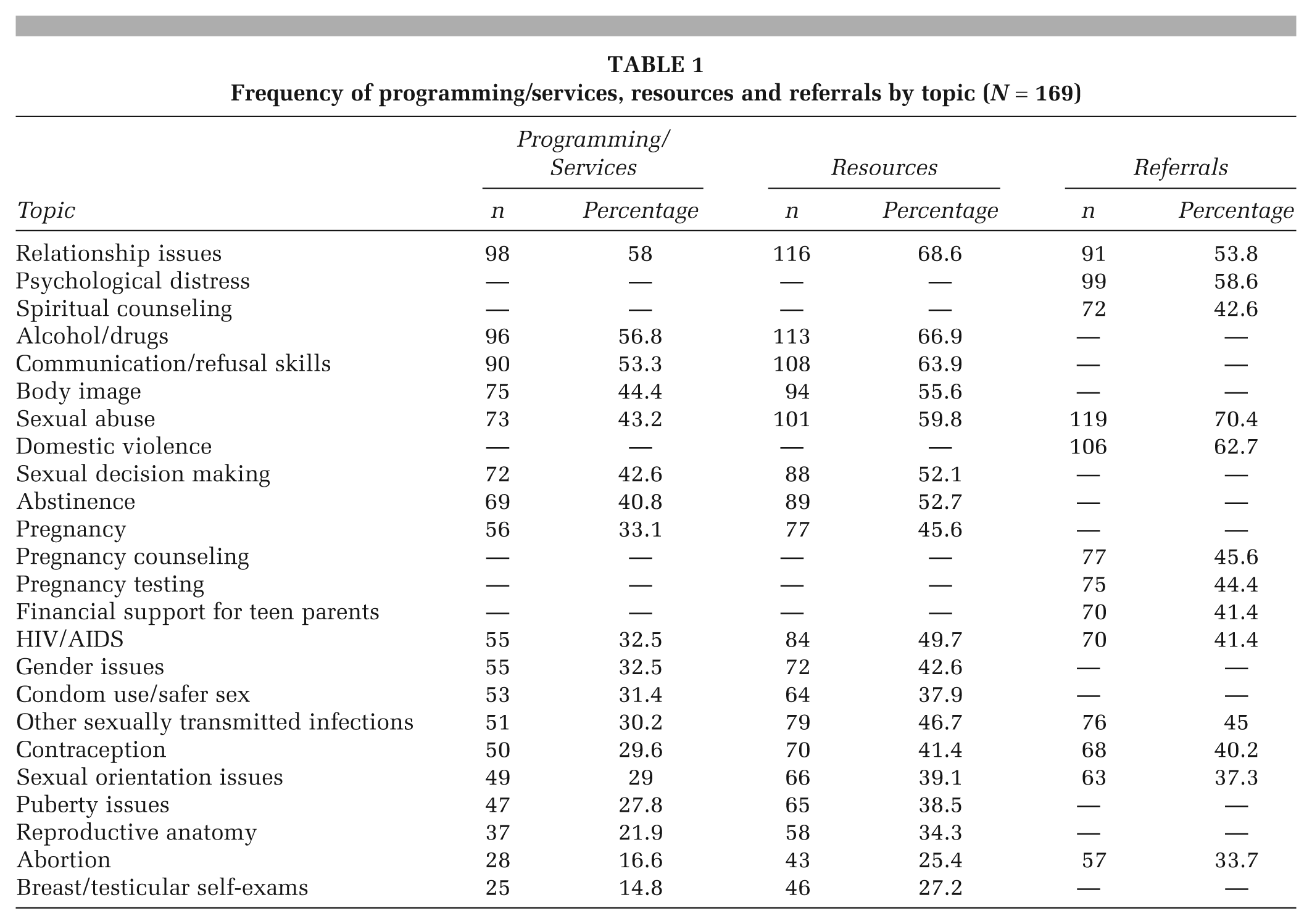
All sexuality-related topics assessed were described by participants as being covered in the programs, services, or other resources offered by at least some organizations. Table 1 provides details on the frequency with which participants reported each topic being covered under programming and services, as well as resources. Topics most frequently reported by participants as being covered in programming/services included relationship issues (n = 98, 58.0%), alcohol/drugs (n = 96, 56.8), and communication/refusal skills (n = 90, 53.3%). Similarly, participants indicated the same topics being most frequently offered as resources to youth. The format of more formal programming varied with sessions run by a staff or volunteer being the most frequently reported (n = 102, 60.4%), followed by multisession classes (n = 75, 44.4%), one-time events (n = 67, 39.6%), panel discussions with guest speakers (n = 62, 36.7%), peer education (n = 55, 32.5%), and discussion groups (n = 54, 32.0%). Parental involvement (n = 32, 18.9%) and online resources (n = 30, 17.8%) were used the least.
Frequency of programming/services, resources and referrals by topic (N = 169)
Referrals
As with programming/services and resources, participants indicated at least some referral protocols in place for all topics assessed. Table 1 details the topics and frequencies for this variable. Referral protocols most often reported by participants as being available through their organization included sexual abuse issues (n = 119, 70.4%), domestic violence (n = 106, 62.7%), and psychological distress (n = 99, 58.6%). Least available were referrals for abortion (n = 57, 33.3%) and sexual orientation issues (n = 63, 37.3%).
Organizational Approach
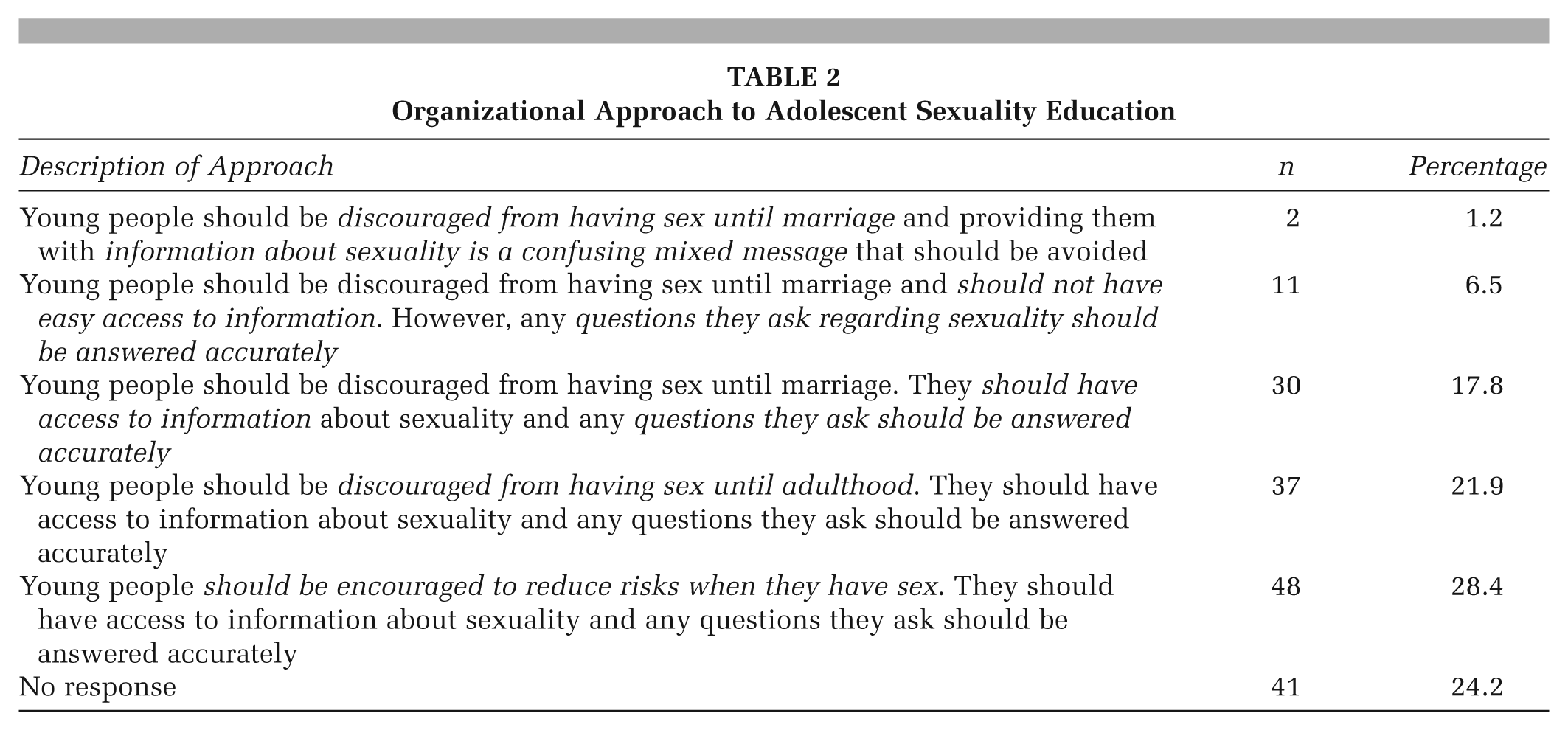
Just more than a quarter reported the belief that their organization would take an abstinence-only until marriage approach (n = 43, 25.5%). A majority (n = 115, 68.1%) believed that their organization would support access for youth to sexual health and sexuality-related information and accurate answers to any questions on the topic. A little less than a quarter (n = 41, 24.2%) chose not to respond to the question (see Table 2).
Organizational Approach to Adolescent Sexuality Education
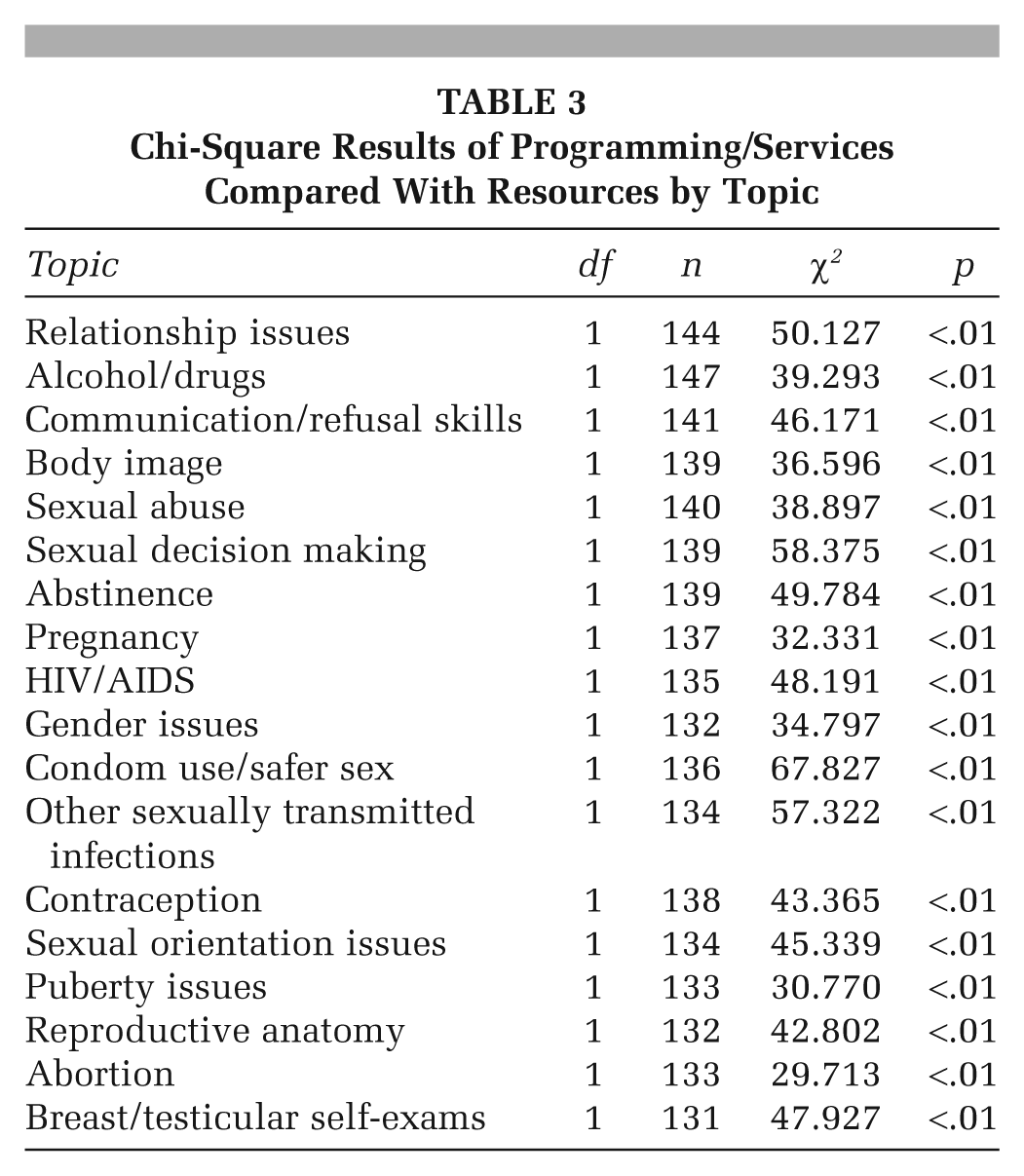
Chi-square analyses were conducted to compare programming/services, resources, and referrals across similar topics to assess the comprehensiveness of coverage on any one topic. For all topics, participants indicating their organization had programming/services on a given topic were more likely to also report resources on the same topic (see Table 3). Similarly, participants indicating their organization had referral protocols in place for a particular topic were more likely to also have indicated having programming/services and resources on the same topic (see Table 4).
Chi-Square Results of Programming/Services Compared With Resources by Topic
Chi-Square Results of Referral Topics Compared With Similar Programming/Services and Resources by Topic
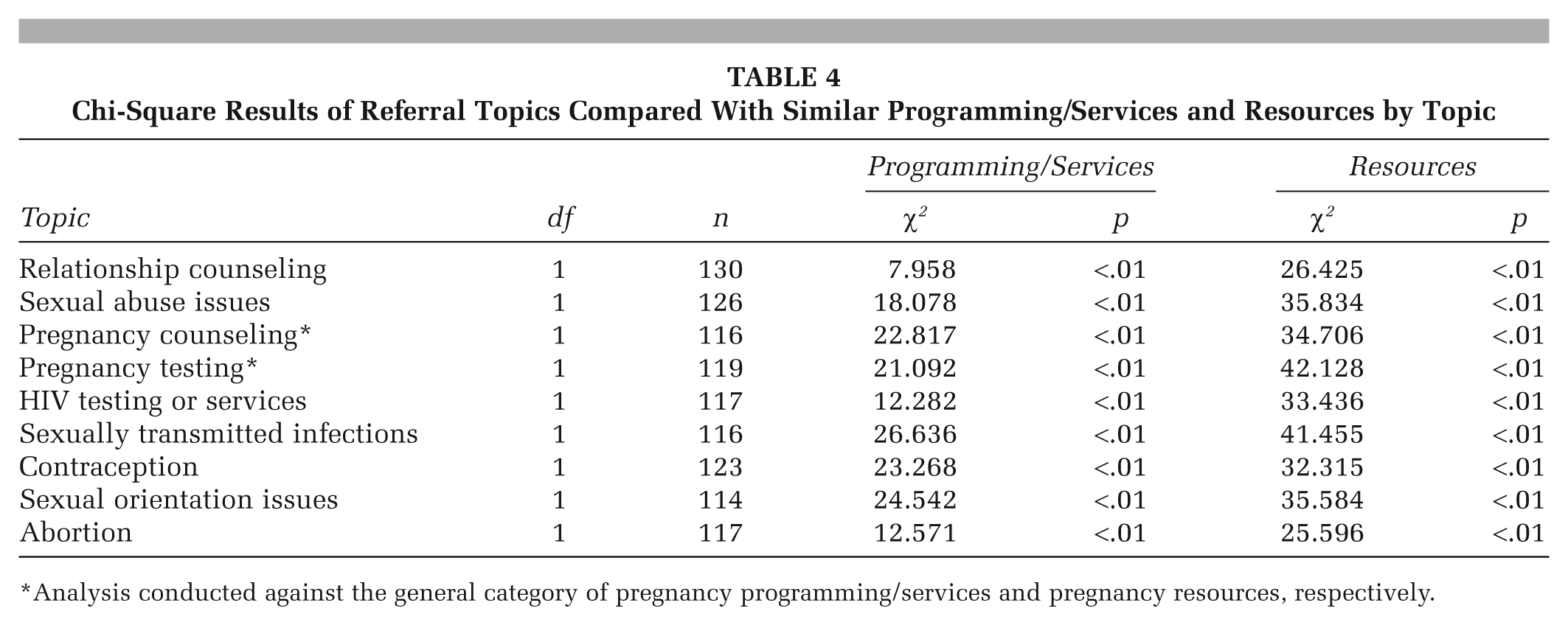
Analysis conducted against the general category of pregnancy programming/services and pregnancy resources, respectively.
Comparisons With Questions Asked in Schools
A prior study conducted by Tanner et al. (2007) in Indiana schools found that teachers reported covering in class to varying degrees the topics covered in this study. Similar to the findings of this study, relationship issues were among the top topics covered, though in classrooms, it was covered by 43.3% of teachers versus 58% in formal programming/services among CBOs in this study. Relationship issues were covered further by resources at CBOs (68.6%). Sexual abuse, another frequently covered topic in this study, although measured, was not reported in the school study. Another topic covered more than others by teachers was HIV/AIDS (48.7%) and STIs (41.7%). In CBOs, reported formal programming for these topics was 32.5% and 30.2%, respectively. Least covered topics in both schools and CBOs, though much less in schools, included abortion (12.0% in schools, 16.6% in programming at CBOs) and sexual orientation (8.1% in schools, 29.0% in programming at CBOs).
Tanner et al. (2007) also asked school personnel to list the most common types of questions received from students related to sexual health and sexuality. Unlike the CBOs in this study, teachers, nurses, and counselors reported the most frequently asked questions were on topics such as sexual behavior (26.2%) and pregnancy and contraception (22.3%). Participants of this study indicated they were more likely to get questions on personal skills and relationships.
Discussion
Prior to this study, no known empirical information existed to describe the role that community-based organizations may play in the promotion of sexual health for youth. This study explored the role of Indiana CBOs in the provision of sexual health promotion services to youth. Personal skills and relationships were reported as the types of questions most frequently being asked by youth. The most common topics covered in programming/services, resources, and referrals were relationships and sexual abuse. The least frequently covered topics by individuals within these organizations included anatomy, puberty issues, self-exams, abortion, and sexual orientation issues. It may be that CBOs are less focused on these issues as they may be topics expected to be covered in school health classes. Abortion and sexual orientation issues have historically been more controversial topics and thus may be avoided even in CBOs unless these topics are a part of their mission (i.e., Planned Parenthood, LGBTQ youth-serving organizations, etc.).
Overall, approaches to providing sexuality-related information to young people were perceived to be accurate and accessible. Few organizations were believed by participants to support an abstinence-only until marriage approach. In fact, when an organization addressed a topic, they were likely to do so comprehensively by providing programming/services, resources, and referrals for that issue. It may be that not being part of a public school system, and under the scrutiny found in those environments, allows CBOs to take a more comprehensive approach toward sexuality as they may not be as restricted by federal, state, and local policy. It may also be that funders of these CBOs expect a more comprehensive approach when it comes to addressing sexuality concerns of youth. However, despite a general approach that may be described as comprehensive, details on types of questions asked, programming/services, resources, and referrals provided were only descriptive in this study. The content and quality of sexual health information was not assessed.
In comparison with schools in Indiana, as a percentage, more CBOs appear to provide sexuality-related information to youth on several topics. It may be that schools are better equipped to address some topics such as HIV/AIDS with CBOs providing supplemental information through resources and referrals. Conversely, CBOs may be better positioned to provide programming to young people on more controversial topics such as sexual orientation and abortion. Data also seem to suggest that young people may be going to school personnel for some types of information and feel more comfortable going to people working in a community-based organization for other types of information. It may be that CBOs should be considered a vital and necessary component in an ecological approach to the provision of sexual health and sexuality-related information to youth.
There were several limitations to this study. The measurement of topics covered did not give an indication of the context in which the topic was covered. For example, a CBO may provide programming to youth on condoms; what is not known is what is being said about condoms (i.e., they are effective at preventing pregnancy). The study was conducted specifically within the context of the state of Indiana. Although findings may be indicative of what may be found in other states, it is also likely that other states with different CBOs will produce different results. For this reason, community-based participatory research methods may be ideal for studies of this nature. The unit of analysis for this article was the individual participant. Most organizations were represented by only one or two participants making it difficult to provide a full picture of multiple organizations for comparison. Future studies should look to more systematically and strategically gather data from multiple individuals in a single organization with varying levels of responsibilities across multiple organizations to provide a more comprehensive assessment of CBO involvement in the provision of sexuality-related information to the young people they serve. Community partners believed referrals were substantially different than programming/services and resources. Retrospectively, it may have been beneficial to maintain consistency among topics covered in the survey across the three categories to facilitate a more robust analysis. Finally, although participants and the CBOs they worked for were relatively well distributed geographically, the sample was ultimately one of convenience. There may be characteristics of those choosing not to respond that may be indicative of the types of people and organizations that may not provide or be supportive of providing sexuality-related information to the youth they serve. Future studies should attempt to (a) ascertain the context of programming/services, resources, and referrals, (b) explore other communities outside Indiana and (c) collect data from a wider array of organizations.
Also of note, the core beliefs of the community members who helped to design this study professed a belief that CBOs should be engaged in the work of educating youth about sexual health. The aim of this study was to explore and map out the roles CBOs might play in this work. It is likely that the questions asked of participants as well as those who chose to participate in the study held true to the assumption that CBOs could or should be explicit in their role in young peoples’ development into healthy sexual adults.
In considering an ecological approach to promoting sexual health among young people, the results of this study suggest CBOs should be included in the mix of sources. This study shows that youth are asking questions in CBOs and people are delivering services via these organizations directly to youth. Sexual health advocates should consider CBOs a more essential component of our adolescent sexual health promotion initiatives. Many of the sexual health topics parents want for their children are not or cannot be fully provided for by schools. Although CBOs should not be the only source of sexuality information, if organizations are supported with information, training, and resources, they will undoubtedly play a valuable role in the advancement of sexual literacy for adolescents.