







Abstract
Health promotion programs that develop and implement strategies to promote sun safety practices to children have the potential to reduce skin cancer occurrence later in life. Go Sun Smart (GSS), a sun safety program for employees and guests of ski areas, was distributed to determine if an enhanced dissemination strategy was more effective than a basic dissemination strategy at reaching parents at ski and snowboard schools. On-site observations of GSS use and surveys of 909 parents/caregivers with children enrolled in ski and snowboard schools at 63 ski areas were conducted and analyzed using techniques for clustered designs. No differences were identified by dissemination strategy. Greater implementation of GSS (>5 messages posted) was associated with greater parental recall, 36.6% versus 16.7%, of materials, but not greater sun protection practices. Greater recall of messages, regardless of level of implementation, resulted in greater sun protection practices including applying sunscreen (p < .05), providing sunglasses and goggles (p < .01), and more use of all sun protection practices (p < .01). Ski areas with more program materials appeared to reach parents with sun safety advice and thus convinced them to take more precautions for their children. Sun safety need not be at odds with children’s outdoor recreation activities.
Introduction
Skin cancer is the most common type of cancer in the United States with melanoma and nonmelanoma skin cancer rates increasing annually (American Cancer Society, 2015). Unprotected and excessive exposure to ultraviolet radiation (UVR) is the primary risk factor for skin cancer; one quarter of lifetime exposure to UVR occurs before the age of 20. Children and teenagers receive more exposure to UVR in the first two decades of life than do adults over the next four (Godar, Urbach, Gasparro, & van der Leun, 2003; Green, Wallingford, & McBride, 2011). The cumulative effects of early UVR exposure make the need for sun safe practices among children and adolescents especially significant (Olson et al., 2007). A routine of sun safe practices, including using broad-spectrum sunscreen of SPF (sun protection factor) 15 or higher and wearing UV-protected eyewear and clothing, adopted during childhood and adolescence could prevent the occurrence of skin cancer in later life (Centers for Disease Control and Prevention, 2003).
A number of programs designed to promote sun safe behaviors among children and adolescents are currently in place and include both policy recommendations from governmental agencies and active programs. The Center for Disease Control’s Preventive Services Task Force suggests student-focused environmental and policy changes such as increasing the availability of sun-protective items (e.g., sunscreen) or adding sun-protective features to the physical environment (e.g., shade structures; Task Force on Community Preventive Services, 2004). Active health communication campaigns administered in settings such as public schools and recreational venues are also in place. SunWise, a school-based program developed by the Environmental Protection Agency, teaches children and their caregivers protection strategies against overexposure to the sun (Emmons et al., 2008), and Pool Cool is a sun safety program targeted toward both lifeguards and young swimmers at swimming pools (Glanz, Geller, Shigaki, Maddock, & Isnec, 2002). Yet, in spite of these systematic prevention efforts, children and adolescents continue to be at risk for later life skin cancer as a result of sunburning and excessive UVR exposure in their formative years (Cokkinides et al., 2006; Maguire-Elsen, 2013).
Concurrently, public health recommendations include increasing the level of physical activity in which children and adolescents routinely engage (Centers for Disease Control and Prevention, 2011). Physical activities that occur outside when risk from excessive solar UVR, the primary cause of skin cancer, is at its daily peak are often advocated. Outdoor sports and recreation have been identified as risk factors for UVR-induced skin cancers (Crane et al., 2012; Moehrle, 2008); many adults experience severe sun exposure and report low levels of sun protection during recreation and leisure activities (Dozier & Wagner, 1997; Ting, 2003).
Ski areas are a primary location for outdoor winter sports and attract millions of children and adolescents each year. In 2012/2013, there were 56.6 million skier or snowboarder days at U.S. ski areas (Hawks, 2013) and 24% of skiers were under 18 (Physical Activity Council & Snowsports Industries of America, 2012). Thus, approximately 11 to 14 million skier days are spent by children resulting in substantial potential UVR exposure due to high altitude and substantial reflectivity from the snow (Andersen et al., 2010). Children who ski and snowboard often take lessons at schools operated by ski areas; lessons are offered for all levels of expertise and include programs designed specifically for children from ages 3 and older. Parents/caregivers enroll children for hourly, half-day, or full-day lessons that can include time on the snow as well as games and educational activities.
This study was conducted in a novel and challenging venue where children are both encouraged to recreate outdoors and also are at risk from high levels of UVR exposure and possible sunburning from the midday sun: North American Ski Schools. It is based on the authors’ previous research conducted at 26 North American ski areas in the effort to encourage sun safe behaviors among ski area personnel and guests, including the parents of children and adolescents enrolled in ski and snowboard schools (Buller et al., 2005; Walkosz et al., 2007,Walkosz et al., 2008). The design intended to meet two challenges. The first involved the competing need to not interfere with the adoption of a skill set (skiing/snowboarding) that potentially could lead to a lifetime commitment to outdoor recreation and its attendant health benefits while, at the same time, adopting a corollary set of sun-safe behaviors to minimize the risk of skin cancer. The second challenge was to determine the degree to which the favorable results from the first study translated to an industry-wide effort to promote sun safe behaviors among ski area personnel and their guests. Consequently, this study focuses on a health promotion program that includes the development and implementation of strategies to promote sun safety practices to children in an outdoor recreation venue as a means to reduce skin cancer prevention rates in later life.
Initial Effectiveness Trial
The Go Sun Smart (GSS) effectiveness trial was a communication theory–based intervention designed to persuade ski area employees and guests to adopt a sun-safe routine to reduce exposure to excessive UVR and consequent sunburning. Diffusion of innovations theory (DIT) guided the development of the GSS program. DIT frameworks promote behavior change through persuasive messages that are disseminated via multiple channels to inform a population about an innovative practice and to influence its adoption (Rogers, 2003)—in this case, sun safety practices (e.g., applying sunscreen and lip balm, wearing a hat, and wearing sunglasses). GSS promotional materials targeted to guests included posters and brochures for ski and snowboard schools that were often placed at or near the registration desks, signage at the base of chairlifts and on chairlift poles, messages for electronic signs and grooming reports, brochures, and posters in lodges. An employee training program also advocated that employees, including ski school instructors, advise guests against excessive sun exposure. The GSS logo branded all materials, and the mention of three key behaviors appeared in all messages: wear sunscreen, sunglasses, and a hat (Buller et al., 2005; Walkosz et al., 2008).
GSS was evaluated in a randomized pair-matched pretest–posttest controlled design with ski areas (n = 26) as the unit of randomization. Size and location of ski areas were the primary matching variables, with characteristics such as ownership structure and share of female employees also included in the analysis. The intervention sites (n = 13) received the GSS program with ski and snowboard schools receiving messages specifically designed to urge parents to “sunproof their kids,” and scripts for ski area personnel to recommend sun safe behavior to guests. The GSS program had beneficial effects on ski area guests, including children in ski and snowboard schools in that sun protection significantly increased at ski areas that received the GSS program (Walkosz et al., 2007; Walkosz et al., 2008).
GSS Dissemination Trial
The positive results of the effectiveness trial demonstrated that ski area managers could implement GSS and that implementation produced awareness of the program and was related to increased sun protection by both employees and guests (Buller et al., 2005). The aim of the dissemination trial was to study how a sun protection program, like GSS, can be distributed beyond the group of test worksites to a larger group of organizations that were randomly selected to represent the entire ski industry.
In this study, the GSS team worked with the National Ski Areas Association (NSAA)—the primary organization representing North American ski areas—as safety and health programs are often distributed to member organizations through national associations. The current study posited that an enhanced dissemination strategy (EDS) developed for GSS would be more effective than the industry standard or a basic dissemination strategy (BDS) at (a) reaching parents at ski and snowboard schools with messages promoting sun protection of children (i.e., message recall) and (b) improving children’s sun safety. Furthermore, greater implementation of GSS by ski areas would be associated with (a) greater parental recall of sun protection messages at ski and snowboard schools and (b) greater sun protection for children (i.e., a dose–response effect).
Method
Dissemination Strategies
Two dissemination strategies were compared and tested. While the industry-based strategy or BDS was one option for distributing GSS to the entire industry, a theoretically derived EDS was also developed because it was critical to find the best strategy that would result in high program implementation, a key factor in the positive GSS program outcomes in the effectiveness trial.
The BDS was comprised of standard strategies of the NSAA to distribute safety programs to its members, and was used to distribute GSS to the 369 NSAA member ski areas; it then served as the comparison condition. As part of the BDS, information regarding GSS was distributed at industry trade shows and GSS was designated as a partner program in NSAA’s newsletter and on its website. Additionally, two starter kits, free of cost, were distributed over 3 years (a total of six kits) to all ski areas. The kits included posters, a CD-ROM with employee training and newsletter articles, brochures, base-stake signs, and a packing list with information on intended audiences for the GSS items. Two posters (“Sun-Proof Your Kids” and “Sun Safety Squad” that highlighted facts about sun safety and depicted a cartoon-based group of sun safety characters, respectively) and a brochure (“Shade Your Day”) that taught children enrolled in ski and snowboard schools about sun safety in fun and easy ways using puzzles and games were included in the shipments.
The EDS is based on DIT’s explanation of organizational diffusion that includes two phases: adoption and implementation (Rogers, 2003). Once adoption of a program occurs, organizations often engage in stages of redefining or adapting the program to fit the organizational structure, clarifying or communicating changes to the organization’s members, and routinizing or making the program part of the organization’s regular activities (Rogers, 2003). Active strategies, such as those developed for the EDS, are often needed to enhance program implementation and fidelity and reduce reinvention and are particularly important when health and safety programs are distributed by external sources (Belig et al., 2004).
The EDS augmented the BDS primarily with face-to-face contact between project staff and ski area senior managers and supplemental materials designed to enhance implementation of the project. As noted, the primary focus of the EDS was to achieve implementation fidelity, as it was essential in gaining the benefits of GSS as witnessed in the effectiveness trial (Buller et al., 2005). Analyses in that trial showed a clear exposure (i.e., dose–response) effect with improved sun safety practices for guests (and employees) at ski areas that implemented more GSS materials (Buller et al., 2005; Walkosz et al., 2007, Walkosz et al., 2008). Project staff met personally with ski area CEOs, senior management teams, and managers responsible for GSS implementation. Drawing on principles from DIT (Rogers, 2003), project staff (a) attempted to reduce managers’ uncertainty about GSS by highlighting the need for sun safety, reviewing its effectiveness, and explaining its fit into existing ski area operations; (b) emphasized support of the program by industry professional associations, such as the National Ski Patrol and Professional Ski Instructors of America, to build credibility (Hong, 2006); (c) discussed strategies for addressing organizational barriers, misconceptions about sun safety, and potential resistance from coworkers to gain public commitment from the managers responsible for implementing GSS (Berger, 2006); and (d) recruited internal champions to provide support for GSS based on champions’ interest in health and safety, position, and/or identified ability to “get things done.” Promotional materials, including hats, magnets, lip balm, and Post-It notes with the program logo, were distributed to managers, and intended to increase manager’s commitment and remind them to use GSS. Project staff visited managers at each ski area once early in the season and then maintained monthly contact by e-mail and telephone through the season.
Experimental Design
A randomized posttest-only design was used to evaluate the dissemination strategies on parents’ exposure to sun protection messages and sun protection for their children. All ski areas in the NSAA membership received the BDS. The sample for the current study was recruited from the NSAA membership. Eligible ski areas were defined as those with (a) two or more chairlifts with ride times of 5 minutes or more (to interview guests), (b) 100 or more employees, (c) summit elevation of 2,500 feet or higher (to have increased UV levels), and (d) a full-time general manager (for recruitment).
Ski areas were randomized to either the BDS or EDS. Randomization was generated using a SAS program with a random seed by the biostatistician who is remote from the intervention sites and interventionists. Randomization was done to randomize pairs based on matching criteria (e.g., locations, size, organizational structure) previously identified with best match resorts randomly assigned to intervention or control with a 50:50 probability. It was concealed from the intervention teams until the activation was required since initiation of the intervention could not be blinded from the resort. The ski areas were located in Arizona, California, Colorado, Idaho, Maine, Montana, Pennsylvania, New Hampshire, New Mexico, New York, Oregon, South Dakota, Utah, Vermont, Virginia, Washington, West Virginia, and British Columbia. The size ranged from small single operators to areas managed by large multiarea corporations.
In 2004-2006, of 129 eligible ski areas, 69 were recruited in three waves (n = 28 in 2004, n = 20 in 2005, and n = 21 in 2006) to participate; 1 ski area was eliminated due to a lack of snow and 5 resorts did not provide ski school data because of either weather or lack of participants at data collection. All ski areas in each wave received GSS through the BDS and half of the ski areas in each wave were randomly assigned to the EDS (n = 12 in 2004, n = 11 in 2005, and n = 10 in 2006). The EDS occurred during the ski season when areas were recruited to the trial, from November to April; effects of the EDS on program implementation and employee sun protection are reported elsewhere (Buller et al., 2012). On-site observations of GSS use and surveys of parents of children enrolled in ski and snowboard schools were performed by project staff during the ski season. The interview protocol and survey developed originally in the effectiveness trial on GSS were employed (Walkosz et al., 2007). Respondents were approached while they waited to pick up their children from the ski/snowboard school and asked to participate in a brief survey on sun protection for their children. They were read an introduction and consent statement, approved by the institutional review boards, which requested that they volunteer for a brief, anonymous survey on sun protection. Researchers first asked the parent how many children were enrolled in the ski/snowboard school. If only one child was enrolled, parents were asked about sun safety practices for that child. If more than one child was enrolled, they were asked about the child with the most recent birthday. Parents were also asked about their exposure to sun safety messages at the ski area and were given an SPF lip balm to thank them for their participation.
Sample
The sample consisted of 909 parents/caregivers of children enrolled in ski and snowboard schools at 63 ski areas that participated in the dissemination program.
Eligible respondents were parents or caregivers of children enrolled in the ski and snowboard schools on data collection days and 18 years of age or older. On a few occasions, the person picking up the child was not the parent (e.g., grandparent); this person was interviewed if he or she had dropped off the child at the school. Project staff attempted to interview a minimum of 10 parents at each ski area, but the final sample size was a matter of convenience based on the number of children enrolled and weather conditions.
Measures
Observation of GSS
GSS printed materials, as well as any non-GSS sun protection messages (e.g., advertising or resort messaging) were recorded with on-site observations by trained project staff, using a protocol from the effectiveness trial (Buller et al., 2005). Printed GSS materials included 15 posters/signs, 3 brochures, 2 static clings, and 1 logo magnet. For each material recorded, staff noted whether it was in areas accessible only to employees (e.g., offices, locker rooms, garages, etc.) or in guest areas. The observational measure was validated in the 2005-2006 ski season by having independent trained observers visit 14 ski areas unannounced, 1 week prior to the scheduled observation. There was high correspondence between project staff and unannounced observer assessments on the number of materials in use (r = .87, p <.05); discrepancies ranged from
Parent/Caregiver Survey
Parents with children enrolled in ski and snowboard school completed questions assessing the number of children enrolled, sun protection of one of their children while in the school that day (whether wearing sunscreen, a sunscreen lip balm, sunglasses or goggles, and a hat or a helmet), if the child had ever been sunburned while skiing, snowboarding, or playing outside at a ski area, and the age and gender of the child. Respondents were also asked if before enrolling their children in the ski school if they had been verbally informed by a ski resort employee about providing sunscreen, sunglasses or goggles, or a hat or if they had seen any messages or information about sun safety practices at the ski area. If they had seen a message, they were asked if they had seen a poster, a brochure, or information on the ski area website. The intent of the latter two questions was to determine the use of both verbal and written communication as recommended by the GSS program. The GSS program suggested that ski school instructors and staff recommend sun safety to parents when the children were being registered for school and provided printed materials for posting at the ski schools. Researchers also visually assessed the parent’s sex and race/ethnicity and recorded the date and time of the interview and current weather conditions.
Statistical Analyses
Parents’ exposure to sun safety messages, reported as recall, and sun protection behavior reported for children were compared by dissemination condition and evaluated in a stepwise fashion. Next, the number of GSS messages observed in use and its relationship with message recall was examined to determine how many GSS materials needed to be implemented to achieve program exposure, using signal detection techniques in a receiver operator curve (ROC) analysis procedure. The ROC analysis resulted in two groups of ski areas on the basis of the number of GSS materials in use, disregarding dissemination strategy condition; the threshold separating the group represented the level of use associated with the most change in message recall. Then, ski areas were poststratified into these high versus low program use groups using this threshold, and children’s sun protection was compared between these groups. Finally, sun protection practices for children were compared between parents who did and did not recall receiving a sun protection while at the ski areas.
All analyses were conducted at the individual parent level and adjusted for clustering of guests within ski areas as assessed by the intraclass correlation (Murray,1998), using PROC MIXED in SAS and an alpha criterion of .05 (two-tailed). We included in the analysis the year ski areas participated in the trial (i.e., wave) plus the hours of sunshine per year for the resort and all covariates that demonstrated statistically significant bivariate correlations with the outcome measures.
Results
Profile of the Sample
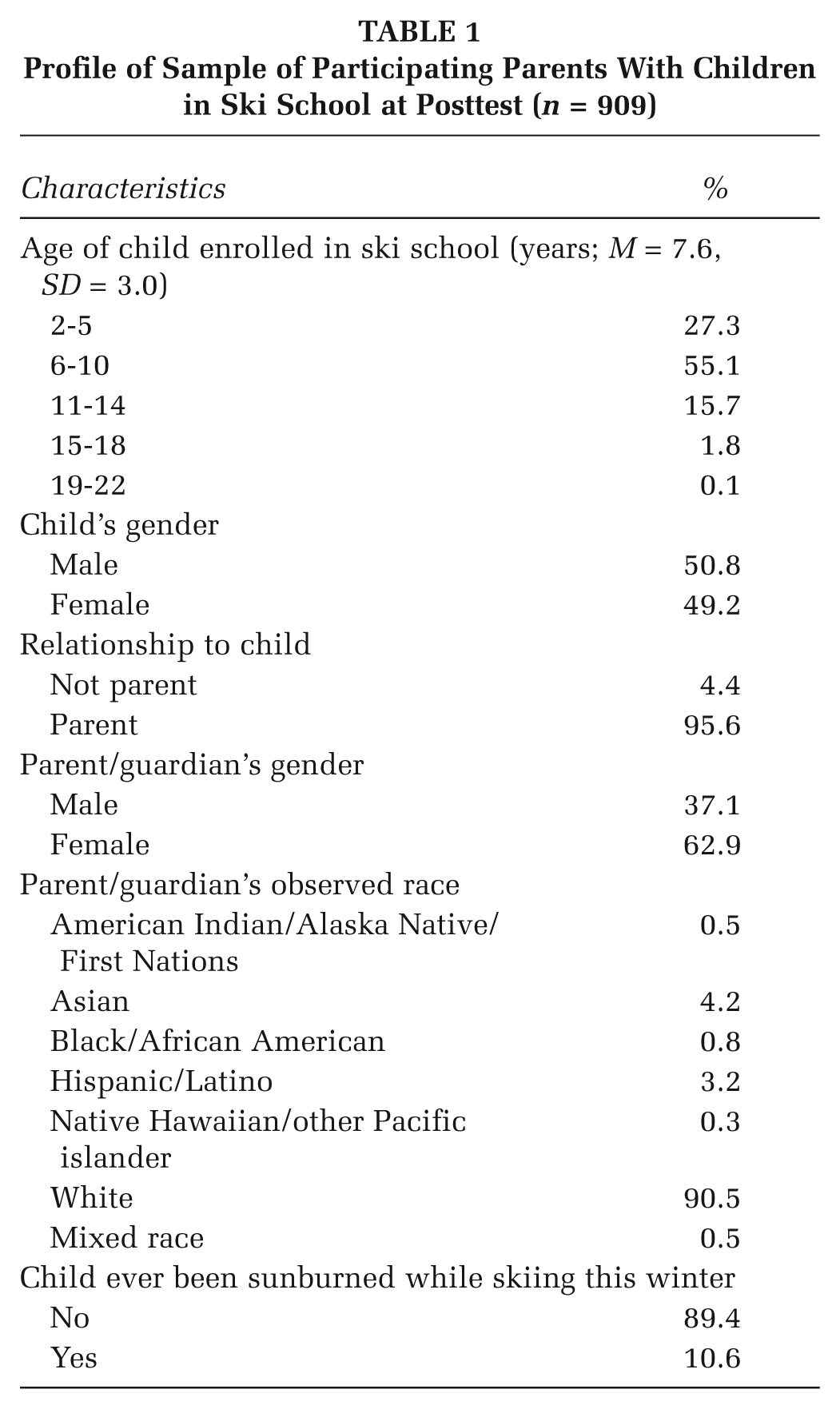
A total of 909 parents/caregivers completed the interview, with 11 (1.2%) declining (see Table 1 for demographic characteristics). Most respondents were female and non-Hispanic White. Of the 909 respondents, 477 were in the EDS and 432 were in the BDS condition. The children on whom parents reported were equally split between males and females and most (82.4%) were younger than 11 years. One in 10 children had been sunburned while skiing, snowboarding, or recreating at a ski area.
Profile of Sample of Participating Parents With Children in Ski School at Posttest (n = 909)
Effect of Dissemination Strategy
The prediction that the use of EDS to distribute GSS would be more effective than the industry standard BDS at (a) reaching parents with sun safety messages and (b) influencing the sun protection of their children was not supported. Parents with children in ski and snowboard schools did not show a difference in their recall of sun protection messages at the ski areas by dissemination strategy condition (Table 2). Also, sun protection of their child in the ski and snowboard school was not different by dissemination strategy condition (Table 2).
Differences in Exposure to Go Sun Smart Program and Sun Protection Behaviors for Children Reported by Parents Between Basic and Enhanced Dissemination Strategy Conditions
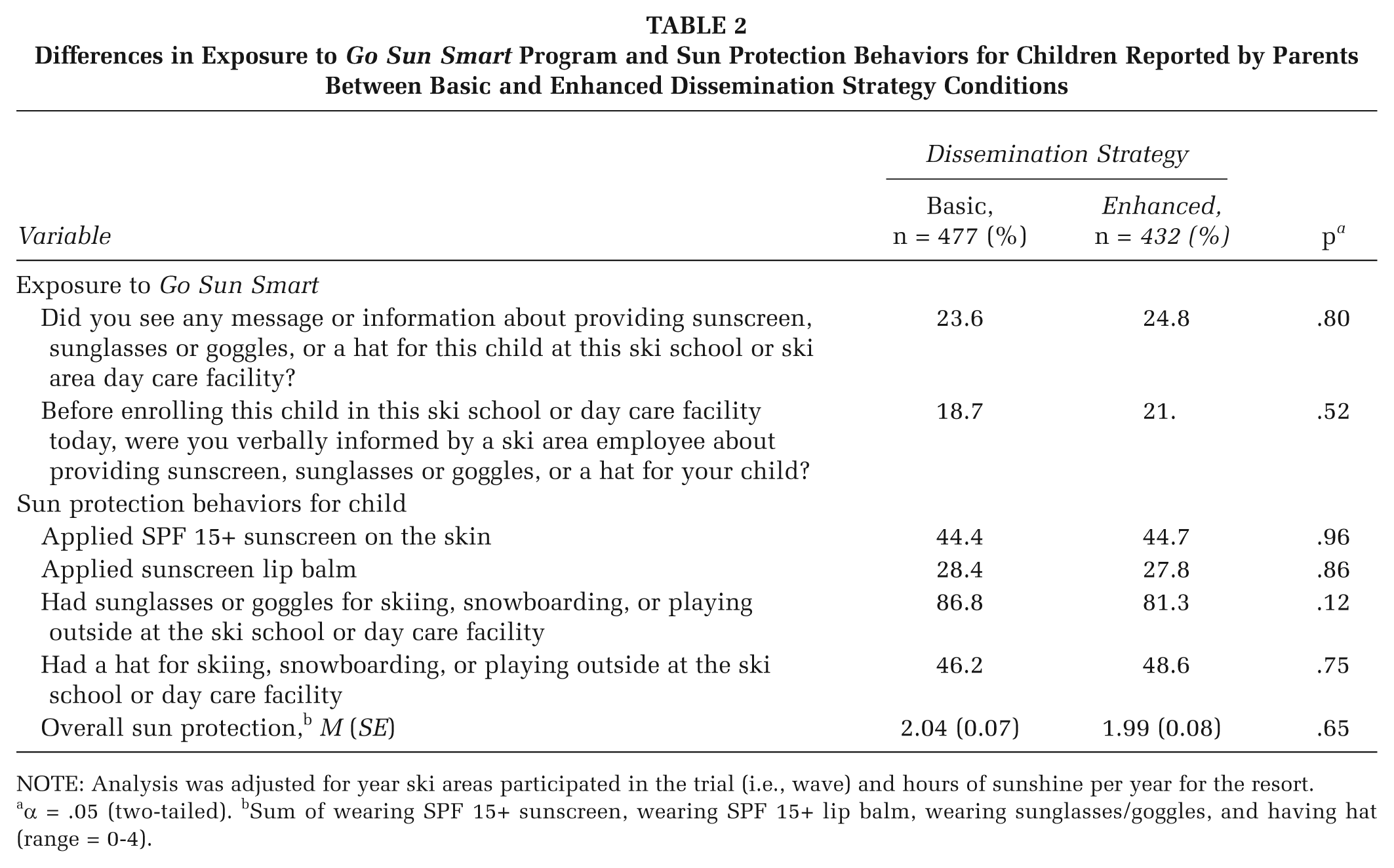
NOTE: Analysis was adjusted for year ski areas participated in the trial (i.e., wave) and hours of sunshine per year for the resort.
α = .05 (two-tailed). bSum of wearing SPF 15+ sunscreen, wearing SPF 15+ lip balm, wearing sunglasses/goggles, and having hat (range = 0-4).
Effect of Program Implementation
Greater implementation of GSS by ski areas was associated with greater parental recall of materials at ski and snowboard schools. The ROC analysis showed that parents recalled more sun protection messages at the ski and snowboard school when five or more GSS materials were observed in use in guest-accessible areas. More than twice as many parents (36.6% vs. 16.7%) recalled receiving a message in the high-use group of ski areas compared to the low-use group (Table 3).
Differences in Exposure to Go Sun Smart Program and Sun Protection Behaviors for Children by Parents With Children Enrolled in Ski and Snowboard School by Number of Go Sun Smart Materials Observed in Use in Guest-Accessible Areas and Recall of Sun Protection Messages
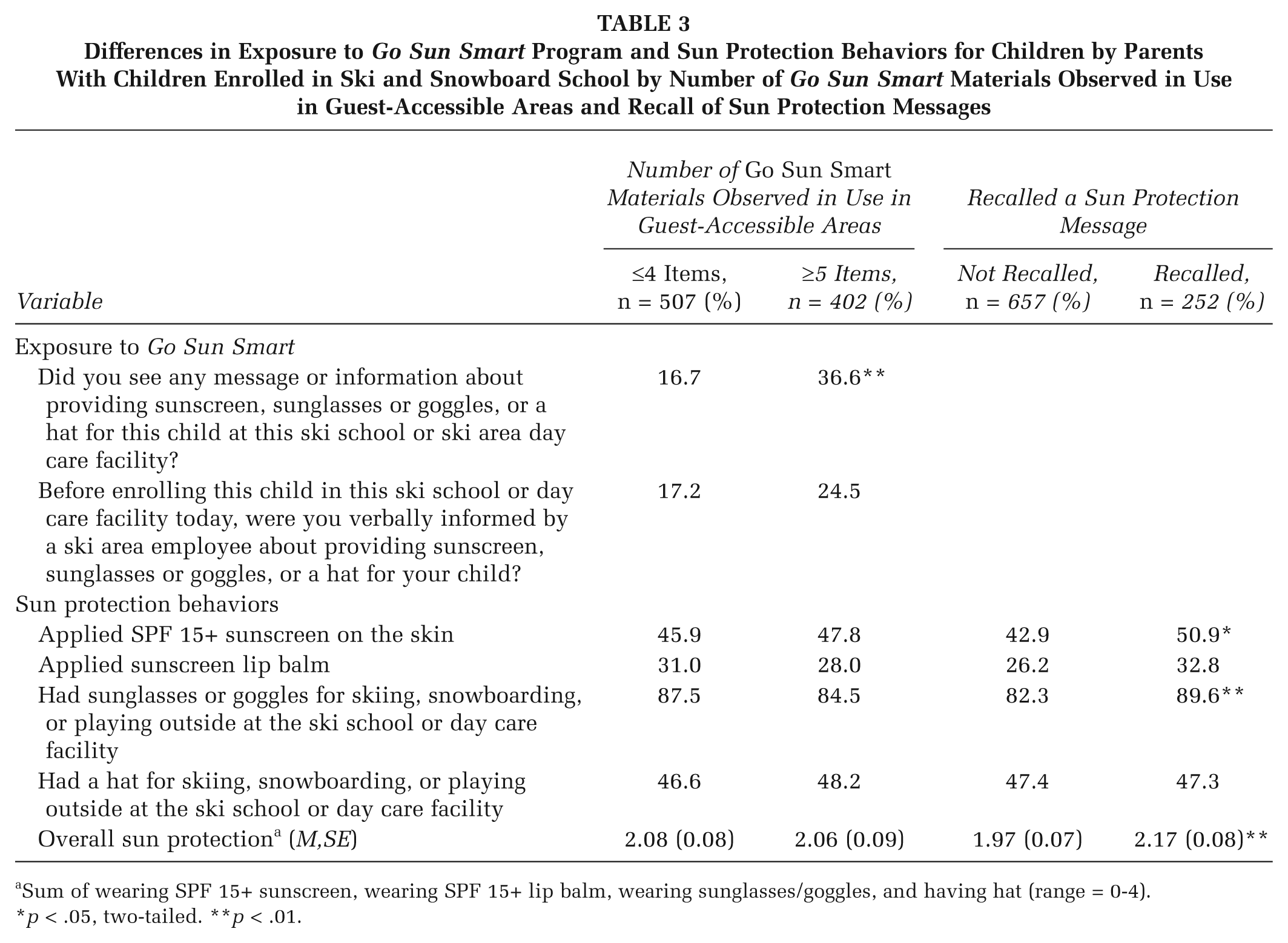
Sum of wearing SPF 15+ sunscreen, wearing SPF 15+ lip balm, wearing sunglasses/goggles, and having hat (range = 0-4).
p < .05, two-tailed. **p < .01.
However, greater implementation alone of GSS did not result in greater sun protection for children at ski and snowboard schools. Sun protection practices for children reported by parents did not differ between high-use and low-use ski areas. Instead, greater exposure to sun protection messages at the ski areas was associated with improved sun protection of children, regardless of the amount of GSS implementation (Table 3). More parents who recalled seeing a sun protection message at the ski areas reported applying sunscreen (p < .05) and sunscreen lip balm (n.s.) to their children, providing them with sunglasses and goggles (p < .01), and more use of all sun protection practices for their children (p < .01).
Discussion
This study suggests that the GSS effectiveness trial’s favorable findings may have been successfully translated to ski and snowboard school across the North American ski industry by managers who took full advantage of the GSS materials. Neither the BDS nor the EDS for disseminating GSS was more successful than the other at improving sun protection for children. However, ski areas that took steps to use more of the program materials appeared to reach parents with sun safety advice and in doing so convinced them to take more precautions for their children. Parents recalled seeing more sun safety messages at ski areas where personnel implemented five or more GSS materials than at ski areas that used less of the program. In turn, parents who recalled seeing a sun safety message reported practicing more sun protection for their children than parents who did not recall receiving a message.
Sun protection campaigns directed to children and adolescents have met with some success (Crane et al, 2012; Kyle et al., 2008; Milne et al., 2000), as have programs implemented in recreation venues (Dietrich et al., 1998; Glanz et al., 2002; Parrott et al., 1999). Parents (and children) may be amenable to receiving advice on sun safety skills as part of learning outdoor sports, and this could help ensure that sun protection is a routine, life-long practice for children who recreate outdoors. A key factor that has been identified for program success includes the need to take the necessary steps to ensure that audiences have adequate and sufficient exposure to program messages (Hornik & Kelly, 2007; Wakefield, Loken, & Hornik, 2010).
The GSS program found that message exposure was a key component that influenced recall and consequently, sun safety behaviors. It was determined that a minimum of five GSS program materials distributed throughout the ski area was necessary to stimulate program recall. Furthermore, recall may have been enhanced by the placement of the GSS materials that were often displayed in prominent locations at ski schools such as at registration counters where parents spent time filling out paperwork and waiting in line to register thus maximizing exposure to the GSS messages. The posters and messages were also tailored to the ski school environment, and these more specific messages may also have been memorable. See Figure 1.
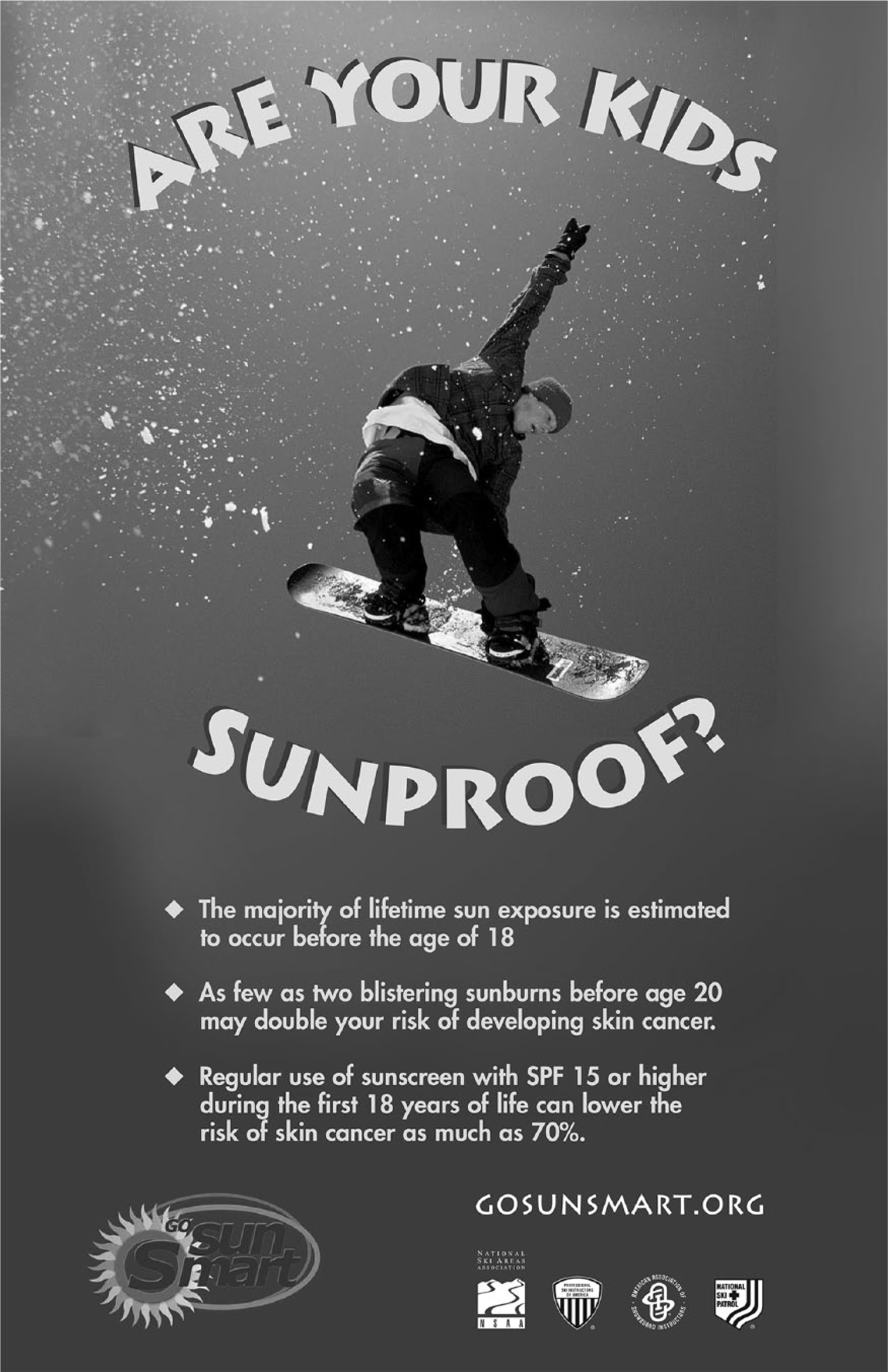
Go Sun Smart Poster for Ski and Snowboard Schools
The limitations to this study include the possibility that parents may have seen GSS materials at other ski areas during the season. Although we did not control for this, we can learn how information is disseminated and how programs are implemented in a large recreation industry. The second limitation is the use of self-report data. However, approximately 50% of parents reported low levels of sun protection, and these levels are somewhat consistent with research that reports levels of sun protection for children (Buller & Borland, 1999). Furthermore, parental report measures are a feasible method for assessing UV exposure and sun protection practices for children (Mayer et al., 1997). The question order asked about sun protection practices prior to asking about sun safety messages may have limited bias in the responses. These results underscore the opportunities that exist for sun safety promotion for children in recreational settings.
Conclusions
Our findings imply that sun-safe behaviors need not be at odds with the outdoor recreational pursuits of children. Health communication campaign designers that address reducing the risks of environmental agents such as UV need to be mindful of how their campaign is perceived by the consumer, specifically how it may appear to make recommendations that conflict with other health advice they are receiving. The experience of the GSS trials indicates that a sun safety campaign can be framed to reconcile competing advice and provide information and skills to remain sun-safe while obtaining the benefit of outdoor recreation in the context of skiing and snowboarding (see examples of GSS materials at http://rtips.cancer.gov/rtips/programDetails.do?programId=308006).
The promotion of health practices, such as those recommended by evidence-based programs like GSS, not only be can be beneficial to recipients of targeted programs but also have the potential to reach a broader community. The next steps for health promotion professionals to consider include (a) the utilization of strategies identified in the GSS program to enhance widespread dissemination of sun safety programs to other venues where children recreate outdoors such as recreation centers and parks and (b) advocacy programs that promote policy adoption for sun safety. For example, ski schools, recreation, and day care centers could adopt policies that require or recommend sun safety practice to parents. These practices could ensure that the child has a wide-brimmed hat and sunglasses, and that parents provide approval for sunscreen use during high-UV hours. Similarly, policies that require a certain square footage of shade structures be placed in playgrounds and that staff be trained to recommend “playing in the shade” during high-UV hours could reduce unprotected sun exposure. Such policies can be adopted and implemented at the organizational level, for both governmental organizations (e.g., school boards) and for-profit businesses (e.g., day care centers). Policy adoption can assure long-term, sustained approaches to sun protection.
Footnotes
Authors’ Note:
The authors extend a thank you to the ski industry professional associations and the senior managers at 69 ski areas in North America who supported the project and made their ski schools available to us. David B. Buller is employed by Klein Buendel, Inc., a for-profit health communication research firm, and Klein Buendel, Inc., is owned by Dr. Buller’s spouse. This project was supported by a grant from the National Cancer Institute (CA104876).