







Abstract
A magnitude 7.8 earthquake struck Nepal in 2015, followed by hundreds of aftershocks that led to physical destruction, loss, and negative mental health outcomes. Yet, in the days, months, and years following the disaster, numerous forms of community art rose from the rubble, such as urban murals, spoken word poetry, public dance performances, and sacred art. This study explored the relationship between community art and health, social cohesion, and community resilience in postearthquake Nepal. We utilized photography and audio recorders to capture 19 unique artworks/projects created in the aftermath of the earthquake and conducted in-depth interviews with 19 artists and/or experts about the relationship between art and health in postdisaster contexts. The 19 postearthquake artworks/projects ranged from contemporary paintings to Buddhist ritual dance and reflected the unique combination of the traditional and contemporary necessary for salvaging and restoring Nepali heritage. Findings revealed three key themes regarding linkages between art and mental health in the context of postearthquake Nepal. First, community art offers relief and is a mechanism for coping, through the creation or observation of art. Second, community art can be used as a means of communication, both as a tool for promoting connections and conversations in the community and by communicating messages of hope. Third, community art can promote community cohesion and ultimately serve as a tool to create physical and emotional safe spaces. Overall, there is promise for initiatives that engage artists and communities in arts-based initiatives following traumatic events, such as natural disasters, which can positively affect health. Funding support and development of partnerships with grassroots artists and creators should be promoted in health and development programming, especially for risk reduction and recovery after disasters.
Keywords
In 2015, a magnitude 7.8 earthquake and hundreds of aftershocks struck Nepal, killing over 8,700 people (National Planning Commission, 2015) and displacing over 450,000 (Kane et al., 2018). In the aftermath, ancient temples collapsed and villages were flattened. The effects of the earthquakes have lingered within families and communities in the form of physical destruction, loss, and negative mental health outcomes. Postearthquake mental health research found an increase in depression, elevated levels of anger, hazardous drinking, and suicidal thoughts (Kane et al., 2018). Yet, in the days, months, and years following the disasters, many forms of community art rose from the rubble (e.g., urban murals, spoken word poetry, and sacred art). This study aimed to better understand the relationship between the creative arts and mental health, social cohesion, and community resilience in postearthquake Nepal.
A growing body of evidence demonstrates that arts-based interventions can have profound positive impacts on health outcomes, such as stress levels, emotions, social cohesion, and health behaviors (Bone, 2018; Clift, 2012; Fancourt, 2017; Fancourt et al., 2019; MaCleod et al., 2016; Stuckey & Nobel, 2010). Specific arts-based approaches, from writing, to painting and drawing, and dance and music, have demonstrated significant positive health effects (Stuckey & Nobel, 2010). The arts can also help promote healthy behavior and reduce stress associated with traumatic events. Examples include diary writing with intensive care unit patients and relatives (Barreto et al., 2019), art therapy for survivors of sex trafficking (Kometiani & Farmer, 2020), art photography for refugees living in camps (Deghati, 2020), and participatory public murals and storytelling to address suicide prevention (Mohatt et al., 2013).
Research also suggests that art can influence social variables that indirectly affect health, such as social support (Fancourt & Finn, 2019; Murrock & Madigan, 2008), social cohesion, solidarity, and a sense of collective self in society (Fancourt, 2017). Community art initiatives have the power to encourage connections between people, create a sense of community, foster social change, and promote inclusion and dialogue (Beauregard et al., 2020). Other studies point to the power of community-based arts initiatives for promoting personal growth, citizen participation, cultural awareness, and community development (Stein & Faigin, 2015).
Considering the potential of the arts to influence health outcomes, participatory and community-engaged art initiatives have been adopted and applied in a range of settings around the world. One such public art mural project in Philadelphia, United States, found that that residents living within 1 mile of public murals expressed an increase in collective efficacy, social cohesion, trust, informal social control, and perceived neighborhood safety (Tebes et al., 2015). Castle Art, a community art project that provided art supplies to Syrian Kurdish children living in a refugee camp in Iraq, created a safe place for children to express their emotions and process their experiences (International Centre for Art and Social Change, 2016). Another creative project in New York City, United States, embraced street art to initiate conversations about mental illness; the project led to a creative outlet for community members, strengthened social networks, and reduced mental health stigma through the amplification of voices that may have otherwise remained silenced (Gordon, 2017).
In postdisaster contexts, art therapy has been used as a medium for communication and healing, allowing survivors to express their feelings, thoughts, and memories (Murphy, 2014). Art therapy has been implemented in refugee camps and has shown promising results as a technique for promoting psychological first aid (Kalmanowitz, 2018). However, less is known about the role of “community art” and its potential impact on individual and community health in posttraumatic and/or emergency contexts.
This exploratory study was informed by the Arts and Culture in Public Health Theoretical Framework, which outlines six broad areas in which the arts and culture influence population health, such as creating safe, inclusive, and engaging environments, and increasing health service equity and access (Sonke & Golden, 2020). The framework also outlines the mechanisms that moderate these outcomes, such as self-efficacy, making meaning, and self-transcendence. We view community art as an intervention and/or resource that operates on potentially three levels to improve health and social cohesion: (1) community art encourages community members to congregate and engage in discussions in public spaces, lending itself to opportunities for dialog and maintaining and/or restoring social ties and social cohesion; (2) community art serves as a means for healing by improving perceptions of safety and offering signals of hope through viewing; and (3) community art restores ties, reduces stress, and improves health through participation.
Our study was designed to address two specific aims:
Map and capture the range of community art in the Kathmandu Valley created after the 2015 earthquake
Describe artist and expert perspectives about the relationship between community art and its impact on health, social cohesion, and community resilience in postearthquake Nepal
Our ultimate goal was to generate new knowledge to inform the development of creative and participatory strategies to support communities in recovery from traumatic events.
Method
Study Design
In this study, “community art” is defined as any art form (e.g., murals, music, religious paintings) that is embedded and freely accessible in public community spaces (e.g., in town squares or streets,) where community members have free access. We apply the World Health Organization (WHO) criteria for defining art from their 2019 Scoping Review on arts and health, which consists of five broad categories (examples in parentheses refer to artworks/projects included in this study): (1) performing arts (e.g., Buddhist ritual dance); (2) visual arts, design, and craft (e.g., painting, handicrafts); (3) literature (e.g., poetry); (4) culture (e.g., galleries and gallery owners, traditional sculpture); and (5) online, digital, and electronic arts (e.g., graphic novels/comics; Fancourt & Finn, 2019). We considered artwork created by a single artist or through a joint effort, such as collaborative and participatory projects between artists and communities.
Data were collected through semistructured interviews, photography, and audio recordings where applicable (e.g., musical performances). Artists who created community artworks/projects after the 2015 earthquakes, as well as arts experts, were interviewed. Semistructured interviews provided a level of structure that resulted in comparable data across participants, while also allowing for flexibility to follow up on emerging topics (Edwards & Holland, 2013). Nepali photographers captured the community art and mapped their physical locations. Capturing the artworks allowed the team to study them and reflect on their themes after leaving the study site. For an interactive, audio-visual experience of the community artworks/projects and key themes found in this study, please visit our virtual gallery at: artheals.pitt.edu.
Cross Sector Collaboration
This study was conducted via a partnership between U.S.-based global public health researchers from the University of Pittsburgh, a creative design agency/gallery in Nepal called Image Ark, local experts embedded in the Nepal art scene, and Nepali photographers. The university researchers have expertise in creative and community-engaged visual research methods, and a history of working on a range of public health issues in Nepal. They were primarily responsible for study conception, design, analysis, and manuscript writing. Image Ark specializes in the visual arts and has a contemporary community-based gallery aimed at democratizing the vocabulary of art and displaying it for all audiences. Established in 2012, Image Ark has a long history of supporting local artists and movements and was primarily responsible for participant recruitment, managing data collection, and visualizing the results of the study in an online virtual gallery (artheals.pitt.edu). Also central to the collaboration was the native Nepali research assistant, who is fluent in both Nepali and English and is part of the local art scene in Kathmandu, as well as the three Nepali photographers who captured and mapped the artworks. The study benefitted from the broad networks and creative input from this diverse team.
Data Collection and Participants
Data were collected in Nepal’s capital, Kathmandu, and immediate outskirts, including Patan and Bhaktapur. Image Ark supported the study team to purposively sample artists and experts who would be able to provide the richest information to address the research goals (Tolley et al., 2016). Their long-standing relationships and established networks facilitated the team in building rapport and gaining access to artist communities. The two eligibility criteria were (1) artists who created any form of community artwork in the aftermath of the 2015 earthquakes in the Kathmandu Valley, and/or (2) individuals with expertise in the arts (e.g., gallery owners) or art therapy (e.g., licensed therapists) working in communities in Nepal. Working from an initial list, the team used snowball sampling to identify additional participants throughout data collection (Mack et al., 2005).
Eligible participants were invited to semistructured interviews conducted by the research assistant, who was trained in qualitative interview techniques. The interview protocol, developed in English and translated into Nepali, covered art type/form, inspiration, themes/key messages of the art, and community reactions to the artwork. It also included questions regarding the role of community art after a disaster, examples of how art impacts affected communities, and recommendations for improving health and restoring a sense of community after disasters. Interviews were audio-recorded and conducted at the site of the artwork, the artist’s studio, or another convenient and quiet location. Following the interviews, the photographers reviewed the audio files to plan how to best capture the art that had been discussed, and then took photos of the postearthquake community artworks/projects and mapped their locations. If there was an audio component to the art (e.g., song, spoken word), the research assistant created a professional audio recording of the work. Data collection continued until no new artists or contacts were uncovered in the interviews and until all contacts were exhausted. The final sample consisted of 19 distinct artworks and 19 participants: specifically, 15 local artists and four arts experts, which included a gallery owner, an art curator, a visual methods specialist, and an art therapist.
Analysis
Audio recordings of the interviews were transcribed verbatim and translated from Nepali to English by the research assistant. Additionally, two of the authors who are conversational in both English and Nepali cross-checked the transcription with the English translation when clarifications were required. Next, the first and second authors, who both have experience analyzing similar qualitative and visual data from the Nepal context, independently reviewed two of the transcripts and applied template analysis to establish an initial codebook. Template analysis embraces a combination of content analysis and grounded theory, allowing for both inductive (i.e., allowing themes to emerge from data) and deductive (i.e., analyzing the data using a priori themes) analysis (King, 2012). Given the exploratory nature of the study and limited evidence on the subject, this combined approach allowed the team to explore predetermined themes from the study’s theoretical framework while also creating space for new themes to emerge from the data. The preliminary codebook, developed in QSR NVivo (Version 12; QSR International Pty Ltd, 2020; https://www.qsrinternational.com/nvivo-qualitative-data-analysis-software/home), included definitions and exemplary quotes to guide the application of the codebook to the remaining data sources, which was completed by the second author. To ensure consistency of code application, address inconsistencies, and apply principles of reflexivity, a list of memos and clarifying questions were maintained throughout the data analysis process. Maintaining memos encouraged the analyst (i.e., second author) to consistently reflect on her own perspectives and her position as a non-Nepali researcher (Engward & Davis, 2015). To support reflexivity and reduce bias, the memos and clarifying questions were reviewed with the first author and consensus reached at weekly team meetings. Finally, the initial results were shared with Image Ark in Nepal and a subsample of the participants, who reviewed the findings and provided feedback to ensure they were appropriately interpreted given the cultural and social context.
Ethics
The study protocol was submitted to the University of Pittsburgh Institutional Review Board, who determined that the proposed activity was not research involving human subjects as defined by U.S. Department of Health and Human Services and Food and Drug Administration regulations. However, each participant interviewed provided verbal consent and was asked whether they would like to be identified or remain anonymous in the dissemination of the results. All participants expressed that they would like to be acknowledged by name.
Results
Characteristics of the Artworks
The 19 postearthquake artworks/projects ranged from contemporary urban murals (Figure 1) to Buddhist ritual dance (i.e., Charya dance; Figure 2) and reflected the unique combination of the traditional and contemporary necessary for salvaging and restoring Nepali heritage. A range of art works including spoken word poetry, musical performances, restoration/conservation of traditional architecture, dance, comics, sacred paintings, street murals, textiles, weaving, and sculpture were studied. The pieces were located throughout Nepal, although they were primarily displayed in Kathmandu valley.
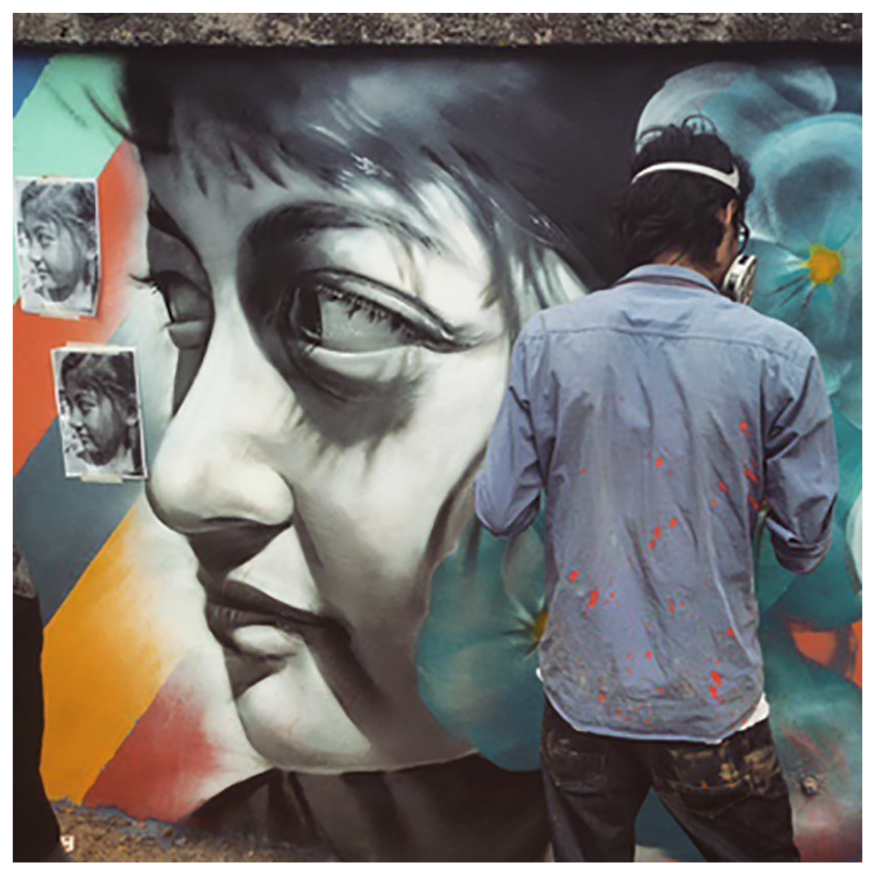
Kiran Maharjan Paints an Urban Street Mural in the Aftermath of the Earthquake
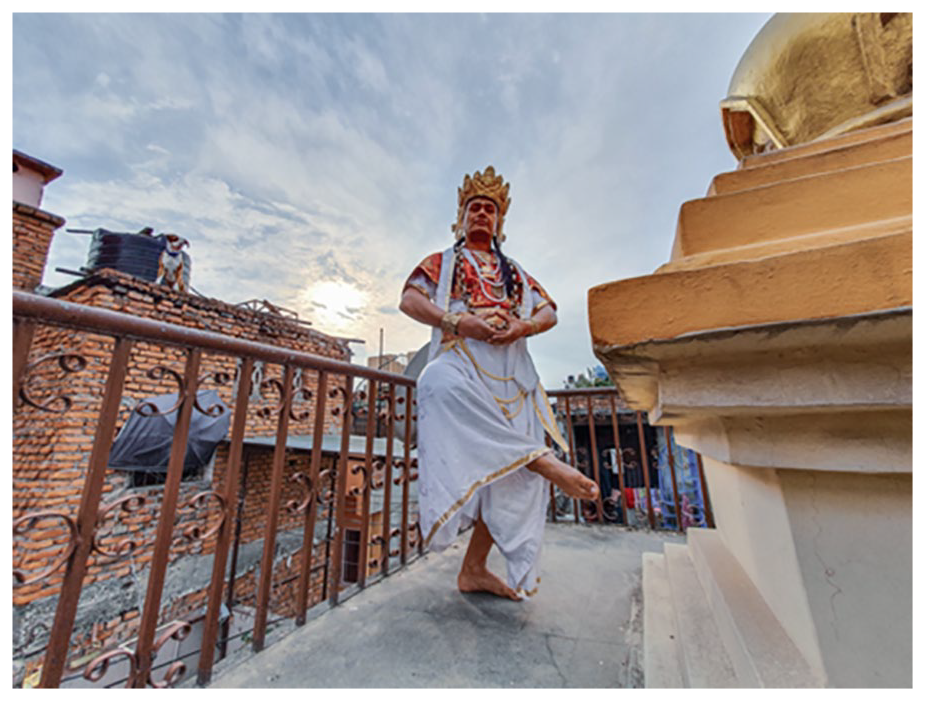
Hem Ratna Performs Buddhist Ritual (Charya) Dance in Old Patan, in the Outskirts of Kathmandu
Relationship Between Art and Mental Health
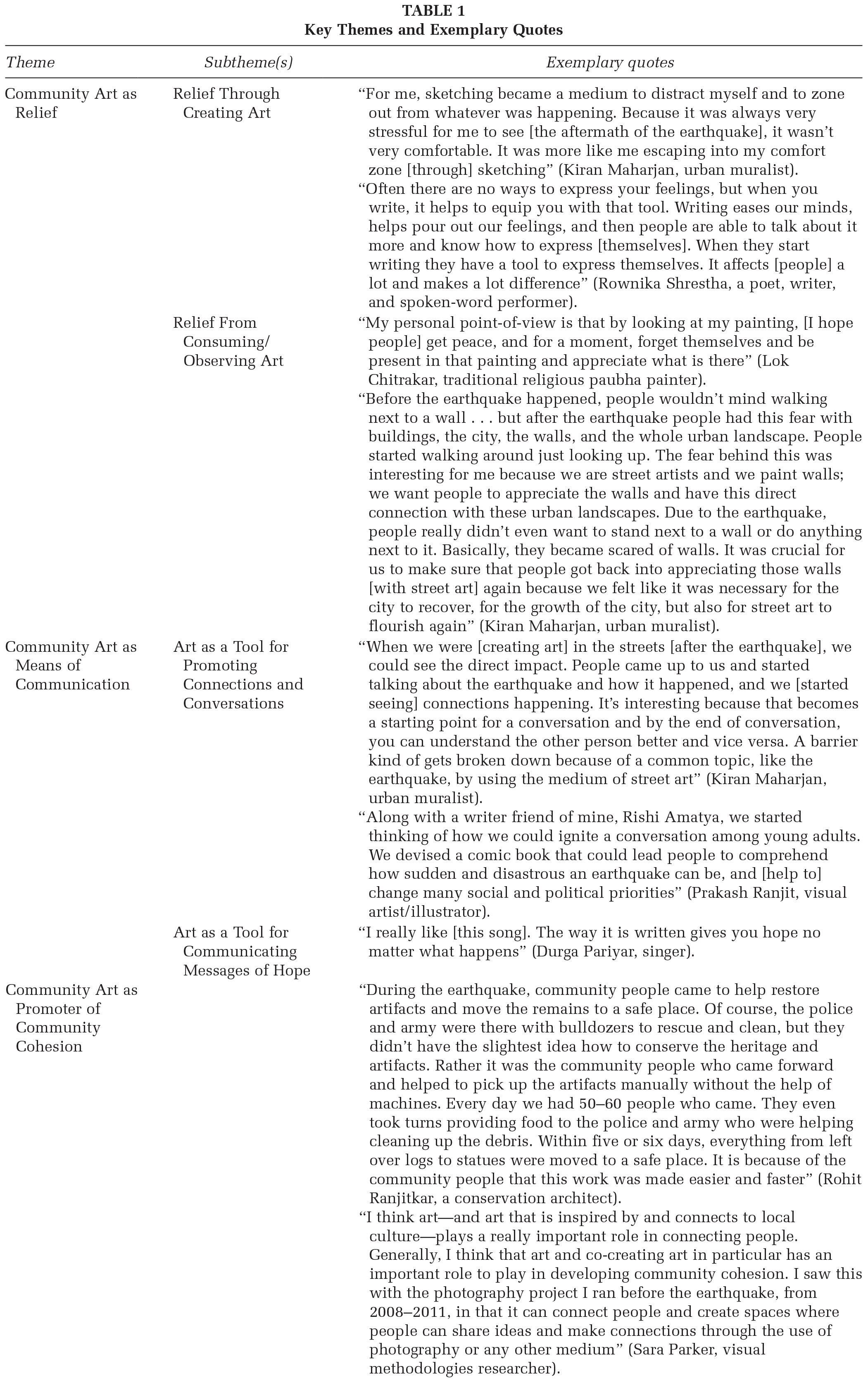
Our analysis revealed three key themes linking community art with health, cohesion, and resilience in the context of postearthquake Nepal (Table 1). First, community art provides relief and is a method for coping. Second, community art is a tool for communication, as it encourages connections and conversation and provides an opportunity to disseminate messages of hope. Third, community art helps develop community cohesion, as art is used to create common ground in communities and safe spaces both physically and emotionally. There is also overlap between these three themes. For example, creating a mural may provide relief in the aftermath of a disaster, and it may also be used to communicate messages of hope (Figure 3).
Key Themes and Exemplary Quotes
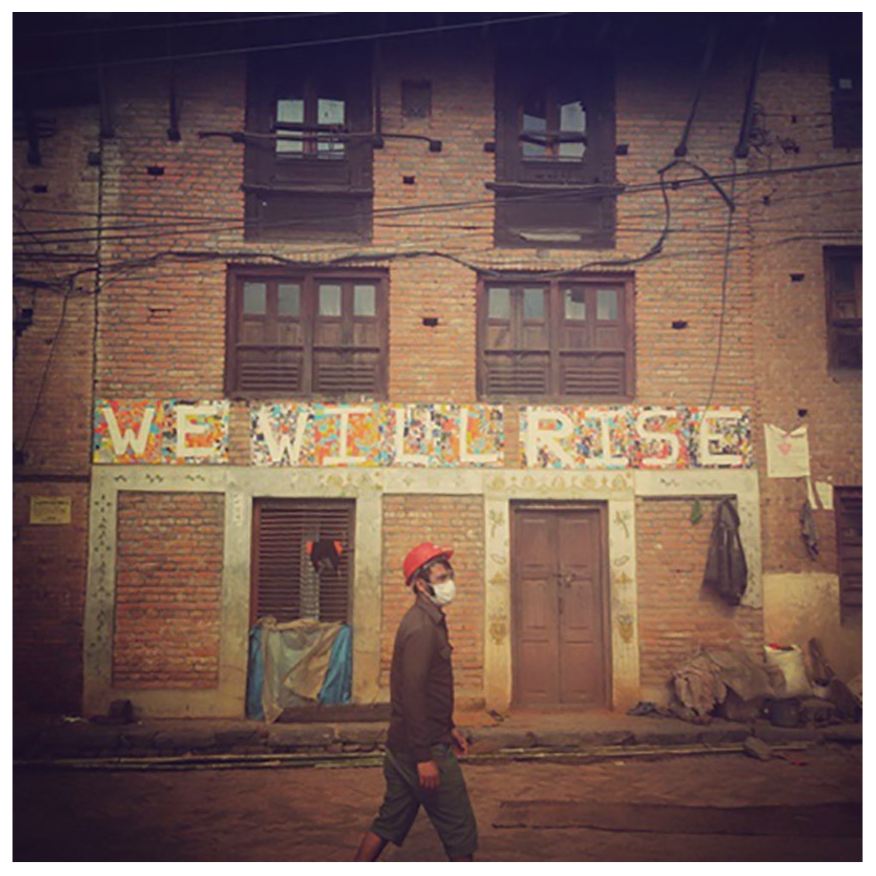
Messages of Hope Were Communicated Via Community Art Works After the 2015 Earthquakes
Community Art as Relief
Community art provided relief in the aftermath of the earthquake, and supported coping and healing. In this study, artists often discussed how art emerged as a way of providing relief, since a comfort zone develops through both the creation and consumption of art. For example, artists described feelings of comfort that emerged through creating community art, which allowed for reflection and/or a way of escaping the pain of the present situation. However, they also discussed the potential for community art to serve as a form of relief for community members who are not necessarily artists but can find relief from consuming or observing community art works.
When it comes to relief through creating art, artists spoke to the benefits derived from engaging in the creative process as it functioned as a distraction or reprieve from stressors. Sometimes, the relief was important for individual artists themselves in the coping process: For me, sketching became a medium to distract myself and to zone out from whatever was happening. Because it was always very stressful for me to see [the aftermath of the earthquake], it wasn’t very comfortable. It was more like me escaping into my comfort zone [through] sketching. (Kiran Maharjan, urban muralist)
Rownika Shrestha, a poet, writer, and spoken-word performer, stated that through self-expression she was able to find relief in her writing: Often there are no ways to express your feelings, but when you write, it helps to equip you with that tool. Writing eases our minds, helps pour out our feelings, and then people are able to talk about it more and know how to express [themselves]. When they start writing they have a tool to express themselves. It affects [people] a lot and makes a lot difference.
Participants also discussed the power of the arts offering relief when communities engaged in group initiatives: After the earthquake I was involved in group activities to help the community heal from the trauma and restore hope. It helped me realize there are many ways to utilize art in a community to aid in the healing process. Even indirectly art can be used to motivate, heal, and process trauma in the aftermath of a life changing natural calamity. (Prakash Ranjit, visual artist/illustrator)
Prakash discussed a dance program that was particularly powerful in the aftermath of the earthquake: We organized dance performances taught to us by a meditation group from the Philippines, and along with them we used [this technique] to help people relax and release stress accumulated through trauma from all the devastation. It helped establish a sense of acceptance, served as a mode to release clustered emotions, and [a way to] express them using a safe approach. (Prakash Ranjit, visual artist/illustrator)
Consuming/observing community art was also mentioned as a form of relief. Several artists spoke to the way that consuming art can aid in “forgetting” the stress of the moment and encourage viewers to immerse themselves in the art and its message: “My personal point-of-view is that by looking at my painting, [I hope people] get peace, and for a moment, forget themselves and be present in that painting and appreciate what is there” (Lok Chitrakar, traditional religious paubha painter). Another artist discussed the practical nature of art providing relief through creating and displaying art in the community: Before the earthquake happened, people wouldn’t mind walking next to a wall . . . but after the earthquake people had this fear with buildings, the city, the walls, and the whole urban landscape. People started walking around just looking up. The fear behind this was interesting for me because we are street artists and we paint walls; we want people to appreciate the walls and have this direct connection with these urban landscapes. Due to the earthquake, people really didn’t even want to stand next to a wall or do anything next to it. Basically, they became scared of walls. It was crucial for us to make sure that people got back into appreciating those walls [with street art] again because we felt like it was necessary for the city to recover, for the growth of the city, but also for street art to flourish again. (Kiran Maharjan, urban muralist)
Community Art as Means of Communication
Artists also viewed community art as a communication tool to promote connections, encourage conversation, and share messages of hope. Artists discussed examples in which community art after the earthquake led to the promotion of connections and conversations in the community: When we were [creating art] in the streets [after the earthquake], we could see the direct impact. People came up to us and started talking about the earthquake and how it happened, and we [started seeing] connections happening. It’s interesting because that becomes a starting point for a conversation and by the end of conversation, you can understand the other person better and vice versa. A barrier kind of gets broken down because of a common topic, like the earthquake, by using the medium of street art. (Kiran Maharjan, urban muralist)
In other examples, community art projects were created with the explicit goal of promoting communication and conversation after the earthquake: Along with a writer friend of mine, Rishi Amatya, we started thinking of how we could ignite a conversation among young adults. We devised a comic book that could lead people to comprehend how sudden and disastrous an earthquake can be, and [help to] change many social and political priorities. (Prakash Ranjit, visual artist/illustrator)
Manish Lal Shrestha, a multidimensional visual artist, discussed a participatory art project made of knitted rope. He discussed its importance in encouraging reflection and conversation: People started to say, “I will also help you stitch.” I think there is some sort of connection, rather than understanding, that they are experiencing. They also interpret the project in their own manner, like “Oh, he is teaching us everything to make everything united.” From this I learned that [community members] have their own perspectives [about the art and its meaning].
From Manish’s experience, community art encourages individuals to express and contemplate their own beliefs while engaging with others’ conceptions. Through creating these art works and initiatives, artists and community members often discussed sensitive topics, and the community artwork ultimately resulted in a platform for reflection. Overall, community art projects can lead to cooperative creation of meaning, and ultimately understanding and healing: “Giving people of the community the opportunity to comment, add, have conversations about the art is an important step in healing as a community” (Marie-Ange Sylvain-Holmgren, gallery owner).
Art as a tool for communication was also discussed in terms of its power to promote messages of hope and resilience, which can inevitably affect overall health and stability in a community (Figure 3). For example, a singer expressed: “I really like [this song]. The way it is written gives you hope no matter what happens” (Durga Pariyar, singer).
Community Art as Promoter of Community Cohesion
Art was also viewed as a way to promote community cohesion. In this study we refer to community cohesion as the process of creating common ground and uniting participants, which ultimately encourages the creation of safe physical and emotional spaces.
Rohit Ranjitkar, a conservation architect, discussed the process of conserving and protecting sacred art and artifacts after the destruction of temples in the earthquake. In this study, architecture, sacred art, and hand-carved temples are considered art forms, and in postearthquake Nepal, these art forms served as an important part of community identity: During the earthquake, community people came to help restore artifacts and move the remains to a safe place. Of course, the police and army were there with bulldozers to rescue and clean, but they didn’t have the slightest idea how to conserve the heritage and artifacts. Rather it was the community people who came forward and helped to pick up the artifacts manually without the help of machines. Every day we had 50–60 people who came. They even took turns providing food to the police and army who were helping cleaning up the debris. Within five or six days, everything from left over logs to statues were moved to a safe place. It is because of the community people that this work was made easier and faster.
The physical contribution of participating in preserving sacred art and artifacts helped community members maintain a sense of purpose, and encouraged them to work together to preserve, and ultimately rebuild, important symbols of their heritage. While the community members were not involved in creating the temples, the act of coming together for the sake of preserving historical community art and artifacts, in this case ancient temples, provided an opportunity to rebuild community cohesion.
Sara Parker, a visual methodologies researcher, related the significance of art and community: I think art—and art that is inspired by and connects to local culture—plays a really important role in connecting people. Generally, I think that art and co-creating art in particular has an important role to play in developing community cohesion. I saw this with the photography project I ran from 2008–2011, in that it can connect people and create spaces where people can share ideas and make connections through the use of photography or any other medium.
Discussion
This study sought to gain a deeper understanding of the role of community art for promoting health, cohesion, and community resilience in a postdisaster context. Artists and experts alike, who embraced a wide range of artistic mediums, discussed strategic linkages and connections between community art initiatives and mental health and trauma in postearthquake Nepal. These included art as relief, art as a means of promoting communication, and art as a developer of community cohesion.
Embracing art as a tool for relief and coping stems from a long history of evidence in the field of art therapy, which has been used clinically for more than a century (Stuckey & Nobel, 2010). In the specific context of postdisaster mental health, globally there are also a number of initiatives that have embraced art as a form of therapy and/or a community-building tool. For example, a calligraphy therapy program after the 2008 China earthquakes found decreases in hyperarousal symptoms and stress hormones (Zhu et al., 2014); a review of creative interventions among refugee populations found decreases in anxiety, depression, posttraumatic stress disorder, and peer problems (Tyrer & Fazel, 2014); and following the civil war and tsunami in Sri Lanka, the arts supported with community rebuilding (Huss et al., 2016).
What is particularly interesting about the role of art as a way to provide relief, as discussed by artists in this study, is that the art was embraced and discussed as a grassroots tool used by local artists. The community-initiated approaches uncovered in this study serve as powerful examples of the role of indigenous art and community movements . This also highlights that public health strategies and international development interventions could benefit from developing stronger ties with grassroots artists and movements that utilize local art to promote health. As numerous scholars have reported in the literature, it is the educators, leaders, and artists from a specific society that are “the most expert on how to use the arts in community contexts within the localized culture” (Huss et al., 2016, p. 287). Localized creative movements are a tremendous asset that we have yet to systematically embrace for improving public health; we should consider developing strategic programming in partnership with local artists and community-led art movements. This recommendation aligns with the 2019 WHO Scoping Review on the role of arts in improving health and well-being, in which the authors call for strengthening the structures and mechanisms for collaborations between culture, social care, and health sectors (Fancourt & Finn, 2019).
The results also highlight the opportunity for community art to impact communities both through consumption and creation. In some of the projects, community members were engaged in the artistic process, led by the lead artist, which resulted in a community-engaged art project (e.g., Manish’s knitted rope project). These participatory projects encouraged community members to directly engage in the artistic process as a way to provide relief and process their emotions. Alternatively, other artworks were created to spread a message and/or serve as a piece of art for community consumption (e.g., Kiran’s urban murals), which led to connections and conversations in the community after the earthquake. Both of these approaches offer opportunities to influence health and resilience, and both approaches should be considered in postdisaster recovery programming. Future studies may consider measuring the impact of these two different approaches (i.e., creation vs. consumption of art) on community health and resilience (e.g., exploring the impact of an artist-created versus a community-engaged art project).
The results that highlight art as a promoter of community cohesion speak to the potential for embracing the arts as a tool for addressing social determinants of health. For example, the arts can encourage social cohesion in communities, which can help to prevent ill health and encourage a sense of well-being. These themes align with findings in the literature, which state that the arts can be harnessed for not only treatment and management of illness but also prevention of ill health and promotion of health (Fancourt & Finn, 2019). Similar to our findings, the studies included in the 2019 WHO Scoping Review discuss the importance of creativity and using the arts as a natural way to reignite communication, promote problem solving and cultural understanding, and serve as a vehicle for community building (Huss et al., 2016). Additionally, our results align with findings from Beauregard et al. (2020), who explored the use of community arts for fostering connectedness between cultures and generations in Canada, and found that the collaboration fostered community resilience. Another study that embraced community arts for suicide prevention in Philadelphia, United States, found that participants increased their sense of connectedness and social support, which aligns with the findings from our study (Mohatt et al., 2013). Learning from the findings of this study and other community-engaged and creative arts initiatives, there is promise that the community arts can contribute to building resilience, social connections, and improved health outcomes.
While our findings build on a growing body of evidence regarding the relationship between art and mental health and emphasize the opportunity to apply arts-based tools and approaches in postdisaster contexts, there are limitations. Our exploratory study paves the way for rigorous follow-up research to quantify the relationship between community art and health, cohesion, and resilience outcomes in postdisaster contexts. Future research should seek to specify the complex connections between art as relief, art as a means of promoting communication, and art as a developer of community cohesion. In a 2018 review of the literature connecting art, healing, and public health, the authors concluded that while there is evidence that arts-based interventions can effectively reduce adverse physiological and psychological outcomes, the complexities of the relationship between the arts and health require further rigorous investigation, using standardized measures and control groups (Stuckey & Nobel, 2010). Additionally, there is an opportunity for future studies to include community members affected by the art works to holistically understand their effects. Finally, while the research team has extensive experience in Nepal, the primary data analyst was not involved in the collection of the data and only had access to the photographs and in-depth interview transcripts, which may have been missing relevant contextual information. However, we aimed to address this limitation by establishing the initial codebook as a team and sharing the results with our partner organization and team members in Nepal, as well as a subsample of the study participants, to ensure the analysis appropriately reflected the content of the interviews.
Conclusion
Considering the growing impacts of climate change, which make natural disasters more likely, communities urgently require postdisaster coping methods. This exploratory study provides insight into the role of community art and its potential for influencing health, social cohesion, and community resilience in the aftermath of a disaster or traumatic event. Findings suggest that community art initiatives provide many opportunities for relief, communication, and promoting community cohesion in such contexts. These findings can provide structure for future research and intervention efforts seeking to address community art in a postdisaster context. Funding support and development of partnerships with grassroots artists and creators should be promoted in health and development programming, especially for risk reduction and recovery in the aftermath of natural disasters.
Footnotes
Authors’ Note:
We are deeply thankful to all the artists and experts who dedicated time to speak with us about their artworks and experiences. Thanks are also extended to Binisha Shrestha, who conducted the interviews for this project, with support from Anupa Shrestha. We would also like to thank Dikesh Maharjan and Eric Shrestha for capturing the beautiful photography for this project, and the whole Image Ark team for providing thoughtful feedback on the project design and creative dissemination elements. This project was generously supported by the University of Pittsburgh Hewlett Grant and Asian Studies Center.
Supplement Note:
This article is part of the Health Promotion Practice supplement, “Arts in Public Health.” The supplement includes exciting projects, strategies, frameworks, practices, and places that advance health through the arts. The Society for Public Health Education is grateful to the University of Florida Center for the Arts in Medicine and ArtPlace America for providing support for the issue. The entire supplement issue is available open access at  .
.
References
Supplementary Material
Please find the following supplemental material available below.
For Open Access articles published under a Creative Commons License, all supplemental material carries the same license as the article it is associated with.
For non-Open Access articles published, all supplemental material carries a non-exclusive license, and permission requests for re-use of supplemental material or any part of supplemental material shall be sent directly to the copyright owner as specified in the copyright notice associated with the article.
