







Abstract
People who use drugs (PWUD) face stigmatizing treatment and substandard care during all stages of their health care journey, including in the prehospital setting by Emergency Medical Services (EMS) providers. Drawing on the professional and lived experience of the authors, we have developed a training with an intended audience of Emergency Medical Technicians (EMTs) and Paramedics in Massachusetts that will orient them to harm reduction philosophy. The training is delivered online through an asynchronous platform housed at Boston University School of Public Health and centers around several themes including the impact of fentanyl on the drug supply, the role of harm reduction in mitigating the impacts of drug criminalization, and ensuring that EMS providers have access to tools and best practices for improving overdose response, pain management, documentation, and respectful language. The training has been approved for Massachusetts Office of Emergency Medical Services (OEMS) continuing education credit and will be offered for free. We plan to evaluate changes in participant knowledge and attitudes and overall acceptability of the training among EMS providers in Massachusetts.
Keywords
Introduction / Assessment of Need
People who use drugs (PWUD) experience barriers to care and face stigma at all stages of hospital care, including by Emergency Medical Services (EMS). Previous studies have identified that “there is a need for a change in workplace and organizational culture” regarding these patients (McCann et al., 2018). Studies about hospital mistreatment have identified pain management as being a major barrier in health equity for PWUD (Chan Carusone et al., 2019). The authors have developed an education program with an intended audience of EMS workers (Paramedics, Emergency Medical Technicians [EMT], and Advanced Emergency Medical Technicians [AEMT]) to improve patient outcomes and quality of care for PWUD. The lead author retired in 2021 as a Lieutenant & Paramedic of a Massachusetts regional ambulance service (Figure 1) who has significant lived experience as a person who used drugs. Throughout his 8-year full-time career, he never received training on working with PWUD, and witnessed substandard care by his coworkers.
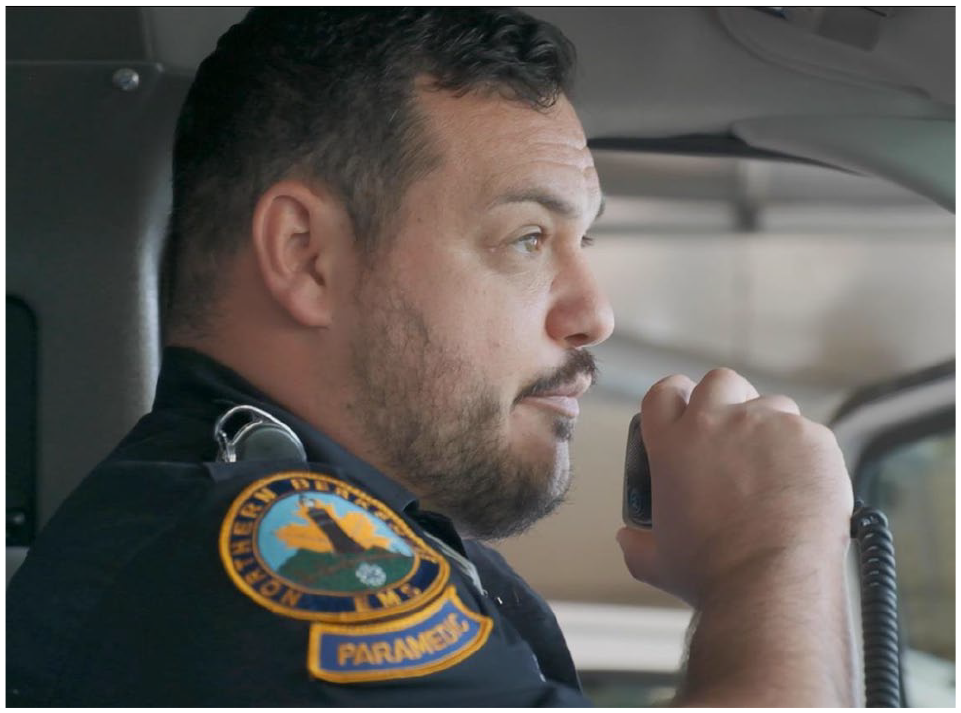
Lieutenant Stephen Murray Working as a Paramedic in Western Massachusetts.
Method
The lead author was heavily involved in his EMS agency’s continuous quality improvement (CQI) program, which gave him a window into areas where prehospital treatment of people who use drugs could be improved. This training was developed using his professional experience, the available body of literature on stigma, and the input of more than two dozen experts in the field of harm reduction, addiction medicine, nursing, and EMS systems. This training was originally developed as an MPH Practicum Project at Boston University School of Public Health (BUSPH) with assistance from partners at Boston Medical Center, Boston University School of Medicine, the Massachusetts Department of Public Health, and the SHIELD Training Initiative at Northeastern (Beletsky et al., 2021). The training went live on August 1, 2022, and is being delivered asynchronously using the BUSPH Population Health Exchange (PHX) online training system. Successful completion of the training module, survey, and quiz will earn 1 hour of Massachusetts Office of Emergency Medical Services (OEMS)-approved continuing education credits.
Program Description
The training is divided into four learning objectives. The first section introduces the EMS provider to the role of Harm Reduction in mitigating the challenges PWUD face while navigating the banned drug supply. The overview of Harm Reduction includes some of the reasons people use drugs, including trauma, chronic pain, homelessness, and pleasure seeking. It also touches on the concept that while addiction and overdose transcend racial and socioeconomic differences, Black and Hispanic communities face higher rates of incarceration and criminalization than White communities (Nellis, 2021). The training then introduces the EMS provider to the reality of an unregulated drug supply, showing that while alcohol, cigarettes, soda, and fast food may be unhealthy, they are safe thanks to consumer protection laws. There is also a summary of the cost saving provided by drug user health programs and an overview of risk reduction strategies and tools. In the second section, EMS providers are taught best practices for overdose reversal, caring for an overdose survivor, and managing acute pain for PWUD. Many EMS providers have been incorrectly taught that there is no downside to giving higher doses of naloxone. The training helps them to understand the role that excessive naloxone administration plays in worsening withdrawal symptoms and encourages a focus on ventilation and oxygenation. In the third section, the EMS provider will learn about the potential impacts to patient outcomes by the quality of their hand off report to receiving hospital providers. They will also learn how accurate patient care report documentation impacts public health programs.
Intended Impact & Outcomes/Evaluation Approach
Through this training, we hope to equip EMS providers with tools and best practices for improving overdose response, pain management, documentation, and respectful language. We hope that improved EMS response to and support of PWUD will in turn improve patient outcomes and quality of care for PWUD. Using a Post/Pre evaluation approach, we plan to assess changes in participant knowledge and attitudes and overall acceptability of the training among EMS providers in Massachusetts. Within the first week that our course has been “live,” there have been 11 people to complete the training. We are promoting the training through our personal and professional networks and hope that EMS providers, public health professionals, and harm reduction advocates will share this training with their relevant partners to broaden its reach.
Next Steps/Lessons Learned/Implications for Practice
The authors hope that, with an initial established proof of concept, this training could become part of the required curriculum within Massachusetts for state-approved EMT, AEMT, and Paramedic training programs. It also could become the foundation for additional special population trainings for EMS for other marginalized patients such as people experiencing homelessness, sex workers, and others commonly excluded from high-quality health care. This program could also be easily adapted to the National Registry of Emergency Medical Technician’s (NREMT) standards of training and used in almost every state. EMS providers are not only on the frontlines of the overdose crisis, they also encounter PWUD in a myriad of other ways. Specialized training could be a way to improve these interactions for both the patient and the EMS provider. The training is available at https://portal.populationhealthexchange.org/course/caring-for-people-who-use-drugs/. To take the course, scroll to the bottom of the page and click “Enroll” to create a free account. Please contact Stephen Murray at
