







Abstract
The COVID-19 pandemic continues to disproportionately impact communities of color and expose health inequities. Minoritized communities experience disparities in chronic diseases, premature death, and cancer, and gaps continue to widen; systemic injustice in housing, nutrition, and environment are major contributors. At the height of the COVID-19 pandemic and racial justice movement, students at the University of Louisville School of Medicine created Grow502 to speak truth to the challenges of health disparities in Louisville, Kentucky. The goal was to pursue a healthier community by raising awareness. Community leaders and health professionals provided expert consultation. This partnership led to the co-creation of a curriculum focused on education, advocacy, community engagement, and creative media. Grow502 sought to support communities impacted by injustices due to racism, limited health literacy, redlining, and limited green space by creating programming centered on education and empowerment. Effective strategies to reduce disparities involve creating interventions with authentic engagement and context. Grow502 involves community stakeholders as active partners. We continue to intentionally seek effective collaborations and interventions that merge our mission and our diverse communities impacted by health disparities.
Keywords
The COVID-19 pandemic continues to disproportionately impact communities of color and expose health inequities (Centers for Disease Control and Prevention, 2020; Hooper et al., 2020). Minoritized communities experience disparities in chronic diseases, premature death, and cancer, and gaps continue to widen; systemic injustice in housing, nutrition, and environment are major contributors (National Academies of Sciences, Engineering, and Medicine, 2017; Thornton et al., 2016). Systemic racism and cultural insensitivity within the health care system are also contributors, as studies demonstrate how clinical recommendations built on the falsity of biological differences result in suboptimal care for Black patients (Hoffman et al., 2016); however, newborn survival rates are improved threefold when racially concordant care is provided (Greenwood et al., 2020). To raise awareness among our community, we launched a health disparities series in the Spring of 2021.
Context
Louisville, Kentucky is a diverse city; however, the community is segregated by race. Due to redlining, a historical practice that puts financial and other services out of reach for residents based on race and/or ethnicity, people of color continue to be clustered primarily in the West End which lacks access to health care, education, and housing. Communities hold the power to impact their health and efforts focused on increasing community self-agency via academic/community partnership interventions are needed to mitigate disparities. Health sciences curricula often fail to center the community as experts or facilitate advocacy (Benabentos et al., 2014; Chen et al., 2017).
At the height of the COVID-19 pandemic and racial justice movement, students at the University of Louisville School of Medicine created Grow502 to speak truth to the challenges of health disparities in Louisville, Kentucky. The goal was to pursue a healthier community by raising awareness. Community leaders and health professionals provided expert consultation. This partnership led to the co-creation of a curriculum focused on education, advocacy, community engagement, and creative media. The Louisville Metro Health Equity Report provided a framework that outlined 21 different health outcomes, highlighting differences between race, gender, ethnicity, and zip code (Center for Health Equity Report, 2017). Four strategic teams of medical and public health students worked with community leaders to create the curriculum focusing on five topics and age demographics: (1) Infant Mortality (Infants), (2) Lead Poisoning (Youth), (3) Mental Health (Young Adult), (4) Diabetes/Maternal Mortality (Adults), and (5) Stroke (Elderly). The sessions were open to all in the community with an emphasis on empowering citizens and health professionals.
Health disparities series and impact
Three medical students and one public health student served as Grow502 Directors. Each Director (education, advocacy, community engagement, creative media) was tasked with managing a project and team for each health disparity. For example, the Director of Education designed and hosted interdisciplinary education panels for Lead Poisoning while the Director of Advocacy similarly created a workshop to build skills to engage the Kentucky legislature. Thirty students from the schools of medicine and public health were recruited to participate in one of the four teams based on their interests. Students were responsible for implementing programs for their respective disparity topics as a team. The creative media team designed all Grow502 marketing and video production.
The directors created a standardized weekly schedule for programs, participated in marketing campaigns, and led team meetings to develop materials. Teams developed their presentations and activities with directors, which were reviewed by community experts, advocates, and health care professionals for accuracy and quality. The School of Medicine’s Undergraduate Medical Education Office and local partners supplied resource support.
Each week of the curriculum began with an interdisciplinary educational panel that reviewed the basic disease process, epidemiological trends, and case-based problem-solving discussion. Mid-week, a virtual advocacy workshop was offered with discussions on local policies with the goal of developing new skills in health advocacy. End-week, an in-person or virtual community event was held to allow participants to engage with community organizations. Each week, our creative media team implemented a marketing campaign with emails and social media content including but not limited to creative videos highlighting public health data, interviews with local health professionals, cartoons, and poetry. We hoped by providing an early educational event, the gained knowledge would energize the advocacy workshops that followed. An end-of-week community service event cemented the information acquired through personal connections.
The education team recruited interdisciplinary panelists for each health disparity. The panel consisted of professionals from different backgrounds (e.g., medicine, social work, law, and patient perspectives). The panel lasted 90 minutes and included background information on local/national trends, followed by a problem-based learning case and discussion points for panelists and attendees, and concluded with a Q&A session and review of local policies and resources. This method oriented attendees to the prevalence of the health disparity on a national scale while making the information actionable and representative of the local community.
The advocacy workshops were 60 minutes followed by a short presentation about the topic and its relation to health disparities. These workshops offered students the opportunity to develop advocacy skills. Grow502 session topics included the following:
Maternal and Infant Mortality Week
Monday—Virtual Interdisciplinary Panel and Case Review: The patient gave birth via C-section with complications and her clinical course was reviewed with attention to physician–patient communication; she suffered and succumbed to her complications which were initially reported to the clinical team, but not promptly acted on. This case highlighted the adversity in obstetrical care experienced by Black/African American women. Discussion questions invited participants to identify sources of bias, impact on communities of color, and prevalence. Participants discussed strategies for prevention, legislation, and community engagement.
Wednesday—Virtual Advocacy Workshop on Implicit Bias in Perinatal Care: Legislature staff in support of HB27: An Act relating to implicit bias in perinatal care and HB212: An act relating to child and maternal fatalities in the Commonwealth were contacted and a Kentucky State Representative from the 18th District presented a workshop.
Saturday—Maternal Mortality Memorial Wall and Infant Mortality Baby Box Event: Participants were educated on infant and maternal mortality via a short video, offered the chance to submit messages for a memorial wall and to decorate gift boxes for babies. Uplifting messages for mothers of infants that had lost their lives were collected. On the medical campus, baby gift boxes were decorated and filled with items such as baby clothes, breastfeeding educational materials, wet wipes, and diapers. Memorial walls were sent to various community organizations for virtual display (Figure 1).
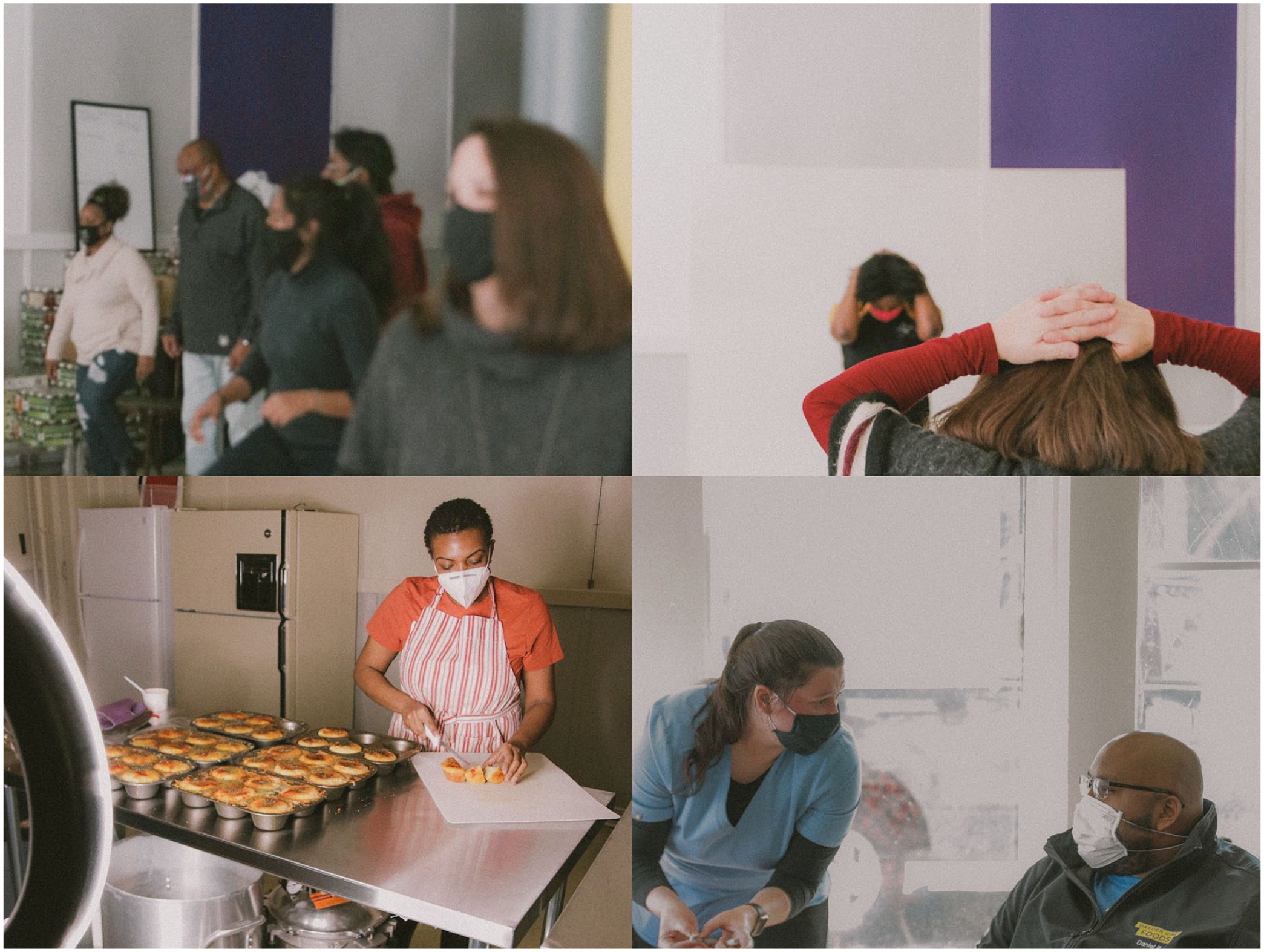
Community Event Hosted by Garden Girl Foods, Whitney Powers (Bottom Left Corner), and Led by Grow502 Director of Community Engagement, Lisa Anakwenze (Top Right Corner), and medical student Katarina Jones (Bottom Right Corner)
Diabetes and Stroke Week
Monday/Tuesday—Interdisciplinary Panels and Case Reviews: Case 1 involved a male patient with diabetes and multiple other chronic health conditions attempting to establish care with a new primary care physician. The patient’s situation was complex in that he lived in a food desert, lacked transportation, and had limited medical literacy. Discussion questions explored health care costs, food desserts, and the psychology of chronic diseases. Case 2 involved a female patient with stroke-like symptoms who had transportation challenges that prevented timely medical care, as well as poor nutrition, lack of exercise, and diabetes. She had neurological deficits that prevented follow-up. Discussion questions explored connections between poverty, neighborhood development, health-related public service announcements, and transportation in relation to prevention/treatment of stroke.
Wednesday—Virtual Advocacy Workshop on Food Deserts and the Implementation of Zoning Districts: Members of Metro Council were contacted to support zoning restrictions that limit the density of businesses such as liquor/tobacco stores. Kroger Corporation was contacted to request that the demands of Feed the West, a racial justice organization that provides fresh food to individuals living with food insecurity, be fulfilled. The President of the Greater Louisville Medical Society presented.
Saturday—In-Person Community Event with Garden Girl Food: Teaching kitchen, fitness, and glucose monitoring sessions were offered. Medical students provided health education on nutrition, diabetes prevention/management, and smoking cessation, and led a healthy cooking and exercise workshop.
Lead Poisoning Week
Monday—Virtual Interdisciplinary Panel and Case Review: The patient was a 5-year-old boy who was having difficulty at school and unexplained somatic ailments. He lived in a home built before 1970 in a lower socioeconomic neighborhood intersected by a highway. He was delayed developmentally and also diagnosed with ADHD but continued to have worsening somatic ailments. Further testing identified elevated lead levels. Discussion questions explored social determinants of health, lead poisoning prevention, and resources for communities.
Wednesday—Virtual Advocacy Workshop on Existing Lead Poisoning Regulation in Kentucky: Legislatures were contacted to support modifications to Ky. Rev. Stat. 211.902 and 903 which focused on increasing lead screening standards in Kentucky. An Emergency Medicine faculty clinician presented.
Saturday—Virtual Event with Community Activists Discussing Lead Poisoning: Medical students led the programming and provided background on lead poisoning in Louisville. Local researchers, community leaders, and activists shared personal anecdotes and lived experiences with lead poisoning.
Mental Health and Substance Use Week
Monday—Virtual Interdisciplinary Panel and Case Review: The patient presented to Emergency Psychiatric Services following an acute spell of disorientation and hallucination. The patient had endured numerous psychological and physical traumas and had a substance use disorder. Discussion questions explored the role of substances, adverse childhood events, and addiction recovery on health.
Wednesday—Virtual Advocacy Workshop to Petition Kentucky Medicaid to Offer Medication to Ease Opioid Withdrawal: Participants contacted Kentucky Medicaid to advocate for FDA-approved, non-opioid management of opioid withdrawal symptoms without prior authorization. A local endocrinologist who advocates regularly for patients with opioid addiction presented.
Saturday—Virtual Training for Opioid Overdose Response with Naloxone: Medical students, pharmacists, and substance use peer educators provided education about substance use disorder. A pharmacist demonstrated how to administer naloxone and kits were provided to attendees.
Our Creative Media Director requested feedback from the students who created Grow502 and this was made into a compilation video featured on the Grow502 website (https://www.grow502.org/). Post-session surveys were sent to students, faculty, and community stakeholders; participation was voluntary. The Institutional Review Board of the University of Louisville School of Medicine reviewed and approved this study. Selected feedback is below:
★ “Great! Love the opportunity to share expertise and collaborate with others in the community.”—Social Worker at University of Louisville Health Stroke Unit
★ “The event was great on all fronts. The coordination was good and the content was really well-researched and reflected an important issue that does not get discussed nearly enough.”—Assistant Director of the LGBT Center at UofL Health Sciences
★ “Great opportunity to strengthen the partnership between harm reduction and the medical field.”—Health Education Specialist at the Syringe Services Program at Louisville Metro Public Health
★ “It was awesome to see diverse groups working on this project. I appreciated the variety of fields/backgrounds of the participants.”—Medical Student
★ “Amazing work across the board. I felt like Grow 502 really made an impact on the Louisville community.”—Medical Student
Discussion
Grow502 sought to support communities impacted by injustices due to racism, limited health literacy, redlining, and limited green space by creating programming centered on education and empowerment. Public health data reported in the Louisville Health Equity Report were transformed into an interactive series and facilitated our evidence-based approach. Students acted as pivotal connections between the data and the community throughout the design of the sessions. A final piece to implementation was media engagement and direct action advocacy.
Grow502’s programming increased the awareness of disparities and facilitated mitigation. Current and future considerations for Grow502 include hybrid programming based on disparities seen in local communities versus centering on a disease. For example, we are working toward addressing health disparities by collaborating with Feed Louisville to support Louisville’s unhoused population. This year, we held a virtual education panel and case review, helped prepare food to be delivered, and set up a pop-up clinic to provide wound care, dental care, and social services to unhoused individuals (Figure 2).
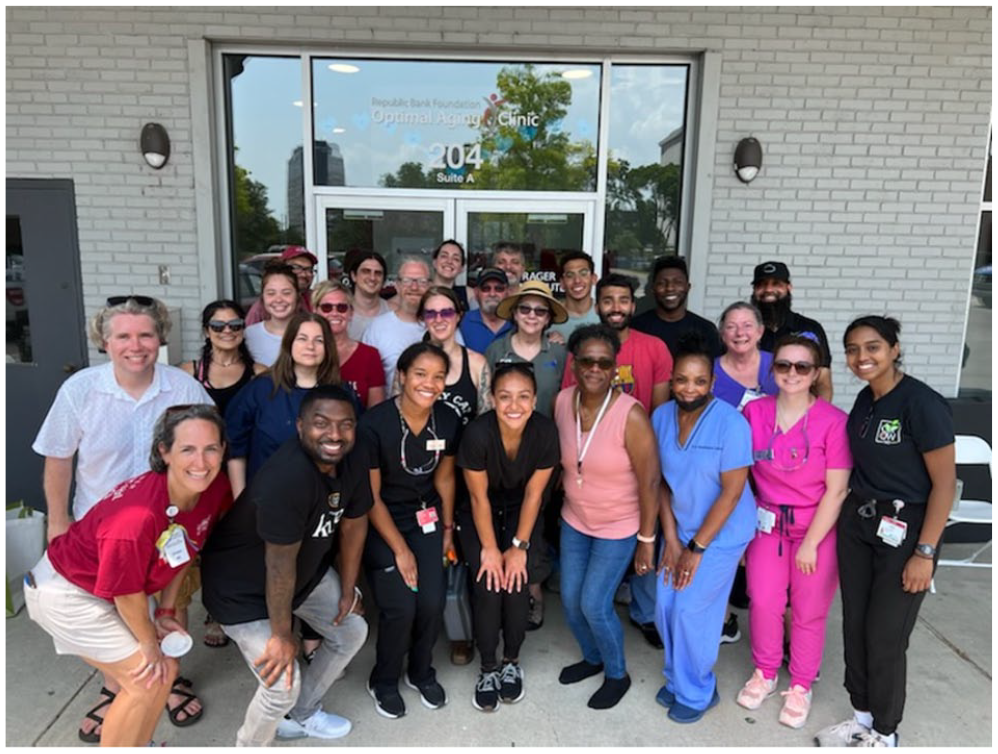
Pop-Up Clinic in April 2022 Hosted by Grow 502, Trager Institute of Health, Kare Mobile, Feed Louisville, and Louisville Metro Public Health
Providing public health education is vital to impacting disparities. The education of both community members and health care professionals is important to building a healthier community. Effective strategies to reduce disparities involve creating interventions with authentic engagement and context and intentional advocacy. Grow502 involves community stakeholders as active partners. We continue to intentionally seek effective collaborations and interventions that merge our mission and our diverse communities impacted by health disparities.
