






Abstract
Background
Evidence-based falls prevention programs are available in many communities, but participation in such programs remains low. This study aimed to develop community-based referral networks of organizations to facilitate the uptake of evidence-based falls prevention programs through engaging older adults at risk for falls with the RememberingWhen™ program and connecting them to evidence-based programs in Midwestern communities.
Methods
Guided by the Practical, Robust Implementation and Sustainability Model (PRISM), referral networks were developed in two Midwestern communities (urban and micropolitan) through a seven-step community engagement plan: establishing and operationalizing the State-level Advisory Board (SAB), identifying falls prevention resources, conducting community assessments, developing Local Advisory Groups (LAG), operationalizing the LAG, developing referral network and protocols, and implementing the network. Semistructured interviews guided by the RE-AIM framework were conducted with members of the SAB, LAG, administrators and staff from organizations that participated in networks, and older adult participants.
Results
After participating in the development of referral networks, participants felt they learned important skills that they can use to develop additional collaborations and networks in the future, emphasized the benefits of building community capacity among organizations with common missions. Interview data yielded strategies on enhancing the referral network’s reach, impact, adoption, implementation efficiency, and maintenance.
Conclusion
Future sustainability studies of such networks should explore identified challenges and strategies to sustain efforts. Results highlight the importance of ongoing funds to support the efforts of organizational networks in communities.
Keywords
Background
There were more than 35 million falls among older adults in 2018 in the United States (Moreland et al., 2020). Falls are the leading cause of fatal and nonfatal unintentional injury death among older adults in the United States (Centers for Disease Control and Prevention [CDC], 2021b). In 2021, more than 37,000 adults at least 65 years of age died from a fall, and nearly 3 million fall-related injuries were treated in U.S. emergency departments. Medical costs from emergency department visits and hospitalizations associated with unintentional nonfatal injury were highest among older adults for fall-related injuries, totaling US$16.2 billion and US$53 billion, respectively, in 2021. Quality-of-life loss costs for fall-related injuries among older adults in 2021 alone exceeded US$265 billion (CDC, 2021b).
Several types of evidence-based falls prevention programs exist to meet older adults’ functional levels, but uptake of these programs has been limited. Program participation can be improved if older adults feel that programs address their desired outcomes whether these outcomes are a reduction in falls, improved daily functioning, or the ability to maintain their independence (Vincenzo et al., 2022; Vincenzo & Patton, 2021). Furthermore, older adults are more likely to participate in falls prevention programs if they are easy to access; affordable; include support from peers, family members, health care professionals, and others in the community; and referred and/or delivered by organizations that are trusted and influential to them (Calhoun et al., 2011; Siegler et al., 2015).
Although best practices for community-level interventions to promote falls prevention exist (NCIPC, 2015; World Health Organization, 2017), integration of evidence-based falls prevention programs into community practice has been slow. While health care providers are consistently identified by older adults as trusted sources of falls prevention information (Calhoun et al., 2011; McMahon et al., 2011), they do not always provide such information due to time constraints, competing health care demands, limited awareness, lack of expertise, and lack of reimbursement options (Howland et al., 2018; Jones et al., 2011).
Sustainable falls prevention programming for older adults requires coordination across multiple community-based organizations using multiple approaches for reaching and supporting older adults (Ganz et al., 2008; Goodwin et al., 2011; Lovarini et al., 2013). Nontraditional partners, such as fire service personnel, often come in contact with and are trusted by older adults, and can reach high-risk and more isolated older adults living independently in the community (Casteel et al., 2020). Non-health care community organizations (e.g., meal delivery services, recreation services, and social services) believe falls to be a significant concern among their clientele and have an interest in addressing them, but also indicate a lack of knowledge and skills, communication channels, and internal support including limited human and financial resources to provide evidence-based falls prevention programming (Juckett & Robinson, 2019; Laing et al., 2011; Markle-Reid et al., 2015).
Research on identifying determinants of effective implementation of community-based falls prevention programs are in the early stages of research (Juckett & Robinson, 2019; Markle-Reid et al., 2015). Consistent themes, however, include conducting a needs assessment to identify community resources available, involving multiple partners to promote a diverse network including the involvement of academic partners, providing opportunities for sharing information and outcomes among partners, and developing an operational structure with strong coordination and communication across organizations.
Purpose or Aims
Guided by the Practical, Robust Implementation and Sustainability Model (PRISM) framework (Feldstein & Glasgow, 2008), this project aimed to use RememberingWhen™: A Fire and Fall Prevention Program for Older Adults to increase awareness among older adults about falls prevention, then link them to evidence-based falls prevention programs in their community that can provide a long-term support infrastructure to reduce falls and facilitate independent living. Here we describe the processes and outcomes of a collaborative community-based approach to develop and implement referral infrastructures, called RW™-PLUS (RememberingWhen™-Partners Linking yoU to Services). Through describing our processes, we aim to inform public health professionals about strategies to facilitate the development of public health program delivery infrastructures in other communities.
Methods
The RememberingWhen™ (RW™) program was developed by the National Fire Protection Association (NFPA) with the CDC. The program consists of eight falls and eight fire prevention messages and includes established protocols and tools for high-fidelity implementation. The program is delivered in a one-time group session and/or home visit by trained fire service personnel or social service agency staff (The program is now called Steps to Safety: https://www.nfpa.org/education-and-research/home-fire-safety?l=52).
Previously, in addition to improving older adults’ falls prevention and fire safety behaviors, this program helped motivate older adults and program deliverers to engage in further falls prevention efforts (Casteel et al., 2020). Older adults trusted and enjoyed interacting with fire service personnel and asked for additional information. Fire service personnel found the program beneficial and asked for resources and information they could distribute during RW™ program delivery, including information on existing community-based programs.
The RW™-PLUS responds to such gaps identified in existing program infrastructure (i.e., need for follow-up after one-time education, low participation in evidence-based programs). The PRISM highlights the importance of developing a “carefully crafted infrastructure” to successfully implement and sustain programs (Feldstein & Glasgow, 2008). We conceptualized the referral network in three components: (a) outreach and screening by community-based service providers to identify older adults at risk for falls; (b) RW™ program delivery by a fire department; and (c) referral to evidence-based falls prevention programs in the community with support to identify and enroll in an appropriate program and arrange transportation if needed.
Implementation Framework
Using the PRISM framework, we paid careful attention to the organizational and program recipient factors like ensuring RW™-PLUS aligned with organizational missions; facilitated efficient coordination and communication across organizations; minimized barriers and burden for program staff; had high adaptability and reversibility (ability to stop if problematic), and; met the needs of their older adult clients (Feldstein & Glasgow, 2008), ultimately aiming to maximize the RE-AIM components of the referral infrastructure: Reach, Effectiveness, Adoption, Implementation, and long-term Maintenance.
Based on the principles of community-based participatory research (Israel et al., 2012), we developed a seven-step community engagement plan: (a) establish a State-level Advisory Board (SAB) and develop SAB operational guidelines; (b) identify falls prevention efforts and resources available at the state and national levels; (c) identify two pilot communities based on community strengths, needs, and capacity; (d) establish a Local Advisory Group (LAG) and jointly assess community resources in each pilot community; (f) jointly develop referral network implementation and communication plans, and provide training; (f) implement the referral network and refine sustainability plans; and (g) evaluate the process of implementation. Through actively engaging community members, we addressed key elements identified in PRISM including continually addressing cultural compatibility (e.g., discussing how to reduce complexity at staff-, administrative-, and community-levels), and identifying best implementation processes and protocols that can be adopted and maintained. Through collaborative activities, we developed efficient referral network and implementation processes that align with the cultural norms of the communities by building upon and strengthening existing community resources and capacity (Trickett et al., 2011).
Evaluation Framework
Interviews with RW™-PLUS participants (older adults and community organizations) and advisory board members were grounded in the RE-AIM framework (Klesges et al., 2005), to assess how our community-engagement processes addressed the characteristics of organizational partners and older adult program recipients, the external environment (e.g., state-level commitment and client interests), and the implementation and sustainability infrastructure of the networks (Feldstein & Glasgow, 2008). To ensure that evaluation plans aligned with partners’ view of what was important, we worked with the SAB to finalize data collection instruments.
Data Collection
Telephone interviews were conducted, each lasting about 30 minutes, and included questions about their experiences with the RW™-PLUS referral network, their perceptions about its reach (e.g., accessibility by older adults of differing backgrounds), positive and negative impacts (effectiveness), extent to which the protocols were implemented as planned or modified (implementation), perceptions of whether other organizations and older adults would be interested in participating (adoption), facilitators and barriers of implementation, and suggestions for sustaining RW™-PLUS in their communities (maintenance). Interview questions are presented in the online supplemental document.
Although organizations in the network kept recruitment and delivery logs to document program implementation processes, due to the COVID-19 pandemic, implementation of the RW™-PLUS networks in both communities ended in an early phase. Data presented here are from the interviews.
Data Analysis
Interviews were transcribed and imported into Atlas.ti. The codebook included both predetermined codes and codes that emerged through open-coding processes. The predetermined codes included the concepts of the PRISM and RE-AIM frameworks as well as codes that can inform future implementation and dissemination (e.g., barriers, facilitators, and suggestions for improvement). Twenty-three percent of the transcripts were coded by two coders who demonstrated high levels of agreements for the five RE-AIM constructs: agreement of 98% and Holsti Index of 98.9% (Holsti, 1969; Krippendorff, 2018). Text related to each code were reviewed and analyzed to identify thematic patterns using a template organizing approach (Crabtree & Miller, 1999) and through periodic discussions among the research team.
Results
Referral networks were established in two communities: one urban and one micropolitan. Our partners consisted of eight SAB organizations (including one older adult representative), nine organizations in the urban community (two of these also served in the SAB), and six organizations in the micropolitan community. Member organizations included local fire departments, public health agencies, Area Agencies on Aging, health care agencies, and other aging service providers such as home health or meal/food assistance. SAB meetings occurred bi-monthly for 6 months until local LAGs were formed, and one final meeting a year after the kickoff to update members on the progress and ensure the project was staying true to the goals the group had jointly outlined. Due to the large size in the urban community, LAG met monthly as a full group for the first 3 months, then established subgroup meetings of organizations who were apart of the developed infrastructure to work out referral processes within and between each of the nine participating organizations. This subgroup met 11 times over 1 year. The full group met at 6 months to receive updates from the subgroup and to provide feedback on the outlined infrastructure. In the micropolitan community, seven meetings were held bi-monthly for 1 year with all organizations; only two subgroup meetings occurred to finalize the details of the infrastructure. Additional descriptions of the strategies used and the outcomes of the seven community engagement steps are described in the RW™-PLUS toolkit available at: https://iprc.public-health.uiowa.edu/resources/reports/. Here, we present the results related to the development of the referral network (Step 5) and data surrounding the RE-AIM framework concepts.
Development of Referral Network
This involved identifying the organizations to take part in the network, developing inter-organizational communication plans and tools, establishing workflows and protocols within and between organizations, and staff training on protocols and tools. These key tasks were identified through discussions with the SAB and LAGs; strategies and outcomes of these tasks are summarized in Table 1. Figure 1 presents the outcome of the first task, a developed framework outlining the roles of each organization and inter-organizational communication flow. First, home-based service providers or fire department staff screen individuals for falls risk using three questions from the STEADI program (CDC, 2021a). Those answering “Yes” to at least one question were referred to a fire department to receive the RW™ program. Following this, individuals are connected to a local AAA to help identify and be enrolled in an appropriate evidence-based falls prevention program and arrange transportation if needed. Figures S2 and S3 in the online supplemental documents were developed through the subsequent tasks and present sample decision support tools for staff on how to guide individuals through the referral network. All program materials were developed in collaboration with administrators and staff to ensure fit with daily operations and capacities.
Strategies and Outcomes of Five Key Tasks for Developing RW™-PLUS Networks

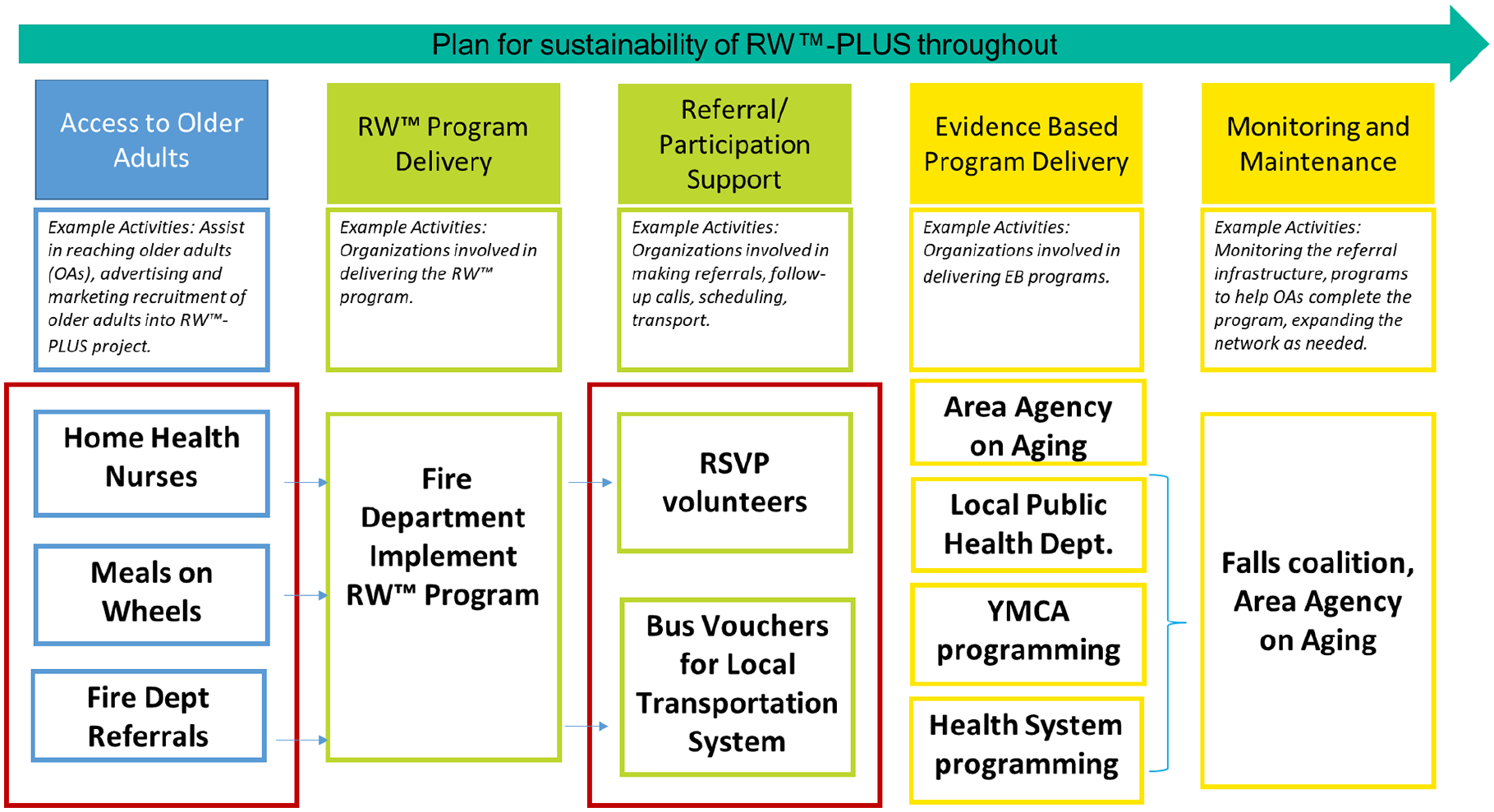
Overview of a Developed RW™-PLUS Referral Network.
Evaluation of Implementation: RE-AIM Factors
Out of five older adults who participated in at least one component of the referral network before the pandemic, we could interview two. Data presented here are from the interviews with eight organizational administrators and five program delivery staff out of 10 local LAG organizations that participated in the actual referral network (not all LAG members took part in the network), five SAB members out of eight organizations/older adult representative, two research staff, and the two older adult participants. Qualitative data were analyzed in relation to the RE-AIM elements: perceptions related to the developed infrastructure’s reach, effectiveness, adoptability, implementation processes, and maintenance or sustainability. Direct quotes for each theme are provided in Table 2.
Quotes Related to Each of the Evaluation Elements: Reach, Effectiveness, Adoption, Implementation, and Maintenance

Reach
Because our program was discontinued due to the pandemic, interviewees made recommendations on how we may expand the reach of this program in the future. The most frequently identified strategy was through marketing to make more community partners such as health care systems, congregate meal sites, and fitness programs aware of the referral network. The administrators suggested forming a strong leadership body such as a local coalition to facilitate and lead the referral network. Several participants discussed the need to increase availability of one-on-one evidence-based falls programs to reach those who may be homebound. In one community, LAG members were concerned that the only evidence-based falls prevention program available in their area required participation fees. As a result, two of the LAG organizations collaborated to train their staff members to make free evidence-based falls prevention classes available, significantly enhancing community’s capacity for falls prevention.
Effectiveness
All interviewees from organizations stated that building new partnerships and networks was a great benefit of this program that enhanced the capacity of their communities. Participants especially appreciated being connected to their local fire departments that are not normally in the social service provider networks. Administrators and staff felt that participation in this network also helped them receive more training and build organizational capacity. Specific benefits include project management skills, a knowledge of how to develop a community network, and greater appreciation for falls prevention programs and how referring older adults to the network could benefit older adults and their community. The core benefits identified for older adults are information on falls and fire prevention to stay safe at home, connection to community resources, and opportunities to engage socially.
Adoption
To facilitate adoption among organizations, administrators recommended increasing awareness about the impacts of older adult falls not only on individuals but also on the community, for example, reducing workloads of emergency service personnel who provide lift assistance. Administrators also emphasized highlighting the benefits of multiple organizations collaborating to achieve a common goal, making it easier for older adults to receive programs. In terms of adoption among program staff, one administrator noted intentionally excluding their program staff from the early phases of planning to protect staff time. However, this administrator later reflected that their staff should have been involved much earlier so that protocol modifications made in later phases could have been avoided, and earlier involvement could have led to better staff buy-in.
In terms of adoption among older adults, administrators felt that older adults were motivated to participate because they perceived it as a way to remain independent at home, they enjoyed interacting with fire fighters, and they wanted to receive resources. An older adult participant confirmed they were motivated to protect themselves, and that being approached in a “non-threatening” way without “hostile suggestions” was helpful. Alternatively, a lack of trust was identified by staff as a key barrier for some older adults who were reluctant to give contact information that would be shared among network organizations. Other identified barriers included older adults’ lack of comfort in attending community activities, a lack of transportation, and the COVID-19 pandemic.
Implementation
Organizations reported that collaborating with other organizations “with a similar mission,” having support from an academic institution, and having the “seamless” or easy to follow protocol developed for the referral network facilitated implementation. Inter-organizational collaboration was identified as a main challenge by some of the participating administrators; specific challenges included shaping partnerships, differing beliefs about each other’s roles, and lack of clear communication plans. Another challenge identified both by the administrators and delivery staff was the technology-mediated communication to make referrals between organizations. An electronic referral tool developed for this project, although approved by the LAGs, was difficult to navigate for some organizations that were not used to using electronic tools to document and communicate. This created the need for additional training, added documentation time, and continued technical support from the academic partner. Academic research assistants also highlighted the challenges in integrating each organization’s workflow and identifying staff with needed skills in each organization (e.g., information technology and electronic logging).
One agency discussed an additional barrier to involvement being that all actions and materials developed had to be approved by their leadership—which took months. This caused delay and ultimately deterred their participation in the network because this organization could not be fully integrated into the referral network due to their policies on sharing client information. Other administrators identified external factors such as difficulty aligning the program with organizational reimbursement requirements, limited transportation options for older adults, and the COVID-19 pandemic “derailing” implementation. Some staff identified needing additional resources and time and making the network referral tasks fit better with their daily routine. At the same time, staff from other organizations indicated having sufficient resources and support within their organization and that the protocol was well integrated into their daily workflow.
Maintenance
Respondents primarily discussed barriers to maintaining the referral network rather than facilitators; interruption by the COVID-19 pandemic, infirm leadership, and staff turnover were mentioned across all respondents. Members of the referral network suggested the need to establish a new, strong, source of leadership, coalition, or a program champion, and continuous funding to sustain the network. To facilitate maintenance, some administrators made adjustments by incorporating the RW™-PLUS training into routine staff meetings or adding RW™-PLUS screening questions into their existing client intake to minimize staff workload. Delivery staff reported adjusting and routinely asking screening questions to older clients. Additional suggestions included providing a small amount of funding to cover implementation costs (e.g., purchasing small props used with RW™ program delivery), having stronger transportation assistance for older adults, and regular access to training opportunities for new partners. Despite challenges, many believed in the importance of this network and expressed their desire to continue. Administrators wanted to resume the activities postpandemic, however, several felt unsure about the intent of their partners. In thinking about wider dissemination, SAB members emphasized the importance of making the referral network flexible to fit the characteristics of each community as capacity tends to vary between communities and organizations.
Discussion
Using community-engagement approaches guided by implementation frameworks allowed us to address barriers and challenges in developing infrastructures and implementing protocols across organizations. Through periodic meetings, participants saw the direct implications of one organizations’ actions on other organizations and discussed how best the partners could work together to serve older residents. Community-engaged processes were critical in building trust among the partners (Wistow, 2001).
Because all organizations acknowledged the alignment of this project with their mission and recognized the advantage of forming a formal network, administrators and staff were dedicated to the project and willing to work through challenges such as limited time and resources. Organizations went above and beyond, even introducing new evidence-based program offerings by partnering to train new instructors and identifying program sites. As a network, organizations discussed ways to best implement the program and came up with solutions, for example, incorporating RW™-PLUS related tasks into their routine meetings or intake procedures to minimize burden and maximize sustainability, as recommended by the PRISM framework (Feldstein & Glasgow, 2008). Consistent with previous reports (Damschroder et al., 2009), we found involving staff from each organization in developing implementation tools and protocols enhanced staff’s confidence. These processes ultimately enhanced program usability and adaptability by meeting the needs of each community and partner.
Perceptions of older adults were also considered throughout the project. Older adult representatives in the advisory boards played key roles in identifying barriers (e.g., lack of transportation/resources, comfort with local providers, and complexity in accessing services) and facilitators (e.g., staying independent and socialization). SAB and LAGs developed protocols considering these factors and provided seamless transitions between organizations trusted by older adults to minimize participant burden and increase comfort and willingness to participate in local programs. For example, advisory boards identified local transportation volunteer programs that were incorporated into the network, helping to address one of the persisting barriers to older adult program participation (Stevens et al., 2018).
Because simply providing information is not sufficient to increase older adult participation unless well develop community connections exist (Liljas et al., 2017), we developed the workflow and decisional support tool for staff, a strategy recommended to facilitate successful implementation (Scott et al., 2005). This allowed organizations to offer structured support (e.g., signing up for class) rather than expecting older adults to initiate contacts with organizations, reducing participant burden and minimizing barriers and hesitancy to interact with organizations. Program staff identified older adults being connected to key social services agencies in the community as unintended positive impacts of this program, because these agencies provide wider access to programs and resources available in their community. Thus, when staff interacted with participants, they emphasized these benefits that older adults also value (e.g., prolonged independent living and socialization); an important strategy to enhance program adoption (Farrance et al., 2016; Vincenzo et al., 2022).
Although organizations were committed to collaboration, participants noted that differences in organizational missions, culture, and capacity posed challenges to long-term maintenance of the referral network especially when external factors pose challenges. All participants agreed that the COVID-19 pandemic was the biggest external barrier in continuing their efforts, and many felt it would be difficult to resume collaborations after the pandemic, mainly due to the perception that other organizations would have a different focus postpandemic. Thus, an external challenge like the pandemic may require organizations to restart conversations and re-establish common missions and values. Some organizational staff reported they had gained new skills in establishing networks and they were willing to try again, suggesting that this project have enhanced their overall capacities (Feldstein & Glasgow, 2008).
Protocols were developed collaboratively and continuously adjusted throughout the training processes as additional staff members became involved, thus, they were highly accepted by the organizations and their staff. Consistent with previous reports (Feldstein & Glasgow, 2008; Green & Glasgow, 2006; Solberg, 2000), our study showed the importance of implementation training as it served as an additional opportunity to refine protocols to increase efficiency and self-efficacy of everyone involved. Because communication between adopters at the organizational-level and delivery-level is extremely important (Bradley et al., 2004), we involved as many staff members as possible from the early stages (Bradley et al., 2004). Administrators, however, tended to take on many tasks themselves (e.g., entering data, checking the database, and attending meetings) attempting to minimize staff burden. Nevertheless, staff members later identified ways to easily incorporate new tasks into their routines. Although administrators may wish to protect staff’s time, it is important to thoroughly discuss the benefits of involving staff early at the beginning of collaborations, providing examples of benefits.
Implications for Practice, Policy, and Research
Throughout this project, the research team and participating organizations discussed the importance of developing sustainable long-term protocols (Klesges et al., 2005). However, our interview data showed confidence among organizations to continue the networks was not very high. Participants suggested that the communities that wish to develop the referral network identify a lead organization or establish a small coalition of organizations to oversee the referrals being made, provide updates, and provide general support. Participants strongly felt that such a core entity would need to have continuous funding to support their operations such as dedicated staff time and resources. The importance of establishing funding to support a core entity of collaborations has been reported previously (Solberg, 2000), and should be considered.
The participating organizations appreciated an academic institution guiding the processes, while having the autonomy to develop a network that fit the needs of their community and residents. Diverse partnerships that include academic-community are shown to improve implementation of community-based programs (Juckett & Robinson, 2019; Markle-Reid et al., 2015). Community partners initially depended on the academic partner for guidance and directions. However, with continuous emphasis on co-development to maximize the fit with the community and to increase community ownership, community partners slowly started to take the lead in discussions. This led to the community partners autonomously planning the roll out events showing sprouting leadership. Continued efforts to facilitate partners’ leadership and autonomy are extremely important.
When confronted with external barriers, such as the COVID-19 pandemic, organizational leaders felt unsure if they could sustain the networks they had built. Thus, in such cases, academic partners can provide cues and opportunities to periodically facilitate open communications about their goals and mission among partners to help rebuild or sustain their network activities. We later learned that some of these newly developed collaborations resumed as community partners started to collaborate again toward the end of the pandemic, suggesting our efforts to build sustainable partnerships may have been effective.
Limitations
Due to the COVID-19 pandemic, we could not fully evaluate the effectiveness of the developed referral network. More specifically, we were not able to interview everyone who participated in these processes and only had a handful of older adults who enrolled, thus, views presented here cannot be generalized. However, we obtained perspectives from many of the organizational administrators and staff on network development processes and impacts. This study was conducted in two communities in the Midwest, thus, processes and outcomes likely will differ in other areas with different historical and cultural contexts. One of the communities reported resuming collaborations whereas the other one has not, thus, it will be beneficial to investigate what factors led these organizations to resume their collaboration. The community-engaged approaches described can be applied to develop networks that fit the specific needs and contexts of other communities. We developed a community toolkit that provides step-by-step guidance on the processes we took along with lessons learned and tips to support communities. This toolkit serves as a conversation starter with community partners about further dissemination and potentially scaling up this effort.
Conclusion
Older adults with strong community support networks experience better well-being and longer independent living (Fiori et al., 2006; Tomita et al., 2010). Thus, a network infrastructure like RW™-PLUS has the potential to enhance community-based social support systems for healthy aging and safe independent living. This study demonstrated the feasibility and benefits of using community-engaged processes to develop a referral network of community-based organizations. Resources should be provided to communities to develop and sustain collaborations.
Supplemental Material
sj-docx-1-hpp-10.1177_15248399241237953 – Supplemental material for Developing Community-Level Implementation Networks to Connect Older Adults to Evidence-Based Falls Prevention Programs
Supplemental material, sj-docx-1-hpp-10.1177_15248399241237953 for Developing Community-Level Implementation Networks to Connect Older Adults to Evidence-Based Falls Prevention Programs by Sato Ashida, Abby Hellem, Rebecca Bucklin, McKyla Carson and Carri Casteel in Health Promotion Practice
Supplemental Material
sj-docx-2-hpp-10.1177_15248399241237953 – Supplemental material for Developing Community-Level Implementation Networks to Connect Older Adults to Evidence-Based Falls Prevention Programs
Supplemental material, sj-docx-2-hpp-10.1177_15248399241237953 for Developing Community-Level Implementation Networks to Connect Older Adults to Evidence-Based Falls Prevention Programs by Sato Ashida, Abby Hellem, Rebecca Bucklin, McKyla Carson and Carri Casteel in Health Promotion Practice
Footnotes
Authors’ Note:
The authors are grateful for the contributions and commitment of the community organizations and their representatives that participated in this work. This work was supported by the University of Iowa Injury Prevention Research Center with a grant from the Centers for Disease Control and Prevention, National Center for Injury Prevention and Control (R49 CE003095). This paper is solely the responsibility of the authors and does not necessarily represent the official views of the Centers for Disease Control and Prevention.

References
Supplementary Material
Please find the following supplemental material available below.
For Open Access articles published under a Creative Commons License, all supplemental material carries the same license as the article it is associated with.
For non-Open Access articles published, all supplemental material carries a non-exclusive license, and permission requests for re-use of supplemental material or any part of supplemental material shall be sent directly to the copyright owner as specified in the copyright notice associated with the article.
