







Abstract
Healthy Food Incentive (HFI) programs, also known as Nutrition Incentive programs, enhance access to nutrient-dense, low-calorie foods like fruits and vegetables by increasing consumers’ purchasing power and improving dietary quality for participants, especially for those with limited resources. This study aimed to explore the facilitators and barriers to implementing an electronic redemption system among farmers’ markets, farm stands, and community-supported agriculture involved in an HFI program, while also demonstrating the evaluation process using a theoretical framework. Qualitative semi-structured interviews were conducted with staff members at the participating HFI sites. The analysis of the interview transcripts was guided by Greenhalgh’s diffusion of innovations model, adapted for a non-health-care, community setting. The evaluation highlighted the necessity of localizing the dissemination of technology. Six facilitators, such as streamlined electronic program reports, and ten barriers were identified through the interviews. Challenges included a cumbersome registration process, technological difficulties, the risk of losing customers, and insufficient capacity. To address these barriers, suggestions included pre-registration before the market season, assigning a dedicated person from the HFI program to each site for support, and collaborating with the state-level nutrition program. The findings underscore the importance of timely evaluation to tailor the dissemination process and enhance sustainability. Utilizing theoretical frameworks during the evaluation can effectively optimize health promotion practices.
Keywords
Food insecurity has been a significant public health concern in the United States with 12.8% of the U.S. households experiencing some level of food insecurity in 2022 (Rabbitt, n.d.). The U.S. Department of Agriculture (USDA, 2025) defines food insecurity as a condition characterized by “reduced food quality, variety, or desirability of diet” and “disrupted eating patterns and reduced food intake.” This issue is linked to numerous chronic diseases and health concerns, including cardiovascular diseases and their risk factors (Liu & Eicher-Miller, 2021; Myers et al., 2020). To address food insecurity and promote health, federal food assistance programs such as USDA’s Supplemental Nutrition Assistance Program (SNAP) have been established to support individuals with limited resources (Smith & Gregory, 2023). In addition, Healthy Food Incentive (HFI) programs, also known as Nutrition Incentive (NI) programs, have been developed to further enhance nutritional quality among SNAP participants by making nutrient-dense, low-calorie foods more accessible (An, 2013; Browning, 2023; National Institute of Food and Agriculture, n.d.; Olsho et al., 2016). For example, some HFI programs offer vouchers for fruits and vegetables to SNAP participants, which can be redeemed at local participating food retailers and farmers’ markets. This approach not only makes fruits and vegetables more affordable for SNAP participants but also expands economic benefits for local food retailers and farmers, thereby sustaining and enhancing local food systems. Farmers’ markets, farm stands, and Community Supported Agriculture (CSA) are crucial channels for providing locally grown produce to consumers, playing a vital role as fruit and vegetable vendors in HFI programs for SNAP participants (Schupp, 2017; USDA, 2022).
However, individuals with low incomes may still face obstacles when purchasing fruits and vegetables from vendors. One such challenge is the reliance on paper incentive vouchers at farmers’ markets implementing HFI programs (Garner et al., 2020; Masci et al., 2020). For example, if a program participant physically misplaces paper benefits, there is no way to replace them. There may also be stigma associated with the use of paper vouchers or tokens in food benefits programs, as they are something only used by individuals receiving food benefits and thus may be used to identify program users (Bai & Ciecierski, 2023; Garner et al., 2020). Given these barriers, the transition of large federal nutrition programs such as SNAP from paper benefits to electronic benefit transfer (EBT) cards has been completed for over a decade, and participants have consistently viewed EBT cards favorably (Hanks et al., 2019; Hunt, 2016; Zimmer et al., 2021). Drawing lessons from these federal programs, efforts have been made to transition supplemental HFI programs into electronic transactions to make HFI more equitable and accessible. A study by Masci and colleagues (2020) also recommended using an electronic redemption system (ERS) for HFI programs to improve customers’ purchasing experience and encourage more participation in the HFI programs. While ERS has been shown to be beneficial, there is limited work done about methods evaluating the dissemination and implementation aspects of a new ERS, which could be essential for programs to identify the strengths and limitations of their implementation for quality improvement.
Unlike effectiveness evaluation, dissemination and implementation research emphasizes understanding the complex, multi-level dynamics of real-world contexts (Shelton et al., 2020). It actively seeks input from stakeholders to ensure that the targeted innovation is more relevant and suitable for local programs, ultimately promoting better adoption (Shelton et al., 2020). Specifically for diffusion of innovation, many theoretical models have been developed and applied, especially after the Roger’s diffusion of innovation theory (Doyle et al., 2014; McMullen et al., 2015; Sugarhood et al., 2014). The Greenhalgh et al.’s (2004) diffusion of innovations model was summarized after systematically reviewing articles that focus on the diffusion of service innovations. Although it was originally designed for health-care service settings, the Greenhalgh et al.’s (2004) model comprehensively describes all aspects of innovation diffusion, and it could be easily adapted to other types of services.
This study aimed to identify and understand multi-level barriers and facilitators of adopting the ERS as an innovation in community-based HFI programs. In addition, the authors hoped to demonstrate the benefits of utilizing a theoretical framework as guidelines for practice and provide a framework that similar programs can use for their own assessments. Ultimately, the authors hoped that with better evaluation strategies, HFI programs may succeed at providing services that are more acceptable to participants, hence, to reduce food insecurity in the United States.
Method
Study Context
The studied HFI program is implemented by a non-profit organization in a Midwestern U.S. state. By providing additional nutrition incentives, the HFI program increases fruit and vegetable purchases among low-income consumers. The program quickly expanded its reach to a large geographic area in the state, extending services beyond FMs, CSAs, and farm stands to include two major grocers in the state.
In April 2022, a pilot was launched to integrate an ERS into the HFI program at participating FMs, farm stands, and CSAs. This electronic system was implemented through an application (hereafter referred to as the “app”). Through this system, HFI participants received an ERS card linked to their SNAP number, which functioned like a debit card for making purchases with the card balance. A full-day training course was provided to facilitate the setup and use of the new system. Despite the training, some sites chose not to adopt the system. To understand the reasons behind these decisions and identify strategies for improving engagement in future implementation, an external evaluation team conducted semi-structured interviews with the participating vendors to collect their feedback and suggestions on the implementation process. The primary goal of the evaluation was to identify the facilitators and barriers encountered by vendors in implementing an EBT system within an HFI program. To avoid missing critical aspects of the dissemination and implementation process of the new technology, the evaluation team employed a theoretical framework from the field of dissemination and implementation, Greenhalgh’s diffusion of innovations model to guide the evaluation. The ERS being integrated into the HFI program is considered the innovation in the analysis.
Participants and Recruitment
Purposeful sampling was used to invite 27 participating sites that signed up to serve as vendors/redemption sites for the 2023 iteration of the HFI program to an interview via email. A total of 16 semi-structured interviews with staff at 17 participating sites were conducted between December 2022 and January 2023. Among the 17 sites interviewed in this study, nine adopted the new system in the first year, and the remaining sites did not start using the new system for a variety of reasons. Generally, interviews were conducted with one individual on behalf of one participating site, but two interviews engaged two interviewees because they were working on or about to work on the HFI program. One interviewee represented two sites. All interviews were conducted via phone or Zoom by the lead author.
Conceptual Framework: Greenhalgh’s Diffusion of Innovations Model
First, the attributes of the innovation itself affect adoption rates greatly. Innovations that are relatively advantageous in effectiveness or cost-effectiveness, compatible with the values and daily operations of the adopters, less complex, less risky, and have the potential for reinvention are more likely to be adopted. Second, when it comes to adoption by individuals, Greenhalgh et al. (2004) stated that individuals need to be motivated and able to adopt it. Adopters are more likely to adopt the innovation if the meaning is powerful and consistent with the top management of the adopting organization.
Third, for a formal dissemination program, innovation will be more acceptable if the program’s organizers consider adopters’ needs, adapt the implementation to meet the needs of adopters with different features, and use appropriate communication and evaluation processes. Fourth, organization-level readiness is important. Organizations are more likely to adopt the innovation if they are ready for the innovation with a compatible system, have dedicated resources to managing the innovation, and have the capacity to evaluate it. Finally, the stakeholders in the outer context can influence the adoption of innovation (Greenhalgh et al., 2004).
Data Collection
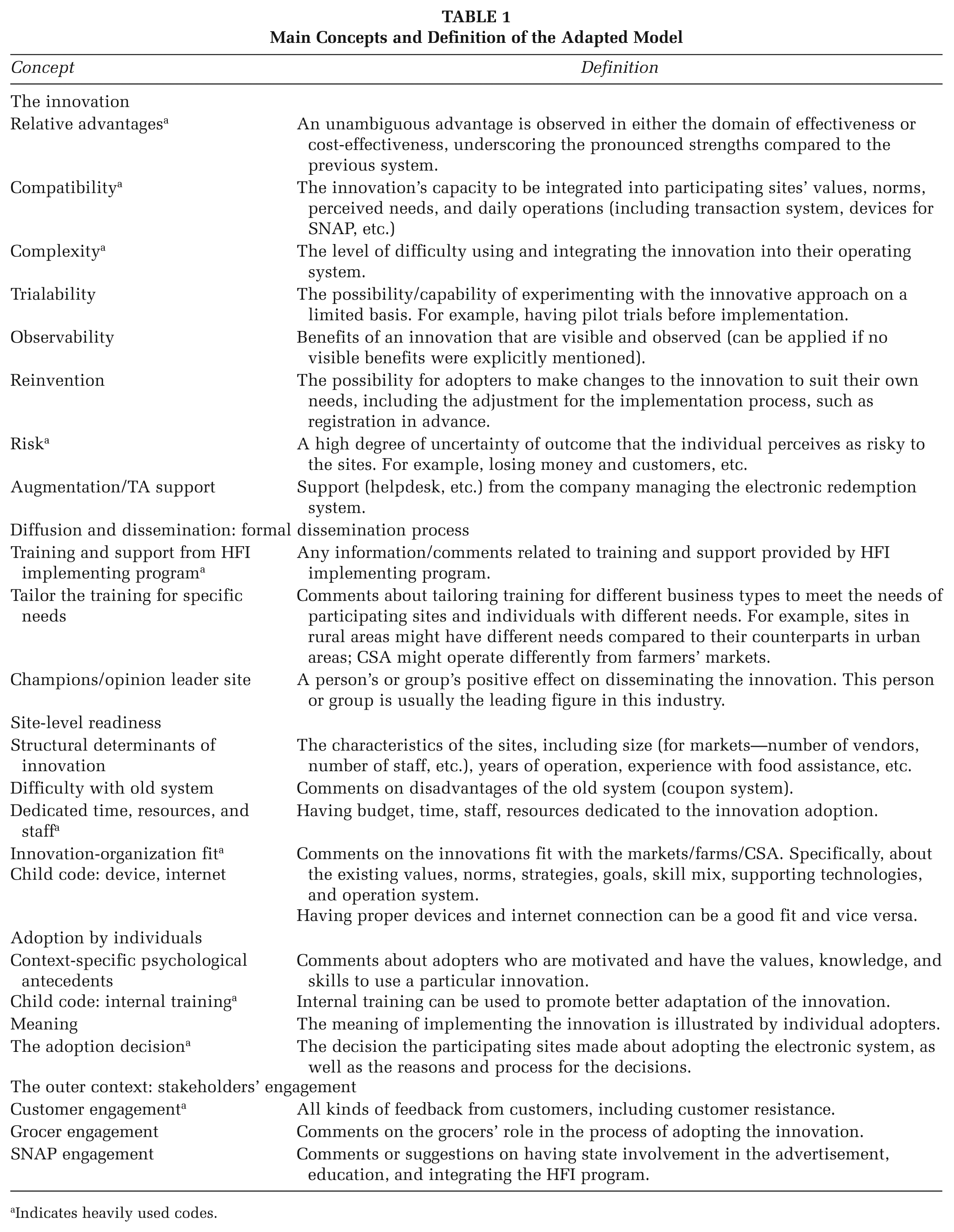
The evaluation team conducted qualitative interviews, focusing on the diffusion of new technology. We adopted five key concepts of Greenhalgh’s model that are most relevant in community settings and adapted the attributes of the key concepts to fit our specific study setting. Table 1 lists all the concepts used in the study. The interview guide was developed guided by the adapted model and was developed in cooperation with the organization that manages the HFI program to ensure questions were relevant and could be easily understood by interviewees. The interview guide included questions related to: (1) background information of the participating sites, including history and structure of the markets/farms/CSAs; (2) knowledge and acceptance of the ERS, including information about training and application of the system; and (3) barriers and facilitators to implementing the system. Each interview lasted 30 to 60 minutes, was audio recorded, and was later transcribed with consent from participants. No incentive was provided. The interviewer (RL) and the two additional coders (SNS & AA) had professional training in qualitative interviewing through bachelor’s or graduate training and had prior experience with interviews and data analysis.
Main Concepts and Definition of the Adapted Model
Indicates heavily used codes.
The University of Iowa Institutional Review Board determined this study was exempt from Institutional Review Board oversight.
Model Adaptation and Codebook Development
A codebook was generated using an iterative approach (Figure 1). The first draft of the codebook was developed based on Greenhalgh’s model. Two coders (RL & SNS) reviewed the codebook together, and the pilot tested two transcripts independently. After independently coding the transcripts, the two coders met and discussed modifying the codebook. The same two coders coded another transcript independently using the adapted codebook and modified the codebook. At this point, the codebook was finalized with achieved agreement. The finalized codebook included the following main thematic domains: innovation, adoption by individuals, site-level readiness, the outer context (stakeholders’ engagement), and formal dissemination process (Table 1).
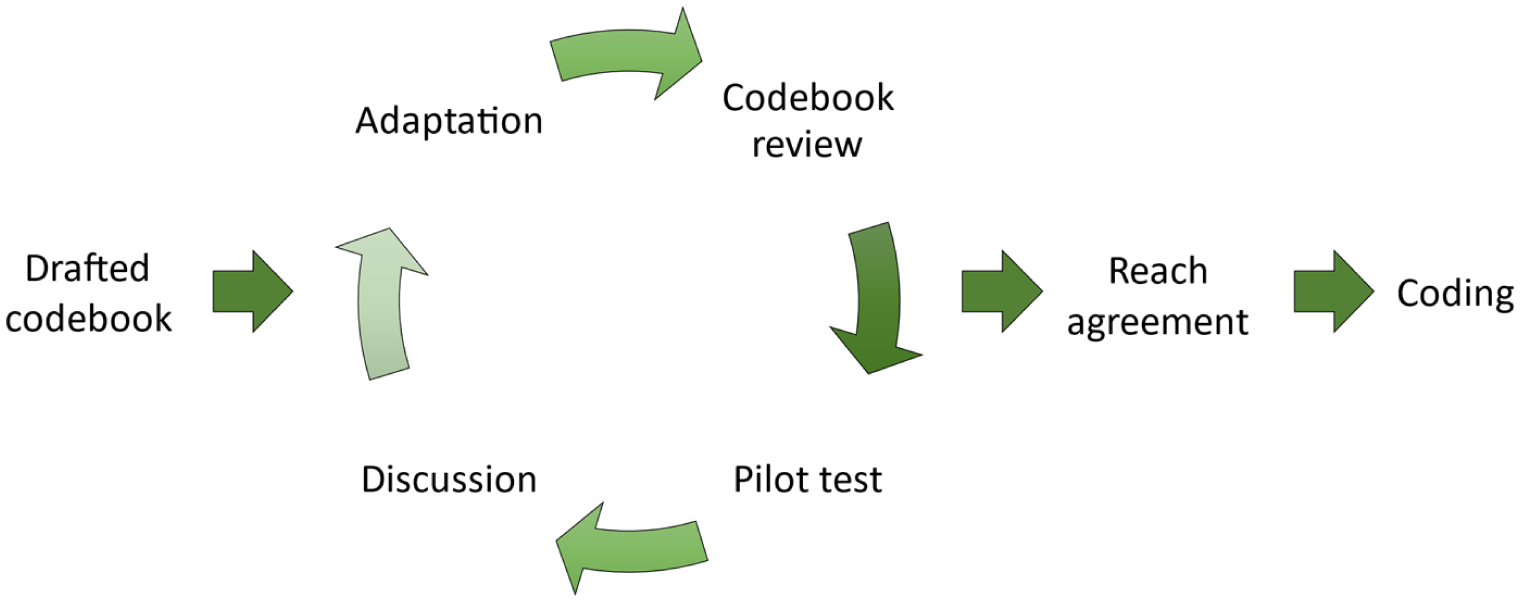
An Iterative Approach for Codebook Development
Analysis
All interviews were transcribed using a paid service from an artificial intelligence (AI) transcription tool immediately after the interviews. A member of the evaluation team (HS) conducted a quality check of the transcripts with word-to-word transcription. Using the finalized codebook, two coders (RL and SNS) coded six transcripts independently and had three meetings during the process to resolve discrepancies. A third coder (AA) reviewed differences that could not be resolved via initial discussion. Each of the two coders coded five more interviews independently. Data were coded using Dedoose (2021) Version 9.0.17 (Los Angeles, CA, USA), a commonly used tool for qualitative studies. It provides features for collaborating among multiple coders and documenting notes and comments from coders.
Results
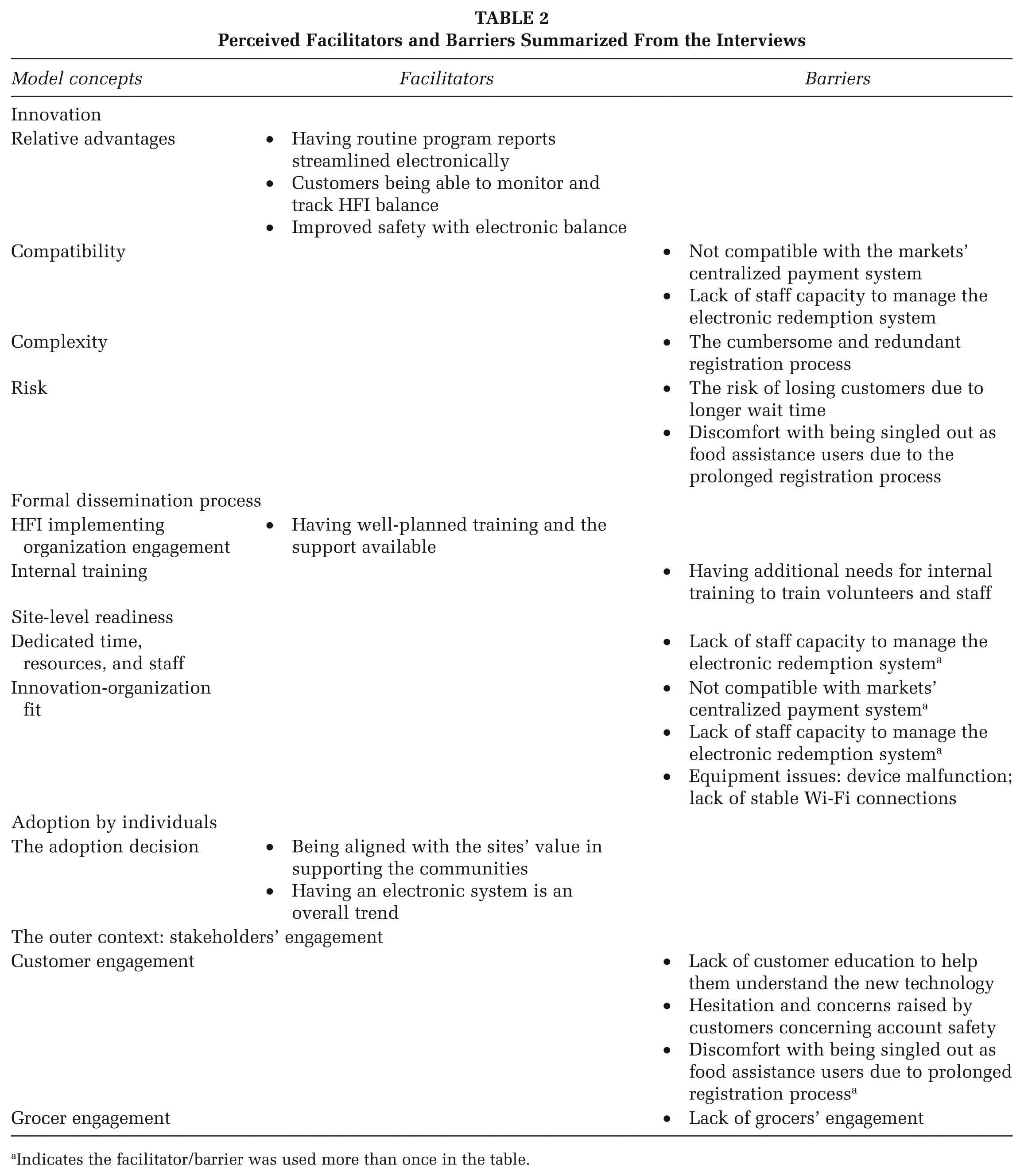
Our main findings are presented below, under the headings of the theoretical model, covering the dissemination process, ERS as the innovation, site-level readiness, the adoption decision, and the outer context (stakeholders’ engagement). For each aspect, the most mentioned themes are thoroughly discussed. A detailed description of the summary of perceived facilitators and barriers with specific language under each concept is included in Table 2.
Perceived Facilitators and Barriers Summarized From the Interviews
Indicates the facilitator/barrier was used more than once in the table.
Formal Dissemination Process
The implementation of the ERS is a planned process, with the HFI implementing organization being the primary entity to design and execute the dissemination. Group training, individualized support, and materials related to the ERS were provided to participating sites, and interviewed sites provided feedback that the materials shared were helpful.
Internal Training
The dissemination of information also depends on internal training at participating sites. Several sites indicated that they found internal training needs challenging and would require more resources that they can distribute directly to volunteers and new staff. As one participant noted,
The problem was, there was no, like, step by step guide I could hand a volunteer, like a paper guide that said, step one, click this app, step two, do this, step three. Like that would have been really helpful to have like a troubleshooting because they didn’t know what to do.
ERS as the Innovation
When discussing the ERS, five key attributes of the innovation were mainly discussed: relative advantages, compatibility, complexity, risk, and reinvention.
Relative Advantage
Interviewees identified three principal advantages of the ERS. First, programmatic reporting is notably streamlined compared to the previous system, as all transactions and data are electronically stored when the transactions are made. Participating sites do not have to count and document the coupons by hand as they used to with the paper-based system. The second advantage of the innovation is that customers can now monitor and track their balance electronically. Improved security is another benefit since customers do not have to worry about losing or damaging paper-based coupons.
Compatibility
The interviews reflect that, overall, the value of applying the ERS aligns with the participating sites’ commitment to supporting local communities.
Nevertheless, despite recognizing the value of the new system, participating sites faced compatibility issues with their existing business model. First, most FMs use tokens with a centralized payment system. Using the paper-based system, customers could make transactions directly with vendors at the market. In contrast, the electronic system adds an additional step, requiring customers to first obtain tokens using their HFI benefit cards before completing purchases at vendor locations. In addition, the ERS was perceived to require additional staff time and management for learning and maintenance. Interviewees stated that they had to go through two different systems to help customers sign up for the HFI cards and link HFI cards to the SNAP accounts since the HFI program is not integrated with the state SNAP system within the state studied. Staff also often need to explain the changes to the program and provide education on the app. All of these require additional staff time and internal training.
Complexity
While most sites found the app user-friendly, concerns were raised about the perceived complexity of the system, which could make adoption challenging among staff who are less comfortable with technology. Adopting the system was more than being able to use the app. Despite the perceived simplicity of the app itself, the sign-up process was criticized by interviewees as cumbersome and redundant. The sign-up process usually happens during the market season, and the additional steps to signing up make the process time-consuming.
Risk
The complexity of the sign-up process was perceived to contribute to longer waiting times for customers, sometimes exceeding 20 minutes during peak market seasons at larger FMs. FMs noted that this could risk losing customers, as some may walk away due to the extended waiting periods. Interviewees also pointed out that the prolonged sign-up process could make SNAP users feel uncomfortable, as they might be easily identified as recipients of food assistance.
Potential for Reinvention
To address the identified issues, several suggestions for reinvention were proposed. Suggested changes included pre-market season customer sign-ups to alleviate waiting times during peak periods; assigning dedicated staff, especially at sites with limited capacity; and exploring the integration of the electronic system with the state SNAP to allow for simultaneous processing of both ERS and SNAP transactions.
Site-Level Readiness
In general, an organization is more likely to adopt the innovation if they have adequate resources, and the innovation fits well with “their existing values, norms, strategies, goals, skill mix, supporting technologies” (Greenhalgh et al., 2004).
Dedicated Time, Resources, and Staff
The learning curve for adoption of the new system was perceived as steep, and some vendors might not be ready for it because of the lack of experienced staff and staff time. The adoption and implementation required time to acquaint oneself with the app and the registration process (also described in “complexity”). An interviewed staff mentioned that,
And then time to play around with it. Time to try it. Time to, you know, even make sure you’re there to show staff or volunteers how to use it, where to go. And it will take more than one time. And it will take more than, time than you think usually.
Although interviewees express a commitment to making the transition to an electronic system, a challenge was indicated in participating sites predominantly managed by volunteers, who often experience high turnover, making it challenging to have a dedicated person to manage the system.
Innovation-Organization Fit
The concept of “innovation-organization fit” frequently co-occurred with “compatibility,” “dedicated time, resources, and staff,” and “internal training.” Interviewees highlighted that the additional step introduced by the new ERS prevented them from adopting it, especially for FMs operating with a centralized payment system, as it was not seen as compatible with their existing system. Furthermore, some interviewees encountered issues related to device malfunctions during market seasons. Malfunctions led to repetitive steps, such as re-swiping cards or restarting the entire process. Interviewees also expressed concerns about internet connectivity and the need to purchase data plans.
The Adoption Decision
When asked about the decision to adopt the innovation, several interviewees mentioned that it was because technological innovation has the potential to increase program capacity to engage more participating sites, reaching more people in need. It was also indicated that the value of the new technology is meaningful because it can potentially attract more customers in need. However, the challenges and barriers identified previously also prevented some sites from starting the innovation.
The Outer Context: Stakeholders’ Engagement
External factors can also affect adoption decisions and the implementation of innovation. In this analysis, we focused on participating sites’ perception of the engagement of HFI customers and grocery stores in the innovation dissemination process.
Customer Engagement
Interviewees observed that customers had mixed reactions to the implementation of the ERS. In general, they noted that customers were hesitant or confused by the system, particularly the need to collect customer information to register for the new benefit cards. It was also noted that the lengthy registration process was a barrier to customer engagement in the program. One interviewee brought up that the need to swipe the customer’s EBT card twice led to concerns over the security of their funds. However, a few interviewed staff expressed that their customers generally appreciated the program.
Grocer Engagement
During interviews, staff noted that having local grocers participating in the ERS would be helpful in increasing awareness of the program among customers as well as improving customer opinion of the innovation by making the process consistent across markets, farms, CSAs, and grocers. One interviewee stated,
Our grocery stores also hadn’t gone to the card system yet. So, the farmers’ market was the only place they (customers) saw it. But I think it would have helped if the grocery store was also doing at the same time, because then it’s all consistent.
Discussion
Summary of Main Findings
Sixteen interviews were conducted with representatives from participating sites to evaluate the facilitators and barriers to adopting and implementing the ERS for the HFI program. Perceived facilitators, such as streamlined electronic program reports, the ability for customers to monitor and track their HFI balances, improved safety with electronic balances, and available training, were identified as factors that could increase program buy-in and improve sustainability. The perceived barriers included the cumbersome registration process, technological difficulties, longer customer wait-time, the risk of losing customers, insufficient capacity, incompatibility of the ERS with existing payment systems, the amount of ongoing work needed after the initiation due to high turnover, and lack of engagement from grocers. The identified barriers were mostly consistent with results from other technology adoption evaluations (Bai & Ciecierski, 2023; Sugarhood et al., 2014). Interviewees suggested pre-registration before the market season, assigning a dedicated person from the HFI program to each site for support, and collaborating with the state SNAP program to overcome these barriers. All feedback was synthesized and shared with the HFI implementing organization, and changes were incorporated into subsequent communications regarding the electronic system.
Implications for Practice
This study has demonstrated the feasibility and overall acceptance of an electronic system, as similar technology uptake programs showed (Bai & Ciecierski, 2023; Sugarhood et al., 2014). Programs aiming to incorporate electronic innovations should carefully consider the daily operational processes, user feedback, and existing capacities, as it is a multifaceted and collaborative task that involves multiple stakeholders. Flexibility should be built into program designs to allow for ongoing changes and adaptations, ensuring alignment with the unique needs of the organizations.
While we anticipate all identified barriers to be common across other HFI programs when integrating innovative electronic technology, we want to emphasize two aspects that we consider the most crucial. One prominent challenge identified was the perceived incompatibility of electronic payment systems with the centralized payment structures commonly used by FMs. Solutions like methods to streamline the process for customers could help. In addition, continued support is essential for transitioning from paper to electronic systems. Familiarizing staff with the new system through ongoing training can help them resolve issues more efficiently, subsequently reducing customers’ wait-time.
Researchers in implementation science should recognize the importance of facilitating continuous dialogue among program managers, participating sites, and stakeholders, fostering a responsive framework to enhance the successful dissemination of electronic interventions. In addition, utilizing timely evaluation and theoretical frameworks for content analysis to support behavioral adaptation and innovative implementation helps improve quality.
Strengths and Limitations
This study is, to our knowledge, the first to apply Greenhalgh’s diffusion of innovations model in a community-based study focusing on NIs. It demonstrates the feasibility of using this theoretical framework as guidance for program evaluation, covering all relevant aspects in the diffusion of innovation. This study highlights the critical role of timely evaluation throughout the dissemination of innovation and provides a guidebook for other community-based programs that hope to integrate technology innovation to follow. This collaborative and adaptive approach fosters ongoing conversations between program managers, participating sites, and stakeholders, establishing a responsive framework that supports successful dissemination.
The authors recognized the limitations of this study. First, for most of the interviews, only one person participated to represent the participating site, which can bias the results based on the information perceived by the interviewees. However, the staff interviewed were, in most cases, the managers of the participating sites, who usually have a better understanding of daily operation at the sites. In addition, classification challenges hindered a direct adopter/non-adopter comparison. For example, emerging FMs were willing to adopt, but a lack of HFI customer registrations or purchases made it impossible for them to use the technology, leading to complicated categorization. Finally, the adaptation process was not linear but complex. It was impossible to predict the process for any other program; what is presented here might not be able to be replicated in other settings.
Conclusion
This study underscores the importance of a multifaceted approach when evaluating the adoption and implementation of innovative technologies in community-based HFI programs. Key facilitators, including streamlined reporting, customer access to HFI balance tracking, and the provision of training, play a critical role and were identified. Meanwhile, addressing barriers such as the incompatibility of electronic systems with existing payment structures, training challenges, and the lack of staff and capacity can help mitigate the risks to successful implementation. Ensuring compatibility with payment systems, providing continuous hands-on support, and fostering collaboration with stakeholders are essential strategies for overcoming these obstacles.
The findings highlight the importance of timely evaluation processes, demonstrating the process of applying Greenhalgh’s diffusion of innovations model as a guiding framework for evaluating innovation dissemination in community-based programs.
Footnotes
Authors’ Note:
The authors wish to thank the Iowa Healthiest State Initiative staff for their support and involvement in the evaluation and the interviewees who participated in the evaluation process. The content is solely the responsibility of the authors and does not necessarily represent the official views of the Healthiest State Initiative or the University of Iowa. Rui Ling was affiliated with the University of Iowa National Resource Center for Family Centered Practice and the Center for Public Health Evaluation and Research at the time of the study and is currently affiliated with the Department of Population Health at NYU Grossman School of Medicine. Dr. Anne Abbott was affiliated with the University of Iowa National Resource Center for Family Centered Practice and the Center for Public Health Evaluation and Research at the time of the study and is currently affiliated with the School of Public and Population Health at Boise State University. Aryn McLaren was affiliated with the Iowa Healthiest State Initiative at the time of the study. The University of Iowa Institutional Review Board determined this study was exempt from Institutional Review Board oversight.
