







Abstract
Effective implementation of opioid preventive interventions for adolescents and young adults (AYAs) is necessary to address the ongoing opioid epidemic in the United States. In 2019, 10 research institutions and one coordinating center received funding from the National Institute of Health’s Helping to End Addiction Long-term (HEAL) initiative, under the “New Strategies to Prevent and Treat Opioid Addiction” Research Focus Area, to create the HEAL Prevention Cooperative (HPC). Each research team implemented an opioid preventive intervention for various AYA populations in different community settings. Five research teams addressed recruitment challenges over the course of their studies and created recruitment and engagement strategies that might be practical for future real-world/non-research implementations of opioid preventive interventions. To better understand these strategies, each of the research teams submitted written answers to a five-item qualitative survey probing for challenges and solutions. A rapid qualitative content analytic approach was employed. Three domains relevant to real-world practice were confirmed: (1) strategies to improve AYA reach and initial engagement in preventive interventions, (2) continuous engagement with community partners and AYAs, and (3) identification of AYA needs. This work has the potential to inform practice based on lessons learned for implementers to consider when developing or refining strategies to recruit AYAs into opioid preventive interventions.
Despite an overall decline in drug overdose deaths beginning in 2022 (Ahmad et al., 2025; Garnett & Miniño, 2024), the opioid epidemic remains a public health burden in the United States, particularly for adolescents and young adults (AYAs). Prior to more recent declining trends, the COVID-19 pandemic corresponded to a steep increase in years of life lost due to opioid use among young adults (Gomes et al., 2023). More recently, the surge in synthetic opioid use—primarily fentanyl—has driven a significant rise in overdose-related mortality among younger populations. In 2021, over 75% of adolescent overdose deaths were attributed to fentanyl (Friedman et al., 2021), and youths are more likely to unknowingly be exposed to fentanyl through non-medical use of laced counterfeit pills resembling pharmaceutical tablets (e.g., benzodiazepines, oxycodone; Friedman & Hadland, 2024). Co-occurring psychostimulant use, along with other polysubstance use among young adults, exacerbates overdose risk (Ciccarone, 2021). Although the overall death rate due to overdose (any drug) has declined across the United States, the psychostimulant death rate has declined at a slower rate than that for opioids (Ahmad et al., 2025). Thus, there continues to be a need to implement preventive interventions as rates of AYA use and mortality remain high.
Interventions to prevent opioid misuse in AYAs have the potential to further help curtail the opioid epidemic by providing strategies to mitigate risk early on, before long-term addictive behaviors have developed (Cance et al., 2023). Yet, community providers often face implementation challenges with recruiting and retaining AYAs in treatment (Marchand et al., 2023). In fact, in a recent study examining strategies to improve the delivery of opioid preventive interventions for AYAs, Marchand et al. (2023) reported the need for clearer pathways into and between services for AYAs, and that there is a lack of inter-organization collaboration to support AYA engagement in preventive interventions based on practitioner reports. A stronger understanding of how to improve pathways from reaching, recruiting, and engaging AYAs in opioid preventive intervention is necessary. This is particularly true for communities with less access to effective opioid preventive interventions (e.g., Danielson et al., 2023; Dickerson et al., 2021), where a disproportionate number of individuals experience adversity (e.g., housing instability, legal and/or social service system involvement, racial disparities). Methods for reaching AYAs who are at-risk for opioid misuse before the onset of these high-risk behaviors are essential. Yet, there is scant literature devoted to recruitment and retention strategies relevant to practice settings. Research teams that have learned how to address challenges with recruitment and engagement with opioid use preventive interventions can provide valuable insights for providers.
Background
In 2019, 10 research institutions and one coordinating center received funding from the National Institute of Health’s Helping to End Addiction Long-term (HEAL) initiative, under the “New Strategies to Prevent and Treat Opioid Addiction” Research Focus Area, to create the HEAL Prevention Cooperative (HPC). Each of the 10 institutions was funded to conduct a unique research project, but with shared features. All projects included AYA populations and were focused on preventing the initiation or escalation of opioid misuse. The research projects recruited AYAs into opioid preventive interventions, as both clients and research participants, in a variety of settings across the United States (Ridenour et al., 2023). The HPC launched shortly before the COVID-19 pandemic, and thus, recruitment and retention efforts took place during the peak of the pandemic, offering a unique opportunity to examine the strategies employed by these various projects under the most challenging recruitment environment.
Recruitment is an essential step for both research and real-world implementation efforts. Implementation frameworks, such as Exploration, Preparation, Implementation, and Sustainment (EPIS; Aarons et al., 2011; Moullin et al., 2019), highlight the importance of bridging factors in building and maintaining relationships necessary for program sustainment (Lengnick-Hall et al., 2021). Furthermore, measures of the implementation process that map onto the EPIS framework, such as the Stages of Implementation Completion ® (SIC), include discrete implementation activities that might support recruitment through partnerships (e.g., community partner meetings; Singh & Saldana, 2022). Interactions among community partners, providers, and the priority population are all critical for recruitment and referral. Although designed for research recruitment, many strategies employed by the HPC research teams might be applicable to providers who are striving to engage AYAs in preventive interventions in practice settings.
Five HPC project teams reflected on their experiences related to recruitment and retention of AYAs, age 16 to 30, through the lens of how this knowledge might benefit practice settings. While all programs were being tested in the context of a research trial, they were conducted in real-world settings with recruitment occurring in community environments. To gather reflections, HPC research project team members completed a brief five-item qualitative survey to provide insights on the salient strategies or activities, as well as barriers, used to recruit and retain AYAs into opioid preventive interventions over the course of implementation. The current paper offers a synthesis of these reports with findings grouped into three domains: (1) strategies to improve AYA reach and initial engagement in preventive interventions, (2) continuous engagement with partners and AYAs, and (3) identification of AYA needs. Furthermore, recommendations that community providers might consider when implementing programs with AYAs for opioid misuse prevention are shared.
Method
Each HEAL HPC research project team faced recruitment challenges over the course of their study and altered their recruitment approach. As described below, a rapid qualitative approach was utilized to uncover the strategies used by the research teams to improve recruitment efforts and to identify commonalities across teams. Then, to inform practice-based organizations of when, during implementation, such strategies might be considered, strategies were mapped onto the implementation process using the Stages of Implementation Completion (SIC; Saldana, 2014; Singh & Saldana, 2022) as a process framework.
Settings, Populations, and Interventions
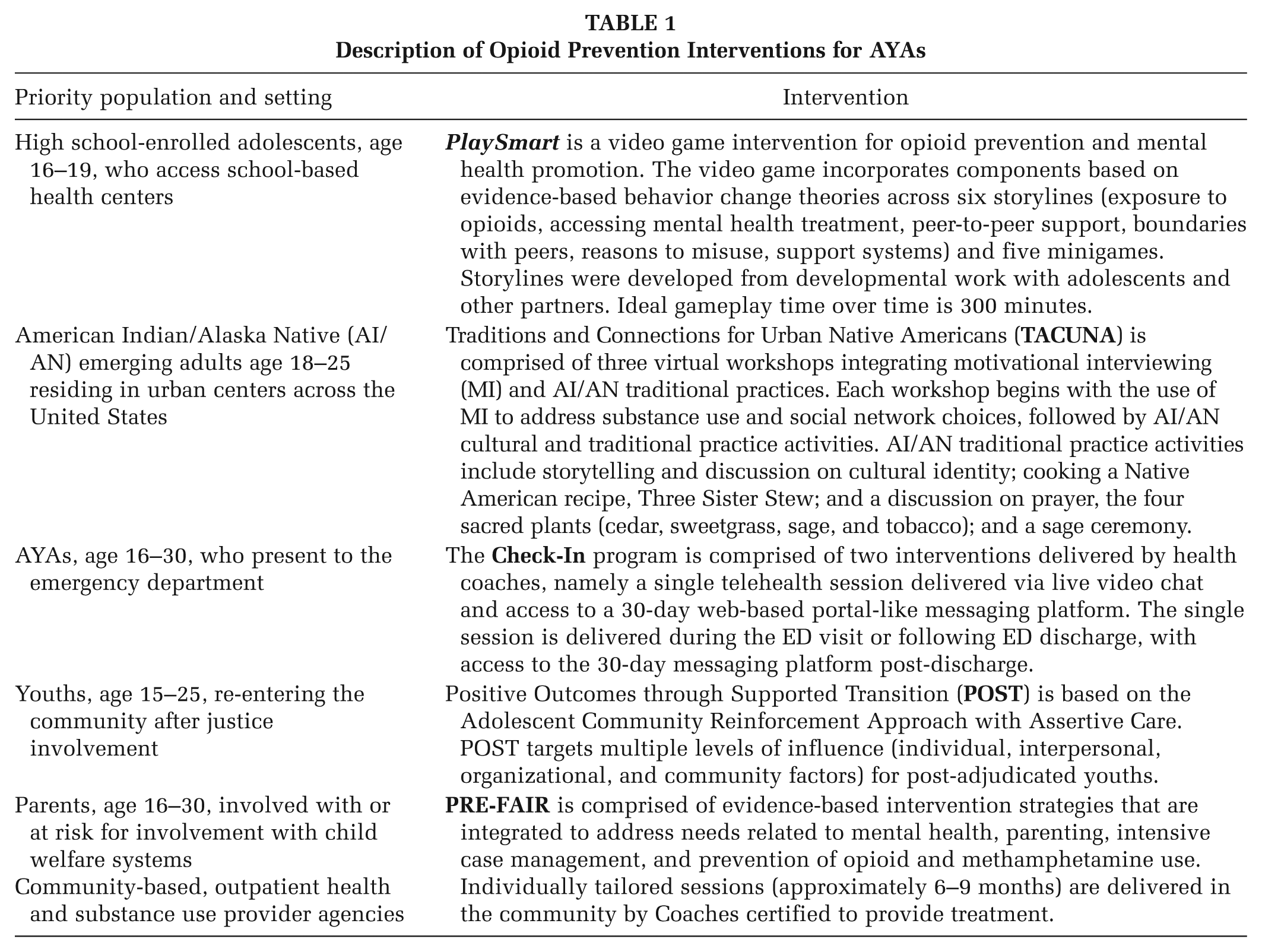
Table 1 provides a description of each project’s priority population, setting, and intervention, which represent diverse contexts in which recruitment efforts occurred. Ridenour et al. (2023) provide additional contextual descriptions and note that the diversity of the HPC research projects presents a useful opportunity to understand prevention-related challenges and offer solutions. The individual research projects included within this study received ethical approval from the Institution Review Boards from their home institutions. This included ethical considerations for working with youth under the age of 18, such as obtaining parent/guardian consent and youth assent.
Description of Opioid Prevention Interventions for AYAs
Data Collection
Throughout each respective study’s recruitment phase, challenges related to recruiting AYAs were discussed among the HPC steering committee, made up of study principal investigators, the coordinating center (i.e., Research Triangle Institute International), and the study sponsor (i.e., National Institute on Drug Abuse). These informal discussions led to more formalized meetings and the formation of a plan to disseminate identified recruitment challenges, strategies to address challenges, and recommendations for improving practices.
A brief five-item survey was developed to capture activities in the implementation process that were primed to address recruitment and retention. The survey was emailed to research project leads with a request to type responses to each item. Representative staff for each research project, including principal investigators, co-investigators, and other research staff who were proximal to recruitment and retention activities, completed and submitted one qualitative survey per research project, for a total of five surveys submitted. Discretion as to who participated in the process was left to each project’s principal investigator. Survey items included:
During recruitment, how do/did you create an initial connection with individuals from your priority population?
What are the top two strategies or actions taken that were most important to your success in recruiting individuals from your priority population?
What is one strategy or action that did not prove to be helpful? Or, was there a specific missed opportunity during recruitment of individuals from your priority population?
What are the top two strategies or actions taken that were most important in continuing to engage individuals from your priority population over the course of the intervention?
What is the top reason individuals from your priority population did not engage with the intervention over time?
Analysis
Data from each survey were analyzed using a rapid qualitative content analytic approach (Hamilton & Finley, 2019; Vears & Gillam, 2022). Coders reviewed responses from submitted surveys and followed up with additional questions to each research project team, dependent upon the depth and clarity of responses. Summary templates for each project were created of the domains established to reflect a priori interests, including common strategies utilized for reaching and recruiting AYAs, common strategies for keeping AYAs engaged, and adaptations to recruitment strategies based on learning more about AYA needs as each study progressed. Survey responses for all five projects were coded separately by two coders (authors RRS and JJ) to abstract relevant information into each summary template. Coders worked together to review summaries to achieve full agreement on data input and interpretation within each domain. A third coder offered further insight and helped resolve any coder discrepancies. As part of this process, extracted data were coded to determine if challenges, opportunities, and strategies to overcome challenges were relevant to real-world practice. Data within each summary were combined into a single matrix to synthesize recruitment and engagement challenges, opportunities, and strategies employed by teams, across the projects. From this matrix, coders worked together to identify themes within each domain to inform generalized considerations for recruiting and engaging AYAs in opioid preventive interventions.
Mapping Recruitment Strategies to the Implementation Process
Identified recruitment strategies were mapped along the SIC implementation process model (Saldana, 2014; Singh & Saldana, 2022) to identify specific recommendations for where in the implementation process providers might best benefit from replicating research recruitment strategies. The SIC defines eight stages of the implementation process that have been found to be necessary to move interventions into practice, including strategies to develop and maintain strong recruitment and referral pathways (Saldana, 2014; Singh & Saldana, 2022).
Results
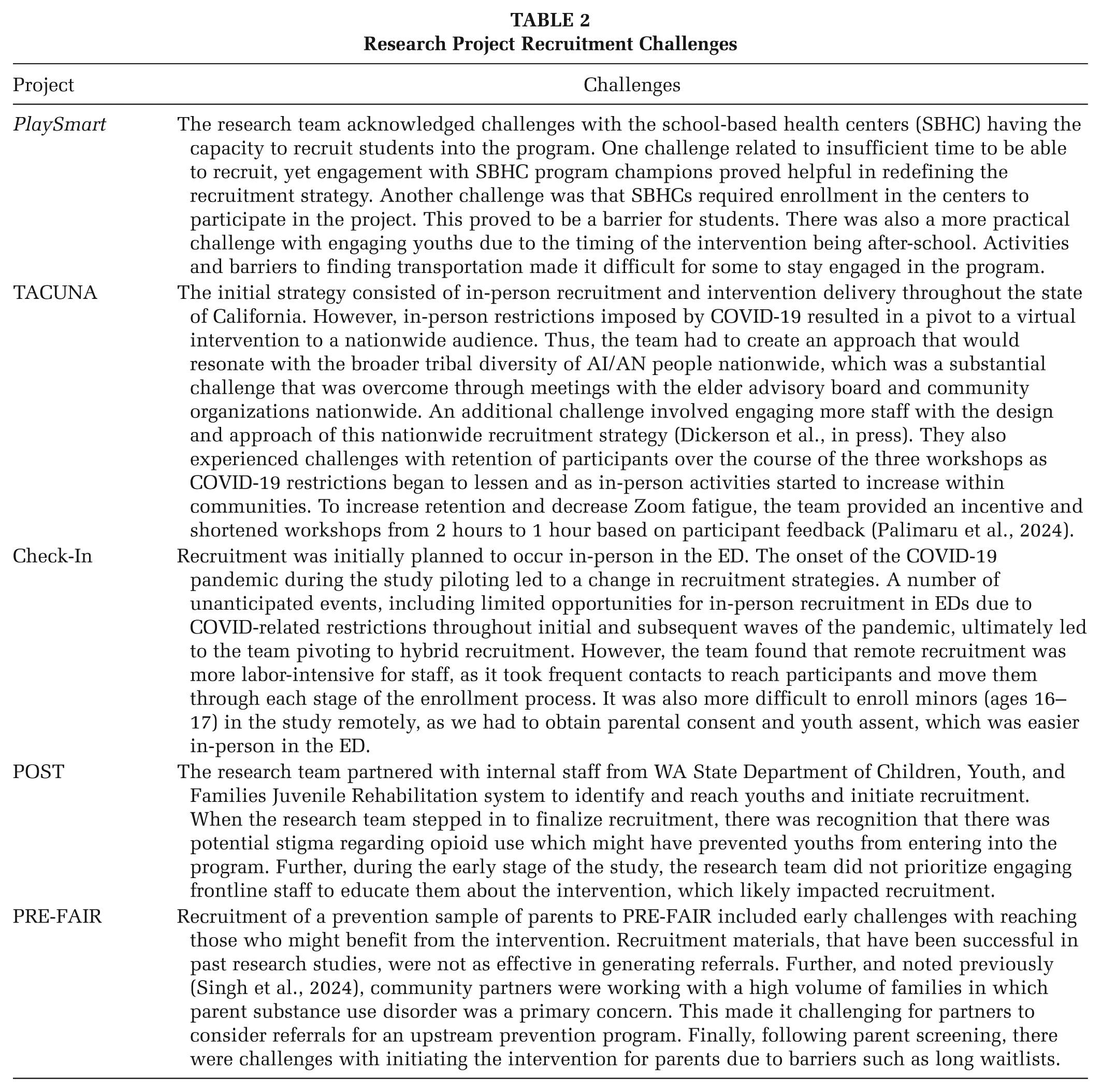
From the responses, domains were confirmed and emergent themes were identified. The combination of domains and themes captured strategies used to reach and recruit AYAs (Domain 1), strategies for continued engagement (Domain 2), and common adaptive strategies of engagement as projects better understood their AYA priority populations (Domain 3). Table 2 reports challenges experienced by each of the projects and the collective strategies across the three domains that were employed in response to these challenges.
Research Project Recruitment Challenges
Domain 1: Strategies to Improve AYA Reach and Initial Engagement in Preventive Interventions
Theme: Use of Different Messaging Strategies to Reach AYAs
Central to all five research projects, multiple messaging avenues were utilized to reach AYAs. Providing new information about a program seemed to be most successful when projects were able to reach AYAs directly, whether online or in-person. Research projects developed recruitment materials that included printed flyers, posters, business cards, brochures, and digital material including websites and social media advertisements. Furthermore, the PlaySmart, Check-In, POST, and PRE-FAIR projects also relied on in-person opportunities to share information about the program directly to the priority population. PlaySmart, a school-based intervention, leveraged opportunities that fit within normal school activities to engage with youths and share information about the program (e.g., presentations during lunch periods, in classrooms, and after-school activities, such as school clubs and sporting events). The Check-In program utilized opportunities to engage with youths in emergency departments, when possible.
Due to the projects occurring during the COVID-19 pandemic, there also were opportunities to capture strategies used when there were in-person restrictions. Social media advertisements were found to be highly effective in reaching various AYAs. TACUNA, an intervention that was originally designed for face-to-face delivery to American Indians/Alaskan Natives (AI/AN) within the state of California who reside in urban settings, was adapted to web-based delivery providing an opportunity to expand the reach of their program using social media recruitment and intervention delivery across the United States resulting in a more representative sample of AI/AN emerging adults (Dickerson et al., in press). PRE-FAIR pivoted to simple, creative messaging on social media with a range of graphic types to reach young parents, which then were linked via a QR code to a survey to request more information. This connected young parents to the program screener/recruiter who provided a personal connection by phone to describe the program, resulting in a substantial uptick in self-referrals. In both examples, leveraging social media, an online space in which AYAs spend considerable time, was a key recruitment strategy.
Another advantage to using a social media advertising approach is having a metric that is built into social media platforms to track the performance of an advertisement. The TACUNA project, for example, monitored how frequently people clicked on their advertisements. Monitoring clicks gave the team the ability to keep advertisements running on social media when clicks were higher, and to take down advertisements when clicks were low. The approach also proved helpful when utilizing more focused advertisements for male AYAs, a group who were underrepresented in the TACUNA study sample. In adapting advertisements and monitoring metrics along the way, the team was able to increase reach to male youths.
Related to online efforts, a credible website was found to help with legitimizing the program (and the associated research study). The Check-In and PRE-FAIR projects developed recruitment materials that linked back to the website (e.g., QR codes), which enabled potential participants to learn more about the program and might have helped to create legitimacy and initial trust in the program. Check-In developed recruitment messages that included a link for participants to provide consent and immediately be directed to complete the screening survey, thereby providing a seamless avenue for youth to receive project information and move closer to the point of program initiation. PRE-FAIR linked the program website to a request for more information, similar to the project’s social media approach described above.
Theme: Focus Messaging on the Benefits of Getting Involved With Interventions
Finally, as recruitment proceeded, three projects (Check-In, POST, PRE-FAIR) shifted messaging away from language related to opioid use prevention to improve initial engagement. The projects changed messaging to focus on benefits of the program that might be more appealing to AYAs. The Check-In project pivoted to focus on other related concerns that might be relevant to the participant (e.g., health, pain management, social support/leisure activities). POST altered recruitment messaging away from opioid use language and incorporated language related to the benefits of the preventive intervention including receipt of coaching and case management as youths transition out of secure detention. The research team also changed the meaning of the project acronym (POST) from “Preventing Opioids through Successful Transition” to “Positive Outcomes through Supported Transitions” to move away from stigmatizing language. PRE-FAIR took a similar approach in adapting recruitment materials and placing emphasis on the components of the intervention that might relate more to young parents’ perceptions of need (e.g., parenting support, access to an incentive “store,” mental health, basic needs). Focusing on other areas of interest to the population (e.g., health) was a purposeful strategy to overcome barriers that might have resulted from stigma around opioid use.
Domain 2: Continuous Engagement With Partners and AYAs
Theme: Continuous Engagement With Community Partners Can Help With Recruiting AYAs
Opioid prevention programs for AYAs should consider who, external to the program practice, can become partners to support recruitment. Partners who already work with AYAs might be positioned to initiate recruitment into opioid prevention programs (e.g., referral). Engaging partnering organizations, particularly those working most proximal to the priority population, was a strategy employed by four of the research projects (PlaySmart, Check-In, POST, PRE-FAIR). Across the four projects, one common observation was that it took many attempts to engage partners to achieve program buy-in, and subsequently, for partners to take action in supporting recruitment efforts such as helping to identify those who might be a good fit for a preventive program or making referrals on behalf of AYAs. For example, POST relied on engaging partners with recurring meetings within the Juvenile Justice system at all levels, from leadership to frontline workers who provide direct support to potential participants. The project team noted during the initial phase of the project that increased engagement of frontline staff was critical to improve buy-in and support for POST. PRE-FAIR took a similar approach by meeting with child welfare and self-sufficiency system staff regularly to share information about the program and problem-solve with partners to ensure young parents were given information about the program and referred. A second observation was that a feedback loop of program participant success to partners helped to reinforce that the program can be effective. This led to more steady identification and recruitment flow from partners to the program as experienced by the project team.
Theme: Continuous Engagement With AYAs Can Impact Intervention Initiation
The transition from initial recruitment to engaging in services of a program is an important, yet often challenging step. There were four research project teams (PlaySmart, Check-In, POST, PRE-FAIR) that acknowledged that it was important for representatives of the prevention program to have direct and frequent contact with individuals recruited to the program. The PlaySmart program utilized a multi-step recruitment process that involved both school-aged youths and their parents/guardians. From recruitment to enrollment, research staff messaged youths with reminders to sign research participation forms and instructions on how to transition to enrollment. Research staff also had contact with parents. This consistent messaging was vital to ensuring recruitment success. Check-In used multiple messaging strategies and frequent contact to transition participants from recruitment to receipt of services. POST found success when there was a high level of contact between the program delivery staff and participants throughout their journey in the program (i.e., both in the juvenile detention setting and after the participant transitioned out of that setting and into the community). For parents who screened into the PRE-FAIR program, the project screener utilized a warm hand-off approach with the program provider agency supervisor across study sites. This ensured a connection was made between participants and the program and allowed for engagement opportunities to the point of clinical intake.
Domain 3: Identification of AYA Needs
Theme: Adapting to Current Needs Helps Maintain Steady Recruitment
Multiple teams reported that they changed their strategies based on the needs of the priority population. For example, TACUNA recognized that as their recruitment effort expanded across the nation, there was a need to utilize knowledge from their elder advisory board and community partners to increase reach to urban AI/AN emerging adults nationally. PRE-FAIR recognized that local child welfare systems were experiencing a heavy burden due to a high influx of young parents living with opioid use disorder into the system, which inhibited the system’s focus on primary prevention. Thus, the research team helped the agencies delivering the preventive intervention to also offer downstream intervention to address their direct need, which strengthened partnerships with the referring system. Furthermore, shifting to more direct recruitment strategies using social media and local community event opportunities for dissemination of materials, PRE-FAIR was able to meet recruitment goals for the prevention program. Thus, relying on partners to help with recruitment efforts can be highly beneficial (described in Domain 2), but sometimes it might be necessary to shift strategies when recruitment challenges arise.
Mapping Recruitment Strategies to the Implementation Process
Stage 3, of the eight-staged SIC implementation model, focuses on the readiness process, including recruitment and retention. Though projects established initial recruitment strategies at this readiness stage, all projects required ongoing effort, flexibility, and innovation throughout the entire implementation process to maintain recruitment for sample size achievement. Projects evaluated reach the priority population and are successful in moving AYAs to the point of initiating intervention, sometimes requiring a shift in strategy. Engagement with community partners and AYAs helped projects learn more about the priority population’s needs to adjust recruitment approaches. These findings indicate that developing successful recruitment strategies took time and were not linear. Rather, all projects monitored recruitment, reflected, and then adapted protocols (some multiple times) to overcome recruitment challenges over the course of implementation.
Discussion
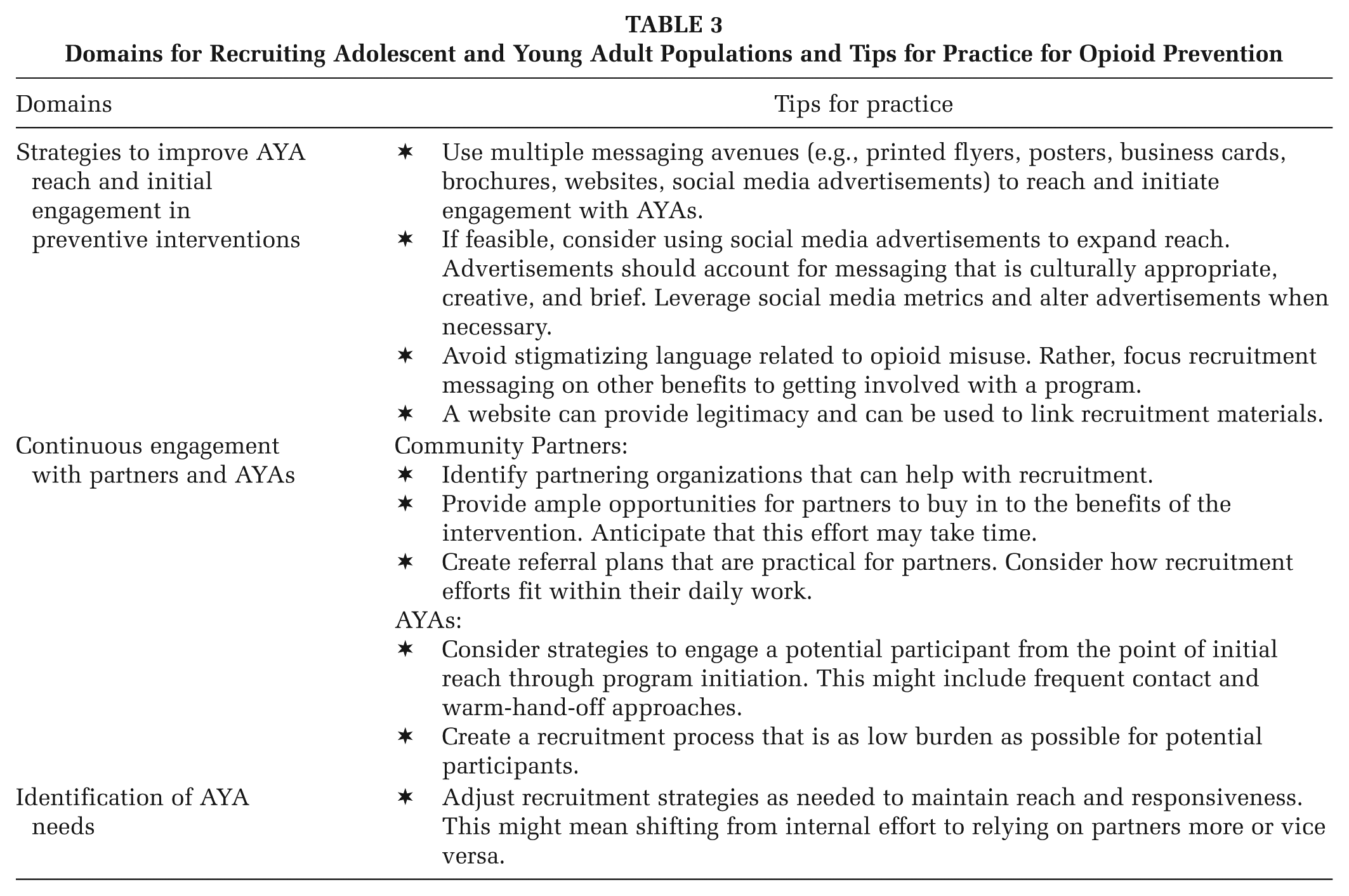
This collaborative effort across five of the HPC research projects was a timely opportunity to identify recruitment and enrollment challenges and report on practical strategies for recruitment across a range of AYA populations and settings. Though each research project experienced recruitment-related challenges, the ability of each to adapt recruitment strategies and successfully meet recruitment goals is a testament to the utility of this shared knowledge. Based on this work and related to the domains and their associated themes described above, Table 3 presents recruitment tips that might be beneficial for real-world practitioners implementing preventive interventions. Recruitment tips are representative of discrete implementation-related activities that might be best enacted during the earliest phases of the implementation process when putting an opioid preventive intervention into practice. Furthermore, discussions about the need for ongoing recruitment strategies and refinements over the course of the implementation process should be expected as new programs prepare for implementation. In fact, pre-implementation process fidelity has been linked to a higher probability of referrals making it to the point of intervention initiation and programs to the point of sustainment (Alley et al., 2023). Figure 1 serves as a visual of practical guidance based off this formative work.
Domains for Recruiting Adolescent and Young Adult Populations and Tips for Practice for Opioid Prevention
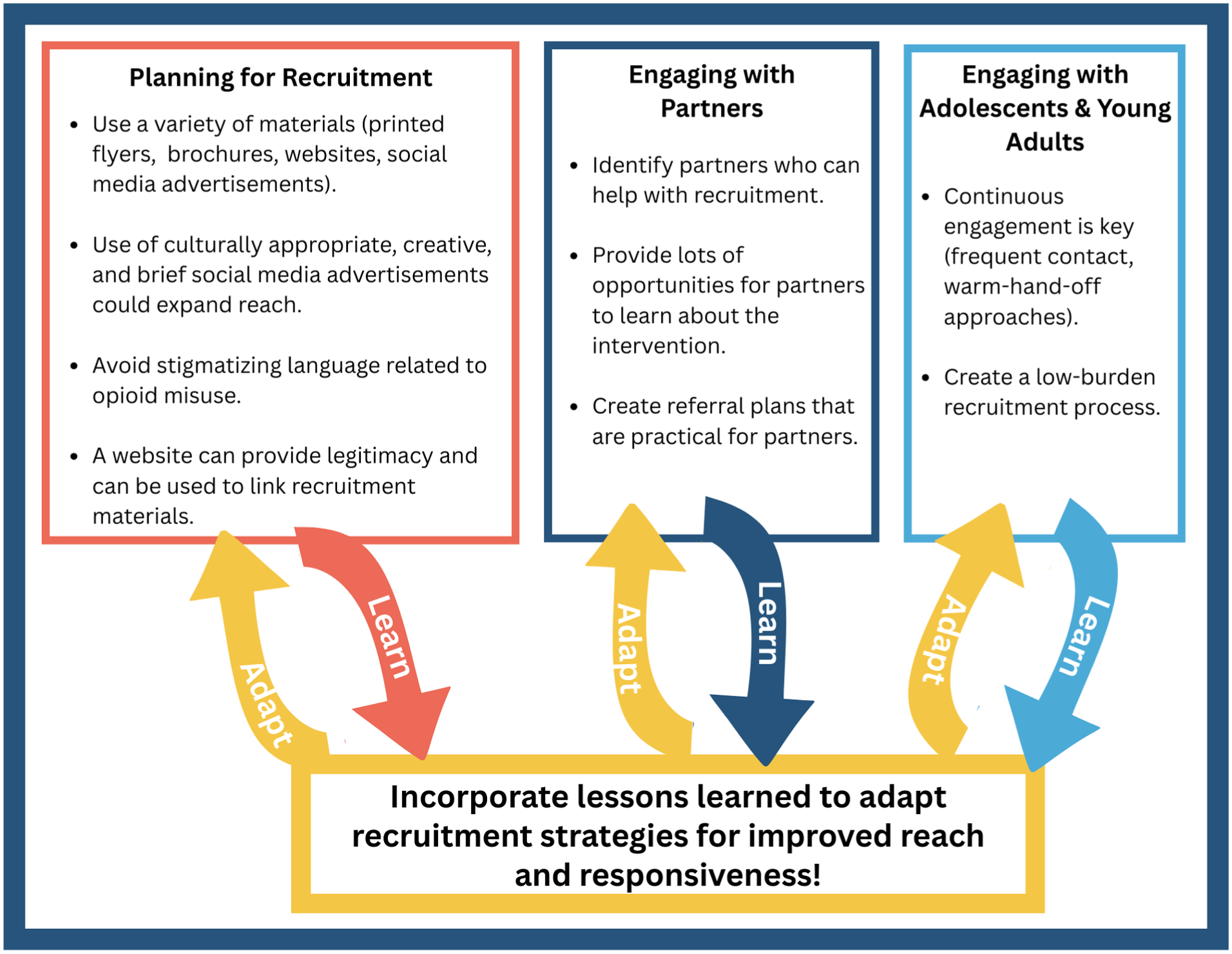
Practical Guidance for Recruitment of Adolescents and Young Adults Into Opioid Preventive Interventions
Reaching, Recruiting, and Engaging AYAs in Opioid Prevention Interventions
The use of advertising on social media can be an effective way to reach and capture the attention of many AYAs. Advertising on social media engages AYAs in digital spaces where they are often the most active and interacting with advertisements. Recruitment through social media might be a more effective strategy to create initial engagement compared to more traditional approaches (e.g., posting physical flyer copies). Social media recruitment planning with attentiveness to equity and cultural relevance can impact the ability to reach and engage with marginalized AYA populations in opioid preventive intervention, as demonstrated by the TACUNA project’s effort to incorporate ads specified to capture the attention of male AI/AN AYAs.
Social media recruitment could be strategized as the first step to engaging AYAs. Yet, engaging AYAs from viewing a social media post to the point of initiating participation in a preventive intervention and beyond is an additional challenge. Based on strategies used by different research projects described above, it might be advantageous to create a seamless, low-burden connection between social media advertisements (i.e., reach) and program initiation.
Although advertising on social media has been an effective strategy for some of the research projects, advertising can be costly and not feasible for real-world practice. If there are financial barriers to using social media, it is possible to integrate recruitment materials with a website. Website domains are common across community organizations. It might be advantageous to link recruitment materials to a website (e.g., use of QR codes) to legitimize the program and provide a digital space for AYAs to learn more about programs they could access.
It is well established that younger populations experience stigma as a barrier to seeking and/or initiating substance use treatment (National Academies of Sciences, Engineering, and Medicine, 2016), yet there is a lack of research on stigma as a barrier to engaging in opioid preventive interventions for AYAs. Results demonstrate that substance use stigma is a potential barrier to recruiting AYAs into opioid prevention interventions. For this study, project teams that observed potential recruitment challenges due to stigma found that a shift in focus to other components of the program was an effective approach to engaging AYAs who might be at higher risk for opioid misuse. Ballard et al. (2024) identified risk factors (e.g., trauma, emotional neglect) and positive assets (e.g., self-care, community building) associated with opioid misuse in young adults that align with the type of issues that each research project adapted to and focused their messaging on for recruitment. It is possible that AYAs who exhibit higher risk factors for opioid misuse might not recognize their level of risk and therefore do not seek out “opioid prevention” resources. Rather, they are more inclined to engage (e.g., click on a social media advertisement) when messaging relates to gaining something positive in their life rather than addressing risk factors that they might not even recognize they have. To this end, the PRE-FAIR program found that short, simple messaging related to parenting support—whether on social media or on printed materials—increased interest from young parents as indicated by the substantial rise in recruitment following recruitment material adaptations (Singh et al., 2024).
Opioid prevention programs for AYAs should consider who, external to the program, can become partners to support recruitment. Partners who already work with AYAs might be positioned to initiate recruitment into opioid prevention programs (e.g., referral). Engagement with external partners over time is a bridging factor (Lengnick-Hall et al., 2021) identified as being critical for recruitment success. Ongoing engagement is an important consideration, as it often takes considerable effort to transition an individual from the point of referral to intervention initiation. Although it is important to educate partners on a new implementation effort, it might take extensive collaboration with partners to establish a recruitment plan that works and is feasible for partners. In parallel, ongoing engagement with AYAs is critical. Yoon et al. (2021) reported a similar recommendation when recruiting parents involved in the child welfare system—a similar study population to the PRE-FAIR project—noting that multiple contacts during recruitment were necessary for many parents recruited into their study.
Finally, as the needs of communities, service settings, and the AYAs who might benefit from preventive intervention became increasingly clear, materials and strategies were refined for optimal reach and successful recruitment. In practice, an ability to be nimble in response to any changes in context that can affect reach and recruitment is key to ongoing success in getting AYAs into opioid prevention programs.
Limitations
This study represents perspectives from five different research teams, representing a small sample to draw from. Based on the small number of project reports, findings are meant to generate hypotheses. The timeliness of a rapid approach was an opportunity to harness the wealth of experiential knowledge across the five research projects and members of the research teams and disseminate practical findings as a step toward informing the field and practice-based settings on considerations for recruiting AYAs into opioid preventive interventions. However, there is potential bias in research teams retrospectively reporting on their recruitment efforts, and it is possible that implementers find additional or alternative recruitment strategies effective that were not captured in this study in the future. Furthermore, though each project occurred in real-world settings, support and decision-making processes from each research team might limit generalizability to settings in which there is a lack of external support for implementing interventions. Lastly, this study does not include the perspectives of AYAs who participated in the five research studies. Inclusion of AYA voices might provide additional insight and strengthen the findings.
Implications for Practice
Recruitment of AYAs into opioid preventive interventions can be challenging. There is a need for guidance on how to optimize recruitment efforts to expand reach and successfully engage AYAs who are at elevated risk for opioid initiation or escalation. The experiences across the five research projects include numerous approaches to reaching, recruiting, and engaging AYAs in opioid prevention programs. Developing recruitment strategies that include effective messaging, leveraging partnerships, being responsive to the changing context of the recruitment landscape, considering equitable recruitment, and having a willingness to adapt approaches over time can lead to successful recruitment.
The shared recruitment experiences across five research projects working in diverse settings with different AYA populations offer formative consideration for future efforts to recruit and engage AYAs in opioid prevention. As implementation of such programs are rolled out, implementers within practice-based settings might find utility in the lessons learned across this group of projects (Table 3). Further, as practitioners adopt preventive interventions, the strategies used across these projects might assist those operating in the real world to establish a recruitment plan that is feasible and practical to reach the intended AYA population (Figure 1) and produce a community impact with the prevention of opioid use disorders.
Footnotes
Authors’ Note:
The authors declared the following potential conflicts of interest with respect to the research, authorship, and/or publication of this article: The FAIR program is trademarked by the Oregon Social Learning Center. PRE-FAIR is an adaptation of FAIR. The authors disclosed receipt of the following financial support for the research, authorship, and/or publication of this article: This research was supported by the National Institutes of Health through the NIH HEAL Initiative under award numbers UH3 DA050193 (PI Saldana), UH3 DA050235 (PIs D’Amico & Dickerson), UH3 DA050173 (PIs Walton & Bonar), UH3 DA050251 (PI Fiellin), and UH3 DA050189 (PIs Ahrens & Haggerty).
