






Abstract
This article examines the use of photovoice as an engaging method in mental health promotion to focus on environmental and structural factors affecting mental health and well-being. The approach aligns with the socioecological model, which considers multiple levels of influence on mental health, including individual, interpersonal, community, and societal factors. The photovoice method empowers participants to capture and communicate their experiences and perspectives on mental health to others through photography. The participatory nature of the method may shift the focus from individual-level factors to broader contextual influences. In this article, examples of photovoice applied in mental health promotion are presented through three case studies: 1) photovoice as a way to engage people in the Act–Belong–Commit campaign in Western Australia; 2) photovoice in nursing education focusing on community assets for mental health in Spain; and 3) photovoice focusing on students’ perspectives on mental health–promoting resources in a university setting in Denmark. The examples show that photovoice can be used in various settings, empowering participants and contributing to the development and implementation of mental health promotion initiatives, capacity building, and research projects. The article discusses implications of using the photovoice methodology in examining mental health and informing mental health promotion practices and research.
Introduction
Mental health – encompassing both positive mental health and well-being – is a growing priority in public health research and practice (International Union for Health Promotion and Education [IUHPE], 2021). As mental health challenges rise globally, there is increasing recognition of the need for mental health promotion (MHP) and prevention strategies that extend beyond individual level interventions to include environmental and systemic factors. The socioecological model, developed by Bronfenbrenner (1979), provides a comprehensive framework for understanding how mental health is shaped by influences at the individual, interpersonal, community, and societal levels (Golden & Wendel, 2020). By considering and addressing multiple levels, interventions can be more holistic and effective in promoting mental health (M. M. Barry, 2019).
Photovoice is a participatory method that enables individuals to express their lived experiences through photography and dialogue (Evans-Agnew & Strack, 2022). Originally developed to amplify the voices of marginalized groups (Wang & Burris, 1997), it is a flexible and context-sensitive approach well suited to both research and practice in MHP. For an in-depth description of photovoice, please refer to the special issue in this journal (Evans-Agnew & Strack, 2022).
Based on our experiences with photovoice within MHP, we suggest that this participatory approach can lead to a deeper understanding of factors that promote or hinder good mental health at different socioecological levels. Furthermore, it can inform the development and implementation of more effective and contextually relevant MHP initiatives, strategies, and research projects. This is illustrated by three case studies from Western Australia, Spain, and Denmark.
Case Study 1: Act–Belong–Commit – Photovoice as a Way to Engage People in Examining Mental Health in Western Australia
Background and Objectives
Act–Belong–Commit (ABC) is a population-wide, community-based MHP initiative using a social franchising approach supported by mass and tailored media. The campaign prioritizes individuals with respect to engaging in activities that strengthen and maintain good mental health, and at the same time, it encourages organizations that offer mentally healthy activities to act as social franchises for the campaign, promoting the messages internally to their staff and/or externally to their clients or local communities (Donovan et al., 2021).
In Western Australia, it is implemented through partnerships with local governments, schools, workplaces, health services, state government departments, community organizations, and local sporting and recreational clubs. The campaign encourages people to be active (physically, mentally, socially, spiritually) in ways that foster a sense of belonging and involve commitments that provide meaning and purpose in life (Anwar-McHenry & Donovan, 2019).
Before launching statewide in 2008, the campaign underwent a 2-year pilot in six regional towns in Western Australia. Photovoice played a major role in the pilot as a method to engage community members and to gather their insights on what activities and resources they considered beneficial for their own mental health, and hence to inform the development of tools and strategies for the subsequent statewide implementation. Photovoice was chosen for this phase primarily for its ability to gain insights into an area that many people found difficult to articulate but also because it served as a very good example of ‘acting, belonging and committing’ for one’s mental health. That is, participation involved being mentally, socially, and for some, physically active (Act); interacting with other community members to share the stories behind their pictures increased belonging (Belong); and committing to participation and achieving their photovoice goals contributed to increased meaning and purpose in their lives (Commit). Photovoice continued to be utilized by various partner organizations, mainly larger organizations interested in civic engagement (i.e., local governments, schools, and for specific target audiences and behaviors such as volunteering).
Methods
Most photovoice projects – particularly the early ones – prioritized specific socio-demographic groups and involved one or more of the following elements: (a) free lessons in photography for participants; (b) participants gathering photos on activities, scenes, events and situations they considered contributed to their (and others’) mental health; (c) participants coming together to explain to other participants, community people and ABC staff members how the content/context of their photos related positively to mental health; (d) a set of judges or public voting when a ‘competition’ was included (e.g., a ‘People’s Award’ for a popular choice); (e) a public exhibition of all photographs; and (f) promotion and explanation of the ABC message at all events and in media releases.
Outcomes and Impacts
The photographs captured a wide range of images and activities, from nature scenes, community events and volunteer work to personal hobbies and social gatherings. By capturing and sharing their experiences, participants became more aware of what constitutes good mental health and the resources and activities that support their mental health. The workshops, photo lesson sessions and group discussions provided participants an opportunity to develop a dialogue exploring their thoughts and feelings about mental health and to share these with their family, friends and the community. Photovoice was particularly important for fostering social connection, especially among culturally diverse groups such as First Nations youth and new migrants, by helping them feel more included in the wider community. Public exhibitions provided participants with the opportunity to discuss their photographs and engage with community attendees about the messages in the photographs.
Impact measures included the numbers of participants engaged in the project, the numbers attending public exhibitions, and self-reported impact on the mental health literacy and behaviors of participants, particularly on feelings of inclusion in the community among groups such as young people, First Nations people, migrant youth and adults, and persons in general who previously felt somewhat isolated within their communities. For example, in two towns in one regional area, both general groups and specific cultural groups were involved in a project that included 24 workshops, attracted 132 competition entries, and resulted in displays of entries at a number of well-attended public events (such as sporting events), resulting in around one-third of the approximately 16,000 population engaging with the project in some way. Other beneficial outcomes included several community organizations expanding their offerings to include activities they now realized had a positive impact on mental health, and new groups being formed or revived to continue photo activities as they realized that photovoice was not just a leisure activity, but one that provided the opportunity to explore more meaningful topics in depth.
Case Study 2: Building Capacity for MHP Within a Nursing Curriculum in Spain
Background and Objectives
Despite previous national and international experiences of including photovoice as a pedagogical tool within mental health nursing curriculum (J. Barry et al., 2021), initiatives focusing on MHP capacity building of nursing students remain scarce in Spain. As part of an innovative pedagogical initiative at the University of Navarra, a community mental health project was integrated into a third-year undergraduate nursing curriculum within the subject: Community Mental Health. This project was designed to prepare students as future ‘mental health brokers’ throughout enhancing awareness of the social and structural determinants of mental health and fostering the students’ role as future health care professionals in promoting mental health from a community-based approach and focus on a universal population level.
Methods
Grounded in the ABC framework (see Case Study 1), students engaged in mental health resources (assets) mapping through the photovoice method, identifying and documenting local environmental, social, and cultural resources that influence mental health, with attention to health inequalities, inclusion, and accessibility.
A total of 138 students were divided into 17 groups, each exploring a neighborhood in Pamplona in Spain. Through collaborative fieldwork, they photographed and analyzed resources such as green areas, community centers, and spaces for creative or spiritual engagement. Competencies (knowledge, attitude, and skills) related to MHP were assessed as part of the final subject examination linked to this project: Community Mental Health. In addition, a thematic analysis was applied to qualitative data from an online anonymous survey with three open-ended questions (relevance, acceptability, and clinical impact) distributed among the participants at the end of the course. Photovoice findings were presented through selected images and narratives, culminating in a 3-day public exhibition within the university campus, showing how the project extended beyond classroom activities (see Figure 1).
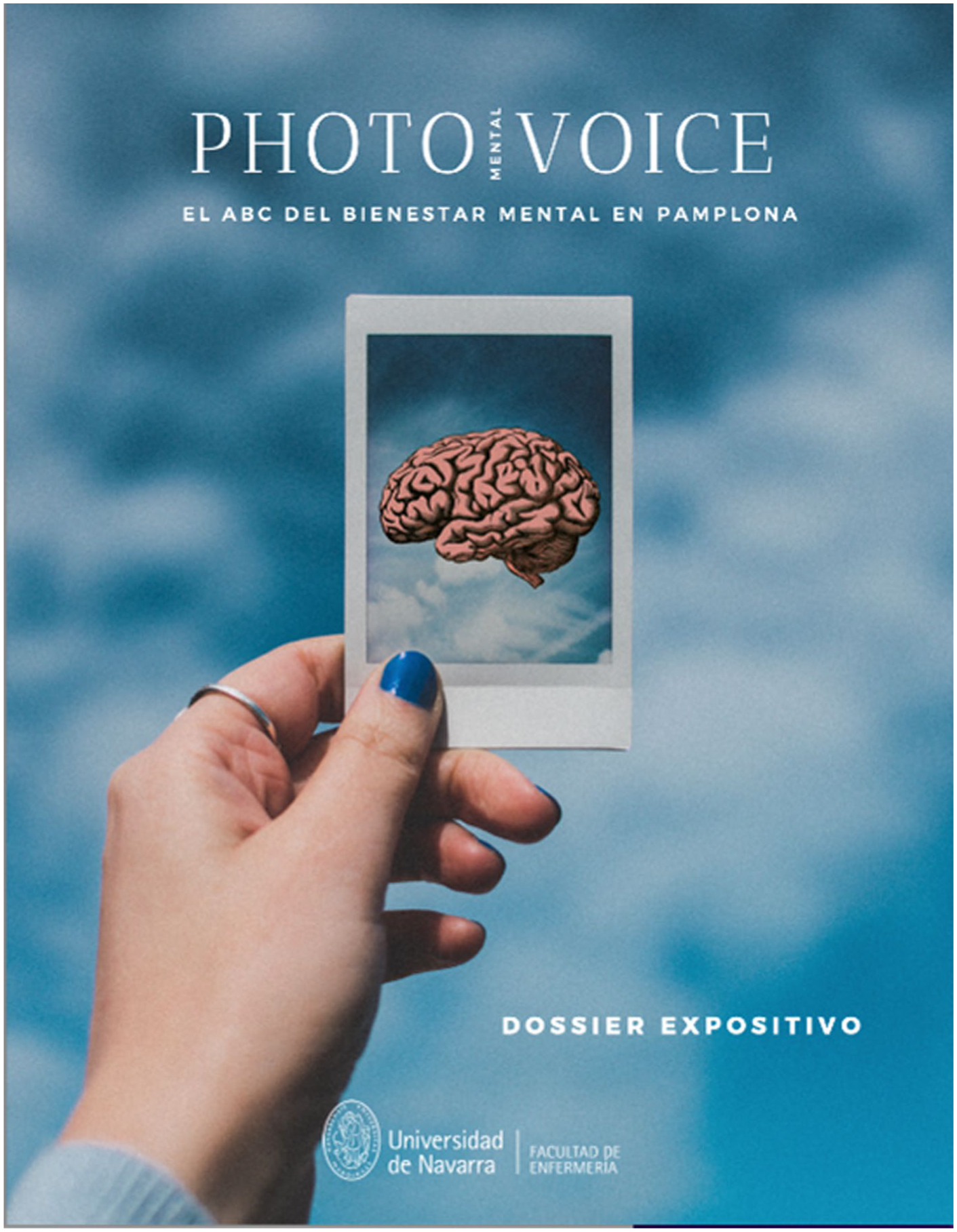
The advertisement for the photovoice exhibition based on mental health promotiong assets mapping conducted by nursing students in Pamplona in Spain.
Outcomes and Impacts
Results from the final examination as well as the thematic analysis of the experiences using the photovoice method suggested that this method fostered critical thinking and social awareness, increasing nursing students’ understanding of mental health and their competences to effectively promote mental health in community contexts. This is in line with previous studies using photovoice within nursing curriculum (Andina-Díaz et al., 2022). A thematic analysis on post-project reflections from 113 students revealed five core areas of how this initiative impacted students’ experience and learning: (a) enhanced mental health literacy and awareness of community-based resources; (b) adoption of a shared language via the ABC model; (c) increased motivation to promote mental health; (d) recognition of the importance of cross-sector collaboration (e.g., primary care services, municipalities, and social centers); and (e) empowerment to advocate for mental health in their professional futures. Their responses demonstrated that photovoice broadened their understanding of mental health and appreciation for asset-based, community-oriented strategies.
Case Study 3: Students’ Perspectives on MHP Resources in a University Setting in Denmark
Background and Objectives
Prior photovoice studies have explored mental health among university students more broadly, including work with college students living with mental illness (Skoy & Werremeyer, 2019) and music majors experiencing mental health challenges (Zalman, 2024). These studies illustrate the broader landscape in which photovoice has been used to understand student mental health experiences. However, despite this body of work, little attention has been given to how photovoice can be applied specifically within a MHP framework, or how students themselves conceptualize MHP resources embedded in their everyday campus environments. This case study addresses that gap by using photovoice to explore university students’ perspectives on mental health and mental health promoting resources (MHPR) that they find important for enhancing mental health on campus (Nielsen et al., 2024). The research project was conducted at the University of Copenhagen in Denmark, with university students participating as co-researchers. The photovoice study was part of a multi-level intervention to promote mental health among university students, called the ABCs of mental health at the university (Nielsen et al., 2024) utilizing the ABC framework (see Case Study 1). To our knowledge, this study is the first to apply photovoice specifically to explore university students’ perspectives on MHPR within a university campus and explicitly grounded in a MHP framework, thereby extending the use of photovoice from exploring mental health challenges to illuminating the conditions that actively promote mental health.
Methods
Using the photovoice methodology and guided by a series of three workshops, students took photos of what they perceived as MHPR at campus and provided these with titles and captions (see Figure 2). For a detailed description on the intervention context, please refer to Nielsen et al. (2024).
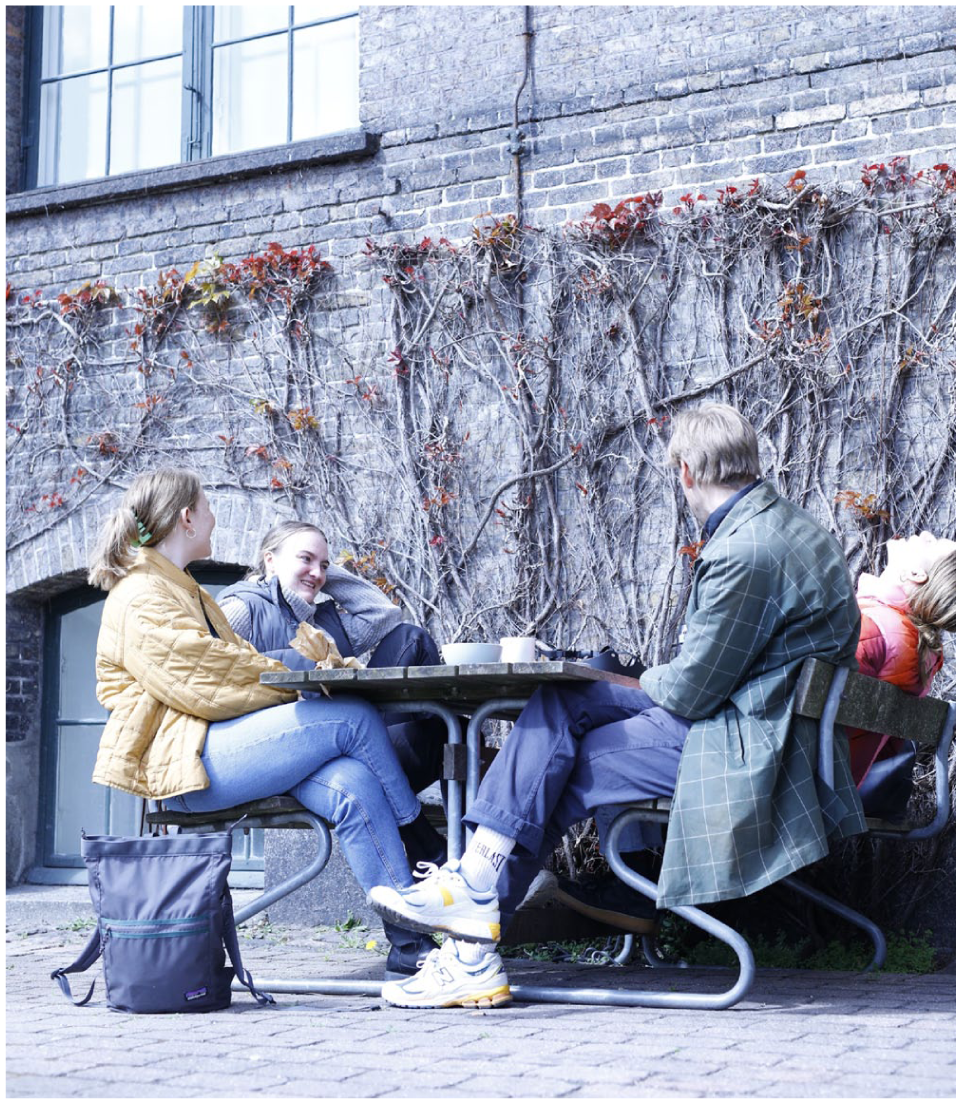
Example of a photo taken by students showing an outdoor seating area perceived as a mental health promoting resource as it provides space for social connection and relaxation on campus.
Outcomes and Impacts
A collaborative thematic analysis of the photographs – and their accompanying titles and captions – taken and selected by students, was conducted by the researchers together with three student co-researchers. Three main themes were identified: recreation, togetherness, and hominess. An overarching theme of belongingness emerged as central across all identified MHPR. Rather than merely demonstrating photovoice’s established strengths in documenting lived experience and raising awareness (Wang & Burris, 1997), this study contributes specifically to MHP by illustrating how students perceive and articulate environmental, social, and structural resources as promotive of mental health within a university setting. The findings highlight how concrete campus spaces and practices can function as assets aligned with the ABC framework, thereby extending photovoice’s application from general mental health inquiry toward a more explicit MHP orientation.
In addition, the outdoor exhibition served not only as a dissemination tool but also as an MHP intervention in itself: It made environmental resources visible to the broader campus community, encouraged dialogue about everyday promotive practices, and fostered recognition of shared needs for connection, place, and belonging. Through this dual function – both generating empirical knowledge and actively promoting awareness of supportive environments – this case study demonstrates how photovoice can be intentionally leveraged within an MHP framework to strengthen community-level understanding, well-being literacy, and engagement with available resources.
Lessons Learned Across Cases
An analysis across the three cases revealed five common elements: (a) Active and experiential learning: Besides facilitating a deeper understanding of MHPR, the photovoice method also encouraged participants to reflect on their own experiences and perspectives about social determinants of mental health; (b) Empowerment: Across the cases, participants described gaining awareness and a deeper understanding of the resources in their surroundings that support mental health, as well as an ability to articulate what contributes to their own well-being. This illustrates forms of agency that are connected to the aims of MHP; (c) Raising awareness about mental health and strengthening well-being literacy: Photovoice helped raise mental health awareness by engaging participants and sharing findings with communities and stakeholders. Public photo exhibitions encouraged dialogue and reflection, enhancing well-being literacy among participants, as well as among audiences; (d) Building capacity for MHP: The process of participating in these projects helped build capacity among participants. Whether they were citizens, future health care professionals, or students, the experiences from the case studies indicate increased knowledge and competencies for MHP. Finally, (e) Asset-mapping: Focusing on resources or assets in local environments helped participants identify and utilize existing resources for MHP and increased their awareness of resources that might be lacking.
Implications for Practice
These three case studies show that photovoice is a flexible and adaptable method for examining mental health that can be applied across diverse settings and scaled to fit different contexts. It offers an approach for translating MHP into practice and strengthening participants’ mental health understanding and competencies. By fostering dialogue and reflection (e.g., Case 2 and 3), photovoice can support social change and enhance the reach and impact of MHP initiatives particularly regarding community engagement, dissemination, and influence on policy and practice (e.g., Case 1).
Photovoice can be especially valuable in engaging groups who may find it difficult to articulate their experiences verbally. For instance, young people and migrant groups might be reluctant to speak directly about their mental health, but discussing a photograph can shift the focus away from the individual and toward their environment. In this way, photographs become a lens through which participants explore and share what matters most in their lived context.
If an exhibition is planned, it may require providing participants with training and guidance in photography, which can also function as an incentive to participate. In addition, it is important to be mindful that some participants might select the most artistic photos, potentially overlooking important insights found in less visually appealing images. Furthermore, it is also crucial to make it possible for participants to represent conditions that highlight gaps or areas for improvement.
Although we acknowledge that advocacy is also a core component of the photovoice approach, the three cases did not include structured, policy-focused advocacy activities, as they primarily focused on learning, awareness, and participant engagement. Participants’ perspectives were disseminated through public exhibitions, which gave them a voice and served as an indirect form of advocacy for MHP. Future work could benefit from measuring change and empowerment as a result of the exhibitions and integrating more explicit opportunities for engagement with policymakers in the pursuit of MHP actions across sectors.
Implications for MHP Research
Using photovoice can be a way to move beyond the individual level in the socioecological model as it can enhance the understanding of assets and resources in the environment, structures, and norms and determinants that affect mental health (Case 1, 2, and 3).
It is an accessible method for conducting participatory research that can enrich the knowledge base around MHP by capturing lived experiences (e.g., Case 1) and community perspectives on mental health (e.g., Case 2 and 3) that can be overlooked in traditional research approaches.
At the same time, the method may contribute to shifting the researcher’s gaze and engagement toward co-creation processes around empirical material and analysis. To make the most of the methodology, working with co-researchers requires an inclusive, collaborative, and power-sensitive environment that can foster democratic discussions.
Conclusion
Based on our experiences across different settings and countries, we argue that the application of photovoice as a participatory method in MHP can build individuals’ understanding of mental health, support reflection and dialogue, and enhance their capacity to engage in MHP practices. The three case studies suggest that photovoice can enrich and strengthen MHP initiatives through participatory and context-specific insights and support research projects grounded in lived experiences and co-creation.
Footnotes
Acknowledgements
We would like to acknowledge Elena Bermejo-Martins for introducing the idea of the photovoice project and university exhibition to the Danish research group (LN, CSM, CBM, VJK, and MKN). We also wish to thank Betina Bang Sørensen for inspiring the use of photographs in one of our initial qualitative studies exploring lay people’s perspectives on mental health in Denmark. We extend our sincere gratitude to the participants in the three case studies for their valuable contributions. The participants’ insights and engagement were crucial to the motivation behind writing this paper. Finally, we also wish to thank the students who acted as co-researchers in the Danish case.
ORCID iDs

Funding
The authors disclosed receipt of the following financial support for the research, authorship, and/or publication of this article: This study was partially funded by the Faculty of Social Sciences at the University of Copenhagen (no grant number available).
Declaration of Conflicting Interests
The authors declared no potential conflicts of interest with respect to the research, authorship, and/or publication of this article.