






Abstract
Keywords
Introduction
Thoracoabdominal aortic aneurysm (TAAA) repair remains challenging, and open repair is associated with high morbidity and mortality even in the elective setting. 1 Development of endovascular treatment modalities, such as fenestrated and branched endovascular aneurysm repair (f/br-EVAR), have provided less invasive methods of treating these complex aneurysms. The implementation of fenestrated and branched endografts has been widely accepted based on the lower perioperative morbidity and mortality than conventional repair, with good mid- and long-term results.2–5 However, a major limitation of the fenestrated and branched devices is the need for customization that can take up to 12 weeks. This excludes the treatment of patients with symptomatic and ruptured TAAAs who have to be repaired urgently. This delay also exposes asymptomatic patients waiting for the device to the risk of aortic rupture.
To overcome this limitation, a standardized off-the-shelf multibranched stent-graft, the t-Branch (Cook Medical, Bloomington, IN, USA), has been manufactured as an alternative for high-risk patients and for use in urgent cases. Based on the Zenith f/br-EVAR platform (Cook Medical), the off-the-shelf t-Branch with its 4 fixed branches has been commercially available in Europe since 2012 and had already been assessed in elective TAAA repair.6,7 However, its effectiveness in urgent cases is limited.8,9 This retrospective study assessed the perioperative and short-term outcomes of urgent endovascular TAAA repair using the t-Branch and also evaluated the learning curve and its influence on outcomes.
Methods
Study Design
A retrospective review was undertaken of all consecutive patients treated for TAAA using the t-Branch device in urgent settings, defined as the presence of pain or peripheral embolization, contained rupture, or TAAA diameter >80 mm regardless of symptom status (high risk of rupture or acute dissection9–11). Anatomical inclusion and exclusion criteria for the t-Branch have been described extensively elsewhere.12,13 Urgent TAAA patients not meeting the anatomical requirements were treated with a surgeon-modified endograft or a hybrid or open repair. Patients receiving the t-Branch device or family members gave written informed consent to the procedure. No institutional review board approval was necessary for this retrospective study.
Demographic data, past medical history, cardiovascular risk factors, comorbidities, perioperative details, and data from 1-month follow-up were extracted from the electronic medical records. The Crawford classification was used to categorize pathology and the extent of the aneurysm. Since the present study includes the learning curve with the t-Branch off-the-shelf device, outcomes were compared between the initial 2-year experience (2014–2015) and the subsequent 2-year experience (2016–2017), as well as between patients whose aortic anatomy complied with the instructions for use (IFU) of the t-Branch device vs those whose target vessel anatomy did not correspond to the IFU.12,13
Patient Population
Between January 2014 and June 2017, 42 TAAA patients (mean age 73.3±7 years; 26 men) underwent urgent endovascular repair using the t-Branch endograft. The American Society of Anesthesiologists classification of physical status was class III (19/42, 45%) or IV (24/42, 57%). The demographics, cardiovascular risk factors, and other comorbidities are listed in Table 1. The indication for urgent repair was symptomatic status in 18 (44%) patients (1 chronic type B aortic dissection), contained rupture in 12 (28%), and TAAA diameter >80 mm in 12 (1 type B aortic dissection). The mean TAAA diameter was 77.7±13.2 mm. Based on the Crawford classification, the TAAAs were categorized as 2 (5%) type I, 14 (33%) type II, 8 (19%) type III, 13 (31%) type IV, and 5 (12%) type V. There were 155 targeted visceral vessels (Table 2); 6 celiac trunks and 5 renal arteries were occluded at presentation, while 2 patients had a single functioning kidney.
Characteristics of Patients Treated Within or Outside the Instructions for Use. a
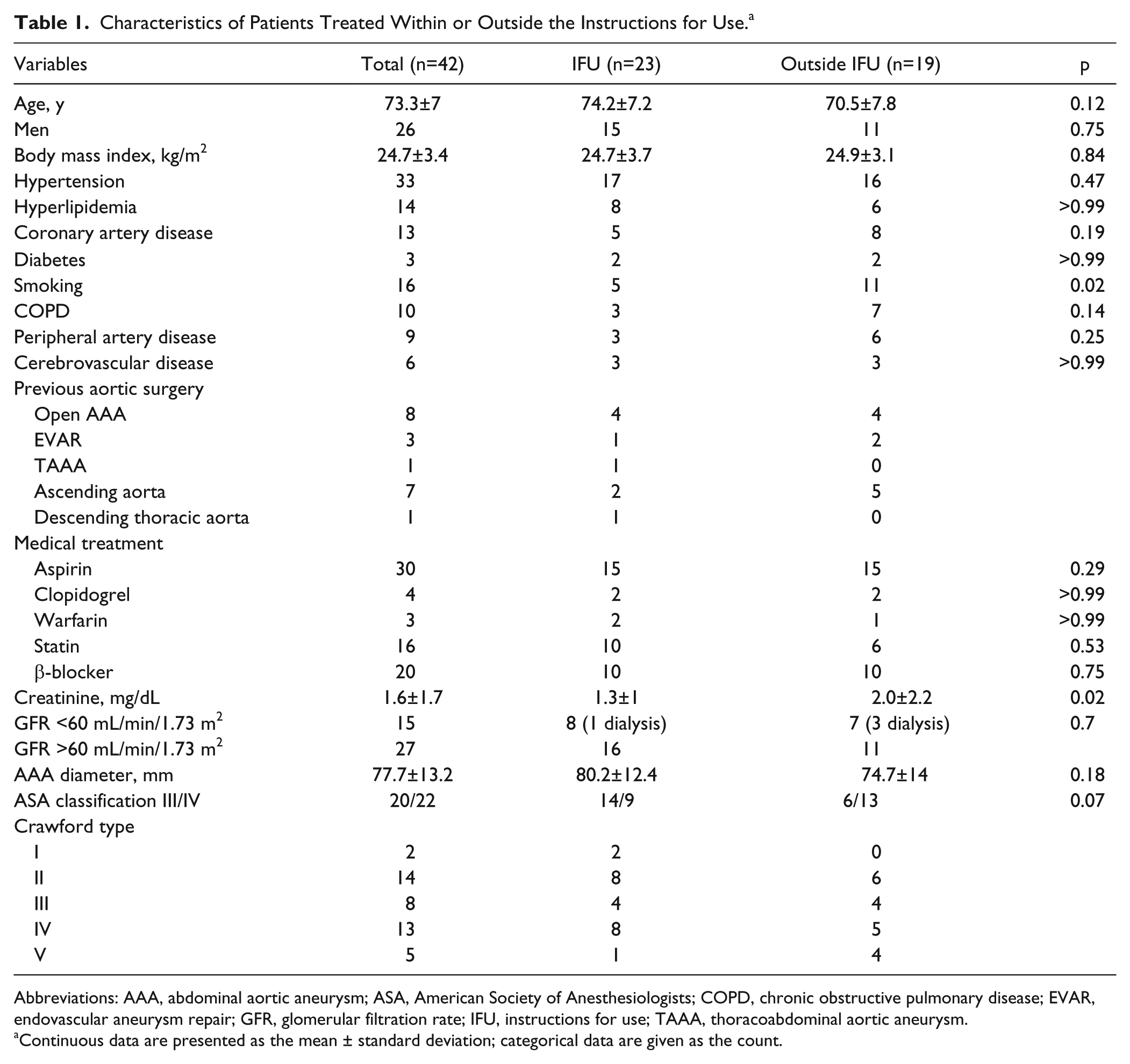
Abbreviations: AAA, abdominal aortic aneurysm; ASA, American Society of Anesthesiologists; COPD, chronic obstructive pulmonary disease; EVAR, endovascular aneurysm repair; GFR, glomerular filtration rate; IFU, instructions for use; TAAA, thoracoabdominal aortic aneurysm.
Continuous data are presented as the mean ± standard deviation; categorical data are given as the count.
Aortic and Visceral Artery Diameters and Branches Used in the Procedures. a

Abbreviations: SMA, superior mesenteric artery.
Continuous data are presented as the means ± standard deviation; categorical data are given as the counts/sample.
Six occluded, 1 not catheterized, and 1 left open.
Four occluded and 1 no right kidney.
One occluded, 1 no left kidney, and 2 not catheterized.
Of the 42 cases, 19 (45%) patients did not meet the standard inclusion criteria for a t-Branch (9 with a stenotic/occluded target vessel, 9 with <25-mm diameter in the target vessel area, and 1 with both), while 23 (55%) were treated according to the IFU (Table 1). Eighteen (43%) patients were treated from 2014 to 2015, while 24 (67%) were treated in the more recent years.
Procedure
TAAA repair was performed in a dedicated hybrid operating room. The preference in our center is to complete the endoskeleton of the main aortic stent-grafts from the top to bottom before proceeding with stent-grafting of the side branches. 14 Each branch with its corresponding artery was catheterized, wired, and stented with self-expanding stent-grafts [Viabahn (W. L. Gore & Associates, Flagstaff, AZ, USA); Fluency (Bard Peripheral Vascular, Tempe, AZ, USA); or Covera (Bard Peripheral Vascular] with adjunctive use of balloon-expandable stent-grafts as needed (Advanta V12; Atrium Maquet Getinge Group, Mijdrecht, the Netherlands). Relining of the bridging stents was performed on demand with balloon-expandable or self-expanding stents [Genesis-Palmaz (Cordis Corporation, a Cardinal Health company, Milpitas, CA, USA); Protégé-EverFlex (Medtronic/Covidien, Minneapolis, MN, USA); or Wallstent (Boston Scientific Corporation, Marlborough, MA, USA)] for severely angulated or tortuous visceral arteries (commonly the renal arteries) or long distances between the visceral branch and the target vessel ostium. If a graft branch was not used in the procedure, it was occluded with an Amplatzer Vascular Plug (St. Jude Medical, St. Paul, MN, USA).
Endpoints, Outcome Measures, and Definitions
Technical success was defined as aneurysm exclusion without type I or III endoleak, target vessel occlusion, conversion to open repair, or intraoperative mortality. The classification system for spinal cord ischemia (SCI) published by Greenberg et al 15 was adopted to grade paraplegia (0 points: no movement; 1 point: minimal motion or flicker; 2 points: motion but not against resistance or gravity) and paraparesis (3 points: motion against resistance and gravity but no ability to stand or walk normally; 4 points: ability to stand and walk with assistance). Renal function deterioration was defined as >30% reduction of the baseline glomerular filtration rate (GFR) at 30 days. Renal dialysis use was categorized as temporary (during hospitalization) or persistent (until follow-up at 30 days).
Computed tomography angiography (CTA) was performed at the 30-day follow-up visit. If this was contraindicated due to renal impairment, a CT scan without contrast was combined with a color duplex or contrast-enhanced ultrasound scan. Two authors independently measured the length of aorta covered by the stent-grafts using dedicated software (TeraRecon, Foster City, CA, USA) on a workstation.
The primary endpoints were SCI, renal impairment, and 30-day mortality. The secondary outcome measures included technical success, target vessel patency, and type I or III endoleak on the 30-day follow-up CT. Perioperative characteristics and outcomes were compared between the initial 2-year experience (2014–2015) and the later 2-year experience (2016–2017), as well as between cases performed within and outside of the IFU.
Statistical Analysis
Continuous data were reported as a mean ± standard deviation. Categorical data were expressed as absolute numbers (percentage). Independent 2-sample t tests were used to compare normally distributed continuous variables, while the Wilcoxon rank-sum test was used for nonparametric continuous and ordinal variables. Multivariable logistic regression modeling was used to assess the risk factors for 30-day mortality, SCI, and renal function impairment while controlling for possible confounders. Multivariable logistic regression modeling was used to assess the risk factors for SCI, while controlling for possible confounders. Results are presented as the odds ratio (OR) and 95% confidence interval (CI). The threshold of statistical significance was p<0.05. Statistical analysis was performed using SPSS for Windows software (version 22.0; IBM Corporation, Armonk, NY, USA).
Results
Perioperative Details
Spinal drainage was placed in 24 (57%) patients preoperatively. According to the TAAA morphology, one or more adjunctive procedures were performed; in 35 (83%) patients a proximal extension (thoracic endograft) was used to extend the landing zone. Carotid-subclavian bypass was undertaken in 3 (7%) patients, and 3 (7%) patients had an iliac branch device implanted.
The technical success rate was 93% (39/42). The mean operating time was 438±20 minutes, the mean fluoroscopy time was 100±6 minutes, and the mean radiation dose area product was 50849 cGy·cm2. An average 175±13 mL of contrast was used. Blood loss or transfusions were not recorded. The mean intensive care unit stay was 10.8±1.7 days, and the mean total hospital stay was 20.3±3 days.
From a total of 155 target visceral vessels, 150 (97%) were successfully catheterized. One celiac trunk and 3 renal arteries were not catheterized during those procedures (Figure 1); another celiac trunk was left open deliberately to prevent SCI. Table 3 demonstrates the covered and bare stents implanted in the visceral vessels.

Preoperative and postoperative images of urgent thoracoabdominal aortic aneurysm (TAAA) cases in which the target branch vessels could not be catheterized. (A) The ostia of the superior mesenteric artery and celiac trunk are almost common (circle). (B) The left renal artery was not catheterized, while the celiac trunk was already occluded. The renal arteries are outlined in yellow. (C) Neither renal artery (outlined in yellow) was catheterized.
Covered and Bare Stents Implanted in the Visceral Vessels.

Abbreviations: CT, celiac trunk; LRA, left renal artery; RRA, right renal artery; SMA, superior mesenteric artery.
Advanta was used to extend the self-expanding covered Fluency and Viabahn stents and not as standalone bridging stents.
Morbidity
Nine (21%) patients developed SCI: 5 (12%) had permanent paraplegia (3 immediately and 2 after 24 hours) and 4 (9%) had transient paraparesis (Table 4). Five of the 9 were treated outside the IFU. The mean aorta covered in the SCI patients was 416±22 vs 385±13 mm in the rest of the patients (p=0.2). Logistic regression analysis identified a correlation between SCI and age (OR 1.26, 95% CI 1.01 to 1.56, p=0.04). In another regression model in which symptomatic patients with aneurysm diameter >80 mm were considered as one group vs patients with contained rupture, SCI was associated with only contained rupture (OR 0.11, 95% CI 0.02 to 0.57, p=0.009).
Patients Who Developed Spinal Cord Ischemia.
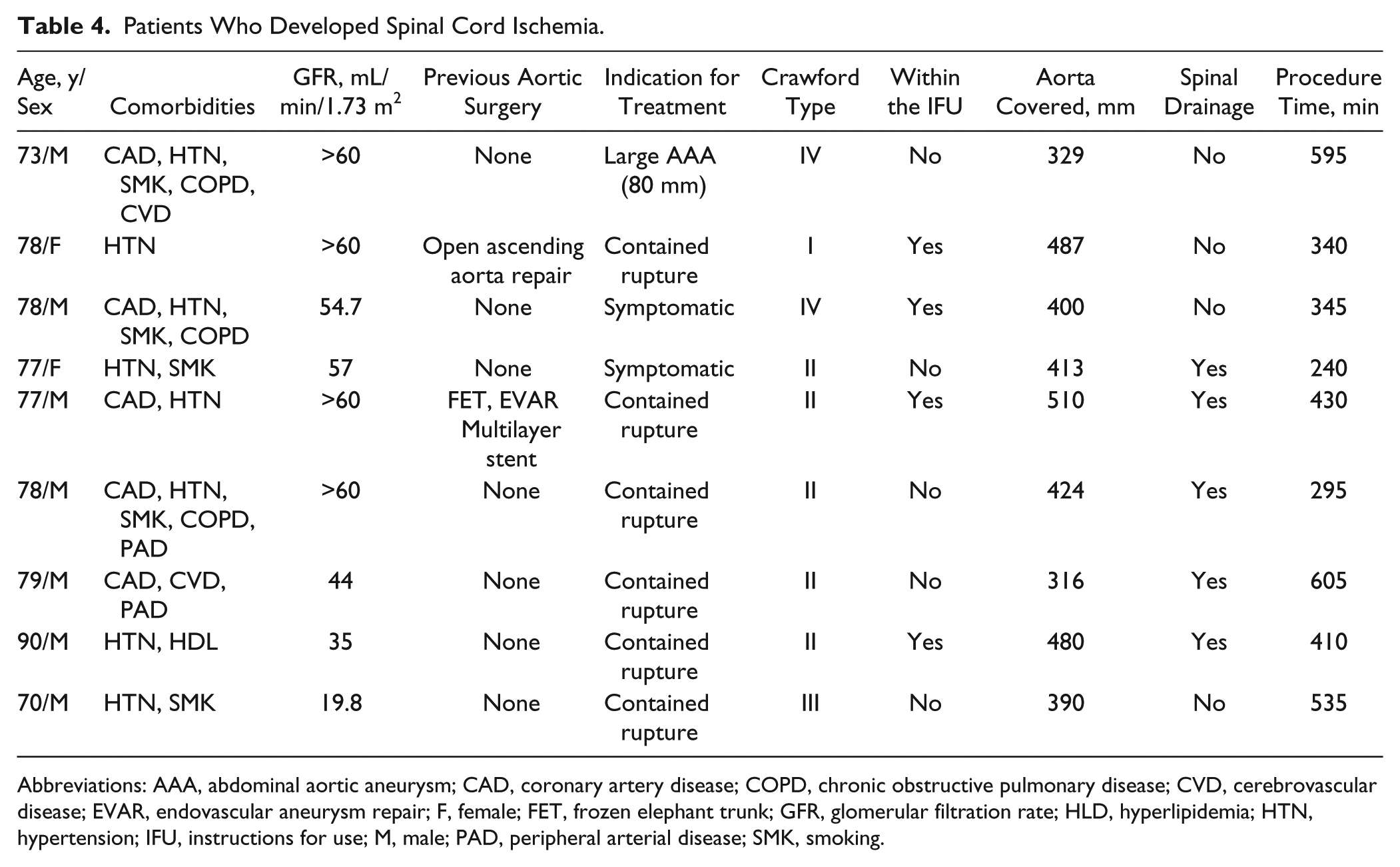
Abbreviations: AAA, abdominal aortic aneurysm; CAD, coronary artery disease; COPD, chronic obstructive pulmonary disease; CVD, cerebrovascular disease; EVAR, endovascular aneurysm repair; F, female; FET, frozen elephant trunk; GFR, glomerular filtration rate; HLD, hyperlipidemia; HTN, hypertension; IFU, instructions for use; M, male; PAD, peripheral arterial disease; SMK, smoking.
Renal function deterioration (Table 5) was seen in 10 (23%) patients (dialysis required in 2 temporarily and 2 at 300 days; one had a renal artery branch occlusion and a single kidney). Postoperative renal function deterioration was correlated with only early experience (OR 7.74, 95% CI 1.3 to 43.9, p=0.019) in the logistic regression analysis.
Renal Function Status Pre- and Postoperatively and Patients Treated Outside the Instruction for Use.
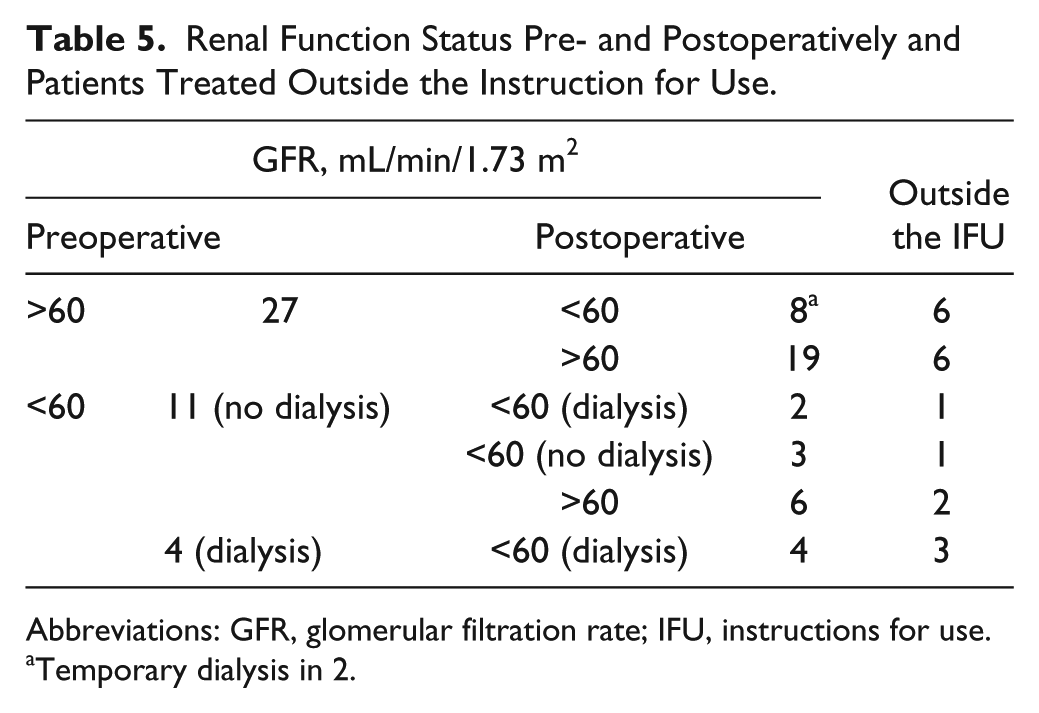
Abbreviations: GFR, glomerular filtration rate; IFU, instructions for use.
Temporary dialysis in 2.
One-third of the patients (14/42, 33%) developed pneumonia, and another 16 (38%) patients had access site complications (13 hematomas and 3 infections). Additionally, 2 (5%) patients presented nondisabling stroke; there were no myocardial infarctions. Three (7%) patients developed ischemic colitis; 2 of them were treated conservatively (both SMA and CT stents patent), and the other underwent subtotal colectomy (the SMA stent was patent but the CT was occluded preoperatively).
Mortality
Six (14%) patients died in hospital within 30 days (none during the procedure). Table 6 lists the characteristics and cause of deaths. Four patients had renal deterioration (2 on dialysis) and 3 had paraplegia. Three of the 6 were treated outside the IFU. Multiple logistic regression analysis did not identify any variables connected with mortality.
Patients Who Died Within 30 Days.
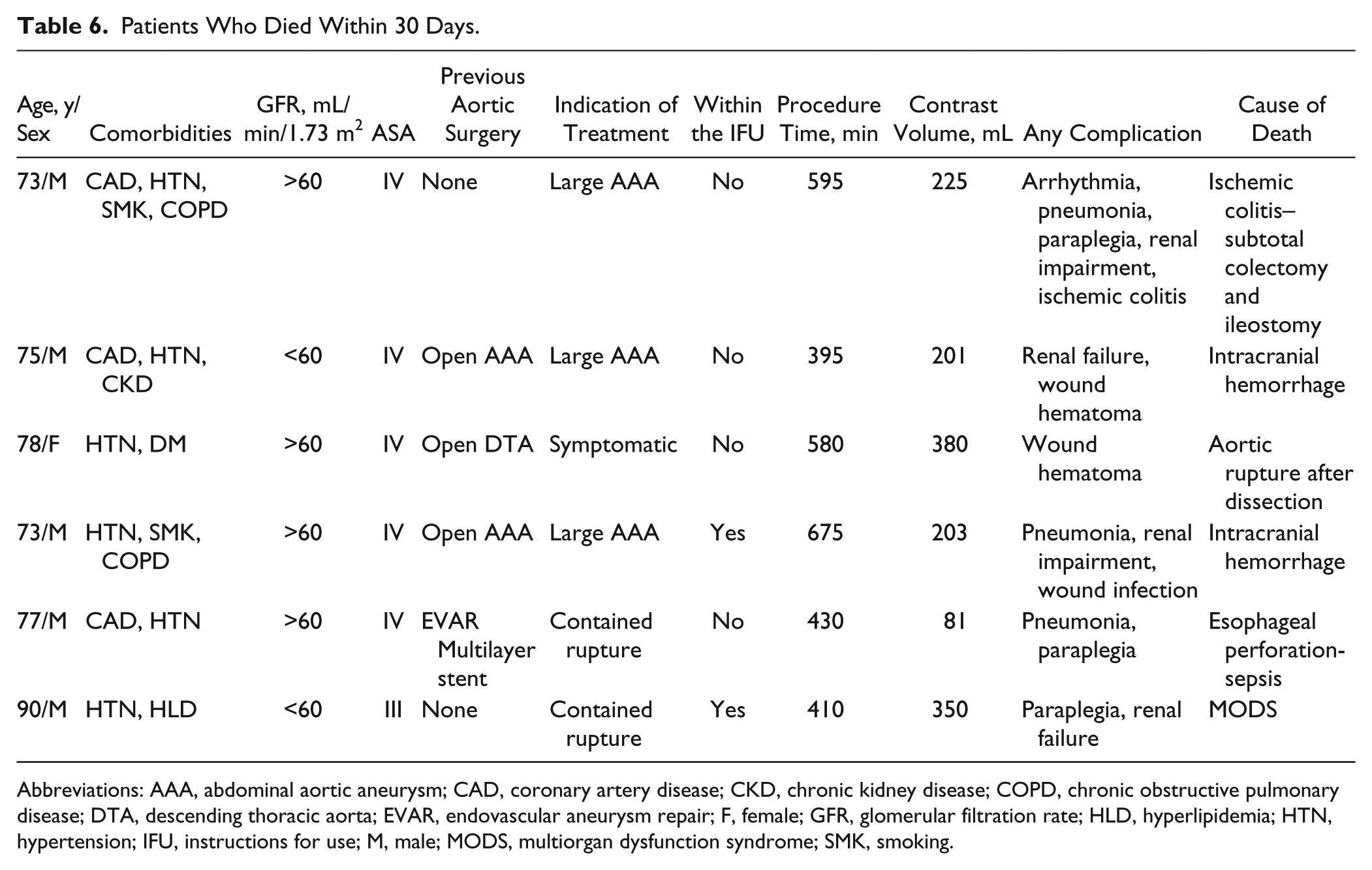
Abbreviations: AAA, abdominal aortic aneurysm; CAD, coronary artery disease; CKD, chronic kidney disease; COPD, chronic obstructive pulmonary disease; DTA, descending thoracic aorta; EVAR, endovascular aneurysm repair; F, female; GFR, glomerular filtration rate; HLD, hyperlipidemia; HTN, hypertension; IFU, instructions for use; M, male; MODS, multiorgan dysfunction syndrome; SMK, smoking.
Secondary Outcomes and Analyses
There were 18 (43%) patients with type II endoleak detected on the 1-month CTA, but no type I or III leaks other than the patient in whom the celiac branch was left open pending reintervention. The branch patency rate was 99% (150/151) with only 1 renal artery occluded.
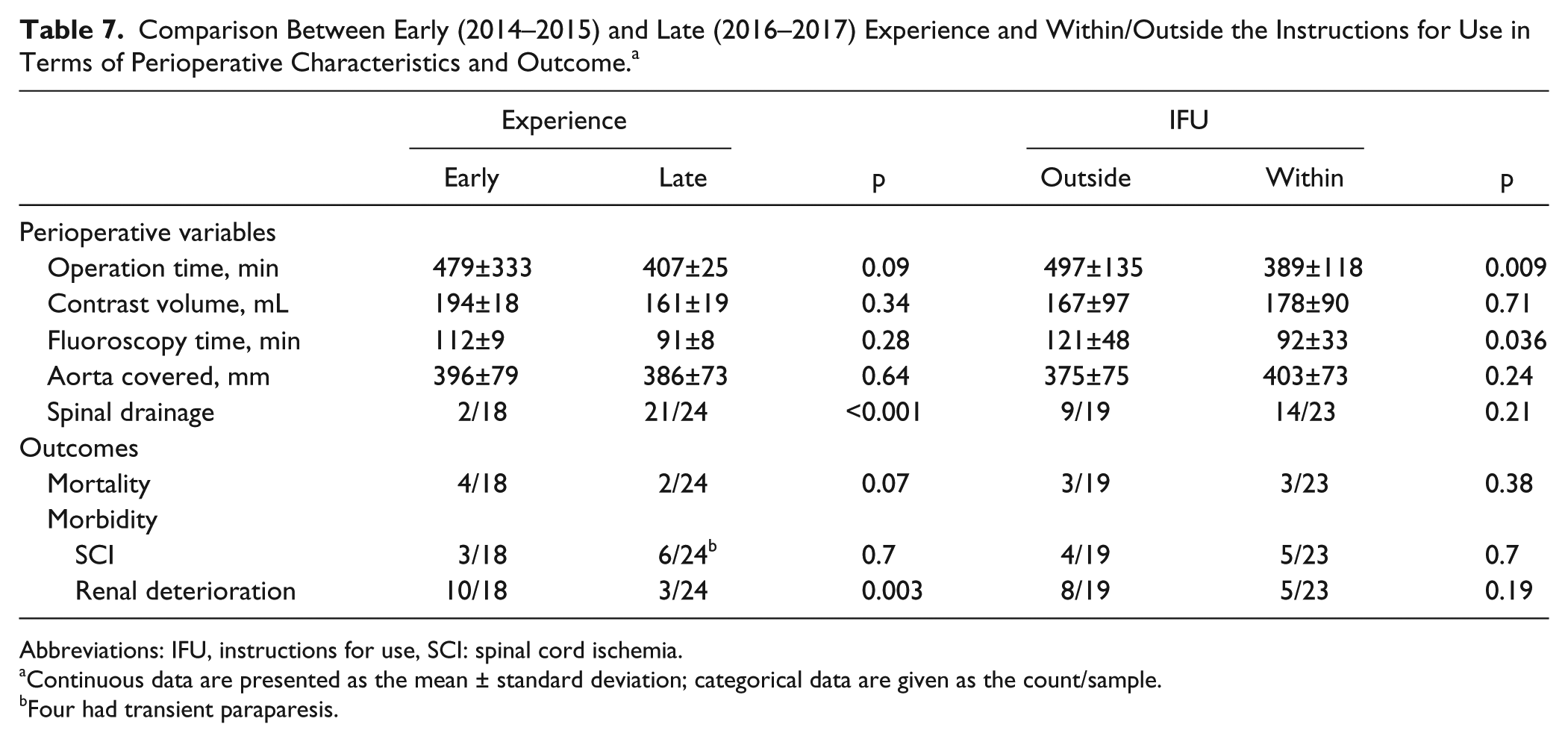
A comparison between our early (2014–2015) and late (2016–2017) experience is displayed in Table 7. There were decreases during our later experience in procedure time (479±333 vs 407±25 minutes, p=0.09), contrast volume (194±18 vs 161±19 mL, p=0.34), fluoroscopy time (112±9 vs 91±8 minutes, p=0.28), and the length of aorta covered (396±79 vs 386±73 mm, p=0.64). During our experience, the use of spinal drainage became standard policy (increase from 11% to 95%). Notably the 30-day mortality decreased from 22% in our initial experience to 9% in more recent years, reflecting the impact of the learning curve.
Comparison Between Early (2014–2015) and Late (2016–2017) Experience and Within/Outside the Instructions for Use in Terms of Perioperative Characteristics and Outcome. a
Abbreviations: IFU, instructions for use, SCI: spinal cord ischemia.
Continuous data are presented as the mean ± standard deviation; categorical data are given as the count/sample.
Four had transient paraparesis.
The comparison between cases treated according to the IFU and cases treated outside the IFU (Table 7) not surprisingly found that patients treated outside the IFU required longer procedures (497±135 vs 389±118 minutes, p=0.009) and fluoroscopy use (121±48 vs 92±33 minutes, p=0.036)
Discussion
Endovascular treatment of TAAA using fenestrated or branched stent-grafts has been integrated into modern vascular practice, and several centers have demonstrated good perioperative outcomes in high-risk patient populations.2–4,16 However, their application in urgent cases has been restricted due to their customization time. Published experience of these endovascular techniques, particularly the use of the off-the-shelf t-Branch stent-graft for urgent TAAA repair, has been limited.8,9 Alternative endovascular treatment options for patients with urgent presentation of TAAA are the use of surgeon-modified stent-grafts or chimney/sandwich techniques.17,18
In our study, the application of the t-Branch for urgent TAAA cases demonstrated excellent technical success similar to elective cases2–4,19 and without type I or III endoleak in the first 30 days. Only 1 target vessel was lost. Though only a little more than half of our patients were treated within the IFU for a t-Branch the mortality and morbidity were not influenced by this factor. This fact may support the argument that the reported 50% t-Branch suitability (63% assisted) 12 may have limited clinical relevance in acute situations. 7 However, cases treated outside the IFU may be more technically demanding, requiring longer operations and fluoroscopy time.
Our policy is currently to use t-Branch technology in all urgent patients regardless of the target vessel anatomy or the proximal extent of the disease (83% in our study). The t-Branch device, having a fixed diameter of 34 mm proximally and 18 mm distally, requires a proximal or a distal extension. In an elective setting, a custom-made endograft would be manufactured to obviate the need for extensions. 7 To avoid extensive proximal coverage of the thoracic aorta with the t-Branch, we have used a 2-in-1 stent-graft in selected cases, which includes outer and inner stent-grafts of different diameters in order to implant the t-Branch at the same aortic section without extending the repair. This 2-in-1 graft has a length of 84 mm and can reduce the diameter from 42 to 32 mm. 20
Outcomes of traditional open TAAA repair in urgent cases has a 30-day mortality ranging from 18% to 43%.21,22 A recent systematic review of multibranched stent-grafts for the treatment of TAAA demonstrated a 30-day mortality of 9% (95% CI 3% to 19%) and an all-cause mortality of 27% (95% CI 17% to 38%). 19 Within this context, our 14% 30-day mortality is encouraging if one considers the urgency of the cases. Important factors that may have contributed to mortality were renal deterioration and paraplegia; interestingly, those parameters have also been consistently presented as some of the most important factors for mortality in open TAAA repair.23–26
SCI remains the true Achilles’ heel of every TAAA procedure. In our study, the incidence was 21%, which is comparable or even more encouraging than previous elective reports, such as the one by Baba et al, 27 who showed a 35% incidence of perioperative SCI in patients treated with a t-Branch. Age was the only factor associated with SCI in our study. However, when intact vs ruptured aneurysms were compared, SCI was associated only with rupture. Eighty percent of the patients with paraplegia did not have a spinal drain placed preoperatively (most of them were treated for a contained rupture), which could also explain the blood loss and low blood pressure that may have exacerbated SCI development.
Our initial policy was to avoid placement of cerebrospinal fluid (CSF) drains in urgent procedures to minimize the risk of bleeding complications following a possible complicated puncture. Based on positive experience with almost no bleeding complications following CSF drain insertion, we now routinely place a CSF drain prior to surgery for all TAAAs, including urgent cases and begin prophylactic CSF drainage intraoperatively. 27 In the past 2 years, 4 cases of transient paraparesis were managed under spinal drainage, and the patients fully recovered.
Additional, SCI prevention measurements include maintenance of left subclavian and internal iliac artery perfusion, so carotid-subclavian bypasses and iliac branch devices were used as needed. None of the patients with SCI had either of those arteries occluded. Staged endovascular repair has appeared to both protect and enhance overall survival in extensive aortic repair. 28 In selected cases with intact symptomatic or large aneurysms and long procedures or higher blood loss, we chose to leave a side branch or an iliac extension open and complete the repair a few days later under local anesthesia, as this has been considered a SCI preventive measurement too. 29 Coverage length (>360 mm) has also been incriminated as a risk factor of SCI. 25 Although in our analysis there was no significant difference between patients with and without SCI due to the low incidence, 7 of 9 patients presenting with SCI had >360 mm of aorta covered with stent-grafts, which may have also contributed to SCI.
During the latter 2 years of our 4-year experience with the t-Branch in urgent TAAA repair, the mean operation time, contrast volume, fluoroscopy time, length of aorta coverage, and renal function deterioration declined in comparison with our first 2 years, which highlights the importance of a learning curve in complicated aneurysm cases. Notably the 30-day mortality decreased as well over time. Most urgent cases require a high level of operator skills and proficiency attained through practice to achieve successful application of these complex repairs. The development of referral centers may increase the experience of these techniques, producing even better outcomes.
Limitations
The main limitations of our study were the retrospective nature of the study and the short (30-day) follow-up. However, the main focus of the study was the technical feasibility of the t-Branch device in this TAAA patient subset and the short-term outcomes in terms of mortality and morbidity. Additionally, this study reflects the learning curve in urgent complex TAAA cases and the better outcomes that comes with experience.
Conclusion
Endovascular repair of urgent TAAA using the t-Branch device is a feasible treatment option with acceptable 30-day mortality and morbidity in terms of SCI and renal function deterioration. Adherence to the IFU may decrease operation time but has no effect on the outcomes. Increased experience of such cases can improve outcomes over time.
Footnotes
Declaration of Conflicting Interests
The author(s) declared the following potential conflicts of interest with respect to the research, authorship, and/or publication of this article: Nikolaos Tsilimparis is a proctor for Cook Medical. Tilo Kölbel has intellectual property with Cook Medical.
Funding
The author(s) received no financial support for the research, authorship, and/or publication of this article.
