






Abstract
Objectives:
This study aims to systematically review and meta-analyze the available literature to compare the early and mid-term clinical outcomes (including technical success, mortality, complications, and reinterventions) of renal fenestrated endovascular aortic repair (FEVAR) versus complex FEVAR in the treatment of pararenal aortic aneurysms (PAAs) and type IV thoracoabdominal aortic aneurysms (TAAAs).
Methods:
A systematic review and meta-analysis of studies focusing on results of patients treated with renal FEVAR and comparing with complex FEVAR in endovascular treatment of PAA and type IV TAAA was performed following the Preferred Reporting Items for Systematic Reviews and Meta-Analyses guideline. PubMed, EMBASE, the Cochrane Library, and Web of Science were searched for studies till mid-February 2025. Observational and randomized studies were included. Reasons for exclusion were series less than 10 patients and ruptured aneurysms. Primary outcomes were technical success, perioperative reinterventions, 30-day or in-hospital mortality, and reintervention for endoleak type I or type III during follow-up. Secondary outcomes were target vessel patency, myocardial infarction, bowel ischemia, limb ischemia, acute renal failure, stroke or transient ischemic attack, spinal cord ischemia, length of hospitalization, overall survival, and aneurysm-related reintervention.
Results:
The search yielded a total of 9366 studies. After screening, 9 studies with 1103 patients (517 renal FEVAR and 586 complex FEVAR) were included for analysis. The cumulative technical success rates for the renal group and the complex group were 98.5% and 97%, respectively. Combining perioperative and follow-up reinterventions no significant difference (p=0.44) was observed between the 2 groups. The all-cause mortality rate during hospital stay or within 30 days was one-and-a-half times higher for the complex group (3.0% [n=17/558]) than for the renal group (1.9% [n=9/464]), however, without statistical difference (p=0.65). Reinterventions for type I and III endoleaks were not significantly different between the 2 groups, p=0.07. No significant difference was revealed between the 2 groups regarding secondary outcomes.
Conclusions:
This systematic review revealed no significant difference in mortality, complications, or reintervention between renal FEVAR and complex FEVAR. Renal FEVAR in juxtarenal aneurysms remains a safe and effective treatment option with no higher risk on type Ia endoleak or reinterventions during follow-up compared with complex FEVAR. The current data do not provide a clear understanding of the long-term benefits associated with complex FEVAR compared with renal FEVAR.
Clinical Impact
This systematic review found no significant differences in mortality, complications, or reinterventions between renal and complex FEVAR. The results indicate that renal FEVAR remains an effective option for appropriately selected patients, and that the added complexity of incorporating mesenteric vessels does not necessarily translate into improved outcomes. Current evidence does not clarify whether complex FEVAR provides long-term advantages over renal FEVAR. These findings underscore the importance of anatomy-driven, individualized decision-making in complex aortic aneurysm repair.
Keywords
Introduction
If the anatomy is suitable, fenestrated/branched endovascular aneurysm repair (F/BEVAR) is often considered a good treatment option for complex aortic pathologies, such as pararenal aortic aneurysms (PAAs) and thoracoabdominal aortic aneurysms (TAAAs) to provide a minimally invasive treatment option for the patient. Endovascular repair of complex aortic aneurysms has been increasingly associated with low operative and postoperative mortality compared with open surgical procedures. 1 To achieve proximal seal in a healthy aortic segment above the pararenal or thoracoabdominal aortic aneurysm, fenestrations and branches can be incorporated in the stent-graft to guarantee blood flow to the visceral arteries. 2 Cannulation and stenting of the renal and mesenteric arteries can be challenging and provides additional complexity to the procedure in comparison to standard infrarenal endovascular aneurysm repair (EVAR) procedures.
Although the aneurysm anatomy may vary, the procedure for a short neck or juxtarenal AAA treated with 3 or 4 fenestrations is largely similar to the treatment of a suprarenal AAA or type IV TAAA (Crawford classification) using the same stent-graft configuration. 3 For this reason, we think it is feasible to analyze the outcome of procedures differentiating between simple and complex FEVAR, without knowing the aneurysm anatomy.
Our initial hypothesis was that a higher number of fenestrations increases the complexity of the procedure and thereby increases the risk of complications. Several studies have tried to analyze the relation between the complexity of F/BEVAR and perioperative outcomes, but no consensus is achieved.1,2,4 –6
In view of the absence of a systematic review, we conducted a systematic review and meta-analysis of current literature to compare the early- and mid-term results of stent-grafts with only renal fenestrations to stent-grafts with additional fenestrations for the superior mesenteric artery (SMA) or celiac trunk (CT) in the treatment of PAA and type IV TAAA. The aim of this study is to reveal if there is a relationship between increased stent-graft complexity and clinical outcomes. Recognizing such relationships can influence stent-graft design in the treatment of complex aortic aneurysms.
Methods
Protocol and Registration
Prior to initiation, a review protocol was drafted and registered to the PROSPERO registry. The review was written in accordance with the Preferred Reporting Items for Systematic reviews and Meta-Analysis (PRISMA) statement.
Eligibility Criteria
Patients of any race, sex, and age who presented with a PAA or TAAA (only Crawford type IV) and underwent elective endovascular repair using fenestrated stent-grafts were eligible for inclusion. 3 Patients presenting with a ruptured aneurysm were excluded. Studies that compared renal with complex fenestrated (FEVAR) were eligible for inclusion. Renal fenestrated stent-grafts (renal FEVAR) contain fenestrations only for renal arteries with or without a scallop for the SMA. More complex fenestrated stent-grafts (complex FEVAR) include fenestrations for the renal and mesenteric arteries (SMA or CT), or fenestrations for the renal (with or without scallop for the mesenteric artery) and stenting of the mesenteric artery due to stenosis. Both observational and randomized studies were eligible for inclusion. Eligibility criteria applied during study selection included publication in English and a publication date from 1999 onwards, corresponding to the introduction of FEVAR. Conference abstracts, case reports and series with less than 10 participants were excluded.
Search and Study Selection
A systematic search in the databases PubMed, EMBASE, the Cochrane Library, and Web of Science was performed. The terms used, including all synonyms, were “abdominal aortic aneurysm” combined with FEVAR. No restrictions were applied for the search on date, language or publication type. The search strategy was first constructed and applied to the PubMed database and then applied to other 3 health care databases. Trial registers were searched. An additional manual-related articles and cross-reference search was performed to identify potentially eligible reports not found through the prior search. This also served as an indicator for the integrity and quality of the applied search strategies. A certified librarian (M.H.) was involved in performing the search and designing the search strategy, including the selection of databases, identification of keywords and MeSH (medical subject headings) terms. The last search was executed on February 25, 2025. As a first step, duplicate studies were discarded after identification by Mendeley (Mendeley Desktop v1.1.9.4 for MacOS, Mendeley Ltd, Elsevier, Amsterdam, The Netherlands). The remaining studies were judged based on their title and abstract. Thereafter, the full text of potentially eligible studies was read and assessed for eligibility. Studies meeting the aforementioned eligibility criteria were included for qualitative synthesis and if possible quantitative synthesis. Study selection was performed in a standardized, blinded manner by 2 independent reviewers. Inter-reviewer disagreements were resolved by consultation of a third author.
Data Collection and Data Items
Data were extracted by 2 reviewers and cross-checked for validity. Extraction was structured by use of a self-developed extraction template that was pilot tested on 3 randomly selected studies and adopted accordingly. Potential inter-reviewer disagreements were resolved by consultation of a third author. If the paper didn’t give clear information (eg, which type of aneurysms were included), the author was contacted and all contacted authors responded. Information was extracted from each study regarding: (1) general study characteristics: study design, country, period of enrollment, and length of follow-up; (2) study population characteristics: age, sex, aneurysm diameter, American Society of Anesthesiologists (ASA) score, peripheral artery disease, smoking, diabetes mellitus, hypertension, chronic obstructive lung disease, renal function, and cerebrovascular accident; (3) characteristics of the intervention: number of fenestrations, operation time, fluoroscopy time, radiation dose, contrast dose, and blood loss; (4) primary outcome measures: primary technical success (as defined differently across the included studies), perioperative reinterventions, mortality (defined as 30-day or in-hospital), and reintervention for endoleak type I or type III during follow-up as defined by Jain et al 7 ; and (5) secondary outcome measures: target vessel patency, myocardial infarction, bowel ischemia, limb ischemia, acute renal failure, stroke or transient ischemic attack, spinal cord ischemia, length of hospitalization, overall survival, and aneurysm-related reintervention. 8 Continuous variables depicted as mean and standard deviation (SD) were extracted as such. If not, conversion was applied.
Risk of Bias in Individual Studies
The presence of bias in individual randomized studies was evaluated by the updated risk of bias tool for randomized trials (RoB 2) by Cochrane. This tool generates a risk of bias judgment depicted on a 5-point Likert scale (namely, low, moderate, serious and critical risk, or no information). Observational studies with an intervention and control group were assessed by the Cochrane risk of bias tool for non-randomized studies of interventions (ROBINS-I), judging bias on a 3-point Likert scale (namely, low risk, some concerns, and high risk).
Summary Measures and Synthesis of Results
Quantitative synthesis (ie, meta-analysis) of outcome measures was only performed if included studies were deemed sufficiently homogeneous. If not, measures were reported as such. The difference in means (MD) was used for quantitative synthesis of continuous variables that were measured on the same scale among studies. If different scales were used, the standardized mean difference (SMD) was chosen. The odds ratio (OR) and associated 95% confidence interval (CI) were used to compare binary outcome measures and interpreted as risk ratios. An (S)MD lower than 0 or an OR lower than 1 favor renal. Meta-analyses were performed by Review Manager (RevMan v5.3 for Macintosh, Cochrane Collaboration, Oxford, UK) using a random-effects model with inverse variance ([S]MD) or Mantel-Haenszel (OR) method and I2 test for heterogeneity. An I2 value greater than 50% in conjunction with a p-value equal to or lower than 0.10 indicated the presence of statistically significant heterogeneity. Meta-analyses were reported in forest plots. Subgroup analyses were not prespecified but performed upon indication.
Risk of Bias Across Studies
The presence of publication bias was evaluated both visually by a funnel plot (standard error by log OR funnel plot of the frequency of reinterventions within 30 days and statistically by the rank correlation test and regression test for funnel plot asymmetry. Publication bias analyses were performed using Jamovi (Jamovi v0.9 for Macintosh, MAJOR software package add-on; https://www.jamovi.org, Sydney, Australia).
Results
Study Selection
The full search strategy can be found in the Supplemental Material (Appendix 1). The process of study selection is depicted in the PRISMA flow diagram (Figure 1). The searched electronic scientific databases provided a cumulative number of 9366 references. No additional references were identified through the complementary cross reference and related article searches. After deduplication, 5332 unique references remained. Of these studies, the title and abstract were evaluated for eligibility, excluding 5310 studies. The full text of the remaining 22 studies was assessed. Thirteen of these studies did not meet the predefined eligibility criteria and were discarded. The reasons for exclusion involved absence of primary outcome variables, duplicated data, lack of comparison between renal and complex FEVAR, and the use of other operative techniques which are not analyzed in this review. Eventually, 9 articles were included for qualitative and quantitative synthesis.
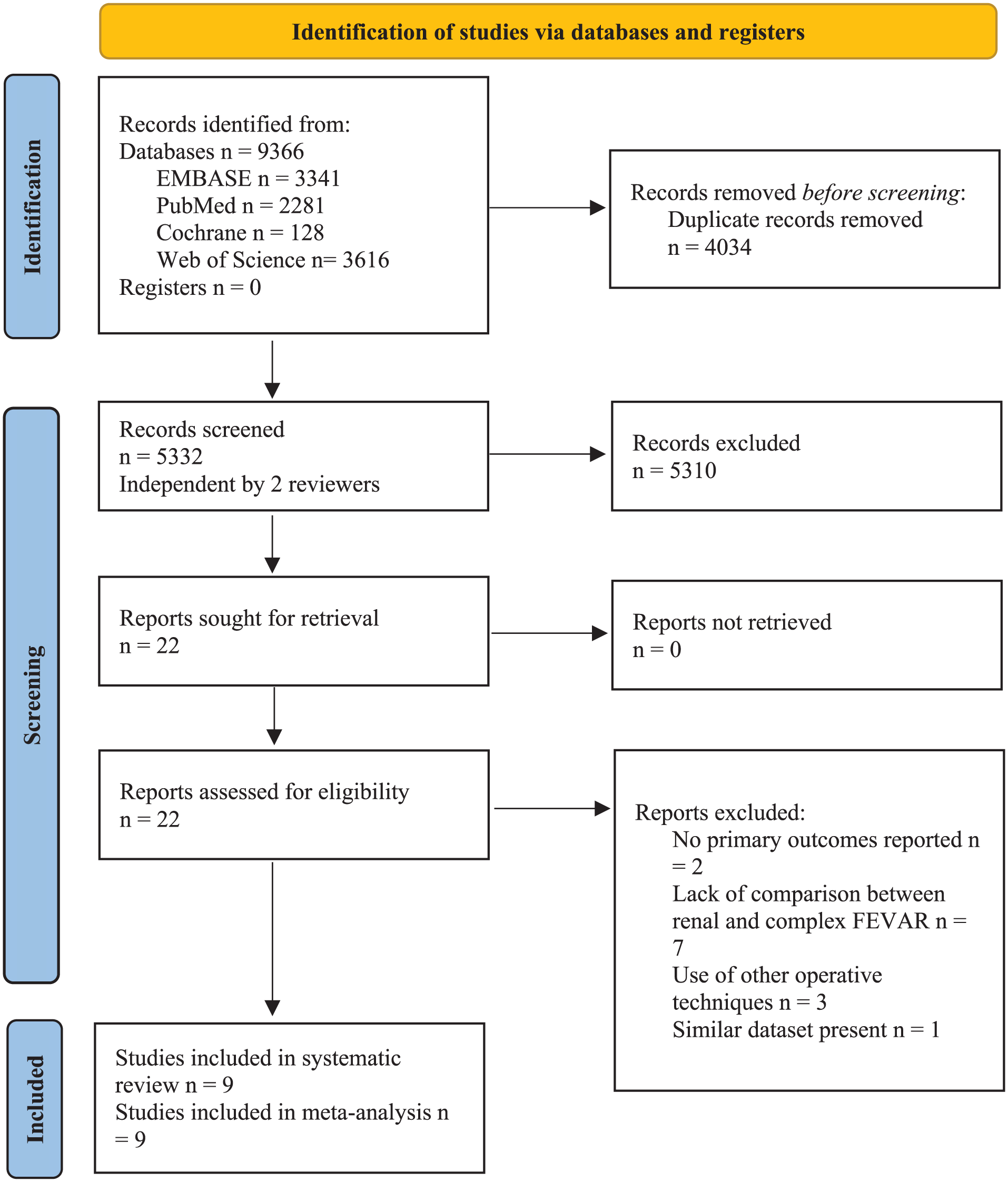
Preferred Reporting Items for Systematic Reviews and Meta-Analyses flow diagram illustrating the identification and selection of the 9 included studies. Nine studies were included in the meta-analysis.
Study Characteristics
Methods
A total of 9 retrospective cohort studies were included (Table 1).9 –17 All studies were single center. The studies were carried out in the United States of America, United Kingdom, and Germany. Enrolled patients were included between 2003 and 2021. One study did not mention a follow-up period; mean follow-up period of the other studies ranged between 1 and 60 months. 10 Seven studies documented mid-term results (6 months–5 years).9,11 –14,16,17
Baseline Characteristics of Included Studies.
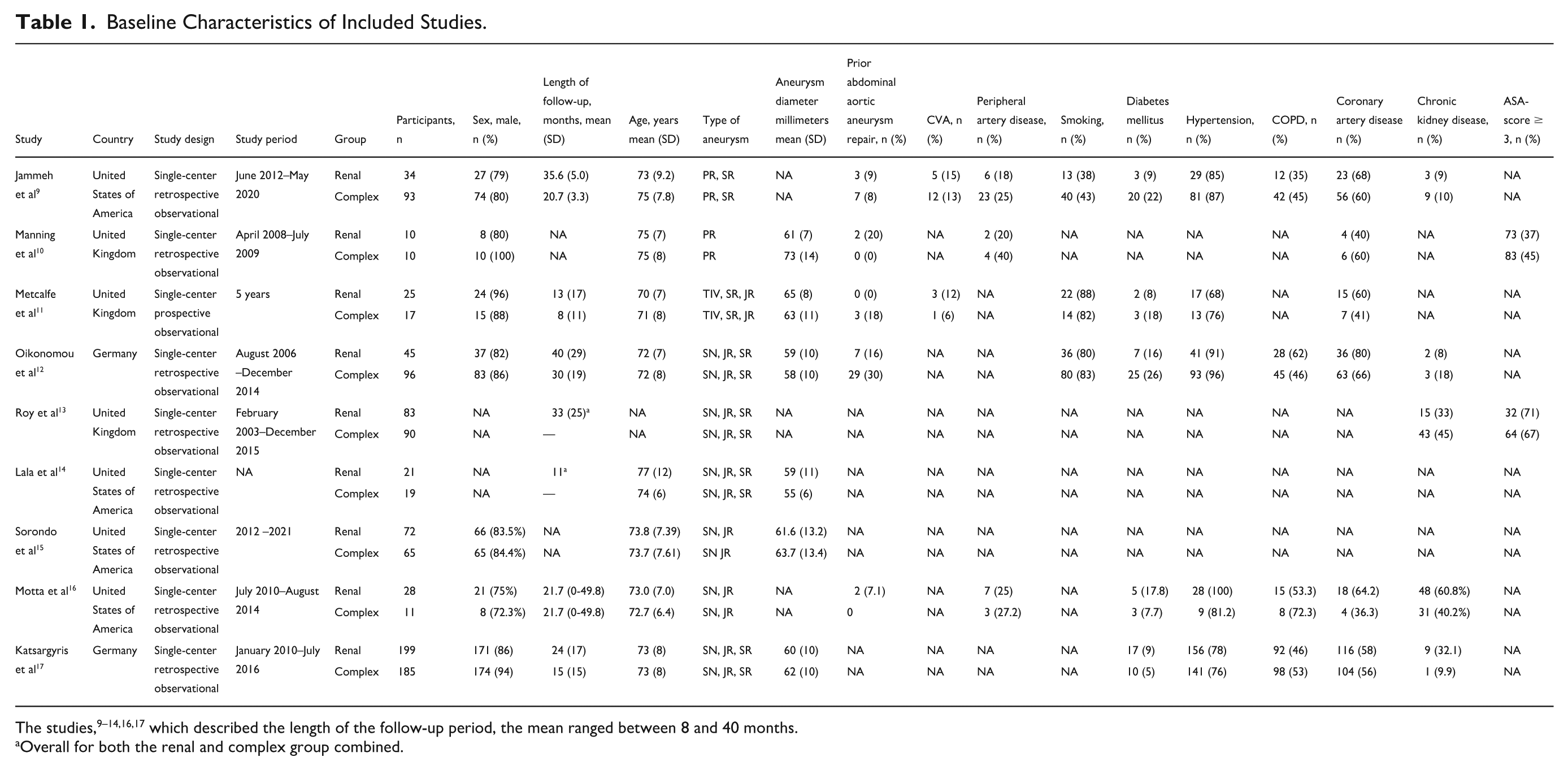
The studies,9 –14,16,17 which described the length of the follow-up period, the mean ranged between 8 and 40 months.
Overall for both the renal and complex group combined.
Participants
A cumulative number of 1103 patients were included. Patient characteristics are summarized in Table 1. Of these patients, 517 underwent a renal FEVAR, while 586 underwent a complex FEVAR procedure. The participants in all studies were predominantly men (354 in the renal FEVAR group and 429 in the complex FEVAR group while 2 studies did not differentiate between genders.13,14 The mean age was between 70 and 77 years in both groups. ASA score was only described by Oikonomou et al 12 and Katsargyris et al. 17 All patients in these studies had an ASA score of 3 or more. Six studies reported the aneurysm diameters of both groups separately, with a pooled mean size of 60.2 (pooled SD: 10.6) mm in the renal FEVAR group and a pooled mean size of 60.7 (pooled SD: 11.0) mm in the complex FEVAR group.10 –12,14,15,17 A total of 21 (8 of 59 patients in the renal FEVAR group and 13 of 118 patients in the complex FEVAR group) patients suffered from a previous cerebrovascular accident (CVA) as reported in only 2 of the studies.9,11 Three studies reported peripheral artery disease in 20.8% of patients in the renal FEVAR group and 25.5% in the complex FEVAR group of patients.9,10,16 In the renal FEVAR group, 48% of the patients and 50.1% in the complex FEVAR group were diagnosed with chronic obstructive pulmonary disease (COPD) as reported in 4 studies.9,12,16,17 An average of 10.3% of the patients in the renal FEVAR group and 15.2% in the complex FEVAR group as reported in 5 studies had diabetes.9,11,12,17 Five studies reported the incidence of hypertension, a total of 81.9% of the population in the renal FEVAR group and 83.8% in the complex FEVAR group.9,11,12,16,17 On average, 37.7% of the patients in the renal FEVAR group and 30.9% in the complex FEVAR group had chronic kidney disease as reported by 5 studies.9,11,12,15,16 Six studies reported an average coronary artery disease incidence of 64% in the renal FEVAR group and 58.3% in the complex FEVAR group.9 –12,16,17
Intervention
Details of the intervention are summarized in Table 2. As mentioned before, approximately 53% of the patients underwent complex FEVAR. The mean operative time ranged between 135 and 285 minutes in the renal FEVAR group and between 176 and 396 minutes in the complex FEVAR group. The mean fluoroscopy time ranged between 45 and 68 minutes in the renal FEVAR group and between 57 and 78 minutes in the complex FEVAR group on average in the 4 studies where it was reported.9,12,15,17 The contrast volume used ranged between 87.9 and 236 ml in the renal FEVAR group and between 90 and 247 ml in the complex FEVAR group in the 4 studies where it was reported.9,12,15,17 Jammeh et al 9 was the only study that reported the radiation dose during surgery with an average of 4061 mGy in the renal FEVAR group and 3230 mGy in the complex FEVAR group.
Characteristics of the Intervention.
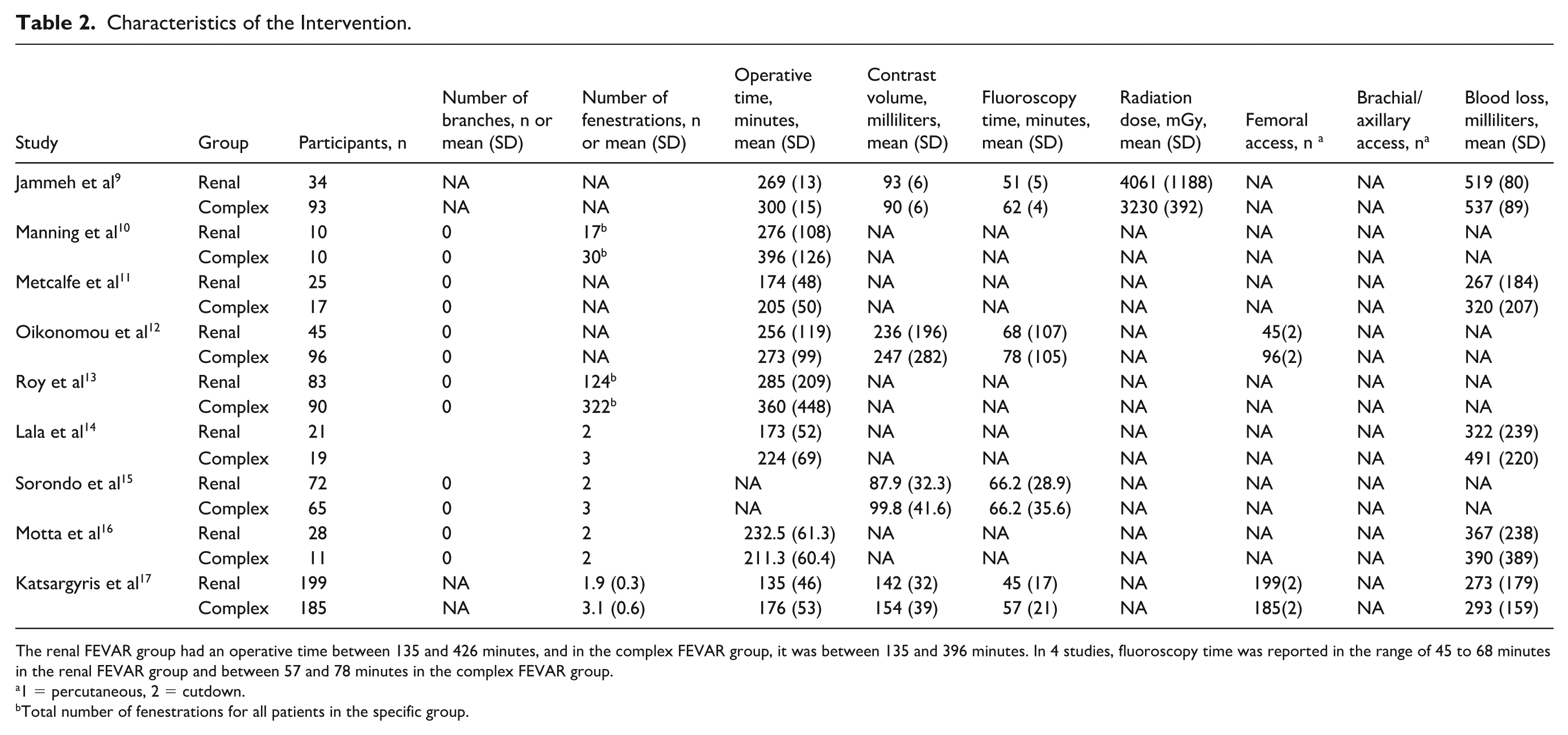
The renal FEVAR group had an operative time between 135 and 426 minutes, and in the complex FEVAR group, it was between 135 and 396 minutes. In 4 studies, fluoroscopy time was reported in the range of 45 to 68 minutes in the renal FEVAR group and between 57 and 78 minutes in the complex FEVAR group.
1 = percutaneous, 2 = cutdown.
Total number of fenestrations for all patients in the specific group.
Outcomes
A variable number of studies reported on the different primary and secondary outcome measures, allowing comprehensive qualitative and quantitative analyses as observed below. The primary and secondary outcomes are summarized in Tables 3 and 4.
Secondary outcome measures.
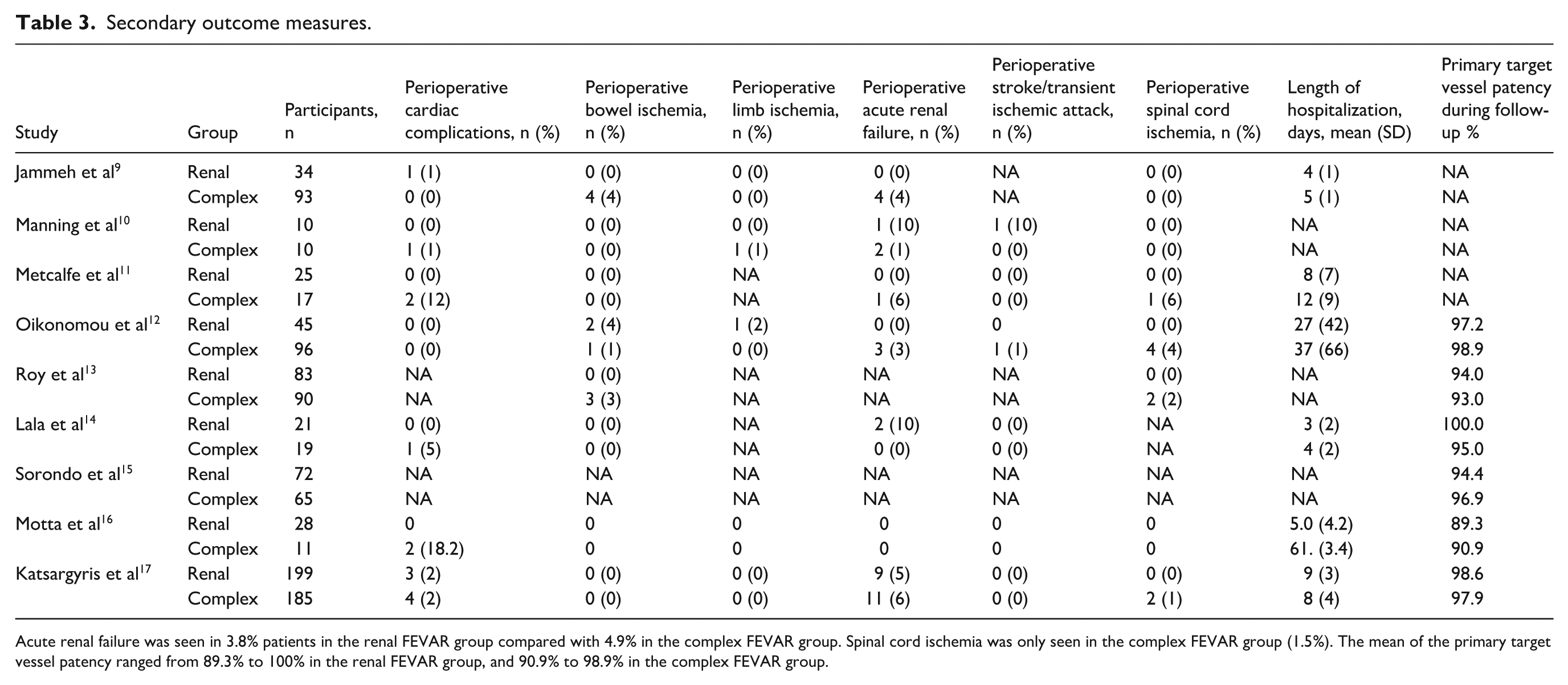
Acute renal failure was seen in 3.8% patients in the renal FEVAR group compared with 4.9% in the complex FEVAR group. Spinal cord ischemia was only seen in the complex FEVAR group (1.5%). The mean of the primary target vessel patency ranged from 89.3% to 100% in the renal FEVAR group, and 90.9% to 98.9% in the complex FEVAR group.
Perioperative and Postoperative Outcomes of Included Studies.
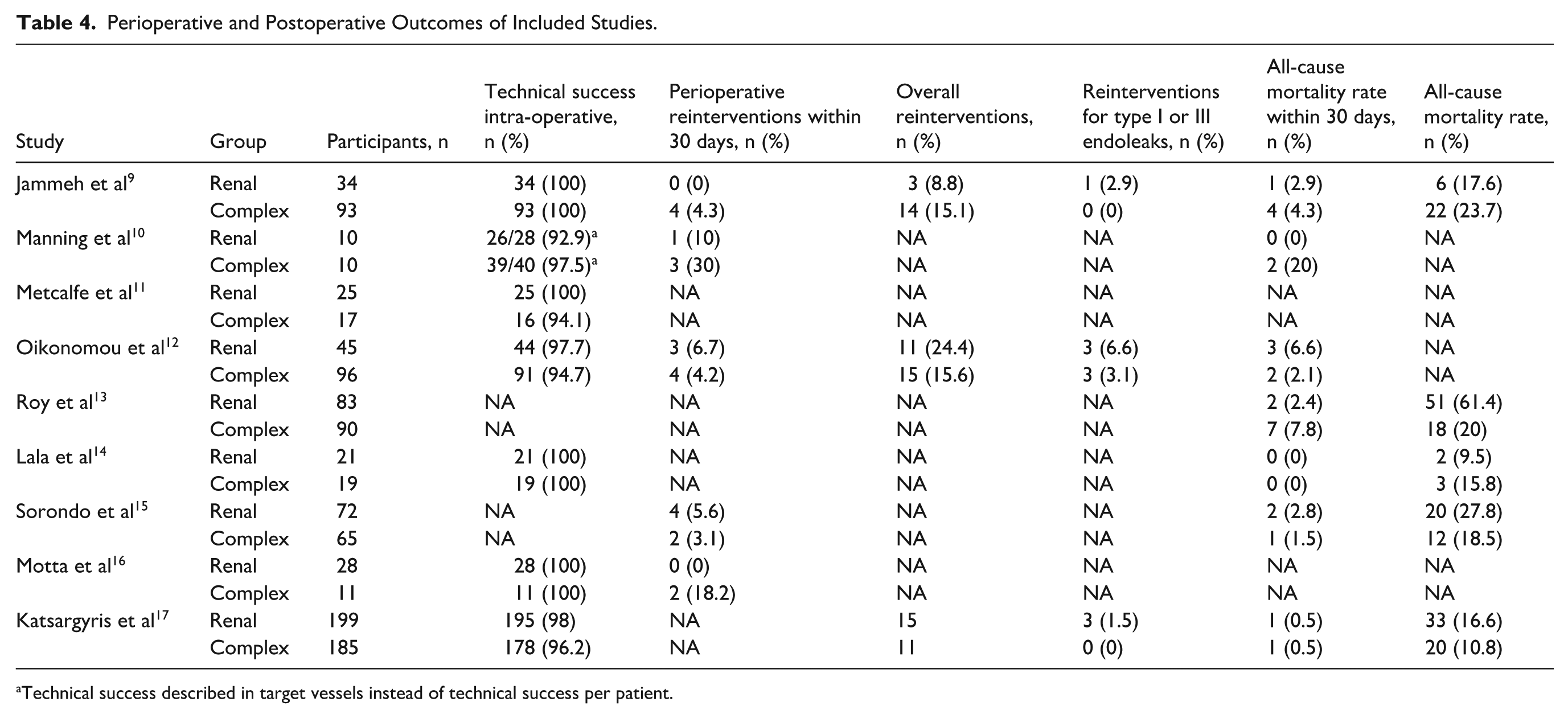
Technical success described in target vessels instead of technical success per patient.
Risk of Bias Within Studies
All included studies, being retrospective cohort studies, were assessed using the ROBINS-I tool. All studies were judged to suffer from a moderate risk of bias. This was primarily the result of potential bias due to confounding present in every individual study (Figure 2).
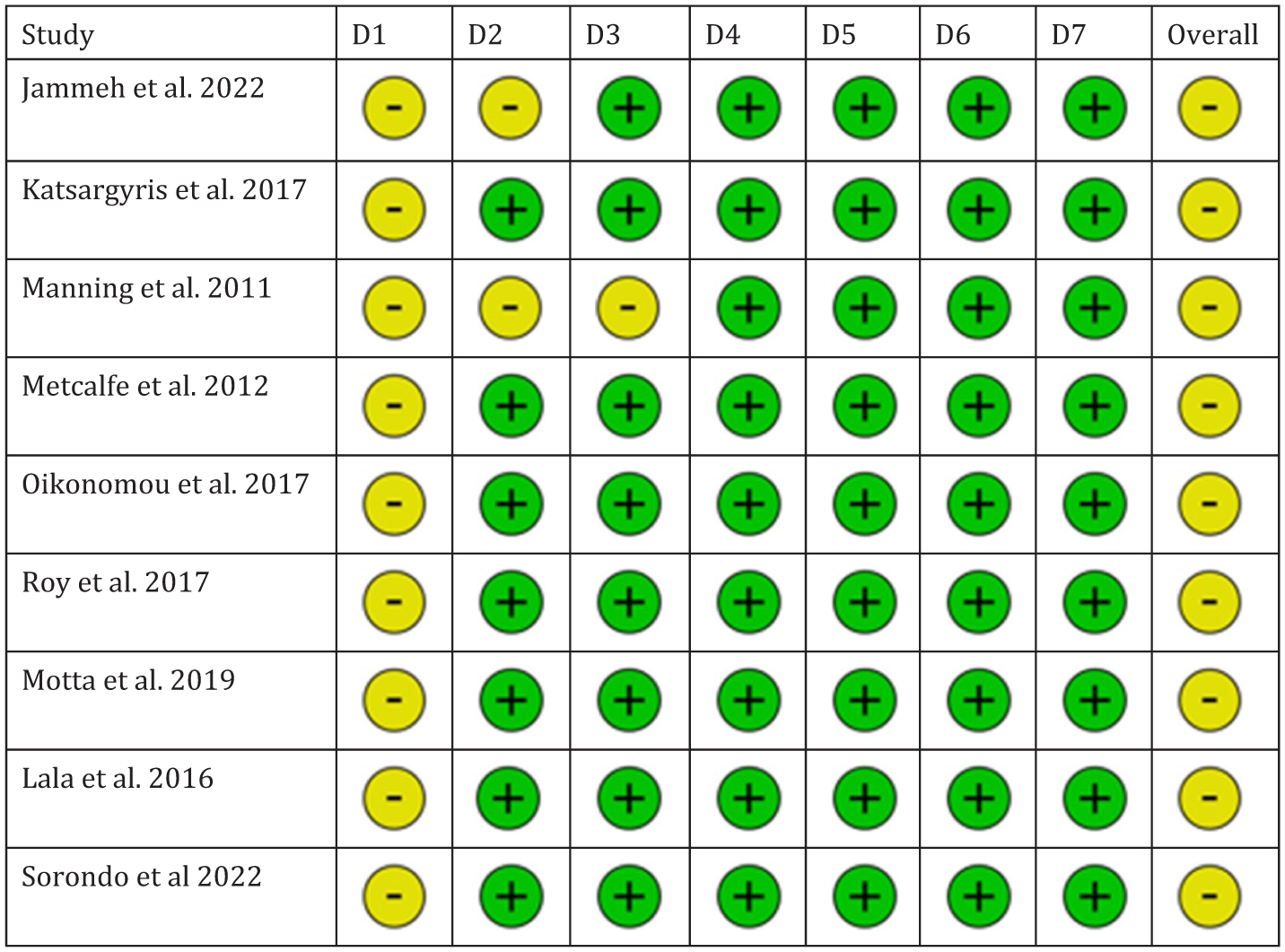
Risk of bias in all included retrospective cohort studies was assessed using the ROBINS-I tool.
Qualitative synthesis
Four studies did not report whether the patients had prior abdominal aortic aneurysm repair or not.13 –15,17
The study of Jammeh et al was the most recently published, including 127 patients. They concluded that more complex stent-grafts had no increased risk of mortality, major adverse events, type III endoleaks, or reinterventions. 9 Roy et al 13 reported no significant difference in aneurysm growth (23% renal group vs 20% complex group). The cumulative technical success of the different procedures, reported by 6 studies, was, respectively, 98.5% (n=322/327) and 97% (n=392/404) for the renal FEVAR group and complex FEVAR group.
The secondary outcomes were assessed from the raw data without performing a meta-analysis, except for perioperative cardiac complications and bowel ischemia. Only 2 patients were reported to have limb ischemia, one in each group, based on 5 of the 9 studies.9,10,12,16,17Acute renal failure was seen in 3.8% (ranging between 0% and 10%) of the patients in the renal FEVAR group compared with 4.9% (ranging between 0% and 6%) in the complex FEVAR group as reported in 7 studies.9,10 –12,14,16,17 Cerebrovascular events were reported in 6 studies, a total of 2 patients having suffered from an event, one in each group.10 –12,14,16,17 Spinal cord ischemia was only seen in the complex FEVAR group occurring in 9 of the 586 patients (1.5%) as described in 7 studies.9 –13,16,17 The mean hospital stay was described in 6 studies, in the renal FEVAR group, it ranged between 3 and 27 days compared with between 4 and 37 days for the patients in the complex FEVAR group.9,11,12,14,16,17 In one study, the hospital stay was remarkable longer in both groups than the other studies, but this was after converting median to mean days (Oikonomou et al 12 : median hospital stay renal group 12 [IQR=5–60] vs complex group 14 [IQR=2–90]). Primary target vessel patency during follow-up was described in 6 studies and the mean ranged from 89.3% to 100% in the renal FEVAR group and from 90.9% to 98.9% in the complex FEVAR group.12 –17 Moreover, no significant difference in target vessel patency was revealed from these 6 studies separately, between the renal FEVAR and complex FEVAR groups.
Quantitative synthesis
Figures 3 to 5 reveal the results of each meta-analysis performed. The incidence of perioperative reinterventions, defined as a reintervention during the hospital stay or within 30 days, was equal for both groups (4.2% [n=8/189] for the renal FEVAR group and 5.5% [n=15/275] for the FEVAR complex group). This was also concluded by meta-analysis (OR=0.69, 95% CI=0.22, 2.19, p=0.53) that did not identify heterogeneity (I2=27%, p=0.24) (Figure 3).
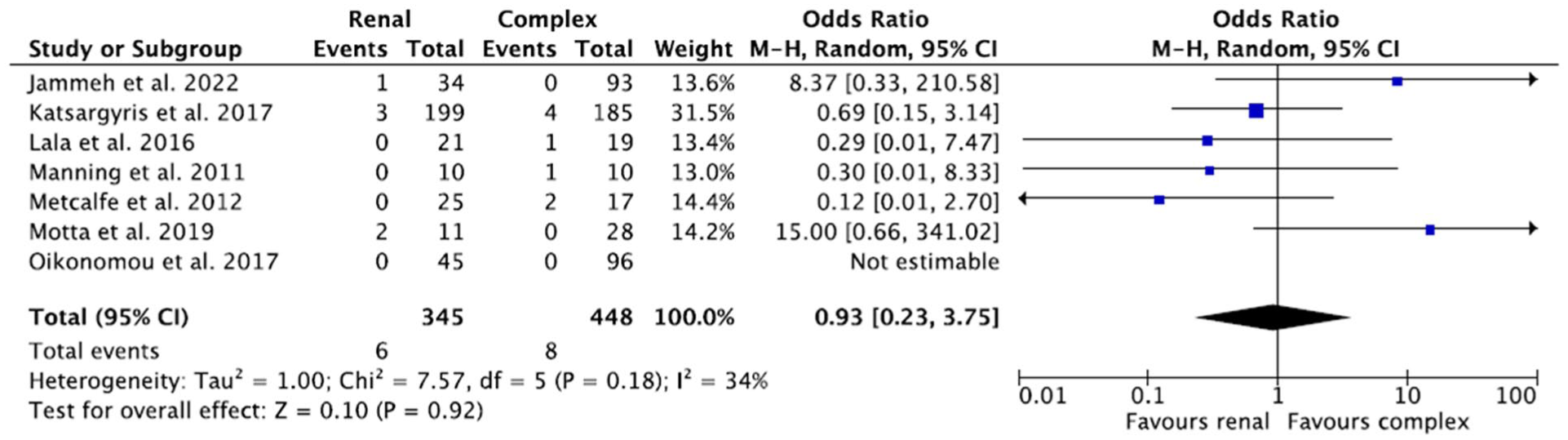
Meta-analysis (random-effects model with Mantel-Haenszel method) comparing the incidence of perioperative reinterventions of renal FEVAR and complex FEVAR, presented in a forest plot.
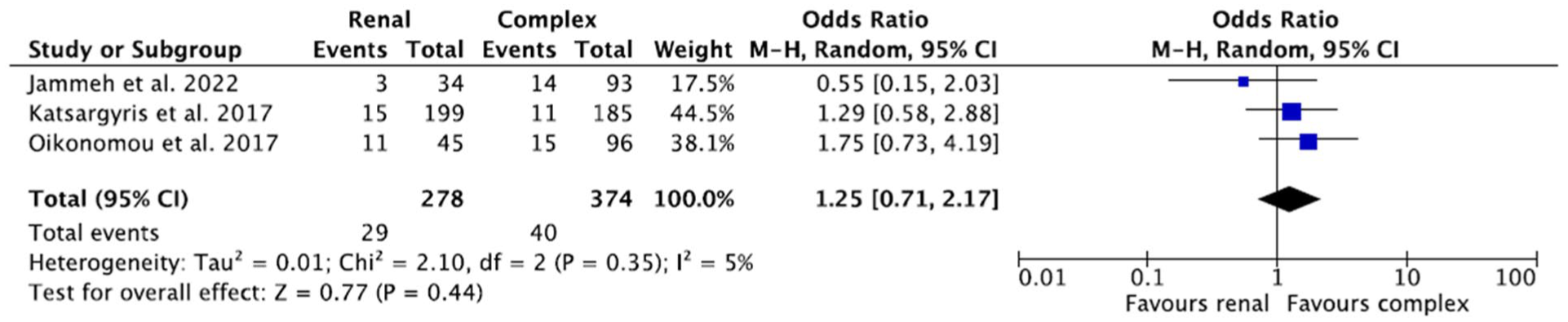
Meta-analysis (random-effects model with Mantel-Haenszel method) comparing the frequency of aortic-related reinterventions (perioperative and follow-up combined) of renal FEVAR and complex FEVAR, presented in a forest plot.
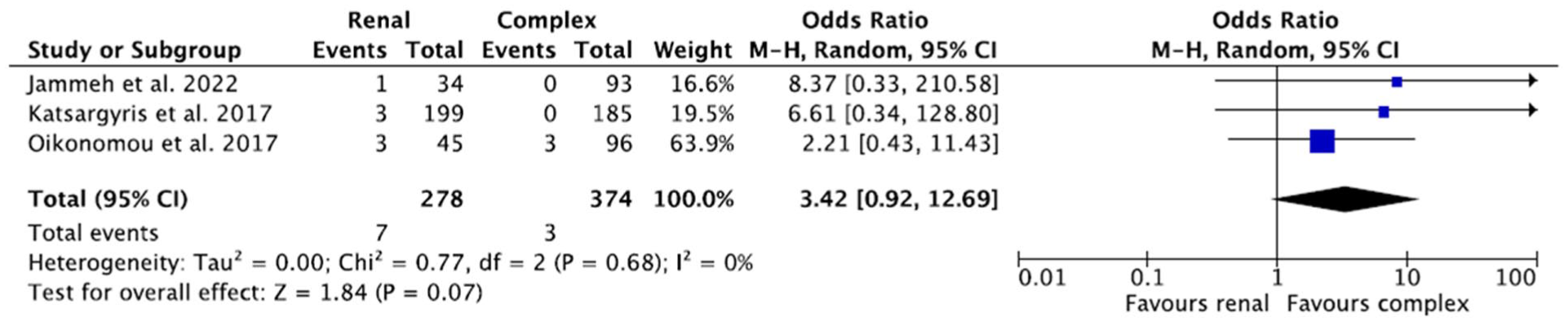
Meta-analysis (random-effects model with Mantel-Haenszel method) comparing the incidence of reinterventions for type 1 and 3 endoleaks among renal FEVAR and complex FEVAR, presented in a forest plot.
The overall reintervention (perioperatively and during follow-up) showed no statistically significant difference (10.4% [n=29/278] vs 10.7% [n=40/374] for the complex FEVAR group) by meta-analysis (OR=1.25, 95% CI=0.71, 2.17, p=0.44). In addition, no heterogeneity was observed (I2=5%, p=0.35) (Figure 4).
Looking specifically at reinterventions for type I and III endoleaks, no significant difference was also observed between the renal and complex group (incidence of 2.5% [n=7/278] for the renal FEVAR group versus 0.8% [n=3/374] for the complex FEVAR group) by meta-analysis (OR=3.42, 95% CI=0.92, 12.69, p=0.07) without associated heterogeneity (I2=0%, p=0.68) (Figure 5).
The all-cause mortality rate during hospital stay or within 30 days was one-and-a-half times higher for the complex FEVAR group (3.0% [n=17/558]) than the renal FEVAR group (1.9% [n=9/464]). However, this difference was not found to be statistically significant through meta-analysis (OR=0.81, 95% CI=0.32, 2.03, p=0.65). Neither was heterogeneity observed (I2=7%, p=0.37).
For the all-cause mortality rate, including mortality during follow-up, no statistically significant difference was found through meta-analysis (OR=1.70, 95% CI=0.75, 3.85, p=0.20). Though, it must be noted that a significant level of heterogeneity was found for this comparison (I2=77%, p<0.0001).
It was not possible to perform a meta-analysis for the overall aneurysm-related mortality since this was explicitly described in only 4 studies with only few cases of aneurysm-related mortality.
For both cardiac complications and bowel ischemia, meta-analysis showed no significant difference with an OR of 0.93 (95% CI=0.23, 3.75, p=0.92) for cardiac complications and an OR of 0.67 (95% CI=0.08, 5.82, p=0.72) for bowel ischemia.
Risk of Bias Across Studies
Although graphical examination of the contour-enhanced funnel plot of the frequency of reinterventions within 30 days, as well as the rank correlation test indicated no evident presence of publication bias., potential bias may be present as indicated by the regression test (p=0.03) (Figure 6).
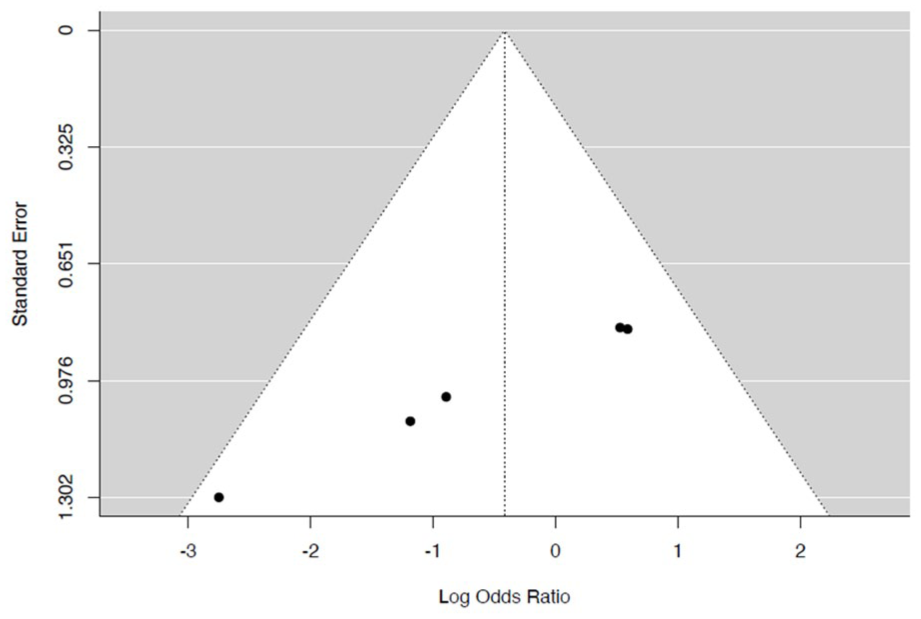
A standard error by log odds ratio funnel plot of the frequency of aortic-related reinterventions (combining those performed perioperatively and during follow-up) to evaluate the presence of publication bias.
Discussion
Complex Stent-Graft Configuration
There is a tendency in literature to incorporate more visceral vessels in the proximal sealing area of a fenestrated/branched stent-graft to avoid reinterventions. Accumulating experience in FEVAR has lowered the threshold in the decision toward more complex FEVAR stent-grafts in PAAs However, including more fenestrations/branches in visceral arteries creates a higher technical complexity, with more target vessels at risk, more coverage of lumbar/intercostal arteries and longer operation time with longer fluoroscopy time and higher volumes of contrast.5,16 In our study, perioperative technical success was the same in both groups. This could be due to the fact that our study contains papers from centers, with likely considerable experience in these complex aortic procedures, although center volume was not consistently reported.5,12,17 In our pooled results of 9 studies comparing renal FEVAR with complex FEVAR, we found a 1.5 increase (1.9% vs 3.0%) in 30-day or in-hospital all-cause mortality in the complex FEVAR group, however, this was not statistically significant. Perioperative reinterventions and the overall survival during follow-up were not significantly different between the 2 groups. The risk of developing bowel ischemia was 3 times higher in the complex FEVAR group than renal FEVAR (0.5% vs 1.5%), but this difference was not significant (p=0.72). Our study shows a higher mortality, bowel ischemia, spinal cord ischemia, and cardiac complications in the complex FEVAR but not reaching significant values. A larger study population might show a significance in these complication rates.
Notably, spinal cord ischemia was exclusively observed seen in the complex FEVAR group in 9 out of 586 patients (1.5%) across 7 studies. While a formal meta-analysis could not be performed for this outcome, this finding highlights a potential increased risk associated with complex FEVAR, likely due to increased aortic coverage and should be a point of careful consideration. In contrast, there is a decline in operation time, fluoroscopy, and volume of contrast used due to 3D image Fusion systems and more experience in these complex stent-grafts.18,19
Considering that the recommendation to lower the threshold for complex FEVAR has primarily been advocated by more experienced endovascular centers, it is concerning that these same centers report similar or even higher complication rates for complex FEVAR compared with renal FEVAR, which has been more commonly performed in less experienced centers or earlier in the learning curve.
Inadequate Proximal Sealing Zone
Proximal seal dilatation is a known issue during follow-up after FEVAR. Rastogi et al 20 showed that a higher number of target vessels was associated with a lower risk of developing proximal seal dilatation. Mastracci et al 1 demonstrated an increased risk of type I endoleak over a follow-up period of 8 years (10.4% for renal fenestrations only vs 1.9% for others; p<0.01). However, stent-grafts with renal fenestrations and a scallop for the SMA were not included in the renal FEVAR group. Moreover, more complex stent-grafts had an increased rate of reinterventions, and with increased experience, they showed an increased number of fenestrations in stent-grafts treating the same aortic anatomy in the last period of their study. 1
How far the sealing zone should extend proximally is a frequently discussed topic in literature. Some high-volume centers advise a liberal approach in adding fenestrations to extend the proximal landing zone to achieve a durable proximal sealing zone.12,17 O’Callaghan et al report that more complex stent-graft configurations improve long-term outcome in the treatment of AAA. Juxtarenal aortic aneurysm repairs with sealing in the visceral segment were significantly associated with endoleak development compared with landing in the descending thoracic aorta (46.2% vs 26.4%; p=0.041). 21 However, several studies have demonstrated that renal FEVAR for juxtarenal aneurysms is a safe and effective treatment option, with no increased risk of type Ia endoleak during mid-term follow-up compared with complex FEVAR.13,22 Moreover, in our study, we also did not reveal a significant difference between renal FEVAR compared with complex FEVAR regarding endoleak type I or reinterventions during follow-up. We support the strategy to perform a renal FEVAR intervention within instruction for use (IFU) in suitable anatomies. The benefits of selecting a more complex FEVAR in patients for whom renal FEVAR is a feasible option have yet to be demonstrated in longer follow-up. Centers with limited experience in complex FEVAR should exercise caution with its liberal use, especially during the early stages of adopting FEVAR procedures. Moreover, it might be advisable for low-volume centers to focus only on renal FEVAR interventions and refer patients who need complex FEVAR to high-volume centers. Complications at the level of renal arteries may have less lethal consequences compared with SMA or CT. In addition, treatment of complications in these visceral target vessels is extremely challenging, necessitating a highly experienced vascular team.
Target Vessel Patency
Most of the included studies described the target vessel patency. These studies showed no significant difference between the renal FEVAR group and the complex FEVAR group. The type of bridging stent that was used in target vessels was beyond the scope of our study. As earlier described in the results section, most studies included only fenestrated stent-grafts. One of the benefits of branched stent-grafts compared with fenestrations is that they depend less on the exact positioning of the stent-graft. However, branched stent-grafts require a greater coverage of the proximal aorta which could give a higher risk of spinal ischemia. Moreover, branches perform worse in the renal arteries in mid-term and long-term follow-ups compared with fenestrations.23,24 In fenestrated stent-grafts unstented scallops are at risk for target vessel stenosis or occlusion and require reinterventions, in some studies, more than 40% of the patients. 14 Motta et al 16 showed that SMA stenting should be performed, if necessary, in stent-graft with a scallop for the SMA, without compromising the SMA.
Aneurysm Morphology
In our systematic review, few studies have given detailed anatomic features of the aneurysms. Most studies describe solely the type of aneurysms that were treated in the entire study group and the diameter of the aneurysm, but do not always mention which type of aneurysms have been treated with renal FEVAR or complex FEVAR, or the total (effective/used) sealing zone. It is clear that type IV TAAA and suprarenal aneurysms will need complex FEVAR stent-graft configurations. The question remains which kind of stent-graft configuration is the best treatment for juxtarenal AAA. To make the best comparison between renal FEVAR and complex FEVAR, the morphology of the aneurysm should be similar between the groups. Unfortunately, this information was not available in the reviewed publications and represents a critical limitation in our analysis and introduces the possibility of residual confounding. Type IV TAAAs are more extensive types of aneurysms that could have affected some of the primary or secondary outcomes. Exclusion of type IV aneurysms would reduce the study series allowing evaluation of the impact of stenting the mesenteric arteries (SMA and CT) in these complex FEVAR stent-grafts, which was one of the key points this study desired to evaluate. In our cohort, only 2 studies included type IV TAAA and 1 study already divided the study group in TAAA and juxtarenal.1,5,11 Seven studies included pararenal AAA and 1 study included only juxtarenal AAA.4,9,10,12 –14,16,17 Roy et al included only juxtarenal AAA and reported a higher in-hospital mortality (8% vs 2 %, p=0.059) and significant more graft-related endoleaks (13% vs 7%; p<0.001) in complex FEVAR compared with renal FEVAR. They reported that more complex stent-grafts were utilized as time progressed. 13 Mastracci et al divided the groups into juxtarenal AAA and type IV TAAA and showed an increased risk of reinterventions and higher rate of CT occlusion in the complex FEVAR group. They revealed significant (10.4% vs 1.9%, p<0.01) more type I endoleaks in the renal FEVAR group compared with complex FEVAR, which may be a result of the early inclusion of these patients in the study, early experience with FEVAR and longer follow-up. Furthermore, they observed that more complex FEVAR was performed in patients with similar aortic anatomy over the 12 years of study period. 1 An ideal comparison would be to investigate the outcomes of 2 identical anatomical groups of patients with AAA, which are suitable for renal FEVAR stent-graft, by randomizing between renal and complex FEVAR.
Limitations
Our study had several limitations. One of the key limitations is the anatomic aneurysm morphology difference between the groups and within the studies, which may introduce significant confounding and limit direct comparability. In addition, the presence of potential publication bias, as suggested by funnel plot asymmetry and regression testing, must be acknowledged as a further limitation. The potential presence of publication bias represents a major limitation of the current review. Unfortunately, the studies we found in our systematic review are all retrospective studies. The average follow-up period of the studies was relatively short, which could explain the low rates of type Ia endoleak in the renal FEVAR group as degeneration and extension of disease may develop after a longer period. Therefore, technical equivalency and favorable short-term outcomes should not be interpreted as evidence of long-term equivalence. In addition, there is a notable deficiency in the baseline characteristics provided by the included studies, such as information on diabetic status, renal impairment, and hypertension, all of which could potentially influence postoperative clinical outcomes.
Conclusion
In the endovascular repair of PAA and type IV TAAA, renal FEVAR and complex FEVAR show no early and mid-term differences in technical success, mortality, complications, or reinterventions.
Renal FEVAR in juxtarenal aneurysms remains a safe and effective treatment option with no higher risk on type Ia endoleak during follow-up compared with complex F/BEVAR. The long-term advantage of performing complex FEVAR when renal FEVAR is within the instructions for use is not clear from the current data.
Supplemental Material
sj-docx-1-jet-10.1177_15266028251397841 – Supplemental material for Impact of Stent-Graft Complexity on Outcomes of Complex Abdominal Aortic Aneurysm Repair: A Systematic Review and Meta-Analysis
Supplemental material, sj-docx-1-jet-10.1177_15266028251397841 for Impact of Stent-Graft Complexity on Outcomes of Complex Abdominal Aortic Aneurysm Repair: A Systematic Review and Meta-Analysis by Ozan Yazar, Buland S. Tiwana, Jean H. T. Daemen, Marion Heymans, Chrissy van Wely, Oguzhan Bayrak, Barend M. E. Mees and Geert Willem H. Schurink in Journal of Endovascular Therapy
Footnotes

Funding
The authors received no financial support for the research, authorship, and/or publication of this article.
Declaration of Conflicting Interests
The authors declared no potential conflicts of interest with respect to the research, authorship, and/or publication of this article.
Registration
PROSPERO registry (record ID: CRD42022316651).
Supplemental Material
Supplemental material for this article is available online.
References
Supplementary Material
Please find the following supplemental material available below.
For Open Access articles published under a Creative Commons License, all supplemental material carries the same license as the article it is associated with.
For non-Open Access articles published, all supplemental material carries a non-exclusive license, and permission requests for re-use of supplemental material or any part of supplemental material shall be sent directly to the copyright owner as specified in the copyright notice associated with the article.
