







Abstract
While several federal laws including the Pregnancy Discrimination Act, Family Medical Leave Act, and the Americans with Disabilities Act provide some freedom from discrimination due to pregnancy and breastfeeding-related conditions, many pregnant workers in Kentucky were not covered under these existing laws. The intent of Senate Bill 18, the Kentucky Pregnant Workers Act, was to provide clarity to employers about the protections afforded to pregnant workers by law as well as the need for employers to provide the same level of accommodations for pregnant workers that are available for those who are disabled. Similar bills had been filed during the 2015 to 2018 legislative sessions, and in 2019, Senate Bill 18 passed 87-5 and was signed by the Governor on April 9, 2019. The purpose of this article is to analyze a pregnancy anti-discrimination bill that passed during the 2019 Kentucky General Assembly utilizing Kingdon’s Multiple Streams Framework. This article also contains multiple policy alternatives, interest group involvement related to pregnancy anti-discrimination policy, unintended consequences of policy implementation as well as potential issues with enforcement of the Kentucky Pregnant Workers Act.
Women of childbearing age may fear losing their jobs when laws are unclear about workplace protections for pregnancy-related medical conditions. Requests for temporary alterations in job responsibilities such as relief from heavy lifting or increased water breaks often go unmet for pregnant workers (Declercq et al., 2013). The Kentucky Pregnant Workers Act (KPWA) was filed as Senate Bill (SB) 18 in the 2019 regular session of the Kentucky General Assembly (Legislative Research Commission, 2019). SB 18 ensured that employers within the state provide reasonable accommodations to employees with pregnancy, childbirth, and related medical conditions when necessary unless it would cause unnecessary hardship on the employer. Examples of possible reasonable accommodations listed in the bill include more frequent or longer breaks, time off to recover from childbirth, appropriate seating, modified work schedule, and transfer to a less hazardous or less strenuous position (Kentucky Revised Statutes, 2020). The purpose of this article is to analyze SB 18, a bill proposed and passed by the Kentucky General Assembly to minimize pregnancy discrimination in the workplace, using Kingdon’s Multiple Streams Framework.
According to a meta-analysis with more than 160,000 pregnant women, engaging in physically demanding work increases the chance of preterm birth (<37 weeks’ gestation) by 22% (Mozurkewich et al., 2000). Preterm birth affects one of out of every 10 babies born in the United States (Martin et al., 2019). Preterm and low-birth-weight infants are the leading cause of death among the first year of life (Nour, 2012). Babies who are born preterm and/or low birth weight can face long-term health problems including cerebral palsy, developmental delays, blindness, and intellectual disabilities. A preterm and/or low-birth-weight infant may cost an individual employer an additional $47,000 in increased newborn health care costs compared with a full-term infant and collectively preterm births cost employers in the United States between $6 and $14 billion in excess health care costs (Grosse et al., 2017).
Three laws exist at the federal level that provides some protection for pregnant women against discrimination in the workplace. The first law, the federal Pregnancy Discrimination Act (PDA), enacted in 1978 as an amendment to Title VII of the Civil Rights Act of 1964, made it unlawful for employers to discriminate in the workplace due to pregnancy, childbirth, or related medical conditions (U.S. Equal Employment Opportunity Commission [EEOC], n.d.). While employers can no longer deny hiring women due to their pregnancy, the rate of discrimination toward pregnant workers remains prevalent in workplaces throughout the country even 40 years after the passage of the PDA (U.S. EEOC, 2020).
A second federal law, The Family and Medical Leave Act (FMLA) guarantees an employee who has been working for a company with 50 or more employees for at least a year has the right to 12 weeks of unpaid, job-protected leave to recover from the birth of a child. Employees have the right to take this 12-week unpaid leave annually and their health benefits are maintained during the leave. FMLA also guarantees that at the end of the leave that an employee will be given the same or equivalent job in pay, benefits, and other conditions (US Department of Labor, n.d.). However, the gap in FMLA coverage is likely widening due to the increase in part-time worker as well as “gig economy” workers such as independent contractors, on-call workers, and freelancers. In addition, an employer must have at least 50 employees in a 75 mile-radius, so employees of small businesses are not protected under this federal law.
A third law, The Americans with Disabilities Act (ADA) protects workers from discrimination in the workplace based on a disability. While pregnancy is not considered a disability under the ADA standards, pregnant workers are included in protections of the ADA. Due to recent revisions in the definition of disability, pregnant workers with pregnancy-related medical conditions are better able to demonstrate that they have disabilities under which reasonable accommodations may be made under the ADA (ADA, 1991). While the PDA, FMLA, and ADA laws provide some freedom from discrimination due to pregnancy, childbirth, and related medical conditions, employed mothers may still face discrimination in the workplace due to pregnancy or childbirth-related conditions.
The Kentucky Civil Rights Act (KRS 344.030) provides some protection against discrimination toward pregnant workers in the workplace (KRS, 2020). The KPWA amended prior legislation by defining reasonable accommodations made for pregnancy and childbirth-related conditions. The KPWA also amended KRS 344.040 (related to unlawful discrimination by employers—difference in health plan contribution rates for smokers and nonsmokers) to make it unlawful for an employer to fail to accommodate an employee due to pregnancy, childbirth, or related medical condition. Employers are also required to provide notice to all employees about their right to be free from discrimination for pregnancy, childbirth, or related medical conditions under SB 18 (KRS, 2020).
Policy Background
The Pregnant Workers Fairness Act, a federal bill first introduced in the U.S. Congress in 2012, would prohibit employment practices that discourage making reasonable accommodations for job applicants or employees affected by pregnancy, childbirth, or related medical conditions (Workplace Fairness, 2020). The most recent action on the Pregnant Workers Fairness Act was consideration by the House of Representatives Committee on Education and Labor in January 2020 (Pregnant Workers Fairness Act, 2019/2020). The Pregnant Workers Fairness Act would prohibit employment practices that discriminate against making reasonable accommodations for job applicants or employees due to pregnancy, childbirth, or related medical conditions. The U.S. EEOC, the federal government agency responsible for investigating charges of job discrimination related to an employee’s pregnancy in workplaces with 15 or more employees, would be required to provide examples of reasonable accommodations that shall be provided to job applicants and employees, unless the employer can demonstrate that providing such accommodations would impose an undue hardship. Another federal bill related to discrimination toward pregnancy, childbirth, or related medical conditions, called the Pregnancy Discrimination Amendment Act, was filed in March 2018, and it was referred to the House Committee on Education and the Workforce (Pregnancy Discrimination Amendment Act, 2017/2018). This bill seeks to amend the Civil Rights Act of 1964 to provide protections against pregnancy discrimination in the workplace. Since neither of the proposed federal bills have passed, many states (including Kentucky) have proposed and passed pregnancy anti-discrimination legislation.
Bills to limit discrimination in the workplace toward pregnancy and childbirth-related conditions had previously been filed in the 2015 to 2018 regular sessions of the Kentucky General Assembly. The KPWA, a bipartisan bill, was sponsored by 10 senators (6-R; 4-D). Senate Bill 18, introduced in January 2019, was signed into law by Governor Matt Bevin (R) in April 2019 and became effective on June 27, 2019 (Figure 1). Similar legislation was also introduced in the 2018 general session; however, it failed to pass out of the Senate after being voted out of the Judiciary Committee. Previous attempts in 2015, 2016, and 2017 were also unsuccessful (Table 1).
History of Proposed Pregnancy Discrimination Legislation in Kentucky (2015–2018).
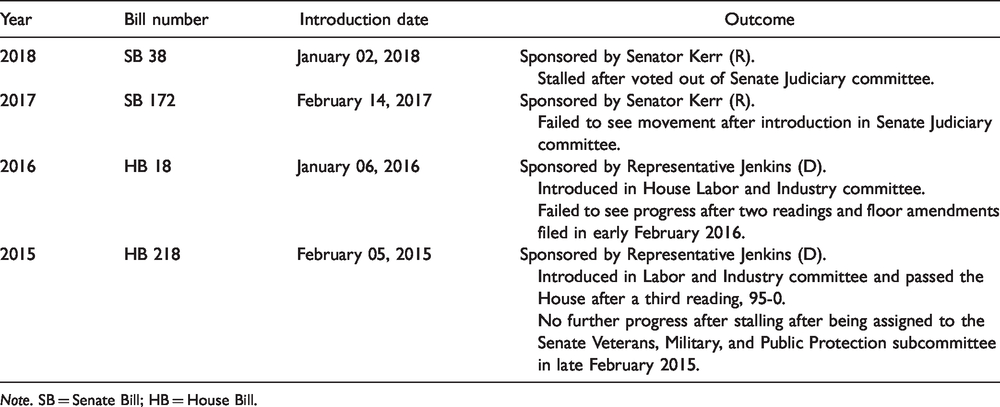
Note. SB = Senate Bill; HB = House Bill.
Kingdon’s Multiple Streams Framework
Kingdon’s Multiple Streams Framework was developed as a way to analyze governmental agenda setting. Kingdon (2011) proposes three major process streams including (a) problem recognition, (b) the formation and refining of policy proposals, and (c) politics involved in policy development (Figure 2). When conditions are favorable, the three independent streams unite to create a window of opportunity to push an issue higher on the policy-making agenda (Kingdon, 2011). Kingdon’s framework has been applied to the politics and policies surrounding agenda setting for a number of public health issues including mandated influenza requirements for health care workers (Jackson-Lee et al., 2016), early childhood education (Li & Lu, 2018), and funding for gender-neutral Human papillomavirus (HPV) vaccinations (Shapiro et al., 2017).
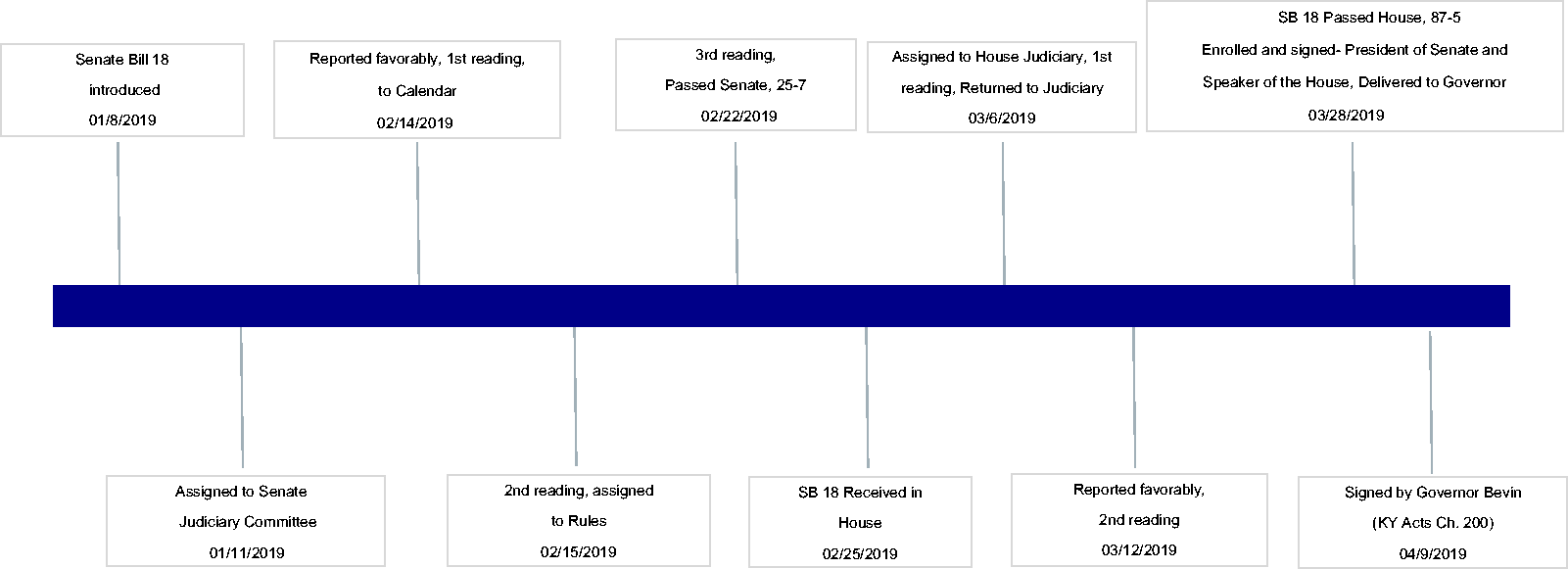
Kentucky Pregnant Workers Act (SB18) Actions in the 2019 Regular Legislative Session.
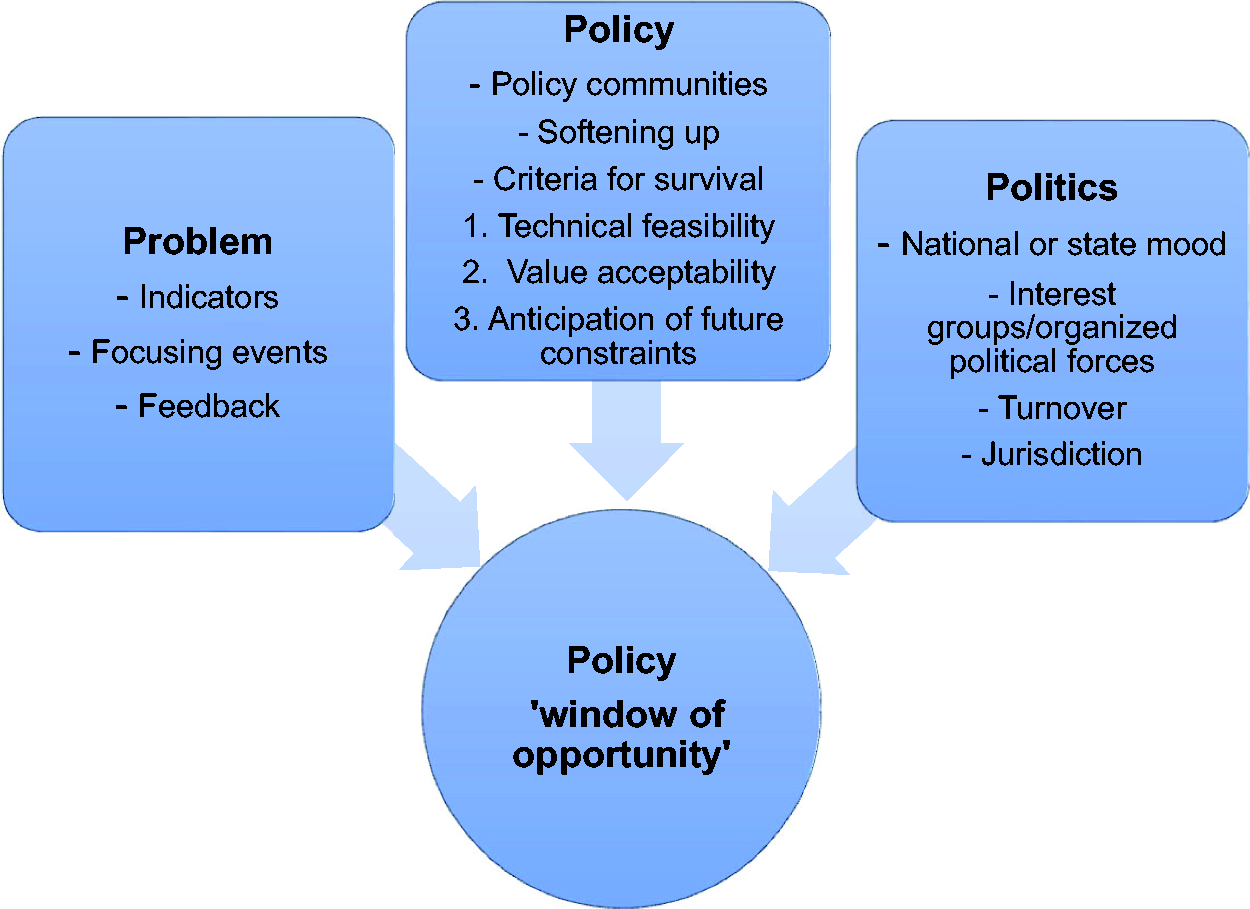
Kingdon’s Multiple Streams Framework.
Problem Stream
The problem stream involves the recognition, framing, and definition of a specific issue (Figure 2). The value that a policymaker places on an issue is of upmost importance in this first step of Kingdon’s model, as an issue is not defined as a “problem” unless a policymaker makes this distinction. Governmental officials, constituents, industry, media, and special interest groups are key players in the problem stream. Indicators, focusing events, and feedback are key elements of the problem stream.
Indicators refer to problems that arise from routine monitoring or research studies and this element focuses on the importance of a particular problem using scientific literature, recommendations, and technological developments. Policymakers assess for a change in an indicator, which in turn assists in determining the importance of an issue. Indicators, such as statistical data or research findings, are often used to define problems. For example, Kentucky ranked 44th in the United States in 2016 for female labor participation rates (Institute for Women’s Policy Research, 2020), indicating a low level of female labor participation within the state. In addition, extending reasonable accommodations to pregnant workers decreases insurance and health care costs, increases productivity, increases the number of women remaining on the job during pregnancy, and decreases training costs for new employees (National Women’s Law Center, 2015).
In addition to indicators, focusing events call attention to a problem and can be derived from a crisis, natural disasters, or personal experience of constituents or policymakers. An example of a focusing event related to SB 18 is the story of officers Lyndi Trischler and Sam Riley, police officers in Florence, KY (United States Department of Justice, Office of Public Affairs, 2016). Both women were subjected to a discriminatory policy in their place of employment that pushed them out of job while pregnant in 2014. Two years after beginning their court battle, a landmark agreement was reached on October 26, 2016 with the U.S. Department of Justice and the City of Florence. The City of Florence changed their anti-discrimination policy for pregnant employers and they also restored paid leave to the officers as well as compensation for their losses, totaling $135,000 in damages and attorney fees (A Better Balance, 2020). This case led to the initial legislative efforts to prohibit pregnancy discrimination in the workplace during the 2015 legislative session in Kentucky. Trischler–Riley, the first pregnancy discrimination case brought before the Department of Justice since the Supreme Court’s ruling in the 2015 Young v. United Postal Service case led to the initial legislative efforts to prohibit pregnancy discrimination in the workplace in the Kentucky regular legislative session in 2015. In Young v. United Postal Service, the Court evaluated the requirements for bringing a disparate treatment claim under the PDA (Oyez, n.d.). Ruling 6-3, the Court stated that to bring a disparate treatment claim, a pregnant employee must provide proof that their employer refused to provide accommodations for a pregnancy-related condition. The Court then remanded the case to the United States Court of Appeals for the Fourth Circuit to determine whether United Postal Service engaged in discrimination under this description.
Feedback, the final element of the problem stream, provides information to policymakers about existing programs and policies, which in turn is used to raise awareness of specific problems. Secretary of State Alison Grimes was noted as saying “there is no reason why 2019 should not be the year that it (pregnancy discrimination bill) comes out of the Kentucky Senate and signed into law by the governor” (Latek, 2018). In 2019, supporters for the KPWA reached out to policymakers in Kentucky to educate and inform them on the various federal laws that cover discrimination in the workplace and how KPWA filled gaps within these existing policies. A list of talking points were presented to advocates during the 2019 Kentucky Nurses Association Legislative Day event at the Kentucky Capitol in February 2019 to provide policymakers with information about the detrimental health effects of not allowing reasonable accommodations in the workplace for pregnant women and their unborn children. Multiple opinion editorial articles were also written in various newspapers throughout Kentucky encouraging policymakers to support the KPWA before and during the 2019 legislative session.
Policy Stream
Kingdon (2011) uses the term “primeval soup” of ideas to describe the policy stream (Figure 2). Kingdon describes the “primeval soup” as an evolutionary process in which a wide range of ideas are initially considered that give way to smaller set of policy alternatives before a final decision is made. The development of potential solutions to a problem is the focus of this step in the model. Key players in the policy stream include special interest groups, policy entrepreneurs, bureaucrats, media, legislative staff, and academic and industry leaders. These experts come together to form a policy community, which works to develop alternatives to issues, conditions, and problems that affect the policy agenda. Finally, a period of “softening up,” a vital component of the policy stream, is included in the policy stream.
Kingdon (2011) describes how policy entrepreneurs attempt to “soften up” those resistant to the proposed policy change. Kingdon posits that the softening-up period is crucial before a policy proposal may be taken seriously by a policymaker. Key supporters of the KPWA included the Kentucky Equal Justice Center, March of Dimes of Kentucky, Kentucky Council of Churches, Planned Parenthood of Indiana and Kentucky, Kentucky Center for Economic Policy, United Food and Commercial Workers Local 227, Kentucky Coalition Against Domestic Violence, American Civil Liberties Union (ACLU) of KY, Lactation Improvement Network of Kentucky (LINK), and the Catholic Conference of KY. The softening-up period had occurred over the previous 4 years (2015–2018) with multiple proposed anti-discrimination legislation attempts in the Kentucky legislature. This period of time gave policymakers an opportunity to become familiar with the issue as well as the supporting and opposing factions for this policy.
Kingdon describes technical feasibility, value acceptability, and anticipation of future constraints as the three criteria necessary for policy survival. Technical feasibility refers to the details of the specific criteria of the proposed policy change. The technical feasibility of the KPWA including a clear definition of the term “reasonable accommodations” was vital for the success of SB 18. Value acceptability refers to how much a policy proposal is consistent with the values of governmental officials and the general public. Given the state and nationwide attention garnered by the Riley–Trischler case as well as multiple publications and media outlets about this issue, policymakers and the general public in Kentucky had gained information about the importance of the issue to pregnant workers and their families. Finally, anticipation of future constraints refers to potential restrictions that will impact the effectiveness of the proposed policy change including budgetary concerns and public approval. Due to the nature of the policy, budgetary concerns were not a high priority. This bill is an example of a protective regulatory policy (Birkland, 2016) due to the role of the primary actors and the relationship between primary actors that occurs with this type of policy, such as bargaining and compromise, in the policy process. Examples of this included involvement with the Health and Welfare and Judiciary Committees and trade associations such as Kentucky Chamber of Commerce, Kentucky Department of Labor, and union organizations.
Pregnancy accommodation laws may help the Kentucky economy by encouraging women to remain employed while pregnant and following the birth of a child. While the policy provisions vary slightly; 29 states, the District of Columbia, and four cities require employers to provide reasonable accommodations to pregnant workers (National Partnership for Women and Families, 2020). In California, providing reasonable accommodations for pregnant workers has been law since 2000. Pregnancy discrimination claims have dropped since the law passed, an indication that the law helps employers and employees resolve issues without litigation (Farrell et al., 2012).
Politics Stream
Finally, the politics stream is the third stream in Kingdon’s model (Figure 2). Key players in this stream include those directly involved in the policy-making process such as stakeholders, policymakers, and supporting as well as opposing forces for the proposed policy. Additional components of the politics stream including the national or state mood, interest group involvement, shifts in administration and jurisdictional debates can influence the political aspects of the policy-making process.
The national, or the state mood, is the overall political climate or political view at a particular time. The state mood played an influential role in the politics stream component of Kindgon’s model. Interest groups and other organized political forces who are participants in the political arena including business and industry leaders, professional organizations, labor unions, public interest groups, and governmental officials as lobbyists. The 2015 and 2017 legislative sessions were short sessions with 2017 primarily focused on the passage of a backlog of policies favored by Republicans after taking control of the Kentucky House in 2016. The 2016 and 2018 legislative sessions were difficult budget sessions with 2018 mostly taken up by pension discussions. Senator Kerr (R) presented on KPWA at an interim hearing in October 2018 and it was well received by attendees. There were various interest groups, with LINK and ACLU of KY taking the lead, which promoted and advocated for KPWA. Turnover, which is a change in governmental officials through elections or regular staffing changes, also may impact the politics stream. All 10 cosponsors of the bill were elected in 2018 and 2019 was not an election year, so turnover did not affect the success of this bill. After the 2018 general election, Republicans remained in the majority in the Kentucky House and Senate although Governor Bevin (R) was up for reelection in 2019. Jurisdiction, which is when governmental officials “claim their turf,” may also impact the political aspects of the policy-making process. Since there were not pending federal or local laws mandating employers to provide reasonable accommodations to pregnant workers, there was not a jurisdictional conflict with the KPWA.
According to Kingdon’s Multiple Streams Framework, successful agenda setting depends on the interaction of all three streams. Merging the problem, policy, and politics streams can increase the chance that policymakers will give an issue serious attention, resulting in a policy “window of opportunity,” which facilitates policy change (Kingdon, 2011). Successful components of the three policy streams included increased attention to SB 18 during KNA Legislative Day, strong advocate group support, and lack of turnover in sponsorship of the bill in the 2019 legislative session. When a policy window is open, as it was for SB18, policy entrepreneurs including policymakers, advocates, lobbyists, or other governmental officials are instrumental in moving the policy-making agenda forward. Indeed, LINK, ACLU of KY, and a Better Balance were the policy entrepreneurs who were critical in passage of SB18.
Pregnancy Discrimination Policy Alternatives
Equality for pregnant workers within the workplace including freedom from discrimination due to pregnancy, childbirth, or related medical conditions was the intended outcome of the KPWA. Potential policy alternatives that could serve a similar purpose include paid maternity leave, paid sick time, wage equality, and breastfeeding rights in the workplace. The United States currently does not require paid maternity leave; however, employers may choose to provide this benefit to employees. Currently only four states in the United States (California, New Jersey, Rhode Island, New York, and most recently Washington) and the District of Columbia provide paid maternity leave (National Conference of State Legislatures, 2020b). Under FMLA, employees having worked at their current company for the past 12 months and for at least 1,250 hours are entitled to take up to 12 weeks of unpaid maternity leave (U.S. Department of Labor, n.d.). However, multiple FMLA exclusions apply, and not all pregnant workers are covered by this policy in the United States. Paid sick leave is another policy alternative. While Kentucky lacks a statewide paid sick leave policy, there are 11 states in the United States plus the District of Columbia that provide this coverage to employees (Blakely-Gray, 2019).
While wage equality has made great strides since the “equal pay for equal rights” movement began in the 1960s in the United States, there are still many states in the country with significant wage differences between men and women. The gender wage gap (women compared to men) within Kentucky in 2018 was 80% in 2016 (Institute for Women’s Policy Research, 2020). At the current rate due to the gender wage gap, women in Kentucky will not receive equal pay for equal work until 2069 (Institute for Women’s Policy Research, 2020). There is also a wage disparity between married and single mothers in the United States. Married mothers earn only 69 cents for every dollar earned by their male counterpart and single mothers earn only 58 cents for every dollar earned by married men with children in the United States (Institute for Women’s Policy Research, 2020).
Many states in the United States now require employers to provide nursing mothers time and space to express milk in the workplace. However, there are wide variations in the enforcement of these laws (National Conference of State Legislatures, 2020a). All 50 states have laws that allow breastfeeding in a private or public location. However, only 32 states including Kentucky have laws related to breastfeeding in the workplace (National Conference of State Legislatures, 2020a).
Advocacy and Interest Groups
The KPWA received supported from multiple state organizations. First, LINK was one of the forerunners supporting SB18. LINK, Kentucky’s coalition designated by the United States Breastfeeding Committee is devoted to making breastfeeding easier for all Kentuckians. Second, a Better Balance, a group of lawyers who work on a variety of women’s rights and economic issues in the United States, was instrumental in drafting the original version of the pregnancy fairness bill in Kentucky and worked with LINK and other supporters to push for this bill in the 2015, 2016, 2017, and 2018 regular session of the General Assembly. A Better Balance’s (2020) mission is to “promote equality and expand choices for women and men at all income levels so that they may care for their families without sacrificing their economic security” The mission of ACLU of KY, a nonpartisan public interest law farm, is to preserve liberty and they do this by working daily in courts, legislatures, and communities to defend the individual rights and liberties guaranteed to all people by the Constitutions of the United States and the Commonwealth of Kentucky (ACLU KY, 2020). Fourth in 2018, the Kentucky Chamber of Commerce was officially neutral on their stance of the KPWA. When asked about potential and oppositional forces to the KPWA, a main LINK contact for the 2019 bill preparatory discussions stated that “she was not sure of any specific opposition. My memory is that various employers were pushing back in the past because they felt the effort to be extra regulation rather than clarification of extant federal law” (personal communication, 2018). A staff member with the Kentucky Center for Economic Policy stated in 2018, “We did catch wind of some opposition from another group representing business interests” (personal communication, 2018). Support from various advocacy and interest groups and lack of oppositional forces were crucial factors for the successful passage of SB 18 in the 2019 legislative session.
Potential Unintended Consequences
Loss of jobs by pregnant employees is one potential unintended consequence related to pregnancy and childbirth-related accommodation laws such as the KPWA. It is hypothesized that due to the increase in regulations for employers, pregnant employees may lose their jobs more frequently due to employers’ fear of complaints or litigation for failure to provide reasonable accommodations for pregnant workers. However, according to a recent study on the types of legislative protections for pregnant workers and labor market outcomes, states with pregnancy accommodation laws such as SB 18 demonstrated positive labor market benefits. Benefits include increased employment rates for pregnant workers by as much as 2.2%, labor market participation by as much as 5.6% as well as increased average number of weeks worked by up to 2 weeks during the year the employee gave birth (Bennett Shinall, 2020
Potential Implementation and Enforcement Issues
Anti-discrimination laws generally have a statute of limitations for filing a claim. In Kentucky, a discrimination claim can be filed with either the state administrative agency (Kentucky Commission for Human Rights—KCHR) or with the federal administrative agency (EEOC). The two agencies have what is called a “work-sharing agreement,” which means that the agencies cooperate with each other to process claims. Employees must file with KCHR within 180 days or the EEOC within 300 days from the date of the discrimination claim. However, between 2008 and 2018, state funding for KCHR was cut by 19% (Kentucky Center for Economic Policy, 2017). Kentucky law does not limit or cap the compensatory (emotional pain and suffering) damages potentially available for a discrimination claim; however, these claims are capped under federal law (Workplace Fairness, 2020). Therefore, many Kentucky attorneys choose to file employment discrimination cases in state court. A lawsuit based on a discrimination claim must be filed within 5 years of the date of the discrimination claim. Trischler–Riley, the landmark Kentucky case, utilized the EEOC route for filing a discrimination complaint (Perez-Pena, 2016). When asked about potential issues with implementation and/or enforcement of SB 18, a staff member at the Kentucky Center for Economic Policy stated “since the state already knows how to implement and enforce accommodations for disabled workers, and since businesses already know how to comply, potential issues are minimal” (personal communication, 2018). In addition, a Kentucky Senator (D) stated, “the only way that we’re going to make a difference in Kentucky with providing working mothers with accommodations in the workplace is if we impose fines on employers that aren’t following the law and hurt them in their pocketbook” (personal communication, 2018).
Discussion
Kingdon’s Multiple Streams Framework was a useful tool for analyzing pregnancy anti-discrimination policy following the 2019 Kentucky General Assembly session. There were multiple aspects of the problem, policy, and politics streams that provided a window of opportunity for the successful passage of the KPWA in the 2019 General Assembly. The Trischler–Riley case was an effective focusing event for raising awareness of the problem of pregnancy discrimination in the workplace. Since the KPWA had been considered by the general assembly during the previous 5 years, “softening up” played a role in the success of SB 18. Advocacy and interest groups support for the KPWA including LINK, ACLU of KY, and a Better Balance, the use of effective health-related talking points and the lack of opposing forces to SB18 proved beneficial heading into the Kentucky 2019 General Assembly. There was little turnover in the Kentucky legislature following the 2018 general election and Republicans remained in control of the Kentucky House and Senate as well as the Governor’s seat. Given the bill sponsor was a Republican and there was robust bipartisan support for SB18, the political climate was an important factor in successful passage of the KPWA in 2019.
Nurses, consistently rated as one of the top ethical and honest professions, are in a unique position to serve as champions for social justice and health equity. The American Nurses Association (ANA) Code of Ethics for Nurses with Interpretative Statements establishes the ethical standards for nurses and acts as a guide for ethical analysis and decision making in the nursing profession (ANA, 2015). Protection of human rights is at the fore front of the nursing profession including a focus on vulnerable populations such as women and children (ANA, 2017). According to the ANA, advocacy is a pillar of the nursing profession (ANA, n.d.). The ANA encourages nurses to engage in political advocacy including joining, participating, and involvement in leadership positions in state and federal nursing organizations. To support pregnant women and their unborn children, nurses should also advocate for pregnancy accommodation laws at the state and federal levels. Educating and informing legislators about evidence-based research findings related to pregnancy accommodation policy is another way that nurses can act as health care advocates. Nurses, given their patient advocacy experience, are natural advocates for public health policy.
In summary, this article identifies the various components of Kingdon’s Multiple Streams Framework that successfully merged in 2019 to create a policy window of opportunity for enacting a law in Kentucky to provide accommodations for working pregnant women. Analyzing the various components of the three streams of Kingdon’s Multiple Streams Framework (problem, policy, and politics) in relation to the policy context within a given state or locality can be a successful strategy for agenda setting. Policy stakeholders can look to Kingdon’s Multiple Streams Framework and the success of SB 18 in 2019 as well as the failed attempts in 2015 to 2018, for guidance in assessing and promoting successful strategies for advancing a pregnancy accommodation policy agenda. For example, the short legislative sessions, budgetary concerns, and a lack of an adequate “softening up” period contributed to the pregnancy accommodation policy failed attempts in the 2015 to 2018 legislative sessions in Kentucky. Stakeholders need to evaluate key elements of Kingdon’s Multiple Streams Framework including indicators, focusing events, feedback, key players including supporting and opposing organizations, the amount of “softening up” incurred by the proposed policy, the state and/or national mood, interest group involvement, changes in administration and jurisdictional challenges when advocating for pregnancy accommodation policy in a particular state or locality. Policy evaluation as well as assessment of the number of pregnancy discrimination claims after the enactment of SB 18 will be important as an overall measure of the effectiveness of this policy in reducing pregnancy discrimination within the state. Further research is needed to ascertain the impact of SB 18 and similar state-specific pregnancy accommodation laws on the overall health and well-being of pregnant women, their families, and the economic effects on businesses.
Footnotes
Declaration of Conflicting Interests
The author declared no potential Conflicts of interest with respect to the research, authorship, and/or publication of this article.
Funding
The author disclosed no receipt of funding for the research, authorship, and/or publication of this article.
