







Abstract
Nurses in advanced practice roles have existed in Canada for over 100 years, yet only in the last two decades, have nurse practitioners (NPs) been recognized as advanced practice nurses (APNs). During this time, NP educational programs have increased and transitioned from post-baccalaureate level to graduate level. Legislation and national NP regulatory approval processes have contributed to existing barriers to NP role implementation and full scope of practice. While regulation is mandatory and focused on public safety, an emphasis towards quality has led to the introduction of a national voluntary NP program accreditation process. The purpose of this paper is to initiate a discussion between Canadian NP regulators and educators related to proposed regulatory approaches and accreditation processes that balance public safety while promoting quality and excellence in NP education. Having two separate and costly processes has led to tension during a time of provincial fiscal restraint on university budgets coupled with the COVID-19 pandemic and its impact on nursing education. An integrated pan-Canadian approach of regulation and accreditation may ensure public safety, continuity, and consistency in quality NP education, enhance mobility of the NP workforce, and systematic planning to guide successful future NP role development and practice.
Introduction
Advanced practice nurses (APNs) have been in existence for over 100 years in Canada beginning with outpost nursing (Staples, Ray, & Hannon, 2020). Over the past two decades, nurse practitioners (NPs) have been recognized as APNs (Canadian Nurses Association [CNA], 2019) and during this same period, educational programs for NPs and student enrollment (see Table 1 and Figure 1) have increased as NP programs transitioned from post-baccalaureate level to graduate level by 2010 for a total number of 28 education programs.
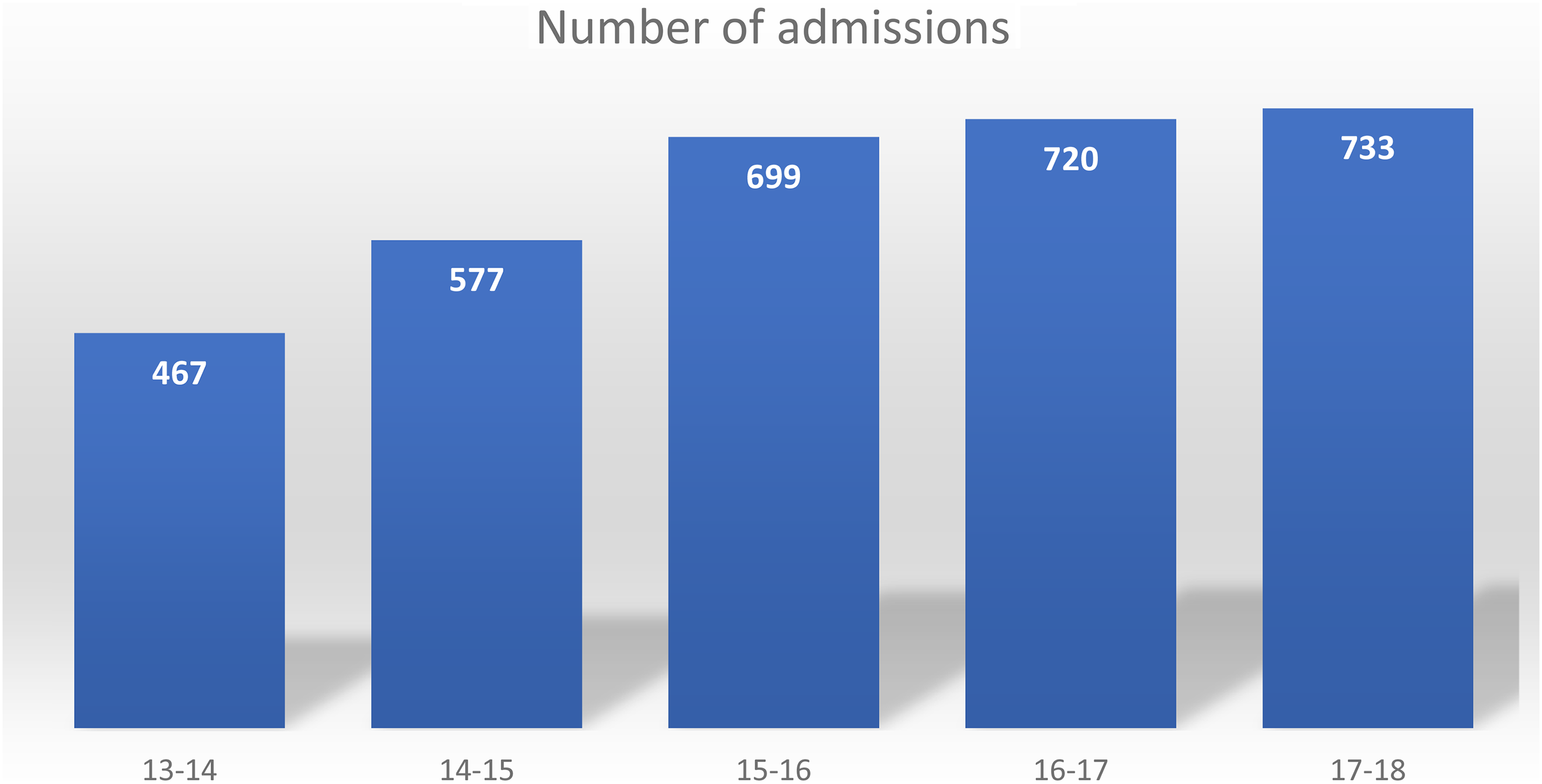
Admissions to Nurse Practitioner Programs 2013–2018.
Nurse Practitioner Programs by Province/Territory.

Coinciding with this growth, national and provincial regulatory frameworks have been established to guide the certification, licensure, standards, and core competencies for NP practice. A national task force led by the Canadian Association of Schools of Nursing (CASN) led to a consensus document on NP education including courses common to all streams of practice in Canada (2012). As well, social, economic, and policy related factors continue to influence the vulnerability for continued integration of NPs across whole health systems in Canada, including full scope of practice. Regulation, as part of legislation, has also been seen as part of the problem. For example, the neonatal NP (NNP) role may be registered as NNP in some provinces or NP-Pediatrics in other provinces.
In 2018, CASN's board of directors had discussions focused on the quality of graduate education, specifically NP education and subsequently, passed a motion to provide a voluntary NP accreditation program. An accreditation pilot study of three NP programs was undertaken in 2019−2020 to ensure the accreditation process was relevant and responsive to the needs of the discipline and promoted high quality NP education. An evaluation of the pilot study was completed, and four NP programs have since received accreditation.
Purpose
The purpose of this paper is to initiate a discussion between Canadian NP regulators and educators related to proposed regulatory approaches and accreditation processes that balance public safety while promoting quality and excellence in NP education.
Background and Significance
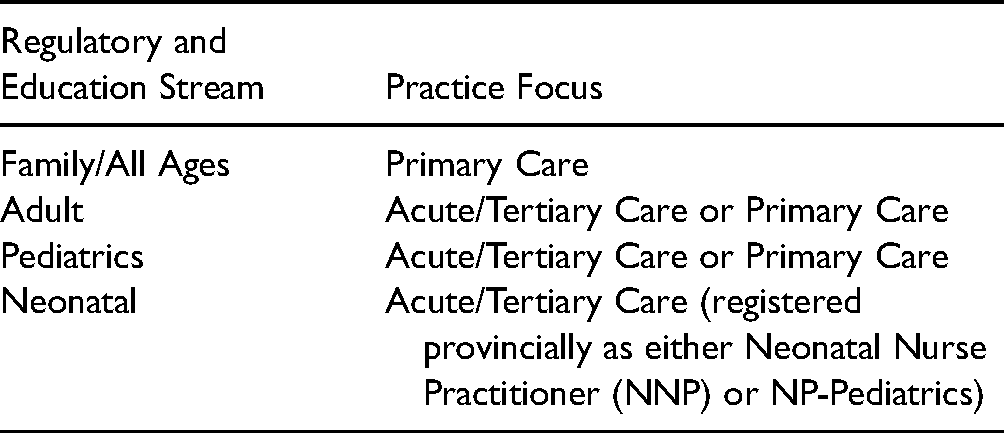
Regulation of Nurse Practitioners in Canada Nursing is highly regulated in Canada by legislation to either a professional college or association that enables self-regulation for the nursing profession. Unlike the United States (US), there are four streams of NP regulation and education in Canada. The main program stream is NP-Family/All Ages or Primary Care/Health Care, which accounts for 70% of the programs followed by NP-Adult, 15%, Neonatal, 10%, and NP-Pediatrics, 5% (Staples, & Sangster-Gormley, 2018) (see Table 2).
Nurse Practitioner Regulation and Education Streams in Canada.
Like the restriction on use of the title RN, only those who have met the regulatory requirements for NP registration and/or licensure may use the title NP or one of the accepted variants including RN-Extended Class (EC) in Ontario, RN(NP) in Saskatchewan or RN-Extended Practice) (EP) in Manitoba (College of Nurses of Ontario [CNO], 2019a; College of Registered Nurses of Manitoba [CRNM], 2015a; Saskatchewan Registered Nurses Association [SRNA], 2017a).
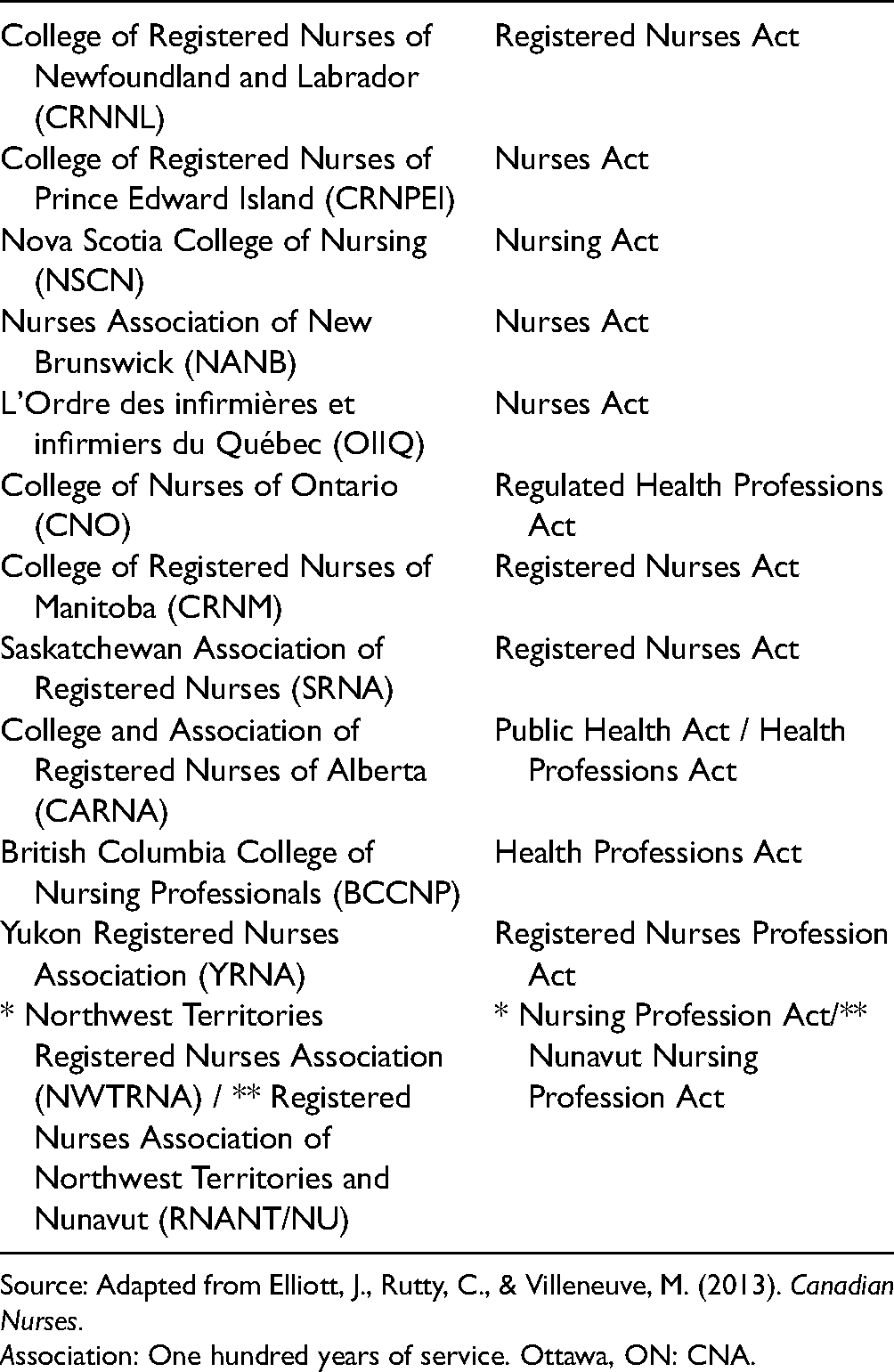
There are currently two nursing regulatory bodies in Canada, the college model and the association model. Under the college model, the regulatory body's only legislated mandate is public safety through regulation of its members. Association regulatory bodies have a dual role; regulation in the public interest along with a focus on their members through advocacy for the nursing profession and contributing to public policy development (Balthazard, 2010). The twelve regulatory bodies control the processes for NP program admission, education vis-à-vis measurement of competencies in the NP courses, licensure requirements, and the practice standards for entry-to-practice for NPs (Schiller, 2015) (see Table 3).
Regulators by Province and Enabling Legislation.
Source: Adapted from Elliott, J., Rutty, C., & Villeneuve, M. (2013). Canadian Nurses.
Association: One hundred years of service. Ottawa, ON: CNA.
Nurse Practitioner Competency-Based Regulatory Process
Recognizing public safety as their priority, the twelve provincial nursing regulators formed the Canadian Council of Registered Nurse Regulators (CCRNR) in 2011 to act as the national voice for nursing regulation in the public interest. CCRNR's priorities also assumed activities that were previously facilitated by CNA that included registered nurse (RN) and NP licensure examination and national regulatory frameworks (CCRNR, 2015). The intent is for consistency across Canada which is a critical requirement for mobility of professionals under the Canadian Free Trade Agreement (Internal Trade Secretariat, 2017).
In 2011, the CCRNR established the Canadian Nurse Practitioner Program Approval Framework to guide the review and evaluation of NP education programs in Canada (CCRNR, 2015). Adopted by the provinces, it is a mandatory requirement occurring, at a minimum, every seven years under each province’s legislative mandate and is competency-based. The framework is divided into four categories:
Curriculum—provides the learning experiences necessary for students to meet the NP competencies and standards of practice Resources—there are sufficient human, physical, and clinical resources to enable students to meet the NP competencies and standards of practice Students—those enrolled demonstrate progress toward the achievement of the NP competencies and standards of practice Graduates—those who graduate successfully achieve the NP competencies and standards of practice
Nurse Practitioner Accreditation Program in Canada
The Canadian Association of Schools of Nursing (CASN) is the national voice for nursing education, research, and scholarship and represents baccalaureate and graduate nursing programs in Canada. The CASN Accreditation Bureau has been the national accreditation body for baccalaureate nursing education in Canada. Accreditation is voluntary in most provinces and territories and occurs, similarly to the NP approval process for a period up to seven years. Graduate nursing programs historically have not been accredited and have cited ‘academic freedom’ as the main rationale (Cynthia Baker, personal communication, December, 2020).
From 1998–2010, NP programs in primary health care, were at the baccalaureate and/or post-baccalaureate level and were accredited under CASN as part of baccalaureate accreditation.
The tertiary care NP programs, for example, NNP and Adult/Pediatrics, were initiated as graduate programs and hence were approved by provincial graduate program authorities and the regulators but were not part of CASN accreditation. As NP programs in primary health care transitioned to the graduate level between 2008–2010, they continued to be approved, but were no longer accredited.
Accreditation promotes excellence and is recognized worldwide as an important, objective method to assess professional education programs (CASN, 2019). It identifies strengths and opportunities for improvement that can guide decision making and provides administrators and faculty with information regarding areas that require development, modification, and/or more resources. The program of accreditation is divided into two categories of standards:
Education Unit Standards: these include leadership/governance, partnerships, resources (financial and human), teaching/learning, and environment. Education Program Standards: these include scholarship, program framework, knowledge-based practice, professional growth, and evaluation methods.
Each standard includes a descriptor and key elements that the NP programs and their institutional units are assessed against. The process incorporates flexibility regarding the organizational structure and curriculum as maintaining some flexibility and enables NP programs to be autonomous in their academic perspectives and yet responsive to their specific regional, social, professional, and institutional contexts (CASN, 2019).
Barriers and Facilitators to Nurse Practitioner Regulatory and Accreditation Processes in Canada
The current approach to NP regulation in Canada has several challenges. McDonald, Herbert, and Thibeault (2006) attributed to what they termed, ‘a patchwork of legislation and regulations governing all types of advanced practice nursing (p. 176). Likewise, Pucini, Jelic, Gul, and Yen Lake (2010) as well as Kleinpell et al. (2014) suggested that the variations in provincial and territorial legislation and regulation contribute to the existing barriers to APN role implementation and scopes of practice.
Legislative changes at the federal level, while positive for NP role evolution, have often been applied differently by provincial and territorial governments and nursing regulatory bodies creating additional inconsistencies in scope of practice or requiring additional education (Calnan & Fahey-Walsh, 2005). Current examples that continue to exist include federal legislation related to medical assistance in dying (MaiD), prescribing of controlled substances, and cannabis, which were interpreted and enacted differently for NPs by both provincial and territorial governments and regulatory bodies which have had huge impacts on the weight of NP curricula content and on potential mobility of NP graduates. As one NP educator commented, “there is tension with the program approval process … each time legislation/regulation changes, it forces schools to incorporate new material to meet evolving competencies (CASN NP Accreditation Program focus group, December 2020).
The cost and human resources required to accomplish the program approval process has been a source of tension in schools of nursing but is a regulatory requirement under provincial legislation. Introducing NP program accreditation into this situation, although voluntary, creates additional tension because, although NP educators are interested in quality and excellence in their programs, currently, both processes are independent of each other and would/could occur at irregular times from each other. NP educators recognize the inherent difference between public safety and quality of graduate level NP programming. When one reviews the CCRNR's program approval and CASN's accreditation processes, both processes have duplicate areas of data collection and required sources of evidence, making them onerous and burdensome on human resources, especially if both processes were occurring at the same time (College & Association of Registered Nurses of Alberta [CARNA], 2016).
Unlike the United States (US), public funding for higher education in Canada relies on the cooperation between federal and provincial governments. Prior to the COVID-19 pandemic, fiscal restraint and budget cuts were already a source of tension. Therefore, if given the choice, many smaller NP programs may forgo accreditation as they see no tangible return on investment to go through the process, thereby impeding the rationale for why it was created, the pursuit of quality and excellence in NP education.
The CASN Task Force on NP Education (2012) was instrumental in obtaining consensus in Canada that NP education programs be at the graduate level, and that the NP role is a practice-based role requiring a course-based versus thesis-based approach to education. Consensus was also reached in relation to preadmission requirements and that all NP programs have a course(s) in pathophysiology, pharmacotherapeutics with practicum, advanced health assessment/diagnosis with practicum, roles and responsibilities, and a final practicum for a program minimum of 700 hours.
In 2015, CASN developed a consensus document on graduate nursing education in Canada, but NP education is only referenced once. One area previously identified was inconsistencies found nationally in the non-NP core graduate courses that NP students take either before or parallel with NP courses (CASN, 2012; CNA, 2021) that could have an impact on the quality of a NP education program and supports the need for an accreditation process. Most of Canada's NP program students continue to take the same core graduate courses all graduate nursing students take; a research-based pedagogy that includes courses in quantitative and qualitative research, research design and appraisal, and statistics.
A few programs have moved away from this pedagogy to specific courses outlined in the APN role vision and practice in pan-Canadian APN framework (CNA, 2019) that include evidence-based practice, knowledge translation, leadership, policy, program planning, and informatics. Given the consensus that the NP role is practice-based and requires a high level of knowledge dissemination and translation, there is an evolution toward more leadership skills, especially with vulnerable populations, so it is confounding as a research pedagogy is not well aligned with the NP courses or NP role expectations post graduation.
This does, however, point to tensions between graduate nursing and NP programs. NP educators commented that there needs to be discussion of what constitutes a graduate nursing program versus a graduate NP program. As well they commented that NP programs don't always have the attention from the academic head who may not always be familiar with the NP program and therefore it's unclear who is making decisions that affect the NP program (CASN NP Accreditation Program focus group, December, 2020). This has led by some, to state there needs to be standardized graduate core non-NP courses that NP students take across the 28 programs in Canada, using a consensus approach like what was undertaken for the NP courses in 2012. This issue could also be addressed through CASN's NP Accreditation Program review but in the short term, is unlikely to happen due to continued fiscal restraints and the fervent commitment to academic freedom at the graduate level.
Policy Discussion
While the regulators’ competency-based program approval is mandatory, we need to keep at the forefront that its sole mandate is to provide for public safety by meeting entry-to-practice competencies and outcomes which currently include:
Client care: includes assessment, diagnosis, management, client relationships/communication, health promotion, collaboration, consultation & referral Quality Improvement and Research Leadership Education: includes client, community, health care team (CCRNR, 2015).
There are several pedagogical shortcomings in this approach. Firstly, the process only addresses the NP courses, not the entirety of the Master of Nursing/NP curriculum, and therefore, does not consider the breadth and depth of graduate nursing education, nor does it measure ‘mastery’ of NP competencies.
The Canadian Nurse Practitioner Initiative (CNPI, 2004–2006) had a major role in the articulation of the NP role in Canada and even at that time, identified the need for accreditation of NP programs. In the US, the view of the Accreditation Commission for Education in Nursing (ACEN) (2020) and Commission on Collegiate Nursing Education (CCNE) (2021) is that accreditation improves the quality of education that nursing schools provide and ensures that courses have the right content, faculty are using appropriate teaching methodologies, and programs are meeting the needs of nursing students. The accreditation process also helps keep nursing school curricula up to date with current professional standards. Accredited schools and programs have an important role to play in nursing education and produce nurses equipped to meet the challenges of their profession.
Accreditation is recognized worldwide as an important, objective method to review professional education programs to identify strengths, vulnerabilities, and opportunities for improvement in relation to human and financial resources, decision-making and strategic planning, and the sustainability of programs (CASN, 2020). While there are some NP programs that may be hesitant, or not willing or have the budgetary means to support the additional cost of the NP Accreditation Program, others who have been successful, appear to be supportive. “Achieving accreditation status is a significant milestone … that achievement signified that we meet or exceed the provincial standards for nursing education. It also contributed to being selected to participate in the pilot accreditation process led by CASN,” University of Manitoba College of Nursing dean Netha Dyck stated (MacKenzie, 2020). At Athabasca University in Alberta, Nurse Practitioner Program Director Kimberly Lamarche commented about the NP Accreditation Program process stating “we learned many things about the program throughout the process that will enable us to make positive changes moving forward …we’re very excited about the future of the program and the many opportunities available to our learners as a result (Athabasca University Faculty of Health Disciplines, 2020).
With the globalization of education, made possible through online distance education delivery, education costs have continued to rise. As the demand increases for NPs in our health care systems, so does the demand for quality in NP education, making accreditation a greater requirement in assessing and evaluating educational rigor, including assessment of core graduate course offerings that meet NP role and pan-Canadian competencies for practice, and providing an assurance of program quality and excellence for regulators and educators.
Recommendations
A national discussion needs to occur in Canada that involves legislators, CCRNR, CASN, NPs, and NP educators as the profession needs assurance that there is a joint effort in not only meeting the legislative/regulatory need for public safety, but also that there is quality and excellence in graduate NP education programs that will serve the public across health care systems and sectors. If possible, given that the number of NP programs in Canada is small, and consensus has been previously reached on several important NP education issues, integrating and/or linking the regulatory approval and accreditation processes would be advantageous.
Discussion related to new regulatory approaches that affect NP education have begun to occur as CCRN has announced the rollout of a single regulatory framework with one entry-to-practice including one national “generalist” NP program (2020). The findings from CCRNR; 2015 practice review demonstrated consistent competencies across all streams of NP practice. This led to new entry-to-practice competencies for NPs, further discussions related to barriers to NP practice, and the potential development of a ‘single’ NP national examination. It is difficult to assess how a new regulatory approval process and CASN's NP accreditation process will work in parallel. A further national discussion and vision for NP education and practice that includes a discussion on what constitutes a graduate program versus a graduate NP program that is practice-based is required that informs the evolution of the NP role in the future.
Conclusions
CCRNR and CASN will need to work together with NPs and NP educators to shape the future of NP education in Canada. An integrated pan-Canadian regulatory approval and accreditation process may be the country's best approach to ensure continuity and consistency in education, regulation, mobility of the NP workforce, and systematic planning to guide future NP role development and practice. NPs and NP educators need to be active participants in proposed approaches to regulation and education while ensuring quality vis-à-vis accreditation to ensure the evolution of NP roles continues successfully.
Although nurses in advanced practice roles were introduced in Canada a century ago, the roles, and the education programs for these roles, have evolved, yet have been vulnerable to sudden contextual changes. Canada finds itself at an intersection with respect to NP regulatory approval and the need for quality vis-à-vis NP program accreditation. While this vulnerability persists, the needs of aging and vulnerable populations, the associated disease burden, increasing complexity of care, and the demands for fiscal constraints support the trend of a growing number of NPs across all sectors in the health care system.
“We all know that health care and the delivery of health care are always and forever changing. CASN recognizes this and wants to ensure that nursing education – and now NP education – programs are at the cutting edge of program delivery,” said University of Manitoba program director Dr. Darlene Pierce. “CASN's accreditation is recognized worldwide as an important objective method to review professional education programs” (Mackenzie, 2020). “CASN sets the national accreditation standards for schools of nursing,” said Kimberly Lamarche, Nurse Practitioner Program Director at Athabasca University. “We are very proud to be accredited and continue to provide this level of excellence to our learners” (Athabasca University Faculty of Health Disciplines, 2020).
There is an increased need for discussion in relation to a proposed move towards a generalist entry-to-practice for NPs across Canada. The intersecting tensions over the years between generalized education and a specialized practice, and between context specific education programming, and a shifting health care environment must be at the forefront of this discussion.
Although these issues remain unresolved for now, we must not lose sight of the considerable progress that has been made, over the last two decades, in articulating the NP role, competencies, and educational requirements and this trend is likely to continue. An integrated pan-Canadian approach may ensure continuity and consistency in education, legislative and regulatory mechanisms, mobility of the NP workforce, and systematic planning to guide future NP role development and practice. NPs and NP educators need to be active participants in groundbreaking approaches to regulation while ensuring quality in NP education vis-à-vis accreditation to ensure the evolution of the NP role continues successfully.
While there are barriers that continue to face NPs, a major facilitator is that they remain part of the solution to health care system challenges, change, and reform that are occurring at a rapid pace. New approaches to health care provision, based on interprofessional collaboration and practice, will improve access to timely health care services, and meet the health care needs of individuals, groups, and communities in Canada.
Footnotes
Declaration of Conflicting Interests
The author declared no potential conflicts of interest with respect to the research, authorship, and/or publication of this article.
Funding
The author received no financial support for the research, authorship and/or publication of this article.
