







Abstract
Over the past decade, over-the-top (OTT) platforms have profoundly impacted the television broadcasting landscape in Turkey. These platforms have opened up new opportunities for producing and distributing original TV drama, known as “dizi” in Turkish. This study examines the localization of global TV drama genres on Turkish OTT platforms. The study uses a genre analysis framework to examine three TV dramas, each declared as the pioneer of its genre in Turkey. Genre analysis is conducted critically regarding both textual and cultural levels of the generic characteristics and background. The findings indicate that these dramas exhibit a hybrid characteristic, showing similarities in textual properties (generic verisimilitude) but lacking the generic practice’s cultural background in Turkey (cultural verisimilitude). The study argues that this hybridity is the result of a tension between market-driven localization and the deeper socio-cultural context.
Introduction
TV dramas are the leading genre in TV broadcasting in Turkey and abroad. Specifically, Turkish TV dramas known as “dizi” have gained popularity worldwide and raised Turkey among the countries with the highest sales. Recently, as a valuable export item, it has become economically more important than before. Moreover, the sector has proliferated with the emergence of national OTT platforms following the global ones. From this point of view, genre analysis would be very beneficial in comprehending Turkish TV dramas from various perspectives as this method enables researchers to examine the textual characteristics (both narration and form) of the TV dramas and relate them to industrial and audience contexts.
The study focuses on TV dramas, which are launched as pioneers of their genre by the OTT platforms and accordingly announced likewise in mainstream media 1 due to the lack of production within traditional television in Turkey. This means the sample is composed of TV dramas specifically produced for and streamed via two national OTT platforms (BluTV and Exxen) which proclaim the production of new/untried/divergent TV drama genres. In order to emphasize their difference from traditional TV, OTT platforms undertook this responsibility almost something mandatory or at least essential. 2 While Sahipli was officially launched as the first Turkish horror TV drama, Börü 2039 and İşte Bu Benim Masalım were strategically promoted by mainstream media as pioneering due to their distinct characteristics, such as unique genre approaches, innovative technical details, and novel narrative styles. This emphasis on groundbreaking attributes aligns with the broader content strategies of BluTV and Exxen, which prioritize original and non-traditional productions over strict historical “firsts.” The official statements of the OTT platform executives are then proven by the production of TV dramas from various genres such as horror, science fiction, and musical that all have historical backgrounds on an international scale on traditional TV channels and even plenty of examples demonstrating positive audience response on global OTT platforms. Genre analysis is conducted on three TV dramas belonging to each genre. Following the first phase of the analysis based on six textual properties (the theme, the narrative, the characterization, the setting, the filmic techniques, and the iconography), the second phase of the analysis is applied to delve into each genre’s cultural background in Turkey (cultural genre analysis) considering the generic and cultural verisimilitude concepts. The results indicate that these TV dramas carry a hybrid characteristic showing similarities in textual properties (generic verisimilitude) but replacing some of them emphasizing some cultural differences. These features that refer to the so-called Turkish audience’s expectations are Islamic references, militarist-nationalist discourse, and youth culture. Despite these efforts of glocalization, TV dramas showcasing innovative genre conventions remain limited, as evidenced by the reluctance of OTT platforms to actively promote them.
This study, which employs textual and cultural genre analysis together on OTT platform TV dramas for the first time, contributes to TV studies in Turkey as an exploratory research. As genres are “cultural forms” referring to countries’ historical, social, and political environment, the production of a genre conveys important clues to understanding the dynamics of the media and the country. Therefore, lacking cultural background (cultural verisimilitude), these attempts simply adding a pinch of local touch would not be enough to change the audience’s taste. National OTT platforms, fascinated by the prospective market, sought to innovate on the Turkish screen and present alternative Turkish iterations for the global audience; nevertheless, they failed to comprehensively assess the contextual factors and ecosystem that enabled the growth of these genres.
A Chronological Look at TV Drama Genres on Turkish Television
Television (officially titled Turkish Radio and Television Corporation -TRT) was established by law in 1964. During the 70s, TRT dealt mostly with the infrastructure to expand the broadcast area and the daily broadcast duration. These years were also a period in which the first original examples of various TV genres were produced as well as the ones syndicated from abroad. The first broadcasted foreign TV dramas later initiated the original productions based on comedy and literary pieces. During the 1980s, TRT technically completed its infrastructure, delivering color broadcasts all over the country via three TV channels, seven days a week. Moreover, the characteristics of television as a medium have been comprehended concerning the narrative and visual style of TV drama production. Dramedies taking place in a neighborhood or within a family, costume dramas especially as literary adaptations from the Early Republican era, period dramas based on Ottoman history, and mini-series with original scenarios were produced by a group of in-house directors. The limited number of syndicated programs were a couple of TV dramas, cartoons, daytime soap operas, and telenovelas (Serim 2007, 118–142).
TRT’s broadcasting monopoly was illegally over in May 1990 when Magic Box Star 1 TV Channel started broadcasting using the satellite system. This illegal period ended with the abrogation of monopoly and establishment of a new radio and television law assigning RTÜK (Radio and Television Supreme Council) as the regulating council in 1994. Nevertheless, it took several years for commercial TV channels to produce original content instead of outsourced programs and TV dramas. The audience welcomed commercial broadcasting proposed by new TV channels (Star1, Kanal6, Show TV, ATV, etc.) as an alternative to TRT’s old-fashioned and dull approach. The important issue was that the RTÜK law-1994 obligated TV channels to produce local content covering at least 50 percent of the schedule, encouraging the national market to adapt to this situation. Of course, the development of the advertising sector and the positive reaction of the Turkish audience are also propelling factors. The result was a boom in TV program production, especially in TV drama. Starting from the new millenium, Turkish TV drama known as Turkish dizi has become the leading genre in the schedules dominating prime-time slots. As time passed, the duration of each episode got longer reaching 150 minutes. Original productions have become vogue and well-received nationwide and worldwide as well as adaptations from US, European, or South Korean TV dramas instead of syndicated foreign TV dramas. From a generic perspective, it is obvious that some genres predominate within the schedules. The majority of the Turkish dizis on traditional TV channels carry the characteristics of prime-time soap operas in which the story is based on family, love and business issues revolving around upward mobility with dominant female characters. They are produced mostly in indoor settings and broadcast once a week. Then comes the action/crime and period dramas mostly built on a conservative and nationalist approach, probably originating from Ottoman or Turkish history, with high production values and special effects. Comedies are also popular including dramedies, sketch comedies and rom-coms. In dramedies, the story revolves around a family or a neighborhood, which is inherited from the TRT period. Rom-coms are recent examples of comedy (preferred instead of sitcoms) based on a love story of two opposing characters (beautiful girls and handsome boys) polished with a pinch of upward mobility. Although less in number, hospital, teen and police dramas are appreciated by the audience as well (Yıldıran Önk 2024, 30). Turkish dizi, considering its success in national ratings and agenda, has been one of the major export items of Turkey due to its international popularity. Period dramas and rom-coms are the most popular contents worldwide alongside prime-time soap operas. Kaplan and Algan (2021, 12) underscore the Turkish media industry’s aspirations for sustained presence within the global media landscape: Participating in international TV fairs, working with global distributors, spending large amounts on marketing and promotion, doing marketing research to learn which actors and plotlines are successful, and teaming up with multiple continent carriers like Netflix to make their products accessible and available to a larger audience within and outside the country are some of the ways that the Turkish industry sought to stay competitive.
During the 2000s, significant changes occurred in technology and TV broadcasting strategies such as digitalization, integration with the internet, and proliferation of thematic channels. The most recent update for TV broadcasting in Turkey is the emergence of OTT media services, which enables the audience to access various video content on TV, mobile, or laptop connected to the internet. Specifically, OTT platforms (TVs) which are synonymously used with Streaming (video streaming) TV and SVOD—Subscription Video on Demand (Subscription-based and on-demand video), refers to a television broadcasting system that allows viewers to watch video content (created or acquired from traditional television) over the internet directly without any additional device (such as set-top boxes), with a fee-for-pay subscription system. This system provides new technical opportunities for the audience to create their schedules regardless of time, place and medium according to personal preferences. The national OTT platforms operating in Turkey (BluTV-2017, 3 Gain-2020, Exxen-2021, Tabii-2023) have rapidly grown their subscribers, and original content providing high audio-visual quality since 2017. 4 They already define and declare their discourses on the opportunities they offer, considering watching preferences, original quality TV drama, and new genres. Even though there are new formats in talk and reality genres, practicing new drama genres appears almost like a mission, concretely seen in horror, science fiction, fantastic, and musical which were previously ignored by traditional television (Yıldıran Önk 2024, 27–30). Kaplan and Algan (2021, 15) correlate this endeavor to produce varied content with cutthroat competition within the Turkish digital market against global competitors. Subsequent to the accessibility of global OTT platforms (Netflix-2016, Amazon Prime-2020, Disney+-2022) within Turkey, their offerings have encompassed both original productions and a curated selection of popular Turkish TV dramas previously streamed via national platforms or broadcast on traditional channels. The “glocal” production strategy may also constitute a deliberate maneuver intended to enhance visibility on global OTT platforms. Thereby through Turkish versions of pre-existing genres, presenting an opportunity to broaden audience reach and/or concurrently engage in competition with their global originals in Turkey. Consequently, the primary objective of this study is to delineate the trajectory of these generic endeavors to cultivate a more comprehensive understanding of the Turkish televisual landscape, achieved through a genre analysis that considers the historical, social, and industrial contexts relevant to each genre.
TV Genre as a Cultural Form
Genre is a commonly used term to refer to artistic pieces that share similar characteristics in terms of form, content, and aim. The first usage of the word was in Ancient Greek while Aristotle, in his Poetics, defined comedy and tragedy in his classification of Greek literature (Casey et al. 2008, 135). Indicating a distinctive type of text, the term is today widely used in rhetoric, literary theory, media theory, and linguistics (Chandler 1997, 1). In media environments marked by a surplus of content, genre categorization emerges as a crucial organizational strategy. Given the inherent financial uncertainties associated with television production, producers commonly employ a risk-averse strategy by replicating high-rating content. As a result, genres and subgenres exhibiting common characteristics gradually develop. Underlining the formulaic nature of television programing, O’Donnell (2007, 96) states that both producers and audience know the genre categories and what they mean. To elaborate, Thornham and Purvis (2005, 46) point out the arising pleasures and satisfactions of the audience during and after the viewing experience. Moreover, the authors elucidate the allure of the genres for producers as such: “The repetitive nature of genre (and some popular narratives) suits production and institutional aims, through disruptions to these repetitions, or the construction of hybrid versions, can intensify market demands.” The mutually beneficial nature of genre in TV drama underscores its critical role in the industry. By catering to specific audience tastes, genres serve as a cornerstone for both consumer satisfaction and producer profitability.
Genre studies in television is an approach that theorizes how television contents are classified and organized. In this context, it offers researchers an area where the common codes and conventions shared by television contents are examined (Casey et al. 2008, 135). It is assumed that there are some common textual codes in TV dramas as well. Chandler (1997, 13) lists these distinctive textual codes as follows:
Narrative—similar plots, structures, predictable situations, sequences, episodes, obstacles, conflicts, and resolutions;
Characterization—similar types of characters, roles, personal qualities, motivations, goals, behaviors;
Basic themes, topics, values;
Setting—geographical and historical;
Filmic technique—stylistic or formal conventions of camerawork, lighting, sound-recording, use of color, editing etc.
Iconography—A familiar stock of images or motifs including decor, costumes and props, certain typecast performers, familiar patterns of dialog, characteristic music and sounds, and appropriate physical topography.
As this study focuses specifically on TV drama genres, productions incorporating even a few of these features can be grouped under the same genre resulting in the identification of over twenty distinct TV drama genres (Yıldıran Önk 2024, 24). By offering familiar tried and tested worlds with familiar appeals and pleasures, genres facilitate standardizing production while simultaneously enabling market forecasting and audience stabilization.
Hayward’s claim on the genre is that genres are affected by the ideological climate. Neale, on the other hand, argues that genres shape values (as cited in Chandler 1997, 4). Based on this mutual relationship, TV drama genres function as a valuable source of data on audience preferences, industry practices, and the broader sociocultural context.
Mittell (2001, 16) who defines genre as a cultural form, proposes a new approach that he conceptualizes as “cultural genre analysis.” Mittell (2001, 19–20) draws attention to the question of how genres work as conceptual structures by placing media texts in wider perception contexts with this approach. He argues that in traditional genre analysis, the genre is treated as a textual category evaluated according to definitional, interpretative, and historical questions (Mittell 2001, 4–5). However, genres should be perceived in the context of cultural practices and be located within the wider system of cultural hierarchies and power relations. He emphasized that “texts themselves are insufficient to understand how genres are created, merge, evolve, or disappear.” Therefore, he suggests “to look outside the texts to locate the range of sites in which genres operate, change, proliferate, and die out” (Mittell 2001, 7). His cultural analysis functions based on five principles: (1) Genre analyses should account for the particular attributes of the medium. The researchers should consider television’s featuring more active practices of fan involvement. (2) Genre studies should negotiate between specificity and generality. The researchers should focus on specific elements such as a historic turning point, isolating a core social issue, or tracing a genre’s origins as well as how genre processes operate within a media case study. (3) Genre histories should be written using discursive genealogies. The researchers should collect discursive instances surrounding a given instance of generic process emphasizing breadth over depth. (4) Genres should be understood in cultural practice. The researchers should examine how genres are operative and constituted in everyday life and the discourses that constitute the category. (5) Genres should be situated within larger systems of cultural hierarchies and power relations. The researchers should look at genre as a contextual discursive process, in order to situate them within larger regimes of power and better understand their cultural operation. Through the implementation of this comprehensive genre analysis, genres are studied as cultural categories formed by clusters of discursive processes operating in audiences, industries, and cultural contexts (Mittell 2001, 16–20).
In this light, the examination of TV drama genres acts as a valuable tool for understanding the sociocultural fabric of specific historical contexts. Neale’s (2012, 179) concept of verisimilitude offers a significant contribution to cultural genre analysis. He posits that verisimilitude represents the dominant cultural perception of reality, encompassing what is considered credible, suitable, and appropriate. Inspired by Todorov, Neale (2012, 179) further differentiates between generic verisimilitude and cultural verisimilitude. The initial form of verisimilitude termed generic verisimilitude, dictates that a text’s believability is contingent upon its conformity to the normative structures and inherent principles of its genre. In contrast, cultural verisimilitude denotes the correspondence between the textual assertions and the audience’s pre-existing understanding of truth and public opinion, existing outside the fictional realm of the work itself. Gledhill (2009, 360) clarifies the concepts by examples: . . . generic verisimilitude allows for considerable play with fantasy inside the bounds of generic credibility (e.g. singing about your problems in the musical; the power of garlic in gothic horror movies), cultural verisimilitude refers us to the norms, mores, and common sense of the social world outside the fiction.
In a television ecosystem where both media ownership (due to international mergers) and media content (no boundaries due to developing technology) have become globalized, TV drama genres show a global production practice and circulation as well. At this point, the idea of a business concept, glocalization, is the keyword for the TV drama genres. Ritzer (2003, 193) defines the term “as the interpenetration of the global and the local, resulting in unique outcomes in different geographic areas.” From a business perspective, glocalization is a strategic approach that enhances the profitability of global productions by incorporating localized elements, thereby mitigating cultural barriers among target audiences. Consequently, national television networks, which had previously prioritized the syndication of internationally acclaimed productions, subsequently adopted the strategy of content adaptation. Glocalization functions in two ways as Chalaby (2016) states: the flexibility of global media business to incorporate local factors, and the ability of local content to be expressed in global ideas and models. In both cases the combination of the global and the local increases the profit of the producer/broadcaster maximizing the number of audiences since “glocalized” content is designed to resonate with audience preferences, acknowledge cultural nuances, and adhere to societal norms and taboos. By integrating Neale’s concept of verisimilitude with the principles of glocalization, it becomes evident that successful genre productions must adhere to both generic and cultural verisimilitude in order to garner audience acceptance and appreciation. Building upon Mittel’s framework and pursuing an analysis of generic verisimilitude, this study of glocalized TV drama genres offers a promising avenue for a deeper understanding of the current sociocultural dynamics of Turkey as reflected in glocal TV productions streamed via national OTT platforms.
Methodology
This study aims to examine TV dramas streamed by national OTT platforms from a generic perspective and interpret the results referring to the current circumstances of Turkish media and Turkey’s socio-political environment. Therefore, genre analysis is employed in the selected TV dramas as this method enables researchers to examine the theme, the narrative, the characters, the setting, the filmic techniques, and the iconography used within a TV genre concerning its historical, social, and industrial connections.
According to the online catalogs on these platforms, all the TV dramas are listed. The study only focuses on the original TV drama productions designed to be streamed via three national OTT platforms (BluTV, Exxen, Gain) in Turkey operating on a pay-for-fee subscription system. The TV dramas produced for traditional TV but streamed later on OTT platforms are excluded as well as the ones transferred from traditional TV. Therefore, the list consists of sixty-four original TV dramas streamed between 2017 and 2023. The TV dramas on the list are categorized based on their generic characteristics (see Figure 1). The generic distribution of TV dramas shows that three main genres dominate the catalogs: comedy, drama, and police drama. Three others (fantastic, action/crime, and teen) follow these genres, although they are fewer in number. On the other hand, a couple of TV dramas belong to a new genre that is merely or never seen on traditional TV in Turkey. From this point of view, the analysis grouped under three titles focusing on the TV dramas that are declared as pioneers of their genre, such as horror (Sahipli/Owned, 2017), science fiction (Börü 2039/The Wolf 2039, 2021–2022), and musical (İşte Bu Benim Masalım/Here’s My Tale, 2021). Access to the selected TV dramas is gained via OTT platforms with a personal subscription. Employing textual properties in genre analysis, each episode of the selected TV dramas was analyzed according to six categories of textual characteristics that delineate the conventionally acknowledged fundamental principles of each genre. Following the textual properties, Mittell’s cultural genre analysis was conducted to the TV dramas to trace and associate them with historical, social, and industrial issues regarding Turkish practices of global genres including genre’s origins back in film art and literature, reflections from everyday life, cultural hierarchies and power relations concerning Turkey’s media landscape. As the ratings for the OTT platforms are not announced publicly, the IMDb ratings are used to offer an insight into audience feedback. The IMDb ratings for each TV drama were obtained through a country-specific filtration process, limiting the selection to Turkey to ensure contextual congruence. To arrive at a comprehensive conclusion, the research findings are discussed through the lens of Neale’s concepts of generic and cultural verisimilitude, with a particular focus on the glocalization process of the selected television dramas.
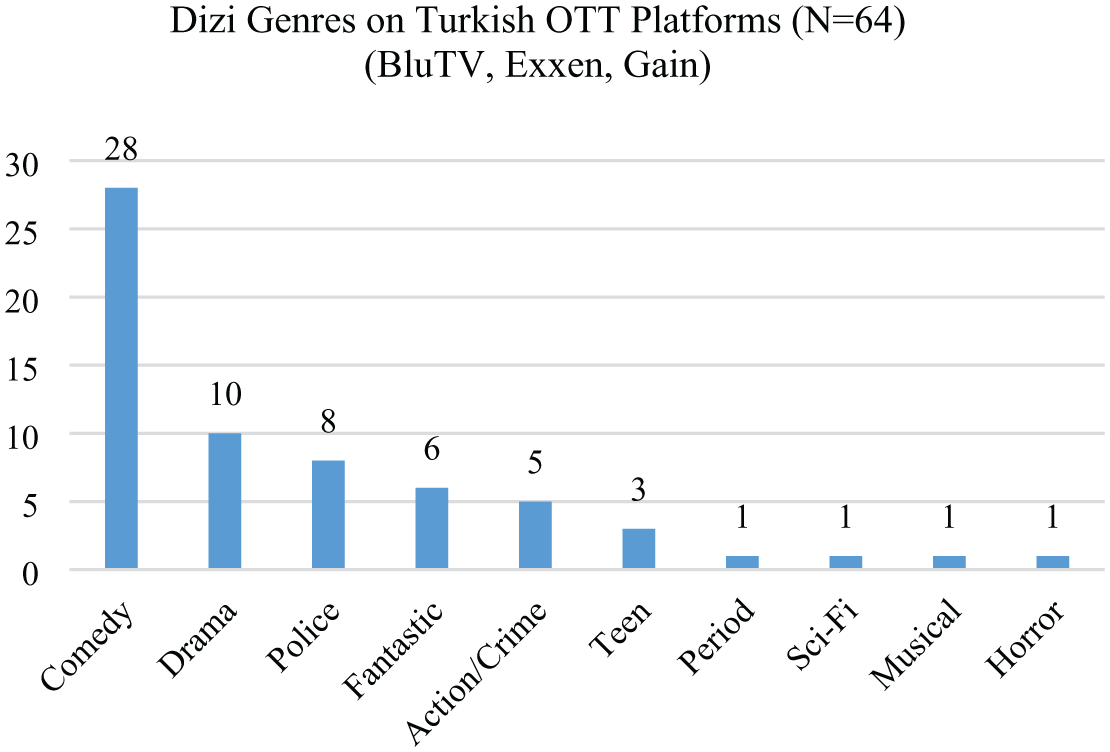
The Distribution of the TV Drama Genres on Turkish OTT Platforms.
Horror: Sahipli
The horror genre on television is a derivative form, evolving from its cinematic precursors and ultimately tracing its origins to horror literature. The main purpose of the genre is to frighten and to invoke our primal fears, which is mostly portrayed as death, or any kind of physical or psychological violence. The focus of the narrative is the conflict between good and evil as the hero is positioned in front of a monster. While a ghost, a zombie, a werewolf, a maniacal killer, an alien creature, artificial intelligence robots, or even some monstrous forces try to take over the world’s control and kill/destroy/enslave humankind, the hero is a curious person with ordinary characteristics and gets in trouble. Meanwhile, of course, there are some victims attacked, captured, and killed by the monster. Horror differs from the other genres due to its audio and visual codes. Its characteristics are grounded in the expressionist German silent cinema. Dark, scary, and gloomy places, unsettling camera angles and movements, and sound effects help to create tension (Figure 2).
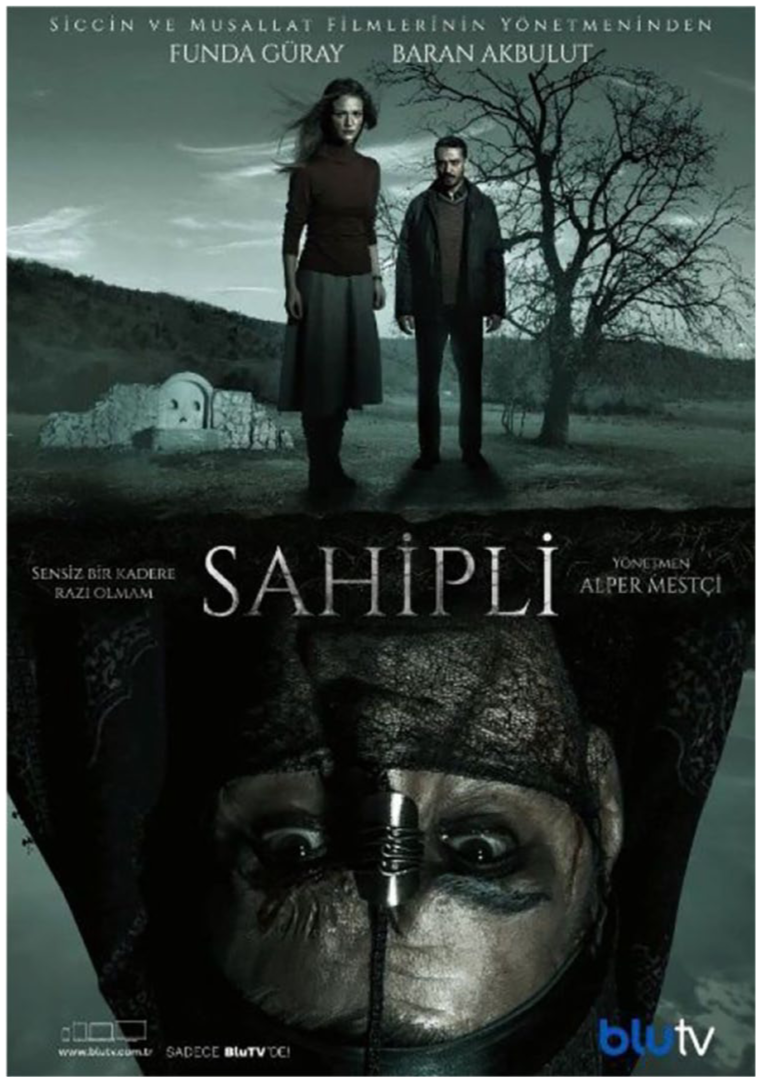
Poster of Sahipli.
The story of Sahipli takes place in a conservative Anatolian town, in which extraordinary disappearances and deaths occur. Büşra, the main character assigned as a doctor to her hometown after the mysterious death of her newlywed husband. She met Selim, the teacher of the town, who also had experienced the mysterious deaths of his mother and his fiancée. The plot revolves around the couple trying to figure out the suspicious deaths and supernatural events in the town while they are facing their backgrounds eventually intertwined with each other. From a generic perspective, the selection of the settings including the town, the abandoned mansion, the cemetery, the cavern, and the meadow with the historical fountain seem appropriate to the genre. The filmic techniques also correspond to the genre conventions such as dark atmosphere, night shootings, low-key lighting, tracking shots, point of view shots, dutch angles, and distorted scenes referring to anomalous feelings and behaviors of the characters. The characters are curious enough to drag the events until they understand that they are the victims of the evil forces from “another dimension” that captured them to infiltrate our world. The iconographic elements are the ones that are frequently preferred in the horror genre like suddenly disappearing things, dead bodies, sorcerer woman, creepy sound effects, zombies, and black and shapeless evil forces. The theme which is built on the conflict between the monster and humankind overlaps the horror genre conventions. Nevertheless, the details of the narrative intended to comprise the local culture characterized by the Anatolian town and Islamic references. The monster of the TV drama is depicted as the black force called “ifrit” which means a bad kind of djinn found in Islam mythology. The TV drama culminates in Büşra and Selim’s confrontation with the ifrits inside them. Upon discovering that their fathers are extradimensional entities summoned through black magic, disguised as Burhan Hodja and Büşra’s grandfather, they realize their cursed origins. Through an extended, dialog-driven sequence interspersed with flashbacks, the narrative unveils a scenario in which two exiled ifrits have possessed the bodies of the couple, establishing a parasitic relationship to ensure their survival and procreation within the human realm. In a climactic act of love and sacrifice, Selim absorbs the ifrit inhabiting Büşra’s body, ultimately triumphing over evil. The final aligns with horror genre conventions, employing a straightforward resolution that involves the vanquishing of the monster through elemental forces (fire, sunlight, water, etc.).
Sahipli (Owned), a BluTV horror drama is one of the earliest contents streamed via the platform. While marketed as the first Turkish horror television drama, a limited number of antecedent examples exist within traditional television, such as Kabuslar Evi (House of Nightmares, 2006) and Acayip Hikayeler (Weird Stories, 2012) both characterized as anthology series which refers to TV production to have separate episodes without topic or character continuity but a common theme.
Proceeding from the textual genre analysis of Sahipli, it has similar characteristics to Turkish horror films of the same period considering the formal and esthetical style as well as the narrative. A handful of early Turkish horror films were adaptations/remakes from Hollywood and have never gained popularity. However, there has been a growing interest in the horror genre recently, which has not found much space in both cinema and literature in Turkey for many years. Undoubtedly, besides the global trends in the world, the internal dynamics of Turkish cinema (the possibility of new and hybrid experiments thanks to the numerical increase, the development of the technological infrastructure, cost efficiency production due to the new director’s low-budget filmmaking practices, etc.) have also had an impact (Özkantar 2022, 158). Assuming that new trials have left technical incompetencies and prejudices behind in some way, the theme and topic seem to be different compared to international horrors.
Even if there occur periodical changes due to various traumatic events, the dominant forms of fear in both Western and Eastern cinemas are of religious origin, and frankly speaking, Christian beliefs nourish the elements of fear in many films (Şimşek 2012, 58–64). In this sense, specifically in Turkey, stories are formed by blending Islamic cosmology and pre-Islamic Anatolian myths and rituals, and in parallel, it has narratives within the framework of themes such as religious figures, magic, fortune telling, djinns, ghosts, apocalypse, heaven, hell, purgatory concepts (Koçer 2020, 162). Alper Mestçi suggests djinn as a Turkish horror code specific to the Turkish community as it is based on the cultural and religious foundations of Turkey (cited in Gjinali and Tunca 2020, 8). Özkaracalar (2016) interprets the preferences of these narrative elements stating that the trend of horror films containing Islamic references is related to the rise of conservative ideology in the political arena.
Weighing up all the factors about the combination of the global and local, Tutar (2015, 265) states that Turkish horror films, which use the technical elements of Hollywood in terms of cinema language, are generally nourished by local cultural elements regarding the narrative. However, he argues that these local elements, while being integrated into the global context with commercial concerns, lose their characteristics on the content level and only contribute to the narrative formally. One can see that, Sahipli shows these features similarly. On one hand, it suits the conventions of the horror genre considering character, setting, iconography and filmic techniques within its international definition. On the other hand, the narrative is designed with İslamic references exemplified in the monster of the film portrayed as an “ifrit” which is a kind of djinn. Therefore, BluTV launches this production similar to cinematic versions taking everything into account such as the recent growing interest in the genres especially by a group of young loyal film audience, the increasing number of horror film productions in Turkish cinema, and the ignorance of the horror genre by the traditional TV channels. Moreover, the selection of the scriptwriter/director Alper Mestçi, a well-known Turkish horror director, can be interpreted as a strategy to keep the risk at a minimum. Nevertheless, the attempt to transfer the comparative appeal of Turkish horror cinema to the television medium appears to have suffered from an insufficient investigation into the distinctions between the two audience demographics. Yet, it is not likely to evaluate this production as successful based on the audience feedback and the IMDb ratings of 6.9 out of 10 (IMDb 2025c). 5 Likewise, BluTV has not cataloged any other original horror TV drama since then. In the process of glocalizing horror, a perennially popular genre worldwide, a review of both the historical trajectory of the genre in the Turkish context and the generic expectations of the target audience would have been requisite.
Science Fiction: Börü 2039
The emergence of science fiction coincided with a period of a tradition of narratives centered around exploration and territorial conquest. Therefore, as one of the most popular settings within the genre, space plays a pivotal role in symbolizing this discovery and conquest. Accordingly, in many science fiction narratives, extraterrestrial beings, often referred to as “aliens,” are portrayed as antagonistic or villainous figures. In contrast, human protagonists are often portrayed as precursors striving to save the world, embodying humanistic values such as love, hope, and friendship. Encounters with creatures of other worlds, mad scientists, and robots are basic themes in science fiction. Science fiction relies on scientific paradigms, technologies, and equipment to construct hypothetical yet scientifically plausible scenarios. Science fiction constructs a new world on screen that, while familiar, deviates from the known world. This necessitates a heightened imaginative capacity to envision the setting, and iconography in the future, an unknown time, or even an alternative history. The filmic techniques employed in science fiction often demand significant budgetary resources, particularly during the preparation and post-production, to achieve the desired level of action and visual details (Figure 3).
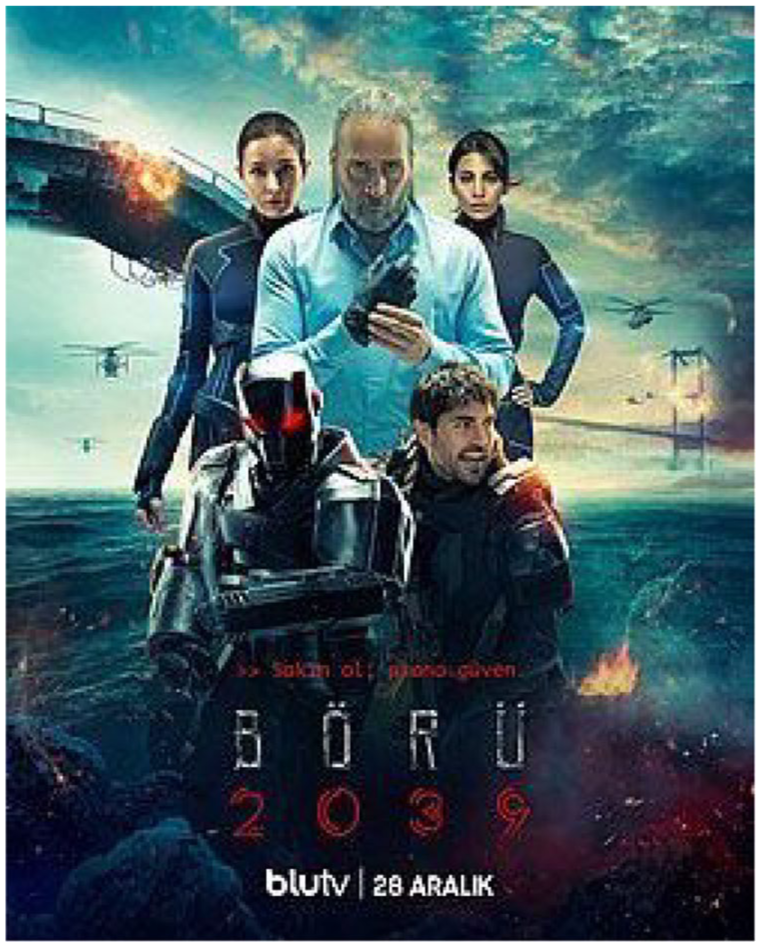
Poster of Börü 2039.
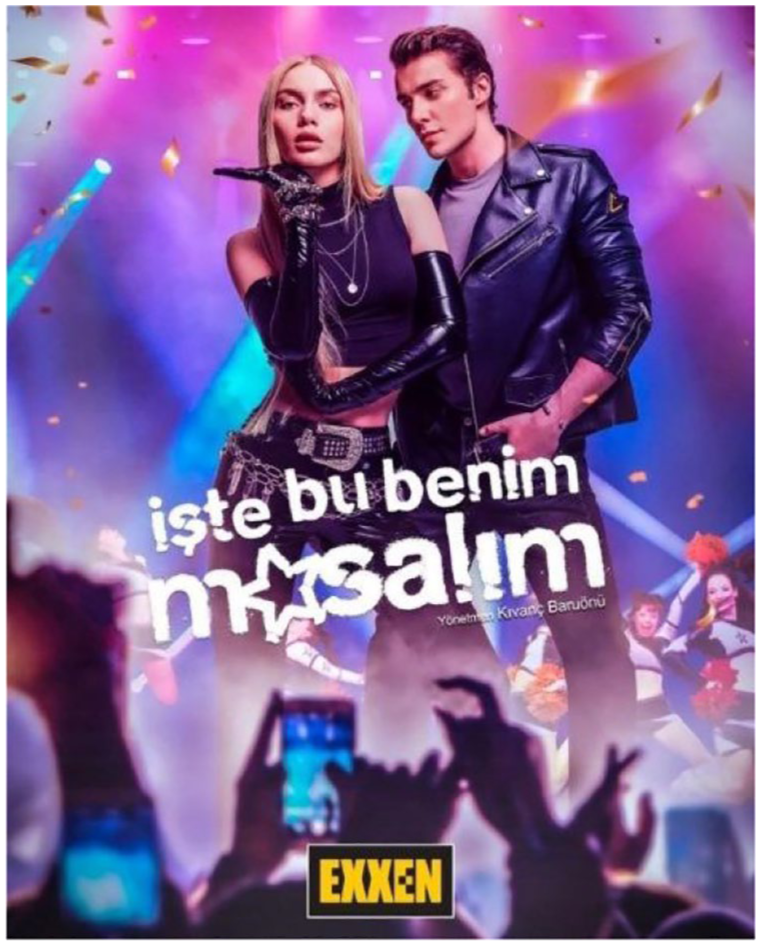
Poster of İşte Bu Benim Masalım.
The primary conflict in Börü 2039 (The Wolf 2039) stems from the development and implications of artificial intelligence. On one side of the conflict, a mad scientist (Turan) posits AI could lead to the sloth which would end up with the enslavement of humanity. To demonstrate the perceived threat of AI, the scientist seeks to instigate a global conflict. On the other side, a special squad of heroic figures strives to avert the impending conflict while simultaneously unraveling the secrets, ultimately revealing their own humanistic flaws and strengths. The secret organization known as Börü operates from an underground base equipped with state-of-the-art military technology and an integrated AI system called KAM. The members of the Börü squad as orphans raised with a deep sense of Turkish patriotism, possess specialized military training and unique abilities, with some even capable of establishing neural connections. The narrative features a female president leading the Turkish Republic, a strategically powerful nation positioned as a geopolitical balancer between the United States and China. The Börü squad, led by the military strategist Kemal Boratav, uncovers the deficiencies of the Dante AI destruction robot. They ultimately prevent its deployment and safeguard the life of the Turkish president, thereby averting a potential global conflict with the final help of an AI robot made in Turkey. The narrative prominently features humanistic values, exemplified by the human mind’s ability to discern the limitations of AI, KAM’s emulation of humor and curiosity, the self-sacrificial actions of the Börü squad, and the prevailing themes of interfamilial bonds and social solidarity. Set in a dystopian İstanbul of 2039, the production incorporates futuristic iconography, including AI-controlled robots, time manipulation, and advanced weaponry and communication systems. Börü 2039 is notable for its extensive use of computer-generated special effects and visual violence. A particularly iconic scene in the production is the computer-generated depiction of the Fatih Sultan Mehmet Bridge’s demolition. The use of dynamic camerawork in action sequences, coupled with rapid-paced editing, contributes significantly to the overall tension. KAM’s voice as a foley sound adds a distinctive layer to the production. The narrative concludes with a climactic explosion, potentially transporting the Börü squad to an alternate timeline, thus setting a cliffhanger for future seasons.
Prior to its television production, Turkish science fiction narratives lagged behind their international counterparts. While science fiction has roots dating back to the Republican era in Turkey, the actual production of science fiction literature did not gain significant momentum until the 1970s. The emergence of science fiction magazines during this period played a crucial role in stimulating a limited number of novels and short stories. Despite its historical presence, science fiction has not been a prolific genre in Turkish literature (Bayracıoğlu 2024, 25–31). Similarly, science fiction films have remained relatively limited. In her thesis, Kahveci Esra (2021) identifies twenty-three Turkish science fiction productions as of 2018.
A closer examination of cinematic productions reveals two intriguing trends. The first notable trend is the prevalence of adaptations or remakes, while the second is the prominent role of comedy elements. Many Turkish science fiction films are adaptations or remakes of American films. As noted by Akser, these films, which he calls “Turkish sci-fi,” replicate established conventions in terms of setting, dialog, and heroic archetypes (Akser 2010, 11). In his analysis, Arslan (2011, 18) echoes Akser’s assessment, attributing these adaptations to a process of “Turkification,” which refers to productions that have re-emerged with cultural codes. They both contend that these adaptations were unable to transcend mere imitation and ultimately proved unsuccessful due to a lack of narrative style and technical infrastructure. Furthermore, it is worth noting that, in addition to their limited number, these films generally failed to achieve significant box office success. While the 2000s witnessed the emergence of some original science fiction productions, many of them were characterized by elements of comedy (Kaymaz Özlem 2013, 11–12). These films often function as parodies, drawing upon both the conventions of the science fiction genre and the science fiction adaptations produced during the Yeşilçam era (Akser 2010, 156). Consequently, comedy elements tend to overshadow the core elements of science fiction.
Despite the limited presence of science fiction films in Turkish cinema, TV dramas within the genre remain virtually non-existent. Several series labeled as science fiction actually fall within the fantasy genre. These productions are primarily rooted in mystical, divine, or intuitive narratives, rather than scientific foundations. Despite being labeled as a pioneering example due to its special effects, there are previous examples predating Börü 2039. Kavanozdaki Adam (The Man in a Jar, 1988) features brain transplantation as a central narrative element, but it lacks other defining characteristics of science fiction. Uzaylı Zekiye (Zekiye the Alien, 1988) is another example that follows the funny story of a young girl with the ability to stop time. There are other hybrids that emerged in the post-2000 period, blending comedy with science fiction elements (Türk’ün Uzayla İmtihanı-Turk’s Trial with Space, 2012) and combining elements of science fiction and teen drama (Su Koruyucuları: Okula Dönüş [Guardians of Water: Back to School, 2023). The recent popularity of global science fiction series on OTT platforms (Karabağ 2021, 163–165) has spurred Turkish producers to explore new avenues, beyond the limitations of traditional television. In this context, to mitigate the risks associated with producing science fiction in Turkey, BluTV strategically adapted the subject matter of Börü (Wolf, 2018), a previously popular action series on traditional television, to a futuristic setting of 2039. While Börü 2039 retained the familiar characters and themes of its predecessor, it also incorporated the contemporary subject of artificial intelligence, a popular topic among OTT platform audiences. Furthermore, the series incorporates the nationalist themes prevalent in its predecessor, evident in the narrative (Turkey portrayed as a strategically powerful country), character design (names derived from Turkish culture referring to specific historical figures), and visual elements (Turkish flags and Turkish cultural motives). Kaymaz argues that during the process of adapting science fiction works, cultural codes are often imposed dominantly to enhance audience comprehension. Kaymaz contends that this phenomenon of cultural code imposition is particularly evident in science fiction films, reflecting the influence of popular culture and collective memory (2013, 54–55). In Börü 2039, the narrative is deeply rooted in Turkish culture, reflecting this collective memory from a nationalist perspective. Additionally, the AI in the series serves as a manifestation of popular culture. Despite incorporating science fiction elements and showcasing advanced production values, the TV drama was not renewed for a second season probably due to low IMDb ratings (6.2/10) against high production costs (IMDb 2025a). Particularly compared to its prior TV series listed also in Netflix catalogs and ratings of 8.1/10 (IMDb 2025b), the limited audience appreciation for Börü 2039, did not meet BluTV’s expectations. Evidently, the audience accustomed to this nationalist theme on traditional television did not readily embrace its integration with science fiction elements. It could be argued that the deployment of a new genre to your target audience requires more audacious stories than a temporal displacement of familiar nationalist themes into a science fiction setting.
Musical: İşte Bu Benim Masalım
Musical is a genre adapted from film and performance arts. The story focuses on romantic love and ends with a happy ceremony. The events revolve around a competition which is the main conflict. The visual style is characterized by a lively and colorful atmosphere which is enhanced with music and dance sequences. The plot is interrupted several times during these sequences. Most of the time, they function as daydreams which means any place has the potential to turn out to be a dancing area as any daily object has the potential to become an accessory. In musicals, the characters have to act, sing, and dance at the same time, therefore the production requires talented people to create the choreography. The camera follows the choreography which works for the audience as the film invites them to be part of its discourse (Figure 3).
İşte Bu Benim Masalım (IBBM – Here’s My Tale) is the first Turkish musical TV drama streamed via Exxen. Its story takes place in a private high school and the main characters are competing to represent their school in a nationwide music contest meanwhile discovering true love. The musical which already emphasizes its fairy tale background in its title, begins with a dream sequence of the protagonist and the voice-over narrator, Aleyna. Aleyna is a high school student who is in love with the school’s popular and handsome basketball captain, Pamir. Although she has a beautiful voice, she cannot perform her skills. Cemal Can, on the other hand, encourages her to sing and overcome her stage fright, therefore, he gathers a band composed of students with different skills and personalities. The antagonist, Elit, is a rich and spoiled girl who challenges Aleyna even though she has no interest or skill in singing, but to gain popularity and Pamir’s attention. The music and dance sequences function as Aleyna’s dreams or rehearsals for the contest which is a very common plot device in musicals. The atmosphere of the film also matches the generic characteristics of the musical setting. The library, the gym, the classes, and the corridors of high school, Aleyna’s pinkish bedroom, even the ferry and the detention room, turn into performance areas where Aleyna and her band sing and dance. The surrounding objects are used as musical instruments appropriate to the musical’s iconography. Pop and rap music are preferred as they are popular music genres. The filmic techniques also correspond with the musical genre concerning active camerawork, colorful settings, high-key lighting, and special visual effects, creating a dreamy atmosphere. There are transitions between real life and dreams/fantasies that occur during the music and dance sequences. The so-called magical necklace given by Seyyal Taner – Cemal Can’s aunt and formerly a famous singer, also supported the musical’s fairy tale narrative. It functions as a magical figure for Aleyna to overcome her childhood trauma. The story concludes with a music contest in which Aleyna’s band wins and a final true love kiss of Aleyna and Cemal Can in a ceremonial union which means success both on stage and in love. The real-life problems such as stage fright, jealousy, accusations, and health issues are all solved by the power of music art, and solidarity/friendship. Therefore, in all dimensions, IBBM carries the generic characteristics of the musicals.
Prior to its television adaptation, the musical genre was predominantly anchored in stage and film productions. A similar relationship exists in Turkey between musical theater and musical film, as evidenced by the numerous adaptations of operettas that served as early examples of Turkish musical cinema. Moreover, the Turkish film industry has produced many localized versions of international musicals (Özgüç 2005, 97–100).
Although the Turkish musical tradition shares some similarities with its Western and Indian counterparts, it has also evolved along its distinct trajectory. Unlike Western musicals rooted in stage performances and Indian musicals influenced by cultural heritage, Turkish musicals emerged during the early years of the Turkish Republic with a pronounced Westernization influence. This Westernization is evident in the imposition of polyphonic music and the encouragement of Western-style dance performances. Furthermore, the sources for Turkish musicals, both on stage and screen, have predominantly been Western-inspired (Arkan 2023, 810). Despite the recent popularity of singer biographies (they are not musicals) in Turkish cinema, the musical genre remains relatively underdeveloped in comparison to its Western counterparts. IBBM represents a preliminary attempt, especially considering the previous production so-called TV musical albeit one that falls short of fully embodying the genre’s typical characteristics. The earlier productions lack the requisite fabulous, surreal atmosphere, and the dance sequences are essentially recorded performances rather than integrated breaks from the narrative. For instance, Hisseli Harikalar Kumpanyası (Shareholding Wonders Company, 1981) and Keşanlı Ali Destanı (The Ballad of Ali of Keshan, 1988) also constitute adaptations originating from the genre of theater musicals. More recently there are M.U.C.K. (2012) and Hepsi1 (All1, 2007) which do not convey the generic specification but TV dramas including dancing and singing parts.
As the name suggests, music is the predominant element in the musical genre, although dance plays an equally essential role. However, the genre’s focus on music has sometimes led to confusion, resulting in the misconception that any film featuring singing characters or singer biographies qualifies as a musical. The genre requires integrated dance sequences that serve as narrative interludes. This misunderstanding was prevalent during the early days of Turkish commercial broadcasting, particularly in TV dramas centered around singer characters.
The high production costs associated with musical productions have also limited their development within the television landscape. Despite the inherent risks involved in TV drama production, musical dramas have received comparatively less investment, potentially due to their perceived niche appeal. However, there has been a notable increase in musical theater productions both by the General Directorate of State Theatres and private theaters/performance halls, suggesting a growing interest in the genre. Despite this trend, the influence of musical theater has not yet translated significantly into film or television productions. Exxen’s decision to launch a musical television drama represents a noteworthy departure from the prevailing norms within the Turkish television industry. To mitigate the risks associated with this venture, the platform has employed various strategies, including targeting a young audience through a teen drama plot, selecting popular music genres (pop, rap, rock) and songs, and casting well-known celebrities. Compared to the previous two genres, the primary driver for localization in IBBM is not a cultural value like religion or nationality, but rather a focus on a specific target audience: the youth. The production strategically incorporates elements of Turkish youth culture, drawing inspiration from the significant youth demographic within the country (Yildiran Önk and Dabak Özdemi̇r 2022, 364). Consequently, IBBM exhibits characteristics of a hybrid genre, particularly a teen musical, with a strong focus on appealing to young audiences. This is evident in various aspects, including narrative elements, character development, and production design choices, thereby exhibiting a salient divergence from traditional TV teen dramas, which typically revolve around socio-economic class conflict, and even from OTT platform productions which center on more aggressive topics and characters (Türkavcı 2023, 278).
The production’s use of real names for its lead actors, Aleyna Tilki (a young Turkish pop star) and Cemal Can Türkseven (a social media celebrity), may appeal to their existing fan bases. Both Aleyna Tilki and Cemal Can Türkseven gained prominence after appearing on reality television shows, including “Yetenek Sizsiniz Türkiye” and “Survivor,” produced by Acun Media, the parent company of the OTT platform. Despite these efforts, the series ultimately failed to garner significant audience traction, as evidenced by its remarkably low IMDb ratings of 1.2/10 (IMDb 2025d). Consequently, there have been no subsequent attempts to produce musical television dramas in the streaming era.
Viewed holistically, while IBBM exhibits characteristics inherent to the musical genre, the popularity of its leading actors proved insufficient to garner significant engagement from the Turkish audience. This lack of audience resonance can be attributed, in part, to the inherent demands of the musical form, necessitating the simultaneous execution of singing, dancing, and acting, a feat not fully realized by the lead performers. Consequently, an over-reliance on the performers’ established reputations appears to have been a miscalculation, potentially overshadowing the need for more compelling acting performances. Furthermore, the central theme, predicated on a young girl’s stage fright, lacks sufficient novelty to resonate convincingly with the target demographic. This remains a point of contention that producers should have more acurately considered the prevalent concerns and experiences of youth in Turkey when framing them as the intended audience. Indeed, they are “fed up with these fairytales,” potentially seeking alternative thematic engagements (Yildiran Önk and Dabak Özdemi̇r 2022, 369–371).
Conclusion
Genre studies, which lie at the intersection point of product, industry, and audience enable researchers to have a broader sense of TV dramas. From this point of view, in this study, the Turkish OTT platform TV dramas, which belong to a new genre previously ignored by the traditional television channels in Turkey, are examined. The study focuses on the generic characteristics of three TV dramas namely Sahipli (horror drama), Börü 2039 (science fiction drama) and İşte Bu Benim Masalım (musical drama). The genre analyses are conducted in two stages. Textual analysis including the theme, the narrative, the characters, the setting, the filmic techniques, and the iconography followed by a cultural analysis to examine how they work as a cultural practice.
The findings of three TV dramas provide similar results as they all carry the characteristics of respective genres but reveal alternative cultural backgrounds compared to the genres’ international references. In Sahipli, the production team works well to create a horror atmosphere regarding the contradictory, uncertain characters changing roles between hero and monster; frightening settings in a lonely Anatolian town; unsettling filmic techniques; scary iconography (dead bodies, creepy sound effects, etc.) and the narrative of a djinn story. TV drama incorporates Islamic references and djinn as a specific code within the relatively recent Turkish horror genre, which has emerged since the 2000s and seeks to establish its unique position within the broader landscape of Turkish horror narratives. Additionally, Sahipli leverages the marketing strategy of associating itself with a renowned horror film director to appeal to Turkish horror film enthusiasts. The other TV drama within the sample, Börü 2039 aligns with the textual conventions of the science fiction genre, characterized by its dystopian portrayal of İstanbul, and futuristic iconography of so-called 2039. The story develops around the potential threats of AI power. The main characters appear as a heroic Turkish special squad against a mad scientist. Saving the world is the central goal and excessive violence including state-of-the-art technology has been used. The visual style is characterized by computer-generated images and special effects. The sudden camerawork and the fast pace of the editing create tension in the action scenes. The sound effects including the foley sound of AI and futuristic weapons endorse the science fiction cogency. The glocalization effect in this production manifests itself with nationalist and militarist content. In fact, Börü 2039 is designed as a future version of previous TV content with the same title (Börü) which is an action/crime drama filled with patriotism. In IBBM, the story revolves around a couple who are against a rival in a music competition. The musical atmosphere is established through well-designed and balanced music and dance scenes in a magical and surreal ambiance with the help of beautiful/handsome characters, utopic settings and iconographic elements such as microphones, and stage accessories. As for the filmic techniques, the camera following the dance choreographies and cheerful special effects support the visual style. While the production can be categorized as a musical based on its textual features, it is noteworthy that certain strategies were employed to reduce risk. By strategically incorporating youth culture elements, such as the selection of cast members, musical and dance preferences, high school as the main setting, and a plot centered on a young couple’s love story, the TV drama becomes a hybrid of the teen drama genre.
When the findings from analyses are considered collectively, it becomes apparent that while TV dramas embody the textual conventions of their corresponding genres, they manifest distinct variations in cultural expression. The three genres within the study have been previously defined in TV studies from a global perspective. Nonetheless, the concept of glocalization demands a culturally localized approach to effectively engage target audiences. In these three TV dramas, the cultural/local touch is provided with various approaches. In Sahipli, Islamic references are prominent, while Börü 2039 incorporates nationalist-militarist themes and İşte Bu Benim Masalım emphasizes youth culture. Moreover, to mitigate risk, these OTT platforms have adopted strategies such as collaborating with a well-known horror film screenwriter/director, adapting an existing action TV drama, and casting a popular young singer and a social media celebrity. However, these productions have failed to garner the anticipated audience reception, leading to a lack of further investment in these genres by OTT platforms.
The failure of this endeavor to encounter the Turkish audience with the previously ignored TV genres can be attributed to Neale’s verisimilitude concept. Given the findings of the textual genre analysis, it can be concluded that there is no deficiency in generic verisimilitude since the sample TV dramas adhere to the textual conventions of their respective genres. On the other hand, the findings of the cultural genre analysis indicate that, in the glocalization process, TV series producers frequently include Islamic references, nationalist-militarist discourse and youth culture elements in their series to appeal to the local audience. While the localization of global genres is a strategic imperative in TV production, the approaches adopted by these producers thus far appear to be inadequate and/or incongruous. Despite these efforts to tailor global genres to Turkish audiences, they often fall short in achieving cultural verisimilitude. In the Turkish context, horror, science fiction, and musical TV dramas demonstrably struggle to achieve cultural resonance with the audience due to the predominantly Christian-nourished corpus of horror (encompassing literature, cinema, and television) which impedes the proper integration of Islamic references; the image of Turkey, which emphasizes scientific and technological prowess amidst ongoing political and economic crises; and the absence of a robust tradition of dance as mainstream artistic expression (e.g., ballet), social interaction (e.g., ballroom dancing), or performative spectacle (e.g., revue shows) beyond indigenous folkloric forms. Specifically, narrative elements such as exiled ifrits (bad djinns) possessing the bodies of a couple, a Turkish-made AI robot averting a potential global conflict, or a spontaneous song-and-dance sequence on a ferry, fail to resonate with Turkish TV audiences’ cultural norms, expectations, and knowledge, thereby undermining their conviction. Consequently, these productions that inherently interrupt established reality and invite the audience into a fantastical realm—whether terrifying, scientific, or musical—often exhibit a significant deficit in cultural verisimilitude. The successful adaptation of global genres requires a meticulous approach to ensure that both generic and cultural verisimilitude are faithfully represented in the localized versions. Based on the findings provided, it is evident that the desired objective of achieving both generic and cultural verisimilitude within the context of glocalized television dramas remains elusive.
While national OTT platforms in Turkey were drawn to the prospective market and aimed to pioneer genres for both domestic and global audiences, their assessment of the necessary ecosystem for genre expansion proved underdeveloped. Given the inherent necessity for substantial production values and expenditures to achieve imaginative visualizations of frightening, futuristic, or surreal atmospheres within the aforementioned genres, a strategy of risk minimization appears to have been prioritized. Even though there has been an effort to transpose the increasing audience engagement observed in cinema, television, or stage performances to OTT platforms, the misapprehension of audience expectations, coupled with previously employed formulas (Islamic references, nationalist-militarist discourse, and youth culture), has hindered this transfer. Finally, notwithstanding their initial enthusiasm for introducing new content to Turkish audiences, OTT platforms appear to have prematurely abandoned their efforts, leaving viewers confined to the established and dominant TV drama genres.
Supplemental Material
sj-docx-1-tvn-10.1177_15274764251360970 – Supplemental material for New Encounters: Localization of Global TV Drama Genres on Turkish OTT Platforms
Supplemental material, sj-docx-1-tvn-10.1177_15274764251360970 for New Encounters: Localization of Global TV Drama Genres on Turkish OTT Platforms by Ürün Yildiran Önk in Television & New Media
Footnotes
Declaration of Conflicting Interests
The author declared no potential conflicts of interest with respect to the research, authorship, and/or publication of this article.
Funding
The author received no financial support for the research, authorship, and/or publication of this article.

Notes
Author Biography
References
Supplementary Material
Please find the following supplemental material available below.
For Open Access articles published under a Creative Commons License, all supplemental material carries the same license as the article it is associated with.
For non-Open Access articles published, all supplemental material carries a non-exclusive license, and permission requests for re-use of supplemental material or any part of supplemental material shall be sent directly to the copyright owner as specified in the copyright notice associated with the article.
