






Abstract
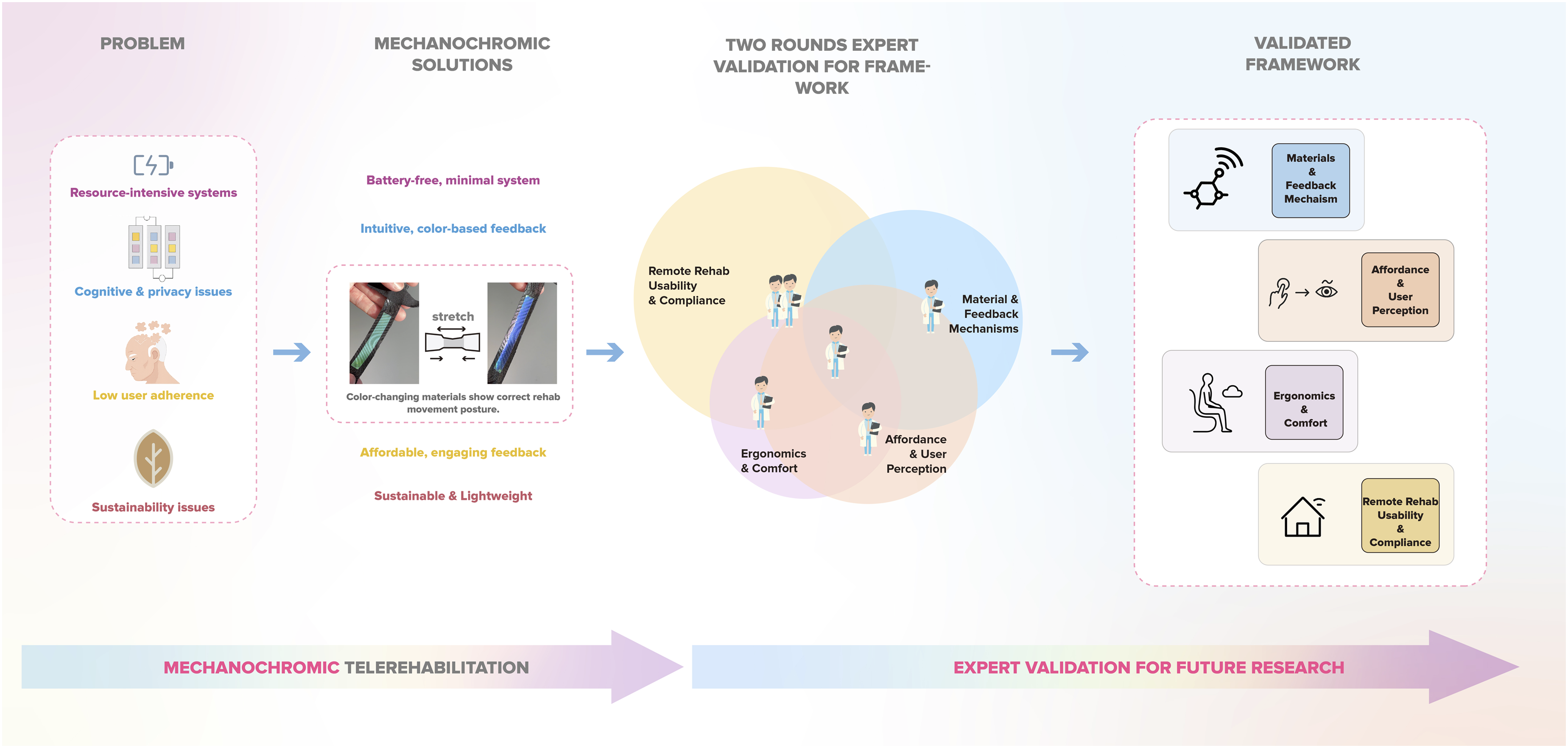
High technical complexity in electronic wearables significantly hinders patient adherence in unsupervised home rehabilitation. While mechanochromic materials represent a feasible, passive, and battery-free alternative, there is a lack of a systematic logic for translating these material properties into products developing protocols that meet clinical design requirements. Addressing this gap, we employed a mixed-methods approach comprising a PRISMA-ScR scoping review to map design determinants and a two-round Delphi study to develop a novel “Affordance-Feedback Design Framework.” Rather than providing generic guidelines, the framework establishes a systematic logic for Color-Angle Mapping products development by identifying 12 prioritized core design factors categorized into Critical, High, and Desirable tiers. This roadmap bridges the ‘perceptual gap’ by guiding the translation of material properties into user-centered smartwear through a validated three-phase engineering process. Quantitative analysis of the second-round Delphi demonstrated strong expert consensus (I−CVI>0.78; overall mean score = 4.72/5.0; Kendall’s W=0.72), validating the framework’s feasibility and clinical relevance. Specifically, the framework defines a systematic logic Color-Angle Mapping products developing logic, which converts complex biomechanical data into intuitive visual cues, thereby potential reducing the patient’s cognitive monitoring load during exercises.
1. Introduction
Driven by an aging population and scarce medical resources, post-surgical rehabilitation is shifting towards home-based scenarios. 1 However, unsupervised patient adherence remains persistently low. 2 Barriers such as device complexity, abstract data feedback, and maintenance-induced technostress prevent many older adults from sustaining home therapy. 3 While tele-rehabilitation aims to increase accessibility, high technical thresholds often exclude the very users who need it most. 1
To address monitoring challenges, prior research has extensively developed wearable biofeedback systems using electronic sensors and mobile applications. 3 While these solutions excel in “data quantification” for clinicians, our systematic evidence mapping reveals a critical gap: the excessive focus on precision often neglects patient cognitive load. In home settings, users prioritize intuitive, binary confirmation of posture over abstract numerical data. 4 Similarly, the field of smart textiles has focused heavily on integrating conductive fibers to replicate laboratory-grade monitoring in smartwear, prioritizing sensor linearity and wireless transmission stability over user experience.5,6 While these solutions excel in ‘data quantification’ for clinicians, our systematic evidence mapping reveals a critical ‘perceptual gap’: although existing electronic systems produce precise data, patients often struggle to intuitively interpret these abstract numerical metrics, leading to a breakdown in the interaction loop.
However, current electronic smartwear systems often violate Norman’s principles of Affordance by demanding complex maintenance, contradicting the need for simplicity. 7 Although “mechanochromic” (force-responsive) materials exist, a theoretical framework translating these properties into clinical design guidelines is currently missing.8–10
Addressing this gap, this study aims to develop and validate a novel ‘Affordance-Feedback Design Framework’ for mechanochromic smartwear. By synergizing Affordance Design Theory with mechanochromic color-changing feedback, we propose a comprehensive research and development framework for product realization. This framework serves as a systematic roadmap, guiding the translation of abstract material properties into tangible smartwear prototypes, ultimately lowering the cognitive barrier for independent rehabilitation without relying on electronic sensors.
Adopting a mixed-methods approach, we first mapped smartwear design requirements via a PRISMA-ScR scoping review. 11 Based on these findings, a preliminary framework was constructed and validated through two rounds of Delphi expert consensus. A multidisciplinary panel (materials science, design, and clinical rehabilitation) evaluated the framework to ensure both theoretical soundness and clinical feasibility.
Grounded in a PRISMA-ScR scoping review, this study codifies a validated ‘Affordance-Feedback Design Framework’ comprising four core dimensions and 12 actionable guidelines. By implementing a standardized ‘Color-Angle Mapping’ products developing logic, the framework reconciles the ‘perceptual gap’ inherent in electronic monitoring through intuitive, battery-free visual cues. Quantitative Delphi validation confirms high-level multidisciplinary consensus (all dimensions exceeding the I−CVI threshold of 0.78; Round 2 mean = 4.72), ensuring structural integrity for clinical and ergonomic deployment.
The primary contributions of this study are: (1) Theoretical Innovation: Establishing the design framework for passive mechanochromic feedback, demonstrating that “low-resolution intuitive cues” can be superior to “high-resolution digital data” for home adherence; and (2) Methodological Validation: Through interdisciplinary consensus, it defines a four-dimensional evaluation standard for non-electronic smartwear which integrates Material Mechanisms, Ergonomics, Affordance, and Usability.
2. Methods
This study employed the Preferred Reporting Items for Systematic Reviews and Meta-Analyses extension for Scoping Reviews (PRISMA-ScR) methodology to systematically map human factors challenges and design requirements in post-surgical tele-rehabilitation.
11
The synthesized evidence informed the development of a preliminary Affordance–Feedback Framework, integrating mechanochromic visual feedback as an intuitive, low-burden solution to enhance patient adherence and safety. To ensure clarity and practical relevance, the framework was evaluated by six domain experts using content validity and checklist-based assessment, leading to a refined and validated conceptual model for guiding future ergonomic smartwear design (Figure 1). The diagram illustrates the expert validation workflow used in this study (Source: Created by authors).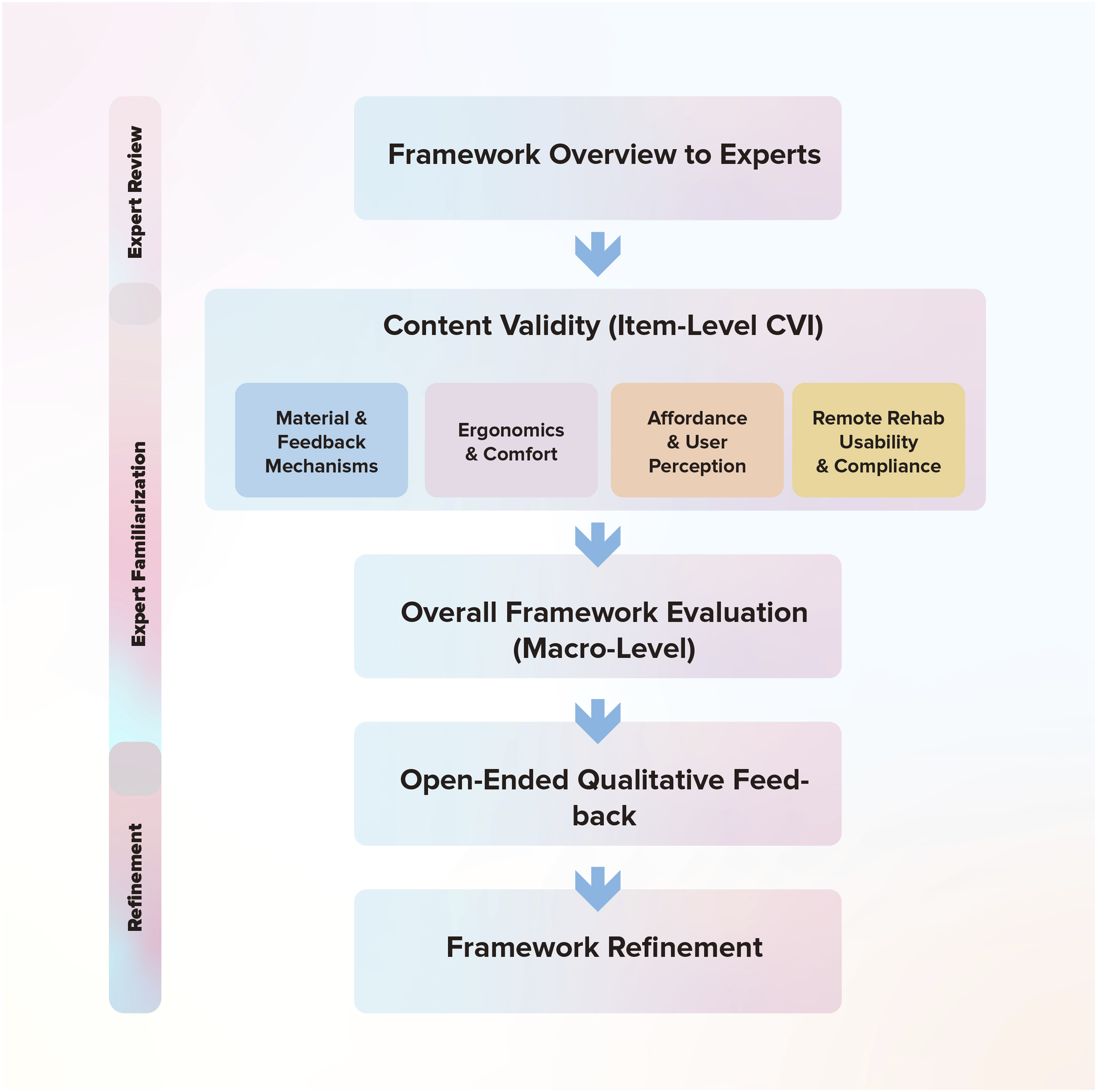
2.1. Evidence mapping (PRISMA-ScR)
A systematic search was conducted across Web of Science, PubMed, Scopus, and IEEE Xplore using the strategy detailed in Appendix A. Retrieved records were managed using EndNote X20 and deduplicated via the Amsterdam Efficient Deduplication method. 12 In addition to the database search, a manual backward citation search (“reference checking”) was performed on the reference lists of the initially included articles to identify any additional relevant studies.
Data extraction prioritized recent evidence, retaining the latest version of overlapping studies while including all conflicting findings to ensure comprehensiveness. 11
2.2. Thematic synthesis
Based on the Scoping Review (PRISMA-ScR) results, the development of the draft framework began with identifying the core factors affecting the user experience of smart textiles through a comprehensive literature analysis. These factors included technical attributes of smartwear, user needs and expectations, and the characteristics of the intended usage environment. 11 Guided by affordance design theory and ergonomics principles,7,13,14 the framework aimed to optimize product interaction across multiple dimensions to achieve the goal of mechanochromic smartwear: enabling users to self-correct and reconstruct posture in home-based scenarios without the assistance of third-party experts, using mechanical color feedback as an intuitive guidance mechanism. 15
To structure the framework, the extracted findings from the included studies were synthesized (Figure 2) using thematic analysis.
16
Recurring concepts were clustered into four core domains: (1) material and feedback mechanisms, (2) ergonomic fit and comfort, (3) affordance and user perception, and (4) home-based usability barriers.
15
Experts domain (left) shows how each expert aligns with the four design dimensions, while the expert group classification (right) illustrates the distribution of experts across the fields of materials, design, and remote guidance (Source: Created by authors).

In defining the relationships between these domains, we referred to established ergonomic and human–computer interaction (HCI) models, such as the ISO 9241 ergonomics standards.13,17 A modular, hierarchical, and flow-based structure was selected to visually represent the interplay between functional, ergonomic, and experiential elements. The outcome of this process was a preliminary conceptual framework that integrates technical, ergonomic, and user-centered considerations for posture rehabilitation smart wear. 15
2.3. Validating the framework for usability and practical relevance
For the framework validation, a multidisciplinary panel of six experts (N=6) was purposively selected to cover the complete translational chain from material science to clinical rehabilitation (Figure 2). The panel comprised: a National Lab materials scientist, a smart textile specialist and smartwear designer, a PhD lecturer in spatial and perceptual design, two clinical rehabilitation service specialists, and one remote-care operations consultant. All experts met the inclusion criteria of having a minimum of four years of relevant professional experience. Despite the compact panel size (N=6), we employed a strict purposive sampling strategy, selecting from 15 candidates based on rigorous inclusion criteria (minimum 4 years’ experience) to prioritize quality over quantity. This aligns with methodological guidelines for niche emerging fields where expert competence is paramount. 18 This study prioritized the quality and heterogeneity of expertise over statistical representativeness. The panel was purposively selected to cover the complete translational chain, from material science to clinical rehabilitation (Figure 2). This interdisciplinary composition ensures the framework is evaluated from complementary technical and practical perspectives, mitigating single-discipline bias. Furthermore, literature indicates that stable content validity (CVI) can be achieved with panels of 5 to 10 experts when inclusion criteria are stringent.19,20 All experts had more than four years of relevant professional experience. The validation process followed a three-step sequence: (1) initial scoring of the item-level Content Validity Index (CVI) using a 5-point scale; (2) refinement of the items based on group feedback through iterative Delphi rounds; and (3) final evaluation of the framework’s usability and clarity using a Likert scale.
Specifically, each expert rated every framework item for relevance and clarity on a 5-point scale (1 = not relevant, 5 = highly relevant). We calculated item-level CVIs (I-CVI) and an average scale-level CVI (S-CVI/Ave). An I-CVI of 0.78 or above indicated good agreement, following the widely-used standard in scale development. 21
A 5-point scale was used for the content validity assessment to avoid neutral ratings and force a clear relevance judgment. 21 Next, we held anonymous Delphi feedback. After expert feedback, we shared the group’s average scores and summary comments, then experts re-rated the items. This Delphi-CVI combination method aligns with protocols applied in recent instrument validation studies employing panels of 6 experts. 20
For the quantitative validation, experts rated framework dimensions (completeness, theoretical soundness, usability, clarity) on a 5-point Likert scale, with mean scores and standard deviations calculated to quantify consensus. 22 Qualitative feedback from Delphi rounds was thematically analyzed by the lead researcher following the protocol by Braun and Clarke (2006). 16 To ensure interpretive validity and minimize subjective bias, the extracted themes were reviewed and verified by the co-authors. Finally, quantitative metrics and qualitative insights were synthesized to iteratively refine the framework, adhering to mixed-methods validation protocols. 23
3. Results
A total of 29 records were initially identified through database searching and reference checking (Figure 3). After removing duplicates, 25 studies were screened, of which 20 full-text articles were assessed for eligibility. Following the exclusion of six articles that did not meet the criteria, 14 studies were finally included in the qualitative synthesis. PRISMA flow diagram of the study selection process (Source: Created by authors).
Detailed characteristics of the included studies, including study populations, technology types, feedback modalities, and usability metrics, are comprehensively summarized in Appendix C. In general, the reviewed literature predominantly focused on electronic-based feedback systems (e.g., IMUs, EMG sensors, and smartwatches) applied to elderly populations or post-surgical rehabilitation contexts. While these studies demonstrated the clinical feasibility of sensor-based monitoring, they consistently identified high cognitive load, setup complexity, and maintenance barriers as critical challenges for unsupervised home use. Notably, empirical research on passive mechanochromic interfaces for rehabilitation remains scarce, highlighting the specific research gap addressed by this study.
3.1. Preliminary feasibility
Before establishing the design framework, a proof-of-concept prototype was developed to verify the mechanochromic material’s operational characteristics. As illustrated in Figure 4, the system was evaluated in two dimensions: conceptual application and physical response. Operational concept and preliminary material characterization of the mechanochromic feedback mechanism (Source: Created by authors).
Theoretically, the material serves as a binary strain gauge for scenarios like grip training, where color shifts distinguish between insufficient (low strain) and functional (target strain) engagement (Figure 4(a)). Physically, the prototype demonstrated a clear color transition correlated with joint flexion angles, initiating at ∼30° and reaching peak saturation at ∼80° (Figure 4(b)). Crucially, the material exhibited high signal stability, maintaining the ‘alert’ blue state during a 10-second static hold, and demonstrated rapid reversibility with a recovery time of <1 second upon release. These results confirm the material’s suitability for real-time, low-latency rehabilitation feedback.
3.2. Key human factors challenges
Relative cognitive and usability demands of different feedback modalities in tele-rehabilitation.

Overall, tele-rehabilitation wearables must minimize setup complexity, provide clear and motivating feedback, and remain robust against the variability of home environments.
3.3. Key design elements
Key design elements summary.
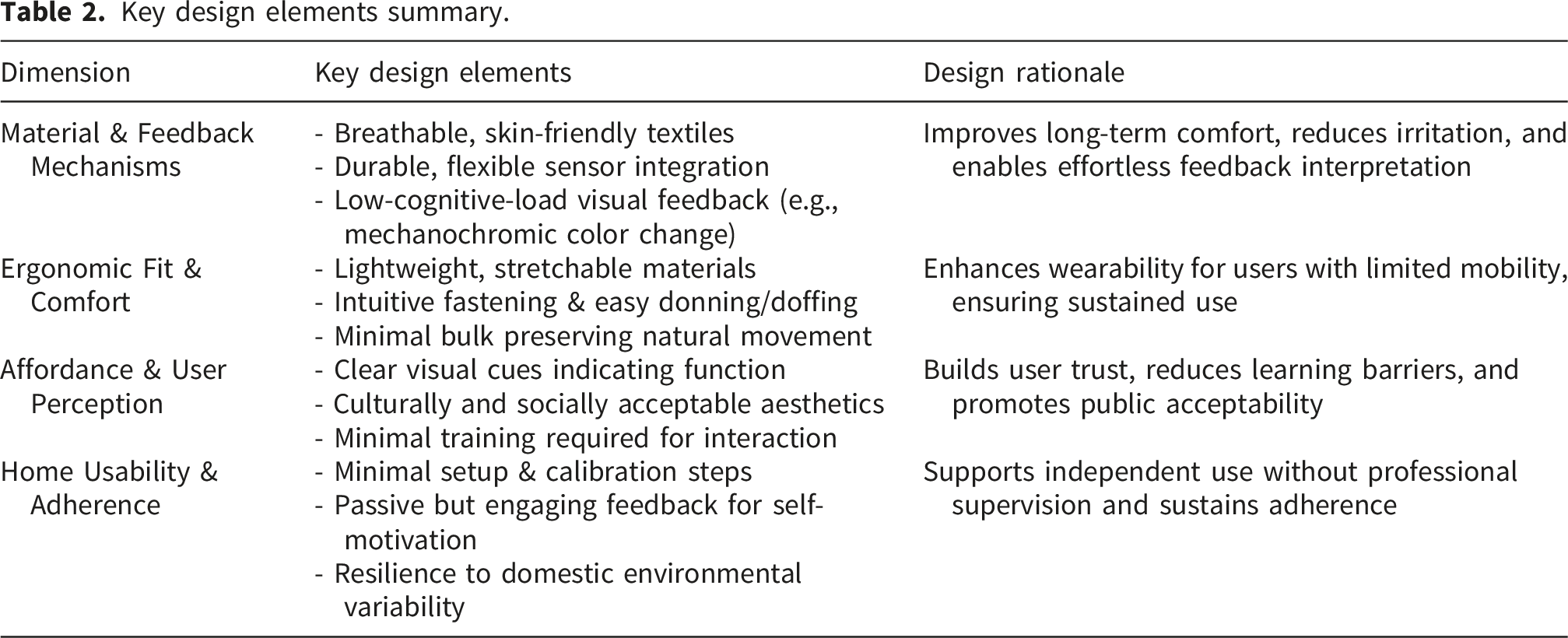
Table 2 summarizes the key design elements extracted during the scope definition review. The review results indicate that there is currently no empirical research on the use of mechanochromic textiles for remote rehabilitation, but existing literature consistently emphasizes the importance of easily understood visual cues. Based on this need, this study proposes using mechanochromic smart textiles as a novel passive feedback method to meet the identified usability requirements. Subsequently, we integrated this solution into an affordance feedback framework and validated it using the Delphi consensus method.
3.4. Affordance–feedback framework structure
The proposed framework (Figure 5) serves as a conceptual roadmap for developing mechanochromic smartwear. Preliminary development framework (Source: Created by authors).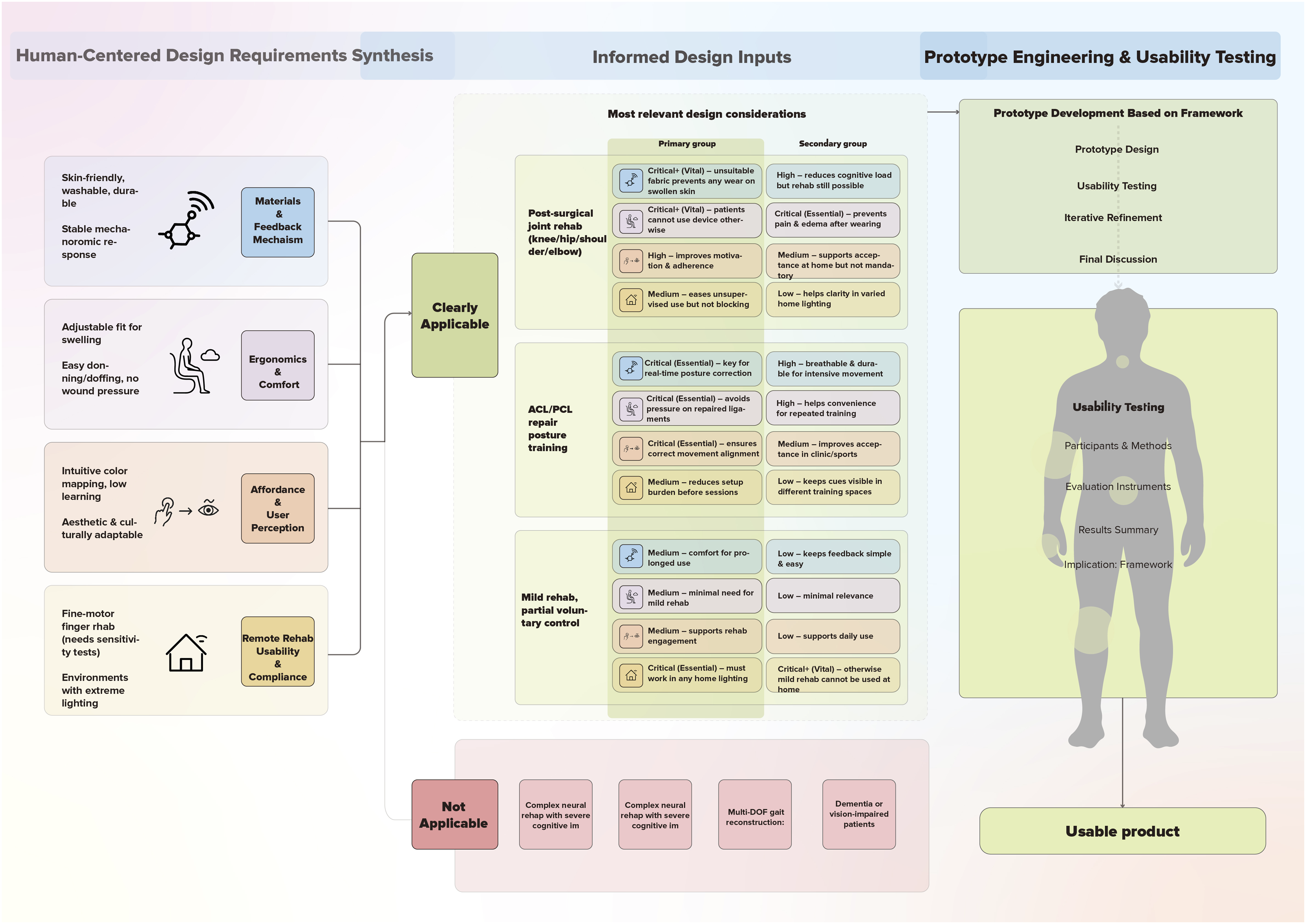
The framework (Figure 5) guides the development process through three integrated phases: synthesizing human-centered requirements, mapping design inputs to clinical needs, and iterative prototype testing. This structure ensures that material properties are directly translated into ergonomic features.
3.5. Expert validation and refinement
Mean scores and content validity assessment for framework dimensions. (Scale: 1 = not relevant, 5 = highly relevant).

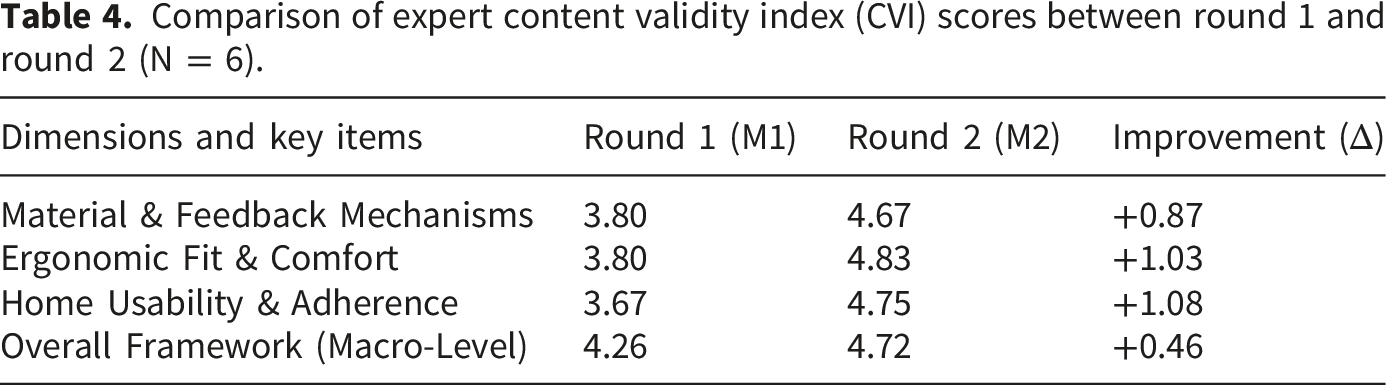
At the same time, the evaluation highlighted several aspects requiring further refinement. Relatively lower scores were observed for “feedback supporting long-term motivation” (M = 3.67), “Low-cognitive-load color feedback” (M = 3.80), and “accommodating body-size changes or swelling” (M = 3.80). Taken together, these ratings indicate that while the overall interaction concept was judged to be sound, the framework needed stronger provisions for environmental adaptability, swelling-adaptive ergonomics, and sustained user engagement in home settings. We further iterated the framework based on expert feedback and conducted a second expert verification (Table 3).
While the core concept received strong endorsement, round 1 qualitative feedback highlighted a critical ‘contextual gap’: experts argued that without explicit mechanisms for swelling-adaptive fit and ambient lighting robustness, the framework remained too idealized for the volatile home environment. Specifically, Experts 2 and 4 noted that post-surgical limb volume changes could trigger false-positive color shifts, potentially misleading patients.
Qualitative feedback from the first round was thematically analyzed and categorized into two streams: (1) Immediate Framework Refinement, focusing on theoretical clarity and environmental robustness, and (2) Future Implementation Considerations, encompassing engineering-level constraints such as washability and multimodal feedback.
Since this study aims to establish a foundational visual feedback framework, suggestions related to ‘auditory/tactile feedback’ (Expert 5) and ‘long-term maintenance/washing’ (Experts 2, 3, 6) were acknowledged as critical for future product commercialization but were considered beyond the scope of this early-stage conceptual model. Consequently, the refinement phase focused primarily on addressing environmental adaptability and user guidance protocols to strengthen the framework’s core theoretical validity.
In response to the expert assessment, the framework underwent targeted refinement. Visually, the guidance flow was enhanced for greater clarity. The ‘Design Considerations’ module was streamlined to focus exclusively on high-priority factors, introducing a new hierarchical ranking. Furthermore, the ‘Usability’ dimension was expanded to include specific actionable guidelines such as ‘Pain-Free Donning’ and ‘Ambient Lighting Robustness’, directly addressing the user guidance and environmental concerns raised in Round 1. This updated framework (Figure 6) was then subjected to a second round of expert verification. Final affordance feedback design framework after expert refinement (Source: Created by authors).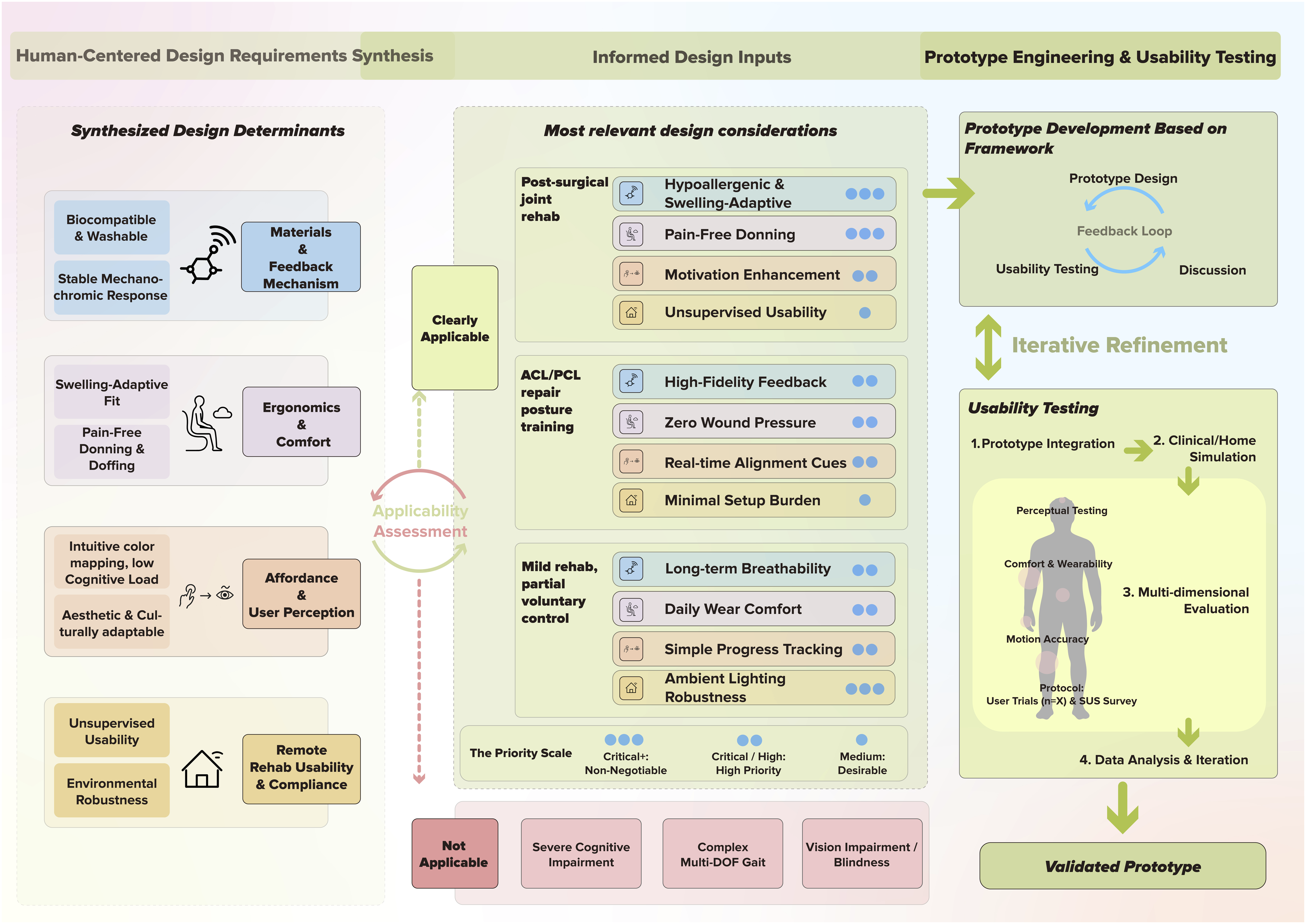
Comparison of expert content validity index (CVI) scores between round 1 and round 2 (N = 6).
4. Discussion
4.1. Key contributions and implications
This study validates the conceptual design framework for mechanochromic smartwear, offering a passive alternative to resource-intensive electronic wearables. By prioritizing low-resolution intuitive cues over high-precision data, our findings demonstrate that reducing cognitive load is as critical as biomechanical accuracy for home rehabilitation adherence.
In addition, based on the four core design elements derived from the literature review in Chapter 3 (materials and feedback mechanisms, ergonomic fit and comfort, user perception and usability, and home use and compliance), this study constructs an “Affordance-Feedback Design Framework,” providing a systematic structure and methodology for ergonomically oriented mechanochromic color-changing smart clothing design. Unlike conventional frameworks prioritizing sensor performance, this framework integrates Affordance Design Theory to emphasize ergonomic comfort and user perception, enhancing usability. This framework transforms ergonomic and interaction design principles into actionable design guidelines, providing clear guidance for clinical practice and product development, including how to utilize intuitive, low-friction color-changing cues to improve patient compliance, and how to enhance wearability, comfort, and social acceptance in the design process.
Moreover, sections 3.4 and 3.5 of this study demonstrate the interdisciplinary expert validation process of the framework. Experts from materials science, smart textile design, and clinical rehabilitation assessed the framework’s clarity, relevance, and completeness. All items exceeded the content validity threshold, confirming the framework’s structural robustness and clarity. This validation further establishes the framework as a reliable theoretical foundation for future research, prototype development, and interdisciplinary collaboration.
Furthermore, the feasibility of meeting clinical requirements is supported by recent advancements in material science. As noted by the material experts in our panel, mechanochromic responses can be chemically tuned to trigger at specific strain thresholds (e.g., corresponding to a dangerous range of joint flexion). This framework allows designers to map these specific strain thresholds to the ergonomic zones identified in Section 3.2, effectively embedding the ‘clinical prescription’ directly into the material properties.
Ultimately, from an HCI perspective, the material’s rapid recovery time (<1 s) is pivotal, as it aligns with the human perceptual threshold for real-time interaction. 33 According to visual perception theories, feedback delivered within this sub-second window ensures that users perceive a direct causal link between their physical exertion and the system’s response, facilitating a seamless interaction loop. 34 Unlike traditional electronic wearables that present abstract numerical data requiring significant cognitive decoding (System 2), this ‘binary confirmation’ logic leverages pre-attentive visual processing (System 1). By simplifying the interaction from quantitative analysis to qualitative recognition, the framework effectively minimizes cognitive load and bridges the ‘perceptual gap’ inherent in unsupervised home rehabilitation. 35
4.2. Impact and future research
By introducing mechanochromic materials to remote rehabilitation, this validated framework fills a critical design gap. It provides an actionable roadmap for mechanochromic materials in remote rehabilitation but also provides actionable guidance for practical prototype development and design decisions.
As shown in Sections 3.4 and 3.5, this framework lays a clear methodological foundation for future prototyping, case studies, and human trials, and can be used to guide material selection, ergonomic integration, interaction design, and deployment in home settings. After a mature prototype is developed and user testing is completed, further research should focus on mass production feasibility, durability assessment, and market and user acceptance to advance mechanochromic smart clothing from a laboratory concept to practical remote rehabilitation applications.
Experts mention that mechanochromic materials lack the numerical precision of electronic sensors (e.g., IMUs). However, our expert validation highlights a critical distinction between clinical diagnosis (which requires high precision) and home rehabilitation (which requires high adherence). Expert consensus in this study (Table 3) suggests that the primary barrier to home rehab is not a lack of data precision, but the complexity of setup and cognitive load. This distinction highlights a significant ‘perceptual gap’ in traditional wearables: while electronic sensors prioritize biomechanical accuracy, the resulting data remains abstract to the end-user. This lack of intuitive understanding often causes interaction failures, whereas our proposed framework prioritizes immediate, passive visual cues to ensure behavioral correction. By providing immediate, passive visual cues (e.g., green to red), the proposed framework prioritizes behavioral correction over data logging. This offers a ‘good enough’ accuracy for posture maintenance that encourages patients to use the device, addressing the high abandonment rates seen in complex electronic wearables.
Adopting this framework implies a paradigm shift in the smart clothing supply chain. Traditional e-textiles require the integration of rigid electronic components, necessitating complex assembly lines that merge textile manufacturing with electronics engineering.
4.3. Implications for rehabilitation practice
Beyond theoretical validation, the framework offers actionable guidelines for both smartwear engineering and clinical intervention strategies, directly addressing the design determinants identified in Section 3.2.
For product designers, the framework establishes a clear hierarchy of ergonomic priorities based on the expert consensus reported in Section 3.4. Notably, the expert panel identified ‘Pain-Free Donning’ as a critical and non-negotiable requirement (see Section 3.5 and Figure 6), prioritizing it over aesthetic considerations. This implies that future design iterations must prioritize the mechanics of dressing, such as incorporating high-stretch panels or adaptive closures, to accommodate patients with limited mobility or post-surgical swelling. The framework dictates that the ‘wearability’ of the device is the prerequisite for any sensing function.
For clinical practitioners, the framework introduces a novel method for prescribing home exercise through ‘Color-Angle Mapping products developing’, offering a solution to the cognitive load challenges highlighted in Section 3.1. Instead of prescribing abstract numerical targets (e.g., ‘flex the knee to 60 degrees’), clinicians can utilize the material’s properties to set intuitive visual constraints. For instance, a personalized prescription could be simplified to ‘Bend your knee until the fabric turns green but stop immediately if it turns blue.’ This approach translates complex biomechanical thresholds into immediate and perceptible visual cues, potentially reducing the cognitive burden on patients and ensuring safety in unsupervised home settings.
While the framework proposes intuitive color-mapping, practical implementation faces challenges such as material hysteresis and user anthropometrics. First, regarding anthropometric variability, static sizing may cause pre-strain upon donning. Future prototypes must address this via ‘calibration mechanisms’ (e.g., adjustable fasteners or modular patches) that allow users to ‘zero’ the sensor state before exercise, ensuring color changes reflect joint flexion rather than body volume. Second, regarding material hysteresis, while color recovery lag is a physical constraint, it remains acceptable for safety-focused home rehabilitation. In this context, the material functions effectively as a ‘threshold indicator’ (warning against over-extension) rather than a high-frequency tracking tool.
4.4. Limitation
While this study has constructed a systematic and expert-validated design framework for mechanochromic smart clothing, some limitations remain. First, while a preliminary proof-of-concept prototype was developed to demonstrate feasibility (Figure 4), the current validation remains qualitative rather than quantitative. The precise mapping between specific color gradients and exact joint flexion angles has not yet been calibrated, meaning the current prototype serves as a visual indicator rather than a precision measurement tool. Future research is required to establish a standardized “color-strain” index to ensure clinical accuracy for specific rehabilitation protocols.
Specifically, as an early exploration in this field, this study two rounds of expert evaluation, rather than multiple rounds of Delphi-style validation. While expert feedback has supported effective optimization of the framework, deeper consensus building will help further improve its robustness and universality.
Additionally, we acknowledge a potential interpretive bias in the qualitative analysis. As themes were categorized by the lead researcher and verified by co-authors, formal inter-rater reliability scores were not calculated. Future studies should employ multiple independent coders to further enhance rigor.
Moreover, this study does not address application-level issues such as mass production feasibility, cost control, and market acceptance. In the future, after developing a mature prototype and completing user studies, a systematic evaluation of manufacturing processes, durability, and potential market adoption is needed to advance mechanochromic smart clothing from proof-of-concept to practical remote rehabilitation applications.
5. Conclusion
Despite rapid developments in wearable technology, intuitive, low-burden feedback solutions for home rehabilitation remain limited. Specifically, passive material-driven methods have been largely neglected. Addressing this, this study proposes and validates the “Affordance-Feedback Design Framework,” which integrates material properties, ergonomic fit, user perception, and home usability to guide the design of mechanochromic smartwear.
Supported by a systematic literature review and expert validation, this framework provides an actionable design basis for low-cognitive-load visual feedback systems developing map. It not only highlights the potential of mechanochromic materials in remote rehabilitation but also translates interdisciplinary principles into prototyping standards.
It is important to note that this study represents an expert-validated conceptual producting model. While grounded in user-centered theory, direct validation with patient cohorts is the necessary next step to confirm user acceptance and clinical efficacy in real-world scenarios.
Future research must focus on quantitative calibration, durability assessment, and manufacturability to advance this technology from concept to clinical application. Continued interdisciplinary collaboration among design, materials science, and rehabilitation experts will be key to establishing this methodological foundation for the next generation of user-centered assistive technologies.
Supplemental material
Supplemental Material - Bridging material science and affordance theory: An expert-consensus framework for mechanochromic rehabilitation smartwear
Supplemental Material for Bridging material science and affordance theory: An expert-consensus framework for mechanochromic rehabilitation smartwear by Ronghan Wang, Michele Santos and Cristina Carvalho in Journal of Industrial Textiles.
Footnotes
Acknowledgements
This research was funded in whole or in part by the Fundação para a Ciência e a Tecnologia, I.P. (FCT, https://ror.org/05qdjap63), under the PhD scholarship 2025.01270. BD, and the Grant of the Strategic Project with the references UID/04008/2025 and DOI  . Furthermore, I acknowledge the valuable research support provided by b-on (Biblioteca do Conhecimento Online) and CIAUD, Research Centre for Architecture, Urbanism and Design, Lisbon School of Architecture, Universidade de Lisboa. Their academic resources, infrastructure, and supportive environment contributed significantly to the successful development and completion of this work. For the purpose of Open Access, the author has applied a CC-BY public copyright license to any Author's Accepted Manuscript (AAM) version arising from this submission.
Author contributions
Funding
This research was funded in whole or in part by the Fundação para a Ciência e a Tecnologia, I.P. (FCT, https://ror.org/05qdjap63), under Grant of the Strategic Project with the references UID/04008/2025 and DOI . For the purpose of Open Access, the author has applied a CC-BY public copyright license to any Author’s Accepted Manuscript (AAM) version arising from this submission. This work was also funded by national funds through FCT – Fundação para a Ciência e a Tecnologia, I.P., under the PhD scholarship 2025.01270.BD.
Declaration of conflicting interests
The authors declared no potential conflicts of interest with respect to the research, authorship, and/or publication of this article.
Supplemental material
Supplemental material for this article is available online.
References
Supplementary Material
Please find the following supplemental material available below.
For Open Access articles published under a Creative Commons License, all supplemental material carries the same license as the article it is associated with.
For non-Open Access articles published, all supplemental material carries a non-exclusive license, and permission requests for re-use of supplemental material or any part of supplemental material shall be sent directly to the copyright owner as specified in the copyright notice associated with the article.
