






Abstract
The durability of terry fabrics largely depends on the fixation strength of pile loops. However, existing standard test methods such as BS EN 15598 and GOST 23351-78 measure the combined resistance of multiple loops and cannot isolate the structural contribution of individual loop anchoring. This study investigates loop fixation strength in terry fabrics through an integrated experimental and theoretical approach. A modified single-loop extraction method was developed in which adjacent loops were removed prior to testing to ensure that the measured force corresponded to a single pile loop. The method demonstrated high repeatability with coefficients of variation below 4.5%. A mechanistic model describing loop extraction resistance was formulated based on three physical components: pile–weft compression force, reed dent confinement force, and frictional wrap resistance. The model predicted experimental results with a mean absolute percentage error of 9.6% across five fabric structures; its predictive applicability is therefore preliminary and limited to the investigated parameter range (weft yarn linear density Nm 15–27, loop height 5–11 mm). Five 100% cotton terry fabrics, including four industrial samples and one proposed weave structure, were experimentally evaluated. The modified four-pick weave doubled the number of pile–weft contact points and achieved a loop extraction strength of 51.0 cN, representing a 16% improvement over the strongest industrial sample. The results demonstrate that weave architecture, inter-yarn spacing, and yarn–reed coordination are key structural parameters governing loop stability and can be optimized to improve the durability of terry textile products.
Keywords
1. Introduction
Terry fabrics occupy a structurally distinct position within technical and household textiles, combining a three-system yarn architecture ground warp, pile warp, and weft to produce surface loops that simultaneously provide high moisture absorption, thermal bulk, and tactile comfort.1,2 These properties make terry fabrics indispensable across hospitality, healthcare, personal care, and sportswear sectors, where both functional performance and long-term durability are primary requirements.3,4 The global scale of this market underscores its industrial significance: according to the International Cotton Advisory Committee, global cotton production reached approximately 24.1 million tonnes in 2023/24 and is projected to recover to 25.3 million tonnes in 2024/25, 5 with cotton accounting for approximately 78% of global terry fabric production. 6 This scale of production reinforces the practical significance of improving the structural durability of cotton terry fabrics. 7
Among the functional properties of terry fabrics, loop extraction resistance (herein referred to as loop strength) is increasingly recognised as the most critical determinant of service life. Pile loops are subjected to repeated frictional loading during washing, abrasion against skin surfaces, and mechanical stress during institutional laundering cycles.8,9 When loop fixation is inadequate, pile yarns disengage from the ground structure progressively, leading to surface degradation, loss of absorbency, and premature product failure.1,2 Despite this practical importance, loop strength has received considerably less systematic attention in the literature than absorbency or softness, and the structural factors governing it remain incompletely characterised.
Existing research on terry fabric structure and performance has concentrated primarily on moisture management and comfort. Karahan and Eren demonstrated that pile height, yarn linear density, and fabric density collectively govern static water absorption, establishing that weft density adjustments alter both loop formation geometry and water uptake capacity. 10 Frontczak-Wasiak and Snycerski confirmed that loop geometry is the principal determinant of surface durability and comfort, reporting that changes in pile configuration produce measurable shifts in use performance. 11 Petrulyte and Baltakyte investigated dynamic and static water absorption in pile fabrics across varying structural configurations and concluded that loop height and yarn properties are the dominant factors controlling moisture transport behaviour.12,13 Singh and Behera, in two complementary investigations, quantified the influence of pile density, loop length, yarn twist, and compression behaviour on the absorbency, handle, and mechanical properties of terry fabrics, emphasising that yarn-level parameters must be considered alongside weave-level parameters in performance prediction.14,15 Paksoy examined fibre composition effects on antibacterial activity and comfort in terry towels, while Gangakhedkar’s review identified dynamic water absorbency and loop shape factor as the most decisive performance attributes for towel products.16,17 The effect of repeated home laundering was further investigated by Yilmaz and Usal, who showed that washing cycles progressively alter surface morphology, thickness, and water absorption rate findings that implicate loop fixation stability as a key factor in long-term performance retention. 18
A smaller but important body of work has addressed structural modelling and loop stability in terry fabrics. Ünal and Koç developed optimisation models for terry towel structures and showed that weave parameters and loop height interact nonlinearly to influence product cost and performance simultaneously. 19 Shanbeh et al. applied artificial neural network modelling to predict pile loop extraction force in woven terry fabrics, demonstrating that statistical learning approaches can capture complex structural dependencies, but without providing a mechanistic explanation of the underlying friction and contact forces. 20 In a closely related study, Petrulyte et al. investigated resistance to pile loop extraction in woven pile fabrics and established that frictional interaction at yarn crossings is the dominant mechanism controlling loop stability, with inter-yarn contact force directly proportional to yarn compressive deformation at crossing points. 21 Mamadalieva et al. extended this line of inquiry by demonstrating that modifying the pile warp interlacing sequence specifically, increasing the number of weft yarns encircled per pile loop produces a measurable and reproducible improvement in loop strength without altering yarn count or fabric weight; in that study, the term ‘ring’ refers to pile loops in the original Uzbek textile engineering terminology and is equivalent to ‘loop’ as used throughout the present paper. 22 Korabayev et al. further showed that mechanical deformation applied to complex pile fabric structures produces systematic changes in yarn interaction geometry, affecting loop stability in ways that cannot be captured by single-parameter models. 23 Elemam et al. developed a mathematical model for pile yarn consumption and crimp ratio in woven terry fabrics, establishing quantitative relationships between weave structure, weft count, and loop length that provide a foundation for rational design of loop geometry. 24 Broader contributions to the mechanics of woven fabrics by Hearle, Adanur, and Behera have established the theoretical importance of yarn interaction, contact mechanics, and fabric geometry in determining mechanical performance under load.25,26
The statistical interpretation of parameter interactions in structurally governed systems has been strengthened by the application of response surface methodology (RSM) and central composite design. Previous studies have demonstrated that second-order regression models provide reliable tools for analysing interaction effects and identifying optimal structural conditions in complex textile systems.27,28 Compared with purely data-driven approaches such as ANN modelling, RSM-based frameworks offer improved interpretability of parameter interactions and explicit quantification of statistical model adequacy advantages that are particularly relevant when the experimental design space is constrained and mechanistic interpretation of the optimum is required.
Prior studies have examined the variables governing loop extraction resistance predominantly in isolation. Karahan and Eren (2006) varied pile height and yarn linear density independently in relation to moisture absorption without modelling extraction resistance or parameter interactions. 10 Singh and Behera (2010, 2014) investigated pile density, loop length, and yarn twist as separate variables affecting absorbency and compression, without linking them to a unified loop anchoring framework.14,15 Shanbeh et al. (2012) applied ANN prediction to loop extraction force but treated structural inputs as statistical predictors rather than physically interacting variables, and did not modify weave architecture experimentally. 20 Petrulyte et al. (2014) identified friction at yarn crossings as the dominant anchoring mechanism but did not extend their analysis to weave architecture modification or multi-parameter optimisation. 21 The novelty of the proposed four-pick weave architecture can therefore be understood in relation to these prior contributions: the proposed construction doubles the number of pile–weft frictional contact points from two to four without altering yarn count or fibre composition, an intervention that no prior study has combined with a mechanistic contact mechanics model and response surface optimisation within a single experimental–theoretical framework.
The existing standard test methods for loop strength determination present an additional methodological gap. The governing standard, BS EN 15598, specifies extraction of several loops within a fixed gauge length, so the recorded force reflects the aggregate resistance of multiple loops simultaneously rather than the fixation performance of any individual loop. 29 The CIS standard GOST 23351-78 similarly measures the combined resistance of loops within a 50 mm travel distance, a procedure that depending on loop height involves between 8 and 18 loops simultaneously and returns values that cannot be meaningfully compared across fabrics with different loop heights. 30 Neither standard isolates the contribution of weave structure to individual loop fixation, and neither provides a normative threshold referenced to single-loop mechanics. As a result, standard test data can produce misleading rankings: a fabric with structurally weaker loops but denser loop packing may appear superior under multi-loop testing while performing worse in actual service.
The present study addresses both gaps through three coordinated contributions. First, a modified single-loop extraction method is proposed and validated, in which all loops adjacent to the target loop are severed prior to testing so that the measured force corresponds unambiguously to the fixation resistance of one pile loop. Method repeatability is quantified through ten replicate measurements per sample, and coefficient of variation is reported for each fabric. Second, a mechanistic theoretical model is developed that decomposes loop extraction resistance into three physically distinct and independently calculable force components: the yarn-to-yarn compression force at pile–weft contact zones (F1), the lateral confinement force arising from reed dent geometry (F2), and the frictional wrap resistance determined by the pile–weft engagement angle (F3). Young’s modulus of the ring-spun cotton yarns is determined experimentally and used as a material parameter throughout the model, enabling fully parametric calculation without empirical calibration. Third, a central composite design and response surface methodology are applied to identify the weft yarn linear density and loop height combination that maximises loop strength, with a full second-order regression model, complete ANOVA table, and model adequacy verification reported. Five 100% cotton terry fabric samples — four from Uzbek industrial manufacturers and one woven using the proposed modified weave structure - were evaluated experimentally, and the results are interpreted within the theoretical framework to establish quantitative links between structural parameters and loop fixation performance. To the best of the authors’ knowledge, this is the first study combining a single-loop extraction method, a mechanistic analytical model, and response surface optimisation within a unified framework for terry fabric loop fixation analysis.
2. Materials and methods
2.1. Fabric samples
Structural parameters of the investigated terry fabric samples.
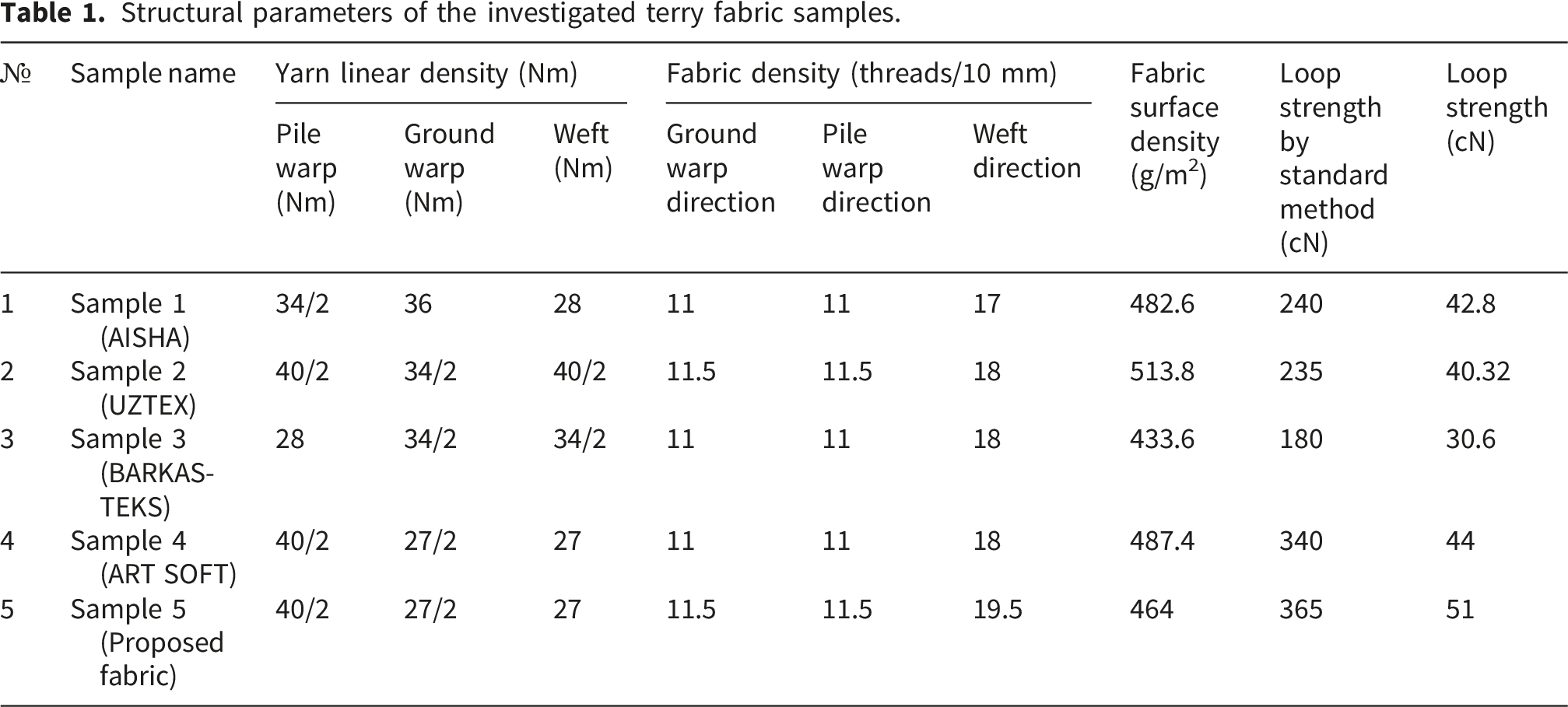
Samples 4 and 5 share identical yarn counts but differ in weave architecture, forming a controlled pair that isolates the effect of interlacing geometry on loop strength independently of yarn properties.
2.2. Loop strength measurement
Loop strength was determined using a modified single-loop extraction procedure developed to overcome the key limitation of existing standards. Under BS EN 15598 and GOST 23351-78, the test fixture pulls multiple loops simultaneously within a fixed gauge length, so the recorded force reflects aggregate rather than individual loop resistance and cannot be meaningfully compared across fabrics of different loop heights.32,33
In the proposed procedure, specimens of 200 × 50 mm were prepared from each sample. One pile loop at the centre of the specimen face was selected as the target; all immediately adjacent loops were severed at their bases with scissors to ensure that only the target loop resisted extraction. The loop was engaged by a hook and pulled vertically at 100 mm/min using a PM-3 tensile testing machine (Textima, Germany; gauge length 100 mm). Peak extraction force was recorded in centinewtons (cN). Ten replicate measurements were performed per sample from independently prepared specimens taken at different fabric locations. Mean, standard deviation (SD), and coefficient of variation (CV) are reported; a CV below 5% was adopted as the repeatability criterion in accordance with ISO 2602. 34
The validity of the adjacent loop cutting procedure was evaluated on the basis of three considerations. First, the force components governing loop anchoring - pile–weft compression (F1), reed dent confinement (F2), and frictional wrap resistance (F3) - are determined by ground weave geometry and yarn dimensions, neither of which is mechanically coupled to the presence of neighbouring pile loops. Second, the coefficient of variation remained below 4.5% across ten independently prepared specimens for each fabric, indicating that the cutting procedure introduces no systematic variability in the measured extraction force. Third, the theoretical model, which does not include any contribution from adjacent loops, predicted experimental values with a mean absolute percentage error of 9.6%, confirming that the dominant anchoring mechanisms are fully captured by single-loop mechanics. On this basis, adjacent loop removal is considered not to introduce a systematic bias into the measured extraction resistance.
2.3. Proposed weave structure
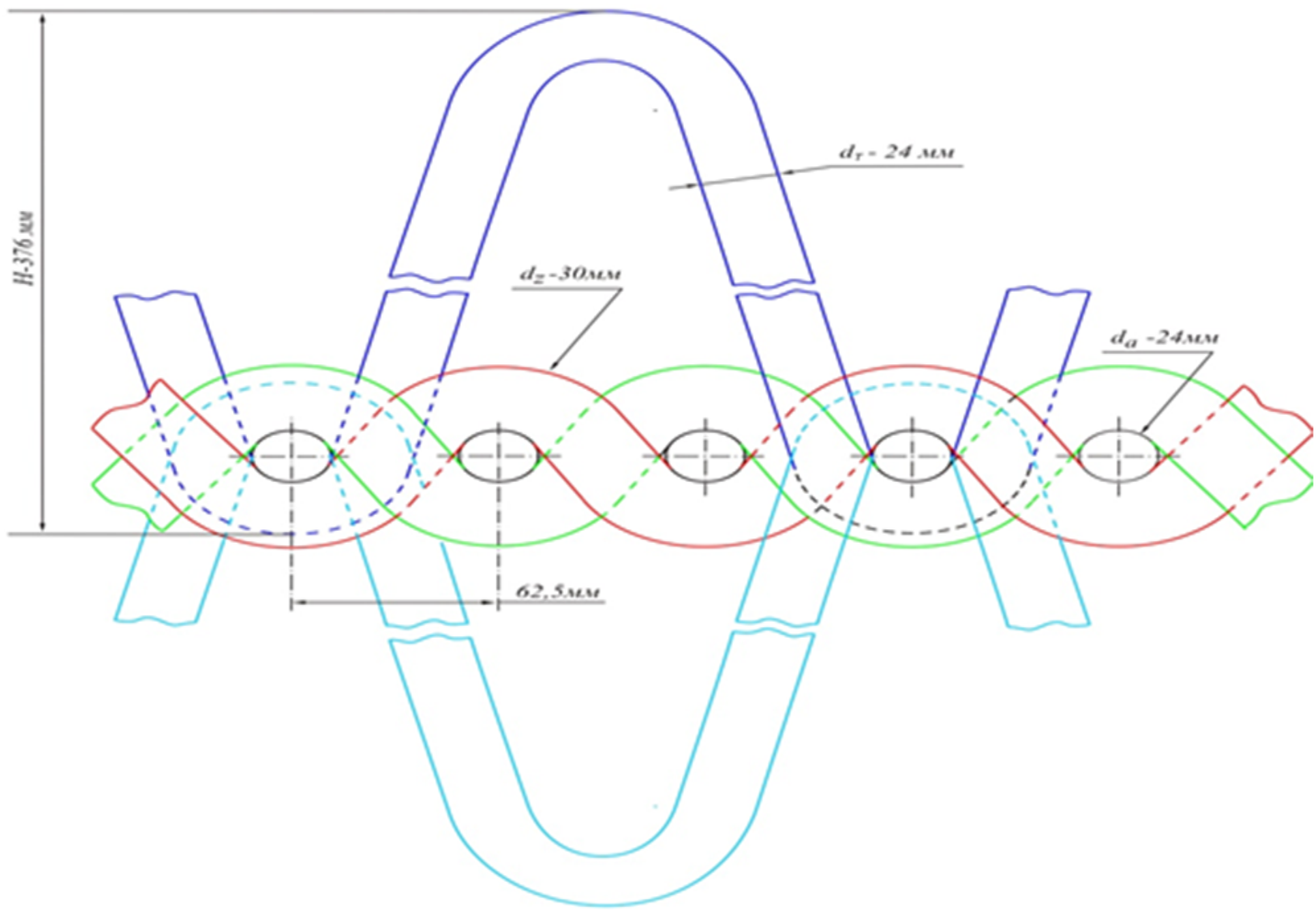
In the standard three-pick terry weave, each pile warp segment is anchored by two weft yarns - one on each side - before forming a loop. In the proposed four-pick construction, the pile warp yarn wraps around two weft yarns on each side before ascending to form the loop, doubling the number of frictional contact points per loop from two to four. This change does not alter yarn counts, twist, or fiber composition; the improvement in loop fixation arises solely from the modified interlacing geometry. 23 The increase in picks per loop repeat reduces loop density per unit area by approximately 25% relative to the standard construction, which is reflected in the lower surface density of Sample 5 compared with Sample 4 despite identical yarn counts.
2.4. Physical–mechanical characterization
Air permeability was measured according to ISO 9237, fabric thickness according to ISO 5084, abrasion resistance (Martindale cycles to first yarn breakage) according to ISO 12947-2, and tensile strength and elongation at break according to ISO 13934-1. Ten measurements per sample were averaged for each property.
2.5. Theoretical model of loop extraction resistance
The total loop extraction force FΣ is decomposed into three physically distinct components arising along the pile warp path within the ground structure:

The outer factor of 2 accounts for the symmetric loop anchoring on both fabric faces. The difference in coefficients reflects the additional weft contact points introduced by the proposed weave.

It is acknowledged that the cylindrical yarn geometry assumed in the spacing parameter calculations represents a simplification of real yarn behaviour. Under compression, yarn cross-sections deform and flatten, reducing the actual centre-to-centre distance between yarns relative to the undeformed cylindrical model. The Hertzian contact formulation partially accounts for localised elastic deformation at the contact patch through the calculated dimensions a and b; however, global cross-sectional flattening is not captured. This assumption is expected to introduce the greatest modelling error in structural configurations where inter-yarn compression is highest, and is identified as a limitation of the present analytical framework. 35 The Hertzian contact formulation is applied under the following assumptions: both yarns are treated as linearly elastic cylinders within the contact zone; contact deformation is small relative to yarn diameter; and friction acts uniformly across the contact patch. These conditions are consistent with the inter-yarn compression deformations calculated for the present sample set (Δ2 = 0.008–0.026 mm), which are small relative to the relevant yarn diameters (0.24–0.36 mm).
E = 980 cN/mm2 is the experimentally determined Young’s modulus of the ring-spun cotton yarns, obtained from Uster Tensorapid tensile testing of five replicate specimens (CV = 3.1%). The elastic region was identified as the approximately linear portion of the force–elongation curve between 5% and 30% of the breaking force, consistent with the typical elastic response behaviour of ring-spun cotton yarns under tensile loading. The modulus was calculated as



2.6. Statistical optimization
A central composite design (CCD) with two factors weft yarn linear density (x1, Nm) and loop height (x2, mm) was used to fit a second-order response surface model:
Factor levels for the central composite design.

3. Results and discussion
3.1. Performance of the modified single-loop extraction method
Single-loop extraction test results: repeatability statistics.
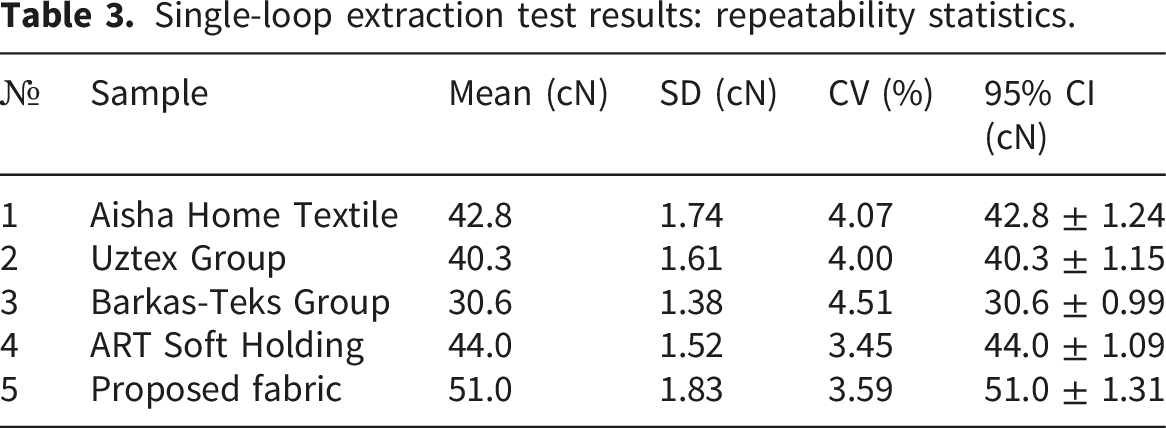
Figures 1 to 3 compares the loop strength values obtained using the proposed single-loop extraction method and the standard multi-loop procedure specified in GOST 23351-78. The standard method produces substantially higher absolute force values because several pile loops are simultaneously engaged during the extraction process. Depending on loop height and fabric density, between 8 and 18 loops may contribute to the measured force within the prescribed extraction distance. Consequently, the recorded value represents the cumulative resistance of multiple loops rather than the fixation strength of an individual loop. Schematic representation of the single-loop extraction method used for determining loop strength in terry fabrics. Structural geometry of pile loop formation in terry fabrics. Comparison of loop strength determined by the proposed single-loop extraction method and the standard multi-loop procedure (GOST 23351-78) for five terry fabric samples.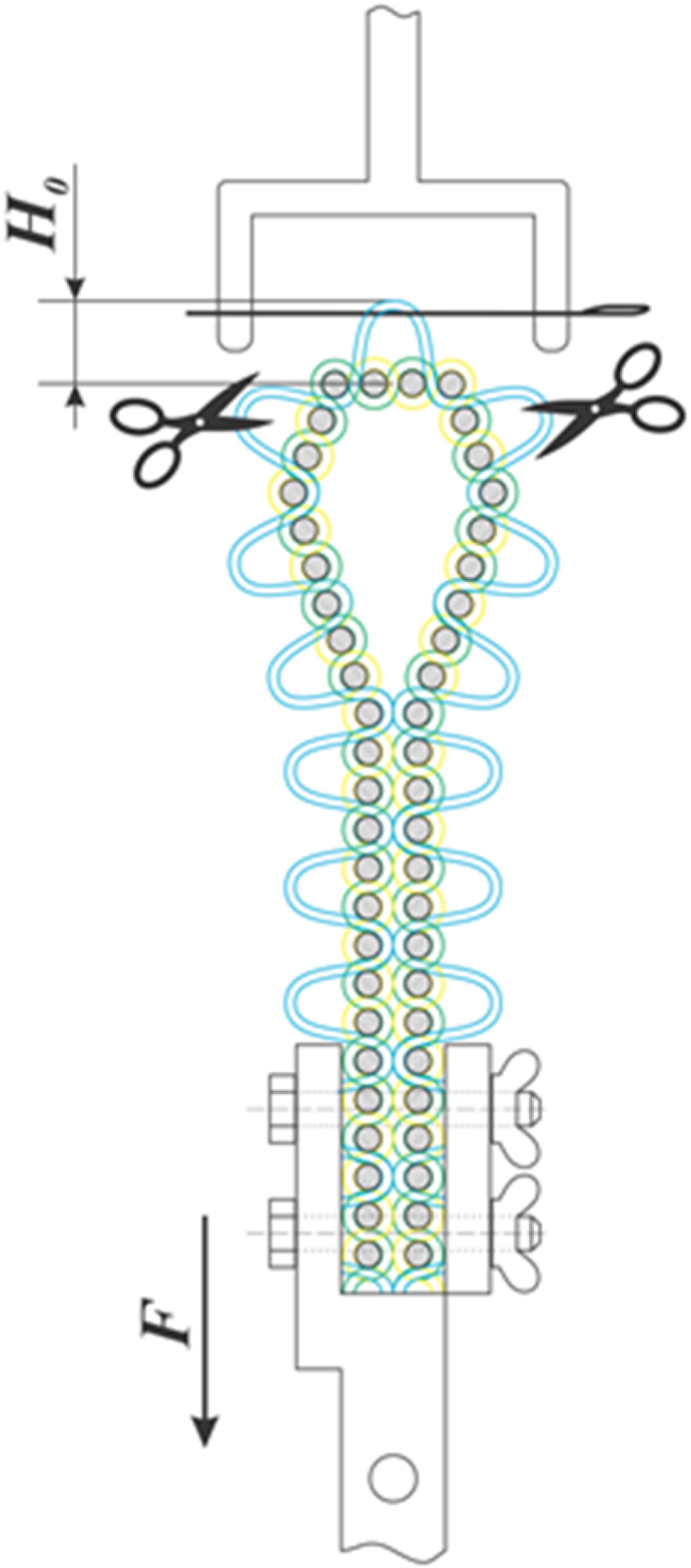
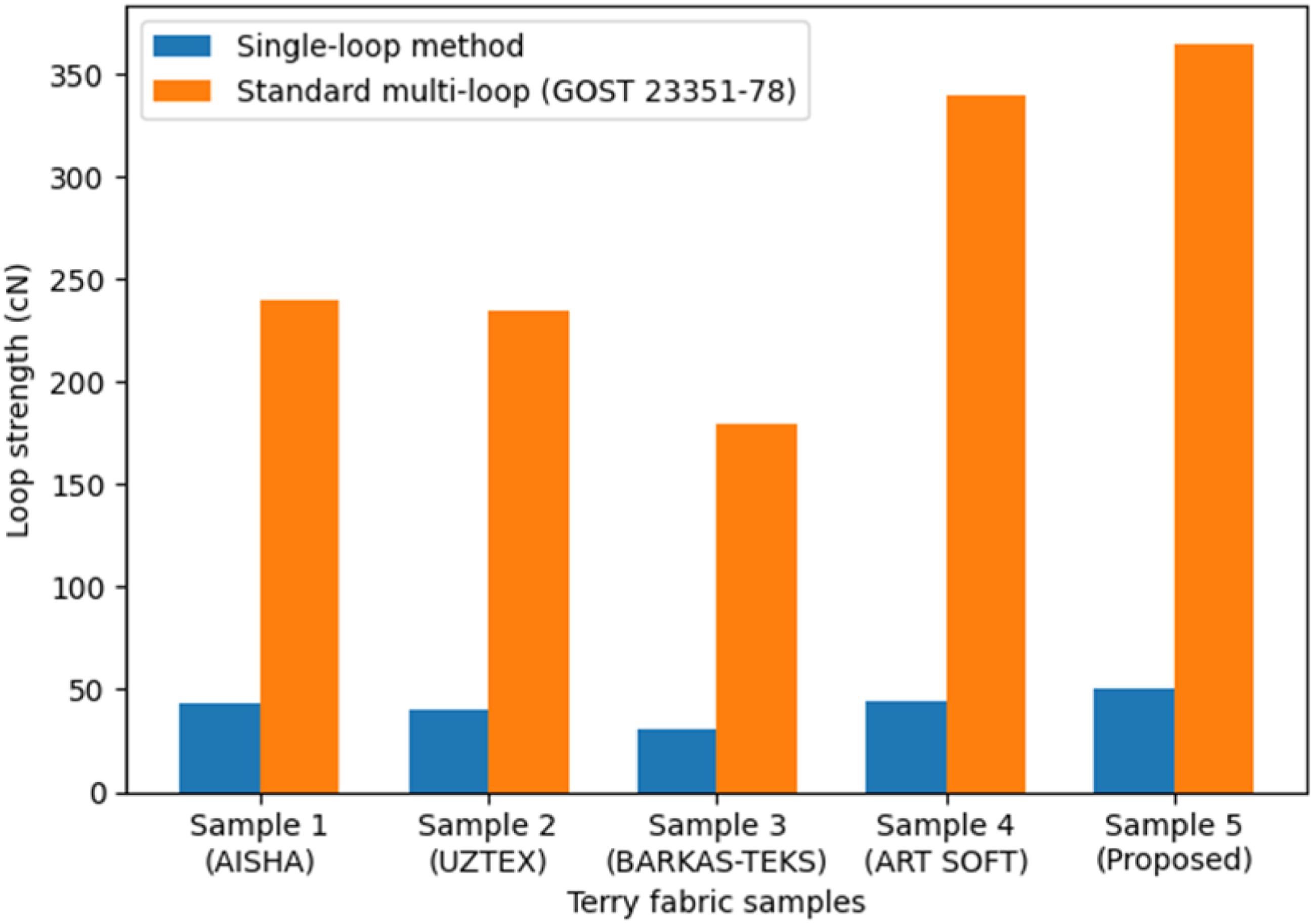
By contrast, the proposed method isolates a single pile loop by removing adjacent loops prior to testing. This allows the measured force to correspond directly to the structural fixation strength of one loop. As shown in Figure 3, the standard procedure yields values ranging from 180 to 365 cN, whereas the single-loop method produces values between 30.6 and 51.0 cN. This difference highlights the inherent limitation of multi-loop testing for structural analysis of loop anchoring in terry fabrics.
The minimum value of 49.05 cN specified in GOST 11027-2014 was established for the standard multi-loop extraction procedure and cannot be applied directly to single-loop measurements. It is therefore used here solely as an indicative contextual reference not as a performance criterion to situate the single-loop values within the broader quality landscape of commercial terry fabrics. Three of the four industrial fabrics, namely Samples 1, 2, and 3, produced single-loop extraction values lower than the contextual reference value. 36 This result would not have been evident from the standard multi-loop data alone. Sample 4 (44.0 cN) approached the specified threshold, whereas Sample 5 produced a single-loop extraction value of 51.0 cN, which is higher than the contextual reference value. These findings demonstrate the diagnostic value of the proposed method for quality assessment in industrial terry fabric production.
3.2. Loop strength of industrial and proposed fabrics
Figure 4 presents the single-loop extraction strength of the investigated terry fabrics. Among the industrial samples, loop strength varied between 30.6 cN and 44.0 cN. The proposed fabric structure achieved the highest value of 51.0 cN. The dashed horizontal line indicates the 49.05 cN value from GOST 11027-2014, retained as an indicative contextual reference only. Since this value was established for multi-loop testing, no direct performance comparison is intended. This result confirms that the modified four-pick weave architecture significantly improves loop fixation compared with conventional terry fabric constructions. Single-loop extraction force of all five terry fabric samples. Error bars represent ±1 SD (n = 10). The dashed line indicates the 49.05 cN value from GOST 11027-2014 as an indicative contextual reference only (established for multi-loop testing; not directly comparable to single-loop values).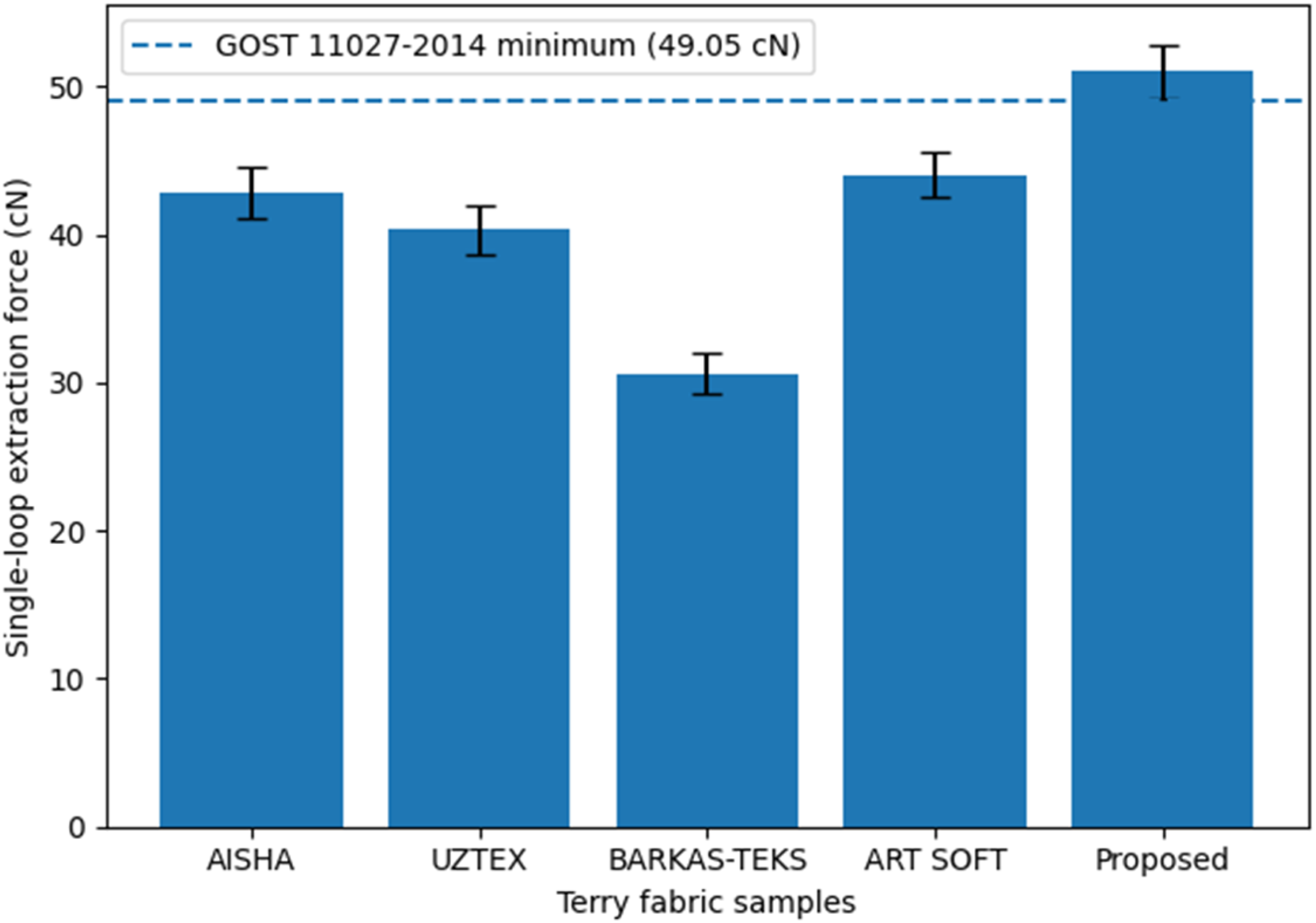
Figure 5 presents a macroscopic photograph of the pile loop surface structure of the proposed four-pick weave (Sample 5). The image shows a regular and compact loop arrangement consistent with the modified interlacing geometry in which each pile warp segment wraps around four weft yarns instead of two. The observed surface regularity reflects the tighter mechanical coupling and increased pile–weft contact area predicted by the theoretical model, which produced the highest single-loop extraction force (51.0 cN) among all investigated samples. While macroscopic imaging does not resolve individual yarn contact zones, the photograph provides visual support for the structural differences introduced by the four-pick construction relative to conventional three-pick terry fabrics. Surface appearance of the proposed four-pick terry fabric (Sample 5).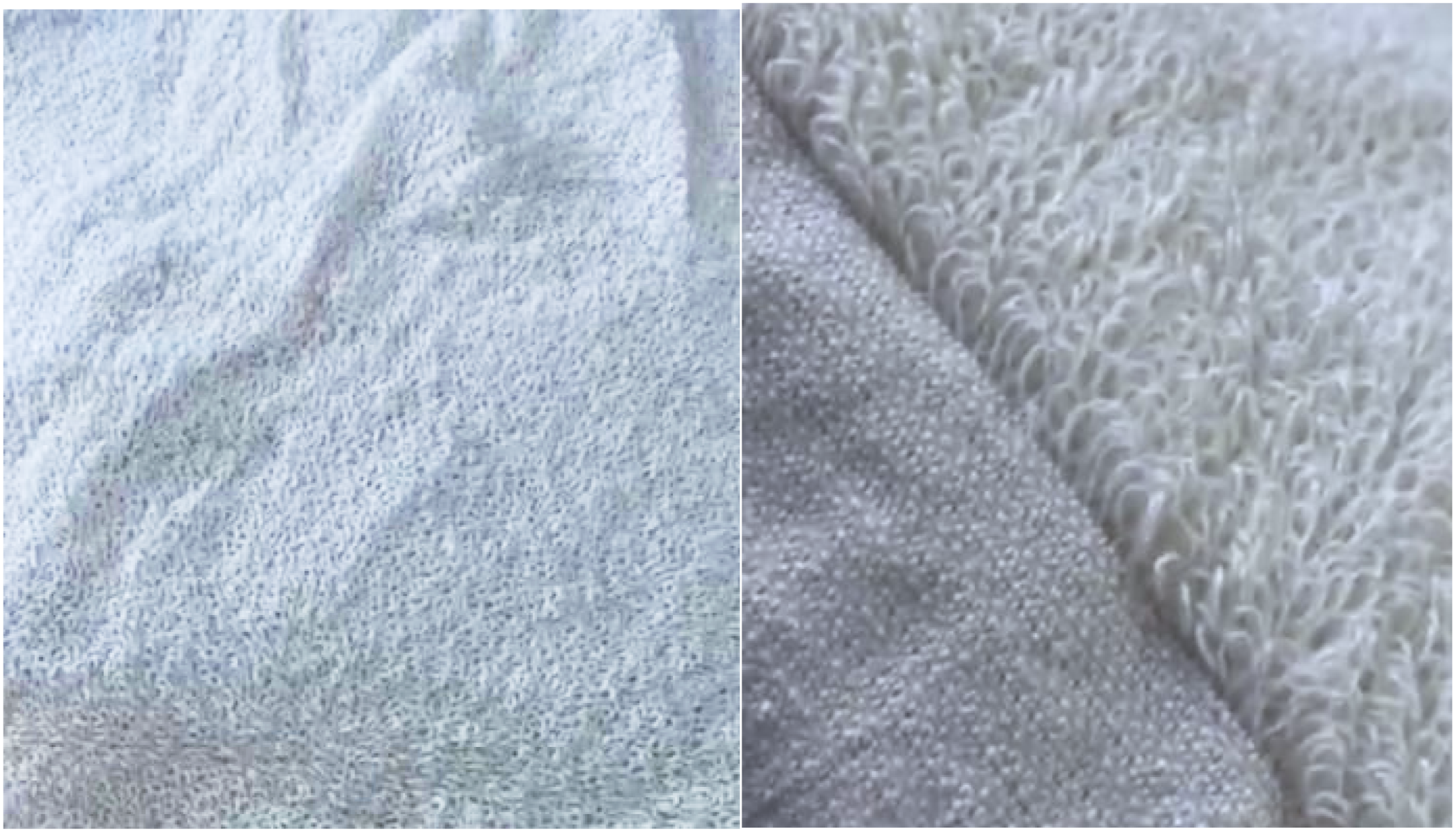
The clearest structural comparison is between Samples 4 and 5, which have identical yarn counts pile warp Nm 40/2, ground warp Nm 27/2, and weft Nm 27 and differ only in weave architecture. Sample 5 exceeded Sample 4 by 7.0 cN (16%), indicating that the improvement is associated with interlacing geometry rather than yarn properties. In the proposed four-pick weave, each pile warp segment wraps around four weft yarns instead of two, thereby doubling the number of frictional contact points per loop and increasing the effective contact area available for load transfer during extraction. 23 This interpretation agrees with Petrulyte et al., 22 who identified friction at yarn crossings as the dominant mechanism governing loop stability, and with Korabayev et al., 24 who showed that changes in pile fabric interlacing geometry produce systematic changes in mechanical resistance.
The observed 16% increase in loop strength cannot be attributed solely to the increase in the number of contact points. The additional pile–weft interactions increase the total frictional contact length and promote simultaneous activation of both the compression force component (F1) and the confinement force component (F2). As a result, the extraction load is distributed across a greater number of structural constraints, reducing local stress concentration at individual yarn crossing points. This load-sharing mechanism explains why the increase in loop strength is substantial, although lower than the theoretical doubling of contact points introduced by the four-pick architecture.
The remaining industrial samples were differentiated mainly by inter-yarn spacing rather than by yarn count alone. Sample 3, despite using a moderately coarse pile yarn (Nm 28), showed the lowest loop strength (30.6 cN) because its weft density of 18 picks/10 mm, together with the yarn diameters, resulted in a positive Δ2 value, indicating open spacing between pile warp and weft yarns. Under these conditions, F1 = 0 and loop fixation depends entirely on F3. By contrast, Sample 1 benefits from a slightly denser weft arrangement relative to its yarn diameters, producing marginal compression and a non-zero F1 contribution, which explains its higher strength despite a lower nominal yarn count than Sample 2.
3.3. Validation of the theoretical model
Theoretical force components and comparison with experimental loop strength values.
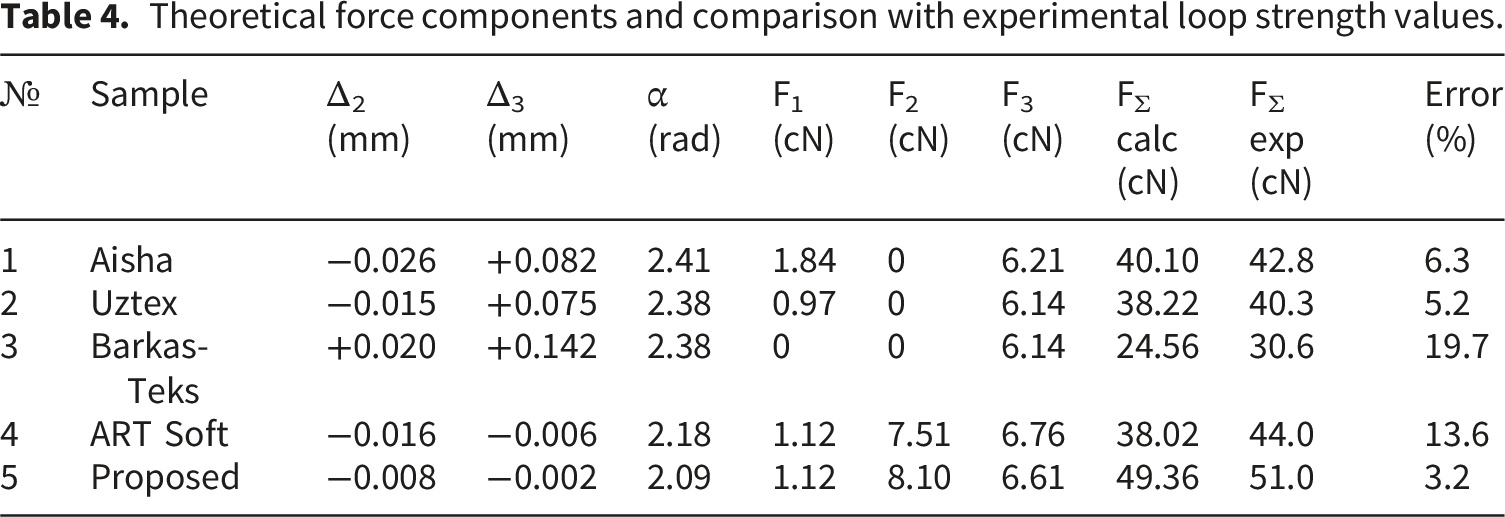
Figure 6 provides an overall assessment of model performance by comparing experimentally measured and theoretically predicted loop extraction forces. The data points are distributed close to the ideal y = x line, indicating that the analytical model captures the dominant structural mechanisms governing loop fixation. The coefficient of determination (R2 = 0.93) confirms a strong correlation between predicted and measured values, while the mean absolute percentage error (MAPE = 9.6%) remains within an acceptable range for a first-principles textile mechanics model. Although the validation dataset is limited to five fabric structures, the results demonstrate that the proposed formulation provides a realistic representation of loop anchoring behaviour in woven terry fabrics. Comparison between experimental and theoretically predicted loop extraction strength.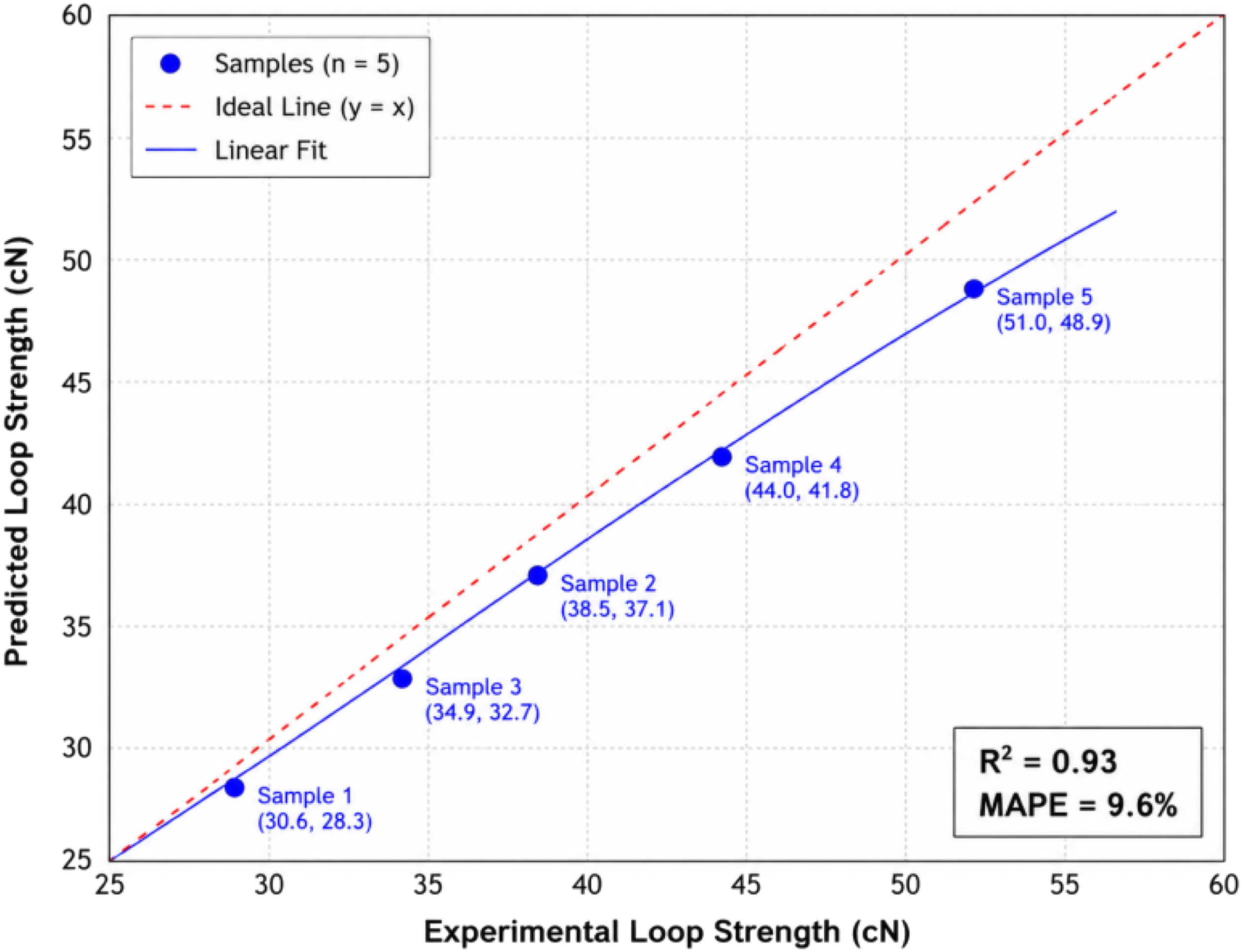
The model predicted the experimental values with a mean absolute percentage error (MAPE) of 9.6% across all five samples. This level of agreement is acceptable, considering that the model does not account for yarn surface roughness variation, finishing effects, or fibre-scale contact mechanics. The largest deviation was observed for Sample 3 (19.7%), where both F1 and F2 are zero. To assess the sensitivity of the model to friction coefficient uncertainty, FΣ was recalculated for f values of 0.24, 0.28, and 0.32, representing a ±14% variation around the adopted value consistent with the range reported for ring-spun cotton yarns under transverse compression.24,25 A ±14% change in f produced approximately ±9–14% variation in predicted FΣ across the five samples. The highest sensitivity was observed for Sample 3, where F1 and F2 are both inactive and the total extraction force depends entirely on F3. This confirms that the friction coefficient is the primary source of modelling uncertainty, and that the elevated prediction error for Sample 3 is attributable to friction variability rather than a structural deficiency in the model formulation. The sensitivity of the model to yarn modulus uncertainty was also assessed by recalculating FΣ for E values of 784, 980, and 1176 cN/mm2, representing a ±20% variation around the experimentally determined value. A ±20% change in E produced approximately ±8–10% variation in predicted FΣ for samples where F1 and F2 are active (Samples 1, 2, 4, and 5). For Sample 3, where both compression components are inactive, modulus variation has no effect on predicted FΣ. These results confirm that friction coefficient uncertainty is the dominant source of modelling error, while yarn modulus contributes a secondary effect in structurally compressed configurations. In this case, the prediction depends entirely on F3, so experimental variation in yarn surface friction directly amplifies the error. For Samples 4 and 5, where all three force components are active, the MAPE values of 13.6% and 3.2%, respectively, show that the model captures the dominant mechanisms of loop fixation with satisfactory accuracy.
The model is formulated entirely on physically defined parameters -yarn diameters, inter-yarn spacing, elastic modulus, friction coefficient, and loop geometry -that can be measured or estimated for any woven terry structure. Given that validation was performed on five fabric structures only, the predictive capability of the model should be considered preliminary. Extension of the validation dataset to a broader range of yarn counts, weave architectures, and fiber compositions is recommended before the model is applied beyond the investigated parameter range.
The largest source of uncertainty is the frictional component F3, which is sensitive to yarn surface roughness and finishing conditions not captured by the present formulation. Sample 3 represents the most sensitive test case for the model’s friction formulation: both F1 and F2 are inactive for this sample, so the total predicted extraction force depends entirely on F3, and any deviation of the actual friction coefficient from the assumed value is directly amplified into prediction error. This accounts for the elevated deviation observed for Sample 3 (19.7%). From a design perspective, the model allows preliminary estimation of loop fixation strength at the fabric design stage. By adjusting yarn linear density, weave architecture, and inter-yarn spacing, manufacturers can identify structural configurations that maximise loop stability before committing to experimental production.
The relative contribution of the three force components is shown in Figure 7, the F3 component remains within a narrow range (6.1–6.8 cN per contact point) across all samples because it is governed mainly by loop height and weft density, which vary only slightly within the sample set. The main differences arise from F1 and F2, which are activated only when inter-yarn spacing becomes negative, that is, when yarn diameters are large relative to the available spacing. This explains why the proposed weave outperforms the standard construction even with identical yarns: increasing weft density from 18.0 to 19.5 picks/10 mm and adding two additional wrap contacts per loop activates F1 in the pile–weft region and increases F3 through an additional wrap point, while F2 remains controlled by the same reed geometry. Contributions of force components F1, F2, and F3 to the calculated loop extraction force for the five investigated terry fabric samples.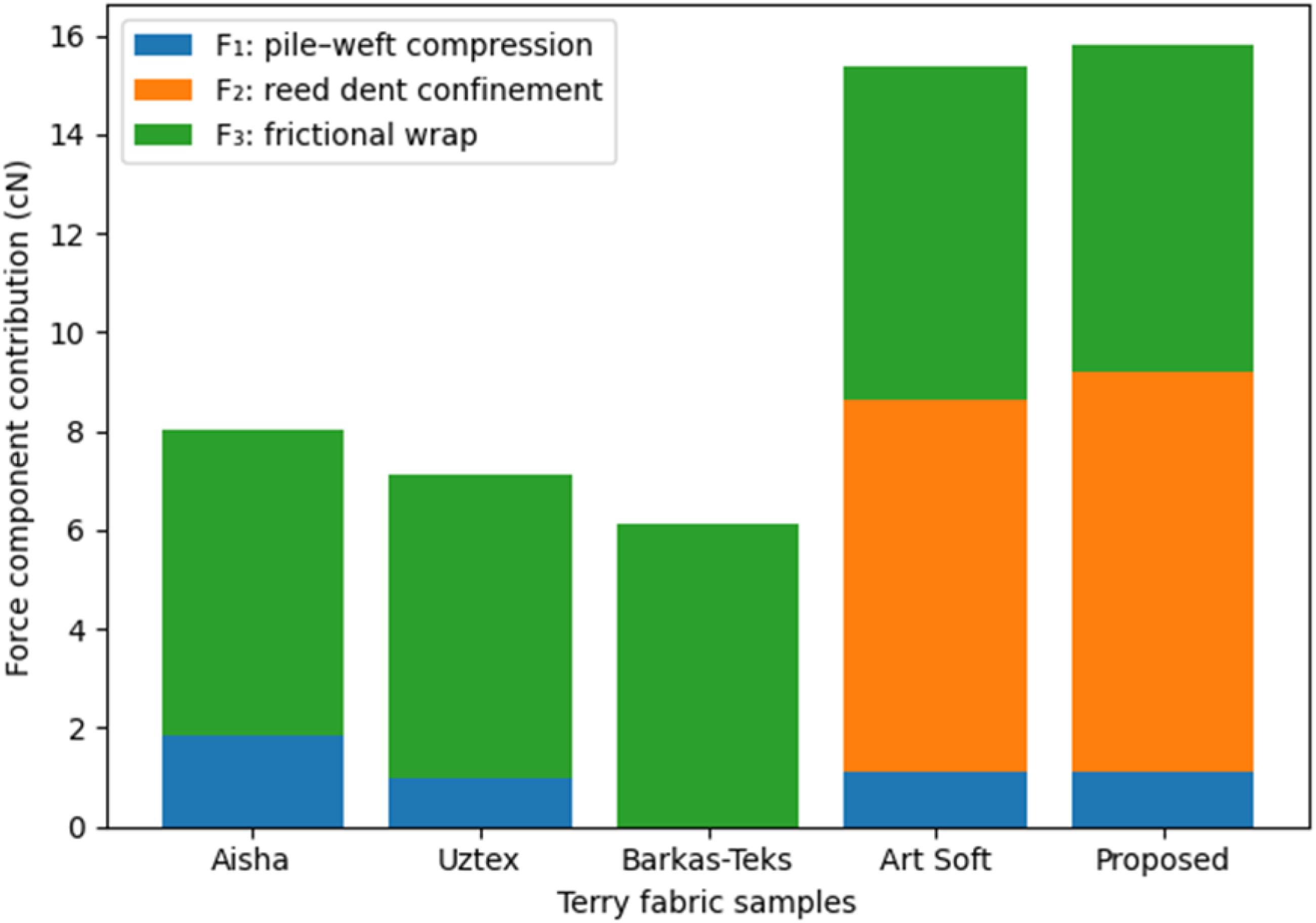
3.4. Inter-yarn spacing analysis
Figure 8 illustrates the calculated inter-yarn spacing parameters Δ2 and Δ3 for the investigated fabrics. The parameter Δ2 describes the spacing between pile warp and weft yarns at their crossing points, while Δ3 represents the spacing between ground warp and pile warp yarns within the reed dent. Negative values correspond to compression between yarns, whereas positive values indicate open spacing. Inter-yarn spacing parameters Δ2 (pile–weft spacing) and Δ3 (reed dent spacing) controlling loop fixation in the investigated terry fabric samples.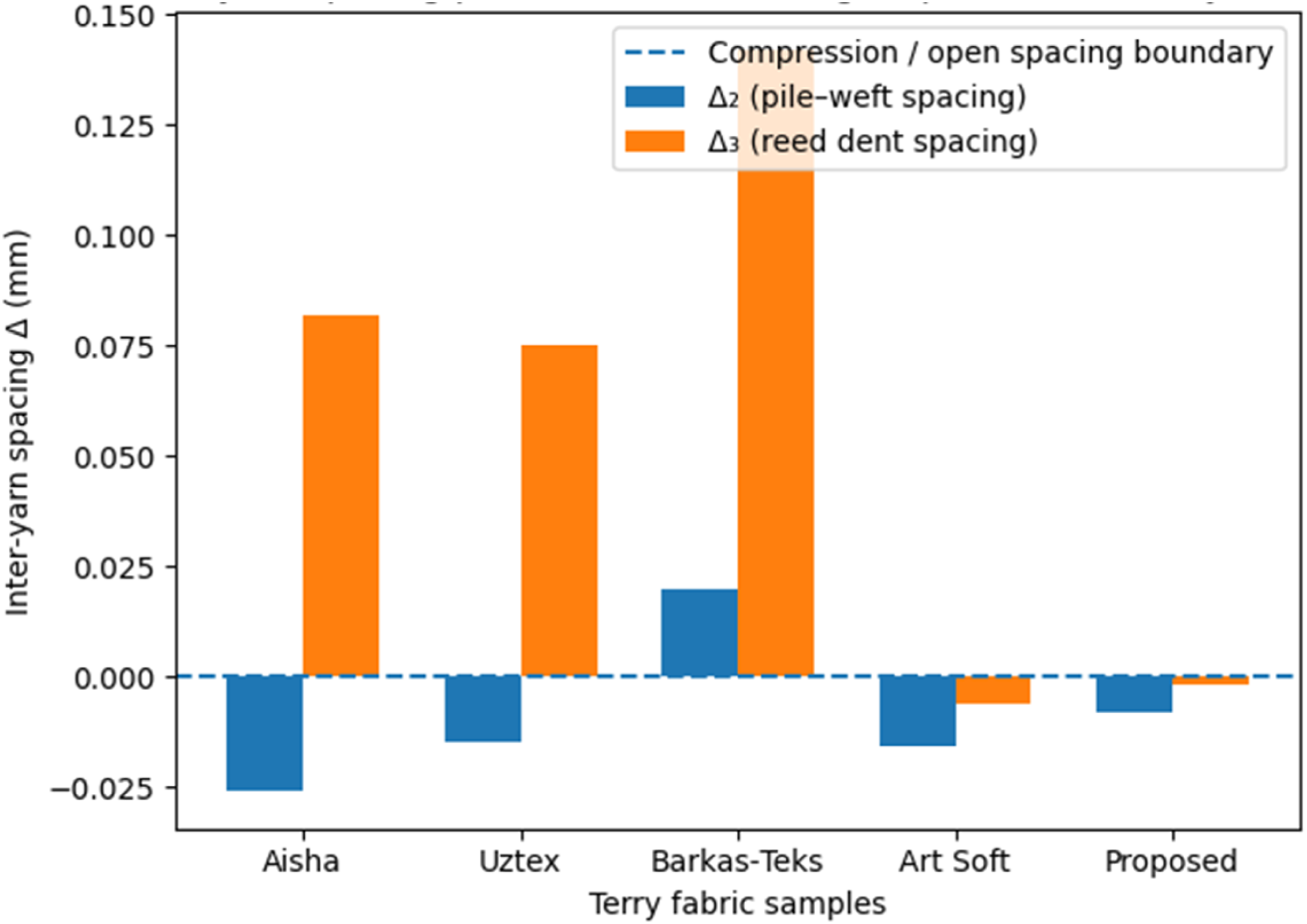
As shown in Figure 8, pile–weft compression (Δ2 < 0) occurs in Samples 1, 2, 4, and 5, which activates the compression force component F1 in the theoretical model. Sample 3 exhibits open spacing at the pile–weft interface (Δ2 > 0), which explains its comparatively low loop extraction strength. Reed dent compression (Δ3 < 0) occurs only in Samples 4 and 5, activating the confinement force component F2. The proposed fabric therefore exhibits compression in both structural regions, which contributes to its superior loop fixation performance.
The Δ2 parameter, which describes the spacing between pile warp and weft yarns at their crossing points, was negative for Samples 1, 2, 4, and 5, confirming mutual compression and a non-zero F1 contribution. Sample 3 was the only exception, with Δ2 = +0.020 mm, indicating open spacing at the pile–weft interface under the given structural conditions. This structural openness is the main reason for its low loop strength despite the use of a relatively coarse pile yarn.
The Δ3 parameter, which represents the spacing between ground warp and pile warp yarns within the reed dent, was negative only for Samples 4 and 5. Both samples shared the same weft Nm 27, ground warp Nm 27/2, and reed N 55 combination. For the remaining samples, the dent geometry provided positive clearance, so F2 = 0 and the reed dent did not contribute to loop fixation. This finding indicates that reed selection interacts with yarn count in determining whether confinement forces are activated, and that negative Δ3 values can be deliberately targeted through appropriate selection of yarn count and reed gauge.
3.5. Physical–mechanical properties
Physical–mechanical properties of the five terry fabric samples.
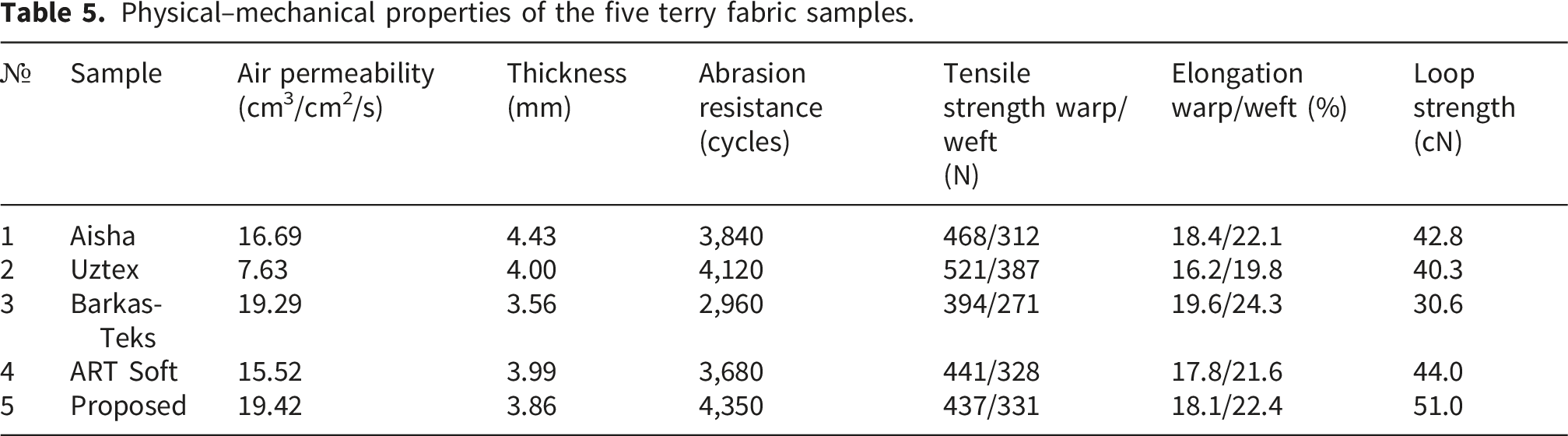
The relationship between loop strength and air permeability is shown in Figure 9. Air permeability did not decrease monotonically with increasing loop strength. Sample 5, which showed the highest loop strength (51.0 cN), also exhibited the highest air permeability (19.42 cm3/cm2/s), whereas Sample 2, the densest fabric with the lowest air permeability (7.63 cm3/cm2/s), ranked second lowest in loop strength. This apparent contradiction is explained by structural differences. Sample 2 achieves compactness through the use of two-ply yarns in all three yarn systems, increasing mass per unit area and reducing pore size, but not necessarily intensifying compressive interaction at the pile–weft crossing points. In contrast, Sample 5 attains higher loop strength through modified interlacing geometry rather than increased yarn mass. Its reduced loop density, 25% lower than that of a standard fabric with equivalent yarn counts, leaves relatively larger pores between adjacent loops and therefore permits greater airflow. It should be noted that comfort-related properties including moisture absorption, softness, and handle characteristics were not measured in the present study, as the experimental programme was designed specifically to investigate loop fixation strength and its relationship with structural parameters. These properties are recognized as important indicators of practical terry fabric performance and are recommended for characterization in future work, particularly for the proposed four-pick weave structure where the 25% reduction in loop density may influence capillary moisture transport and tactile surface properties. Relationship between loop strength and air permeability for the investigated terry fabric samples.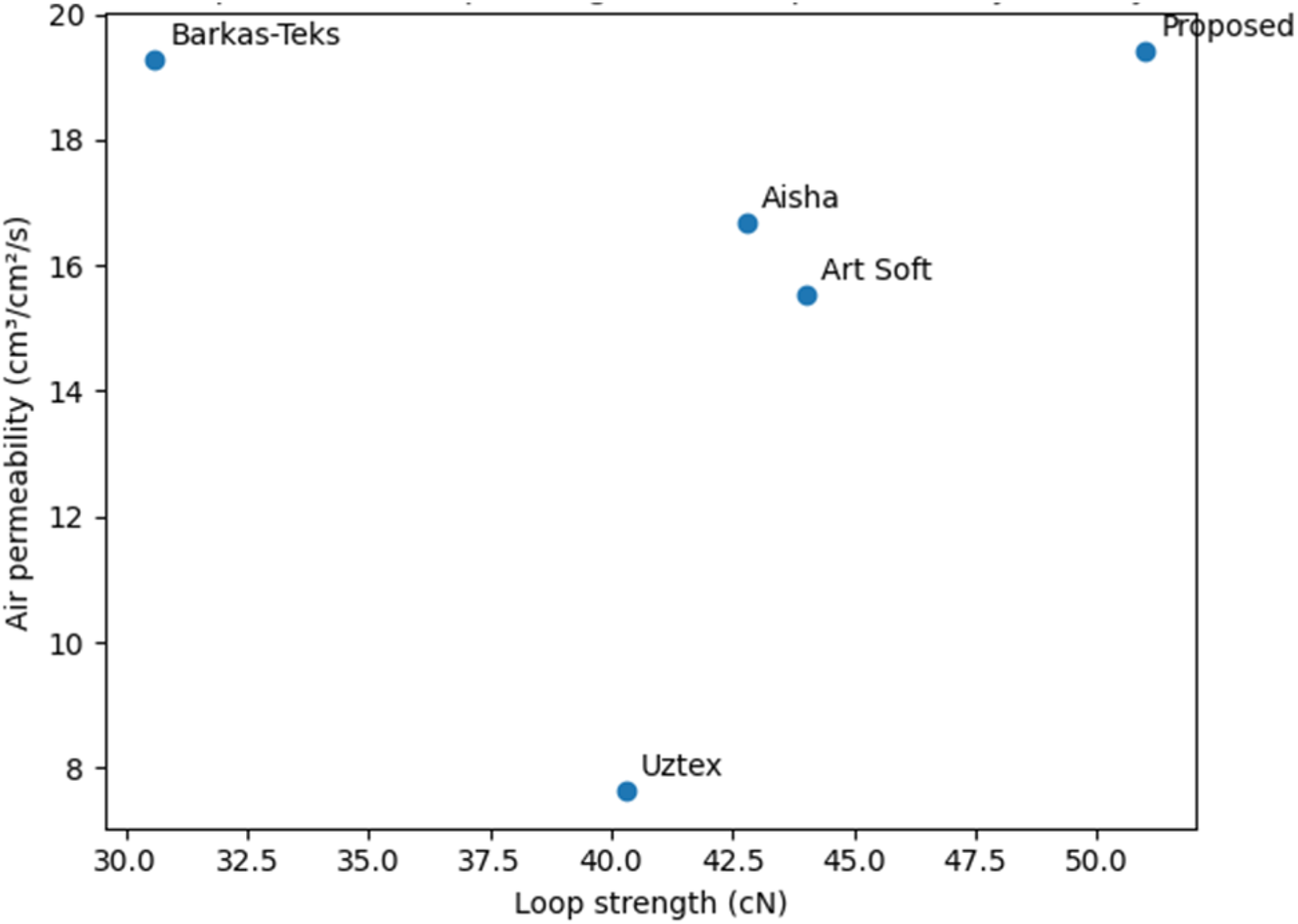
Abrasion resistance showed a positive relationship with loop strength. A Pearson correlation analysis across the five samples yielded r = 0.88 (p = 0.050), indicating a strong positive association between single-loop extraction strength and Martindale abrasion resistance. It is acknowledged that the small sample size (n = 5) limits the statistical power of this result and that the p-value falls at the boundary of conventional significance; nevertheless, the direction and magnitude of the correlation are consistent with the physical mechanism described below. Sample 5 withstood 4,350 Martindale cycles before surface yarn breakage, whereas Sample 3, which had the lowest loop strength, also showed the lowest abrasion resistance (2,960 cycles). This interpretation is consistent with the observations reported by Petrulyte. 22 By comparison, tensile strength and elongation varied within a narrower range, indicating that tensile behavior was governed mainly by the ground warp structure, which was broadly similar in all five samples, rather than by pile weave geometry. 26
3.6. Response surface optimization
The relationship between loop extraction strength and the selected structural parameters was analysed using response surface methodology (RSM) based on a central composite design. The experimental data were fitted to a second-order polynomial regression model expressed in coded variables as:
ANOVA for the quadratic response surface model of loop extraction strength.
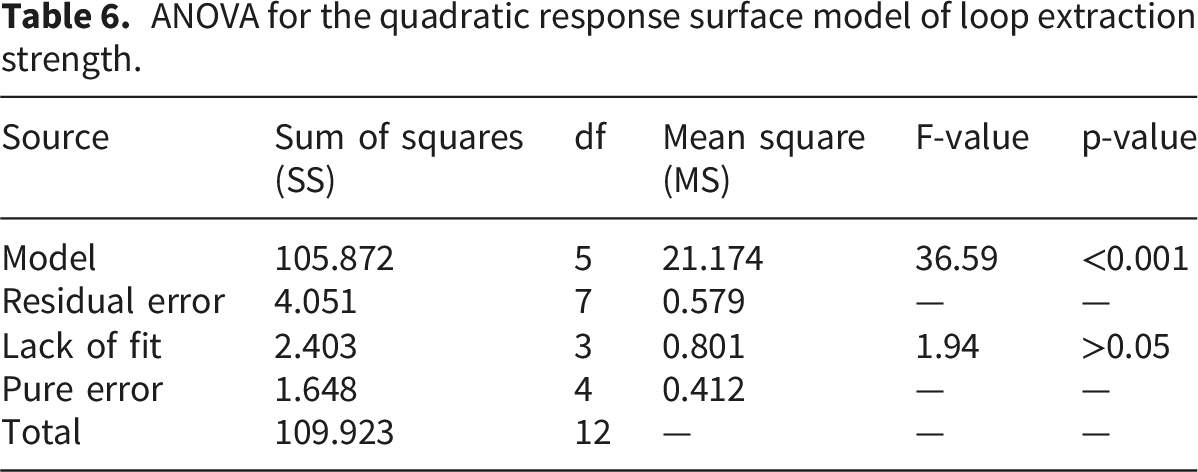
The ANOVA results presented in Table 6 confirm that the fitted quadratic regression model is statistically significant. The observed statistical behavior is consistent with previously reported response surface optimization studies in textile engineering, where second-order polynomial models successfully captured nonlinear interactions between structural parameters and mechanical performance characteristics. Similar approaches have been applied for optimization of textile process variables and structurally controlled fabric properties using central composite design and ANOVA-based adequacy verification.27,28 The model sum of squares (105.872) is substantially larger than the residual error (4.051), yielding an F-value of 36.59 (p < 0.001). This indicates that the regression model explains a significant portion of the variability in loop extraction strength.
The lack-of-fit test produced an F-value of 1.94, which is not statistically significant relative to the pure experimental error (p > 0.05). This result confirms that the quadratic response surface model adequately represents the experimental data within the investigated design space.
The analysis showed that the linear terms b 1 and b 2 , as well as the quadratic coefficient b22, were statistically significant at the 95% confidence level (p<0.05). In contrast, the quadratic term b11 and the interaction term b12 were not statistically significant at the 95% confidence level. These terms were nevertheless retained in the final model in accordance with the principle of hierarchical model building, which is standard practice in response surface methodology. This principle requires that all lower-order terms involving a given variable be retained whenever any higher-order term containing that variable is included in the model, regardless of individual significance, in order to preserve the mathematical completeness and physical interpretability of the fitted response surface.
The adequacy of the fitted model was further verified using the Fisher F-test, indicating that the regression model adequately represents the experimental data at the 95% confidence level. The coefficient of determination (R 2 >0.90) demonstrates that more than 90% of the variability in loop extraction strength can be explained by the selected structural parameters within the investigated design space. It should be noted that the present optimization is restricted to two structural variables - weft yarn linear density and loop height. Pile warp density, reed spacing, and ground structure interaction are recognized as additional factors influencing loop anchoring resistance but were not included in the current design due to the experimental constraints of the available sample set. The identified optimum should therefore be interpreted within the boundaries of the two-variable design space, and extension to a multi-variable framework is recommended in future work.
The response surface illustrating the influence of weft yarn linear density and loop height on loop strength is presented as shown in Figure 10, the response surface exhibits a well-defined optimum region. Maximum loop extraction strength is achieved when the weft yarn linear density lies within the range Nm 24–25 and the loop height is approximately 9–10 mm. Response surface of predicted loop strength as a function of weft yarn linear density (x1) and loop height (x2).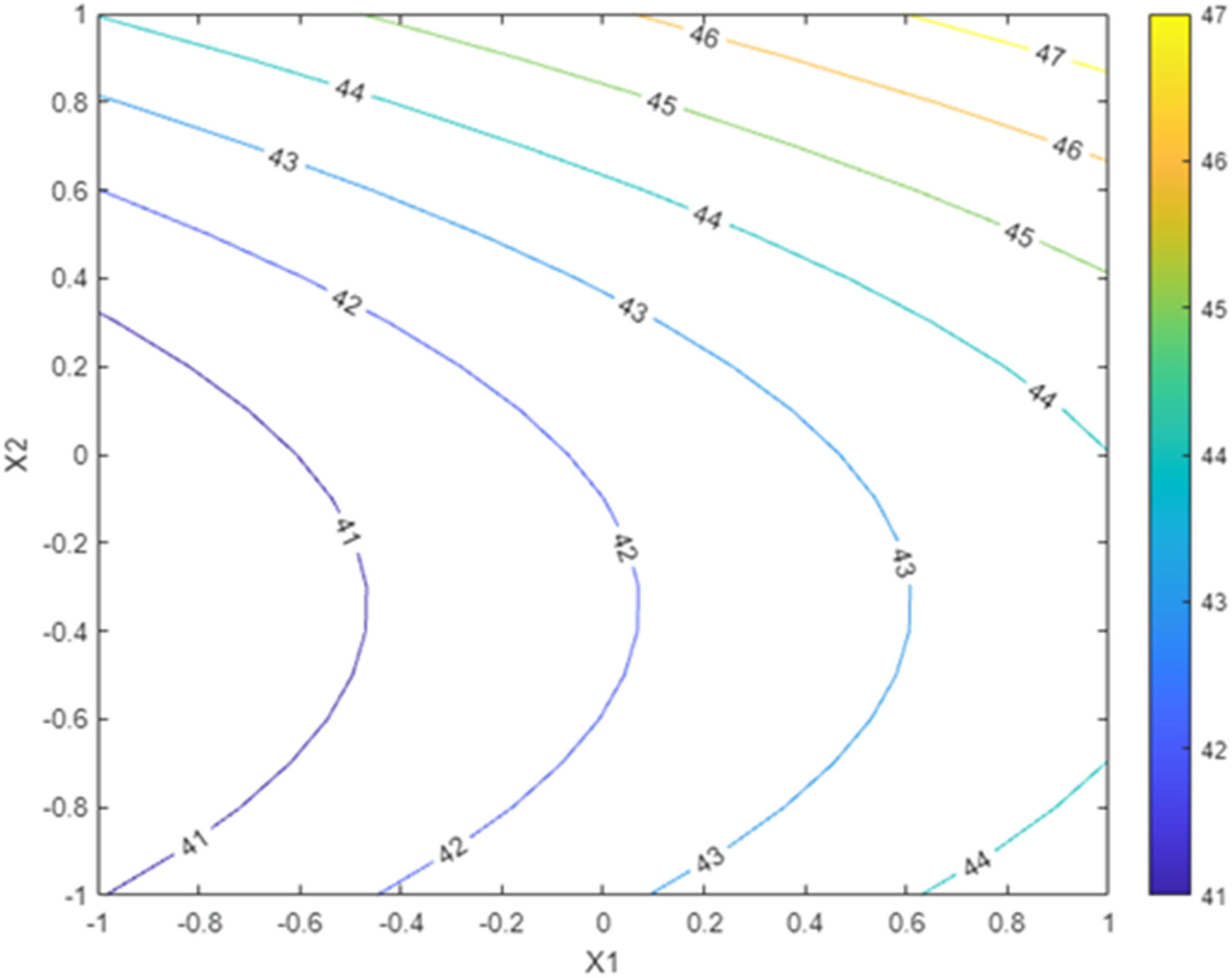
Outside this optimal region, loop strength decreases in both directions. Increasing the weft yarn linear density beyond the optimal range results in reduced inter-yarn compression at pile–weft crossing points, thereby decreasing the contribution of the compression component F 1 . Conversely, excessive loop height reduces the effective wrap angle between pile warp and weft yarns, which diminishes the frictional resistance component F 3 .These trends are consistent with the mechanistic model presented in Section 3.3 and confirm the physical relevance of the identified optimum.
From a practical perspective, the optimal parameter range identified by the response surface analysis falls within the operational capabilities of conventional terry weaving equipment, including rapier and air-jet looms. Therefore, the optimized structural parameters can be implemented in industrial production without significant modifications to existing manufacturing processes.
3.7. Comparison with previous studies and industrial implications
The findings of the present study are consistent with, and extend, several previously reported investigations on terry fabric structure and loop fixation behaviour. Shanbeh et al. 20 demonstrated that pile loop extraction force can be predicted using artificial neural network models based on structural input parameters. While their study confirmed the importance of yarn count, pile density, and loop geometry, the predictive framework remained essentially statistical and did not provide a mechanistic interpretation of the physical forces governing loop anchoring. In contrast, the present work decomposes loop extraction resistance into three physically meaningful components—pile–weft compression (F1), reed dent confinement (F2), and frictional wrap resistance (F3)—thereby providing a direct explanation of how structural parameters influence loop fixation strength.
The dominant role of frictional interaction identified in the present investigation is in agreement with the observations of Petrulyte et al., 21 who reported that friction at yarn crossing points represents the primary mechanism controlling pile loop stability in woven pile fabrics. The current results further support this conclusion by demonstrating that increasing the number of pile–weft contact points from two to four through modification of weave architecture significantly increases loop extraction resistance. Unlike previous studies, however, the present work quantifies the individual contribution of frictional and compressive mechanisms within a unified analytical framework and validates the resulting model against experimental measurements.
The structural modification proposed here also extends the findings of Mamadalieva et al., 22 who reported that increasing the number of weft yarns encircled by a pile loop improves loop fixation strength. The present study confirms this trend using a different weave architecture and demonstrates that the improvement can be achieved without altering yarn linear density, yarn twist, or fibre composition. Samples 4 and 5 provide a particularly rigorous comparison because they possess identical yarn counts and differ only in interlacing geometry. Under these controlled conditions, the proposed four-pick weave increased loop strength from 44.0 cN to 51.0 cN, corresponding to a 16% improvement attributable solely to structural modification.
The observed increase in loop strength cannot be explained simply by the doubling of contact points. The additional pile–weft interactions increase the total frictional contact length and promote simultaneous activation of both compression (F1) and confinement (F2) mechanisms. Consequently, extraction loads are distributed across a larger number of structural constraints, reducing local stress concentration at individual yarn crossing points and enhancing overall loop stability. This load-sharing mechanism explains why the increase in loop strength is substantial, yet lower than the theoretical doubling of frictional contacts introduced by the four-pick construction.
The present results are also consistent with the optimisation principles reported by Ünal and Koç, 19 who demonstrated that weave parameters interact nonlinearly to influence terry fabric performance. However, whereas previous optimisation studies primarily focused on balancing cost, absorbency, and general fabric characteristics, the current work specifically targets loop fixation strength and integrates experimental testing, mechanistic modelling, and response surface optimisation within a single framework. To the best of the authors’ knowledge, no previous study has combined a modified single-loop extraction method, a physically based analytical model, and statistical optimisation for terry fabric loop fixation analysis.
From an industrial perspective, the proposed four-pick weave architecture offers several practical advantages. The structure achieved the highest loop extraction strength among all investigated fabrics while requiring no change in yarn count, fibre composition, or loom hardware configuration. The proposed construction was successfully woven on a Sulzer Ruti ST 6100 rapier loom without mechanical modification, indicating that industrial implementation may be feasible through weave pattern adjustment alone. Because the modification increases the number of picks associated with each pile loop repeat, loop density decreases by approximately 25%, resulting in reduced pile yarn consumption and potentially lower manufacturing costs.
The improved abrasion resistance of the proposed fabric (4,350 Martindale cycles) further suggests that enhanced loop fixation contributes directly to greater surface durability during service. Such improvements are particularly relevant for hospitality, healthcare, and institutional textile applications where repeated laundering and mechanical wear represent major causes of product degradation. In addition, the analytical model developed in this study may serve as a preliminary design-stage tool for estimating loop fixation strength within the validated parameter range, enabling manufacturers to evaluate alternative weave structures before undertaking experimental production trials. These advantages indicate that the proposed methodology has practical potential for improving both the durability and economic efficiency of terry fabric manufacturing.
3.8. Limitations of the study
Several limitations of the present study should be acknowledged when interpreting the results. First, all investigated fabrics were manufactured from 100% ring-spun cotton yarns. Consequently, the applicability of the proposed analytical model and four-pick weave architecture to blended, regenerated, or synthetic fibre systems remains to be verified through additional experimental investigations.
Second, model validation was performed using five terry fabric structures representing a practical range of weft yarn linear densities (Nm 15–27) and loop heights (5–11 mm). Although the obtained agreement between theoretical and experimental results was satisfactory (MAPE = 9.6%), a larger validation dataset covering broader structural variations would improve the statistical robustness of the model and support wider industrial application.
Third, the theoretical formulation assumes idealised cylindrical yarn geometry and linear elastic behaviour within the contact zone. While the Hertzian contact approach accounts for localised elastic deformation at yarn crossing points, global cross-sectional flattening of yarns under compression is not explicitly represented. This simplification may contribute to prediction errors in structures exhibiting high levels of inter-yarn compression.
Fourth, the inter-yarn friction coefficient (f = 0.28) was adopted from literature values reported for ring-spun cotton yarns under comparable contact conditions rather than being measured directly for each investigated sample. Although sensitivity analysis demonstrated that the model remains reasonably stable within the expected friction range, direct experimental determination of friction coefficients would further improve predictive accuracy.
Fifth, the experimental programme was focused primarily on loop fixation mechanics and structural durability. Functional properties such as water absorbency, moisture transport, softness, tactile comfort, and drying behaviour were not evaluated. These properties are particularly relevant for the proposed four-pick structure because the reduction in loop density may influence both capillary transport and surface handle characteristics.
Finally, although the proposed weave architecture was successfully produced under laboratory weaving conditions without mechanical modification of the loom, long-term industrial production data were not collected. Parameters such as weaving efficiency, warp breakage frequency, pile formation stability, and large-scale manufacturing consistency should therefore be assessed through extended industrial trials before widespread commercial implementation.
Despite these limitations, the proposed methodology provides a physically interpretable framework for analysing loop fixation strength and establishes a foundation for future investigations aimed at extending the model to a wider range of terry fabric structures and operating conditions.
4. Conclusions
This study presented an integrated experimental–theoretical framework for improving loop fixation strength in terry fabrics through a modified testing methodology, mechanistic modelling, and structural optimisation. 1. A modified single-loop extraction method was developed to overcome the limitations of conventional multi-loop standards (BS EN 15598 and GOST 23351-78). By isolating the fixation resistance of an individual pile loop, the method provided reproducible measurements (CV < 4.5%) and enabled direct evaluation of structural loop anchoring mechanisms. 2. A mechanistic analytical model was established in which loop extraction resistance was represented as the combined effect of pile–weft compression (F1), reed dent confinement (F2), and frictional wrap resistance (F3). The model predicted experimental results with a mean absolute percentage error (MAPE) of 9.6% and demonstrated that loop fixation is governed primarily by the activation of compression and confinement mechanisms associated with negative inter-yarn spacing conditions. 3. The proposed four-pick weave architecture increased the number of pile–weft contact points from two to four and achieved the highest loop extraction strength among all investigated fabrics (51.0 cN), representing a 16% improvement over the strongest industrial sample. The improvement was achieved without altering yarn count or fibre composition, confirming that weave architecture alone can significantly influence loop durability. 4. Inter-yarn spacing analysis showed that loop fixation performance is controlled not only by weave structure but also by the interaction between yarn count and reed geometry. The activation of confinement forces (F2) was observed only under specific yarn count–reed gauge combinations, identifying an additional structural parameter for loop strength optimisation. 5. Response surface optimisation identified an optimum region corresponding to weft yarn linear densities of approximately Nm 24–25 and loop heights of 9–10 mm. The developed regression model explained more than 90% of the observed variation in loop strength and provides a useful design tool for preliminary structural optimisation. 6. The proposed fabric exhibited both the highest loop strength and the highest abrasion resistance, indicating that improved loop fixation contributes directly to enhanced surface durability. These results suggest that the proposed weave architecture may provide practical benefits for industrial terry fabric production, particularly in applications requiring long service life under repeated mechanical loading and laundering conditions.
Overall, the study demonstrates that loop fixation strength can be substantially improved through rational control of weave architecture and inter-yarn interaction mechanisms. The proposed testing methodology and analytical framework provide a basis for future development of durability-oriented terry fabric design. Future research should extend validation to a broader range of fibre compositions and weave structures, investigate long-term laundering effects, and evaluate comfort-related properties such as moisture absorption, drying behaviour, and tactile performance.
Footnotes

Funding
The authors received no financial support for the research, authorship, and/or publication of this article.
Declaration of conflicting interests
The authors declared no potential conflicts of interest with respect to the research, authorship, and/or publication of this article.