







Abstract
Introduction:
Telemedicine has become a vital component of Taiwan’s health care system, enhancing access, efficiency, and equity in medical services. Rapid growth has been fueled by advances in digital technologies, policy support, and increasing clinical applications, particularly during the COVID-19 pandemic. Despite this progress, a comprehensive overview of research trends is lacking. This study applies bibliometric and quantitative analyses to map current developments, identify key contributors, and guide future health care policy and practice.
Methods:
We conducted a bibliometric analysis of telemedicine research in Taiwan using the Web of Science Core Collection (to August 30, 2025). Publication characteristics, citation counts, and authorship patterns were analyzed. Keyword co-occurrence networks were generated with VOSviewer to identify research hotspots and thematic clusters, ensuring accuracy through independent verification.
Results:
From 1998 to 2025, telemedicine research in Taiwan has shown steady growth, with publication counts rising sharply after 2010 and peaking in 2024. Key contributors include National Taiwan University, National Cheng Kung University, and Taipei Medical University, which lead in both publication volume and citation impact. Highly cited studies address telemedicine applications, COVID-19 responses, and digital health innovations. Co-occurrence network analysis highlights four major research themes: clinical telemedicine, health care management and policy, COVID-19–related digital health, and AI-driven technologies. Challenges remain in rural areas, including infrastructure, technology acceptance, and workforce shortages, underscoring the need for targeted strategies to expand telemedicine.
Conclusions:
Future telemedicine research in Taiwan should prioritize rural health care, leveraging 5G, AI, and smart technologies to enhance care efficiency, accuracy, and resource allocation, supporting sustainable, high-quality, and equitable medical services aligned with Environmental, Social, and Governance principles.
Introduction
Telemedicine has emerged as a transformative approach to health care delivery, especially in a geographically dispersed and technologically advanced country like Taiwan. 1 By leveraging digital technologies, telemedicine enhances accessibility, reduces health care disparities, and supports patient-centered care. 2 Over the past decade, Taiwan has witnessed growing interest in telemedicine, driven by advancements in mobile health, remote monitoring, and policy support. Despite this expansion, a systematic overview of research trends and impact remains limited. This study employs bibliometric and quantitative analyses to map the landscape of telemedicine research in Taiwan, identifying publication patterns, influential authors, institutions, and emerging topics, thereby guiding future development and policy planning.
During the COVID-19 pandemic, the need for rapid, remote medical consultation systems became increasingly urgent, especially in areas facing health system overload or geographic barriers. In response, Taiwan established a National Emergency Medical Teleconsultation (NEMTC) system in 2022 to provide 24-hour remote medical assessments and recommendations. 3 This study introduces the implementation and outcomes of the NEMTC system during its initial operation from April 28 to June 28, 2022. By analyzing over 20,000 consultation requests, the study evaluates the system’s effectiveness in managing emergency consultations remotely, easing emergency medical service system pressure, and ensuring appropriate triage during a health crisis. The findings offer valuable insights into the potential of telemedicine to support national emergency responses, not only during pandemics but also in isolated or resource-limited scenarios such as earthquakes or remote island health care. The NEMTC model represents a novel strategy for scalable, efficient emergency care delivery under crisis conditions.
One study, entitled “Perception Disparity of Telemedicine Use between Outpatients and Medical Staff during the COVID-19 Pandemic,” highlights the differing perceptions of telephone appointments between outpatients and medical staff during the pandemic in Taiwan. 4 Using a self-administered Telehealth Usability Questionnaire, the research found that outpatients generally viewed telemedicine more favorably than medical staff, especially in terms of ease of use and effectiveness. Most respondents were middle-aged, college-educated, married women. While factors like age, gender, education, and marital status did not significantly influence the perceptions of medical staff, gender emerged as a key factor in shaping the experience for outpatients across various dimensions. The study exposes a clear gap in satisfaction: outpatients were generally content with telephone appointments, whereas medical staff were more apprehensive, raising concerns about usability and efficiency. This difference in perceptions underscores the need to address medical staff’s concerns to improve the overall effectiveness of telemedicine.
Another article titled “Empirical Study on the Usage of Telemedicine by Rural and Urban Health Care Consumers in Taiwan: Integrating the Perspectives of Technology Acceptance Model and Theory of Planned Behavior,” published on July 15, 2024, in Telemedicine and e-Health Journal, offers an empirical analysis of telemedicine adoption among health care consumers in Taiwan’s rural and urban areas. 5 The study incorporates concepts from both the Technology Acceptance Model and the Theory of Planned Behavior to explore the factors influencing telemedicine usage across these different populations. This article primarily focuses on exploring the usage and impact of telemedicine across different regions and populations in Taiwan, with a particular emphasis on the application and development of medical resources in rural areas. The study highlights the significant disparities in telemedicine implementation across various regions and demographic groups in Taiwan.
In rural areas, telemedicine is viewed as a crucial tool for addressing medical resource shortages. However, challenges such as insufficient information infrastructure, low technology acceptance, and a lack of professional medical personnel hinder its development. Therefore, the research emphasizes the need to overcome these issues to further expand the application of telemedicine, enhance its effectiveness, and provide diverse solutions to meet the health care needs of rural populations in Taiwan.
This study aims to clarify Taiwan’s evolving telemedicine landscape by applying bibliometric and quantitative approaches, providing insights to guide health care policy, clinical practice, and future research directions in digital health development.
Methods
We conducted a bibliometric analysis to explore research trends and development in telemedicine in Taiwan. Publications were retrieved from the Web of Science (WoS) Core Collection database up to August 30, 2025, using the keywords “Taiwan” AND “telemedicine.” Bibliometric indicators such as publication output by year, document type, source journal, contributing institutions, and authorship patterns were extracted. Citation counts were analyzed to assess academic impact. To identify research hotspots and thematic clusters, we performed co-occurrence network analysis of all keywords using VOSviewer (version X.X). The resulting visualization mapped keyword relationships, highlighting dominant research areas and emerging themes in Taiwan’s telemedicine literature. All retrieved records were independently verified to ensure accuracy in data cleaning and analysis.
Results
Table 1 presents the number and proportion of publications on telemedicine in Taiwan from 1998 to 2025. In the early period (1998–2006), publication counts were relatively low, averaging two to five articles per year, each accounting for less than 1% of the total. Starting in 2007, the number of publications increased steadily, with a notable growth after 2010. Between 2020 and 2024, publication output surged, reaching a peak of 75 articles in 2024, representing 14% of the total. Data for 2025 are incomplete, with only five articles recorded. Overall, the trend indicates a stable and rapid growth in academic research on telemedicine in Taiwan, reflecting increasing attention and development in this field.
Analysis of the Distribution of Publications on Telemedicine in Taiwan (1998–2025)
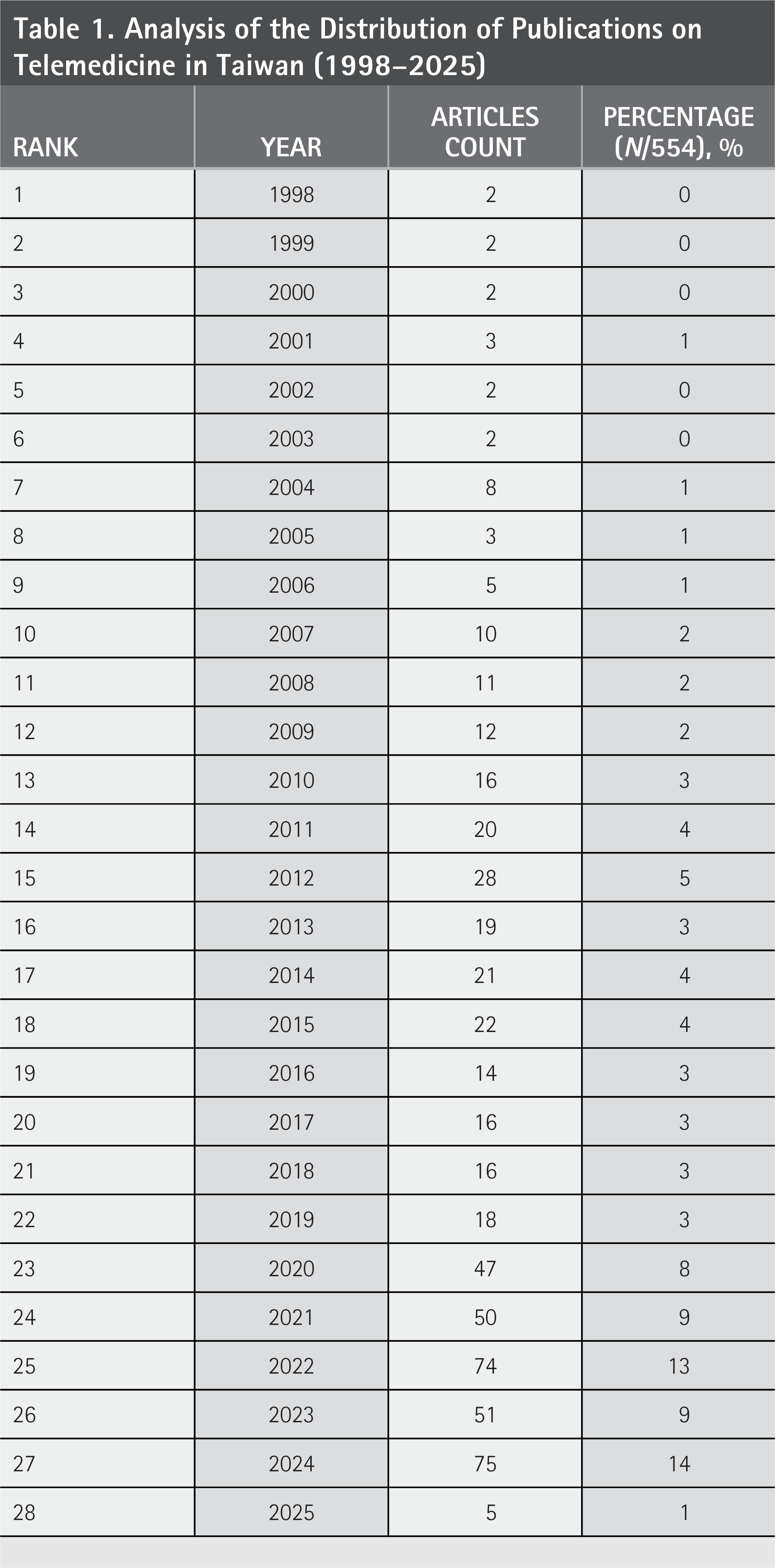
Table 2 summarizes the top ten institutions in Taiwan with the highest number of publications on telemedicine, including several prominent universities and medical centers. National Taiwan University ranks first with 69 publications, accounting for 12.5% of the total, with a total of 2,048 citations and an average of 29.7 citations per paper. National Cheng Kung University and Taipei Medical University rank second and third with 34 and 25 publications, averaging 27.8 and 30.8 citations per paper, respectively. Although Kaohsiung Medical University has slightly fewer publications, its average citation count is 49.7, indicating high research quality. Other institutions on the list, such as National Yang Ming Chiao Tung University, Chang Gung University, and National Chung Cheng University, also demonstrate consistent contributions in terms of both publication volume and citations. Overall, these data reflect the active research efforts and academic impact of Taiwan’s universities and medical institutions in the field of telemedicine.
Top 10 Institutions in Taiwan by Number of Publications on Telemedicine
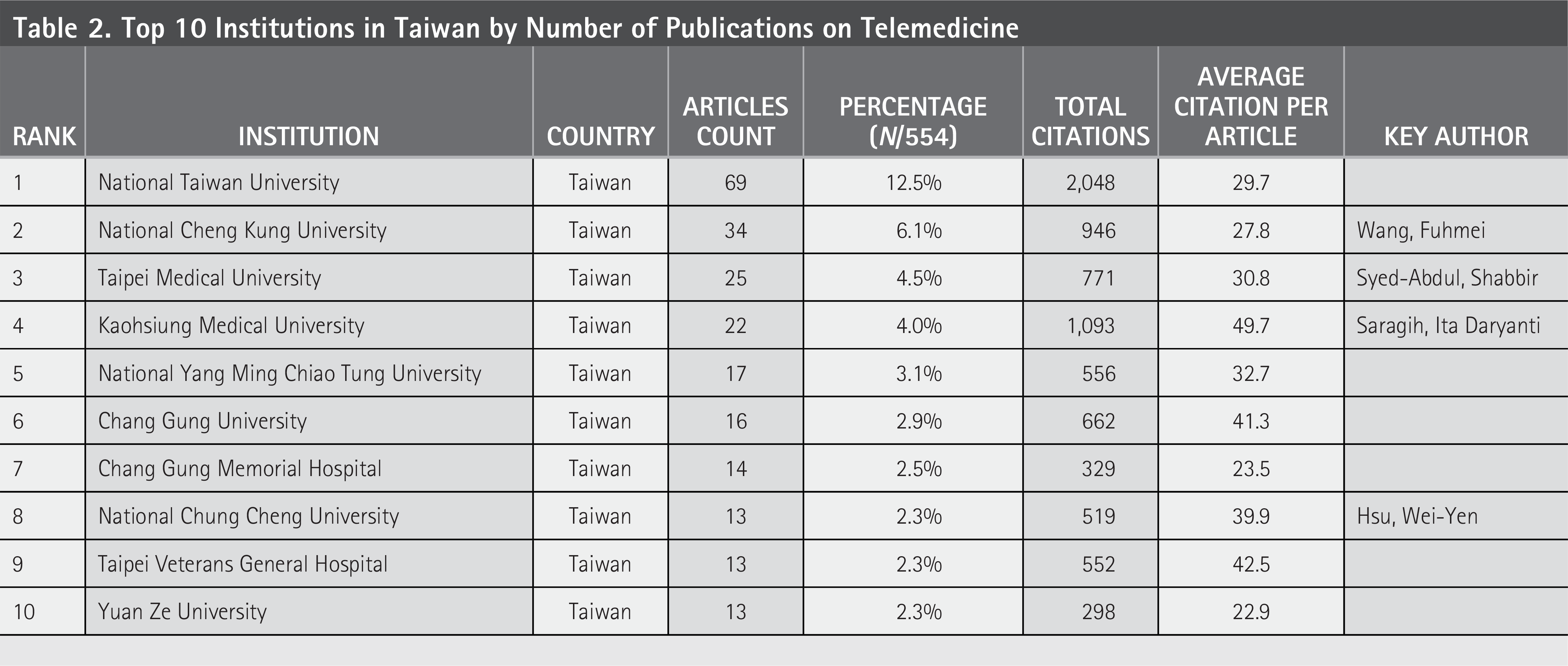
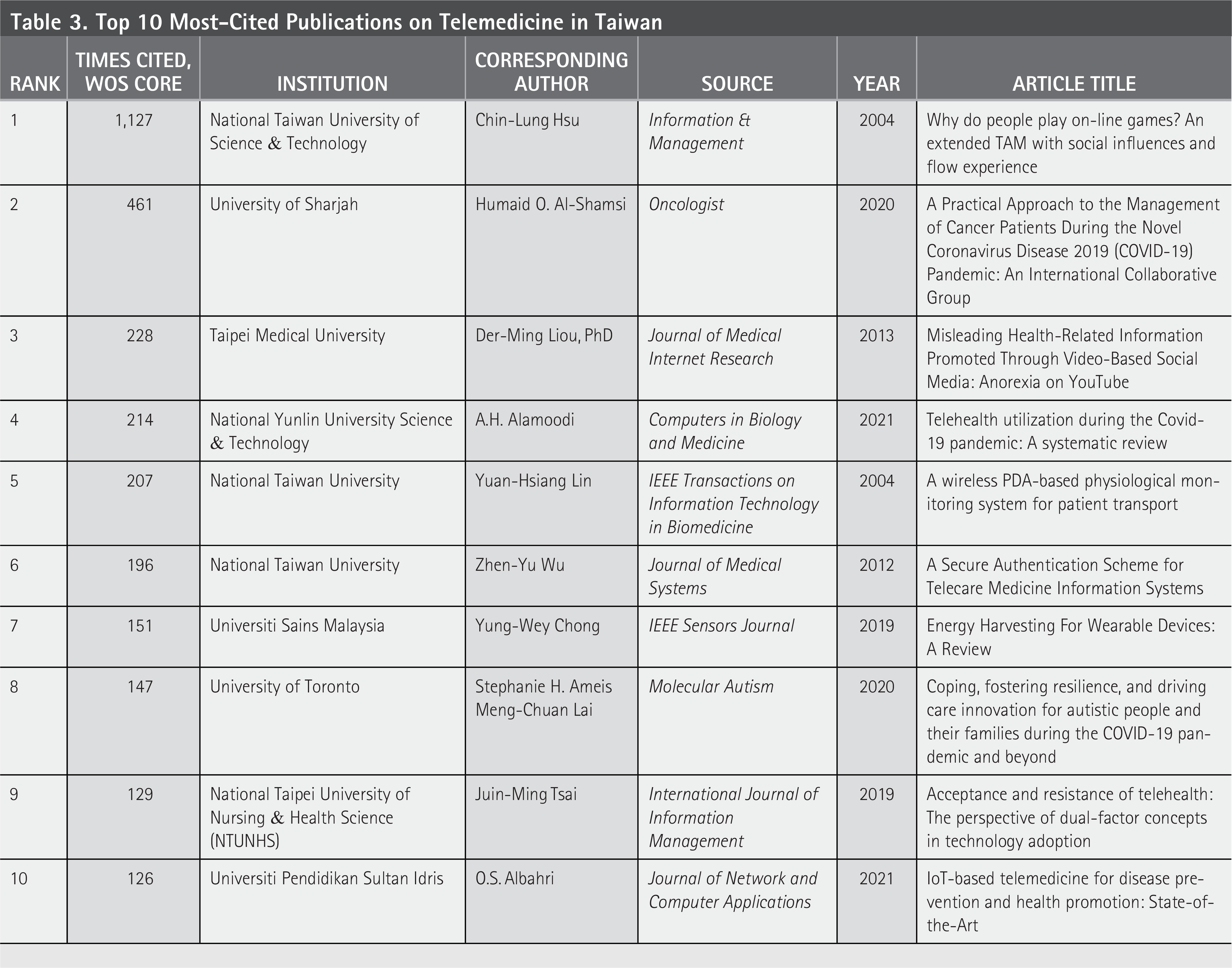
Table 3 lists the top 10 most-cited publications on telemedicine in Taiwan, with citation data sourced from the WoS Core Collection. The most-cited article was published in 2004 in Information & Management, led by Professor Hsu Chin-Long from National Taiwan University of Science and Technology, receiving 1,127 citations. The study explored online gaming motivations and their social impacts. The second-ranked article, published in 2020 by the University of Sharjah in The Oncologist, provided practical guidance for managing cancer patients during the COVID-19 pandemic, cited 461 times. Other highly cited papers cover topics including telemedicine systems, health misinformation, and telemedicine applications during COVID-19, from institutions such as Taipei Medical University, National Yunlin University of Science and Technology, and National Taiwan University. Overall, these data reflect the diverse research topics and international academic influence of Taiwanese scholars in telemedicine.
Top 10 Most-Cited Publications on Telemedicine in Taiwan
Additionally, our analysis utilizes co-occurrence network analysis of all keywords from the WoS database, focusing on the keywords “Taiwan” and “telemedicine,” to reveal key themes in telemedicine research in Taiwan and future development trends up to September 4, 2025. The co-occurrence network analysis of all keywords (Fig. 1) map, created using VOSviewer, presents a comprehensive overview of keyword relationships in telemedicine research. Each node represents a keyword, with size indicating frequency and proximity reflecting co-occurrence strength. The green cluster centers on “telemedicine,” linking terms like “e-health,” “teleconsultation,” and “telemonitoring,” highlighting clinical applications and digital health tools. The red cluster includes “telehealth,” “management,” “quality,” and “barriers,” emphasizing health care delivery, policy, and administrative challenges. The blue cluster features “covid-19,” “pandemic,” and “mobile apps,” capturing the global health crisis’s influence on telemedicine adoption. The purple cluster contains “machine learning,” “deep learning,” and “brain-computer interface,” showcasing the integration of AI and advanced technologies. The map visually reveals thematic intersections and research priorities, offering insights into how telemedicine evolved in response to technological innovation and public health emergencies. It serves as a strategic tool for identifying emerging trends, guiding future studies, and informing policy development in digital health care. Keywords like “People,” “Adults,” and “Children” show that telemedicine services cover a wide range of age groups. Particularly in rural areas, telemedicine is regarded as a vital tool to address shortages in medical resources. However, these areas face challenges such as inadequate infrastructure, lower acceptance of new technology, and a shortage of professional health care workers. 2 The primary obstacles include incomplete network infrastructure, low technology acceptance, and a limited health care workforce. Addressing these challenges requires enhancing infrastructure, improving technology acceptance through education and training, and offering remote medical training to strengthen local health care services. 6 Building trust in telemedicine among residents is also crucial, as it directly affects the sustained use of telemedicine services. 7
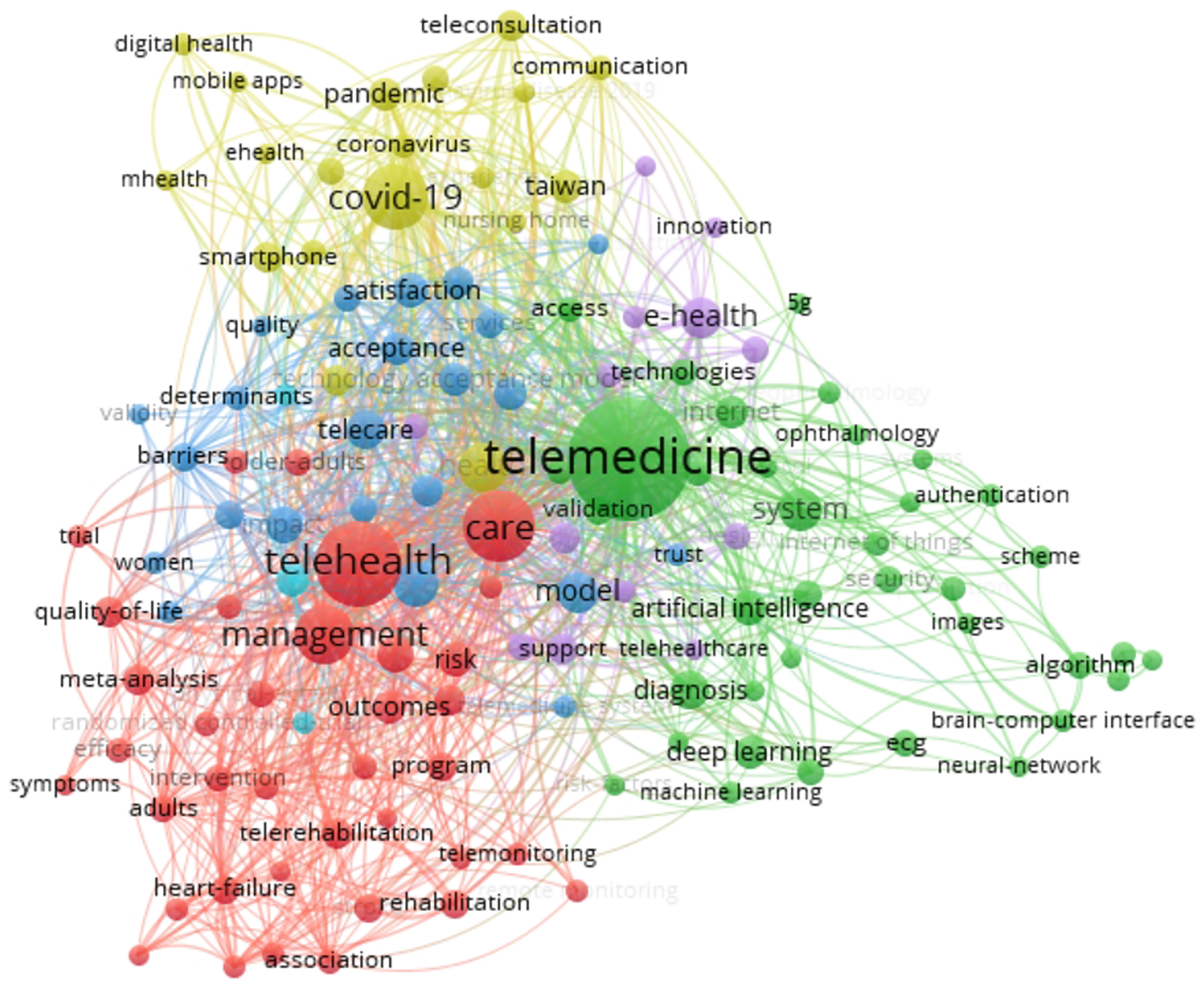
Co-occurrence network analysis of telemedicine research in Taiwan: Key themes and future trends. This visual map illustrates the interconnected topics in the field of telemedicine, showing key themes such as “telemedicine,” “care,” “health,” and “system.” It highlights the relationships between various concepts, including technology adoption, management, patient care, and healthcare outcomes. The clustering and lines represent the frequency of co-occurrence and the strength of connections between these terms, revealing important areas of research such as telehealth services, information technology, and disease diagnosis.
Conclusions
Future telemedicine research should focus more on rural areas, exploring how technologies like 5G, AI, and machine learning can improve telemedicine efficiency and accuracy. AI solutions based on real-time health monitoring and predictive analysis can help prevent disease progression and optimize health care resource allocation. 8 Overall, this study provides a comprehensive view of the current state and development potential of telemedicine research in Taiwan, especially highlighting the significant potential for health care development in rural areas. The study underscores that the key focus of Taiwan’s telemedicine research is on how telemedicine technology can enhance the efficiency and quality of care management and intelligent health care. Future research should pay more attention to medical applications in rural areas, exploring how to leverage 5G communication, AI, and smart technologies to improve the efficiency and accuracy of telemedicine. In rural areas, in particular, smart technologies should be considered to improve residents’ health conditions and the quality of medical services. This strategy also supports Environmental, Social, and Governance (ESG) principles, promoting sustainable health solutions that benefit both communities and the environment. 9 Research should focus on remote medical decision-making based on physical monitoring data to effectively meet the needs of different populations and allocate health care resources more efficiently.
Authors’ Contributions
H.-Y.C.: Conceptualization, methodology, data curation, and manuscript drafting. L.M.J.: Data collection, formal analysis, and manuscript review. F.-Z.W.: Supervision, project administration, critical revision of the manuscript, and final approval of the version to be published.
Footnotes
Funding Information
This study was supported by the grants from Kaohsiung Veterans General Hospital (KSVGH-114-062; KSVGH-114-D03-1) and National Science and Technology Council (NSTC 113-2314-B-075B-005).
Disclosure Statement
No competing financial interests exist.