







Abstract
Background:
In developing countries, satellite-based technology can aid critical telemedicine applications and other digital health services in critically underserved areas. Affordable, high-speed broadband services can and should be accessible to all citizens. Remote locations are necessary to support various critical services, including education and training, telehealth applications, remote patient monitoring, and warning systems, particularly during disasters. Currently, however, these services are limited to urban centers, leaving rural areas without access to specialized health care services. This digital divide significantly impacts health care delivery, with only 48% of rural populations having internet access compared with 83% in urban areas.
Methods:
The goal of this study was to assess the suitability of Geostationary Earth Orbit (GEO), Medium Earth Orbit (MEO), and Low Earth Orbit (LEO) satellites for telemedicine and health care backhaul connectivity. To achieve this, the study conducted a comparative analysis of the systems, highlighting their respective advantages and limitations in terms of latency, coverage, and deployment costs. A systematic literature review and the assessment of real-world case studies and worldwide datasets complemented this analysis. Case studies from Starlink deployments in North America and Sub-Saharan Africa and Amazon’s Project Kuiper were evaluated.
Results:
LEO satellites demonstrated significantly lower latency (20–50 ms) compared with MEO (100–300 ms) and GEO (600 ms) systems. Cost analysis revealed LEO services ($110–$500 per month) were substantially more affordable than MEO ($250–$1,000 per month) and GEO ($500–$2,000 per month) alternatives. Starlink deployments achieved download speeds of 50–250 Mbps with sub-50 ms latency, enabling real-time telemedicine consultations that met clinical standards. Rural telemedicine consultations increased by over 300% in areas with LEO satellite coverage.
Conclusions:
Our findings suggest that the LEO Starlink satellite technology would provide the most cost-effective backhaul broadband connectivity for real-time telemedicine services, given its low latency needs (20–50 ms), which enable high-quality video calls and remote diagnostics. We recommend using an LEO-based satellite network as the best approach to extend internet services to underserved remote communities due to its low latency and cost-effectiveness in aiding health care delivery in developing countries.
Keywords
Introduction
The rapid advancement of information and communications technology has transformed societies, making internet access a fundamental necessity for economic development, education, health care, and disaster response. However, despite global efforts to expand digital infrastructure, millions in remote and underserved regions remain without reliable broadband access. Since the 1970s, satellite technology has been key in bridging this digital gap by extending telecommunications networks to areas where terrestrial solutions are impractical or cost-prohibitive. 1
Today, the emergence of Low Earth Orbit (LEO) satellite constellations—such as SpaceX’s Starlink, Amazon’s Project Kuiper, and OneWeb by Eutelsat—represents a significant step in connectivity solutions. Unlike traditional Geostationary Earth Orbit (GEO) and Medium Earth Orbit (MEO) satellites, LEO systems provide high-speed, low-latency broadband access that rivals fiber-optic networks. SpaceX and other LEO satellite networks offer significant advantages regarding low latency compared with traditional GEO and MEO satellite systems. This is primarily because LEO satellites are much closer to the Earth’s surface. The typical orbit is at an altitude of around 500–2,000 km. Additionally, LEO satellites have a shorter transmission path, which reduces the time it takes for signals to travel between the satellite and Earth. 2
Despite these advancements, the digital divide remains a critical issue. The differences in internet connectivity reveal significant digital disparities, with the rural population consistently lagging behind urban areas in access and utilization. The degree to which rural areas lag behind urban areas is substantial. People living in urban areas are more likely to have access to the internet and to use it than those living in rural and remote regions. This connectivity difference directly affects health care delivery since telemedicine requires fast, reliable internet connections to enable patients in distant locations, such as rural areas, to communicate with specialized doctors in urban medical facilities in real time. 3
According to the International Telecommunication Union (ITU), in 2024, 83% of urban dwellers used the internet, compared with less than half of the rural population (48%) (Fig. 1). Of the 2.6 billion people not using the internet, 1.8 billion reside in rural areas, compared with 800 million in urban areas worldwide. The urban–rural gap, measured as the ratio of the two percentages, has been stuck at 1.7 over the last 4 years. Unsurprisingly, the gap is smallest in regions with high internet use penetration, such as Europe, where the ratio is just 1.1, compared with 2.5 in Africa. In all areas, progress has been modest over the last 4 years, and in the Asia-Pacific region, the gap has even widened slightly, from 1.6 to 1.7. This stagnation may be attributable at least in part to demographic and socioeconomic shifts. As countries have urbanized in recent years, the resulting rural exodus could represent a “brain drain” that further depresses internet use in the remaining rural population. This digital divide has significant effects on essential services like health care.
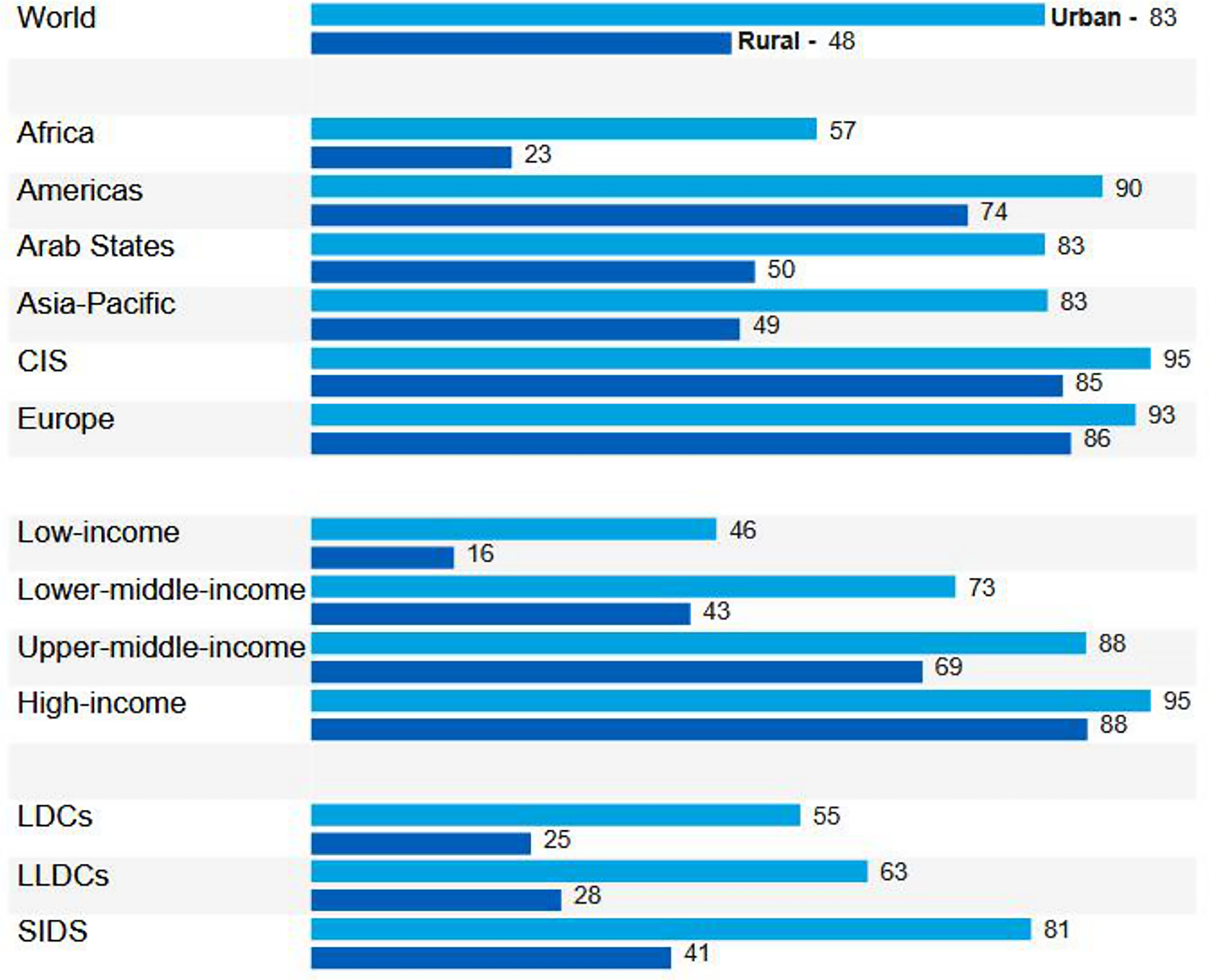
The urban and rural dwellers’ use of the internet—Urban–rural gap (Source: ITU Percentage of individuals using the Internet in urban and rural areas, 2024).
The ITU reports that only 23% of rural families in the least developed nations have an internet connection, while 57% of urban households do. 4 Similarly, a joint World Health Organization (WHO)–ITU analysis highlights that many rural health facilities in developing countries lack the broadband infrastructure for basic telemedicine services, limiting access to remote consultations, diagnostic imaging, and patient monitoring. 5 This disparity hinders economic growth, restricts access to digital education, compromises health care delivery through telemedicine, and challenges public health emergency response systems. However, the pressing necessity for health care accessibility via telemedicine services has generated new rationales for connectivity investments, especially when evaluating the social and economic repercussions of insufficient health care provision. 6 So, it is essential to implement cost-effective backhaul systems that can support telemedicine applications that save lives while being profitable for service providers. 7
Methods
This study utilized a desk-based comparative analysis of satellite communication technologies for telemedicine and health care backhaul, integrating a systematic literature review with the assessment of real-world case studies and worldwide datasets. The goal was to find out what GEO, MEO, and LEO satellites can and cannot do to help with health connectivity.
LITERATURE REVIEW
Introduction to satellite backhaul
In the field of telecommunication, backhaul connectivity refers to the links that are intermediate between the core network and the subnetworks that are working on the edges of the overall network edifice. It is vital to enable the smooth flow of data, voice, and video services to the leading data centers from end users and internet gateways. Practical functionality of internet networks such as 4G and 5G cannot be helpful without reliable backhaul, especially in underdeveloped and remote areas. 8
Reliable operation and maintenance of backhaul infrastructure is a significant challenge in remote regions globally, as these areas face connectivity problems due to challenging terrestrial topography, including mountains, deserts, or forests. For telemedicine applications, this infrastructure challenge is particularly critical, as remote health care delivery requires consistent, high-quality connections to support real-time video consultations, transmission of medical imaging data, and remote patient monitoring systems.9,10 Deployment of fiber optics is proposed as a solution. Still, costs often exceed potential revenue, creating a severe “last-mile problem,” where the final link in the network chain remains weak, directly impacting the ability to deliver essential health care services to rural populations. 11
In the past, microwave and fiber-optic technologies provided backhaul connectivity. Fiber offered high capacity and low latency but was expensive and time-consuming to deploy, especially in rugged areas. Although fast to deploy, microwave links were more limited regarding bandwidth and line-of-sight requirements, making them less suitable for long-term scalability. 12 Similarly, GEO satellites were used as a solution. Still, inherent high latency—approximately 600 ms round-trip—made them unlucrative for real-time applications such as videoconferencing, online gaming, or Voice over Internet Protocol services. 13
In contrast, LEO satellite installations are emerging as an innovative solution to the backhaul problem. Operating at an altitude between 500 and 2,000 km, LEO satellites significantly reduce latency to as low as 20–40 ms. With unique efforts from companies such as SpaceX (Starlink), OneWeb, and Amazon (Project Kuiper), LEO satellites are being viewed as a reliable backhaul option, especially for connecting remote regions.14,15 Because they can cover large areas, deploy quickly, and work under low latency, they are more suitable for remote areas and disaster-prone places.
TECHNOLOGICAL ADVANCEMENTS FOR LOW-LATENCY SATELLITE BACKHAUL
Phased-array antennas, electronic steered antennas, and beamforming
The latest satellite systems are using phased-array antennas in abundance. These antennas create highly directional, steerable beams without moving parts. Electronically steerable arrays enable satellites to adjust their beams on the fly, allowing them to reach ground stations or user terminals. 16 This improves link quality and throughput. By reducing beam misalignment and enabling quick beam switching, phased arrays minimize packet jitter and maintain stable throughput, even when satellite positions change or users move. Further advancements in electronic steered antennas (ESA) and beamforming techniques, as well as adaptive coding and modulation techniques, enable improved signal performance and reduced delays in LEO satellite communications.
HIGH-THROUGHPUT SATELLITES
High-Throughput Satellites (HTSs) use spot-beam designs and frequency reuse with Ku-band (12–18 GHz) and Ka-band (26.5–40 GHz) frequencies, enabling them to provide much higher capacity at a lower cost per bit than older systems. These frequency bands are particularly suitable for telemedicine applications, as Ka-band delivers the high bandwidth necessary for transmitting medical imaging data, while Ku-band offers reliable connectivity for video consultations. 17 Directing various beams at a particular area enhances their capacity manifold times of gigabits per second (Gbps). This results in improved bandwidth, spectral efficiency, and reduced jitter with the help of more efficient power and SNR management. These satellites are especially useful for offering broadband backhaul in remote areas, enabling simultaneous telemedicine sessions across rural health facilities where ground infrastructure is limited. 18
LASER INTER-SATELLITE LINKS
Intersatellite laser links (ISLs), which are also called optical ISLs, provide the backbone of LEO constellations. By enabling direct satellite-to-satellite communication via laser beams, data can flow through space, and there is no need for it to get passed through the ground station every time, without any need to go through a ground station for each leg. This reduces latency, approaching the speed of light in a vacuum, and lowers jitter compared with radio frequency links. 19 Recent studies show that static permanent laser ISLs (LISLs) improve latency for many intercontinental connections. It is proven through experiments that it becomes easier through dynamic LISL routing as link-setup delays drop below a second.14,20 However, there is a need to carefully manage the overhead from setting up temporary links. Recent research shows that up to ∼20 ms improvements can be acquired through dynamic routing. Commercial entities such as Starlink and China’s Jilin-1 constellation are using LISLs. These developments, including 100 Gbps satellite-to-ground links, pave the path for high-speed mesh networks.21,22 They can also support high-bandwidth applications, including telehealth. By leveraging Starlink broadband, internet technology can transform health care by improving access to telemedicine in rural and remote areas. The recently designed telemedicine capability has been proven and is now deployed, providing an enhanced diagnostic support for infectious disease management in the field. 23
EDGE CACHING AND ONBOARD PROCESSING
Using edge caching in satellite paths or on low-latency satellites helps reduce latency and jitter, by storing data closer to the user. As this content comes from the edges, the delays that arise due to a round-trip to the ground station are reduced, resulting in smooth functioning. Coherent with onboard functions, satellites can adjust traffic routes across intersatellite links and ground stations. This path optimizes performance and minimizes jitter, even during variable congestion. Satellite edge nodes can store regularly used medical databases, treatment procedures, and diagnostic imaging templates for telemedicine applications. This reduces the time needed to get necessary medical information during distant consultations. 24 Satellites can optimize traffic routing via intersatellite links and ground stations when combined with onboard processing capabilities. This ensures that time-sensitive medical data transmissions are routed first. 25
SD-WAN AND 5G INTEGRATION
Using Software-Defined Wide Area Network (SD-WAN) and 5G networks in satellite backhaul structures is innovating the game for reliability and service flexibility. SD-WAN joins satellite links to manage a variety of routing paths and jitter problems and detect latency. It also directs the data traffic to the most efficient channels or satellite-ground paths. 26 Also, integration with 5G edge and network slicing helps provide end-to-end Quality of Service guarantees across satellite and remote networks. This supports high data-demanding applications like real-time enterprise connectivity and IoT sensor backhaul, including medical biosensors and remote health monitoring devices deployed in underserved areas. 27 Together, these technologies improve reliability, reduce delays, which is critical for a tele-mental health application, and improve bandwidth use in satellite-based backhaul.
DATA COLLECTION
To ensure rigor, sources were found by searching for specific words (like “LEO satellites,” “telemedicine backhaul,” “health care connectivity,” and “OPEX/CAPEX in satellite networks”) in the databases listed. Secondary data sources included peer-reviewed journal articles, regulatory reports, industry whitepapers, and market analyses. These covered relevant information from:
Satellite operators, such as SpaceX Starlink, Amazon Kuiper, SES O3b, Viasat, and HughesNet. ITU reports and publications of the World Bank. Academic databases like IEEE Xplore, ScienceDirect, and SpringerLink.
The finance-related data comprised capital expenditures (CAPEX) for launching a satellite and deploying infrastructure and operational expenditures (OPEX) such as bandwidth pricing, maintenance, and terminal costs. Technical reports and field studies provided performance data, including latency, throughput, and scalability metrics.
COMPARATIVE COST AND PERFORMANCE ANALYSIS
A comparative analysis approach was used to evaluate three satellite categories:
GEO satellites, high-cost, high-latency solutions (e.g., Viasat, HughesNet). MEO satellites, medium-cost, moderate-latency solutions (e.g., SES O3b mPOWER). LEO satellites, low-cost, low-latency solutions (e.g., SpaceX Starlink, Amazon Kuiper).
The study concentrated on four principal performance metrics: (1) CAPEX, (2) OPEX, (3) latency, and (4) scalability. These were chosen because they are the most common metrics used in telecommunications engineering and digital health studies, which makes it easy to compare technologies across the board.
Collected data were analyzed to compare the deployment cost of fiber per kilometer, subscription fees of satellite service, and latency benchmarks. Values from the literature and industry reports were systematically compared, and where possible, ranges and averages were noted to show differences in cost and performance thresholds between different types of satellites.
The choice of CAPEX, OPEX, latency, and scalability was also based on how they relate to telemedicine: latency affects real-time consultations, OPEX affects how affordable and sustainable the service is, and scalability affects how quickly networks can grow to reach areas not being served.
This process helped to determine the most suitable backhaul solution for remote areas.
CASE STUDY EVALUATION
Two major satellite constellations—Starlink and Amazon’s Kuiper—were selected as representative case studies. The selected case studies are about:
Rural broadband expansion using Starlink in North America and Sub-Saharan Africa. Amazon Project Kuiper’s planned deployment in rural communities in the United States (U.S.).
These case studies were chosen because they are examples of major global deployments directly related to rural health care backhaul, and because their technical and financial information is available to the public for comparison. They were also chosen because they are at two stages of development: Starlink is an operational system with active deployments, and Kuiper is a planned project with published technical and policy frameworks. This gave a balanced view of both current performance and future potential.
The study used data from these case studies to show how real-life CAPEX, OPEX, latency, and scalability metrics work. This comparison provided helpful information about the pros and cons of using satellite backhaul for health care connectivity.
DATA ANALYSIS METHOD
The study used a descriptive and comparative analysis approach. It combined the tables of cost-performance with trend analysis to find the most cost-effective, efficient, and scalable solution. A systematic review of numerical data from literature and industry reports was conducted, with ranges or averages recorded whenever feasible. Side-by-side comparisons of trends in different satellite categories (GEO, MEO, LEO) showed the pros and cons of each. The methodology allows for:
A quantitative comparison of CAPEX, OPEX, and deployment time. Performance measurement based on latency and throughput. An assessment of scalability for mobile and rural broadband backhaul.
The descriptive part of the research helped put together complicated financial and technological data in a form that made it easy to compare. The comparison part, on the other hand, focused on the variations between satellite categories and case studies. These solutions worked together to make it easier to connect technical metrics with telemedicine backhaul demands.
This methodology offers a transparent and reproducible framework from data collection to conclusions by integrating a systematic literature review, quantitative comparison, and case study analysis, effectively tackling the difficulties of evaluating satellite technologies for health care backhaul.
Satellite Technology for Backhaul Connectivity
Backhaul connectivity refers to the critical infrastructure that links remote network endpoints, such as cellular base stations and satellite broadband access points, to the core internet backbone, as illustrated in Fig. 2. In many developing regions, terrestrial fiber-optic and microwave solutions are either infeasible due to geographical challenges or prohibitively expensive. Satellite technology provides an alternative backhaul solution, enabling high-speed internet access in rural and underserved areas. 28
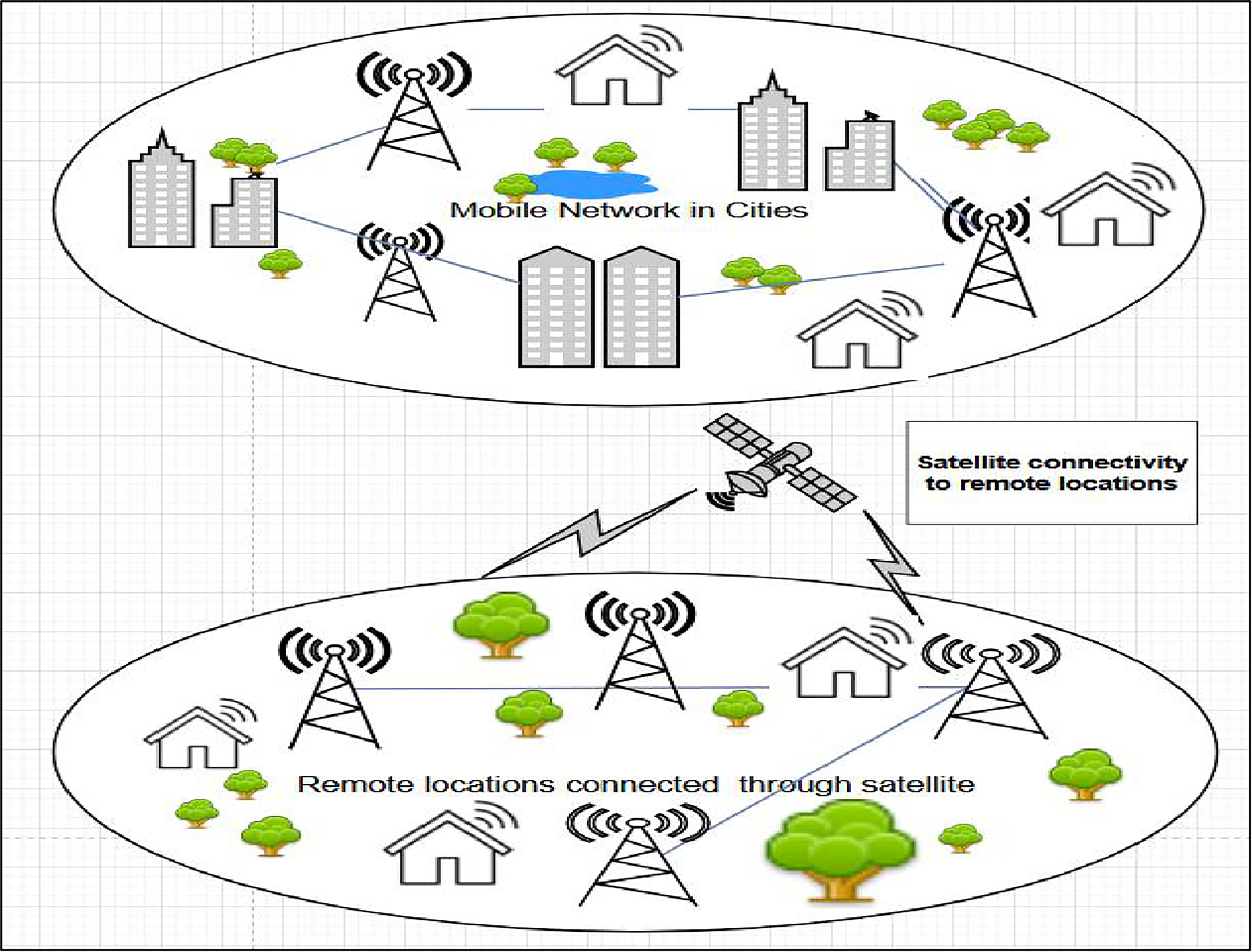
Illustrations of the proposed satellite backhaul connectivity (Source: Illustrated by the authors).
EVOLUTION OF SATELLITE BACKHAUL TECHNOLOGY
A communications satellite is an orbiting artificial Earth satellite that receives a communications signal from a transmitting ground station, amplifies and possibly processes it, and then transmits it back to Earth for reception by one or more receiving ground stations. Satellite-based communication has evolved significantly over the past few decades. Traditionally, GEO satellites were the primary means of satellite broadband connectivity. These satellites, positioned approximately 35,786 km above Earth, provide extensive coverage but suffer from high latency (typically ∼600 ms), making them unsuitable for real-time applications such as videoconferencing and online gaming. 29
MEO satellites, such as SES’s O3b mPOWER, operate at altitudes between 2,000 km and 20,000 km. They offer lower latency (∼100–300 ms) and improved data speeds compared with GEO satellites. However, deployment and infrastructure costs remain relatively high, limiting widespread use in low-income regions. 30
LEO satellites represent a breakthrough in backhaul connectivity. Operating at altitudes between 500 km and 2,000 km, LEO satellites provide significantly lower latency (∼20–50 ms) and high data throughput. Companies like SpaceX’s Starlink, OneWeb, and Amazon Kuiper are deploying prominent constellations of LEO satellites. Starlink, developed by SpaceX, represents the most ambitious LEO satellite broadband initiative to date, with a growing constellation of over 5,000 satellites and an intent to launch more satellites to provide high-speed, low-latency internet access across the globe. The connectivity benefits the remote and the underserved regions. Unlike traditional GEO and MEO systems, the Starlink LEO mesh configuration offers dynamic coverage and high-speed connectivity, creating a mesh network capable of delivering broadband services to remote areas at competitive costs. 31
COMPARATIVE ANALYSIS OF SATELLITE ORBITS
There are three distinct types of communication satellites, organized by altitude, with significant differences in their orbital characteristics. Table 1 illustrates the characteristics of satellites in orbit and the attributes of GEO, MEO, and LEO, along with their coverage per satellite. Furthermore, it also includes data speed and use cases.
Characteristics of Satellite in Orbit
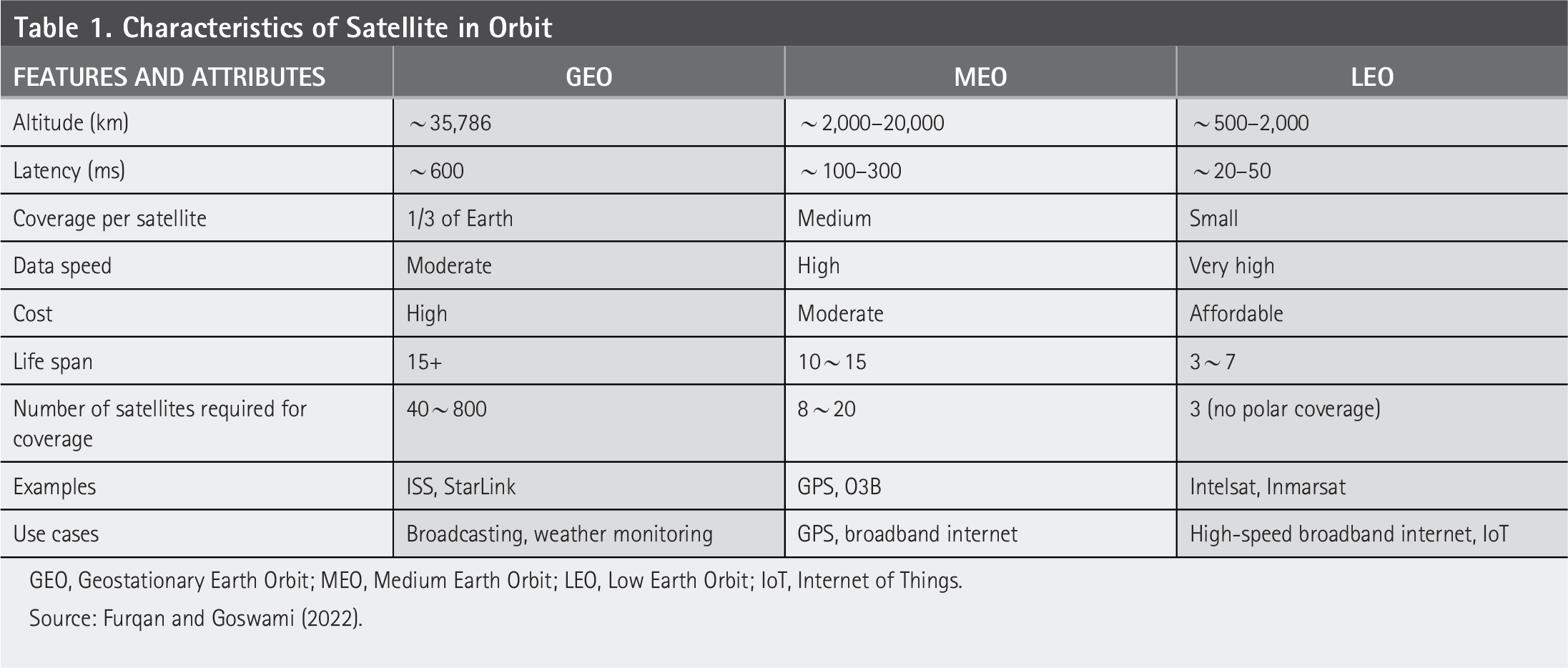
GEO, Geostationary Earth Orbit; MEO, Medium Earth Orbit; LEO, Low Earth Orbit; IoT, Internet of Things.
Source: Furqan and Goswami (2022).
The effectiveness of satellite technology for backhaul connectivity depends on key performance metrics, including altitude, latency, coverage, data speed, and cost. LEO satellites utilize various spotbeams, beamforming, frequency reuse, and other advanced techniques to achieve high throughput and low latency. Table 2 shows LEO–HTS constellations of SpaceX, OneWeb, Telesat, and Amazon Kuiper. Table 3 depicts the groups of satellites and their categories: different altitudes, orbital periods, and latencies (round-trip). It also shows the number of satellites required to span the globe, the cost per satellite, and the practical lifetime of a satellite (round-trip).
LEO-High Throughput Satellite Constellations
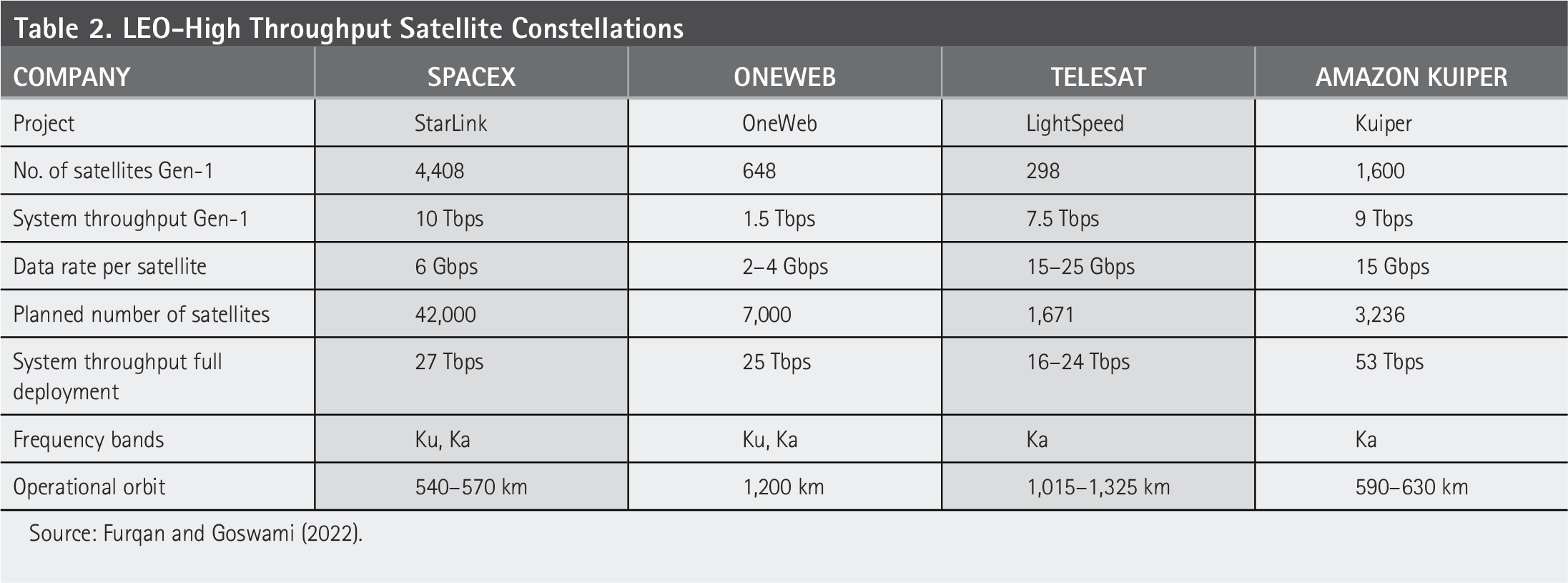
Source: Furqan and Goswami (2022).
The Different Groups of Satellites and Their Categories
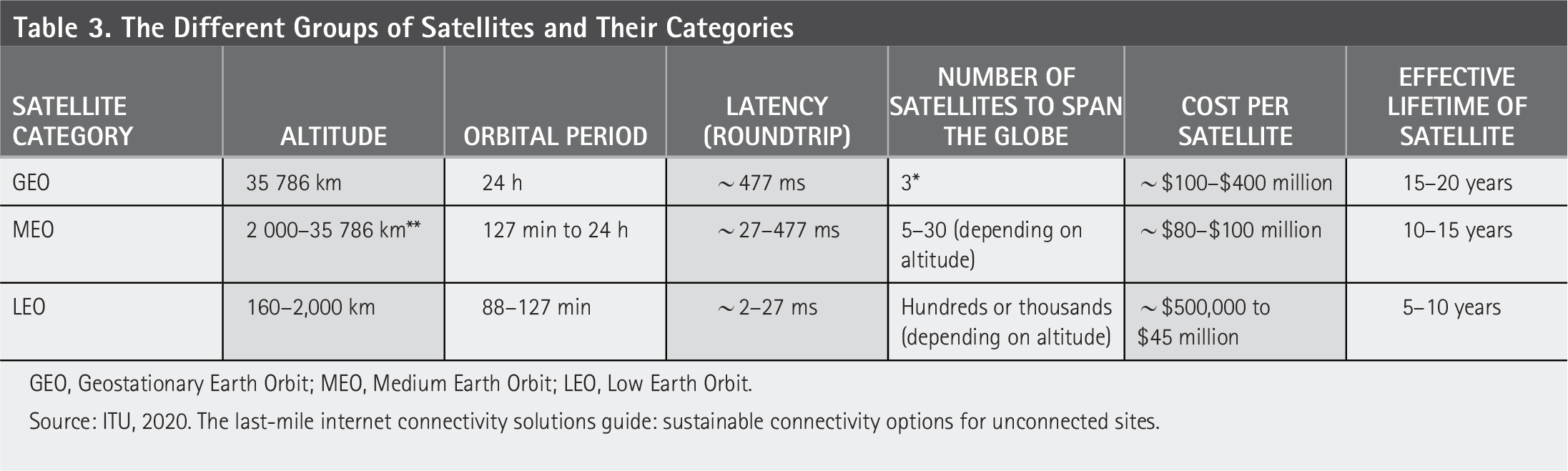
GEO, Geostationary Earth Orbit; MEO, Medium Earth Orbit; LEO, Low Earth Orbit.
Source: ITU, 2020. The last-mile internet connectivity solutions guide: sustainable connectivity options for unconnected sites.
ROLE OF LEO SATELLITES IN BACKHAUL CONNECTIVITY
LEO satellites have emerged as the most viable solution for improving internet access in developing countries. Their key advantages include:
Low latency and high bandwidth: LEO satellites, which are positioned closer to Earth, provide low-latency communication services and are ideal for real-time applications.
32
User experience can be comparable with fiber-optic in terms of latency, making it suitable for various applications, including telemedicine, virtual learning, Zoom conferencing, and other videoconferencing services. Greater flexibility in resource scheduling: In addition to different benefits to fully exploit the system’s capacity, satellite networks are required to allocate communication resources, such as frequency bands, transmission power, time slots, and beam directions in a highly adaptive and dynamic way. This requirement is particularly critical for LEO satellites, which have greater flexibility in resource scheduling.
33
Cost efficiency: The declining cost of satellite launches, driven by reusable rocket technology (e.g., SpaceX Falcon 9), has significantly reduced deployment expenses, making LEO networks a cost-effective alternative to terrestrial infrastructure.
34
Resilience in disaster scenarios: Cost-effective LEO satellite-based communication can enhance network infrastructures where other terrestrial networks are unstable. LEO satellite-based communication is particularly beneficial for disaster response and relief efforts.
35
Comparative Analysis and Cost Considerations
The selection of an optimal satellite backhaul solution depends on various factors, including cost, latency, coverage, and scalability. While traditional satellite solutions, such as GEO and MEO satellites, have played a significant role in broadband connectivity, they present limitations in affordability and performance. On the other hand, LEO satellites have emerged as a cost-effective, high-performance alternative for remote and rural internet access.
COST COMPARISON OF SATELLITE TECHNOLOGIES
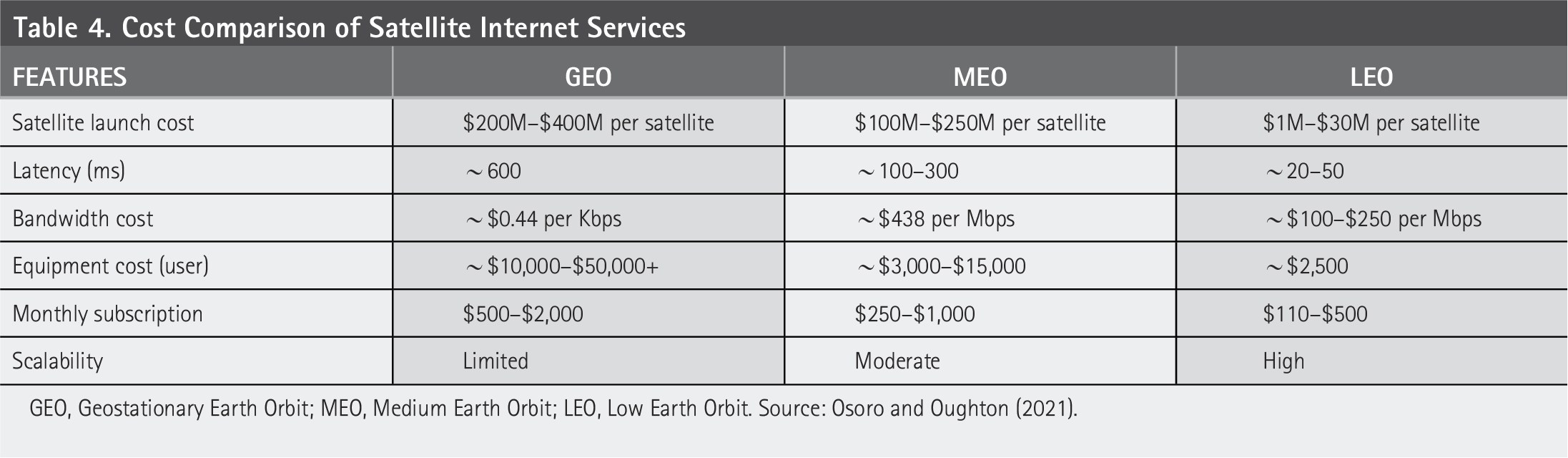
The cost of satellite internet services includes CAPEX, such as satellite launch and infrastructure deployment, and OPEX, including maintenance, bandwidth pricing, and end-user equipment costs. Table 4 provides a comparative overview of the cost structures of different satellite systems.
Cost Comparison of Satellite Internet Services
GEO, Geostationary Earth Orbit; MEO, Medium Earth Orbit; LEO, Low Earth Orbit. Source: Osoro and Oughton (2021).
GEO satellite services, such as Viasat and HughesNet, are among the most expensive due to their high launch and maintenance costs. MEO services, such as SES’s O3b mPOWER, offer a balance between price and performance but remain expensive for widespread rural deployment. LEO services, including SpaceX’s Starlink and Amazon Kuiper, are significantly more affordable due to advancements in reusable rocket technology and mass satellite production. 36
LATENCY AND PERFORMANCE CONSIDERATIONS
Latency is critical in selecting a backhaul connectivity solution, particularly for real-time applications such as videoconferencing and telemedicine, especially when applying telemental health and cloud computing. GEO satellites, positioned at ∼35,786 km, suffer from high latency (∼600 ms), making them unsuitable for low-latency applications. MEO satellites reduce latency to 100–300 ms, but LEO satellites offer the best performance, with latencies as low as 20–50 ms. 37
LEO satellite services are increasingly used for mobile backhaul, connecting rural cell towers and providing broadband to remote areas. The lower latency of LEO systems makes them suitable for 5G and Internet of Things (IoT) applications, enhancing connectivity in previously unserved locations. 38
DEPLOYMENT AND INFRASTRUCTURE COSTS
Deploying fiber-optic broadband to remote areas can cost up to $30,000 per kilometer, making satellite backhaul a more viable alternative for difficult-to-reach locations. 39 LEO satellite providers, such as Starlink, offer plug-and-play terminals that can be set up with minimal technical expertise, reducing deployment costs and ensuring quicker internet access. 40
Case Studies
CASE STUDY 1: STARLINK FOR RURAL BROADBAND IN NORTH AMERICA AND SUB-SAHARAN AFRICA
The Starlink project, created by SpaceX, is a leading example of low-latency LEO satellite backhaul for rural and underserved areas. Traditional rural connectivity faces three ongoing challenges:
High deployment cost of terrestrial fiber in low-density areas. Latency limits of GEO satellites (about 600 ms). Limited scalability and reliability of older microwave links.
Starlink tackles these issues by using a large LEO satellite constellation that operates at altitudes of approximately 550–1,200 km. This setup allows for latency as low as 20–50 ms, significantly improving GEO and even some MEO systems. 41 This low latency makes Starlink ideal for backhaul applications that support real-time services like 5G small-cell connectivity, videoconferencing, telemedicine, distance learning, and cloud-based applications in remote areas. 42
DEPLOYMENT IN NORTH AMERICA
In North America, Starlink has played a key role in connecting remote communities in the U.S. and Canada, especially in regions like Alaska and rural Midwest states. A 2022 Federal Communication Commission (FCC) report noted that Starlink achieved average download speeds between 50 and 250 megabits per second (Mbps) with latency under 50 ms, adequate for mobile network backhaul in underserved communities. 43 Rural ISPs and telecom operators have started using Starlink terminals to extend 4G/5G connectivity in difficult-to-reach areas, where fiber deployment can cost over $30,000 per kilometer. 44
DEPLOYMENT IN SUB-SAHARAN AFRICA
In Sub-Saharan Africa, Starlink has received licenses in several countries, including Nigeria, Rwanda, and Kenya, as part of broader initiatives to bridge the digital gap. Many areas depend on outdated 2G/3G infrastructure with limited broadband access. By offering plug-and-play satellite terminals, Starlink lowers the technical challenges and operational costs for telecom providers. 45
This shift is particularly transformative for rural schools, health care centers, and community hubs, which previously depended on high-latency GEO satellite links or had no connection. Connecting LEO backhaul with terrestrial 4G/5G networks has improved Quality of Service, granting access to cloud services, e-learning platforms, and telehealth solutions that were not previously possible. 46
TELEMEDICINE IMPACT IN RURAL DEPLOYMENTS
Starlink’s low-latency connectivity has made it possible for telemedicine to make significant strides in rural areas. Starlink-enabled telemedicine consultations have been effectively used in rural health care facilities in Alaska and other remote areas. This has dramatically reduced patient travel costs and made getting specialist care easier. 47 Starlink’s 20–50 ms latency enables real-time video consultations that meet clinical standards equivalent to in-person examinations for diagnostic procedures. 48 International deployments have shown that LEO satellites can help with remote medical consultations in poor areas. With high-definition video communications, remote health care facilities can now have real-time consultations with urban medical centers. This allows specialists to help with complicated procedures. 49 The high throughput and low latency provide high-resolution medical imaging for remote diagnostics and other services. It also facilitates telemedicine for diagnosing parasites and viruses. 50
IMPACT ON BACKHAUL FEASIBILITY
From a backhaul standpoint, the Starlink case study shows several benefits:
Significant latency reduction, enabling low-latency applications and 5G/IoT support. Cost-effective deployment, eliminating the need for extensive fiber installations. Scalability, with flexible terminal setups that can be moved as necessary. Improved reliability, using mesh routing and intersatellite links to maintain service even in areas with limited ground infrastructure.
This case study illustrates how LEO satellite technology can close connectivity gaps in remote regions, making rural broadband expansion technically and financially viable. It provides practical evidence for using LEO satellites in low-latency backhaul scenarios.
CASE STUDY 2: AMAZON PROJECT KUIPER FOR RURAL U.S. COMMUNITIES
Amazon Project Kuiper is a next-generation LEO satellite constellation. It aims to deliver high-speed, low-latency broadband to underserved areas, especially in rural areas of the U.S. The project plans to deploy 3,236 satellites between 590 and 630 km in LEO. It promises latency as low as 20–40 ms, comparable with traditional fiber in many backhaul situations. 51
RURAL CONNECTIVITY CHALLENGES IN THE UNITED STATES
Even though the U.S. is a developed country, it still has a large rural broadband gap. The FCC estimates that over 14.5 million Americans cannot access reliable high-speed internet. 52 Remote areas in states like Alaska, Montana, and the Midwest face challenges due to the high cost of fiber deployment, which can reach up to $30,000 per kilometer, and the difficulties posed by rugged terrain. 53 Traditional GEO satellite providers, such as HughesNet and Viasat, serve some of these communities. However, their high latency of around 600 ms and limited bandwidth make them unsuitable for real-time applications. Kuiper’s LEO-based design solves this problem by combining low-latency connectivity with high throughput. It can support 5G small-cell backhaul, IoT devices, and time-sensitive applications like telemedicine and cloud services. 54
BACKHAUL AND DEPLOYMENT STRATEGY
Project Kuiper focuses on direct-to-home connectivity and support for telecom operators in rural areas. Amazon has stated that Kuiper will offer enterprise-grade terminals and gateways to serve as backhaul links for mobile networks and community Wi-Fi projects. 55
Efficient deployment is crucial. Kuiper terminals are being designed as lightweight, plug-and-play devices. This reduces operational costs and shortens deployment time. With Amazon’s experience in cloud computing through Amazon Web Services (AWS), Kuiper plans to integrate edge caching and cloud routing to lower jitter and improve backhaul performance for 5G and IoT applications. 56
STRATEGY FOR DELIVERING HEALTHCARE
Amazon’s Project Kuiper is meant to combine with AWS cloud services to make health care apps better. The planned constellation will let rural health facilities use cloud-based electronic health records and AI-powered diagnostic tools with latencies equivalent to urban medical centers. 57 With a predicted delay of 20–40 ms, Project Kuiper will make advanced telemedicine applications and remote health care delivery possible. This will make specialist medical procedures more available in locations with poor connectivity. 58
STRATEGIC IMPLICATIONS FOR LOW-LATENCY BACKHAUL
The Kuiper case study outlines the future of LEO-based backhaul solutions:
Integration with cloud services (AWS) enables better traffic management and routing, improving reliability. Low-latency links of 20–40 ms are expected to meet the needs of real-time mobile backhaul, aiding 5G expansion in rural U.S. areas. Cost-effective deployment through mass-produced terminals and Amazon’s logistics will help make rural connectivity more achievable.
Though Project Kuiper is still in its early deployment stage, its planned coverage and infrastructure suggest it could transform rural backhaul connectivity. Once fully operational, it should complement terrestrial fiber and help close the rural digital divide, similar to Starlink, with Amazon’s cloud-driven improvements enhancing performance and scalability.
Challenges and Limitations
Despite their transformative potential, low-latency LEO satellite backhaul solutions face several technical, economic, and regulatory challenges that must be addressed for large-scale adoption.
HIGH INITIAL CAPEX
While reusable rockets and mass satellite production have lowered costs, the initial deployment of LEO constellations remains capital-intensive. Launching thousands of satellites requires billions of dollars, and operators like SpaceX, Amazon, and OneWeb face long-term return-on-investment challenges. 59
SATELLITE LIFESPAN AND REPLACEMENT COSTS
LEO satellites typically have an operational lifespan of 5–7 years, significantly shorter than 15+ years for GEO satellites. This necessitates continuous replenishment, increasing OPEX, and long-term sustainability concerns. 60
SPECTRUM ALLOCATION AND INTERFERENCE
LEO constellations rely on Ku and Ka bands, which are increasingly congested. Interoperator interference, terrestrial 5G network coordination, and regulatory approvals can delay deployments and reduce efficiency. 61
GROUND INFRASTRUCTURE AND TERMINAL COSTS
While plug-and-play terminals reduce complexity, the cost per user terminal (currently ∼$400–600 for Starlink) may still be prohibitive for low-income rural communities without government subsidies or public–private partnerships (PPPs). 62
ENVIRONMENTAL AND ORBITAL DEBRIS CONCERNS
The rapid expansion of LEO constellations raises space sustainability issues. Orbital debris and collision risks have prompted stricter deorbiting and end-of-life requirements, which can increase operational complexity and cost. 63
These limitations highlight that while LEO backhaul offers low latency and high throughput, achieving global, sustainable, and cost-effective coverage remains a complex challenge.
BARRIERS TO ACCESS AND DIGITAL LITERACY
There are big problems with getting and using LEO satellite technology for telemedicine, in addition to the costs of building the infrastructure. Digital literacy is still a major problem, especially in rural health care facilities where workers may not be used to using contemporary telecommunications equipment. 64 To meet the training needs of health care workers, comprehensive capacity-building programs are necessary that teach both technical skills and how to integrate them into clinical workflows. 65 Language and cultural differences make it significantly harder to use technology; therefore, interfaces need to be easy to use and support local languages, as well as culturally appropriate information delivery. 66 In addition, a stable electricity supply and backup power systems are necessary for maintaining continuous satellite connectivity in remote areas where power infrastructure may be unreliable. 67
SECURITY AND PRIVACY CONCERNS
Satellite-based health care broadcasts face significant challenges with data security and patient privacy. Telemedicine platforms must adhere to strict regulations, such as the Health Insurance Portability and Accountability Act in the United States and the General Data Protection Regulation in Europe. These rules require strong encryption standards to keep private patient information safe during transmission and storage.68,69 Satellite networks have their own cybersecurity challenges, including the potential for transmissions to be intercepted during the uplink and downlink phases, unauthorized access to sensitive data through compromised ground stations, and the complexity of securing a distributed network architecture that spans multiple jurisdictions. 70 End-to-end encryption and secure authentication protocols are necessary, but they make system implementation more difficult and expensive, which could affect applications that need low latency. 71 Additionally, sending health data across borders via satellite poses complex regulatory challenges due to varying data protection, medical information privacy, and data sovereignty regulations in different jurisdictions. 72
Recommendations
To effectively bridge the digital divide in developing countries, policymakers, industry stakeholders, and international organizations must collaborate to implement strategic measures that promote the deployment and accessibility of low-latency satellite technology. The following recommendations outline key actions to enhance backhaul connectivity and expand broadband access in rural and remote areas.
EXPANSION OF MOBILE NETWORKS AND INFRASTRUCTURE
Deploy high-gain antennas and renewable energy solutions: Governments and private operators should invest in energy-efficient ground stations powered by solar and wind energy to support satellite connectivity in off-grid areas.
73
Enhance 5G and IoT deployment: LEO-based backhaul can support emerging mobile technologies, enabling faster 5G rollout and IoT applications in rural regions.
74
Encourage shared infrastructure models:— Telecom operators should adopt network-sharing agreements to reduce infrastructure costs and maximize coverage in underserved communities.
75
REGULATORY POLICIES AND SPECTRUM ALLOCATION
Facilitate licensing for satellite operators: —Governments should streamline regulatory processes for LEO satellite service providers to encourage market entry and competition.
76
Allocate spectrum efficiently: Fair spectrum allocation policies should be established to prevent monopolization and ensure multiple providers can offer competitive broadband services.
77
Enforce universal service obligations: —Governments should mandate that telecom operators extend coverage to rural areas, leveraging satellite connectivity to fulfill universal access goals.
78
PPPs AND INVESTMENT INCENTIVES
Encourage PPPs for rural connectivity projects: Governments should collaborate with satellite providers, mobile network operators, and NGOs to co-fund broadband expansion in remote areas. Offer tax incentives for satellite-based services: —Reduced tariffs on satellite broadband equipment can lower service costs for end users in developing countries. Leverage international funding programs: —Global organizations like the World Bank and ITU should provide grants and low-interest financing to support LEO satellite infrastructure development.
INVESTMENT IN LEO SATELLITE INFRASTRUCTURE
Increase LEO satellite deployment for backhaul connectivity: —Countries should invest in national satellite programs and partnerships with global LEO providers to ensure broadband availability in all regions. Develop localized satellite ground stations: —Establishing regional data hubs and ground stations can improve satellite service reliability and reduce operational costs. Support community-led connectivity initiatives: —Empowering local entrepreneurs and cooperatives to deploy satellite broadband services can enhance digital literacy and economic inclusion.
Conclusion
The impacts on health care delivery around the world are very substantial. LEO satellite technology can make telemedicine services available that meet the WHO’s standards for providing health care from a distance. These services have latencies of less than 50 ms, meaning clinical judgments can be made immediately. 79 LEO satellite backhaul can help make health care more accessible by giving rural health facilities robust, low-latency connections. This can lead to better patient results and cheaper means to get them to see specialists instead of paying for pricey transportation. 10 This new technology is an essential step toward making health care available to everyone, especially in underdeveloped countries, where getting medical care has been problematic because of where people live.
When comparing satellite technologies, LEO-based networks are better in cost, latency, and ease of use. SpaceX’s Starlink, OneWeb, and Amazon Kuiper are all examples of LEO satellite services that are still growing. This suggests satellite-based connectivity is becoming more practical for handling rural broadband challenges. These deployments have already proved that they change how health care is delivered. For instance, rural telemedicine consultations have increased by over 300% in areas with LEO satellite coverage. 80 However, to get the most out of these advancements, governments, regulatory bodies, and businesses need to implement strategic policies that make it easier to create infrastructure, use spectrum to its fullest, and stimulate investment in satellite broadband solutions.
Some essential suggestions are to use renewable energy to develop mobile networks, make policies that encourage competition, support PPPs to minimize deployment costs, and help local efforts to make sure everyone has access to digital technology. Health care apps should be given extra consideration. This involves making sure that medical data can be transferred swiftly, setting up telemedicine-ready technology at rural health centers, and teaching health care workers how to use satellites to give care from a distance. 81
Developing countries can get the most out of satellite backhaul technology by doing these things. This will ensure everyone has the same access to digital services for education, health care, telehealth, economic growth, and disaster response. Combining low-cost LEO satellite technology and enhanced telemedicine services gives us a rare chance to tackle health problems worldwide. As satellite constellations develop and prices go down, it becomes more feasible for specialized medical treatment to be sent to the planet’s most remote regions. This means that in the future, living far away from a hospital will not stop you from getting life-saving medical help. 82
Footnotes
Funding Information
No funding was received for this article.
Disclosure Statement
No competing financial interests exist.