






Abstract
This article is an anecdotal recap of lessons learned from the ALH 84001 debate in light of the historical and recent debate over the Viking results. While it has been 50 years since Viking it has also been 30 years since the announcement of possible indigenous Martian life in the ALH 84001 meteorite. Much has been learned in the interim period and many lessons are still being learned from the subsequent debate and the NASA Mars exploration and astrobiology programs it triggered.
Keywords
Background
August 7, 1996, the scientific world changed. A sitting US president heralded the possible discovery of past life on Mars, based on studies of the Martian meteorite ALH 84001. It seems a long, long time ago, in a galaxy far, far away in retrospect, but this turn of events changed science and scientific investigation forever. To understand the significance of this announcement, one must first examine the history of Mars exploration at the time, trace its evolution to the present, and then assess where we stand. For many of us involved at the time, it also became a deeply personal journey. In this work, I intend not only to highlight the science and key milestones of the “life on Mars” debate but to identify as well lessons learned by the community and those personal lessons I feel are yet to have been fully absorbed.
Introduction
In the beginning, there was Viking. In my view, the Viking landers achieved remarkable success even before launch. They were the first, and only, dedicated life-detection missions flown to date, an incredible achievement in engineering, science, and budgetary terms at the time and one that has not been reproduced. The Viking landers were equipped with the best instrumentation science could then envision. The technical achievements required to reach that point were substantial, and many of the articles in this special collection address the history and measurements made by the Viking landers, as well as the subsequent discussions, as it took nearly 40 years to correctly interpret the data (Guzman et al., 2018; McKay et al., 2025; Navarro-González et al., 2010b). It is often said within the planetary science community that the Viking mission was a failure because it did not detect life; however, there is much more to this story than initially meets the eye. One of the most crucial and historic sets of measurements in this story, for reasons that will become apparent, was the measurement of noble gases in the Martian atmosphere (Owen et al., 1977).
On Viking, the arguments against life were based on dismissing the mass spectrometer’s detection of chloromethanes, thereby rendering the positive results of the labeled release experiments insufficient to meet the prelaunch positive detection criteria (Biemann et al., 1977; Klein, 1979; Levin, 1972; McKay et al., 2025). This development of both the instrumentation and the prelaunch criteria for successful life detection was the first concerted scientific attempt to constrain a nonterrestrial life-form. As such, it was pioneering at the time, and it remains something that astrobiology—as a discipline of many disciplines—is still trying to define within a framework of modern mission development and with the lessons of Viking and ALH 84001.
Discussions surrounding a positive or negative life-detection result led to the promise of Mars research finding life, in the form of microbial life, diminishing to the point that the Viking mission was widely regarded as a failure. Subsequent reanalysis of the Viking datasets, following Curiosity’s detection of organics, has shown that the chloromethane products were most likely to be Martian in origin (Bains, 2013; Glavin et al., 2013; Levin, 1972; Levin, 1997; McKay et al., 2025; Navarro-González et al., 2010a; ten Kate, 2010). This caused a re-evaluation of the dataset, which not only confirmed the presence of chloromethanes but also revealed the presence of chlorobenzene, which had been present but undetected in the dataset at the time (Guzman et al., 2018). However, at the time, the immediate fallout from a negative life-detection result led to a cessation of missions to Mars for multiple decades (ten Kate, 2010). One very important scientific result and a technical tour de force at the time was the measurement of Mars’ atmospheric composition during entry, decent, and landing and on the surface (Anderson et al., 1972; Owen et al., 1977). This measurement was crucial in the debate about the origin of a peculiar class of meteorites, the parent body of which had been debated for many years, the Shergottite, Nakhlite, and Chassignite (SNC) meteorites. The prevailing hypothesis of the day was that these meteorites were “less unlikely” to have come from Mars, based on age dating and petrographic arguments as well as dynamical modeling (Wasson and Wetherill, 1979). However, the Viking atmospheric measurements of noble gases enabled (Bogard and Johnson, 1983) to confirm conclusively that the SNC meteorites, and ultimately ALH 84001, were from Mars (Owen, 1976; Bogard and Johnson, 1983; Bogard et al., 1984). Arguably, the Viking missions were crucial to what happened next with ALH 84001 from the following standpoints:
The Viking data proved that the SNC meteorites were from Mars, which then paved the way for the discovery the very next year that the ALH 84001 meteorite from the Antarctic Meteorite collection expedition in 1984 to the Allan Hills area of Antarctica is also from Mars. The excitement of the claim inspired a generation of scientists who were then trained in the prevailing thought processes needed for life detection at that time. The disappointment felt in response to the Viking life-detection results, lack of organic material, and ambiguously labeled release results left a pervasive sense of a job unfinished.
Splitting the landing dates of the two Viking landers by exactly 20 years was the announcement of possible life in the Martian meteorite ALH 84001 (McKay et al., 1996). This announcement, which was initially leaked to the BBC, caused huge international excitement and consternation in equal measure. The public reaction, along with that of politicians, policymakers, and scientists, marked a sudden surge in interest in Mars exploration that transformed NASA and space exploration for years and decades to come. The alignment of public excitement to the scientific literacy of any potential discovery, if done well, can yield benefits far beyond the subject at hand.
This article is not intended as an exhaustive review of the scientific study of ALH 84001; the interested reader should refer to excellent review articles by (Righter, 2024) or Treiman (2000), which provide commentary on articles and discussions at the time and up to 2000. David McKay, an eminent lunar geologist, and his team at the NASA Johnson Space Center (JSC), studied interesting carbonate concretions or globules within the meteorite and concluded that they may contain evidence of “relic biogenic activity.” The team reached this conclusion based on several mutually confirming lines of evidence, following Carl Sagan’s “Extraordinary Claims Require Extraordinary Evidence (ECREE)” standard (Sagan, 1979). These lines of evidence are as follows: (1) carbonate globules that contained nonequilibrium mineralogy of carbonate, magnetite, and iron sulfides that on Earth are known to be produced by terrestrial life and, at the time, were thought to be inconsistent with inorganic synthesis mechanisms due to constraints on the pH range by the presence of carbonate; (2) small microfossil features found during scanning electron microscope (SEM) studies in the 20–200 nm range are similar in morphology to known bacterial microfossils; (3) organic molecules such as polycyclic aromatic hydrocarbons (PAHs) that were the diagenetic remnants of organisms; and finally, (4) chemically pure magnetite grains that resemble those found in terrestrial magnetotactic bacteria, whose chemical purity, morphology, and magnetic properties are unique to biological formation mechanisms (McKay et al., 1996; Thomas-Keprta et al., 1999, Thomas-Keprta et al., 2001). While no single observation was convincing on its own, the power of the original ALH 84001 article lay in the combination of these observations such that they form a dataset that included morphological, mineralogical, isotopic, and organic chemical components, which made the argument compelling (McKay et al., 1996). All of these observations were placed in context with the meteorite’s residence in Antarctica and showed that the carbonate formed on Mars (confirmed by oxygen isotope measurements) and the lack of confounding signals from organic contamination from Antarctic ice (Anders et al., 1996; McKay et al., 1996). While hindsight is always 20/20, it should be noted that the number of distinct observations, techniques, measurements, and analyses undertaken by the team at that time was unique. Especially when compared with the state of life detection in early Earth samples, where one (morphology) or two (organics/carbon isotopes, mineralogy) lines of evidence were the standard of life detection at that time (Mojzsis et al., 1996; Schopf, 1993).
The Debate
The scientific community reacted quickly; however, after the announcement, a moratorium on sample distribution was imposed pending a National Science Foundation (NSF) call for proposals and was lifted in only two cases. One of these was to send samples to a young microbiologist from the United Kingdom (i.e., the author of this article) who had helped pioneer the use of atomic force microscopy (AFM) to image bacterial biofilms (the full story, for those interested, is documented here: Sawyer, 2006, and references therein). This technique could produce high-resolution images without the need for gold coating, as used in the original SEM images of ALH 84001 (Steele et al., 1998a; Steele et al., 1994; Steele et al., 1997). The size and morphology of the microfossil features were argued to be too small to be remnants of any life-form and to stand out on the surface as artifacts of the gold coating itself (NRC, 1999). Much of this debate can still be accessed in the resource compiled by Allan Treiman at the time and archived at the following web address: https://www.lpi.usra.edu/lpi/meteorites/alhnpap.html. Principally, the size and morphology of the microfossil features, along with a push for high-temperature formation of the carbonate globules and the possibility that the PAHs may have been terrestrial contamination, became points of contention with the article’s original findings (Stephan et al., 1998; Treiman, 2003). In July 1997, samples were released to the community following 18 successful proposals to the NSF for advanced analyses of ALH 84001. This, in itself, was unprecedented at the time and thus set the stage for several years of debate in conference sessions, most notably at the 1997–2000 sessions of the Lunar and Planetary Science Conference (LPSC), which were intense and, in some cases, increasingly acrimonious, both in the tone of the talks, especially the question-and-answer sessions at the end of talks, and during interpersonal communications. It was at the LPSC in 1997 that I gave my first talk on the work I and collaborators had undertaken, which led to my being approached by Jerry Soffen, the lead scientist of Viking, who, after my talk on AFM imaging of ALH 84001, invited me to apply for a National Research Council (NRC) postdoc at NASA JSC, with E. Gibson and D. McKay (Steele et al., 1997).
As with Viking organic material, contamination became the main reason for dismissing ALH 84001’s organic matter as being of Martian origin. From a personal perspective, our discovery of a terrestrial contaminant living on ALH 84001 marked a turning point in the debate, not because it disproved Martian life; it simply did not prove that there was no Martian life in the meteorite (Steele et al., 2000a). However, it revealed how challenging it was for the techniques and protocols available at the time to consistently detect terrestrial life in a Martian or carbonaceous meteorite on Earth (Steele et al., 2000a; Steele et al., 1997; Steele et al., 1999a; Steele et al., 1998b; Steele et al., 2001; Steele et al., 2000b; Steele et al., 1999b; Toporski et al., 1999). Concurrently, it became clear that the Viking mass spectrometer’s sensitivity would have missed organics from a microbiological community of approximately 106 cells per milliliter (Glavin et al., 2001). This is not a criticism of the Viking landers’ capabilities but rather a reflection of the limitations of a state-of-the-art instrument at the time of its construction. Furthermore, thermal extraction of any organic material may not have occurred at the 500°C maximum temperature used during analyses, especially given Martian meteorite and Sample Analysis on Mars (SAM) data, which indicates that refractory organics are broken down at 550°C and above (Eigenbrode, 2018; Grady et al., 2004; Grady and Wright, 2006; Wright et al., 1989; Navarro-González and Navarro, 2006; Steele et al., 2012a). The labeled release (LR) experiment could, in principle, detect much lower cellular concentrations because it relied on signal amplification driven by cellular growth and metabolism. These observations, therefore, challenged both the philosophy underpinning life detection and the technical approaches to accomplish it. Nonetheless, the scientific method depends on understanding experimental results, even flawed ones, to make necessary corrections that lead to insight and discovery.
So, from the outset, ALH 84001 challenged the prevailing technology, protocols, and philosophy of scientific investigation of astromaterials. It also became increasingly clear to all involved in the debate that a new approach was needed to advance hypothesis testing, including improvements in analytical techniques, detection sensitivity, sample curation, and the integration of competing hypotheses. At this point, a “red team”–“blue team” approach was adopted, in which one team would work from the null hypothesis that the sample contained life and the other from the alternative hypothesis that it did not (Steele et al., 1998; McKay, 1999). The teams would then discuss the best way forward regarding investigations, data analysis, and interpretation to maximize scientific return and approach consensus. This was, and remains, a radical idea that I still consider essential for unambiguous life detection, as I do not consider a discovery of the magnitude of showing that we are not alone to be a task that should be undertaken in acrimony and/or myopia.
Every aspect of the analysis and findings was questioned from every conceivable direction, often in ways not too dissimilar to the Viking debate, and not always fairly or collegially by those involved. From the curation and collection of meteorites to sample preparation, each technique was examined in detail, along with the correlations among techniques. The instruments used in these analyses were critiqued and compared with similar techniques and measurements. There was a targeted community effort, with 18 successful grants, that resulted in a surge of activity regarding the study of this rock. Slowly, over time, community consensus turned against the “discovery of life beyond Earth” hypothesis. A report from the National Academies (National Research Council, 1999) on the lower size limit to life raised questions about the validity of statistical measurements of specific types of magnetite grains, arguments over the temperature of deposition of the carbonate, and contamination of the samples, evidence that contributed to a gradual community shift toward a nonlife explanation for each of the lines of evidence.
I will never forget my first glimpse of the sample sent to me by Dave McKay, nor the excitement I have felt every day since studying pieces of Mars or looking at data from SAM or SHERLOC. This effort attracted a new generation of researchers to study astromaterials and Mars. During the debate, it became clear that, for many working in the field, viewpoints had become entrenched. Observation and counter-observation became mired in the need to prove or disprove, to be right or wrong, instead of being innately curious and interested in the pursuit of the scientific method. Throughout all of the research activity, one thing remained constant: The excitement of working on Martian samples and the very real possibility that the McKay team’s hypothesis could be correct.
Birth of the NASA Astrobiology Institute
At the time, Dr. Wes Huntress was associate administrator for NASA. In collaboration with Jerry Soffen and people at the NASA Ames Research Center (ARC), he realized that, where Viking had set the scene, ALH 84001 had stoked the fire to the point that the excellent, though underfunded, Exobiology program at NASA could be expanded. The community and public excitement, coupled with enthusiasm from the White House, gave Wes and NASA the political and financial impetus needed to do something new, to expand the existing Exobiology program into a new area that was to be developed at Ames, coined “Astrobiology” (Wes Huntress personal communication). From this, the NASA Astrobiology Institute (NAI) was born. Initially, with a budget of 9 million dollars per year, proposals were solicited for membership in this institute; 11 teams were selected, including one led by Dave McKay as principal investigator. The mission for the NAI was simple: Assess what is needed to understand (and I paraphrase here) “where did we come from,” “are we alone,” and “where are we going,” with a foot firmly in helping NASA develop missions to aid in answering all of these questions. While the NASA Astrobiology Institute remains the program most people associate with the field of astrobiology, it was one of four different funding areas: Astrobiology Science and Technology Instrument Development (ASTID) to generate the next set of space-flight instruments to undertake measurements in support of the NAI’s goals; Astrobiology Science and Technology for Exploring Planets, which helped mature ASTID and other instruments through field testing in analog environments on Earth to enable and support missions, and expanding the highly successful NASA Exobiology program, whose achievements included funding Woese and Fox in their development of 16S rRNA gene sequencing that led to the understanding of the modern tree of life (Woese and Fox, 1977).
The McKay team demonstrated the determination to continue pushing and have faith in their analysis and hypotheses. In hindsight, they were correct to do so, as what followed revolutionized humanity’s exploration of the solar system.
Time to Change the Rhetoric and Celebrate the Hypotheses
In addition to working with the McKay team, I was fortunate to meet and get to know Gil Levin. He visited Carnegie many times and left a legacy at the lab through an endowment. I remember conversations with him that were similar to those I had with Dave McKay, Kathy Thomas, and Everett Gibson, in which they were convinced their hypothesis was correctly framed and presented and that the subsequent refutation had not taken into account all possible positive signs of life. Given that both debates were settled by community opinion, it is important to recognize that any successful life-detection signal is ultimately decided by the community. Life detection is a sliding scale of complexity: the more obvious the life, the fewer observations are required to gain community acceptance. For example, if life on Mars consisted of a six-legged green wildebeest sweeping majestically across Chryse Planitia, all we would need to detect it and gain community acceptance would be a camera in orbit. We know this is not the case and that questions about early or even present life on Mars require the highest-resolution tools and technologies available to our species. Both the Viking and ALH 84001 observations represented the pinnacle of science at the time. Both posited hypotheses were contentious at the time and did not stand the test of scientific inquiry. However, I would argue that ALH 84001 addressed the Viking community’s angst and disappointment at not finding evidence of viable life and was convincing enough for many in the community. Both the observations of organics in ALH 84001 and Viking were dismissed as contamination. Both have since been shown to be indigenous and correct observations, and the observed range and levels of organics are intriguing and illustrative of processes that could lead to the formation of the building blocks of life on Mars or any other planetary body with liquid water, no matter how fleetingly (Steele et al., 2018, 2022).
Implications for Life Detection and Organic Analysis in Martian Meteorites
During the mid-2000s study of ALH 84001, it became clear that certain features in the meteorite could not be explained by contamination, and the original measurements of indigenous Martian PAHs may be correct. The discovery of graphite and macromolecular organic carbon (MMC) attached to magnetite grains in both dissolved and intact carbonate globules, which appeared to match features in terrestrial mantle xenoliths from Svalbard, suggested that abiotic processes may be responsible for the organic carbon inventory (Steele et al., 2007, 2012a, 2012b). Furthermore, MMC was found in magnetite inclusions in 13 meteorites from Mars (Steele et al., 2012). This was facilitated by the witnessed fall of the Martian meteorite Tissint in 2011, which provided the community with an opportunity to study a relatively pristine Martian sample for comparison with existing meteorites, including ALH 84001 (Aoudjehane, 2012). Furthermore, it enabled the SAM team on board the Curiosity rover to use the Tissint meteorite to ground-truth our observations of the Cumberland mudstone (Eigenbrode et al., 2018), thus reinforcing the realization that the Martian meteorites do contain evidence of pristine organic material. By the time of these discoveries, I think it’s safe to say that the ALH 84001 debate had passed from a heated debate to a bookmark in the history of rocket science. However, there were still observations of organic matter in the meteorite that required explanation. A series of investigations tied together excellent work by the McKay team under Kathy Thomas-Keprta and Everett Gibson (Thomas-Keprta et al., 2009) with observations by Steele et al. (2022) that included subnanometer imaging, nanometer-scale spectroscopy, and hydrogen isotope mapping in both the carbonate globules and, crucially, in crush zones within the bulk pyroxenes of the meteorite. Both of these studies revealed evidence of pyroxene weathering; crucially, in the Steele et al. (2022) study, minerals associated with evidence of serpentinization of the pyroxene minerals were discovered (Steele et al., 2022; Steele et al., 2018; Steele et al., 2012a; Steele et al., 2016; Steele et al., 2012b; Thomas-Keprta et al., 2022; Thomas-Keprta et al., 2009). This indicated that ALH 84001 had been significantly altered aqueously by a process known to produce hydrogen, thereby creating reducing conditions conducive to the formation of organic material (Mayhew et al., 2013). Aromatic-rich organic material was found in these areas. The hydrogen isotopes in organic material from these areas yielded a ratio consistent with formation on Mars but not with an Earth source, which indicates that this process and the associated organics had a Martian origin (Steele et al., 2022).
Since the original debate, ALH 84001 has informed the scientific community about the steps practically necessary to conduct life-detection experiments on extraterrestrial samples. This debate was not the first to consider life in meteorite samples, with biological elements having been posited as evidence for extraterrestrial life in debates prior to the Allende and Murchison meteorite falls (Lee et al., 2017). It is prudent to note that the debate on the presence of life in the form of nanobacteria in carbonaceous chondrites and Martian meteorites is still being advanced by some groups (White, Folk, etc.). However, through a combination of meteorite samples on Earth and missions to Mars and comets and asteroid missions, astrobiology has made huge strides in understanding that organic reactions occur throughout the solar system over time. Indeed, Mars has been undertaking abiotic organic synthesis for 4 billion years (Steele et al., 2016).
Missions
In the aftermath of ALH 84001 and the formation of the NASA Astrobiology Institute, a push from NASA leadership at the time led by Wes Huntress and Dan Goldin enabled the planning and execution of a series of increasingly complex and capable Mars missions (W. Huntress personal communication). Not since the Viking missions had NASA the resources, goodwill, and funding to execute Mars exploration. As for landed assets, the rovers Pathfinder (planned before ALH 84001), followed by Spirit and Opportunity, landed and explored Mars, undertaking amazing science and revealing a world with so much past potential that it may still contain evidence, albeit subtle and hidden, of an ancient biosphere.
At the same time (in the early to mid-2000s), the scientific results linked to ALH 84001 made clear that detecting life in a nonterran organism with unknown biochemistry required careful consideration of the abiotic inventory of samples, which was not only necessary but also potentially key to a robust detection strategy (Steele et al., 2007, 2012, 2016). This realization became enshrined in several operating documents for NASA missions, including the NASA Astrobiology strategy for exploring Mars and the Mars Exploration Program Analysis Group (MEPAG) documents. It was also a key element of the SAM approach on Curiosity and the Science Definition Strategy for the Perseverance rover missions. This strategy is built on Sagan’s idea that, to prove nonterrestrial life, nonlife processes must be ruled out, as they provide a key background signal against which a life signal could be discerned. This statement was modified to produce the so-called “abiotic background” strategy for life detection (Steele et al., 2007, 2012, 2016). Put simply, terrestrial life uses relatively few monomers in building cells, information, and metabolic systems, ∼30 amino acids (including structural D-amino acids in bacteria), 5 nucleobases, a subset of lipids and sugars, and so on. However, analyses of abiotic chemistry reveal a vast array of molecules, and analyses of the Murchison meteorite revealed an organic molecular inventory, or alphabet, of over 10,000 distinct masses (Schmitt-Kopplin et al., 2014). This includes all possible isomers of simple amino acids, usually in a racemic mix. Therefore, assuming that life is carbon-based and does not use the vast alphabet of molecules available to it but a subset of letters, which it may join together to make much more complex polymers, is key. I call this the L, M, N, O, P hypothesis: that terrestrial life may use A, T, C, G, U, but a nonterrestrial organism may use different letters for specific information storage or metabolic purposes (Steele et al., 2007, 2012, 2016). The polymerization of monomers is key to life and to the complex molecular machines that life relies on. Only very simple examples of polymers, such as diglycine, have been found in meteorites and possibly through astronomical observation (Shimoyama and Ogasawara, 2002). However, detection of polymers can be hindered by a number of factors, including instrumental constraints such as detection sensitivity, sample preparation, and the breaking of polymeric bonds during analyses, as well as by the death of the organism. If life ever existed on Mars, its remains would long since have depolymerized through diagenetic processes due to the radiation environment, leaving behind only a concentration of specific monomers that may or may not still be detectable above the abiotic baseline (ten Kate, 2010; Pavlov et al., 2026), although Steele et al. (2016) pointed out that organic materials in Martian meteorites span from 3.6 Ga to ∼130 Ma and thus cover most of Mars’ history. Thus, the detection of PAHs in ALH 84001, which was key to the initial debate, was a robust initial approach that has stood the test of time and scientific scrutiny.
If the organics in ALH 84001 are not produced by life, what are they? This question has driven my research agenda for the past 25 years. Over time, another implication of the debate over ALH 84001 has been the realization that life detection and the search for life’s origins are essentially the same pursuit, two sides of the same coin (Fig. 1). As increasingly sophisticated techniques have been applied to Martian meteorites, and through observations and data gathered by analytical instruments and cameras on the Curiosity and Perseverance rovers, we now understand that Mars has a very complex inventory of organic material (Steele et al., 2026). Tissint alone has been shown to contain several thousand organic masses that display unique distributions along Schultz–Flory-like trends and to contain S, Cl, N, and O and organic functional groups detected by the Curiosity rover and in situ meteorite measurements (Schmitt-Kopplin et al., 2023). Furthermore, it contains a wealth of Mg-linked organic compounds that are probably formed either during aqueous alteration or at high temperatures during impact ejection. All of this points to an organic geochemical cycle that is indigenous to Mars (Steele et al., 2016, 2026; Grady and Wright, 2006) and sets an abiotic background on which robust life detection can be based. However, this inventory of organics was formed by aqueous processes, serpentinization, carbonation, and intriguingly, electrochemical reduction of carbon dioxide (Steele et al., 2018). Looking back in time at Earth rocks—wherever the oldest rocks are—there are signs of life (see below). I personally believe this is no coincidence. It is safe to say that Earth’s record of the reactions that formed the building blocks and, ultimately, the first life is lost. We make conjectures about possible reactions by examining meteorites or hydrothermal systems on Earth. However, Mars reveals to us what reactions can occur on another planetary body to produce life’s building blocks. Mars is a quiet planet that preserves a record of abiotic and possibly prebiotic events, as evidenced both in situ and by studies of meteorites and ALH 84001. Did it give rise to life? We cannot answer that without further missions; in my view, we cannot do so definitively and without doubt, without a sample return mission, even though very capable analytical systems may be flown in the future. Whether by robotic means or by human return of the samples, either approach will be crucial to our understanding. Work on meteorites and samples returned from comets, asteroids, and the Moon has demonstrated this conclusively. Does ALH 84001 contain evidence of past life on Mars? It is always difficult to prove a negative, that is, that ALH 84001 does not contain evidence of life. What we do know is that it contains evidence of processes from which we think life could have originated (Steele et al., 2018, 2022).
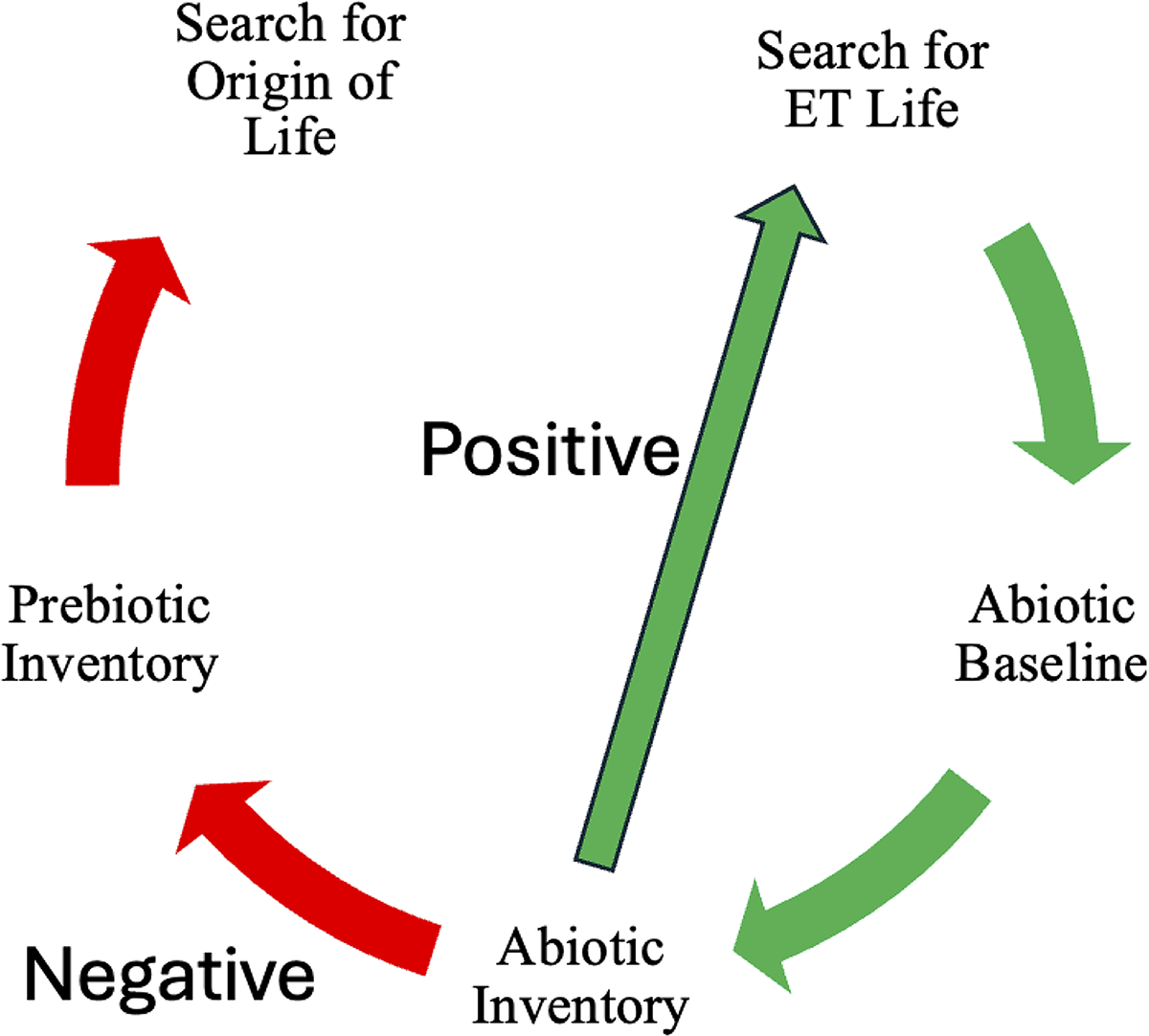
The philosophy of extraterrestrial (ET) life detection. Starting with the search for life, the most valid approach is to ensure that nonlife processes cannot account for any observations made. Those observations should initially be treated as abiotic until proven otherwise, that is, imposing a null hypothesis of “if I want to find life, I must assume there is no life and disprove that hypothesis” (Steele et al., 1999). If at that point there is no proof of life, the analysis should not stop; it should continue to search for prebiotic processes, such as the polymerization of amino acids. At this point, the analyses conducted on the red side of the circle contribute toward our understanding of how life’s building blocks can form on other solar system samples. Thus, both Viking and ALH 84001 revealed there are no wrong answers, only a pathway that leads from “Are we alone” to “How did we get here.”
As mentioned previously, the McKay team gathered several lines of evidence to develop their hypothesis. In comparison, at the time of ALH 84001, evidence for life on early Earth, that is, in the Apex chert, was dominated by a morphological argument, that is, these features look biogenic, or the Isua debate, where the presence of a reduced carbon phase with a negative carbon isotopic signature was enough to pronounce life at 3.8 Ga (Mojzsis et al., 1996; Schopf, 1993). I would argue that neither of the terrestrial observations was questioned to the extent that ALH 84001 was, even though they were accepted with far less analytical rigor. However, life detection in early Earth samples apparently does not follow the same line of reasoning as that applied to extraterrestrial samples. As Sagan so eloquently said, “ECREE,” but for early life on Earth, life at ∼4.1 or ∼3.8 or even ∼3.6 billion years ago is not subject to such a restriction, as life obviously started on Earth at some point (Sagan, 1979; Brasier et al., 2002; Fedo and Whitehouse, 2002). While it is not the subject of this article, I posit that it is a very interesting point to ponder, and I would go further by asking: Does the pool of evidence for life at these early points in Earth history stand the extraterrestrial life detection test? While the reader’s mind will instantly go to stromatolites, I would point out that the debate on the biogenicity of stromatolites is over a century old (Allwood et al., 2006; Awramik and Grey, 2005; Brasier et al., 2006; McLoughlin et al., 2008; Wacey, 2010).
The life in ALH 84001 debate was one of the most successful scientific debates of modern times. Due to the bravery, insight, perseverance, and discussions of the scientists involved, this debate led to the following:
Formation of the NASA Astrobiology Institute and associated programs that have designed, built, and tested technology for solar system exploration. A new and golden era of robotic exploration of Mars and a renewed understanding of where life may be within our own solar system. Philosophical and technological breakthroughs in our understanding of fundamental scientific questions that have inspired our species for millennia. Demonstration that the search is the most important thing; the answers gleaned may not be able to prove we are not alone, though they will lead to increasing our understanding of “where do we come from.” Development of a worldwide community and several generations of scientists and engineers galvanized by the still unresolved questions of life on Mars.
To date, the article has been cited 2466 times (Google Scholar, as of March 20, 2026) and has been the subject of countless PhD studentships, student debates, books, television documentaries, magazine and newspaper articles, and many a conversation both inside and outside of the scientific community. It is, without a doubt, one of the biggest ever attractors of students to planetary science and has changed many lives for the better, mine included.
Neither Dave McKay nor Gil Levin is with us anymore, but several of the original team who worked on Viking and ALH 84001 are. While my personal journey as a scientist has not always been met with understanding by those involved in the debate, I have always firmly believed that, without them, science and astrobiology would be in a very different place. Take all the points made above and imagine a world without McKay et al.’s (1996) article. A world where the disappointment of Viking led us not to return to the red planet. We owe them all a huge debt of gratitude, and this legacy should be celebrated. As scientists, we test hypotheses and are not always right, but if we can move the needle, even a little, for ourselves or others to make real breakthroughs, then that is an amazing contribution. If we can be shoulders for others to stand upon, we will have done a service to our species. It’s OK to pose a hypothesis and not be completely correct or to modify it in some way. That is the scientific method. The discovery of life on another planet will be profound, likely made by a large team of scientists working within a framework set by these debates. It will only come about through community acceptance of robust, reproducible measurements that have been critiqued by hundreds of scientists. Both the Viking and ALH 84001 teams laid the foundation for this future possibility, lifting our field to the heights we enjoy today. Therefore, I, for one, would like to say thank you to all of them. In my opinion, all of astrobiology owes them a debt of gratitude.
Footnotes
Authors’ Contributions
This paper is conceived and written by A.S. and represents his personal memories, work, thoughts and journey.
Acknowledgments
The author would like to thank far too many people to list for their help, kindness, expertise, time and patience in the journey represented in this article. I would also like to thank Scott Perl and Mary Beth Wilhelm for their invitation to write this and for their helpful, insightful, and supportive comments during the writing process. I would like to thank Wes Huntress for his helpful comments and insights. This article is dedicated to the memories of Gill Levin, Patricia Straat, and David McKay, and is a thank you to the Viking and ALH 84001 teams they led.
Associate Editor: Michael A. Meyer