







Abstract
Chief judges often strive to promote consensus in their courts to promote public confidence, durable precedents, and intracourt collegiality; yet, some chiefs succeed, whereas others fail. In this article, we identify institutional factors that facilitate and hinder the chief’s ability to promote consensus by examining dissent rates in every state court of last resort from 1995 to 2004. Consistent with prior work, we find that consensus is partially driven by the chief judge’s formal powers and the institutional resources available to court members. However, we also find that member resources moderate the chief’s influence. The chief’s formal powers are associated with lower dissent rates in courts that lack time, staff, docket control, and insulation from the electorate. In contrast, judges who possess greater resources are highly resistant to the chief’s influence. Our findings suggest a fundamental dynamic of political leadership that may operate across institutional contexts.
In 2001, Maura Corrigan was selected to serve as Chief Justice of the Michigan Supreme Court. At a press conference, Corrigan said the justices needed a leader who would “build consensus” and promised to “bring the fractured court together” (Durbin, 2001). But consensus proved elusive during her tenure. Over the next 4 years, at least one judge dissented in more than 60% of cases, making Michigan’s high court the least consensual in the country. Why did Corrigan fail to discourage dissent among her colleagues? Was her goal of building consensus simply unrealistic?
Whether realistic or not, her objective was not unusual. Institutional leaders often strive to unite members behind common goals: Legislative leaders try to enforce party discipline (Jenkins & Nokken, 2008), executives seek to control bureaucrats (Ferguson & Bowling, 2008), and chief judges try to “marshal” their courts (Murphy, 1964). Chief judges often value consensus because it promotes collegiality (Seitz, 1991), insulates precedents (Spriggs & Hansford, 2001), and enhances public confidence (Beveridge, 1919; Murphy, 1964; Pritchett, 1954; Sheldon, 1999; cf. Gibson, Caldeira, & Spence, 2005). In contrast, dissents impose costs on other judges who may need to rebut the dissenter’s criticisms (Epstein, Landes, & Posner, 2013). In short, “too much dissension weakens precedent, confuses the law, encourages further appeals, and leads to dissatisfaction among the justices” (Sheldon, 1999, p. 115). Because chief judges are especially attuned to these institutional concerns (Boyea & Farrar-Meyers, 2011; Langer, McMullen, Ray, & Stratton, 2003), they usually strive to promote consensus among their colleagues (e.g., Brumback, 2013; Cross & Lindquist, 2006; Davis, 1999; Stafford, 2014). But some chiefs succeed, whereas others fail.
Although chiefs usually value consensus, other judges often do not. Consensus inherently stifles individual expression. As Justice Stevens argues, “[t]here is a duty to explain your position if it isn’t the same as the majority . . . and it’s just part of my thinking about what a judge should do” (Liptak, 2010a). Judges may also prefer to write dissents in the hopes that a future court will adopt their views (Epstein et al., 2013). Finally, consensual opinions often include more ambiguous language, as judges bargain over opinion content and accommodate each others’ suggestions (Liptak, 2010b; Maltzman, Spriggs, & Wahlbeck, 2000; Owens & Wedeking, 2011). Consequently, individual judges often resist the chief’s attempts to build consensus.
In this study, we leverage the institutional variation across every state supreme court over the course of a decade to identify factors that facilitate and inhibit consensus among judges. 1 Consistent with prior research, we find that dissent rates are lower in courts in which the chief possesses more formal powers (Brace & Hall, 1990; M. G. Hall & Brace, 1989) and the members enjoy fewer institutional resources (staff, pay, docket control, time, and insulation from electoral pressure; Boyea & Farrar-Meyers, 2011; M. G. Hall, 1985). However, unlike prior studies, we find that member resources primarily encourage dissent by undermining the chief’s powers (cf. Boyea & Farrar-Meyers, 2011); that is, the chief’s powers tend to be less effective on resource-rich courts.
Our findings suggest a general principle of institutional leadership: A leader’s ability to influence member behavior depends on the interaction between the leader’s formal powers and the resources available to members. Formal powers obviously enhance a leader’s influence, and member resources facilitate independent action. But member resources also moderate the effectiveness of a leader’s powers. These findings complement related work on executives and legislators that find similar institutional patterns (Martin & Wolbrecht, 2000; Skowronek, 1997). In what follows, we develop a conditional theory of chief judge influence. We then test whether the resources available to court members moderate the relationship between the chief’s formal powers and dissent.
Institutional Determinants of Consensus
Two types of institutional factors facilitate and inhibit dissent in collegial courts: the court members’ institutional resources and the chief judge’s formal powers.
Member Resources
Judges who enjoy greater institutional resources, such as time, staff, pay, and docket control, tend to dissent more frequently (Boyea & Farrar-Meyers, 2011). Small caseloads and staff support make it easier for judges to research and draft dissenting opinions (Corley, Steigerwalt, & Ward, 2013; Epstein, Segal, & Spaeth, 2001; cf. Glick & Pruet, 1986), and higher salaries attract more qualified judges with the interest and expertise necessary to express contrasting views (Averill, 1995; Rottman, Raftery, & Smith, 2007). Judges who control their own dockets also tend to dissent more because they avoid cases of “relatively minor legal significance” (Stern, Gressman, & Shapiro, 1985, p. 189). In contrast, judges who lack docket control must hear more “easy” cases, in which judges can easily agree on the “correct” legal outcome, irrespective of their policy preferences (Corley et al., 2013; M. G. Hall, 1985; Halpern & Vines, 1977; Hendershot, Hurwitz, Lanier, & Pacelle, 2013; Lanier, 2003; Pacelle, 1991; Pritchett, 1941; Ulmer, 1986).
Perhaps a court’s most important resource is its insulation from electoral pressure. Six states elect judges to their high courts through partisan elections, 15 hold nonpartisan elections, and 17 appoint members initially and then hold retention elections to remain on the court. 2 The remaining 12 states use some form of appointment, with a mandatory retirement age or reappointment after varying term lengths (American Judicature Society, 2013). 3 Prior research suggests that electoral pressure encourages state supreme court judges to dissent more frequently. 4 First, “selection and retention procedures that entail greater risk, such as elections, will serve to recruit more risk-acceptant judges” (Brace & Hall, 1990, p. 60). Whereas risk-averse decision makers tend to engage in consensual behavior (Cox & Tutt, 1984; Weingast, 1979), risk-takers prefer competitive bargaining that yields smaller coalitions (Riker & Ordeshook, 1973). Second, elections produce courts with more heterogeneous members who are responsive to a variety of perceived constituency appeals, and this heterogeneity encourages dissent (Canon & Jaros, 1970). Finally, elections “continually reactivate and reinforce partisan attachments that would otherwise become less important in the daily work of justices”; even nonpartisan elections may “reinforce existing divisions on the court” (Leonard & Ross, 2014, p. 8). Consequently, dissent rates tend to be higher in courts with judicial elections, especially contestable elections.
The Chief’s Powers
Chief judges also influence consensus in state supreme courts. Some chiefs may possess personal qualities that make them better social leaders (Caldeira & Zorn, 1998; Danelski, 1961), but quantifying a chief’s persuasive skills, strategic acumen, and personal charm is a daunting—perhaps impossible—task. 5 Therefore, we focus on institutional powers that help chiefs discourage dissent. Consistent with prior research, we expect consensus to be more common in courts in which the chief possesses more formal powers. However, we argue that member resources impair the chief’s formal powers; that is, in addition to directly encouraging dissent, member resources undermine the mechanisms chiefs use to promote consensus.
First, chiefs who assign the majority opinion author can promote consensus by using that power to “reward the loyal and punish the recalcitrant” (M. G. Hall & Brace, 1989, p. 397). But the assignment power should be less efficacious on resource-rich courts. For example, the assignment power is influential in part because judges prefer to avoid spending time on uninteresting cases. Therefore, in courts that lack docket control, the chief can punish recalcitrant judges with undesirable assignments on one of the “easy” cases and reward team players with assignments on the few important cases. In contrast, courts with docket control can avoid hearing “easy” cases in the first place. Therefore, the chief’s assignment power should be less compelling on courts with docket control because there are fewer undesirable opinion assignments to use as punishments.
The assignment power also holds sway because majority opinion authors may enjoy disproportionate influence over opinion content (Bonneau, Hammond, Maltzman, & Wahlbeck, 2007). Consequently, judges value majority opinion assignments because assignments enhance their policy influence. However, judges with smaller caseloads and larger staffs have more time to bargain over opinion content, and “[b]argaining of this nature is just as common on state collegial courts as it is at the national level” (Carp & Stidham, 2013, 349; see also Glick, 1971). As a result of this bargaining process, the legal rule announced by the court tends to be controlled by the median judge in the majority coalition rather than the opinion author (Carrubba, Friedman, Martin, & Vanberg, 2012; Clark & Lauderdale, 2010). In other words, when judges have more time to bargain, the majority opinion author has less control over its content. Therefore, the assignment power should be less influential on courts with smaller caseloads and larger staffs because opinion assignments are less valuable in these courts.
The assignment power is also influential because some judges prefer to write certain majority opinions (and avoid writing other majority opinions) to protect their public image. State supreme court judges who must stand for reelection are particularly responsive to popular pressure (Brace & Boyea, 2008), especially those who run in contestable elections (M. G. Hall, 2014). Judges who need not face the voters tend to be less concerned with popular preferences; therefore, they should care less about writing popular opinions or avoiding authorship of unpopular opinions. Accordingly, a critical component of the chief’s ability to reward and punish judges through opinion assignments is diminished in courts in which the judges face less electoral pressure.
Therefore, we expect member resources (docket control, time, staff, and electoral insulation) to undermine the chief’s use of opinion assignments to promote consensus.
Second, some chief judges enjoy enhanced influence due to the means by which they attained their position. Some state supreme courts select a chief through a somewhat arbitrary process, such as time served in the court, time remaining on the court, or rotation. These chiefs cannot claim special authority by virtue of their status. For example, Sheldon (1999) found that chiefs in the Washington State Supreme Court played little role in encouraging agreement due to “short tenure automatically rotated among senior members every two years” (p. 127). In contrast, many chief judges attain their position through deliberate mechanisms, such as popular election or appointment by the governor, legislature, or a special commission. Other chiefs are selected by their fellow judges. Chiefs who are selected through these nonarbitrary mechanisms should enjoy greater respect and authority among their peers, and, consequently, possess greater ability to promote consensus.
However, highly professionalized courts (those with more docket control, higher pay, and larger staffs) may attract judges with more legal expertise and professional accomplishments. These judges should be less willing to defer to the chief’s authority because they have greater confidence in their own knowledge and judgment. Consequently, chiefs of highly professionalized courts may have difficulty using their authority to discourage dissent (Averill, 1995; Rottman et al., 2007). Therefore, we also expect a court’s professionalism to inhibit the chief’s leadership by virtue of selection. (We have no theoretical reason to expect either time resources or electoral insulation to condition the chief’s influence by virtue of selection.)
Although our theory is deeply rooted in the extant literature, no prior study has suggested that member resources inhibit the chief judge’s capacity to promote consensus. A long series of articles by Paul Brace, Melinda Gann Hall, and their coauthors demonstrate two important points: (a) The chief’s formal powers, member resources, and other individual and contextual factors influence consensus (Brace & Hall, 1990, 1993; M. G. Hall, 1985; M. G. Hall & Brace, 1989) and (b) member resources (e.g., selection system, seniority rules, and term length) moderate the influence of other political factors (e.g., two-party competition, judge seniority, and party affiliation) on consensus (Brace & Boyea, 2008; Brace & Hall, 1993, 1995, 1997; Brace, Hall, & Langer, 2001). In contrast, we argue that member resources moderate the influence of the chief’s formal powers.
To our knowledge, only one study has posited an interaction between a chief’s formal powers and member resources. Boyea and Farrar-Meyers (2011) argue that member resources enhance a chief’s influence in election law cases because judges of resource-rich courts have more to lose and, consequently, fear retaliation from legislators. However, both their theory and empirical analysis are limited to election law cases because the threat of retaliation is supposedly stronger in this small case category.
Data and Analysis
Can powerful chief judges effectively discourage dissent? And, if so, what factors condition their influence? These questions have important implications for intracourt collegiality, judicial decision making, and the broader study of institutional leadership, yet their answers remain elusive. Previous studies of consensus have been hampered by two significant methodological limitations. Studies of the U.S. Supreme Court are intrinsically limited to time-series analysis. Consensus was prevalent in the High Court until the early 20th century and then abruptly vanished; consequently, these studies primarily focus on the timing of this single shift in behavior (e.g., Caldeira & Zorn, 1998; Haynie, 1992; Walker, Epstein, & Dixon, 1988). Studies of individual state supreme courts suffer from similar problems (e.g., Sheldon, 1999). In contrast, studies of multiple state supreme courts have the advantage of exploiting cross-sectional variation; however, until recently, time-series data on state supreme courts were unavailable. Consequently, these studies have been limited to a few years (Boyea & Farrar-Meyers, 2011; Brace & Hall, 1990, 1993; M. G. Hall, 1987; M. G. Hall & Brace, 1989). In addition, many of these studies focus on a single issue area or a small number of states (e.g., Leonard & Ross, 2014).
To overcome these limitations, we utilize M. E. Hall and Windett’s (2013) new data set on every decision in all 52 state supreme courts from 1995 to 2004. 6 The Hall and Windett data include valid and reliable measures of dissent behavior across every state in all issue areas over a decade. Accordingly, these data are ideal for studying the effects of institutional variation across state supreme courts on consensus building. For our dependent variable, we calculate the annual percentage of total cases in which at least one dissent was filed (% of cases with dissent). 7 This measure is particularly appropriate for our analysis because it emphasizes the distinction between unanimous and nonunanimous decisions, and several consequences of consensus are specific to unanimous decisions. 8 We test our conditional leadership theory by using several independent variables drawn from state court websites and the Hall (1990) data set, which has been updated by Hughes, Wilhelm, and Vining (2015). 9
First, we test whether consensus in state supreme courts is driven by the chief judge’s formal powers. We follow previous studies of consensus in state supreme courts by focusing on institutional structures that may facilitate the chief’s influence (e.g., Brace & Hall, 1990). Specifically, we test whether chiefs who enjoy special power over opinion assignments and greater authority by virtue of selection are better able to promote consensus in their courts. To do so, we include a dichotomous indicator coded 1 if the chief has special ability to assign the majority opinion author 10 and 0 otherwise (chief assignment). We also include a dichotomous indicator coded 1 if the chief is selected through a deliberate process (i.e., selected by popular election, an external political body, or the court itself) and 0 if the chief is selected through an arbitrary process (i.e., rotation or seniority; chief selection). 11 We expect both of these indicators to be negatively associated with dissent rates, indicating that dissent rates tend to be lower in these courts.
Second, we include several measures to test the influence of member resources on judicial consensus. We assess the influence of court professionalism with Squire’s (2008) index, which includes indicators of staff, pay, and docket control based on the Court Statistics Project’s listing of mandatory and discretionary cases. We expect that more professionalized courts tend to have higher dissent rates. We also include a measure of the judges’ caseload, which is the total number of cases argued in each year divided by the total number of judges on the bench. 12 We expect judges confronted with larger caseloads to have less time to write separate dissents. Accordingly, we expect to find a negative relationship between caseload and dissent. We also test the influence of electoral pressure by including indicators of judicial retention mechanism. Utilizing data from the American Judicature Society (2013), we create indicator variables for states with retention elections and no elections. The excluded category is states with any form of contestable judicial election (i.e., either partisan or nonpartisan). 13 We expect dissent rates to be somewhat lower in courts that are partially insulated from electoral pressure (i.e., courts with retention elections) and much lower in courts that are completely insulated from electoral pressure (i.e., courts with no elections).
Our conditional leadership theory suggests that member resources moderate the chief’s influence on consensus. Accordingly, we expect the association between the chief’s powers and dissent rates to be stronger in courts with fewer resources. We use several interaction terms to test our theory. First, we interact chief assignment with professionalism, caseload, and both election indicators. We expect the benefits of professionalism, the time associated with small caseloads, and insulation from electoral pressures to inhibit the influence of the chief’s power to assign opinions. Therefore, the effect of the chief’s assignment power should be smaller on courts with high professionalism, small caseloads, and electoral insulation. Second, we include an interaction term between chief selection and professionalism. We expect judges in more professionalized courts to be less susceptible to the chief’s authority by virtue of selection. Therefore, the chief’s influence by virtue of selection should be smaller on courts with high professionalism.
We also control for other factors that likely influence dissent rates. First, dissension should be at least partially motivated by disagreements among the judges: Judges who genuinely disagree should be more likely to voice that disagreement by dissenting (Hurwitz & Lanier, 2004; Maltzman et al., 2000). Consistent with this expectation, previous studies have found that increased ideological dispersion is associated with higher dissent rates in both the U.S. Supreme Court (Hendershot et al., 2013) and state supreme courts (Boyea & Farrar-Meyers, 2011). Similarly, several scholars suggest that highly consensual decisions are the product of ideologically homogeneous courts at both the state and federal level (Dubois, 1988; Goff, 2005; Songer, 1982; cf. Edelman, Klein, & Lindquist, 2012).
We use party-adjusted judge ideology (PAJID) scores to measure policy disagreement in the court. PAJID scores are valid and reliable measures of judicial preferences based on the partisan affiliation of the judge and the elite or citizen ideology of the state at the time of the judge’s ascension, depending on the state’s judicial selection method (Brace, Langer, & Hall, 2000). Most importantly for our purposes, PAJID scores provide comparable measures of judicial preferences across states and over time. We measure ideological spread by taking the absolute difference in PAJID scores between the most and least liberal judge in each court in each year. We expect ideological spread to be positively associated with dissension.
Next, we control for the level of electoral competition in each state. Although some early studies used generic measures of state partisan competition, more sophisticated models focus on electoral vulnerability that is specific to the judges (M. G. Hall, 2014). If electoral pressure encourages dissent, the effect may be particularly strong in states that experience competitive judicial elections. Using data from the Judicial Elections Data Initiative, we calculate the average victory margin in each state for judges who won in the most recent election. Following previous studies (M. G. Hall, 2014), we code courts with an average victory margin of less than 10% as having a competitive environment (all courts with retention elections and no elections are coded 0). 14 We expect competitive electoral environments to be associated with higher dissent rates.
Finally, we control for the number of judges in each court. State supreme courts have either five, seven, or nine members, and a dissent from at least one judge should be more likely to occur in larger courts (Glick & Pruet, 1986; cf. M. G. Hall & Brace, 1989). Therefore, we include dichotomous indicator variables for courts with seven judges and states with nine judges. The excluded category is courts with five judges.
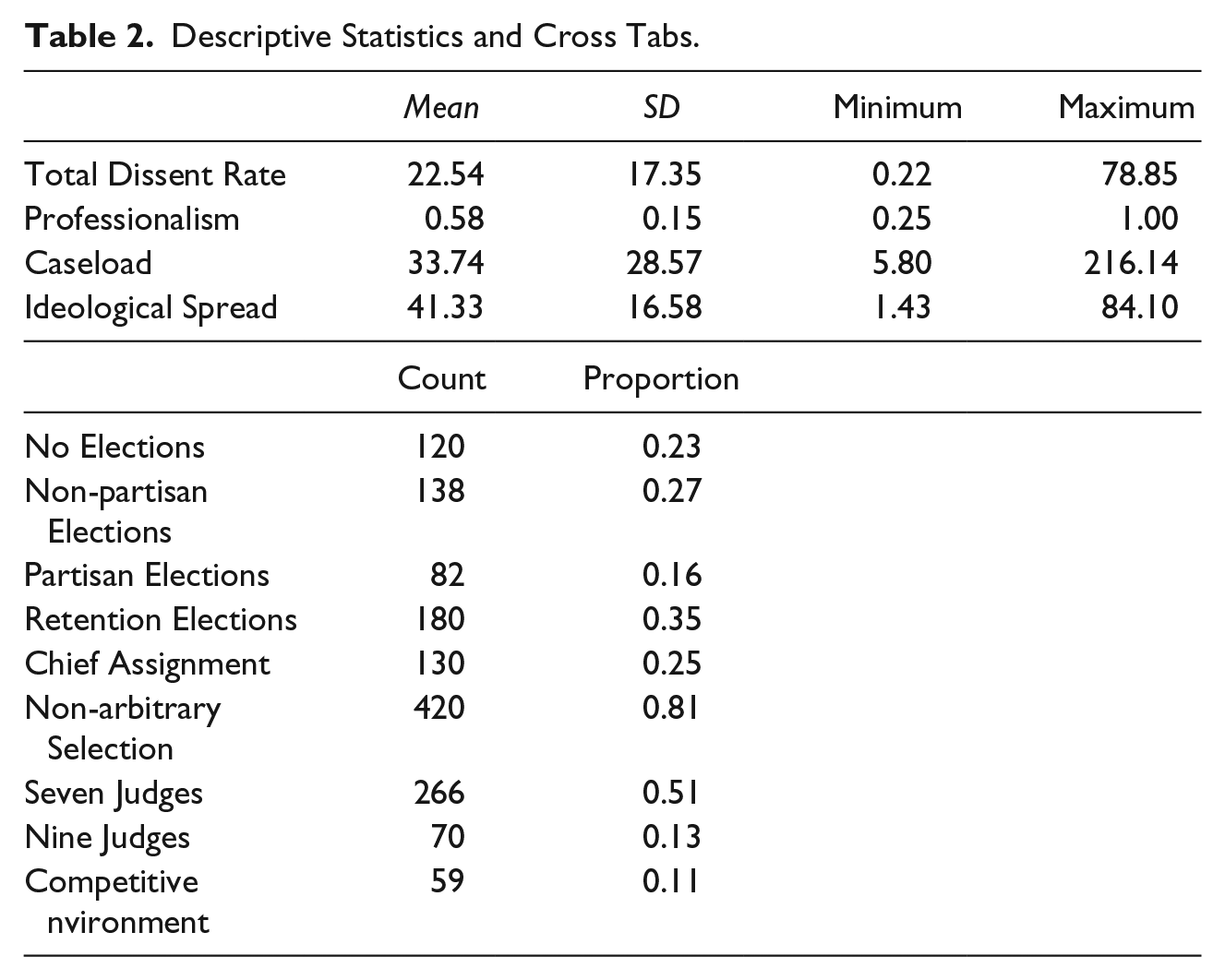
Table 1 presents the operationalization and source for each variable. Table 2 reports the mean, standard deviation, minimum, and maximum for each of our continuous variables, as well as the count and proportion of cases in each group for categorical variables. Figure 1 shows the distribution of our dependent variable the annual dissent rate. Figure 2 reports the percentage of all cases over time that are unanimous or have one, two, three, or four dissents. In the supporting information, we present additional details and descriptive statistics for all variables, as well as cross tabs for our key variables.
Variable Descriptions.
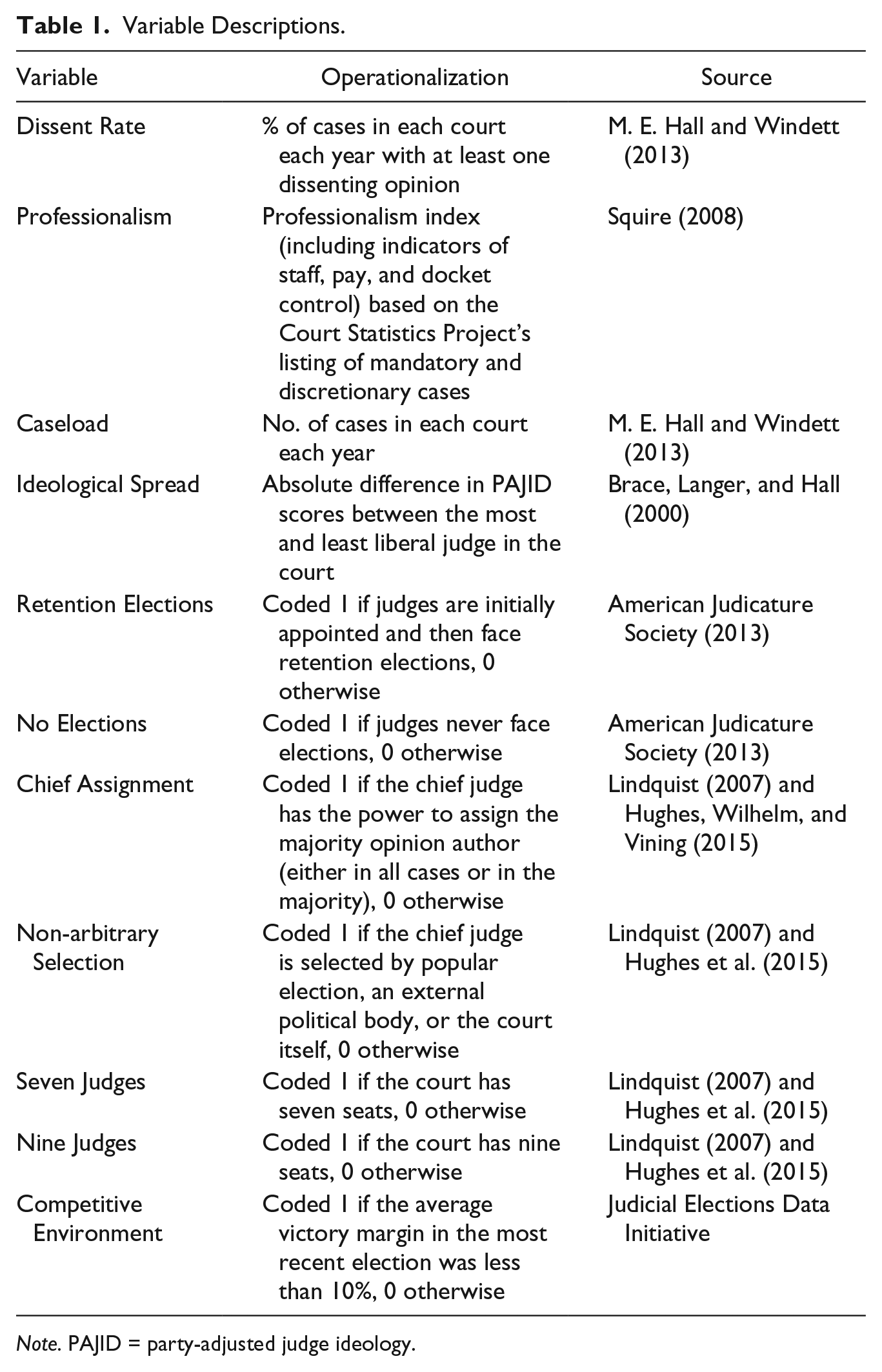
Note. PAJID = party-adjusted judge ideology.
Descriptive Statistics and Cross Tabs.
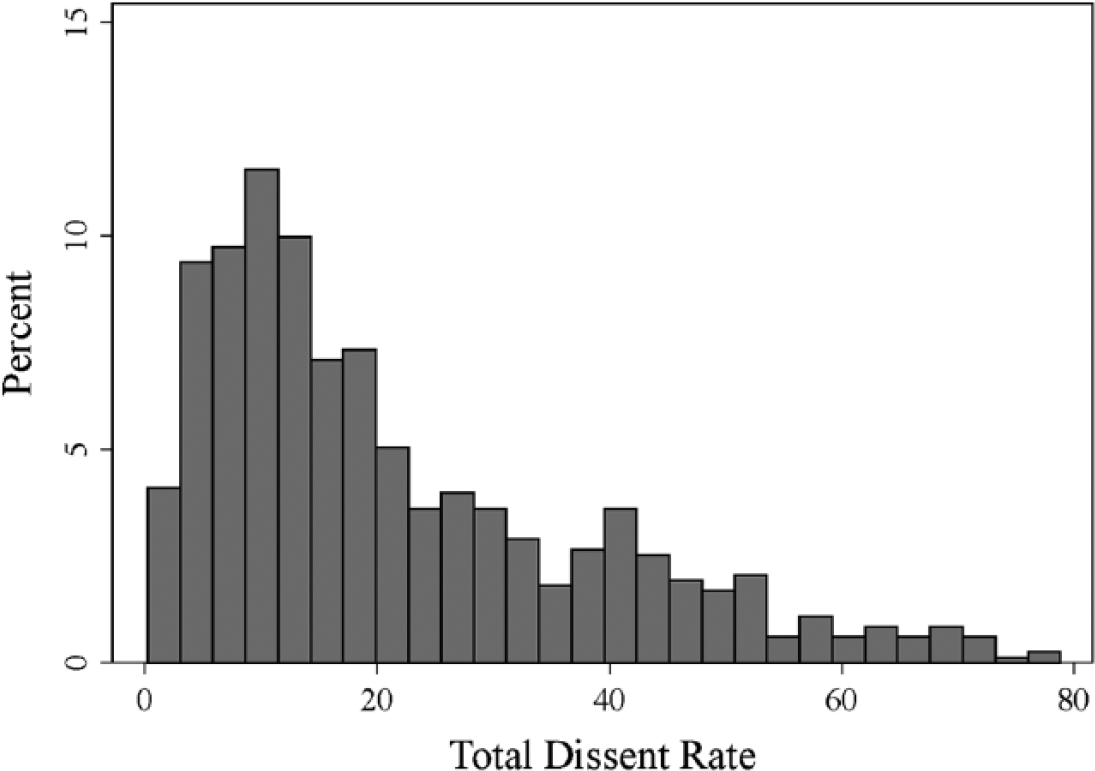
Distribution of dissent rate.
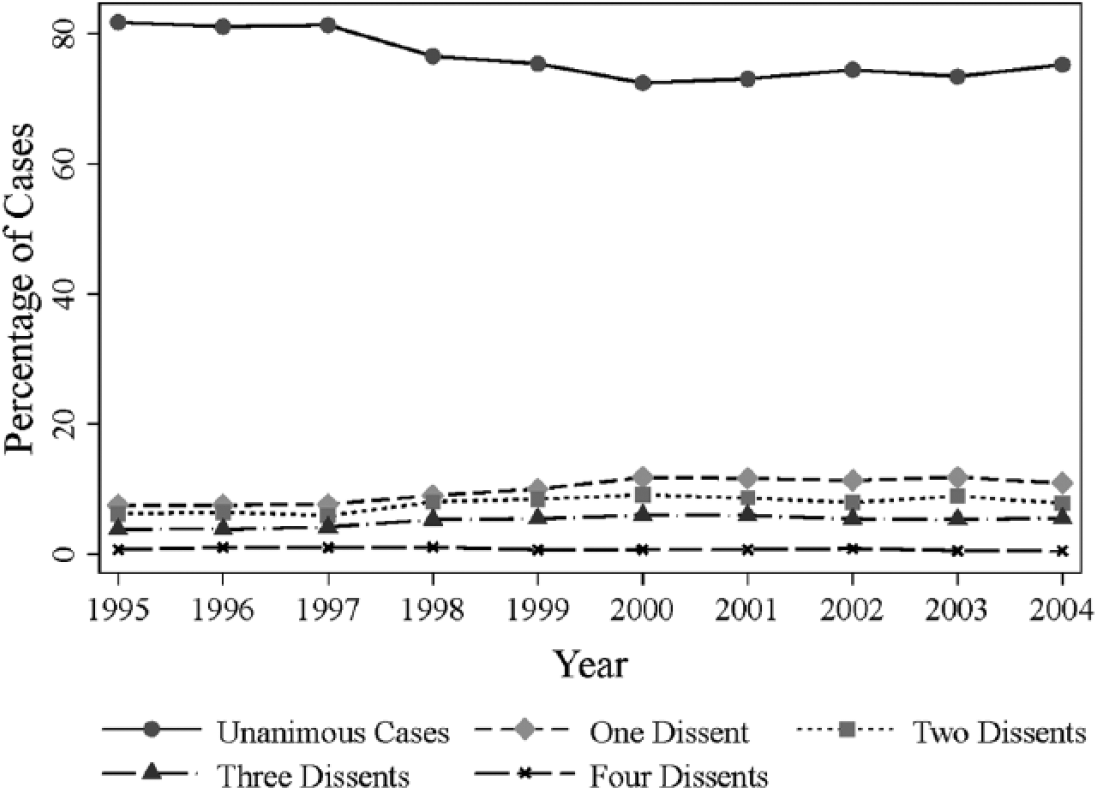
Cumulative percentage of dissents over time.
Prior studies suggest several other hypotheses regarding consensus building in state supreme courts. Boyea and Farrar-Meyers (2011) find that chiefs with more leadership experience tend to discourage dissent in election law cases, and Steigerwalt et al. (2008) argue that chiefs enjoy a “honeymoon” effect as judges refrain from dissenting in the chief’s first term. M. G. Hall and Brace (1989) argue that chiefs are more likely to promote consensus when they enjoy a privileged position in the conference discussion or voting order, and Brace and Hall (1990) argue that judges are more likely to dissent in judicial systems with intermediate appellate courts. Although these hypotheses are tangential to our theory, we test each of them in the supporting information. We find no evidence to support any of these theories, and all of our findings are robust to these controls. We have also tested the effect of ideological distance between the chief and the median judge, as well interactions between that distance and our variables for the chief’s powers. We find no effects on the dissent rate, and our results are robust to controlling for those variables.
Because our analyses use time-series–cross-sectional data, we account for both temporal and unit effects that may cause our estimates to be biased, inefficient, or both. A Fisher-type Augmented Dickey-Fuller test indicates that we can reject the null hypothesis that our dependent variable has a unit root; therefore, we need not account for nonstationarity in the data. 15 However, the Woolridge (2002) test indicates that we can reject the null hypothesis that there is no serial autocorrelation in our models. To account for this serial autocorrelation, we use a Prais–Winsten estimation technique with panel-corrected standard errors. This modeling technique accounts for both the serial autocorrelation and contemporaneous correlation in our error terms. 16
Results
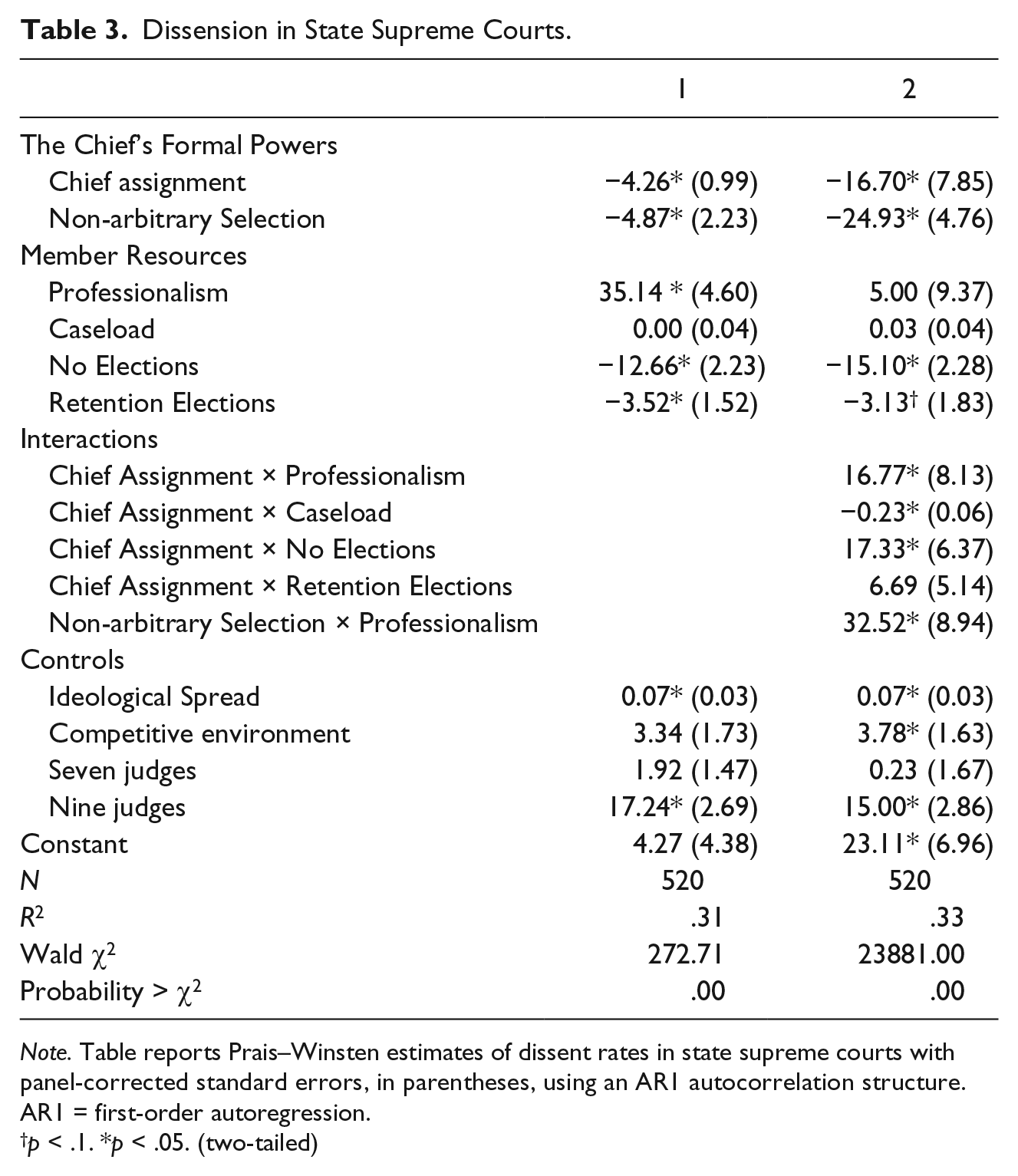
Table 3 reports the results of our Prais–Winsten estimates. Model 1 includes all of the covariates except the interaction terms. The results of this model generally confirm our expectations drawn from the extant literature: Member resources and the chief judge’s formal powers are both associated with dissent behavior in state supreme courts.
Dissension in State Supreme Courts.
Note. Table reports Prais–Winsten estimates of dissent rates in state supreme courts with panel-corrected standard errors, in parentheses, using an AR1 autocorrelation structure. AR1 = first-order autoregression.
p < .1. *p < .05. (two-tailed)
First, member resources are strongly associated with dissent. Court professionalism is associated with higher dissent rates, suggesting that judges are more likely to dissent when they enjoy more staff, pay, and/or docket control (p = .00). In addition, courts that lack judicial elections have significantly lower dissent rates than courts in which judges face contestable elections (p = .00) or retention elections (p = .00); predicted dissent rates are also significantly higher in states with contestable elections than in states with retention elections (p = .02). Contrary to our expectations, the dissent rate is not directly associated with caseload.
Dissent rates also tend to be lower in courts in which the chief judge possesses more formal powers. The relationship between chief assignment and dissent rates is negative and statistically significant. This relationship is also substantively large. Holding all other variables at their means, the predicted dissent rate in courts without chief assignment is 23.3%. 17 When the chief enjoys special assignment power, the dissent rate tends to be 4.3 percentage points lower, an 18% decline (p = .00). The dissent rate is also significantly lower in courts in which the chief is selected through a nonarbitrary process (i.e., popularly elected, appointed by an external body, or selected by the judges themselves). Courts with arbitrary selection of the chief have a predicted dissent rate of 26.0%; in courts with nonarbitrary selection, the predicted dissent rate is 6.1 percentage points lower, a 23% decline (p = .01). These findings suggest that chiefs are able to use their opinion assignment power and authority by virtue of selection to discourage dissent. 18
Were we to end our analysis here, we might conclude, consistent with previous research, that the chief’s powers, professionalism, and electoral pressure (but not caseload) tend to influence consensus in state supreme courts. However, a closer examination of the data reveals a more complicated pattern. Model 2 in Table 3 tests our conditional theory by including interactions between the chief’s powers and member resources. The coefficients for all of these interaction terms are signed in the expected directions, and all but one (Chief assignment × Retention elections) are statistically significant. Because the interpretation of interaction terms is rarely intuitive, we use figures to illustrate these conditional relationships (see Brambor, Clark, & Golder, 2006).
First, we interact chief assignment with professionalism. Figure 3 illustrates the moderating effect of professionalism on the chief’s assignment power. We hypothesized that the assignment power would be less effective at discouraging dissent in more professionalized courts. Consistent with that expectation, in courts with low professionalism (MProfessionalism − 1 SD), the chief’s assignment power is associated with an 11-percentage-point decline in the dissent rate (p = .00); however, in courts with high professionalism (MProfessionalism + 1 SD), chief assignment is associated with only a 6-percentage-point decline in dissent rates (p = .01). 19 These results suggest that professionalism inhibits the influence of the chief’s assignment power.
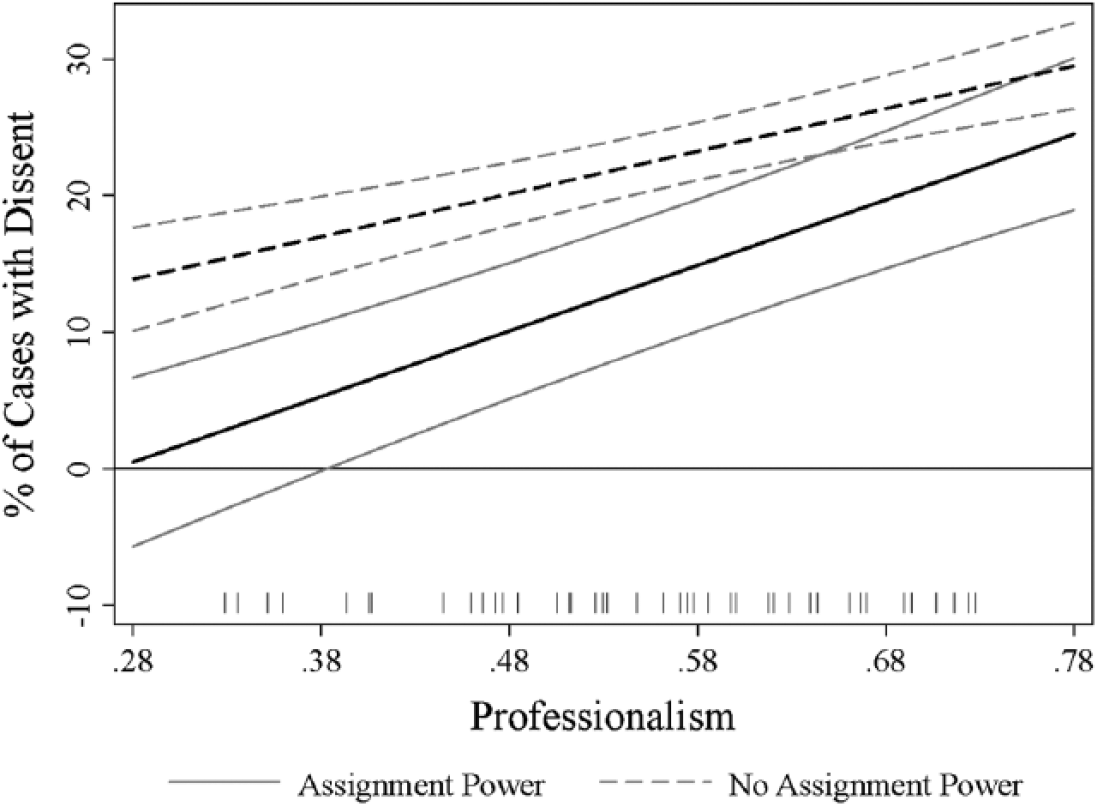
The moderating effect of professionalism on chief judge assignment.
Second, we interact chief assignment with caseload. Figure 4 illustrates the moderating effect of caseload on the chief’s assignment power. We hypothesized that the assignment power would be less effective at discouraging dissent in courts with smaller caseloads. Consistent with that expectation, in courts with large caseloads (the 90th percentile 20 ), the chief’s assignment power is associated with a 13-percentage-point decline in the dissent rate (p = .00); however, in courts with small caseloads (the 10th percentile), chief assignment is associated with only a 4-percentage-point decline in dissent rates, and that effect is not statistically significant (p = .12). 21 These results suggest that small caseloads also inhibit the chief’s assignment power.

The moderating effect of caseload on chief judge assignment.
Next, we interact chief assignment with the indicators for judicial retention mechanisms. Figure 5 illustrates the moderating effect of electoral insulation on the chief’s assignment power. Figure 5a presents predicted dissent rates across courts with different retention mechanisms and varying chief assignment powers. Figure 5b presents conditional marginal effects of chief assignment on dissent rates across courts with different retention mechanisms.
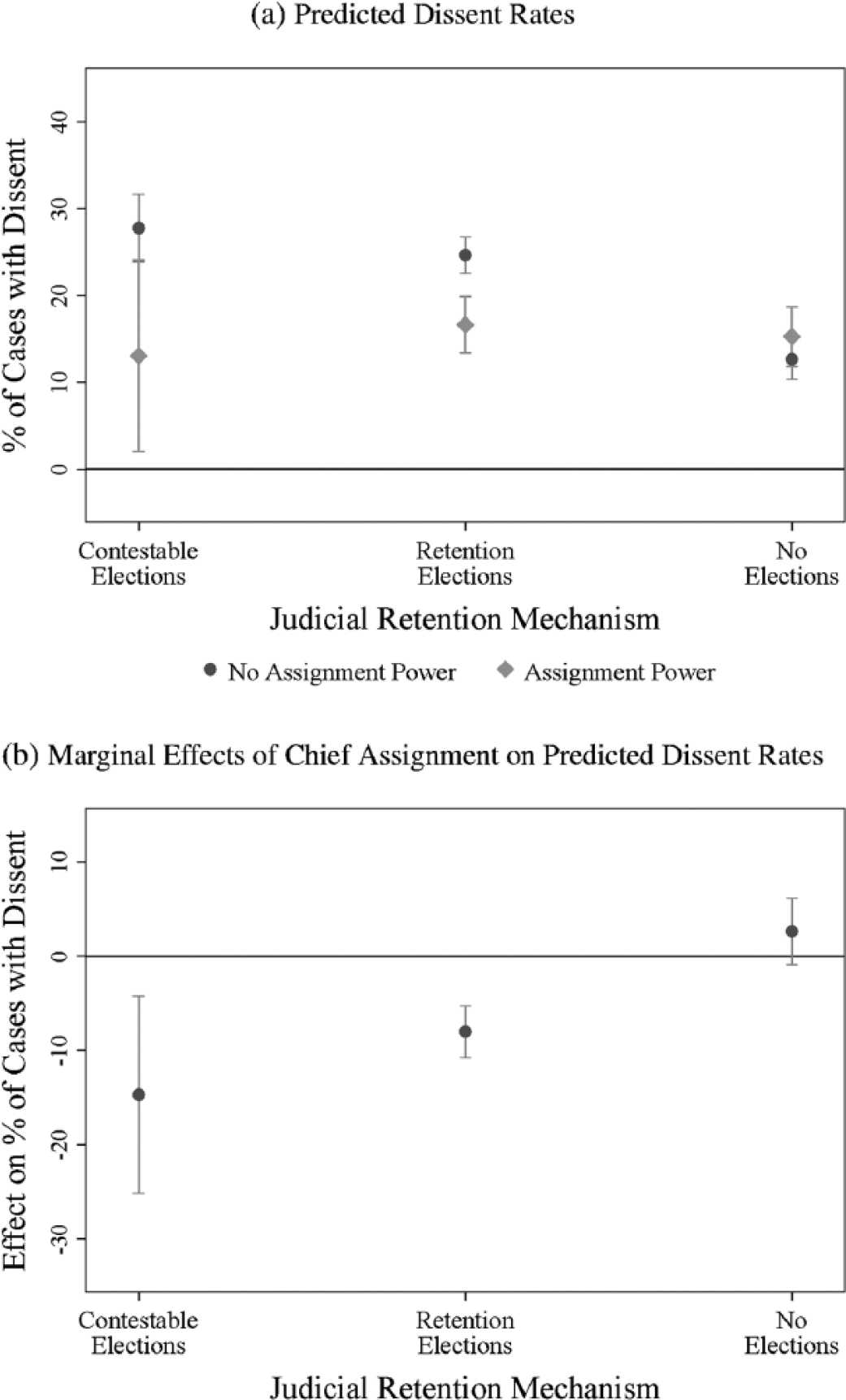
The moderating effect of electoral insulation on chief judge assignment.
In general, we expect dissent rates to be lower in courts that lack judicial elections because judges in these courts do not face electoral pressures that prompt dissension. We also hypothesized that the chief’s assignment power is less effective at discouraging dissent in these courts because the justices are less concerned about their public image. Consistent with these expectations, the dissent rate is relatively low (less than 16%) in courts with no form of judicial elections (see Figure 5a). Also as expected, the chief’s assignment power does not discourage dissent in these courts. In courts that lack any form of popular elections, the effect of chief assignment is statistically indistinguishable from 0 and signed in the wrong direction. In other words, the assignment power holds little sway over judges who are insulated from electoral pressures.
The dissent rate tends to be higher in courts if the judges face electoral pressures and the chief lacks assignment powers (27.7% in courts with contestable elections, and 24.6% in courts with retention elections). But in these courts, the assignment power is negatively associated with dissent rates. In courts with contestable elections, chief assignment is associated with a 15-percentage-point decline in dissent rates (from 27.7% to 13.0%; p = .01). In courts with retention elections, chief assignment is associated with an 8-percentage-point decline in dissent (from 24.6% to 16.6%; p = .00). 22 In other words, dissent rates are higher in courts with electoral pressure but only if the chief does not control opinion assignments. These results suggest that insulation from electoral pressure inhibits the chief’s ability to discourage dissent through opinion assignments.
Finally, we interact chief selection with professionalism. Figure 6 illustrates the moderating effect of professionalism on the chief’s selection method. We hypothesized that the chief’s authority by virtue of selection would be less effective at discouraging dissent in more professionalized courts. Consistent with that expectation, in courts with low professionalism (MProfessionalism − 1 SD), the chief’s assignment power is associated with an 11-percentage-point decline in the dissent rate (p = .00). However, in courts with high professionalism (MProfessionalism + 1 SD), chief assignment is associated with only a 1-percentage-point decline in dissent rates, and that effect is not statistically significant (p = .67). These results suggest that professionalism also inhibits the chief’s ability to use his or her authority by virtue of selection to discourage dissent.
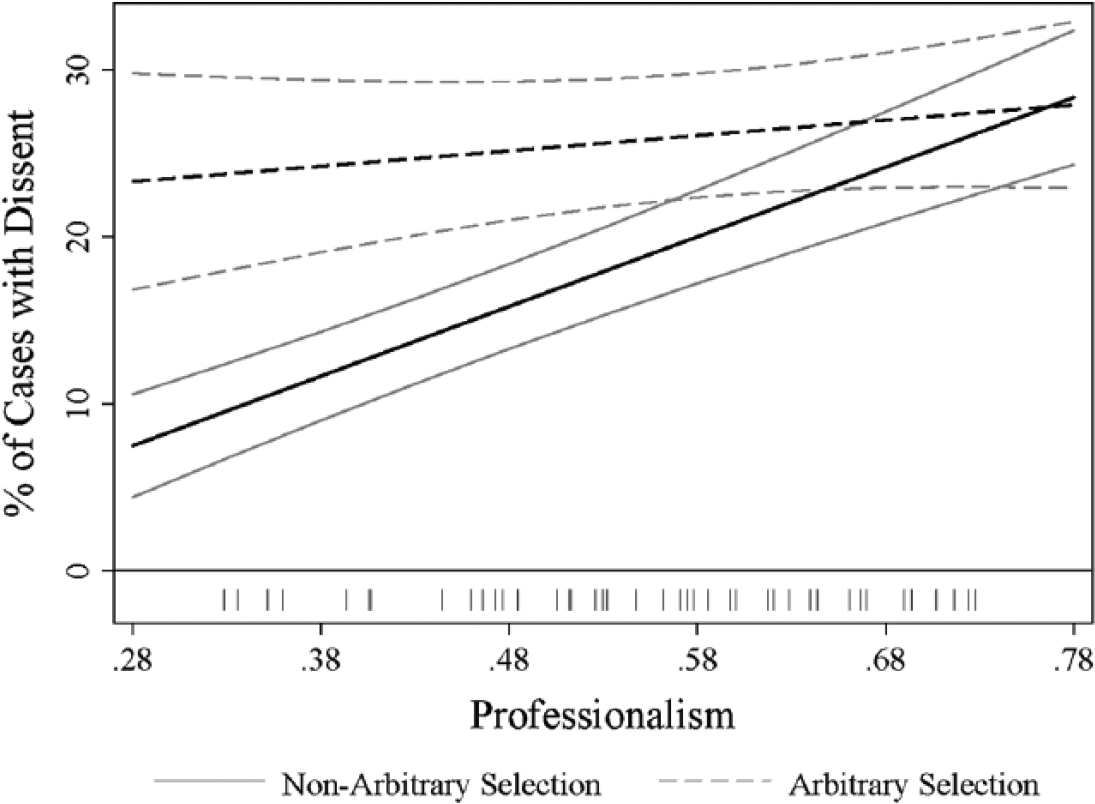
The moderating effect of professionalism on chief judge selection.
The other predictors of consensus generally perform as expected in Models 1 and 2. Ideological spread is positively associated with dissension, indicating that dissent rates tend to be higher in courts with greater ideological disagreement. The presence of a competitive electoral environment is also associated with higher dissent rates, suggesting that the judges respond to their specific electoral context. 23 Finally, the presence of at least one dissenting opinion tends to be more likely in courts with nine judges; however, dissent rates are statistically indistinguishable in courts with seven versus five judges.
Taken together, these results lend strong support to our conditional leadership theory: Member resources appear to moderate the chief judge’s influence on judicial consensus. The chief’s assignment power is associated with lower-than-expected dissent rates in courts with low professionalism, large caseloads, and electoral pressure. In contrast, we find little or no association between the assignment power and dissent rates in courts with high professionalism, small caseloads, and insulation from the electorate. Furthermore, the chief’s authority by virtue of selection is only associated with lower dissent rates in courts with low professionalism. Thus, member resources appear to inhibit the chief’s influence. This finding offers an important and novel contribution to the literature on consensus building in collegial courts.
Our results also challenge conventional wisdom in the judicial consensus literature. Some previous studies conclude that member resources, such as court professionalism, directly shape consensus by enhancing the ability of individual judges to file dissents (e.g., Boyea & Farrar-Meyers, 2011; cf. Leonard & Ross, 2014). Yet we find little evidence that institutional resources directly affect dissent rates. For example, in courts with no chief assignment power and arbitrary chief selection, court professionalism is not associated with higher dissent rates (p = .59). 24 In addition, when the chief lacks assignment power, smaller caseloads are not associated with higher dissent rates (p = .40). Caseload is only associated with dissension when the chief controls assignments (p = .00). In sum, our findings suggest a new mechanism through which resources might shape consensus (i.e., inhibiting the chief’s influence), but they also cast serious doubt on the commonly held view that these member resources directly facilitate dissent.
Discussion and Conclusion
For decades, scholars have debated about the factors that drive judicial consensus. A court’s propensity to engage in consensual decision making may have substantial ramifications for the durability of its precedents, the clarity of its opinions, and the legitimacy of the court itself. Consensus building might also have serious consequences for the judges, such as their freedom to express distinct views, their relationships with other judges, and their own personal legacies. In short, consensus building is intricately related to numerous aspects of judicial behavior, including decision making, opinion writing, intracourt bargaining, legal development, and legitimacy. Yet despite the importance of this phenomenon, the forces that shape consensus in high courts are still the subject of substantial scholarly debate. Our analysis yields several original insights into consensus building in collegial courts while offering significant advantages relative to prior research.
First, we developed a nuanced, conditional theory of consensus building that incorporates previous findings while offering novel expectations. Based on prior research, we expected both member resources and the chief judge’s powers to influence consensus. However, we argued that member resources moderate the chief’s ability to use formal powers to influence consensus: Court members with greater resources are less susceptible to pressure from the chief judge. These resources should systematically weaken the opinion assignment power by reducing the number of easy cases, encouraging intracourt bargaining, and eliminating the need to appeal to popular opinion—all of which undermine the importance of opinion assignments. More professionalized courts may also attract judges who are less likely to defer to authority. Consequently, chief judges should have greater difficulty using their authority by virtue of selection on more professionalized courts.
We tested this theory using a recently developed, expansive data set, which includes every case in every state supreme court over 10 terms. Consequently, our findings are broadly generalizable across political contexts, issue areas, and time. Moreover, our methodological approach leverages the considerable institutional variation among different state supreme courts, allowing us to evaluate the effects of these institutional structures on consensus building.
Our results strongly support our conditional theory. In courts with more time, staff, docket control, and electoral insulation, the chief judge’s assignment power and authority by virtue of selection have little or no relationship with dissension. In courts with fewer member resources, the chief’s powers appear to play a significantly larger role in discouraging dissent. In short, member resources inhibit the influence of the chief’s powers.
Our findings lend support to various theories in the extant literature while introducing important caveats. Consistent with prior research, institutional features of state supreme courts, such as member resources and the chief’s powers, strongly influence the nature of consensus building in these courts. However, in contrast to previous work, our findings cast doubt on the possibility that some resources directly shape consensus. For example, we find that the effects of caseload on consensus operate primarily, if not exclusively, through its moderating effect on the chief’s powers. That is, some member resources appear to encourage dissension only by interfering with the chief’s ability to promote consensus, rather than directly facilitating dissent.
Our findings also offer a new perspective on the chief’s role in promoting consensus. We find that chief judges who control opinion assignments and are selected in a nonarbitrary manner are generally better positioned to discourage dissension. Yet many chief judges—even those who possess these advantages—fail to discourage dissension among their colleagues. This finding suggests that resource-rich courts may be immune from pressure even from the most powerful chief judges.
More generally, our analysis offers possible insights into the broader study of political leadership. For example, in many ways, the study of judicial leadership has paralleled research on the presidency. In their infancy, both scholarly endeavors focused on leaders’ personal styles, social skills, and persuasive capacities (e.g., Danelski, 1961; Neustadt, 1960), whereas more recent studies emphasize their formal powers (e.g., Brace & Hall, 1990; Howell, 2003; Mayer, 2002). In a similar manner, our conditional theory of chief judge’s influence complements Skowronek’s (1997) study of presidential leadership by emphasizing the degree to which institutionalization (or what Skowronek calls institutional “thickness”) can inhibit the effectiveness of a leader’s influence. Indeed, when considered together, these studies may suggest broader principles of political leadership and its limitations in well-developed institutional settings.
Of course, our analysis is only suggestive with regard to leadership in other political institutions. However, within the context of state supreme courts, our results are broadly generalizable: Even those chief judges with the greatest formal powers appear to be ineffective at promoting consensus in resource-rich courts.
Footnotes
Acknowledgements
The authors would like to thank Brent Boyea, Pam Corely, Rich Pacelle, Paul Brace, Mark Hurwitz, Melinda Gann Hall, Teena Wilhelm, the three anonymous reviewers, and the editor of American Politics Research for their helpful comments and suggestions on earlier versions of this article.
Declaration of Conflicting Interests
The author(s) declared no potential conflicts of interest with respect to the research, authorship, and/or publication of this article.
Funding
The author(s) disclosed receipt of the following financial support for the research, authorship, and/or publication of this article: This research was funded in part by The National Science Foundation (SES-1424013) and a President’s Research Fund Award at Saint Louis University.