







Abstract
Prosociality at work has attracted academic interest for decades. Particularly, the concept of prosocial impact— the subjective experience of making a positive difference for others through one’s work—calls for more research. Our systematic review of literature from 2018 to 2023 examined: (1) How has prosocial impact been defined in prior research? (2) Which theories underpin the research? (3) In what organizational contexts has prosocial impact been studied, and with what specific samples/populations?, and (4) How has the variable of prosocial impact been used in quantitative studies, mixed methods research, and as a concept in qualitative research? Thirty-six empirical articles met our inclusion criteria. The findings consolidate knowledge on prosocial impact and highlight its relevance in organizational studies, providing insights for both practitioners and researchers. Moreover, the review outlines a research agenda to further explore prosocial impact within human resource development, emphasizing its growing significance in understanding organizational behavior.
Introduction
The concept of prosociality in organizations and at work was introduced nearly three decades ago (Bolino & Grant, 2016). Grant’s (2007) foundational article on this topic proposed that making a meaningful difference positively influences both employees and organizations. Since then, the concept of ‘making a difference’ has garnered considerable attention from scholars and practitioners and has “been further fueled by the emergence of the positive psychology, positive organizational scholarship, and positive organizational behavior paradigm” (Bolino & Grant, 2016, p. 647). Bolino and Grant (2016) recognize that the desire to help others, taking action on that intention, and experiencing the impact of those efforts are among the most meaningful aspects of work life. The growing interest in this topic can also be traced in the popular press. For example, in August 2024, the Amazon-owned website Goodreads listed 1,883 books on its “making a difference” virtual shelf. Another example can be found via Google Trends, where “how to make a difference” as a search term has seen a slight increase since 2004 but a marked surge beginning in 2021 to its highest point. This popularity in the cultural zeitgeist suggests that prosociality is a topic of mainstream conversation and scholarly inquiry. Grant’s (2007) parsing of the topic into prosocial motivations, prosocial behavior, and prosocial impact has likely contributed to the abundance of scholarship during the last decade and a half. While closely related, these three aspects of prosociality are considered distinct constructs. Prosocial motivation refers to “the desire and drive to help others,” with prosocial behaviors relating to “the acts that benefit others” (Bolino & Grant, 2016, p. 599). In contrast, prosocial impact is the “awareness that one’s actions have succeeded in benefitting others” (Bolino & Grant, 2016, p. 602). Much of the research on prosociality has focused on prosocial motivations and behaviors. Thus Bolino and Grant (2016) acknowledged that research on prosocial impact is nascent and called for an expanded view of prosocial impact, which Grant (2007) described as a way of perceiving one’s work as meaningful and purposeful by its connection to the well-being of others.
Prosocial impact frequently overlaps with three topics of organizational interest germane to human resource development (HRD): meaningful work, engagement, and well-being. Meaningful work in HRD has been the focus of scholarly attention and linked to core domains of HRD, such as employee engagement, motivation, personal development (Bailey et al., 2019; Chalofsky, 2003, 2007, 2010), and workplace spirituality (McClurg et al., 2024). Prosocial impact has been examined in connection with some of these highly researched HRD topics by organizational and management scholars and a few HRD scholars. For example, Martela (2023) connected the subjective experience of positive prosocial impact and the meaningfulness of work. Segueing to engagement, it has been established that prosocial contributions at work lead to increased positive emotions that contribute to motivation (Freeney & Fellenz, 2013). HRD scholars have studied engagement in the workplace because it proves fundamental to employees’ well-being, performance, and fulfillment (Kim et al., 2017). Lastly, concerning well-being, prosocial impact has been attributed to more positive effects (Martela & Ryan, 2016a). Connections linking positive well-being in the workplace have demonstrated benefits for employees and leaders (Alagaraja, 2023). Workplace well-being benefits may cross the work-home interface, which has become more compelling since the COVID-19 pandemic required remote work from home, thus blurring such traditional boundaries (Li et al., 2020; Sonnentag, 2015). In essence, as these aforementioned studies have suggested, acknowledging and cultivating prosocial impact within organizations and for employees at work can lead to a happier, more engaged workforce, with benefits extending into employees' personal lives.
Accordingly, the growing scholarly interest in prosocial impact is evidenced by six literature reviews that have been conducted since 2018 and Bolino and Grant’s (2016) literature review on prosocial motivation, behavior, and impact, which was done to better “integrate these related lines of work in a way that furthers our understanding of prosociality in organizations” (p. 600). In the first systematic review by Lysova et al. (2019), which aimed to establish an integrative multilevel framework of factors fostering meaningful work, prosocial impact was just one element of this model. The following review, conducted by Yada and Jäppinen (2019), delved into prosocial phenomena, including motivation, behavior, and impact, but focused solely on educational leadership literature, thus examining a more narrow body of scholarly work. The third review, from Benaine (2020), took the phenomena of performance gaming as its narrow focus and built hypotheses on how prosocial impact affects it. Grant and Shandell (2022) conducted the fourth review, which covered various topics related to how motivation is affected by competition, prosocial motivation, and collaboration. However, their review was comprehensive but not systematic, focusing less on prosocial impact. The review relied heavily on highly cited references from earlier works on prosociality. The fifth review, by Tee and Shah (2023), highlighted a relationship between self-transcendent emotions, a shift of concern from self to others, and how they motivate prosocial behaviors with less attention given to prosocial impact. Finally, in Martínez-Cano et al. (2023), the review gathered studies focused on the impact of Virtual Reality (VR) technology on prosocial behavior. However, it concentrated on media exposure to VR narrative content instead of utilizing theories or definitions from HRD.
In examining these literature reviews and some of their particular foci, we determined that the authors of these six prior literature reviews forged two paths. One, they either focused on a well-defined aspect of the broader prosociality concept and went deeper and farther back in time or two, they focused on a specific phenomenon with prosocial impact as a secondary or supporting element but not the primary focus. Therefore, we determined that an updated systematic literature review focusing on empirical research on prosocial impact, more specifically, was needed to guide scholars and propose new research avenues. Thus, our review of the empirical landscape of prosocial impact was focused on literature published between 2018 – 2023. We selected this timeframe to follow the highly cited Bolino and Grant (2016) review, while considering Lysova et al.’s review from 1998 – 2017, and extending beyond Grant and Shandell’s (2022) review. Although the references to prosocial impact in the Grant and Shandell review were highly cited, they fall outside the timeframe boundary of this current systematic review. What sets our systematic review of prosocial impact apart from similar reviews conducted around the same time is our emphasis on empirical studies where prosocial impact is explicitly leveraged as a variable in at least one hypothesis or as the central concept in qualitative studies. Moreover, as noted by previous reviews, the upward trend in research on prosociality suggests a diverse range of methods and contexts, which warrants a more comprehensive systematic review, specifically on prosocial impact.
Systematic reviews may take a broad view of the literature; however, well-considered research questions often help to guide the review and avoid irrelevant results. For this review, our primary and guiding research objective was to uncover what is known from the empirical literature from 2018 – 2023 regarding the study of prosocial impact in organizations. The following research questions supported this inquiry: • RQ 1: How has prosocial impact been defined in prior research? • RQ 2: Which theories underpin the research on prosocial impact? • RQ 3: In what organizational contexts has prosocial impact been studied, and what specific samples/populations and research participants were examined? • RQ 4: How has the variable of prosocial impact been used in quantitative studies, mixed methods research, and as a concept in qualitative research?
The remainder of our article is organized into the following sections. We outline the methodology and process for conducting our systematic literature review to ensure transparency. Next, we present our findings section, categorizing selected studies according to our research questions. This section helps uncover insights from the empirical literature examined from 2018 – 2023 regarding the study of prosocial impact in organizations. Then, we discuss the findings and acknowledge the limitations associated with our systematic review. Finally, we discuss the implications of our findings to practice, theory, and future research and offer some concluding insights.
Method
We adopted the systematic review structured framework of Briner and Denyer (2012). The outcome is to describe themes in prosocial impact research and highlight any gaps or shortcomings. The protocol calls for the following: criteria for consideration, search strategy, eligibility, data collection, and synthesis. Figure 1 provides the steps and results of this process. Identification and eligibility.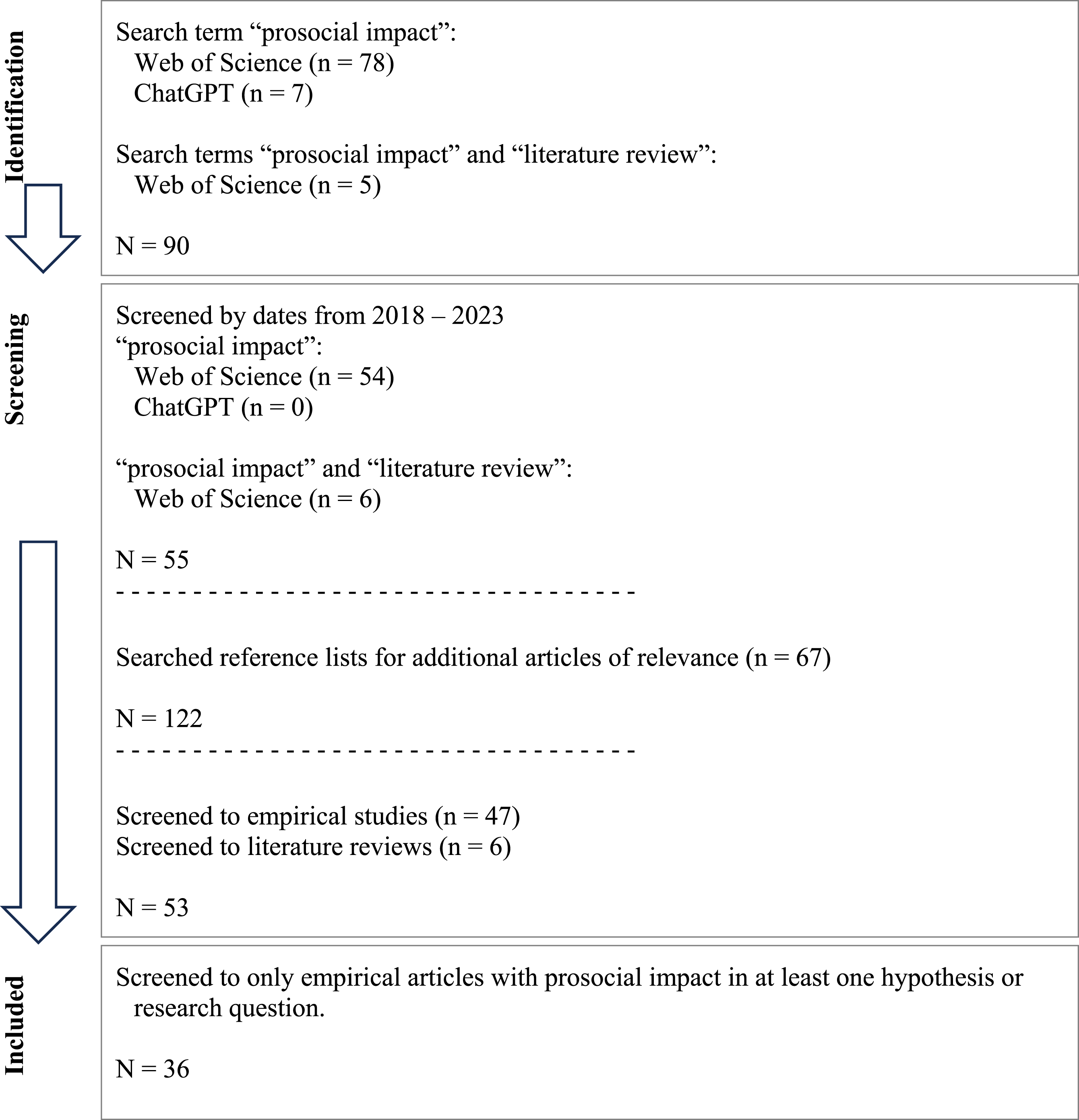
Criteria
This systematic review considered peer-reviewed empirical research conducted in an organizational context. The primary empirical objective for this review required limiting the research paradigms to qualitative, quantitative, or mixed methods. However, no limitations were placed on study design, intervention, or mechanism to allow research discovery from disciplines most germane to HRD, such as management and psychology.
Strategy
Web of Science was utilized to identify peer-reviewed articles for the review. ChatGPT was treated as a Large Language Model search engine, rather than a synthesis or authoring tool to avoid controversy (Rahman et al., 2023). To potentially broaden the scope of results, the query “What are the seminal academic articles on the topic of prosocial impact?” was posed to ChatGPT-3.5 by OpenAI. The results were cross-checked to ensure correspondence with existing articles. All articles were limited to those published in English and peer-reviewed journals from 2018 – 2023.
Eligibility
Empirical articles that referred to prosocial impact but did not include the phenomena in the research questions or hypotheses were excluded. Peer-reviewed articles were sourced, but research from neuroscience, biology, and human evolution was out of scope for this review.
Collection
The primary and second authors read the full text of all 36 studies and created a shared Microsoft Excel Sheet. Drawing from the Matrix Method, the data collected from the articles were organized with the following a priori headings: theoretical framework, context, hypotheses and/or research questions, results, implications, future opportunities, research design, methods, scales, samples/populations and research participants, variables (i.e., antecedents and outcomes), concepts, and prosocial impact definition (Garrard, 2020).
Findings
Applying these methods yielded 36 articles. This section details the findings from our systematic literature review, organized in accordance with our research questions.
RQ 1: How has Prosocial Impact been Defined in Prior Research?
The roots of conceptual prosocial impact date back to Hackman and Oldham (1980) and Bandura (1977). Drawing on one of the seminal articles on the topic of prosociality, Grant (2007) helped structure the areas of research into three broad categories: motivations to make a prosocial difference, behaviors contributing towards prosociality, and the perceived impact of the prosocial behaviors. Although this structure helps organize the complexity inherent in prosociality, each retains myriads of levels and methods to study and understand. As Gould (2002) argued, it is important to investigate where and how associations and definitions evolve, get construed, and potentially strangely associated over time. Hence, understanding the definitions appearing in the scholarly literature may identify any conflicting views of the phenomena.
The term perceived prosocial impact captures the idea of making a positive difference in others or the world. The 36 articles cited 13 different sources for their definitions of prosocial impact, which we then traced back to an original definition. Figure 2 illustrates this tracing process. Hierarchy of definitions.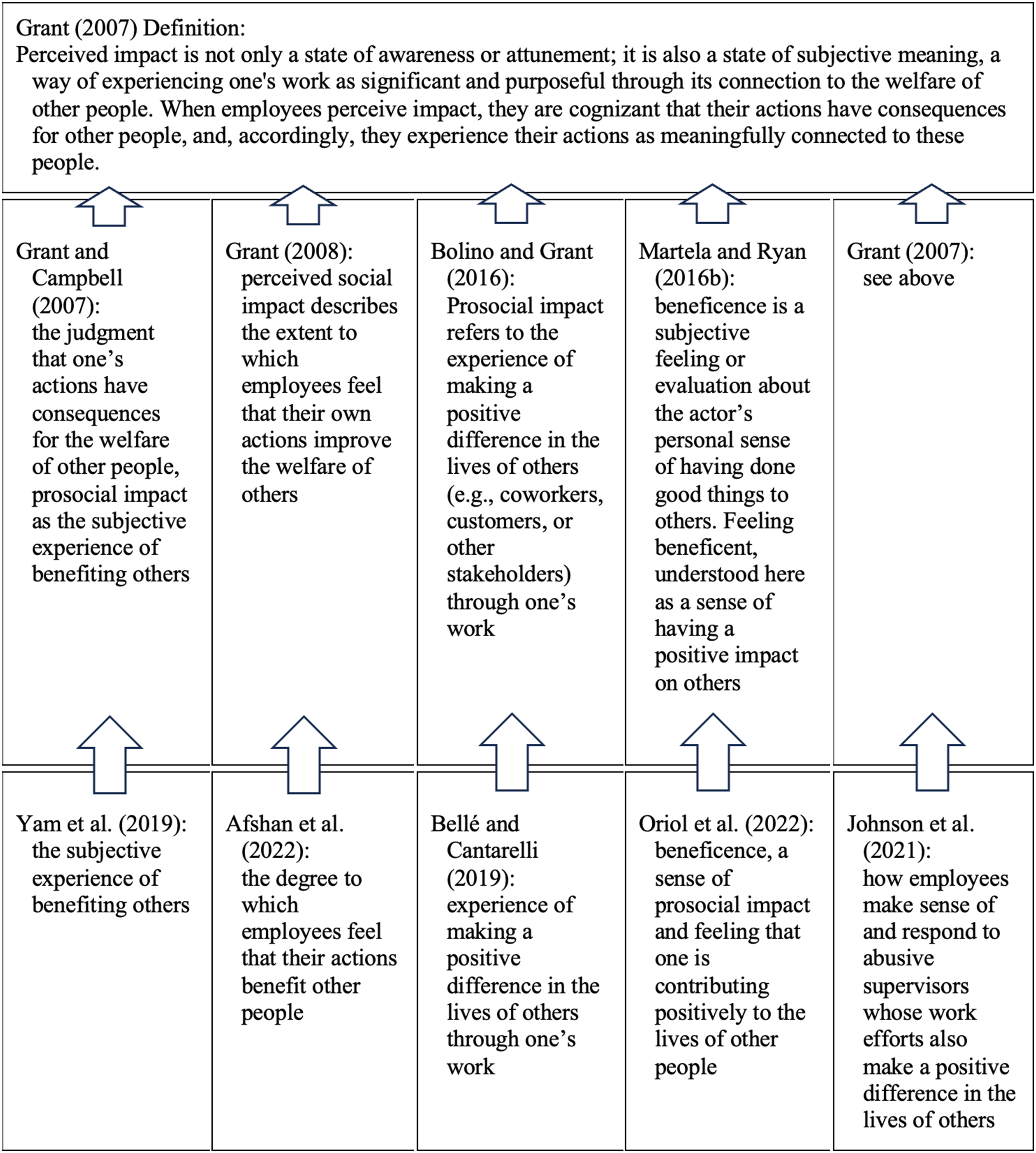
A third of the examined articles relied on a single definition when attempting to describe how individuals perceive impacting others. Scholars have defined perceived impact as the judgment that one’s actions have consequences for the welfare of other people (Grant, 2007). However, this definition fails to specify the valence of the consequences for other people – whether they are beneficial or harmful. We distinguish between these two perceptions by defining perceived prosocial impact as the subjective experience of benefiting others and perceived antisocial impact as the subjective experience of harming others. (Grant & Campbell, 2007, p. 667)
Grant and affiliated scholars dominate the middle tier (Bolino & Grant, 2016; Grant, 2007, 2008; Grant & Campbell, 2007). However, Martela and Ryan brought a more personal nuance via their definition that focuses less on external actions: “Beneficence is a subjective feeling or evaluation about the actor’s personal sense of having done good things to others… Feeling beneficent, understood here as a sense of having a positive impact on others” (Martela & Ryan, 2016b, p. 751).
Considering the foundational nature of Grant (2007), it is no surprise to find Grant’s definition as the penultimate citation: Perceived impact is not only a state of awareness or attunement; it is also a state of subjective meaning, a way of experiencing one's work as significant and purposeful through its connection to the welfare of other people. When employees perceive impact, they are cognizant that their actions have consequences for other people, and, accordingly, they experience their actions as meaningfully connected to these people. (Grant, 2007, p. 399)
To identify and summarize the themes in the different definitions of perceived prosocial impact, we traced the definitions in the 36 literature review articles back to their original sources. Along the way, we found that it is a subjective experience as defined by the individual acting; the action or behavior is not the focus. It requires an awareness or evaluation of the ramifications of the action, which may or may not have been performed. The perceived prosocial impact is other-oriented – the subjective experience may be the instigator’s own, but it is tightly coupled to its impact on another. Finally, the definitions and empirical research under review here consider the context of impact on others through efforts at work.
RQ 2: Which Theories Underpin the Research on Prosocial Impact?
Theoretical Frameworks Used More Than Once.
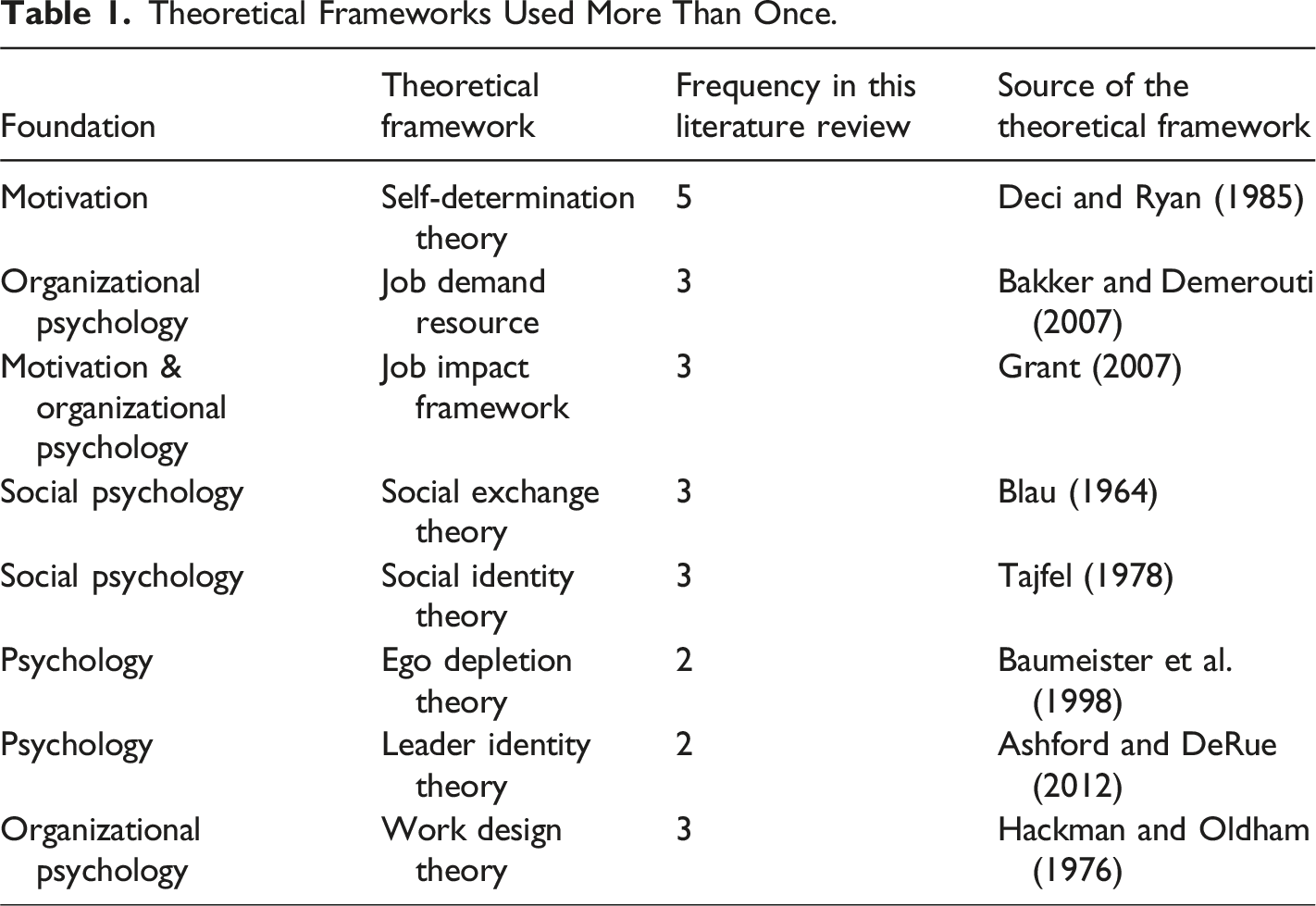
These theories are prominently featured in HRD literature and have roots in the arenas of motivation and psychology. This literature review underscores the significance of self-determination theory, job impact theory, and job demand resource theory as foundational frameworks instrumental in enhancing organizational development by studying prosocial impact. Even though used infrequently, theories from social justice or service quality demonstrated unique perspectives on the prosocial impact literature (Johnson et al., 2021; Park et al., 2021). This assortment of theories utilized in the recent prosocial impact research could indicate novel approaches to understanding the phenomena in the workplace. It can also indicate an indiscriminate search for a potential conceptual framework that brings it together (Bolino & Grant, 2016).
RQ 3: In What Organizational Contexts has Prosocial Impact been Studied, and what Specific Samples/Populations and Research Participants were Examined?
Studies comprising this review covered three broad sample populations: college students at 16%, employed adults at 80%, and adult volunteers at 4%. The studies involving college students were evenly split between undergraduate and graduate students. The participants in the employed adult studies included 30% from public service and 30% from the service industry, with the remaining individuals coming from various other sectors. The public service populations included safety, education, and healthcare. The service industry populations included banking, cleaning, and food service. Appendix B provides a table illustrating the journal, theory, sample population, and context. This breakdown of populations illustrated how the research had focused mainly on those industries and populations with a service aspect to them. This focus creates a vacuum of research on other essential employment sectors, such as manufacturing, transportation, and entertainment. While many studies did not focus on hierarchy or relationships and undertook a generalized approach, 14% did focus specifically on followers, 12% focused on leadership roles, and 5% on the interplay between leaders and their followers.
RQ 4: How has the Variable of Prosocial Impact been used in Quantitative Studies, Mixed Methods Research, and as a Concept in Qualitative Research?
This section discusses the methodologies used to empirically examine prosocial impact. The majority of reviewed articles were quantitative, with two mixed-method studies and only one qualitative study. In each quantitative study, prosocial impact was just one of several variables in the hypotheses, with others focused on related phenomena.
Quantitative Measures
Prosocial Impact Scales.
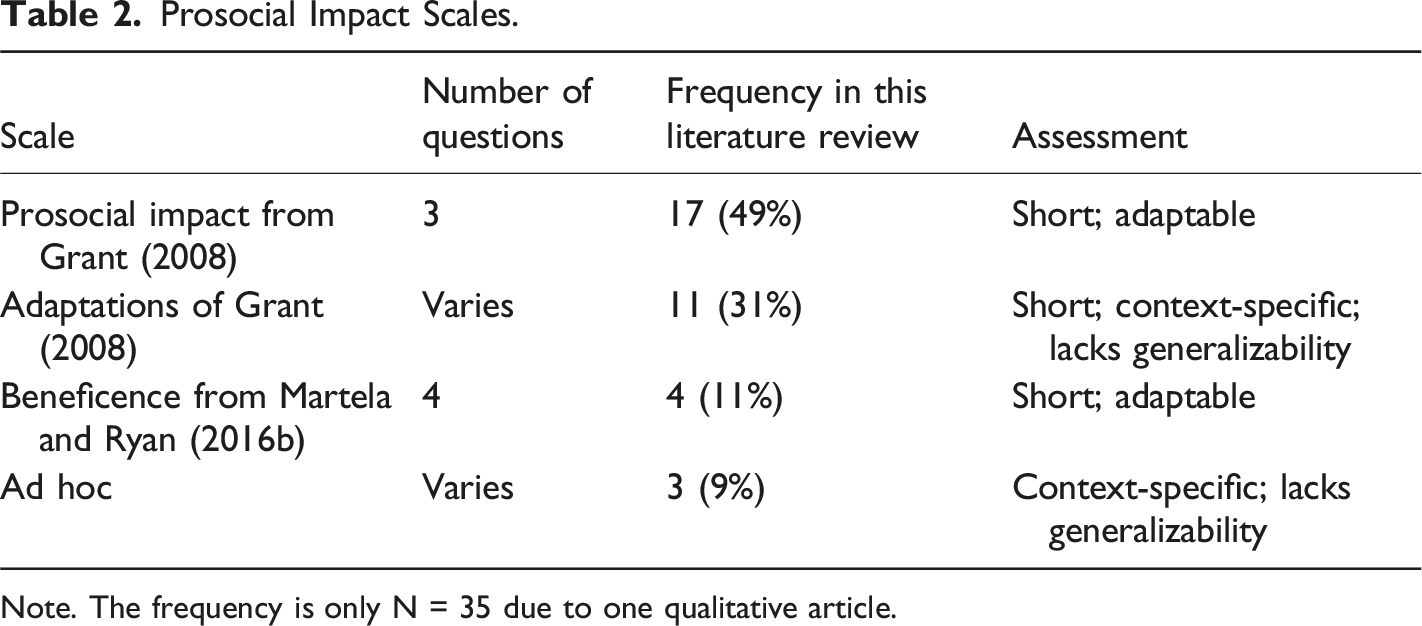
Note. The frequency is only N = 35 due to one qualitative article.
Rooted in self-determination theory, the Beneficence Scale of Martela and Ryan (2016b) was used by 12% of the studies, potentially limiting comparability with other research. Their scale consists of four Likert-type questions: “I feel that my actions have a positive impact on the people around me,” “The things I do contribute to the betterment of society,” “I have been able to improve the welfare of other people,” “In general, my influence in the lives of other people is positive.” The remaining quantitative studies used ad hoc measures crafted specifically for the study, which may also limit comparison and affect generalizability. It is important to note that all scales could be influenced by self-perception bias and inaccuracies. Following Table 2, the subsequent sections elaborate on how the quantitative articles treated prosocial impact as a variable.
Prosocial Impact as an Independent Variable
Forty percent of the hypotheses in the quantitative studies treated prosocial impact as the independent variable. By treating prosocial impact as the independent variable, researchers indicated an interest in the organizational behavioral outcomes from how people experience their actions as meaningfully connected to others. Figure 3 illustrates the variables studied in these relationships. Breakdown of hypotheses featuring prosocial impact as an independent variable.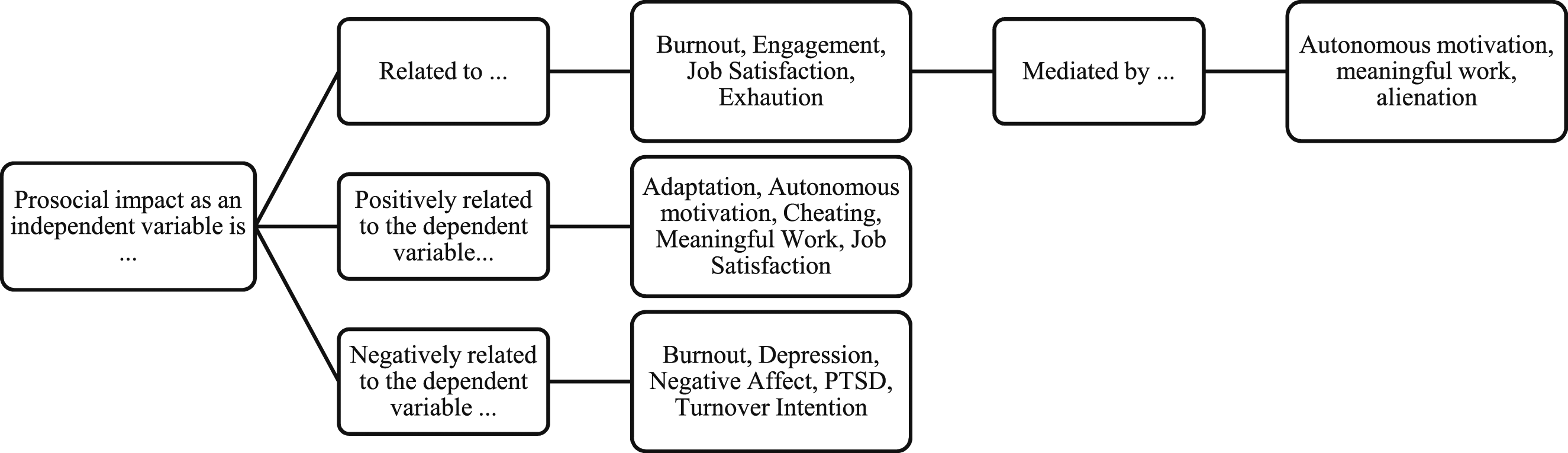
Seventy-four percent of the prosocial impact independent variable hypotheses suggested positive relationships with dependent variables that organizations hope to improve (e.g., adaptation, autonomous motivation, meaningful work, and job satisfaction). In contrast, 26% of the hypotheses proposed negative relationships with those dependent variables that organizations find undesirable (e.g., burnout, depression, and turnover intention). Contrary to the hypothesis, increase in prosocial impact did not strengthen performance by judicial officers (Hamm et al., 2023). A subset of the studies introduced mediators into these relationships. In an optimistic stream of research, meaningful work mediated the positive relationship between perceived prosocial impact and work engagement (Meng et al., 2023). Sometimes, the mediator could undo the benefits of the independent variable, as Conway et al. (2020) discovered. Typically, prosocial impact has a negative relationship with emotional exhaustion; however, alienation mediated the relationship such that increased prosocial impact resulted in increased emotional exhaustion in the Conway et al. (2020) study. Gonçalves et al. (2020) found support for the negative relationship between prosocial impact and burnout but only with autonomous motivation mediating the relationship. These mediating explorations demonstrate how prosocial impact can have nonobvious results when new variables are introduced.
Prosocial Impact as a Dependent Variable
Across the review, 32% of the quantitative studies treated prosocial impact as the dependent variable. Eighty-four percent of the time, the various independent variables had a positive relationship with prosocial impact, with only 16% finding negative relationships. While investigating different mediators, a significant direct relationship was suggested between team identification and team prosocial impact (Silalahi et al., 2021). Gratitude was used as an independent variable or mediator multiple times (Lee et al., 2019; Ni et al., 2022), in addition to advocacy (Kelemen et al., 2023), customer contact (Kipfelsberger et al., 2019; Siciliano & Thompson, 2022), and engagement (Lanaj et al., 2019) were also used. These hypotheses included more negative attributes as independent variables, like alienation (Bentein et al., 2017; Conway et al., 2020), crisis intensity (Kjeldsen et al., 2023), knowledge hiding (Afshan et al., 2022), and variables like depletion as mediators (Lanaj et al., 2019). While Conway et al. (2020) and Park et al. (2021) supported prosocial impact’s positive relationship with job satisfaction, Gabler et al. (2023) demonstrated that the relationship is positive in the reverse direction. These treatments indicated researchers’ interest in understanding prosocial impact and identifying what diminishes it.
Prosocial Impact as Mediator
In 18% of the hypotheses, prosocial impact acted as a mediator. Typically, the independent variable had positive connotations, such as compassion towards others, and the mediating prosocial impact led to another optimistic variable, like well-being. However, a counterapproach used a detrimental trait, such as knowledge hiding, as the independent variable (Afshan et al., 2022). The prosocial impact of knowledge hiding was investigated to understand how the dependent variable of trust would be impacted.
The degree of prosocial impact within an organization acts as a mediator between customer contact and productive organizational energy. This mediation is effective when there is a high transformational leadership climate but not when it is low (Kipfelsberger et al., 2019). Additionally, the positive effects of giving time or money on happiness and meaningfulness are mediated by need satisfaction and prosocial impact (Zhang et al., 2021). Prosocial impact mediated the positive relationship with job satisfaction in either advocacy or daily voice (Kelemen et al., 2023). Results were less consistent when prosocial impact was used as a mediator between helping coworkers and adaptation or job performance (Ni et al., 2022). The evidence did not support hypotheses exploring whether prosocial impact mediated moral intensity and task motivation (Opoku-Dakwa, 2022).
Prosocial Impact as Moderator
Finally, 12% of the hypotheses treated prosocial impact as a moderator. The studies considered prosocial impact as a moderating variable in the relationships between elements drawn from self-determination theory and work design theory. Bashir et al. (2022) had inconsistent support for hypotheses understanding public service motivation’s relationship with engagement. Caldas et al. (2021) failed to find moderating relationships between critical incidents and dependent variables such as depression and emotional exhaustion. Abusive supervision’s effect was moderated by the supervisor’s prosocial impact, strengthening the connection between abusive supervision and supervisor-directed deviance while intensifying the inverse relationships between abusive supervision and supervisor-directed organizational citizenship behavior (OCB) (Johnson et al., 2021). Moreover, prosocial impact moderated personal helping when relating to negative affect (Lanaj & Jennings, 2020). These various quantitative articles demonstrated the complex moderating effects of prosocial impact.
Mixed Methods
Two mixed methods studies were identified and examined in this review. Park et al. (2021) found that prosocial impact was an antecedent to participants' satisfaction in charity sports events. Meanwhile, Ni et al. (2022) failed to demonstrate prosocial impact as a mediator between helping coworkers and task performance. However, the sample of semi-structured qualitative interviews in their study revealed the impact of gratitude on feelings of prosocial impact and how it motivated further prosocial behaviors. This confirmed their quantitative findings that gratitude was positively associated with perceived prosocial impact.
Qualitative Concepts
The sole qualitative article identified in this systematic review relied on an interpretative approach for understanding perceptions of prosocial impact by analyzing interview statements made by IT professionals leaving high-paying private sector jobs for the federal government (Mergel et al., 2021). By leveraging self-determination theory, the study shed light on the conceptual and empirical distinctiveness of motives, behaviors, and perceptions of prosocial impact. The IT professionals repeatedly mentioned that the potential magnitude of their prosocial impact was a primary driver for pivoting to government work, suggesting its role as an antecedent.
This review reinforces the importance of prosocial impact playing an essential role in several valued outcomes in the HRD field. The empirical research examined suggests that positive relationships between prosocial impact and meaningful work (Martela & Riekki, 2018; Meng et al., 2023), work engagement (Bashir et al., 2022), and well-being and meaningfulness (Zhang et al., 2021) continue to be supported. Findings also suggest that, beyond the individual, prosocial impact can positively impact organization energy (Kipfelsberger et al., 2019). Importantly, prosocial impact negatively affected burnout (Gonçalves et al., 2020), isolation in dirty jobs (Bentein et al., 2017), alienation (Conway et al., 2020), depression and PTSD (Hruska & Barduhn, 2021), and turnover (Yada et al., 2020).
Discussion
This systematic review of the literature on prosocial impact from 2018 to 2023 addressed four main research questions. It explored the definition of prosocial impact, the supporting theories used to underpin this variable in empirical studies, the organizational contexts and participant samples described in the research studies, and its use as a variable in quantitative and mixed methods research and as a concept in qualitative studies. As our findings suggest, tracing back the definitions of prosocial impact in the 36 articles we examined revealed that Grant’s (2007) definition was a seminal source. In terms of theoretical underpinnings, Table 1 identified self-determination, job impact, and job demands resource theories as the predominant theories being used in the studies examined. Furthermore, the findings suggest that employed adults comprise the most studied participants, with college students and volunteers representing other samples in predominantly service-oriented contexts. In terms of how prosocial impact as a variable and concept has been explored in research, quantitative studies tend to dominate the research paradigm, leaving much scope for mixed-methods and qualitative studies.
In terms of research, this review reinforces the importance of prosocial impact for playing an essential role in several valued outcomes in the HRD field. The empirical research examined suggests that positive relationships between prosocial impact and meaningful work (Martela & Riekki, 2018; Meng et al., 2023), work engagement (Bashir et al., 2022), and well-being and meaningfulness (Zhang et al., 2021) continue to be supported. Findings also suggest that, beyond the individual, prosocial impact can positively impact organization energy (Kipfelsberger et al., 2019). Importantly, prosocial impact negatively affected burnout (Gonçalves et al., 2020), isolation in dirty jobs (Bentein et al., 2017), alienation (Conway et al., 2020), depression and PTSD (Hruska & Barduhn, 2021), and turnover (Yada et al., 2020). Ultimately, this systematic review of the literature further contributes to the understanding of prosocial impact in organizational contexts and calls for further interdisciplinary collaboration. Our review examined the recent nature of prosocial impact research and highlights the need for theoretical expansion, as shown by the narrow scope in Table 1. It addresses calls in the scholarly literature to examine the nascent concept of prosocial impact and also highlights the need for more research to explore prosocial interventions and their effects on individuals, groups, and organizations in a broader array of contexts.
Limitations
All research studies have limitations, and our systematic literature review is no exception. Therefore, we acknowledge the limitations associated with our review, which are mainly related to our subjective choices and criteria for inclusion. First, we specifically confined our review to an interval from 2018 - 2023. We did so to build upon the foundational and influential work of Bolino and Grant (2016). However, while unlikely, it is possible that research predating the Bolino and Grant (2016) review needed to be captured and was therefore omitted in our study, given our interval parameters. Next, we confined our search term to prosocial impact, given our focus on this specific aspect of prosociality. This could have excluded other articles studying this phenomenon but not referencing this search terminology. Next, the articles comprising this review were drawn mainly from adjacent disciplines like management and psychology, given their relevance to the HRD field. However, articles drawn from other disciplines researching prosocial impact, such as neuroscience, and not directly germane to HRD could have missed nuanced perspectives of interest to the HRD field. Additionally, the scope of the review required empirical works conducted only in organizations. This excluded research studies investigating the phenomenon in other settings, such as educational or community-based environments. Finally, only peer-reviewed journals in the English language sourced from Web of Science were included, potentially omitting valuable insights from studies published in other languages, databases, or formats. We also employed ChatGPT3.5 as a tool for the identification of articles at the onset of our search. However, we appreciate that the tool is subject to its own limitations and potential inaccuracies. These methodological limitations, however, may provide pathways for future research endeavors.
Implications for HRD Theory, Practice, and Future Research Recommendations
This section consists of three sub-sections that examine the implications of prosocial impact for HRD theory, practice, and future research, respectively.
Implications for HRD Theory
This literature review underscores the significance of self-determination theory, job impact theory, and job demand resource theory as the significant theories instrumental in studying prosocial impact. These theories are helpful starting points for future research and have been widely employed in many HRD research studies. However, other theories, such as occupational self-efficacy theory (Bandura, 1977; Hackett & Betz, 1981), the norm of reciprocity (Gouldner, 1960) in social exchange theory (Cropanzano & Mitchell, 2005; Emerson, 1976), and social capital (Adler & Kwon, 2002; Cohen & Prusak, 2001; Storberg, 2002), which focus on how employees feel about their capabilities and competencies at work, their ability to make a difference, and the relational aspects associated with their work respectively may present additional theories to consider. Only a few articles in the review incorporated leadership theories. However, the authors of these articles highlight the potential for further exploration in this theoretical area. Leaders and managers may play pivotal roles in promoting prosociality and influencing others through their modeling of prosocial behaviors that demonstrate prosocial impact. Thus, leadership theories such as servant leadership (Eva et al., 2019; Graham, 1991; Greenleaf, 1977) and authentic leadership (Gardner et al., 2021) may be relevant and appropriate theories to explore. The topic of prosocial impact is interdisciplinary and could benefit from alternative perspectives and approaches offered by theories from other fields. For instance, theories drawn from social work, nursing, and medicine, which emulate helping and caring professions, may also be relevant for future research in this area. Moreover, marketing and consumer behavior theories, which frequently focus on employee and customer interactions, could also be helpful in studying prosocial impact.
Implications for HRD Practice
Several stakeholders may benefit from the insights provided by this systematic literature review on prosocial impact. Below, we consider implications for organizational leaders, managers, HRD professionals, and the broader HR context for employees.
Organizational Leaders and Managers
Organizational leaders and managers have become increasingly concerned with how to help employees create purposeful and meaningful work, foster employee engagement, and ensure well-being in their organizations given the Great Resignation fallout that accompanied the pandemic, the growing numbers of disengaged employees and health-related issues that also arose as a consequence of the pandemic. To leverage these desired individual and organizational outcomes, showcasing the beneficial impacts of work being done by employees to benefit others may be a way to highlight the positive influence of prosocial impact (Chen & Zhang, 2023; Hansen, 2022; Mergel et al., 2021; Oriol et al., 2022; Siciliano & Thompson, 2022; Vogel & Willems, 2020). As the research suggests, such illustrations of ‘making a difference’ can indeed make a difference. Also, organizational leaders and managers can be more explicit about the prosocial nature of their missions, which helps create more intrinsically motivated workers (Opoku-Dakwa, 2022). They can also model prosociality so others can observe the consequences of their prosocial impact. Additionally, if they support and applaud ethical leadership and model such behaviors through their servant leadership, which has been linked to prosociality, the benefits of prosocial impact can flourish (Gabler et al., 2023; Yam et al., 2019). It is also necessary that organizational leaders and managers better understand the prosocial impact elements that may have surprising or undesired effects. In a list experiment, public employees' desire to serve their clients led to the manipulation of performance data, specifically altering or fabricating data to make results appear better than they actually did (Kroll & Vogel, 2021). The positive impact of leaders' prosocial behavior can be overshadowed by the lasting negative emotions they experience when assisting followers with personal issues (Lanaj & Jennings, 2020).
HRD Professionals and the Broader HR Context
Given the many individual and organizational benefits associated with prosocial impact that this review identified, HRD professionals may be well positioned to develop training interventions that help leaders, managers, and employees better understand the concept of prosocial impact, be informed about prosocial impact’s positive and negative consequences, and how to collectively and collaboratively create an environment that embraces the importance of ‘making a difference.’ It is also possible that other interventions could be deployed, like mentoring programs, which are often designed to enable employees to interact with each other for the purposes of sharing knowledge and expertise, providing career guidance, and psychosocial support, among other functions. Such relationships can reinforce the positive feelings that making a difference in other colleagues’ working lives can manifest. It is also possible that the use of employee resource groups (ERGs) can be implemented to serve similar functions. Beyond these training, career, and organization development interventions, HR professionals responsible for recruitment and hiring functions may consider specifically recruiting employees who demonstrate prosocial impact through their motivations and actions and beneficence towards others. Some of the instruments described in this review might be helpful as part of the assessment process when hiring new employees or making promotional decisions.
Employees
Employees who believe in the value of making a positive impact within their organization and the lives of others may find it more fulfilling and purposeful to work for companies that share the same mission. Additionally, when employees who engage in prosocial behaviors receive gratitude from the recipients of their prosocial behavior, it strengthens their prosocial experience of benefiting others, which may have a cascading effect on prosociality (Lee et al., 2019; Ni et al., 2022). Employees seeking to make a difference in their colleagues' lives may mentor, collaborate, and support others. Doing so may create more optimal work environments that attract like-minded colleagues, which may result in greater job satisfaction, fulfillment, and a culture of teamwork and collaboration.
Future Research Recommendations
The studies comprising this systematic literature review encompassed diverse populations, with public service sectors like safety, education, and healthcare and service industry domains like banking, cleaning, and food service. Jobs associated with services, where customers directly benefit from the work, seem conducive to generating prosocial impact. This encompasses roles like education and healthcare that bear substantial public responsibilities. However, this focus needs to be addressed by examining other crucial employment sectors, such as manufacturing, transportation, and entertainment. Additionally, understanding the bottom-up effect of prosocial impact on organizations remains a shortcoming that needs further examination (Afshan et al., 2022).
As evidenced by some conflicting results in the articles, there is also a need to explore additional mediating and moderating variables in the context of prosocial impact research (Kelemen et al., 2023). The concept of beneficence, or the sense of positively impacting others, has ample space to be explored as a mediator in meaningful work (Martela & Riekki, 2018). Other critical psychological mechanisms, such as energy, vigor, and passion, could provide opportunities for an expanded understanding of prosocial impact (Ni et al., 2022). In terms of outcomes, situational moderators could help explain the effects on perceived impacts and task motivation (Opoku-Dakwa, 2022). Building on the call for understanding mediators and moderators, knowing where, why, and when prosocial impact benefits turn into and intensify detriments remains an essential line of inquiry (Caldas et al., 2021).
The period in which this review was conducted also reflects changes in ways of work and meaning as a consequence of the global pandemic, which has influenced how and where employees work, why they work, and the subsequent Great Resignation, prosocial impact notwithstanding (Kelliher et al., 2019). For some employees, the line between work and home has blurred, calling for research to explore the overlap and interaction (Lanaj et al., 2021; Tremmel et al., 2019). New ways of working influence relationships that affect helping behavior. The types of relationships and interactions between prosocial impact and helping behaviors remain open for future research (Lee et al., 2019). More recently, advances in AI have also challenged traditional modes of meaningful work (Bankins & Formosa, 2023). The ripple effect on organizational culture is still playing out, and how prosocial impact is experienced is yet to be seen (Siciliano & Thompson, 2022).
Although much of the prosocial impact research examined in this review suggests numerous positive benefits, some scholars have alluded to some of the potential negative consequences. For example, Bolino and Grant (2016) highlighted that prosociality is a complex phenomenon that, despite its “pro” moniker, also has dark sides. They acknowledged that there is considerable space to explore scenarios where increasing one party’s well-being may decrease another’s well-being, thereby seeing how prosocial impact fares in such situations (Martela & Ryan, 2016a, 2021). In particular, some researchers showed relationships between prosocial impact and resource depletion (Lanaj et al., 2019) or fatigue (Oriol et al., 2022). This paradox pointed to the complexity associated with prosocial impact and associated phenomena, making a case for more empirical studies on the negative consequences or the shadow and dark sides of prosocial impact.
From a design and methodological perspective, most articles in this review adopted a quantitative approach, while two studies employed a mixed-methods design, and one followed a qualitative approach. In each quantitative study, prosocial impact constituted just one among multiple hypotheses addressing other distinct phenomena. However, especially among the conflicting hypotheses and findings, employing qualitative designs could help describe seeming paradoxes or help create quantitative scales that better describe complex relationships (Mergel et al., 2021). Previous studies have predominantly utilized cross-sectional survey data; however, this approach cannot establish causality or eliminate potential common method bias. Thus, longitudinal research designs or panel data from diverse sources may extend the research findings (Gonçalves et al., 2020; Yam et al., 2019). There is opportunity to understand reverse causality when investigating prosocial impact and organizational outcomes (Lanaj et al., 2019). Lastly, in the articles examined, much of the data was self-reported, so utilizing more rigorous methods, such as the Experience Sampling Method, would improve the quality of findings (Meng et al., 2023). Lastly, in light of the scope of this systematic literature review and our articulation of antecedents and outcomes, as presented in Appendix C, a detailed meta-analysis of empirical treatment of prosocial impact is also warranted.
Conclusion
Prosociality in organizations and at work is a multifaceted concept, and research on this topic has been “active and fruitful” for several decades (Zettler, 2022, p. 143). It continues to garner considerable attention among scholars, practitioners, and the popular press, given that “making a difference can make a difference for employees and organizations” (Bolino & Grant, 2016, p. 409). However, as Bolino and Grant (2016) acknowledged, much of the research has focused on prosocial motivations and behaviors, with lesser attention given to prosocial impact, the notion that one’s awareness of one’s actions has benefitted others. Thus, given the nascent research stage, this systematic literature review specifically focused on prosocial impact, and 36 articles meeting specific inclusion criteria were examined relative to four research questions. The findings from this systematic review, with articles drawn mainly from the management and psychology disciplines, provide HRD researchers and practitioners with essential insights about the benefits of how prosocial impact can positively influence an array of work-related outcomes germane to HRD, such as meaningful work, engagement, and well-being. From this review, multiple directions for further researching this important construct have been provided that may enable HRD researchers and practitioners to contribute more substantively to the calls for research that suggest that “research on prosociality at work would probably profit from a stronger larger-scale integration of knowledge from related organizational research fields…” (Zettler, 2022, p. 143).
Supplemental Material
Supplemental Material - Making a Difference in the Workplace: A Systematic Literature Review of Prosocial Impact
Supplemental Material for Making a Difference in the Workplace: A Systematic Literature Review of Prosocial Impact by Brianna S. Roberts, Denise M. Cumberland, and Andrea D. Ellinger in Human Resource Development Review
Footnotes
Declaration of Conflicting Interests
The author(s) declared no potential conflicts of interest with respect to the research, authorship, and/or publication of this article.
Funding
The author(s) received no financial support for the research, authorship, and/or publication of this article.

Supplemental Material
Supplemental material for this article is available online.
References
Supplementary Material
Please find the following supplemental material available below.
For Open Access articles published under a Creative Commons License, all supplemental material carries the same license as the article it is associated with.
For non-Open Access articles published, all supplemental material carries a non-exclusive license, and permission requests for re-use of supplemental material or any part of supplemental material shall be sent directly to the copyright owner as specified in the copyright notice associated with the article.
