






Abstract
Few studies have addressed the interaction of specific pathogens with clinical outcomes in patients with diabetic foot infection (DFI). Our study aim was to compare the clinical outcomes among patients with DFI caused by methicillin-resistant Staphylococcus aureus (MRSA) with cases caused by methicillin-sensitive Staphylococcus aureus (MSSA). We gathered the data of 75 consecutive patients admitted at specialized outpatients diabetic with mild or moderate DFI in which S. aureus was isolated from bone or soft tissue specimens in pure or as a part of the polymicrobial culture. Patients were divided into two groups: those with MRSA infection and those with MSSA infection. Patients with MRSA diabetic foot infections were significantly associated with male gender (86% vs. 64%, P = .029), higher SINBAD Classification Score (3.6 ± 0.99 points vs. 2.8 ± 1.06 points, P = .001), longer mean wound evolution [17.8 (3;29.5) weeks versus 9.1 (1;12) weeks, P = .008], bone involvement [18 (50%) versus 9 (23.1%), P = .015] and longer mean healing time [18.2(8;28) weeks versus 9.1 (1;12) weeks, P = .008]. In addition, male gender (OR 8.81, 95% CI 2.00-38.84) and SINBAD Classification Score (OR 2.70, 1.46-5.00) were identified as independent risk factors for MRSA DFI. Significant differences in the number of surgical procedures to resolve infection [15 (41.7%) versus 13 (33.3%), P = .456] or in the mean healing time after surgical treatment [10.5 weeks (6.7;16.5) versus 6.1 weeks (3;8.7), P = .068] were not observed among groups, suggesting that when treatment is based on early and surgical debridement, MRSA infections are not associated with worse prognosis. In conclusion MRSA DFI has importance in clinical outcomes such as time to healing. We propose that recent lines of research regarding the genetic virulence of strains of S. aureus could provide new insights into our results.
Introduction
Approximately 19–34% of people with diabetes will develop a diabetic foot ulcer (DFU) throughout their life. 1 Over half of DFUs will develop an infection, and of these, 17% will require an amputation. The mortality rate for people who undergo lower extremity amputation due to a DFU remains alarming: more than half of people with a major amputation will be dead in 5 years (56.6%). 2 Diabetic foot infection (DFI) remains the most frequent diabetic complication requiring hospitalization and is associated with significant morbidity. 3
Staphylococcus aureus is a commonly reported Gram-positive pathogen among DFIs, and approximately 40–50% of all S. aureus isolates exhibit methicillin resistance, which confirms almost universal beta-lactam resistance. 4 Methicillin-resistant Staphylococcus aureus (MRSA) strains have become increasingly prevalent in DFIs.5,6 Studies have indicated that MRSA can infect 15% to 40% of DFUs.4,7-10 Risk factors for MRSA in DFIs include antibiotic usage in the 6 months before hospitalization or inappropriate use of antibiotics, previous hospitalization, long course of ulcer, the presence of osteomyelitis, hypoproteinemia, larger ulcer size, and nasal carriage of MRSA.8,11,12
Few studies have addressed the interaction of specific pathogens with clinical outcomes in patients with DFI. 13 In vitro studies have found similar potential virulence of MRSA and MSSA strains. 8 A recent report revealed that strain-level variation of S. aureus and genetic signatures of biofilm formation were associated with poor outcomes in diabetic wounds, suggesting that DFU microbiota may be a marker for clinical outcomes. 14 Notwithstanding, the role of MRSA in DFIs remains unclear, and it is difficult to know the real significance of MRSA and its importance in clinical outcomes.
Here we aim was to compare the clinical outcomes among patients with DFI caused by MRSA with cases caused by MSSA.
Material and Methods
We abstracted data of 75 consecutive patients admitted at specialized outpatients diabetic foot unit between January 2019 and February 2020, with mild or moderate DFI according to the International Working Group of the Diabetic Foot (IWGDF)/Infectious Diseases Society of America(IDSA) classification system,3,15 in which S. aureus was isolated from bone or soft tissue specimens in pure or as a part of the polymicrobial culture. We excluded patients with severe DFI according to the IWGDF/IDSA classification system3,15 and critical limb ischemia according to the IWGDF 2019 guidelines on diagnosis, prognosis, and management of peripheral artery disease in patients with foot ulcers and diabetes. 16 Patients were divided into two groups: those with MRSA infection and those with MSSA infection, and clinical outcomes between the two groups were analyzed. Healing was defined as the complete epithelization of the ulcer and/or the surgical wound.
Previous ulcers were classified according to the SINBAD (Site, Ischemia, Neuropathy, Bacterial Infection and Depth) classification system as per international guidelines recommended. 17 The SINBAD system uses six items (ulcer site, ischemia, neuropathy, bacterial infection, area, and depth), scored with 0 or 1 point, to create a SINBAD score of 0–6. 18 Data on ulcers were obtained from the patients’ medical records retrospectively. Sensorimotor neuropathy of DFU was diagnosed using a Semmes-Weinstein 5.07/10 g monofilament and a biothesiometer (both from Novalab Iberica, Spain). Patients who failed to feel one of the two tests were diagnosed with neuropathy. 19 Peripheral arterial disease (PAD) was considered when both pedal pulses were absent and/or when the ankle-brachial index (ABI) was <0.9. We considered critical limb ischemia as those patients with ABI ≤0.5 and ankle systolic blood pressure <70 mm Hg, or Toe-Brachial Index (TBI) ≤0.7 and toe systolic blood pressure <50 mm Hg. 16 The ABI and TBI were assessed using a manual 8 MHz Doppler (Doppler II, Huntleigh Healthcare Ltd, UK), and the toe systolic pressure was taken by digital plethysmography (Systoe, Atys Medical, Madrid). Bone involvement was defined as a positive probe-to-bone test with a sterile, blunt metal probe as described by Grayson et al. 20
All patients received standard care for their wounds consisting of debridement, moist wound dressings for wound management and proper off-loading (a removable walker cast based on the patient‘s functioning and ambulatory status) as per the International Working Group of the Diabetic Foot guidelines. 21 Patients took empirical oral antibiotics choosing according to IDSA guidelines recommendations, and after we received tissue culture results, we adjusted the antibiotic therapy for targeting isolated bacteria.3,15
Microbiological Analysis
Specimens of wound tissue were obtained by curettage after cleansing with sterile saline and debridement as per international guidelines on the diagnosis of foot infection in persons with diabetes recommends. 3 Following tissue collection, samples were immediately transported to the microbiological laboratory for analysis. After mechanical homogenization, the specimens were seeded in Columbia agar (BD) and MacConkey agar and incubated in ambient air at 35 °C for 24 h. Isolates were identified by standard methods, and susceptibility testing was performed in accordance with Clinical and Laboratory Standards by the disk diffusion method. 22
The main outcome of our study was to compare clinical findings, such as time to healing among patients with DFI caused by MRSA, with cases caused by MSSA.
The secondary outcome was identifying predicting variables for MRSA DFI, such as sex, type of diabetes, SINBAD Classification Score, mean wound evolution, or bone involvement.
Ethical Considerations
We performed the study in accordance with the Declaration of Helsinki (2013 revision) and followed all local laws and regulations in clinical research investigations in patients. 23
The study protocol received full approval from the Ethics Committee of the Hospital Clínico San Carlos (16/532-P).
Statistical Analysis
Statistical analysis was performed using SPSS for IOs version 21.0 (SPSS, Inc. Chicago, IL, USA). The assumption of the normality of all continuous variables was verified using the Kolmogorov-Smirnov test. Statistical differences between groups were calculated using the Chi-Square test and, where appropriate, and Fisher‘s exact test for categorical variables. The Mann-Whitney U test was performed for abnormally distributed quantitative parameters, and Student‘s t-test was performed for quantitative variables distributed normally. The Kaplan-Meier method described survival time to healing, using the log-rank test to compare this survival between the MRSA and MSSA groups. P-values < .05 were accepted as statistically significant.
We identified independent predictors for MRSA DFI using a logistic regression model with MRSA as the dependent variable and significant variables in bivariable analyzes (male sex, type of diabetes, SINBAD Classification Score, mean wound evolution and bone involvement) as covariates.
Granmov.12 program (Municipal Institute of Medical Research, Barcelona, Spain) (https://www.imim. cat/ofertadeserveis/software-public/granmo/) was used to calculate the sample size. Accepting an alpha risk of 0.05 in a bilateral contrast with 36 subjects in the MRSA group and 39 MSSA group, the power of the hypothesis contrast was 80% to detect as statistically significant the difference between 0.75 in the MRSA group and 0.97 of the MSSA group.
Results
A total of 75 S. aureus were isolated (one per patient), of which 42 (56% of patients) were in pure culture while the rest were as part of the polymicrobial culture.
MRSA accounted for 48% of the S. aureus (36 patients), with 61.1% isolated in pure culture (22 of 36 patients). MSSA was isolated in pure culture in 51.3% of specimens (20 of 39 patients). Table 1 depicts the demographic and clinical outcomes of the study population among groups.
Demographic and Clinical Outcomes of the Study Population among Groups.
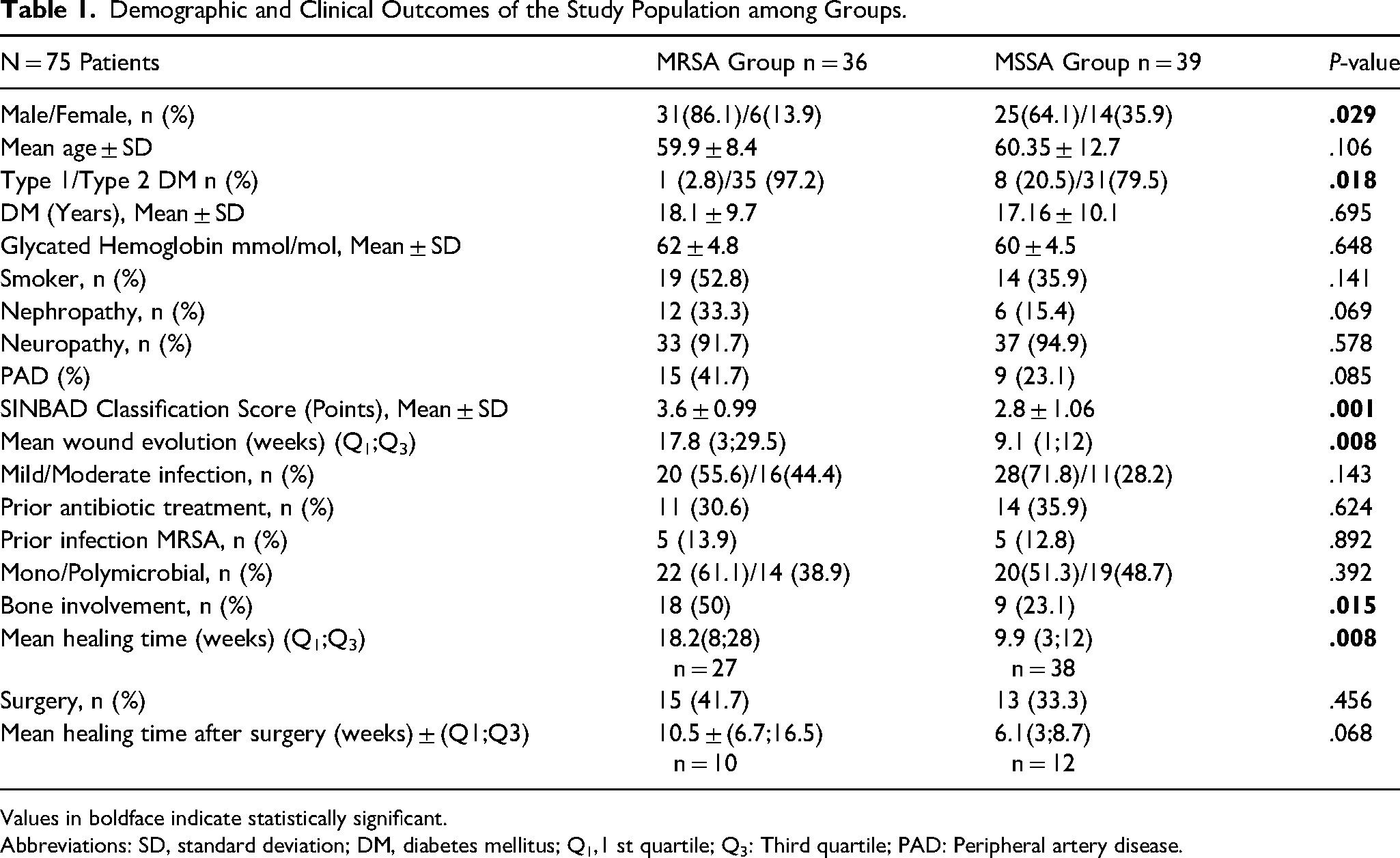
Values in boldface indicate statistically significant. Abbreviations: SD, standard deviation; DM, diabetes mellitus; Q1,1 st quartile; Q3: Third quartile; PAD: Peripheral artery disease.
In the multivariable analysis, only the male gender (OR 8.81, 95% CI 2.00-38.84) and SINBAD Classification Score (OR 2.70, 95% CI 1.46-5.00) were identified as independent risk factors for MRSA DFI.
Tables 2 and 3 depict the demographic and clinical outcomes of the study population, comparing monomicrobial and polymicrobial infections among groups, respectively. Figure 1 shows the association between healing probabilities among groups. Seventy-five percent (n = 27) and 97% (n = 38) of patients healed in MRSA and MSSA respectively. The probability of healing at weeks 12 and weeks 24 was 33% and 50% in MRSA group and 77% and 89.7% in MSSA groups (P = .016).

Time to wound healing Kaplan-Meir survival curve among both groups (MRSA and MSSA).
Demographic and Clinical Outcomes of the Study Population Comparing Monomicrobial Infections among Groups.

Values in boldface indicate statistically significant. Abbreviations: SD, standard deviation; Q1,1 st quartile; Q3, Third quartile; PAD: Peripheral artery disease.
Demographic and Clinical Outcomes of the Study Population Comparing Polymicrobial Infections among Groups.

Values in boldface indicate statistically significant. Abbreviations: SD, standard deviation; Q1, 1 st quartile; Q3, Third Quartile; PAD, Peripheral artery disease.
Mean healing time was significantly shorter in DFU with mild infections [10.5 weeks quartile 1–3 (3.0-13.5)] compared to moderate infections [19.7 weeks (6.5-31.7), P = .014)]. Stratifying by subgroups, significant differences were not observed in mean healing time in the MSSA group between DFU with mild infection [9.1 (3.0-11.0)] compared to moderate infections [12.1 (4.0-20.0), P = .435)]. In the MRSA group, mean healing time was significantly shorter in DFU with mild infections [12.8 weeks (4.0-18.5)] compared to moderate infections [29.0 weeks (20.0-36.0), P = .002)].
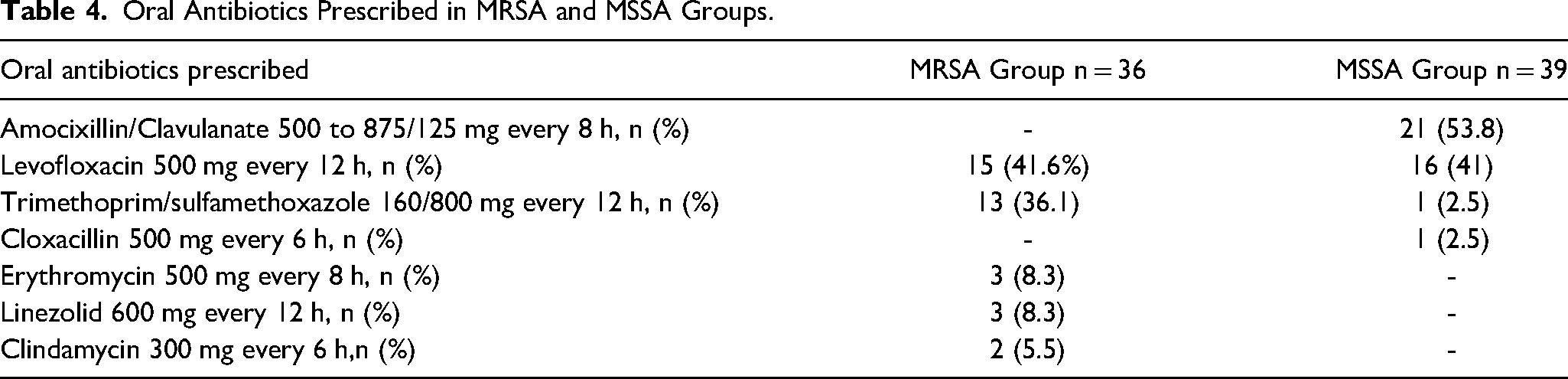
Table 4 describes the orals antibiotics prescribed in both groups.
Oral Antibiotics Prescribed in MRSA and MSSA Groups.
Frequency of Microorganisms Isolated in Polymicrobial Cultures (n = 33)
Twenty-six cultures (78.8%) were formed with two microorganisms, 24 (72.7%) had Gram-negative microorganisms and 10 (30.3%) had Gram-positive microorganisms. The predominant Gram-positive microorganism isolated was Coagulase negative (n = 6, 18.2%), followed by Streptococcus spp (n = 2, 6.1%) and Enteroccocus spp (n = 2, 6.1%). The predominant Gram-negative microorganisms isolated were nonfermentative Gram-negative bacillus NFGNB (n = 6, 18.2%) and Pseudomonas aeruginosa (n = 5, 15.2%), followed by Escherichia coli (n = 4, 12.1%), Proteus spp (n = 3, 9.1%), Enterobacter cloacae (n = 3, 9.1%), Klebsiella pneumoniae (n = 3, 9.1%), Klebsiella spp (n = 2, 6.1%), Providencia rettgeri (n = 1, 3%), Citrobacter koseri (n = 1, 3%), and Serratia spp (n = 1, 3%). The mean number of isolates was 1.4 in the MRSA group and 1.5 in the MSSA group. Figure 2 depicts the frequency of microorganisms isolated in polymicrobial cultures between two groups.
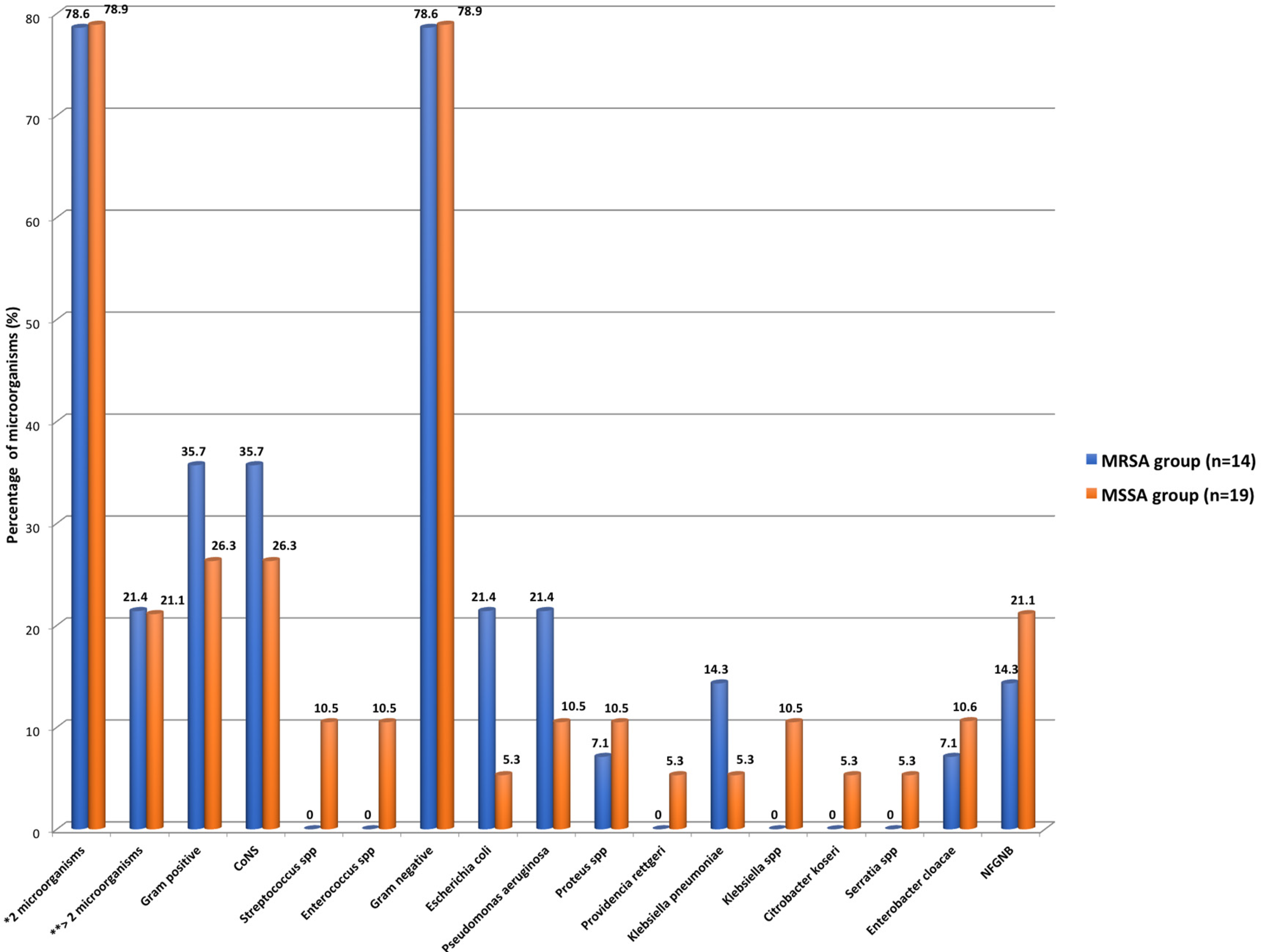
Frequency of microorganisms isolated in polymicrobial cultures between two groups. CoNS: coagulase-negative, Staphylococcus, NFGNB: nonfermentative gram-negative bacilli. * percentage of cultures with 2 microorganisms, ** percentage of cultures with more than 2 microorganisms.
Discussion
In this study, we observed that patients with MRSA DFI were significantly associated with a higher SINBAD Classification Score. These were more likely to have bone involved and with longer mean wound evolution and prolonged time to healing than with patients with MSSA DFI. To our knowledge, this is the first study to compare patients whose DFI was caused by MRSA or MSSA using the SINBAD classification system as per international guidelines recommended to classify patients’ DFU. 17
We observed that patients with MRSA DFI were significantly associated with a higher SINBAD Classification Score than patients with MSSA DFI (3.6 ± 0.99 points vs. 2.8 ± 1.06 points, P = .001). Moreover, in our multivariable analysis, SINBAD Classification Score was found to be an independent risk factor for MRSA DFI (OR 2.70, 1.46-5.00). In most previous studies, patients’ DFU were classified based on Wagner‘s classification.9,24,25
In addition, we found that patients with MRSA DFI compared with patients with MSSA DFI had longer mean wound evolution [17.8 (3;29.5) weeks versus 9.1 (1;12) weeks, P = .008]. In this regard, Yates et al 26 found that risk factors for MRSA included prolonged wound duration (OR: 2.31), inpatient management (OR: 2.19), and chronic kidney disease (OR: 1.49).
We observed that DFI with MRSA was associated with delayed healing compared to DFI with MSSA [18.2(8;28) weeks versus 9.1 (1;12) weeks, P = .008]. It was also found that moderate DFI with MRSA was associated with delayed healing compared to mild DFI with MRSA [29.0 (20.0-36.0) weeks versus 12.8 (4.0-18.5) weeks, P = .002]. Morover, we observed that DFI with MRSA was associated with delayed healing compared to DFI with MSSA mainly in monomicrobial infections [18.4 (8.0-28.0) weeks versus 6.5 (3.0-10.0) weeks, P = .002] compared with polymicrobial infections [17.8 (3.5-29.3) weeks versus 13.4 (3.0-22) weeks, P = .491] (See Table 2 and Table 3) suggesting that in polymicrobial infection other microorgasnims found in both groups such as gram negatives bacterias (Pseudomona aeruginosa, Escherichia coli or Klebsiella pneumoniae) could influence in delayed healing (See Figure 2).
Based on our results we observed less probability of healing in MRSA groups comparing with MSSA groups (See Figure 1). These results are consistent with previous studies. 9 Tentolouris et al 27 found that MRSA infection is associated with prolonged time to healing in patients with diabetes compared with MSSA infection [17.8 (8 ± 24) versus 35.4 (19-64), P = .003]. In our study, 36 of the 75 S. aureus strains (48%) were MRSA. This data is similar to previous studies, where approximately 40–50% of all S. aureus isolates exhibit methicillin resistance. 4 In the studies by Tentolouris et al25,27 and Dang et al, 28 S. aureus isolates were methicillin-resistant in 40–46.2% and 42.2%, respectively. In contrast with these studies, Cervantes-García et al found that 89.9% of their S. aureus isolates were MRSA: 34 were MRSA and eight were MSSA, from a total of 42 cases.
In our study population, the mean number of bacterial isolates per case was 1.4 in the MRSA group and 1.5 in the MSSA group. We have obtained similar data as reported in previous studies, where specimens were obtained for culture only after debridement, avoiding superficial colonizing organisms.27,29
Despite antimicrobial use having historically been associated with MRSA,4,27,30 in the present study, we did not observe significant differences among MRSA and MSSA DFI regarding previous antibiotic treatment before the culture [11 (30.6%) and 14 (35.9%) respectively, P = .624]. Similar results were found by Tentolorious et al 25 in outpatients with DFUs, where 47.8% of the cases with MRSA and 52.6% of the cases without MRSA had been treated with prior antibiotics (P = .29), concluding that the absence of any association between MRSA isolation and factors that predispose to the appearance of MRSA in patients with DFU might reflect the high prevalence of MRSA in the community.
Patients with MRSA were more often male than the MSSA group (86% vs. 64%, P = .029). Moreover, in our multivariable analysis, male gender (OR 8.81, 95% CI 2.00-38.84) was found to be independent risk factors for MRSA DFI. In a previous study, by multivariable analysis, Reveles et al 4 found that only male gender (OR 3.09, 95% CI 1.37-7.99) and bone involvement (OR 1.93, 1.00-3.78) were independent risk factors for MRSA DFI. In the present study, we also found that patients with MRSA DFI were more likely to have bone involvement [18 (50%) versus 9 (23.1%), P = .015] compared with patients with MSSA DFI. Osteomyelitis seems to play an important role in MRSA infection.8,31 In this regard, Aragon et al, 32 in a previous study where patients with diabetic foot osteomyelitis with MRSA and MSSA treated by surgical debridement were compared, found that patients with MRSA osteomyelitis underwent more surgical procedures, yet with no difference in healing times between the two groups.
In our study population, we did not find significant differences among groups in the number of surgical procedures to resolve infection [15 (41.7%) versus 13 (33.3%), P = .456] or in healing times in patients treated by the surgical procedure [10.5 weeks (6.7;16.5) versus 6.1 weeks (3;8.7), P = .068], even between monomicrobial and polymicrobial infections (See Table 2 and Table 3), suggesting that when treatment is based on early and surgical debridement, MRSA infections are not associated with worse prognosis. Dang et al 28 suggest that in the absence of systemic infection, DFI caused by MRSA can be successfully treated in the outpatient setting by regular debridement, topical treatments, and without the use of MRSA-specific drugs. In our study population, all patients received standard of care for their wounds consisting of debridement, moist wound dressings for wound management, and proper off-loading, and patients took empirical antibiotics chosen according to IDSA guidelines recommendations, 15 adjusting the antibiotic therapy for targeting isolated bacteria after tissue culture results and significant longer healing time was observed in MRSA groups. The most frequently prescribed oral antibiotics were Amoxicillin/Clavulanate (53.8%) and Levofloxacin (41%) in the MSSA group and Levofloxacin (41.6%) and trimethoprim/sulfamethoxazole (36.1%) in the MRSA group. In this regard, a recent study in patients with diabetic foot infection demonstrated good adherence to oral antibiotic medication in an outpatient clinical setting, independently of the type of infection. 33 We propose that other lines of research could provide new insights into our results. In this regard, recent studies suggest that the virulence of strains of S. aureus may be related more to genetic factors than methicillin resistance itself.34,35
Limitations
This study has potential limitations. First, we utilized a retrospective cohort design that includes data collection from electronic medical records created for patient care, not for research, and might contain errors. Second, our data were gathered from a single-center, outpatient, and Hispanic population with mild or moderate DFI; therefore, results might not be generalizable to inpatients or populations with different demographics. Third, we did not analyze some settings in our study population, such as previous hospitalization or inflammatory markers in a blood test. We were also unable to determine the importance of certain bacterial species because this study was designed to differentiate between patients with DFI caused by MRSA with cases caused by MSSA, including only patients carrying at least S. aureus.
Lastly, our sample size was relatively small, which could have limited the power to detect differences among MRSA and MSSA DFI patients.
Conclusions
Our findings revealed that male gender and SINBAD Classification Score were identified as independent risk factors for MRSA diabetic foot infection. We observed that patients with MRSA diabetic foot infections were more likely to have bone involved and with longer mean wound evolution and prolonged time to healing than with patients with MSSA diabetic foot infection, specially in monomicrobial infections, indicating that in polymicrobial infection other microorgasnims such as gram negatives bacterias could influence in delayed healing. On the other hand significant differences in the number of surgical procedures to resolve infection or mean healing time after surgical treatment were not observed among groups suggesting that when treatment is based on early and surgical debridement, MRSA infections may not be associated with worse prognosis. Other recent lines of research regarding the genetic virulence of strains of S. aureus could provide new insights into our results.
Footnotes
Declaration of Conflicting Interests
The author(s) declared no potential conflicts of interest with respect to the research, authorship, and/or publication of this article.
Funding
The author(s) received no financial support for the research, authorship, and/or publication of this article.
Ethical Approval
Not applicable, because this article does not contain any studies with human or animal subjects.
