







Abstract
Onion (Allium cepa) is one of the most commonly cultivated species of the family Liliaceae, and has long been used in dietary and therapeutic applications. Treatment with fresh onion juice has been reported to promote testosterone production in male rats. Testosterone is the male sex hormone responsible for enhancing sexual libido and potency. This study aimed to investigate the effects of onion juice on copulatory behavior of sexually potent male rats and in male rats with paroxetine-induced sexual dysfunction. Sexually experienced male rats were divided into seven groups: a control group, three onion juice-treated groups, a paroxetine-treated group, and two groups treated with paroxetine plus different doses of onion juice. At the end of the treatments, sexual behavior parameters and testosterone levels were measured and compared among the groups. Administration of onion juice significantly reduced mount frequency and latency and increased the copulatory efficacy of potent male rats. In addition, administration of onion juice attenuated the prolonged ejaculatory latency period induced by paroxetine and increased the percentage of ejaculating rats. Serum testosterone levels increased significantly by onion juice administration. However, a significant reduction in testosterone because of paroxetine therapy was observed. This reduction was restored to normal levels by administration of onion juice. This study conclusively demonstrates that fresh onion juice improves copulatory behavior in sexually potent male rats and in those with paroxetine-induced sexual dysfunction by increasing serum testosterone levels.
Introduction
Allium cepa L. (onion) is among the best-known plant species of the genus Allium, family Liliaceae. A. cepa is frequently used in Middle Eastern and Indian diets, and has been a species of medical interest because of its many therapeutic benefits. 1 For example, a product (S-methyl cysteine sulfoxide) isolated from onion was found to significantly control blood glucose in alloxan diabetic rats. 2 Onion contains several antioxidants, such as selenium, glutathione, quercetin, and vitamins A, B, and C, 3 which help to protect DNA and other molecules from oxidation and damage within the cell. Moreover, some minerals, such as copper, zinc, and selenium, were found in significant concentrations in onion. 4 Several of these vitamin and mineral contents have been reported to increase testosterone production.5–7
Recent studies suggest that A. cepa has a strong androgenic effect that can promote spermatogenesis in rats. It has been reported that oral administration of fresh onion juice at 0.5 and 1.0 g/(rat·day) for 20 days significantly improved serum testosterone levels. 3 More recently, Khaki et al. 8 showed that daily oral treatment with 1 mL fresh onion juice for 30 days induced a two-fold increase in serum testosterone levels. Testosterone is the primary male sex hormone responsible for enhancing sexual behavior and improving erectile function. Testosterone has been found to stimulate sexual interest, and to increase the frequency of sexual acts and incidence of nocturnal erections. 9
Erectile dysfunction (ED), previously known as sexual impotence, is defined as the inability to achieve or maintain a penile erection sufficient for sexual satisfaction. 10 ED is considered a worldwide problem, with prevalence rates in developing countries that are similar to or higher than those in developed countries. The global prevalence of ED in 1995 was estimated to exceed 152 million men, a number that could reach 322 million by 2025. 11
In recent years, the use of herbal medicine in management of ED has gained considerable attention. According to the World Health Organization, 80% of the population in some Asian and African countries depends on traditional medicine while 70–80% of the population in many developed countries has used some form of alternative medicine, and herbal treatments are reputed to be the most popular form of traditional medicine. 12 Several studies have reported positive effects of certain plants in improving sexual function. For example, ingestion of Orchis anatolica (orchid) root for 30 days significantly improved sexual motivation and performance in male rats by increasing testosterone level. 13 The powdered root of the shrub Eurycoma longifolia was found to enhance the copulatory performance of sexually sluggish male rats and to increase serum testosterone level. 14 Recently, Malviya et al. 15 demonstrated that ethyl acetate extract of onion bulb can restore normal sexual behavior in paroxetine-induced sexually dysfunctional male rats. However, it is not clear whether a stimulating effect can be demonstrated in sexually potent male rats.
This study aimed to further investigate the effects of different doses of A. cepa juice on copulatory behavior parameters of sexually potent and paroxetine-induced sexually dysfunctional male rats. We tested the hypothesis that daily administration of A. cepa juice for 20 days can improve sexual motivation and performance in sexually potent male rats. Serum testosterone assays were conducted to elucidate the mechanism of action of A. cepa in influencing sexual behavior.
Materials and methods
Experimental model
Adult male albino rats of the Sprague–Dawley strain were used in this study. The rats were produced and raised in the Animal House Unit at Jordan University of Science and Technology (JUST, Irbid, Jordan) and weighed approximately 250 g each. All animal care and experimental procedures were conducted with the approval of the Animal Care and Use Committee at JUST, and in accordance with the National Institutes of Health guidelines for the care and use of laboratory animals. The animals were maintained under a controlled temperature of 21 ± 1℃ and a 12-h light/dark cycle (lights on from 0600 to 1800 h). All animals were maintained on a standard diet in which food and water were available ad libitum. The rats were allowed a two-week acclimatization period before the start of the treatments.
The rats were subjected to seven pre-experimental mating tests with sexually receptive females; those that achieved ejaculation within <30 min in the last three tests were considered sexually potent and were used in this study. 14 The rats were randomly divided into seven groups (n = 16 rats/group): a control (C) group that received distilled water; A. cepa 0.5 (AC0.5), treated with 0.5 mL of fresh onion juice; A. cepa 1 (AC1), treated with 1 mL of fresh onion juice; A. cepa 2 (AC2), treated with 2 mL of onion juice; paroxetine (P), treated with paroxetine only; paroxetine–A. cepa 1 (PA1), treated with a combination of paroxetine and 1 mL of onion juice; paroxetine–A. cepa 2 (PA2), treated with a combination of paroxetine and 2 mL of onion juice.
Female rats of the same strain were used in this study. Each female was brought into estrus by sequential subcutaneous injections of 50 µg estradiol benzoate (Intervet International B.V., Holland) and 1 mg progesterone (Schering AG, Germany) 48 and 4 h before mating tests, respectively. The females were screened with non-experimental males and those that showed good sexual receptivity (solicitation and lordosis in response to mounting) were chosen for the sexual behavior test.
Treatments
Underground bulbs of A. cepa were harvested during June 2012 from farm fields in northern Jordan located around the city of Irbid (32°33′24″N, 35°50′54″E). The skins were removed from the bulbs and fresh juice was prepared daily using a fruit juice-extracting machine (SJE-389; SONA, China). A. cepa juice was administered to the rats daily for 20 d by oral gavage using a feeding needle. A. cepa doses were given in the evening between 1600 and 1700 h.
Paroxetine is a selective serotonin reuptake inhibitor that has been shown to induce sexual dysfunction in male rats.15–17 Rats in the paroxetine-treated groups received a daily dose of 10 mg/kg paroxetine suspension for 20 d. 16 Paroxetine was suspended in 1 mL of distilled water before being administered orally by gavage. Paroxetine doses were given in the morning between 0800 and 0900 h. The control group received a daily dose of 1 mL distilled water for 20 day by oral gavage.
Copulatory behavior test
The copulatory behavior of male rats was monitored by two trained observers without knowledge of the experimental design, in a sound-attenuated room according to standard procedures. 18 Ten male rats from each group were subjected to the sexual behavior test. The test was performed 24 h after the last treatment and during the dark phase of the light/dark cycle. A single male rat was placed in a rectangular Plexiglas observation chamber (45 × 40 × 30 cm height) and allowed to acclimate for 5 min. A sexually receptive female rat was then introduced into the chamber. The following parameters of sexual behavior were measured as described previously: 13
(1) Mount latency: time from introduction of the female until the first mount; (2) intromission latency: time from introduction of the female until the first intromission (vaginal penetration); (3) mount frequency: number of mounts preceding ejaculation; (4) intromission frequency: number of intromissions preceding ejaculation; (5) ejaculation latency: time from the first intromission until ejaculation; and (6) post-ejaculatory interval: time from ejaculation until the next intromission. The following additional parameters were calculated on the basis of data for parameters 1–6: (7) copulatory efficacy: a measure of intromissive success calculated as intromission frequency/(mount frequency + intromission frequency); and (8) inter-intromission interval: the average interval between successive intromissions calculated as ejaculation latency/intromission frequency. Tests were ended immediately after the first post-ejaculatory intromission.
Testosterone assay
The six male rats from each group that were not subjected to mating tests were sacrificed for analysis of serum testosterone level. The animals were weighed and euthanized by ethyl ether 24 h after the last treatment. Blood was obtained by cardiac puncture and collected into centrifuge tubes for later serum testosterone assay.
Serum was prepared by centrifugation of the collected blood at 3000 r/min for 30 min, and stored at −40℃ until testosterone assay. Total serum testosterone concentration was determined by electrochemiluminescence immunoassay technology using the Elecsys Testosterone Assay Kit (Roche Diagnostics, Mannheim, Germany). The assay was performed in a fully automated Elecsys 2010 analyzer (Hitachi, Tokyo, Japan).
Statistics
Levene's test for homogeneity of variance was applied, after which the data were evaluated by one-way analysis of variance (ANOVA) at the 5% and 1% levels of significance. If a significant difference was detected, Fisher's least significant difference (LSD) post hoc test was performed to examine statistical differences among groups. Percentages of ejaculating rats in paroxetine-treated groups versus the control group were evaluated by Fisher's exact probability test.
Results
Copulatory behavior in sexually potent rats
Effects of 20 days of treatment with fresh onion juice (Allium cepa) on sexual behavior parameters of sexually potent male rats a
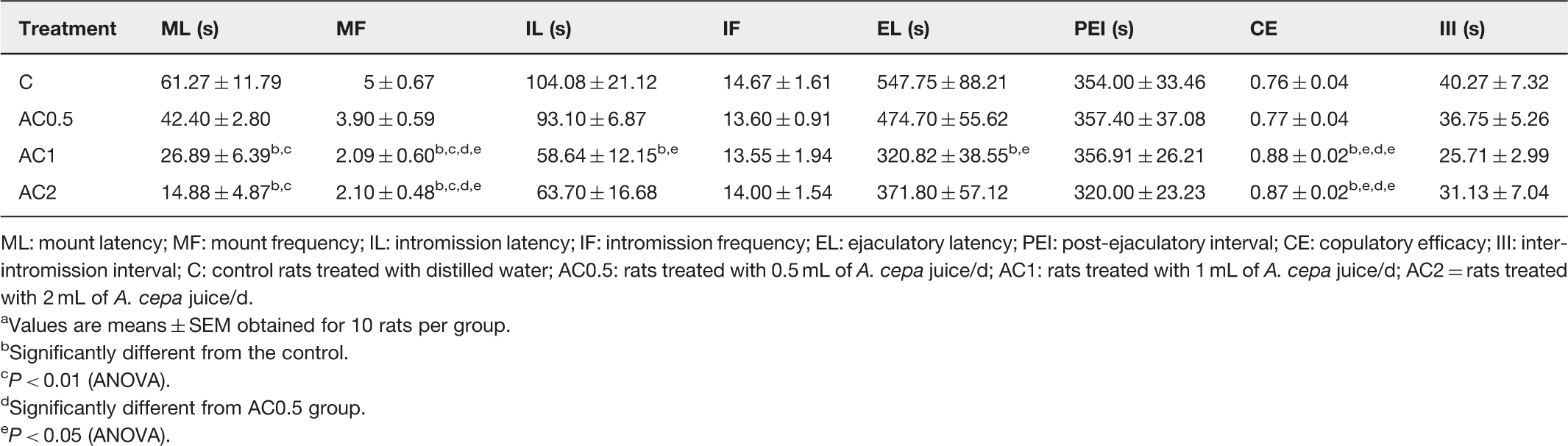
ML: mount latency; MF: mount frequency; IL: intromission latency; IF: intromission frequency; EL: ejaculatory latency; PEI: post-ejaculatory interval; CE: copulatory efficacy; III: inter-intromission interval; C: control rats treated with distilled water; AC0.5: rats treated with 0.5 mL of A. cepa juice/d; AC1: rats treated with 1 mL of A. cepa juice/d; AC2 = rats treated with 2 mL of A. cepa juice/d.
Values are means ± SEM obtained for 10 rats per group.
Significantly different from the control.
P < 0.01 (ANOVA).
Significantly different from AC0.5 group.
P < 0.05 (ANOVA).
Copulatory behavior in paroxetine-induced sexually dysfunction rats
Effects of 20 days of treatment with fresh onion juice (Allium cepa) on sexual behavior parameters of paroxetine-induced sexually dysfunctional male rats a
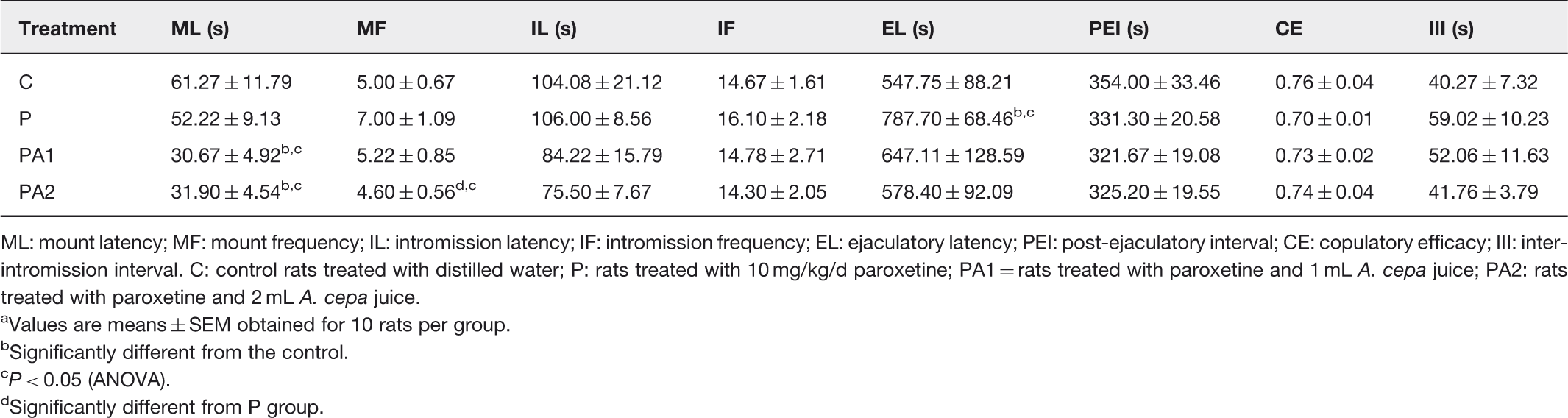
ML: mount latency; MF: mount frequency; IL: intromission latency; IF: intromission frequency; EL: ejaculatory latency; PEI: post-ejaculatory interval; CE: copulatory efficacy; III: inter-intromission interval. C: control rats treated with distilled water; P: rats treated with 10 mg/kg/d paroxetine; PA1 = rats treated with paroxetine and 1 mL A. cepa juice; PA2: rats treated with paroxetine and 2 mL A. cepa juice.
Values are means ± SEM obtained for 10 rats per group.
Significantly different from the control.
P < 0.05 (ANOVA).
Significantly different from P group.
The percentage of ejaculating rats decreased significantly (P < 0.05) from 100% in the control group to 50% in the P group. However, this percentage was restored to the control value in PA1 and PA2 (Figure 1).
Percentage of ejaculating rats after 20-day oral administration of Allium cepa juice to paroxetine-induced sexual dysfunction male rats. C: control group that received a daily dose of 1 mL distilled water; P: group treated with a daily dose of 10 mg/kg paroxetine; PA1: group treated with a daily dose of 1 mL of A. cepa and 10 mg/kg paroxetine; PA2: group treated with a daily dose of 2 mL of A. cepa and 10 mg/kg paroxetine. *P < 0.05 compared with control (C) group (Fisher's exact test)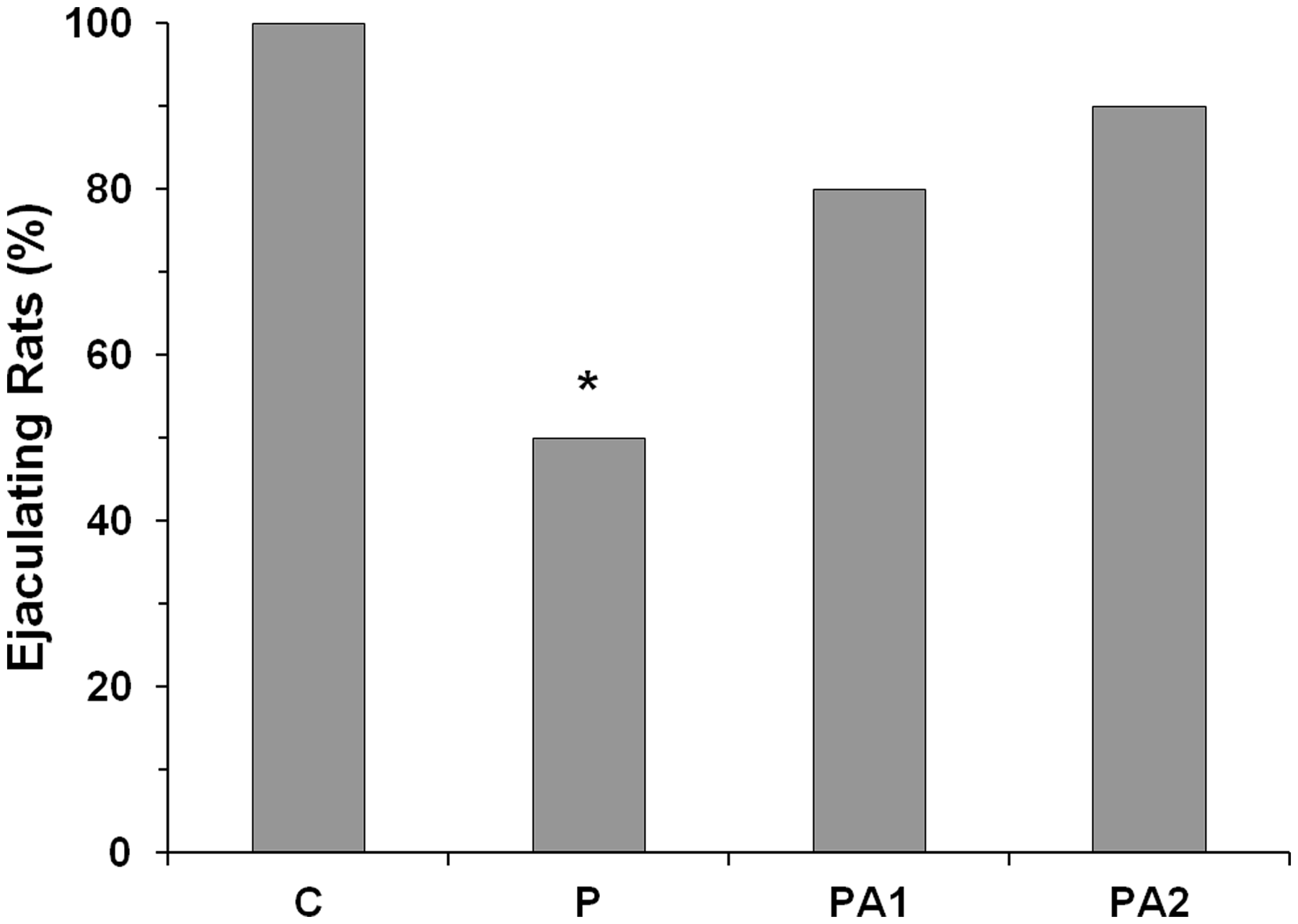
Serum testosterone levels
In sexually potent rats, serum testosterone levels significantly (P < 0.05) increased in AC1 and AC2 compared with the control and AC0.5 (Figure 2). The serum testosterone levels in the AC1 and AC2 groups were 8.22 ± 0.77 and 8.13 ± 1.00 ng/mL, respectively, while that in the control and AC0.5 groups were 5.34 ± 0.42 and 5.86 ± 0.57 ng/mL, respectively (mean ± SE).
Influence of 20-day oral administration of Allium cepa juice on serum testosterone level in sexually potent male rats. Values represent the means ± SEM for four different groups: (C: control group that received a daily dose of 1 mL distilled water; AC0.5: group treated with a daily dose of 0.5 mL of A. cepa; AC1: group treated with a daily dose of 1 mL of A. cepa; AC2: group treated with a daily dose of 2 mL of A. cepa). Each group contained six male rats. *P < 0.05 compared with control (C) and AC0.5 groups (ANOVA)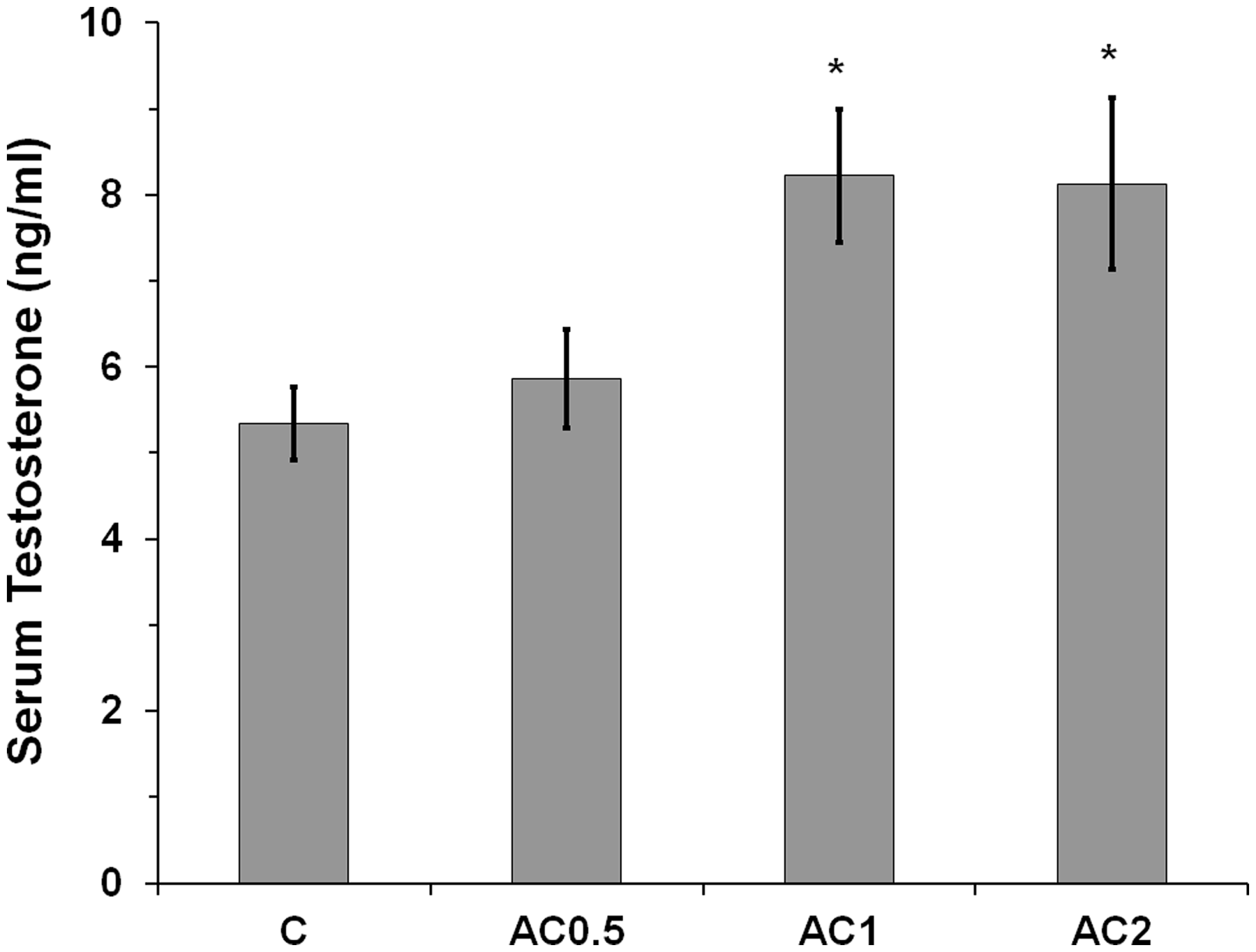
In paroxetine-treated rats, a significant (P < 0.01) reduction in serum testosterone level was found in the P group compared with the control group. This reduction was attenuated to normal values in the rats in PA1 and PA2 groups (Figure 3).
Influence of 20-day oral administration of Allium cepa juice on serum testosterone level in paroxetine-treated male rats. Values represent the means ± SEM for four different groups (C: control group that received a daily dose of 1 mL distilled water; P: group treated with a daily dose of 10 mg/kg paroxetine; PA1: group treated with a daily dose of 1 mL of A. cepa and 10 mg/kg paroxetine; PA2: group treated with a daily dose of 2 mL of A. cepa and 10 mg/kg paroxetine). Each group contained six male rats. **P < 0.01 compared with all other groups (ANOVA)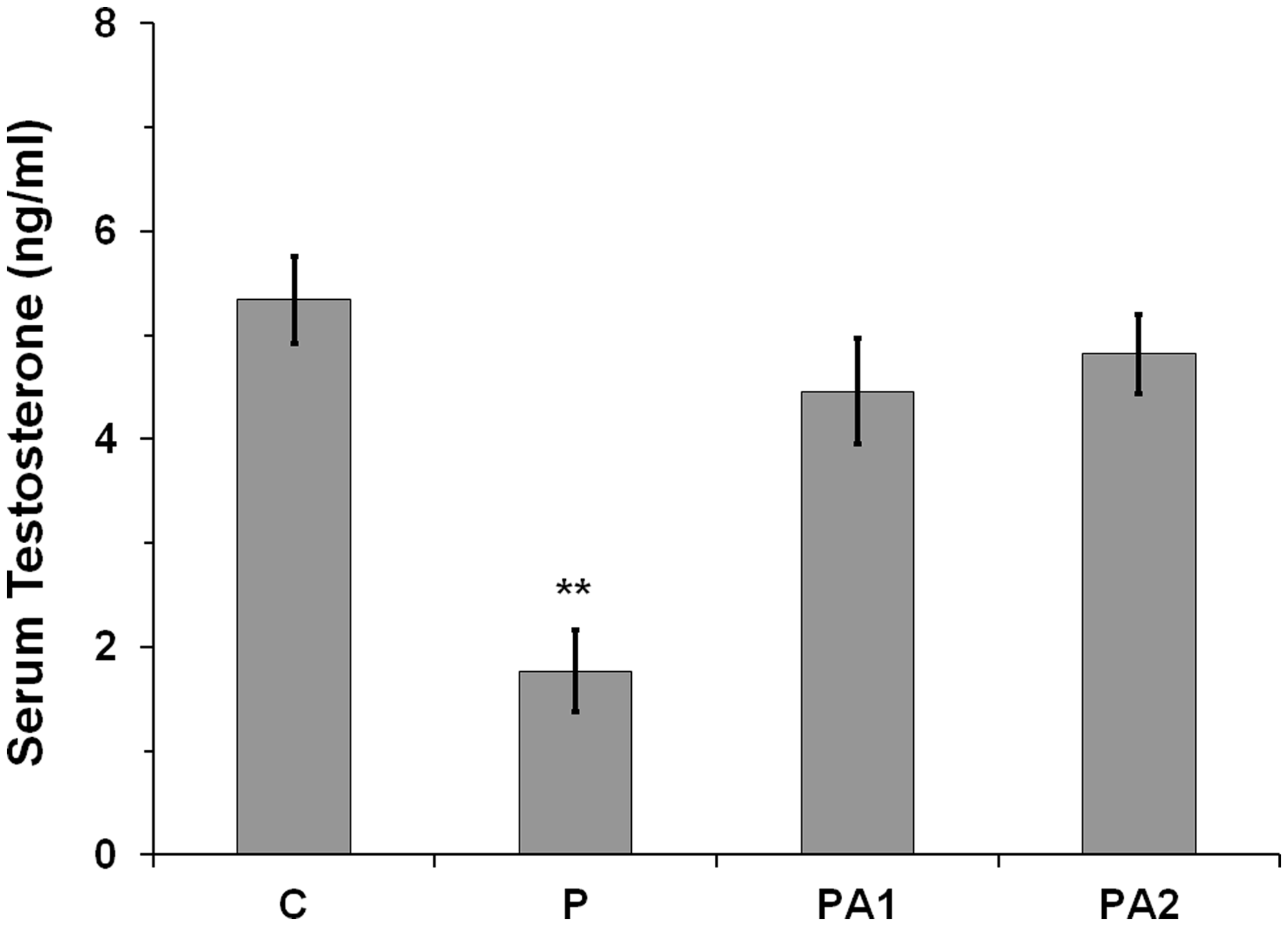
Discussion
To our knowledge, this is the first study to investigate the effects of different doses of fresh A. cepa juice in improving sexual motivation and performance in sexually potent male rats. This research represents a primary and necessary step towards providing scientific evidence for the value of this juice as a sexual stimulant in males. It also examines the potential of onion juice to alleviate sexual dysfunction-related side effects induced by antidepressant drugs.
The oral administration of A. cepa juice over 20 days significantly stimulated sexual motivation in potent male rats. This stimulatory effect was evidenced by reduced mount frequency and latency (parameters considered as measures of motivation in rats 18 ) in the AC1 and AC2 groups compared with the control group. In addition, copulatory efficacy, which represents the efficiency of erection and penile orientation, significantly increased in AC1 and AC2 compared with the control, indicating improved sexual performance in these groups. 13
Paroxetine is a selective serotonin reuptake inhibitor that is mainly used as an antidepressant drug. Paroxetine and other antidepressants are commonly associated with sexual dysfunction-related side effects,19–21 and several studies have used paroxetine to establish rat models of sexual dysfunction.15–17 In this study, paroxetine administration significantly reduced sexual potency in male rats, as indicated by the significantly increased ejaculation latency and reduced percentage of ejaculating rats in the paroxetine-treated group. This result coincides with a previous report that found paroxetine delayed ejaculation by impairing the function of serotonin receptor 5-HT1A, which is known to accelerate ejaculation in rats. 22 However, treatment with A. cepa juice alleviated the effect of delayed ejaculation induced by paroxetine and increased the percentage of ejaculating rats. Furthermore, A. cepa therapy not only improved sexual potency in the paroxetine-treated rats but also enhanced motivation, as indicated by significantly reduced mount latency compared with that observed in the control group. These findings corroborate a recent report by Malviya et al., 15 in which administration of ethyl acetate extract of onion bulb reduced mount and ejaculation latencies in paroxetine-induced sexually dysfunctional male rats.
The enhanced sexual behavior in potent male rats after treatment with A. cepa juice could be attributed to the significant increase in serum testosterone levels observed in these animals compared with the controls. It is well documented that sexual desire and potency are dependent on testosterone levels in blood.9,23 Previous studies have suggested that a slight increase in testosterone level in adult males can lead to significant increases in sexual desire and libido.24,25
The increase in serum testosterone level in the AC1 and AC2 groups compared with the control corroborates evidence from previous reports on androgenic activity of A. cepa.3,8 This activity does not appear to be dose-dependent, since no variation in testosterone level was detected between rats treated with either 1 or 2 mL A. cepa juice. However, further investigation using additional concentrations of A. cepa is required to determine the dose-dependency issue. Moreover, it seems that there is a threshold dose of A. cepa that is required to stimulate testosterone production, since no variation in testosterone level was detected between control and AC0.5 groups. This finding in the AC0.5 group was further reflected in sexual function, since no improvement in copulatory behavior was observed in the rats in this group.
Paroxetine and other serotonin reuptake inhibitor drugs act by increasing extracellular levels of serotonin. Excess serotonin was found to inhibit testicular androgen synthesis and to disrupt testosterone metabolism in male rats. 26 In the present study, paroxetine treatment in rats was associated with a significant reduction in serum testosterone level. This result concurs with previous findings that serotonin reuptake inhibitor drugs including paroxetine are associated with low levels of free serum testosterone. 27 Schlösser et al. 28 reported no alteration in nocturnal testosterone secretion in men after four weeks of paroxetine treatment. However, the lower dose given in their experiment (30 mg day·individual−1) compared with the dose given in this study (10 mg kg·day−1) should be taken into consideration. Further studies with different doses and treatment intervals are needed to elucidate the precise effects of paroxetine on testosterone secretion.
In summary, the present study supports the hypothesis that A. cepa has aphrodisiac activity and may enhance male sexual libido and performance. It also confirms previous reports that A. cepa may attenuate sexual dysfunction induced by paroxetine treatment. The observed improvements in copulatory behavior resulting from administration of A. cepa juice could be mostly attributed to increased serum testosterone levels in male rats. Nevertheless, future investigations that include clinical trials are warranted to substantiate these effects of onion juice in humans.
Footnotes
Author contributions
All authors participated in the design, interpretation of the studies and analysis of the data and review of the manuscript; MZA and HMD conducted the animal experiments. All authors participated equally in sexual behavior monitoring, dissection, blood collection, and serum testosterone assay. MZA analyzed the data and wrote the manuscript.
Funding
Funds for this study were provided by a grant from the Deanship of Research at JUST (22/2012).
ACKNOWLEDGMENT
We would like to thank Princess Haya Biotechnology Center for providing the facilities and equipment that were required for the phytochemical analyses.