






Abstract
In this review, we provide an update on the current and future applications of saliva for diagnostic purposes. There are many advantages of using saliva as a biofluid. Its collection is fast, easy, inexpensive, and non-invasive. In addition, saliva, as a “mirror of the body,” can reflect the physiological and pathological state of the body. Therefore, it serves as a diagnostic and monitoring tool in many fields of science such as medicine, dentistry, and pharmacotherapy. Introduced in 2008, the term “Salivaomics” aimed to highlight the rapid development of knowledge about various “omics” constituents of saliva, including: proteome, transcriptome, micro-RNA, metabolome, and microbiome. In the last few years, researchers have developed new technologies and validated a wide range of salivary biomarkers that will soon make the use of saliva a clinical reality. However, a great need still exists for convenient and accurate point-of-care devices that can serve as a non-invasive diagnostic tool. In addition, there is an urgent need to decipher the scientific rationale and mechanisms that convey systemic diseases to saliva. Another promising technology called liquid biopsy enables detection of circulating tumor cells (CTCs) and fragments of tumor DNA in saliva, thus enabling non-invasive early detection of various cancers. The newly developed technology—electric field-induced release and measurement (EFIRM) provides near perfect detection of actionable mutations in lung cancer patients. These recent advances widened the salivary diagnostic approach from the oral cavity to the whole physiological system, and thus point towards a promising future of salivary diagnostics for personalized individual medicine applications including clinical decisions and post-treatment outcome predictions.
Impact statement
The purpose of this mini-review is to make an update about the present and future applications of saliva as a diagnostic biofluid in many fields of science such as dentistry, medicine and pharmacotherapy. Using saliva as a fluid for diagnostic purposes would be a huge breakthrough for both patients and healthcare providers since saliva collection is easy, non-invasive and inexpensive. We will go through the current main diagnostic applications of saliva, and provide a highlight on the emerging, newly developing technologies and tools for cancer screening, detection and monitoring.
Introduction
Saliva (whole saliva [WS], oral fluids [OFs]) is an acidic (pH = 6–7) biological fluid composed of secretions from the three major salivary glands (parotid, submandibular, sublingual) and from minor glands (i.e. labial, buccal, lingual, and palatal tissues), gingival crevicular fluid, cell debris, plaque, bacteria, nasal and bronchial secretions, lining cells, blood and exogenous substances.1,2 It contains 99% water, 0.3% proteins and both 0.2% inorganic and organic substances. 3 The most prevalent inorganic components include: sodium, potassium, calcium, magnesium, chloride, and carbonates, while the organic components comprise amylases, peroxidase, lipase, mucins, lysozyme, lactoferrins, kallikreins, cystatins, hormones, and growth factors. 4 In a healthy individual, the daily salivary secretion is estimated to be between 0.5 and 1.5 L. 5
Saliva plays an important role in many biological functions such as perception of oral sensations (i.e. taste, temperature and touch), lubrication, chewing, swallowing, and digestion. In addition, it enhances remineralization of tooth enamel and prevents demineralization due to its buffering capacity.6,7
Saliva also protects oral mucosa against biological, mechanical, and chemical factors, as well as against bacterial, viral, and fungal infections, thus maintaining the oral cavity ecosystem remain in balance.8,9
There are many advantages of using saliva as a biofluid. Its collection is fast, easy, inexpensive, and non-invasive. 10 It is suitable for home use (without the need for medical personal) as well as for epidemiological researches. It is easy to store and ship, does not clot, and can reflect the current physiological state of an individual.1,11 Since there is no need for using needles for sample collection, it is not only more comfortable for patients, since anxiety levels are reduced. Saliva is also beneficial for healthcare providers, as the risk for percutaneous injury and self-contagion is avoided. Saliva, as a “mirror of the body,” can thus reflect the physiological and pathological state of the body. 2
In the last few decades, one of the disadvantages of using saliva as a diagnostic tool was the lack of suitable cost-effective technology. 12 However, recent publications show that this obstacle will soon be removed. Segal and Wong 13 and Wong 14 reported that a biological fluid such as saliva could be used as a diagnostic tool for monitoring a disease if it meets the criteria of being easily and non-invasive collected, possesses validated and definitive biomarkers for a specific disease, and is capable of having its biomarkers detected on existing technologies.13,14
In this review, we will present an update on the current approaches of salivary diagnostics, including the discovery of salivary biomarkers for the diagnosis of various human pathological conditions.
Areas of diagnostic application of saliva
Saliva reflects both local and general health of the human body, and thus it has the potential to be used for the detection of essential biomarkers for both oral and systemic diseases.1,10
There are many major areas where salivary diagnostics can be applied, including the fields of medicine, dentistry, pharmacotherapy, epidemiology, and bioterrorism (Figure 1).
Major areas of salivary diagnostics. (A color version of this figure is available in the online journal.)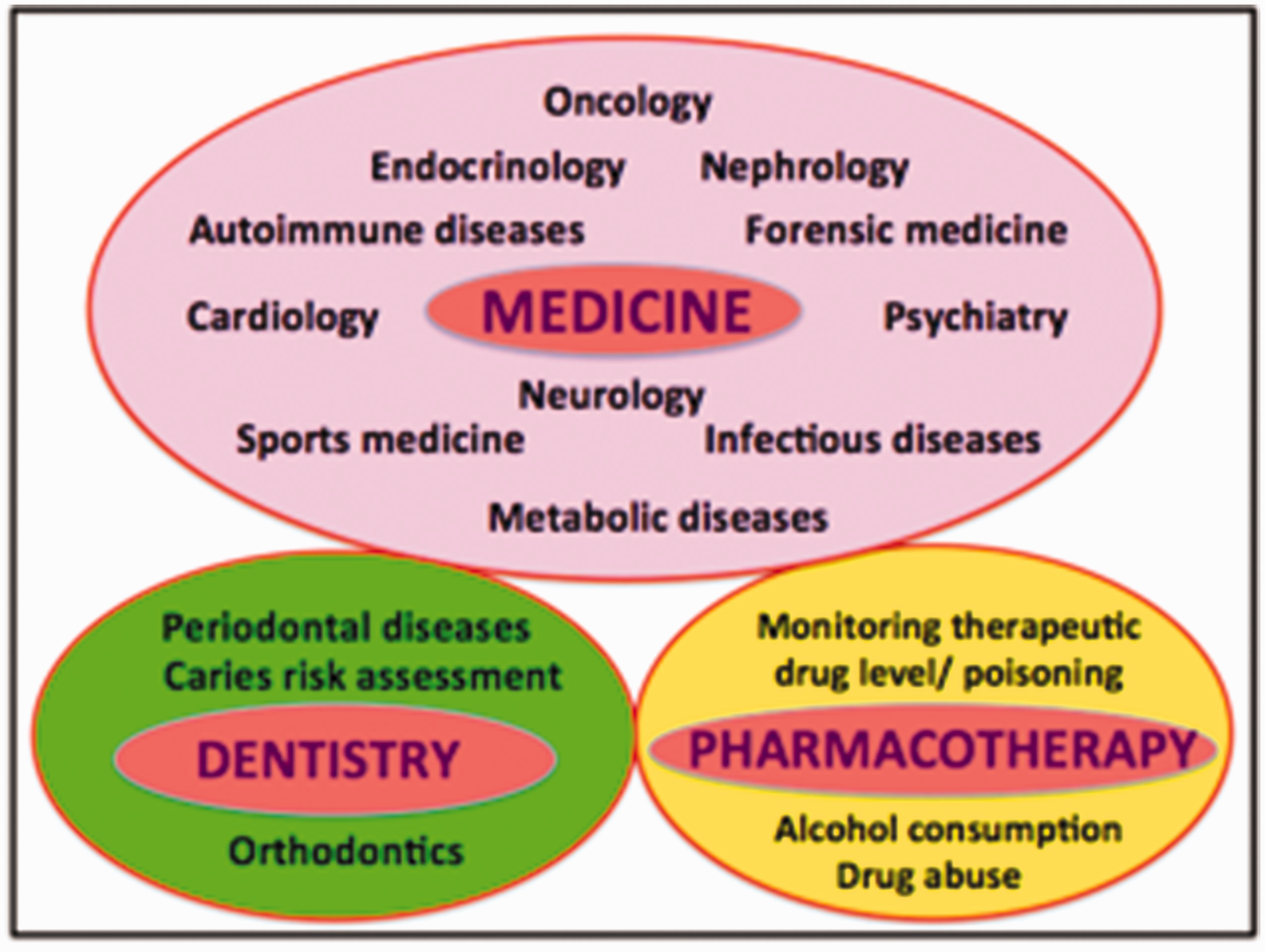
Medicine
For a better comprehension of some of the main applications of salivary biomarkers in current and prospective medicine, we have subdivided them into several categories according to specific medical specialties:
Oncology
Oncology is a branch of medicine that deals with the prevention, diagnosis, and treatment of cancer. Saliva serves as a useful diagnostic mean in the early detection of various cancers such as oral cancer, pancreatic cancer, breast cancer, lung cancer, or gastric cancer. Anti-p53 antibodies are known tumor markers for esophageal cancer, stomach cancer, and cancer of the large intestine as well as for oral squamous cell carcinoma (OSCC). 15 CA-125 is used as a marker for ovarian, endometrial, lung, breast, and gastrointestinal cancers. 16 CA 15-3 and c-erbB-2 are used in diagnostics of breast cancer, 17 while overexpression of EGFR receptor is observed in pancreatic cancer. 18
Oral cancer
The use of salivary biomarkers for early detection of oral cancer, for which the five-year survival rate is still very low (62%), has recently attracted much interest in research studies.
19
More than 90% of oral cancers are OSCC and most OSCCs are diagnosed at an advanced stage, thus pointing out the need for clinical diagnostic aids for early detection of OSCC (Figure 2).
Oral squamous cell carcinoma in the right buccal mucosa of a 50-year-old female patient. Since the lesion was asymptomatic, the patient did not seek for medical consultation earlier and the cancer was diagnosed during a regular check-up appointment. Early diagnosis is preferable due to tendency of the tumor to spread. (A color version of this figure is available in the online journal.)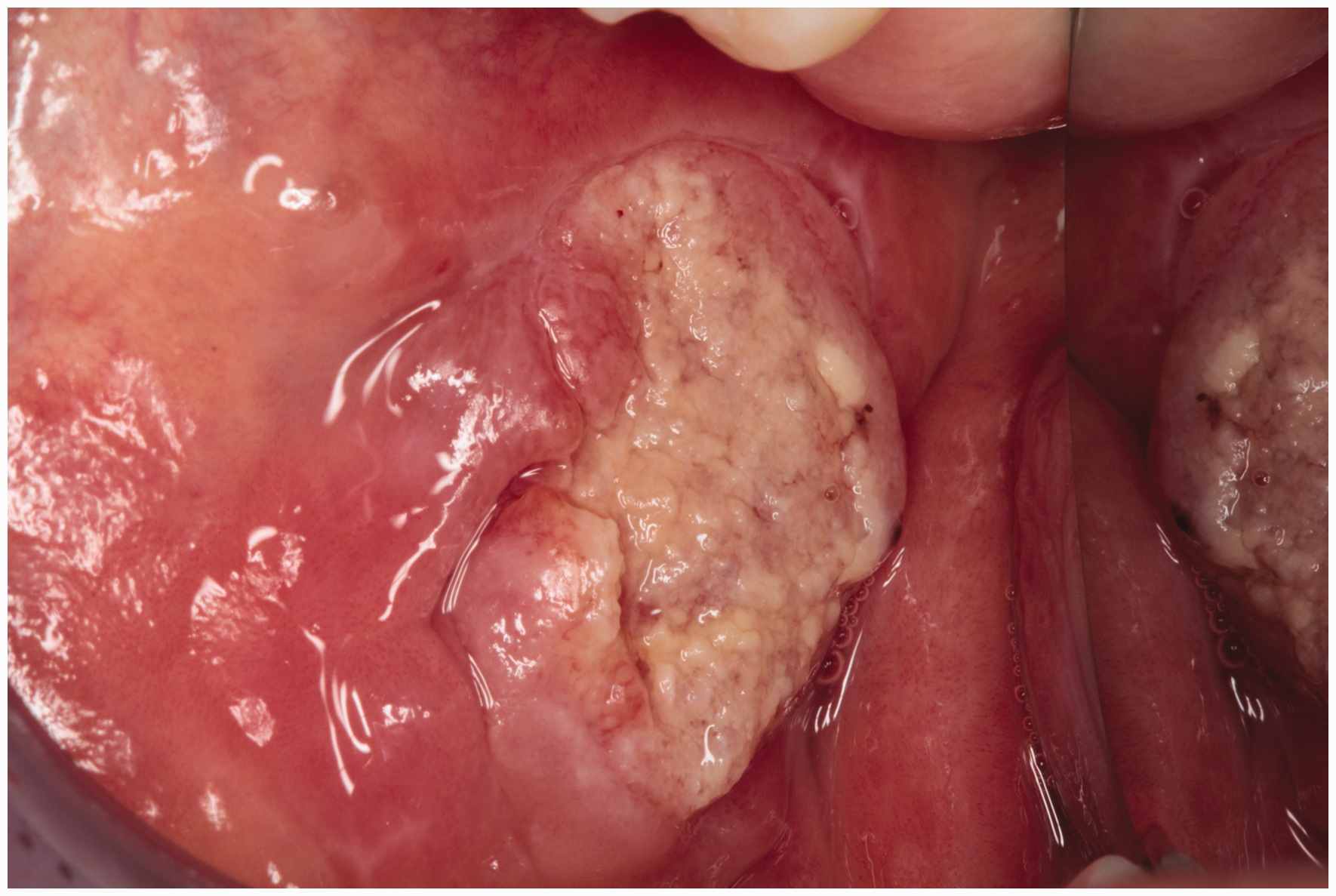
Types of salivary biomarkers used in the diagnosis of OSCC and the technology used for their discovery
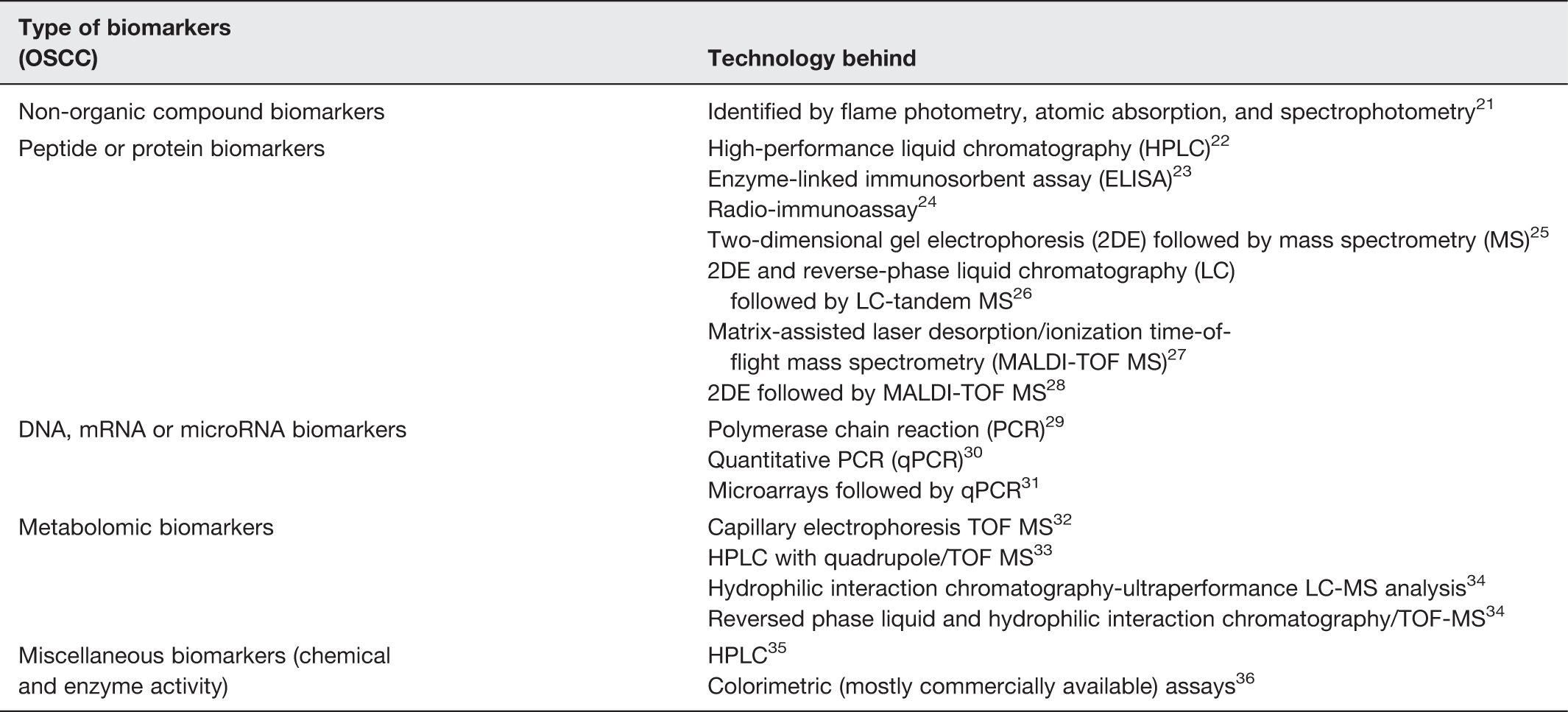
Three tumor markers (Cyfra 21-1, tissue polypetide antigen [TPA] and cancer antigen CA-125) are significantly increased in saliva of patients diagnosed with OSCC.11,24 Specifically, Cyfra-21-1 was found to be elevated in patients with potentially malignant and malignant disorders of the oral cavity. 37 Shpitzer et al. 38 reported that cyclin D1 and Ki-67 were increased in correlation with tumor proliferation and the presence of metastasis, thus indicating a poor prognosis for oral cancer patients.
Also, higher levels of MMP-2, MMP-9, and TNFα were observed in oral cancer patients compared to control subjects.38,39
In addition, our group identified five proteins such as M2BP, MRP14, profilin, CD59, and catalase that were able to discriminate oral cancer with greater than 90% clinical accuracy (sensitivity of 90% and specificity of 83%). 26
We also developed salivary RNA biomarkers for OSCC by means of microarray analysis including transcripts of IL8, IL-1β, DUSP1, HA3, OAZ1, S100P, and SAT with 91% sensitivity and 91% specificity. 31 Similarly, Brinkmann et al. 40 and Elashoff et al. 41 have recently confirmed that DUSP1, IL-1β, and IL-8 are increased in OSCC.
Furthermore, changes in valine, lactic acid, and phenylalanine yielded high sensitivity (90%) and specificity (83%) with positive predictive value (85%) between healthy, oral cancer and precancerous conditions in the study performed using ultraperformance LC coupled with quadrupole/TOF-MS and multivariate statistical analysis. 33 Similarly, recently a study was carried out using hydrophilic interaction chromatography-ultraperformance LC-MS analysis reports significant differences in the concentration of choline, betaine, pipecolinic acid (high in OSCC), and L-carnitine (low in OSCC). 34 Finally, the use of a novel system in which reversed phase liquid and hydrophilic interaction chromatography were combined with TOF-MS resulted in the discovery of five new metabolic markers for OSCC, such as propionylcholine, N-acetyl-L-phenylalanine, sphinganine, phytosphingosine, and S-carboxymethyl-L-cysteine. 34
Pancreatic cancer
Pancreatic cancer affects ∼44,030 individuals and ∼37,660 succumb to the disease annually in the United States. 19 The five-year survival for pancreatic cancer is worst of all human cancers. Our laboratory demonstrated the development of validated salivary extracellular RNA (exRNA) biomarkers for the detection of early resectable pancreatic cancer. The logistic regression model with the combination of four messenger RNA biomarkers (KRAS, MBD3L2, ACRV1 and DPM1) could differentiate pancreatic cancer patients from non-cancer subjects with 90.0% sensitivity and 95.0% specificity (ROC = 0.971). 42
Recently, Humeau et al. 43 explored that salivary micro-RNA (miRNA) are discriminatory in patients with pancreatic tumors that are not eligible for surgery compared to patients diagnosed with precancerous lesions, inflammatory disease, or cancer-free control subjects.
Gastric cancer
Gastric cancer is the fourth most common cancer and the second leading cause of cancer-related death worldwide. 44 Approximately 880,000 people succumb to this malignancy each year. Such high mortality is mainly due to the delayed diagnosis, since early gastric cancers are typically asymptomatic or cause only nonspecific symptoms. 45 Three salivary proteins have been linked to gastric cancer: cystatin B (CSTB), triosephosphate isomerase (TPI1) and deleted in malignant brain tumors 1 protein (DMBT1). These markers could be used to differentiate gastric cancer patients from control subjects (p < 0.05) with 85% sensitivity and 80% specificity. 46
Future perspectives
Despite the scientific acceptance of salivary biomarkers for the detection of human diseases, the absence of a mechanistic rationale in regards to the communication between the distal tumor and the oral cavity undermines saliva's scientific credibility for clinical utility. Currently, tumor-derived microvesicles (exosomes) are of high interest to researchers, as they might be the key to understanding the communication between cancer and the oral cavity, leading to the development of tumor-specific salivary biomarkers. 47 Using a rodent pancreatic cancer model, we have demonstrated that tumor-specific mRNA markers are shed from the pancreatic tumor cells, packaged in exosome and shuttled to salivary gland. 48
Infectious bacterial diseases
Helicobacter pylori (H. pylori) is a Gram-negative, microaerophilic bacterial pathogen that usually grows in the stomach mucus. H. pylori infection is the strongest risk factor for developing gastric and duodenal ulcers, the most common disease of the digestive system 49 and has been classified as type I carcinogen by the World Health Organization (WHO) due to its known involvement in the development of gastric MALT lymphoma. In the stomach, it can be diagnosed by means of endoscopy and the urea breath test. 50 However, this test should be avoided for diagnosing oral H. pylori infection, since in the oral cavity there are many Campillobacter-like and Streptoccocus bacteria with the urease-positive capability, which may contribute to false positive results. 51 Because of these false positives, the detection of H. pylori in the saliva is more effectively detected by means of polymerase chain reaction (PCR).52,53
Infectious viral diseases
Numerous viruses including hepatitis A, B, and C viruses,54–57 cytomegalovirus,58,59 Epstein Barr virus, 60 virus herpes (1,2,6,7,8) 61 and recently Zika virus 62 can be isolated from the saliva. Moreover, measuring the level of salivary antibodies enables detection of Morbillivirus infection causing measles (with 97% sensitivity and 100% specificity), 63 Paramyxoviridae causing mumps (94% sensitivity and 94% specificity), or Togaviridiae causing rubella (98% sensitivity and 98% specificity).64,65
Infectious fungal diseases
Some fungal local infections, like candidiasis, have been already diagnosed in saliva. 66
Autoimmune diseases
Salivary diagnostics is a common tool in detection of autoimmune diseases such as Sjögren's syndrome, celiac disease, and cystic fibrosis.
Sjögren's syndrome (SS) is an autoimmune disease of salivary and tear glands (Figure 3). It is characterized by increased levels of salivary interleukins such as IL-2 and IL-6 reduction in stimulated and unstimulated salivary flow and an increase in the concentration of IgA, IgG, IgM, Na, lactoferrin, albumin, β2 microglobulin, cystatin S and C, lipid, prostaglandin E2, and thromboxane B2.67,68 In this line, Streckfus et al.
69
analyzed WS in patients with primary and secondary Sjögren's syndrome and those treated with interferon. Their results were consistent with the current literature and confirmed that healthy individuals have lower levels of IL-2 and IL-6 than the affected subjects. In addition, the authors stated that the application of topical interferon may increase the rate of salivary secretion and decrease the presence of these cytokines in saliva.
55-year-old female patient with xerostomia, xeroftalmia, and non-tumoral, non-inflammatory bilateral enlargement of the parotid gland diagnosed as Sjögren's syndrome. (A color version of this figure is available in the online journal.)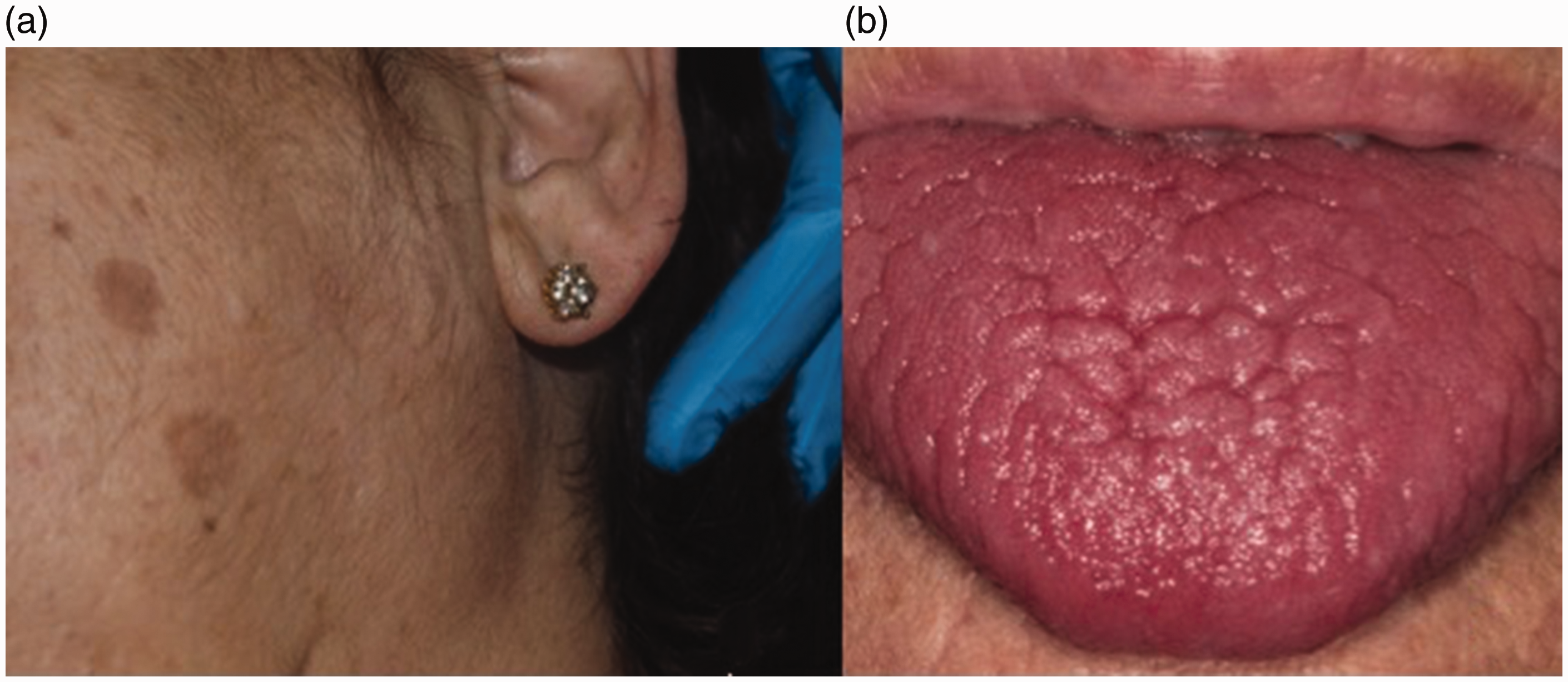
In 2007, our group identified a panel of protein and mRNA biomarkers in saliva for the detection of primary Sjögren Syndrome (pSS). 70 In the later study by Hu et al., three protein biomarkers (cathepsin D [CPD], α-enolase, and ß2-microglobulin [ß2m]) and three mRNA biomarkers (myeloid cell nuclear differentiation antigen [MNDA], guanylate binding protein 2 [GBP-2], and low-affinity IIIb receptor for the Fc fragment of IgG) were significantly elevated in patients with primary SS compared with both systemic lupus erythematosus (SLE) patients and healthy controls. The combination of three protein biomarkers (CPD, α-enolase and ß2m) yielded a receiver operating characteristic (ROC) value of 0.99 in distinguishing primary SS from healthy controls. The combination of protein biomarker ß2m and 2 mRNA biomarkers, MNDA, and GBP-2, reached a ROC of 0.95 in discriminating primary SS from SLE. 71 We have also discovered salivary autoantibody biomarkers for primary SS using a protein microarray approach that reflects damaged glandular cells and an activated immune response. These results have the potential to lead to the development of a low-cost clinical tool for simple, non-invasive detection of pSS. 72
In celiac disease, the ingestion of gluten leads to the damage of salivary anti-gliadin antibodies in the small intestine of genetically predisposed patients.73,74 Bonamico et al. 75 demonstrated the presence of IgA and anti-tissue transglutaminase (tTG) in saliva of children diagnosed with celiac disease, while Dane et al. 76 reported about decreased salivary flow rate and buffering capacity compared to non-celiac controls.
Cystic fibrosis patients showed increased levels of prostaglandin PGE2 and decreased activity of protease and EGF in saliva.77–79
Endocrinology
In endocrinology, saliva has proven to be a useful diagnostic tool in measuring the concentration of unconjugated steroid hormones and melatonin, even substituting other biological fluids used until now (such as plasma, serum, and urine). 80 Currently, salivary diagnostics allow for monitoring of the cycle of hormonal secretions, endocrine functions using dynamic tests (Dexamethasone), controlling the concentration and metabolism of hormones used as drugs (hormone replacement therapy) and determining the free fraction of many hormones. The consolidation of these techniques could significantly reduce the costs of expensive hormonal endocrine studies.81,82
Thus, saliva is used to monitor the levels of aldosterone, 83 parathyroid hormone, 84 glucose, 85 and insulin.86,87
In addition, the levels of dehydroepiandrosterone are measured in the diagnosis of hirsutism, adrenal tumors, and adrenal genital syndrome,88,89 progesterone in diagnosis of menstruation disorders or infertility, 90 estriol in diagnosis of fetal maturation, 91 or cortisol in diagnosis of Cushing's syndrome.92–94 Saliva is also used for determining of levels of estradiol and testosterone in the diagnosis of hirsutism, menstrual disorders, adrenal and testicular tumors, steroidogenesis disorders, and for control of antiandrogenic therapy outcomes. 95 Taking into consideration that testosterone in saliva is free and unbound with proteins (sex-hormone-binding globulins [SHBGs]), the superiority of its determination is unquestionable compared to other biofluids.96,97
Psychiatry
Several authors have demonstrated the changes in hormones such as cortisol and alpha-amylase in anxiety disorders.98–102 For instance, Richter et al. 103 studied salivary cortisol levels in a population of pregnant women with anxiety disorder. 103 In this line, Rai et al. 104 conducted a study on periodontal patients with depression. Also, a wide range of stressors have been already explored in occupational and environmental medicine. 105 Recently, measurements of testosterone are widely used in assessing the degree of aggression, depression, violence, and antisocial behavior in psychiatry.106,107
Nephrology
Currently, the levels of salivary creatinine in saliva can be determined in order to monitor renal functions, and to ascertain the efficacy of dialysis in patients with end-stage terminal renal disease.108,109
Venkatapathy et al. 110 studied the correlation between serum and salivary creatinine in chronic renal failure patients. Their results showed that creatinine was higher both in serum and saliva of diseased patients. With a cut-off value of 0.2mg/dL, a sensitivity of 97.1% and specificity of 86% was reported.
Cardiology
Salivary diagnostics also plays an important role in cardiology, i.e. in risk assessment for cardiovascular diseases in people with insulin resistance111,112 or for acute miocardial infarction. 113 Thus, salivary alpha-amylase was reported as an independent diagnostic factor for acute myocardial infarction in patients suffering from precordial pain less than 4 h. 114 In addition, the use of nano-biochips based on salivary proteins (including C-reactive protein, myoglobin and myeloperoxidase) in patients with acute myocardial infarction was reported to be an effective technique for screening purposes. 115
In this way, salivary analysis may contribute to a better therapeutic management of acute cardiac events.
Metabolic diseases
Salivary biomarkers have been recently explored as a useful screening tool in patients diagnosed with metabolic disorders such as obesity 116 or diabetes mellitus.86,117–119
Diabetes mellitus is a metabolic disorder characterized by elevated blood glucose levels and it is one of the most important health problems faced by the humankind today. It leads to morphological changes in the salivary glands and in the composition of saliva. According to Malicka et al., 120 myeloperoxidase and IgA were correlated with a poor periodontal status in diabetic patients. 120
In addition, in diabetes mellitus type 2, Aitken-Saavedra et al. 121 reported a positive correlation between HbA1 and total amount of proteins, and an indirect correlation between HbA1 and pH in saliva. Since diabetes is a common chronic disease with many associated comorbilities, measuring the qualitative and quantitative salivary alterations could be a promising and cheaper way of monitoring affected patients.
Neurology
Salivary diagnostics is also used in some neurodegenerative diseases like Alzheimer's disease, where Shi et al. 122 found elevated levels of phosphorilated and total TAU proteins compared to healthy individuals.
In addition, Jang et al. 123 observed increased levels of nerve growth factor (NGF) and sensory neuropeptides (including substance P and calcitonin gene-related peptide [CGRP]) strongly correlated with the severity of pain in patients diagnosed with chronic migraine. 123
Sports medicine
Saliva analysis enables to monitor the metabolic response of sportsmen during physical training. Thus, they can avoid overtraining and lessen the risk of injuries. Moreover, they can accordingly modify their plan of training, in terms of duration, frequency, and intensity of exercises. Gatti and de Palo 124 have published a thorough review of the salivary components and their changes in relation to physical workouts. Also, Zauber et al. 125 studied changes in protein and metabolite levels in saliva during excessive exercising.
Forensic medicine
Saliva is a useful diagnostic tool in forensic sciences, where there is a possibility to differentiate individuals, who are still alive, from dead bodies. Interestingly, due to the fast oral tissue turnover, DNA extracted from the OFs is much more valid compared to other possible DNA sources. 126
Dentistry
Periodontics
Analysis of saliva may serve as a useful tool in assessment of current periodontal status, monitoring response to treatment and prediction of disease progression. Salivary biomarkers for periodontal diseases include proteins of host origin (i.e. enzymes and immunoglobulins), phenotypic markers, host cells, hormones, bacteria and bacterial products, ions, and volatile compounds. 127 The most common periodontal pathogens implicated in periodontal diseases include Tanerella forsythensis, Porphyromonas gingivalis and Treponema denticola, so called “red complex” of bacteria.128,129
Host response and inflammatory mediators in saliva include: IL-1β, IL-6, IL-8, TNF-α, elastase, aspartate, and aminotransferase,130,131 while bone-specific markers of tissue destruction and connective tissue breakdown comprise: collagen telopeptides, MMP-9, osteocalcin, proteoglycans, or fibronectin.12,132,133
In addition, metabolic profiling of saliva can provide a global outlook of the changes associated with periodontal diseases, particularly host enzymes (alkaline phosphatase, esterase, glucuronidase and aminopeptidase), prostaglandin E2, matrix metalloproteinase-8, 8-hydroxy-deoxyguanosine, dipeptides (leucylisoleucine, phenylphenol and serylisoleucine), as well as the fatty acids (arachidonate, arachidate and dihomolinolate).11,134–139
Caries risk assessment
The use of salivary diagnostics for caries risk assessment includes microbiome, proteomic, genomic, and transcriptomic approaches. The most common human dental caries-associated pathogens are Streptococcus mutans (S. mutans), Streptococcus sobrinus (S. sobrinus), and lactobacilli.140,141 Low salivary levels of alpha-defensins HNP1-3 contribute to caries susceptibility in children, 142 while salivary mucins (i.e. MUC7) promote agglutination of streptococci. 143
Caries risk assessment can be also managed by means of analyzing host-related factors in saliva including salivary flow rate, salivary pH, and buffer capacity. 141
Diagnostic tools include culture-based methods such as mitis salivarius bacitracin broth (MSBB), 144 dip-slide methods as well as newly emerging molecular technologies such as checkerboard DNA–DNA hybridization, genomic fingerprinting, 16S rRNA gene cloning and sequencing, T-RFLP and DNA sequencing including analysis of bacterial genome data.145,146 Also, PCR-based bacterial identification enables measurements of the cariogenic species in saliva. 147
Orthodontics
There are many compelling reasons to use saliva as a diagnostic aid to monitor the risk and the development of root resorption during orthodontic treatment. Nowadays, available methods of clinical evaluation are mostly radiographic. Although an easy and accessible method, they have disadvantages such as limited points of view and radiation exposure.
The composition of saliva may reflect the pathophysiology of many diseases connected with orthodontic treatment. Several studies reported on changes in saliva in patients undergoing orthodontic treatment, including: interleukin-1β and interleukin-1β receptor antagonist, 148 proteoglycans, 149 regulatory subunit of type II (RII) of cyclic AMP-dependent protein kinase (PKA) 150 or anti-HDE sIgA antibodies. 151 The results of salivary analysis could provide the evidence for clinical decisions to minimize the risk and severity of developing root resorption.
Pharmacotherapy
Monitoring the therapeutic drug level and poisoning
Salivary diagnostics plays a crucial role in pharmacotherapy to monitor the therapeutic drug levels, assess treatment outcomes of diseases through the use of medicines, to detect overdose as well as to study the biochemical and physiological effects of drugs such as carbamazepine, cisplatin, diazepam, digoxin, ethosuximide, irinotecan, lithium, metoprolol, paracetamol, phenytoin, primidone, procainamide, quinine, theophylline, or valproic acid.152,153 Also, cotinine can be monitored in saliva of smoking subjects. 154
Drug abuse
Saliva plays an important role in detection of various drugs in the blood such as amphetamine, cocaine, methadone, phencyclidine, marihuana, or opiates.155–157
Alcohol consumption
Salivary diagnostics serves as a diagnostic tool in alcohol consumption. 158
Five salivary diagnostic toolboxes “omics”
The term “Salivaomics” was introduced in 2008 due to the rapid development of knowledge about various “omics” constituents of saliva. Currently, there are known five major salivary diagnostic components such as proteome, transcriptome, micro-RNA (miRNA), metabolome, and microbiome. 159
Proteomics
The proteomics is the large-scale screening for proteins, their expression, modifications, and interactions by using high-throughput approaches. 160
In the recent times, a great breakthrough appeared in the field of proteomics. From about 40 proteins identified in the early 80s, nowadays more than 3000 various proteins are detected. 161
Currently, there are known two principal methods of proteomic analysis: two-dimensional gel electrophoresis (2DE) and mass-spectrometry analysis. 162 2DE enables separation of proteins in two dimensions according to the isoelectric point (IE) and the molecular weight (MW). The second method—MS enables identification of proteins and their qualitative (qualitative MS) as well as quantitative (quantitative MS) evaluation. 163 Proteins identified by MS can be further analyzed by electrospray ionization (ESI), matrix-assisted laser desorption ionization (MALDI), quadrupole/linear ion trap, time-of-flight (TOF), quadrupole TOF (QTOP), Fourier transform ion cyclotron resonance (FT-ICR), or the OrbiTrap. In addition, post-translationally modified proteins (phosphorylated, glycosylated, acetylated or methylated) can be evaluated by means of dendrimer-associated MS/MS, MALDI-MS, or targeted HPLC-ESI-MS/MS. 2
Proteomic analysis has been hampered by the presence of high-abundance proteins that either mask or reduce separation sensitivity. In saliva, those proteins include mainly alpha-amylase, albumin, and proline rich proteins (75% of the total saliva proteome). Those proteins hamper the detection of low-abundance proteins appearing in different disease conditions and as a result should be removed. There are three major methods of high-abundance protein removal 164 : enzyme-substrate absorption method used for alpha-amylase affinity removal, 165 immunodepletion method, and combinatorial peptide ligand library (CPLL). 166 Proteomic analysis of saliva is commonly used in the diagnostics of oral diseases as well as general health disorders such as oral candidiasis, 167 OSCC, 168 glossodynia, 169 head and neck squamous cell cancer, 170 Sjögren's syndrome 171 HIV, 167 autism, 172 fibromyalgia, 173 breast cancer, 174 lung cancer, melanoma, 82 or pancreatic cancer. 26
Transcriptomics
The transcriptome is composed of all gene transcripts present in a cell, and their quantity, for a specific developmental stage or physiological condition. It helps to reveal the functional elements of the genome as well as molecular components of cells and tissues, development, and disease. 175
The main method for identification of salivary transcriptomic biomarkers is microarray technology that can be validated by means of the quantitative real-time PCR (qPCR). Several salivary exRNAs have been already identified to allow the detection of many various diseases 176 such as oral cancer, 31 Sjögren syndrome, 70 resectable pancreatic cancer, 42 lung cancer, 177 ovarian cancer, 178 and breast cancer. 179 We have recently obtained proof of concept data that salivary biomarkers possess discriminatory power for the detection of pancreatic cancer with high sensitivity (90.0%) and high specificity (95.0%) (area under curve, AUC = 0.971) 42 that paves the way for prediction model validation study followed by a pivotal clinical validation.
Currently, a new high-resolution array from Affymetrix, GeneChip Human Transcriptome Array 2.0 (HTA 2.0) is commonly used that includes all transcript isoforms in the human transcriptome with >6 million probes targeting coding transcripts, exon–exon splice junctions, and non-coding transcripts. 180
Due to the limitations in microarray technology, detecting and quantifying coding transcript isoforms, in addition to non-coding trancripts, has been challenging. As a result, currently, RNA sequencing (RNA-Seq) has been the preferred newly developed method for characterizing the full human transcriptome by means of deep-sequencing technologies. Compared with microarrays, RNA-Seq is analytically more sensitive in terms of detecting moderately and differentially expressed genes and gives sequence information at each nucleotide position of specific gene.175,181 Therefore, our group is currently working on the development of highly discriminatory and definitively validated salivary exRNA biomarkers for gastric cancer detection by means of RNA Seq analysis.
Micro-RNA-Omics
MicroRNAs (miRNAs) are nucleic acids that are encoded by genes but not translated into proteins. They are non-coding RNAs, in which each primary transcript (pri-miRNA) is processed into a short stem-loop structure called a pre-miRNA and finally into functional miRNA. Mature miRNA molecules cause down-regulation of gene expression. 47 They play an important role in cell growth, differentiation, apoptosis, stress and immune response or glucose secretion.182–184
Metabolomics
Metabolome is the complete set of small molecular metabolites of living tissues including metabolic intermediates such as carbohydrates, lipids, amino acids, nucleic acids, hormones, and other signaling molecules. 159
Salivary metabolites are important in elucidating the pathways underlying different diseases, thus making it ideal for the early detection of a wide range of diseases, including oral cancer and periodontal diseases. 11 A systematic study of metabolites is called metabolomics. The major role of metabolomics is to identify novel metabolic biomarkers from cells, tissues, or body fluids by means of high-performance liquid chromatography-mass spectrometry (HPLC-MS) or two-dimensional gas chromatography MS and nuclear magnetic resonance spectroscopy in conjunction with pattern recognition methods. In this way, it will be possible to monitor and discover metabolic changes related to disease onset or therapeutic interventions. Those techniques have been already applied to chronic renal diseases, hepatocellular carcinoma and colorectal cancers 185 as well as to oral cancer and periodontal diseases. 11
Microbiomics
New technologies have allowed the scientists to start to unravel the complex interactions between the microorganisms and the human body. 159
It was reported that salivary microbiome could be used in the detection of early resectable pancreatic cancer by means of microbial profiling (the Human Oral Microbe Identification Microarray), where two microbial markers (Neisseria elongata and Streptococcus mitis) were successfully developed with 96.4% sensitivity and 82.1% specificity (ROC=0.9). 186 Currently, newer microbiome-based technologies have also become available, such as study of microbial sequences by means of RNA or DNA sequencing.
Technologies for salivary diagnostics
Point-of-care diagnostics
Currently, a great need exists for convenient and accurate point-of-care diagnostics that can serve as a non-invasive diagnostic tool.162,187
Novel point-of-care salivary technologies are being developed, which can facilitate biomarker identification without any pre-processing, screening, and non-invasive diagnostic testing such as Oral Fluid NanoSensor Test (OFNASET) for oral cancer detection, 188 my PerioPath (OralDNA Labs) for diagnosing of periodontal disease, 159 or the OraRisk HPV test (OralDNA Labs) to detect oral human papillomavirus (HPV) infection that could potentially lead to oral cancer.
There are several currently available or newly emerging technologies based on salivary diagnostics and development of microfluidics or micro/nanoelectromechanical systems (MEMS/NEMS). They are composed of mechanical, electrical, and functional elements such as sensors, actuators, and microelectronics that are made using the techniques of microfabrication. Those technologies enable to measure proteins, DNA, transcripts (mRNA), electrolytes, and small molecules in saliva. 162 Currently developed tools include electrochemical sensing, 189 on-chip qRT-PCR, 190 fiber optic microsphere-based arrays, 191 high-throughput DNA microarrays, 192 surface plasmon resonance-based fiber optic sensors, 193 and microchip-based electrophoretic immunoassay. 137
The new avenue of point-of-care diagnostics for “lab-on-a-chip” provides a new facet of point-of-care diagnostics, because it concurrently enables the detection of multiple biomarkers, and thus simultaneous diagnosis of many diseases. It seeks to integrate and automate all the complexities of a laboratory procedure into a device of the size of a computer chip. 194
Liquid biopsy
Liquid biopsy tests are non-invasive biofluid tests (i.e. serum, urine, saliva) that detect CTCs and fragments of tumor DNA shed into the bloodstream by cells undergoing apoptosis or necrosis. The amount of circulating cell-free DNA (cfDNA) corresponds to tumor staging and prognosis. Nowadays, liquid biopsy enables a variety of clinical and investigational applications such as early detection, assessment of molecular heterogeneity of general disease, monitoring of tumor dynamics (in melanoma, breast, ovarian or colon cancers), identification of genetic determinants for targeted therapy, evaluation of early treatment response, monitoring of minimal residual disease, or assessment of resistence evolution in real time. 195
There are various ways of detection and quantification of ctDNA (circulating tumor DNA) in blood such as Sanger sequencing, pyrosequencing, next generation sequencing, PCR-based technology, HPLC, mutant-enriched liquid chips, amplification refractory mutation system (ARMS), beads, emulsion, amplification and magnetics (BEAMing), or pyrophosphorolysis-activated polymerization (PAP). 195
However, a new technique was developed at the University of California at Los Angeles (UCLA), School of Dentistry, called EFIRM.
196
This technique enables disrupting and releasing the contents from exosomes and on-site monitoring of the released exosomal RNA/proteins biomarkers for a specific cancer. The first step involves pipetting of a sample of biofluid to the surface of a biosensor and applying a pulsed electric field to release molecular content from the exosome. Biorecognition of these molecules is carried out concurrently through a series of probes on the surface of the biosensor. Following the capture of the molecular targets, a series of reporting molecules are added to the biosensor, thus allowing the amount of a protein, DNA, or RNA target to be measured through electrochemical measurement of the current.
197
This technique allows direct detection in plasma and in saliva of specific mutations present in cancers, i.e. detection of epidermal growth factor receptor (EGFR) mutation in non-small cell lung cancer (NSCLC), thus eliminating the need for quantitative PCR
196
(Figure 4).
Electric field-induced release and measurement (EFIRM) technology for the detection of epidermal growth factor receptor (EGFR) mutations in bodily fluids of patients with lung cancer. (reproduction from Wei et al.
196
). (A color version of this figure is available in the online journal.)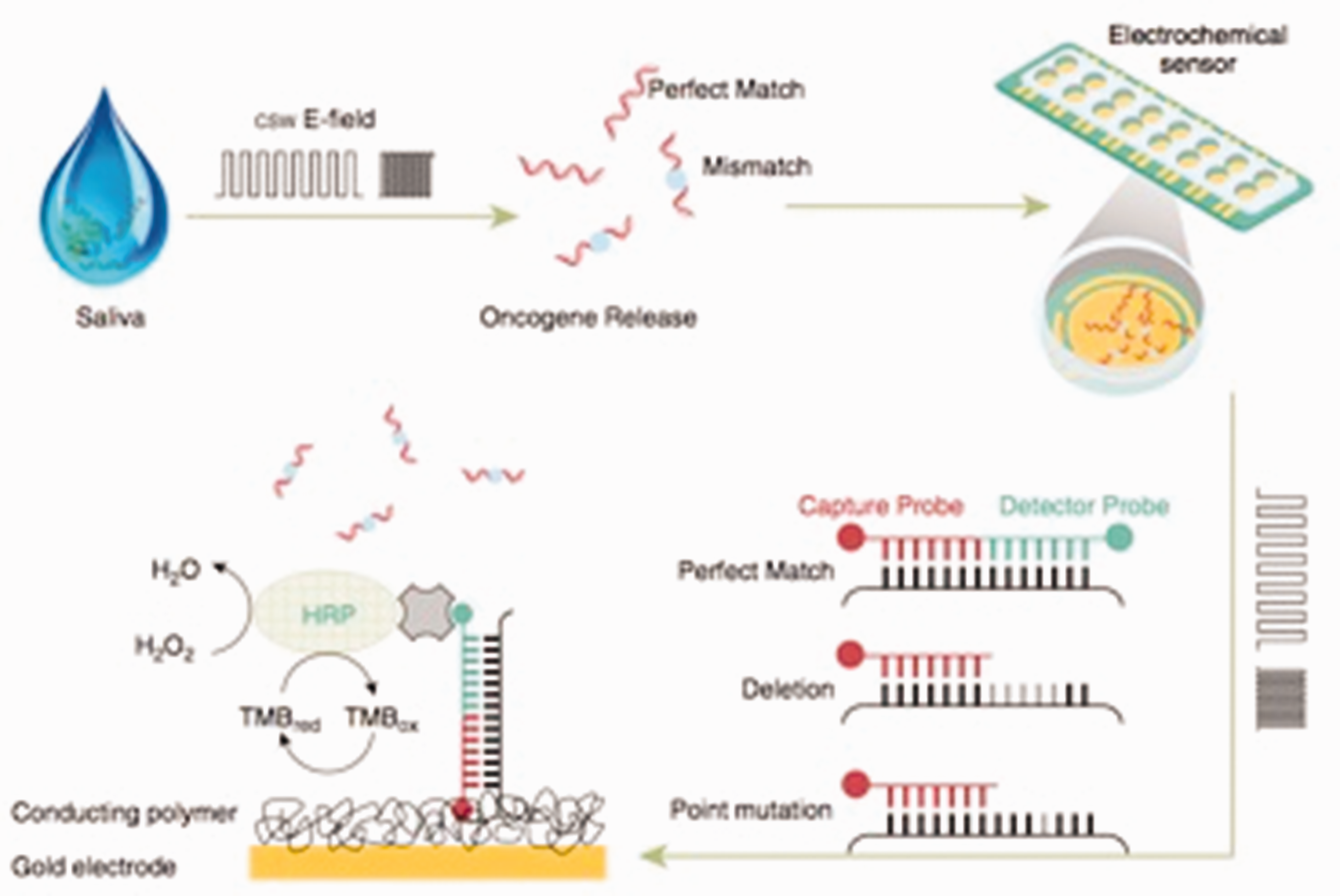
The results of performed experiments demonstrate that tumor-shed exosomes can be detected not only in blood, but also in saliva, thus launching a new venue for the non-invasive detection of tumor-specific proteins, micro RNAs, mRNAs, as well as gene mutations in saliva. 197
Conclusion
Non-invasiveness is the Holy Grail for early detection of diseases. While saliva diagnostics is widely recognized for human diseases, the absence of discriminatory and definitively validated biomarkers that reached the regulatory FDA approval undermines saliva's clinical utility. However, newly emerging and rapidly developing technologies such as recent point-of-care systems, RNA sequencing or liquid biopsy have the potential to deliver novel diagnostic solutions in the salivary field. These recent advances have broadly widened the salivary diagnostic approach from the oral cavity to the whole physiological system, thus making salivary diagnostics a clinical reality that can be highly accurate and feasibly used to make an assessment of health and disease status. Their outcome will provide clinical and scientific credibility for saliva that might translate it into improvement of treatment outcomes and advancing prevention in human oral and general diseases.
Footnotes
Authors' contributions
KEKU, CMCP, KA, and MT wrote the manuscript, while FGG and DTWW revised, corrected, and supervised the content of the manuscript. All authors read and approved the manuscript prior to submission.
Declaration of Conflicting Interests
David Wong is the co-founder of RNAmeTRIX Inc., a molecular diagnostic company. He holds equity in RNAmeTRIX and serves as a company Director and Scientific Advisor. The University of California also holds equity in RNAmeTRIX. Intellectual property that David Wong invented and which was patented by the University of California has been licensed to RNAmeTRIX. Additionally, he is a consultant to PeriRx.
None of the other authors have a conflict of interest in relation to this study.
Funding
This work was supported by the Public Health Service (PHS) grants from the National Institute of Health/National Institute of Dental and Craniofacial Research (NIH/NIDCR) in United States: UH3 TR000923, R90 DE022734 and U01 DE17593. The research was also supported from Colgate-Palmolive Company grants (No. 20130399 and No. 20140855) and Delta Dental grants (No. 20143014 and 20164106). DTWW acknowledges the donation from the Stand Up To Cancer.