







Abstract
On the morning of October 1st, 2020, I heard that my dear friend for the past thirty years, Dr. Peter Stambrook had passed away. Most weekends, Peter and I would speak over the telephone about life, science, the Society of Experimental Biology and Medicine, the journal Experimental Biology and Medicine, or some meeting we were planning or attending together. As I type this Tribute to Peter, on a Sunday morning, it seems impossible that Peter is gone but I know that people all around the globe can still feel his presence and impact upon their lives. Peter was a brilliant, energetic, kind, funny, compassionate, and loyal man who cared deeply about his family, science and being a mentor to scientists of all ages. He was particularly passionate about supporting the career development of students, post-doctoral fellows, and young faculty. He is survived by his wife of 39 years, Mary Piper, his daughter Elizabeth Stambrook and son-in-law Andrew Moore, and his grand-daughter Piper Moore. Mary, Elizabeth, Andrew and Piper: we thank you for sharing your husband, father and grandfather with us. We are all made better for having known Peter Stambrook.
Peter’s Career and Contributions to Science
Born in London, Dr. Stambrook immigrated to the United States with his family in the early 1950s. He received a scholarship to a highly acclaimed preparatory school, Millbrook School for Boys (now coed), and subsequently attended the Rensselaer Polytechnic Institute. He received an M.Sc. from Syracuse University, a Ph.D. from the State University of New York at Buffalo followed by an NIH-supported postdoctoral fellowship at the University of Kentucky. His first position was with the Department of Embryology at the Carnegie Institution of Washington in Baltimore, after which he joined the faculty at Case Western Reserve University.
Dr. Stambrook moved to the University of Cincinnati College of Medicine in late 1980 and in 1996 became the Francis Brunning Professor and Chair of the Department Cell Biology, Neurobiology and Anatomy, later to be renamed the Department of Cell and Cancer Biology. He retained this position until 2008 at which time he joined the Department of Molecular Genetics, Biochemistry and Microbiology and, in 2015, was given the honor of becoming a Distinguished Research Professor.
Dr. Stambrook had about 40 years of continuous research funding from the National Institutes of Health (NIH). He remained an NIH-funded investigator and continued to direct an NIH-funded training grant up to the time of his retirement in the summer of 2020. Dr. Stambrook’s honors include a Senior Fogarty Fellowship to work at St. Mary’s Hospital Medical School in London, the George Rieveschl Award for Distinguished Scientific Research, election as a Fellow of the Graduate School of the University of Cincinnati, election as a Fellow of the American Association for the Advancement of Science, election as an Overseas Fellow of the Royal Society of Medicine. He was the 2013 recipient of the Drake Medal from the University of Cincinnati and the recipient of the Environmental Mutagenesis and Genomics Society (EMGS) award.
Among his other activities, Dr. Stamboork served as the Scientific Director and Chair of the International Scientific Council for the Israel Cancer Research Fund (ICRF). He has also served on the board of the American Cancer Society, Ohio Division, and is a Past President of the Environmental Mutagenesis and Genomics Society (EMGS). Peter also served as Editor-in Chief of Mutation Research. I named Peter as an Associate Editor of Experimental Biology and Medicine (EBM) in July 2009, a role that he held continuously until his passing. Peter became the President of the Society of Experimental Biology and Medicine (SEBM) and is the current Past President of SEBM. In his roles as President of SEBM and Associate Editor of EBM, Peter played central roles in planning our SEBM/EBM scientific programs for the Experimental Biology (EB) meeting and International Experimental Biology and Medicine Conference (IEBMC). He focused on involving our student and post-doctoral SEBM members in the EB Symposium that they led and in SEBM Council activities. Peter also assisted me in growing the number of EBM Scientific categories. The best example is that adding Synthetic Biology as an EBM category was Peter’s idea and he recruited its first Associate Editors. His last activity for SEBM and EBM was collaborating with me in recruiting speakers, and leading sessions, for the SEBM/EBM Webinar Series on Synthetic Biology.
Dr. Stambrook had been a leader in the field of DNA replication and cell cycle regulation since his graduate student days. His versatility is demonstrated through his use of several different animal models to test his ideas, including the leopard frog, the South African clawed toad, the sea urchin, the laboratory mouse and mammalian cell cultures. In the later years, he extended the scope of his interests to cancer cells and embryonic stem (ES) cells, the latter being an excellent model to recapitulate some developmental aspects of cancer.
Peter’s first seminal contribution as a graduate student was to show that DNA replication patterns change during early embryogenesis (J. Exp Zool. 174:101-103, 1970). This was an important finding at a time when many still believed that DNA was a static transcription and replication machine rather than one that was fluid and dynamic. He and others developed the notion that DNA which replicates early is genetically more active than that which replicates late, and that these replication patterns differ in different cell types. He later showed that DNA active in transcription was more sensitive to ionizing radiation than DNA that was not being transcribed, a finding with important implications to radiation therapy (Biochim. Biophys. Acta. 699: 15-21, 1982). In a single authored paper, he was the first to show that the multiple copies of ribosomal DNA replicate as a cohort during the early part of the mammalian cell cycle (J. Mol. Biol. 82:303-313, 1974). In another single-authored paper (Nature 259:639-641, 1976), he was the first to show that many individual repeats of a mammalian transcribed repeated sequence (5S ribosomal DNA) differ in length and nucleotide sequence. This report profoundly affected subsequent thinking about the origin of these repeated sequences.
At a time when other investigators were using electron microscopy to study DNA replication in rapidly dividing invertebrate and amphibian embryos, Dr. Stambrook also chose to ask a much more challenging question regarding the nature and structure of replication origins in cultured mammalian cells. The reason that this was far more challenging is that in invertebrate embryos, where much of the work was done, the entire replication phase lasts around 15 minutes (fruit fly) or half an hour (sea urchin). Thus, the initiation of replication at replication origins is naturally highly enriched, rendering these structures relatively easy to visualize by electron microscopy. In contrast, the DNA replication phase in mammalian cells lasts from six to eight hours so that the probability of seeing a replication bubble, even in cells that are synchronized, is extremely low. To overcome this difficulty, Dr. Stambrook devised an ingenious approach involving heavy metal binding to the single strand region at the forks of new DNA replication.
Peter’s attention then turned to gene mutation and genomic instability as they relate to cancer. He was a key player in developing a knockout mouse model that utilized an endogenous marker for mutagenesis. Most notably, this model has been used for the description of Loss of Heterozygosity (LOH), as a consequence of mitotic recombination, a previously unappreciated mechanism for the initiation of cancer. Important observations that derived from this mouse model include the finding that mutation frequency and frequency of mitotic recombination in somatic cells in vivo are very high and that in ES cells, where there is a greater need for robust mechanisms to maintain genomic integrity, mutation and mitotic recombination frequencies are reduced by over 100-fold. Dr. Stambrook also contributed to the field of cancer gene therapy by describing, one of the basic mechanisms by which virus gene-induced “suicide” produces a “bystander” effect that causes cells that do not express this gene to die.
More recently, Peter had focused on one critical signaling pathway that responds to DNA damage. Many of the enzymes in this pathway are mutant in cancer and two members of this pathway appear to be critical to normal DNA damage response and subsequent cell cycle regulation. He then created a high throughput molecular biology approach to ask how genetic pathways interact with one another and whether or not endogenously mutated genes, normally without phenotype, can be utilized in a synthetic lethality approach.
Dr. Stambrook was clearly recognized by his peers as a leader in his field. For example, he was a Fogarty Senior International Fellow. He had been an invited speaker at many international conferences and served on numerous national grant review panels. For four years he was a member of the Advisory Board for the Biology and Biotechnology Research Program at the Lawrence Livermore National Laboratory and he served on the Board of Directors and as a member of the Public Affairs Executive Committee of FASEB. Peter was the President of the Environmental Mutagen Society (EMS), President of the Society of Experimental Biology and Medicine, and Scientific Director of the Israel Cancer Research fund. He was elected as a Fellow of the American Association for the Advancement of Science, and a Distinguished Scientist by the Society of Experimental Biology and Medicine.
Peter Seen Through the Eyes of his Friends in the Global Scientific Community
One way to measure the impact that anyone has had during their lifetime is to view them through the eyes and voices of their friends and colleagues. That is how I would like to end this tribute to Peter Stambrook. I knew Peter for 30 years, but when he joined me as a member of the Association of Anatomy, Cell Biology and Neurobiology Chairs (AACBNC), in the mid 1990’s we formed a close friendship. My favorite memories of Peter comes in two forms.
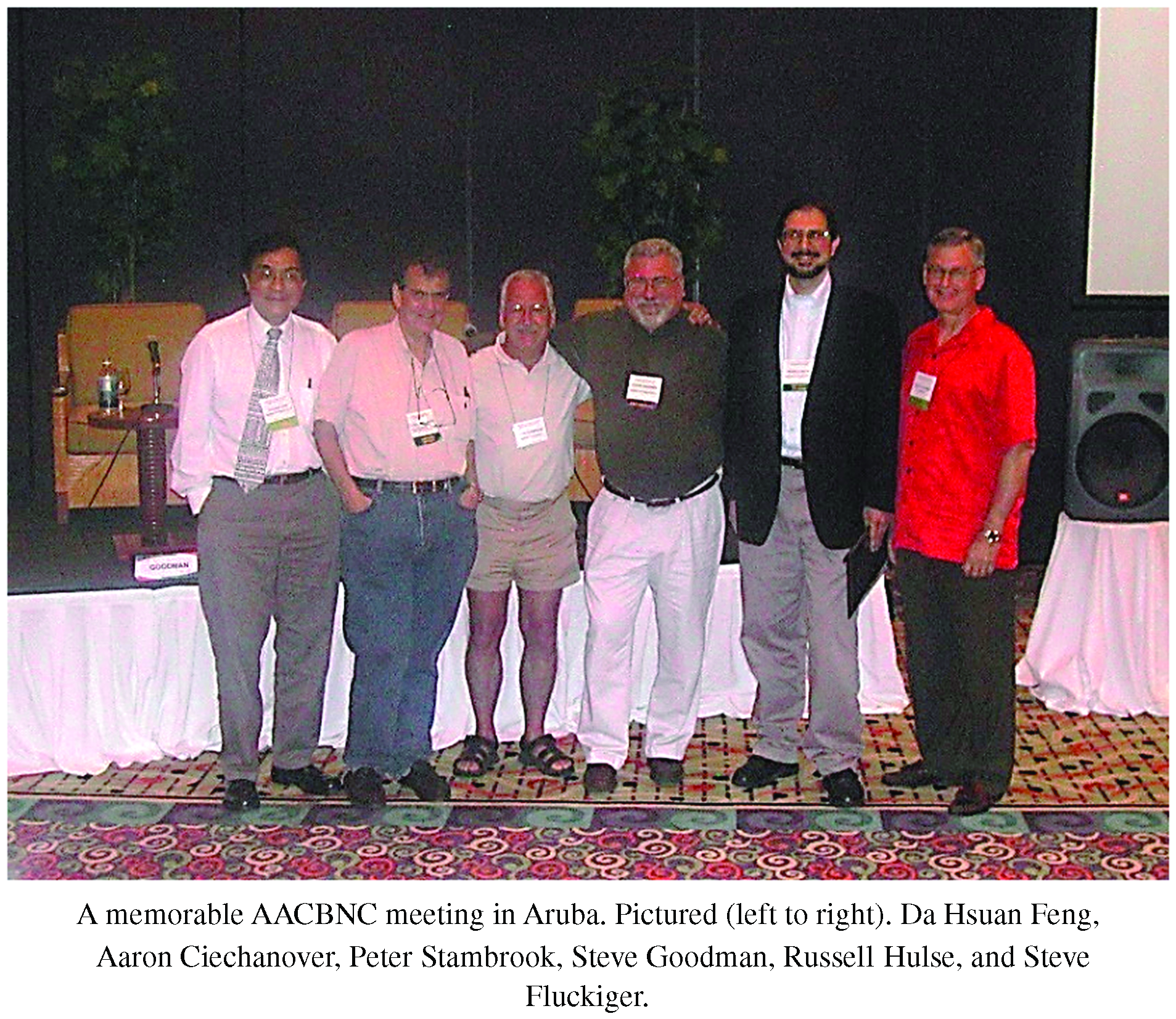
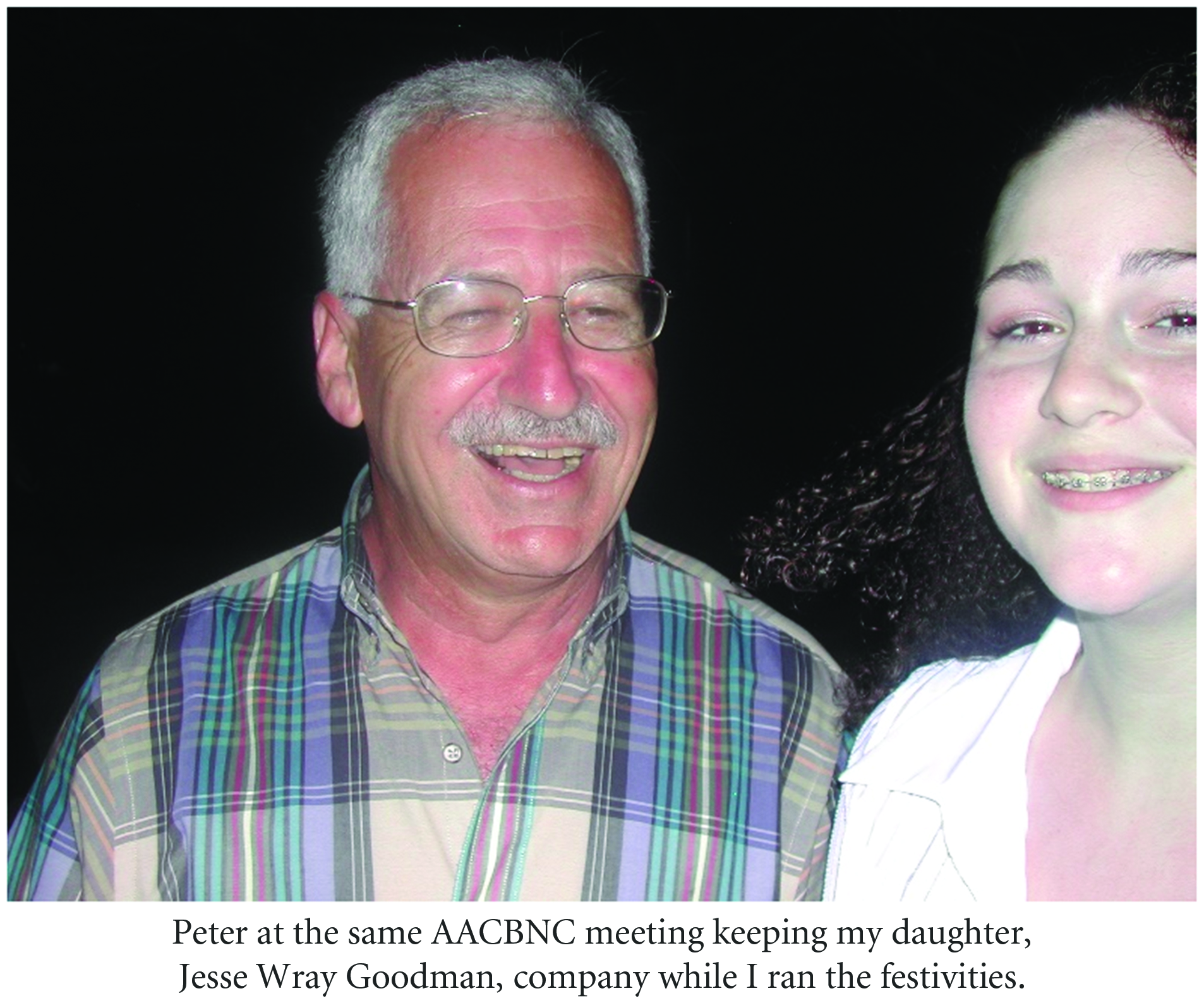
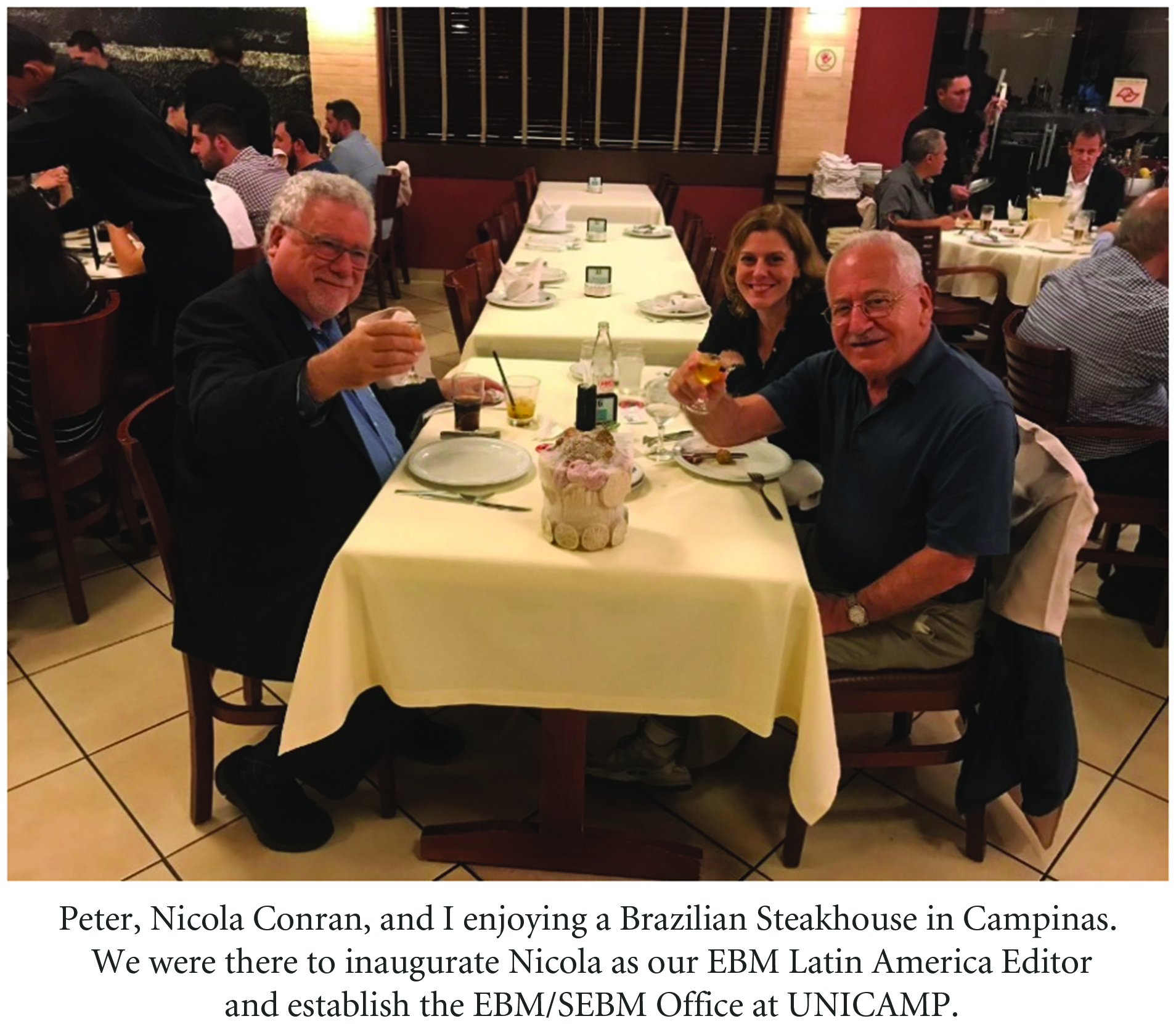
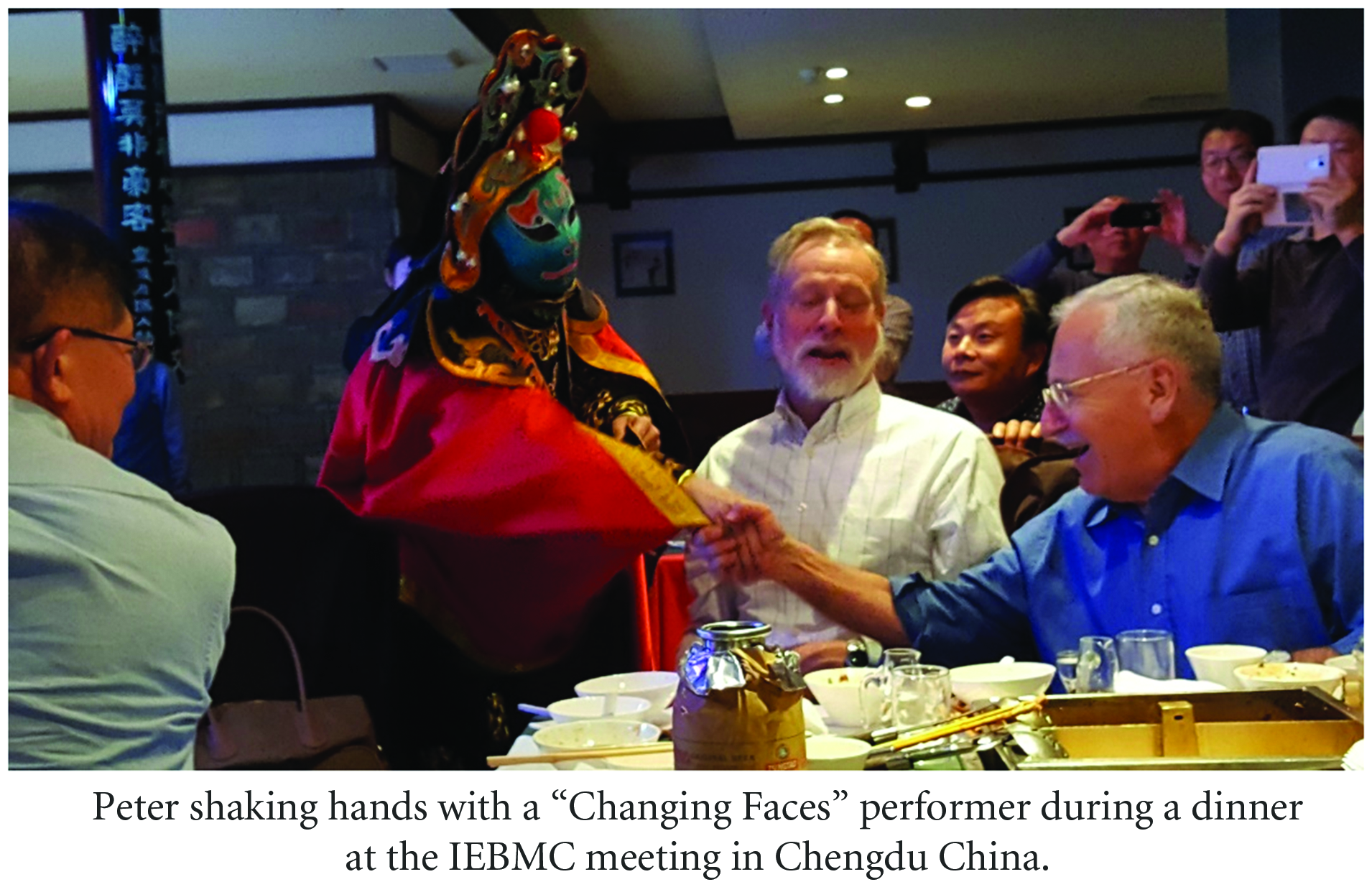
The first is our travels, sometimes together with our families, to beautiful islands for AACBNC meetings, and around the globe for the International Experimental Biology and Medicine Conference (IEBMC) or to open an EBM/SEBM Latin America Office in Brazil. Some of this is captured in a few pictures above and below, where the true spirit of Peter Stambrook is on display. But the best moments were our weekend telephone calls where we discussed every possible topic that was on our minds.
Thoughts on Peter from his Colleagues around the Globe
Even though I was a trainee, Dr. Peter Stambrook always believed in my potential as a leader and in the new generation of scientists. It was him with his resilience, empowerment, and integrity, who inspired me to become an active leader of one of his greatest legacies, the SEBM Trainee Council. (Dr. Nathalie Fuentes, National Institute of Allergy and Infectious Diseases)
Peter was a multi-generational mench. (Dr. Stan Gerson, Case Western Reserve University)
Dr. Stambrook became a good friend during his time working with the Society for Experimental Biology and Medicine. I know I’m not alone in saying that his dedication was second to none and that he brought joy wherever he went. I’ll miss him greatly. (Jessica Homa, SEBM)
Peter was the great mentor and role model who was always enthusiastic to help other scientists. He told me that collaboration is the key to success in science. (Dr. Shigemi Matsuyama, Case Western Reserve University).
Peter Stambrook was not just a great scientist. He was a great person, who loved life and all its aspects (intellect, science, travel, the beauty of landscapes and cities, friendship, sports, food…). He was always open to all that is beautiful and new. He loved our homeland Croatia and often visited it. He was particularly enchanted with towns Dubrovnik, Opatija, and Zagreb. He had also big plans in the field of science and networking in the last days of his valuable life. Death of such a person is a great loss to science and to us all. (Dr. Sandra and Dr. Kresimir Pavelic, Juraj Dobrila University of Pula)
He was a great colleague that I had the pleasure to meet through SEBM. He was selfless in his devotion to trainee development and extremely generous with his time in mentoring. His willingness to breakdown silos and stimulate interdisciplinary research through SEBM and its meetings have had and will continue to have a lasting impact on the biomedical field. (Dr. Steph Cormier, Louisiana State University).
I have known Peter for only 20 years. I so wish it was many times longer! Peter will remain not only as a very valued colleague, but a very dear friend and a beautiful human being. I was absolutely delighted that Peter could come to King’s College London on a sabbatical, as a visiting Scholar in 2018/19. I managed to engineer it so that Peter and I shared an office. There was so much joy in our daily exchanges of ideas and intense discussions on everything from tumour immunology to world affairs, and Bob Dylan songs (soon after he arrived in London he was awarded the Nobel Prize for Literature; that is Bob not Peter!). I am very grateful to have had that opportunity. I learned from Peter not only a big bundle of amazing facts about biology and the background to some of the greatest discoveries in biology, but also some of the funniest jokes I have ever heard. I didn't know it was possible to have such a range of jokes all to do with chicken soup! I miss Peter very much and will cherish his memory as a great scientist, a very dear friend and a superior example of a most wonderful human being. (Dr. Farzin Farzaneh, King’s College London).
Peter's passion for science shone through in all that he did, especially in his mentorship. Peter's encouragement and support for all career paths has inspired young trainees across the world, myself included. I'm grateful to have known and learned from him.(Dr. Rachel J. Fenske, University of Wisconsin).
Peter was a great friend and had contributed so much to EBM and SEBM. I still remembered the IEMBC meeting in Shanghai. We had a lot of fun there, particularly on the cruise when we chatted for too long and the food was gone. It is so sad that he has passed away. We all miss him so much. (Dr. Jian Feng, SUNY Buffalo)
I always appreciated the way Peter would challenge me with new ideas and concepts. The discussions that followed were wonderful. He will be missed. (Dr. Nancy Turner, Michigan State University)
Peter was a true scientist and gentleman. His loyalty and mentoring of all those around him was unmatched. I will forever try my best to follow in his footsteps and attempt to be the type of friend and mentor that he was to all of his colleagues and students. (Dr. William Miller, University of Cincinnati).
Peter elevated those around him and thrived at bringing scientists together. I will miss him for his leadership, guidance and most importantly friendship. (Dr. Tom Thompson, University of Cincinnati).
Peter was a great colleague and friend. He provided leadership and direction to us and always raised questions to spark more thoughtful discussion and better decisions. Peter, you will be missed sorely and the world is a better place because you were here. You are more loved and respected than you will ever know. (Dr. Betty Pace, Augusta University)
I met Peter briefly, while he and our Editor-in-Chief, Steve Goodman, were inaugurating the Latin American Office for SEBM/EBM. Even in that short time I was blown away by his enthusiasm for science, his vast knowledge on all subjects, and his devotion to the Society and its associated journal. He embraced Brazil, its scientists and its culture; we certainly had fun introducing him to Brazilian churrasco and caipirinha - Thank You, Peter. (Dr. Nicola Conran, University of Campinas)
Peter was a great warrior for education and good science, especially on environmental mutagenesis. His Brazilian friends and colleagues will always remember his support and genuine smile. (Dr. Carlos Frederico Martins Menck, University of São Paulo)
Peter’s spirit lives on… His professional life was spent carrying out highly impactful cancer research and his published works will continue to guide younger generations for years to come. Perhaps more important, Peter devoted considerable energy to helping others, like myself, to grow and live up to their potential, to navigate the complexities of professional life and to become a good citizen. Peter was an inspirational leader, a strong advocate, a kind mentor, a vocal supporter and cheerleader, and yes, a hard critic and friend when needed. His passionate stand on issues, his witty sense of humor, his love for humanity have left a huge mark in the lives of many and he will be greatly missed by us all. (Dr. Ken Ramos, Texas A&M University)
Peter was my mentor and trusted advisor in all things research and science. He helped lead the search that brought me to the University of Cincinnati in 1986 as faculty member, supported my role in building neuroscience there and elsewhere, mentored and prepared me for academic leadership roles, and was always there for advice as I applied for those positions. But even more important than science, he was my mentor in life and one of my closest friends. Wherever I moved, he would visit – and whenever I introduced him to friends and colleagues, they recognized him as someone so special, they became his new devotees. Peter was a true adventurer, a bon vivant, and man of the world - as we often said, he was indeed, “the most interesting man in the world”. We will miss him terribly, but even as he’s gone, his presence will live on inside us for the rest of our lives. (Dr Michael Lehman, Kent State University)
My Dear Friend Peter, yours was a life well lived. You enhanced the lives of all of us with whom you came in contact. For that we will be forever grateful. (Dr. Steve Goodman, University of Tennessee HSC and EBM).