






Abstract
Research on group threat has identified the racial composition of neighborhoods as significant for understanding spatial variation in racial bias and discrimination. A distinct but related strand of research has found disproportionate rates of arrests of non-Whites in predominantly White neighborhoods. This past work has generally operationalized racial composition in residential terms. Here, I explore the role of the racial composition of everyday mobility patterns in predicting racial threat. I propose that just as White neighborhoods experiencing growing non-White residential populations exhibit patterns of group threat, the same dynamic may occur in White neighborhoods experiencing large influxes of non-White everyday visitors. Drawing on arrests and cell phone mobility data from New York City, I find that in predominantly White neighborhoods, Black arrest rates are 150 percent higher when the share of Black visitors exceeds the share of Black residents by 10 percentage points. Similar but smaller patterns also appear for Hispanic visitors and Hispanic arrests. These heightened inflows of non-White visitors into these predominantly White “threatened” neighborhoods help explain why predominantly White neighborhoods sometimes exhibit especially elevated non-White arrest rates. Overall, this study offers a novel perspective on how policing practices intersect with the racialized control of space in urban environments.
Introduction
In the wake of highly publicized police killings of Black men like George Floyd, the study of racial disparities in policing practices has garnered substantial attention (Ba et al. 2021). Black men in the United States have a 1 in 2 chance of being arrested by age 23 (Brame et al. 2014), a 1 in 5 chance of being incarcerated in their lifetime (Robey, Massoglia, and Light 2023) and a 1 in 1,000 chance of being shot by police (Edwards, Lee, and Esposito 2019)—all rates substantially higher than for White men.
The racially unequal impacts of policing extend to neighborhoods as well (Chamberlain, Boggess, and Walker 2022; Simes, Beck, and Eason 2023). The nature of policing varies substantially between neighborhoods with different racial compositions (Gordon 2022). Neighborhoods with higher shares of non-White, particularly Black residents, are “over-policed” relative to neighborhoods with higher shares of White residents: They face higher overall arrest rates, more aggressive policing practices, and higher chances of police violence (Gordon 2020, 2022; Jahn et al. 2022). Moreover, neighborhood residential racial composition is also associated with racially distinct arrest patterns. In neighborhoods with higher shares of White residents, non-Whites are arrested at higher rates, indicating potential bias against non-White residents in majority White neighborhoods (Ferrandino 2015). This past work highlights the centrality of segregation and neighborhood racial composition in predicting policing activity. However, a neighborhood is not defined solely by who lives there but also by who visits it.
While historically limited by a lack of data, the study of everyday mobility patterns, 1 or the recurring spatially patterned movement of people that occurs in everyday life, has become increasingly popular (Levy et al. 2022; Levy, Phillips, and Sampson 2020). Researchers have studied segregation in everyday mobility patterns (Candipan et al. 2021; Vachuska 2023; Wang et al. 2018) and found that they are central to understanding racial neighborhood disparities in police violence as well as violence overall (Levy et al. 2020). While recent research has incorporated mobility data into the study of policing (Chen et al. 2023; Huang, Beck, and Antonelli 2024), no work has examined the relationship between the racial composition of everyday mobility patterns and arrests. Given that neighborhood residential racial characteristics are often key to understanding arrests, it is possible that similar patterns exist for everyday mobility. This article tests this by asking if influxes of non-White everyday mobility flows into White neighborhoods contribute to racially disparate arrest rates.
To do so, I draw on theories of racial group threat and defended neighborhoods that suggest White residents are not only uncomfortable with non-White neighbors, but with the perception that the non-White population is growing. Past work has shown that White residents of neighborhoods with growing Black populations are more likely to exhibit racially biased attitudes and that neighborhoods with higher shares of Black residents are perceived to have higher crime (Green, Strolovitch, and Wong 1998; Lyons 2008; Quillian and Pager 2001). A defended neighborhood is one where Whites perceive increases in the Black population and work to maintain their relative advantage (Green et al. 1998; Suttles 1972). In the case of racially disparate policing, the higher rates of arrests of Black people in White neighborhoods could be related to the desire of White residents (and police officers in those neighborhoods) to control and suppress racial and ethnic minorities (Kane, Gustafson, and Bruell 2013).
To examine the relationship between racial mobility flows and arrest rates, I use data from SafeGraph, which provides smartphone tracking data for millions of residents of New York City in 2019, geocoded to the census block group, and from New York City’s police department, which provides geocoded arrest records cataloged by race. My analyses suggest that predominantly White neighborhoods that receive disproportionately high numbers of Black visitors are the site of substantially more Black arrests, and that similar patterns also appear for Hispanic visitors and Hispanic arrests. These findings highlight the importance of mobility patterns in predicting racialized contact with the criminal justice system. They also suggest that much of the heightened arrest rates of Black people in White neighborhoods, and some analogous Hispanic patterns, are concentrated in neighborhoods that are “threatened” in both residential and visitor terms.
Group Threat
Group threat arises from the fear that the status of a particular group will be diminished by the increased status of a subordinate group (Blumer 1958; Tajfel 1978). Group status changes are due to a variety of possible mechanisms, including changes in political power, economic power, or sheer group size. This perceived threat to the social fabric produces defensive reactions, for example, increased social distance, prejudice, or attempts to maintain exclusive boundaries.
Group threat has commonly been applied to the study of interracial dynamics and has been used to understand varying levels of racial bias and discrimination at the community level (Dixon 2006). In the United States, group threat has been studied extensively in terms of population size, and group threat responses have been viewed as one of the key ways Whites enforce racial hierarchies. Past research has found that Whites tend to be more threatened by Blacks than Hispanics or Asians (Dixon 2006), while other research has found evidence suggesting that group threat is larger for Hispanics than Blacks (Eitle and Taylor 2008). There are several reasons why racial group threat dynamics may have changed over time. The Hispanic population is now larger than the Black population in the United States, and population size is one of the main predictors of threat perception (Semyonov et al. 2004). Furthermore, Hispanics tend to be less segregated from Whites, potentially increasing the perceived threat (Eitle and Taylor 2008).
The defended neighborhoods hypothesis grew out of group threat theory and posits that racial bias will be highest in predominantly White neighborhoods that received recent in-migration of non-White individuals. Suttles (1972) conceptualized defended neighborhoods as residential groups that isolate themselves from threats to racial homogeneity through exclusionary policies, practices, and habits. The defensive reactions of residents tend to be in response to proximal non-White neighborhoods or the in-migration of non-White residents. The threat to the homogeneity of the White social networks underlying the neighborhood activates a threat response intended to intimidate and harbor resentment toward non-White individuals (Hirsch 1983; Kane et al. 2013; Novak and Chamlin 2012; Rieder 1985; Suttles 1972).
While Suttles (1972) posited that the defended neighborhoods hypothesis would be most applicable in neighborhoods lacking more formal social control, Kane et al. (2013) specify particular ways that neighborhood defense operates. They write that
in as much as the police are deployed as the primary surveillance apparatus of (mostly local) government, who may be mobilized by certain members of the public often to control other members of the public, they may represent applications of the access control and surveillance processes that Suttles described. (p. 963)
Other recent research has indeed found that the defended neighborhoods framework extends to policing patterns. Specifically, Black adolescents report more racially biased policing in predominantly White neighborhoods that have experienced recent growth in the Black population (Stewart et al. 2009). Similarly, increases in the size of the Black population in a neighborhood are associated with increases in arrests only in historically White neighborhoods (Kane et al. 2013), further supporting the defended neighborhoods hypothesis in terms of policing.
While the literature on defended neighborhoods has productively examined group threat theory in residential patterns, it has little to say about race in the context of everyday, non-residential mobility. Analyses of the relationship between residents and neighborhood “outsiders” have been restricted to residential inflows and largely conceptualized as the relationship between predominantly White neighborhoods and growing Black residential populations. However, in an increasingly diverse urban America, we should assess different types of inflows. Black or Hispanic visitors to White neighborhoods could trigger a similar threat reaction by challenging neighborhood homogeneity. White residents may fear that increased diversity, even through temporary visits, erodes their racial status within the neighborhood. Efforts to maintain cohesion and preserve a particular neighborhood identity may subsequently intensify, potentially causing discriminatory behaviors.
There is reason to believe that non-residential mobility, much like residential mobility, can provoke similar reactions rooted in racial bias and interracial conflict. In a survey of youth in New York City in the 1990s, 15 percent of respondents “agreed that people have a right to physically prevent people who are different from them from coming into their neighborhoods” (Pinderhughes 1993, p. 486). Qualitative accounts suggest that some individuals in White neighborhoods view it as their responsibility to keep unwanted non-White—particularly Black—visitors out and are willing to use violence to do so (Rieder 1985; see also DeSena 1990; Suttles 1972). Perceived threats from the presence of Black visitors impact White residents’ perceptions of safety and security. Stereotypes, prejudices, and media narratives heighten fear, particularly if the residents already have negative perceptions of the visitors’ home community. Even if visitors do not commit any crimes, White residents may associate Black visitors with criminality or danger (Quillian and Pager 2001). Fear shapes residents’ attitudes and behaviors, potentially leading to the implementation of stricter security measures, increased surveillance, or biased reporting of incidents. While White residents may perceive a strong social boundary between themselves and non-White residents of the same neighborhood, they may perceive an even greater social boundary with non-White visitors and may perceive their presence in the neighborhood as less justifiable than that of residents.
Everyday Mobility and Policing
Policing is an exceptionally consequential domain for understanding racial inequality in America. Policing practices have historically disenfranchised Black Americans and disproportionately harmed Black communities (Muhammad 2019). Policing is a key entry point to racial inequality in the criminal justice system (Braga, Brunson, and Drakulich 2019). Discriminatory policing practices furthermore generate criminal justice outcomes and statistics that are further used to justify racial stereotypes (Brayne 2017).
Recent research has begun to consider the role of everyday mobility patterns in the racialization of policing practices. Gordon (2022) uses the term “race out of place” to describe “moments when the race of a body did not match assumptions about the racial composition of an area” (p. 142). She identifies three broad strategies that maintain boundaries of racial segregation. Establishments in White neighborhoods frequented by Black clientele are subject to more policing and surveillance. For example, she documents the policing of a nightclub with a large Black clientele: “Through surveillance and threats, the police cultivated an uninterrupted flow of people from the club to the parking lot and, ultimately, out of the (predominantly White neighborhood)” (p. 152). Gordon also posits that police tend to target people of color in White neighborhoods and that the increased “police scrutiny (that people of color face) could eventually result in the detection of a behavior that rose to the level of reasonable suspicion or probable cause” (p. 154). Finally, she details how traffic enforcement and automated license plate readers are used to stop drivers whose vehicles signal poverty (e.g., unpaid fines, suspended plates) as they cross segregation boundaries from poor Black neighborhoods into whiter areas, subjecting them to further enforcement.
In total, Gordon shows how Black mobility into predominantly White spaces is managed through surveillance, order-maintenance, and traffic enforcement at the level of everyday encounters. Her account is thus a micro-level theory of how racial boundaries are enacted in specific places, not an aggregate neighborhood model. Nonetheless, several neighborhood-level patterns are consistent with these mechanisms. All three of Gordon’s mechanisms would be expected to generate heightened arrest rates for non-White individuals in White neighborhoods. The first mechanism she identifies—devoting attention to business establishments and nightlife districts with predominantly Black clientele—is likely to be disproportionately common in White areas that host more venues with substantial Black patronage. The third mechanism—stopping drivers whose vehicles signal poverty as they cross segregation boundaries—by definition occurs in neighborhoods that are not only residentially White but also receive heightened flows of non-White visitors. As a result, these two mechanisms are especially consistent with elevated policing of non-White individuals in predominantly White neighborhoods that receive disproportionately high non-White inflows.
Past research also suggests that the types of visitors to a neighborhood may be key to understanding perceptions of crime in that neighborhood. Chiricos, Hogan, and Gertz (1997) found that residential racial composition had no direct bearing on individuals’ perceptions of neighborhood risk of victimization and fear of crime, but that self-reported perceptions of racial composition did (see also Quillian and Pager 2001). Individual perceptions of racial composition may be shaped just as much by the visitors to a neighborhood as by the neighborhood’s residents.
Past empirical analyses testing theories on group threat, the defended neighborhood hypotheses, and related interracial conflict have examined a variety of ecological outcomes, including the incidence of hate crimes (Green et al. 1998; Lyons 2008) and 311 calls (Legewie and Schaffer 2016). Distinct from these outcomes, arrests are superior for measuring group threat in terms of its effect on crime control resources (Kane et al. 2014). While the allocation of crime control resources can be measured in a number of ways, including the allocation of police budgets, policing personnel strength, and the volume of arrests as outcome measures (Greenberg, Kessler, and Loftin 1985; Kane et al. 2013; Liska, Lawrence, and Benson 1981), arrests are unique in that their variation can be meaningfully analyzed across short periods of time.
In the context of minority group-threat policing, the most rigorous tests have specified arrests as the primary dependent variable (Blalock 1967; Eitle, D’Alessio, and Stolzenberg 2002). Furthermore, arrests are an ideal outcome by which to study racial bias, as many types of arrests are highly discretionary and may be triggered by community members, who contact the police in situations in which they otherwise would not, or police who choose to make arrests in situations in which they otherwise would not (Gaston 2019). Studies of arrests offer a more accurate representation of coercive behaviors compared to just measuring coercive capacities (Eitle and Monahan 2009; Parker, Stults, and Rice 2005). While much of the research on arrests has been conducted at the city level, the processes of policing unfold and are likely best understood at the neighborhood scale (Herbert 1997; Kane 2002, 2003; Klinger 1997; Kane et al. 2014; Rubinstein 1973). An additional benefit of measuring arrests is that they have been clearly linked to various forms of racial inequality more broadly (Wakefield and Uggen 2010).
While testing the exact mechanisms that link heightened flows of non-White visitors to White neighborhoods with heightened non-White arrest rates is beyond the scope of this article, past theory suggests the following. Broadly, White residents may perceive non-White visitors as a threat to their communities in a manner somewhat similar to how they view non-White movers as a threat. Observing non-White visitors may trigger stereotypes for White residents or stakeholders, potentially producing racialized suspicions and increasing surveillance (Gordon 2022; Rieder 1985). Implicit biases and distrust may increase the likelihood of reporting to the police (Legewie and Schaeffer 2016). Stable, recurring patterns of non-white visits may prompt white residents or stakeholders to seek collective action, pressure institutions, and support increased policing (DeSena 1990; Gordon 2020, 2022; Kane et al. 2013; Rieder 1985). Facing pressure from stakeholders, or acting on racialized assumptions about non-White visitors, police may disproportionately target non-White visitors for discretionary stops and order-maintenance enforcement, both in response to resident complaints and through officer-initiated patrol strategies that intensify enforcement in spaces they view as problematic (Gordon 2020, 2022). Increases in arrests may legitimize the presence of police in the neighborhood, creating a feedback loop of arrests (Ensign et al. 2018). Ultimately, by residents directly soliciting the police in regard to specific people or situations, by residents indirectly increasing the police presence in the neighborhood, or by police themselves increasing rates of discretionary enforcement, arrests of non-White visitors will be likely to be higher in White neighborhoods with heightened rates of non-White flows.
The process by which heightened non-white everyday mobility flows is associated with heightened non-white arrest rates is likely to be different from the process by which heightened non-white residential mobility flows is associated with heightened non-white arrest rates in several important ways. Non-white visitors to a neighborhood are less likely to be known to residents and stakeholders than residents. This lack of familiarity may increase the likelihood that their presence triggers a stereotype or threat response (Pinderhughes 1993). Furthermore, in the absence of a social tie, residents may be more likely to leverage policing as a means of addressing concerns, as opposed to direct conversation (DeSena 1990; Kane et al. 2013). Business owners, as opposed to homeowners, may also be more likely to engage in surveillance and police reporting (Gordon 2020, 2022). In predominantly White commercial areas, non-White visitors may be especially likely to attract heightened suspicion and racialized scrutiny, increasing the likelihood of police surveillance and discretionary enforcement during individual encounters (Gordon 2022). My analyses cannot directly observe these interactional processes, but they test whether neighborhood-level arrest patterns are consistent with this visitor-focused threat dynamic.
Broadly, this hypothesis is similar to other theorizations regarding how the racialized control of space is organized. Related work on gentrification and policing similarly highlights how law enforcement is mobilized to reshape and defend neighborhood boundaries. In neighborhoods targeted for reinvestment, broken-windows and order-maintenance strategies help “clean up” streets and manage who is perceived as belonging in upgrading areas, often displacing or criminalizing long-standing non-White residents and visitors (Harris, Rigolon, and Fernandez 2020; Smith, Massaro, and Miller 2021). A large body of literature on gentrification and policing suggests that non-White arrests spike in gentrifying neighborhoods following an influx of White residents (Beck 2020; Golash-Boza et al. 2023; Laniyonu 2018; Newberry 2021). My analysis complements this literature by focusing on everyday mobility patterns as a crucial feature in predominantly White neighborhoods broadly, showing that the racial composition of visitors relative to residents is itself a key correlate of heightened non-White arrest rates. Taken together, research on defended neighborhoods, “race out of place,” and gentrification and policing highlights how racialized control of space is organized both through residential change and through the racialized management of who moves through particular areas.
To summarize, I extend theories of group threat and the defended neighborhoods hypothesis to everyday mobility patterns by examining whether predominantly White neighborhoods with disproportionately high rates of non-White visitors exhibit heightened racial bias in arrests. My primary focus is on Black-White dynamics, which are most directly tied to past theory. I also examine Hispanic-White dynamics as a parallel extension to assess whether similar mobility-based threat patterns also appear beyond the Black-White case. Doing so broadens this line of research, which has disproportionately focused on Black-White dynamics, and better reflects the multiracial character of contemporary American society (Bobo and Hutchings 1996).
Data
This study utilized data from multiple sources, including SafeGraph’s Social Distancing Metrics, the New York City Police Department’s (NYPD) arrest dataset, and the American Community Survey’s (ACS) 2015–2019 census block group five-year estimates.
SafeGraph is a geospatial data company that uses anonymized cell phone data to aggregate detailed foot traffic data at the scale of census block groups. Using a panel of 45 million cellular devices, SafeGraph’s Social Distancing Metrics dataset provides information on everyday mobility patterns between all census block groups in the United States for every day in 2019. SafeGraph estimates the home census block group of a device by analyzing the preceding six weeks of nighttime (6:00 p.m. to 7:00 a.m.) data and making a prediction. A visit to a census block group is defined as a cluster of proximal location pings with a duration longer than one minute. A device can count for up to one visit in each block group in a single day. Mobility patterns from SafeGraph correlate with mobility patterns from other smartphone-based datasets (Noi et al. 2022).
The Social Distancing Metrics dataset includes anonymized data on the number of devices in census block group i at night that made at least one visit to census block group j on a given day. Using this dataset, I estimated the number of visitors between each pair of census block groups in the United States over all days in 2019 according to the following formula:

where

where
The key assumption behind the imputation of race is that the racial composition of smartphone device owners in the SafeGraph panel reflects the racial composition of residents of the neighborhood, and that visit pattern practices are randomly distributed across racial groups within the neighborhood (e.g., White, Black, and Hispanic residents co-residing in the same neighborhood visit the same other neighborhoods at the same rates). Past research suggests only minor sampling bias in the Safegraph panel, with especially limited evidence of Black underrepresentation (Li et al. 2023). At a large scale, the Safegraph panel reflects what one would expect from a large-N random sample (Brazil, Chakalov, and Ko 2024; Noi et al. 2022; Squire 2019). Furthermore, Brazil, Chakalov, and Ko (2024) specifically note that when performing large analyses, the sampling errors across block groups “seem to smooth over and are likely minimal.”
While SafeGraph does not provide demographic information on cell phone users, the starkness of racial residential segregation generally allows for some robustness of the inference of individuals’ race/ethnicity based on neighborhood of residence. For example, 80.4 percent of census block groups in New York City have a single racial group that constitutes the majority of the residential population. Twenty-five percent of New York City neighborhoods contain nearly 80 percent (79.3 percent) of the city’s Black population, while another 50 percent of New York City neighborhoods combine to be home to only 2.6 percent of the city’s Black population. In other words, Black New Yorkers have a high chance of living in a narrow set of neighborhoods.
Following past work that uses SafeGraph data (Vachuska and Levy 2022), I use the terms “Black visitor,” “Hispanic visitor,” and “White visitor” to refer to visitor demographic groups that are imputed based on neighborhood residential racial composition. I elaborate on this general data limitation further in the discussion. I do acknowledge that the imputation of race is an assumption, however. To test the sensitivity of the results to this assumption, I engage in a set of robustness checks where I assume certain racial groups may be 25 percent over- or 25 percent under-represented in the SafeGraph smartphone panel (See Supplemental Appendix Tables S6, S7, and S8). Figure 1 presents a visualization of the census block group distribution of Black residents and visitors across Manhattan. The analysis takes place across all five boroughs of New York City, though.
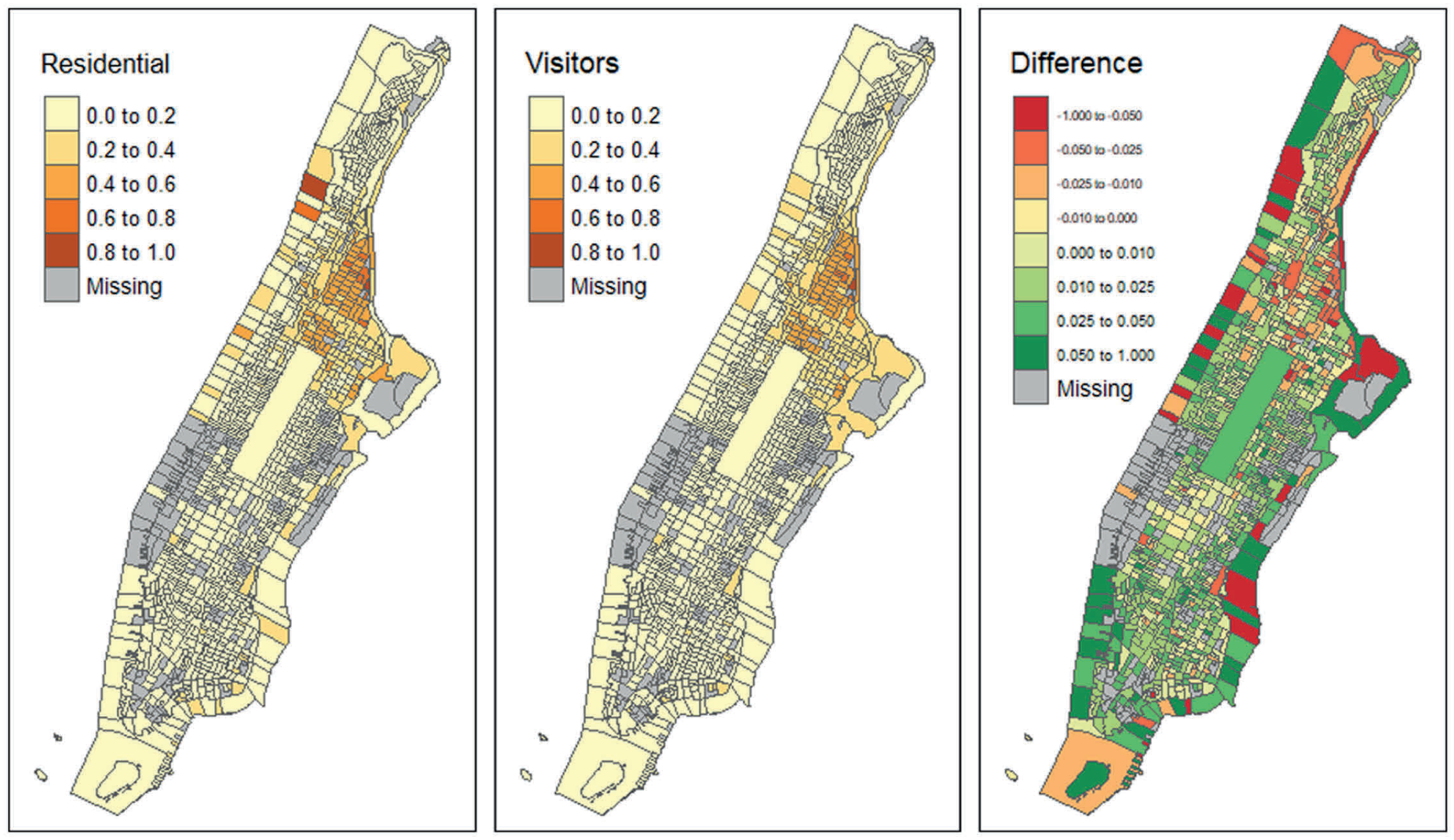
Proportion Black by census block group, Manhattan.
I merged all the datasets at the census block group level, linking the SafeGraph data, NYPD arrest data, and ACS demographic data using the 2010 FIPS code, assigning arrests to census block groups using the point-in-polygon method. NYPD’s arrest data was used to obtain the number of arrests of non-Hispanic Black, non-Hispanic White, and Hispanic individuals in each census block group in New York City in 2019. It is important to note that the arrest data come from an administrative, population-level dataset. The arrest data covers the location of the actual arrest, which is not necessarily the location of the suspected crime or where the arrested individual lives. According to NYPD Open Data documentation, the arrests file is published as a breakdown of every arrest in NYC by the NYPD during the year and is manually extracted and reviewed before release. I obtained neighborhood socioeconomic and demographic attributes from the ACS 2015–2019 block group five-year estimates.
Methods
In my main analysis, I explore whether neighborhoods (which I operationalize as census block groups) that are “threatened” in terms of having a disproportionately non-White visitor racial composition relative to their residential racial composition experience higher rates of minority arrests. My empirical analysis proceeds in three steps. First, I estimate models of Black arrests, which serve as the primary test of the mobility-based group threat framework. Second, I estimate parallel models for Hispanic arrests to assess whether similar dynamics extend beyond Black–White relations. Finally, I estimate analogous models for White arrests as a diagnostic check, since my theory does not predict a symmetric pattern for White visitors in predominantly non-White neighborhoods.
I expect that White neighborhoods that receive disproportionately more Black and Hispanic visitors will be the site of disproportionately more Black and Hispanic arrests, even conditional on the absolute number of Black and Hispanic visitors (the population at risk). My primary hypothesis is that these arrest rates will be higher in these neighborhoods due to racial threat. To measure the degree to which a neighborhood might be “threatened,” I estimate the relative difference between the racial composition of a neighborhood’s visitors and the racial composition of a neighborhood’s residents. I expect that neighborhoods that have a substantially greater share of Black or Hispanic individuals among their visitors compared to among their residents will be the site of a disproportionately high rate of Black or Hispanic arrests.
I estimate this as a simple difference:

For each neighborhood i and racial group (non-Hispanic Black or Hispanic) k, a relative difference is calculated as the proportion of neighborhood i’s visitors that are of race k minus the proportion of neighborhood i’s residents that are of race k.
With this operationalization in mind, I present the main model specification for Black arrests, which serves as the primary test of the framework; parallel models are then estimated for Hispanic arrests using analogous race-specific measures.
My main regression model can be written as follows:
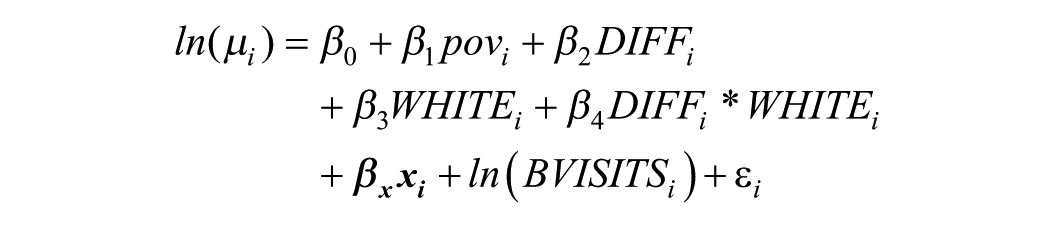
This model estimates the relationship between several independent variables and the count of Black arrests in a neighborhood. The dependent variable is the natural logarithm of the count of arrests of Black individuals in neighborhood i in 2019
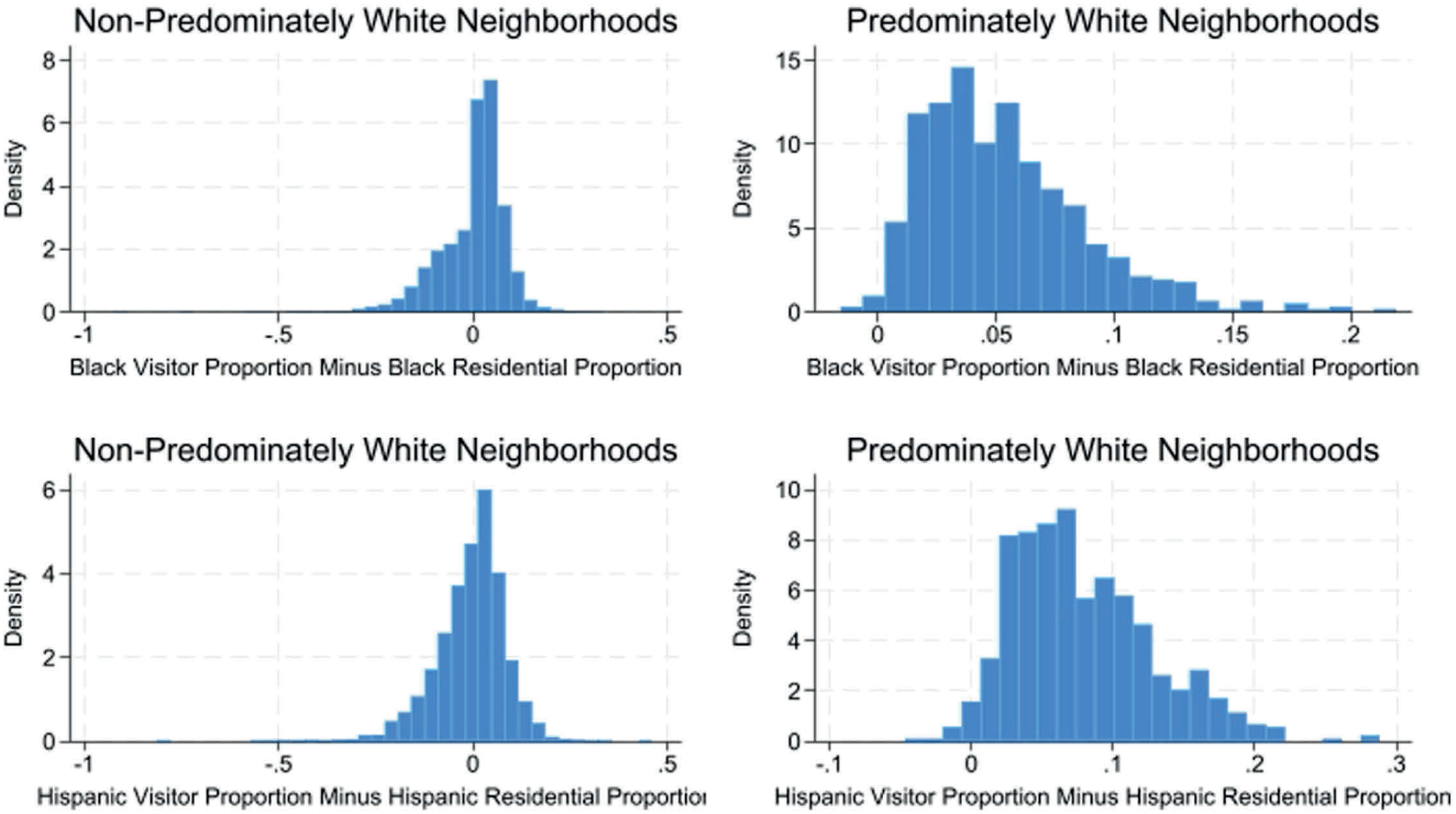
Histograms of visitor-residential racial composition differences.
In my model, I also included a set of control variables denoted by
I fit the aforementioned model as a Poisson function with an offset term to account for the size of the Black population at risk of arrest. This term
Results
Black Arrests
Table 1 presents summary statistics. Although predominantly White neighborhoods constitute only 9.7 percent of New York City block groups and are home to only 0.5 percent of Black New Yorkers, they account for 4.7 percent of all Black arrests citywide. The remaining 95.3 percent of Black arrests occur in neighborhoods that are not predominantly White, consistent with broader research documenting intensive policing in non-White neighborhoods. This underscores that predominantly White neighborhoods are the site of an outsized share of Black arrests, even as the overall volume of Black arrests is spread across a wider range of neighborhood racial compositions. These descriptive patterns provide a baseline for interpreting the regression results that follow.
Summary Statistics.
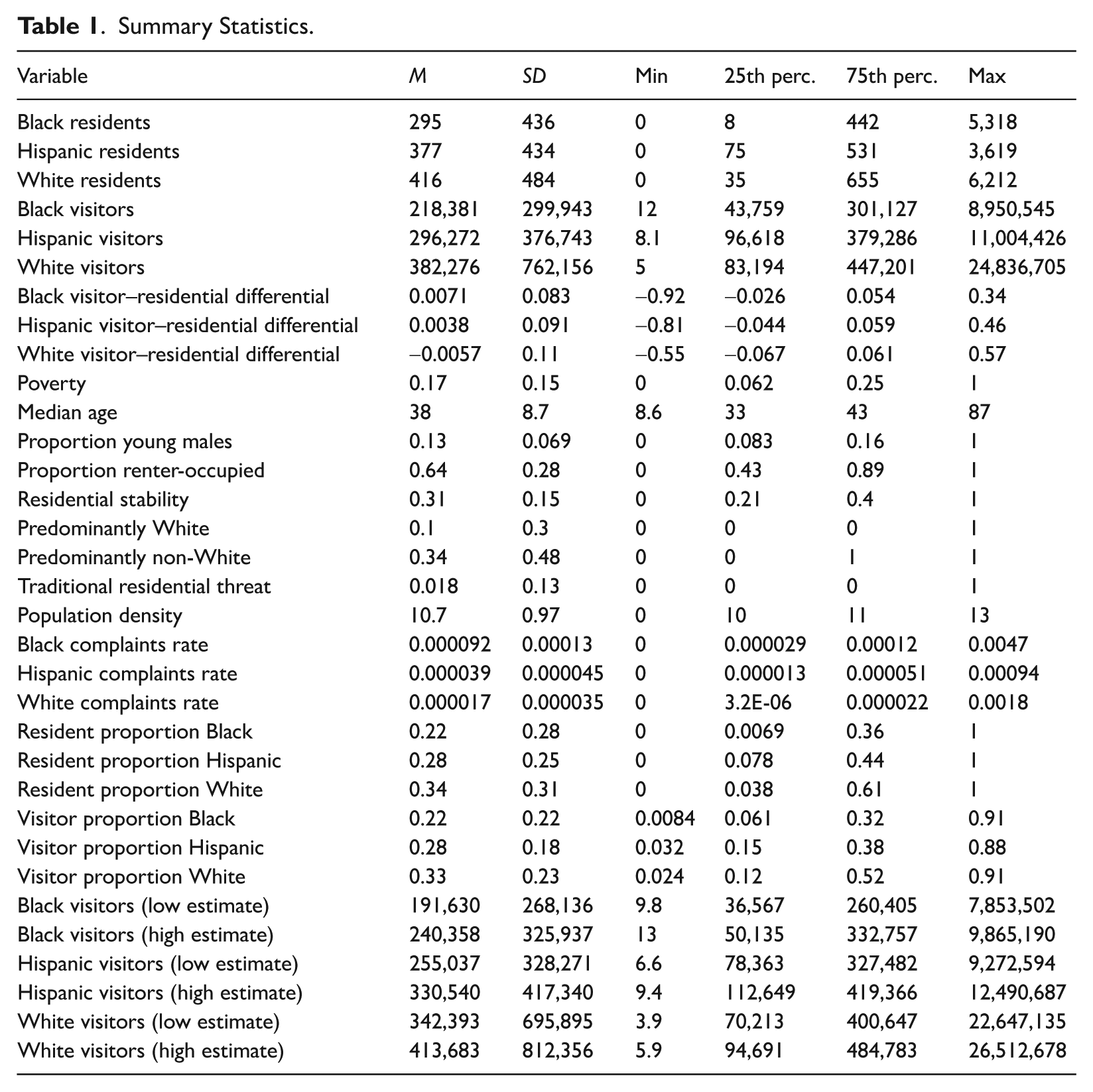
Figure 3 presents the adjusted marginal relationship between the difference in the proportion of Black visitors relative to Black residents and the rate of Black arrests per 100,000 Black visitors in New York City neighborhoods during 2019. These marginal predictions are generated from the fully specified Black arrest model reported in Table 2, Model 7. Table 2, Model 7 presents the coefficients from this model, while Figure 3 visualizes the adjusted predicted arrest rates implied by it. These estimates rely on a quadratic specification for the Black visitor-residential differential and adjust for poverty rate, a traditional measure of group threat, median age, proportion of the population that is a young male, proportion of the population that rents, proportion of residents that have been residing in the neighborhood since 1990, and logged population density. The x-axis shows the difference between the percentage of Black visitors and Black residents in each neighborhood. The y-axis represents the arrest rate of Black individuals per 100,000 Black visitors.
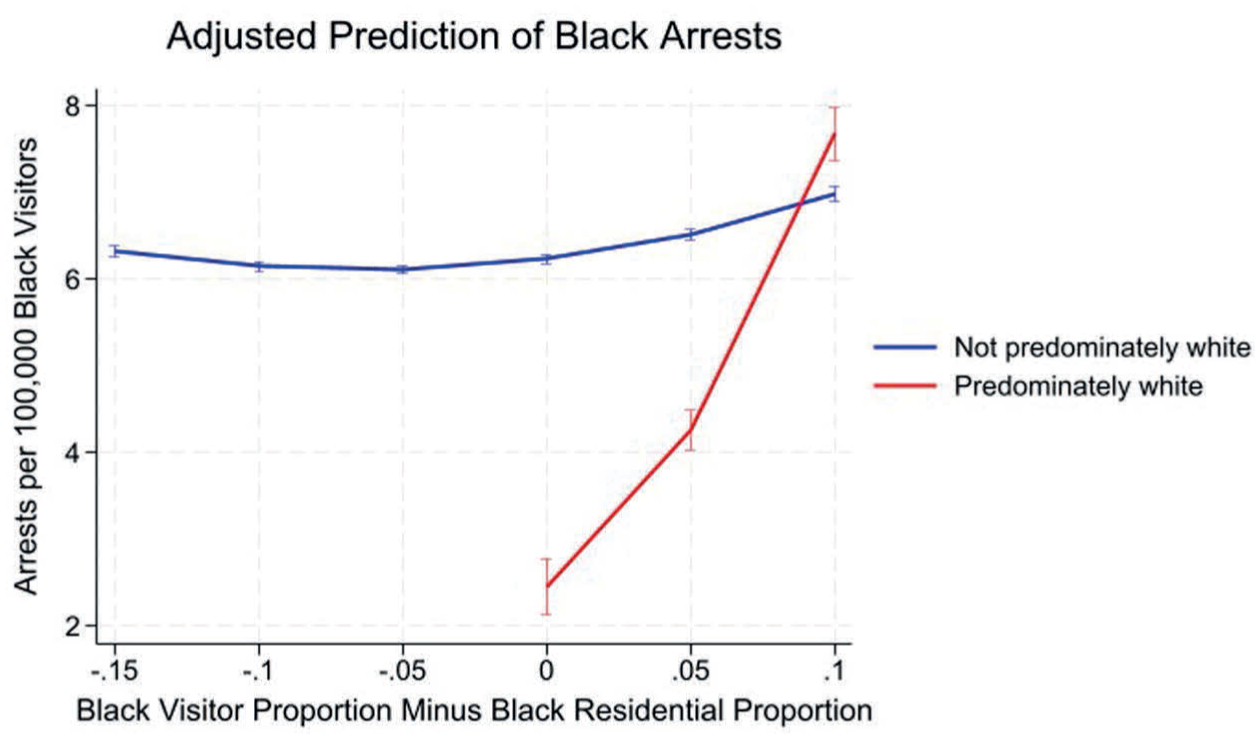
Marginal predictions of Black arrests by neighborhood.
Main Poisson Models Predicting Black Arrests.
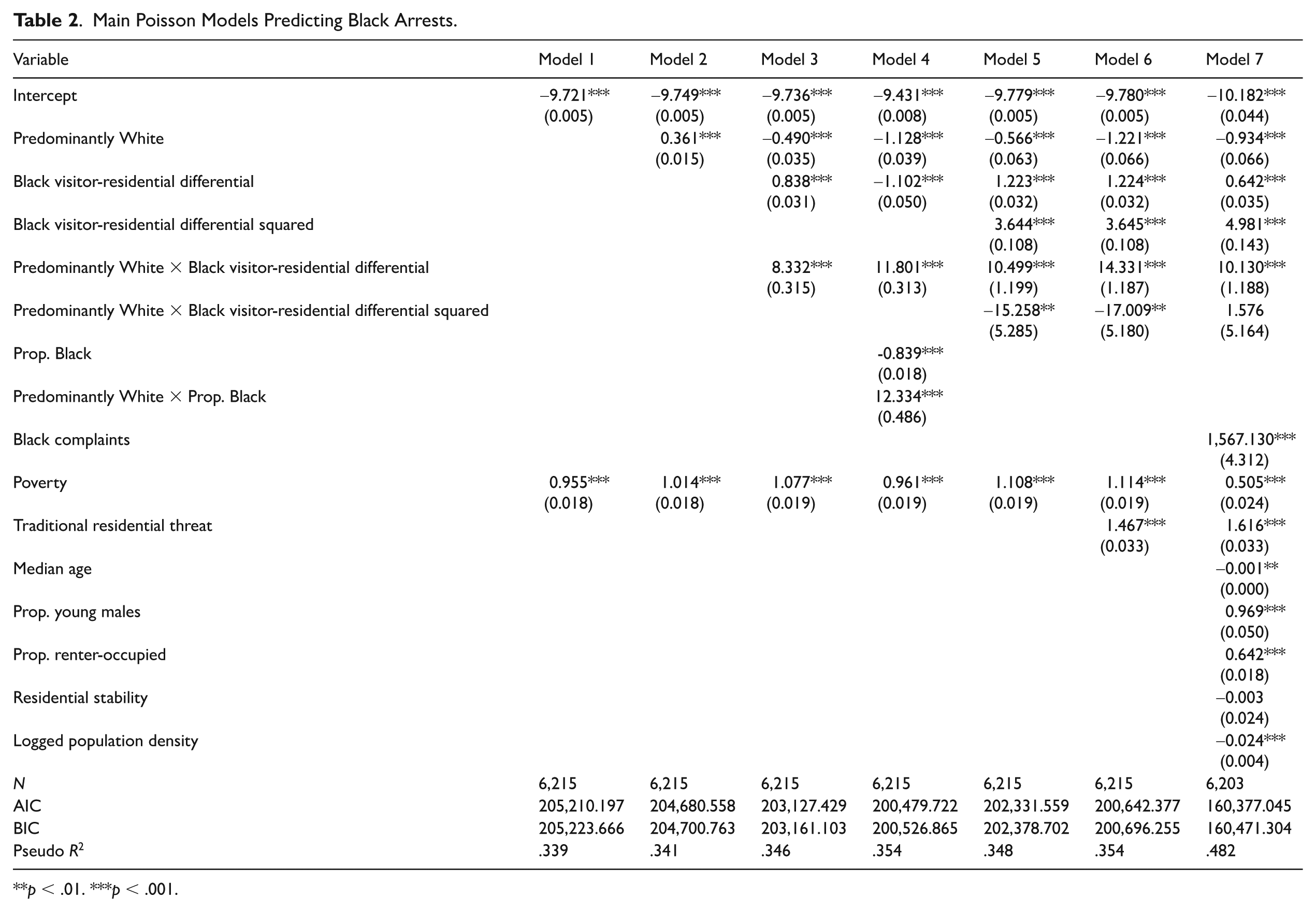
p < .01. ***p < .001.
The results show a clear interaction effect between the predominantly White neighborhoods and Black visitor-residential differentials. In neighborhoods that are predominantly White in residential terms, the arrest rates of Black individuals increase much more steeply as the proportion of Black visitors relative to residents increases. Specifically, in these neighborhoods, there is a steep positive association, with the arrest rate reaching nearly 8 per 100,000 visits from Black neighborhoods in neighborhoods where the visitor-resident difference is 10 percentage points. Conversely, there are fewer than 3 arrests per 100,000 Black visitors in predominantly White neighborhoods where the racial composition of residents is roughly the same as the racial composition of visitors. In neighborhoods that are not predominantly White, the arrest rates of Black individuals increase only modestly as the Black visitor-residential differential increases.
Table 2 presents the results of a sequence of models predicting the number of Black arrests in a given census block group over the course of 2019. All models contain the number of Black visitors as a logged population offset. Supplemental Appendix Table S1 demonstrates that this model best fits the data and that the main results are robust to considering other offsets. Model 1 considers only one independent variable—the poverty rate. Neighborhood socioeconomic status has historically served as a key predictor of neighborhood crime and arrest rates (Shaw and McKay 1942) and is often a central mediator of the association between neighborhood racial composition and neighborhood crime (Levy et al. 2020). In this vein, the results of the model suggest that neighborhoods with higher poverty rates have significantly higher counts of Black arrests, net of the number of Black visitors to the neighborhood.
Model 2 adds a White indicator variable, which measures whether or not a neighborhood has a residential population that is at least 80 percent non-Hispanic White. In alignment with past research, the coefficient for proportion White is positive and highly significant. The coefficient indicates that, conditional on poverty rate and the same number of Black visitors, a neighborhood that is at least 80 percent non-Hispanic White experiences 43.5 percent more Black arrests than neighborhoods that are not at least 80 percent non-Hispanic White.
Model 3 adds the focal variable. The “Black visitor-residential differential” variable represents the proportion of visitors that are Black minus the proportion of residents that are Black. The “Black visitor-residential differential” variable, in addition to an interaction between the “Black visitor-residential differential” variable and the White indicator variable, is included in this model. Notably, the coefficient for the White indicator variable is negative and highly significant in Model 3, completely flipped from Model 2, where it was positive and highly significant. This indicates that in a predominantly White neighborhood where the proportion of visitors that are from Black neighborhoods equals the proportion of residents that are Black, conditional on the poverty rate, the rate of Black arrests is actually significantly less than in a non-White neighborhood where the proportion of visitors that are from Black neighborhoods equals the proportion of residents that are Black. Black visitors are far more likely to be arrested in non-White neighborhoods than they are in White neighborhoods without heightened flows of Black visitors.
The coefficient for the “Black visitor-residential differential” variable is positive and highly significant—indicating that in non-White neighborhoods, higher shares of Black visitors (relative to the residential population) are significantly associated with more Black arrests. The coefficient for the interaction between the “Black visitor-residential differential” variable and the White indicator variable is also positive and highly significant—indicating that in White neighborhoods, higher shares of Black visitors are disproportionately associated with even more Black arrests. The coefficient size indicates that this effect is quite substantial. Conditional on the poverty rate, a predominantly White neighborhood where the percentage of visitors that are from Black neighborhoods is 10 percent higher than the ratio of Black residents in that neighborhood would experience 150.1 percent more Black arrests than a predominantly White neighborhood where the percentage of visitors that are Black is equal to the percentage of residents that are Black. Put another way, while the rate of Black arrests per 100,000 Black visitors is only 3.5 in predominantly White neighborhoods where the percentage of visitors that are Black is equal to the percentage of residents that are from Black neighborhoods, this number would be predicted to rise to 8.8 in a predominantly White neighborhood where the percentage of visitors that are from Black neighborhoods exceeds the percentage of residents that are Black by 10 percent.
Notably, net of the Black visitor-residential differential, predominantly White neighborhoods experience fewer Black arrests, suggesting that heightened rates of Black visitors are a primary driver of why White neighborhoods tend to experience more Black arrests than non-White neighborhoods. Conditional on poverty, White neighborhoods are the site of disproportionately high rates of Black arrests relative to the number of Black visitors they receive. This, however, masks important heterogeneity—only some White neighborhoods experience disproportionately higher rates of Black arrests, and other White neighborhoods experience disproportionately fewer. This result provides substantial evidence suggesting that threatened neighborhoods potentially have unique racial relations and policing dynamics.
Model 4 considers the role that residential racial composition plays net of the mobility-based threat measure. In this specification, I add the proportion of residents who are Black in the neighborhood (and its interaction with the predominantly White indicator) to the Model 3 specification. This allows me to test whether Black arrest rates in predominantly White neighborhoods are better captured by the residential racial composition or the differential between the residential and the visitor racial composition. Notably, the inclusion of the proportion of residents who are Black (and the interaction) actually increases the coefficient size for the Black visitor-residential differential predominantly White interaction. This pattern suggests that, conditional on the number of Black visitors and poverty, it is the racial composition of visitors relative to residents—rather than the level of Black residency alone—that strongly predicts in what predominantly White neighborhoods Black arrest rates are highest. Model 5 tests a quadratic form of the Black visitor-residential differential, which fits better based on BIC.
Model 6 adds a conventional measure of neighborhood racial threat. This measure is coded as 1 if a neighborhood is predominantly White and if there was at least a 2.5 percent increase in the neighborhood’s residential non-White population between the 2010 Census and the 2015–2019 ACS estimates, and 0 otherwise. This resembles a conventional residential-change type measure of racial threat (Green et al. 1998; Lyons 2008). This traditional measure of neighborhood racial threat has a positive and highly significant association with Black arrests. The inclusion of the variable, however, insubstantially changes the effect of the Black visitor-residential differential on Black arrests. This result suggests that mobility-based threat operates independently of residential group threat.
Model 7 adds five variables frequently used as controls for predicting neighborhoods’ rates of policing and violent crime, as well as the number of criminal complaints reported in the neighborhood with Black suspects divided by the number of Black visitors to the neighborhood. Notably, adding these six variables insubstantially changes the Black visitor-residential differential coefficients. Thus, the association between the difference in the proportion of Black visitors relative to Black residents and Black arrest rates is robust to a battery of controls. The results of these models suggest that racial threat, through mobility patterns, is a central predictor of Black arrest rates across neighborhoods.
Hispanic Arrests
Figure 4 illustrates the relationship between the difference in the proportion of Hispanic visitors relative to Hispanic residents and the rate of Hispanic arrests per 100,000 Hispanic visitors in New York City neighborhoods during 2019. The marginal predictions depicted in this figure are generated from the fully specified model, which is presented in Table 3. In predominantly White neighborhoods, the pattern of Hispanic arrest rates shows a strong positive relationship with the Hispanic visitor-residential difference. The arrest rate is lowest when the proportion of Hispanic visitors mirrors the proportion of Hispanic residents—less than two arrests per 100,000 Hispanic visitors. In predominantly White neighborhoods where the proportion of visitors that are Hispanic exceeds the proportion of residents that are Hispanic by .15, the arrest rate rises to over three arrests per 100,000 Hispanic visitors. In contrast, neighborhoods that are not predominantly White display a more stable trend. Similar to Figure 3, these marginal estimates rely on a quadratic specification for the Hispanic visitor-residential differential, and adjusts for poverty rate, a traditional measure of group threat, median age, proportion of the population that is a young male, proportion of the population that rents, proportion of residents that have been residing in the neighborhood since 1990, and logged population density.
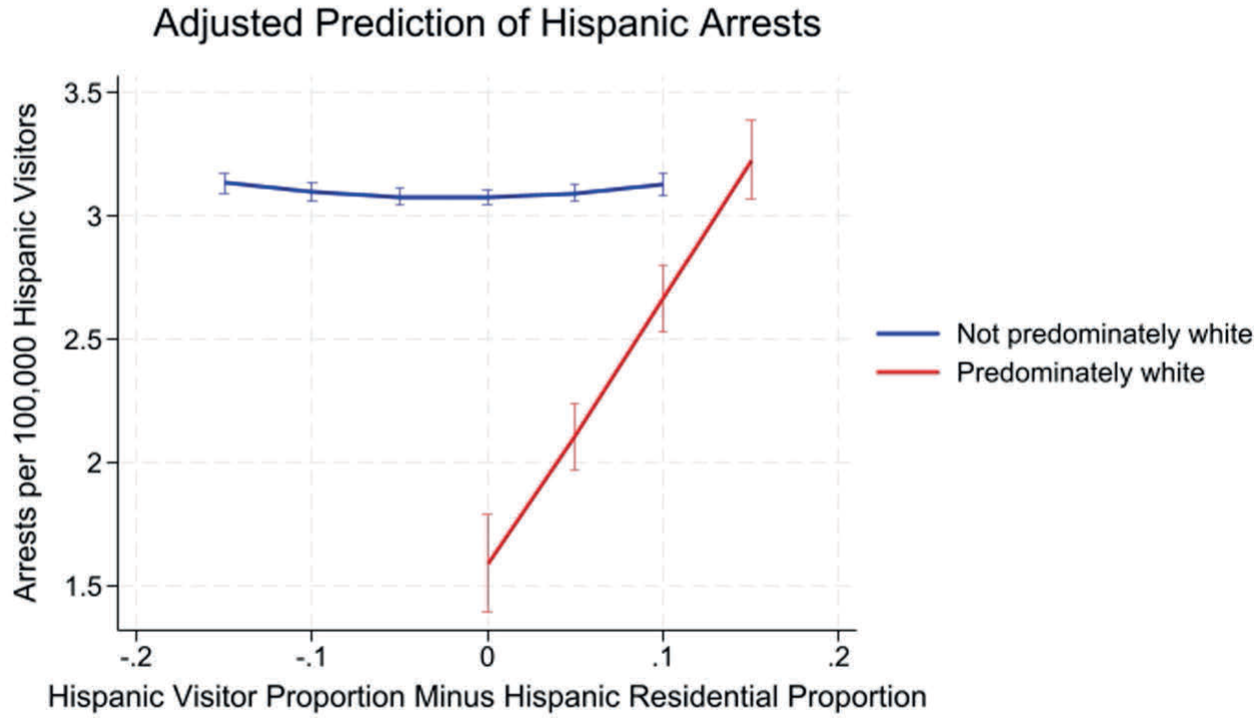
Marginal predictions of Hispanic arrests by neighborhoods.
Preferred Poisson Model Predicting Hispanic Arrests.
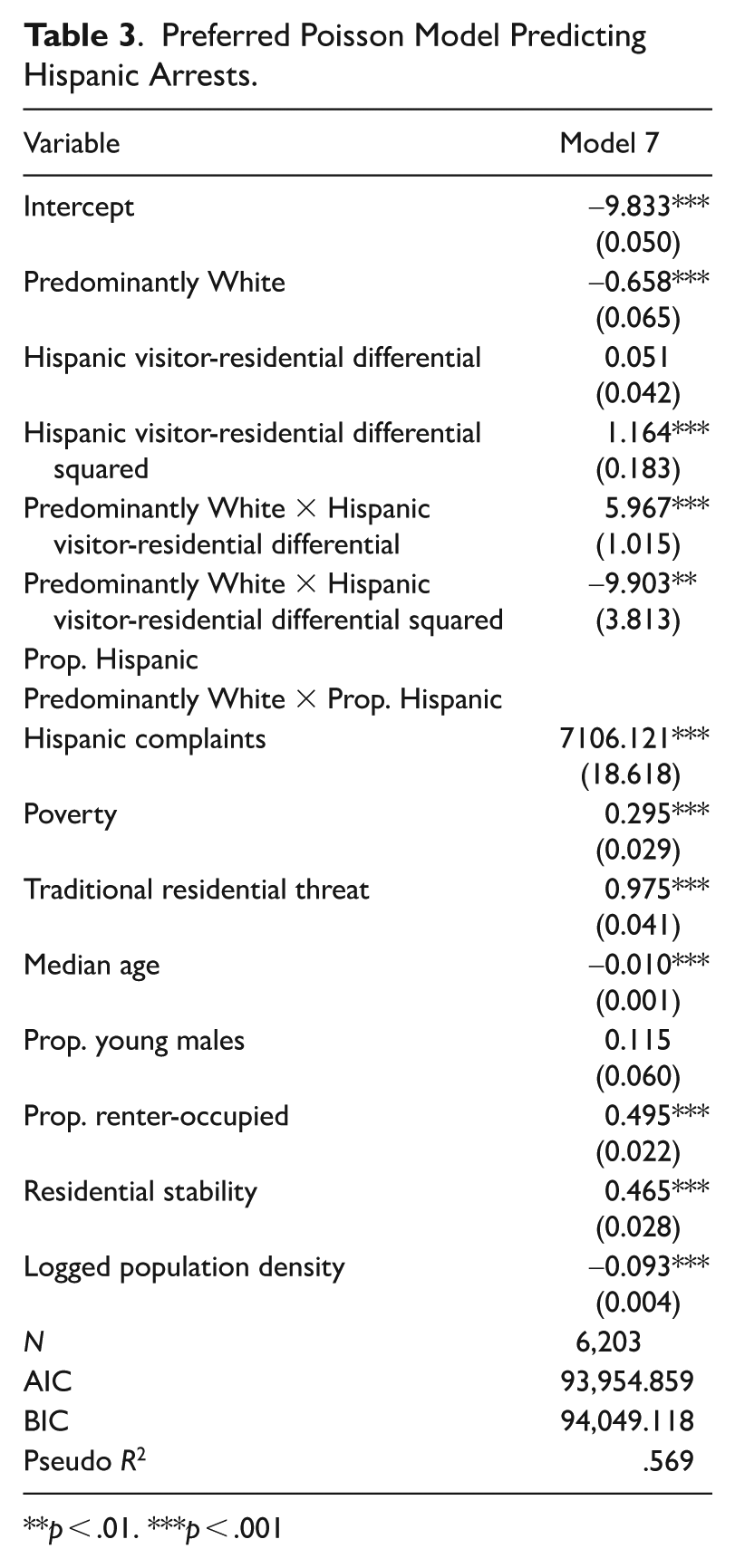
p < .01. ***p < .001
Supplemental Appendix Table S4 produces the same set of models for Hispanic arrests. The findings are mostly consistent with Black arrests. One central distinction is that I find no evidence that Hispanic arrests are more common in predominantly White neighborhoods. However, I still find evidence of a significant positive interaction between the Hispanic visitor-residential differential and whether or not a neighborhood is predominantly White, on the count of Hispanic arrests. These main findings for both Black and Hispanic arrests are robust to a battery of additional specifications, including borough controls, different operationalizations of the threat variable, different thresholds for defining predominantly White neighborhoods, inclusion of additional threat measures, inclusion of a spatial measure of the racial composition differential, looking at only misdemeanor arrests, and controlling for overall crime rates. 2 I additionally consider whether these patterns are driven by overall visitation intensity rather than visitor racial composition by introducing a control for the logged number of visits per resident in a neighborhood. Incorporating this measure leaves the key coefficients substantively unchanged, indicating that the association between visitor racial composition and race-specific arrests is not explained by higher overall levels of neighborhood visitation. Full model results including this control are reported in Supplemental Appendix Tables S9 and S10.
White Arrests
My theorization of mobility-based group threat suggests that heightened non-White mobility flows to White neighborhoods should be associated with heightened non-White arrest rates, which is supported by the prior two analyses for both Black and Hispanic individuals. Distinctly, my theorization does not suggest that heightened White mobility flows to non-White neighborhoods should be associated with heightened White arrest rates. I test this using a similar model form as before, analogously defining predominantly non-White neighborhoods as neighborhoods that are less than 20 percent non-Hispanic White. Supplemental Appendix Table S5 presents these results. In distinction to Black and Hispanic arrests, for White arrests, I find little evidence that heightened White visitor flows in non-White neighborhoods are associated with increased White arrests. Models 1 through 6 all indicate that White arrest rates are statistically lower in predominantly non-White neighborhoods if those predominantly non-White neighborhoods have heightened White inflows.
Because my main Black and Hispanic models test whether neighborhood complaint rates help account for race-specific arrest patterns, I also add the White complaint rate as a diagnostic check in Model 7, which is presented in Supplemental Appendix Table S5, as well as in the main text as Table 4. In that specification, the coefficient on White visitor flows turns slightly positive, but this is best understood as a suppression pattern rather than a substantively meaningful shift: neighborhoods with heightened White inflows tend to have lower rates of complaints involving White suspects, even though complaints themselves are positively associated with White arrests. Once I hold complaint rates constant, the remaining association between White visitor flows and White arrests becomes modestly positive, but this exploratory specification does not alter the broader conclusion that heightened White mobility is not systematically linked to higher White arrest rates. These results suggest that race is not simply serving as a generic gauge of how “out of place” an individual is in the sense of any racial mismatch between residents and visitors (Gelman, Fagan, and Kiss 2007). Instead, the patterns are asymmetric and are uniquely consequential for Black and Hispanic individuals visiting predominantly White neighborhoods.
Preferred Poisson Model Predicting White Arrests.
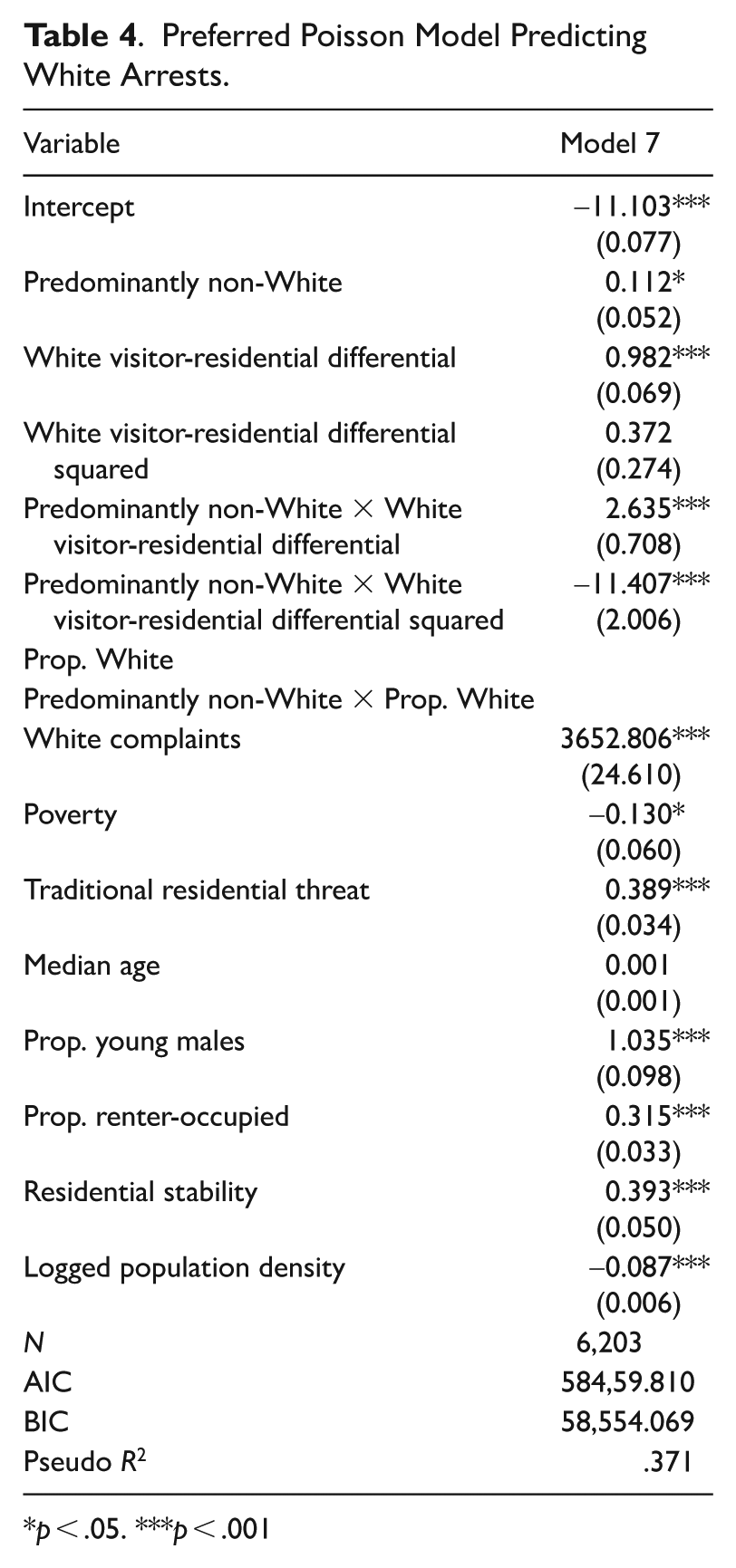
p < .05. ***p < .001
Discussion
In this article, I have presented a theoretical framework and empirical analysis extending group threat theory and the defended neighborhoods hypothesis to everyday mobility patterns. I propose that just as White neighborhoods receiving an influx of non-White residential movers are subject to heightened racial biases, so are residentially stable neighborhoods that receive high numbers of non-White visitors. Drawing on data from New York City, the results indicate that Black and Hispanic arrest rates are highest in predominantly White neighborhoods with disproportionately high rates of Black and Hispanic visitors.
Across the main set of models, the presence of Black visitors in a neighborhood consistently showed a positive association with Black arrests. Conditional on the size of the flow, the proportion of visitors that were Black was positively associated with heightened Black arrest rates—specifically in predominantly White neighborhoods. Despite their small number, predominantly White neighborhoods with heightened levels of Black visitors account for a disproportionately large volume of arrests. Only 23.6 percent of predominantly White neighborhoods have a Black visitor-residential differential that exceeds .075, but these neighborhoods are the site of 78.2 percent of all Black arrests in predominantly White neighborhoods. In total, despite being home to just 0.1 percent of all Black residents citywide, these neighborhoods are the site of 3.7 percent of all Black arrests. While seemingly a small percentage, this amounts to nearly 4,000 arrests in 2019 alone.
I interpret this pattern not as evidence that most Black criminal-legal contact is produced in these neighborhoods, but as showing how a small subset of predominantly White “gatekeeping” neighborhoods concentrates a pattern of arrests consistent with mobility-based group-threat policing. Broadly, contact with the criminal justice system is an important life event that can have long-lasting impacts and serve as an important source of inequality (Wakefield and Uggen 2010). These figures indicate that a relatively small set of “threatened” White neighborhoods bear a disproportionate share of Black arrests within predominantly White areas, and explain much, if not all, of why White neighborhoods, on average, tend to be the site of more Black arrests. At the same time, the large majority of Black arrests occur in neighborhoods that are not predominantly White, where Black residents and visitors also experience intensive police contact. Mobility-based group threat in predominantly White neighborhoods should therefore be understood as one mechanism within a broader system of racialized policing in which both “race out of place” and “race in place” shape patterns of criminalization.
The results of this analysis have important implications for understanding group threat theory and the defended neighborhoods hypothesis. The main findings support an adapted version of group threat theory, demonstrating that threatened neighborhoods, defined as predominantly White neighborhoods with disproportionately high rates of Black or Hispanic visitors, have exceptionally greater numbers of Black or Hispanic arrests. My analysis is therefore best understood as a neighborhood-level test of a mobility-based group threat framework. While identifying mechanisms is beyond the scope of this analysis, it is reasonable to speculate that Black and Hispanic visitors in these neighborhoods may be potentially subject to heightened racial biases and disparate policing practices. Black and Hispanic visitors in these neighborhoods may be seen as threatening to the dominant group, potentially leading to increased policing and arrests of Black individuals. The finding of the effect size being larger for Black visitors than Hispanic visitors aligns with past research, which has generally found that Whites perceive Blacks more greatly as a threat compared to Hispanics (Dixon 2006). This is further supported by the finding that in most non-White neighborhoods, Hispanics experience a higher arrest rate than in all White neighborhoods except for those with the highest visitor-residential differential.
Although the results presented in this article provide valuable insights into the association between race-specific mobility patterns and race-specific arrests in census block groups, it is important to acknowledge certain limitations in the study. First, the study relies on aggregated data at the census block group level, which may mask within-group variation. Using neighborhood-level data assumes homogeneity within each block group, which may not be the case. Second, this research primarily examined the association between arrests and their predictors without considering the broader context of the criminal justice system. Policing policies, law enforcement practices, and implicit biases are not directly addressed or measured in the analysis. Future research should explore these factors to develop a more comprehensive understanding of the mechanisms underlying the observed associations.
Additionally, the study relied on visitor data from a panel of smartphone devices. While evidence suggests the panel is nationally representative, it may be subject to reporting biases or inaccuracies (Li et al. 2023) and certainly cannot capture the mobility dynamics of Americans who do not own a smartphone. As race is not directly observed, a key assumption in the modeling approach is the imputation of race from the neighborhood of residence. Consequently, estimates of the racial composition of visitors that rely on the racial composition of “home” neighborhoods may be inaccurate. Partially assuaging this concern, recent research suggests minimal representation bias in the SafeGraph panel for Black Americans (Li et al. 2023). Furthermore, racial segregation in New York City makes the imputation of race based on neighborhood a relatively reasonable assumption. Finally, the robustness of the primary results to the potential overrepresentation of specific racial groups in the smartphone panel further suggests the results are not overly sensitive to the strictness of the assumption.
In addition, threat may operate differently in different types of contexts, like commercial areas or highly trafficked public transit routes. The nature of the data may mean that ambient population estimates are also captured better in the former than in the latter. Future studies could incorporate alternative data sources or employ more sophisticated validation techniques to enhance the reliability of visitor counts. Broadly, the complex opportunity structure of New York City implies that the association between visitor racial composition and arrest rates may be confounded by structural, spatial, and infrastructural sources. Black New Yorkers often reside farther from employment centers, schools, or commercial districts, and thus may be forced to travel more frequently through White neighborhoods. It is difficult to fully account for these geographical features when modeling; thus, it is important to acknowledge the possibility of omitted variable bias and to treat the estimated associations as suggestive patterns rather than definitive evidence that group-threat-type processes operate as specified by my theoretical framework. Similarly, the nature of the arrest data, which specifically captures the location of enforcement, limits the scope of interpretation of the results. Without additional data on where an associated crime occurred or where individuals live, it is hard to fully disentangle whether the observed associations reflect where alleged offenses occur, where people reside, or where police choose to intervene, and thus any evidence of neighborhood-based group threat from these models should be interpreted with this in mind. Finally, the research was limited to the specific geography analyzed, New York City. These findings may not be generalizable to different cities or periods of time. Replicating the analysis with different datasets and considering temporal variations could provide a more robust understanding of the factors influencing Black arrests. As New York City is considered more integrated than other cities/metropolitan areas, replicating these analyses with other cities with different degrees of racial segregation may also be especially insightful.
While the descriptive findings are generally congruent with a group threat narrative, future research is needed to further explain the underlying dynamics and implications of these findings. This empirical analysis does not permit inference regarding the mechanisms that link visitor racial composition to disparate policing outcomes. Research designs that can better get at these mediators will shed far more light on this process. Exploring potential sources of biases in the arrest process and examining the role of discretionary decision-making by law enforcement officers would be fruitful areas for future research. Accounting for actual criminal behavior or analyzing arrest data at the individual officer level could shed more light on the origin of these disparities in criminal justice outcomes. Additionally, data that covers the location of the crime, the location of where arrested individuals live, may shed better light on whether measures of where arrests occur could more accurately assess group threat. Such data could clarify whether spatial patterns of arrests reflect exposure to out-group neighborhoods, residential segregation, or where police choose to intervene.
Taken together, these results show how mobility-based group threat in predominantly White neighborhoods overlays more familiar patterns of over-policing in non-White neighborhoods, helping to explain how everyday movement through urban space reproduces the broader racial inequalities in criminal justice contact that motivated this study. Broadly, the findings of this article have important implications for policy. Both segregation and the criminal justice system are focal to racial inequality in the United States (Sharkey 2013; Wakefield and Uggen 2010). This research suggests that through everyday mobility patterns, segregation and the criminal justice system may be two sides of the same coin. My empirical findings provide suggestive evidence of Black Americans’ everyday mobility patterns actively being policed.
Supplemental Material
sj-docx-1-cty-10.1177_15356841261451788 – Supplemental material for Group Threat and the Policing of Mobility: Neighborhood Visiting Patterns and Racial Disparities in Arrest Rates
Supplemental material, sj-docx-1-cty-10.1177_15356841261451788 for Group Threat and the Policing of Mobility: Neighborhood Visiting Patterns and Racial Disparities in Arrest Rates by Karl Vachuska in City & Community
Footnotes

Funding
The authors disclosed receipt of the following financial support for the research, authorship, and/or publication of this article: This research was carried out using the facilities of the Center for Demography and Ecology at the University of Wisconsin–Madison, which is supported by Eunice Kennedy Shriver National Institute of Child Health and Human Development grant P2C HD047873, and was supported in part by training grant T32 HD007014. The content is solely the responsibility of the authors and does not necessarily represent the official views of the National Institutes of Health.
Declaration of Conflicting Interests
The author declared no potential conflicts of interest with respect to the research, authorship, and/or publication of this article.
Data Availability Statement
I am unable to share the data underlying the analyses in this article because I obtained access to the SafeGraph data under specific terms of use. These terms explicitly prohibit me from re-sharing the data.
Supplemental Material
Supplemental material for this article is available online.
Notes
References
Supplementary Material
Please find the following supplemental material available below.
For Open Access articles published under a Creative Commons License, all supplemental material carries the same license as the article it is associated with.
For non-Open Access articles published, all supplemental material carries a non-exclusive license, and permission requests for re-use of supplemental material or any part of supplemental material shall be sent directly to the copyright owner as specified in the copyright notice associated with the article.
